



Signs Your Apartment Complex Roof Needs Immediate Repair
Urgent warning signs, tenant-safety priorities, inspection evidence, and repair-versus-replacement decisions for Texas property owners
Quick answer: An apartment complex roof needs immediate professional attention when water is entering occupied spaces, ceilings or decking are sagging, electrical systems are exposed to moisture, roof materials are lifting or missing, drains are blocked, seams or flashings are open, temporary covers are failing, or damage is spreading across multiple buildings. Protect people first, restrict unsafe areas, stop additional water entry when it can be done safely, document conditions, and arrange a qualified inspection. A repair may be sufficient for isolated, accessible damage; widespread moisture, recurring leaks, unsafe decking, extensive storm damage, or an aging gravel-surfaced built-up roof may justify restoration or replacement evaluation.
Apartment roofs carry an unusually high duty of care because a single roof section may protect dozens of residents, shared corridors, electrical rooms, leasing offices, laundry areas, fire-protection equipment, and valuable building systems. A leak that seems small from inside one unit may have traveled through insulation or framing from a distant entry point. Waiting for a ceiling stain to grow can convert a localized defect into wet insulation, damaged finishes, displaced residents, repeated service calls, and a much larger repair scope.
North Texas adds hail, straight-line wind, tornado exposure, intense sun, rapid temperature changes, and heavy rain. Multifamily properties also experience constant rooftop traffic from HVAC, satellite, plumbing, and maintenance trades. Every penetration, transition, edge, valley, drain, scupper, wall, and curb is a possible pathway when materials age or storm forces exceed their capacity.
The purpose of an urgent inspection is not to assume that every symptom requires replacement. It is to identify the source, define the affected area, stabilize active exposure, and separate repairable defects from systemwide deterioration. Showtime Exteriors evaluates low-slope and steep-slope apartment roofing throughout Texas and the Dallas–Fort Worth area, documents observed conditions, and develops practical repair, restoration, recover, or replacement scopes.
1. Active water entering apartments or common areas
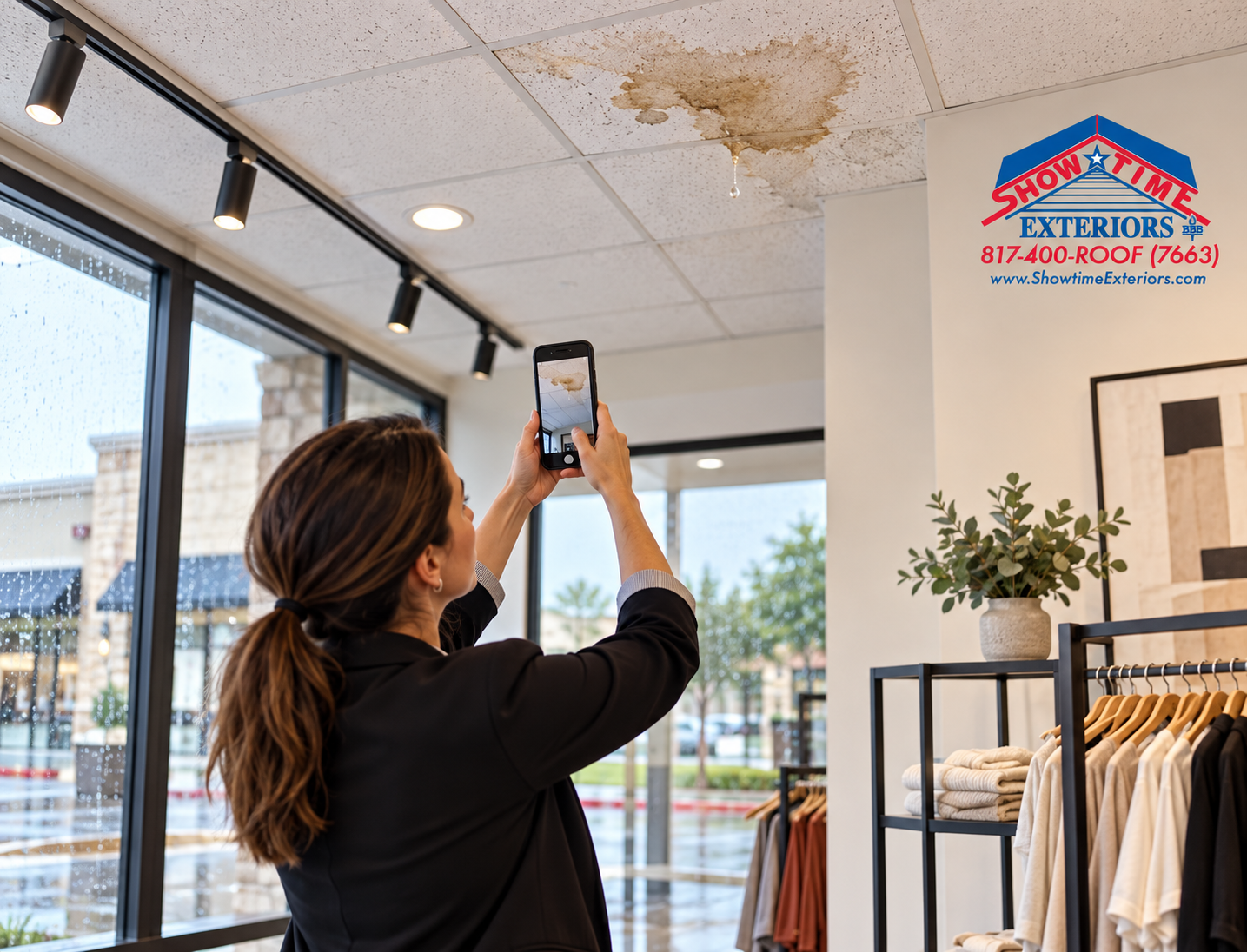
Active dripping, running water, wet ceiling materials, or water collecting on floors requires immediate action. Management should protect residents, move belongings only when safe, keep people away from weakened ceilings, and contact qualified personnel if water is near electrical fixtures, panels, elevators, alarms, or other energized systems. A roofer should investigate the exterior entry path while building professionals address interior hazards and drying.
Do not assume the stain is directly beneath the opening. Water can follow the deck, insulation joints, structural members, pipes, or sloped framing before appearing. Record the exact time, weather, unit, room, ceiling location, photographs, videos, and any prior history. This creates a useful map when several residents report problems after the same storm.
2. Sagging ceilings, bowed decking, or visible structural movement
A sagging ceiling, soft roof area, depressed deck, cracked framing, or suddenly changed roofline can indicate accumulated water, deteriorated materials, or structural distress. Treat the area as potentially unsafe. Keep residents and staff out from beneath it and engage appropriate roofing and structural professionals. Do not walk on a roof that appears unstable.
The repair cannot stop at covering the surface. The team must determine whether the deck, insulation, ceiling assembly, framing, or attachments have lost capacity. Concealed deterioration should be documented before it is removed or covered. Replacement of damaged substrate may be necessary even when the visible membrane opening is small.
3. Moisture near electrical, life-safety, or mechanical systems
Water near electrical rooms, panels, wiring, light fixtures, fire-alarm components, elevators, boilers, or mechanical equipment is an urgent building-safety concern. Management should follow emergency procedures and use qualified trades for isolation or shutdown. Roofing personnel should not make electrical decisions outside their role.
After the immediate hazard is controlled, document both the roof condition and the downstream path. The permanent scope may include roof repair, wet-material removal, curb or penetration rebuilding, and work by licensed electrical or mechanical professionals. A roof patch alone cannot certify that affected equipment is safe.
4. Missing, lifted, creased, or displaced roofing materials
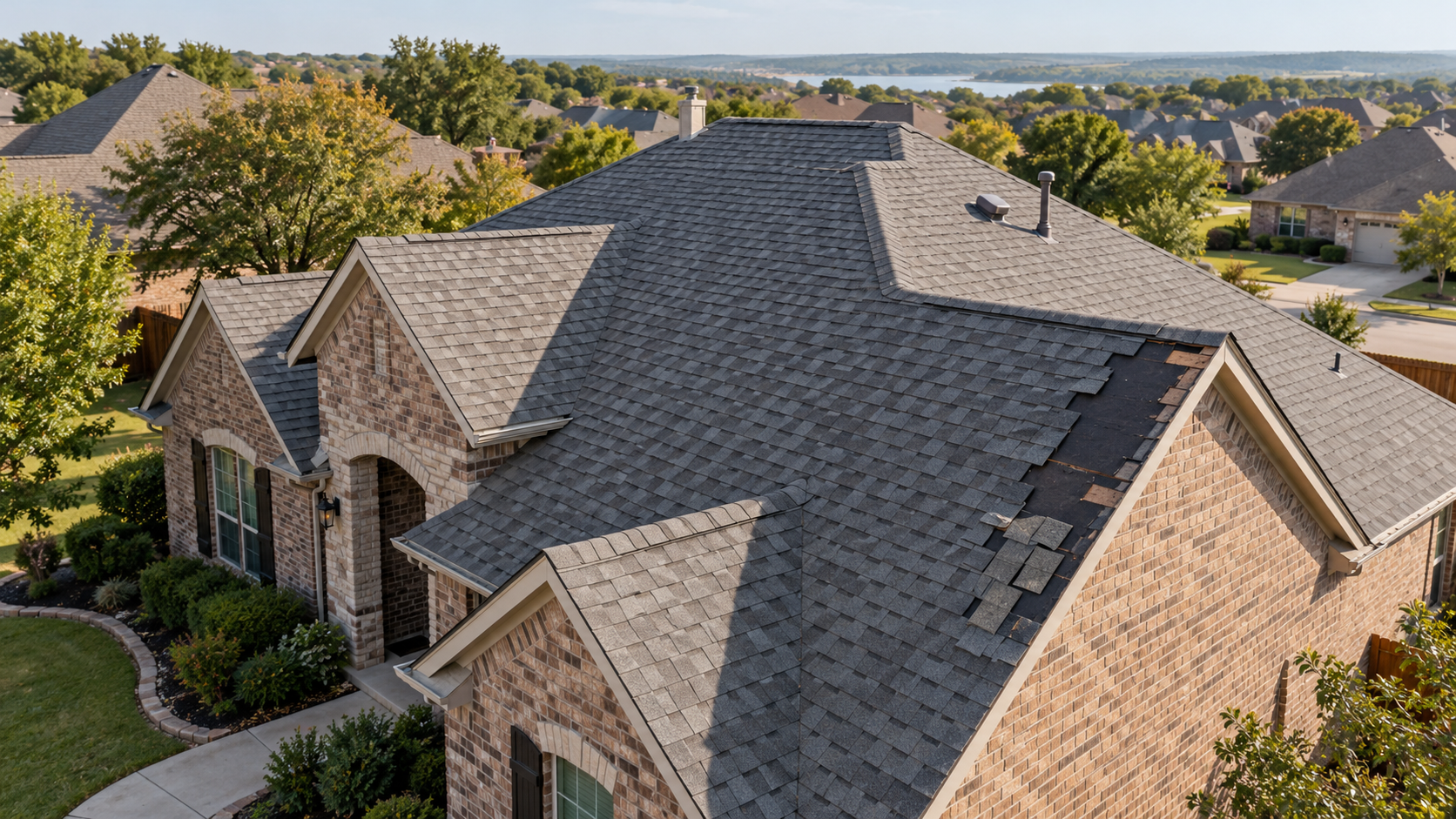
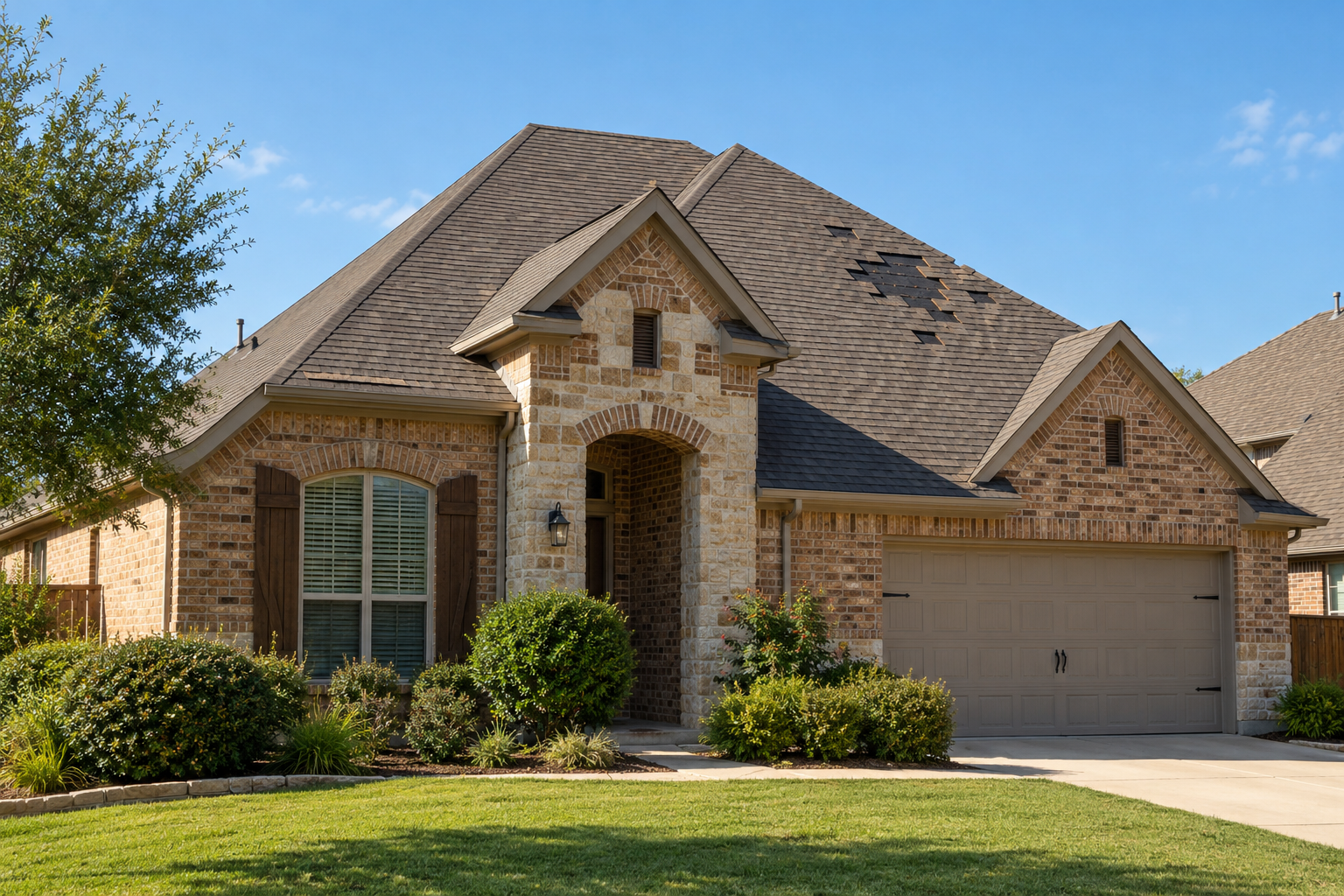
Missing shingles, lifted membrane, displaced edge metal, torn flashing, and wind-scoured surfacing can allow the next rain to enter. On apartment buildings, damage may occur at corners, ridges, eaves, parapets, breezeways, mansards, or higher elevations that cannot be seen from the ground. A prompt inspection should map every elevation and roof section rather than stopping at the first visible defect.
Wind damage can progress after the storm because loosened materials continue moving. Secure or temporarily protect openings when conditions permit, but do not treat an emergency cover as a completed repair. The permanent work must restore attachment, transitions, drainage, and compatible detailing.
5. Open seams, punctures, splits, or failed flashing
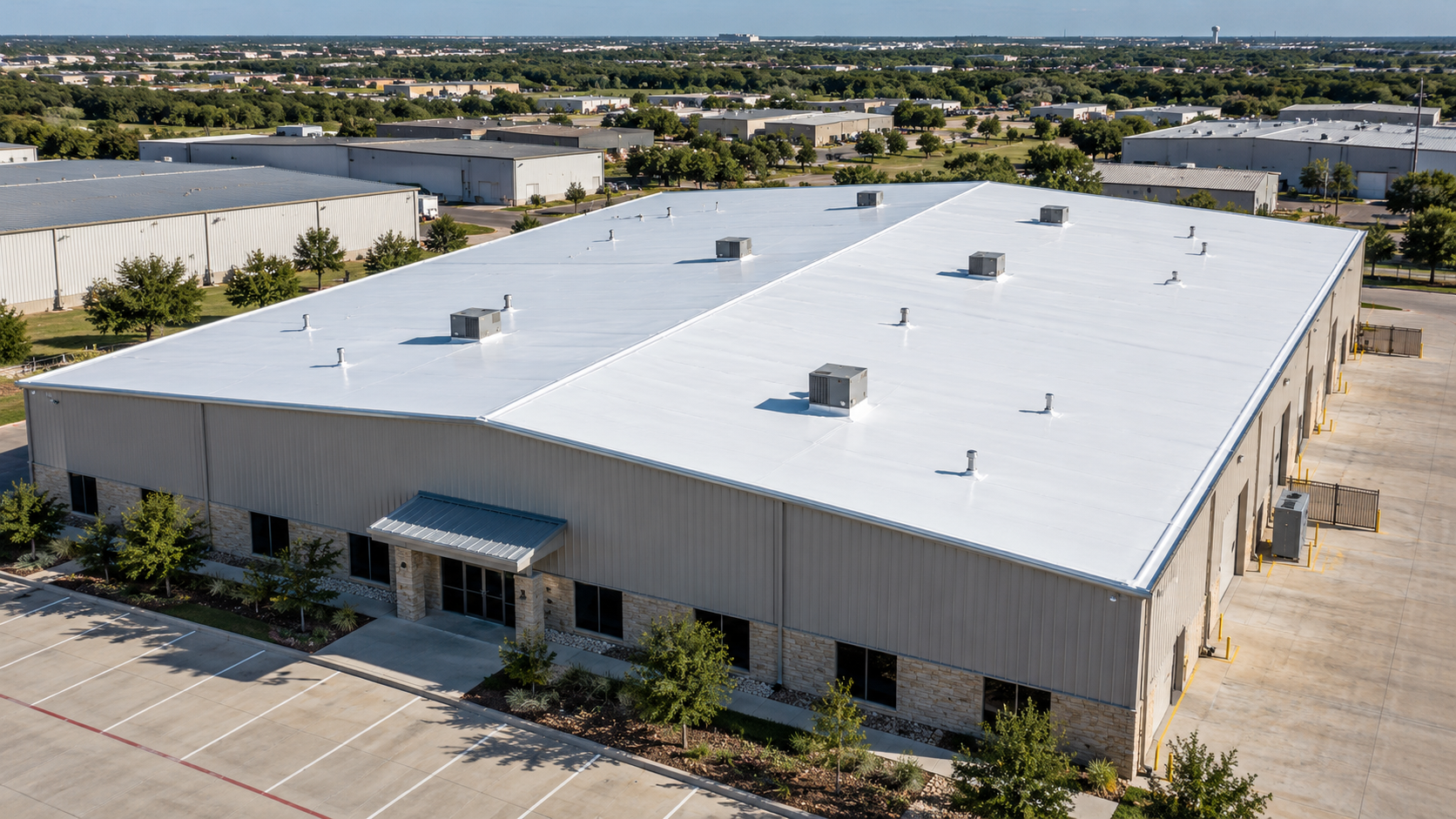
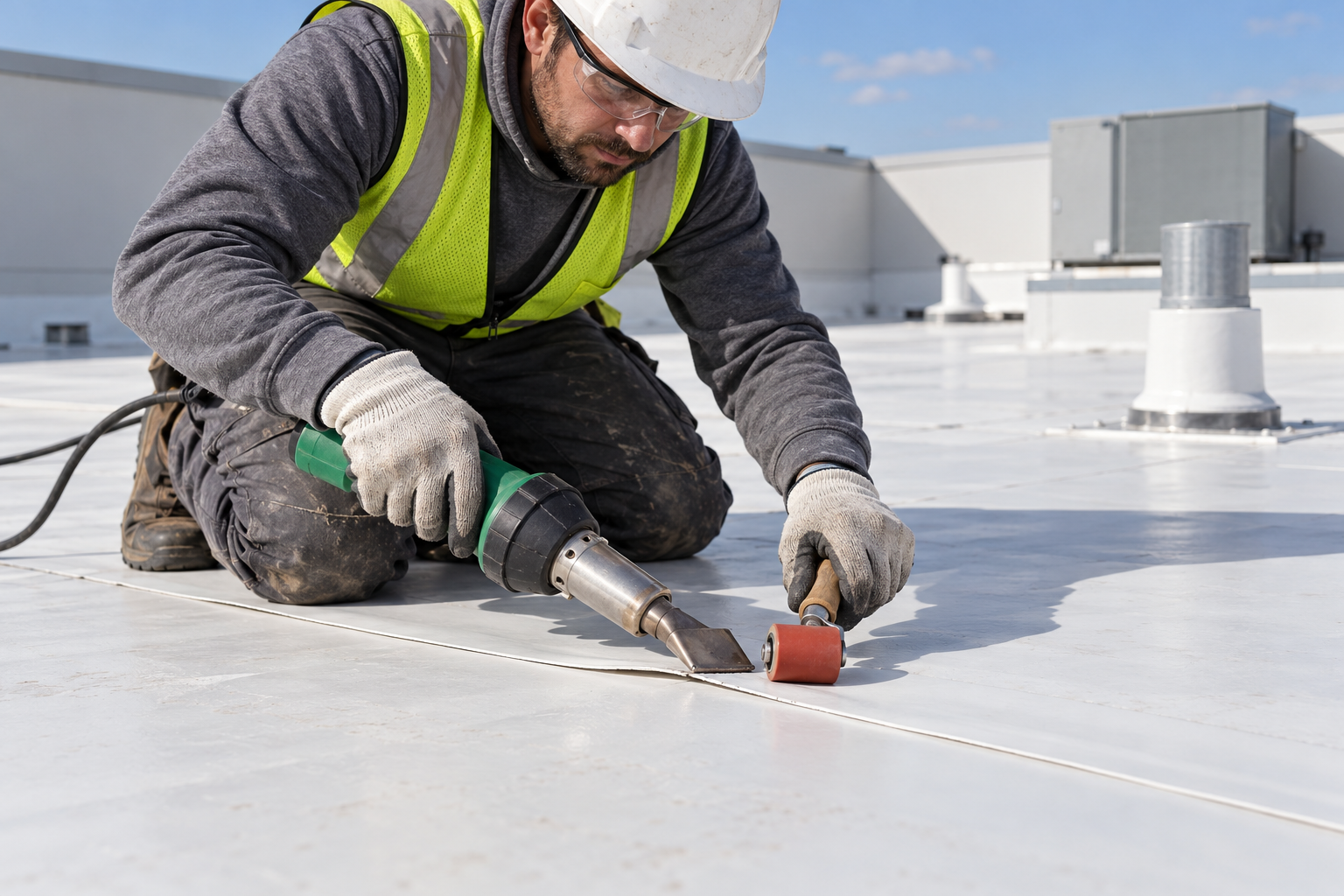
Low-slope apartment roofs rely on continuous membranes and carefully built transitions. Open seams, punctures from service traffic, splits at movement points, and failed flashings at walls, drains, pipes, curbs, hatches, or equipment can admit water beneath the surface. Small openings deserve timely repair because water can spread laterally through insulation.
A good inspection records defect dimensions, location, adjacent conditions, suspected water path, and whether surrounding materials remain sound. The repair should use compatible materials and follow applicable manufacturer and system requirements. Smearing generic sealant over an unknown assembly can obstruct later work and may not address the actual failure.
6. Loose edge metal, coping, gutters, or fascia
Roof edges experience strong wind pressure. Loose coping, fascia, gutters, downspouts, and perimeter membrane can detach, expose the assembly, or become falling hazards near sidewalks, parking, balconies, and entrances. Restrict the ground area when components could fall and schedule immediate stabilization.
Inspect attachment, joints, sealants, cleats, wood blocking, membrane terminations, and the substrate behind the visible metal. Refastening one loose piece may be inadequate when the surrounding perimeter has the same aged or underperforming detail.
7. Ponding water or drainage that does not clear
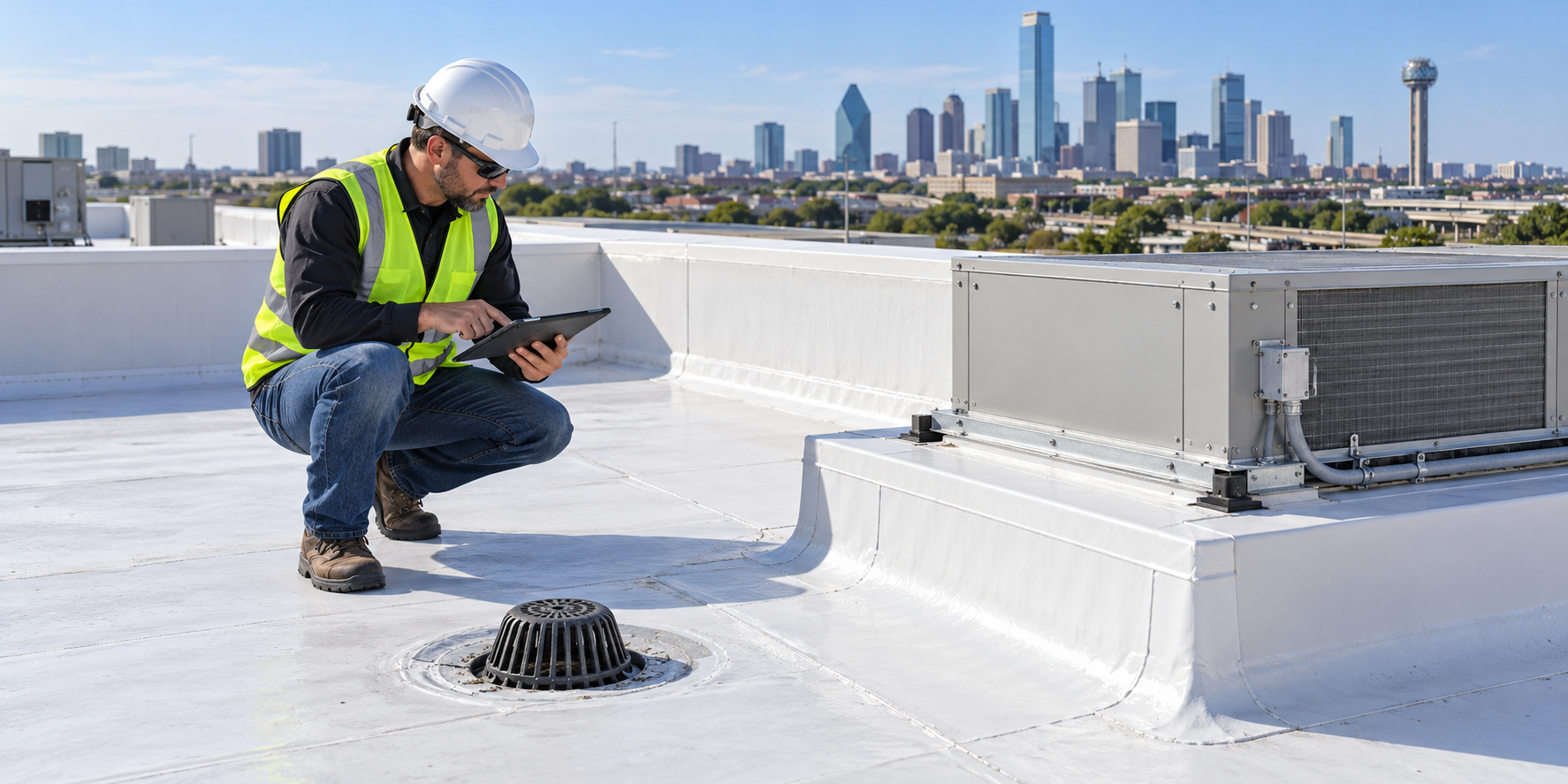
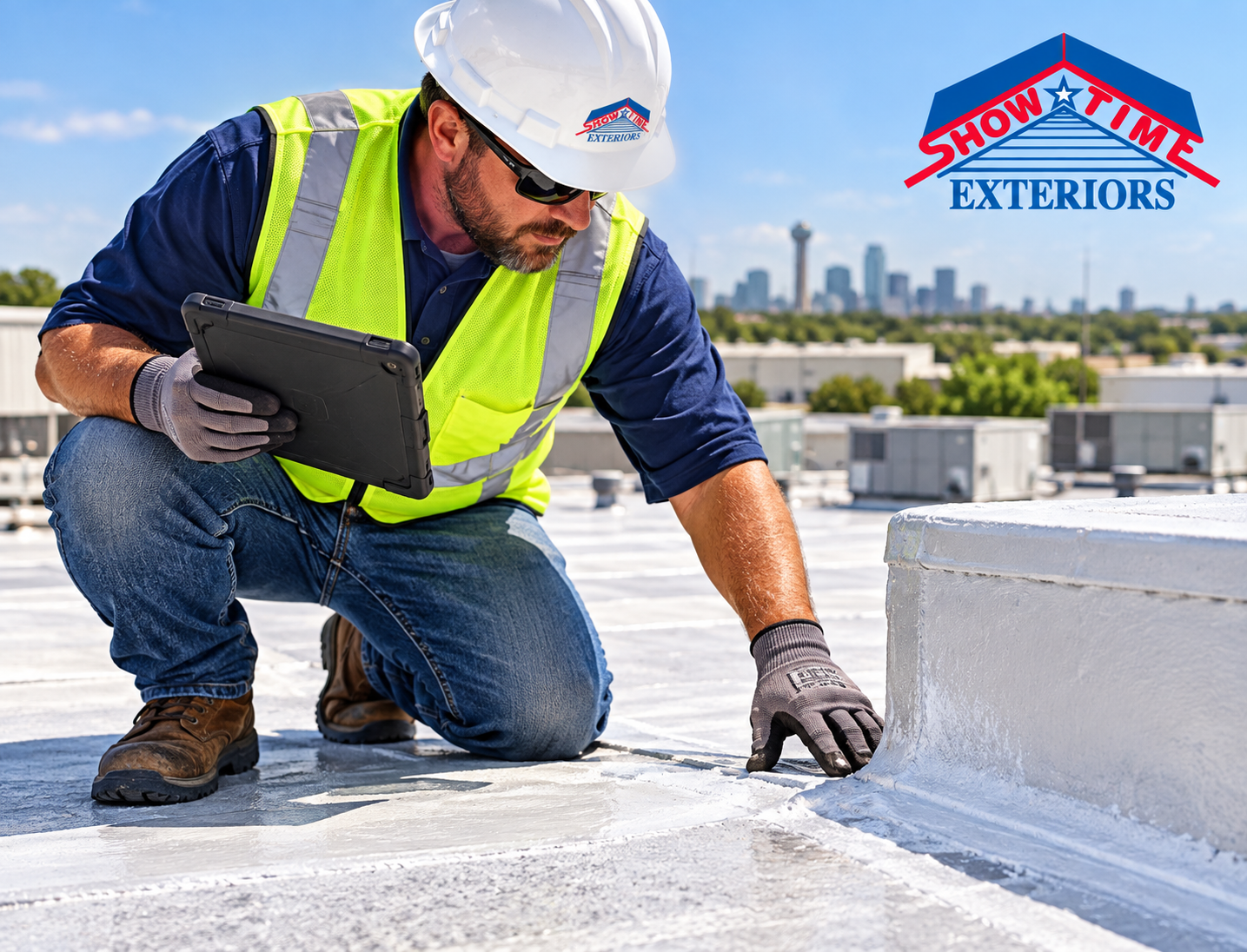
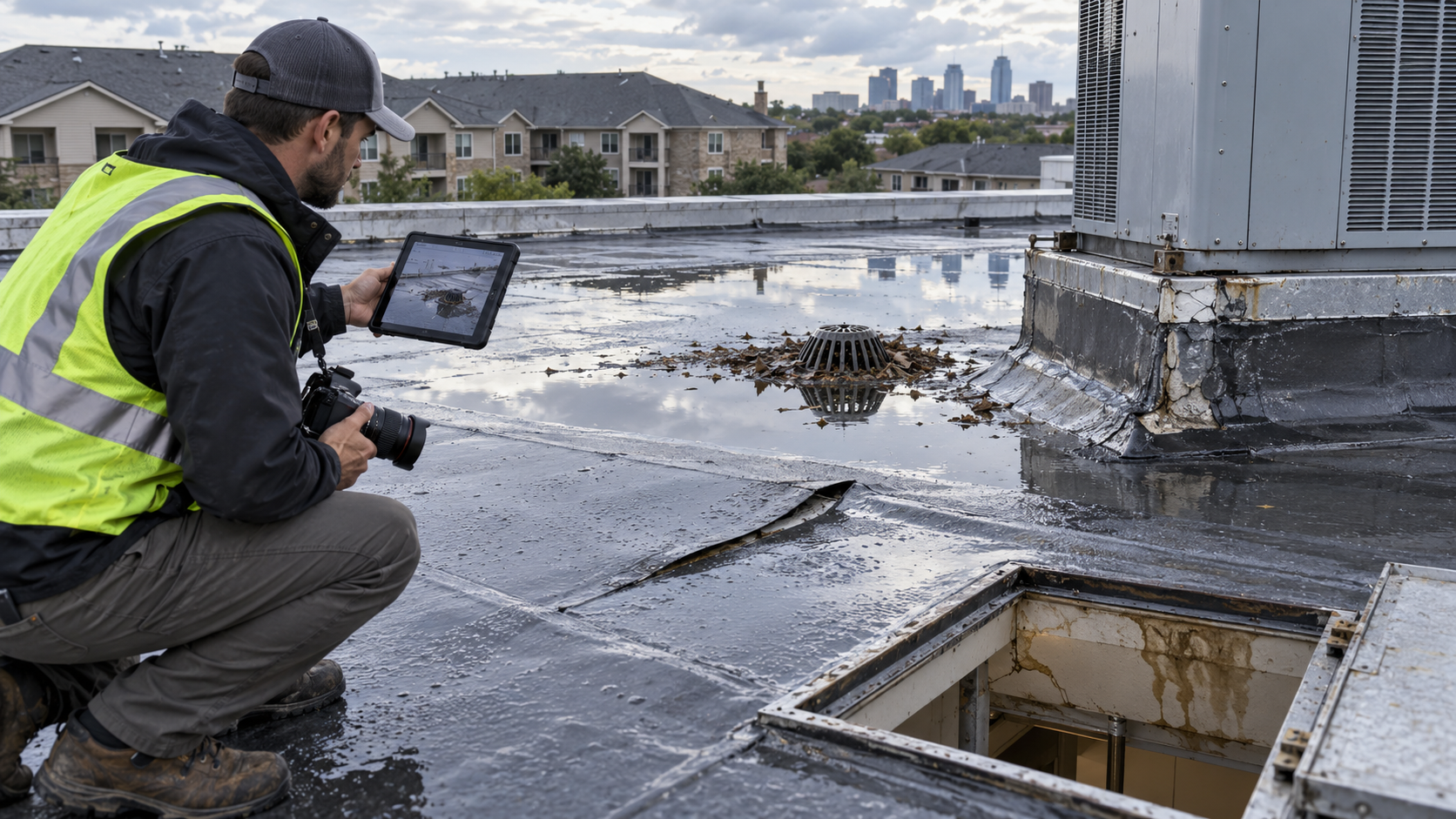
Ponding, obstructed drainage, open seams, and failed curb flashing should be documented and corrected promptly.
Water remaining long after normal rainfall may indicate blocked drains, crushed piping, inadequate slope, settled insulation, structural deflection, or poorly placed equipment. Ponding increases load and keeps vulnerable seams and flashings wet. Overflowing gutters and scuppers can also wet walls, foundations, walkways, and tenant entrances.
Remove debris from accessible drainage components only when it is safe and within maintenance responsibility. A roofer should map ponding boundaries, inspect drains and overflow provisions, and evaluate damaged insulation or membrane. Repeated ponding calls for a drainage correction rather than endless surface patching.
8. Wet insulation, musty odors, or recurring indoor moisture
Persistent odors, damp ceiling cavities, stained insulation, condensation-like reports, or repeated moisture in the same building can signal trapped water. These observations do not establish a health diagnosis, and microbial concerns should be evaluated by qualified professionals. They do indicate that the water source and affected materials need prompt investigation.
Moisture scanning, test cuts, interior observations, and roof mapping may help define boundaries. Wet insulation can lose thermal performance and may prevent a reliable restoration or recover. Removal decisions should be based on verified conditions, system requirements, and the needs of the occupied property.
9. A sudden increase in leak calls across several units
One report may be localized. Several reports following the same weather event can reveal a larger pattern involving a roof section, elevation, drainage line, ridge, edge, or shared construction detail. Centralize resident and maintenance reports so management can compare time, building number, floor, orientation, and rainfall.
Repeated isolated work orders without a roofwide map can waste money. Use each report as evidence, correlate it with roof features, and track whether previous repairs solved the problem. A pattern of failures often changes the decision from spot repair to a broader corrective scope.
10. Hail impacts, fractured shingles, or bruised membrane
Hail can damage shingles, metal, coatings, membranes, skylights, vents, and rooftop equipment. Some effects are obvious; others require close inspection. Look for collateral indicators such as dented metal, damaged screens, fractured caps, punctures, exposed reinforcement, or displaced granules, but avoid declaring causation from photographs alone.
Document conditions promptly with overview, midrange, and close-up images tied to a roof map. Record storm timing from reliable sources and preserve maintenance history. Showtime Exteriors can document physical roofing conditions; the insurer interprets the policy and decides coverage and payment.
11. Damaged skylights, vents, HVAC curbs, or penetrations
Apartment roofs contain many openings. Cracked skylights, failed pipe boots, loose vent caps, deteriorated curb flashing, unsupported lines, and abandoned penetrations can cause concentrated leaks. Equipment vibration and service traffic may worsen already aged details.
Inspect the full transition, not just the top bead of sealant. The correct scope may require rebuilding the curb, replacing flashing, supporting lines, coordinating an HVAC or plumbing trade, and repairing wet substrate. Confirm that service clearances and drainage remain functional afterward.
12. Soft spots, corrosion, exposed fasteners, or deteriorated deck
Softness underfoot, rust staining, visible corrosion from below, loose fasteners, and deteriorated wood or gypsum components can indicate substrate problems. Roof access should be limited to trained personnel using appropriate safety procedures. Suspected deck damage may require structural review and controlled exploratory work.
Deck repairs affect cost, schedule, resident protection, and the feasibility of recover or restoration. Establish unit prices or allowances where quantities cannot be known before opening the assembly, and photograph exposed conditions before permanent work proceeds.
13. A temporary tarp or patch is still carrying the load
Temporary protection is useful when it is treated as temporary. Tarps, emergency membranes, sealant patches, and weighted covers can deteriorate, shift, trap water, or conceal continuing damage. Every temporary measure should have an installation date, mapped location, monitoring responsibility, and permanent-correction deadline.
Inspect temporary work after severe weather and whenever residents report renewed leakage. Do not allow an emergency patch to become the unexamined long-term roof strategy. The final repair should address the failure pathway and affected materials, not merely add another layer.
14. Repeated repairs are no longer producing reliable results
Frequent service calls, expanding patch areas, leaks migrating to new units, and repairs failing after ordinary storms suggest that the underlying system may be broadly aged, wet, incompatible, or difficult to detail. Compare annual repair cost and disruption with the remaining serviceability of the assembly.
A condition-based evaluation should define what remains sound, what is wet or unstable, and whether restoration, recover, or replacement is technically feasible. Replacement is not automatic, but repeated failure is a reason to stop treating every event as unrelated.
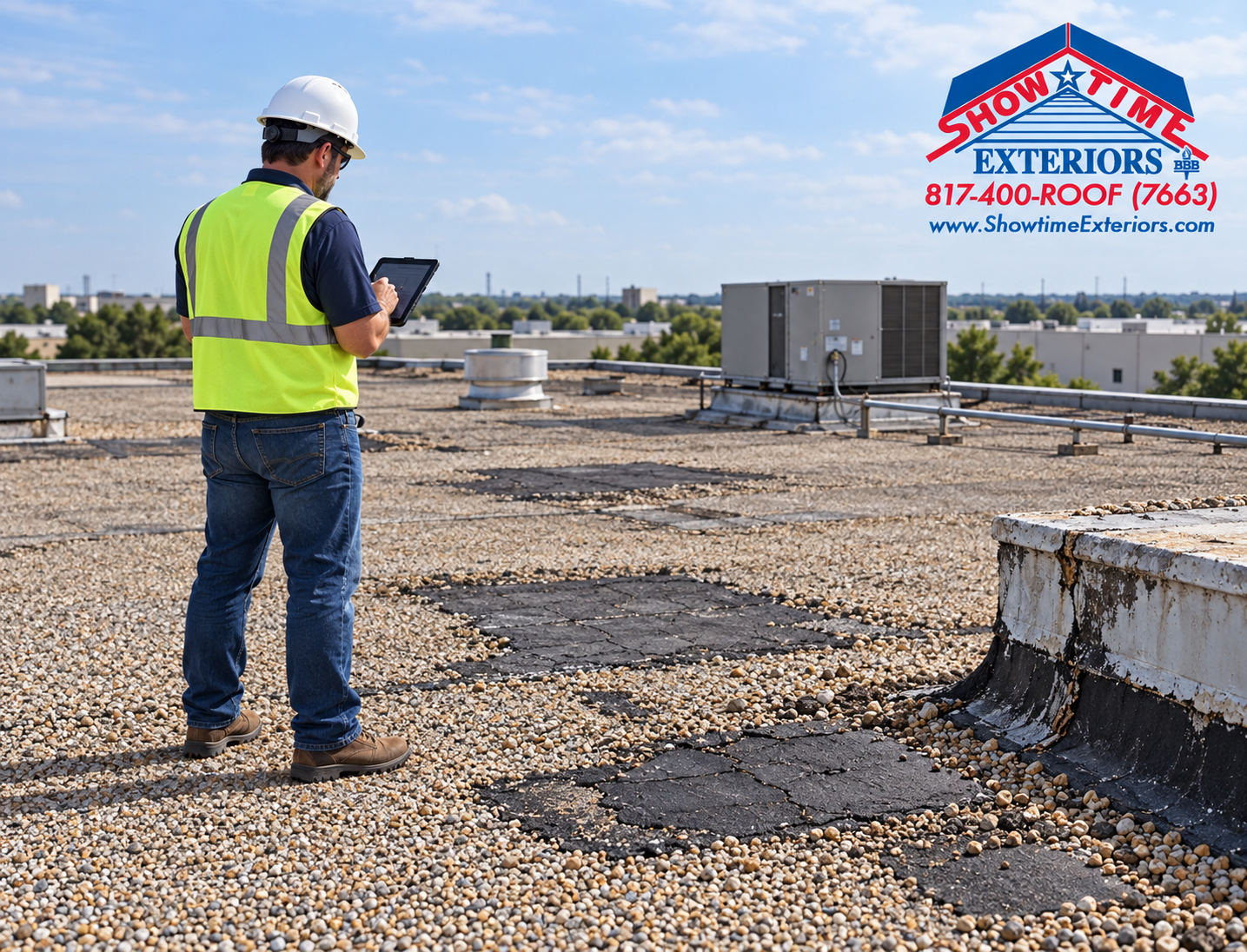
15. Aging gravel-surfaced BUR is hiding the roof’s condition
Showtime Exteriors’ campaign position is clear: aging built-up roofing with gravel surfacing creates uncertainty. Gravel can conceal cracks, blisters, open laps, deteriorated membrane, previous repairs, moisture pathways, and the boundaries of damage. It makes direct visual assessment and consistent documentation more difficult, particularly when the roof has a long or incomplete maintenance history.
Some insurance carriers may scrutinize older gravel-surfaced BUR, request additional documentation, limit terms, increase pricing, or decline renewal based on their underwriting rules and the property’s complete risk profile. No contractor can promise an insurance outcome. When the roof is leaking repeatedly, broadly wet, near the end of its serviceable life, or difficult to document, owners should evaluate replacement with a more inspectable system rather than presenting gravel as an advantage.
16. Interior stains are expanding even when the weather appears mild
A stain that grows after the rain stops may indicate retained water draining slowly through insulation or assemblies. Moisture can also appear when temperature and humidity expose condensation or mechanical problems. The investigation should consider roofing, walls, plumbing, HVAC, and building-envelope paths instead of assuming every stain begins at the roof.
Mark stain boundaries and dates, record indoor conditions, and compare observations with weather and equipment operation. This disciplined record helps qualified trades separate recurring roof entry from other moisture sources.
17. Resident safety or habitability is being affected
Leaks that close corridors, wet stairs, damage ceilings, interrupt utilities, affect alarms, or repeatedly displace residents require management-level response. Follow applicable emergency, lease, housing, code, and professional guidance. Roofing work is one part of a broader safety and property-management response.
Communicate clearly with residents about access restrictions, inspection windows, noise, parking, and where to report new conditions. Avoid promising exact repair or insurance results before the roof is assessed. Provide factual updates and document decisions.
What to do in the first 24 hours
Protect residents, employees, and visitors. Restrict access below sagging ceilings, falling components, slippery areas, and suspected electrical hazards.
Use qualified personnel to isolate electrical, structural, fire-protection, elevator, or mechanical hazards. Do not send untrained staff onto a wet or storm-damaged roof.
Limit additional water entry with safe temporary measures. Remove standing interior water, protect contents, and preserve receipts and work records.
Photograph and video exterior, interior, and collateral conditions before cleanup when safe. Capture building number, unit, room, direction, time, and weather.
Open one incident log for all resident calls, inspections, vendors, temporary work, costs, communications, and decisions.
Schedule a professional roof assessment that covers every related roof area, not merely the first visible leak.
Notify the property’s insurance contact promptly when a potential covered event may be involved, and follow policy requirements and professional advice.
Set written monitoring and permanent-correction deadlines for every temporary tarp, cover, or patch.
What a professional apartment roof inspection should document
Property address, building and roof-section identification, inspection date, weather, participants, access limitations, and safety limitations.
Roof type, approximate age when known, deck, insulation, membrane or shingles, surfacing, slope, drainage, edges, walls, penetrations, equipment, and previous repairs.
Overview photographs that establish location; midrange images that show context; close-ups with scale where useful; and a roof plan linking each image to a position.
Active openings, displaced materials, seam and flashing conditions, drainage restrictions, ponding, soft areas, corrosion, hail or wind indicators, and interior observations.
Moisture-investigation method, readings or test-cut locations, limitations, and clearly drawn suspected or confirmed boundaries.
Temporary stabilization already completed, materials used, installation dates, areas still exposed, and required monitoring.
Repair alternatives, restoration or recover feasibility, replacement triggers, priorities, assumptions, exclusions, and needs for structural or specialty-trade review.
A clear separation between observed physical conditions and insurance conclusions. The roofer documents roofing evidence; the carrier makes coverage decisions.
Repair, restore, recover, or replace?
Repair is usually most appropriate when damage is isolated, surrounding materials remain dry and stable, the roof has meaningful service life, and a compatible permanent detail can be installed. Examples include a limited puncture, localized flashing failure, a small wind-damaged shingle area, or a discrete drain problem. The inspection should still verify that water has not spread beyond the visible defect.
Restoration may be considered when the existing roof is fundamentally sound, moisture is limited and removable, drainage and attachment are acceptable, preparation can produce a reliable substrate, and the proposed system meets applicable manufacturer, code, warranty, and project requirements. A coating should not be used to hide wet insulation, failing deck, widespread open seams, or unresolved movement.
Recover places a new roof assembly over an existing one when allowed and technically justified. It may reduce tear-off disruption, but the owner must verify code limits, structural weight, attachment, compatibility, moisture, drainage, details, and warranty. Recover is not a responsible way to bury widespread saturation or unstable materials.
Replacement becomes more likely when damage is widespread, decking is unsafe, insulation is broadly wet, repairs repeatedly fail, materials are near the end of serviceability, storm damage affects a large percentage of the system, or the assembly cannot accept a compliant repair or recover. For an aging gravel BUR, concealment, removal demands, leak history, moisture, deck condition, and underwriting concerns should be evaluated directly.
Tenant communication and operational planning
Apartment work succeeds when roofing and property-management plans operate together. Map occupied units, vacant units, leasing and maintenance spaces, laundry rooms, pools, playgrounds, parking, fire lanes, accessible routes, pet areas, deliveries, and school-bus or resident traffic. Establish ground exclusion zones beneath overhead work and preserve emergency access.
Notify residents about inspection or work windows, expected noise, parking changes, balcony restrictions, temporary HVAC interruptions, and the method for reporting new leaks. Use plain factual language. Do not share private claim details, blame a storm or contractor before evidence is complete, or guarantee completion dates that weather and concealed conditions may change.
For replacement, divide the property into building and roof zones. Limit daily openings to what can be made watertight that shift. Protect interiors, coordinate HVAC and satellite trades, secure materials against wind, keep drains open, and conduct written end-of-day handoffs. Reinspect temporary tie-ins after changing weather.
Insurance documentation without overpromising
Property policies vary in deductibles, valuation, exclusions, endorsements, reporting duties, repair requirements, matching language, code coverage, and deadlines. Owners should read the policy and work with qualified insurance professionals. A contractor should not promise that damage is covered, negotiate legal rights outside its role, or guarantee a claim outcome.
Useful records can include pre-loss roof information, maintenance history, resident reports, dated photographs and video, weather information, emergency mitigation invoices, roof maps, moisture findings, repair estimates, material information, and communications. Preserve damaged materials when practical and permitted, and ask the insurer before permanent work when conditions allow. Immediate safety and reasonable mitigation should not be delayed merely to create better photographs.
If an insurer requests repairs or replacement for renewal, ask for the requirement in writing and confirm the deadline, acceptable systems, documentation, warranty, inspection, and any named exclusions. A completed project may reduce uncertainty, but it does not guarantee renewal, premium, valuation, coverage, or payment.
Preventing the next emergency
Inspect roofs at least on a planned schedule and after significant hail, wind, debris impact, or unusual rainfall.
Keep drains, scuppers, gutters, downspouts, and overflow paths clear; record cleaning dates and observed ponding.
Control rooftop access and require HVAC, satellite, plumbing, and other trades to document their work and report damage.
Maintain a current roof plan, warranty file, repair history, photographs, material information, and emergency contacts for every building.
Repair compatible defects while they remain isolated; verify completed work and reinspect after meaningful rainfall.
Budget by roof section using condition, moisture, age, repair frequency, tenant impact, and remaining serviceability.
Evaluate aging gravel-surfaced BUR proactively instead of waiting for hidden deterioration or underwriting pressure to force a rushed decision.
How to prioritize repairs across a multi-building apartment property
A large apartment community rarely has one uniform roof condition. Different buildings may have different installation dates, slopes, materials, exposure, repair histories, tree cover, equipment density, and drainage performance. Begin with a propertywide inventory that assigns every roof area a unique name. Record the system, approximate age, known leaks, recent storm exposure, temporary work, inspection findings, moisture concerns, and tenant impact. This prevents the loudest current complaint from consuming the entire budget while a less visible but more serious condition remains unaddressed.
Rank life-safety and active water-entry conditions first. These include sagging assemblies, loose materials above occupied paths, moisture near electrical equipment, uncontrolled openings, and leaks affecting exits or life-safety systems. The second priority is preventing near-term escalation: open seams, displaced flashing, blocked drainage, punctures, temporary covers, and defects above high-consequence areas. The third group includes planned corrective work that is not actively leaking but shows deterioration likely to worsen during the next storm season.
Combine technical urgency with operational consequence. A small opening above an electrical room, occupied top-floor bedroom, elevator equipment area, or fire-alarm component may deserve faster response than a larger isolated defect above an empty maintenance space. Document the reason for each priority so ownership, management, residents, contractors, and financial teams receive consistent information.
When several buildings share the same age and detail, use representative investigation carefully. Similar construction can suggest a pattern, but one building’s test cut or repair does not prove the condition of every other roof. Confirm each roof section before committing to a systemwide scope, and keep allowances for concealed moisture or deck repairs that cannot be measured from the surface.
Building a defensible repair scope and budget
A useful proposal should state exactly where work occurs, what existing materials are involved, how damaged or wet materials will be handled, what preparation is required, which compatible products and attachment methods are proposed, how transitions will be flashed, and how the completed area will be tested or inspected. It should identify assumptions, exclusions, access, interior protection, resident coordination, cleanup, schedule, weather limitations, warranty terms, and closeout records. A one-line instruction to “patch leaks” does not provide enough information for owners to compare bids or verify completion.
Separate known work from unit-priced or allowance work. Known work might include a measured membrane repair, flashing replacement, edge-metal section, drain correction, or shingle area. Concealed work may include wet-insulation removal, deck replacement, framing repair, additional layers, or hidden deterioration discovered after opening the roof. Establishing how these quantities will be documented and authorized reduces surprise and protects decision quality.
For capital planning, compare more than initial price. Include expected remaining service life, likelihood of recurring calls, resident disruption, interior restoration, maintenance requirements, energy implications, drainage corrections, warranty conditions, and the effect of leaving difficult-to-inspect areas in place. A narrowly cheaper repair may be responsible when damage is isolated; it may be false economy when the system is broadly wet or repeatedly failing.
Closeout is part of the value. Require before-and-after photographs tied to roof locations, material and product information, invoices, warranty documents when applicable, test or inspection records, updated roof plans, and a list of future maintenance items. These records help the next property manager understand what was done, support future leak investigation, and provide organized evidence for ownership, lenders, buyers, and insurance conversations.
Frequently asked questions
Is one ceiling stain an emergency?
It can be. Active water, sagging material, electrical exposure, or rapidly expanding staining requires immediate response. Even a dry stain should be investigated promptly because water may remain concealed.
Can maintenance staff inspect the roof?
Staff can report ground-level and interior observations, but wet, steep, storm-damaged, or potentially unstable roofs require trained personnel, proper access, and applicable fall-protection and safety procedures.
Can an apartment roof leak be patched?
A localized defect may be repairable when the surrounding assembly is sound and the permanent detail is compatible. Patching is unreliable when moisture is widespread, substrate is deteriorated, or repeated repairs have failed.
How quickly should a professional inspection occur?
Active leaks, displaced materials, sagging, electrical exposure, or falling-component risks deserve immediate response. Other storm or deterioration signs should be assessed as soon as practical, before the next weather event expands the damage.
Does hail damage always require replacement?
No. The decision depends on roof type, verified damage, affected area, age, moisture, repairability, code, warranty, and policy terms. Document the physical evidence and compare feasible scopes.
Why are repeated leaks across several apartments important?
They can reveal a shared roof section, drainage route, construction detail, or widespread moisture problem. Centralized mapping often shows patterns that separate work orders miss.
Should an aging gravel BUR be coated?
Not automatically. Gravel, moisture, adhesion, membrane condition, deck, drainage, preparation, code, and manufacturer requirements must be evaluated. A coating should never be used to conceal unsound or wet materials.
Can roof work continue while residents remain onsite?
Often, with phased work, controlled access, ground barriers, interior protection, communication, and daily dry-in. Some areas may require temporary closure or relocation when safety or habitability is affected.
Who decides whether insurance pays?
The insurance carrier interprets the policy and decides coverage and payment. Showtime Exteriors documents roofing conditions and develops roofing scopes within its role.
What should owners request after repairs?
Ask for the scope, roof-map location, before-and-after photographs, materials, dates, invoices, warranty information when applicable, moisture or deck findings, and recommended monitoring or maintenance.
Schedule an apartment complex roof assessment
Showtime Exteriors serves apartment owners, multifamily operators, property managers, asset managers, and commercial property owners throughout Texas and the North Texas–Dallas-Fort Worth area. The team evaluates TPO, PVC, EPDM, modified bitumen, metal, coatings, shingle sections, built-up roofing, drainage, penetrations, storm damage, and recurring leak conditions.
If your apartment complex shows urgent roof warning signs, call 817-400-ROOF (7663) to schedule an inspection and develop a practical repair, restoration, recover, or replacement plan.
Helpful Showtime Exteriors resources
Emergency roof tarp response guide
Commercial roof inspection report evidence
Commercial roof inspection for insurance renewal
Why gravel can hide commercial roof damage
Independent safety and insurance resources
Texas Department of Insurance: help after a storm
Texas Department of Insurance: hail and wind damage tips
Texas Department of Insurance: insurance and your roof
OSHA: duty to have fall protection
Ready.gov: business continuity planning
Editorial, safety, and insurance disclaimer
This article provides general roofing and property-management information, not legal, insurance, engineering, architectural, environmental, health, code, habitability, or site-specific safety advice. Buildings, roofs, policies, leases, codes, warranties, hazards, and storm conditions vary. Use qualified professionals and follow applicable emergency and safety procedures. Showtime Exteriors documents physical roofing conditions and performs authorized roofing work within its role; insurance carriers determine coverage and claim payment.
817-400-ROOF (7663) showtimeexteriors.com