How Much Does Acrylic Roof Coating Cost for a Commercial Building in Texas?
Explore acrylic roof coating cost factors for Texas commercial buildings, including preparation, repairs, reinforcement, drainage, and warranty requirements.

Acrylic roof coating can be worth evaluating when a commercial roof remains suitable for restoration. It may allow an owner to retain eligible existing components while addressing specified defects and installing a compatible protective system.
But the cost involves more than purchasing coating and spreading it across the roof.
Cleaning, repairs, moisture investigation, primer, reinforcement, application thickness, access, and inspection all influence the project. A relatively open roof in serviceable condition presents a different scope from a roof with numerous penetrations, deteriorated details, and unresolved drainage problems.
For an early budgeting exercise, consider a 25,000-square-foot roof at hypothetical installed rates of $2, $4, and $6 per square foot. Those assumptions produce totals of $50,000, $100,000, and $150,000.
These are illustrative calculations, not verified Texas market averages or Showtime Exteriors quotes. They show how unit pricing affects the budget; an assessment must establish whether coating is appropriate and what the project actually requires.
The most useful question is therefore: What will a properly specified acrylic coating system cost on this particular building?
This guide explains how to approach that question, compare proposals, and avoid confusing a low material price with a complete restoration project.
exec-fda87718-23be-4616-8e0e-faa54ae63e30.png
Illustration: An installed coating budget should account for assessment, preparation, repairs, application, and verification.
What Is an Acrylic Roof Coating?
Acrylic roof coatings are liquid-applied products used within specified roofing systems. The appropriate application depends on the product, substrate, existing conditions, and manufacturer requirements.
For example, GAF describes its Acrylic Top Coat as a water-based elastomeric product intended for use over its Acrylic Base Coat. Its product instructions also establish preparation and application requirements. gaf.com
The term “acrylic coating” does not identify a complete project by itself.
A proposal should name the products and explain the assembly, preparation, detail treatment, application rates, and required thickness.
Some projects involve coating an eligible existing surface after repairs. Others involve a reinforced liquid-applied membrane system with additional components and requirements.
Those scopes should be evaluated separately.
Showtime Exteriors’ commercial roof coating information provides a starting point for discussing restoration options for a Texas property.
Acrylic Roof Coating Budget Examples
The table below demonstrates how different assumed installed rates affect project totals.
These figures are hypothetical budgeting scenarios. They are not published market averages, bids, or commitments to perform work at a particular price.
Roof areaAssumed $2 per sq. ft.Assumed $4 per sq. ft.Assumed $6 per sq. ft.10,000 sq. ft.$20,000$40,000$60,00025,000 sq. ft.$50,000$100,000$150,00050,000 sq. ft.$100,000$200,000$300,000100,000 sq. ft.$200,000$400,000$600,000
The calculation is straightforward:
Measured project area × appropriate installed unit price = estimated defined-scope cost.
The difficult part is establishing an appropriate unit price.
That requires understanding the existing roof and the proposed system. A price that assumes minimal preparation cannot be applied reliably to a roof requiring extensive repairs.
Use preliminary scenarios to discuss potential funding. Replace the assumptions with a written property-specific scope before approving construction.
Why Coating Material Price Is Not Installed Project Cost
A container price represents only one component of the work.
An installed restoration project may include access planning, cleaning, repairs, primer, reinforcement, coating application, quality checks, and closeout records.
It may also involve removing unsuitable materials or coordinating equipment work.
The coating quantity itself depends on the specified application and existing surface. A rough or irregular substrate can present different requirements from a smooth surface.
Ask the contractor to explain how the proposed material quantities relate to the measured area and specification.
Comparing container prices without comparing those requirements gives an incomplete picture.
The owner needs to know what the finished system includes and how the contractor will verify that the work meets the agreed scope.
The Main Factors That Affect Acrylic Roof Coating Cost
Existing Roof Type and Compatibility
The existing assembly helps determine whether a proposed acrylic system is appropriate.
A metal roof, single-ply membrane, asphaltic assembly, or previously coated surface may require different evaluation and preparation.
Identify the existing material rather than relying on appearance alone.
Previous repairs and coatings also matter. Ask whether the proposed products are compatible with those materials and how compatibility will be assessed.
If a primer is proposed, the estimate should identify it and explain where it will be used.
Manufacturer approval for one substrate does not establish suitability for every roof within that broad category.
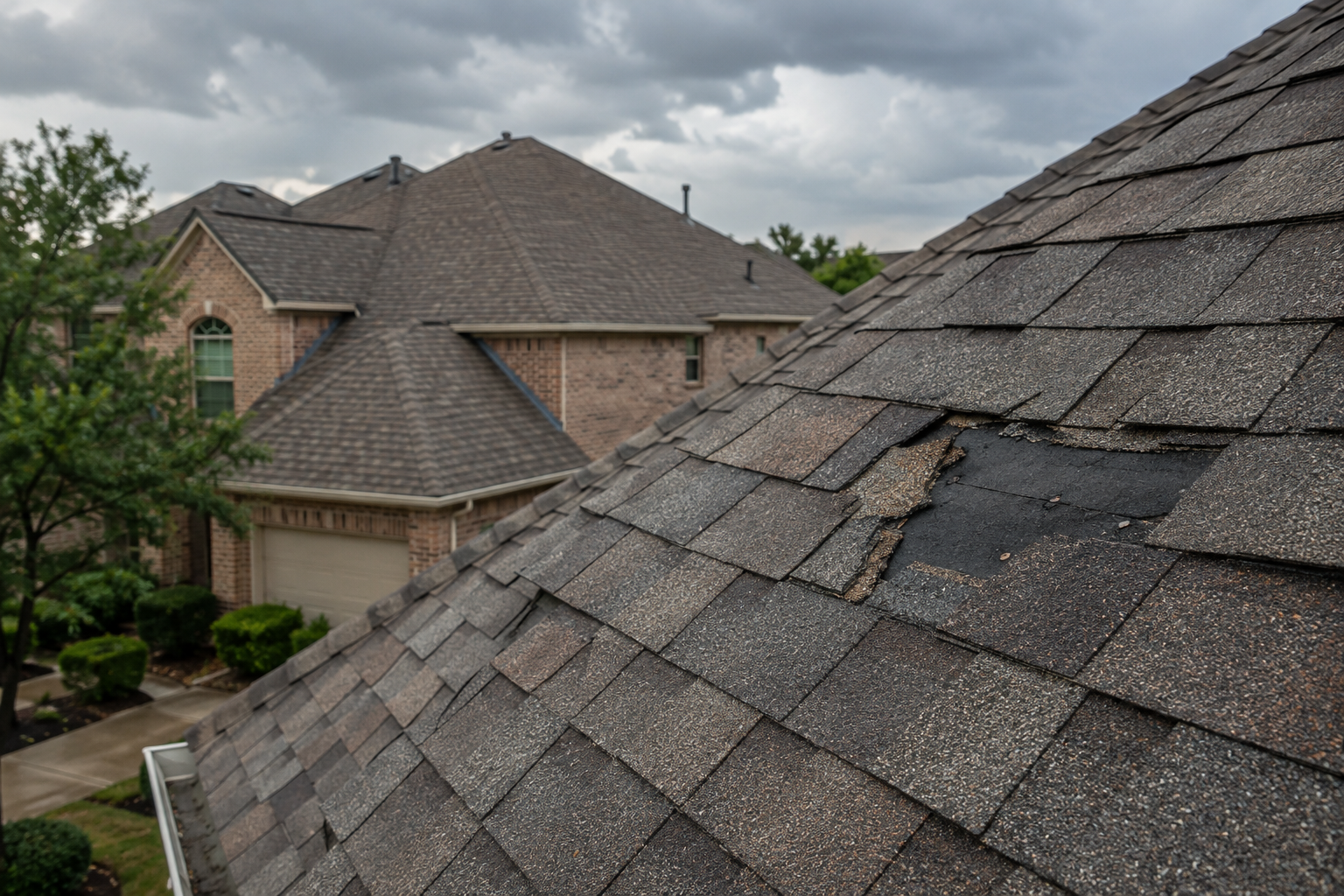
Roof Condition and Required Repairs
Preparation should address defects included in the restoration scope.
Depending on the findings, that may involve seams, flashing, fasteners, penetrations, damaged membrane, or other components.
Ask the contractor to identify the repair locations and methods.
A proposal that says “repair roof as needed” leaves important quantities and responsibilities unclear.
Where quantities remain uncertain, request an explanation of how additional findings will be documented and authorized.
The coating should be part of a defined solution, rather than a way to obscure unresolved conditions.
Concealed Moisture
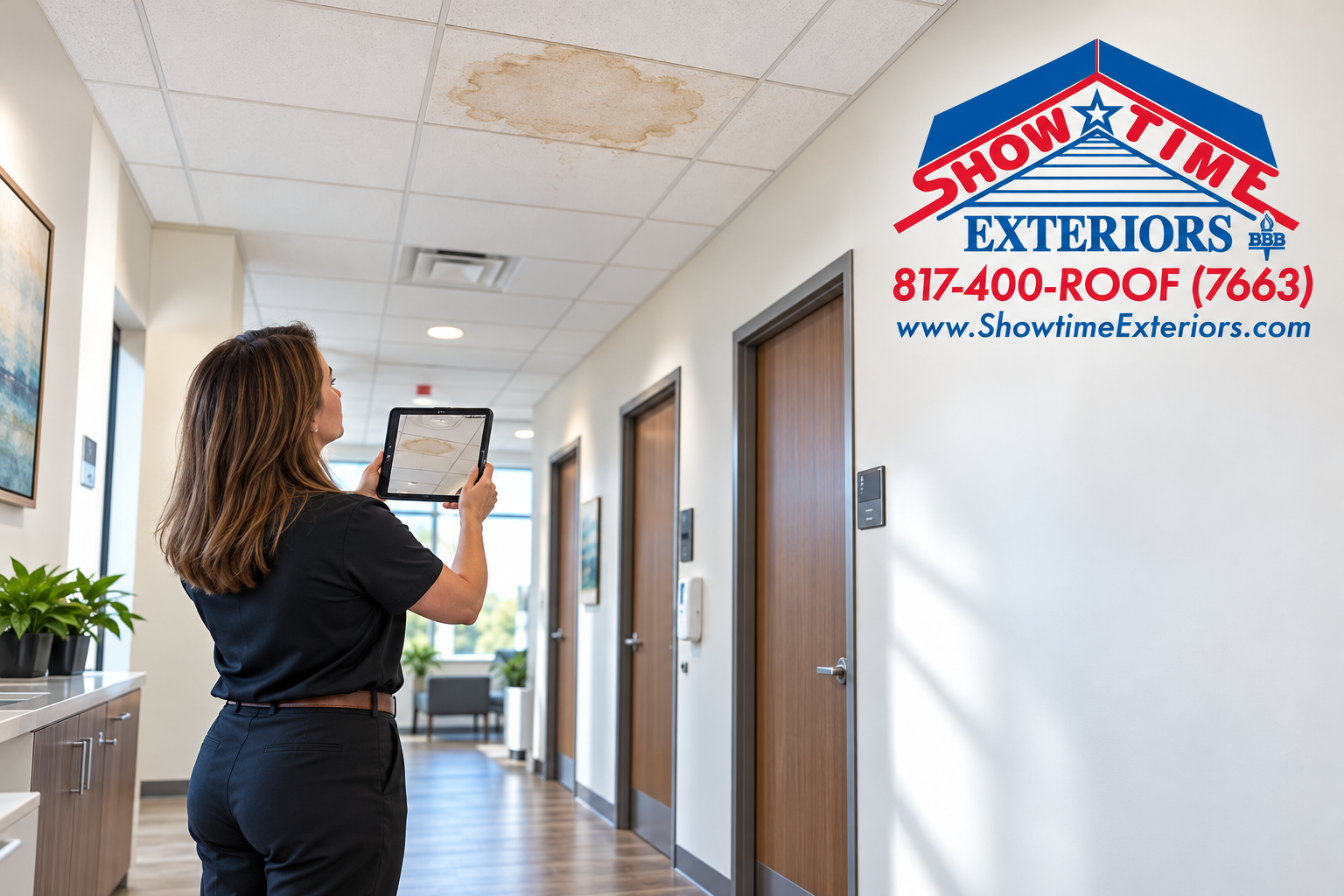
A surface inspection does not establish every condition beneath the roof.
Where moisture is suspected, ask what additional assessment is appropriate and what its limitations are.
The contractor should explain how the findings affect restoration eligibility and removal requirements.
A lower price that assumes all existing materials can remain may change if the investigation identifies unsuitable components.
Clarify whether the proposal includes defined removals, an allowance, or separate pricing.
This makes the budget more useful and helps the owner understand which assumptions remain unresolved.
Cleaning and Surface Preparation
The roof needs preparation appropriate to the selected system.
That can involve removing contamination, loose material, or other conditions that interfere with the proposed application.
Ask what cleaning method is included and how the surface will be evaluated afterward.
Also discuss protection for adjacent property, equipment, and occupied areas.
Cleaning is a project activity with its own planning needs. It should not be treated as an incidental step that requires no time or coordination.
The scope should explain when the surface is considered ready for subsequent work.
Primer and Adhesion Evaluation
Some projects require a primer or other preparation to support the specified application.
The contractor should follow the requirements for the selected product and substrate.
Ask whether adhesion testing is included, where it will occur, and how the results will influence the scope.
A test should answer a defined question. It does not replace investigating other conditions such as moisture or deterioration.
If the proposed approach depends on test results, establish that dependency before the owner accepts a final price.
Reinforcement and Detail Treatment
A roof with numerous seams, curbs, penetrations, and transitions may require more detail work than an open surface.
Ask which locations receive reinforcement and which products are specified.
Distinguish localized detail reinforcement from a fully reinforced assembly.
GAF’s Premium Acrylic HydroStop system, for example, combines designated base coat, fabric, and top coat components. That is a defined system rather than an interchangeable label for any acrylic application. GAF Roofing
The proposal should make its intended approach clear.
Specified Thickness and Application Rates
Two proposals can use similar product names while providing different application scopes.
Ask for the required application rates, number of coats, and finished thickness where specified.
These requirements should come from the selected system’s documentation.
Do not assume that “two coats” establishes an adequate quantity. The amount applied and resulting film are part of the specification.
Gaco’s A46 product data sheet, for example, connects its application instructions with a stated dry-film thickness.
Those product-specific instructions should not be transferred automatically to another coating.
Access and Building Geometry
A relatively open roof is different from several small roof sections with elevation changes and restricted access.
Building height, material handling, equipment density, and available staging areas affect how the work is organized.
Identify where deliveries, storage, and contractor access will occur.
The roof’s measured project area should also be confirmed. The building’s advertised floor area may not match the surface included in the proposal.
Clear boundaries prevent confusion about which sections and details are covered.
Occupancy and Operating Restrictions
An occupied commercial property may require work around customer hours, tenant activities, deliveries, or sensitive equipment.
Discuss those needs before the contractor finalizes pricing.
A proposal based on unrestricted access cannot be compared directly with one that includes limited work windows and additional mobilizations.
Identify the owner’s responsibilities too.
Management may need to issue tenant notices, coordinate parking changes, or arrange another trade’s attendance.
These arrangements should support a practical installation plan.
exec-4ef5a7f8-0434-4925-953d-7f3d45432e93.png
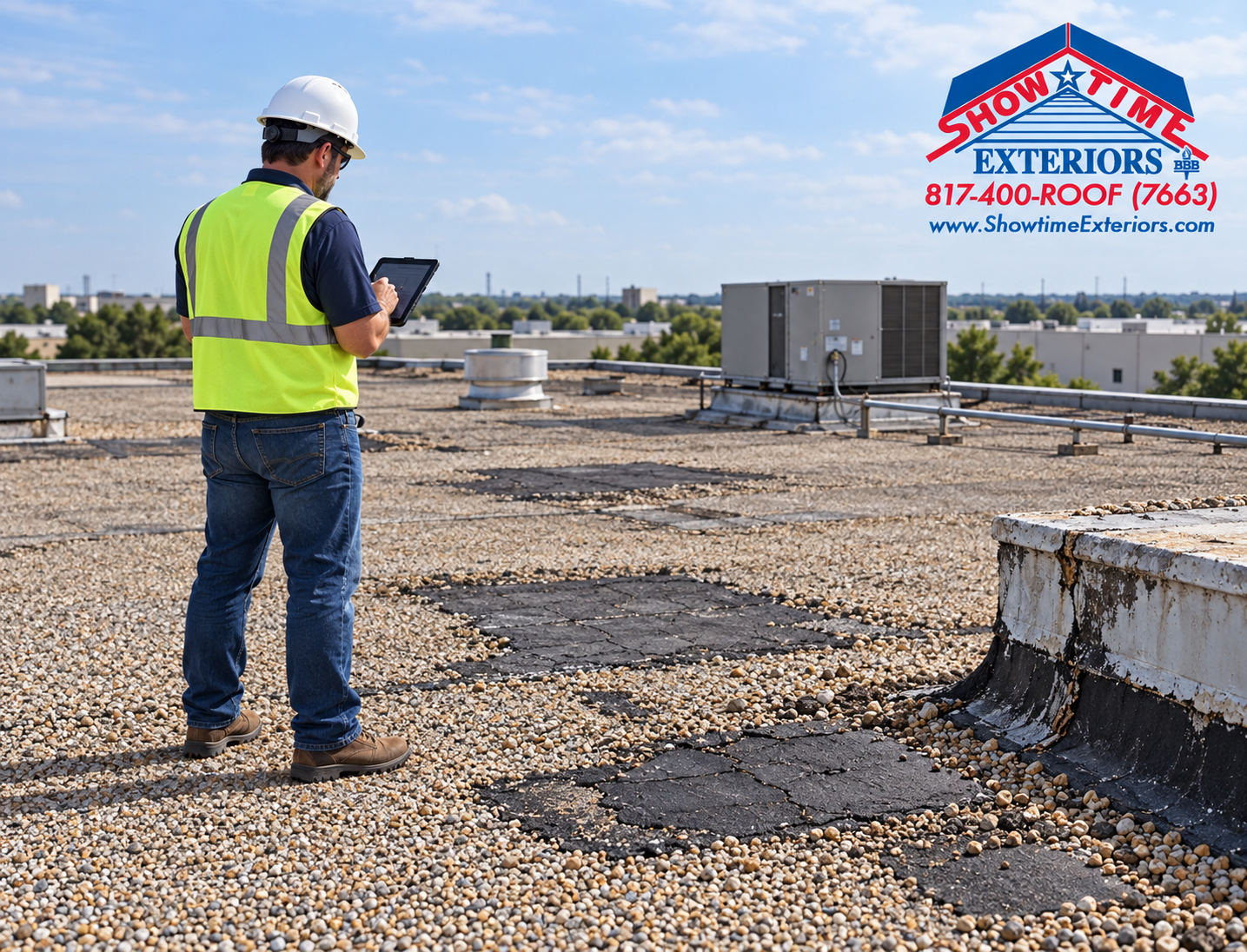
Illustration: Evaluating seams, curbs, and existing conditions helps define preparation and repair quantities before coating work begins.
Why Drainage Matters When Evaluating Acrylic Coating
Drainage is a suitability question before it becomes a pricing question.
Do not assume that a coating will correct low areas or eliminate an existing drainage problem.
For its Acrylic Top Coat, GAF specifies positive drainage and a clean, dry substrate without trapped moisture. Those requirements are specific to that product and should be checked against the system proposed for your building. gaf.com
Ask the contractor to identify observed drainage concerns and explain the proposed response.
The scope may need maintenance, localized correction, additional assessment, or consideration of another approach.
A budget that omits a known drainage issue does not give the owner a complete basis for deciding whether restoration makes sense.
How Texas Weather Can Affect the Schedule
Application conditions should follow the selected product’s requirements.
Temperature, moisture, and the weather window can affect when particular activities are appropriate.
Ask the contractor how those conditions will be evaluated and how schedule changes will be communicated.
Avoid assuming that every sunny day is suitable or that all acrylic products share the same requirements.
Gaco’s A46 documentation, for example, includes product-specific curing and weather limitations. A46 Acrylic Roof Coating
The project plan should allow the contractor to follow the applicable instructions.
Management should receive realistic scheduling expectations, including how weather-related changes could affect access arrangements or tenant notices.
Can Acrylic Coating Stop an Existing Leak?
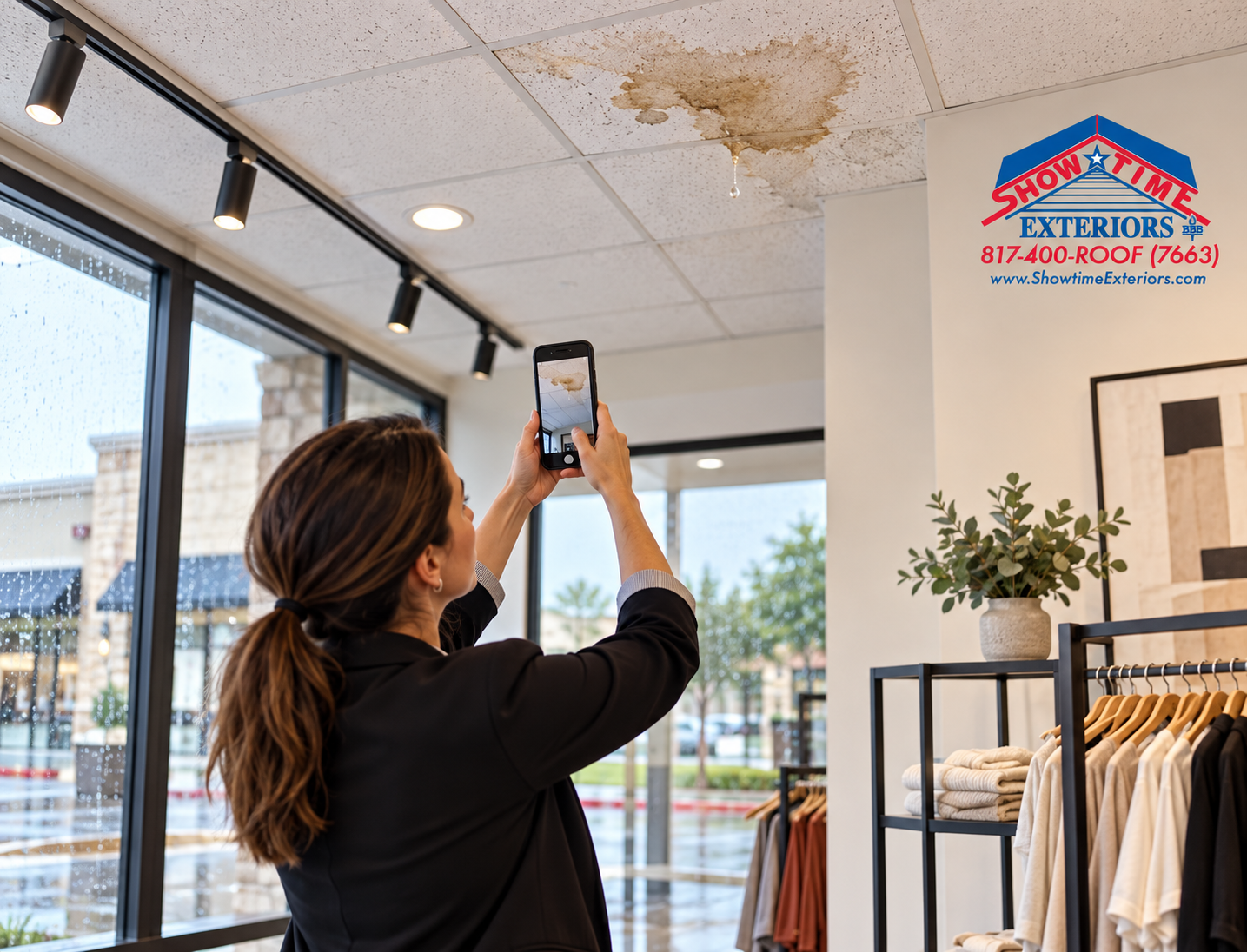
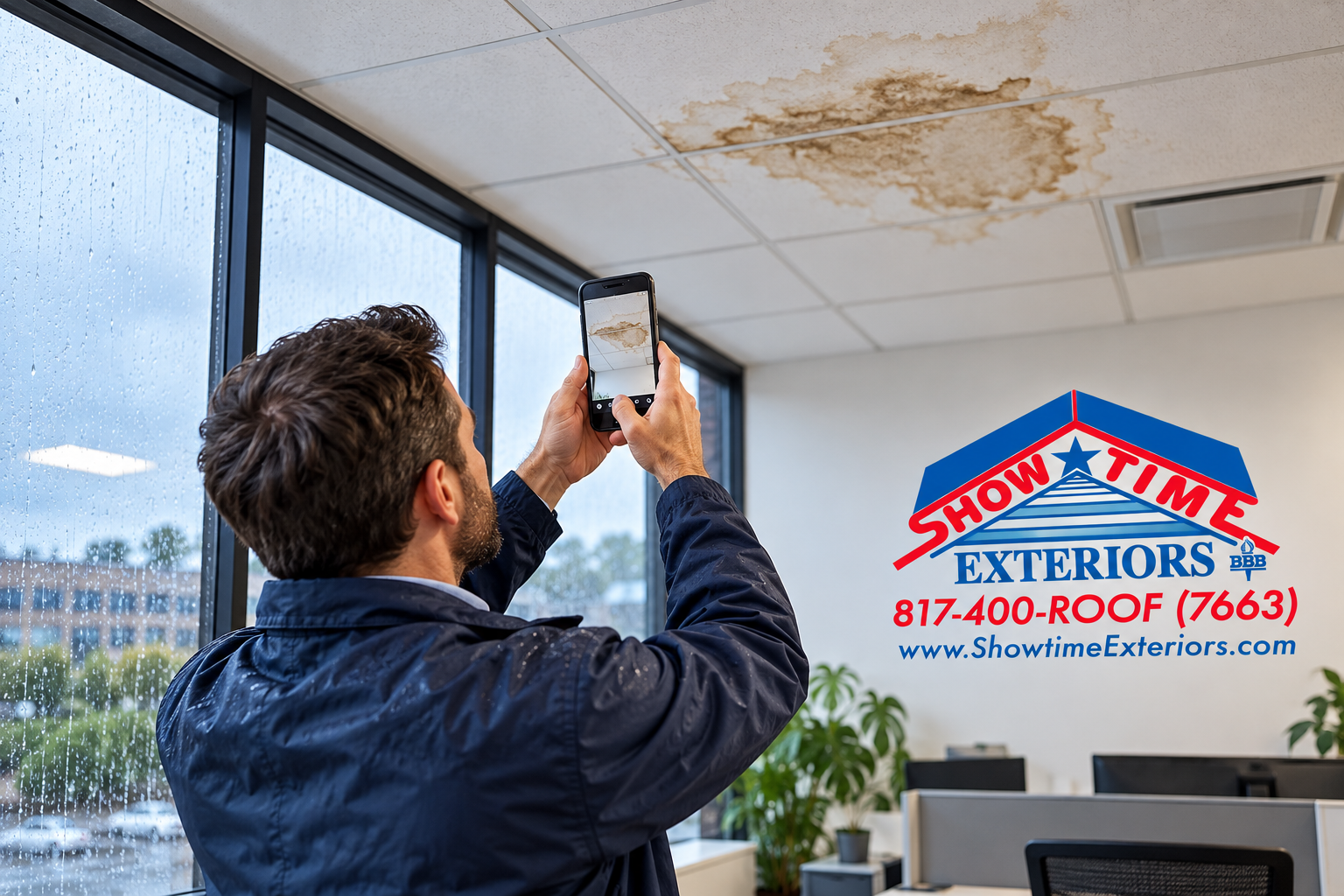
An active leak requires diagnosis.
The source might involve a damaged seam, flashing, drainage detail, equipment interface, or another building component.
A coating proposal should explain how the confirmed defects will be addressed before or as part of the specified system.
Do not accept a general promise that coating the surface will solve every reported symptom.
Ask whether the contractor has identified the likely entry pathway and whether further investigation is needed.
GAF’s comparison of coating restoration and replacement explains why the existing condition matters when considering restoration.
Is Acrylic Coating Suitable for an Aging Gravel-Surfaced BUR Roof?
An aging gravel-surfaced built-up roof requires particular caution.
Loose aggregate can make direct evaluation of the underlying surface more difficult. Existing patches, deterioration, and moisture concerns need investigation before any restoration recommendation.
Do not treat a promise to coat over the roof as proof that the assembly qualifies.
GAF’s Acrylic Top Coat data sheet specifically excludes application on gravel-surfaced roofs. That limitation applies to the named product; any different proposed assembly needs its own documented evaluation and acceptance. gaf.com
If substantial uncertainty remains beneath an aging gravel roof, request a comparison of appropriate options.
Continued surface treatment should not become a reason to postpone necessary replacement without evidence supporting that decision.
Acrylic Coating Versus Silicone or Replacement
The least expensive option on paper is useful only if it fits the property.
When Acrylic May Deserve Consideration
An acrylic system may deserve evaluation when the existing roof, drainage, preparation, and operating conditions meet its requirements.
Ask why the specific system fits the findings.
The recommendation should identify limitations as clearly as potential benefits.
When Another Coating Chemistry May Be Considered
A different coating system may be evaluated when project conditions call for different properties.
That decision requires reviewing the actual product documentation and existing assembly.
Avoid treating a broad product category as a guarantee of suitability.
GAF’s commercial coating resources introduce several coating approaches that a qualified project team can evaluate.
When Replacement May Be More Appropriate
Widespread deterioration, unsuitable underlying components, or unresolved assembly problems may shift the recommendation toward replacement.
Ask the contractor to explain the evidence supporting that conclusion.
A restoration price and a replacement price describe different scopes. Compare what each option addresses, what remains, and what future obligations the owner accepts.
How to Compare Acrylic Roof Coating Proposals
Place proposals side by side and review the same categories.
Proposal itemWhat to confirmProject areaMeasured roof sections and included detailsExisting assemblyIdentified materials and compatibility assumptionsInvestigationAssessments completed and remaining uncertaintyRepairsLocations, methods, quantities, and exclusionsPreparationCleaning and surface acceptance requirementsPrimerNamed product and applicable locationsReinforcementLocalized details or full reinforcementCoating systemNamed products and application requirementsQuality controlChecks, documentation, and acceptance processWarrantyActual coverage, conditions, and owner obligations
If one proposal is substantially lower, ask the contractor to explain the difference.
The price may reflect a different system, fewer repairs, or different assumptions.
Understanding those differences is more valuable than selecting solely by the final total.
What Should the Total Budget Include?
The coating contractor’s price may not include every owner expense.
Related work could involve equipment coordination, interior follow-up, separate investigation, or other identified tasks.
A practical budget structure is:
Defined coating scope + separately identified related work + owner contingency = preliminary project budget.
Avoid double-counting items already included.
For example, a hypothetical $100,000 coating proposal plus $8,000 of separately identified related work produces a $108,000 known subtotal before any owner contingency.
The contingency should reflect remaining uncertainty. It should not replace identifying work already known to be necessary.
Review all categories before approving funding.
What Quality-Control Records Should You Request?
Ask how the contractor will document compliance with the agreed specification.
Useful records may include preparation photographs, repair locations, product identification, application records, and the checks required for the selected system.
Agree on the documentation before installation begins.
The owner does not need to direct the applicator’s methods. The owner does need a clear account of what was installed and how completion was assessed.
At closeout, collect outstanding-item records and the applicable maintenance instructions.
Keep these documents with the building’s roof history so later service decisions do not rely on memory alone.
How Do Warranties Affect the Decision?
Review the actual warranty terms alongside the proposal.
Ask who provides the warranty, what it covers, and which exclusions apply.
Confirm any inspection, documentation, contractor eligibility, or maintenance requirements.
A stated term does not describe every coverage difference.
Also ask whether the proposal includes the work needed to qualify for the warranty being discussed.
Before closeout, establish which documents the owner will receive and whether any conditions remain outstanding.
Showtime Exteriors’ commercial roofing information provides additional context for discussing a complete project scope.
Maintenance After an Acrylic Coating Project
A coating project should lead into an ongoing maintenance plan.
Coordinate rooftop equipment visits, report new symptoms, and arrange inspections appropriate to the system and property.
Ask how future repairs should be performed and which materials are compatible.
Keep a record of service activity and observed changes.
An inexpensive unapproved patch can complicate later work, so provide service contractors with the roof information they need.
Showtime Exteriors’ commercial roof maintenance guidance explains how inspection records and follow-up support property management.
Frequently Asked Questions About Acrylic Roof Coating Costs
How Much Would Coating a 25,000-Square-Foot Roof Cost?
The price requires a defined scope.
For illustration, 25,000 square feet multiplied by an assumed $4 per square foot equals $100,000. This is a hypothetical calculation, not a quote or verified market average.
Inspection findings and the selected system determine appropriate project pricing.
Is Acrylic Coating Always Less Expensive Than Replacement?
Not necessarily for every property or scope.
An eligible restoration project and a full replacement involve different work. Extensive preparation or underlying problems can change the comparison.
Ask for technically appropriate options and a clear explanation of their differences.
Can Coating Be Applied Over Wet Insulation?
Do not assume wet components can remain beneath a proposed system.
The project team needs to establish their condition and follow the selected system’s requirements.
The proposal should explain how unsuitable materials will be identified and handled.
Does a Reflective Finish Guarantee Lower Utility Bills?
No specific savings should be assumed without an appropriate evaluation.
Building use, insulation, HVAC performance, climate, and other conditions influence results.
Treat any projected savings as a separate analysis rather than an automatic deduction from the project price.
Can an Existing Acrylic-Coated Roof Be Recoated?
Potentially, but the existing system and condition need evaluation.
Compatibility, adhesion, moisture, preparation, and detail repairs matter.
A previously coated appearance does not establish that another application is appropriate.
How Long Will the Project Take?
A reliable schedule depends on roof area, preparation, repairs, application requirements, weather, and access.
Ask for the anticipated sequence and assumptions.
The schedule should allow the contractor to follow product requirements rather than forcing application into an unsuitable window.
What Is the Best First Step Toward an Accurate Estimate?
Arrange a roof assessment and gather available reports, repair records, and leak history.
Share operating restrictions and planned equipment changes.
That information helps replace generic assumptions with a property-specific scope.
Discuss Acrylic Roof Coating With Showtime Exteriors
A useful coating estimate begins by establishing whether the roof qualifies for the proposed system.
From there, the project team can define repairs, preparation, reinforcement, application requirements, and verification.
When contacting Showtime Exteriors, share your building location, available roof history, recurring symptoms, and operating concerns.
These details help the team determine the next steps for an assessment and a practical comparison of appropriate roofing options.
Contact Showtime Exteriors or call [817-400-ROOF (7663) (line 8174007663)](tel:8174007663) to discuss acrylic coating for your commercial building in Texas.