



Texas Hail-Damaged Roof: What Property Owners Should Do Next
Texas Hail-Damaged Roof | What Property Owners Should Do Next

Texas hailstorms can damage a commercial roof in minutes, but the full effects may not become visible for weeks or months. Large punctures, broken skylights, dented metal, and active leaks are obvious warning signs. Other problems—such as bruised membranes, fractured cover boards, weakened seams, damaged coatings, displaced flashing, and moisture entering the roof assembly—can remain hidden from anyone looking up from the parking lot.
After a hailstorm, property owners should not assume that the roof is fine because it is not leaking. They also should not assume that every dent means the entire roof must be replaced. The responsible next step is a safe, professional evaluation that documents what actually happened and distinguishes functional storm damage from cosmetic marks, aging, and unrelated maintenance conditions.
A timely inspection of a Texas hail-damaged roof helps commercial property owners identify urgent vulnerabilities, protect the building from the next storm, preserve a factual record, and make an informed decision about repair, restoration, or replacement.
This guide explains what commercial property owners, facility managers, property managers, and real estate professionals should do after hail affects a building in Texas, North Texas, or the DFW area.
Why Hail Can Be So Damaging to Commercial Roofs
Hail develops inside strong thunderstorms and can strike buildings at considerable speed. The National Weather Service classifies hail measuring one inch in diameter—approximately quarter size—or larger as severe. Hail this size can damage roofs, vehicles, windows, equipment, and other property.
The effect on a commercial roof depends on more than hailstone diameter. Damage can vary according to:
- Hailstone density, shape, and hardness
- Wind speed and direction
- Angle of impact
- Duration and concentration of hail
- Roof surface temperature
- Roof type and material
- Age and condition of the system
- Cover board and insulation beneath the surface
- Deck construction and attachment
- Existing repairs or vulnerable details
- Rooftop equipment and penetrations
Two neighboring buildings may experience different roof damage during the same storm. A newer membrane over a durable cover board may respond differently than an aged membrane over softer insulation. A metal panel may show visible denting while another roof has less visible but more functionally significant punctures.
This is why hail size alone does not determine the repair scope.
Step 1: Wait Until the Severe-Weather Threat Has Passed
Hail often arrives with lightning, high winds, heavy rain, flash flooding, and sometimes tornadoes. Continue monitoring official weather alerts and do not allow anyone onto the roof while dangerous conditions remain.
Before approaching the building, look for:
- Downed electrical lines
- Broken windows and falling glass
- Loose metal, signs, gutters, or rooftop equipment
- Fallen trees and branches
- Floodwater around entrances or electrical systems
- Fire, smoke, sparks, or a gas odor
- Sagging ceilings or visible structural movement
- Additional storms approaching
Contact emergency services, the utility provider, or other appropriate authorities when immediate life-safety, fire, electrical, gas, flooding, or structural hazards exist.
Step 2: Protect Occupants and Interior Areas
If water is entering the building, establish a restricted area below the leak. Keep occupants away from wet electrical equipment, sagging ceilings, slippery floors, and damaged fixtures.
Watch for:
- Water dripping through light fixtures
- Wet outlets, cords, equipment, or electrical panels
- Bulging ceiling tiles or drywall
- Falling ceiling-grid components
- Standing water near machinery or technology
- Wet emergency exits or walkways
- Damaged fire-protection or alarm systems
Do not touch wet electrical equipment or stand in water while operating switches or plugs. Contact a qualified electrician or emergency professional when water may have reached electrical systems.
When conditions are safe, place containers beneath drips, protect portable inventory, and use barriers and wet-floor signs. Avoid puncturing a sagging ceiling unless qualified professionals determine that it can be done safely.
Step 3: Document the Hailstorm and Property Conditions
Early documentation helps establish what occurred and creates a useful record for roofing, ownership, and insurance discussions.
From a safe location, photograph:
- Hailstones next to a ruler or recognizable object
- Hail accumulation around the property
- Dented gutters, downspouts, metal trim, and HVAC equipment
- Broken windows, skylights, signs, and exterior finishes
- Fallen branches and storm debris
- Water entering the building
- Damaged ceilings, walls, floors, inventory, and equipment
- Temporary containment measures
If it is safe to collect hail, place representative stones in a sealed bag or container and freeze them. Record the date, time, property address, and measurement. The National Weather Service advises measuring hail by diameter rather than by irregular shape or circumference.
Create an incident log containing:
- Approximate time hail began and ended
- Estimated hail size
- Wind and rainfall observations
- Weather alerts received
- Areas where leaks or damage were discovered
- Tenant and employee reports
- Safety actions taken
- Contractors and emergency services contacted
- Temporary mitigation performed
Save security footage, weather notifications, pre-storm roof photos, inspection reports, warranties, and repair history.
Step 4: Do Not Walk the Roof Yourself
Hail-covered and rain-soaked commercial roofs can be extremely slippery. Storm damage may also leave punctures, loose materials, broken skylights, and weakened deck areas that are not visible.
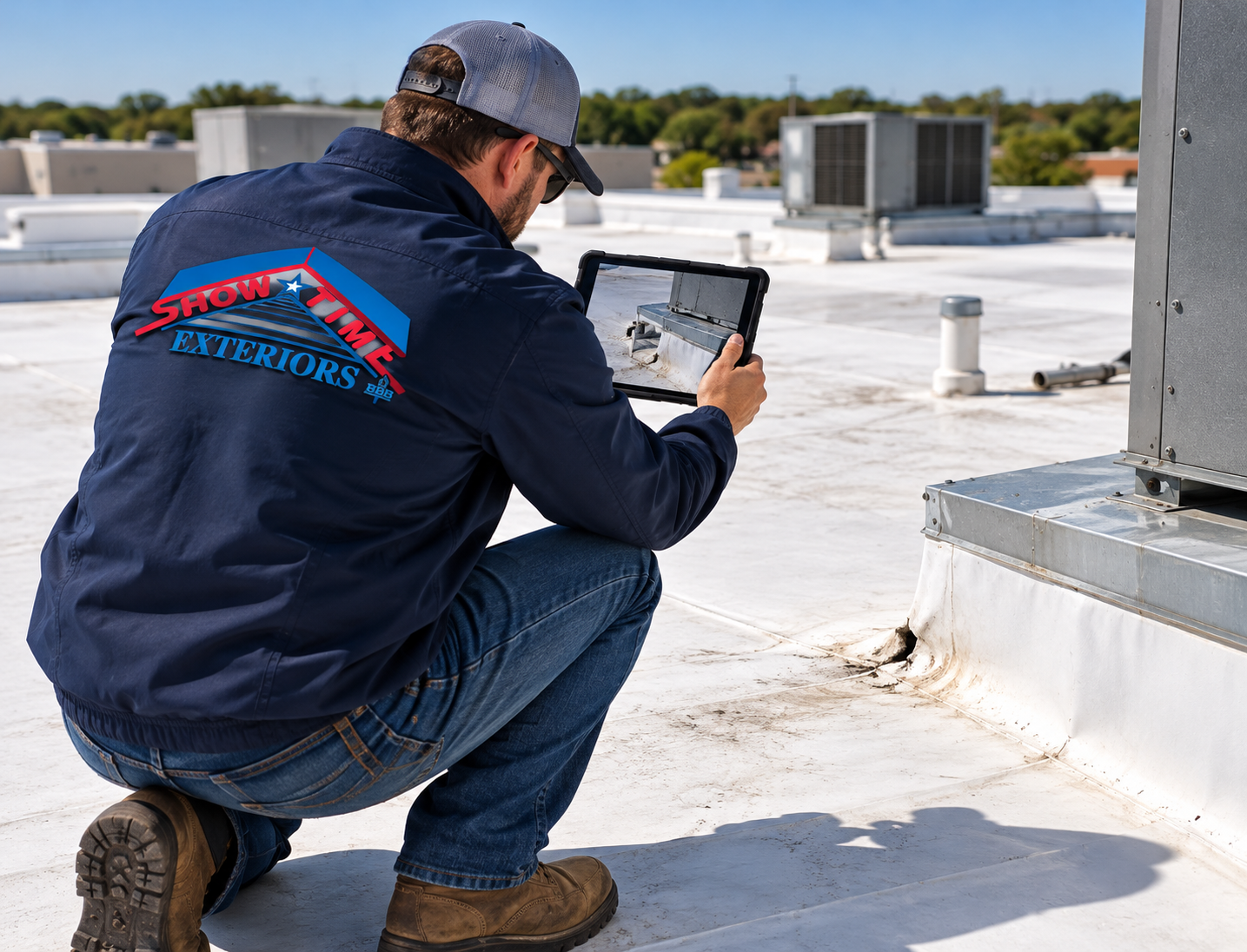
Do not send untrained maintenance personnel onto the roof to photograph dents or collect hailstones. A professional inspection should be completed using appropriate access, fall protection, and site-safety procedures.
Ground-level signs can suggest that the property experienced damaging hail, but they cannot establish the roof’s condition. Dented vehicles, HVAC fins, gutters, and metal trim are useful indicators of storm intensity—not substitutes for a roof inspection.
Step 5: Schedule a Professional Commercial Roof Inspection
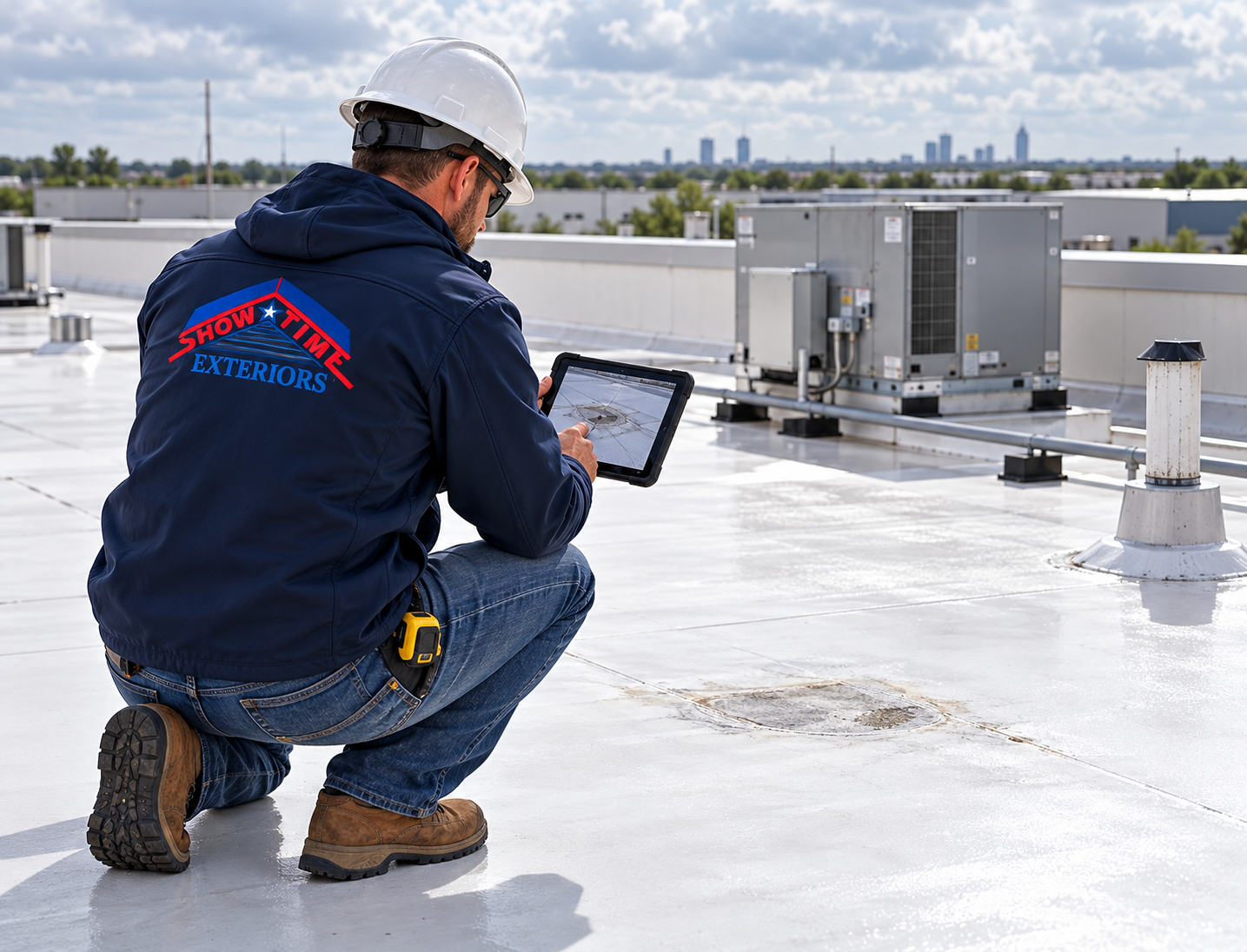
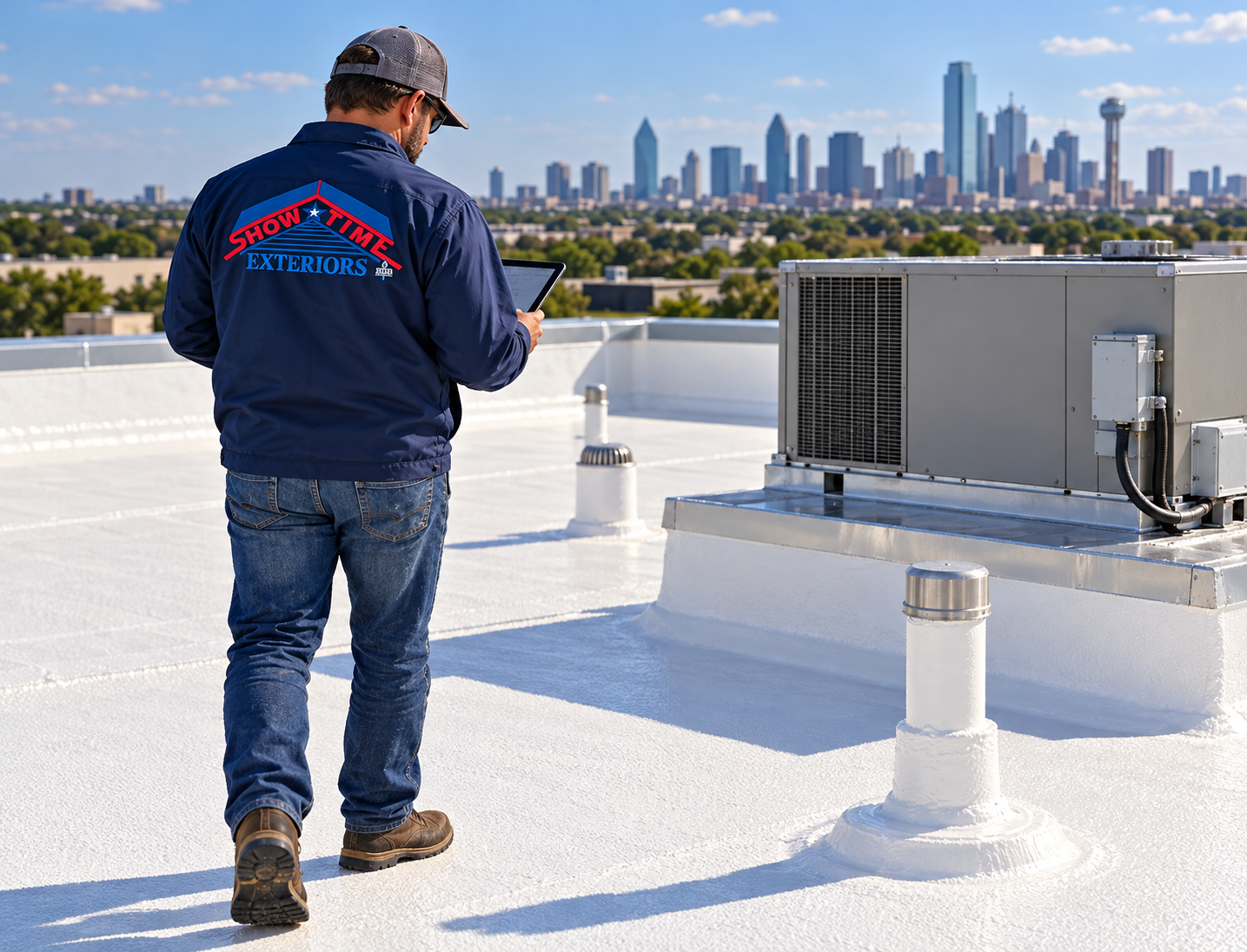
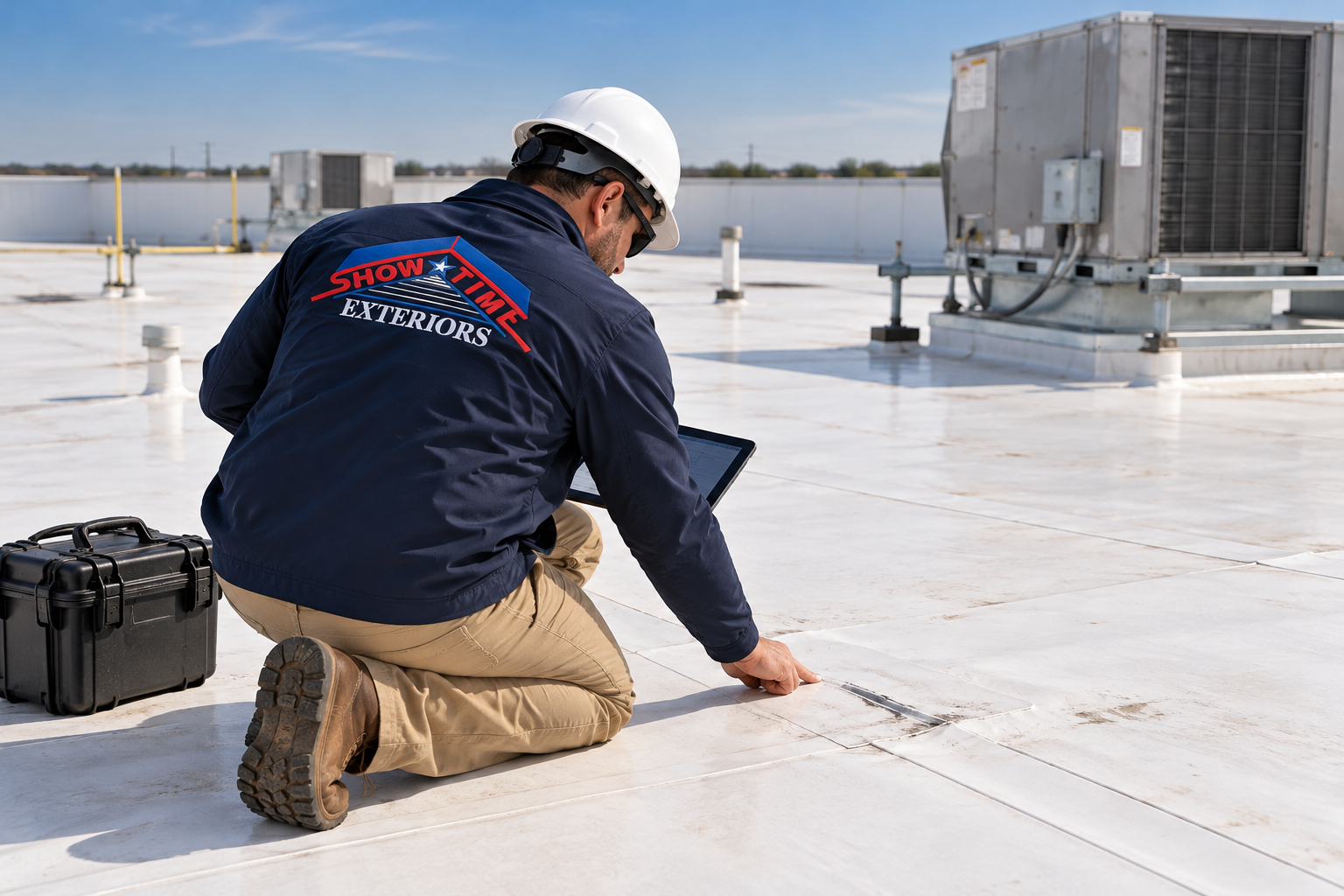
A qualified commercial roofing contractor should inspect the complete roof system, not just the location of an interior leak or the most visibly dented area.
A hail-damage inspection may include:
- Roof membranes, coatings, metal panels, modified bitumen, built-up roofing, shingles, or tiles
- Seams, laps, welds, fasteners, plates, and attachment points
- Cover boards and insulation where evaluation is appropriate
- Perimeter edges, coping, fascia, parapets, and wall transitions
- HVAC curbs, vents, pipes, conduit, and equipment supports
- Skylights, roof hatches, smoke vents, and daylighting systems
- Drains, scuppers, gutters, downspouts, and overflow systems
- Punctures, fractures, splits, bruises, and surface loss
- Dents and deformation in metal components
- Previous repairs and maintenance conditions
- Interior areas below suspected damage
The inspection should answer:
- Did hail functionally damage the roof or related components?
- Is the roof currently watertight?
- Are there punctures or weakened areas that may leak later?
- Was the cover board, insulation, deck, or attachment affected?
- Is temporary protection needed?
- Can damage be repaired, or is a larger scope justified?
- What documentation should ownership retain?
Common Signs of Hail Damage on Commercial Roofs
Punctures and tears
Hail can puncture single-ply membranes, coatings, flashing, and other materials. Small openings may be difficult to see but can allow water into the assembly.
Membrane bruising
An impact can damage reinforcement or underlying materials without producing a clean hole. The surface may feel different or display a circular impact pattern, but evaluation should be performed by someone familiar with the system.
Fractured cover board or insulation
Hail can compress or fracture materials beneath the membrane. Repeated foot traffic or future weather may worsen an area that initially appears watertight.
Opened seams and flashing
Hail and accompanying wind can stress seams, penetrations, curbs, perimeter metal, and transition details.
Damaged roof coatings
Coatings may crack, chip, puncture, delaminate, or lose protective thickness. Impact may also damage the substrate beneath the coating.
Metal dents and deformation
Metal panels, coping, vents, gutters, and equipment may show dents. Some dents are primarily cosmetic, while others affect seams, fasteners, drainage, protective finishes, or panel performance.
Damaged modified bitumen or built-up roofing
Hail may displace granules or gravel, bruise plies, fracture surfacing, split material, or affect flashing and underlying insulation.
Broken skylights and rooftop components
Skylight domes, smoke vents, equipment covers, screens, and plastic components may crack or shatter, creating immediate openings.
HVAC damage
Condenser fins, coils, fan guards, panels, and equipment housings may be dented or damaged. Mechanical inspection may be needed in addition to roof evaluation.
Cosmetic Damage Versus Functional Hail Damage
One of the most important distinctions after a hailstorm is whether an observed mark affects the roof’s ability to perform.
Cosmetic damage changes appearance without necessarily reducing watertightness, attachment, drainage, durability, or expected service. Functional damage affects—or may reasonably be expected to affect—the roofing system’s ability to perform.
Examples of potentially functional concerns include:
- A punctured membrane
- A fractured seam or weld
- A split or displaced flashing detail
- Damage to attachment components
- A dent that opens a metal seam
- Cracked skylights or equipment covers
- Exposed substrate from coating loss
- Impact damage to cover board or insulation
- Water entering the assembly
A visible dent should not automatically be dismissed as cosmetic, nor should it automatically justify replacement. The contractor should explain how the finding affects the specific material and assembly.
Why a Hail-Damaged Roof May Not Leak Immediately
Some hail impacts create immediate openings. Others weaken the roof without producing visible interior water during the first storm.
Delayed leakage may occur because:
- A small puncture initially remains closed
- The membrane is damaged but not fully penetrated
- Water has entered insulation without reaching the ceiling
- A seam opens further with thermal movement
- Foot traffic enlarges a weakened area
- Another wind or rain event stresses the impact point
- Water travels before appearing inside
The absence of a ceiling stain is good news, but it is not proof that the roof escaped damage.
Step 6: Address Emergency Openings and Active Leaks
If hail breaks skylights, punctures the roof, or causes active water entry, temporary work may be needed before permanent repairs.
Emergency measures may include:
- Securing loose materials
- Temporarily sealing documented punctures
- Protecting broken skylights or roof openings
- Stabilizing damaged flashing
- Clearing drainage pathways when safe
- Installing compatible temporary protection
- Containing interior water
Emergency work should be completed by qualified professionals under safe conditions. Random sealants, uncontrolled fasteners, and loose tarps can damage the existing roof, trap moisture, or detach during high winds.
Ask the contractor to photograph the condition before and after temporary work and provide a written description of materials and limitations.
Step 7: Evaluate Hidden Moisture
Hail frequently arrives with heavy rain. Water can enter through punctures, broken skylights, displaced flashing, or wind-damaged seams and remain inside the roof assembly.
Potential signs of concealed moisture include:
- Recurring ceiling stains
- Musty odors
- Soft or swollen interior materials
- Damp insulation
- Rust or corrosion
- Peeling paint or wall coverings
- Unusual indoor humidity
- Water appearing away from the suspected opening
Depending on the roof type and observed damage, the contractor may recommend moisture evaluation or selective investigation. Interior restoration professionals may also be needed.
Hidden moisture can:
- Reduce insulation performance
- Corrode metal decking and fasteners
- Deteriorate wood, gypsum, and ceiling materials
- Create mold or indoor environmental concerns
- Increase the ultimate repair area
- Cause recurring leaks after surface-only repairs
A permanent scope should address wet and damaged materials, not simply cover them.
Step 8: Review Repair, Restoration, and Replacement Options
Hail damage does not automatically require full replacement. The proper solution depends on the roof type, impact pattern, functional damage, moisture, deck condition, system age, repairability, code requirements, and warranty.
No storm-related roofing work
An inspection may determine that visible marks did not functionally damage the roof. Routine maintenance items should be documented separately.
Targeted repairs
Isolated punctures, open seams, damaged flashing, or broken components may be repairable when the surrounding system remains serviceable.
Sectional or partial replacement
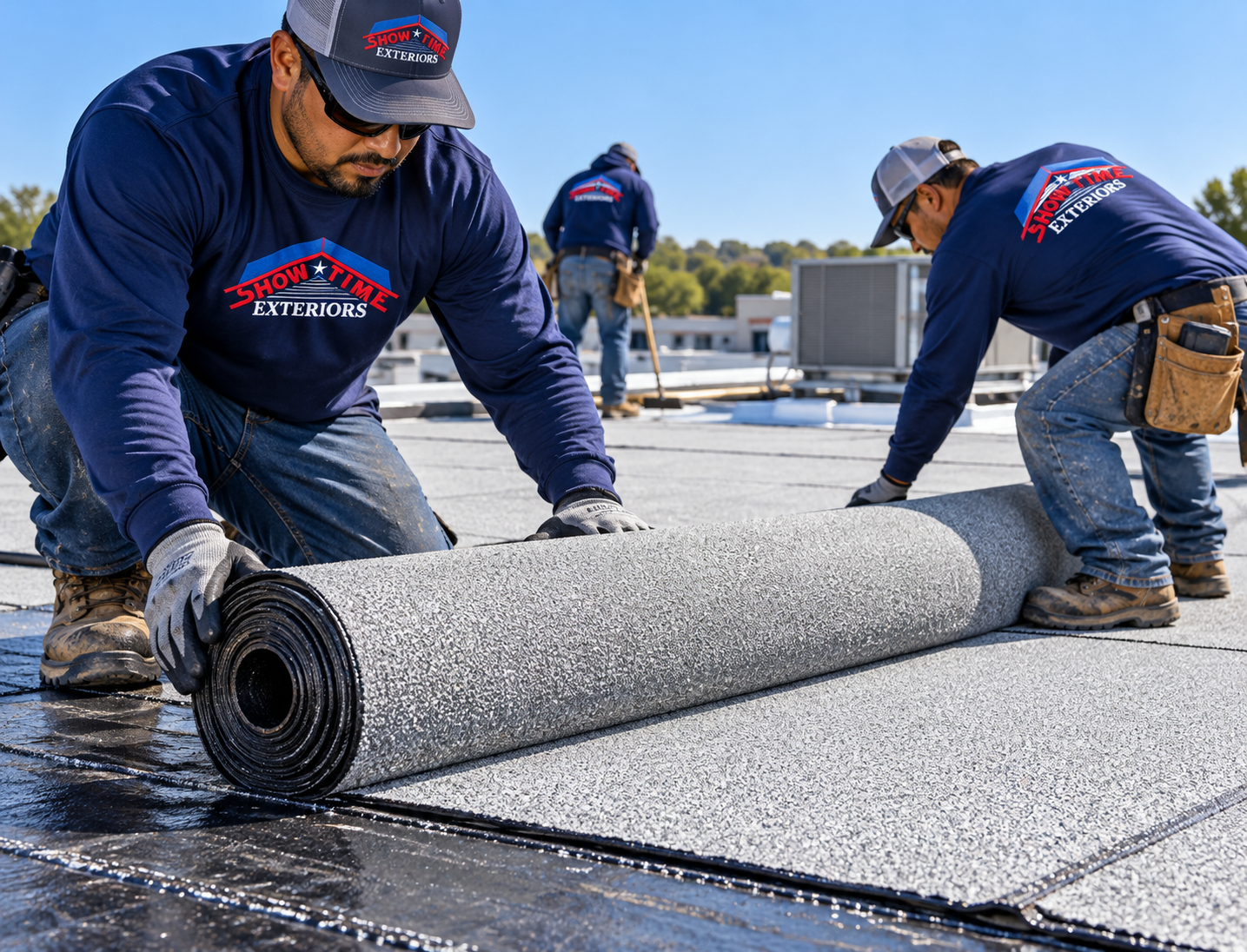
A concentrated hail path, damaged roof area, or wet section may require removal and rebuilding without replacing the entire roof.
Roof restoration
Certain systems may qualify for restoration after damaged and wet materials are addressed, provided the remaining substrate is suitable.
Full replacement
Replacement may be justified when functional damage is widespread, numerous components are affected, moisture is extensive, attachment is compromised, or the existing roof cannot be repaired reliably.
Ask for a written scope separating:
- Immediate mitigation
- Hail-related functional damage
- Cosmetic observations
- Wind or debris damage from the same storm
- Pre-existing maintenance conditions
- Moisture-related work
- Permanent repair options
- Replacement considerations
- Optional resilience improvements
Step 9: Review Warranty Requirements
If the roof is under a manufacturer or contractor warranty, review the notice and repair requirements. Unauthorized materials or repairs may affect coverage.
Provide the contractor with:
- Manufacturer and system information
- Installation date
- Warranty number
- Approved contractor requirements
- Prior warranty inspection records
- Previous repair documentation
The contractor may need to coordinate with the manufacturer or follow system-specific repair procedures. Keep copies of all notices and completion records.
Step 10: Organize Insurance Documentation
Commercial property policies vary. Review your policy and contact your licensed insurance agent, broker, or carrier for guidance about notice deadlines, deductibles, exclusions, endorsements, documentation, emergency mitigation, and claim procedures.
The roofing contractor documents roof conditions and prepares scopes or estimates. Coverage determinations belong to the insurer, while policy and legal questions should be directed to qualified insurance or legal professionals.
Organize:
- Policy and contact information
- Date and approximate time of the hailstorm
- Hail photographs and measurements
- Weather alerts and available official storm records
- Exterior and interior damage photos
- Tenant and employee reports
- Roof inspection findings
- Emergency-repair documentation
- Moisture and restoration records
- Repair, restoration, or replacement estimates
- Prior roof inspections and maintenance history
- Warranty documents
- Damaged equipment and inventory lists
- Receipts, invoices, and business-interruption records when relevant
Do not discard damaged components before they are documented unless they create a safety hazard. Keep original files and backups.
What Property Owners Should Not Do After a Hailstorm
Do not walk the roof yourself
Hail and rain make surfaces slippery, while impact damage may create hidden weak areas and broken skylights.
Do not wait for an interior leak
The roof may have functional damage or moisture within the assembly without visible dripping.
Do not assume every dent requires replacement
Ask how the observed condition affects watertightness, attachment, durability, drainage, and serviceability.
Do not dismiss every dent as cosmetic
Panel deformation may affect seams, coatings, fasteners, or drainage. System-specific evaluation is necessary.
Do not apply random sealants or coatings
Incompatible materials may not perform, may hide damage, and may interfere with warranties or later evaluation.
Do not authorize work without documentation
Require photographs, written findings, and a defined scope.
Do not rely only on a drone or ground-level review
Images can help identify areas of concern but may not reveal membrane bruising, seam conditions, underlying damage, or moisture.
Do not accept guaranteed insurance outcomes
Contractors can document and estimate roofing work, but they do not control coverage decisions.
Do not delay permanent repairs after temporary protection
Temporary patches and coverings have limitations and require follow-up.
Special Considerations by Commercial Roof Type
TPO and PVC roofs
Inspectors may look for punctures, bruising, reinforcement damage, open welds, fractured cover board, and impact around penetrations or fasteners.
EPDM roofs
Potential issues include tears, punctures, seam damage, flashing displacement, and impact to underlying insulation or cover board.
Metal roofing
Evaluation should consider dents, seams, clips, fasteners, coatings, drainage, transitions, and whether panel deformation affects performance.
Modified bitumen and built-up roofing
Hail may fracture surfacing, displace granules or gravel, bruise plies, split materials, and affect flashing or insulation.
Coated roof systems
Inspectors should evaluate punctures, cracks, coating loss, adhesion, and damage to the underlying substrate.
Steep-slope commercial roofs
Shingles, tile, slate, or architectural elements may crack, break, lose surfacing, or expose underlayment and decking.
Mixed-system properties
Many buildings combine low-slope roofing, metal canopies, steep-slope entrances, wall panels, and rooftop equipment. Each component should be evaluated according to its material and function.
Questions to Ask After the Hail-Damage Inspection
- What hail-related conditions did you document?
- Which findings are functional and which appear cosmetic?
- Are there punctures, open seams, or active vulnerabilities?
- Was the cover board, insulation, deck, or attachment affected?
- Is moisture likely to be present within the assembly?
- Did accompanying wind or debris cause additional damage?
- Which conditions appear to predate the storm?
- Is emergency work needed now?
- Can damage be repaired, or is a larger scope justified?
- Were skylights, penetrations, drains, perimeters, and equipment inspected?
- Could proposed work affect the roof warranty?
- What photographs and written documentation will we receive?
- What should be monitored during the next rain?
- What is the proposed permanent-work timeline?
A qualified contractor should explain the evidence and options clearly without using fear or pressure.
How Soon Should a Hail-Damaged Roof Be Inspected?
If hail created active leaks, broken skylights, displaced materials, or safety hazards, request professional assistance immediately when weather and access conditions allow.
When there is no visible leak, schedule a timely inspection after significant hail. Early documentation provides a clearer record, while prompt repairs can protect weakened areas before another storm.
Hail events often affect many properties at once, so reputable contractors may become busy quickly. Owners with current roof records and an established commercial roofing relationship are better positioned to respond efficiently.
Prepare for the Next Texas Hailstorm
After inspection and repairs, improve the property’s roof-management plan.
Maintain:
- Current roof plans and warranties
- Routine inspection and maintenance records
- Pre-storm roof photographs
- A map of drains, penetrations, and rooftop equipment
- Approved roof-access procedures
- Emergency roofing and restoration contacts
- Tenant and employee reporting instructions
- Interior water-containment supplies
- Secure backups of property documents
Routine inspections establish a baseline. When the pre-storm condition is documented, it is easier to identify what changed during a hail event.
Choosing a Texas Commercial Hail-Damage Contractor
Look for a contractor that:
- Has experience with commercial roof systems
- Understands hail, wind, and storm damage
- Serves North Texas and DFW
- Uses appropriate access and safety procedures
- Provides photographs and written findings
- Distinguishes functional damage from cosmetic observations
- Separates hail damage from pre-existing maintenance
- Explains repair, restoration, and replacement options plainly
- Uses compatible, system-specific materials
- Coordinates with manufacturers and other specialists when necessary
- Works around tenants and business operations
- Provides a defined scope and communication process
The right contractor should help ownership make an evidence-based decision.
Frequently Asked Questions About Texas Hail-Damaged Roofs
Can hail damage a commercial roof without causing a leak?
Yes. Hail may bruise membranes, fracture cover board, damage coatings, weaken seams, or dent metal without producing immediate interior water.
What size hail can damage a roof?
Damage depends on the roof and storm conditions. The National Weather Service classifies hail one inch in diameter or larger as severe, but smaller hail may affect aged or vulnerable materials.
Does every hail-damaged roof need replacement?
No. Some roofs need no storm-related work, some require targeted repairs, and others justify partial or full replacement. The scope should be based on documented functional damage.
Are dents in a metal roof only cosmetic?
Sometimes, but not always. Dents may affect seams, fasteners, coatings, drainage, or panel performance. A system-specific inspection is required.
Should I call a roofer or my insurance company first?
Review the policy and follow its notice requirements. A professional roof inspection can provide factual documentation, while the insurance representative explains the claim process.
Can a drone identify all hail damage?
No. Drone imagery may locate visible patterns but cannot reliably evaluate every seam, membrane condition, underlying material, or moisture concern.
What should a hail inspection report include?
A useful report should identify the property and date, document observed conditions with photographs, distinguish functional and cosmetic findings, note inaccessible areas, separate storm effects from maintenance, and recommend next steps.
Can hail damage rooftop HVAC equipment?
Yes. Fins, coils, guards, panels, covers, and connections may be affected. A qualified mechanical contractor may need to inspect the equipment.
Should the roof be inspected again after repairs?
A completion review can confirm that the documented scope was addressed. The roof should then return to routine inspection and maintenance.
Schedule a Texas Commercial Hail-Damage Roof Inspection
Hail damage is not always obvious, and waiting for a visible leak may allow a manageable roofing issue to spread into insulation, decking, ceilings, equipment, inventory, and occupied spaces.
Showtime Exteriors Commercial Roofing helps commercial property owners, facility managers, property managers, and real estate professionals across North Texas and DFW evaluate roofs after hail and severe weather. Our team documents visible conditions, identifies urgent vulnerabilities, distinguishes repairable damage from broader system concerns, and explains practical repair or replacement options.
Call Showtime Exteriors at 817-400-7663 or visit ShowtimeExteriors.com to book a free commercial roof inspection and roof-grade assessment.
Do not wait for the next North Texas storm to expose hidden impact damage. Schedule a professional evaluation and protect the property, its occupants, and its operations.