



How Much Does Fabric-Reinforced Coating Cost for a Commercial Building in Texas?
Pricing ranges, eligibility, preparation, reinforcement, warranty choices, and cost controls for commercial property owners
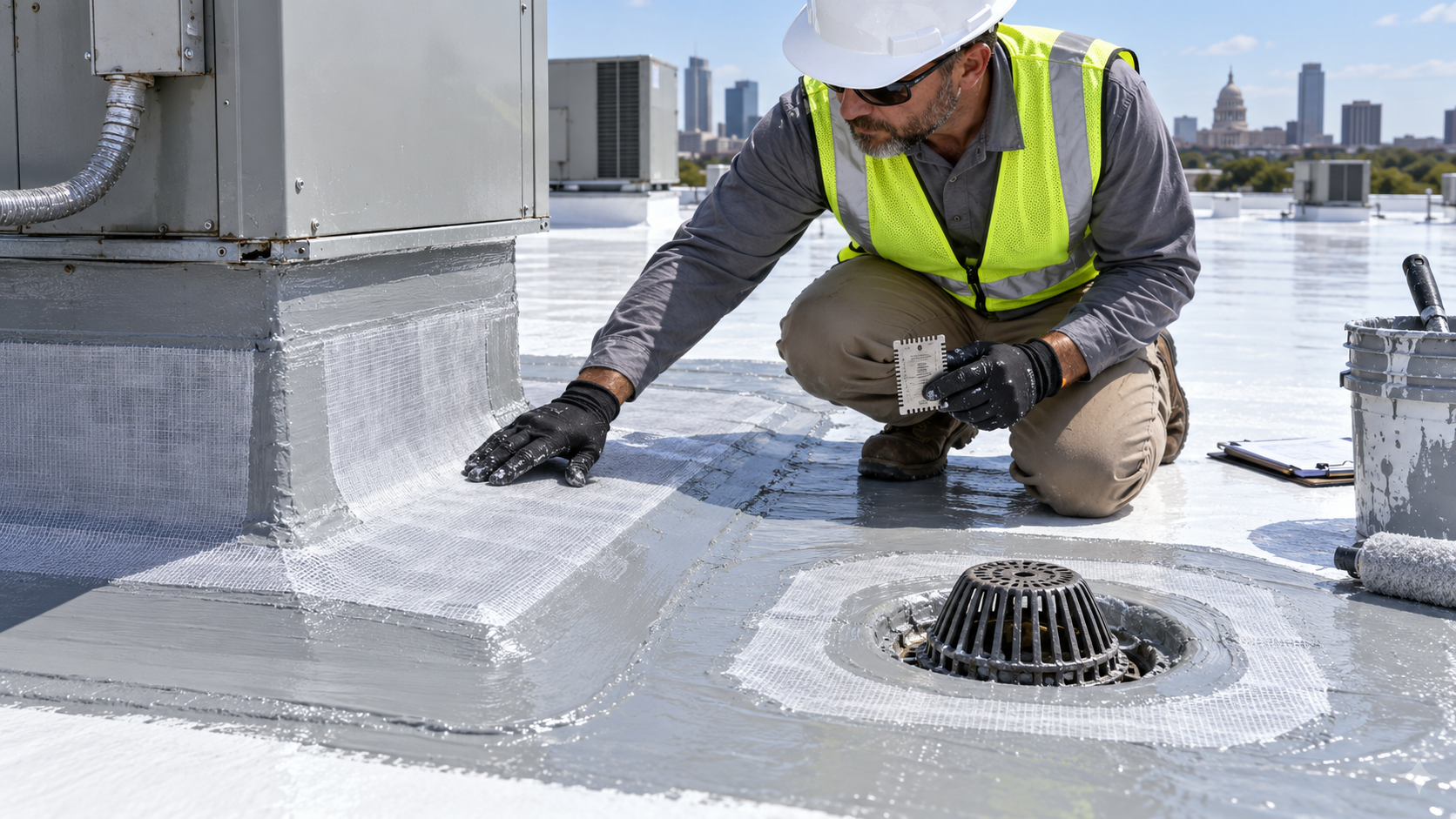
Quick cost answer: For early budgeting in Texas, a professionally installed fabric-reinforced commercial roof coating system may commonly fall around $4.00 to $8.00 per square foot when the existing roof is dry, stable, compatible, and eligible for restoration. A 20,000-square-foot roof could therefore begin around $80,000 to $160,000 before major deck work, widespread wet-insulation removal, drainage reconstruction, difficult access, extensive metal replacement, premium warranty requirements, or unusual detailing. This is a planning range—not a Showtime Exteriors quote. A roof inspection, moisture investigation, measurements, system specification, and project-specific scope are required for reliable pricing.
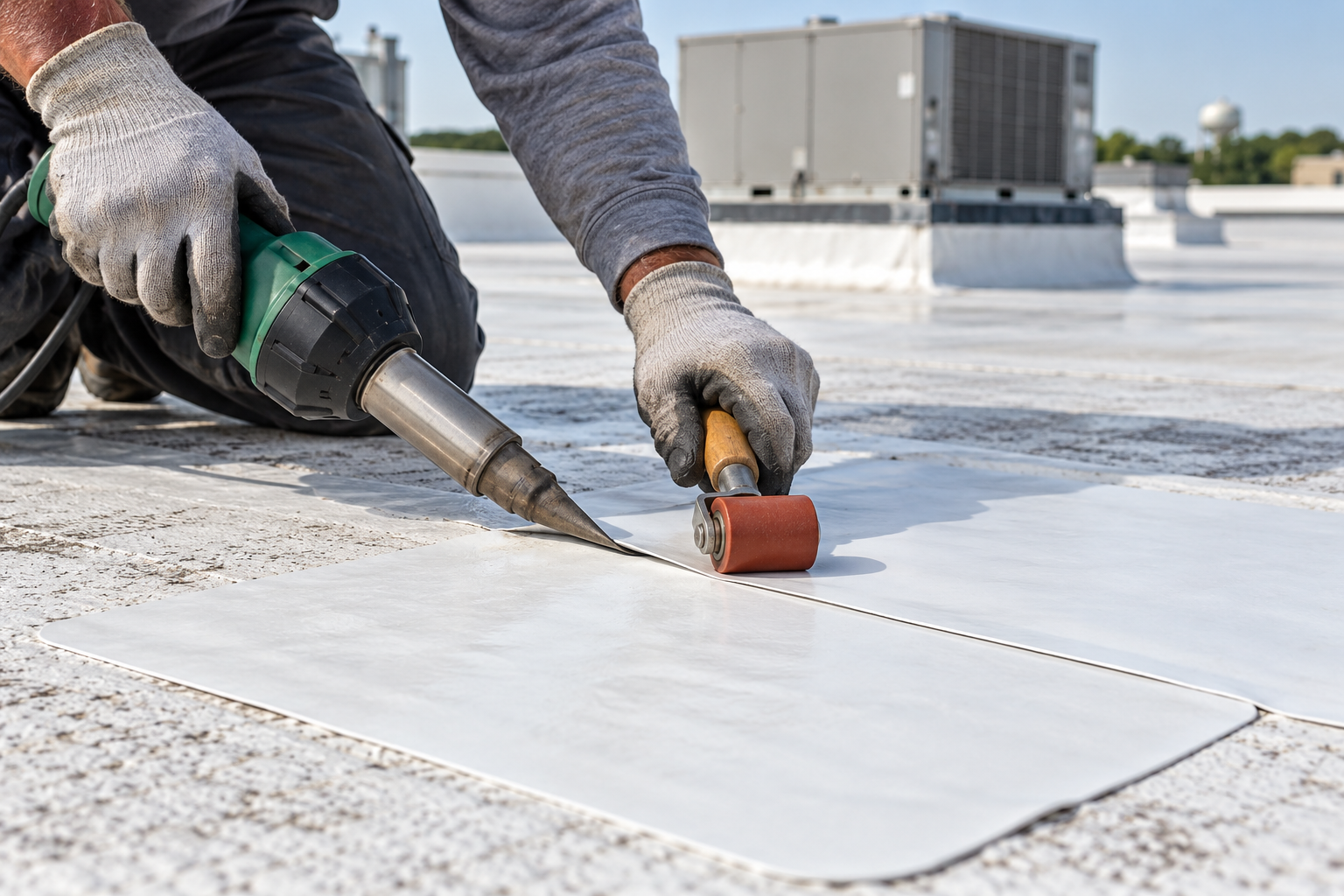
Fabric-reinforced coating is not simply “paint for a roof.” A complete restoration typically includes cleaning, substrate preparation, repairs, primers when required, detail reinforcement, a base coat, polyester or other approved fabric embedded into wet coating, additional saturating or intermediate coating, and a finished topcoat applied at specified coverage. Some systems reinforce the entire field; others reinforce seams and details. Those are different scopes and should not be priced as if they are equivalent.
Texas pricing varies because commercial roofs vary. A clean, open, one-story metal roof with limited repairs is fundamentally different from a high-rise roof with restricted access, hundreds of penetrations, saturated insulation, ponding water, corroded deck, or an aging gravel-surfaced built-up roof. The estimate must account for what the crew has to correct before reinforcement can perform as designed.
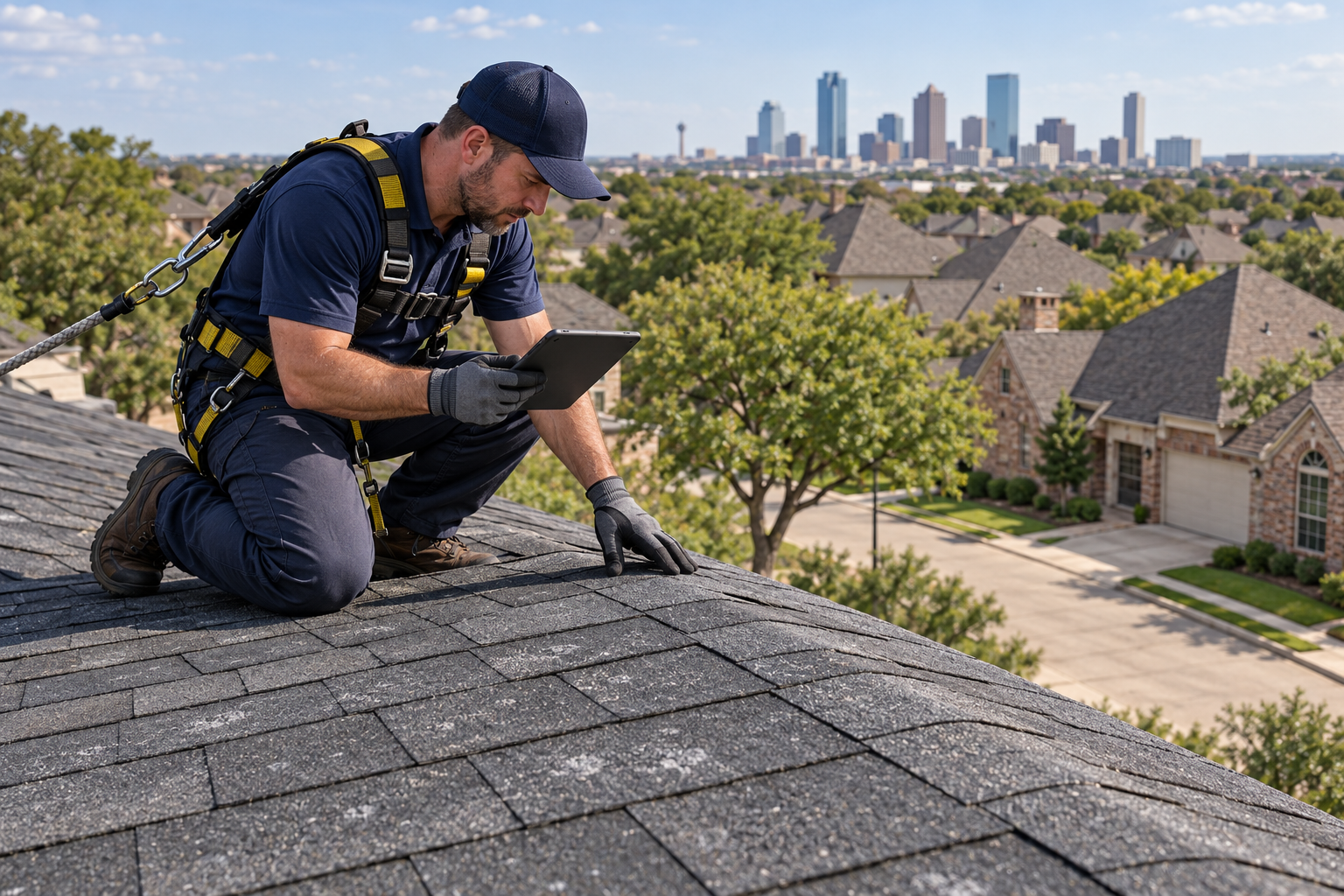
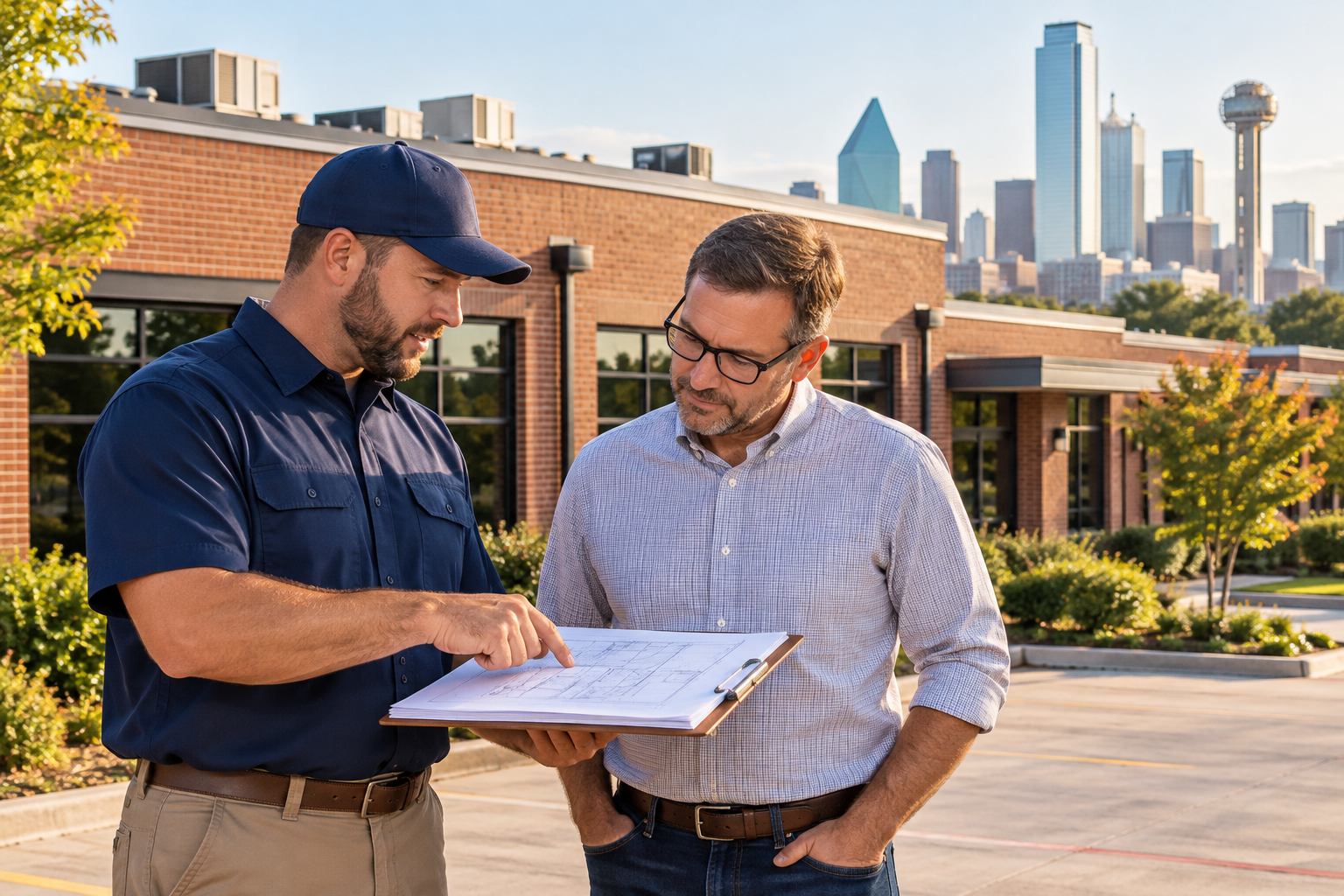
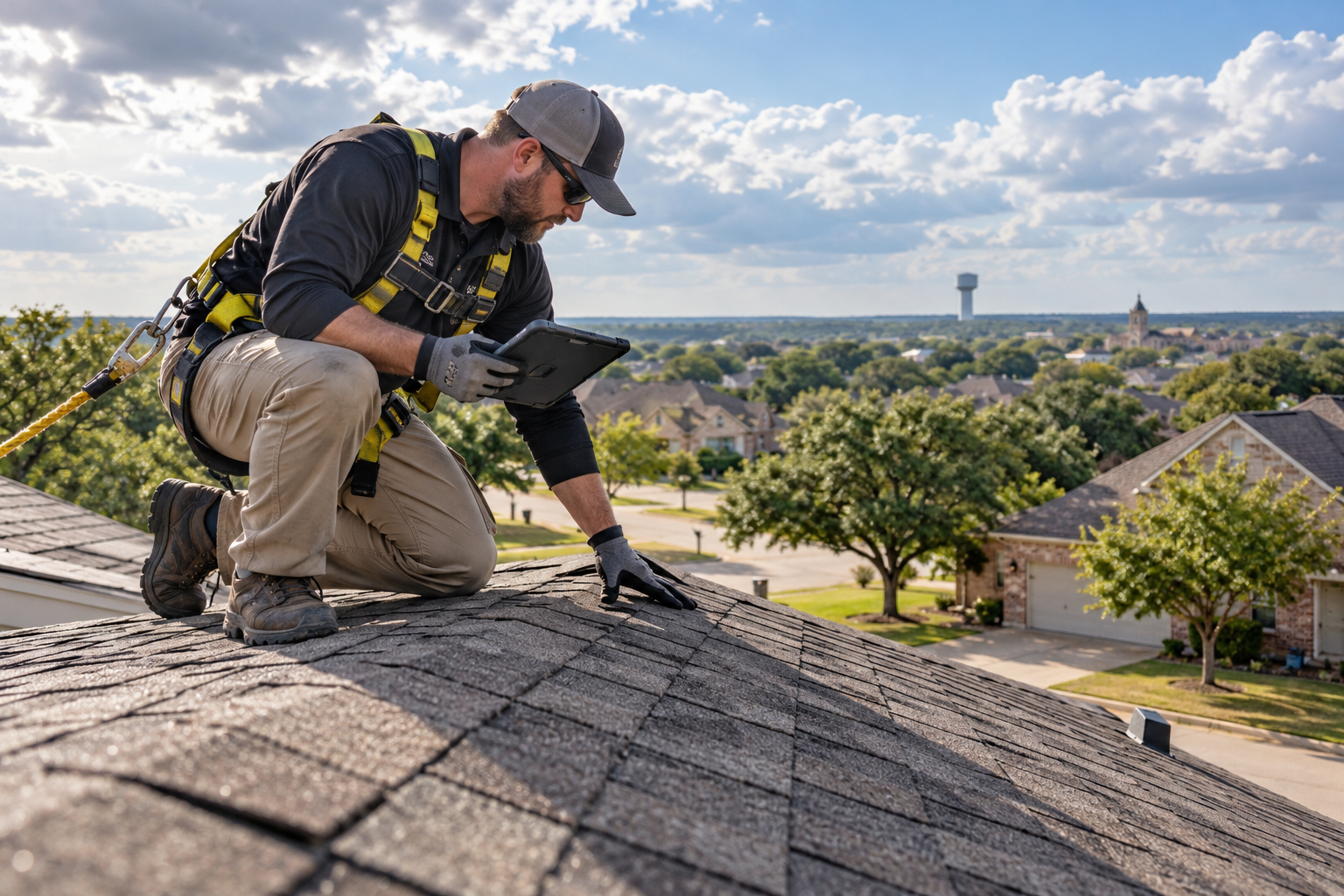
Showtime Exteriors provides commercial roof inspections, coatings, restoration, repairs, retrofit, recover, and replacement services across Texas and the Dallas–Fort Worth area. The goal is to determine whether the existing roof is a responsible restoration candidate and, if so, build a measurable scope around preparation, repairs, reinforcement, dry-film thickness, details, quality control, and warranty requirements.
What is a fabric-reinforced roof coating system?
A fabric-reinforced roof coating system combines a liquid-applied roofing material with an embedded reinforcing fabric. The fabric helps control coating thickness, bridges prepared seams and minor surface irregularities, and adds tensile strength to the cured assembly. In a full-field system, rolls of reinforcement overlap and cover the roof surface. In a detail-only system, reinforcement may be limited to seams, fasteners, transitions, cracks, drains, penetrations, and other prescribed locations.
The exact chemistry and sequence vary by manufacturer and substrate. Acrylic, silicone, urethane, asphaltic, or hybrid materials may be used within approved assemblies. The selected primer, base, saturant, fabric, detail materials, and topcoat must be compatible with one another and the existing roof. The contractor should follow current product data, coverage rates, ambient and substrate conditions, cure windows, and warranty requirements.
Why the likely Texas budget is a range—not a single price
A square-foot range is useful only for initial planning. It assumes a defined roof area and a reasonable condition. Contractors do not purchase “average condition” from a supplier or repair “average quantities” in the field. They mobilize to a specific property with a specific assembly, access plan, drainage pattern, equipment count, safety exposure, repair history, and operating schedule.
Pricing also changes over time with labor, freight, resin and fabric costs, disposal, fuel, insurance, permits, and manufacturer programs. Urban Dallas–Fort Worth access may differ from a remote West Texas site or a coastal property with different wind and corrosion considerations. Owners should compare written scopes and measured quantities instead of selecting a proposal solely because its per-square-foot figure is lowest.
Illustrative budget examples
Using a planning range of $4.00 to $8.00 per square foot, a 10,000-square-foot roof may suggest $40,000 to $80,000; 20,000 square feet may suggest $80,000 to $160,000; 50,000 square feet may suggest $200,000 to $400,000; and 100,000 square feet may suggest $400,000 to $800,000. These examples are arithmetic illustrations, not offers, bids, appraisals, or guarantees.
The low end is more plausible for a large, open, accessible, dry roof needing limited repairs and a straightforward specification. The high end—or more—becomes plausible when there is extensive preparation, full-field fabric, premium coating thickness, many transitions, occupied-space controls, difficult staging, wet-material replacement, structural or drainage work, or short production windows.
Full-field fabric versus seam-only reinforcement
Full-field reinforcement places fabric across essentially the entire eligible roof surface, with prescribed overlaps and complete saturation. It uses substantially more material and labor than a detail-only approach. Crews must keep the fabric straight, control wrinkles and fishmouths, maintain overlaps, achieve saturation, and protect the work through cure. The result is a reinforced liquid-applied assembly rather than isolated treatment of existing seams.
Seam-only reinforcement may be appropriate in some manufacturer-approved restoration specifications when the field membrane or panels remain serviceable. It targets laps, fasteners, cracks, flashings, curbs, and other vulnerable details before field coating. Owners should ask whether a proposal includes full fabric, partial fabric, tape, scrim only at details, or no reinforcement. Similar marketing labels can conceal dramatically different quantities.
Roof size and economies of scale
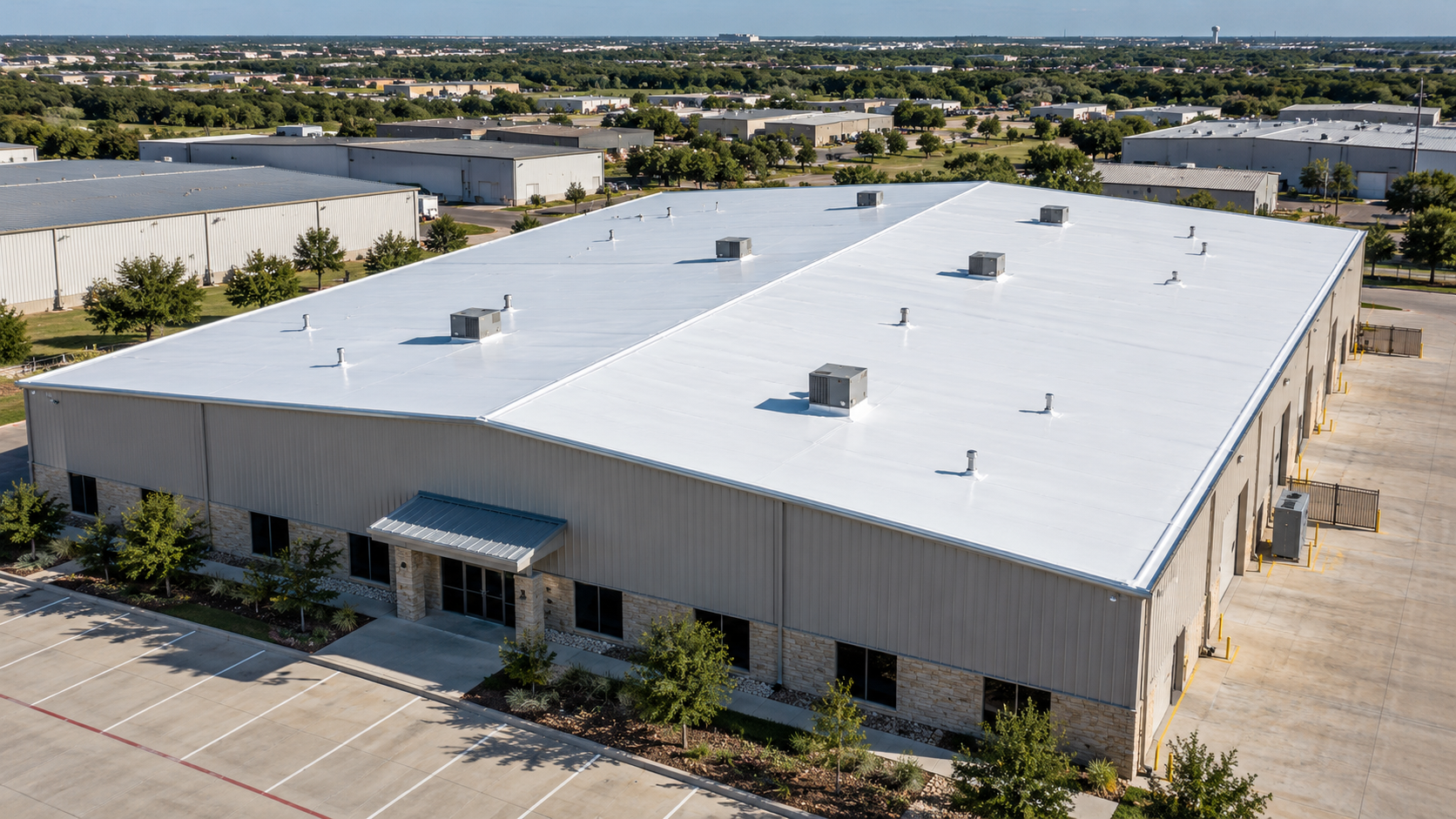
Larger roofs can reduce some unit costs because mobilization, equipment setup, safety planning, delivery, and supervision are spread across more square footage. Long, open production runs may also improve labor efficiency. However, size alone does not guarantee a lower rate. A large roof can contain many sections, elevations, drain basins, curbs, deteriorated zones, and operational restrictions.
Small roofs often carry a higher square-foot rate because minimum crew, mobilization, staging, cleaning equipment, and warranty inspection costs still apply. Measure actual roof surface, vertical flashings, curbs, parapets, transitions, and waste—not merely the building footprint. Canopies, additions, penthouses, and sloped panels can materially increase area.
Cleaning and surface preparation
Preparation is one of the largest variables and one of the easiest places for an incomplete proposal to appear cheaper. The roof may require debris removal, pressure washing or manufacturer-approved cleaning, rust treatment, removal of loose coatings, scarification, adhesion testing, drying, repair of blisters or splits, fastener work, sealant removal, and correction of contaminants. Grease, oils, biological growth, dust, chalking, and incompatible residue can interfere with adhesion.
Cleaning must be planned so water is not driven into the building or trapped in the assembly. Protect air intakes, equipment, walls, windows, landscaping, vehicles, and pedestrians. A responsible scope identifies the cleaning method, wastewater controls where applicable, drying criteria, and the surface acceptance standard before primer or base coating begins.
Repairs required before coating
A coating system should not be used to hide unresolved roof defects. Open seams, punctures, failed flashings, loose fasteners, corroded panels, deteriorated wood blocking, damaged edge metal, open penetrations, wet insulation, and unstable substrate require correction. The cost depends on measured quantities and whether those conditions can be seen before the roof is opened.
Estimates should separate base restoration from unit-priced or allowance work for concealed conditions. Examples include wet-insulation removal by square foot, metal deck replacement by square foot, wood blocking by linear foot, drain replacement by unit, or panel replacement by measured area. This protects the owner from vague change orders and prevents the contractor from burying unknown risk in an inflated flat price.
Moisture investigation and test cuts
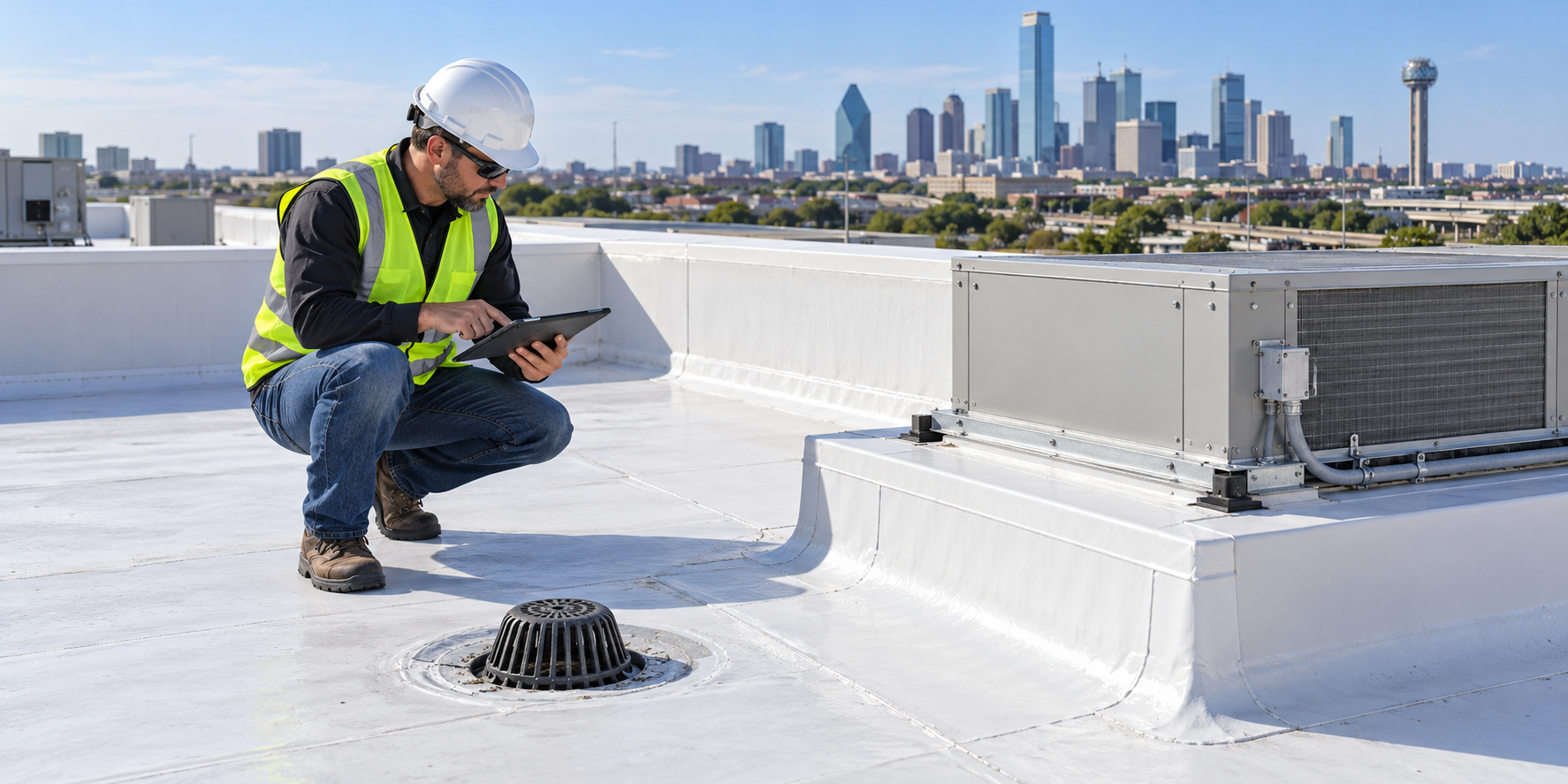
Restoration generally requires an existing assembly that is sufficiently dry and stable. Visual inspection alone cannot always establish moisture boundaries. Infrared scanning, electrical-capacitance or impedance tools, nuclear methods, core samples, and test cuts may be considered depending on the roof, weather, access, and professional recommendations. Each method has limitations and should be interpreted in context.
Isolated wet areas may sometimes be removed and rebuilt before coating. Widespread saturation can make restoration inappropriate because reinforcement would encapsulate damaged materials rather than correct them. The cost of investigation is small compared with the cost of installing a new system over a broadly wet assembly that later fails.
Primer, adhesion, and compatibility
Reinforcement, overlaps, details, and coating thickness must be installed and documented as one coordinated system.
Some substrates require primer; others use a specific cleaner, wash, or base coat. Existing silicone, acrylic, asphalt, EPDM, TPO, PVC, metal, spray polyurethane foam, modified bitumen, and built-up surfaces do not accept every product the same way. Adhesion tests and manufacturer review can identify preparation or primer requirements before full installation.
Primer adds material, labor, cure time, and weather exposure, but omitting it when required is not a savings. Ask the proposal to name the substrate, primer, approximate coverage, adhesion-testing procedure, and treatment of existing repairs. Compatibility at sealants, mastics, coatings, and penetrations should be confirmed rather than assumed.
Fabric, overlap, and coating consumption
Full-field fabric creates significant material demand. Each roll must be cut, positioned, overlapped, embedded without voids, and fully saturated. Rough texture and porous surfaces consume more coating than smooth, nonporous substrates. Vertical flashings, transitions, drains, corners, and penetrations also increase handwork and material usage.
Coverage should be specified in gallons per square or square feet per gallon for each layer, along with the intended wet-film or dry-film thickness where applicable. Owners should not compare a thin, seam-only coating with a multi-layer full-fabric system by warranty years alone. The proposed material quantities and detail requirements are essential cost evidence.
Roof complexity and penetration density
An unobstructed warehouse roof can be installed in broad runs. A hospital, restaurant, manufacturing plant, school, hotel, or mixed-use property may have closely spaced HVAC units, vents, pipes, skylights, conduits, supports, walls, drains, and equipment platforms. Fabric must be cut and integrated around each detail, increasing labor and inspection time.
Complex roofs also have more transitions where water entry can occur. A reliable scope identifies every penetration and group of details, not merely the field square footage. When equipment is abandoned, decide whether qualified trades will remove it and the roofer will close the opening, or whether it remains and must be flashed.
Building height, access, staging, and logistics
Height and access affect cranes, hoists, lifts, ladders, stair towers, material placement, fall protection, delivery times, pedestrian control, and debris handling. Downtown properties may require permits, lane or sidewalk coordination, limited staging, or off-hours deliveries. Remote properties may add travel, lodging, and freight.
Operational restrictions matter too. Work above occupied offices, retail, food production, sensitive inventory, data rooms, medical areas, or manufacturing may require interior protection, shorter zones, low-odor materials, night or weekend work, and coordinated HVAC shutdowns. These controls belong in the budget because they are part of safely delivering the roof.
Drainage correction and ponding water
Coatings follow the existing roof shape; they do not automatically create slope or repair structural deflection. Ponding may require tapered insulation, crickets, saddles, drain or scupper modifications, additional drains, deck correction, or localized rebuilding. The appropriate solution depends on structure, plumbing, code, and roof-system requirements.
Some coating chemistries and warranties address standing water differently, but product selection should not become an excuse to ignore blocked or deficient drainage. Map ponding after rain, verify overflow paths, inspect drain components, and price corrective work separately so the owner can distinguish waterproofing from drainage improvement.
Warranty length and inspection requirements
Warranty choices may change coating thickness, number of layers, fabric coverage, detail treatment, contractor eligibility, manufacturer fees, inspections, repair limits, and maintenance duties. A longer stated term is not automatically a better value. Review who issues the warranty, what it covers, exclusions, transfer conditions, remedies, owner obligations, and whether ponding, hail, wind, or substrate conditions are addressed.
A manufacturer warranty may require approved products, documented lot numbers, coverage calculations, adhesion tests, progress photographs, final inspection, and correction of punch items. Those controls can add cost while improving scope clarity. Budget for the actual specification needed rather than selecting a number of years before confirming roof eligibility.
Texas heat, hail, wind, and application windows
North Texas roofs experience intense ultraviolet exposure, high surface temperatures, hail, wind, and rapid weather changes. Coating installation depends on substrate temperature, air temperature, humidity, dew point, wind, rain probability, and cure time. A crew may need to stop early enough for each layer to resist evening moisture or an approaching storm.
Weather affects production and price through mobilization, protection, lost days, and seasonal scheduling. Wind can disturb broad fabric rolls or overspray; heat can shorten working time; cool or humid conditions can slow cure. The contractor should use the manufacturer’s current application limits and maintain daily weather and quality-control records.
Existing metal roofs
Metal restoration may require rust treatment, panel replacement, fastener tightening or replacement, seam reinforcement, closure correction, gutter and edge work, and specialized detailing at curbs. Fabric may be installed at seams and details or across broader areas depending on the approved system. Active corrosion and unstable panels cannot be solved by coating alone.
The inspection should also review panel movement, structural attachment, penetrations, skylights, translucent panels, sealants, and water entry at laps. A low preliminary coating price can increase quickly when thousands of fasteners or long seam runs require individual preparation. Measured counts and linear footage make the estimate more transparent.
Existing single-ply and modified bitumen roofs
EPDM, TPO, PVC, and modified bitumen each present different surface, seam, contamination, and compatibility questions. Existing membranes may require specialized cleaning, primer, repairs, replacement of wet areas, and manufacturer-approved details. An old membrane that is brittle, poorly attached, shrinking, or extensively repaired may not provide a dependable restoration substrate.
A restoration specification should state how seams, laps, bleed-through, reinforcement exposure, granulated surfaces, and perimeter attachment are handled. Test adhesion in representative areas. If the roof has several incompatible repair products, removing or isolating those materials may add labor and reduce application efficiency.
Aging gravel-surfaced BUR
Showtime Exteriors does not present aging gravel-surfaced built-up roofing as a positive feature. Gravel can conceal membrane cracks, blisters, open laps, previous repairs, trapped moisture, and the true boundary of deterioration. It also complicates cleaning, adhesion testing, direct visual inspection, and consistent fabric installation.
A gravel BUR may require complete aggregate removal, vacuuming, resurfacing, repair, and moisture investigation before any restoration is considered. Even then, broad wet insulation, unstable surfacing, poor attachment, or extensive deterioration can make replacement the more responsible option. Insurance carriers may also scrutinize older gravel roofs under their own underwriting rules. A coating should not be marketed as a shortcut around condition or insurability concerns.
Coating, recover, or replacement?
Fabric reinforcement can be a strong restoration approach when the roof is dry, stable, repairable, compatible, and capable of supporting the specified assembly. Recover may be considered when a new sheet system can be installed over an eligible existing roof and code, moisture, weight, attachment, and warranty conditions are satisfied. Replacement is more likely when wet materials, deck deterioration, multiple layers, unstable surfaces, drainage failures, or systemwide defects are extensive.
Compare lifecycle cost rather than only initial price. Include remaining serviceability, repair frequency, energy implications, maintenance, disruption, warranty, future recoating, tear-off avoided or deferred, and the risk of concealed conditions. The lowest first-year cost is not the best value when the substrate cannot support the proposed system.
Insurance and financing considerations
A coating project does not guarantee insurance renewal, lower premiums, valuation, coverage, or claim payment. Underwriting varies by carrier, property, roof age, condition, location, system, claims history, documentation, and market. If a carrier or broker has requested work, obtain the requirement in writing and ask whether restoration is acceptable before committing funds.
For a potential claim, preserve dated evidence and follow policy requirements. Showtime Exteriors can document physical roof conditions and provide roofing estimates; the insurance carrier determines coverage and payment. Property owners should consult qualified insurance, tax, accounting, legal, engineering, and financial professionals about matters outside the contractor’s role.
How to compare proposals accurately
Normalize every proposal to the same measured roof area and list of details. Compare cleaning, repairs, wet-area assumptions, primer, fabric type and coverage, overlaps, coating product, gallons, thickness, flashings, drains, edges, penetrations, access, interior protection, safety, schedule, inspections, warranty, exclusions, and closeout. A lower rate may simply omit work.
Ask bidders to identify alternates rather than blending them into one number. Useful alternates may include full-field versus detail reinforcement, different warranty specifications, drainage improvements, replacement of specific wet sections, or work scheduled around operations. Clarify unit prices and how quantities will be measured, photographed, and approved.
What should a fabric-reinforced coating estimate include?
Verified roof measurements, roof-section plan, substrate identification, known assembly, access, staging, and working-hour assumptions.
Inspection findings, moisture-investigation method, test-cut locations, adhesion tests, photographs, and limitations.
Cleaning and preparation methods, contaminants to be addressed, rust treatment, loose-coating removal, and drying criteria.
Measured repairs and unit prices for concealed wet insulation, deck, panels, blocking, flashings, drains, and other uncertain quantities.
Manufacturer, product names, primer, base coat, fabric, saturating coat, topcoat, color, coverage rates, overlaps, and intended thickness.
Detail requirements for seams, fasteners, penetrations, walls, curbs, drains, scuppers, edges, expansion joints, gutters, and equipment supports.
Weather limitations, protection, daily dry-in, occupied-building controls, HVAC coordination, fall protection, and ground-level exclusion zones.
Warranty issuer, term, scope, exclusions, inspection fees, maintenance duties, transfer provisions, and punch-list process.
Schedule, mobilization assumptions, payment terms, alternates, exclusions, change authorization, cleanup, and closeout documents.
A practical cost model for property owners
A useful budget separates the project into six cost groups. First is investigation: roof mapping, core information, moisture work, adhesion tests, and specification development. Second is access and protection: mobilization, lifts or hoisting, fall protection, staging, pedestrian controls, and safeguards for occupied areas. Third is preparation: cleaning, loose-material removal, rust treatment, drying, primer, and surface acceptance. Fourth is corrective work: wet-area removal, deck or panel repair, fasteners, flashings, drains, curbs, edges, and penetrations. Fifth is the reinforced system itself: base coating, fabric, overlaps, saturating material, topcoat, and detail accessories. Sixth is closeout: inspections, punch work, records, warranty processing, cleanup, and maintenance training.
This model explains why two roofs of the same size can have very different totals. If a 50,000-square-foot roof is open, dry, and stable, the coating-system quantity may dominate the budget. If the same area contains 250 penetrations, restricted access, widespread corrosion, and numerous wet zones, preparation and repairs may approach or exceed the cost of the field application. A proposal that shows these groups gives the owner better control than a single lump-sum number with no measured basis.
Owners should also maintain a contingency appropriate to uncertainty. A recently installed roof with good records and reliable moisture information may need a smaller contingency than a decades-old assembly with unknown layers and recurring leaks. The contingency is not permission for automatic spending. The contract should explain how concealed conditions are exposed, photographed, measured, priced, authorized, and included in the updated roof plan.
When comparing restoration with replacement, align the time horizon. If a reinforced coating is expected to require inspection, maintenance, and future recoating, include those anticipated activities. If replacement requires tear-off, insulation upgrades, deck repair, disposal, and more operational disruption, include those too. Compare realistic scopes over a common period rather than comparing the lowest restoration alternate with the most comprehensive replacement alternate.
Quality control that protects the investment
The value of a fabric-reinforced system depends heavily on installation. Before coating begins, verify that repairs are complete, the substrate meets dryness and cleanliness requirements, adhesion results are acceptable, weather conditions are within published limits, and materials match the approved specification. Record batch or lot information when required and store materials within the manufacturer’s temperature and shelf-life limits.
During installation, track the roof zone, crew, weather, start and stop times, gallons used, area completed, fabric rolls, overlap, wrinkles, fishmouths, saturation, pinholes, wet-film checks, and detail work. Material-use calculations can reveal whether coverage is consistent with the specification. Low consumption may indicate insufficient thickness; unusually high consumption may indicate a rough or porous substrate, waste, or an area measurement problem that deserves review.
Inspect reinforcement before it is hidden by the final coat. Fabric should be embedded as required, without open laps, dry areas, voids, or unresolved wrinkles. Drains, scuppers, curbs, penetrations, expansion joints, edges, and transitions deserve focused review because these details concentrate movement and water flow. Correct defects inside the manufacturer’s permitted recoat window whenever possible.
At closeout, verify continuous coverage, required thickness or material usage, finished details, open drainage, cleanup, and removal of temporary protection. Link photographs to the final roof map and retain inspection reports, repair quantities, product data, warranty documents, and maintenance instructions. A polished white surface is not enough evidence; the owner should receive a traceable record showing how the reinforced assembly was built.
Step-by-step budgeting process
Gather roof plans, installation records, warranties, leak history, repairs, insurance requests, energy data, and operational restrictions.
Complete a roof inspection and map every roof section, material, transition, penetration, drain, edge, repair, defect, and access constraint.
Investigate moisture and perform representative test cuts or adhesion testing when warranted. State what remains unknown.
Determine whether the roof is eligible for repair, fabric-reinforced restoration, recover, or replacement based on verified conditions.
Select a manufacturer-compatible preliminary specification and decide whether reinforcement is full-field, detail-only, or another approved configuration.
Measure preparation, repair, reinforcement, coating, flashing, drainage, logistics, and operational-control quantities.
Request comparable proposals with alternates and unit prices rather than relying on one unexplained square-foot number.
Evaluate lifecycle value, warranty, maintenance, future recoating, business disruption, insurance requirements, and capital timing.
Document final scope, quality-control records, photographs, material usage, inspections, warranty, and maintenance plan.
Frequently asked questions
What is the typical Texas price per square foot?
A reasonable early planning range may be about $4.00 to $8.00 per square foot for an eligible commercial roof, but substantial repairs, wet materials, complex details, access, premium specifications, or drainage work can push the project outside that range.
Is fabric reinforcement more expensive than a basic coating?
Usually. It adds reinforcing material, coating needed to embed and saturate the fabric, overlap, labor, detail work, cure management, and inspection. It should be compared as a different system—not as the same coating with a minor upgrade.
Can any commercial roof be coated?
No. The roof must be evaluated for moisture, attachment, substrate stability, compatibility, drainage, defects, code, weight, and manufacturer requirements. Widespread wet insulation or deteriorated deck may require replacement.
How much would a 20,000-square-foot roof cost?
At the illustrative $4.00 to $8.00 range, approximately $80,000 to $160,000 before significant add-ons. Only a site-specific inspection and scope can produce a reliable price.
Does a longer warranty always mean a better system?
No. Review the issuer, specification, thickness, fabric coverage, exclusions, owner maintenance, inspections, transfer provisions, and remedy. The roof must qualify for the selected warranty.
Can fabric-reinforced coating stop ponding water?
Coating can waterproof an eligible surface but does not create slope or repair structural deflection. Drainage problems may require tapered insulation, crickets, drains, scuppers, piping, or substrate correction.
Can gravel BUR receive a fabric-reinforced coating?
It should never be assumed. Gravel can hide deterioration and moisture and may require extensive removal and preparation. Broad wetness, instability, or underwriting concerns may favor replacement rather than coating.
Will restoration disrupt building operations?
It often creates less tear-off than replacement, but cleaning, odors, equipment shutdowns, access controls, noise, weather, and curing still require coordination. Occupied facilities need a written logistics and protection plan.
Does coating guarantee insurance renewal?
No. Contractors document roof conditions and work. Carriers make underwriting and coverage decisions. Confirm any insurer requirement in writing before selecting the scope.
How long does installation take?
Duration depends on roof size, repairs, weather, cure time, fabric coverage, details, access, occupied-space controls, inspections, and crew capacity. A project schedule should state production and weather assumptions.
Schedule a commercial roof assessment
Showtime Exteriors evaluates commercial roofs throughout Texas and the Dallas–Fort Worth area, including metal, EPDM, TPO, PVC, modified bitumen, coatings, built-up roofing, recover, retrofit, and replacement options. The team can document existing conditions, identify restoration limits, map repairs, and build a project-specific scope around the property’s operations and priorities.
Considering fabric-reinforced coating for a Texas commercial building? Call Showtime Exteriors at 817-400-ROOF (7663) to schedule an inspection and receive a property-specific recommendation and estimate.
Helpful Showtime Exteriors resources
Commercial roof inspection report evidence
Commercial roof inspection for insurance renewal
Metal roof retrofit cost in Texas
When to repair, restore, or replace EPDM
Commercial BUR roof insurance non-renewal in Texas
Independent technical and planning resources
U.S. Department of Energy: cool roofs
OSHA: duty to have fall protection
GCP: liquid-applied waterproofing FAQ
GCP: evaluating liquid waterproofing membranes
Ready.gov: business continuity planning
Editorial, pricing, safety, and insurance disclaimer
This article provides general educational budgeting information, not a bid, guarantee, specification, warranty, legal, insurance, engineering, tax, or site-specific safety opinion. Prices, roofs, codes, products, warranties, policies, and market conditions vary. A qualified inspection, moisture evaluation, measurements, compatible specification, and written scope are required. Showtime Exteriors documents roofing conditions and performs authorized roofing work within its role; insurance carriers determine underwriting, coverage, and claim payment.
817-400-ROOF (7663) showtimeexteriors.com