



When Should You Repair, Restore, or Replace Built-Up Roofing?
Learn when to repair, restore, or replace built-up roofing in Texas, with guidance on aging gravel roofs, concealed moisture, drainage, and recurring leaks.

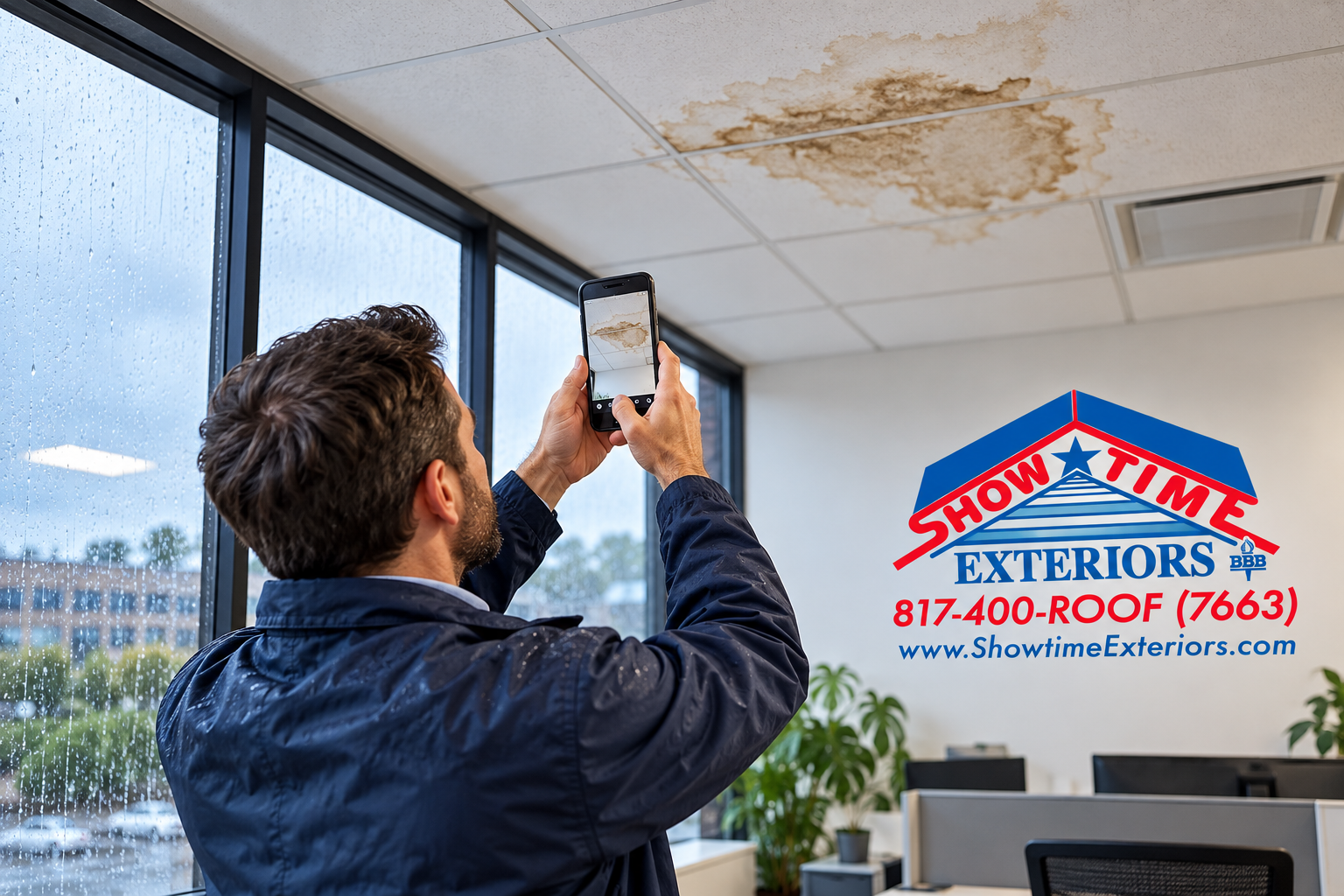
An aging built-up roof can leave a commercial property owner facing the same question after every leak: should you approve another repair, consider restoration, or begin planning replacement?
The answer should come from the roof’s condition and a documented investigation.
A limited flashing defect may justify a localized repair. A restoration proposal needs evidence that the retained assembly is suitable for the specified system. Widespread deterioration, significant moisture, or repeated failures may make replacement the more practical direction.
A gravel-covered surface should never be treated as proof that the roofing beneath it remains serviceable.
On an aging gravel-surfaced built-up roof, the visible aggregate can make assessment of the underlying membrane more difficult. A series of surface patches may stop individual symptoms without establishing the condition of the broader assembly.
For Texas property owners, the objective is to understand what each option solves, what it leaves in place, and what uncertainty remains.
This guide explains how to approach the repair, restoration, and replacement decision without allowing another temporary patch to become an indefinite capital strategy.
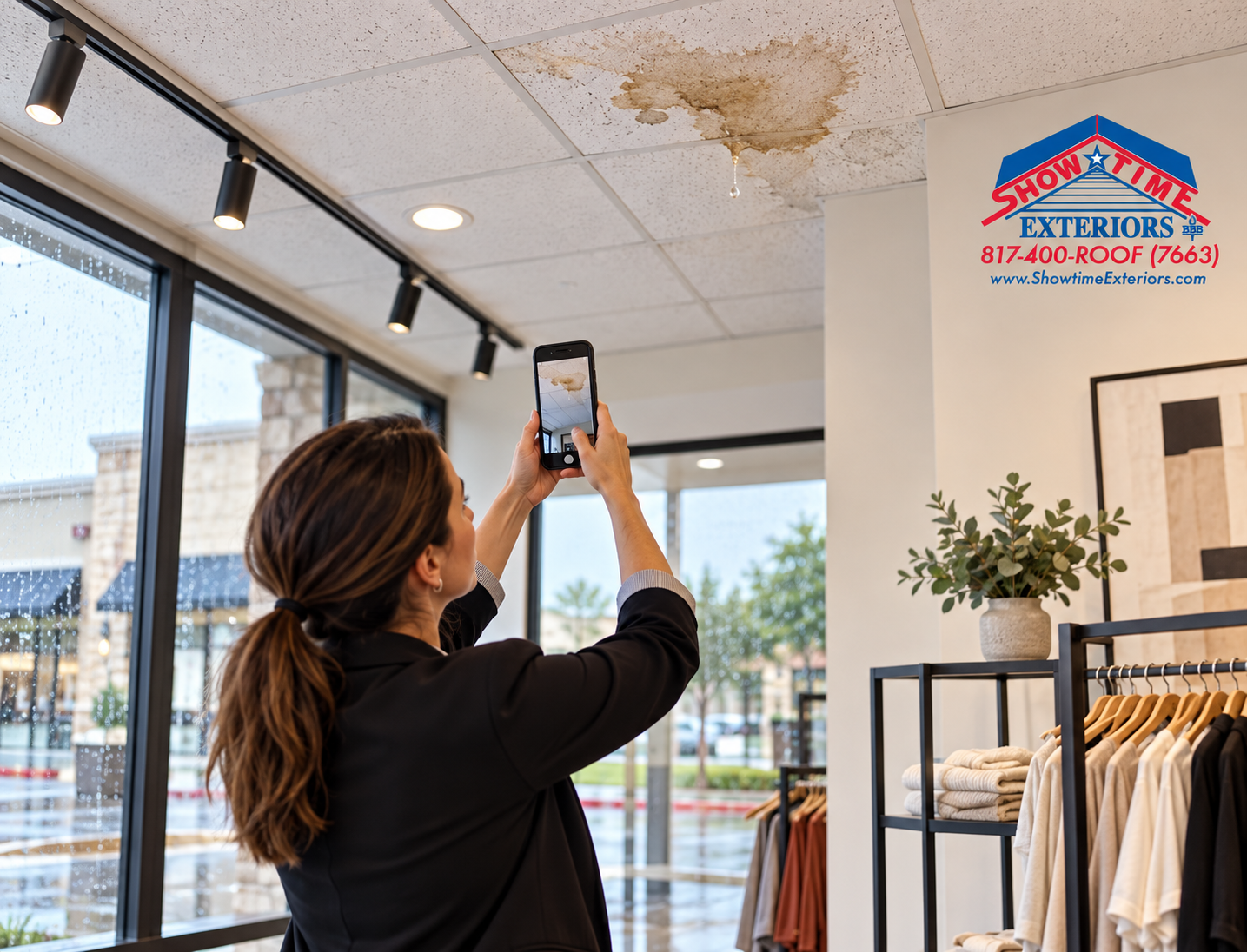
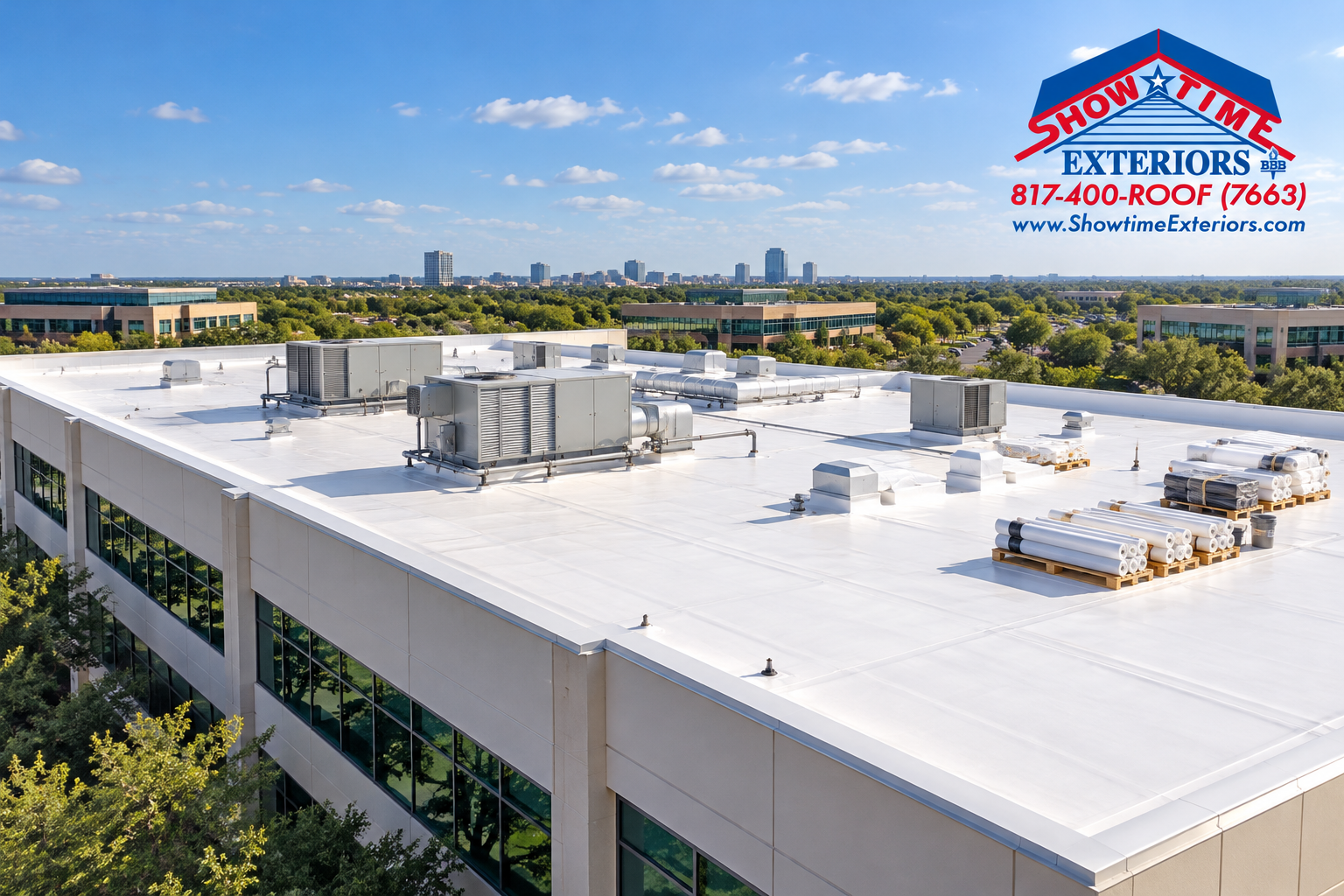
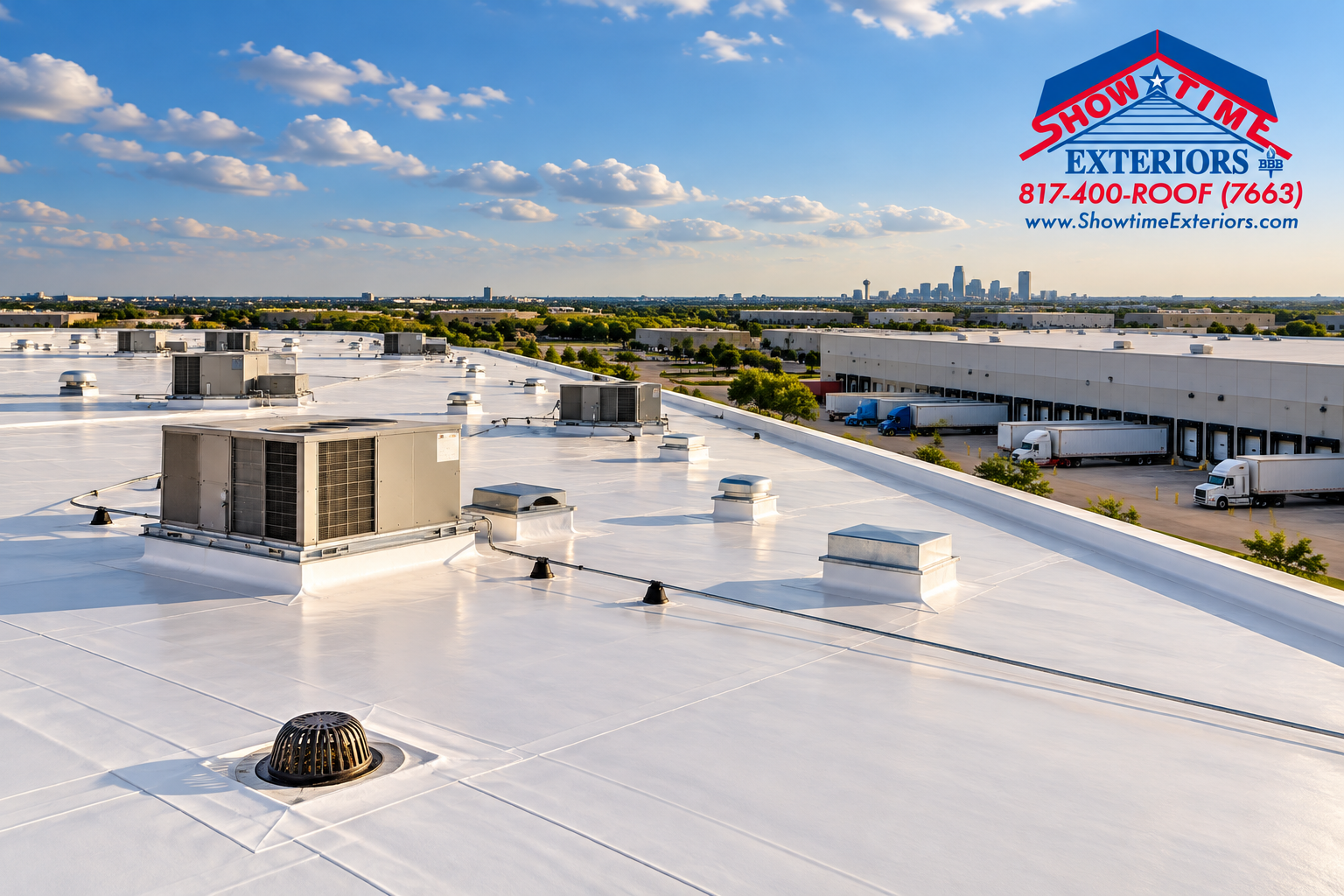
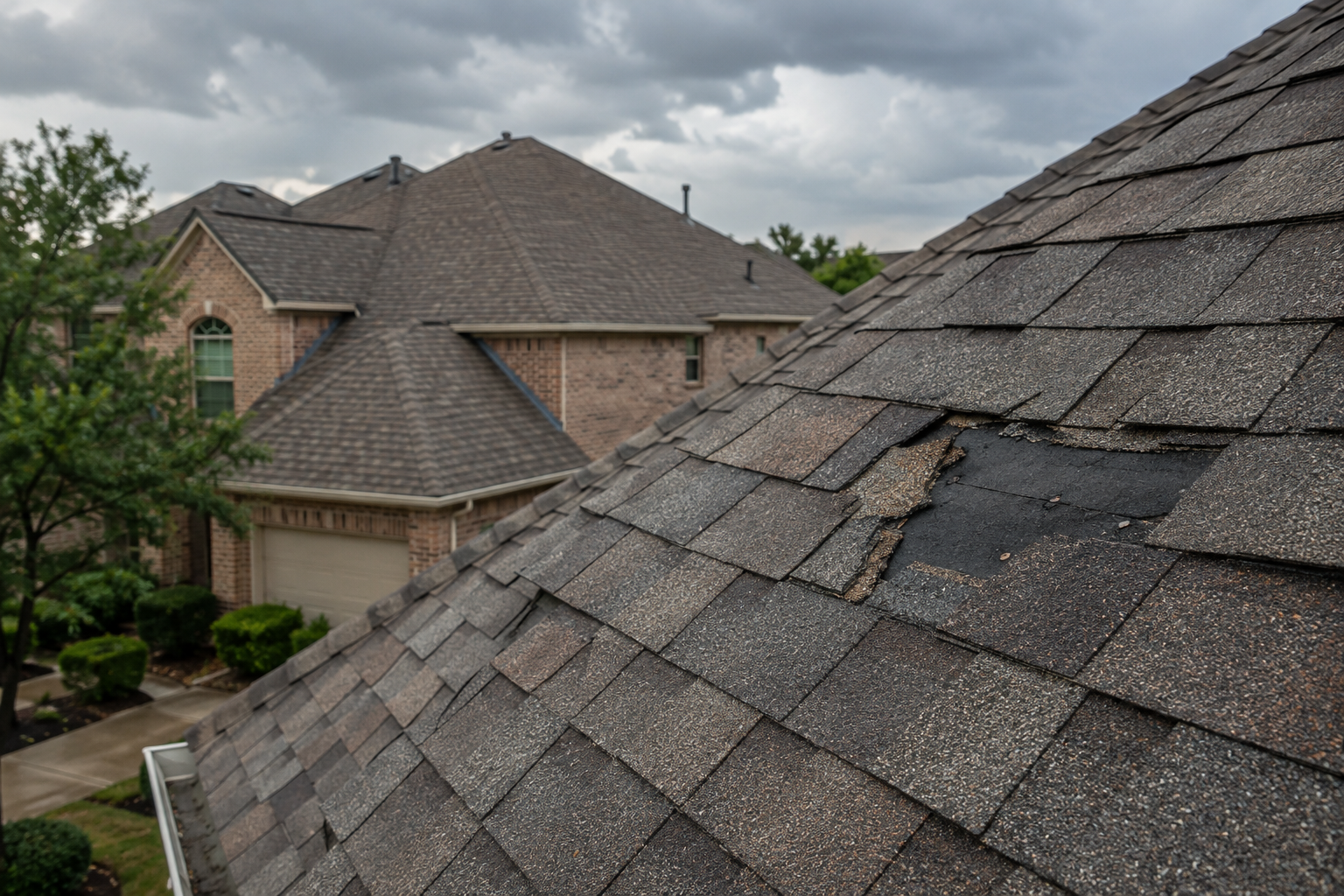
Illustration: An aging gravel roof needs an assessment of the underlying assembly, rather than a recommendation based only on its visible surface.
What Is Built-Up Roofing?
Built-up roofing, commonly called BUR, is a multilayer asphaltic roofing assembly used on low-slope buildings.
GAF describes conventional BUR as layers of ply sheets and asphalt, finished with a cap sheet or an asphalt-and-aggregate surface. That basic description helps identify the system; it does not establish the condition of a particular existing roof. gaf.com
Older properties may also contain alterations, previous recover work, coatings, or repairs that complicate identification.
Before approving work, ask the contractor to establish what is actually installed.
Available drawings and repair records can help. Where necessary, qualified professionals may recommend additional investigation.
Do not assume that every dark low-slope roof is BUR or that every gravel-covered roof has the same assembly. Material identification affects compatible repairs, restoration eligibility, and replacement planning.
Repair, Restore, Recover, or Replace: Understand the Options
The terms describe different scopes and should not be used interchangeably.
OptionGeneral purposeEssential questionLocalized repairCorrect a defined defect or limited damaged areaIs the surrounding assembly suitable for continued service?RestorationPrepare and repair an eligible roof before installing a specified protective systemDoes the existing roof qualify for the proposed system?RecoverInstall a new roofing system while retaining suitable existing componentsWhat remains, and what evidence supports retaining it?ReplacementRemove roofing to a defined level and install a new assemblyWhat underlying conditions and performance needs must the project address?
A lower initial price does not make the options equivalent.
Ask the contractor to explain what each appropriate option addresses and what it leaves unresolved.
Showtime Exteriors’ commercial roofing information provides additional context for discussing a property-specific scope.
Start With a Documented Roof Assessment
A useful recommendation connects reported symptoms with observed conditions.
The assessment should explain the evidence supporting the proposed work and identify any remaining uncertainty.
Review Leak and Repair History
Collect inspection reports, repair invoices, photographs, available drawings, and warranty documents.
Create a record of interior leak locations and when they appeared.
Ask whether earlier repairs stopped the symptom completely, worked only under certain weather conditions, or were followed by leakage elsewhere.
This history can reveal patterns that a single visit may not establish.
When records are missing, say so. The contractor can explain how that affects the investigation and confidence in the recommendation.
Identify Existing Layers and Components
A project needs more information than the surface description.
Ask what is known about the membrane, insulation, deck, previous roofing layers, and earlier alterations.
The answer affects removal requirements and whether components can remain.
If the recommendation relies on assumptions, those assumptions should appear in the report or proposal.
Management should know which quantities are confirmed and which could change after additional investigation or removal.
Investigate Moisture and Concealed Conditions
A visual inspection cannot establish every condition beneath the surface.
Where concealed moisture or deterioration is suspected, ask what additional assessment is appropriate and what limitations apply.
GAF’s recover evaluation guidance includes reviewing moisture, structural deterioration, existing roof layers, drainage, and flashing conditions. These categories help explain why recover decisions require more than a surface walk. gaf.com
The investigator should explain what the selected method can establish and how the findings affect the proposed scope.
When Localized BUR Roof Repair May Make Sense
A repair can be reasonable when the defect is defined and the surrounding roof remains suitable for continued service.
The recommendation should explain both parts of that conclusion.
The Defect Is Limited and Identifiable
Examples may include a specific flashing failure or an isolated damaged area.
Ask the contractor to identify the location, likely cause, and proposed repair method.
The scope should address the defect rather than simply cover the visible symptom.
GAF’s commercial roof inspection guidance discusses inspection of seams, equipment, drains, and flashing when evaluating repair needs.
Surrounding Conditions Support the Repair
A sound local repair does not establish that the entire roof is sound.
Ask what assessment supports continued service in the surrounding area.
If important conditions remain unknown, the recommendation should explain them.
This is particularly relevant when extensive gravel surfacing limits direct observation or when the roof has a long history of repairs.
A proposal should not imply certainty that the investigation has not established.
The Repair Has a Defined Role
Some repairs are intended as a permanent correction of a limited defect. Others provide temporary protection while a larger project is planned.
Ask which purpose applies.
For temporary work, document its limitations, follow-up needs, and the larger decision it supports.
A temporary measure becomes difficult to manage when no one records when it should be reviewed or what permanent action remains necessary.
When Repeated Patching Stops Being a Useful Strategy
Another patch deserves closer scrutiny when repairs are frequent, symptoms recur, or the scope keeps expanding.
The issue is not simply the number of invoices. It is whether each repair produces a durable result and whether the remaining assembly can still be managed reasonably.
The Same Leak Keeps Returning
A recurring symptom may reflect an unresolved entry path, adjacent deterioration, or an incorrect diagnosis.
Ask for a review of earlier findings before approving another similar treatment.
The next proposal should explain what is different about the new approach.
If the cause remains uncertain, additional investigation may be more useful than repeating the previous repair.
Problems Are Appearing Across Multiple Areas
Several active areas can change the decision from a local repair question to an assembly-wide planning question.
Map the locations and compare them with previous work.
Ask whether the findings represent separate limited defects or a broader pattern.
A property-wide record is especially important at shopping centers, industrial facilities, and buildings with multiple tenants.
Repair Spending Is Not Producing Predictable Service
Review recurring service costs alongside disruption, affected interiors, and unresolved conditions.
There is no universal percentage that determines when replacement becomes mandatory.
Instead, ask what the next repair accomplishes and what the owner should reasonably expect afterward.
Continued expenditure should follow an understood plan rather than the hope that the latest patch will finally end every complaint.
When BUR Roof Restoration Deserves Consideration
Restoration should follow a suitability assessment.
It should not begin with a preferred coating and work backward toward an explanation.
The Existing Assembly Qualifies
The proposed system must be appropriate for the identified roof and its condition.
Ask which components remain and what findings support retaining them.
Suitability may depend on matters such as moisture, attachment, preparation, compatibility, and drainage.
The contractor should identify the requirements of the specific system rather than relying on a broad statement that “coatings work on old roofs.”
Required Repairs and Preparation Are Defined
A restoration proposal needs more detail than a product name and roof area.
Ask for the planned cleaning, repairs, primers, reinforcement, detail treatment, application requirements, and verification.
GAF’s coating-versus-replacement guide explains why restoration depends on suitable existing conditions and appropriate preparation.
A lower coating price does not resolve missing preparation work.
Drainage Concerns Are Addressed
Do not assume a liquid-applied surface will correct roof slope or eliminate low areas.
Ask the contractor to identify drainage concerns and explain the proposed response.
The scope may require maintenance, detail work, further evaluation, or a different approach.
Restoration should not conceal a known problem that will continue affecting the roof after application.
exec-e8402b86-d619-454a-8835-94393ac47cc4.png
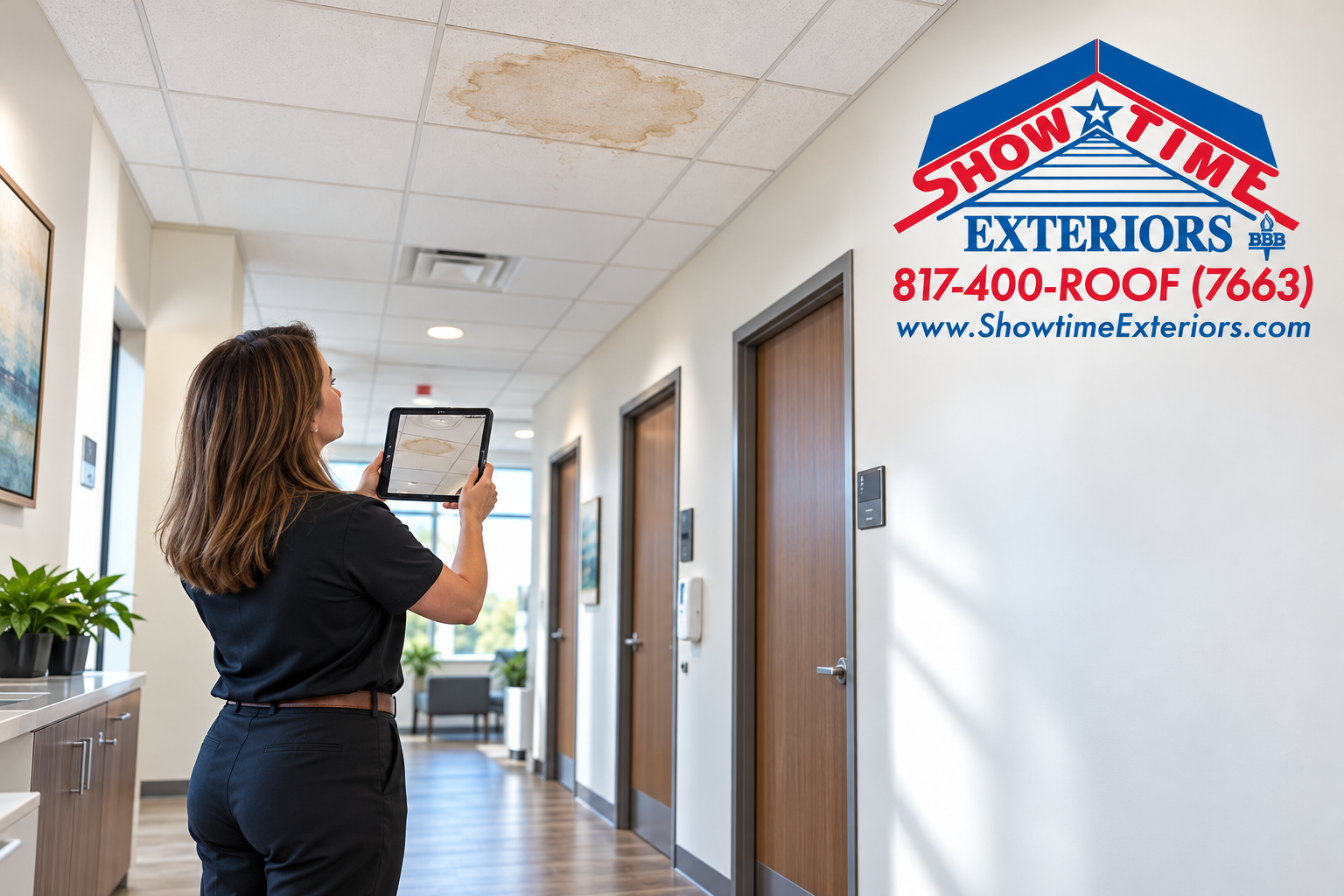
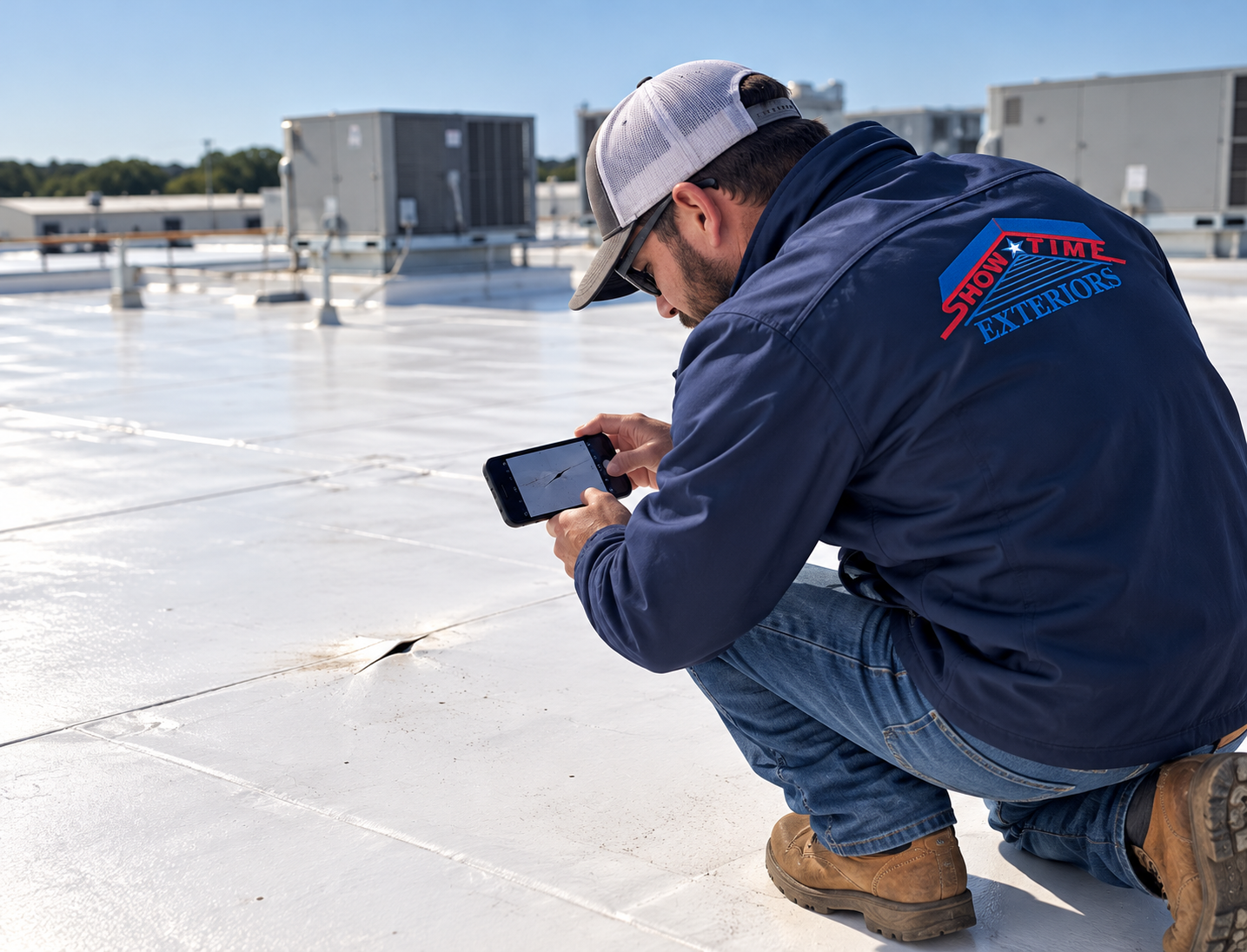
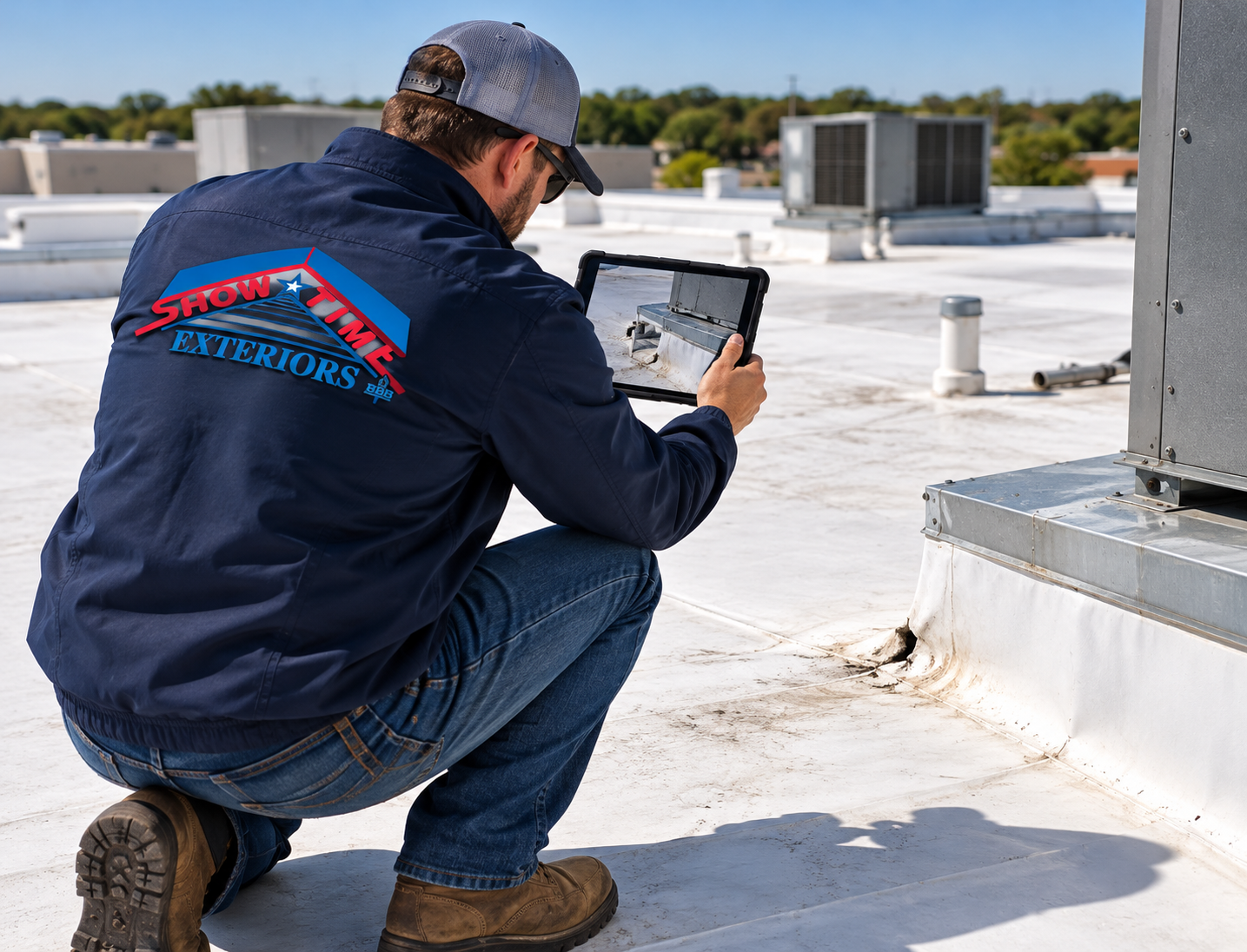
Illustration: Professional investigation can help establish whether existing layers are suitable to retain. This image is not a record of an actual inspection.
Why Aging Gravel-Surfaced BUR Requires Particular Caution
A gravel-covered roof can be difficult to evaluate through surface observation alone.
The owner needs an explanation of what was inspected beneath or around the surfacing, what remains unknown, and how those limitations affect the recommendation.
Gravel Is Not Evidence of a Sound Membrane
Aggregate remaining on the roof does not demonstrate that the underlying layers are dry, attached, or free of deterioration.
Likewise, a roof without an active interior drip has not necessarily been shown to qualify for restoration.
Ask for findings that address the retained assembly.
Avoid accepting a broad conclusion based only on the appearance of the gravel or a few visible patches.
Coating Eligibility Must Be Verified
Do not accept a general promise to coat directly over an aging gravel surface.
For example, GAF’s Acrylic Top Coat data sheet excludes gravel-surfaced roofs. That restriction applies to the named product and illustrates why product-specific requirements matter. www.gaf.com
A different proposed assembly requires its own documented evaluation, preparation plan, and applicable manufacturer acceptance.
Ask exactly what surface the new system will attach to and how that surface will be established.
Surface Work Should Not Postpone a Necessary Capital Decision
Repairs can have a useful role, including temporary protection.
However, repeated surface treatment should not become an indefinite substitute for evaluating broader deterioration.
When significant uncertainty remains, request a comparison of further investigation, appropriate recover options, and replacement.
The owner should understand the evidence and limitations before committing more money to the existing roof.
When a Recover May Be an Option
A recover retains suitable existing components while installing a new system above them.
It is a separate decision from coating restoration and full replacement.
Ask what will remain, how its condition has been assessed, and what preparation is required.
GAF’s commercial recover guidance discusses considerations such as existing layers, moisture, and structural soundness.
The project team also needs to verify applicable project requirements.
Do not assume that avoiding full removal automatically makes a recover appropriate. The retained components become part of the new assembly’s foundation.
When Replacement Deserves Serious Consideration
Replacement should be evaluated when limited work cannot reasonably address the findings.
The recommendation needs to explain the conditions supporting it.
Moisture or Deterioration Is Widespread
If the investigation identifies extensive unsuitable materials, the practicality of retaining the assembly needs careful review.
Ask how the extent was established and what uncertainty remains.
A replacement proposal should define the removal level and treatment of affected components.
Deck or Structural Concerns Require Access
Some findings may require evaluation by a qualified design professional.
Management should understand which specialist is responsible and how that assessment affects the roofing work.
A coating or new surface does not substitute for resolving an underlying support concern.
Broader Defects Remain Outside a Repair Scope
Persistent drainage issues, failing details, or widespread deterioration may not be resolved through isolated patches.
Ask the contractor to show which conditions each option addresses.
A useful comparison makes exclusions visible so the owner does not mistake a limited improvement for a complete solution.
Ownership Needs a More Predictable Plan
Recurring leaks can affect tenants, equipment, interiors, and management time.
Replacement planning may provide an opportunity to address the broader scope in an organized project.
That does not guarantee freedom from future maintenance. It does allow ownership to evaluate a defined new assembly and its ongoing obligations.
Showtime Exteriors provides further information about commercial roof replacement.
Compare Costs Across the Complete Scope
The cheapest proposal may leave the most existing conditions unresolved.
Compare appropriate options using the same project boundaries.
Review Included and Excluded Work
Identify removal, preparation, insulation, drainage, flashing, equipment coordination, and interior follow-up.
A restoration quote and a replacement quote will contain different work, so the comparison needs explanation.
Ask why each included task is necessary and what excluded tasks may still affect the property.
Establish a Process for Concealed Findings
A proposal should explain documentation, pricing, and authorization of additional work.
Where appropriate, ask for defined allowances or unit prices.
The owner needs a process for making decisions when concealed conditions become visible.
Include Operational Costs
Occupied-building coordination can affect both construction and owner expenses.
Discuss access restrictions, tenant moves, equipment work, and alternative scheduling.
Avoid comparing a price based on unrestricted access with one that includes substantial operational accommodations.
Questions to Ask Before Approving a Proposal
Use these questions during the scope review:
- What roof assembly has been identified?
- What supports the recommended option?
- What remains uncertain?
- Which components will stay in place?
- How will moisture and concealed deterioration be handled?
- What drainage concerns remain?
- Which preparation and detail work are included?
- How will completion be verified?
- What warranty documents and maintenance requirements apply?
- What alternative is appropriate if the existing roof does not qualify?
Clear answers make the recommendation easier to evaluate and the work easier to review.
Coordinate Work Around Building Operations
The roof decision should account for the building below it.
Identify occupied areas, sensitive equipment, customer routes, deliveries, and rooftop mechanical systems.
Discuss noise, material handling, and work near air intakes.
Assign responsibilities among management, the roofer, and related trades.
Give tenants useful notice before activity affects their space.
For a larger project, ask for a phased sequence and a process for communicating changes.
Showtime Exteriors’ roofing resource center includes additional commercial property planning guidance.
Review Insurance and Warranty Requirements Separately
A roof assessment describes physical conditions and proposed work. Insurance and warranty decisions involve separate documents and requirements.
Ask your insurer or broker for any property-specific roof requirements in writing.
Do not assume that every gravel roof faces the same underwriting treatment or that a proposed project guarantees coverage.
Likewise, review the actual roofing warranty terms.
Confirm covered conditions, exclusions, reporting procedures, and maintenance obligations before relying on a stated term.
The owner should understand the construction recommendation and the applicable contractual requirements as distinct parts of the decision.
What to Keep After the Work Is Completed
Retain the assessment, approved scope, photographs, product information, and applicable warranty documents.
Record any concealed findings and approved changes.
Ask for a list of remaining items and recommended follow-up.
Future service contractors should have enough information to identify compatible work and understand the completed assembly.
An ongoing commercial roof maintenance plan can help management organize inspections and rooftop service activity.
Maintenance should support a serviceable roof, with a clear escalation process when findings indicate that larger work is needed.
Frequently Asked Questions About Built-Up Roofing
Does an Old BUR Roof Automatically Need Replacement?
No. Age alone does not establish the correct scope.
However, an aging roof with recurring leaks or uncertain concealed conditions deserves a documented assessment. The recommendation should follow the findings rather than a calendar threshold alone.
Can a Gravel Roof Be Evaluated From Photographs?
Photographs can document visible conditions and help plan an investigation.
They generally cannot establish the complete condition of concealed components. Ask what additional assessment is needed before approving restoration, recover, or replacement.
Does One Leak Mean the Entire Roof Has Failed?
Not necessarily.
A limited defect may produce an interior leak. The investigation should determine whether the problem is local and whether surrounding conditions support repair.
The number of visible drips alone does not define the extent of the roofing problem.
Can We Keep Repairing Until Replacement Is Affordable?
Some temporary or localized work may help while a capital project is planned.
Its purpose and limitations should be documented. Repeated patching should not continue without reviewing whether it remains a reasonable way to manage the actual conditions.
Is a Recover the Same as Restoration?
No.
A recover installs a new roofing system while retaining suitable existing components. Restoration generally repairs and prepares an eligible roof before applying a specified protective system.
The exact proposal should explain its terminology and scope.
Will a New Surface Resolve Wet Insulation?
Do not assume it will.
The project team should evaluate affected components and establish what can remain under the selected system’s requirements.
The proposal needs a clear plan for unsuitable materials.
What Is the Best First Step?
Gather available roof records and arrange a documented assessment.
Share leak history, previous repairs, operational concerns, and ownership goals. That information provides a stronger starting point than selecting a product or approving another patch without context.
Evaluate Your Built-Up Roof With Showtime Exteriors
A built-up roof decision should explain what the building needs now and what the proposed work leaves in place.
For aging gravel-surfaced roofs, that means looking beyond visible aggregate and surface patches. Investigate recurring symptoms, assess the retained assembly, and identify the evidence supporting each appropriate option.
When contacting Showtime Exteriors, share your property location, roof history, recent reports, and operating concerns.
These details help the team determine the next steps for evaluating repair, restoration, recover, or replacement.
Contact Showtime Exteriors or call [817-400-ROOF (7663) (line 8174007663)](tel:8174007663) to discuss your commercial roof in Texas.