


Questions to Ask Before Starting a Roof Inspection Report
Know what to ask before ordering a roof inspection report in Texas. Understand scope, photographs, moisture testing, repair priorities, and documentation.

Before ordering a roof inspection report, ask what the inspection will cover, who will perform it, which evidence you will receive, whether testing is included, and how the findings will support your next decision. Agreeing on these details before the visit helps you obtain a useful assessment rather than a collection of photographs with unclear recommendations.
For Texas commercial property owners, a roof inspection report may support maintenance planning, leak investigation, purchase negotiations, replacement budgeting, or communication with a warranty provider. These purposes require different levels of investigation.
A warehouse with recurring leaks presents different questions from a medical building preparing for rooftop equipment replacement. An office property undergoing routine maintenance needs a different scope from a building with suspected concealed moisture.
Showtime Exteriors offers commercial roofing services in Texas, including options for different roof systems and property needs. Before scheduling an assessment, use the following questions to establish what you need documented and what decisions the report should help you make.
What Is a Roof Inspection Report?
A roof inspection report is a written record of the conditions observed during a defined inspection. It should identify the property, inspected roof areas, relevant observations, supporting photographs, limitations, and recommended next steps.
The report’s usefulness depends on the agreed scope and the evidence behind its conclusions.
A visual inspection report is different from a moisture survey, structural assessment, warranty inspection, or detailed replacement design. One document may incorporate several services, but that should be stated explicitly.
For an overview of the process, review Showtime Exteriors’ roof inspection report guide for Texas property owners.
The goal is to understand what was examined, what remains uncertain, and what should happen next.
1. What Is the Purpose of This Roof Inspection?
Start by identifying the decision you need to make.
Are you investigating an active leak, planning annual maintenance, evaluating a property purchase, or deciding whether to repair or replace an aging roof?
A broad condition review may identify visible concerns without tracing a specific water-entry pathway. A targeted leak investigation may focus on one area without evaluating the entire roof for long-term capital planning.
Tell the inspector how you intend to use the report and who will read it.
Define the Intended Outcome
A useful request might be: “We need to identify immediate repairs and establish which areas need further investigation before next year’s replacement budget.”
That gives the inspection a clearer purpose than simply requesting a roof check.
2. What Exactly Is Included in the Inspection Scope?
Ask for a written description of the work before the visit.
The scope should identify the buildings, roof sections, accessible components, inspection methods, and expected deliverables. It should also explain whether interior observations and document review are included.
Clarify whether the inspection addresses seams, flashings, penetrations, perimeters, drainage, previous repairs, and visible signs of deterioration.
GAF’s overview of professional commercial roof inspections provides background on the role of professional assessment and roof-condition records. gaf.com
Ask About Exclusions
Identify anything outside the service, including concealed construction, structural analysis, equipment diagnosis, or specialized testing. Knowing those limits helps prevent unsupported assumptions.
3. Who Will Perform and Review the Inspection?
Ask who will visit the property, what experience they have with your roof system, and who will prepare or review the report.
Experience with residential shingles does not automatically establish experience evaluating commercial membranes, metal panels, coatings, or complicated drainage arrangements.
Ask whether additional specialists may be needed if the inspection identifies structural concerns, unusual moisture conditions, or building-enclosure issues beyond the inspector’s scope.
Qualifications should match the assignment.
Also clarify the inspector’s role. A contractor evaluating potential roofing work and an independently retained consultant may provide different services. Understand that relationship before relying on the report for a particular purpose.
4. What Roof Records Should We Provide?
Gather available drawings, installation information, warranties, repair invoices, previous reports, and maintenance records.
Provide approximate installation dates when known, but distinguish documented dates from estimates.
A roof that appears relatively new may contain older sections or reused components. Previous repair records can help the inspector identify those differences.
Prepare a Leak History
Record where leaks appeared, when they occurred, and whether they followed rain, wind, equipment operation, or temperature changes.
Photographs of interior conditions can help establish a timeline.
Also identify recent HVAC, plumbing, solar, electrical, or signage work. Changes made by other trades may affect roof details and help explain new problems.
5. Will Every Roof Area Be Identified Separately?
Commercial properties often contain multiple roof sections, systems, elevations, and construction dates.
Ask whether the report will use a labeled roof plan or another clear location reference.
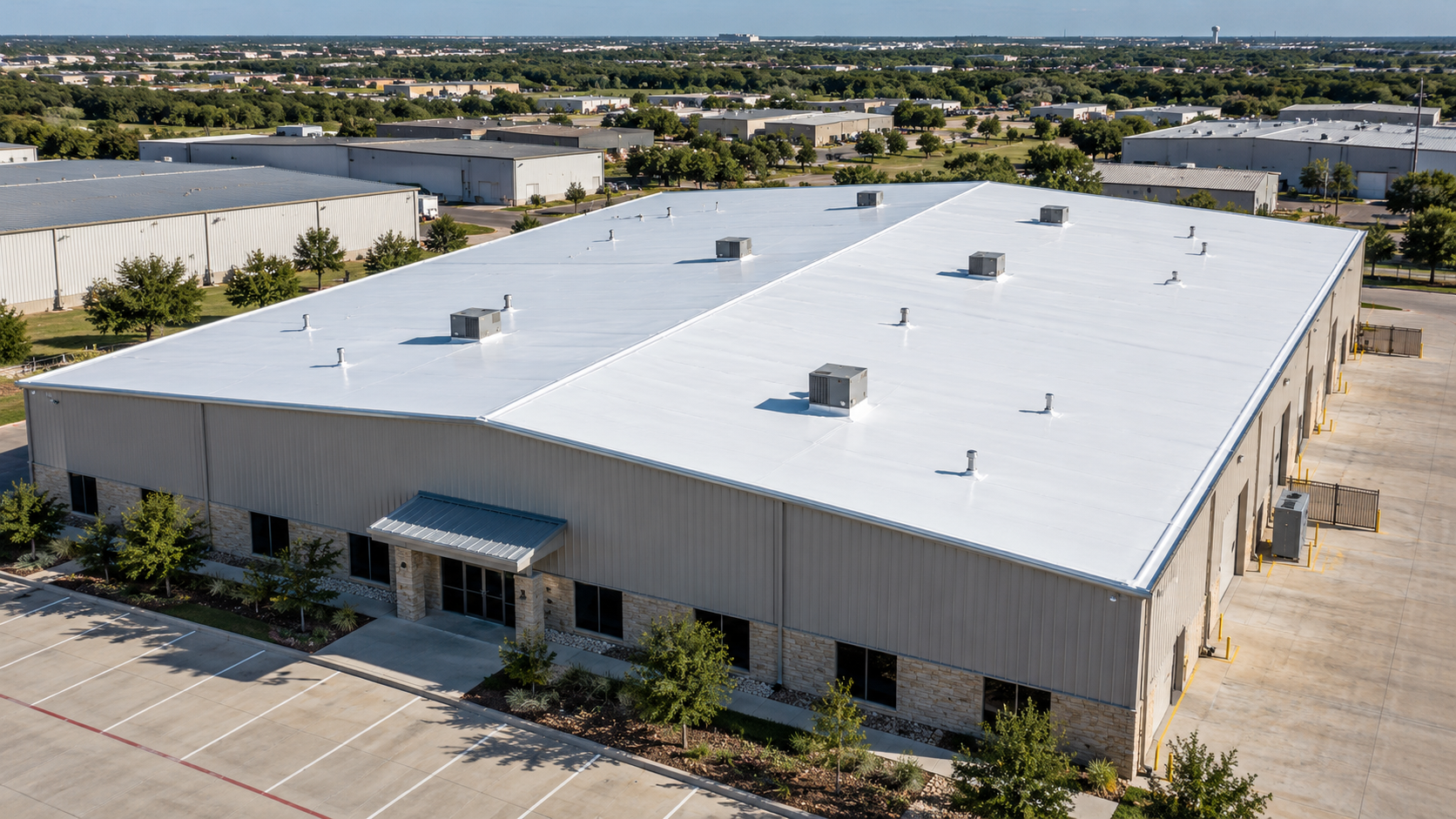
For example, the warehouse roof, office addition, loading canopy, and equipment enclosure should not be combined into one general condition statement when their construction differs.
A consistent naming system makes photographs and recommendations easier to follow.
It also helps future contractors locate the same concern without repeating the entire investigation.
Ask whether reported roof areas are measured, estimated, or taken from existing drawings. Those distinctions matter when the information will support budgeting.
6. Will Interior Conditions Be Reviewed?
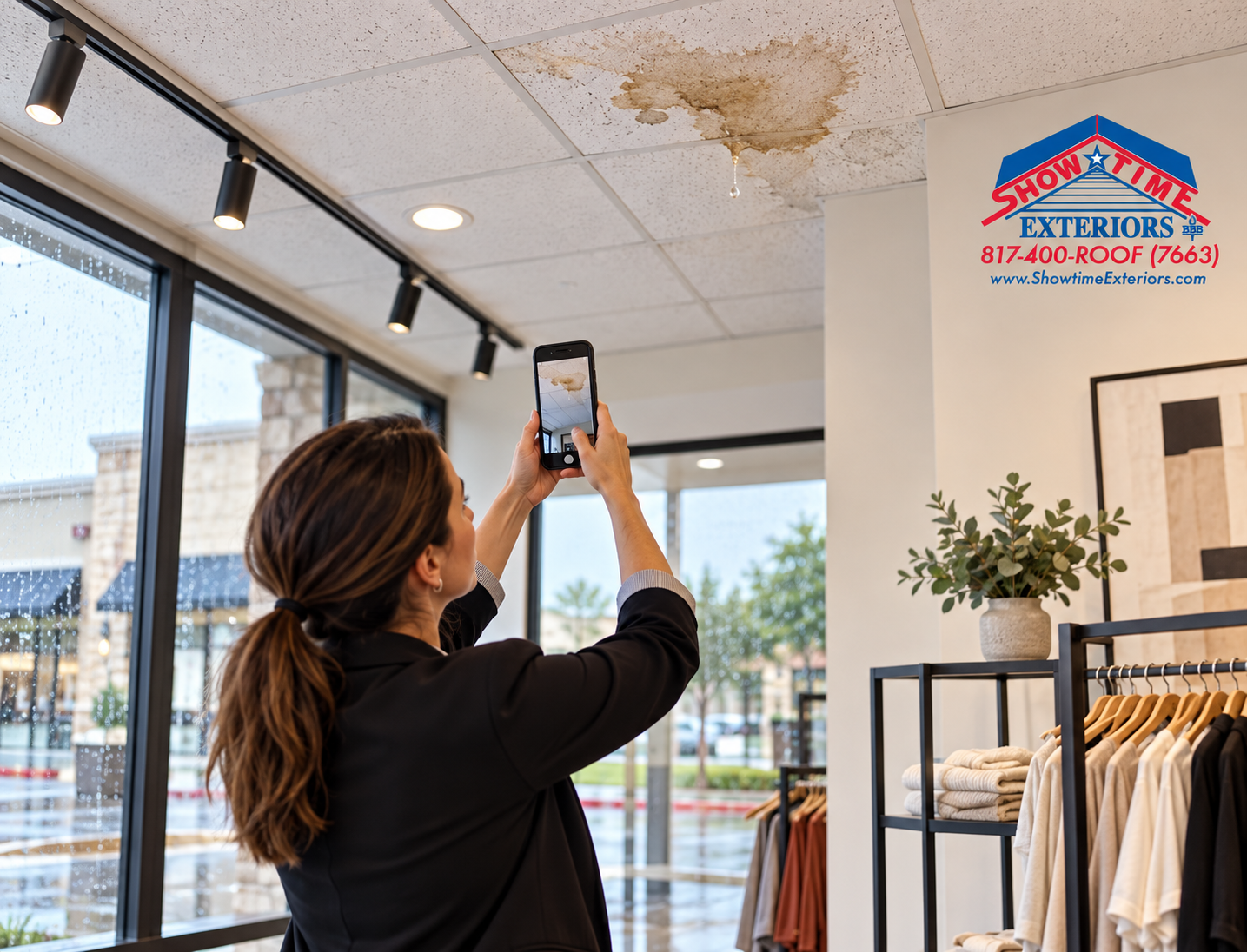
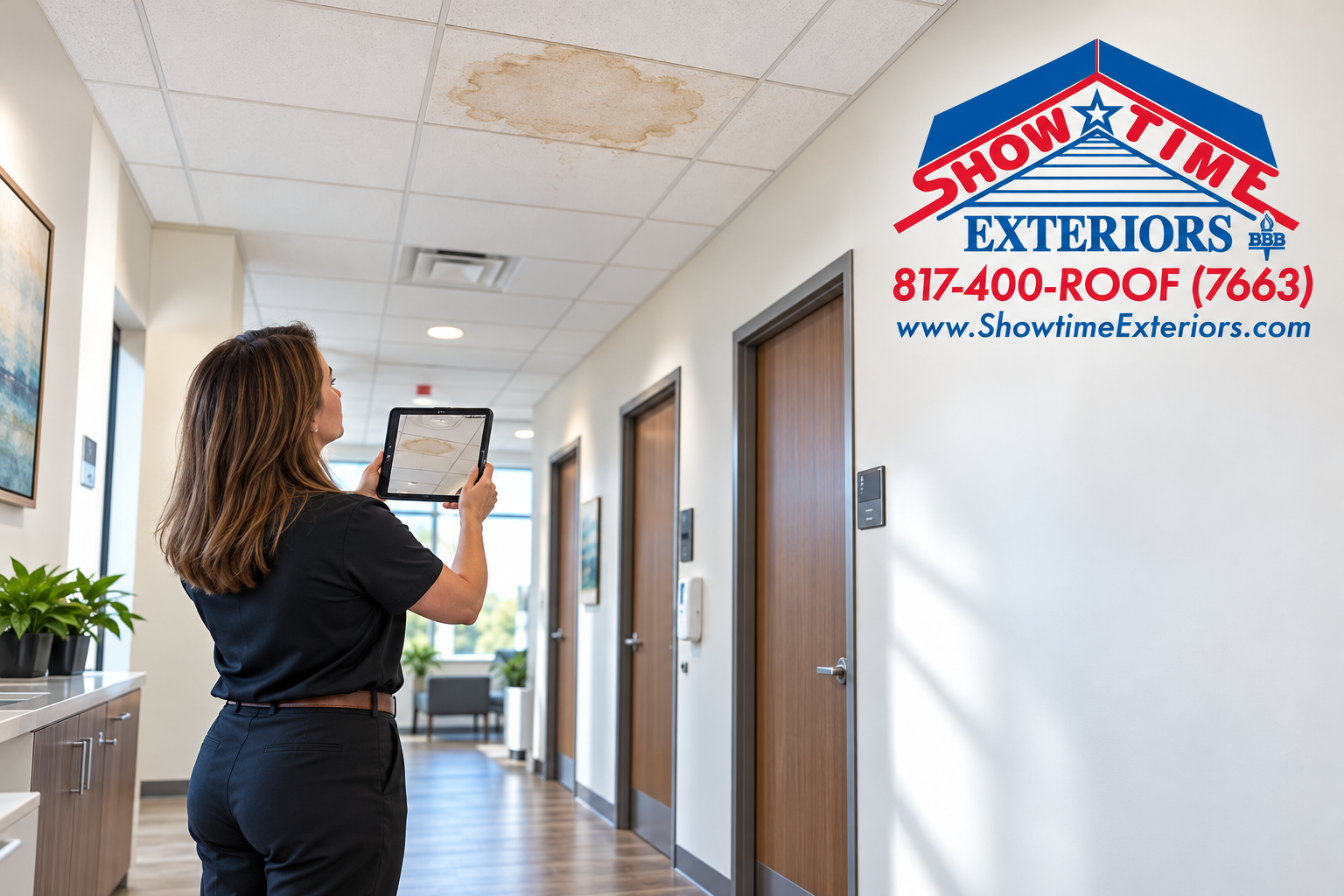
Water does not always enter directly above the visible ceiling stain.
It may travel along structural components or other concealed pathways before appearing inside.
Ask whether the inspector will review accessible interior areas and compare them with rooftop observations. Provide access to affected rooms and explain any restrictions before the appointment.
Interior observations may also reveal conditions needing a different investigation, such as equipment-related moisture or condensation.
The report should describe what was observed without assuming every stain proves an active roof leak.
If ceiling spaces or other areas remain inaccessible, that limitation should be documented along with any recommended follow-up.
7. What Photographs Will the Report Include?
Ask for photographs that show both the defect and its location.
A close-up of an open seam is more useful when accompanied by a wider view identifying the roof section and nearby equipment.
Request captions that explain what each photograph shows. Where dimensions matter, measurements or an appropriate scale reference may help.
Request Traceable Evidence
Useful photographic documentation includes:
- Overall views of each roof section.
- Context views of observed deficiencies.
- Close-ups of relevant details.
- Interior evidence where included.
- Testing and repair locations.
- Areas that could not be fully evaluated.
Showtime Exteriors’ guide to evidence for a commercial roof inspection report discusses organizing the supporting documentation.
8. How Will Observations Be Distinguished From Conclusions?
A strong report separates what the inspector saw from what the inspector believes caused it.
“Open flashing at the northeast equipment curb” describes an observation. “This opening is the source of the interior leak” is a conclusion requiring supporting reasoning.
Ask whether findings will identify confirmed conditions, probable causes, unresolved questions, and recommended verification.
IIBEC’s technical advisory on roof system functionality discusses the professional evaluation needed to assess roof damage and the range of methods that may support it. IIBEC
This distinction matters because a visible defect can require repair without necessarily explaining every problem reported inside the building.
9. Is Moisture Testing Included?
Do not assume that a roof inspection includes a moisture survey.
Ask whether the proposed service involves visual review only or additional testing. If testing is recommended, request an explanation of its purpose, coverage, limitations, and price.
Different methods provide different information. An instrument reading or thermal pattern should be interpreted in relation to the roof construction and field conditions.
Ask How Findings Will Be Verified
Where moisture is suspected, ask what confirmation is appropriate and how the affected area will be estimated.
The report should distinguish indications requiring verification from confirmed wet materials. Avoid treating an unverified scan as a complete inventory of concealed conditions.
10. Will Exploratory Openings Be Necessary?
Selective openings may help identify roof layers, insulation conditions, or concealed construction when that information is needed.
Ask who authorizes the openings, how their locations are chosen, who repairs them, and whether existing warranty requirements need coordination.
The scope should explain how findings will be recorded and how the roof will be restored afterward.
IIBEC’s advisory on reuse of roof insulation explains considerations relevant to evaluating existing insulation and moisture conditions. IIBEC
A limited number of openings provides information about sampled locations. Ask how confidently those findings can be applied elsewhere and what remains uncertain.
11. Will Drainage Be Evaluated?
Ask whether the inspection includes gutters, downspouts, drains, scuppers, valleys, and visible low areas.
Drainage concerns may involve debris, damaged components, geometry, or conditions requiring further design review.
The report should describe the evidence observed during the visit. A dry roof may still show staining or debris patterns, but those observations should not be presented as a complete record of every rainfall event.
Clarify the Next Step
If drainage appears inadequate, ask whether the recommendation involves cleaning, repair, monitoring, additional measurement, or specialist review.
Installing a new membrane does not automatically correct the underlying cause of standing water.
12. How Will Different Roof Systems Be Evaluated?
The inspection should account for the actual roof construction.
Metal roofs present questions involving seams, fasteners, corrosion, movement, and closures. Single-ply membranes require attention to welds or seams, flashings, punctures, attachment clues, and compatible repairs.
Coated systems require consideration of substrate condition, adhesion concerns, deterioration, and previous application records.
The NRCA building-owner guidance for structural metal panel roofs emphasizes scheduled inspection and maintenance programs for that roof type. National Roofing Contractors Association
For properties considering future changes, the inspection can also establish questions to resolve before evaluating a commercial metal roof retrofit.
13. What Happens If Gravel Conceals the Roof Surface?
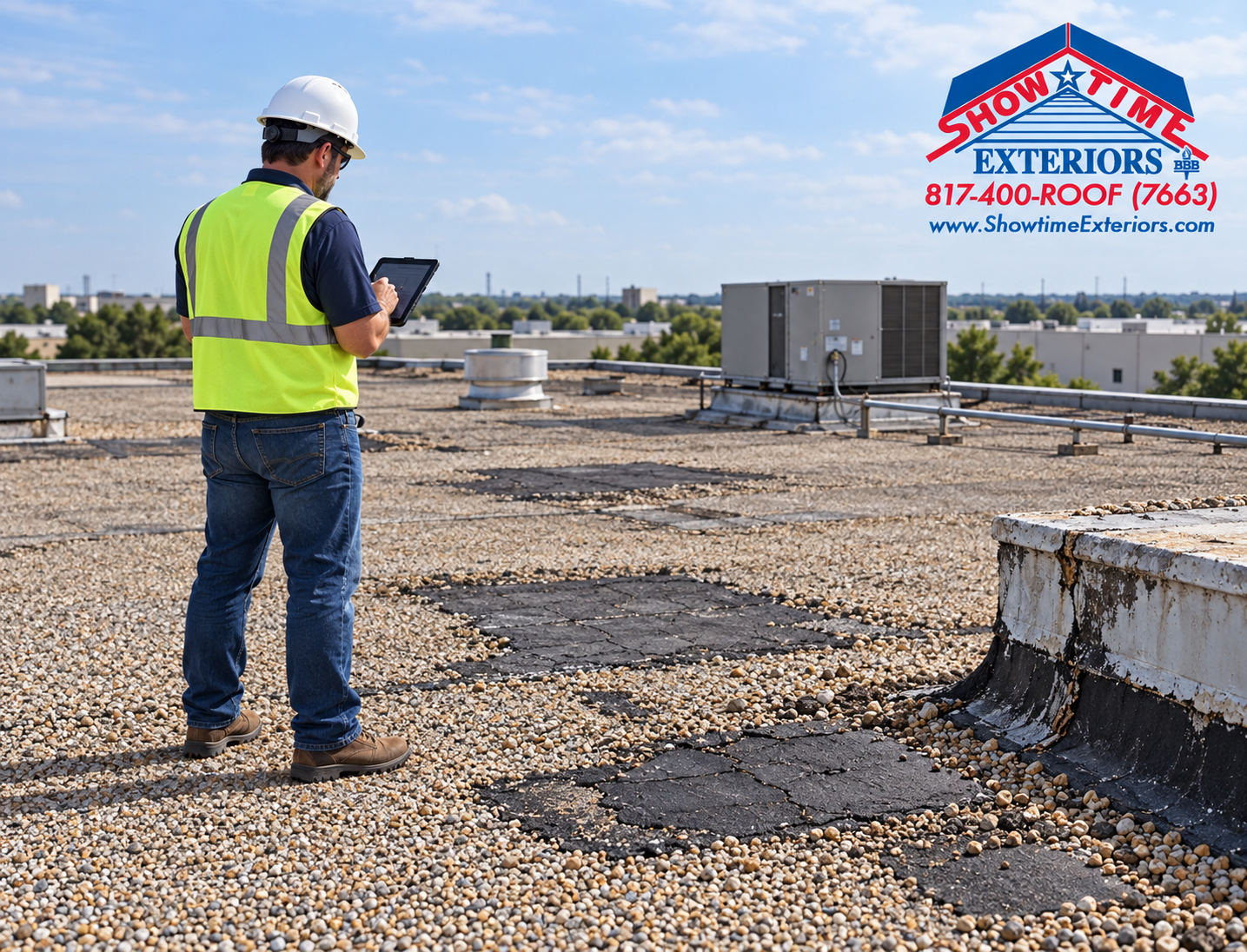
An aging gravel-surfaced built-up roof can be difficult to evaluate because the surfacing obscures portions of the underlying assembly.
Ask how the inspector will describe those limitations and whether additional investigation is recommended.
A report should not imply that concealed materials were fully examined when they were not.
The assessment should identify accessible conditions, previous repairs, drainage concerns, and any evidence supporting further evaluation.
If the roof repeatedly leaks or its construction history is uncertain, ask what investigation is needed before approving another repair or recover.
The purpose is to reduce uncertainty before committing money to a system whose condition remains incompletely documented.
14. Will Repairs Be Performed During the Inspection?
Inspection and repair are separate services unless the agreement combines them.
Ask whether minor maintenance or emergency stabilization is included, optional, or excluded.
Establish who can approve work and whether there is a spending limit. This avoids confusion when a correctable problem is discovered during the visit.
If work is performed, request before-and-after photographs, a location reference, and a description of the materials and actions involved.
Temporary stabilization should be identified as temporary.
The report should also distinguish original observed conditions from the condition after authorized work, so future readers understand what changed during the appointment.
15. How Will Repair Priorities Be Ranked?
A useful report helps you decide what needs attention first.
Ask whether findings will distinguish urgent conditions, near-term repairs, routine maintenance, monitoring items, and issues requiring further investigation.
The categories should explain the reason for urgency and the recommended next action.
PriorityExample of a Reported ConcernExpected Next StepUrgentActive water entry affecting an occupied areaPrompt evaluation and appropriate protectionNear-termOpen flashing without reported interior leakageDefined corrective scopeMaintenanceDebris around a drainCleaning and condition reviewInvestigationSuspected concealed moistureAppropriate verificationCapital planningRecurring failures across an aging sectionCompare broader project options
These are illustrative categories, not fixed deadlines for every building.
16. Will the Report Compare Viable Roofing Options?
Ask whether recommendations will explain why repair, restoration, recover, retrofit, or replacement deserves consideration.
A report should connect each option to the observed conditions and identify any additional investigation needed before selection.
For example, a coating recommendation should not assume the substrate is suitable when moisture, deterioration, or compatibility remains unresolved.
Likewise, a replacement recommendation should explain the deficiencies driving that conclusion.
Ask whether the report identifies reasonable alternatives and the limitations of each.
The aim is a decision supported by the building’s condition, operating needs, and ownership plan rather than a predetermined product recommendation.
17. Are Cost Estimates Included?
A roof inspection report may provide findings without a repair proposal or replacement estimate.
Clarify whether pricing is included and whether figures are preliminary allowances or quotations for a defined scope.
Ask which assumptions underlie any budget. Roof area, removal quantities, insulation, access, drainage corrections, and concealed repairs can materially affect the total.
A report recommending additional testing may not yet provide enough information for a reliable construction price.
If you need budgeting support, say so before the appointment. Request separate descriptions for immediate repairs, optional improvements, and broader capital work so the numbers can be interpreted correctly.
18. Will Existing Warranty Requirements Be Reviewed?
Provide available warranty documents and ask whether the inspection scope includes reviewing relevant service or notification requirements.
A general contractor report is not automatically a manufacturer warranty inspection.
Johns Manville’s technical, guarantee, and warranty resources illustrate that manufacturer services and guarantee qualifications involve their own requirements. Johns Manville
Similarly, Carlisle SynTec’s warranty services resources provide manufacturer-specific information and inspection resources. carlislesyntec.com
Ask who will coordinate with the relevant provider if testing, repairs, or rooftop modifications require its involvement.
Keep written correspondence with the property’s roof records.
19. What Limitations Will Be Documented?
Every inspection has practical boundaries.
Weather, access restrictions, equipment, surfacing, concealed construction, and the agreed methods can affect what the inspector can determine.
The report should state which areas were inspected, which were excluded, and why.
A general statement that the roof is “in good condition” should be read alongside those limitations.
Useful Report Language
Specific wording might say: “The roof field was visually reviewed; insulation moisture content was not tested.”
Another example is: “The west canopy was not accessed because suitable access was unavailable.”
Clear limitations identify what remains unresolved and whether another visit or service is appropriate.
20. When Will the Report Arrive, and Who Can Use It?
Agree on the delivery date, format, and included files before the inspection.
Ask whether you will receive a searchable PDF, photographs, a labeled roof plan, testing records, and a findings review.
If the report is intended for a buyer, lender, insurer, warranty provider, or another recipient, communicate that purpose in advance. Confirm that the proposed service and intended use align.
Ask how factual corrections or supplemental findings will be handled.
A brief review meeting can help the owner understand priorities, exclusions, and outstanding questions. The report should leave you with a defined next step, not simply an attachment in your inbox.
Documents to Prepare Before the Inspection
Organize the available information into one package:
- Property address and site contact.
- Roof access arrangements.
- Drawings and installation records.
- Existing warranties.
- Previous inspection reports.
- Repair invoices and maintenance history.
- Leak locations and interior photographs.
- Recent rooftop equipment changes.
- Known operating restrictions.
- The decisions the report needs to support.
Identify missing documents rather than guessing.
For occupied properties, notify relevant staff about access requirements and sensitive areas. A facility manager who knows the building’s history can provide useful context during the visit.
How to Review the Completed Report
Start with the scope and limitations, then examine the findings.
Check whether photographs can be located on the roof plan and whether recommendations refer to the same areas consistently.
Ask whether conclusions are supported by observations or testing. Identify questions that still require confirmation.
Next, separate work you can authorize now from work needing additional investigation or pricing.
Assign a responsible person to each action and retain completion records.
For owners managing multiple properties, use consistent building and roof-section identifiers. That makes later reports easier to compare and helps track whether recurring concerns have actually been corrected.
Frequently Asked Questions About Roof Inspection Reports
Is a Roof Inspection Report the Same as an Estimate?
No. A report documents findings and recommendations. An estimate prices a defined scope. A contractor may provide both, but confirm that arrangement beforehand.
Can a Visual Inspection Confirm That All Insulation Is Dry?
A visual inspection alone cannot establish the moisture condition of every concealed area. Ask whether additional investigation is justified and what its limitations would be.
Does Every Inspection Require a Drone?
No. The appropriate method depends on the property, access, purpose, and evidence needed. Aerial imagery can supplement an assessment but does not automatically answer concealed-condition questions.
Can a Report Guarantee Remaining Roof Life?
A condition-based service-life opinion involves uncertainty. Ask what supports it, which assumptions apply, and what maintenance or further investigation is required.
Can the Report Be Used for Insurance Communication?
It may provide useful roofing observations and documentation. Confirm the intended purpose before the visit and obtain any recipient-specific requirements directly from the party requesting the report. Acceptance is not automatic.
Request a Roof Assessment From Showtime Exteriors
A useful roof inspection report begins with a clear assignment: identify the purpose, define the scope, agree on the evidence, and establish what decisions the findings should support.
Showtime Exteriors provides inspection and roofing planning information for Texas commercial property owners, including its commercial roofing services in Houston. www.showtimeexteriors.com
Whether your building is in Mansfield, Dallas, Fort Worth, Cleburne, Waxahachie, or another Texas market, prepare your records and explain your immediate concerns before the visit.
Call 817-400-ROOF (7663) or contact Showtime Exteriors to request a roof assessment.