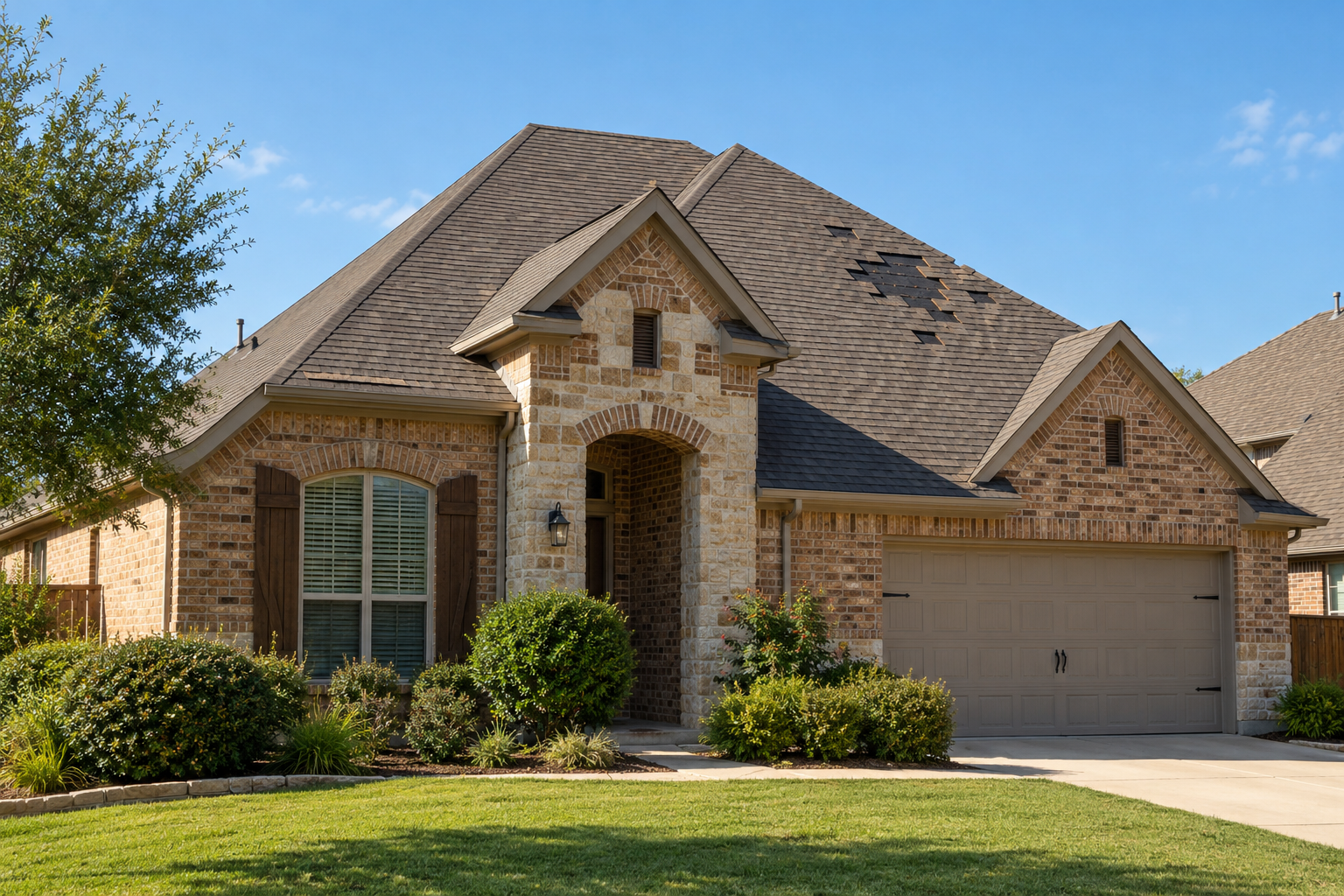




How Quickly Should You Address an Emergency Roof Tarp?
A practical guide for Texas commercial property owners after wind, hail, tornado, fire, debris impact, or sudden water intrusion
Quick answer: Address an emergency roof tarp immediately. Treat it as short-term stabilization, arrange a professional inspection as soon as conditions are safe, monitor it after every weather event, and move toward a permanent repair without unnecessary delay. A tarp does not diagnose the failure, dry wet insulation, restore damaged components, or replace a compatible roofing repair.
When a commercial roof is damaged, a correctly installed emergency tarp or temporary dry-in can reduce immediate water entry and protect occupants, inventory, equipment, and finishes. That first response matters, but it is only the beginning. The tarp should trigger a documented follow-up process: identify what failed, determine what the temporary covering hides, investigate the water pathway, evaluate moisture and substrate conditions, coordinate with the property owner and insurer, and define the permanent correction.
The right timing is not a universal number of days. A small, stable temporary covering on an accessible area may remain functional long enough to coordinate inspection and materials. A loose tarp over a large opening, active leak, damaged deck, electrical exposure, occupied space, food or medical operation, or another storm in the forecast may require same-day escalation. The practical rule is simple: stabilize now, inspect promptly, monitor continuously, and repair permanently as soon as the condition, scope, access, materials, and authorizations allow.
Why an emergency roof tarp must remain temporary
A tarp is a protective layer placed over a damaged area to help shed water until a more durable repair can be designed and installed. It may be secured with battens, sandbags, ropes, fasteners, adhesives, or another temporary method selected for the roof and conditions. Each approach has limitations. Wind can lift edges, fasteners can create new openings, water can travel beneath the covering, ponding can overload weak areas, and ultraviolet exposure can weaken temporary materials.
Temporary protection also conceals evidence. Once a roof area is covered, the original damage, debris pattern, membrane opening, displaced flashing, loose metal, or wet material may be harder to see. That is why before-and-after photographs, location labels, dates, installer notes, material records, and the reason for emergency action are important. When conditions are unsafe, protection comes before perfect documentation; however, the record should be created as soon as reasonably possible.
A temporary tarp does not establish that the surrounding roof is sound. Water may enter at one location, travel along insulation, deck flutes, structural members, or penetrations, and appear inside somewhere else. A dry interior after tarping is encouraging, but it does not prove that all water entry stopped or that insulation and deck materials are dry. The permanent scope should be based on inspection and appropriate testing—not simply on where a bucket was placed.
How fast should each response happen?
Immediately: protect people and operations
Keep people away from active leaks near electricity, loose ceiling materials, unstable roof areas, exposed edges, damaged skylights, displaced metal, and fallen equipment. Move vulnerable inventory or equipment when it can be done safely. Call emergency services for fire, electrical, structural, or life-safety hazards. Do not send untrained staff onto a wet, windy, damaged, or tarped roof.
Same day when practical: arrange temporary stabilization
If water is entering or the roof is open, contact a qualified roofing professional for emergency protection. The crew should evaluate safe access, weather, roof condition, anchorage, electrical hazards, openings, loose debris, and the limits of what can be performed. Some conditions cannot be tarped safely until wind, lightning, fire, structure, or power hazards are controlled.
Within 24 hours: create the incident record
Record the time the problem was discovered, reported storm or incident, affected roof area, interior location, emergency calls, photographs, videos, tenant statements, work performed, invoices, and contacts. Preserve original image files. If an insurance claim may be involved, notify the appropriate insurance contact according to the policy and ask what documentation or inspection is required.
Within the first few days: complete a professional assessment
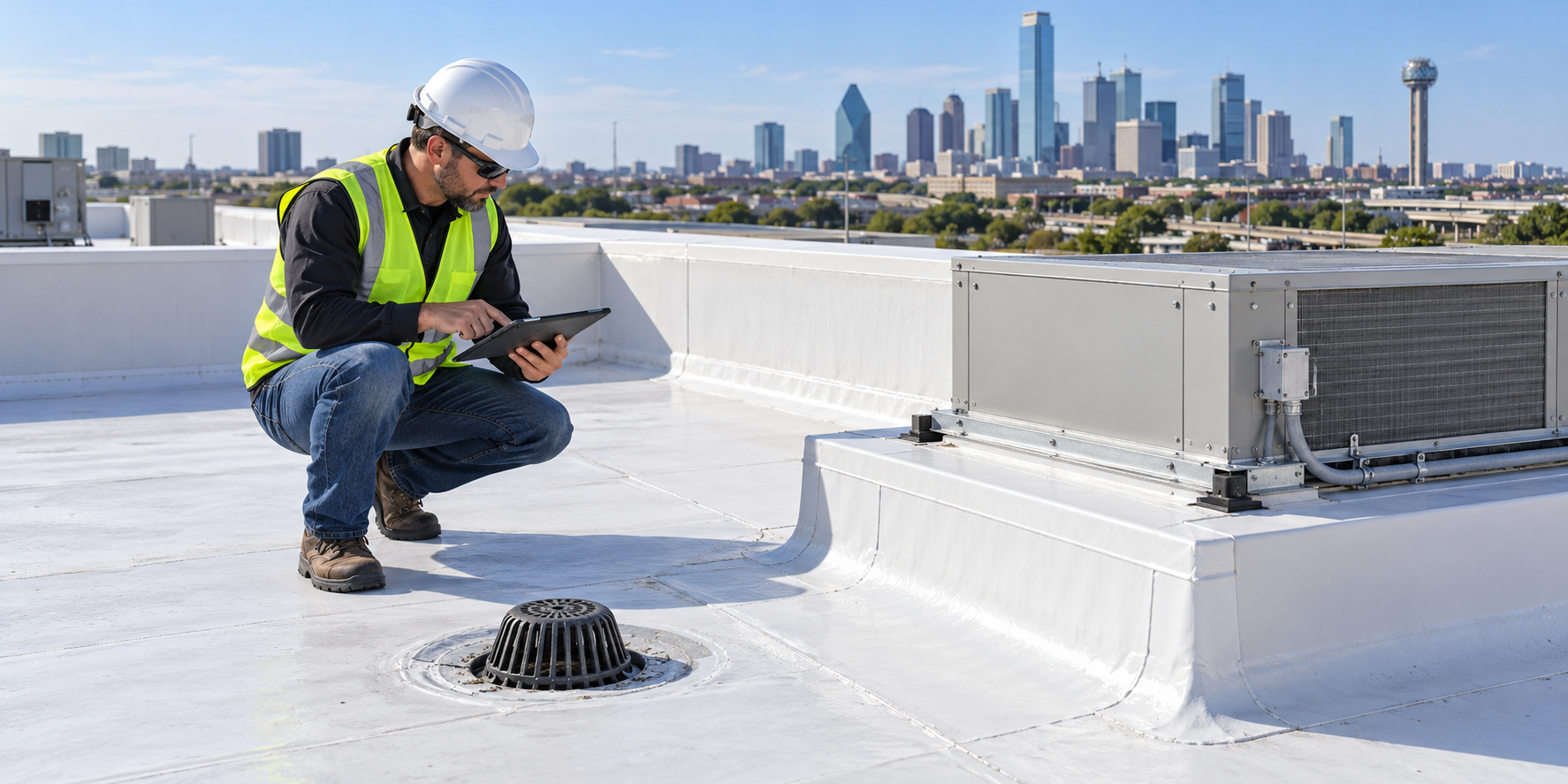
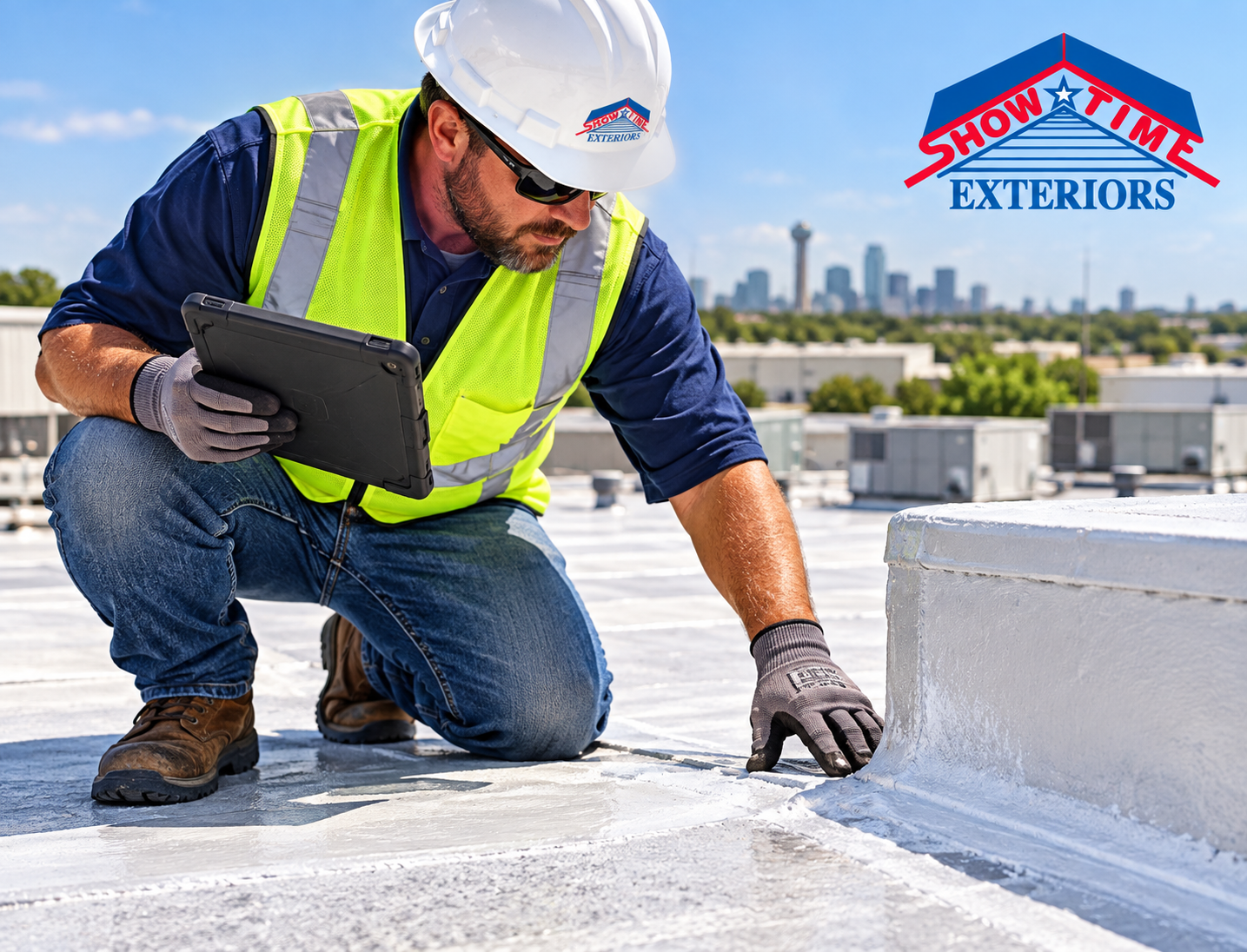
Inspect the temporary covering, nearby roof system, edges, flashings, penetrations, drainage, equipment, interior impacts, and accessible substrate. The assessment should distinguish visible facts, reported information, interpretation, pre-existing conditions, and unknowns. It should identify whether moisture testing, test cuts, engineering, electrical review, HVAC work, or another specialty is warranted.
As soon as the scope is known: schedule permanent work
Develop an itemized scope with materials compatible with the existing system, wet-material removal, deck allowances, flashing transitions, drainage corrections, equipment coordination, access, safety, permits, code considerations, and closeout documentation. Do not allow scheduling uncertainty to turn a temporary tarp into an unexamined maintenance strategy.
After every weather event: recheck the temporary protection
Wind, rain, heat, debris, foot traffic, shifting water, and rooftop work can loosen a temporary covering. Arrange a safe professional reinspection when conditions justify it. From the ground or interior, facility staff can report movement, new leaks, sagging ceilings, odors, stains, or water near electrical systems without climbing onto the roof.
Conditions that require faster escalation
Active water near electrical panels, lighting, wiring, machinery, data equipment, fire-protection systems, elevators, or occupied work areas.
A tarp that is flapping, torn, displaced, holding water, pulling on parapets or edges, or allowing new water entry.
A suspected soft, deflected, cracked, burned, punctured, or partially collapsed roof deck.
Loose coping, edge metal, panels, signs, screens, rooftop units, or debris that could fall or become windborne.
An exposed roof opening, missing material, damaged skylight, broken hatch, compromised penetration, or open transition.
Recurring leakage after the tarp was installed, especially when the interior point moves or expands.
A high-consequence occupancy such as health care, food service, manufacturing, records storage, electronics, multifamily housing, schools, or public assembly.
Another storm, freeze, extreme heat event, or high-wind period expected before the temporary protection can be inspected.
Evidence of trapped moisture, odors, discoloration, wet insulation, saturated ceiling materials, or microbial growth concerns.
An insurance, lender, lease, warranty, code, or operational deadline that requires photographs, an inspection report, estimates, or completed work.
Do not climb onto a damaged or tarped roof yourself
Emergency tarping creates serious safety risks. A tarp can hide holes, skylights, weak deck, wet surfaces, debris, fasteners, and changes in elevation. It can become slippery, billow in wind, or pull a worker toward an edge. Storm conditions may also involve downed power lines, lightning, unstable equipment, damaged ladders, or compromised structures. OSHA has specifically highlighted fall and electrical hazards connected with tarp installation.
Property owners and facility staff should observe from safe ground and interior locations, restrict access, document what can be seen without exposure, and call qualified professionals. Never walk on top of a tarp. Do not assume a familiar roof is safe after a storm simply because it looked sound before. Safety planning, fall protection, access, weather, structural condition, and electrical hazards must be evaluated before rooftop work.
What a professional emergency roof inspection should document
Property and incident information
Building address, owner or manager, occupancy, roof areas, date and time discovered, reported storm or incident, interior impacts, emergency actions, access restrictions, and contacts.
Overall roof context
Roof plan or area labels, north direction, elevations, perimeters, parapets, drainage, penetrations, equipment, transitions, expansion joints, access points, and the location of the temporary covering.
Temporary installation
Tarp type, approximate dimensions, attachment or ballast method, laps, edges, terminations, penetrations, ponding, tears, movement, and observed limitations. Record who installed it and when, if known.
Original and remaining damage
Openings, tears, punctures, displaced membrane, loose panels, damaged edge metal, broken skylights, debris impact, fire or heat effects, equipment movement, and visible deck or insulation conditions.
Water pathway and interior effects
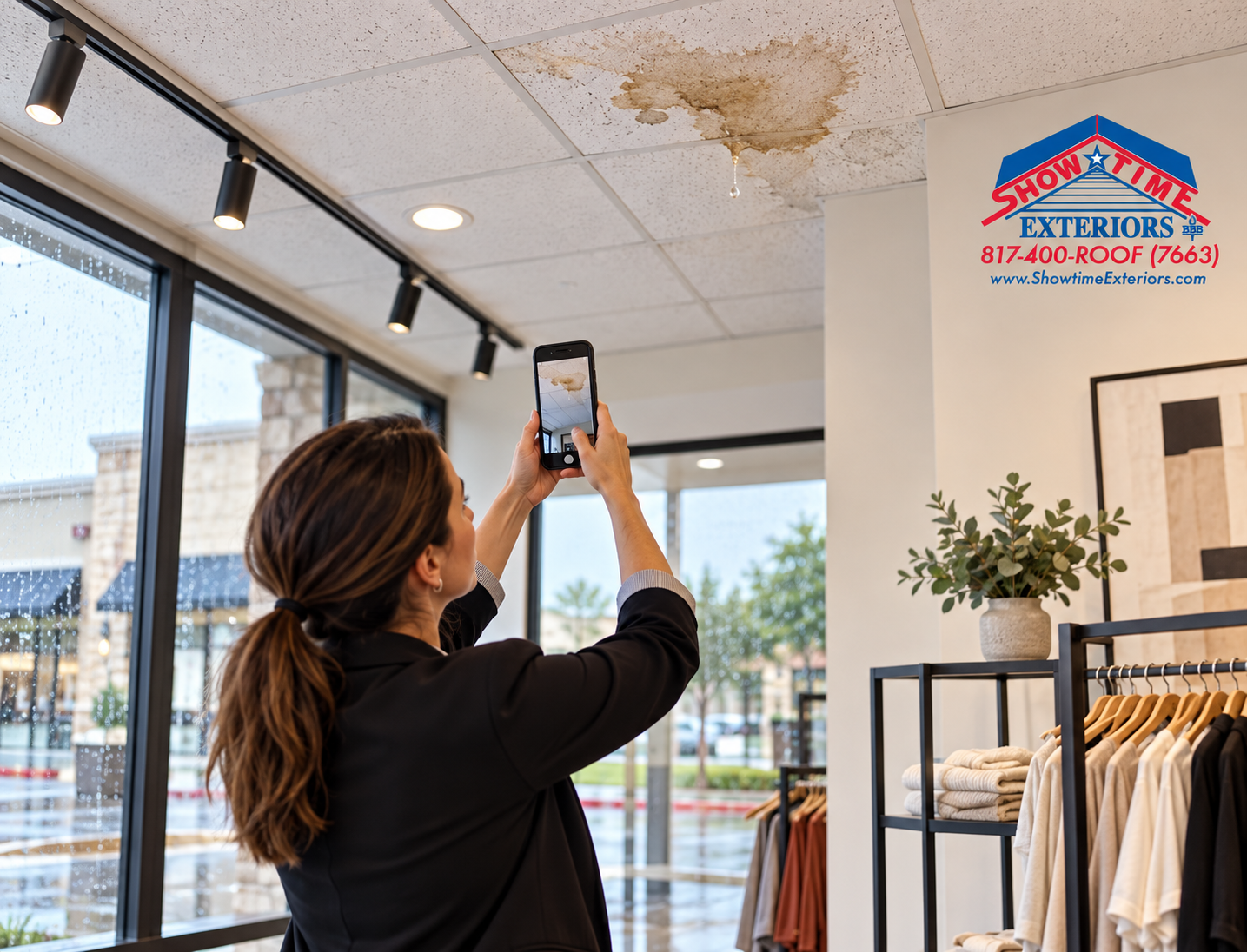
Interior leak points, ceiling or wall staining, wet contents, active dripping, odor, electrical exposure, HVAC or plumbing context, and the relationship between interior and rooftop locations.
Pre-existing conditions
Old patches, failed sealant, corrosion, brittle materials, ponding, blocked drains, open seams, recurring leaks, vegetation, neglected maintenance, and prior damage. An honest record should not label every defect as new.
Unknowns and testing needs
Areas hidden by the tarp, gravel, coatings, multiple roof layers, equipment, standing water, unsafe access, or finished interiors. State whether moisture testing, cores, test cuts, deck evaluation, engineering, or another trade is recommended.
Recommended action and priority
Emergency stabilization, monitoring, near-term repair, broader restoration, replacement, or specialist review. Link each recommendation to a location and finding rather than relying on a generic statement.
Insurance documentation after emergency tarping
Commercial property policies commonly require the insured to provide notice, protect the property from further damage, preserve records, cooperate with investigation, and document expenses, but the exact duties depend on the issued policy and endorsements. Contact the insurer, broker, or agent promptly and request instructions in writing. Ask whether an adjuster or consultant needs to inspect before permanent work and how emergency invoices, photographs, samples, and estimates should be submitted.
Mitigation should be reasonable and tied to protecting the property. Save contracts, work authorizations, labor logs, equipment charges, material receipts, disposal records, water-removal invoices, temporary power costs, security expenses, and before-and-after photographs. Keep a claim communication log showing dates, names, decisions, requests, and documents transmitted. Do not discard damaged materials that may be relevant until the appropriate parties have had a reasonable opportunity to inspect, unless safety or emergency operations require removal.
A roofing contractor can document physical conditions, explain construction options, prepare estimates, and perform authorized work. The contractor should not promise that an insurer will pay, interpret policy language as legal advice, or characterize every roof condition as covered storm damage. Coverage, valuation, depreciation, deductibles, exclusions, and payment are determined under the policy by the insurer. Property owners should direct policy questions to licensed insurance professionals and legal questions to qualified counsel.
What if the tarp was installed before photographs were taken?
Do not remove a functioning temporary covering merely to recreate evidence without coordinating safety and the repair process. Start with what exists: installer photographs, invoices, dispatch records, tenant images, security video, drone imagery, weather records, debris photographs, interior conditions, witness accounts, removed materials, and the current roof condition. Ask the installer to describe the opening, materials, dimensions, attachment, and reason the work was necessary.
During permanent work, photograph the tarp before removal, the uncovered area, each roof layer, wet or deteriorated insulation, deck conditions, fasteners, transitions, and completed repairs. Label every image with the roof area and finding. Preserve original files and create annotated copies separately. The goal is an accurate record—not a story that exceeds the available evidence.
How temporary tarps can create new problems
Wind uplift and displacement
Loose edges can flutter, tear, or pull away. Attachment that is inadequate for the exposure can fail, while improvised fasteners can puncture otherwise serviceable areas.
Ponding and redirected drainage
A tarp can create wrinkles, dams, or low points that retain water or direct it toward a penetration, wall, scupper, drain, or weak roof area.
Trapped moisture
Water already inside the roof assembly may remain beneath the temporary covering. A tarp does not remove wet insulation or dry a deck.
Concealed deterioration
The covering can hide cracks, holes, loose metal, damaged seams, unstable deck, previous patches, or spreading conditions that would otherwise be monitored.
Compatibility and residue
Adhesives, tapes, sealants, fasteners, or ballast used for temporary work may affect the membrane, complicate cleaning, or change the permanent repair method.
False confidence
When interior dripping stops, owners may assume the problem is solved. Water can still move elsewhere, moisture can remain concealed, and the tarp can deteriorate without obvious interior symptoms.
Warranty or code complications
Unapproved materials or methods may conflict with manufacturer requirements, existing warranties, fire classification, drainage, or other project requirements. Verify procedures when those issues apply.
Special concern: aging gravel-surfaced BUR roofs
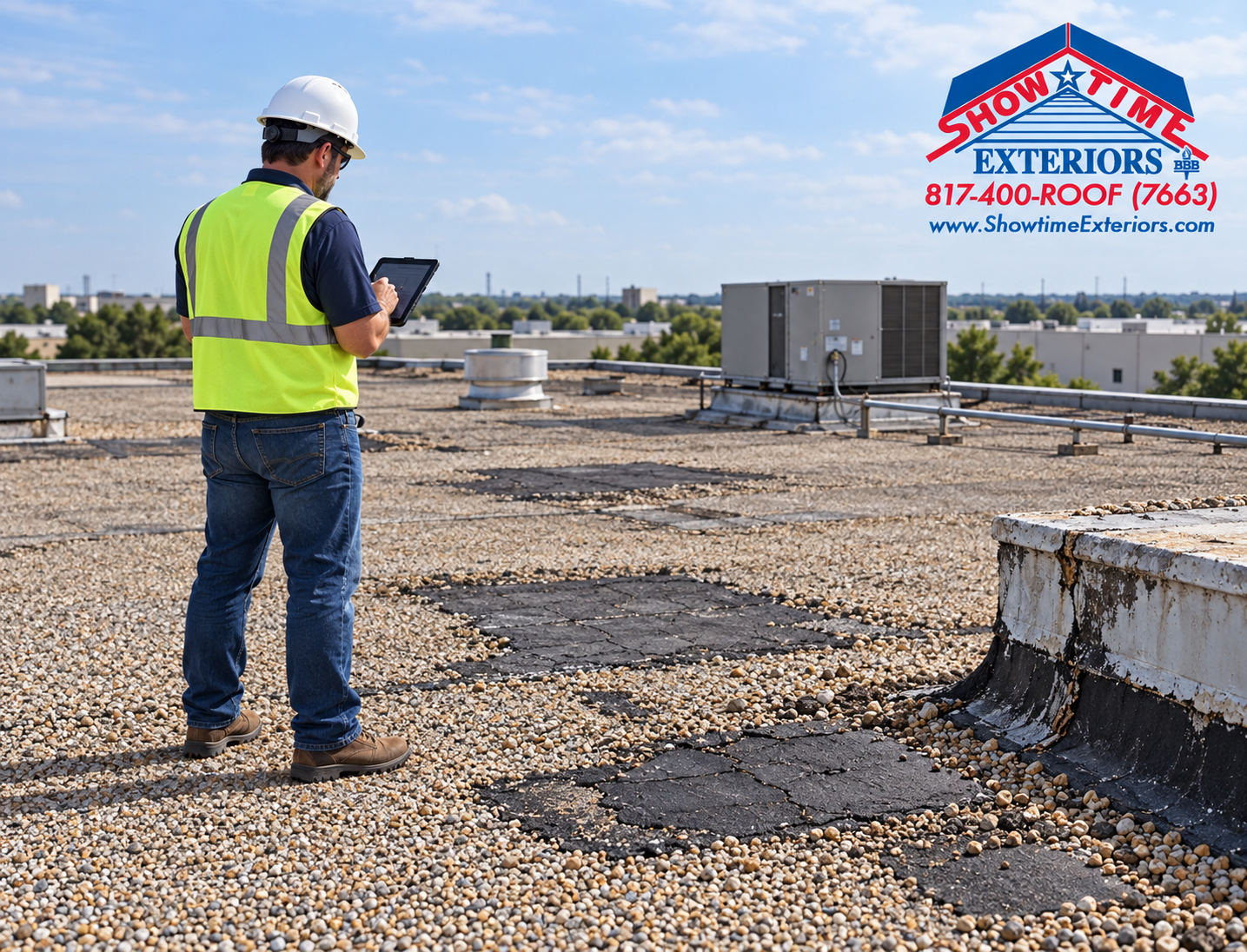
An emergency tarp over an aging built-up roof with gravel surfacing deserves particular caution. Gravel can conceal the waterproofing membrane, flood coat, splits, blisters, cracks, previous repairs, moisture-related deterioration, and the true boundaries of damage. It can also make temporary attachment and sealing more difficult because the surface is irregular and loose aggregate may shift.
Consistent with Showtime Exteriors’ commercial campaign, aging gravel roofs should not be presented as a positive or easy-to-evaluate system. The inspection should map bare or displaced areas, drainage restrictions, vegetation, surface movement, visible membrane, perimeter conditions, previous repairs, interior leak history, moisture findings, and any authorized representative test locations. The report should state clearly that visible gravel does not prove the membrane below is sound.
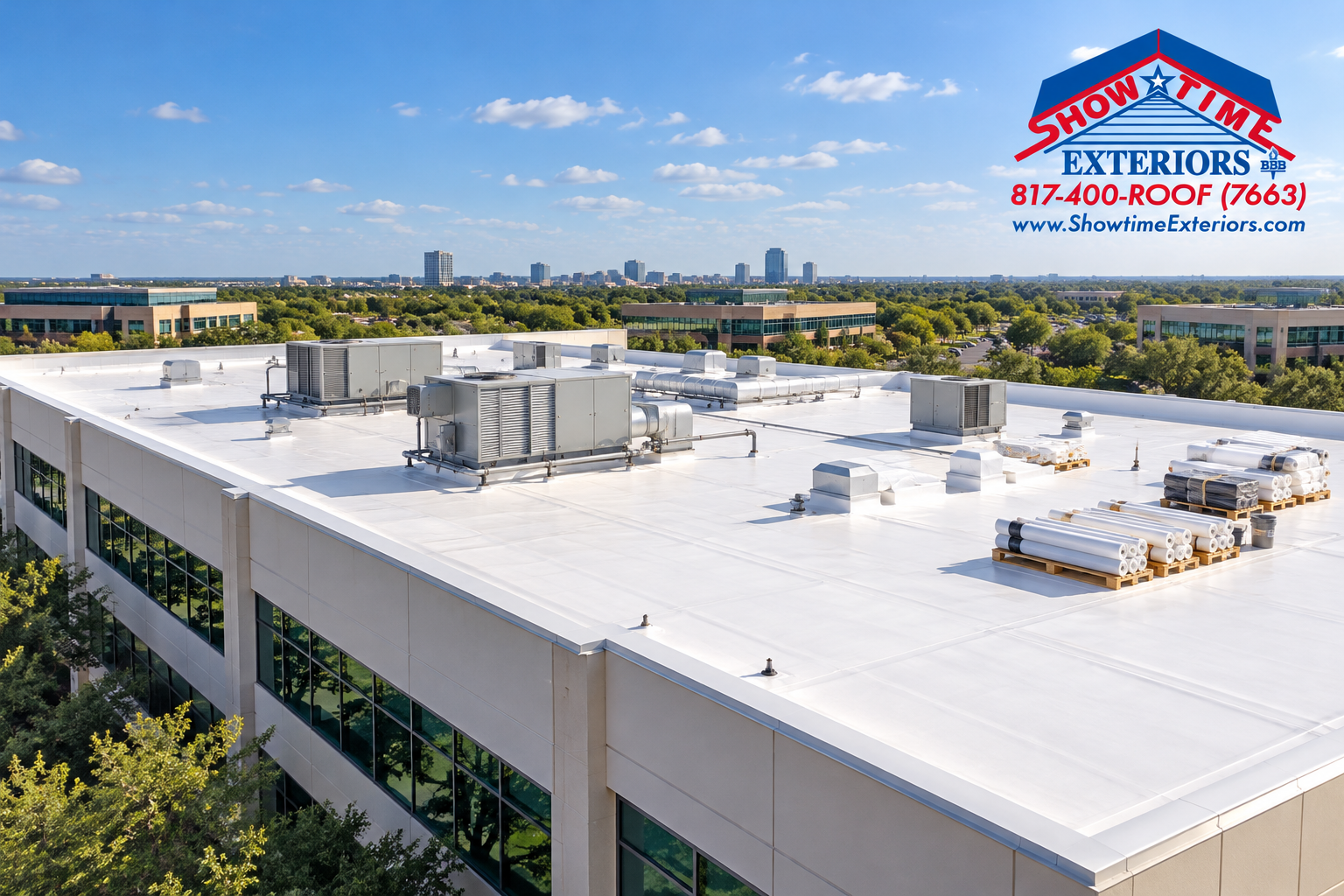
If the roof is near the end of its serviceability, repeatedly leaking, wet across broad areas, difficult to inspect, or creating insurance-renewal concerns, continuing to add temporary materials may increase uncertainty. A planned replacement can address wet materials, insulation, drainage, attachment, perimeter details, penetrations, equipment coordination, and selection of a more inspectable assembly. The appropriate system depends on verified conditions, building use, structure, code, budget, warranty objectives, and insurer requirements.
Repair, restoration, recover, or replacement after tarping
Targeted permanent repair
Most appropriate when damage is localized, surrounding materials are serviceable, wet components can be removed, compatible repair details are available, and the repair can tie into sound construction.
Restoration or coating
May be considered when the substrate and existing assembly are suitable, moisture is within acceptable limits, details can be reinforced, drainage is addressed, and the selected system is compatible and properly designed. A coating should not be used merely to bury unidentified wet or failed materials.
Recover or overlay
May reduce tear-off in some projects, but retained layers, moisture, deck, attachment, added weight, perimeter heights, drainage, fire classification, code, and manufacturer requirements must be evaluated. Concealed uncertainty should not be ignored.
Replacement
Often appropriate when damage is widespread, the assembly is saturated, the deck requires extensive work, the roof is near the end of useful service, details cannot be repaired reliably, multiple layers or old repairs complicate the scope, or insurance and capital planning favor a new system.
Specialist or engineered solution
Structural damage, large openings, unusual attachment, complex drainage, fire damage, equipment support, high wind design, hazardous materials, or uncertain deck conditions may require engineers, consultants, electricians, HVAC professionals, or other qualified parties.
Step-by-step emergency roof tarp response plan
Protect occupants and restrict access to leaking, electrical, ceiling, rooftop, and exterior fall zones.
Call emergency services for fire, structural, electrical, gas, or life-safety conditions.
Contact a qualified commercial roofing professional for safe temporary stabilization.
Record the discovery time, reported incident, affected areas, contacts, and immediate decisions.
Photograph visible exterior and interior conditions without entering unsafe areas.
Notify the appropriate insurance contact according to the policy and request instructions in writing.
Preserve invoices, receipts, labor logs, materials, removed components, and original image files.
Schedule a comprehensive roof and interior inspection as soon as safe access is available.
Evaluate drainage, edges, flashings, penetrations, equipment, membrane, insulation, and deck concerns.
Use moisture testing, test cuts, engineering, or specialty review when the evidence and project justify them.
Prepare an itemized permanent scope that separates emergency work, event-related work, maintenance, code work, and elective improvements.
Coordinate inspections, authorizations, warranty procedures, permits, access, tenants, and operations.
Reinspect the tarp after significant weather or any sign of movement or renewed leaking.
Complete the permanent correction without allowing the temporary covering to become the default long-term condition.
Create a closeout record with completed-work photographs, invoices, materials, warranties, permits, and updated roof information.
Emergency roof tarp checklist for property managers
Is anyone exposed to water, electricity, falling materials, unstable construction, or a hazardous area?
Is water actively entering, spreading, or affecting critical operations?
Who discovered the problem, when, and after what reported event?
Which roof area and interior rooms are involved?
Has a qualified roofing professional evaluated safe access and temporary protection?
Was the condition photographed before and after emergency work when safely possible?
What temporary material and attachment method were used, and what are their limitations?
Has the insurer, broker, owner, lender, tenant, or warranty provider been notified as required?
Are original photographs, invoices, work authorizations, receipts, and communications preserved?
Has the roof been inspected for hidden moisture, damaged insulation, deck issues, drainage, and adjacent defects?
Does the report distinguish new observations from older maintenance or deterioration?
Is the roof an aging gravel-surfaced BUR that limits visibility and increases uncertainty?
What permanent repair, restoration, recover, retrofit, or replacement is recommended?
Who owns the next action, what authorization is needed, and what is the target date?
When will the tarp be rechecked if permanent work cannot begin immediately?
Frequently asked questions
How long can an emergency roof tarp stay in place?
There is no universally safe duration. Material, attachment, wind, rain, heat, ultraviolet exposure, roof geometry, traffic, drainage, and damage conditions all matter. Treat the tarp as a short bridge to permanent work, inspect it regularly, and follow the roofing professional’s site-specific recommendation.
Should I wait for the insurance adjuster before tarping?
Do not delay reasonable action needed to protect people and prevent additional damage. Notify the insurer promptly, document before and after when safely possible, preserve evidence, and ask whether inspection is required before permanent work. The policy and circumstances control.
Can maintenance staff install the tarp?
Roof tarping can involve falls, electricity, unstable deck, openings, wind, and damaged equipment. Untrained staff should not climb onto a damaged roof. Use qualified professionals with appropriate safety procedures and equipment.
Does a tarp stop all leaks?
Not necessarily. Water can enter outside the covered area, travel beneath it, move through another detail, or remain trapped in the assembly. Continued monitoring and a professional investigation are necessary.
Can I make the permanent repair immediately?
Sometimes, especially when safety or ongoing damage requires action. When insurance, warranty, engineering, or other parties are involved, preserve evidence and coordinate inspections when practicable. Emergency conditions may require work before every party can attend; document why and what was done.
Will insurance pay for the tarp and permanent repair?
That depends on the policy, cause of loss, exclusions, deductibles, limits, valuation, duties, and claim decision. A contractor can document conditions and costs, but the insurer determines coverage and payment.
What if the roof keeps leaking after tarping?
Treat renewed leakage as an escalation. Protect people and contents, contact the roofer, document the new location and timing, and assess whether the tarp shifted, water is entering elsewhere, drainage changed, or concealed moisture is moving.
Is a tarp appropriate for every commercial roof?
No. Roof shape, material, wind, fire, chemical exposure, equipment, structural damage, access, openings, and attachment limitations may require another temporary dry-in method or specialist plan.
Should a gravel BUR roof simply be tarped again?
Repeated tarping does not resolve the inspection limitations or concealed conditions of an aging gravel roof. Document the system honestly, investigate moisture and assembly conditions where appropriate, and evaluate permanent repair or replacement rather than relying on serial temporary coverings.
What should be included in the permanent repair proposal?
Location, dimensions, removal, wet-material handling, deck allowance, compatible materials, attachment, transitions, flashing, drainage, equipment coordination, safety, access, permits, code, warranty procedures, exclusions, unit prices, photographs, and closeout documentation.
Planning around tenants, inventory, and business operations
A commercial roof emergency is not only a roofing event. It can interrupt tenants, production, deliveries, technology, records, customer access, food preparation, medical services, and building systems. The response plan should identify which spaces are affected, which operations cannot tolerate water or dust, when crews can access the property, and whether temporary relocation or protective barriers are necessary. The property manager should designate one person to coordinate roofing, facilities, tenants, ownership, insurance contacts, and any specialty trades.
Interior protection should be documented as carefully as rooftop work. Record moved inventory, equipment covers, containment, water extraction, dehumidification, ceiling access, electrical shutdowns, and restricted areas. Photograph damaged and protected property before items are moved when it is safe to do so. Maintain a simple log of when leaks started and stopped, rainfall conditions, affected rooms, cleanup activities, and operational consequences. These records help the owner manage the building and may be relevant to insurance evaluation, but they do not by themselves establish coverage.
Coordinate rooftop equipment before permanent work begins. HVAC units, conduits, gas lines, satellite equipment, exhaust systems, solar components, signs, screens, and supports can interfere with access or create separate water-entry pathways. Roofing crews should not disconnect or modify systems outside their scope. The permanent plan may require licensed electricians, HVAC contractors, plumbers, engineers, fire-protection professionals, or equipment vendors. Assign each interface clearly so a roof repair is not undermined by an unresolved equipment detail.
Communication should be factual and consistent. Tell tenants what areas are restricted, what temporary protection is in place, whom to contact if new water appears, and when follow-up work is expected. Avoid promising an exact completion date before scope, access, materials, approvals, and weather are confirmed. Provide updates when conditions change. A brief written summary after each site visit can prevent conflicting instructions and create a reliable project record.
Building a defensible permanent repair scope
A permanent proposal should do more than state that the tarp will be removed and the leak sealed. It should identify the roof area, approximate dimensions, existing system, temporary materials, visible damage, assumed construction, and any conditions that remain concealed. The scope should explain how the work will transition into sound existing material, how wet insulation will be located and removed, how the deck will be evaluated, and how flashings, penetrations, seams, edges, and drainage will be restored.
Unknown conditions should be handled transparently. If the deck cannot be seen until demolition, include an allowance or unit price rather than pretending its condition is known. If moisture testing indicates possible wet areas, explain how anomalies will be verified and how repair boundaries will be established. If several roof layers may exist, identify what information is verified and what will be confirmed during construction. Clear assumptions help owners compare proposals and reduce disputes when hidden conditions are uncovered.
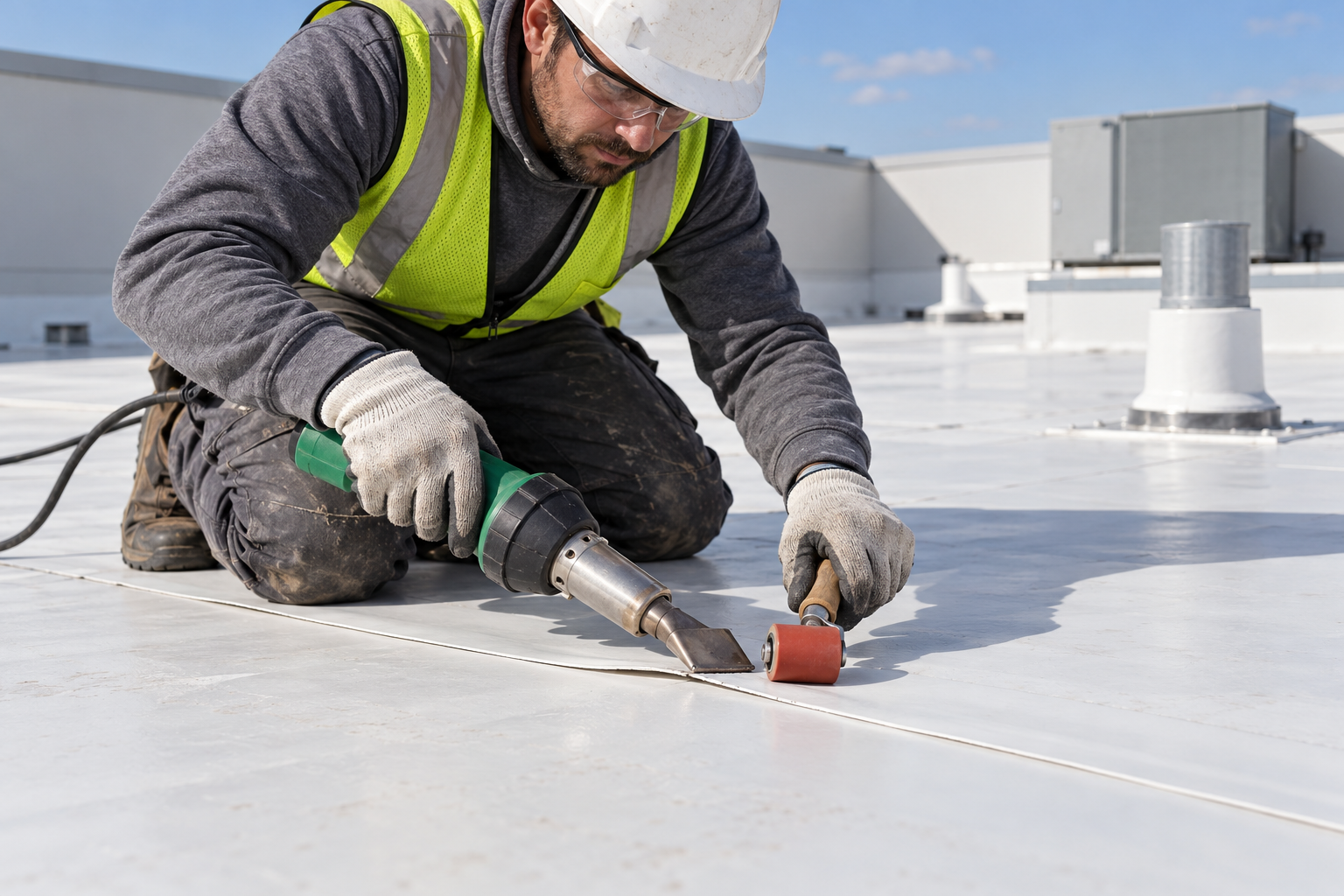
Material compatibility is essential. Asphalt, single-ply membranes, metal, coatings, spray foam, sealants, tapes, adhesives, insulation, cover boards, and treated substrates do not all work together. A product that stops water briefly may not create a durable transition or may interfere with a manufacturer-approved repair. The scope should specify preparation, cleaning, primer where required, reinforcement, attachment, lap dimensions or welding procedures, termination, and quality-control checks appropriate to the selected system.
Drainage should be reviewed even when the original damage appears unrelated. Temporary coverings can redirect water, and ponding can expose weaknesses outside the first leak area. Inspect drains, strainers, scuppers, gutters, downspouts, crickets, saddles, overflow provisions, and low areas. The proposal should distinguish clearing and maintenance from construction changes. Significant drainage or structural modifications may require design by the appropriate professional.
Closeout requirements belong in the scope, not as an afterthought. Request photographs of the uncovered condition, removed wet or damaged materials, deck repairs, insulation, fasteners or attachment, membrane or metal installation, flashings, terminations, drainage, and the completed area. Collect product information, warranties when applicable, permits, inspection records, change orders, invoices, and an updated roof plan showing the repaired area. This closeout package becomes the starting point for future maintenance and insurance documentation.
Seasonal considerations for emergency roof tarps in North Texas
North Texas weather can place changing demands on temporary protection. Spring and early summer may bring hail, strong thunderstorms, tornadoes, wind-driven rain, and repeated storm systems. Summer heat and ultraviolet exposure can age temporary materials and adhesives. Sudden temperature changes can affect sealants, membranes, and metal movement. Winter wind, cold, and occasional ice can complicate access and attachment. A tarp installed under one set of conditions should not be assumed to remain reliable through a different season.
Weather forecasts should influence sequencing without encouraging unsafe work. If another storm is approaching, the priority may be safe stabilization, interior protection, drainage checks, and communication rather than a full investigation. Once conditions improve, the team can document more thoroughly and develop permanent work. High winds, lightning, wet surfaces, extreme heat, fire damage, or suspected structural instability may require postponing rooftop access even when the owner urgently wants an answer.
Material availability and lead times also matter. Custom metal, insulation, cover board, membrane accessories, edge systems, curbs, skylights, or equipment parts may not arrive immediately. If permanent work must wait, the temporary plan should include defined inspection intervals, triggers for emergency return, responsibility for monitoring, and a target decision date. The owner should understand what the temporary protection is expected to do—and what it cannot do—during the waiting period.
How to avoid the temporary-repair cycle
Some commercial roofs accumulate layers of mastics, tapes, tarps, coatings, fasteners, and patches because each leak is treated as an isolated emergency. Over time, those materials can obscure the original roof, complicate compatibility, trap moisture, make leak tracing harder, and increase the cost of later investigation. The solution is not to reject every repair; it is to connect each repair to a roof-wide condition record and capital plan.
Maintain a roof plan that marks every leak, emergency covering, repair, inspection, moisture finding, equipment change, and replaced area. Review whether incidents are recurring at the same detail or spreading across the roof. Compare annual emergency spending with the cost and operational benefit of a planned restoration, recover, retrofit, or replacement. Consider roof age, moisture, deck, drainage, safety, warranties, tenant impact, insurance requirements, and the consequence of another failure—not simply the lowest immediate invoice.
Set a decision point whenever temporary work is authorized. The work order should identify who will inspect, what evidence is needed, when the permanent proposal is due, who approves it, and how the tarp will be monitored in the meantime. If approval is delayed, document why and update the inspection schedule. This simple discipline prevents an urgent protective measure from disappearing into routine maintenance until the next storm exposes it.
Why work with Showtime Exteriors?
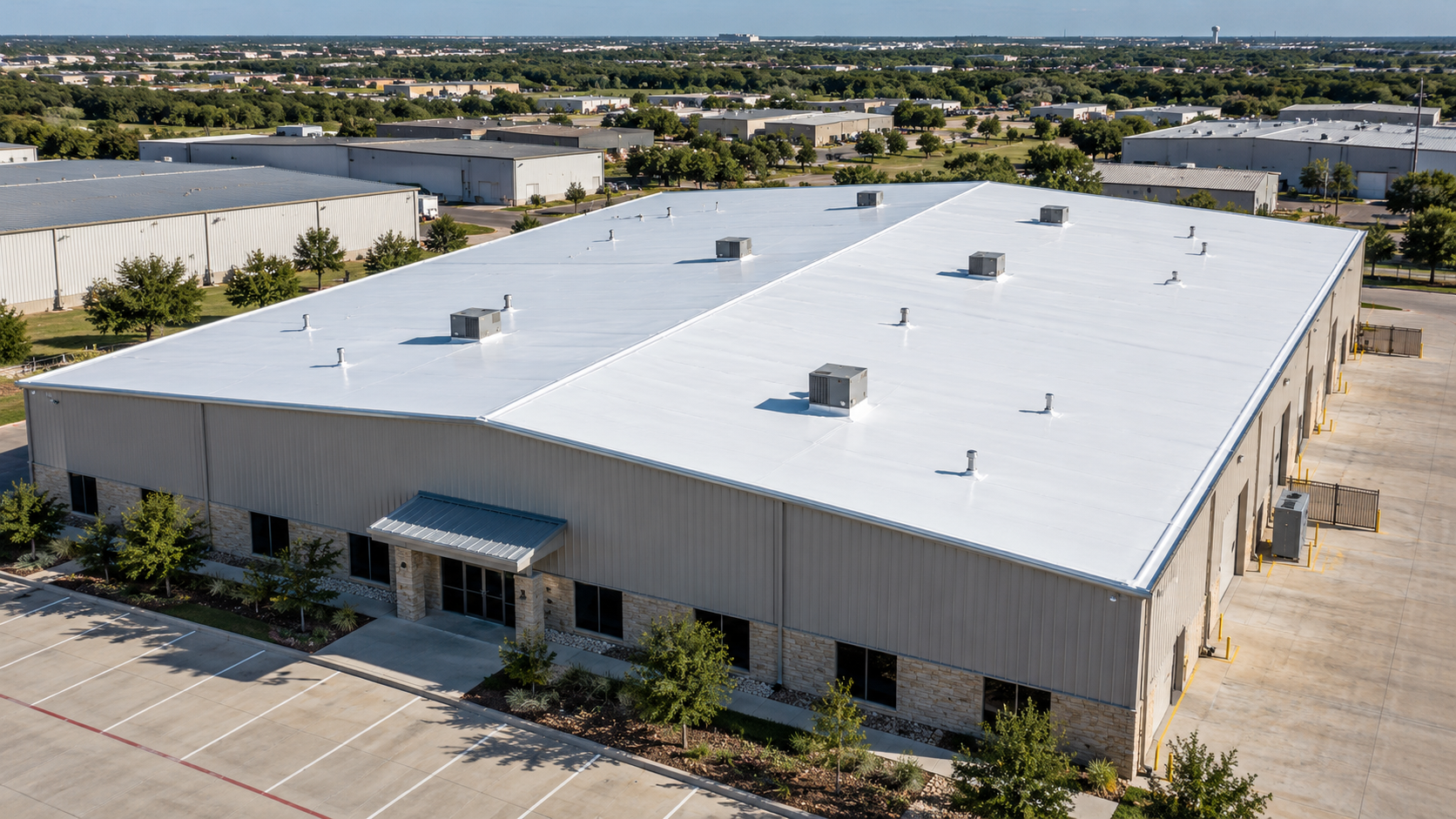
Showtime Exteriors provides commercial roof inspections, emergency response, repairs, restoration, retrofit, and replacement services for property owners across North Texas and the Dallas-Fort Worth Metroplex. The team evaluates BUR, TPO, PVC, EPDM, modified bitumen, metal, coating systems, overlays, and other commercial assemblies.
The objective after emergency tarping is to move from uncertainty to evidence and from temporary stabilization to an appropriate permanent solution. Showtime Exteriors can document visible conditions, organize roof areas and findings, investigate water pathways, identify repair priorities, and develop a practical scope around the property’s safety, operations, weather exposure, and schedule.
Need emergency commercial roofing assistance? Call Showtime Exteriors at 817-400-ROOF (7663) or visit showtimeexteriors.com/commercial-roofing.
Helpful Showtime Exteriors resources
North Texas post-storm roof inspection guide
Commercial roof inspection for insurance renewal
Commercial roof maintenance records insurers may request
Why gravel can hide commercial roof damage
Independent safety, weather, and insurance resources
Texas Department of Insurance: help after a storm
OSHA: fall protection in construction
OSHA QuickTakes: hazards associated with installing roof tarps
FEMA Building Science resources
Editorial and insurance disclaimer
This article provides general roofing and documentation information and is not legal, insurance, engineering, tax, or safety advice for a specific property. Site conditions, policies, contracts, warranties, codes, and project requirements vary. Showtime Exteriors documents roofing conditions and performs roofing work within its role; insurance carriers determine coverage, underwriting, renewal, valuation, and claim payment. Consult the appropriate licensed professionals for policy interpretation, legal advice, engineering, hazardous materials, structural questions, or specialized safety planning.
817-400-ROOF (7663) showtimeexteriors.com