



How Much Does TPO Roofing Cost for a Commercial Building in Texas?
Explore commercial TPO roofing costs in Texas, installation prices, replacement options, and budgeting tips. Get an estimate from Showtime Exteriors.
These figures are preliminary planning allowances, not a Showtime Exteriors quotation. Your actual cost depends on the roof’s condition, insulation, drainage, attachment requirements, accessibility, and installation scope.
For a commercial building with a 20,000-square-foot roof, a $6-to-$12 planning range translates to approximately $120,000 to $240,000. A suitable roof recover may cost less than a complete replacement. Extensive wet insulation, deteriorated decking, or major drainage corrections can push the final investment higher.
Understanding what an estimate includes matters just as much as understanding its price. A low initial proposal may exclude tear-off, replacement insulation, new edge metal, or necessary repairs beneath the membrane.
For property owners evaluating commercial roofing services in Texas, a documented assessment provides the foundation for a realistic budget. This guide explains the major cost factors, sample project totals, and questions to ask before choosing a contractor.
What Is TPO Roofing?
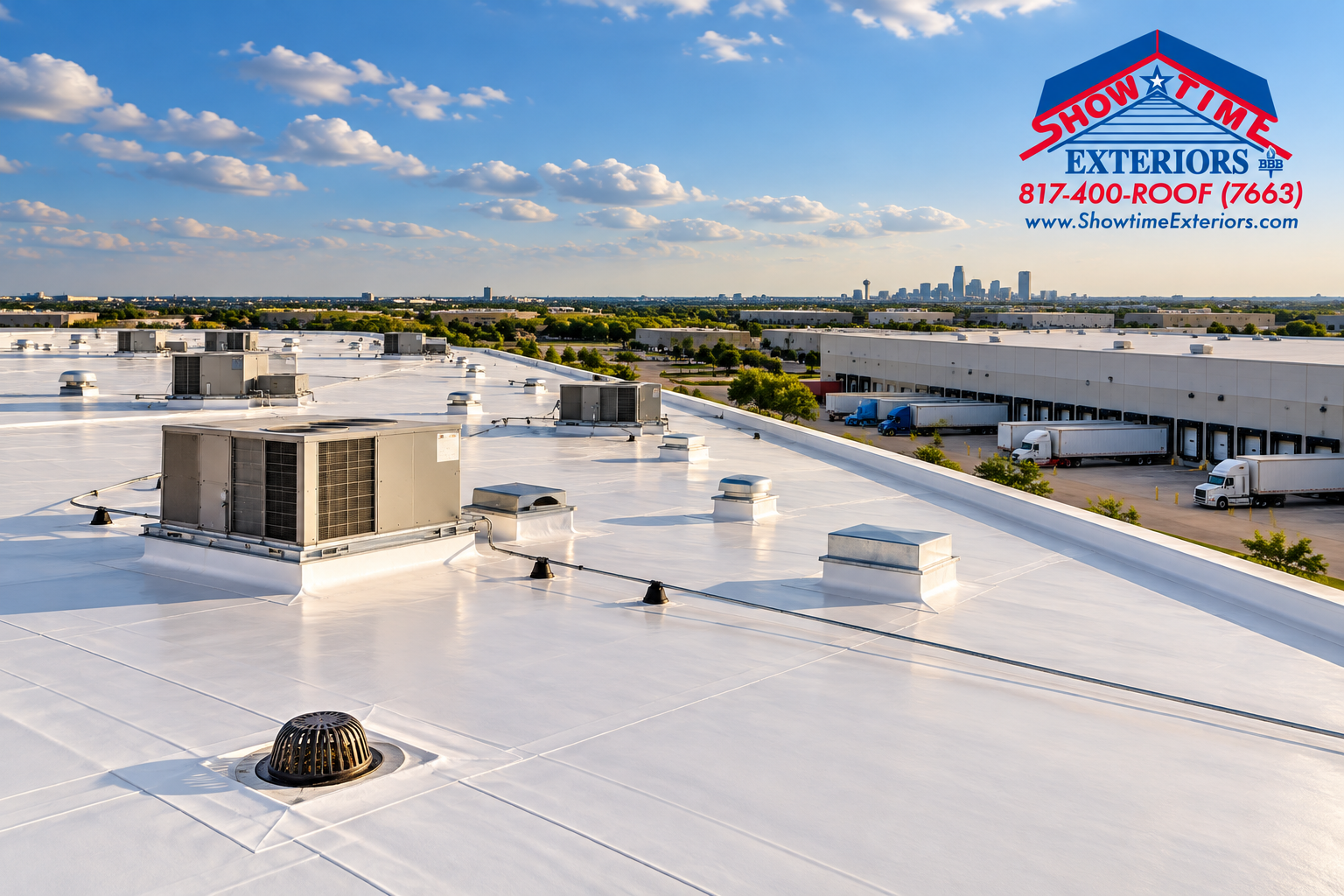
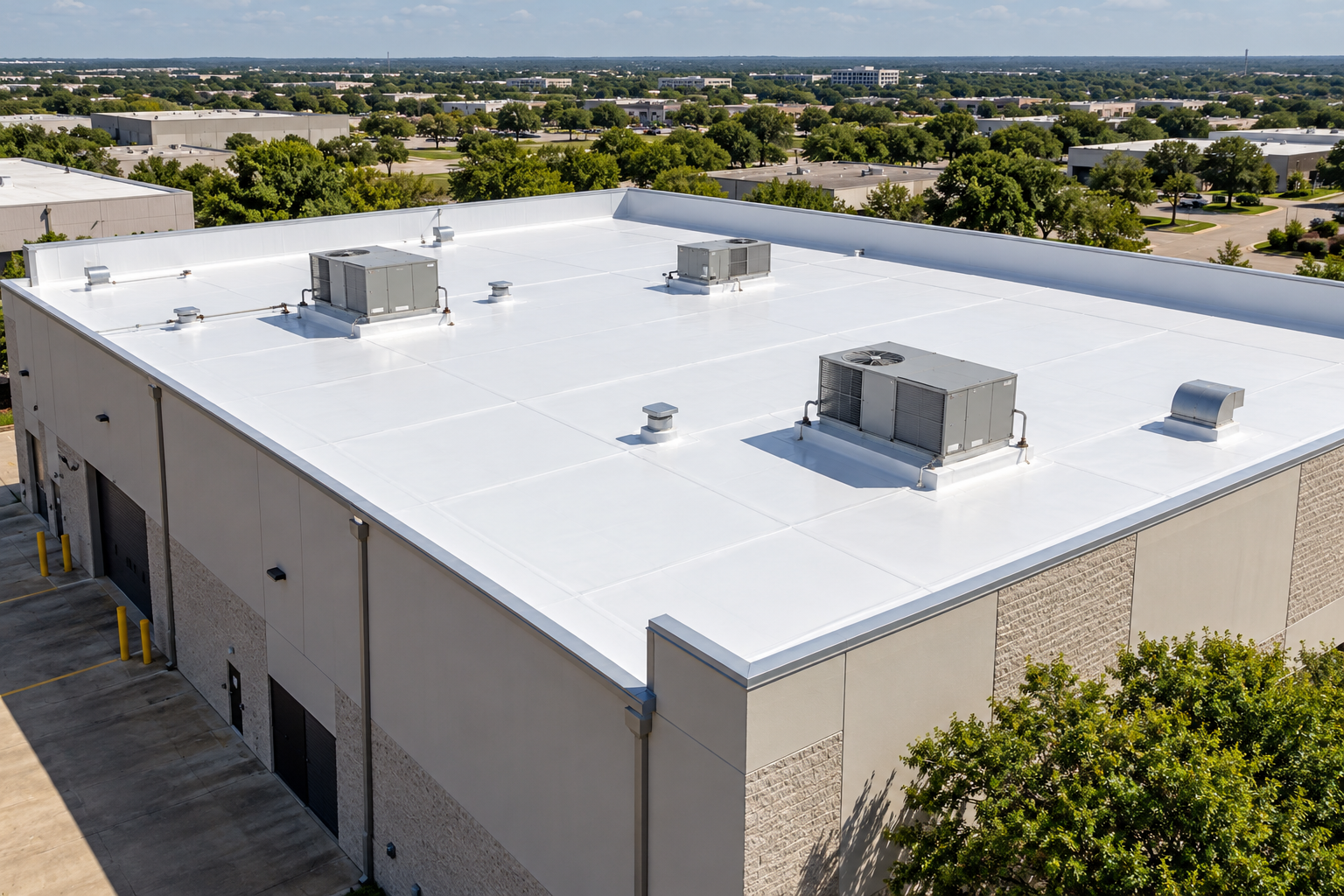
TPO stands for thermoplastic polyolefin. It is a single-ply roofing membrane commonly used on commercial flat and low-slope roofs.
Individual membrane sheets are joined with heat-welded seams. When correctly installed and detailed, these sheets form a continuous roof covering around walls, drains, rooftop equipment, and other penetrations.
However, the membrane is only one part of the roofing assembly. A complete commercial system may include:
- Structural roof decking.
- Air or vapor control layers where appropriate.
- Insulation.
- Cover board.
- Fasteners, plates, or adhesives.
- TPO membrane.
- Flashings and termination details.
- Perimeter edge metal.
- Drainage components.
The GAF TPO roofing resource center describes TPO’s heat-welded seams and resistance to heat and ultraviolet exposure. These characteristics help explain its widespread commercial use. www.gaf.com
TPO may be appropriate for warehouses, retail centers, offices, medical buildings, and other commercial properties. Buildings exposed to grease, specialized chemicals, or manufacturing exhaust require a separate compatibility review before selecting a membrane.
Texas Commercial TPO Roofing Cost per Square Foot
The following allowances can help organize an early project budget. They describe different installation scenarios rather than fixed prices available for every property.
Project TypePreliminary Installed CostTypical ConsiderationsStraightforward TPO recover$5–$8 per square footSuitable existing assembly, limited preparation, compatible substrateConventional TPO replacement$6–$12 per square footDefined removal scope, new assembly, ordinary access and flashing conditionsComplex TPO replacement$12–$16+ per square footExtensive corrective work, difficult logistics, substantial insulation or drainage improvements
These categories overlap. A complicated recover can cost more than a straightforward replacement.
Before relying on a quoted square-foot price, confirm whether it includes removal, disposal, insulation, cover board, flashings, perimeter metal, drainage work, and warranty charges.
Structural repairs and other concealed conditions may require separate allowances.
What Is a Roofing Square?
A roofing square equals 100 square feet.
For example:
- $6 per square foot equals $600 per roofing square.
- $9 per square foot equals $900 per roofing square.
- $12 per square foot equals $1,200 per roofing square.
A 20,000-square-foot roof contains approximately 200 roofing squares before considering waste, vertical flashings, and other project-specific quantities.
Ask contractors to use measured roof area. Rentable interior space or a building’s advertised square footage may not accurately represent the roof being replaced.
TPO Roofing Cost Examples by Commercial Building Size
The table below applies the same $6-to-$12 preliminary range to several roof sizes. These examples illustrate budgeting calculations rather than completed-project prices.
Measured Roof AreaAt $6 per Square FootAt $9 per Square FootAt $12 per Square Foot5,000 square feet$30,000$45,000$60,00010,000 square feet$60,000$90,000$120,00020,000 square feet$120,000$180,000$240,00030,000 square feet$180,000$270,000$360,00050,000 square feet$300,000$450,000$600,000
Large, open roofs sometimes offer installation efficiencies because crews can work across broad, uninterrupted areas.
However, a large roof with numerous drains, exhaust stacks, equipment curbs, and separate elevations may require substantial detail work. Total area alone does not determine the unit price.
Smaller projects may carry a higher cost per square foot because mobilization, equipment delivery, supervision, and site protection are spread across fewer square feet.
Building height, restricted staging areas, and limited equipment access can further affect the budget.
What Factors Affect Commercial TPO Roofing Costs?
Existing Roof Condition and Tear-Off
The existing roof is one of the biggest pricing variables.
Before preparing a reliable proposal, a contractor needs to determine the current roof covering, number of layers, substrate condition, and extent of trapped moisture.
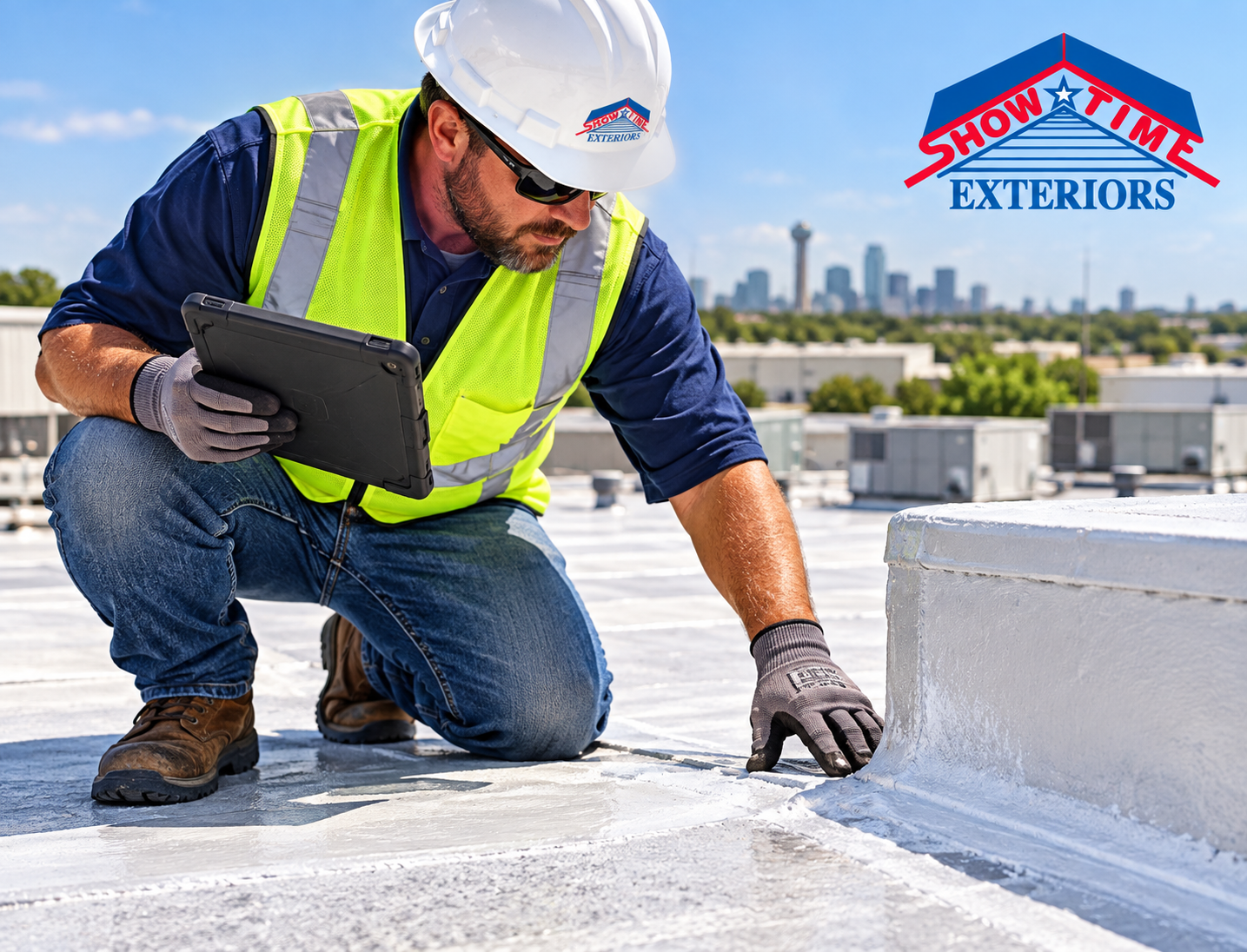
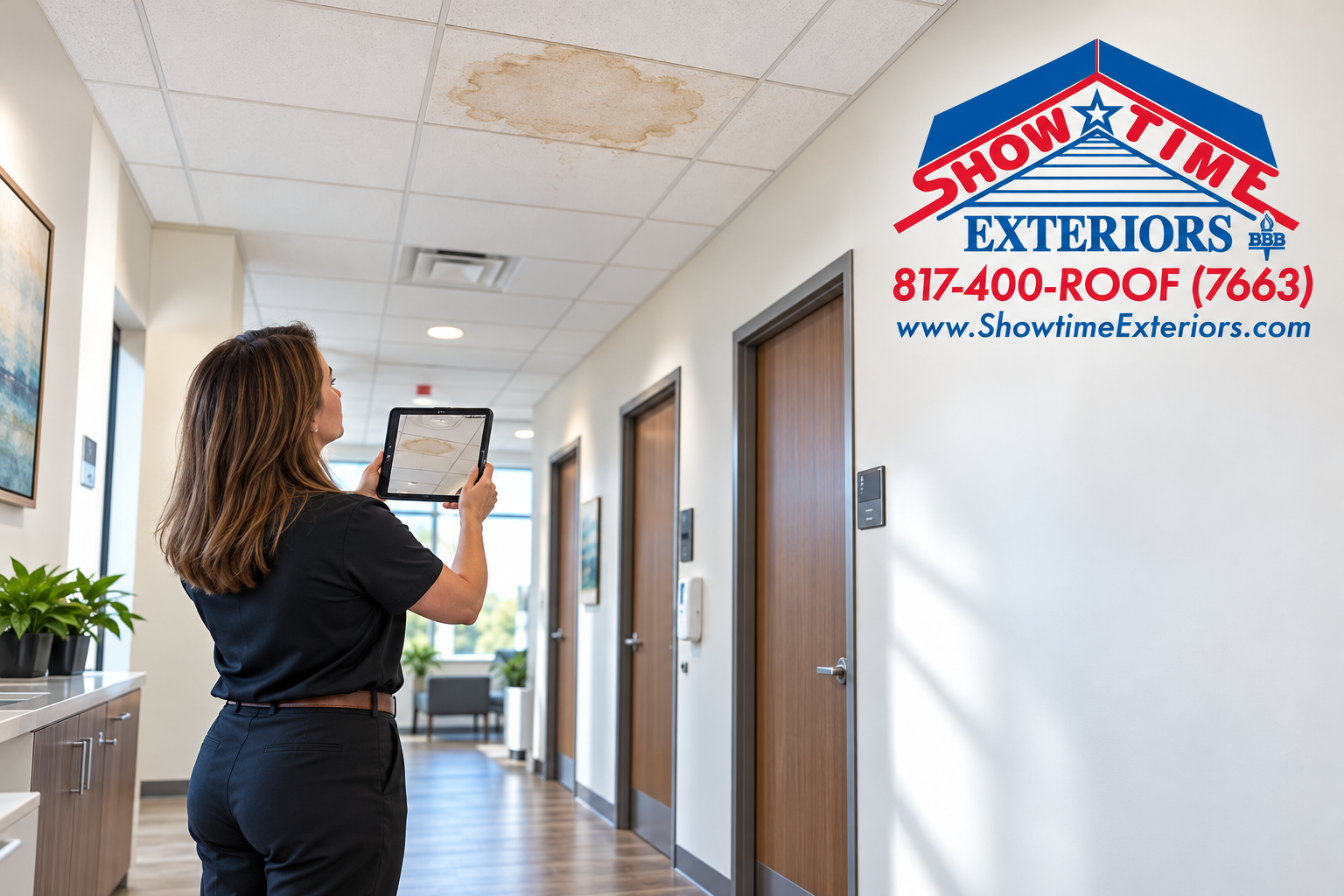
Visual inspection alone may not identify concealed problems. Appropriate testing and selective exploratory openings can help establish which materials can remain and which need removal.
Removing multiple layers requires additional labor, debris handling, hauling, and disposal. Deteriorated decking introduces another potential expense.
Ask for a written description of the included tear-off scope and unit prices for concealed repairs that cannot be measured before construction.
Insulation Thickness and Thermal Performance
Commercial roof insulation affects material cost, assembly height, and thermal performance.
A proposal should identify the insulation type, thickness, and intended performance. “New insulation included” is not enough information to compare competing estimates.
The appropriate insulation package depends on the building, existing assembly, project objectives, and applicable requirements.
Replacing wet insulation can also change the budget. Covering moisture-damaged materials without addressing the underlying condition can compromise the new assembly.
Tapered Insulation and Drainage
A new membrane does not automatically fix standing water.
Tapered insulation may be needed to direct runoff toward drains or scuppers. Crickets behind rooftop equipment can help divert water around obstructions.
These components require additional materials and installation time, but they address drainage problems that a membrane alone cannot resolve.
Ask the contractor to identify existing low areas and explain which drainage corrections are included in the proposal.
Membrane Thickness
Common TPO specifications include 45-mil, 60-mil, and 80-mil membranes. A mil is one-thousandth of an inch.
Thickness should be evaluated alongside product formulation, reinforcement, the supporting assembly, rooftop use, and warranty options.
The Johns Manville TPO roofing system resources show the variety of membranes, accessories, and system components available within a manufacturer’s product family. www.jm.com
Ask each contractor to identify the actual membrane product. Two estimates that both say “TPO roofing” may describe materially different assemblies.
Cover Board and Walkway Protection
A cover board provides a protective layer beneath the membrane when specified as part of the assembly.
Its suitability depends on the deck, attachment method, compatible system components, and performance objectives.
Buildings with frequent HVAC maintenance may also benefit from designated walkway protection.
Discuss where technicians access equipment and whether those routes are included. Concentrated foot traffic around rooftop units deserves attention during system design.
Flashings, Penetrations, and Edge Metal
Every penetration interrupts the roof field and requires a dependable waterproofing detail.
Pipes, skylights, equipment curbs, drains, walls, and supports all affect installation labor.
Two roofs with identical square footage can have very different costs because one contains significantly more penetrations.
Perimeter securement also matters. Estimates should address edge metal, wall transitions, terminations, and compatible attachment components.
Any proposal to reuse existing flashings or perimeter materials should explain their condition and suitability.
Fully Adhered vs. Mechanically Attached TPO Roofing
Attachment method affects material selection, labor, installation conditions, and the assembly’s performance.
Mechanically Attached TPO
A mechanically attached system uses specified fasteners and plates within the designed roof assembly.
Installation can be efficient on suitable buildings. However, the deck, attachment pattern, perimeter conditions, and project requirements govern the final design.
Fastening should not be selected solely to minimize material costs. Necessary testing or design review should be identified before installation begins.
Fully Adhered TPO
A fully adhered system uses compatible adhesive to bond the membrane to an approved substrate.
Substrate preparation, adhesive application, weather conditions, and product requirements affect production and cost.
The IKO comparison of fully adhered and mechanically attached TPO explains the fundamental distinction between these attachment approaches. Neither method automatically provides the best solution for every property. www.iko.com
If competing proposals specify different attachment methods, request an explanation of the practical differences for your building.
Compare designs that meet the same performance objectives before deciding which estimate offers better value.
How Texas Weather and Location Affect TPO Roofing Costs
Texas buildings experience different combinations of heat, hail, wind, rainfall, humidity, and coastal exposure.
A commercial property in Mansfield should not automatically receive the same assembly as a coastal warehouse or a manufacturing facility with specialized exhaust.
Location affects more than membrane selection. It can influence attachment requirements, drainage planning, material handling, and construction sequencing.
Owners researching commercial roofing in Houston should discuss local exposure, drainage, access, and tenant coordination during estimating.
Similar questions apply throughout Dallas-Fort Worth, Austin, and other Texas markets, with specifications adjusted to the property.
Weather can also affect scheduling. Crews need suitable installation conditions and a practical plan for protecting exposed work.
Following major storms, increased demand may affect contractor availability and material procurement.
Do not assume that a thicker membrane alone makes a roof hailproof or windproof. Performance depends on the complete assembly and its supported configuration.
Can TPO Be Installed Over an Existing Commercial Roof?
A recover may reduce demolition and disposal when the existing assembly is suitable.
However, a recover requires more than placing new membrane over an old surface.
Moisture, attachment, structural capacity, compatibility, drainage, and applicable restrictions must be evaluated first.
When a Recover May Be Appropriate
A recover may be worth considering when:
- The existing assembly is sufficiently dry and sound.
- The substrate can support the proposed system.
- Attachment requirements can be satisfied.
- Drainage conditions can be addressed.
- New work can be properly integrated at walls, drains, and equipment.
- The assembly meets project requirements.
Necessary preparation still belongs in the estimate.
The proposal should identify selective removal areas and explain how additional moisture discoveries would affect the scope.
When Complete Replacement May Be Better
Widespread wet insulation, deteriorated decking, unresolved drainage problems, or an unsuitable existing assembly can make replacement more appropriate.
Installing another covering over unresolved deficiencies can postpone necessary work while complicating future repairs.
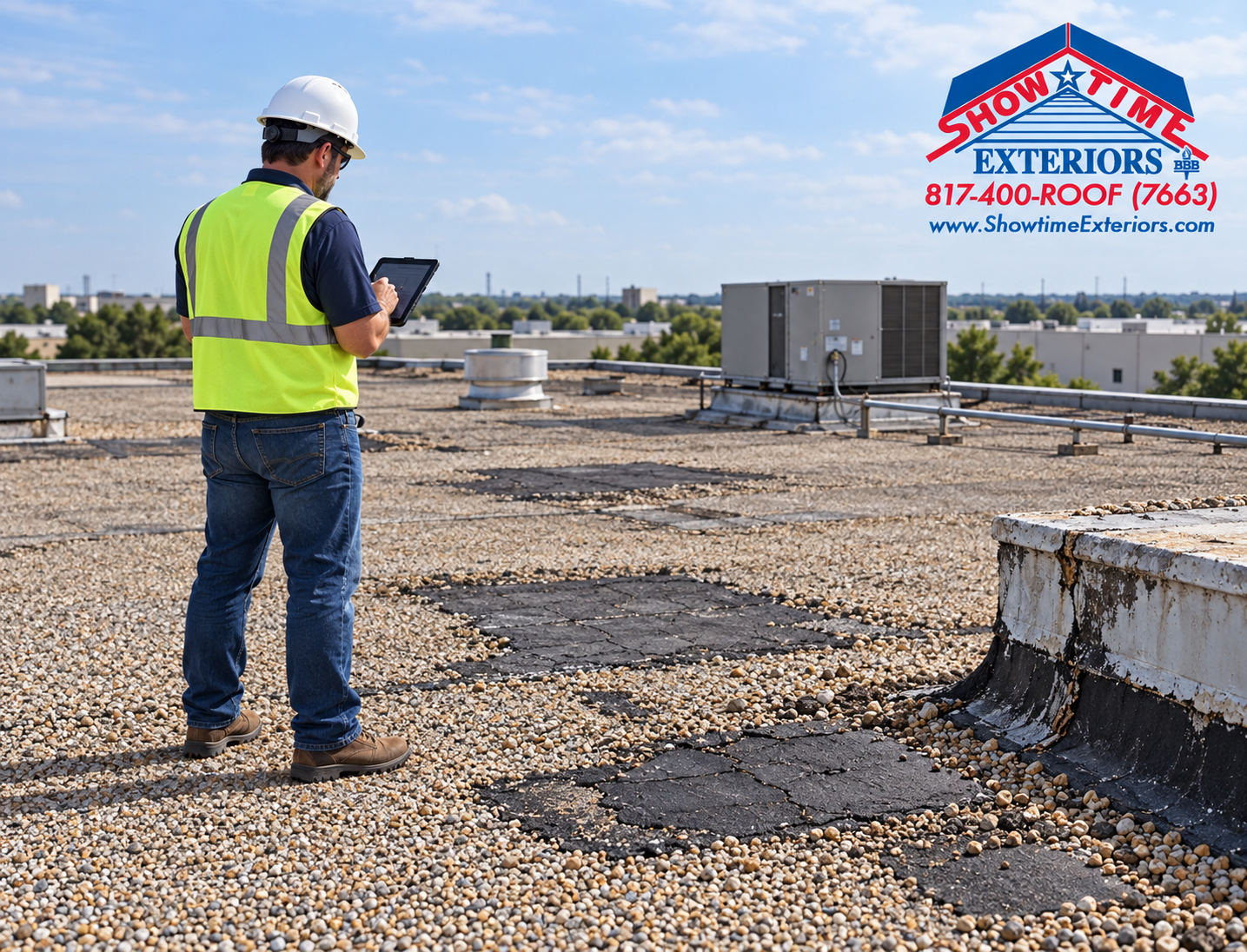
An aging gravel-surfaced built-up roof deserves careful investigation. Loose aggregate, concealed moisture, and deterioration can complicate preparation and evaluation.
Request a documented comparison of replacement and any proposed alternative before choosing a recover.
Can White TPO Roofing Reduce Cooling Costs?
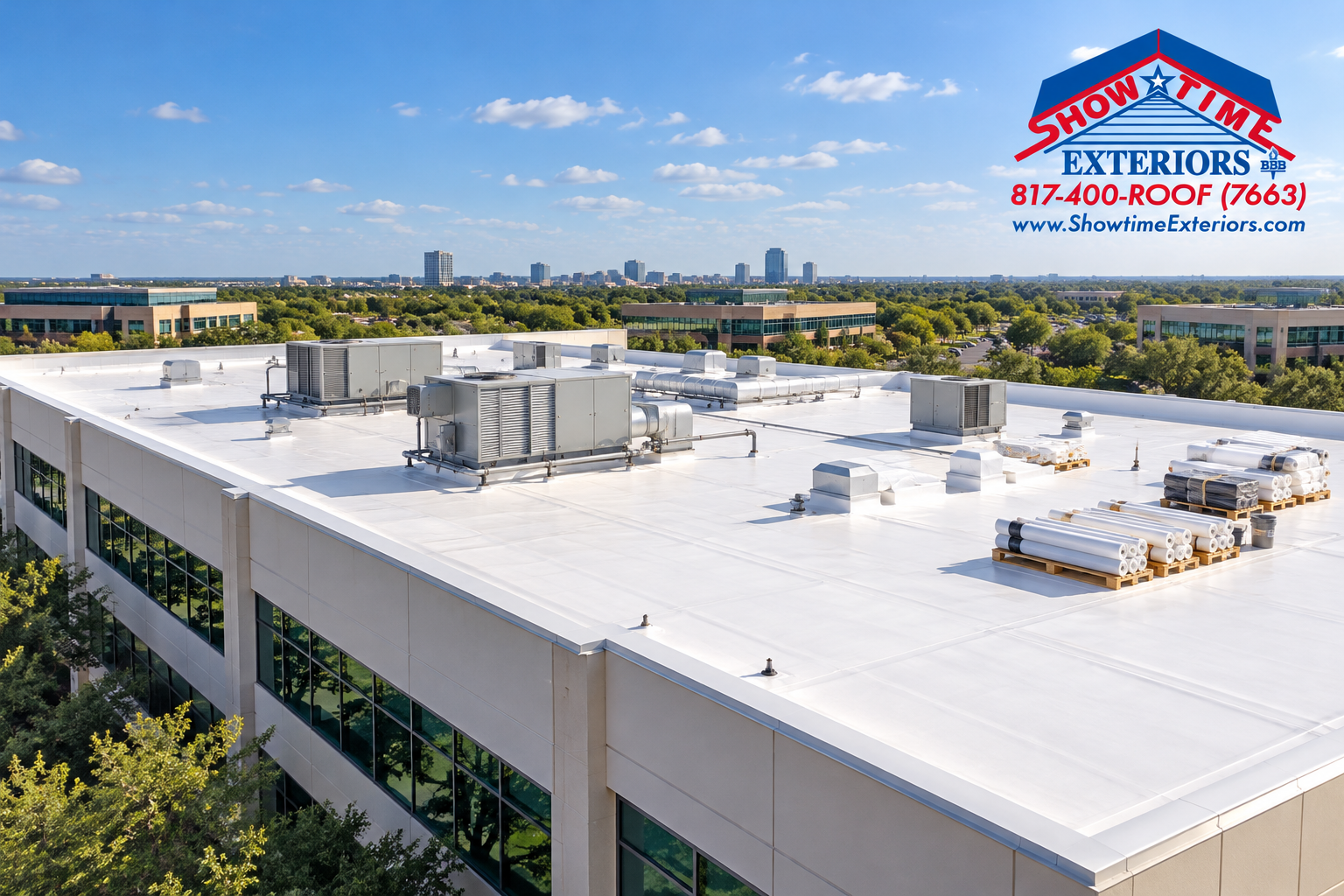
Reflective roof surfaces can reduce solar heat absorption compared with darker, less reflective surfaces under comparable conditions.
That potential benefit is relevant to air-conditioned Texas buildings. However, actual utility savings depend on insulation, HVAC efficiency, operating hours, climate, and the condition of the existing roof.
The Cool Roof Rating Council roof rating program provides information about measured radiative properties. A product rating is not a guarantee of energy savings, a quality ranking, or confirmation that every project requirement has been met. coolroofs.org
Avoid approving a roofing investment based on an unsupported percentage reduction in energy bills.
For a substantial project, use actual building information and consider a property-specific energy analysis where appropriate.
Drainage, moisture control, and maintenance remain essential regardless of membrane color.
Hidden Costs to Clarify Before Signing a Contract
Concealed Repairs
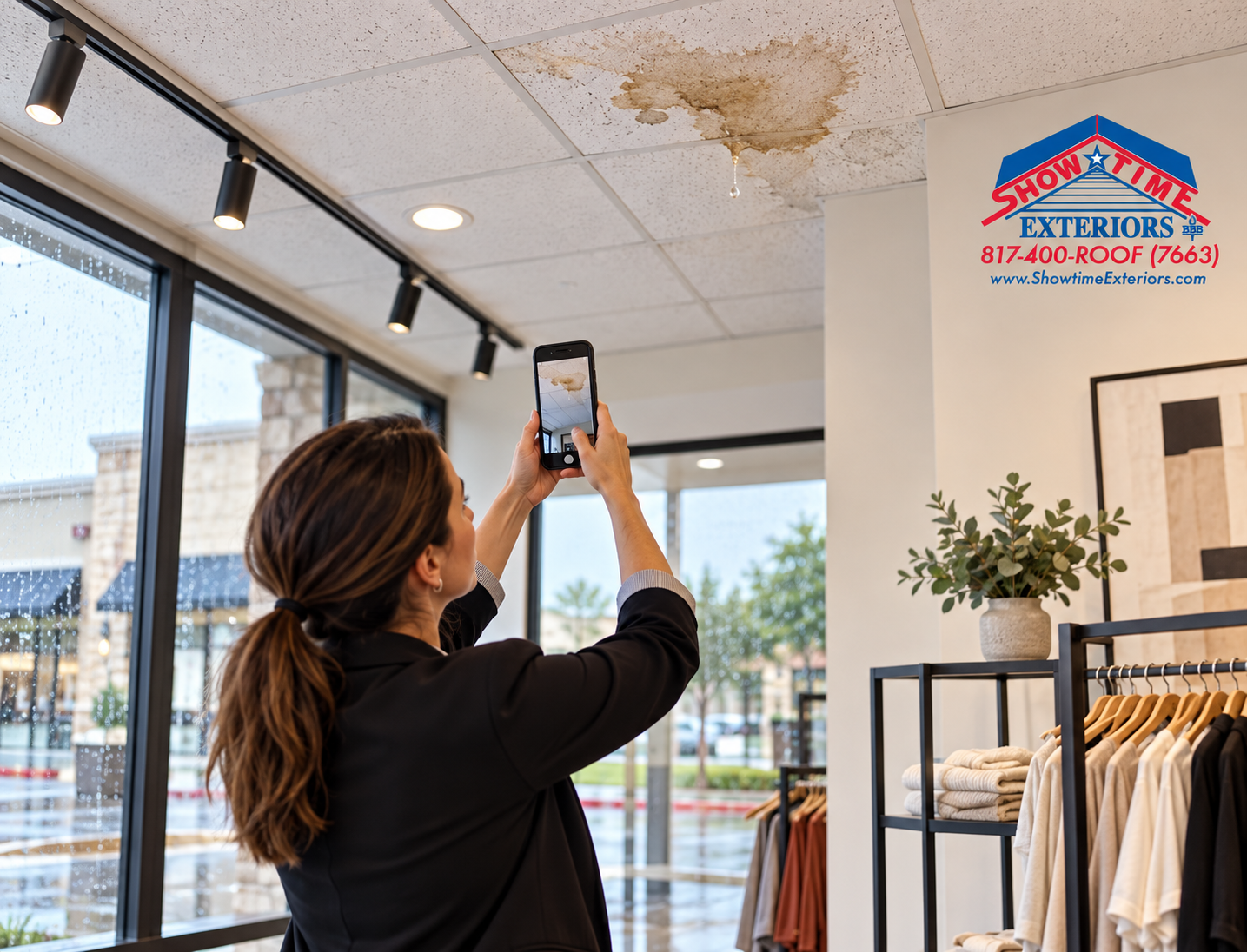
Ask how hidden deck damage and wet insulation will be documented and priced.
Written unit prices, measured quantities, photographs, and an agreed authorization process help owners understand additional charges.
A vague allowance without a measurement method provides limited budget control.
Equipment Coordination
Rooftop equipment may require work by other trades.
Identify who is responsible for disconnecting, lifting, reconnecting, and testing equipment when necessary.
Clarify whether those services are included in the roofing contract or require a separate agreement.
Access and Tenant Protection
Lifts, cranes, loading restrictions, debris handling, parking closures, and protected walkways can affect project costs.
For an occupied shopping center, work sequencing may be as important as installation speed.
Owners evaluating retail roofing services in Houston should discuss deliveries, storefront access, customer protection, and tenant communication before construction.
Warranty and Closeout
A contractor workmanship warranty, manufacturer material warranty, and manufacturer system guarantee serve different purposes.
Confirm the proposed coverage, term, exclusions, inspection requirements, and maintenance responsibilities.
A warranty term should not be treated as a guaranteed service life.
Ask which closeout documents you will receive and who handles registration or required inspections.
How to Compare Commercial TPO Roofing Estimates
Start by asking each contractor to quote a clearly defined assembly.
Comparing a basic recover with a full tear-off and replacement will mainly reveal that the scopes differ.
Request written answers to these questions:
- What measured roof area is included?
- Which existing materials will be removed?
- What membrane manufacturer, product, and thickness are specified?
- What insulation and cover board are included?
- Which drainage improvements are proposed?
- How will the assembly attach to the building?
- Are flashings, edge metal, and drain details described?
- What concealed-condition allowances apply?
- How will occupied areas and equipment be protected?
- Which warranties and inspections are included?
Owners comparing commercial roofing contractors in Houston should also discuss daily communication and change-order approval.
A clear proposal makes exclusions visible before construction turns them into urgent decisions.
How to Build a Realistic TPO Roofing Budget
Divide the preliminary budget into the base contract, separately priced alternates, and a reserve for uncertain conditions.
The reserve should reflect what the inspection established and what remains inaccessible.
For example, an owner evaluating a 20,000-square-foot roof might use $180,000 as an initial midpoint allowance at $9 per square foot.
That figure is a calculation, not a contractor bid.
The next step is replacing assumptions with measured quantities, selected products, and written allowances.
If the actual scope requires extensive drainage reconstruction, the initial midpoint may no longer be useful.
Ask how long the proposal remains valid, when materials will be ordered, and which milestones trigger progress payments.
Assign one owner representative to approve changes and communicate with tenants.
Keep the signed proposal, photographs, change orders, product information, inspection records, and warranty documents together for future facility management.
Is TPO the Right Investment for Your Commercial Building?
TPO may offer a useful balance of installation cost, reflectivity, and practical repair options for a suitable low-slope roof.
However, the correct choice depends on the property’s condition and operating needs.
Restaurants, industrial buildings, and heavily serviced rooftops may require additional compatibility and durability evaluation.
Compare more than the initial purchase price.
Consider your expected ownership period, maintenance access, drainage conditions, recurring leaks, and the consequences of business disruption.
A lower installation price becomes less attractive if it leaves known deficiencies unresolved.
Carlisle SynTec’s roofing and building-owner resources provide another starting point for understanding available system options. Final selection should follow a property-specific assessment and documented scope. www.carlislesyntec.com
Frequently Asked Questions About TPO Roofing Costs in Texas
How Much Does a 10,000-Square-Foot TPO Roof Cost?
Using the preliminary $6-to-$12 installed planning allowance, a 10,000-square-foot commercial roof would budget at approximately $60,000 to $120,000.
Recover eligibility, demolition, insulation, equipment details, and concealed repairs can move the final price outside that range.
Is 60-Mil or 80-Mil TPO Better?
An 80-mil membrane is thicker, but thickness alone does not determine the best roofing system.
Compare the complete assembly, product specifications, rooftop use, installation requirements, and warranty options.
Request a separately priced upgrade so you can evaluate its effect on the total investment.
Can a Business Stay Open During TPO Roof Replacement?
Many commercial projects can be phased around occupied operations.
The answer depends on the building, work scope, equipment needs, access, and safety plan.
Discuss operating hours, sensitive interior areas, deliveries, and temporary restrictions before agreeing to a schedule.
Will New TPO Eliminate Ponding Water?
A new membrane does not automatically correct inadequate slope or drainage.
The proposal needs to address the underlying cause through appropriate drainage or assembly changes.
Ask which low areas were identified and what corrective work is included.
How Can Owners Control Costs Without Weakening the Project?
Investigate conditions early, compare equivalent proposals, and coordinate access before mobilization.
Preserve suitable components only when their condition and compatibility justify reuse.
Removing essential preparation, flashing, drainage corrections, or attachment components can create larger expenses later.
Request a Commercial TPO Roofing Estimate from Showtime Exteriors
Showtime Exteriors is based in Mansfield and advertises commercial roofing services across Texas.
Its services include evaluating roofing needs and discussing repair, restoration, recover, retrofit, and replacement options for commercial properties. www.showtimeexteriors.com
The company is listed in GAF’s commercial contractor directory as a GAF GoldElite™ Commercial Contractor. Availability of a manufacturer guarantee depends on the qualifying system, installation requirements, and written terms. www.gaf.com
For a useful estimate, have your property address, approximate roof area, leak history, available drawings, and operating constraints ready.
Request a written scope explaining existing conditions, the recommended assembly, project allowances, and the basis for pricing.
Call 817-400-ROOF (7663) or request a commercial roof inspection to discuss your building and obtain a project-specific TPO roofing estimate.