


Signs Your Retail Center Roof Needs Immediate Repair
Recognize urgent retail center roof problems, from active leaks and sagging ceilings to damaged flashing. Learn what Texas property managers should do next.

A roof leak in a retail center can affect more than one storefront. Water entering above a stockroom may damage merchandise, interrupt deliveries, and create questions about neighboring tenant spaces. A leak near a customer entrance can require immediate access changes.
For property owners and managers, the challenge is recognizing which conditions require immediate precautions and which need prompt professional investigation.
Active dripping, sagging ceilings, and water near electrical equipment deserve urgent action. Other symptoms, including recurring stains, deteriorated flashing, and drainage concerns, may reveal problems before they produce a larger interior event.
A warning sign does not automatically mean the entire roof needs replacement. It means the condition needs an appropriate response and a clear explanation.
The investigation should establish whether moisture is entering through the roof, an adjacent building component, plumbing, or HVAC equipment. Permanent work should address the confirmed cause.
This guide explains the signs your retail center roof needs attention, how to respond when a tenant reports a leak, and what to request from a commercial roofing assessment in Texas.
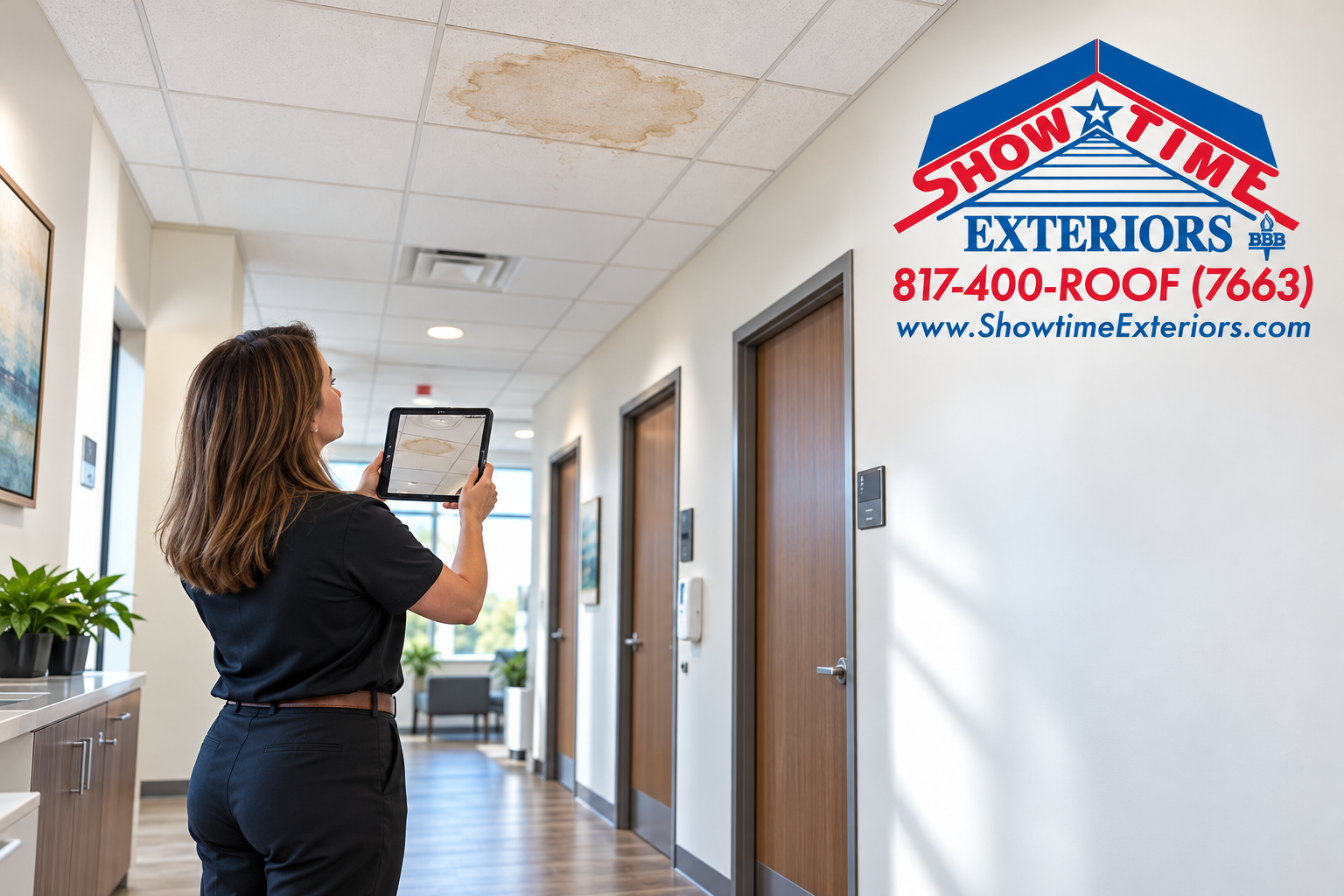
exec-780fb4d5-5d91-40b8-bc59-366e83a2a8d9.png
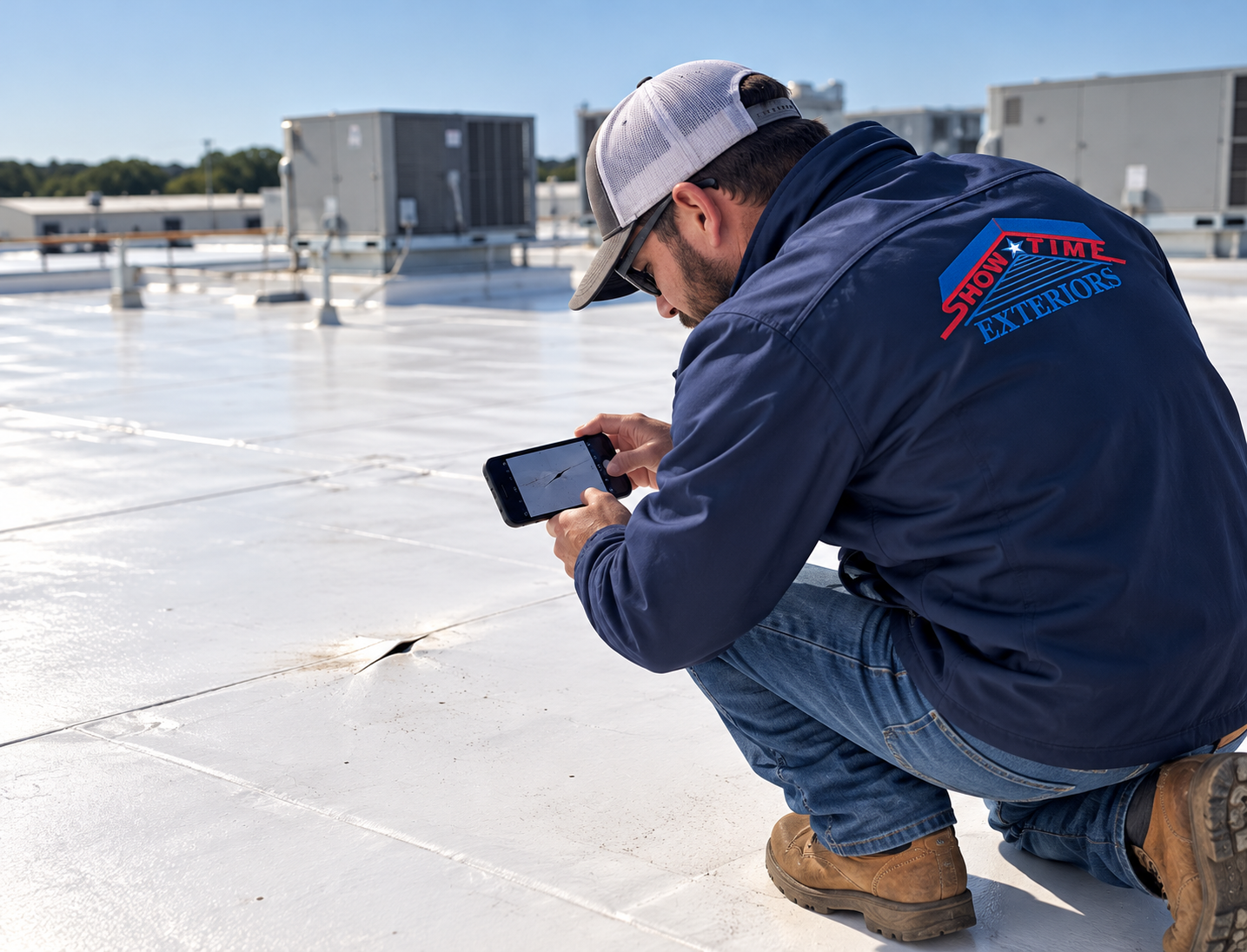
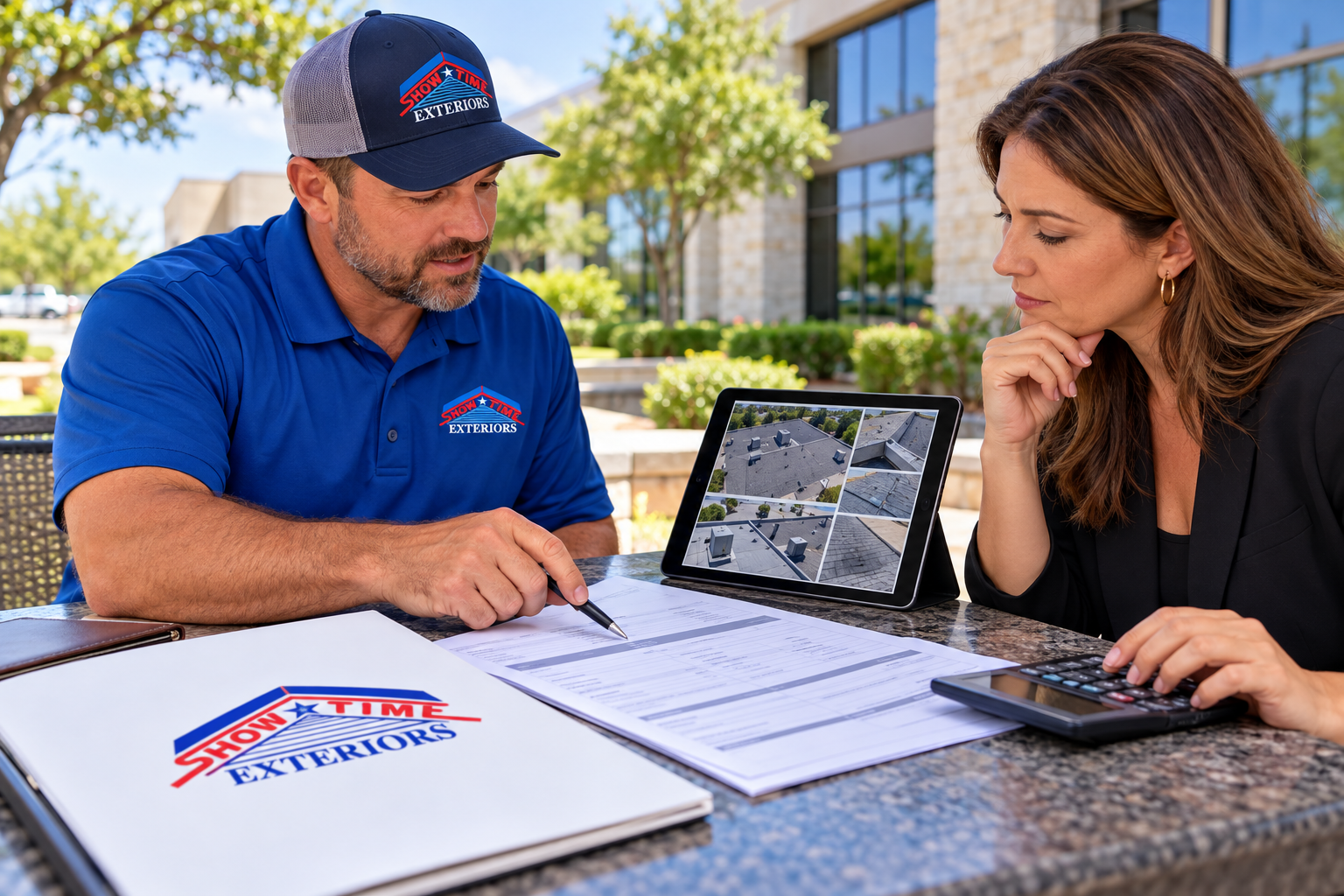
Illustration: Record the location and timing of ceiling stains so the roofing team can connect tenant reports with conditions above.
Which Retail Roof Problems Require Immediate Action?
Start with what is happening inside and around the building.
The urgency depends on the condition and its consequences, not simply the apparent size of the opening.
Observed conditionAppropriate initial responseSagging ceiling, falling material, or water near electrical componentsKeep people away and contact the appropriate emergency professionals and building management.Active water entry into an occupied store or stockroomRestrict the affected area as needed and arrange urgent evaluation.Loose exterior material threatening a customer routeKeep people clear and request immediate professional assistance.New stains, recurring dampness, or storm-related symptomsArrange a prompt investigation and monitor for changes.An old stain without a documented repair historyVerify the source and repair history before assuming it is resolved.
Store employees should not climb onto the roof or investigate unstable ceilings.
Management should coordinate the response, including any necessary involvement from electrical, mechanical, restoration, or other qualified professionals.
10 Signs Your Retail Center Roof Needs Attention
1. Water Is Dripping Into a Store or Stockroom
Active water entry is a clear reason to request urgent assistance.
In a retail setting, even a localized leak can affect product displays, inventory, point-of-sale equipment, or customer circulation.
Restrict access to the affected area and notify property management. Move unaffected merchandise only when doing so is safe and consistent with the tenant’s procedures.
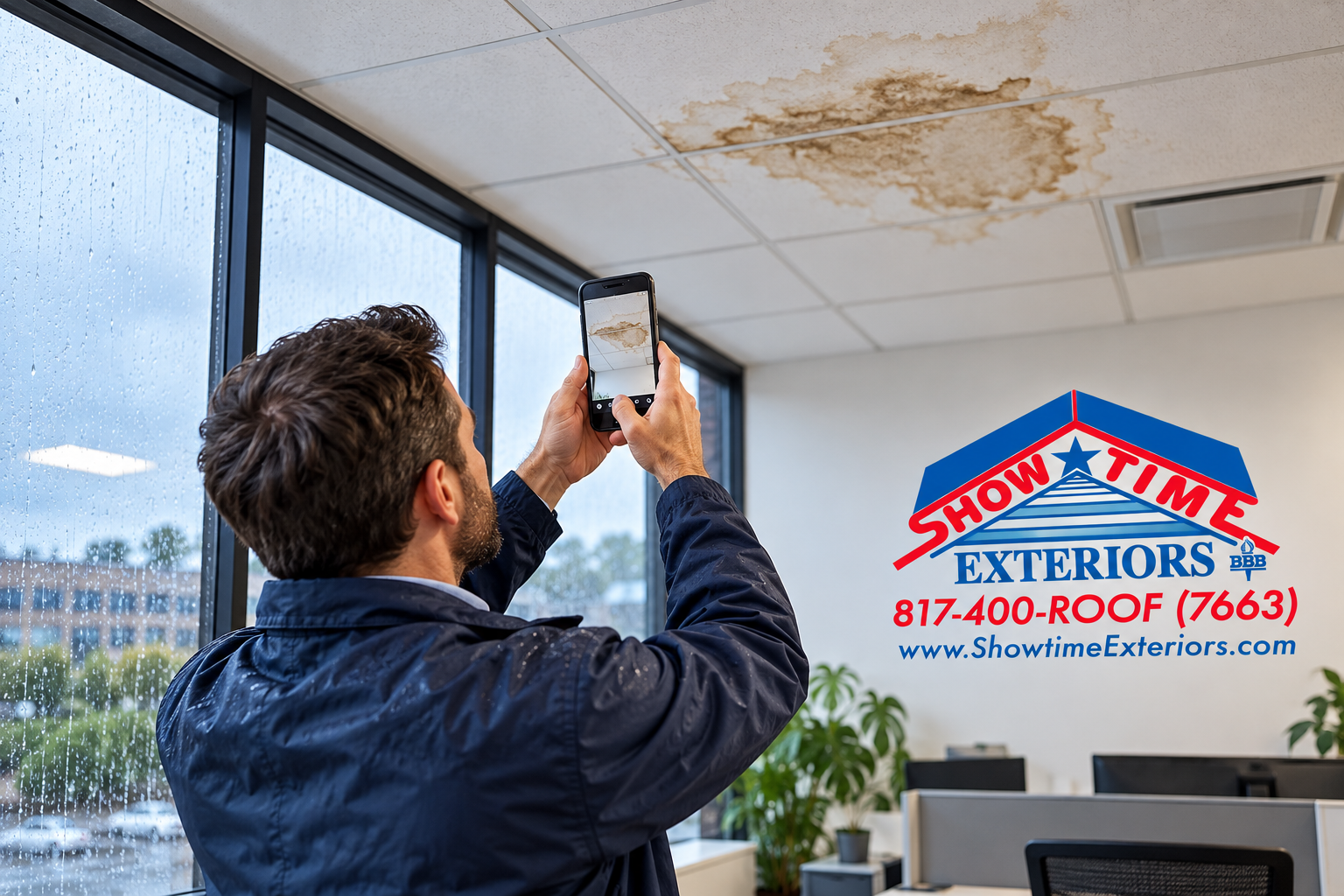
Record the suite number, exact interior location, time, and weather conditions.
Do not assume the roof opening is directly above the drip. Water can travel through concealed spaces before becoming visible.
A photograph showing the surrounding room is useful alongside a close-up of the symptom. Together, they help the responding team understand where the problem is occurring.
Contact Showtime Exteriors with those observations and any available repair history.
2. Ceiling Tiles or Drywall Are Sagging
A ceiling that bows, bulges, separates, or sheds material requires immediate precautions.
Keep customers and employees away from the affected area. Do not push on the ceiling, remove wet tiles, or puncture a bulge.
The amount of retained water and the condition of surrounding materials may be unclear.
Tell responders whether the ceiling changed suddenly, whether water is still entering, and whether nearby electrical fixtures are involved.
Replacing ceiling materials alone does not address the source. The response needs to consider both the interior condition and the pathway allowing moisture into the space.
Management should coordinate evaluation and determine when the affected area can return to use.
3. Water Reaches Lighting, Outlets, or Powered Equipment
Water near electrical components changes the response.
Examples include dripping through a light fixture, wet electrical outlets, or moisture reaching powered display equipment and checkout systems.
Keep people away and have qualified personnel determine the appropriate electrical precautions.
Employees should not touch wet fixtures or attempt to move energized equipment through an affected area.
The roofing contractor should receive a clear description of the condition, but electrical evaluation may require a separate professional.
Do not treat stopping the visible drip as confirmation that equipment can return to service.
The tenant and management team should follow the appropriate assessment process for affected electrical systems and devices.
4. Ceiling Stains Return After Rain
A stain that darkens, expands, or reappears after repainting deserves another investigation.
Recurring marks can reflect an unresolved leak, a different entry point, or a source that was previously misidentified.
Track whether the symptom follows heavy rain, wind-driven rain, or periods without rain.
A stain appearing during dry weather may shift attention toward HVAC or plumbing conditions, although timing alone does not establish the cause.
Ask tenants to photograph changes from a consistent position and report them promptly.
Do not repaint an unresolved area simply to make it look finished. A clear record helps the investigator understand whether the condition has changed since the last visit.
5. Several Tenants Report Moisture During the Same Storm
Reports from neighboring stores should be reviewed together.
Multiple symptoms could involve separate defects, a shared detail, or another building condition. Suite boundaries do not necessarily correspond to roof drainage or assembly boundaries.
Create a single property-level record showing all reported locations.
Ask each tenant when the symptom began, whether it is recurring, and what activity was affected.
Give the roofing team the complete picture before the inspection.
A coordinated investigation is more useful than treating each call as an unrelated repair request. It also helps management communicate consistently with tenants while the cause remains under review.
6. Flashing Is Split, Detached, or Deteriorated
Flashing details connect the roof surface to walls, curbs, penetrations, and other components.
A defect at one of these interfaces can require attention even when the surrounding roof surface appears relatively intact.
GAF identifies flashing around rooftop penetrations as an important inspection area because failed details can allow water entry. gaf.com
Have qualified personnel assess the condition rather than asking store staff to inspect it.
If a leak has repeatedly received surface sealant, ask whether the repair addressed the underlying detail.
A useful recommendation explains what failed, what will be repaired, and why the proposed method is compatible with the existing system.
7. Leaks Appear Near Rooftop HVAC Equipment
Retail centers often contain multiple rooftop units serving different tenants.
Moisture beneath a unit can involve roof flashing, condensate drainage, equipment components, or another source.
Share recent mechanical service history with the roofing investigator.
A leak that begins after equipment replacement or maintenance warrants coordination between the relevant trades.
Ask who will assess the equipment and who will assess the roof interface. Establish how their findings will be shared.
Avoid a repeated cycle in which one contractor addresses a symptom without reviewing the adjacent component.
Management should maintain a record of rooftop equipment work so future investigators can connect changes with reported conditions.
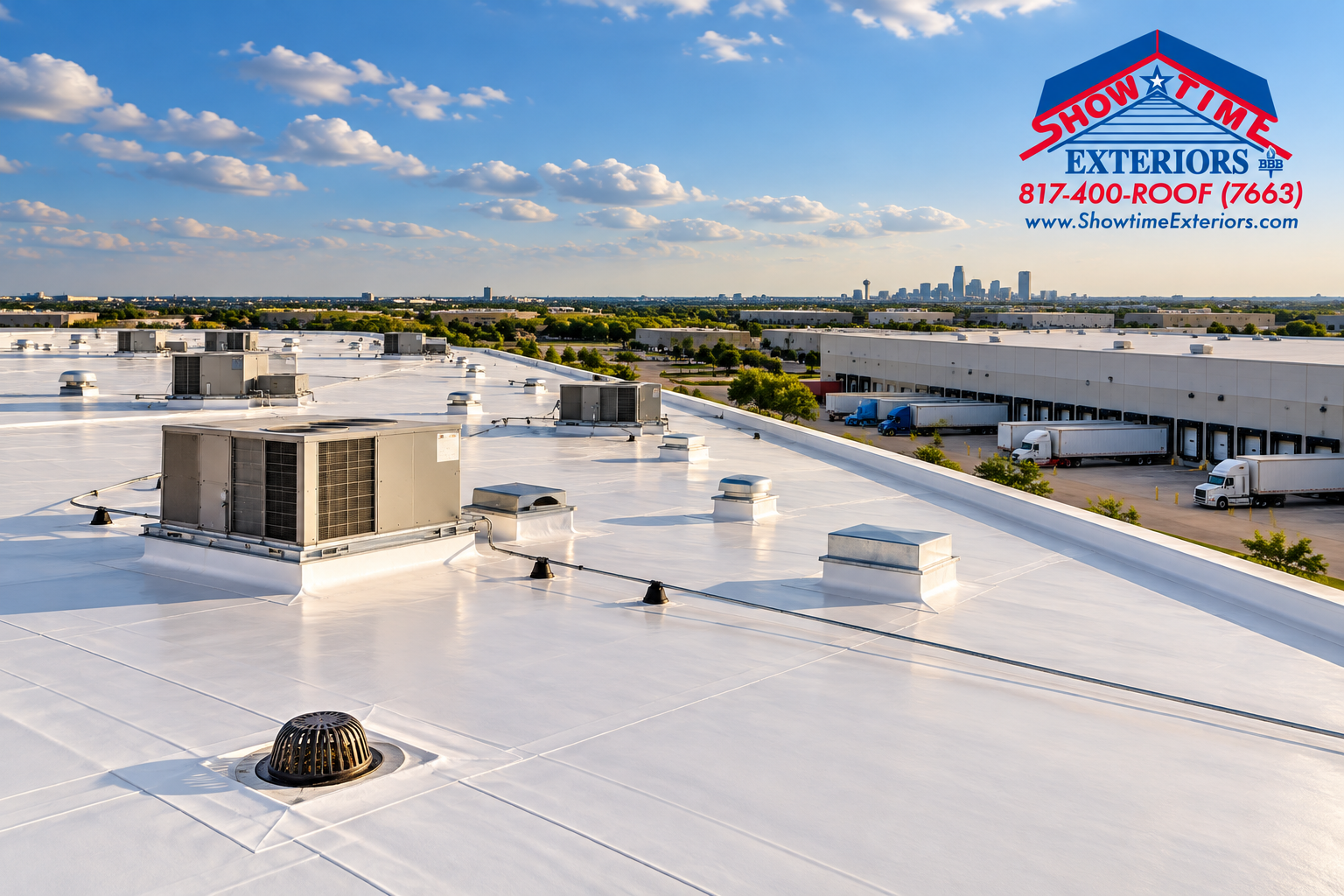
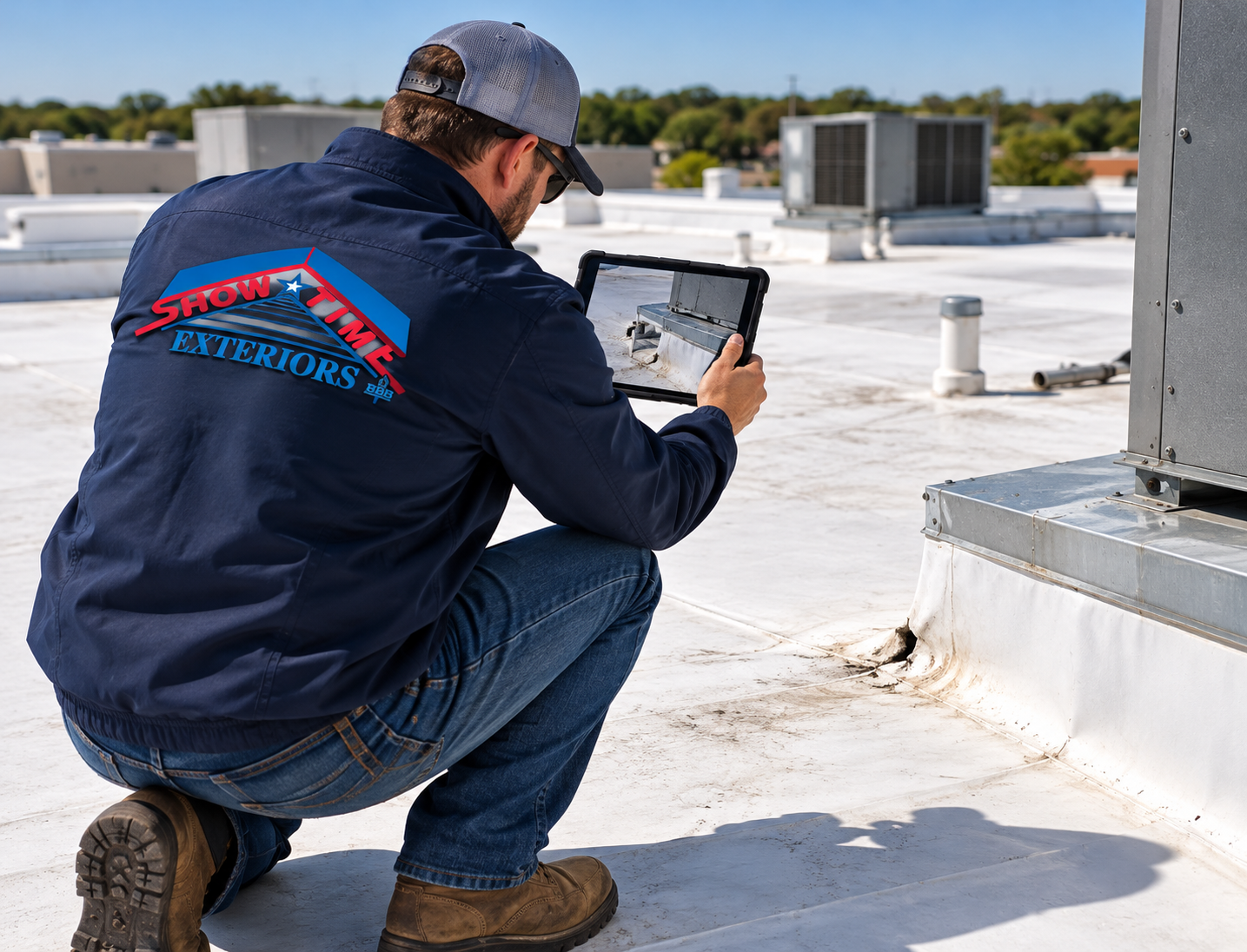
exec-a7cc0ec9-08c0-4d23-a54e-c21da3d36bb6.png
Illustration: Equipment curbs and flashing details deserve close evaluation when interior moisture appears nearby.
8. Drains Overflow or Water Collects Repeatedly
Drainage concerns need professional evaluation, especially when they coincide with interior leaks.
Debris, damaged components, or other conditions can interfere with drainage. Repeated water accumulation may require more investigation than simply clearing a visible obstruction.
GAF’s maintenance guidance identifies drains, debris, and standing water among the conditions professionals should review. gaf.com
Ask the contractor to explain whether the proposed work involves routine maintenance, a detail repair, or a broader drainage concern.
Document recurring locations and previous service.
Do not send employees onto a wet roof to clear drains. Keep roof access limited to qualified personnel using an appropriate plan.
9. Roof Materials or Edge Components Move After a Storm
New exterior damage after strong winds or hail deserves prompt inspection.
From a safe ground-level position, staff may notice displaced metal, fallen material, or a visible change along the roof edge.
If loose material threatens an entrance, walkway, or parking area, keep people clear and request immediate assistance.
A roof that looks normal from the ground may still contain defects requiring closer evaluation.
Record the storm date and observed changes without assuming the cause or extent of damage.
A professional report should distinguish confirmed findings from conditions requiring further investigation.
Avoid climbing onto the roof to collect photographs after severe weather.
10. Previous Repairs Keep Failing
Repeated service calls in the same area are a reason to review the diagnosis and scope.
A recurring symptom may involve an unresolved detail, adjacent deterioration, concealed moisture, or a source outside the roof assembly.
Gather earlier repair descriptions and completion photographs.
Ask whether the leak stopped entirely, returned under particular weather conditions, or moved to another interior location.
Another localized repair may be appropriate, but the recommendation should explain why it is expected to resolve the problem.
Repeated failures do not automatically establish that the entire roof needs replacement. They do establish the need for a more deliberate evaluation.
What to Do When a Tenant Reports a Roof Leak
A consistent response process helps management act quickly and collect useful information.
Protect the Affected Area
Identify immediate hazards and keep customers and employees away from them.
Coordinate any temporary aisle, room, or entrance restrictions with the tenant.
A warning sign alone may be insufficient if people can continue walking beneath unstable materials or through an affected area.
Contact the appropriate professionals when water involves electrical components or the ceiling appears compromised.
Record the Location and Conditions
Collect the suite number, room or aisle location, time, and weather observations.
Ask whether the symptom is new or recurring.
Photograph the condition from a safe position without capturing customer information, payment screens, or confidential records.
A simple location description makes the report more useful than an unlabeled close-up.
Notify the Authorized Property Contact
Tenants should know whom to contact during business hours and after closing.
Management should establish who can authorize urgent work and how updates will reach the affected store.
The lease and management procedures may define responsibilities. Confirm those arrangements rather than assuming the tenant or owner handles every task.
Track the Roof and Interior Response
Record the investigation, temporary measures, permanent recommendation, and follow-up.
Interior assessment may continue after the roof work is completed.
Keep both parts of the response visible so a closed roofing work order does not obscure unfinished restoration or equipment evaluation.
Is the Roof Definitely the Source?
Not every ceiling stain originates at the roof.
HVAC condensate, plumbing, wall interfaces, and other building components can produce similar symptoms.
Tell the investigator whether the moisture appears only during rain, after mechanical service, or during dry weather.
Provide relevant service records when available.
The contractor should explain what supports the proposed diagnosis and whether another trade needs to participate.
When the source remains uncertain, the report should say so.
Selecting a repair before establishing the likely entry pathway can lead to repeated work without resolving the tenant’s complaint.
What a Useful Retail Roof Inspection Should Include
A useful inspection connects tenant observations with exterior findings.
Ask for an explanation that management can use to make a decision.
Review of Reported Interior Symptoms
The inspection should consider the location, timing, and history of reported leaks.
Where access is available, interior observations can help guide the exterior review.
A property-level map is particularly helpful when several tenants have reported problems.
Assessment of Relevant Roof Details
The contractor should evaluate the components relevant to the symptoms and overall condition.
These may include seams, flashing, equipment interfaces, drainage, edges, and earlier repairs.
GAF’s commercial roof inspection guidance explains several of these inspection categories.
Clear Findings and Limitations
Request photographs tied to specific locations.
The report should distinguish observed defects, likely causes, and unresolved questions.
A visual inspection cannot establish every concealed condition. If additional assessment is recommended, ask what question it is intended to answer.
Showtime Exteriors’ retail roofing information provides additional context for property-specific discussions.
Repair, Restoration, or Replacement?
The appropriate response depends on the condition and extent of the problem.
When Localized Repair May Be Appropriate
A limited defect may be repairable when the surrounding assembly remains suitable for continued service.
The scope should identify the location, method, and affected components.
Ask how the contractor will document completion and what follow-up is recommended.
When Restoration May Deserve Evaluation
Restoration may be considered when the existing roof meets the proposed system’s requirements.
The assessment needs to account for existing defects, moisture, compatibility, and preparation.
GAF’s coating and replacement comparison explains why a coating requires a suitable existing roof.
A lower initial price does not make an unsuitable assembly a good restoration candidate.
When Replacement Needs Consideration
Widespread deterioration, significant underlying problems, or repeated failures may justify evaluating replacement.
Ask the contractor to explain the findings supporting that recommendation.
Management can then compare the scope, limitations, operational effects, and costs of appropriate options.
Showtime Exteriors’ shopping center roofing resource offers further retail-property context.
Coordinate Repairs Around Retail Operations
The repair plan should consider customers, employees, deliveries, and neighboring tenants.
Identify storefront entrances, accessible routes, loading areas, and peak trading periods before work begins.
Discuss where materials and equipment will be staged.
If work affects rooftop units or nearby air intakes, involve the appropriate mechanical personnel.
Give tenants advance notice of activities that may affect their space. Explain expected access changes and the contact route for concerns.
For larger work, review Showtime Exteriors’ guide to replacing a retail center roof while managing operations.
Any occupancy restrictions should follow the actual scope and conditions.
What Affects Retail Center Roof Repair Costs?
The visible symptom does not define the full repair scope.
Costs can depend on the roof system, defect location, access, flashing complexity, and condition of surrounding materials.
Concealed findings may change the work.
Operational requirements can also matter. Restricted hours, equipment coordination, or special staging may affect how the repair is performed.
Ask the estimate to identify included tasks, exclusions, and the process for additional findings.
Separate roofing work from interior restoration and equipment evaluation when those are provided by different parties.
Clear boundaries make proposals easier to compare and reduce misunderstandings after authorization.
Keep One Roof Record for the Entire Property
A retail center benefits from a central maintenance record.
Individual tenants may keep their own reports, but ownership needs a property-wide view.
Retain inspection reports, repair descriptions, dated photographs, relevant weather observations, and rooftop equipment changes.
Use consistent roof-section names and suite identifiers.
GAF’s scheduled maintenance checklist provides an example of organizing inspection categories and follow-up records.
Management’s file should show whether each condition was repaired, deferred, investigated further, or remains open.
This record helps future contractors understand previous work rather than beginning every investigation without context.
Confirm Completion and Monitor the Original Location
Ask how the contractor will verify and document the repair.
Obtain completion photographs and a description of the work performed.
If uncertainty remains, record what additional observation or investigation is needed.
Coordinate interior follow-up separately. Wet materials and affected equipment may require attention beyond the roofing scope.
Ask the tenant to report changes at the original location during subsequent rain.
A returning symptom should be reviewed against the existing record so the next investigation builds on earlier findings.
Ongoing commercial roof maintenance can help management organize inspections, equipment access, and repair follow-up.
Frequently Asked Questions About Retail Center Roof Repair
Does Every Ceiling Stain Require Emergency Roof Repair?
No. An old, dry stain without other symptoms may call for verification rather than emergency work.
Active water entry, unstable ceiling materials, and water near electrical components require a more urgent response.
The condition and its consequences determine the initial precautions.
Can Stores Stay Open During Repairs?
Some repairs can proceed while stores remain occupied.
The answer depends on the location, methods, and conditions. Management and the contractor should identify any necessary restrictions before work begins whenever possible.
A temporary room or aisle closure may be needed even if the rest of the store remains open.
Who Should Report a Leak at a Multi-Tenant Property?
Tenants should notify the designated property contact according to their lease and management procedures.
Ownership should maintain a central record and coordinate the response.
Urgent hazards still require immediate precautions and contact with the appropriate responders.
Should We Wait for Another Storm Before Calling?
A new or recurring symptom is a reason to arrange an investigation.
Waiting for another storm can leave an unresolved condition in place.
Provide the observations already available and let the professional explain whether additional monitoring is useful.
Can Roof Sealant Solve the Problem?
A compatible sealant may be part of a particular detail repair, but it is not a universal solution.
The method should follow the diagnosis and system requirements.
Ask what caused the defect and how the proposed repair addresses it.
Does Hail Damage Always Produce an Immediate Leak?
An absence of visible leaking does not establish that no damage occurred.
New exterior changes or interior symptoms after a storm deserve professional evaluation.
The report should describe observed conditions without assuming that every defect was caused by the same event.
How Can We Reduce Repeat Problems?
Maintain a clear leak record, coordinate rooftop service visits, and follow an inspection schedule appropriate to the property.
GAF’s commercial maintenance guidance explains how professional maintenance can help identify correctable conditions.
Complete recommended follow-up rather than treating the inspection itself as the finished task.
Schedule a Retail Center Roof Assessment With Showtime Exteriors
Active leaks, changing stains, damaged flashing, and recurring tenant complaints deserve a clear investigation and a practical response.
Start by documenting the affected suites and immediate conditions. Then coordinate the roof assessment, necessary interior follow-up, and communication with tenants.
When contacting Showtime Exteriors, share the property location, leak history, recent service records, and operational concerns.
These details help the team understand the building and determine the next steps for a property-specific assessment.
Contact Showtime Exteriors or call [817-400-ROOF (7663) (line 8174007663)](tel:8174007663) to discuss your retail center roof concerns.