



RCV Roof Policy: Step-by-Step Guide for Texas Property Owners
Understand RCV roof insurance in Texas, including deductibles, depreciation, claim documentation, repair estimates, and replacement-cost payment steps.

An RCV roof policy generally values covered roof repairs or replacement at current costs, subject to the policy’s terms, deductible, limits, and settlement requirements. RCV stands for replacement cost value. It does not mean every roofing problem qualifies for coverage, that every damaged roof requires replacement, or that the entire estimated amount is paid immediately.
For Texas property owners, understanding those distinctions can prevent expensive misunderstandings after a storm. A claim may involve an initial payment, withheld depreciation, additional documentation, and later payments after qualifying work is completed.
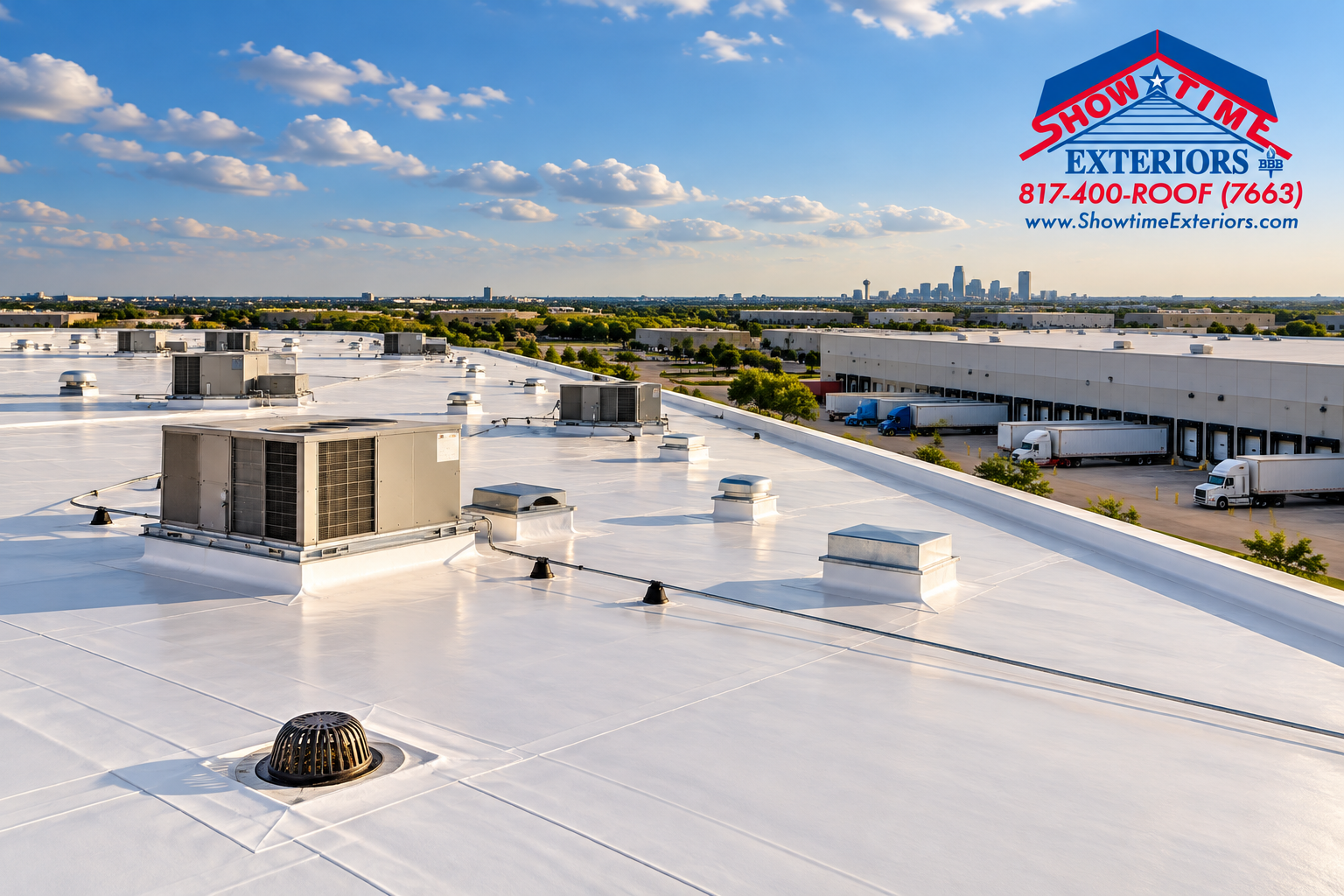
Commercial buildings require particular attention because their policies may contain roof-specific endorsements, valuation conditions, and other provisions that differ from homeowners coverage.
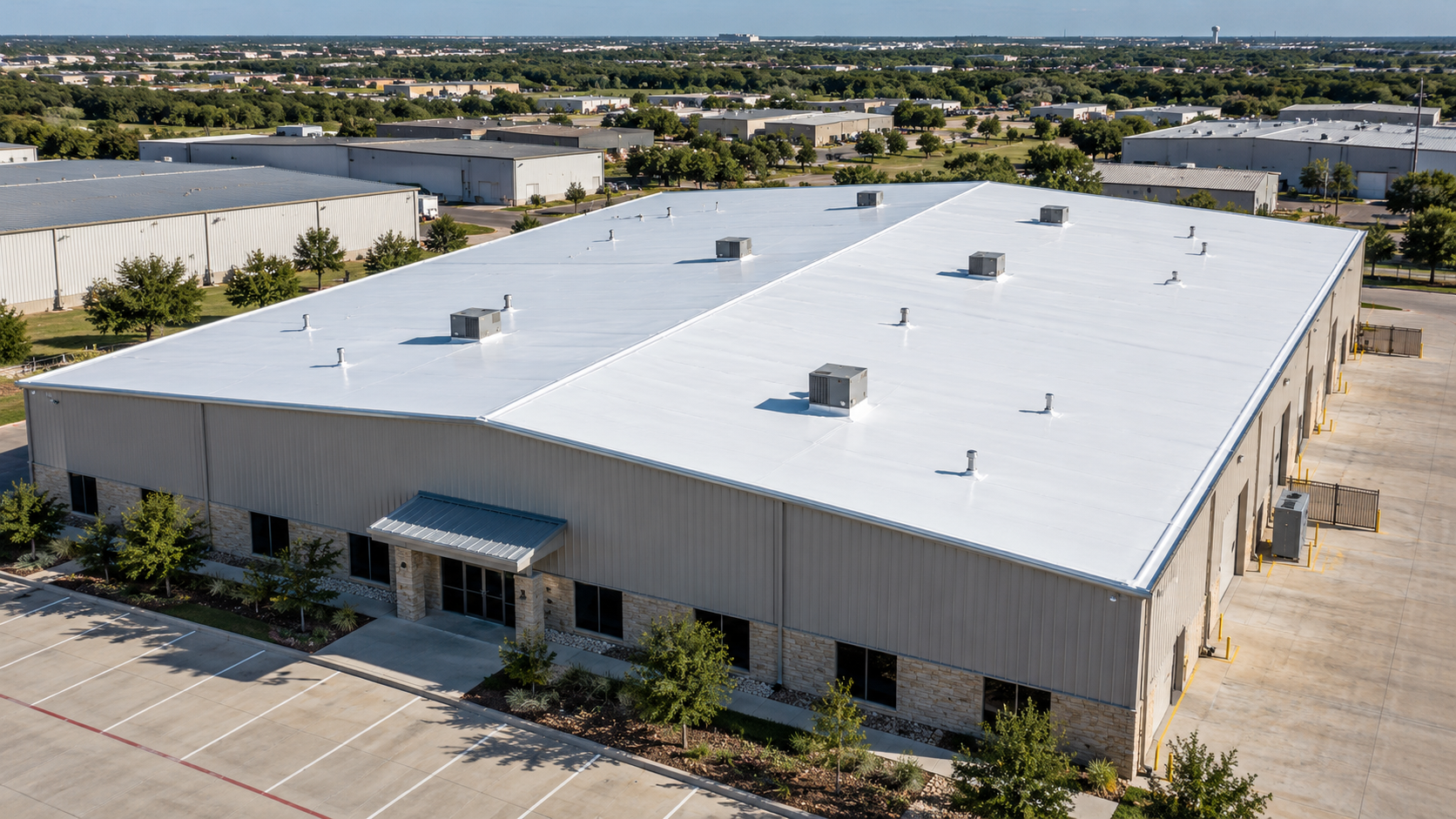
Whether you own a warehouse in Mansfield, an office building in Fort Worth, or a home in Cleburne, the practical starting point is the same: understand your issued policy, document the roof’s condition, and keep accurate records.
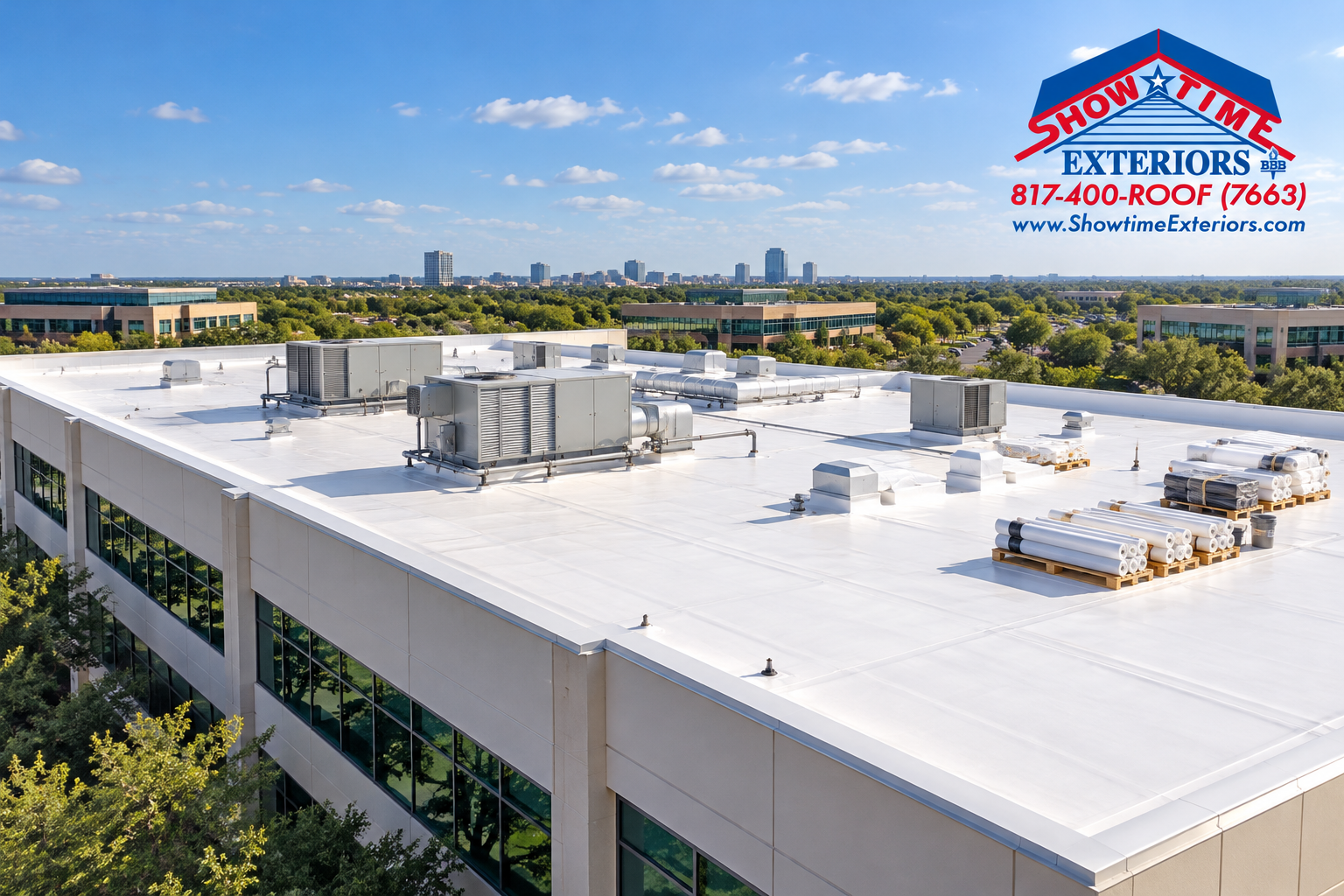
Showtime Exteriors’ commercial roofing services can support the roofing assessment and construction side of that process. Coverage decisions and policy interpretation belong with the insurer and appropriately qualified insurance or legal professionals.
What Does RCV Mean in Roof Insurance?
Replacement cost value generally refers to the current cost of repairing damaged property or replacing it with comparable property, subject to the applicable insurance contract.
Actual cash value, commonly called ACV, generally reflects replacement cost less depreciation. Depreciation accounts for factors such as age and condition.
Allstate’s explanation of actual cash value versus replacement cost describes these as different methods of reimbursing covered property damage. The distinction concerns valuation after a covered loss; it does not establish whether a particular event is covered. Allstate
“RCV roof policy” is convenient shorthand. Your actual coverage comes from the issued policy, declarations, forms, schedules, and endorsements.
RCV Is Different From Market Value
A property’s sale price includes factors unrelated to rebuilding its roof, including location and land value.
The amount needed to repair or replace covered roofing components is a separate question.
Do not use the purchase price, assessed value, or a general property listing as a substitute for understanding the insurance valuation.
RCV vs. ACV: A Simple Comparison
TermGeneral MeaningQuestion to AskReplacement cost valueCurrent repair or replacement cost for covered propertyWhich components qualify, and what conditions apply?Actual cash valueReplacement cost adjusted for depreciationHow was depreciation calculated?Recoverable depreciationWithheld depreciation potentially payable after conditions are metWhat work and documentation are required?Nonrecoverable depreciationDepreciation not payable under the applicable settlement termsWhich policy provision applies?DeductibleThe insured’s share of a covered lossWhat amount or percentage applies?Policy limitApplicable maximum coverage, subject to the contractAre there roof-specific or other restrictions?
These definitions are a starting point. Ask your insurer to explain how the terms apply to your actual roof and claim.
Step 1: Confirm That Replacement Cost Applies to the Roof
Do not stop after seeing replacement cost listed somewhere in the policy.
Ask whether that valuation applies to the roof components and cause of loss involved. A policy can treat different property or roof-related losses differently.
Nationwide’s overview of roof coverage options illustrates why roof coverage needs specific review rather than assumptions based on a general homeowners policy label. Nationwide
Documents to Request
Gather the declarations, applicable coverage forms, roof endorsements, and renewal notices.
Ask the insurer or agent to identify the relevant wording in writing.
Showtime Exteriors’ guide to questions before choosing an RCV roof insurance policy provides a useful discussion checklist.
Step 2: Understand the Applicable Deductible
The deductible affects the amount you must contribute even when replacement cost coverage applies.
Ask whether the relevant deductible is a fixed amount, a percentage, or another arrangement. Confirm the calculation base and whether a separate wind or hail deductible applies.
The Insurance Information Institute’s deductible guide explains that deductibles may be expressed as dollar amounts or percentages and are established by the policy terms. Triple-I®
Request a Dollar Example
If a deductible is expressed as a percentage, ask the insurer to calculate it using your actual policy.
Do not assume the percentage applies to the contractor’s estimate.
For properties containing several buildings, ask how deductibles would apply to the specific loss scenario.
Step 3: Separate Covered Damage From Maintenance Needs
RCV describes valuation. It does not convert routine maintenance into an insured loss.
A roof may contain several conditions at once: recent impacts, old repairs, deteriorated sealant, drainage concerns, or unrelated equipment problems.
The inspection should document those conditions without combining them into one unsupported explanation.
Ask the contractor to identify observed damage, probable causes, unresolved questions, and recommended investigation.
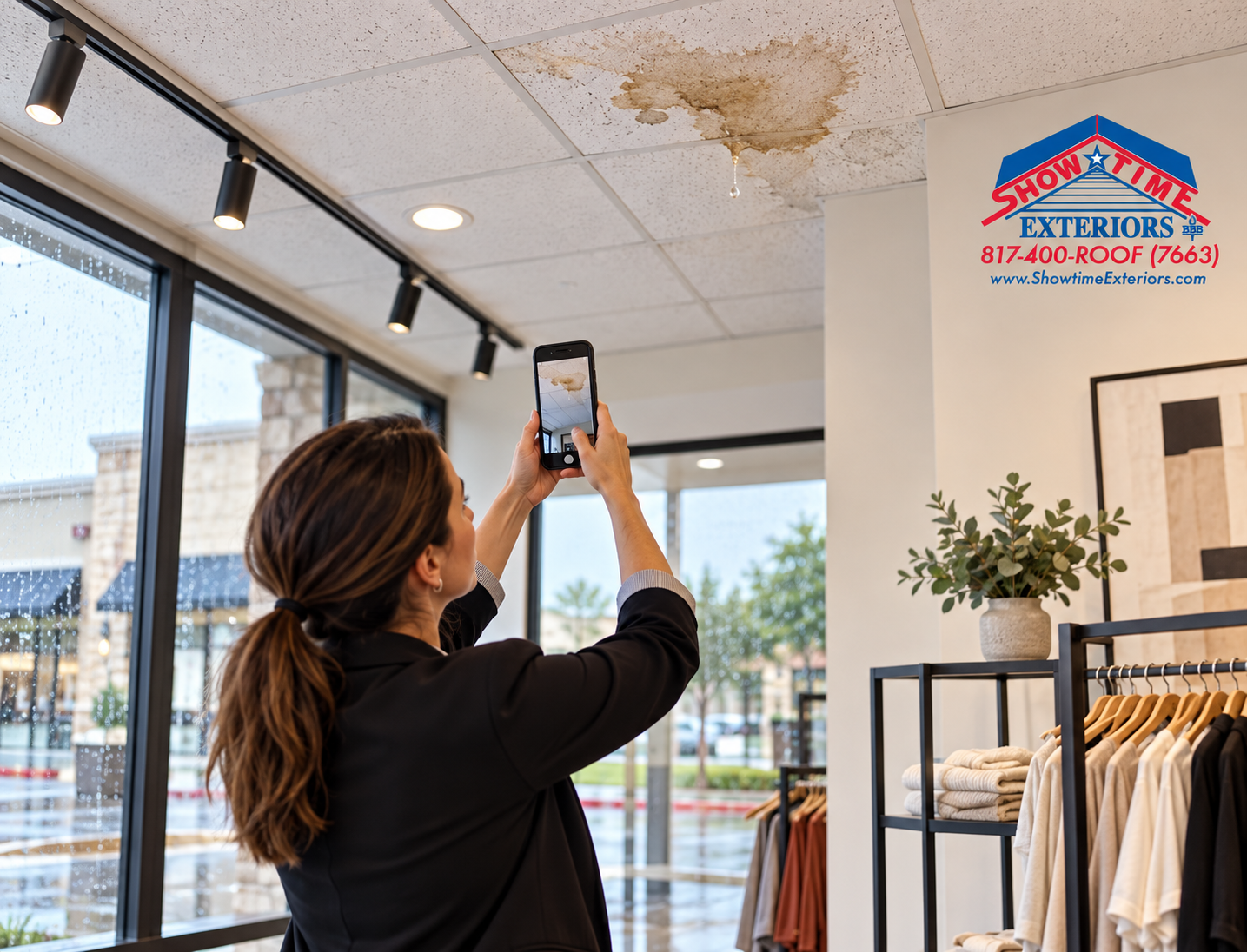
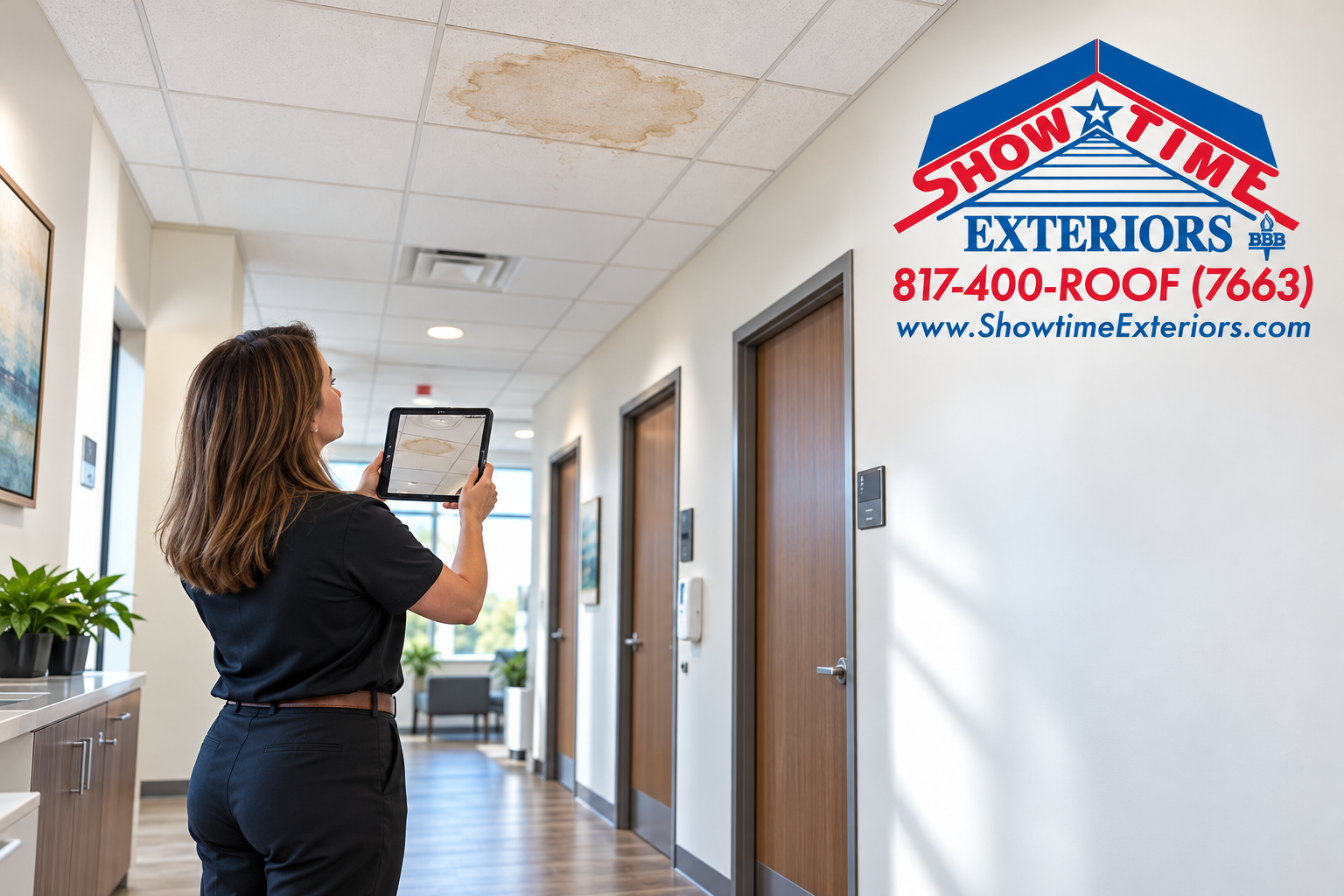
For example, an interior stain may justify prompt investigation, but it does not by itself establish the cause, date, extent, or insurance treatment of the problem.
Keep the roofing findings and the insurer’s coverage explanation together so you can understand how the physical conditions relate to the claim.
Step 4: Protect the Property and Preserve Evidence
When damage occurs, prioritize people and prevent avoidable additional damage when it is safe to do so.
Keep occupants away from unstable ceilings, electrical hazards, and unsafe areas. Arrange qualified assistance for rooftop work.
Document visible conditions before and after temporary protection when practical. Record who performed the work, what materials were used, and which areas were treated.
Keep Emergency Work Identifiable
Temporary repairs should be recorded separately from permanent construction.
Retain photographs, service descriptions, invoices, and receipts.
Ask your insurer about reporting and documentation requirements without delaying necessary safety measures.
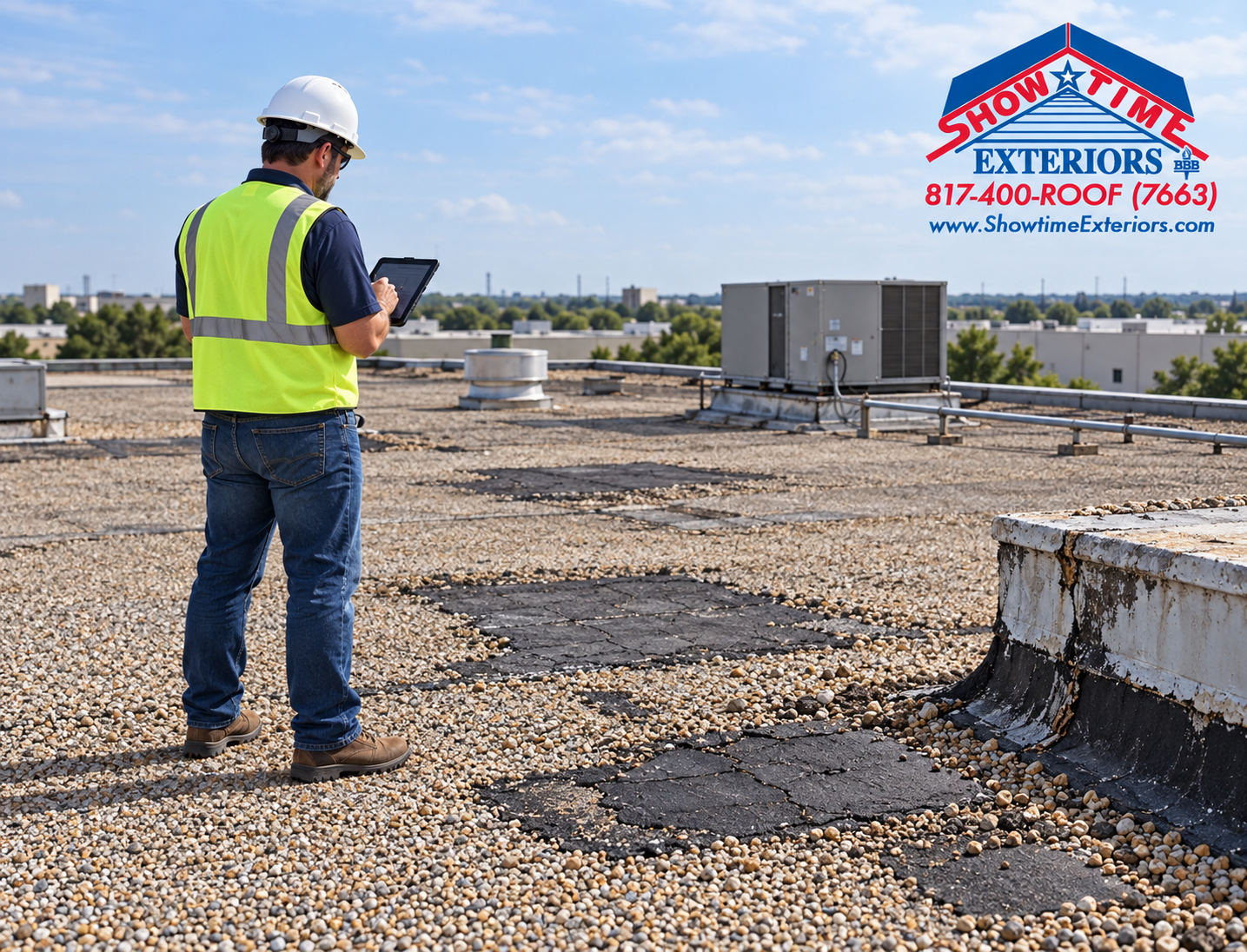
A roof inspection report can help organize observations, locations, limitations, and recommended next steps.
Step 5: Report the Claim and Confirm Requirements
Contact your insurer through its established claims process.
Provide accurate information about what happened, when you discovered the damage, and what you have observed. If the loss date is uncertain, explain that uncertainty rather than choosing an unsupported date.
Request a claim number and the assigned representative’s contact information.
State Farm’s roof claims resources provide an example of insurer-specific guidance. Follow your own insurer’s procedures rather than assuming another company’s process applies. State Farm®
Ask which documents are needed, whether an inspection will be arranged, and how additional information should be submitted.
Create a dated communication log from the beginning.
Step 6: Document the Existing Roof Carefully
A useful roof assessment identifies the roof system, relevant history, inspected areas, visible conditions, and limitations.
Photographs should show overall context and close detail. A roof plan or consistent location references make findings easier to follow.
Provide installation records, maintenance logs, previous reports, and repair invoices when available.
Avoid Unsupported Assumptions
Separate documented facts from estimates.
If the installation date is unknown, say so. If concealed insulation has not been tested, do not describe it as confirmed dry or wet.
Where further investigation is recommended, ask what question it will answer and how the findings will affect the roofing scope.
Good records help later readers understand what was observed and what remains unresolved.
Step 7: Review the Insurer’s Estimate Line by Line
An estimate is easier to understand when you review its components rather than only the final total.
Check the described work, quantities, units, material assumptions, age, condition, depreciation, deductible, and net payment.
Travelers’ property-estimate guide explains how its estimates present replacement cost, actual cash value, depreciation, and the amount potentially recoverable. Other insurers may use different layouts or notation. Travelers Insurance
Questions Worth Asking
Does the estimate identify the correct roof areas? Are measurements consistent with the property? Which components are included?
Ask for clarification where the scope or calculation is unclear.
A difference between estimates should be investigated through specific quantities, conditions, and work requirements.
Step 8: Understand the Initial Payment
Some replacement cost claims begin with an ACV-based payment, with eligible depreciation potentially paid later after the required conditions are satisfied.
The initial payment therefore may be lower than the approved replacement cost estimate.
Do not assume that the first check represents the final amount available. Equally, do not assume every withheld amount will automatically be released.
Ask the insurer to identify the payment calculation, any potentially recoverable depreciation, and the conditions attached to additional payment.
For further background, review Showtime Exteriors’ roof depreciation guide for Texas property owners.
Keep written explanations with the estimate rather than relying on a remembered telephone conversation.
RCV Roof Claim Payment Example
The following example illustrates the arithmetic only.
Assume:
- Approved covered replacement cost: $100,000
- Depreciation withheld: $25,000
- Applicable deductible: $10,000
- All withheld depreciation is recoverable if the stated requirements are met.
- No other limits or adjustments affect payment.
CalculationIllustrative AmountApproved replacement cost$100,000Less depreciation−$25,000Actual cash value before deductible$75,000Less deductible−$10,000Initial payment$65,000Potential later depreciation payment$25,000Potential total insurance payment$90,000Owner’s deductible contribution$10,000
The $25,000 is part of the assumed $100,000 replacement cost, not an additional benefit above it.
If qualifying expenditures, completed work, or other settlement conditions differ, the final payment can change.
Use your own claim documents to confirm the actual calculation.
Step 9: Compare the Roofing Scope With the Claim Estimate
Before committing to construction, compare the proposed contract with the insurer’s documented scope.
Identify differences in roof area, removal, insulation, flashings, edge metal, drainage work, and equipment coordination.
Classify differences clearly. A missing measured quantity is different from an optional upgrade or an unrelated maintenance item.
Support Requests With Evidence
Where additional work is identified, retain photographs, measurements, product information, and an explanation of why the work is needed.
Ask the insurer how it wants additional information submitted.
A contractor can explain construction requirements and pricing. Whether those costs are covered requires the insurer’s evaluation under the policy.
Keep the construction contract and claim correspondence consistent and accurate.
Step 10: Confirm Every Relevant Deadline
Ask for written confirmation of deadlines affecting notice, requested documents, repair or replacement, and recovery of depreciation.
Do not assume a deadline quoted online applies to every Texas policy.
Travelers’ explanation of depreciation describes a process involving completed repair or replacement and supporting records, while noting that timing can vary with the policy and location. Travelers Insurance
Create a calendar showing each confirmed requirement and the responsible contact.
If procurement, weather, investigation, or access may delay work, raise the issue early. Request any necessary extension and obtain the response in writing.
A contractor’s projected schedule does not itself change an insurer’s deadline.
Step 11: Organize the Required Evidence
Ask the insurer which records are required for your claim and any later replacement cost payment.
A practical file may contain:
- Claim number and correspondence.
- Inspection report and roof plan.
- Original photographs.
- Temporary repair records.
- Contractor proposals and signed contract.
- Approved changes.
- Construction photographs.
- Invoices and payment records.
- Completion documentation.
Keep the documents labeled by date and roof area.
Showtime Exteriors’ guide to evidence for an RCV roof policy provides an additional organizing checklist.
Send accurate documents that describe the work actually performed. Keep copies of everything submitted and record when the insurer received it.
Step 12: Plan for Construction Cash Flow
The insurance payment schedule and contractor payment schedule may differ.
Before work starts, compare available funds with deposits, progress payments, the deductible, and expenses not included in the claim.
Do not assume withheld depreciation will arrive before the contractor needs payment.
Clarify Payment Milestones
The construction agreement should identify when payments are due and what work or documentation supports each milestone.
If a lender or another party appears on a payment, ask that party about endorsement and release procedures.
For commercial properties, designate an owner representative to coordinate construction approvals and financial records.
Resolve foreseeable cash-flow questions before materials are ordered rather than during an active project.
Step 13: Document Changes During the Roofing Work
Construction can reveal conditions that were inaccessible during the initial inspection.
When additional work is identified, document the location, condition, quantity, proposed correction, and cost.
Use written change orders and the agreed authorization process.
If the condition may affect the claim, ask the insurer about inspection or documentation needs before the evidence is concealed, where practical.
Distinguish necessary immediate protection from work that can wait for review.
Photographs taken before removal, during correction, and after completion can help explain the sequence.
Avoid treating every construction change as automatically covered. Keep the owner’s authorization and the insurer’s response clearly recorded.
Step 14: Submit Completion Records and Request Review
Once qualifying work is complete, submit the records requested by the insurer.
Identify what was completed and connect invoices or photographs to the relevant estimate items.
Ask for confirmation of receipt and whether anything remains outstanding.
Do not assume the contractor’s final invoice automatically triggers payment without a request or supporting information.
Keep the Financial Record Accurate
Invoices, receipts, discounts, credits, and payment records should reflect the real transaction.
If the completed scope differs from the original estimate, explain the difference.
Request a written accounting of any additional payment so you can reconcile it with previous amounts and understand any remaining withheld balance.
Step 15: Reconcile the Claim and Preserve the Roof File
Review the final financial record before considering the process complete.
Compare insurer payments, contractor invoices, owner contributions, approved changes, and any unresolved items.
Ask for an explanation of remaining depreciation or other deductions.
Keep the final roof records for future maintenance, property transactions, and insurance discussions.
The file should identify the completed system, installation date, warranties, contractor contact, and future maintenance requirements.
If only part of the roof was replaced, record the boundaries clearly.
A future inspector or property manager should be able to distinguish new work from retained materials without reconstructing the project from scattered emails.
Additional Considerations for Commercial Property Owners
Commercial owners should review their actual policy rather than applying homeowners examples directly to a warehouse, retail center, or industrial facility.
Ask the broker or insurer about building schedules, roof endorsements, valuation provisions, policy limits, and any coinsurance requirements.
Multiple Roof Areas
A property may contain several systems and installation dates. Identify each area separately in the inspection, estimate, and completion records.
Operational Costs
Tenant coordination, equipment handling, temporary protection, and business disruption can affect project planning.
Ask which expenses belong in the roofing contract and which require separate insurance review.
Existing Deterioration
An aging gravel-surfaced built-up roof can conceal deterioration and previous work. Additional investigation may be needed before defining a reliable construction scope.
Keep pre-existing concerns separate from documented event-related observations.
Common RCV Roof Claim Mistakes
Assuming RCV Guarantees Full Roof Replacement
Valuation does not determine the extent of necessary work. A documented assessment and the policy govern different parts of the decision.
Treating the Estimate as Available Cash
An estimate may include amounts not yet payable. Confirm the payment schedule before making financial commitments.
Missing Documentation or Deadlines
Keep a calendar and a submission log. Ask promptly when requirements are unclear.
Combining Upgrades With Damage Repairs
Identify elective improvements separately so responsibilities remain understandable.
Relying on Verbal Assurances
Request written explanations for important coverage, timing, or payment questions.
Inflating Completion Records
The final documents should accurately represent the actual work and financial transaction.
Frequently Asked Questions About RCV Roof Policies
Does RCV Mean There Is No Deductible?
No. Replacement cost coverage does not by itself eliminate the applicable deductible. Confirm the amount and calculation in your policy.
Is Recoverable Depreciation Guaranteed?
No. Eligibility and payment depend on the policy and satisfaction of its conditions. Ask which amount is potentially recoverable and what is required.
What If the Work Costs Less Than the Estimate?
Additional payment may be affected by the actual qualifying cost. Ask the insurer to calculate the result before assuming the full withheld amount remains payable.
Can I Choose a Different Roofing Material?
You can discuss alternatives with the contractor, but confirm how the proposed change affects the insurance settlement, construction requirements, and your contribution before proceeding.
Does RCV Cover an Old Roof?
Age alone does not answer the coverage question. Review the cause of loss, roof-specific provisions, condition, exclusions, and settlement terms with the insurer.
Can My Roofer Decide What the Policy Covers?
A roofer can inspect conditions, describe construction needs, and prepare a scope. Obtain policy interpretation and coverage explanations from the appropriate insurance professional.
Get Roofing Documentation and a Clear Construction Plan
An RCV roof claim is easier to manage when the physical findings, insurance requirements, construction scope, and payment records are organized from the beginning.
Start with the issued policy. Confirm the deductible and settlement conditions. Document the roof carefully, address scope questions, and retain accurate completion records.
Showtime Exteriors can assist with roofing assessment and project planning. For property owners in Mansfield, Dallas, Fort Worth, Cleburne, Waxahachie, and surrounding Texas communities, that begins with understanding the building’s actual condition.
Call 817-400-ROOF (7663) or contact Showtime Exteriors to request a roof assessment.