



Commercial Roof Drain Repair Houston
Ponding Water, Clogged Drains, Scuppers, and Retrofit Solutions

How Quickly Should a Commercial Roof Drainage Problem Be Addressed?
A blocked, damaged, loose, or poorly flashed commercial roof drain should be evaluated promptly—immediately when water is rising, entering the building, threatening electrical or occupied areas, or adding unusual load to the roof. The first response is safe stabilization and controlled drainage; the permanent response is to identify whether the cause is debris, failed drain flashing, damaged piping, inadequate slope, settled insulation, structural deflection, insufficient capacity, or several conditions working together.
Commercial roof drain repair in Houston is especially important because intense rain can expose a drainage weakness quickly. Ponding water does not automatically prove that the drain itself has failed, and clearing a strainer does not correct poor slope, wet insulation, a loose clamping ring, a deteriorated membrane tie-in, or an obstructed leader below the roof. A durable scope evaluates the entire drainage path—from the roof surface to the discharge point.
Showtime Exteriors helps commercial property owners in Houston and across Texas inspect roof drainage, document visible conditions, perform compatible roofing repairs, plan restoration or retrofit work, and determine when broader replacement is more responsible. Call 817-400-ROOF (7663) to schedule a commercial roof assessment. Plumbing, structural engineering, and other specialty work should be coordinated when the problem extends beyond the roofing assembly.
Why Commercial Roof Drainage Matters in Houston
A low-slope commercial roof depends on designed pathways that move water to internal drains, scuppers, gutters, downspouts, and safe discharge locations. Even a high-quality membrane can be stressed when water remains for extended periods. Standing water increases exposure at seams, fasteners, flashing transitions, penetrations, repairs, and minor surface irregularities. It can also collect debris, encourage biological growth, stain coatings, conceal punctures, and make routine access more hazardous.
Houston weather adds urgency. Heavy rainfall may arrive rapidly, wind can push debris into strainers and scuppers, and tropical systems can produce repeated rainfall before a roof has dried. Heat cycles can move metal and membrane components around drains and gutters. Rooftop HVAC work, construction activity, leaves, packaging, loose fasteners, and displaced materials can create blockages. Drainage therefore requires planned inspection rather than attention only after an interior leak.
Drainage Is a System, Not a Single Component
The visible drain is only one part of the system. Effective drainage depends on roof slope, crickets and saddles, sumps, insulation, cover board, membrane, drain bowl, clamping ring, seals, strainers, piping, scuppers, conductor heads, gutters, downspouts, overflow provisions, discharge locations, and the condition of the deck or structure supporting the roof. A defect in any one component can change how the others perform.
For example, a clear drain may still receive water slowly if insulation has settled and created a basin away from the sump. A well-flashed scupper may appear undersized when debris blocks the exterior conductor head. A roof leak near a drain may originate at a membrane seam uphill and travel through wet insulation. Diagnosis should follow evidence rather than assuming the nearest visible component is the cause.
Ponding Water Is a Symptom That Requires Context
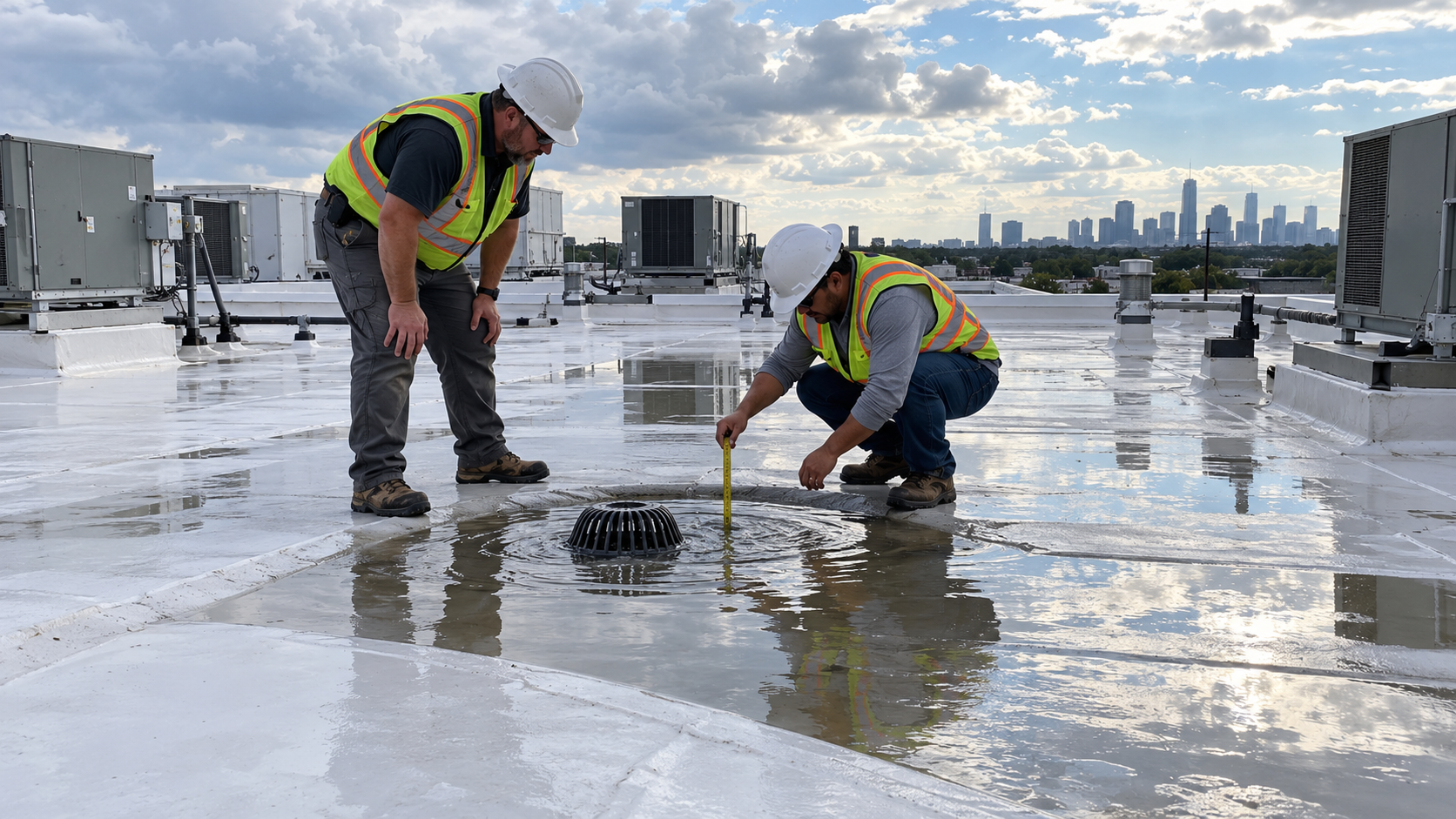
A small wet area immediately after rain differs from deep water that remains long after surrounding surfaces have dried. Record the date, time since rainfall, approximate depth, perimeter, drain condition, weather, and whether the pond recurs in the same location. Compare current photographs with earlier roof plans and inspection records. The pattern helps distinguish temporary surface water from chronic drainage deficiency.
Do not puncture the membrane or cut an improvised outlet to release water. Sudden uncontrolled discharge can flood interiors, overload piping, damage walls, or send water toward pedestrians and equipment. When accumulated water creates a possible structural concern, restrict access and obtain appropriate professional evaluation before moving or pumping it.
Types of Commercial Roof Drainage Components
Internal Roof Drains
Internal drains typically include a bowl connected to piping below the roof, a membrane interface, a clamping ring or compatible flashing assembly, and a strainer. The surrounding roof may be recessed into a sump to encourage flow. Inspection should check for missing or broken strainers, loose bolts, corrosion, cracks, membrane wrinkles, open seams, debris, damaged seals, poor slope, and evidence that water is bypassing the intended connection.
Primary and Overflow Drains
Some roofs use separate primary and overflow drains or combination assemblies. Overflow drainage is not a substitute for maintaining the primary system; it is a secondary pathway for conditions that exceed or interrupt normal flow. The height and arrangement should match the building design. A blocked primary drain that routinely sends water through overflow provisions signals a maintenance or capacity problem that deserves investigation.
Scuppers and Conductor Heads
A scupper carries water through a parapet or perimeter wall. It must integrate with the roof membrane, wall flashing, exterior metal, and discharge assembly. Inspect the opening, corners, soldered or sealed joints, flanges, membrane transitions, coping above, and any conductor head or downspout outside. Leaves, nests, windblown debris, displaced gravel, and deformed metal can reduce the opening or redirect water into the wall.
Gutters and Downspouts
Commercial gutters collect water at the roof edge and deliver it to downspouts. Problems include open joints, inadequate slope, corrosion, loose hangers, crushed sections, missing outlets, undersized components, blocked downspouts, and discharge that erodes the site or returns water toward the building. Metal movement and ice are less dominant in Houston than in northern markets, but heat, storms, debris, and high rainfall still create significant demands.
Crickets, Saddles, and Tapered Insulation
Crickets and saddles redirect water around curbs, walls, equipment, and other obstructions. Tapered insulation can create slope where the deck does not provide it. These components are not drains, but they determine whether water reaches a drain. Inadequate or compressed slope, incorrect transitions, and poorly placed sumps can strand water even when the outlet is open.
Warning Signs That Roof Drain Repair May Be Needed
Visible warning signs include water remaining after surrounding areas dry, stains around drain bowls, deteriorated membrane at clamping rings, missing strainers, loose fasteners, cracks, corrosion, displaced flashing, repeated patches, clogged scuppers, overflowing gutters, leaking downspout joints, vegetation, sediment rings, and debris lines that reveal recurring water depth. Interior evidence may include ceiling stains, damp insulation, corrosion, odors, drips, blistered finishes, or leakage that intensifies during prolonged rain.
Water Backs Up During Heavy Rain
A roof that drains normally in light rain but backs up in a major storm may have restricted piping, insufficient inlet area, undersized or poorly placed drainage, blocked overflows, or more contributing roof area than the outlet can handle. The solution may require cleaning, plumbing evaluation, hydraulic analysis, additional outlets, revised overflow provisions, or redesigned slope. A roofing contractor should not guess at pipe capacity when engineering or plumbing expertise is required.
The Same Area Ponds After Every Storm
Repeated ponding can indicate settled insulation, deck deflection, inadequate original slope, construction changes, a high drain, blocked flow paths, or a repair that created a dam. Outline and photograph the water after comparable rain events. Moisture investigation may be appropriate when chronic ponding overlaps seam failure, blistering, soft insulation, corrosion, or recurring interior leakage.
Drainage Components Move or Separate
Drain bowls, rings, scuppers, gutters, and metal transitions can move differently from the surrounding membrane. Loose fasteners, cracked sealant, wrinkled membrane, split flashing, or separated joints may show that the detail lacks secure attachment or movement accommodation. Adding surface sealant without stabilizing the assembly rarely provides a dependable permanent repair.
How Showtime Exteriors Investigates a Drainage Problem
Start With Safety and Interior Consequences
The first priority is people, operations, and sensitive contents. Active water near electrical systems, medical equipment, food preparation, inventory, data infrastructure, or occupied public space should be isolated and controlled by qualified personnel. Roof access should stop during lightning, high winds, unsafe ponding, or conditions that make the surface unstable. Interior protection and emergency measures should be documented separately from the permanent roof scope.
Map the Roof and Every Outlet
A useful roof plan identifies primary drains, overflows, scuppers, gutters, downspouts, discharge points, roof elevations, expansion joints, walls, curbs, and ponding areas. Each outlet should receive a consistent label so photographs, plumbing tests, interior observations, and repairs refer to the same location. On a large facility, a description such as “drain near the air conditioner” is not precise enough.
Inspect From the High Point to the Discharge
The investigation follows water across the roof and through the drainage path. Review slopes, seams, repairs, depressions, crickets, strainers, bowls, clamping rings, scuppers, gutters, leaders, and visible discharge. Look for debris lines, sediment, staining, biological growth, displaced materials, and earlier repairs. Where accessible and authorized, compare interior piping, deck, and structural evidence below the affected area.
Use Testing to Answer a Defined Question
Controlled drain testing, moisture meters, infrared scanning, core samples, selective openings, dye testing, or plumbing camera work may help, but each method has limits. Testing should answer a specific question and avoid overloading the roof or drainage system. Roofing openings must be repaired with compatible materials, and plumbing tests should be performed by qualified parties when the suspected failure is below the roof connection.
Document Inspection Limits
A report should state whether the roof was dry or wet, which areas were inaccessible, which pipes or concealed assemblies were not examined, and what testing was not performed. A visual roof inspection cannot certify hidden piping, structural capacity, or the performance of every concealed component. Clear limitations help the owner authorize the next appropriate step without treating observations as a guarantee.
Commercial Roof Drain Repair Methods
Clear Debris and Restore Safe Flow
Removing leaves, trash, loose roofing materials, sediment, and vegetation can restore flow when the outlet and downstream path remain serviceable. Debris removal should be controlled so material is not pushed into the piping. Missing strainers should be replaced with compatible components. Cleaning is maintenance, not proof that the flashing, drain body, or piping is sound.
Rebuild the Membrane-to-Drain Connection
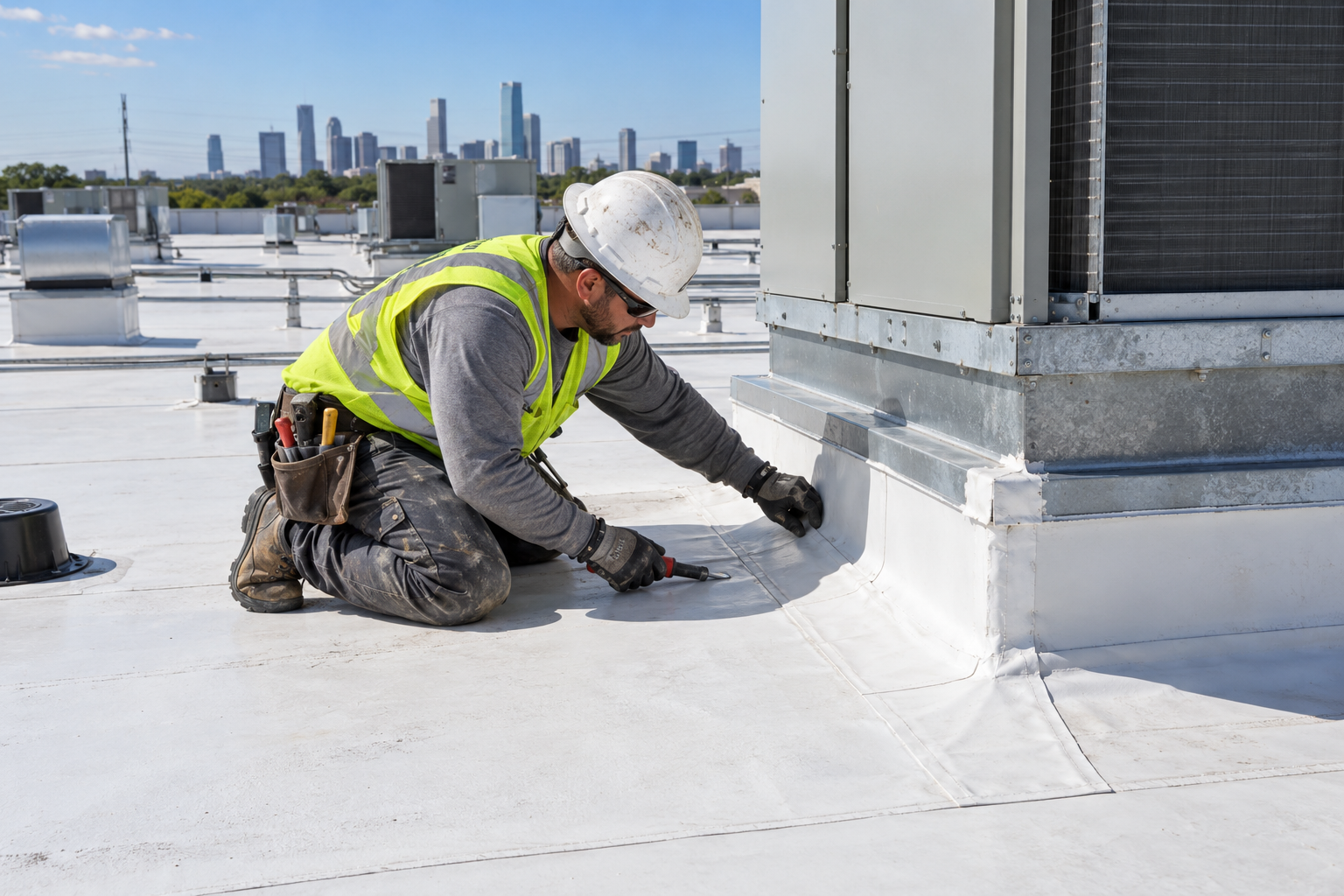
When leakage occurs at the roof interface, the contractor may remove failed membrane and patches, expose the bowl and surrounding substrate, replace wet or deteriorated roofing components as required, prepare the surface, install compatible membrane or reinforcement, secure the clamping assembly, and verify the finished sump. The exact method depends on TPO, PVC, EPDM, modified bitumen, coating, or other roof system requirements.
Repair or Replace Scupper Flashing
A scupper repair may require removing loose metal, deteriorated membrane, wet insulation, failed corners, and incompatible sealant. The permanent detail should provide continuous waterproofing through the opening, reinforced corners, secure transitions, adequate exterior projection, and coordinated conductor-head or downspout connections. Wall and coping defects above the scupper should not be ignored.
Correct Gutters and Downspouts
Gutter work may include cleaning, joint repair, hanger replacement, slope correction, outlet reconstruction, corrosion treatment, section replacement, or new downspouts. Discharge should move water away from foundations, entries, sidewalks, equipment, and adjacent roof areas. Site drainage and underground connections may require separate civil, plumbing, or waterproofing scopes.
Install Retrofit Roof Drains
A retrofit roof drain can sometimes be installed into an existing drain body during reroofing or targeted reconstruction. The assembly generally uses a new insert, flange, membrane connection, and sealing components selected for the existing pipe and roof system. Proper sizing, fit, seal location, sump geometry, strainer, and downstream condition are critical. A retrofit should not be used to conceal corroded, cracked, undersized, or obstructed piping that requires replacement or specialty repair.
Improve Slope and Eliminate Trapped Basins
When water cannot reach the outlet, the repair may include tapered insulation, a new sump, cricket construction, removal of a raised obstruction, or broader roof reconstruction. Small surface patches should not create ridges that dam water. The new slope must transition smoothly into the surrounding assembly and maintain appropriate flashing heights at walls, curbs, and penetrations.
Repair, Retrofit, or Replace: How to Choose
Choose Localized Repair When the Defect Is Isolated
Repair is most appropriate when the drain or scupper defect is defined, surrounding roofing remains serviceable, moisture is limited, the substrate is stable, and compatible materials can produce a reliable tie-in. The scope should correct the cause rather than add another layer over failed work. Completion records should show preparation, concealed conditions, materials, and final testing where applicable.
Choose Retrofit When the Existing Configuration Can Be Reused Responsibly
A retrofit may be useful during a recover or replacement project when the existing drain body and downstream connection can accept a properly selected insert. It can reduce disruption below the roof, but only after dimensions and condition are verified. The contractor should coordinate the roofing assembly with plumbing and design requirements, not select a drain solely because it fits the visible opening.
Choose Broader Replacement When Failures Are Systemic
Replacement or substantial reconstruction may be more responsible when multiple outlets fail, ponding is widespread, insulation is wet, the deck has deteriorated, slope is fundamentally poor, piping is damaged, or the roof is near the end of its service life. Repeated emergency patches can cost more while providing less certainty than a planned capital project that corrects drainage, insulation, flashing, and membrane together.
Drainage Repairs by Commercial Roof System
TPO and PVC Roofs
Thermoplastic drain repairs generally depend on clean, dry, compatible membrane and properly executed heat-welded seams. Contamination, aged surfaces, coating, wet insulation, or incompatible patches can expand the required repair area. The drain flange or clamping assembly must coordinate with the membrane manufacturer’s detail, and welds should receive appropriate quality-control checks.
EPDM Roofs
EPDM drainage repairs may use compatible primers, seam tapes, uncured flashing, cured membrane, molded accessories, adhesives, and specified lap sealant. Surface preparation and rolling are essential. Shrinkage stress, bridging, loose membrane, and wet insulation should be addressed rather than hidden beneath a patch.
Modified Bitumen Roofs
Modified bitumen work may involve torch-applied, hot-asphalt, self-adhered, or cold-process materials depending on the existing system, substrate, fire restrictions, and facility operations. Loose granules, cracked felts, blisters, and heavy mastic can make preparation difficult. Repairs must extend to sound material and preserve positive flow into the drain or scupper.
Metal Roofs
Metal buildings often drain through eave gutters, valley gutters, scuppers, or internal systems. Repair may require new gutter sections, joints, end caps, outlets, closures, fasteners, hangers, liners, or coating reinforcement. Panel runoff can be fast and concentrated, so outlet size and discharge path matter. Sealant alone is not a complete solution for failed geometry, corrosion, movement, or inadequate support.
Coated Roofs
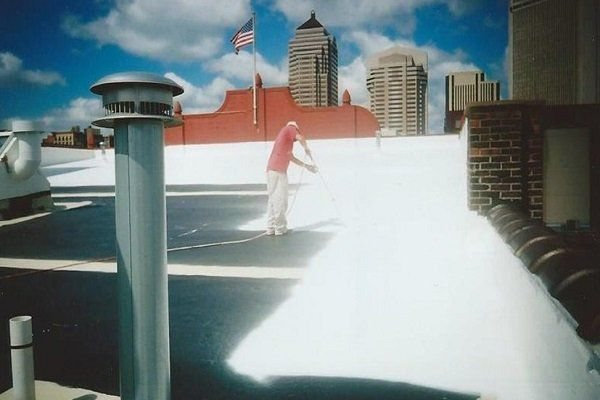
Coated drainage areas require thorough cleaning, removal of loose material, reinforcement, compatible base and finish products, and verified application thickness. Coating should not be installed over active moisture, unstable membrane, loose gravel, severe corrosion, or an obstructed outlet. The completed surface must continue to direct water rather than create a coating ridge around the drain.
Aging Gravel-Surfaced BUR Creates Special Drainage Risks
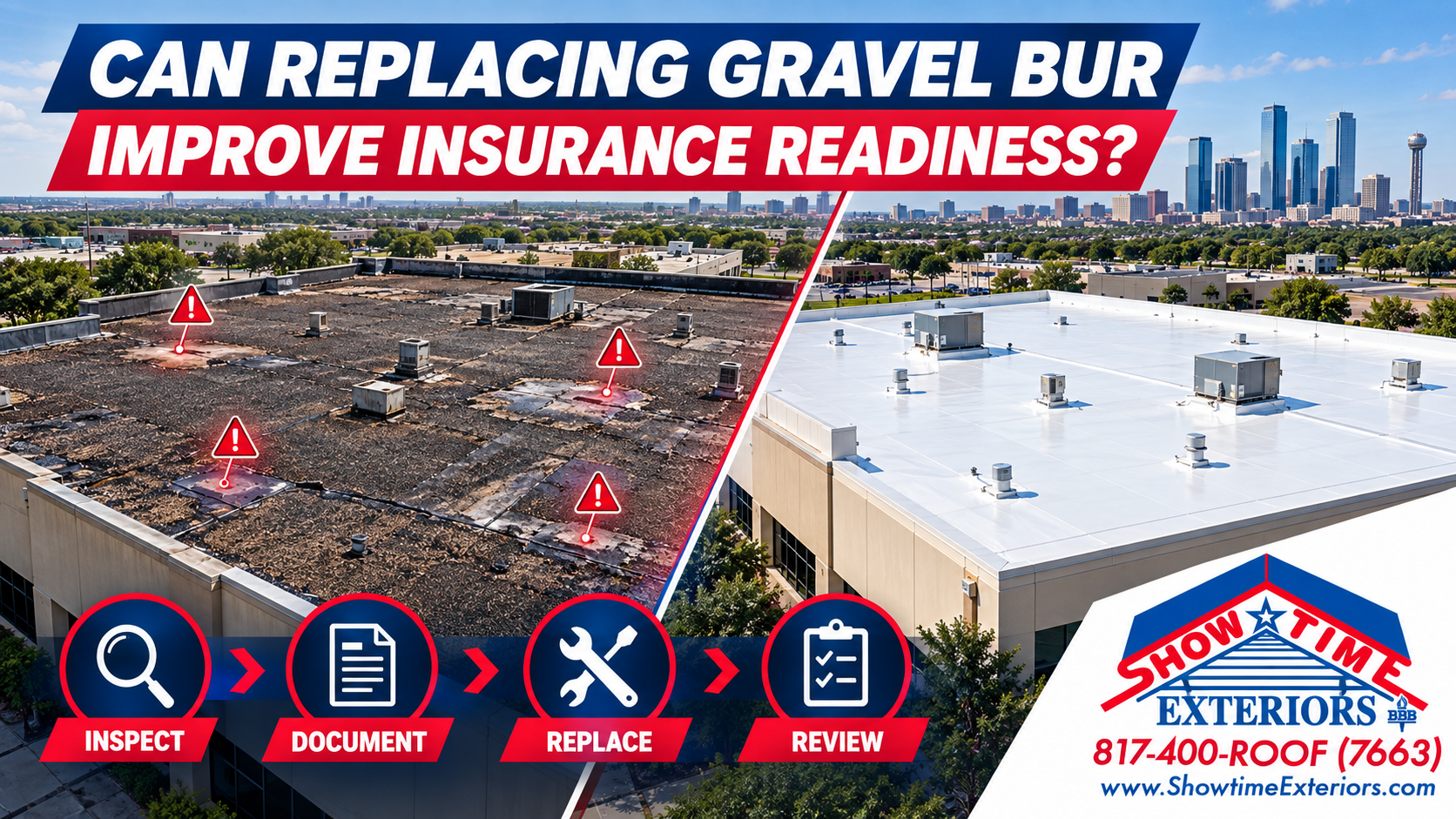
Aging built-up roofs with gravel surfacing are a central concern in Showtime Exteriors’ commercial campaign. Gravel can move into drains, scuppers, gutters, and conductor heads. It can conceal low areas, cracked felts, blisters, open laps, mastic patches, wet insulation, and the true membrane-to-drain connection. Even when the visible strainer is clear, aggregate around the sump can slow flow and make condition assessment less reliable.
Repair usually requires controlled aggregate removal to expose the actual roof surface. Loose gravel can contaminate primers, membranes, coatings, sealants, and tapes, preventing dependable adhesion. Repeated mastic at drain bowls and scuppers can form thick, cracked transitions that hold water and hide deterioration. Adding more surface material without finding sound felts is not a responsible long-term strategy.
Older gravel BUR roofs may also encounter stricter underwriting, requests for current inspections, higher premiums or deductibles, coverage limitations, or non-renewal concerns. Outcomes depend on the carrier, policy, roof age and condition, claims history, maintenance, building, and market. Showtime Exteriors can document visible roof and drainage conditions but cannot guarantee insurance coverage or claim approval. When drainage defects, concealed moisture, and widespread aging combine, planned replacement may be more defensible than another patch cycle.
Storm Response and Insurance Documentation
After severe rain, wind, hail, or debris impact, protect people and operations first. Record the date and time, rainfall conditions if known, affected rooms, approximate water depth, active entry points, drain and scupper condition, debris, temporary measures, and professional observations. Photograph wide roof context and close details before altering conditions when it is safe. Continue documenting exposed materials and completed repairs.
A storm may reveal a pre-existing drainage weakness without being the sole cause of the condition. Factual reporting should distinguish observed storm effects, age-related deterioration, maintenance conditions, installation details, and items that remain uncertain. Coverage depends on the policy, cause, exclusions, endorsements, deductibles, valuation, notice, and carrier evaluation. A roofing contractor can provide measurements, photographs, estimates, and completion records but should not act as a public adjuster or attorney.
Preventive Drainage Maintenance
Inspect Before and After Severe Weather
Many owners schedule roof maintenance at least twice a year and after significant storms, with frequency adjusted for tree cover, roof age, system type, equipment density, debris exposure, prior ponding, and facility sensitivity. Drainage components should also be checked before forecast periods associated with heavy rain when safe access and operational planning allow.
Keep Outlets Visible and Accessible
Do not store materials around drains or place walk pads, equipment, piping, or temporary construction barriers in the flow path. Maintain safe clearance for inspection and cleaning. Replace missing strainers and secure components so wind cannot displace them. Control loose packaging, filters, fasteners, and service debris from rooftop vendors.
Track Ponding With Consistent Photographs
Photograph the same areas from fixed reference points and record approximate time since rainfall. Mark pond boundaries on the roof plan instead of painting directly on a membrane without approval. Repeated records help determine whether ponding is stable, expanding, or linked to repairs, equipment work, settlement, or insulation compression.
Coordinate Roofing and Plumbing Records
Roofing records should identify membrane and flashing work; plumbing records should identify leader cleaning, camera findings, pipe repairs, and flow tests. Keeping both under the same outlet label prevents repeated troubleshooting by disconnected teams. When a drain leak recurs, the owner can see whether the roof interface, drain body, seal, or downstream piping was previously addressed.
Commercial Roof Drain Repair Cost Factors
Cost varies with roof access, building height, system type, drain quantity, outlet size, interior protection, demolition, wet insulation, deck condition, pipe condition, scupper or gutter fabrication, tapered insulation, crane needs, operating hours, testing, warranty requirements, and weather. Clearing debris is different from rebuilding a drain sump, replacing a corroded scupper, installing retrofit drains, or redesigning a roof area with chronic ponding.
Compare proposals by scope instead of total price alone. Confirm whether they include debris disposal, membrane removal, insulation, cover board, deck repair, drain hardware, clamping components, new strainers, metal fabrication, plumbing coordination, tapered insulation, flashing, seam testing, water testing, documentation, and exclusions. A low number may leave the most consequential work as an undefined change order.
Quality Control and Project Closeout
Inspect Concealed Conditions Before Covering Them
Photograph the drain bowl, substrate, insulation, deck, fasteners, seals, and membrane tie-in before later layers conceal them. Verify that wet or deteriorated materials are removed to the agreed limits. Confirm that the outlet is stable and the sump geometry leads water toward it. Final appearance cannot prove that concealed preparation was completed correctly.
Verify the Finished Detail
Quality control may include seam probing, test welds, adhesion checks, fastener verification, coating thickness measurements, controlled water testing, or observation during natural rainfall. Testing should match the roof system and project scope. It should never create unsafe water loading or overwhelm downstream piping. Record the method, location, date, conditions, results, and limitations.
Deliver Useful Closeout Records
Closeout should include the roof plan, outlet labels, before-and-after photographs, product information, approved changes, testing records, plumbing or specialty reports when applicable, warranties, maintenance requirements, and unresolved observations. Set the next inspection date. A vague invoice stating “drain repaired” is not enough for a facility team managing multiple roofs and future contractors.
Step-by-Step Action Plan for Houston Property Owners
Protect occupants, equipment, inventory, and sensitive interiors from active water.
Restrict unsafe roof access during lightning, high wind, deep ponding, or suspected instability.
Document the weather, interior symptoms, outlet condition, water depth, and temporary response.
Map every primary drain, overflow, scupper, gutter, downspout, and discharge point.
Clear safe, accessible surface debris without forcing it into the piping.
Inspect slope, sumps, membrane, clamping assemblies, flashing, metal, and adjacent repairs.
Coordinate plumbing or structural evaluation when evidence extends beyond the roof assembly.
Separate temporary stabilization from the permanent repair or retrofit scope.
Repair to sound, dry, compatible materials and correct the cause of recurring ponding.
Verify the detail, document completion, and place drainage on a recurring maintenance schedule.
Frequently Asked Questions
Can a clogged roof drain cause a commercial roof leak?
Yes. A blockage can raise water above seams, flashings, penetrations, or damaged areas that are not normally submerged. Water can also enter around a failed drain connection or back up from downstream piping. Clearing the blockage may stop immediate accumulation, but the roof and drainage system should still be inspected for damage and hidden moisture.
How long is too long for water to remain on a commercial roof?
Do not rely on one universal time limit without considering the roof design, manufacturer requirements, weather, depth, temperature, and surrounding conditions. The important question is whether the area repeatedly remains wet after comparable roof surfaces have drained and dried. Recurring ponding, increasing depth, interior leakage, soft insulation, or deflection deserves prompt professional evaluation.
Can Showtime Exteriors repair internal drain piping?
Showtime Exteriors can inspect and repair roofing components at drains and coordinate the roof-side scope. Failures within concealed leaders, underground lines, or plumbing connections may require a qualified commercial plumber. Structural concerns may require an engineer. The owner benefits when every trade uses the same drain label and shares test results.
Is a retrofit roof drain always better than replacing the drain?
No. A retrofit can be practical when the existing body and piping are compatible and serviceable. It is not appropriate merely because replacement would be disruptive. Cracked, corroded, obstructed, undersized, or poorly configured components may require another solution. Measurements, condition, flow requirements, and roof-system details should guide the choice.
Can coating fix ponding water around a drain?
Coating may restore eligible surfaces and reinforce properly prepared details, but it does not correct inadequate slope, settled insulation, deck deflection, blocked piping, or poor drain placement. Applying coating thickly around a drain can create a ridge that makes drainage worse. Resolve moisture, movement, and geometry before coating.
Why are gravel BUR roofs difficult around drains?
Gravel can hide the membrane, earlier patches, cracks, blisters, wet areas, and the drain tie-in. Loose aggregate can migrate into outlets and contaminate repair surfaces. Exposure and preparation take more work, and widespread deterioration may make replacement more responsible than repeated mastic repairs.
Does insurance pay for commercial roof drain damage?
Coverage depends on the policy and cause. Sudden storm damage may be evaluated differently from wear, deferred maintenance, installation defects, inadequate design, or long-term deterioration. Showtime Exteriors can document visible conditions and roofing scope but cannot determine or guarantee coverage. Consult licensed insurance professionals for policy interpretation.
Schedule Commercial Roof Drain Repair in Houston
Commercial roof drainage problems should be treated as building-system issues, not just clogged holes in the roof. A dependable solution follows the water path, separates roofing from plumbing or structural responsibilities, repairs compatible materials, improves slope where necessary, and documents the finished work. That approach is particularly important on aging gravel-surfaced BUR, where aggregate can conceal deterioration and obstruct drainage while repeated patching postpones a necessary replacement decision.
Showtime Exteriors serves commercial property owners in Houston and across Texas. Call 817-400-ROOF (7663) or visit Showtime Exteriors commercial roofing to request a commercial roof inspection and roof grade assessment.
Internal Resources
Commercial Roof Inspection Houston
Commercial Roof Maintenance Houston
Emergency Commercial Roof Repair Houston
Commercial Roof Repair Houston
External References
NRCA Roofing Guidelines and Resources
FM RoofNav and Roofing Resources
GAF Commercial Roofing Resources