



Preventive Maintenance Plan for an Industrial Facility Roof
Build a practical industrial roof maintenance plan for Texas facilities, covering inspections, drainage, equipment coordination, repairs, records, and budgeting.
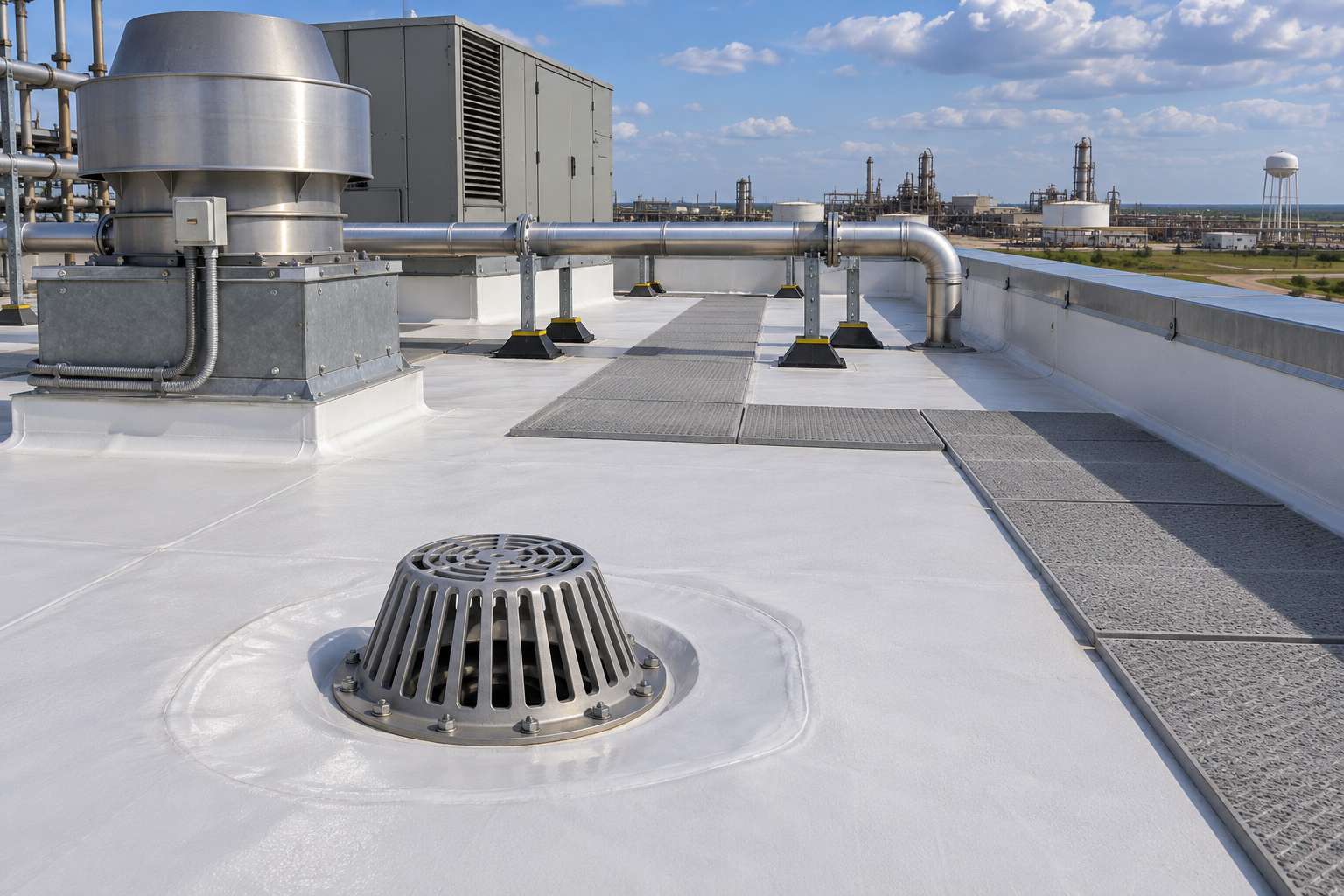
An industrial roof protects production equipment, inventory, utilities, and the people keeping the facility operating. A small roof concern can become an operational problem when it appears above a production line or near sensitive electrical equipment. Maintenance therefore needs to connect roofing decisions with the way the plant actually works.
The plan should identify roof conditions, inspection responsibilities, contractor access, approval limits, and response procedures. It should also recognize that roofing is only one part of the building: water symptoms can involve equipment, walls, piping, or condensation.
Showtime Exteriors can discuss your building's roof conditions and practical service needs. This guide provides an owner-level framework for an industrial facility roof maintenance plan. Adapt it to the installed system, manufacturer requirements, site procedures, and operating risks.
Start with a Roof Asset Inventory
Create a roof plan showing buildings, sections, elevations, access points, drainage, and major equipment. Identify the roof system and installation date for each section where records permit.
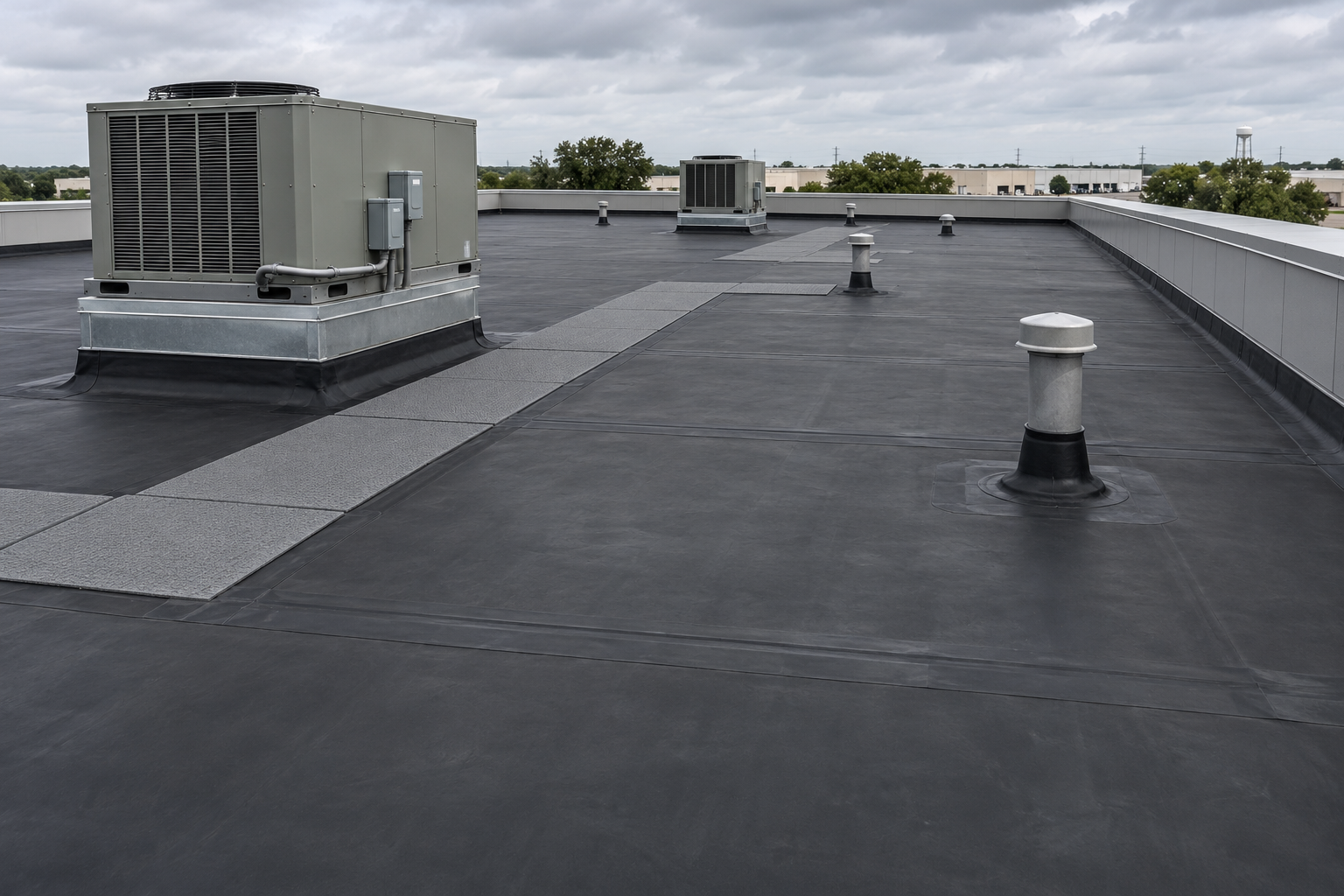
Large facilities often contain additions, partial replacements, and different membrane or metal systems. Treating the entire site as one uniform roof can lead to unsuitable repairs and confusing inspection records.
Collect warranty documents, previous reports, repair invoices, and known leak locations. Mark uncertain information rather than filling gaps with assumptions. A qualified assessment can establish what further investigation is needed.
Manufacturer owner resources, such as Johns Manville's building owner information, can help locate post-installation guidance. Use the resources corresponding to the actual installed system instead of applying one manufacturer's requirements across an unidentified portfolio.
Rank Roof Sections by Operational Consequence
A maintenance plan should consider what is below the roof as well as its age. An area over critical controls may need a different response priority from a similar condition above a less sensitive space.
Map production lines, electrical rooms, finished goods, raw materials, offices, and other important operations beneath the roof plan. Coordinate with plant management to identify areas where water entry or restricted access could create a serious interruption.
This ranking does not replace technical roof evaluation. It helps determine inspection focus, reporting urgency, and the timing of work.
Record the reason for each priority. “Section C above electrical controls” communicates more than a red rating with no explanation. Review priorities when equipment, storage, or production layouts change.
Assign Clear Responsibilities
ResponsibilityAssigned roleExpected resultPlan ownershipFacility or asset managerCurrent schedule and action listRoof assessmentQualified roofing professionalDocumented conditions and recommendationsSite accessFacility operations and safety teamCoordinated entry and work requirementsEquipment concernsAppropriate mechanical or process contractorSource correction and service recordsSpending approvalAuthorized owner representativeClear work authorizationInterior reportingShift supervisors or designated contactsConsistent symptom recordsEmergency coordinationFacility response leadTimely escalation and occupant protection
Give each role a current contact and backup. An after-hours leak should not depend on locating the one person who remembers which roofer handled the last repair.
Establish an Inspection Schedule
Use the manufacturer's instructions, warranty terms, roof condition, and operating exposure to set frequency. Spring and fall can be useful planning points, with additional assessments after significant storms, equipment work, or new concerns.
GAF's roof asset management resources provide maintenance information for owners. Manufacturer guidance is a starting reference; the facility still needs a schedule suited to its actual roofs.
A section near heavy exhaust or frequent service traffic may need more focused attention than an open storage building. Review repeat findings to decide whether the program needs adjustment.
Put visits on the facility calendar and assign booking responsibility. At each inspection closeout, record the next due date and unresolved actions. A report that receives no follow-up is not a completed maintenance process.
Coordinate Safe Access Before Every Visit
Roof access should be limited to personnel qualified and equipped for their work. The facility's safety team and contractors should address edges, openings, skylights, electrical conditions, access equipment, weather, and other site hazards.
OSHA's walking-working surfaces guidance describes general-industry requirements and related resources. Applicable requirements depend on the work and circumstances; the facility should have competent personnel determine the appropriate controls.
A low-slope roof is not automatically a safe walking area. Do not send production staff to investigate a leak simply because they can reach a roof hatch.
Provide contractors with relevant site information and coordinate any required access permits or equipment isolation through qualified facility personnel. The roof maintenance article is not a substitute for the plant's safety procedures.
Define the Inspection Scope
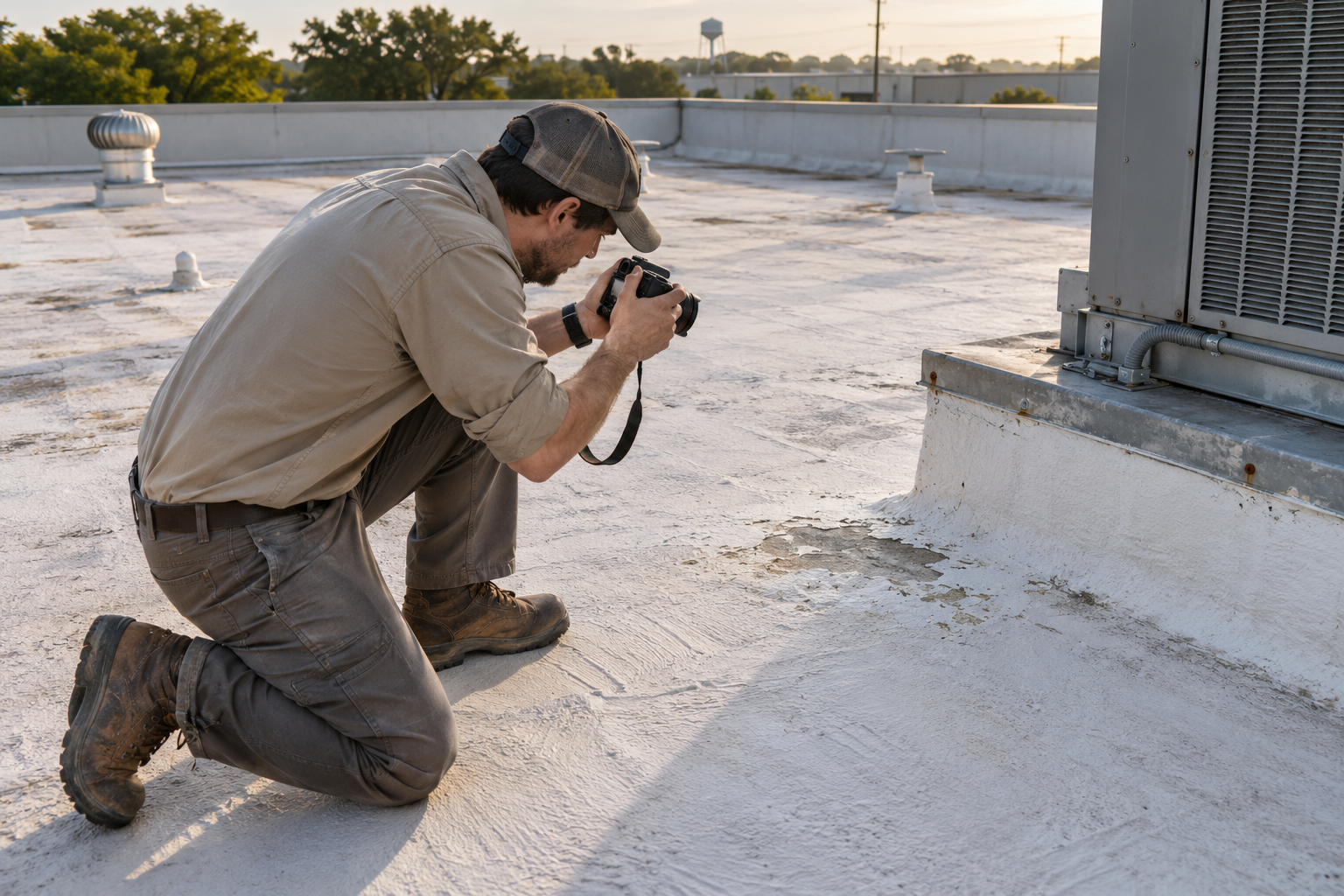
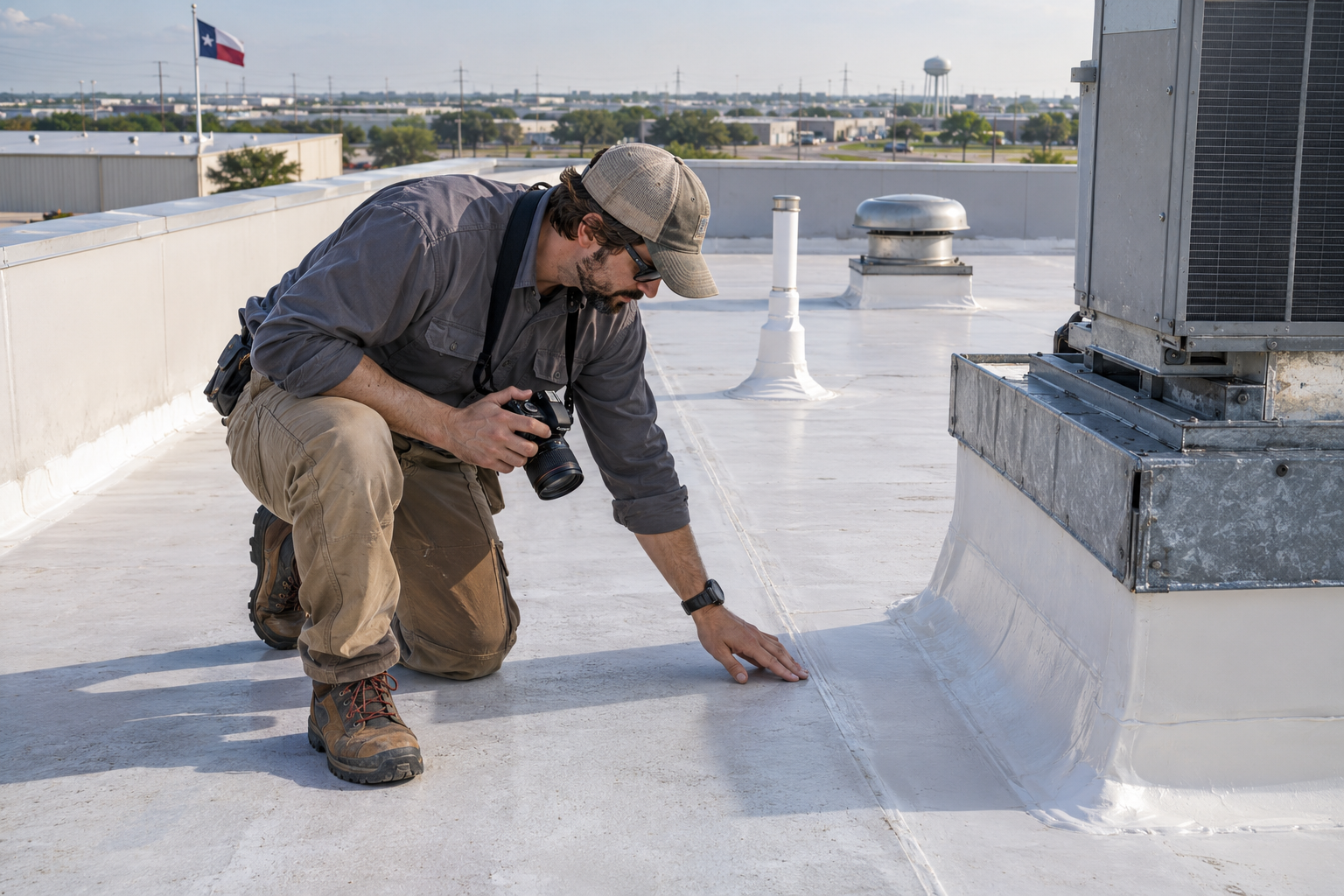
A professional inspection should address the roof field, seams or joints, flashings, penetrations, edges, drainage, previous repairs, and visible related concerns. The exact scope depends on the installed assembly.
Ask the report to identify inspected areas, inaccessible locations, conditions observed, and limitations. A visual assessment does not verify every concealed layer or establish the condition beneath all rooftop equipment.
Where moisture or substrate concerns warrant investigation, request a separate explanation of proposed methods, limitations, and authorization. Exploratory openings or testing should have a restoration plan.
Evaluate commercial roofing services through a defined scope. The owner should understand whether a visit includes inspection only, cleaning, minor repairs, or additional work requiring approval.
Give Drainage Its Own Workstream
Industrial roofs can collect leaves, packaging, process debris, loose materials, and dirt. Have drains, scuppers, gutters, and drainage paths evaluated and serviced through appropriate procedures.
Recurring water accumulation deserves investigation beyond clearing debris. Document the area, relevant timing, and possible contributing conditions without assuming the cause from one photograph.
Coordinate condensate and other equipment discharge with the responsible trade. Water from a process or mechanical source can create a recurring condition even when rainfall drainage functions as intended.
Separate routine clearing from drainage redesign or structural concerns. If a broader review is needed, identify the qualified professional and approval process. A membrane patch does not correct every water accumulation problem, and a coating application should not conceal unresolved drainage issues.
Inspect Equipment Interfaces and Supports
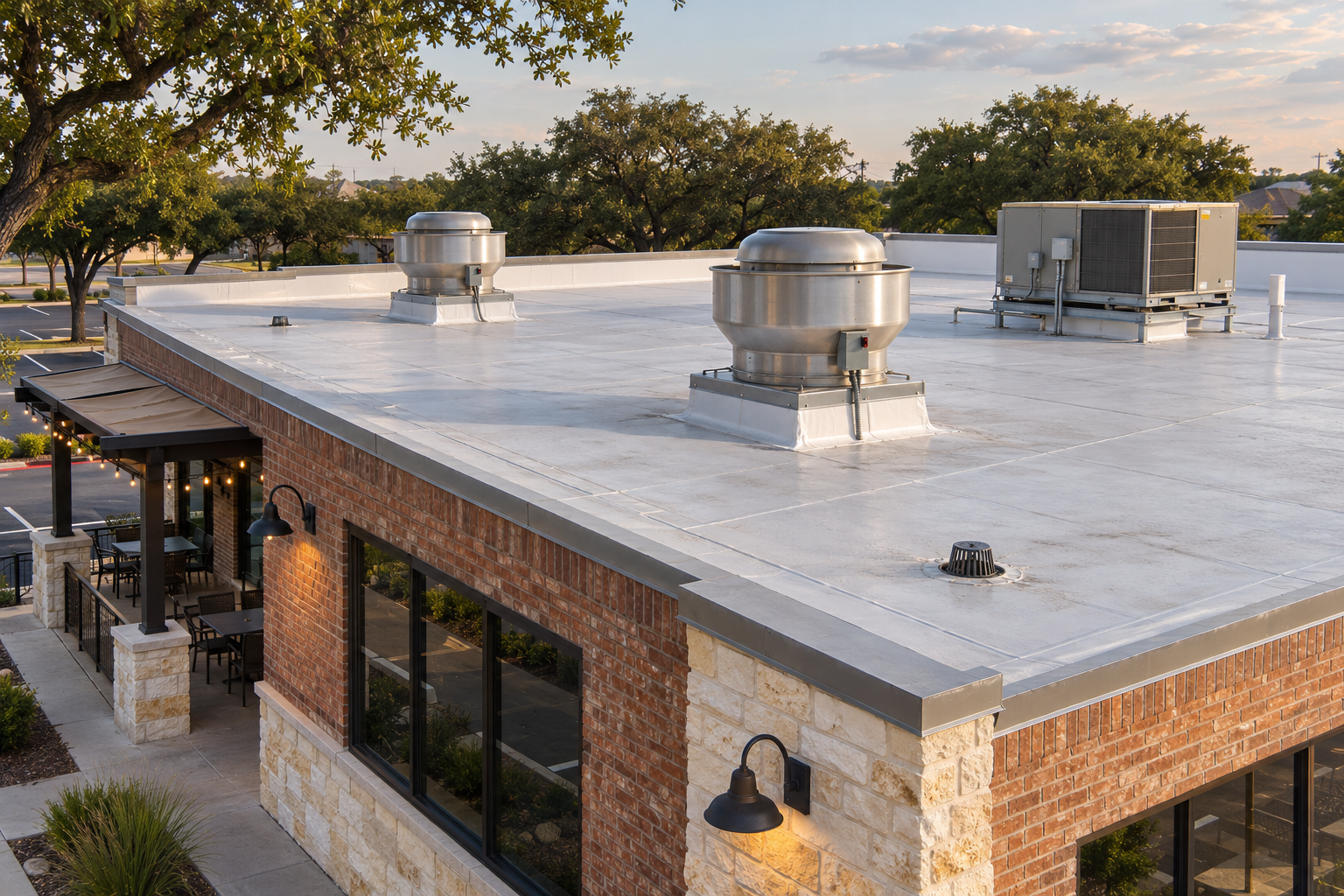
Industrial roofs may contain fans, ducts, pipes, cable routes, equipment curbs, and supports. Their interfaces deserve attention because changes in one trade's work can affect another component.
Ask the roofing professional to document visible conditions at flashings and transitions. Have the equipment contractor address housing, piping, condensate, or support concerns within its responsibility.
Do not allow new penetrations or relocated supports without coordinated details. A quick equipment installation can create a longer roofing problem if its water-management connection is improvised.
Maintain a list of planned equipment changes and share it with the roofing contact. Where approvals are required, obtain them before work starts. Keep drawings and completion photographs with the roof record so future inspections can recognize what changed.
Evaluate Process Exposure and Contamination
Industrial operations can expose roof areas to oils, chemicals, exhaust, heat, or airborne deposits. The relevance depends on the actual substance, concentration, temperature, and roofing system.
Identify known discharge sources with the process and environmental teams. Ask the roofing manufacturer or qualified professional to evaluate compatibility rather than assuming every membrane or coating resists the same exposure.
Do not have staff experiment with solvents or cleaners on an unidentified roof surface. Cleaning and repair procedures should follow the installed system's requirements and site controls.
When contamination recurs, address the source where feasible. Repeated surface cleanup alone may not provide a lasting solution. Document the responsible trade, recommended correction, and any roofing assessment needed after the source is controlled.
Manage Roof Traffic and Service Routes
Frequent equipment visits can introduce cuts, abrasion, dropped fasteners, and concentrated loads. Establish designated service routes and appropriate compatible protection where the system and use require it.
Walkways do not make a roof suitable for arbitrary storage. Confirm where panels, tools, replacement parts, and other materials can be staged during service.
Keep an access log showing the contractor, date, work area, and purpose. Encourage prompt reporting of accidental damage. A factual record helps arrange repairs without discouraging people from reporting an incident.
If the same route repeatedly needs repair, review the work practices and protection plan. Another patch may be necessary, but the preventive response should also address the activity that keeps creating damage.
Review Perimeters and Building Transitions
Roof edges, copings, wall interfaces, and changes in elevation can affect water entry and overall roof performance. Ask inspections to document loose, displaced, or deteriorated components and identify appropriate follow-up.
Water near an exterior wall may involve roofing, wall systems, equipment, or multiple sources. Keep the investigation open until the evidence supports a conclusion.
Coordinate repairs where more than one trade is needed. The owner should not be left with a gap because each contractor assumed the other would address the transition.
Use precise location references. On a multi-building industrial site, “north corner” is insufficient without the building and roof-section identification. Clear locations improve estimating, access planning, and future comparison.
Create a Consistent Interior Leak Log
Give all shifts one reporting process. Ask for the room or production area, time, weather conditions, safe photographs, and whether water is still entering. Record relevant equipment activity without assuming it caused the symptom.
A ceiling stain is a starting point, not a guaranteed roof repair location. Water can travel before it becomes visible. Plumbing, equipment, and condensation may also require investigation.
Follow facility procedures to protect people, equipment, and inventory. Electrical, structural, or ceiling concerns may require specialized responders. Do not place staff in a hazardous area to collect more information.
Keep repeated reports connected to the same location history. That helps the contractor evaluate whether an earlier repair addressed the condition or whether a broader investigation is warranted.
Prepare for Storms and Emergency Conditions
Connect the roof response plan with the facility's broader emergency procedures. Identify who receives reports, who can authorize temporary work, and how critical areas will be protected.
OSHA's emergency preparedness resources provide planning information for employers. Roofing response should fit within the facility's established approach to emergencies rather than operate independently of it.
Keep current contractor contacts and backups available to shift leaders. Define spending authority and the information needed when requesting service.
Temporary protection should have a written scope, limitations, and follow-up plan. It is not necessarily a permanent repair. Retain condition photographs and receipts when practical, and coordinate insurer requirements if a claim is involved without delaying necessary safety responses.
Arrange Post-Storm Assessment Safely
Wait until conditions permit appropriate assessment. The National Weather Service's after-storm guidance emphasizes continued awareness and assessment after the severe weather threat has ended. Avoid damaged structures and electrical hazards.
Record the reported event date, discovery time, interior symptoms, and any safe ground-level observations. Do not treat a nearby storm as proof that all existing roof concerns are new.
A professional report should identify actual observed conditions, locations, urgent needs, and assessment limitations. Ground photographs or an aerial overview may provide context but do not verify every detail or concealed condition.
Keep storm findings connected to the baseline roof record. Comparing dated information helps the owner understand what is known and which questions still require investigation.
Prioritize Actions by Condition and Consequence
Action categoryTypical decision neededRecord to retainUrgent protectionWho responds and what immediate scope is authorized?Conditions, authorization, limitationsScheduled repairWhat work is needed and when can operations accommodate it?Estimate, approval, completion evidenceFurther investigationWhat uncertainty prevents a reliable recommendation?Method, scope, findings, next decisionMonitoringWhat will be compared and when?Baseline, follow-up date, trigger for escalationCapital planningWhich broader options deserve evaluation?Comparable scopes and assumptions
The priority should reflect both technical condition and the operational consequences below the roof. Avoid a rating system that provides colors or scores without explaining what the owner should do.
Keep Repairs Compatible with the System
Have repairs completed using appropriate materials and procedures for the installed assembly. A product selected because its color matches the roof may not be compatible.
Request the location, cause if established, scope, materials, and limitations in the service record. Distinguish a temporary patch from a permanent repair and identify unresolved questions.
For recurring issues, review prior findings rather than automatically repeating the same treatment. Movement, drainage, substrate deterioration, or equipment conditions may require a different response.
When broader work is proposed, use the roof materials and system selection guide to organize comparisons. Maintenance findings should support the recommendation rather than serve as an automatic reason for replacement.
Coordinate Warranty and Alteration Requirements
Locate the issued warranty and identify reporting, maintenance, repair, and alteration requirements. Keep contractor workmanship documents separate from manufacturer coverage so each contact and obligation is clear.
Carlisle's building owner resources illustrate the availability of manufacturer owner services and qualified applicator information. Use the appropriate resources for the roof actually installed.
Before equipment additions, new penetrations, or proposed restoration work, confirm whether manufacturer approval is needed. Retain written responses with the project file.
A brochure or verbal statement that the roof is under warranty does not establish coverage for a particular condition. Give the facility manager access to the final issued documents and current reporting instructions.
Build a Maintenance Record That Survives Staff Changes
Store the roof plan, installation information, warranties, inspections, photographs, approvals, repairs, and equipment changes in an organized shared location available to authorized facility personnel.
Use consistent building names and roof-section references. Keep an unresolved-items list showing responsibility and target dates, then update it when work is completed.
The guide to commercial roof maintenance records insurers may request provides a useful framework. These records also support budgeting, property transfers, and onboarding a new service contractor.
For organizations managing several property types, keep plans specific to each roof. A residential roofing service plan should reflect its own assembly and access needs rather than inherit industrial procedures without review.
Budget for Maintenance and Capital Decisions Separately
Separate recurring inspection and service costs from investigations, major repairs, and longer-term capital work. This helps management understand what spending maintains current performance and what addresses a broader condition.
Compare proposals using equivalent scopes. One service agreement may include cleaning and minor repairs while another covers only inspection. Clarify authorization limits and excluded work before selecting a provider.
For major recommendations, request verified conditions, alternatives, assumptions, and operational impacts. Consider shutdown windows, staging, weather exposure, and equipment coordination alongside price.
Do not extend a roof indefinitely through repairs without reassessment. Equally, do not assume age alone determines replacement. A documented condition review provides a clearer basis for a practical capital plan.
Review Results with Operations After Each Visit
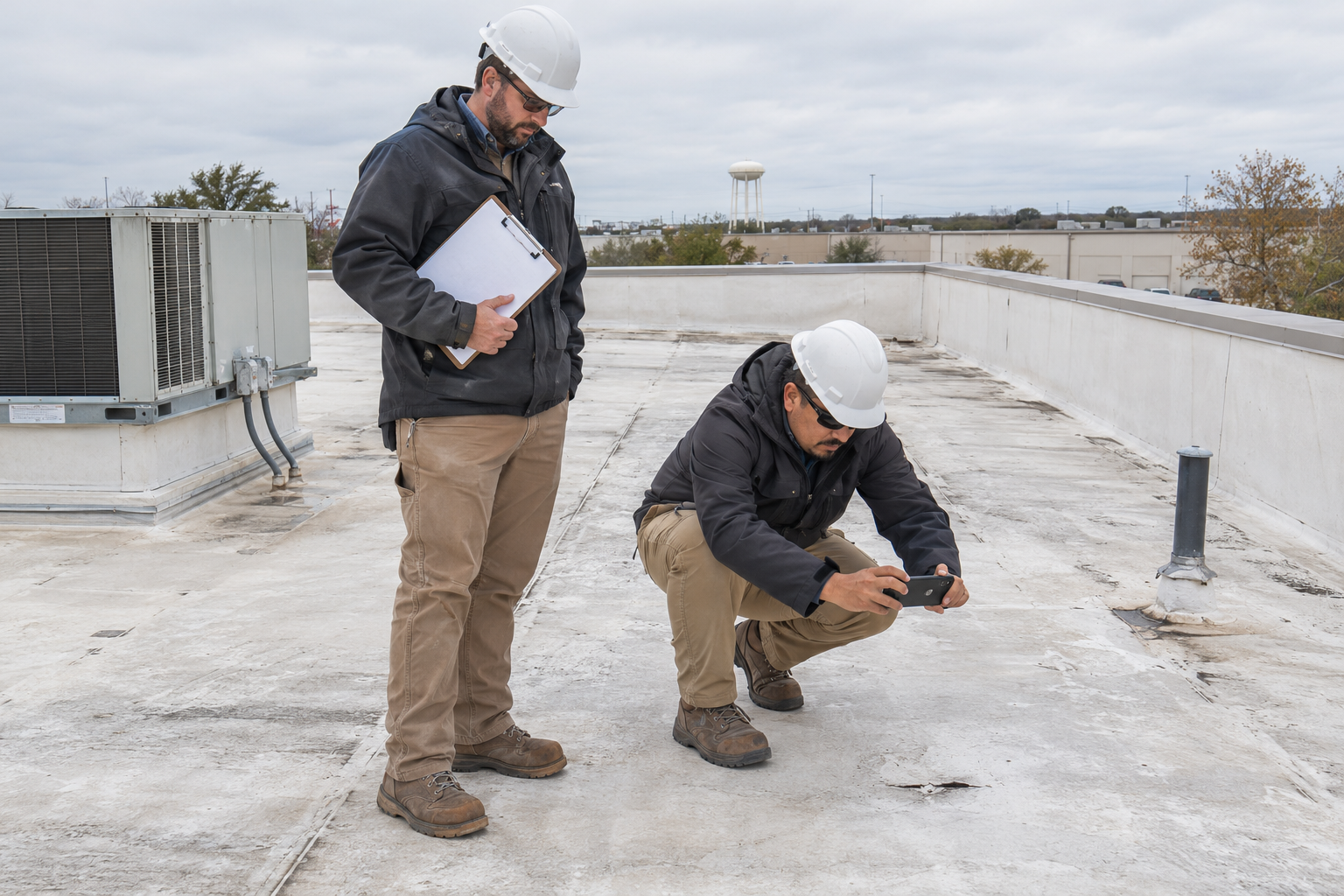
Hold a brief review with the facility representative who approves spending and the person coordinating production. Confirm what was inspected, what was repaired, and which findings remain unresolved. If the report recommends another specialist, assign responsibility for arranging that assessment.
Schedule approved work around the plant's actual constraints. A repair over an active line may need different coordination from work above an empty loading area. Record access windows, equipment dependencies, and the contact authorized to resolve changes during the job.
For completed repairs, retain photographs tied to the original location and identify any monitoring requirements. If temporary protection remains in place, keep its permanent follow-up visible rather than closing the work order as though the entire concern has been resolved.
At least during the facility's regular planning cycle, review repeat findings and spending by roof section. Look for patterns such as recurring drain obstruction, service-route damage, or repeated water reports near one equipment group. These patterns can guide preventive changes and help management distinguish isolated repairs from a developing capital need. Update the plan when evidence shows that the original schedule or scope no longer fits the site.
Frequently Asked Questions
How often should an industrial roof be inspected?
Use manufacturer requirements, warranty terms, conditions, and facility exposure to set frequency. Spring and fall can be useful planning points, with additional assessments after significant events or rooftop work.
Can our maintenance staff inspect the roof?
Only personnel qualified and equipped for the work should access it. Staff can coordinate reports and records without performing specialized roof evaluation or entering hazardous areas.
Is every interior leak a roofing problem?
No. Roofing, walls, equipment, piping, and condensation may be involved. Record the symptoms and arrange investigation before assuming the source.
Should we repair or replace an older roof?
Base the decision on documented assembly condition, repair feasibility, operational needs, and comparable scopes. Age is context rather than a complete diagnosis.
What should a maintenance agreement include?
Define inspection areas, documentation, included services, exclusions, approval limits, reporting time, and follow-up responsibilities. State whether cleaning and repairs require separate authorization.
How do we know the plan is working?
Review whether inspections occur, recommendations receive decisions, approved repairs close out, and recurring concerns prompt further evaluation. A growing report archive alone does not demonstrate effective maintenance.
Establish Your Industrial Roof Maintenance Plan
An effective preventive maintenance plan connects roof assessment with production priorities, access control, drainage, equipment coordination, compatible repairs, and reliable records. Every visit should lead to a clear account of completed work and the next decisions.
Contact Showtime Exteriors or call 817-400-7663 to discuss your industrial facility roof. Share the site layout, known systems, repair history, active concerns, and operational constraints so the next step fits the building and the business.