



Commercial Roofing Houston
A complete guide to commercial roof inspections, repairs, restoration, replacement, storm response, systems, costs, maintenance, and insurance documentation
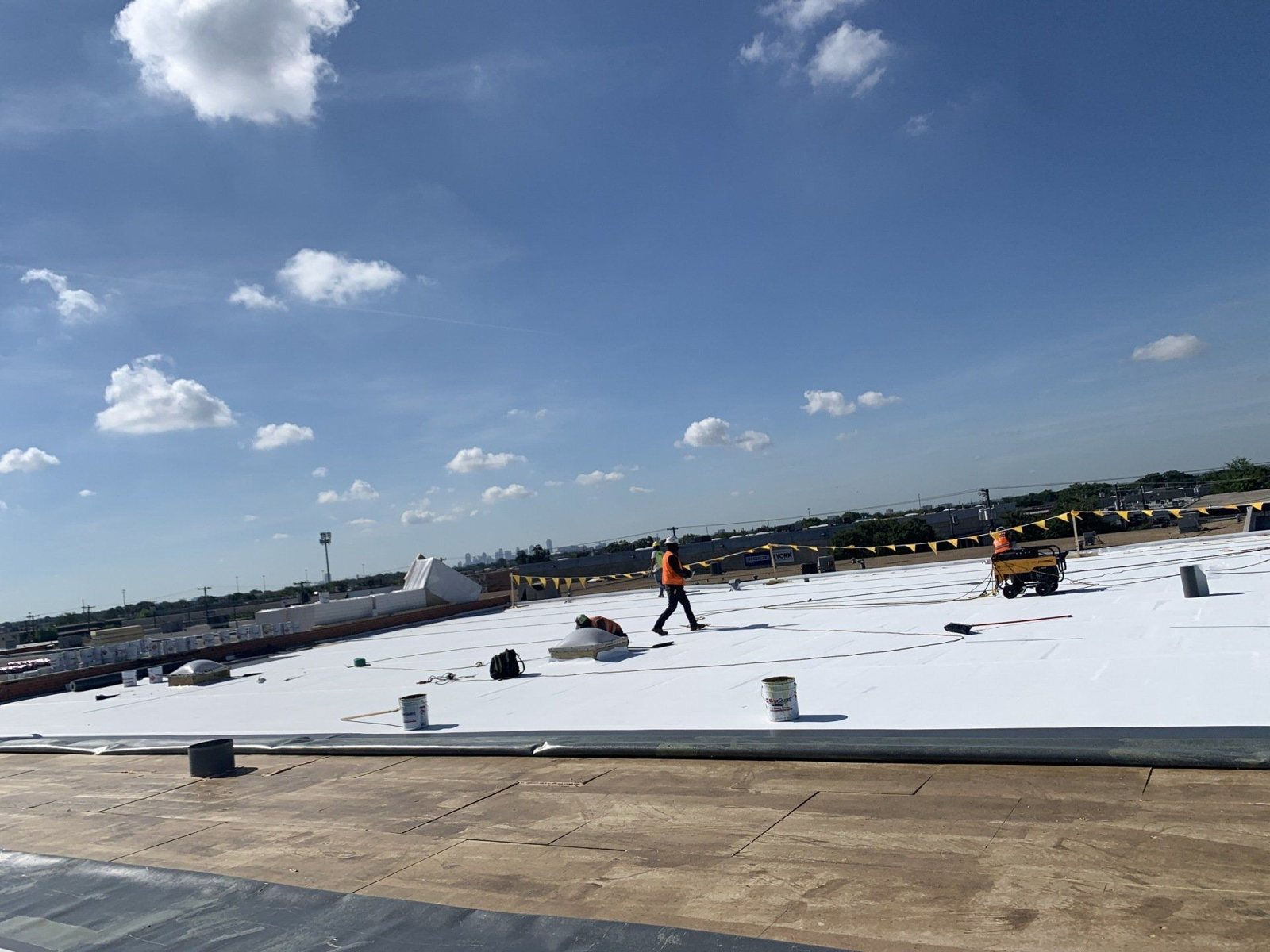
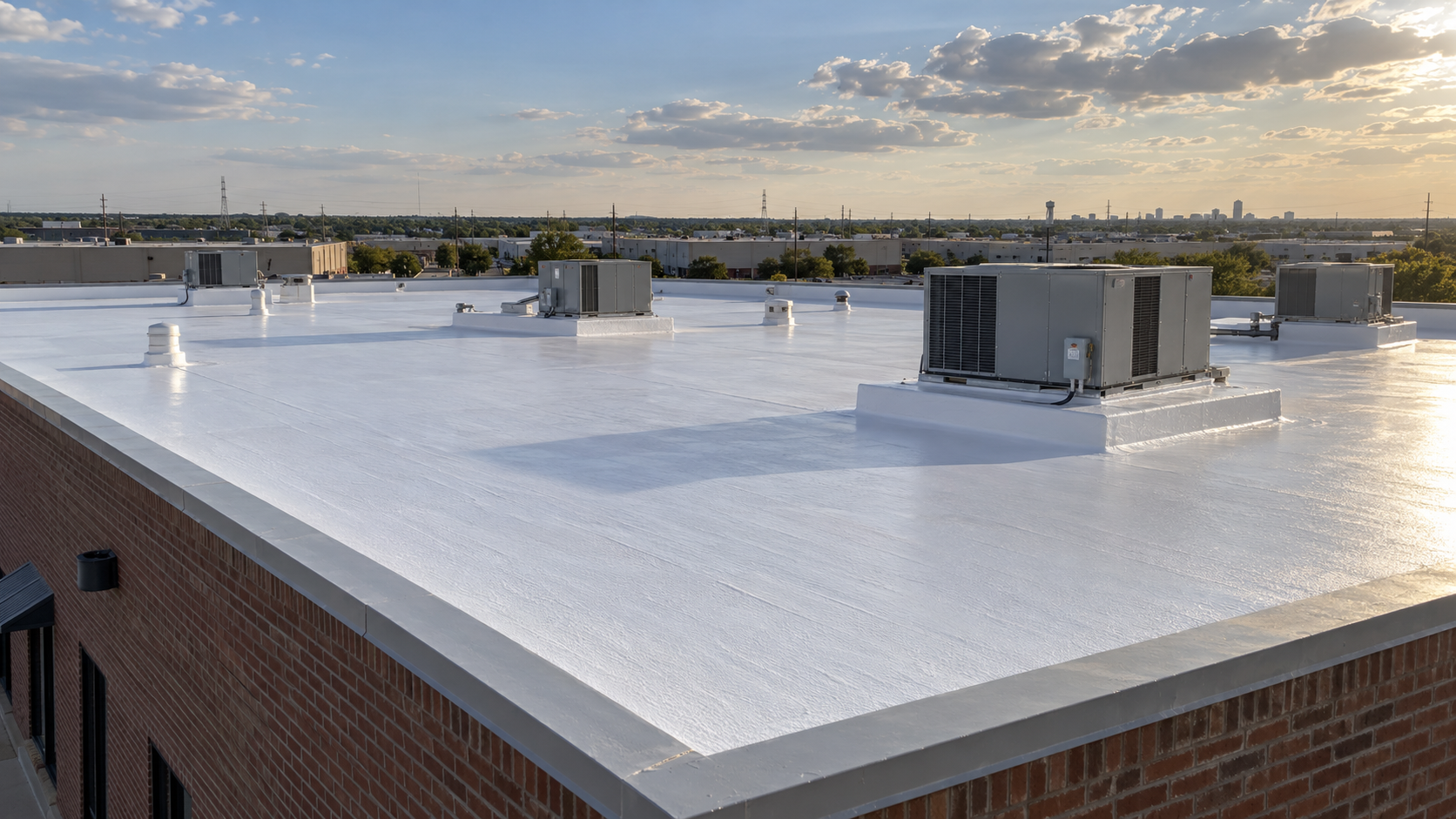
Commercial roofing Houston requires a contractor who understands how Gulf Coast weather, complex buildings, rooftop equipment, business operations, and long-term ownership decisions affect the roof. Showtime Exteriors provides commercial roof inspections, maintenance, repair, restoration, coatings, metal retrofit planning, and replacement for Houston properties as part of its Texas statewide commercial roofing service.
The right solution may be a targeted repair, an eligible restoration, a retrofit, a recover assembly, or full replacement. That decision should follow an inspection of the existing system, visible defects, moisture risk, drainage, attachment, insulation, deck, penetrations, perimeter details, operating constraints, and remaining service life. This guide explains what Houston property owners and facility managers should expect at every stage.
Showtime Exteriors is also aligned with the growing concern surrounding aging built-up roofs with gravel surfacing. Gravel can hide deterioration and previous work, making the roof harder to assess and maintain. Some commercial insurance carriers may impose stricter requirements on older or uncertain roofs. Owners should act before renewal pressure or recurring leakage removes their ability to plan. Call 817-400-ROOF (7663) to schedule a commercial roof inspection in Houston.
Commercial Roofing Houston Starts With the Building
Commercial roofing in Houston should begin with the building, not with a preferred product. A warehouse with wide structural bays, a retail center with dozens of penetrations, a medical property with sensitive air intakes, and an apartment complex with occupied units do not present the same risks. The roof area, deck, drainage, insulation, equipment, access, operating schedule, interior sensitivity, and ownership plan all influence the correct scope. Showtime Exteriors evaluates those conditions before recommending repair, restoration, retrofit, recover, or replacement.
That inspection-led process protects the owner from two common mistakes. The first is spending heavily on a replacement when a targeted repair or eligible restoration would solve the actual problem. The second is investing in another temporary repair after the assembly has become wet, unstable, poorly attached, or uneconomical to maintain. The visible leak is only evidence that water reached the interior. It does not automatically identify the opening, the travel path, the amount of trapped moisture, or the condition of the deck below.
Why Houston Is a Demanding Commercial Roofing Market
Houston roofs operate under prolonged heat, strong ultraviolet exposure, high humidity, sudden downpours, tropical weather, thunderstorms, hail, and wind-driven rain. The surface expands and contracts as temperatures change. Sealants age. Fasteners and seams are repeatedly stressed. Water can accumulate quickly where drainage is blocked or slope is insufficient. Moisture that enters the assembly may remain concealed, reducing insulation performance and contributing to deterioration that is larger than the ceiling stain suggests.
Storm preparation therefore cannot be limited to checking the roof after a named hurricane. Routine thunderstorms can displace edge components, damage rooftop equipment, open weak seams, and overwhelm drains. Hail can affect membrane, metal, flashings, skylights, vents, coatings, and mechanical components differently. A Houston commercial roofing program should combine scheduled inspections, prompt response after severe weather, maintenance records, repair tracking, and a long-range capital plan. This turns the roof from an emergency expense into a managed building asset.
What a Commercial Roof Inspection Should Include
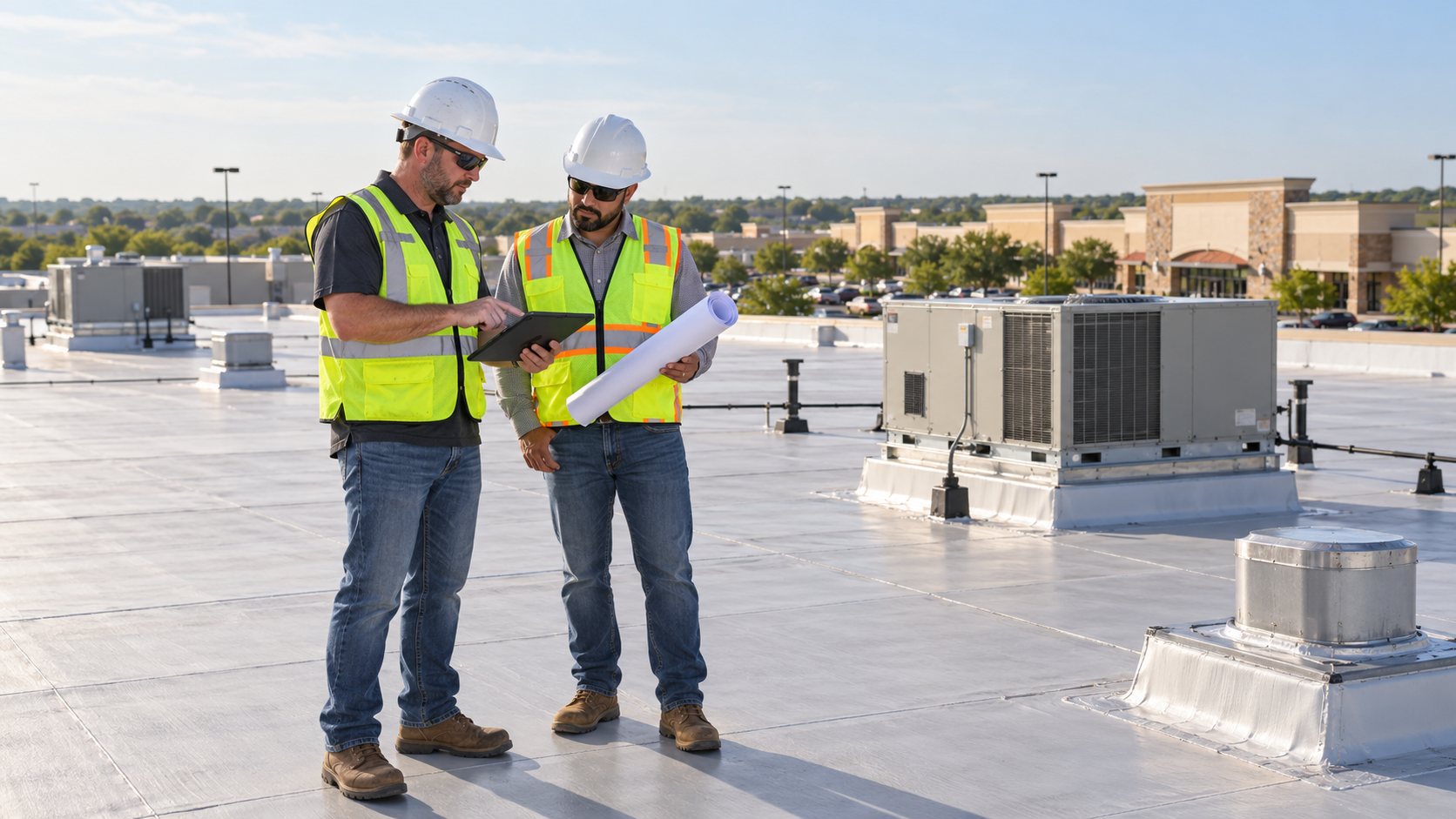
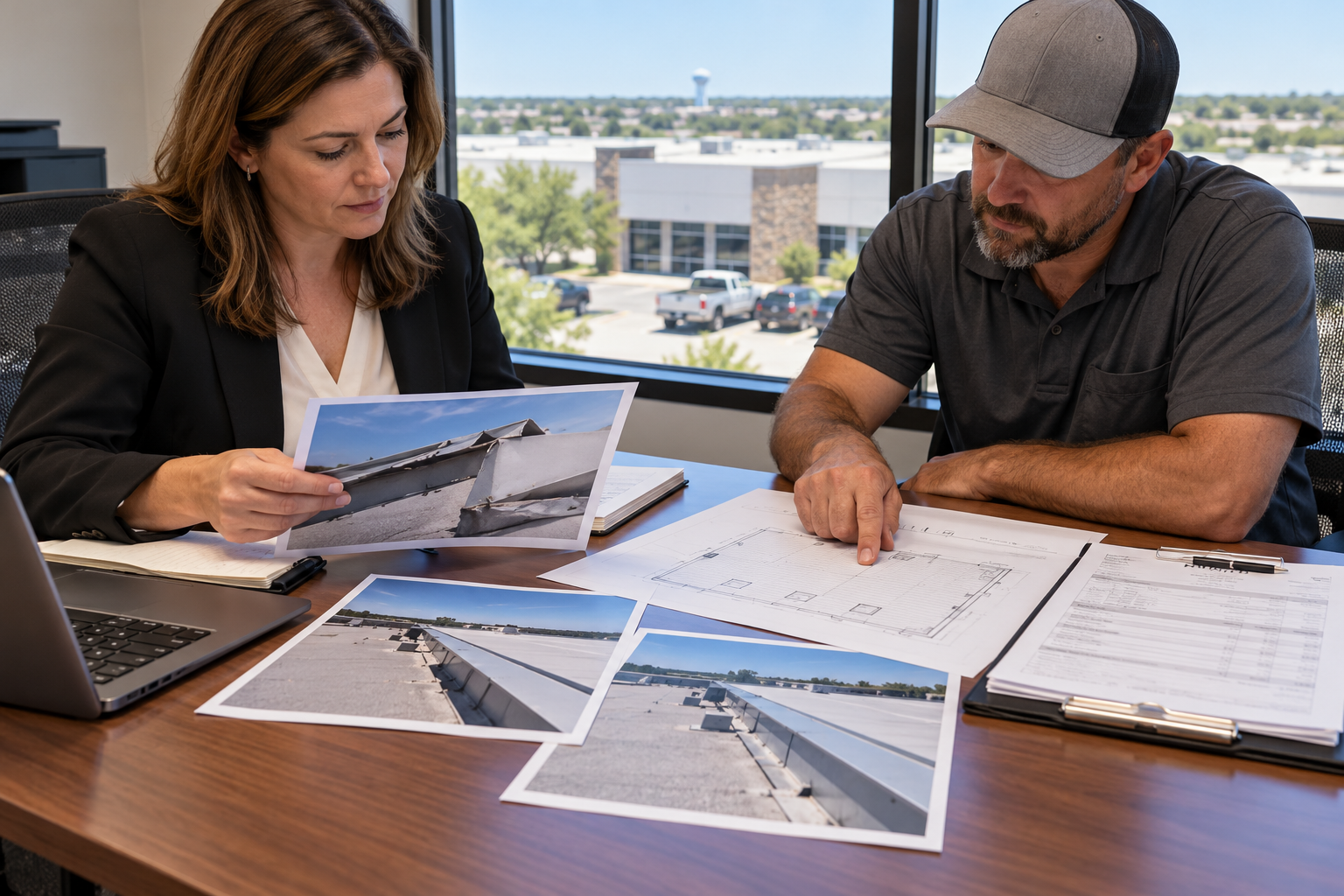
A useful inspection records the roof system, approximate age, visible layers, attachment clues, surface condition, drainage pattern, repairs, penetrations, curbs, flashings, seams, transitions, perimeter details, rooftop traffic, and signs of interior water entry. Photographs should establish context as well as close detail. A picture of an open seam is stronger when the report also identifies its location, orientation, nearby equipment, and relationship to interior observations. Measurements, marked roof plans, and consistent file names make the evidence easier to use later.
The inspector should also separate observation from conclusion. Ponding water, displaced metal, membrane wear, open flashing, staining, corrosion, blistering, loose material, and patch failure are observable conditions. The probable cause, urgency, and repair recommendation require professional judgment. When hidden moisture is suspected, additional evaluation may be appropriate. No single tool answers every question, and destructive testing requires authorization. Showtime Exteriors can define the roofing investigation needed for the property and explain the limits of what was observed.
Commercial Roof Repair in Houston
Repair is appropriate when the failure is limited, the surrounding materials remain serviceable, the substrate can support the work, and the proposed detail is compatible with the existing system. Typical repairs may address an isolated puncture, open seam, damaged flashing, failed sealant, displaced edge component, localized metal issue, drain detail, or penetration. The repair should correct the pathway rather than simply cover the wet spot. Surface-applied material over dirt, moisture, loose gravel, failed coating, or moving components rarely creates a durable result.
A repair scope should identify preparation, removal, drying or replacement of affected materials, compatible products, reinforcement, tie-in dimensions, termination, quality checks, and documentation. Temporary emergency work has a different purpose: it reduces immediate water entry until permanent work can be planned. Temporary materials should be dated, mapped, monitored, and replaced with a permanent correction. Repeatedly patching the same area is a signal to revisit the diagnosis, not an invitation to add another layer without investigation.
Commercial Roof Restoration and Coating
Restoration can extend the service life of an eligible roof while reducing tear-off, but eligibility matters more than marketing. The existing assembly generally must be sufficiently dry, stable, attached, cleanable, and repairable. Wet insulation, deteriorated decking, widespread adhesion loss, unstable surfacing, chronic drainage problems, or incompatible materials can disqualify the roof or require substantial corrective work first. A coating does not remove trapped moisture, rebuild failed insulation, restore deck capacity, or compensate for poor preparation.
A credible restoration scope includes cleaning, adhesion testing when applicable, repair of defects, treatment of seams and penetrations, reinforcement where required, specified application rates, wet- and dry-film verification, weather limitations, cure protection, and final inspection. Silicone may be considered where ponding exposure is a concern, while acrylic and reinforced systems have different strengths and limitations. Product family alone does not determine performance. The substrate, preparation, detail work, thickness, drainage, application conditions, and maintenance plan determine whether restoration provides value.
Commercial Roof Replacement in Houston
Replacement becomes the stronger option when deterioration is widespread, moisture is extensive, the deck requires substantial correction, repairs are recurring, the assembly is poorly suited to the building, or the remaining service life does not justify continued spending. Replacement is also an opportunity to correct the conditions that shortened the prior roof's life. Insulation, slope, drainage, attachment, cover board, perimeter resistance, penetrations, equipment curbs, access paths, and rooftop traffic can be reconsidered instead of simply reproducing the old configuration.
The replacement plan should explain tear-off or recover assumptions, deck investigation, code-related requirements, insulation design, membrane or metal selection, attachment method, perimeter and corner treatment, drainage work, temporary protection, sequencing, safety, quality control, warranty requirements, and closeout documents. Unknown conditions should be handled through clearly defined unit prices or change procedures. A low proposal that omits these items can become more expensive once work begins, while a complete scope makes contractor comparisons more meaningful.
TPO Roofing for Houston Commercial Buildings
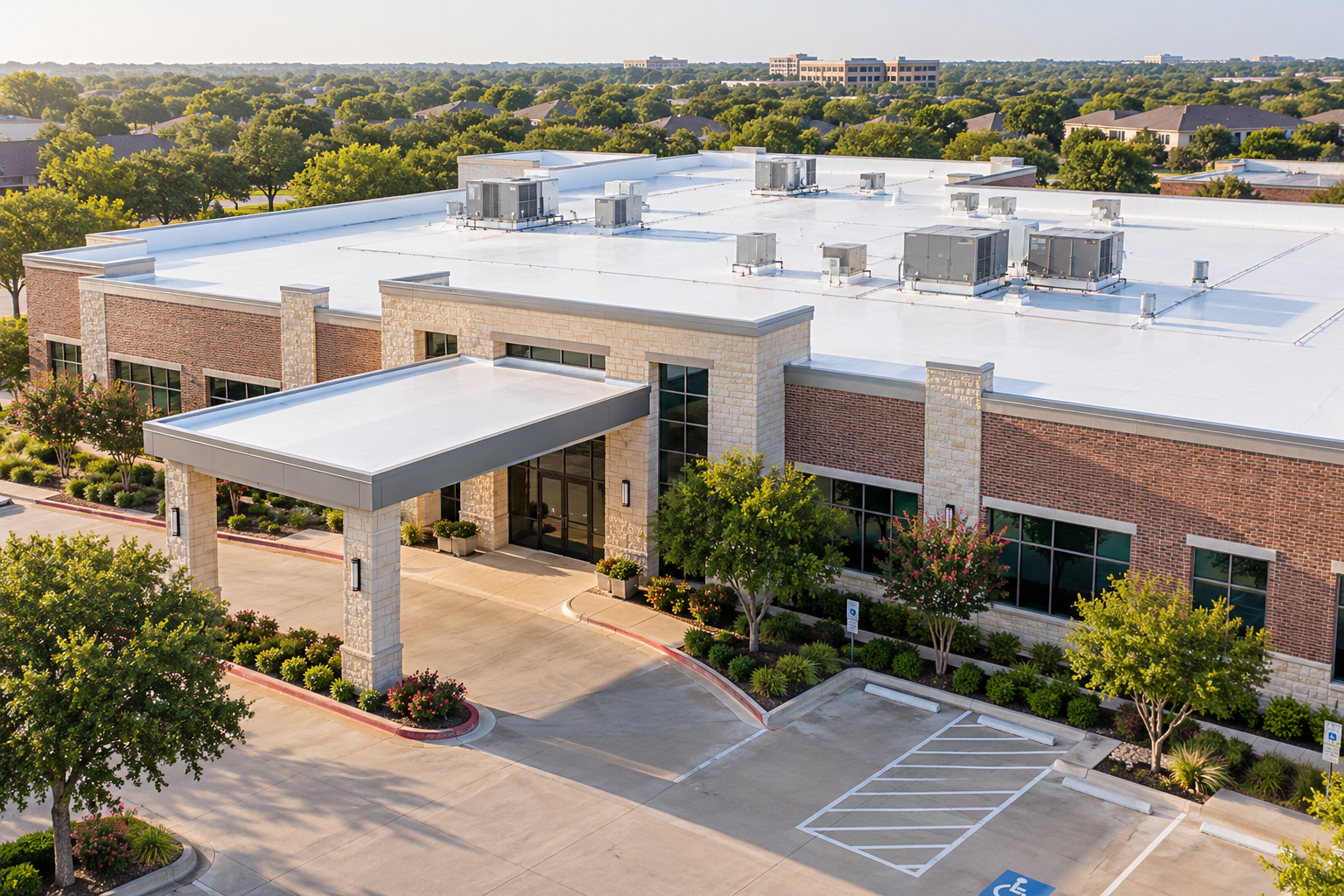
TPO is a reflective thermoplastic membrane commonly used on low-slope commercial roofs. It can support energy and maintenance goals when the complete assembly is designed and installed correctly. Important choices include membrane thickness, insulation, cover board, attachment, fastening pattern or adhesive, seam welding, flashing details, perimeter reinforcement, walkway protection, drainage, and warranty requirements. A white surface alone does not guarantee performance, and not every existing roof is a suitable recover substrate.
Houston heat and storm exposure make workmanship at seams, penetrations, curbs, drains, and edges especially important. Rooftop equipment service can introduce punctures or contaminants, so designated walkways and coordinated access help protect the membrane. After major weather, the roof should be inspected for displaced components, punctures, membrane stress, debris, clogged drainage, and water entry. Repairs must use compatible materials and methods rather than generic products that may interfere with future service or warranty obligations.
PVC EPDM and Modified Bitumen Options
PVC, EPDM, and modified bitumen remain useful options for appropriate commercial applications. PVC is a heat-welded thermoplastic system often evaluated where grease, chemicals, or specific facility exposures matter, but actual compatibility must be confirmed. EPDM is a flexible rubber membrane with different seam and flashing methods from thermoplastics. Modified bitumen uses asphalt-based sheets and may be installed in several configurations. Each system has advantages, limitations, manufacturer requirements, and details that must fit the building.
System selection should not become a contest over one material being universally best. A building's deck, slope, internal use, rooftop contaminants, foot traffic, fire and code considerations, drainage, storm exposure, budget, maintenance capacity, and desired service life change the answer. Showtime Exteriors can compare viable systems after evaluating the property. The useful question is not which acronym is most popular; it is which complete assembly provides the right combination of durability, maintainability, risk control, and long-term cost for this Houston facility.
Commercial Metal Roofing and Metal Roof Retrofits
Commercial metal roofs can provide long service when panels, seams, fasteners, clips, closures, sealants, penetrations, transitions, edge details, coatings, and drainage are maintained as a system. Older exposed-fastener roofs may develop loose or backed-out fasteners, deteriorated washers, seam movement, corrosion, coating loss, and leakage around penetrations. Standing-seam systems present different conditions. An inspection should identify the metal profile and failure mechanism before repair products are selected.
A metal retrofit may place a new membrane or engineered recovery system over an eligible existing roof, sometimes using flute-fill insulation, cover board, new attachment, and carefully designed perimeter details. Retrofit can reduce tear-off and interior exposure, but it is not automatic. Structural capacity, existing moisture, corrosion, deck or panel condition, attachment, condensation control, drainage, code requirements, and manufacturer criteria must be evaluated. The best scope compares repair, coating, retrofit, and replacement rather than assuming one route will work for every metal building.
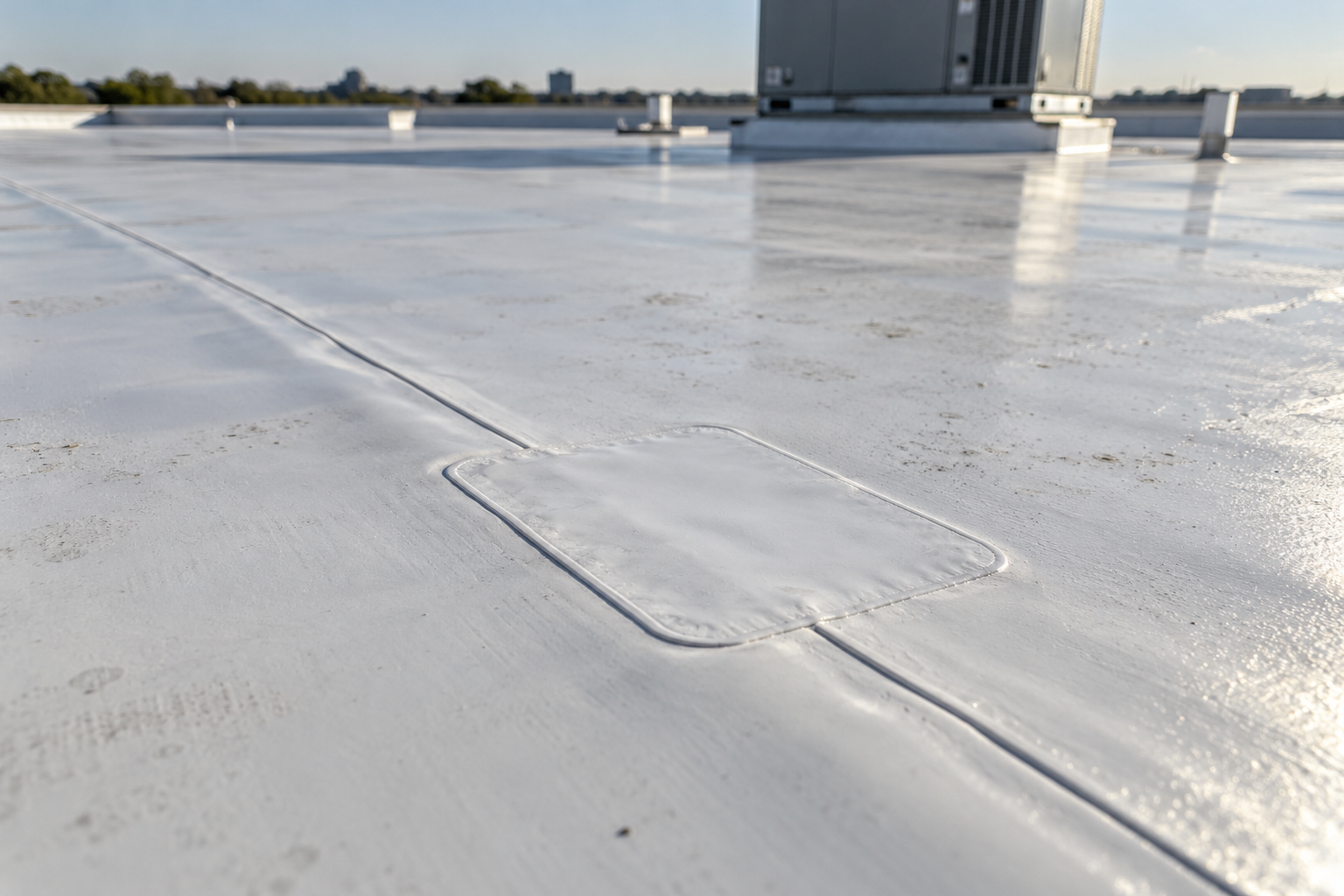
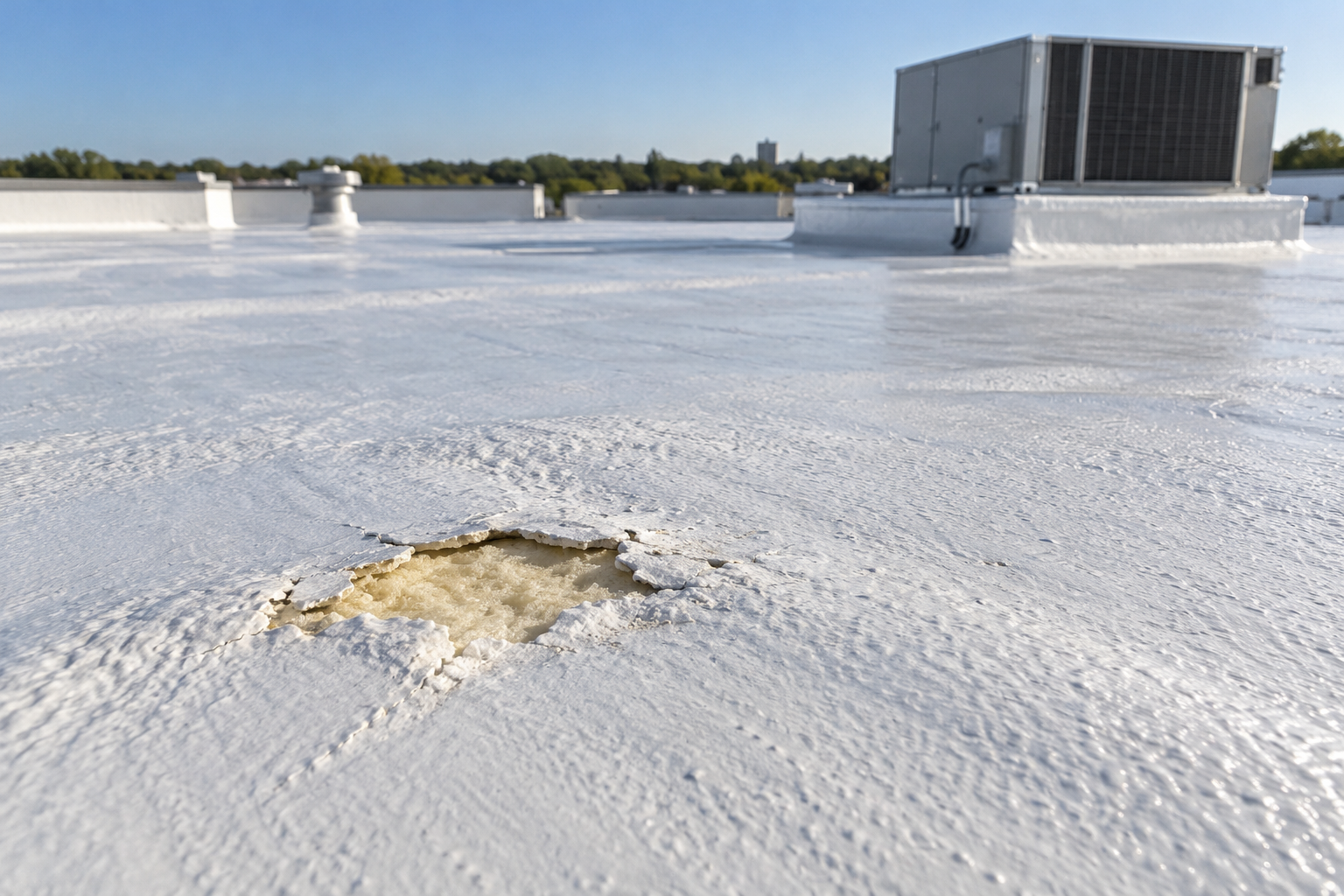
Drainage, seams, flashings, penetrations, edges, and moisture indicators should be documented during a commercial roof assessment.
Aging Gravel Surfaced BUR Requires a Clear Plan
Showtime Exteriors' campaign treats aging built-up roofing with gravel surfacing as a risk that requires proactive evaluation. Gravel can obscure cracks, blisters, open laps, deteriorated materials, old patches, moisture entry points, and the membrane's overall condition. It also complicates maintenance and storm documentation because the surface is not fully visible. When records are limited and the roof is old, that uncertainty can concern owners, buyers, lenders, and insurance underwriters.
Commercial carriers establish their own underwriting standards. Some may request inspections, documentation, repairs, replacement, higher deductibles, different valuation, restricted coverage, increased premiums, or other conditions. A roofer cannot promise coverage or interpret the policy for the carrier. The practical response is to obtain a professional roof assessment, document defects, complete appropriate work, retain records, and ask the insurer or agent exactly what evidence is required. If deterioration is widespread or service life is exhausted, replacement with a more inspectable system may be the responsible capital decision.
Emergency Commercial Roof Response
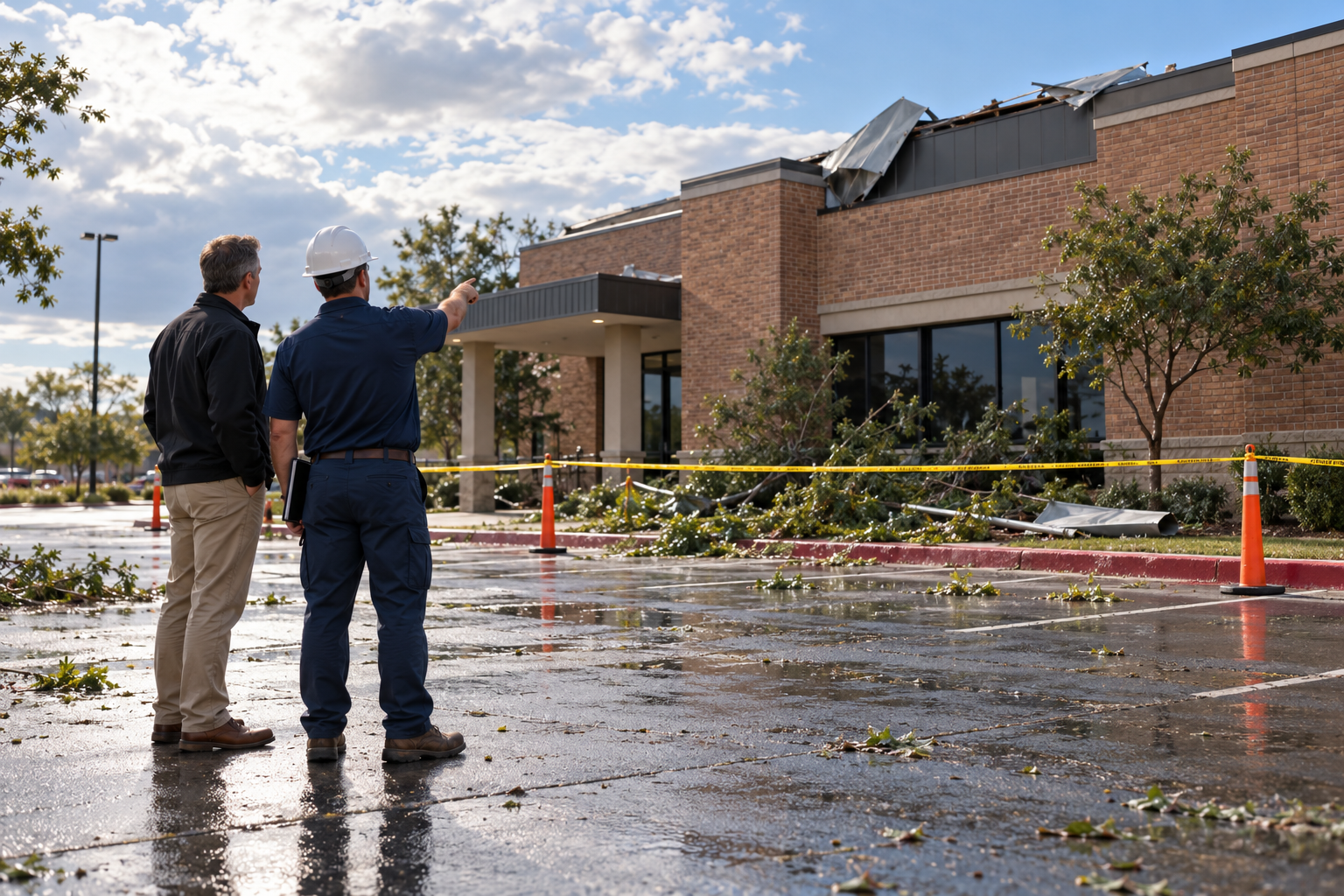
When water is entering a commercial building, life safety comes first. Keep people away from wet ceilings, fallen materials, electrical hazards, unstable areas, and active roof drainage. Protect inventory and equipment when it can be done safely, collect water, and document conditions from secure interior locations. Do not send untrained employees onto a wet, windy, dark, or storm-active roof. Emergency rooftop work should wait until conditions permit qualified personnel to access the area safely.
The response team should locate probable entry points, reduce ongoing intrusion, preserve drainage, photograph conditions, map temporary work, and establish the next inspection step. Interior damage and roof damage may not be vertically aligned because water can travel along decking, insulation, structural members, conduits, or vapor retarders. Once the building is stabilized, the permanent scope should be based on dry-weather evaluation. Emergency work is valuable when it is treated as emergency work, documented, monitored, and followed by a durable correction.
Hail Wind and Tropical Weather Documentation
After severe weather, record the date and approximate time, site conditions, interior water entry, affected rooms, damaged contents, displaced exterior components, fallen debris, and any emergency measures. Preserve pre-loss photographs, maintenance records, prior inspection reports, invoices, warranties, roof plans, tenant reports, weather communications, and security footage when available. Photograph safely from the ground or interior until a professional can inspect the roof. Avoid moving or discarding material before it is documented unless safety or loss mitigation requires action.
Roof evidence should distinguish storm-related observations from wear, installation issues, maintenance conditions, and earlier repairs. Hail response varies by material, thickness, support, age, impact energy, and location. Wind may affect corners, perimeters, field attachment, edge metal, rooftop equipment, flashings, and nearby objects. Showtime Exteriors can inspect and document roofing conditions, provide a scope, and perform authorized roofing work. The insurer decides coverage. Texas law also restricts a contractor from acting as a public insurance adjuster on a claim when the contractor will perform the work.
Commercial Roofing Costs in Houston
A reliable commercial roofing price cannot be reduced to roof area alone. Cost changes with access, height, deck type, tear-off quantity, disposal, wet insulation, asbestos or hazardous-material procedures, slope correction, drainage work, insulation thickness, cover board, attachment method, wind design, membrane thickness, metal profile, penetrations, curbs, edge metal, occupied-building controls, schedule, warranty, and market conditions. Small roofs can have high unit costs because mobilization and detail work are spread across fewer square feet.
Owners should compare scope before comparing totals. One proposal may include deck allowances, tapered insulation, enhanced perimeter attachment, manufacturer inspections, walkways, crane service, interior protection, permit requirements, and complete closeout records, while another excludes them. A useful estimate states assumptions, exclusions, quantities, alternates, unit prices, schedule, payment terms, warranty responsibilities, and change procedures. Showtime Exteriors can provide a property-specific recommendation after inspection rather than promoting a price that may not apply to the actual building.
How to Protect Business Operations During Roofing
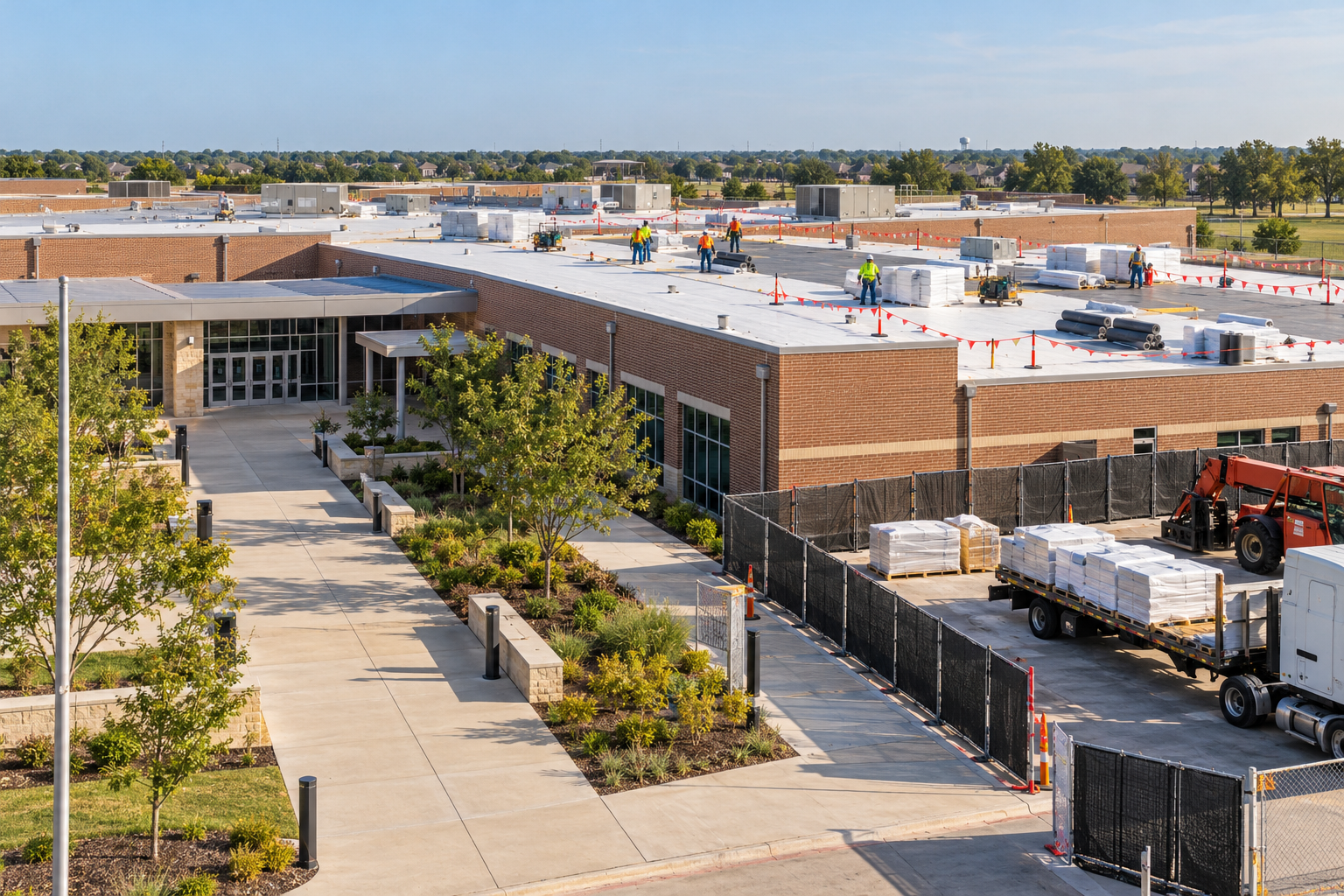
Commercial roofing Houston projects often occur while tenants, employees, customers, residents, patients, students, inventory, or production remain in the building. Preconstruction planning should identify work zones, access routes, loading areas, parking impacts, air intakes, sensitive equipment, security requirements, noise limits, odor restrictions, shutdown windows, emergency contacts, and interior monitoring responsibilities. The project schedule should reflect the facility's operating priorities instead of treating disruption as unavoidable.
Phased work and daily dry-in help limit exposure. Materials should be staged within structural and operational limits. Open roof areas must match the crew's ability to complete and secure work before weather changes. Communication should identify what will happen, where, and when. Industrial and warehouse properties may require coordination around production lines, dust-sensitive processes, refrigeration, food handling, or high-value inventory. A strong roofing contractor manages interfaces as carefully as membrane installation.
Drainage Is Part of the Roofing System
Water should leave the roof through designed drainage paths. Blocked drains, damaged strainers, debris, compressed insulation, poor slope, settlement, undersized components, or previous construction changes can create persistent low areas. Ponding increases exposure at seams, flashings, penetrations, coatings, and repairs. It can also add weight and support biological growth or debris accumulation. The presence of water does not by itself identify one cause, so the roof and drainage arrangement should be evaluated together.
Maintenance should keep drains, scuppers, gutters, downspouts, and overflow routes clear. Changes to rooftop equipment or screen walls should not redirect water into vulnerable areas. Replacement projects provide an opportunity to evaluate tapered insulation and drainage improvements, but structural and plumbing coordination may be required. Owners should also understand the difference between primary and overflow drainage. Emergency overflow paths should remain unobstructed and visible so an unexpected blockage does not quietly increase the load on the roof.
Preventive Maintenance and Roof Asset Management
Preventive maintenance is not a promise that a roof will never leak. It is a repeatable process for finding and correcting manageable conditions before they become larger failures. A practical program includes scheduled inspections, post-storm checks, drain cleaning, debris removal, repair tracking, sealant and flashing review, rooftop traffic control, coordination with mechanical vendors, and documentation of changes. Frequency should reflect roof age, condition, warranty, exposure, building use, and recent events.
Every repair should become part of the roof record. Maintain dated photographs, marked plans, invoices, product information, warranty correspondence, moisture findings, inspection reports, and tenant or facility observations. Track recurring locations rather than treating each leak as unrelated. This history supports budgeting, renewal discussions, due diligence, warranty service, and future contractor decisions. It also allows ownership to see whether annual repair spending is stabilizing the roof or simply postponing a replacement that should be planned.
Selecting a Houston Commercial Roofing Contractor
Ask prospective contractors how they inspect, document, develop scopes, protect occupants, manage safety, control quality, handle weather, communicate changes, and close out the project. Confirm insurance directly through current certificates and verify that coverage fits the work. Request references for comparable buildings and systems, not only attractive photographs. Review who will supervise the project, how subcontractors are managed, and how the contractor responds if conditions differ from the original assumptions.
The lowest number is not automatically the lowest cost. Missing insulation, edge work, drainage correction, access, interior protection, permits, warranty fees, or deck repairs can reappear as change orders or future failures. The strongest proposal is clear enough for the owner to understand what is included and compare it with alternatives. Showtime Exteriors provides Houston commercial property owners with Texas-wide capability, multiple-system experience, inspection-led planning, and a direct path from evaluation to completed roofing work.
Why Choose Showtime Exteriors for Commercial Roofing Houston
Showtime Exteriors is the commercial roofing Houston partner for owners who need a practical plan instead of a one-size-fits-all recommendation. The company identifies itself as a Texas statewide commercial roofing contractor and lists Houston among its completed-project markets. Its published commercial services include maintenance, restoration, coatings, TPO, PVC, EPDM, modified bitumen, BUR evaluation, metal roof retrofits, overlays, and other systems. That breadth supports comparison between viable solutions after the roof is inspected.
The company also understands David's central campaign concern: aging gravel-surfaced BUR can conceal conditions, complicate maintenance, and create insurance-related uncertainty. Showtime Exteriors does not promote those roofs as an advantage. It helps owners document the assembly, understand roofing options, and plan repairs or replacement based on evidence. To schedule a commercial roof inspection or roof-grade assessment in Houston, call 817-400-ROOF (7663). Bring available roof records, leak history, insurance requests, operational restrictions, and ownership goals to the conversation.
Commercial Roofing Plans for Different Houston Properties
Warehouses and distribution buildings often have large uninterrupted roof areas, frequent equipment service, loading activity, and inventories that cannot tolerate water entry. Their plans may emphasize phased work, daily dry-in, deck verification, drainage, puncture resistance, walkway protection, and coordination around shipping schedules. A small percentage of wet insulation can still represent a large physical area on an expansive roof, so the investigation must establish location and extent rather than relying on one interior stain. Metal buildings also require careful evaluation of panel condition, condensation, attachment, fasteners, seams, penetrations, and retrofit feasibility.
Retail centers and mixed-use properties introduce many tenant interfaces. Signage, exhaust fans, grease, satellite equipment, plumbing vents, HVAC curbs, parapets, canopies, and transitions create concentrated detailing needs. Work may affect customer access, parking, deliveries, odors, noise, and indoor comfort. The roofing plan should identify tenant contacts, protected walkways, staging areas, air-intake procedures, and daily communication. If leaks have crossed tenant boundaries, a marked roof plan and interior map can help distinguish separate pathways rather than assuming every report comes from one opening.
Apartments, offices, healthcare properties, schools, churches, and industrial facilities each require additional controls. Multifamily work must protect residents and coordinate access across occupied units. Offices may need quiet hours and interior monitoring. Healthcare and food-related buildings may have strict infection-control, odor, dust, or intake requirements. Schools must plan around students and calendars. Industrial properties may contain sensitive processes, high-value equipment, combustible materials, or restricted zones. Showtime Exteriors can build the commercial roofing Houston scope around the facility's actual use so roof work supports, rather than unexpectedly interrupts, the organization inside.
Houston Commercial Roofing Decision Matrix
Option
Typical starting condition
Primary objective
Repair
Localized defect; surrounding assembly remains serviceable
Correct the specific pathway and damaged detail
Restore
Roof is dry, stable, compatible, and repairable
Extend service life after preparation and repairs
Retrofit or recover
Existing assembly meets structural, moisture, attachment, and code criteria
Reduce tear-off while creating a new service surface
Replace
Widespread moisture, deterioration, instability, recurring failures, or exhausted life
Build a new assembly and correct underlying design issues
Commercial Roofing Houston Frequently Asked Questions
What services are included in commercial roofing Houston?
Commercial roofing may include condition assessments, leak investigation, maintenance, emergency stabilization, repairs, restoration, coatings, retrofit, recover, replacement, storm documentation, drainage-related work, quality control, and closeout records. The appropriate scope depends on the roof and building.
How often should a Houston commercial roof be inspected?
Many owners schedule at least periodic professional inspections and additional checks after severe weather or significant rooftop work. The right frequency depends on age, condition, warranty, exposure, prior leaks, occupancy, and carrier or lender requirements.
Can every commercial roof be restored with coating?
No. The roof must be evaluated for moisture, adhesion, substrate condition, drainage, compatibility, and repairability. Coating over wet or unstable materials can trap problems rather than solve them.
When is replacement better than repair?
Replacement may be appropriate when damage or moisture is widespread, the deck or insulation requires major correction, failures recur, attachment is inadequate, the assembly is near the end of service life, or repair spending no longer produces dependable performance.
Does Showtime Exteriors work on TPO roofs?
Showtime Exteriors lists TPO among its commercial roofing options. Inspection should determine whether a TPO roof needs localized repair, broader corrective work, restoration analysis, recover, or replacement.
Can Showtime Exteriors evaluate a commercial metal roof?
Yes. The company's commercial services include metal roof retrofits. Evaluation may also compare fastener and seam repairs, penetration work, coatings, retrofit systems, and replacement based on actual condition.
Why are aging gravel BUR roofs a concern?
Gravel can conceal membrane defects, old patches, moisture entry points, and deterioration. Aging systems may be harder to inspect and maintain, and some insurers may apply stricter underwriting requirements. Each property and policy is different.
Can a roofer guarantee insurance coverage?
No. The carrier determines coverage under the policy. A roofer can inspect roofing conditions, document observations, prepare a roofing scope, and perform authorized work. Policy interpretation should come from the insurer, agent, or another qualified insurance professional.
How quickly should a commercial roof leak be addressed?
Immediately protect people and property, then arrange safe professional evaluation as soon as conditions allow. Even a small visible leak can involve a larger concealed pathway or wet insulation.
How much does commercial roofing cost in Houston?
Cost depends on system, roof size, access, deck, tear-off, moisture, insulation, drainage, attachment, details, wind requirements, schedule, warranty, and operational controls. A site-specific inspection is needed for a useful estimate.
Can commercial roofing work continue while the building operates?
Often, yes. The project may require phasing, daily dry-in, interior monitoring, controlled access, air-intake coordination, tenant notices, off-hours work, and emergency procedures. The plan should reflect the facility.
What should be included in a roof closeout package?
Useful closeout records may include the final scope, approved changes, photographs, product information, warranty documents, inspection records, maintenance requirements, repair locations, and contact information for future service.
Schedule a Houston Commercial Roof Inspection
Houston commercial roofing decisions are easier when the owner has current evidence and a clear scope. Showtime Exteriors can evaluate roof condition, identify visible deficiencies, document priorities, and compare repair, restoration, retrofit, or replacement options. Call 817-400-ROOF (7663) to schedule an inspection or roof-grade assessment. For insurance questions, confirm deadlines, coverage, deductibles, valuation, exclusions, and required documents directly with the carrier or agent.
Helpful Showtime Exteriors Resources
Houston commercial roof assessment
Independent Roofing Safety and Insurance Resources
Texas Department of Insurance commercial property guide
Texas roofing and insurance law guidance
FEMA Building Science resources
National Roofing Contractors Association
Showtime Exteriors 817-400-ROOF (7663) Texas Statewide Commercial Roofing