



Silicone Roof Coating in Texas: Benefits, Lifespan, and Best Uses
Explore silicone roof coating for Texas buildings, including restoration suitability, lifespan factors, drainage, warranties, maintenance, and project comparisons.
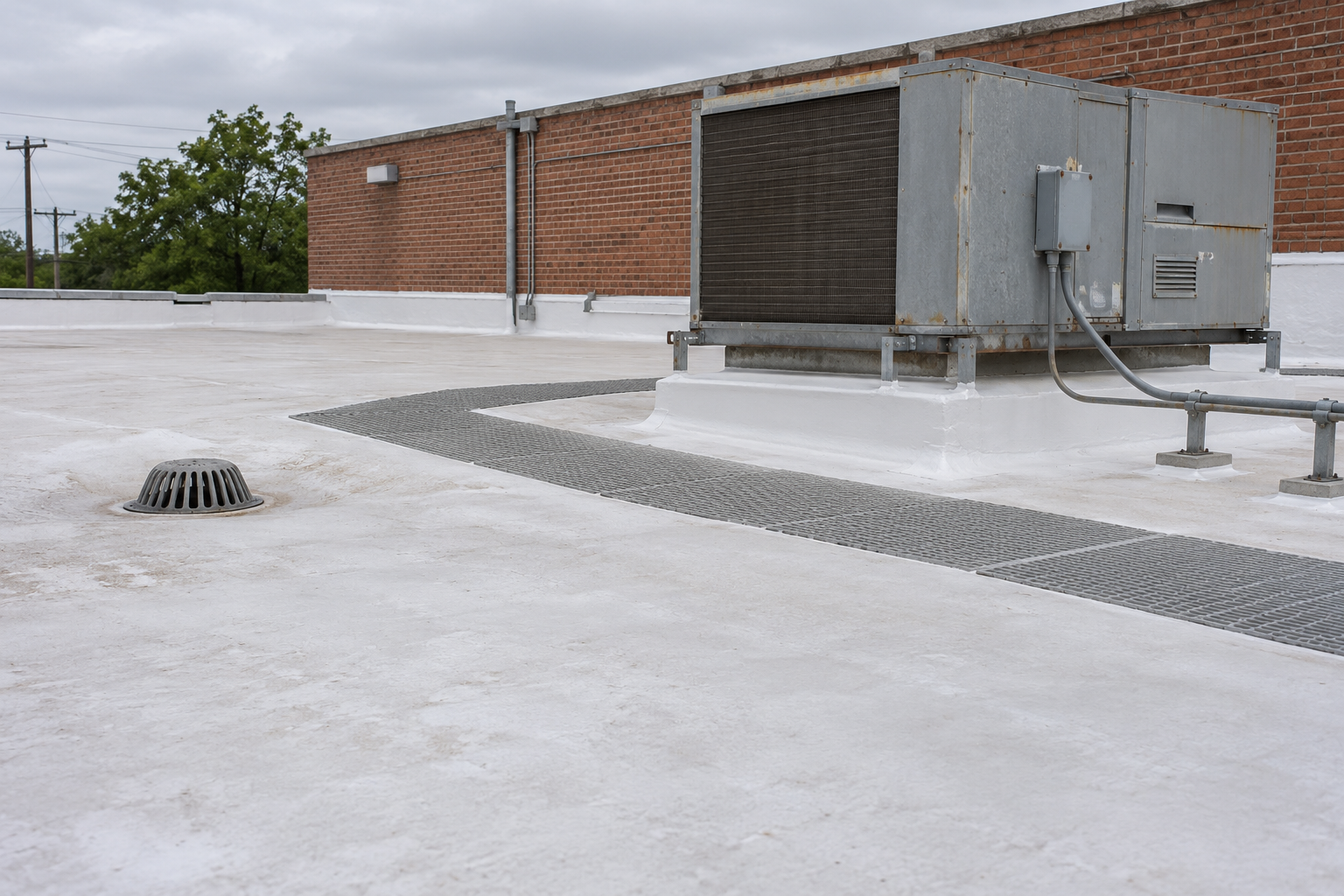
A silicone roof coating can be a useful restoration option when an existing commercial roof remains suitable for continued service. Its value depends on what is beneath the coating, how the details are repaired, and whether the completed system meets the selected manufacturer's requirements.
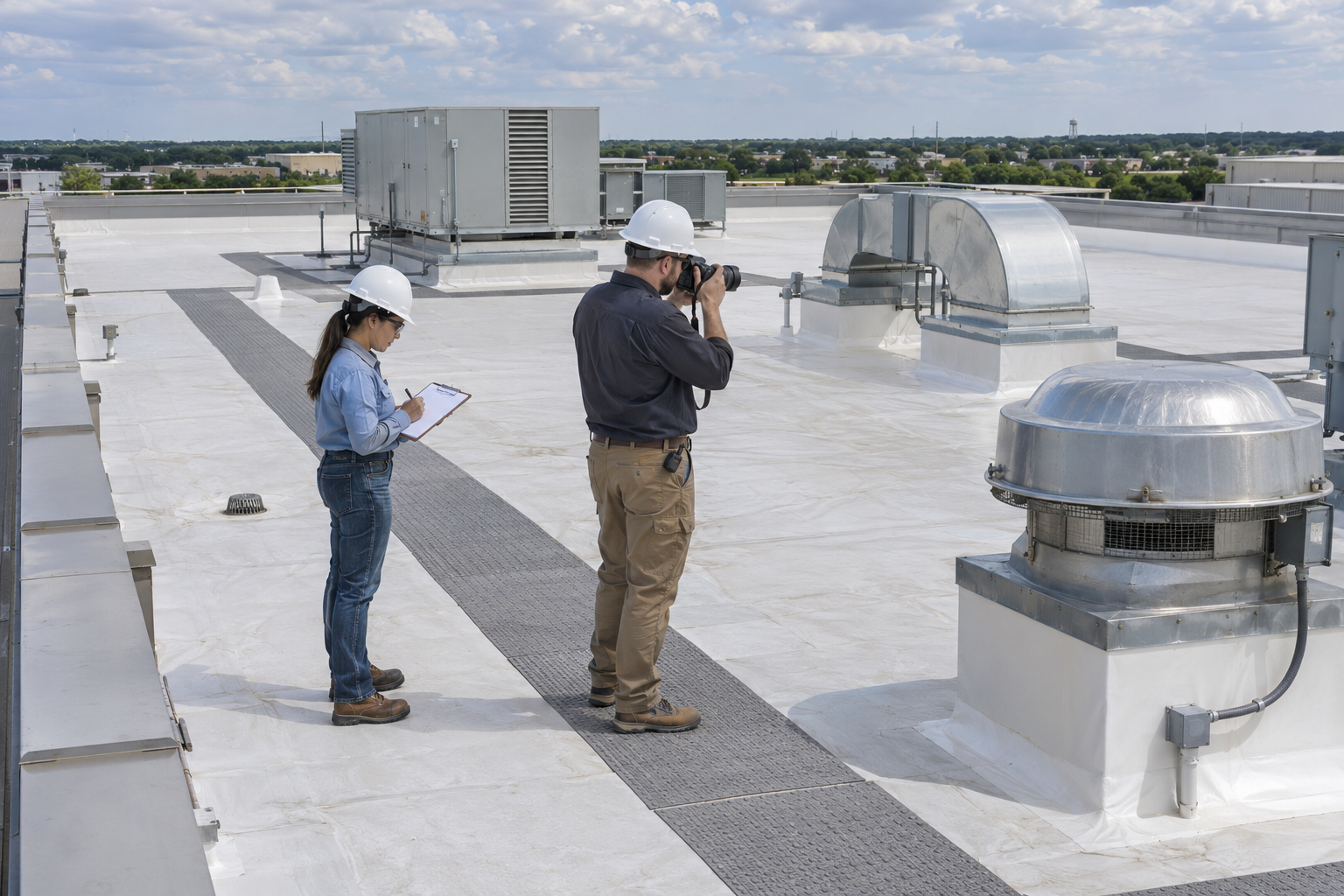
For Texas building owners, the decision should begin with a roof assessment. A coating cannot restore deteriorated decking, remove wet insulation, or correct every drainage problem simply by covering the surface.
Showtime Exteriors can discuss your roof's conditions and the information needed to compare practical options. This guide explains the benefits, lifespan considerations, and best uses of silicone roof coating in Texas, along with questions to resolve before approving work.
What Is Silicone Roof Coating?
Silicone roof coating is a liquid-applied roofing material that cures into a continuous protective surface as part of a specified assembly. Its ingredients, preparation requirements, compatible substrates, and application limits depend on the actual product.
It is different from ordinary exterior paint and from a small tube of household silicone sealant. A roof project also involves repairs, details, and quality control beyond selecting a finish material.
GAF's high-solids silicone product information describes one moisture-curing product intended for specified roofing uses. That example does not establish approval for every existing roof.
Ask the contractor to identify the complete proposed system, including primers where required, compatible detail materials, reinforcement where specified, and the final coating requirements. A generic line item reading “silicone roof” is not enough for a useful comparison.
The Existing Roof Determines Eligibility
A promising restoration candidate has an existing assembly that can support the proposed work after necessary repairs. Determining that requires more than looking at the surface color.
The assessment should identify existing materials, previous coatings, attachment or adhesion concerns, known leaks, drainage, and evidence that could warrant concealed-condition investigation.
Ask what is verified and what remains uncertain. A visual inspection does not establish that every layer is dry or that concealed decking is sound. Testing or exploratory openings may need separate authorization and a plan to restore the area.
If unsuitable materials are found, their removal and replacement should appear in the scope. A coating proposal should not depend on leaving a known problem concealed beneath a new finish.
Benefit: A Continuous Surface Across Suitable Details
Liquid-applied materials can conform to roof shapes and interfaces when installed through the manufacturer's approved details. That can be useful around curbs, pipes, and changes in plane.
A continuous finish does not eliminate the need for sound flashings, terminations, and movement details. The surface still connects with metal, walls, equipment, and drainage components that may need separate work.
Ask how each important interface will be addressed. A proposal to coat everything is less informative than a defined repair and detailing plan.
Johns Manville's silicone coating information provides another manufacturer example. Compare named products and approved assemblies rather than assuming all silicone materials use identical accessories or preparation.
Benefit: Product-Specific Standing-Water Resistance
Some silicone roof coatings are designed to resist deterioration from ponding water under their specified use conditions. This characteristic can be relevant when comparing coating chemistries.
It does not mean drainage no longer matters. Accumulated water can conceal debris or damage and may involve structural or building concerns beyond coating performance.
Ask the project team to evaluate recurring water accumulation and explain what improvements are included. Verify the selected product's limits and actual warranty treatment instead of generalizing from a marketing statement.
A coating's resistance to water is one material characteristic. It does not establish that the deck, attachment, insulation, drains, or existing assembly can safely remain unchanged. Keep those questions separate and resolve them before the coating scope is finalized.
Benefit: Reflective Finish Options
Many silicone coatings are available in white or other light finishes. Appropriate reflective products can reduce the amount of solar energy absorbed at the roof surface.
ENERGY STAR's cool roof guidance explains solar reflectance and thermal emittance. Practical energy results depend on climate, insulation, HVAC operation, occupancy, and the roof being compared.
For a Texas commercial building, reflectivity is worth evaluating as part of the broader project. It does not justify a guaranteed utility savings percentage without property-specific analysis.
Ask for the exact product's performance information. The Cool Roof Rating Council's owner resources help explain reflective roofing and product ratings. Those ratings address surface properties, not waterproofing workmanship, structural suitability, or a guaranteed service period.
Benefit: Preserving Serviceable Components
Where the roof qualifies, restoration may preserve usable parts of the existing assembly and reduce the amount of removal compared with a broader replacement scope. That can affect cost, waste, and disruption.
The benefit depends on the actual preparation and repairs required. A roof needing extensive wet-material removal or detail reconstruction presents a different project from a stable roof with limited repair areas.
Ask the contractor to explain what will remain, what will be removed, and why. Include the limitations of retaining older components in the decision.
Commercial roofing services should help the owner evaluate the complete scope. The objective is a suitable building solution rather than selecting restoration solely because its first price appears lower.
How Long Does Silicone Roof Coating Last in Texas?
There is no single lifespan for every silicone coating project. Product, thickness, existing condition, detailing, exposure, traffic, maintenance, and future equipment work all influence service.
Separate the projected service period from the warranty term and the timing of future inspections or recoating. Those are different commitments and planning assumptions.
Some specified systems offer 10-, 15-, or 20-year limited warranty or guarantee options. GAF's silicone-over-asphaltic system information gives one example subject to its requirements. It does not mean every application qualifies or that no maintenance will be needed during the term.
Request a project-specific basis for any lifespan statement. Avoid treating a generic year range or an unusually long promise as proof that the roof's underlying condition has been established.
Factors That Affect Service and Renewal
FactorQuestion for the owner to resolveExisting assemblyWhich components are verified suitable and which remain uncertain?MoistureWhat investigation supports the proposed scope?CompatibilityAre the substrate, primer, coating, and details approved together?ThicknessHow will application and finished requirements be verified?DrainageWhat recurring accumulation or outlet concerns need correction?Roof activityHow will service routes and equipment work be managed?MaintenanceWho inspects, reports damage, and completes repairs?Future renewalWhat condition would permit or prevent recoating?
Ask the contractor to identify the most important factors for your roof rather than assume they matter equally on every building. A coating is part of an ongoing assembly, not an independent layer with a lifespan unrelated to the roof below it.
Best Uses: Suitable Low-Slope Commercial Roofs
Warehouses, offices, retail buildings, and other low-slope commercial properties may be candidates when the existing roof and operating conditions support restoration.
A building with usable insulation and sound substrates may present an opportunity to retain those components. A roof with numerous penetrations may benefit from an appropriate liquid-applied detailing approach.
Building category alone does not establish suitability. Traffic, contamination, movement, drainage, and prior materials still need evaluation.
Owners comparing options can use the roof materials and system selection guide to organize questions. Ask why the proposed assembly fits this property and what reasonable alternatives were considered.
When Another Approach May Be Better
Restoration needs reconsideration when the roof has extensive concealed deterioration, unsuitable adhesion, unstable components, or conditions outside the manufacturer's approved uses.
Heavy traffic, unusual chemical exposure, and unresolved equipment discharge may require a different protection or roofing strategy. Do not assume silicone tolerates every industrial substance because it resists certain weather exposures.
If investigation finds widespread problems below the surface, compare the necessary removal and repairs with other roofing options. A coating project that requires extensive reconstruction may no longer offer the same advantages initially assumed.
For mixed portfolios, avoid applying a commercial restoration recommendation directly to a residential roofing project. Roof geometry, materials, details, and applicable requirements can differ substantially.
Preparation Is a Major Part of the Project
Cleaning, repair, compatibility review, and required priming can determine whether the coating will perform as intended. The written scope should make that work visible.
Ask how the contractor will address existing patches, loose materials, contaminants, damaged flashings, and other concerns. Verify what testing or manufacturer consultation is needed before application.
Preparation requirements vary with the substrate and product. Do not substitute a procedure borrowed from another roof simply because both finishes are white.
The owner does not need to direct application techniques, but should understand the approved system and quality controls. A project proposal should explain more than the number of pails or the promise of a bright new surface.
Coating Thickness Needs Verification
A visually consistent finish does not prove that the coating meets its specified requirements. Application quantities, substrate texture, and workmanship can affect the result.
Ask how required application rates and finished thickness will be documented. The appropriate methods depend on the system and manufacturer requirements.
Clarify who conducts inspections and whether any manufacturer review is included or required. A contractor's quality-control process should be defined rather than assumed from the final color.
Keep records of installed materials, relevant measurements, and corrections. Those documents support a more useful closeout and give future service providers information beyond a photograph of a completed roof.
Texas Weather Affects Application Scheduling
Rain, temperature, humidity, dew, wind, and surface conditions can affect roof preparation and coating work. Use the actual product's instructions to establish suitable conditions.
Moisture-curing chemistry does not mean a crew can disregard surface preparation or apply over conditions outside the specification. Ask how the contractor monitors weather and protects incomplete work.
Allow the schedule to pause when necessary. A fixed completion target should not encourage installation under unsuitable conditions.
Coordinate equipment service and deliveries so traffic does not enter an area before it is released for use. Identify who communicates changes to tenants or facility staff when weather affects the planned work sequence.
Traffic and Surface Care Need Planning
Silicone-coated surfaces can be slippery, particularly when wet. Access should remain with appropriately qualified and equipped personnel rather than becoming an ordinary staff walking route.
Discuss manufacturer-approved service paths and protection where equipment requires regular attention. Walkways do not eliminate the need to control tools, panels, and materials.
Ask technicians to report accidental damage promptly and use the correct repair channel. A general-purpose patch may be incompatible or complicate future recoating.
Keep an access log showing company, date, work area, and purpose. If repeated wear appears near the same equipment, address the service practices and protection needs rather than repeatedly treating only the damaged spot.
Maintenance Remains Necessary
A silicone-coated roof still needs inspection, drainage care, and appropriate repairs. Set the schedule using manufacturer guidance, warranty requirements, site conditions, and exposure.
Gaco's roof coating maintenance guide calls for regular inspection and maintenance, and emphasizes the continuing importance of drainage. Its recommendations apply in the context of its systems; obtain the documents for your installed product.
Ask the inspection to address coating condition, details, previous repairs, equipment interfaces, debris, and recurring water accumulation. Leave specialized tests and repairs to qualified professionals.
Cleaning methods and products should be compatible with the coating. Do not assume an aggressive wash is necessary or suitable simply because the finish has become dirty.
Recoating Is a Future Decision, Not a Guarantee
A silicone system may be eligible for future renewal when its condition and the selected manufacturer's requirements support it. That possibility can be useful in capital planning.
Do not assume it can be recoated indefinitely without investigation or repairs. Adhesion, compatibility, damage, contaminants, and the underlying assembly still matter.
Before renewal, request a defined assessment and written scope. Identify cleaning, repairs, required products, thickness controls, warranty eligibility, and any conditions that make recoating unsuitable.
Keep the original system information and later repair product names. Future contractors need to know what they are working over rather than identify the roof from appearance alone.
Compare Cost Through Equivalent Scopes
Roof area is only one pricing factor. Access, preparation, concealed conditions, detail work, drainage improvements, quality control, and operating restrictions can change the project significantly.
Ask proposals to state assumptions and exclusions. Establish how additional findings will be documented, priced, and approved if discovered during work.
Compare restoration and replacement using the actual building condition. A coating proposal that excludes essential repairs cannot be evaluated as equivalent to a scope that includes them.
Include future maintenance and possible renewal in the financial discussion. The lowest initial invoice is not necessarily the most practical option for a property with frequent service traffic or unresolved underlying concerns.
Read the Actual Warranty
Request the proposed warranty document before approval. Identify the issuer, covered system, term, obligations, exclusions, reporting process, and any inspection requirements.
Material-only coverage and broader system coverage are different commitments. A manufacturer's name in a proposal does not prove that a particular warranty will be issued.
Confirm that the substrate, preparation, details, and application scope qualify. At completion, obtain the issued document with the correct property information.
Keep contractor workmanship obligations separate from manufacturer coverage. Both may be relevant, but they can have different contacts and conditions. The facility manager should have access to the documents needed for future reporting rather than rely on a verbal description.
Keep a Useful Project and Service Record
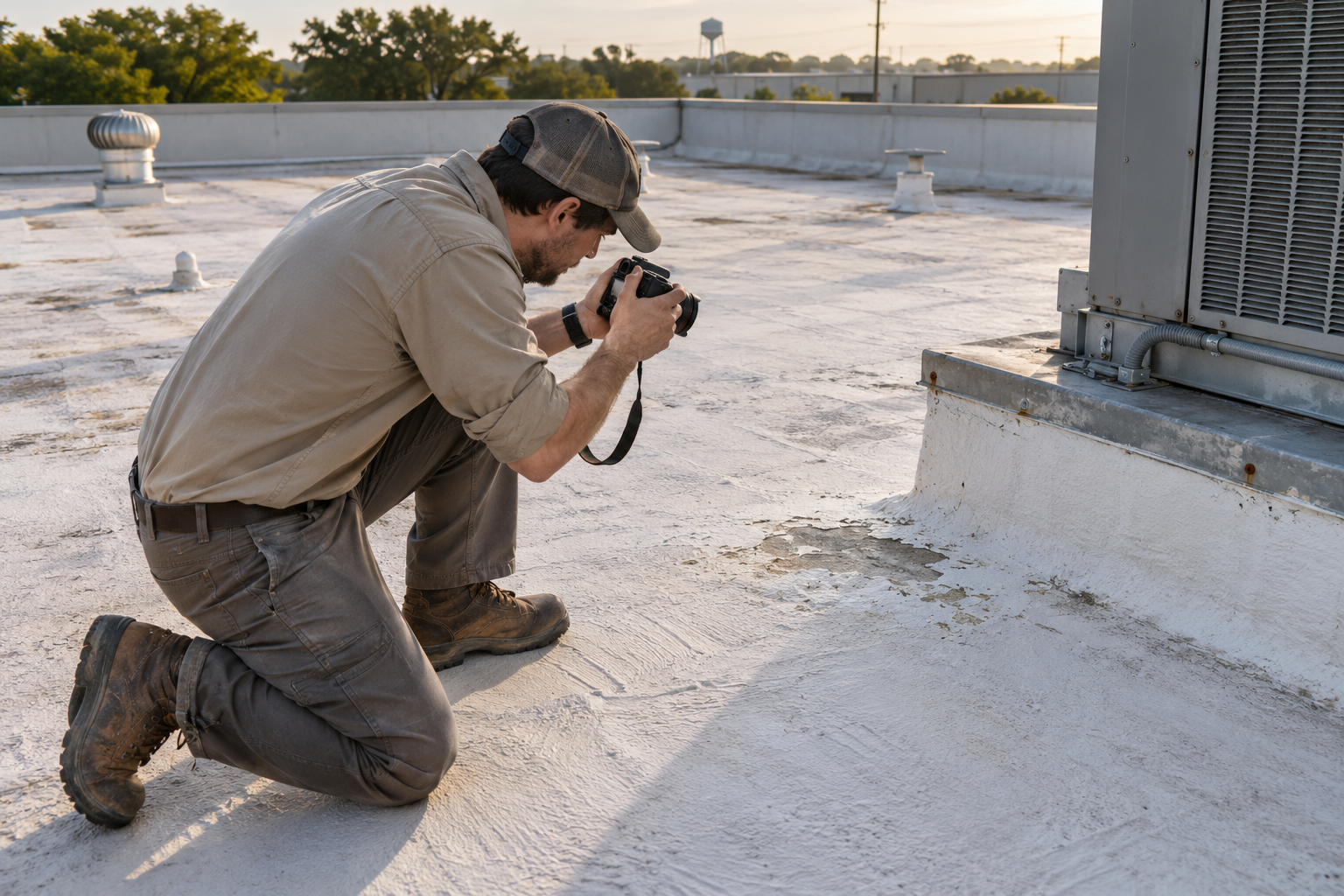
Retain the assessment, located photographs, approved scope, changes, installed product information, quality-control records, invoices, warranties, and maintenance instructions.
The guide to commercial roof maintenance records insurers may request provides a framework for organizing the roof's history. The same file helps with future service and property transfers.
Track unresolved recommendations separately from completed work. A paid invoice should not be mistaken for confirmation that every earlier concern was addressed.
Use consistent roof-section names and equipment references. Clear locations make later comparison more useful than a folder of close-up photographs with no connection to the building plan.
Questions to Ask Before Selecting Silicone
Ask why the roof qualifies, what investigation supports that conclusion, and what conditions could change the recommendation. Request the exact products and complete assembly requirements.
Clarify preparation, repairs, drainage work, detailing, application controls, and closeout documentation. Discuss weather scheduling and the building's operating constraints.
Ask how the roof will be maintained and which future activities require coordination. Review warranty terms and anticipated renewal needs without treating either as a universal lifespan promise.
The strongest proposal explains a practical building solution. It connects observed conditions with a defined scope and gives the owner enough information to compare alternatives before committing.
Establish the Handoff Before Work Begins
Assign an owner representative who can approve changes and coordinate access. Provide available roof plans, earlier inspection reports, and equipment service schedules. Identify sensitive operations below the work area and any restrictions on deliveries or staging.
Agree on how unexpected findings will be communicated. Request photographs, a written explanation, and pricing through the approved change process. If an area needs immediate protection, make the authorization limits clear in advance.
At completion, review the finished scope against the original assessment. Identify which concerns were corrected, which areas were excluded, and whether any further work remains. Record outstanding items with the responsible contact and completion date.
Arrange a handoff with the facility staff who will manage later maintenance. Review service routes, reporting procedures, approved repair contacts, warranty obligations, and the location of project records. Include mechanical service personnel when their work affects the coated area.
Finally, schedule the first required inspection and budget for ongoing care. Restoration is easier to manage when the owner receives a usable maintenance plan alongside the new surface. This turns project closeout into a clear starting point for service rather than the end of attention to the roof.
Frequently Asked Questions
Is silicone roof coating suitable for every Texas roof?
No. Suitability depends on the existing assembly, moisture, compatibility, drainage, details, and manufacturer requirements. Obtain a documented assessment before choosing the scope.
Does standing-water resistance mean drains are unnecessary?
No. Product resistance does not replace drainage or resolve structural and building concerns associated with accumulation. Have recurring water evaluated.
How many years will a silicone coating last?
Request a project-specific expectation and its assumptions. Separate service life, warranty coverage, and maintenance or renewal timing rather than relying on one generic range.
Will a white coating guarantee energy savings?
No fixed amount should be assumed. Reflectivity can affect roof heat gain, but actual results depend on the building, insulation, equipment, and operating conditions.
Can a silicone-coated roof be recoated later?
Possibly, when condition and manufacturer requirements support renewal. Compatibility and the underlying assembly still require evaluation.
Can we apply it over wet or deteriorated roofing?
Known unsuitable conditions need appropriate correction. Coating should not be used to conceal uncertain moisture or deteriorated components without assessment and required work.
Evaluate Silicone Roof Coating for Your Texas Building
Silicone roof coating in Texas can be a useful option when the existing roof qualifies and the project addresses preparation, details, drainage, and ongoing service. Its value comes from the complete system and the owner's maintenance plan.
Contact Showtime Exteriors or call 817-400-7663 to discuss your roof. Share the known materials, repair history, active concerns, and operating requirements so the assessment can focus on practical options for the property.