



Common Commercial Roof Claim Mistakes That Delay Payment
Avoid commercial roof claim documentation and coordination mistakes. Learn what Texas building owners should track, request, and verify throughout the process.
A commercial roof claim can involve an owner, property manager, tenants, insurer, roofing contractor, lender, and separately retained advisers. When those participants work from different records or assumptions, even a straightforward request for information can turn into repeated follow-up.
Owners cannot control every claim delay. Insurer investigation, coverage disagreements, and other circumstances may affect the timeline. Good documentation and coordination can reduce avoidable confusion, but they do not guarantee approval, a particular payment, or a faster settlement.
Showtime Exteriors can document roofing conditions and explain proposed construction work. This guide addresses common administrative and construction coordination mistakes for Texas commercial owners. It provides general information rather than legal advice or a conclusion about a particular insurance policy.
Mistake 1: Reporting a Problem Without Establishing the Basics
An initial report that says only “storm damage at the warehouse” leaves important questions unanswered. Identify the property address, building, roof section if known, discovery date, reported event information, and current symptoms.
Keep dates distinct. The day a tenant first notices water may not be the date of the event believed to have caused it. Record uncertainty rather than supplying a convenient date without support.
Follow the policy's notice requirements and insurer instructions promptly. Do not postpone reporting solely while waiting for a polished contractor package. If information is still being gathered, ask the insurer how to supplement the initial report.
Save confirmation of the claim report and the assigned contact information. A conversation with a roofer is not itself proof that the insurer received notice.
Mistake 2: Assuming Every Commercial Policy Pays the Same Way
Commercial property coverage can vary by form, endorsements, limits, valuation, and other conditions. Do not assume that a neighboring owner's claim or a residential example describes your building's policy.
TDI's commercial property insurance guide explains broad coverage and valuation differences. The actual policy determines which provisions apply to your claim.
Ask the insurer or appropriate adviser to clarify questions about deductibles, replacement cost, depreciation, limits, and required documentation. A roofing estimate cannot answer all those questions.
Keep construction price and expected insurance proceeds separate. That distinction helps management make informed spending decisions while the insurer evaluates the claim rather than treating a contractor's budget as an approved payment.
Mistake 3: Letting Requests Sit Without an Assigned Owner
A request for photographs, prior reports, or a signed document can move among several inboxes without anyone taking responsibility. Assign one owner-side coordinator and a backup.
Track what was requested, who will respond, the relevant due date, and when the response was submitted. If the request is unclear or cannot be met as written, ask for clarification promptly.
TDI's commercial property consumer rights information describes claim-handling notices and deadlines, including the role of needed information. Applicable timing can involve exceptions and special circumstances; verify the requirements for your claim.
A tracking sheet does not waive the insurer's responsibilities or establish that every delay belongs to the owner. It simply helps identify the current request and the next action instead of relying on memory.
Mistake 4: Sending Photographs Without Locations
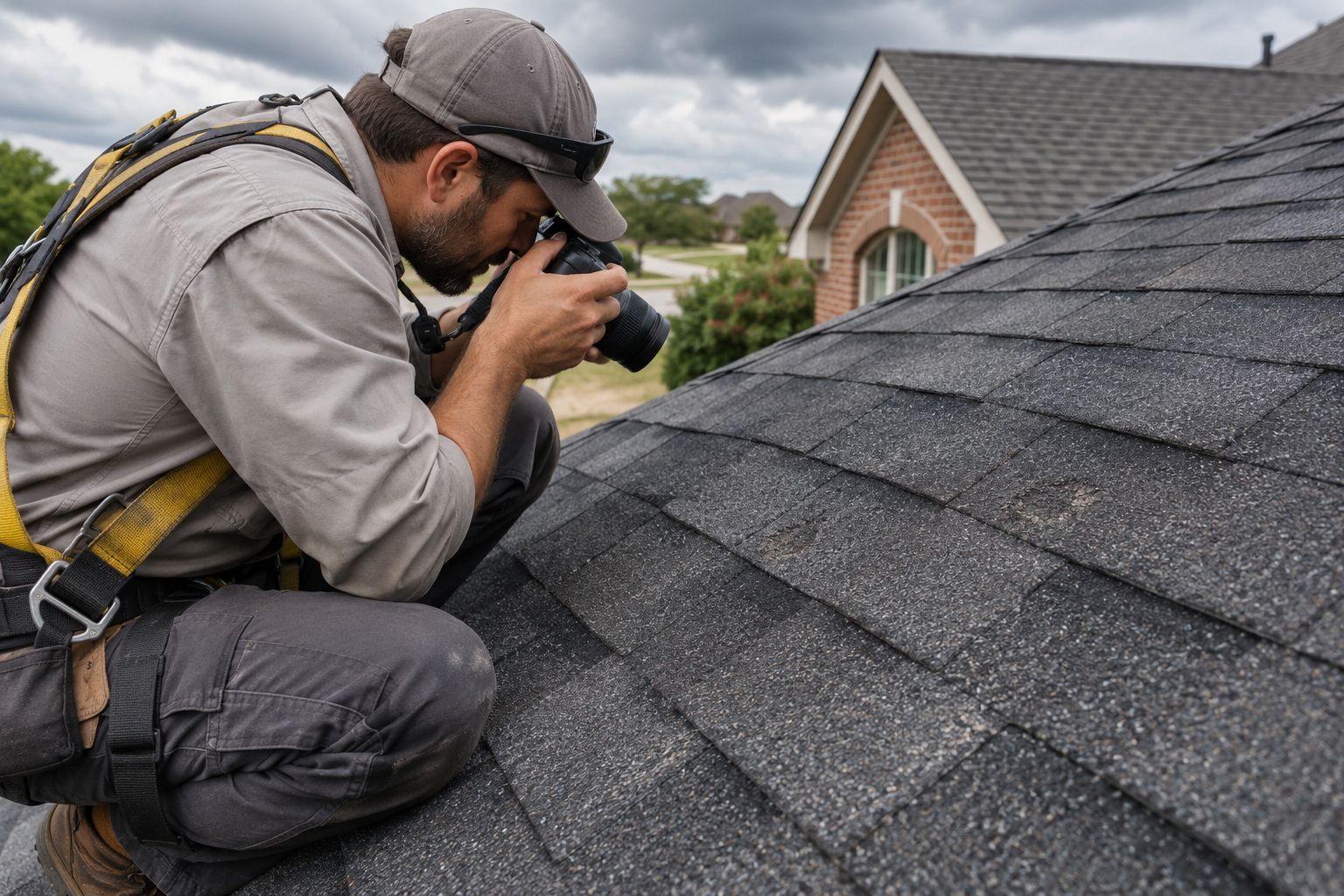
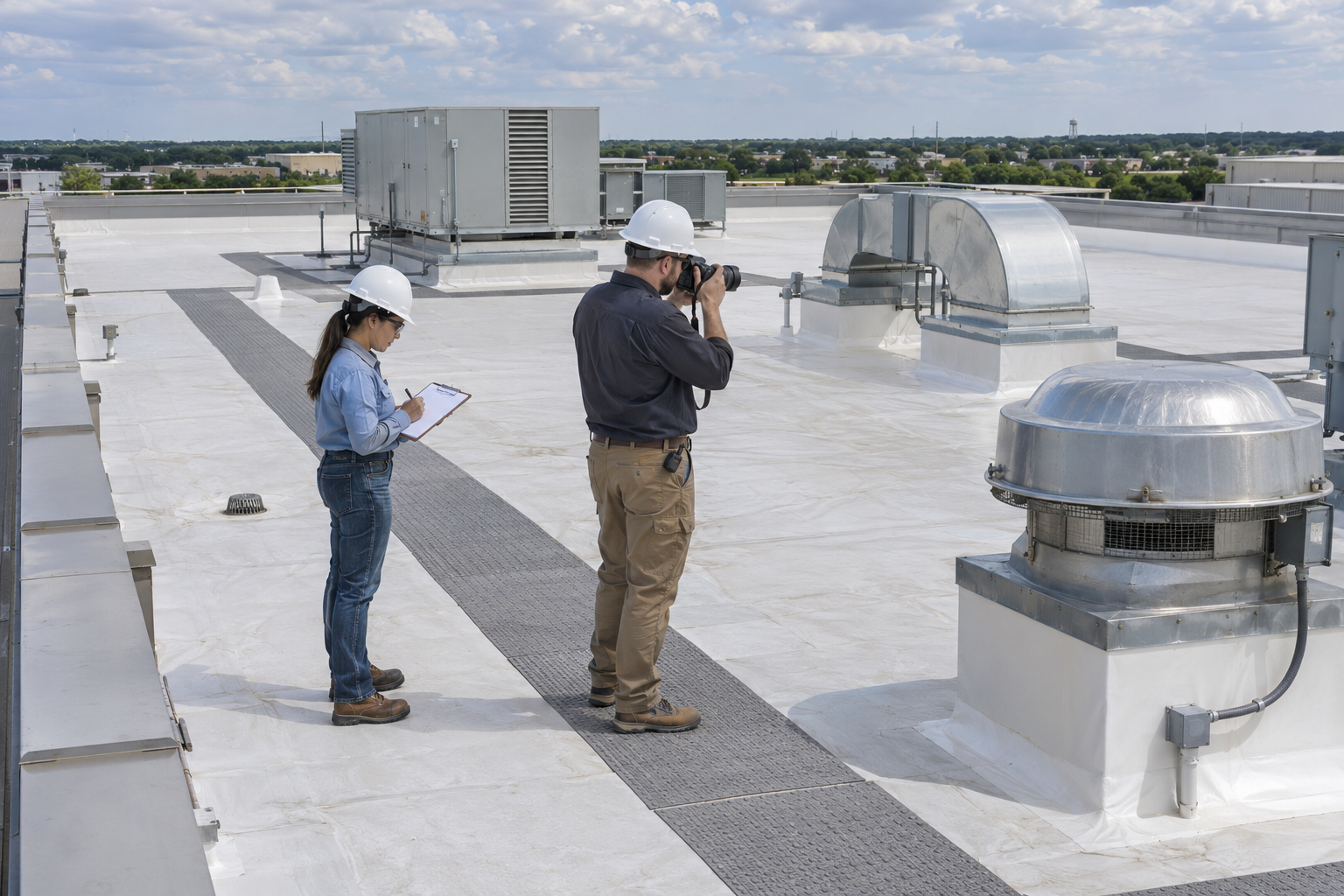
A large collection of close-ups can be difficult to interpret when no one knows which building or roof section they show. Include overview images and consistent location references.
For multi-building sites, use the same building names as the policy and property records where appropriate. A photograph labeled “north side” may be ambiguous across several similar warehouses.
Keep original image files and dates. Retain annotated copies separately when arrows or labels help explain a location. Do not alter photographs in ways that change what they show.
Ask the roofer to connect its estimate items with relevant findings. A clear construction record makes technical questions easier to review, even when the parties still disagree about coverage or scope.
Mistake 5: Replacing the Roof Before Coordinating Inspection
Permanent removal can make later evaluation more difficult if important conditions are no longer available to inspect. Discuss insurer inspection needs before disputed permanent work where practical.
That does not mean leaving an urgent opening or unsafe condition unattended. Arrange appropriate protection and document conditions as safely and thoroughly as circumstances permit.
TDI's storm recovery resources provide information about documentation, claim reporting, and preventing additional damage. Follow the policy and insurer guidance about records and damaged materials.
Define the difference between temporary protection and permanent construction. Keep authorizations, photographs, invoices, and limitations for each. The owner should be able to explain what was done, why, and what remains for evaluation.
Mistake 6: Submitting an Estimate with No Defined Scope
A total labeled “replace commercial roof” does not explain the construction need. Request quantities, named materials, removal assumptions, insulation, flashings, edges, drainage interfaces, and other relevant work.
The estimate should identify exclusions and conditions that remain unverified. If concealed deck deterioration is not included, state how it would be measured and approved if discovered.
Commercial roofing services should produce a proposal the owner can understand independently of the claim. An insurer may need further information, and the owner still needs a readable construction agreement.
Avoid comparing totals until the scopes align. One estimate may include substantial detail reconstruction that another omits. Clarify those differences instead of assuming the higher price is automatically unsupported or the lower price covers equivalent work.
Mistake 7: Treating the Roofer as the Claim Representative
A roofer can explain observed conditions, measurements, construction methods, and its estimate. That technical contribution should not become representation of the owner in settlement negotiations.
TDI's bulletin on adjusters and repairs distinguishes permissible estimate discussions from prohibited adjusting conflicts. Texas restricts a contractor from adjusting claims for property where it provides or may provide roofing services.
Assign policy and settlement questions to the owner and any appropriately retained claim or legal adviser. The roofer should provide its construction documentation without claiming authority it does not have.
Clarify roles before a site meeting. A technical discussion can resolve a measurement question while leaving coverage unresolved. Record which questions belong to which participant so they do not circulate indefinitely.
Mistake 8: Confusing a Technical Difference with a Coverage Dispute
Two estimates may differ because of roof area, quantities, materials, detail requirements, or prices. Those differences call for specific construction explanations.
A disagreement over an exclusion or policy provision is a different matter. A new roof photograph may not resolve it, just as a policy discussion will not establish an unmeasured quantity.
Create a list identifying the disputed item and the kind of information needed. Ask the appropriate participant to respond rather than repeatedly sending the entire file without a focused question.
If further technical investigation is proposed, define its purpose and limitations. If legal advice is needed, seek a qualified Texas attorney. The goal is to resolve the actual uncertainty rather than generate more documents that do not answer it.
Mistake 9: Mixing Earlier Problems with the Reported Event
Commercial roofs often have service histories. Prior patches, earlier leaks, equipment changes, and drainage concerns may be relevant to understanding a newly reported problem.
Do not erase that history from the file or assume every condition began during the latest storm. Provide accurate records and distinguish known facts from uncertainty.
The guide to commercial roof maintenance records insurers may request offers a framework for organizing earlier inspections and repairs. A consistent record can help explain changes without inventing a cause or date.
A lack of old photographs does not establish that a condition is new. Ask the inspector to state the basis and limits of any opinion about timing or cause. Reliable documentation is more useful than an unsupported certainty.
Mistake 10: Discovering Additional Work Without Recording It
Removal or investigation may reveal wet materials, damaged substrate, or other conditions not visible initially. If those findings change the construction scope, document them before they are concealed where practical.
Request photographs, location references, measured quantities, and a written explanation. Use a change-order process identifying who can authorize work and how urgent conditions will be handled.
The contractor can explain the revised construction estimate. Any request for additional insurance benefits remains subject to the appropriate claim process.
Do not assume that possible future reimbursement replaces the owner's construction authorization. Keep the contract obligation and the insurer's current position separate so management understands what it is approving at each step.
Mistake 11: Using Inconsistent Invoices or Deductible Arrangements
The final invoice should reflect the actual work and transaction. Avoid inconsistent totals, undocumented credits, or completion statements that conflict with the construction records.
TDI's roofing and insurance law guidance explains Texas's prohibition on contractors offering to waive, rebate, or absorb the deductible. Do not accept inflated paperwork intended to disguise the owner's actual payment.
Keep elective upgrades and work outside the claim clearly identified. If the scope changes, document the real adjustment instead of maintaining an inaccurate invoice for insurance purposes.
Accurate accounting supports a clear file. It does not guarantee payment, but misleading records can create serious problems beyond an ordinary request for clarification.
Mistake 12: Missing Completion or Valuation Requirements
Some policies require completed work, incurred costs, or other documentation before additional payment can be considered. The requirements depend on the actual coverage and claim circumstances.
Ask the insurer to identify what is needed and any applicable time limits. Do not assume that submitting the initial estimate satisfies every later requirement.
The roofer can provide accurate invoices, photographs, and completion information for work it performed. It cannot guarantee release of depreciation or determine that all policy conditions have been met.
Track payment requests separately from construction milestones. A completed repair, an invoice sent to the owner, and a document received by the insurer are different events. Confirm submission through the required channel and retain the acknowledgment.
Mistake 13: Overlooking Lender or Ownership Coordination
Commercial properties may involve lenders, asset managers, associations, multiple owners, or separate operating companies. Identify who has authority to approve work and what requirements may apply to disbursement of funds.
Ask the relevant parties about documents, endorsements, inspections, or other procedures needed for their involvement. Do not wait until a payment arrives to discover that another party must review the file.
Provide the contractor with accurate billing and authorization information. A tenant who reports a leak may not be authorized to commit the owner to a substantial construction agreement.
Keep business-interruption, contents, and roof construction records distinguishable where those issues arise. The roofing contractor's invoice will not necessarily establish other categories of claimed loss.
Mistake 14: Sending Multiple Conflicting Versions
A revised estimate can be useful, but several unlabeled versions create confusion. Date revisions and explain what changed, including quantities, materials, added work, and removed items.
Maintain one current construction scope while preserving earlier versions as history. The owner, roofer, and any adviser should know which document is being discussed.
When submitting information, include the claim and property identifiers and a short factual description of the attachment. Confirm the insurer's preferred submission process rather than assuming a text message to one participant becomes part of the claim file.
For mixed property portfolios, keep separate records for each building and policy. A residential roofing project should not be folded into a commercial submission simply because the same owner manages both properties.
Mistake 15: Waiting Without Asking What Is Outstanding
A vague follow-up asking whether the claim is finished may produce a vague answer. Ask what decision remains, whether more information is requested, and who is handling the next step.
Keep a factual communication log with dates, contacts, documents, and responses. Follow up on commitments without adding unsupported conclusions about the reason for a delay.
If ordinary communication does not resolve an insurance concern, review TDI's insurance complaint resources. A complaint does not automatically establish coverage or replace legal advice.
Owners should seek appropriate guidance about policy or legal deadlines rather than assume ongoing conversations protect every right. Keep the roof's protection and maintenance needs assigned while financial questions continue.
A Practical Claim Coordination Checklist
StageOwner-side actionConstruction record to requestInitial reportConfirm notice and designated contactsAssessment scope and property identificationInspectionCoordinate safe access and relevant historyLocated photographs, findings, limitationsEstimate reviewIdentify technical and coverage questions separatelyQuantities, materials, details, assumptionsTemporary workAuthorize protection and retain receiptsBefore-and-after evidence and limitationsNew findingsAssign approval and claim follow-upRevised scope, quantities, change explanationCompletionVerify work and requested submissionsAccurate invoices, photos, warrantiesRemaining questionsTrack outstanding requests and responsible partiesClarifications tied to actual work
This checklist organizes tasks. It does not transfer the insurer's responsibilities to the owner or promise a particular claim result.
Use Comparable Options Before Committing to Work
A claim may prompt repair, restoration evaluation, or replacement discussion. Ask why the proposed approach fits the verified roof condition and what alternatives were considered.
Use the roof material and system selection guide to organize longer-term construction questions. Separate necessary work, elective improvements, and unverified conditions.
Read the construction agreement independently. It should explain scope, price, payment, schedule assumptions, exclusions, and changes. Understand any conditions tied to insurance decisions before signing.
A practical business decision may be necessary while the claim remains unresolved. Make that decision with clear knowledge of the contract obligation rather than relying on a promise that insurance will eventually cover everything.
Example: Turn a Vague Request into a Defined Response
Consider a hypothetical owner whose insurer asks for clarification of a revised roof estimate. The owner forwards the request to several people, but no one identifies which revision is involved or what information is missing. The roofer resends the entire estimate, while the property manager supplies unrelated interior photographs. The original question remains unanswered.
A more useful response starts by identifying the requested item. Suppose the question concerns insulation quantities added after an exploratory opening. The owner asks the roofer for the relevant roof location, photographs, measured quantity, reason for the change, and the current estimate revision. The owner then submits those documents through the designated channel and records receipt.
That package may answer the construction question. It does not establish that the insurer must cover the item or that no further review is appropriate. If a coverage question remains, the owner asks for that position separately and directs it to the appropriate adviser.
The lesson is practical: determine what is being asked before gathering more material. A focused response can reduce unnecessary exchanges while preserving the distinction between technical evidence and an insurance decision.
Review the File Before Each Major Submission
Have the owner-side coordinator check that the property identifiers, claim number, document dates, and roof locations are consistent. Confirm that the attachments open and that the current estimate is clearly identified. Keep earlier versions available without presenting them as the current scope.
Verify statements against the underlying records. If a repair is described as complete, confirm that the completion evidence supports that description. If a date is uncertain, say so rather than turning an approximate recollection into a precise assertion.
Identify unanswered requests and explain any information that is still being obtained. Ask for clarification where a requirement is unclear. This review should improve accuracy, not create a reason to postpone timely notice or an urgent response.
Finally, save the submission and acknowledgment together. Record who will follow up and what the next expected action is. On a busy property, this small administrative step can prevent staff changes, absences, or multiple inboxes from interrupting continuity. A new coordinator should be able to understand the file without asking every participant to reconstruct the same conversation. Keep the process proportionate to the claim, but make responsibility unmistakable.
Frequently Asked Questions
Will better paperwork guarantee faster payment?
No. It can reduce avoidable clarification requests, but investigation, coverage disputes, and other factors can still affect timing. Payment depends on the policy and claim circumstances.
Should we wait for a complete roof estimate before reporting?
Follow the policy's notice requirements and insurer instructions promptly. Ask how to provide additional construction information as it becomes available rather than assuming notice must wait.
Can our roofing contractor negotiate the settlement?
Texas restricts contractors from adjusting claims for property where they provide or may provide contracting services. The roofer can supply estimates and technical information within its construction role.
Does a revised estimate guarantee a supplemental payment?
No. It documents proposed construction changes. The insurer evaluates payment under the policy and applicable claim process.
Is every payment delay the owner's fault?
No. Insurers have responsibilities, and delays can arise from investigation or disputes outside the owner's control. Accurate tracking helps identify the actual issue without assigning blame prematurely.
What should we keep after the claim closes?
Retain policy and claim correspondence, inspections, photographs, contracts, changes, invoices, payment records, warranties, and maintenance instructions. These records support future service and property management.
Get Clear Construction Documentation for Your Commercial Roof
Avoidable commercial roof claim mistakes often involve unclear records, undefined responsibilities, or assumptions about scope and payment. Keep reporting, technical documentation, construction approval, and insurance decisions organized as separate but connected tasks.
Contact Showtime Exteriors or call 817-400-7663 to discuss your commercial roof assessment and construction needs. Share the building history, active concerns, available records, and access requirements so the next step is based on the property itself.