


Commercial Roof Repair Houston
A Complete Guide to Diagnosing and Repairing Houston Commercial Roofs

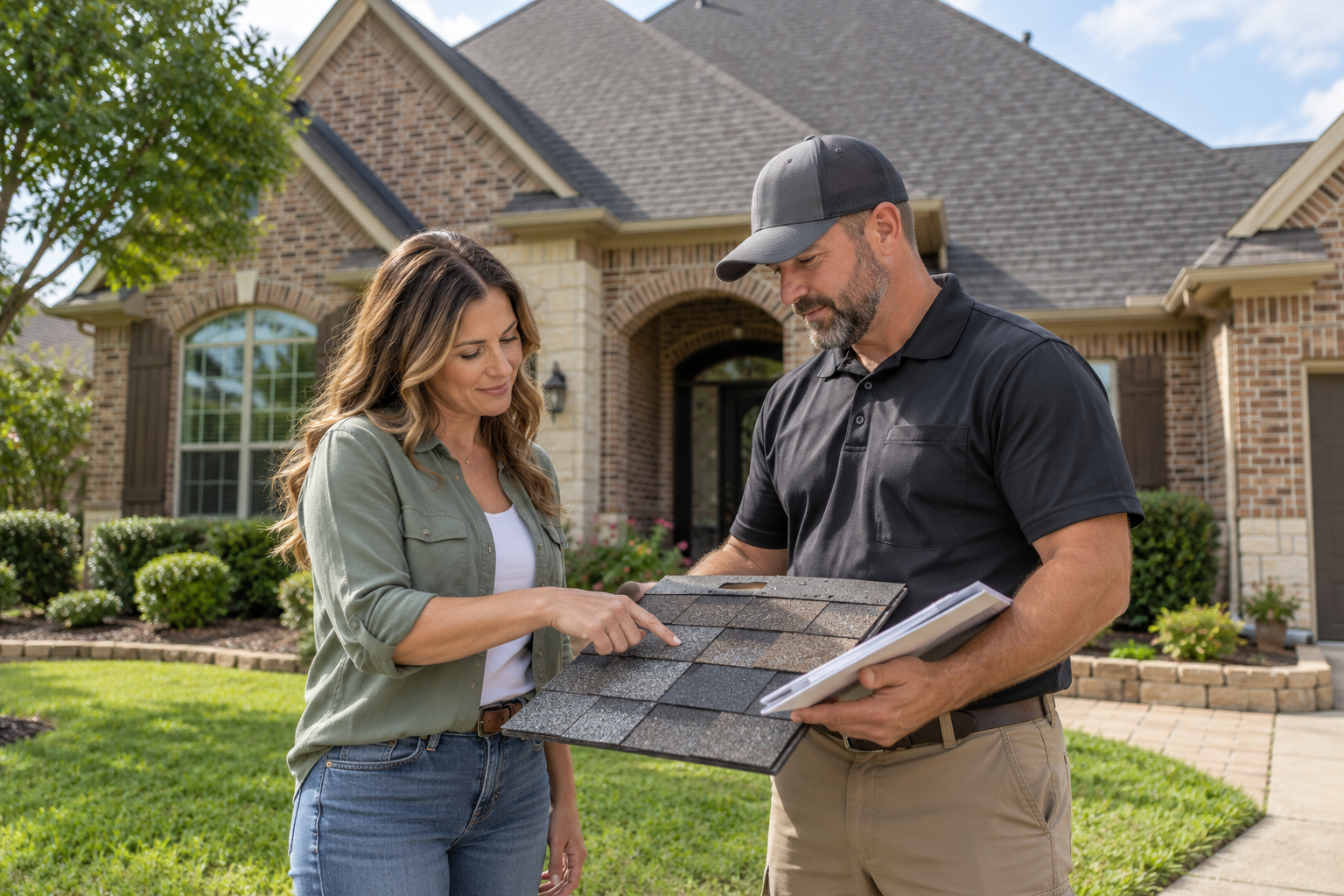
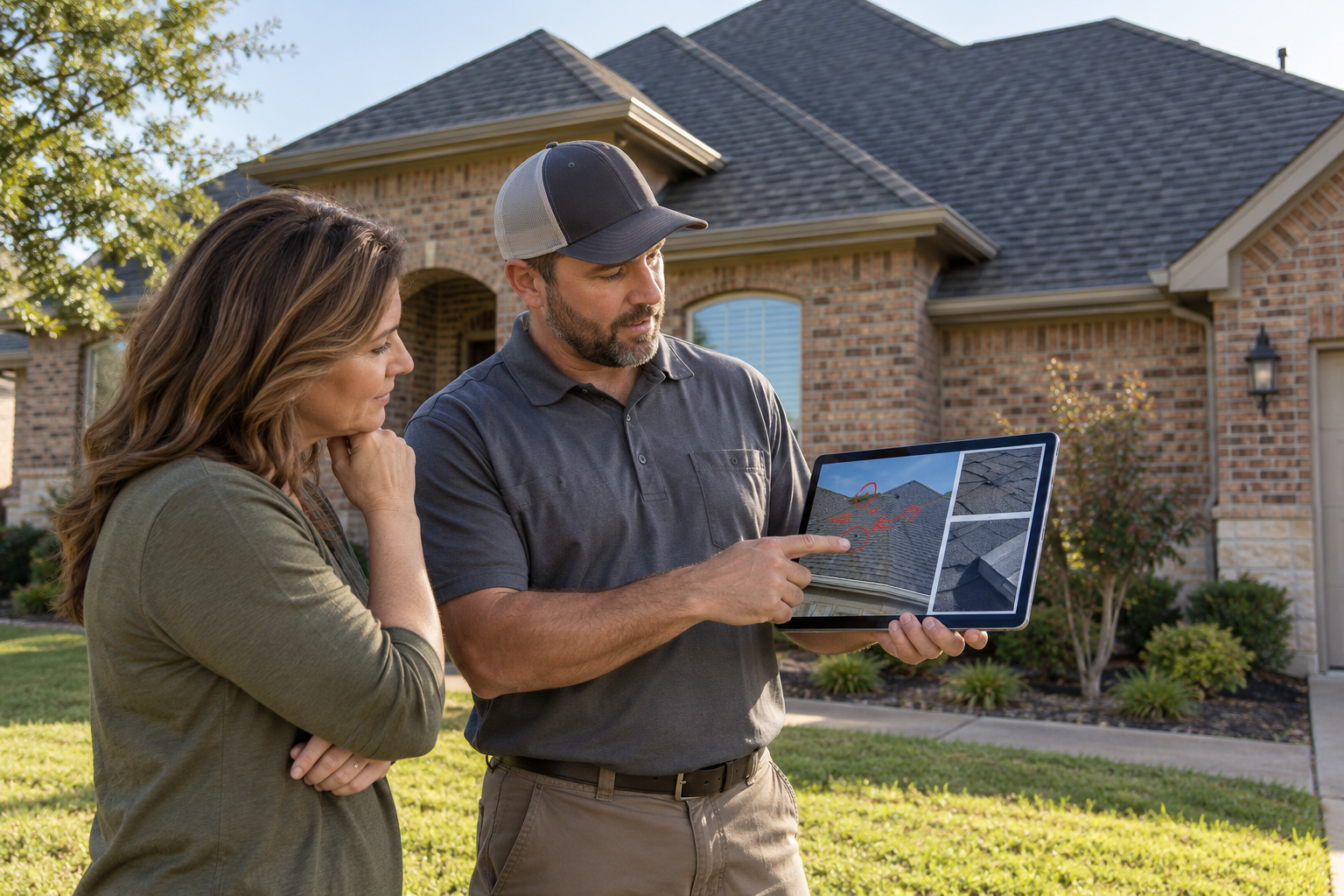
Commercial roof repair in Houston should begin with diagnosis, not a bucket of sealant. A repair succeeds when the contractor identifies the entry point and failure mechanism, removes failed or wet materials as required, prepares the substrate, rebuilds the detail with compatible components, documents the work, and confirms the result. Covering the visible symptom without understanding the assembly often creates another temporary patch.
Houston commercial roofs face intense ultraviolet exposure, high surface temperatures, humidity, heavy rain, hail, straight-line wind, tropical weather, rooftop equipment traffic, and rapid weather changes. Water can enter at a curb, seam, fastener, edge, penetration, wall transition, or drain and travel before appearing indoors. The ceiling drip is evidence of water, but it is not automatically the roof entry point.
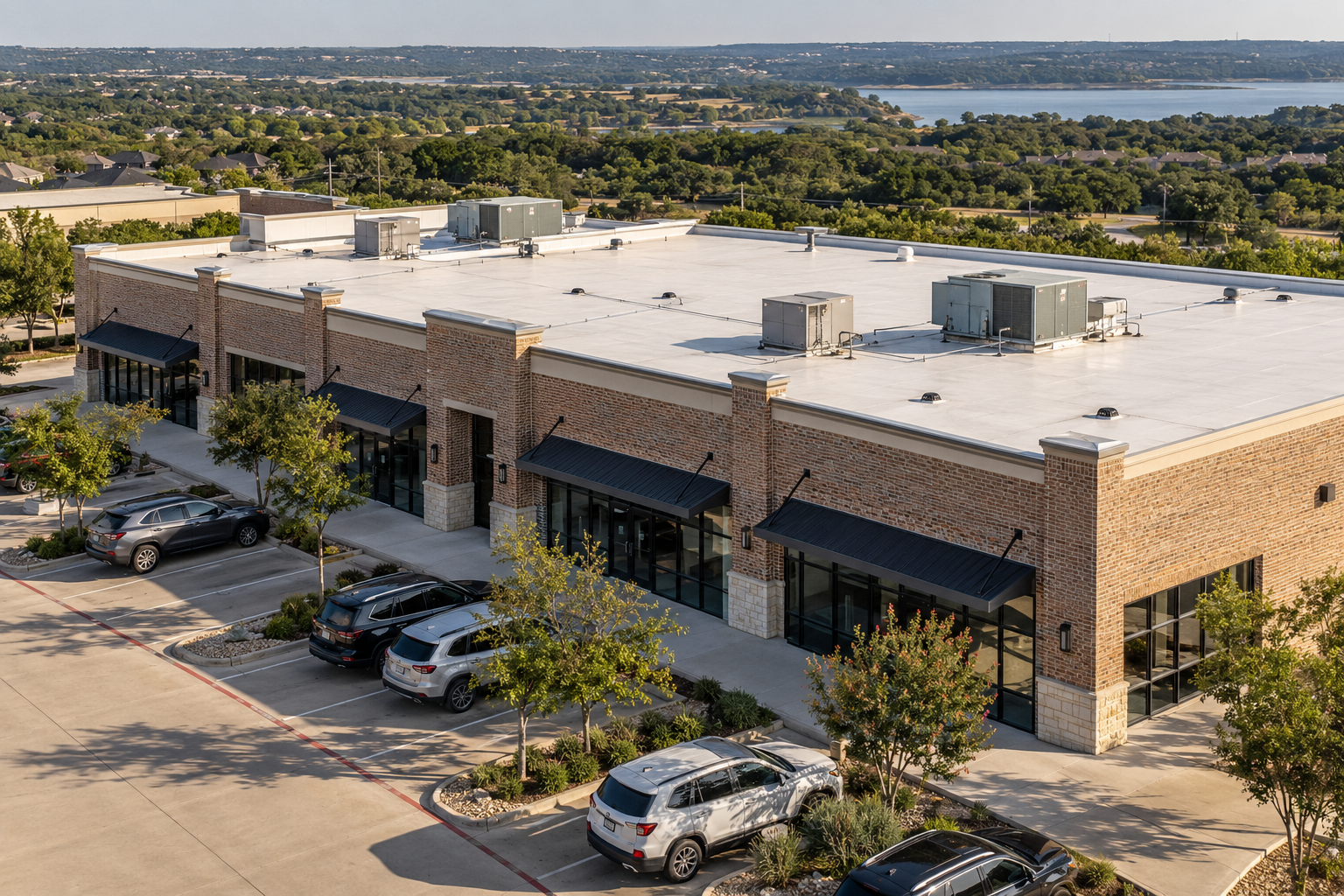
Showtime Exteriors provides commercial roof inspection, repair, maintenance, restoration, recover, retrofit, and replacement services in Houston and throughout Texas. The company works with TPO, PVC, EPDM, metal, modified bitumen, coatings, asphaltic systems, and aging gravel-surfaced built-up roofs. Gravel BUR requires special caution because aggregate can conceal deterioration, moisture, old patches, blisters, cracks, and drainage defects. Repeated patching should not be promoted when replacement is the more responsible solution.
Call Showtime Exteriors at 817-400-ROOF (7663) for a Houston commercial roof repair assessment.
What Commercial Roof Repair Means
Commercial roof repair corrects a defined defect within an existing roof assembly. It may involve membrane, panels, seams, fasteners, flashings, curbs, penetrations, edges, drains, insulation, deck, or adjacent walls. The scope should identify the damaged component, cause, repair limits, compatible materials, preparation, testing, temporary protection, and final documentation rather than promising simply to stop a leak.
The repair record should identify the roof area, component, defect, preparation, compatible material, responsible party, completion date, and follow-up. That makes the work measurable and prevents future inspectors from mistaking an undocumented patch for original construction or assuming a recurring leak was permanently resolved.
Start With the Leak History
Record when the leak appeared, weather, wind direction, rainfall intensity, interior location, affected equipment or inventory, prior repairs, and whether the condition is active. Ask occupants what they observed without treating memory as proof. Map interior symptoms to roof geometry. A recurring stain may have several sources, while one opening may send water to multiple rooms.
Safety and access control are part of the scope. Wet roofs, heat, lightning, fragile skylights, electrical hazards, chemicals, restricted zones, and unprotected edges can limit work. Trained personnel should use an appropriate access and fall-protection plan, while building staff manage interior hazards from a safe location.
Why the Interior Drip Is Not Always the Source
Water may travel along insulation, deck flutes, purlins, joists, conduits, vapor retarders, panel ribs, or membrane laps before becoming visible. Repairing directly above a ceiling stain can miss an upslope curb, wall, penetration, seam, or edge. Investigation should follow plausible pathways and use controlled testing when visual evidence is insufficient.
Manufacturer documents and project conditions should control cleaners, primers, membranes, plates, fasteners, tapes, sealants, mastics, coatings, temperatures, cure times, and test methods. A convenient generic material can be incompatible with the existing roof and make later permanent repair or warranty review more difficult.
Emergency Repair Versus Permanent Repair
Emergency work protects the building and reduces immediate water entry. Permanent work corrects the failed detail with compatible construction after conditions permit. Tarps, tape, plugs, temporary sealant, or surface patches need a location, date, material record, photographs, and permanent-repair deadline. Temporary materials become a problem when they remain unexamined and obscure the original failure.
Owners should distinguish observed facts, reported history, test data, and professional opinion. A stain confirms that moisture was present, but it does not prove the entry point, date, cause, or policy coverage. Clear qualifications make the repair decision more credible and useful.
How Quickly Should a Commercial Roof Leak Be Addressed
Respond promptly to protect people, electrical systems, inventory, equipment, finishes, and operations. First control interior hazards and water safely, then arrange qualified roof access when weather permits. Do not send untrained staff onto a wet or storm-exposed roof. Document the condition before moving contents or installing temporary protection whenever doing so does not delay safety measures.
Repair should be evaluated against the owner's capital plan. If evidence shows that defects are recurring or the assembly is no longer a reasonable repair candidate, the contractor should say so. Early notice gives the owner time to compare systems, consult insurers, coordinate tenants, and budget replacement.
Commercial Roof Repair Inspection
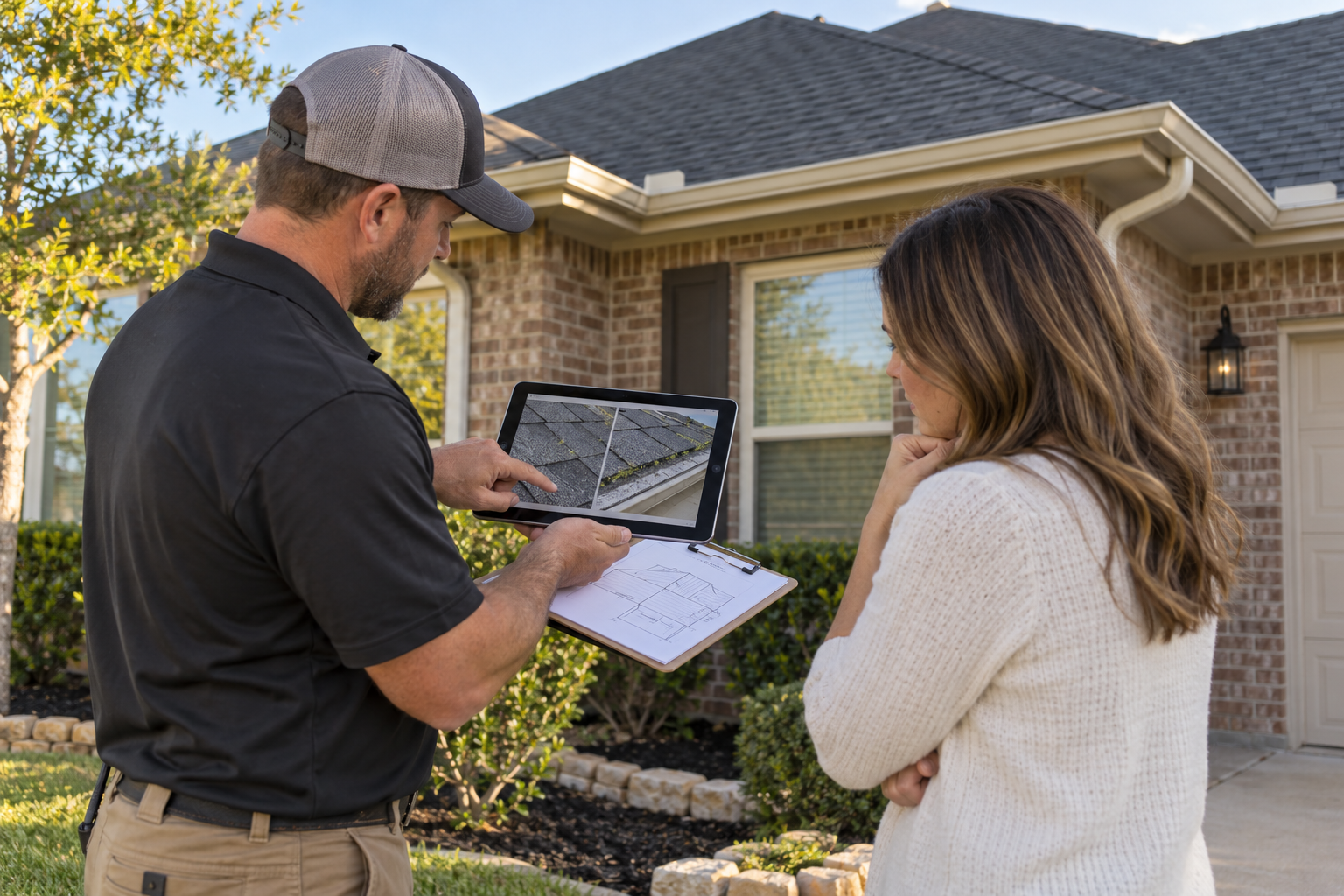
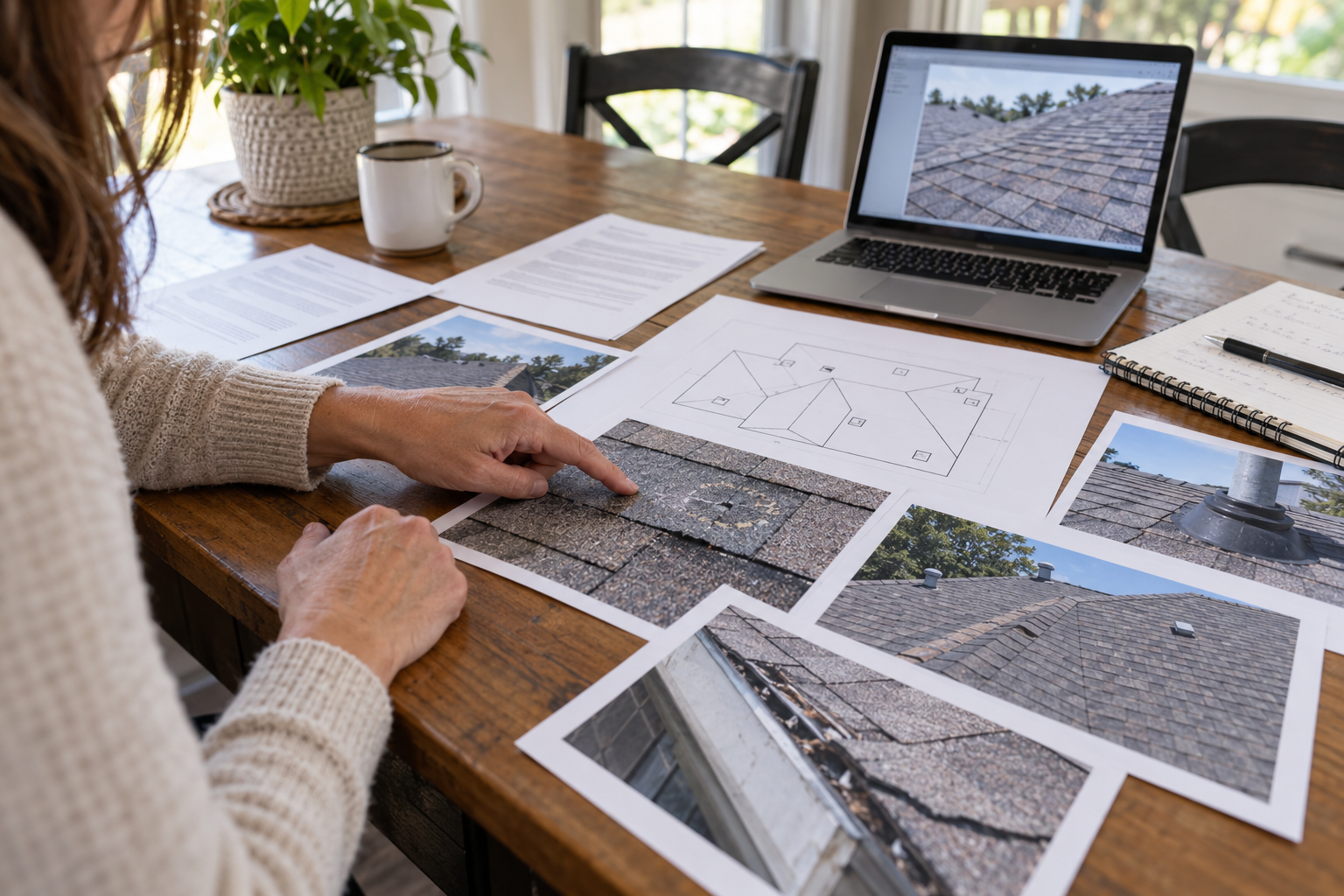
A repair inspection should review more than the reported leak. Examine roof field, seams, fasteners, flashings, curbs, pipes, drains, scuppers, gutters, edges, parapets, coping, equipment, traffic areas, prior patches, ponding evidence, and accessible interior conditions. A roof plan and labeled photographs help connect the proposed repair to a defined location and quantity.
The repair record should identify the roof area, component, defect, preparation, compatible material, responsible party, completion date, and follow-up. That makes the work measurable and prevents future inspectors from mistaking an undocumented patch for original construction or assuming a recurring leak was permanently resolved.
Moisture Testing Before Repair
Infrared, capacitance, nuclear, probing, core samples, or test cuts may be appropriate when moisture extent affects the scope. Every method has limitations related to roof construction, weather, calibration, access, and interpretation. Suspect areas may require verification. Wet insulation or deteriorated deck should not be hidden beneath a patch without evaluation and an approved plan.
Safety and access control are part of the scope. Wet roofs, heat, lightning, fragile skylights, electrical hazards, chemicals, restricted zones, and unprotected edges can limit work. Trained personnel should use an appropriate access and fall-protection plan, while building staff manage interior hazards from a safe location.
TPO Roof Repair in Houston
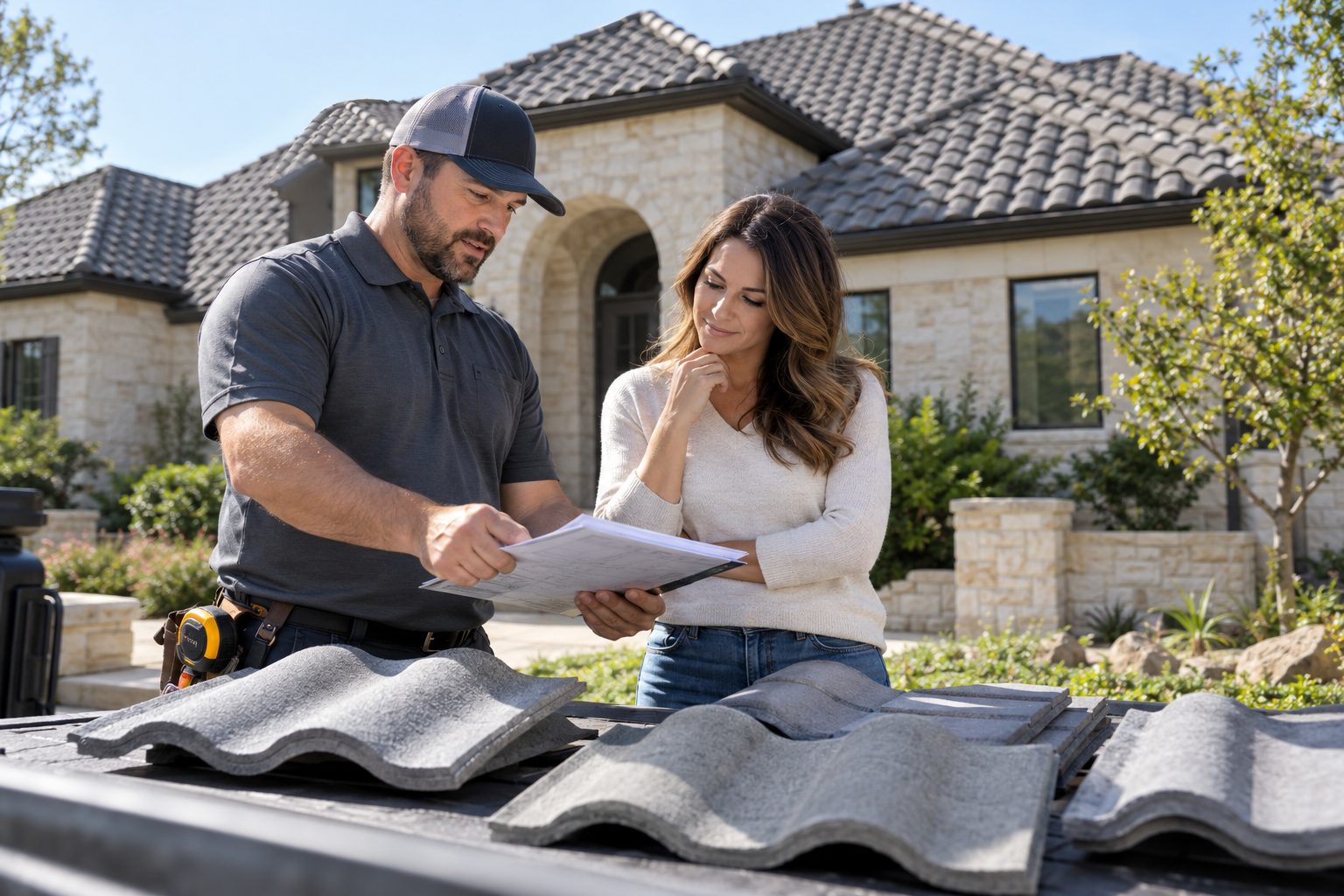
TPO repairs may address open welds, punctures, cuts, failed flashings, damaged terminations, loose attachment, drains, edges, and traffic damage. The membrane must be identified, cleaned, prepared, and repaired with compatible products and current procedures. Heat welding requires correct temperature, speed, pressure, overlap, probing, and weather conditions. A patch should extend to sound prepared membrane.
Manufacturer documents and project conditions should control cleaners, primers, membranes, plates, fasteners, tapes, sealants, mastics, coatings, temperatures, cure times, and test methods. A convenient generic material can be incompatible with the existing roof and make later permanent repair or warranty review more difficult.
PVC Roof Repair in Houston
PVC repairs can address welded seams, punctures, shrinkage, flashings, terminations, chemical exposure, grease, drains, and prior patches. Not every white membrane is PVC, and formulation or age can affect preparation. Restaurant and industrial exhaust may contaminate surfaces. Use compatible PVC materials and verify weld quality rather than applying generic coating or asphaltic mastic.
Owners should distinguish observed facts, reported history, test data, and professional opinion. A stain confirms that moisture was present, but it does not prove the entry point, date, cause, or policy coverage. Clear qualifications make the repair decision more credible and useful.
EPDM Roof Repair in Houston
EPDM repairs may involve seams, tapes, adhesives, flashings, terminations, shrinkage, punctures, patches, drains, edges, and penetrations. Clean and prime the rubber as required, remove failed materials, and use compatible EPDM components. Old black membrane can be difficult to prepare, and widespread shrinkage or attachment problems may exceed a targeted repair scope.
Repair should be evaluated against the owner's capital plan. If evidence shows that defects are recurring or the assembly is no longer a reasonable repair candidate, the contractor should say so. Early notice gives the owner time to compare systems, consult insurers, coordinate tenants, and budget replacement.
Commercial Metal Roof Repair
Metal repair should address the actual panel, seam, clip, fastener, washer, lap, closure, flashing, corrosion, penetration, gutter, ridge, rake, or transition condition. Thermal movement can elongate holes and stress seals. Simply adding sealant over every screw may fail if panels are loose, metal is thin or corroded, fastener engagement is poor, or movement remains uncontrolled.
The repair record should identify the roof area, component, defect, preparation, compatible material, responsible party, completion date, and follow-up. That makes the work measurable and prevents future inspectors from mistaking an undocumented patch for original construction or assuming a recurring leak was permanently resolved.
Modified Bitumen Roof Repair
Modified bitumen repairs may correct open laps, splits, punctures, failed flashings, blisters selected for treatment, exposed reinforcement, drains, and edge conditions. Identify whether the system and repair method permit torch, hot asphalt, cold adhesive, self-adhered material, or liquid-applied components. Fire safety, substrate, occupancy, weather, and manufacturer requirements must shape the method.
Safety and access control are part of the scope. Wet roofs, heat, lightning, fragile skylights, electrical hazards, chemicals, restricted zones, and unprotected edges can limit work. Trained personnel should use an appropriate access and fall-protection plan, while building staff manage interior hazards from a safe location.
Roof Coating Repairs
Coated roofs may develop punctures, cracks, splits, pinholes, delamination, thin areas, failed reinforcement, or damaged details. Identify the existing chemistry and determine whether the surface can be cleaned and recoated compatibly. Repair the underlying membrane or substrate where needed. Adding another layer over dirt, moisture, loose material, or incompatible coating can trap the problem.
Manufacturer documents and project conditions should control cleaners, primers, membranes, plates, fasteners, tapes, sealants, mastics, coatings, temperatures, cure times, and test methods. A convenient generic material can be incompatible with the existing roof and make later permanent repair or warranty review more difficult.
Repairing Drains Scuppers and Gutters
Drainage repair may involve strainers, clamping rings, membrane flashings, sumps, scuppers, conductor heads, gutters, downspouts, overflows, crickets, tapered insulation, or deck conditions. Clearing debris is maintenance; correcting slope or structural deflection is a different project. Persistent ponding should be mapped and evaluated rather than hidden under repeated patching around the drain.
Owners should distinguish observed facts, reported history, test data, and professional opinion. A stain confirms that moisture was present, but it does not prove the entry point, date, cause, or policy coverage. Clear qualifications make the repair decision more credible and useful.
Repairing Curbs Pipes and Penetrations
Curbs and penetrations move, vibrate, carry condensate, and interrupt the roof field. Repair can require removing failed flashing, rebuilding corners, raising low curbs, replacing pitch-pan fill, adding compatible boots, correcting counterflashing, supporting pipes, or coordinating equipment removal. Generic sealant applied across dirty, wet, moving, or incompatible surfaces rarely produces a durable detail.
Repair should be evaluated against the owner's capital plan. If evidence shows that defects are recurring or the assembly is no longer a reasonable repair candidate, the contractor should say so. Early notice gives the owner time to compare systems, consult insurers, coordinate tenants, and budget replacement.
Repairing Roof Edges and Wind Damage
Corners and perimeters experience elevated wind pressures. Inspect coping, fascia, edge metal, cleats, fasteners, membranes, sealants, terminations, and roof-to-wall transitions. Loose metal and accessories can become hazards. A permanent edge repair must restore attachment and water control consistent with the assembly; cosmetic caulk cannot substitute for missing fasteners, failed cleats, or damaged substrate.
The repair record should identify the roof area, component, defect, preparation, compatible material, responsible party, completion date, and follow-up. That makes the work measurable and prevents future inspectors from mistaking an undocumented patch for original construction or assuming a recurring leak was permanently resolved.
Hail Damage Roof Repair
Hail can affect membranes, metal, flashings, vents, skylights, coatings, rooftop equipment, insulation, and deck depending on the complete assembly and impact conditions. Cosmetic marks and functional damage require different analysis. Photograph locations and patterns, preserve records, and distinguish prior deterioration from observed storm effects. Repairability depends on material, extent, moisture, and manufacturer requirements.
Safety and access control are part of the scope. Wet roofs, heat, lightning, fragile skylights, electrical hazards, chemicals, restricted zones, and unprotected edges can limit work. Trained personnel should use an appropriate access and fall-protection plan, while building staff manage interior hazards from a safe location.
Repairing Storm Related Roof Leaks
After wind or heavy rain, review edges, seams, laps, fasteners, penetrations, drains, walls, equipment panels, displaced accessories, and interior pathways. Temporary protection should limit additional damage while preserving evidence where practical. Do not promise insurance coverage or a specific cause from appearance alone. The written repair scope should be based on documented physical conditions.
Manufacturer documents and project conditions should control cleaners, primers, membranes, plates, fasteners, tapes, sealants, mastics, coatings, temperatures, cure times, and test methods. A convenient generic material can be incompatible with the existing roof and make later permanent repair or warranty review more difficult.
Why Gravel Surfaced BUR Is Difficult to Repair
Aggregate hides the built-up membrane and can conceal cracks, blisters, deteriorated felts, moisture pathways, old repairs, and irregular asphalt. Gravel must be moved in controlled areas before the surface can be evaluated or prepared. Loose aggregate can migrate into drains and low points. A surface patch may bond poorly when the true substrate is dirty, unstable, wet, or badly deteriorated.
Owners should distinguish observed facts, reported history, test data, and professional opinion. A stain confirms that moisture was present, but it does not prove the entry point, date, cause, or policy coverage. Clear qualifications make the repair decision more credible and useful.
Repeated gravel BUR repairs can conceal worsening moisture and deterioration without creating a reliable long term solution.
When to Stop Patching a Gravel BUR Roof
Replacement or an engineered recover should be considered when an aging gravel BUR has repeated leaks, widespread moisture, extensive old patches, failed flashings, poor drainage, unstable surfacing, deck concerns, or insurer restrictions. Loose gravel is not a dependable coating substrate. Continued patching can spend operating money without resolving concealed deterioration or improving long-term certainty.
Repair should be evaluated against the owner's capital plan. If evidence shows that defects are recurring or the assembly is no longer a reasonable repair candidate, the contractor should say so. Early notice gives the owner time to compare systems, consult insurers, coordinate tenants, and budget replacement.
Commercial Roof Repair and Insurance Claims
A contractor can document roof conditions, emergency protection, repair scope, photographs, measurements, invoices, and completed work. It cannot guarantee coverage, claim approval, depreciation, deductibles, renewal, or premiums. The owner should review the policy, report damage promptly, follow carrier instructions, preserve evidence, and obtain written clarification when repair-versus-replacement requirements are disputed.
The repair record should identify the roof area, component, defect, preparation, compatible material, responsible party, completion date, and follow-up. That makes the work measurable and prevents future inspectors from mistaking an undocumented patch for original construction or assuming a recurring leak was permanently resolved.
Repair Documentation That Property Owners Need
Keep the inspection report, roof plan, labeled photographs, material data, moisture findings, test results, repair scope, change orders, daily reports, weather, batch information, completion photographs, invoice, warranty communication, and follow-up inspection. Documentation helps the next contractor understand what changed and supports maintenance, capital planning, insurance conversations, and ownership transitions.
Safety and access control are part of the scope. Wet roofs, heat, lightning, fragile skylights, electrical hazards, chemicals, restricted zones, and unprotected edges can limit work. Trained personnel should use an appropriate access and fall-protection plan, while building staff manage interior hazards from a safe location.
Repairing Roof Damage Around HVAC Equipment
HVAC service can expose or damage roof flashings, curbs, supports, condensate lines, conduit, and membrane traffic areas. Before repair, coordinate equipment shutdown, air intakes, interior protection, and access. Correct low curbs, unsupported lines, open counterflashing, deteriorated seals, and punctures with compatible details. A roofing repair cannot succeed if continuing mechanical discharge or vibration recreates the same failure.
Manufacturer documents and project conditions should control cleaners, primers, membranes, plates, fasteners, tapes, sealants, mastics, coatings, temperatures, cure times, and test methods. A convenient generic material can be incompatible with the existing roof and make later permanent repair or warranty review more difficult.
Repairing Roof to Wall Transitions
Roof-to-wall conditions combine vertical and horizontal water control. Inspect base flashing, counterflashing, coping, masonry, siding, sealant joints, through-wall flashing, termination bars, reglets, and drainage above the roof. Water entering the wall can appear to be a roof leak. The scope should assign responsibility clearly when masonry, glazing, siding, or structural work falls outside the roofing trade.
Owners should distinguish observed facts, reported history, test data, and professional opinion. A stain confirms that moisture was present, but it does not prove the entry point, date, cause, or policy coverage. Clear qualifications make the repair decision more credible and useful.
Repair Closeout and Follow Up Inspection
Closeout should include photographs before, during, and after repair; material and batch records; repair locations; test results; weather; change orders; debris removal; and any warranty notification. Inspect the completed detail after curing and, when appropriate, after rainfall. Add the repaired area to the next scheduled roof inspection so the owner can confirm that the failure pathway was corrected rather than temporarily hidden.
Repair should be evaluated against the owner's capital plan. If evidence shows that defects are recurring or the assembly is no longer a reasonable repair candidate, the contractor should say so. Early notice gives the owner time to compare systems, consult insurers, coordinate tenants, and budget replacement.
Commercial Roof Repair Cost in Houston
Repair cost depends on access, height, roof type, defect location, moisture, deck condition, demolition, cleaning, compatible materials, equipment coordination, interior protection, safety, testing, weather, emergency timing, permits, disposal, and warranty procedures. A low service-call price may cover only surface treatment. Owners should request the method, limits, quantities, exclusions, and concealed-condition pricing in writing.
The repair record should identify the roof area, component, defect, preparation, compatible material, responsible party, completion date, and follow-up. That makes the work measurable and prevents future inspectors from mistaking an undocumented patch for original construction or assuming a recurring leak was permanently resolved.
How to Compare Commercial Roof Repair Proposals
Compare diagnosis, mapped locations, removal limits, substrate preparation, wet-material replacement, membrane or metal components, seams, fasteners, flashings, primers, sealants, coatings, tests, safety, access, temporary protection, cleanup, documentation, warranty impact, exclusions, and follow-up. Two proposals are not comparable merely because both use the word repair. Ask what failure mechanism each scope corrects.
Safety and access control are part of the scope. Wet roofs, heat, lightning, fragile skylights, electrical hazards, chemicals, restricted zones, and unprotected edges can limit work. Trained personnel should use an appropriate access and fall-protection plan, while building staff manage interior hazards from a safe location.
When Repair Is the Right Decision
Repair is appropriate when defects are isolated, the surrounding roof remains serviceable, wet materials are limited and removable, attachment and deck are sound, compatible methods are available, and the work supports the owner's remaining service plan. A good repair restores a defined detail and establishes an inspection date rather than promising an unlimited extension of roof life.
Manufacturer documents and project conditions should control cleaners, primers, membranes, plates, fasteners, tapes, sealants, mastics, coatings, temperatures, cure times, and test methods. A convenient generic material can be incompatible with the existing roof and make later permanent repair or warranty review more difficult.
When Restoration or Recover Is Better
Restoration or recover may be considered when defects are broader than isolated repairs but the assembly remains a qualified candidate. Coatings require compatible, prepared, sufficiently dry substrates and manufacturer acceptance. Recover systems require attachment, moisture, drainage, code, weight, and detail evaluation. Neither approach should be selected simply to avoid confronting a failed underlying roof.
Owners should distinguish observed facts, reported history, test data, and professional opinion. A stain confirms that moisture was present, but it does not prove the entry point, date, cause, or policy coverage. Clear qualifications make the repair decision more credible and useful.
When Commercial Roof Replacement Is Necessary
Replacement becomes more defensible when moisture is widespread, deck or structure is damaged, attachment is unreliable, details repeatedly fail, materials are incompatible, repair quantities are extensive, the roof has too many layers, or the owner needs to correct insulation, drainage, edges, penetrations, and equipment coordination. The decision should follow evidence and total ownership needs.
Repair should be evaluated against the owner's capital plan. If evidence shows that defects are recurring or the assembly is no longer a reasonable repair candidate, the contractor should say so. Early notice gives the owner time to compare systems, consult insurers, coordinate tenants, and budget replacement.
How Showtime Exteriors Approaches Houston Roof Repair
Showtime Exteriors begins with roof history, reported symptoms, system identification, inspection, drainage, details, prior repairs, interior evidence, access, operations, and insurer questions. The team develops a documented scope for emergency protection, permanent repair, maintenance, testing, restoration, recover, retrofit, or replacement. The recommendation follows observed conditions rather than a predetermined product.
The repair record should identify the roof area, component, defect, preparation, compatible material, responsible party, completion date, and follow-up. That makes the work measurable and prevents future inspectors from mistaking an undocumented patch for original construction or assuming a recurring leak was permanently resolved.
Commercial Roofing Resources for Houston Owners
Learn about Showtime Exteriors, its commercial roofing services, and the company's commercial roofing resources. Houston property owners can also review commercial roofing in Houston, commercial roof inspection in Houston, and commercial roof maintenance in Houston.
Authoritative references include GAF's guide to inspecting a low-slope roof for repair or replacement, the NRCA roof repair and maintenance program, GAF's roof asset management and maintenance resources, FEMA's low-slope roof systems fact sheet, and OSHA's construction fall-protection requirements.
Frequently Asked Questions About Commercial Roof Repair Houston
How quickly should a commercial roof leak be repaired
Protect people, electrical systems, inventory, and operations immediately, then arrange qualified roof inspection as weather and safety permit. Temporary protection should be documented and followed by permanent correction.
Can every commercial roof leak be repaired
Many isolated defects can be repaired, but widespread moisture, damaged deck, failed attachment, incompatible materials, advanced deterioration, or extensive recurring leaks may require restoration, recover, retrofit, or replacement.
How much does commercial roof repair cost in Houston
Cost varies with access, system, defect, moisture, materials, testing, safety, equipment coordination, emergency timing, and repair limits. Request a written method and concealed-condition pricing rather than relying on a universal unit price.
Can gravel BUR roof leaks be repaired permanently
Some isolated defects may be repairable, but gravel can conceal deterioration and moisture. Controlled aggregate removal and investigation are required. Repeated leaks or widespread defects may make replacement more responsible than another patch.
Can a coating fix a gravel roof
Not by applying coating over loose gravel. Restoration requires substrate qualification, preparation, moisture and adhesion testing, repairs, and manufacturer acceptance. Many aging gravel BUR roofs are poor candidates.
Does Showtime Exteriors handle emergency roof repairs
Showtime Exteriors assesses commercial leaks and storm conditions, develops temporary protection when appropriate, and plans compatible permanent repairs or replacement based on documented conditions. Call 817-400-ROOF (7663).
Will a repair guarantee insurance coverage
No. Contractors can document conditions and completed work but cannot guarantee coverage, claim approval, deductibles, depreciation, renewal, or premiums. Review the policy and carrier requirements.
Is roof sealant a permanent repair
Sometimes sealant is a specified component of a permanent detail, but generic sealant over dirt, moisture, movement, corrosion, or incompatible material is usually not a complete repair.
Should wet insulation be removed
Wet or deteriorated insulation commonly requires removal within the defined repair area, but scope should follow investigation, system requirements, and project-specific conditions. Moisture should not simply be concealed.
Can tenants remain inside during roof repair
Often they can, but the plan should address noise, odors, air intakes, falling debris, interior protection, access, sensitive operations, and emergency procedures. Coordination requirements vary by facility.
When is replacement better than repair
Replacement is often better when moisture, deck damage, attachment failure, recurring leaks, deteriorated details, incompatible patches, multiple layers, poor drainage, or underwriting requirements make targeted repair unreliable.
What is the first step
Document the interior condition safely, protect contents, gather the roof history, and schedule a professional inspection that identifies the entry point, failure mechanism, repairability, and permanent next step.
Schedule Commercial Roof Repair in Houston
Showtime Exteriors can inspect the roof, document the failure, complete emergency protection and compatible permanent repairs, and explain when restoration, recover, retrofit, or replacement is the more responsible path.
Call 817-400-ROOF (7663) for a Houston commercial roof repair assessment.