



Commercial Roof Inspection Houston
What Houston Property Owners Should Expect From a Professional Roof Report

A commercial roof inspection should give a Houston property owner enough evidence to make a decision. It should identify the roof system, document observed conditions, map defects, distinguish maintenance from storm-related concerns, explain testing limitations, and recommend a practical next step. A handful of unlabeled photographs and a one-line replacement recommendation do not provide that foundation.
Houston commercial roofs face intense ultraviolet exposure, high surface temperatures, humidity, heavy rain, hail, straight-line wind, tropical weather, rooftop equipment traffic, and rapid weather changes. These conditions can accelerate sealant failure, expose weak edges, overwhelm drainage, move metal components, and turn a small opening into interior damage. Regular and post-storm inspections help owners find problems while repair options may still be available.
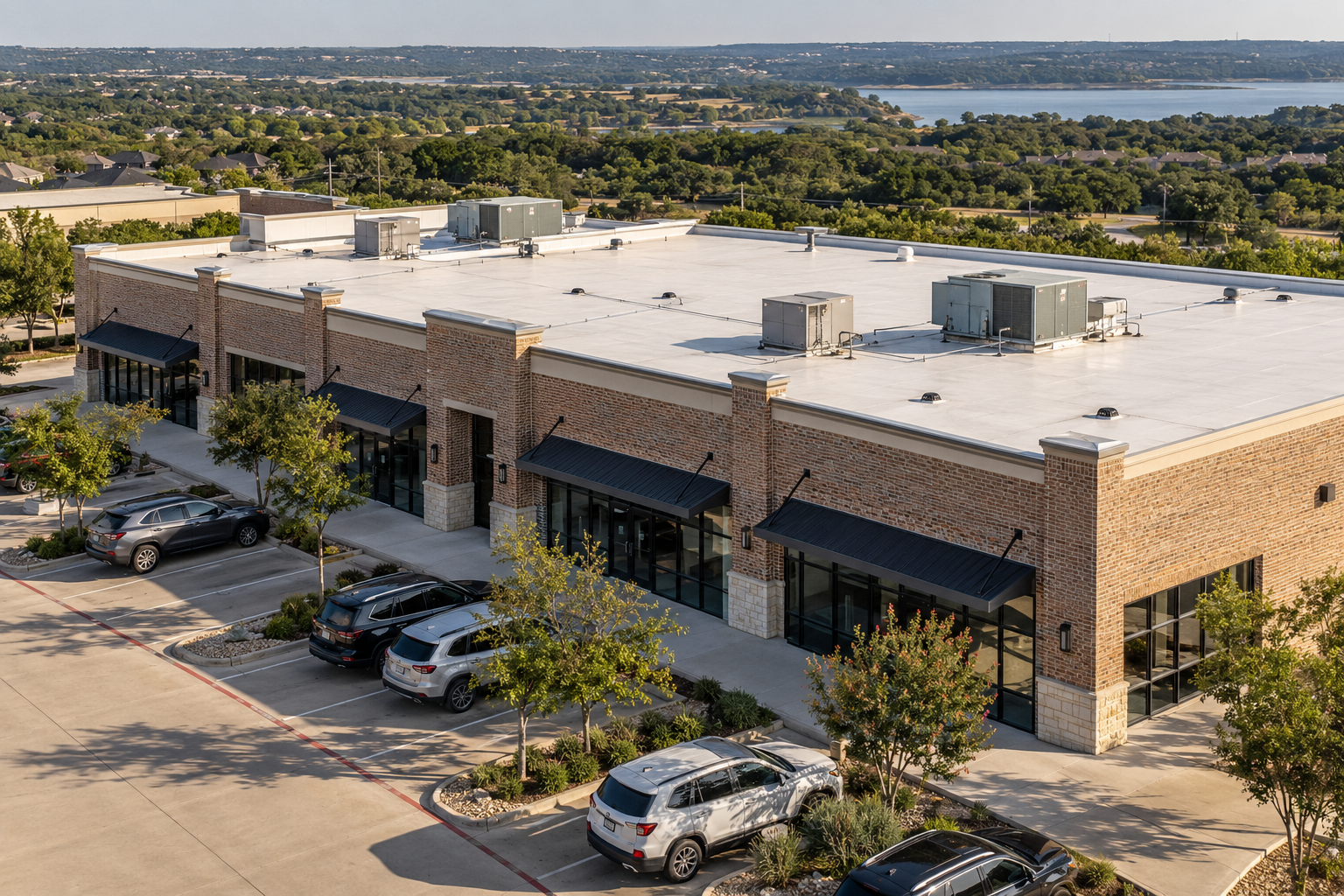
Showtime Exteriors provides commercial roof inspections for Houston and properties across Texas. The team evaluates metal, TPO, PVC, EPDM, modified bitumen, coatings, asphaltic systems, and aging gravel-surfaced built-up roofs. Gravel BUR deserves particular caution because aggregate can conceal cracked felts, moisture, old patches, blisters, drainage defects, and the true condition of the weathering surface. The roof should be investigated rather than praised or assumed serviceable.
Call Showtime Exteriors at 817-400-ROOF (7663) to schedule a Houston commercial roof inspection and roof grade assessment.
What Is a Commercial Roof Inspection
A commercial roof inspection is a documented evaluation of the accessible roof assembly and related building evidence. The inspector reviews the roof field, seams, laps, fasteners, flashings, edges, drains, penetrations, equipment curbs, expansion joints, traffic areas, repairs, and visible interior conditions. The exact scope depends on the purpose, access, roof type, safety, weather, and whether testing is authorized.
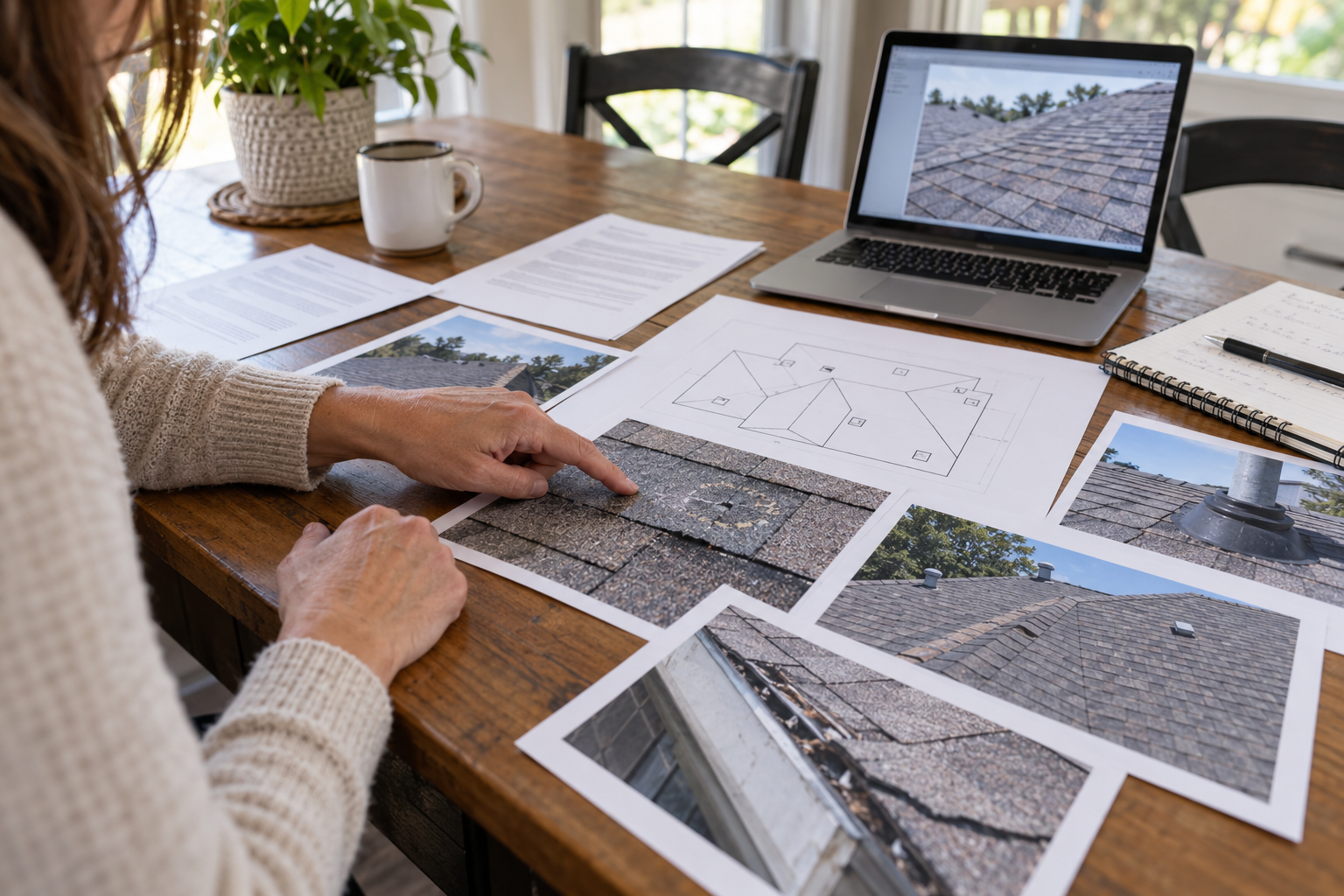
The report should connect every important observation to a roof area or component. That discipline allows an owner, contractor, consultant, broker, or insurer to understand what was seen and what remains uncertain. It also prevents a single photograph from being used to describe an entire roof without adequate support.
Why Houston Buildings Need Planned Inspections
Heat, ultraviolet radiation, humidity, rain, hail, and wind place recurring stress on Houston roofs. Mechanical contractors and other trades also create punctures, displaced panels, open flashing, abandoned equipment penetrations, and debris. Planned inspections create a condition history, allowing an owner to compare changes over time and address developing issues before the next renewal, storm season, or capital-budget deadline.
Safety and access limitations matter. Wet surfaces, lightning, high wind, fragile skylights, electrical hazards, heat, restricted areas, and unprotected edges may limit the inspection. Those limits should be stated, and a return visit or specialized access plan should be recommended when an important area could not be reviewed safely.
When Should a Commercial Roof Be Inspected
A practical program usually includes scheduled inspections and additional inspections after severe storms, reported leaks, equipment work, construction near the roof, or a change in ownership or insurance requirements. Frequency should reflect the system, age, condition, warranty, manufacturer guidance, exposure, occupancy, and prior leak history. An inspection calendar is useful only when findings lead to documented maintenance and follow-up.
A professional inspector should separate visible condition, reported history, test data, and inference. For example, a ceiling stain proves prior moisture at that location, but not the date, source, or current activity. Clear language makes the report more useful for maintenance and less vulnerable to overstatement.
Inspection Before Insurance Renewal
Before renewal, gather the carrier or broker's written roof questions, required forms, age records, prior claims, invoices, warranties, and requested photographs. The inspection can document current conditions and completed repairs, but a contractor cannot guarantee renewal, coverage, premiums, deductibles, or underwriting treatment. The report should state what was observed without presenting an insurer's future decision as certain.
The owner should provide prior reports, warranties, invoices, leak logs, plans, equipment records, and claim documents when available. Comparing present observations with dated records can show whether a defect is stable, recurring, repaired, or new. Missing records should be noted instead of replaced with unsupported assumptions.
Inspection After Hail or Wind
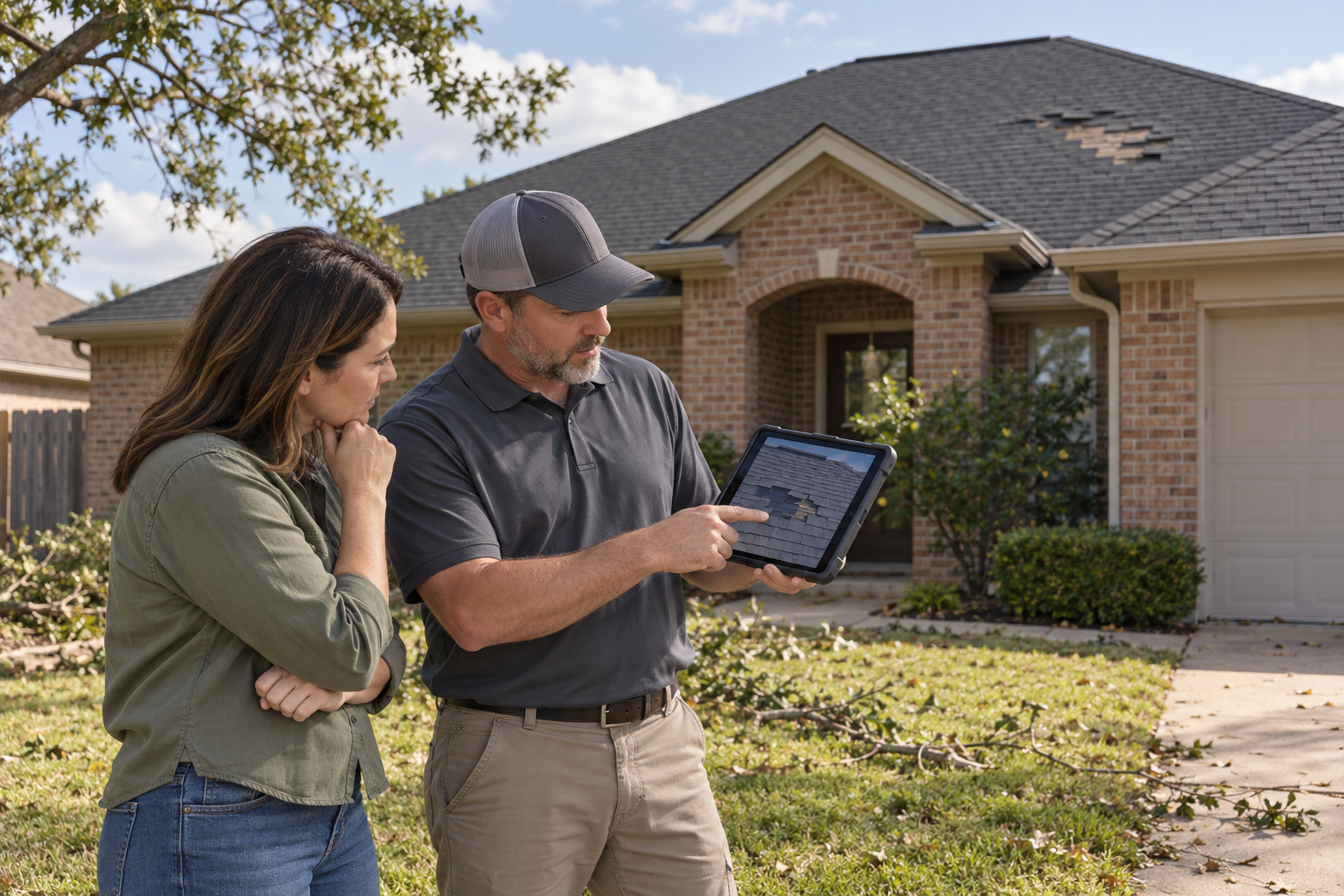
A post-storm inspection should record the reported event date, access date, weather information used, roof areas reviewed, exterior elevations, rooftop equipment, drainage, metal components, membrane or panel conditions, and interior evidence. Hail marks, cosmetic effects, age-related deterioration, installation defects, and functional damage should not be treated as interchangeable. Conclusions need mapped physical evidence and appropriate qualifications.
Inspection is valuable only when action follows. Immediate temporary protection, permanent repair, cleaning, testing, monitoring, or design work should have an owner, target date, and completion record. Photographing completed work closes the loop and builds a stronger roof history for future decisions.
Inspection After a Roof Leak
The interior drip location is a starting point, not proof of the entry point. Water may travel along decking, insulation, purlins, joists, conduits, laps, or vapor retarders. The inspection should trace likely pathways, review conditions above and upslope, examine nearby penetrations and transitions, and note whether testing is needed. Emergency drying and temporary protection should be documented separately from permanent repair.
The report should connect every important observation to a roof area or component. That discipline allows an owner, contractor, consultant, broker, or insurer to understand what was seen and what remains uncertain. It also prevents a single photograph from being used to describe an entire roof without adequate support.
Inspection Before Buying a Commercial Property
A pre-acquisition roof inspection helps a buyer understand system type, approximate age when documented, visible condition, repair history, moisture concerns, drainage, access, maintenance needs, and likely capital decisions. It is not a substitute for structural, environmental, code, or insurance due diligence. The report should identify limitations and recommend specialty review when roof findings extend beyond a visual roofing assessment.
Safety and access limitations matter. Wet surfaces, lightning, high wind, fragile skylights, electrical hazards, heat, restricted areas, and unprotected edges may limit the inspection. Those limits should be stated, and a return visit or specialized access plan should be recommended when an important area could not be reviewed safely.
Inspection Before Repair Restoration or Replacement
A contractor should not select repair, coating restoration, recover, retrofit, or replacement before understanding the substrate and failure pattern. Inspection establishes whether defects are isolated, whether wet materials may be removable, whether attachment is reliable, and whether the roof can accept the proposed work. Core samples, moisture testing, adhesion tests, uplift review, or engineering may be required for a defensible scope.
A professional inspector should separate visible condition, reported history, test data, and inference. For example, a ceiling stain proves prior moisture at that location, but not the date, source, or current activity. Clear language makes the report more useful for maintenance and less vulnerable to overstatement.
What the Inspector Should Review Inside the Building
Interior review may include ceiling stains, active moisture, deck corrosion, insulation condition where visible, daylight at openings, damaged finishes, inventory exposure, mechanical rooms, wall transitions, and the relationship between leak reports and rooftop geometry. Occupants and maintenance staff can identify when leaks occur, wind direction, storm intensity, prior repairs, and equipment events. Their statements should be recorded as history, not mistaken for verified roof conditions.
The owner should provide prior reports, warranties, invoices, leak logs, plans, equipment records, and claim documents when available. Comparing present observations with dated records can show whether a defect is stable, recurring, repaired, or new. Missing records should be noted instead of replaced with unsupported assumptions.
What the Inspector Should Review on the Roof
The roof review should follow a repeatable route and roof plan. It should cover field membrane or panels, seams, laps, fasteners, coatings, flashings, curbs, penetrations, drains, scuppers, gutters, downspouts, parapets, coping, edges, expansion joints, skylights, hatches, traffic paths, debris, abandoned items, ponding evidence, previous repairs, and adjacent walls. Photos need locations and orientation.
Inspection is valuable only when action follows. Immediate temporary protection, permanent repair, cleaning, testing, monitoring, or design work should have an owner, target date, and completion record. Photographing completed work closes the loop and builds a stronger roof history for future decisions.
Roof Drainage Evidence
Drainage observations should identify drains, scuppers, gutters, downspouts, strainers, overflow provisions, debris, sediment lines, biological growth, low areas, compressed insulation, blocked outlets, and signs of deck deflection. Ponding after rain may require a timed follow-up rather than a dry-day assumption. An inspector can document drainage concerns, while design or structural changes may require additional professionals.
The report should connect every important observation to a roof area or component. That discipline allows an owner, contractor, consultant, broker, or insurer to understand what was seen and what remains uncertain. It also prevents a single photograph from being used to describe an entire roof without adequate support.
Edges Perimeters and Wind Vulnerability
Wind pressures are commonly higher at roof corners and perimeters. Inspect coping, fascia, gravel stops, edge metal, membranes, cleats, fasteners, sealants, terminations, and roof-to-wall transitions for movement, openings, corrosion, loose components, and prior repairs. Rooftop signs, gutters, equipment panels, abandoned materials, and unsecured accessories can become windborne hazards and should be included in the condition record.
Safety and access limitations matter. Wet surfaces, lightning, high wind, fragile skylights, electrical hazards, heat, restricted areas, and unprotected edges may limit the inspection. Those limits should be stated, and a return visit or specialized access plan should be recommended when an important area could not be reviewed safely.
Penetrations Curbs and Rooftop Equipment
Pipes, ducts, conduits, supports, skylights, hatches, vents, HVAC curbs, pitch pans, condensate lines, and equipment transitions are frequent maintenance points. Inspect flashings, counterflashings, sealants, fasteners, supports, vibration, drainage, rust, openings, and incompatible materials. Equipment technicians should coordinate with the roofer so service work does not leave punctures or unsealed penetrations.
A professional inspector should separate visible condition, reported history, test data, and inference. For example, a ceiling stain proves prior moisture at that location, but not the date, source, or current activity. Clear language makes the report more useful for maintenance and less vulnerable to overstatement.
TPO PVC and EPDM Inspection Points
Single-ply inspections should examine seams, welds or adhesive joints, flashings, terminations, fasteners and plates where visible, wrinkles, bridging, shrinkage, punctures, cuts, contamination, repairs, membrane weathering, edge attachment, drains, and traffic damage. TPO, PVC, and EPDM have different formulations and repair requirements. The report should identify the membrane rather than calling every white or black roof rubber.
The owner should provide prior reports, warranties, invoices, leak logs, plans, equipment records, and claim documents when available. Comparing present observations with dated records can show whether a defect is stable, recurring, repaired, or new. Missing records should be noted instead of replaced with unsupported assumptions.
Commercial Metal Roof Inspection Points
Metal roof inspections should document panel profile, seams, clips where accessible, exposed fasteners, washers, laps, closures, sealants, corrosion, finish loss, punctures, panel movement, ridge and rake details, gutters, transitions, penetrations, condensation evidence, and structural supports visible from below. Repeated caulking may hide movement or corroded metal without correcting the cause.
Inspection is valuable only when action follows. Immediate temporary protection, permanent repair, cleaning, testing, monitoring, or design work should have an owner, target date, and completion record. Photographing completed work closes the loop and builds a stronger roof history for future decisions.
Modified Bitumen and Smooth Asphaltic Roof Inspection
Inspect modified bitumen and smooth asphaltic roofs for open laps, splits, ridges, blisters, granule loss, surface erosion, exposed reinforcement, asphalt movement, punctures, incompatible repairs, flashings, drains, edge conditions, and moisture evidence. Not every blister should be opened, and not every surface crack proves a leak. The repair recommendation should reflect extent, location, moisture, and surrounding condition.
The report should connect every important observation to a roof area or component. That discipline allows an owner, contractor, consultant, broker, or insurer to understand what was seen and what remains uncertain. It also prevents a single photograph from being used to describe an entire roof without adequate support.
Why Gravel Surfaced BUR Needs More Than a Walkover
An aging gravel-surfaced built-up roof can look uniform while aggregate hides deteriorated felts, cracks, blisters, open laps, abandoned patches, moisture pathways, and irregular asphalt. Gravel also makes it harder to photograph the membrane, trace splits, evaluate adhesion, and create a predictable repair or coating surface. A superficial walkover should never be presented as proof that the concealed assembly is dry or sound.
Safety and access limitations matter. Wet surfaces, lightning, high wind, fragile skylights, electrical hazards, heat, restricted areas, and unprotected edges may limit the inspection. Those limits should be stated, and a return visit or specialized access plan should be recommended when an important area could not be reviewed safely.
Controlled inspection can reveal deterioration and moisture pathways concealed by gravel surfacing.
Documenting Gravel BUR for Insurance and Planning
The report should map gravel displacement, bare areas, ridges, blisters, drains, ponding evidence, flashings, repairs, interior leaks, and any test locations. Controlled investigation may require moving small aggregate areas, probing, moisture scanning, or core samples when authorized. If the roof is old or deterioration is widespread, replacement or an engineered recover may be more defensible than another layer of temporary patching.
A professional inspector should separate visible condition, reported history, test data, and inference. For example, a ceiling stain proves prior moisture at that location, but not the date, source, or current activity. Clear language makes the report more useful for maintenance and less vulnerable to overstatement.
Coated Roof Inspection Points
Inspect coated roofs for thickness variation, pinholes, cracks, splits, delamination, chalking, dirt accumulation, punctures, exposed reinforcement, repairs, ponding areas, seams, penetrations, and transitions. Identify the existing chemistry when possible because repair compatibility matters. A reflective surface can look clean from a distance while thin details or trapped moisture remain hidden.
The owner should provide prior reports, warranties, invoices, leak logs, plans, equipment records, and claim documents when available. Comparing present observations with dated records can show whether a defect is stable, recurring, repaired, or new. Missing records should be noted instead of replaced with unsupported assumptions.
Moisture Surveys and Their Limits
Infrared, electrical capacitance, nuclear, and other moisture-survey methods can help identify suspect areas, but results depend on roof construction, weather, calibration, operator experience, and verification. A scan is not automatically a leak map, and an anomaly is not always wet insulation. Findings should be mapped and confirmed by appropriate non-destructive or destructive investigation before repair quantities are finalized.
Inspection is valuable only when action follows. Immediate temporary protection, permanent repair, cleaning, testing, monitoring, or design work should have an owner, target date, and completion record. Photographing completed work closes the loop and builds a stronger roof history for future decisions.
Core Samples and Test Cuts
Core samples can reveal roof layers, thickness, adhesion, moisture, insulation type, vapor retarder, and deck condition at selected points. They are destructive and require authorization, safe location selection, immediate watertight repair, photographs, labels, and chain-of-custody practices when evidence matters. A few cores cannot prove the condition of every square foot, so selection should follow observations and survey data.
The report should connect every important observation to a roof area or component. That discipline allows an owner, contractor, consultant, broker, or insurer to understand what was seen and what remains uncertain. It also prevents a single photograph from being used to describe an entire roof without adequate support.
Adhesion Fastener and Uplift Testing
Restoration, recover, and retrofit scopes may require adhesion tests, pull tests, fastener withdrawal testing, seam cuts, or engineered uplift analysis. These procedures answer different questions and should follow applicable manufacturer or design requirements. The report needs test locations, methods, results, limitations, and the connection between results and the recommended assembly.
Safety and access limitations matter. Wet surfaces, lightning, high wind, fragile skylights, electrical hazards, heat, restricted areas, and unprotected edges may limit the inspection. Those limits should be stated, and a return visit or specialized access plan should be recommended when an important area could not be reviewed safely.
How to Photograph Commercial Roof Conditions
Photographs should move from context to detail: building elevation, roof area, orientation, component, defect, and a close view with scale where useful. Each image should correspond to a roof plan or location label. Preserve original files and timestamps when a claim or dispute is possible. Avoid editing that removes context, and distinguish representative photographs from a complete count of defects.
A professional inspector should separate visible condition, reported history, test data, and inference. For example, a ceiling stain proves prior moisture at that location, but not the date, source, or current activity. Clear language makes the report more useful for maintenance and less vulnerable to overstatement.
What a Commercial Roof Inspection Report Should Include
A useful report identifies the property, inspection date, weather, purpose, participants, access, roof areas, system types, known history, observations, photographs, maps, tests, limitations, immediate actions, maintenance items, repair recommendations, capital options, priorities, and follow-up timing. It should separate facts from opinions and avoid unsupported guarantees. Readers should be able to locate each important condition.
The owner should provide prior reports, warranties, invoices, leak logs, plans, equipment records, and claim documents when available. Comparing present observations with dated records can show whether a defect is stable, recurring, repaired, or new. Missing records should be noted instead of replaced with unsupported assumptions.
How Findings Should Be Prioritized
Priorities can be organized as immediate life-safety or active-water concerns, near-term repairs, planned maintenance, monitoring, additional investigation, and capital replacement. Severity is not based only on visual size. A small opening above critical electrical equipment may demand faster action than a larger surface defect in a low-risk area. The report should explain urgency and consequences without using fear as a sales tactic.
Inspection is valuable only when action follows. Immediate temporary protection, permanent repair, cleaning, testing, monitoring, or design work should have an owner, target date, and completion record. Photographing completed work closes the loop and builds a stronger roof history for future decisions.
Roof Grade and Condition Categories
A roof grade can help summarize condition if the grading method is defined. The report should explain the factors considered, such as leakage, moisture, membrane or panel condition, flashings, drainage, repairs, attachment, age records, maintenance, and remaining uncertainty. A letter or number without criteria can mislead owners and insurers. The detailed evidence must remain primary.
The report should connect every important observation to a roof area or component. That discipline allows an owner, contractor, consultant, broker, or insurer to understand what was seen and what remains uncertain. It also prevents a single photograph from being used to describe an entire roof without adequate support.
Turning the Report Into a Repair Scope
Repair scopes should connect each item to a mapped condition and compatible method. Specify removal, substrate preparation, replacement materials, seam or flashing construction, fasteners, primers, coatings, testing, temporary protection, debris disposal, quantities, concealed-condition allowances, photographs, and final inspection. Vague instructions to seal all leaks do not define a measurable result.
Safety and access limitations matter. Wet surfaces, lightning, high wind, fragile skylights, electrical hazards, heat, restricted areas, and unprotected edges may limit the inspection. Those limits should be stated, and a return visit or specialized access plan should be recommended when an important area could not be reviewed safely.
Turning the Report Into a Capital Plan
The report can separate repairs that preserve serviceability from improvements that prepare for restoration, recover, retrofit, or replacement. Owners can then schedule design, budgets, insurer conversations, tenant coordination, equipment changes, and procurement. Capital planning should consider roof condition alongside insulation, drainage, edges, operations, warranties, code, and the owner's holding period.
A professional inspector should separate visible condition, reported history, test data, and inference. For example, a ceiling stain proves prior moisture at that location, but not the date, source, or current activity. Clear language makes the report more useful for maintenance and less vulnerable to overstatement.
How Showtime Exteriors Conducts Houston Roof Assessments
Showtime Exteriors starts with the purpose of the inspection and the building's history. The team documents accessible roof areas, visible defects, drainage, details, repairs, interior evidence, and operational constraints, then identifies whether additional testing is needed. Recommendations may include maintenance, repair, restoration, recover, retrofit, or replacement based on observed conditions rather than a predetermined product.
The owner should provide prior reports, warranties, invoices, leak logs, plans, equipment records, and claim documents when available. Comparing present observations with dated records can show whether a defect is stable, recurring, repaired, or new. Missing records should be noted instead of replaced with unsupported assumptions.
Commercial Roofing Resources for Houston Owners
Review Showtime Exteriors, its commercial roofing services, and the company's commercial roofing resources. Houston owners can also visit commercial roofing in Houston, commercial roof coatings in Houston, and commercial metal roofing in Houston.
Authoritative references include GAF's guide to what to expect from a professional commercial roof inspection, the NRCA roof inspection and maintenance guidance, FEMA's low-slope roof systems fact sheet, OSHA's general-industry fall-protection rule, and GAF's commercial warranty and guarantee resources.
Frequently Asked Questions About Commercial Roof Inspection Houston
How often should a commercial roof be inspected
Inspection frequency should follow the roof system, age, condition, exposure, warranty, manufacturer guidance, occupancy, and history. Many owners schedule spring and fall reviews plus additional inspections after severe storms, leaks, or rooftop work.
What does a commercial roof inspection cost in Houston
Cost depends on building size, roof areas, height, access, system complexity, documentation, testing, travel, safety, and the report's intended use. A basic visual assessment and a detailed condition survey with moisture testing are different scopes.
Is a free inspection enough for an insurance decision
It may provide useful initial observations, but the carrier may require specific forms, testing, age documentation, repairs, or professional reports. Obtain written requirements from the insurer or broker and match the inspection scope to the decision.
Can an inspector tell exactly when storm damage occurred
Not always. The inspector can document physical conditions, patterns, records, and available weather information. Assigning a precise date may require stronger evidence, expert analysis, and policy review. Unsupported certainty should be avoided.
Should a gravel BUR roof be inspected differently
Yes. Aggregate can conceal membrane deterioration, old patches, moisture pathways, and drainage defects. Controlled gravel displacement, moisture investigation, or core samples may be needed. A surface walkover cannot prove the concealed roof is dry or sound.
What evidence should be in the report
Expect labeled photographs, a roof plan or location method, system identification, component observations, defects, drainage, repairs, interior evidence, tests, limitations, priorities, and recommended actions. Important conclusions should be traceable to evidence.
Does a roof inspection guarantee insurance coverage
No. A contractor can document roof condition and completed work but cannot guarantee coverage, renewal, premiums, deductibles, depreciation, or claim results. Insurance decisions belong to the carrier under the policy and underwriting rules.
Can infrared scanning find every leak
No. Infrared surveys can identify thermal anomalies under suitable conditions, but they do not automatically identify leak entry points or prove that every anomaly is wet insulation. Verification and roof-construction knowledge are required.
Should tenants report small leaks
Yes. Early reports help protect interiors and provide timing and location evidence. Staff should photograph the condition safely, protect contents, note weather, and notify management. Roof access should be left to trained personnel.
What happens after the inspection
The owner should review priorities, authorize emergency protection if needed, obtain testing or design support, schedule repairs, document completion, and set the next inspection date. Capital items should enter the budget rather than remain buried in the report.
Can the same report be used for maintenance and a claim
The evidence may support both, but the scope and language should match the purpose. A maintenance assessment does not automatically establish cause, date of loss, coverage, or claim value. Preserve original evidence and request the appropriate professional review.
What is the first step
Gather the roof history, leak log, invoices, warranties, plans, and written insurer requirements, then schedule a documented inspection with safe access to roof and interior areas.
Schedule a Commercial Roof Inspection in Houston
A useful inspection replaces uncertainty with organized evidence. Showtime Exteriors can document accessible conditions, identify immediate repairs and testing needs, and help owners compare maintenance, restoration, recover, retrofit, and replacement options.
Call 817-400-ROOF (7663) to schedule a Houston commercial roof inspection and roof grade assessment.
Call Showtime Exteriors at 817-400-ROOF (7663) for a Houston commercial roof inspection and roof grade assessment
Showtime Exteriors 817-400-ROOF (7663) Texas Statewide Commercial Roofing