



Common Roof Insurance Claim Mistakes That Delay Payment
Avoid common roof insurance claim mistakes in Texas, from incomplete records and unclear estimates to depreciation paperwork, lender checks, and missed follow-up.
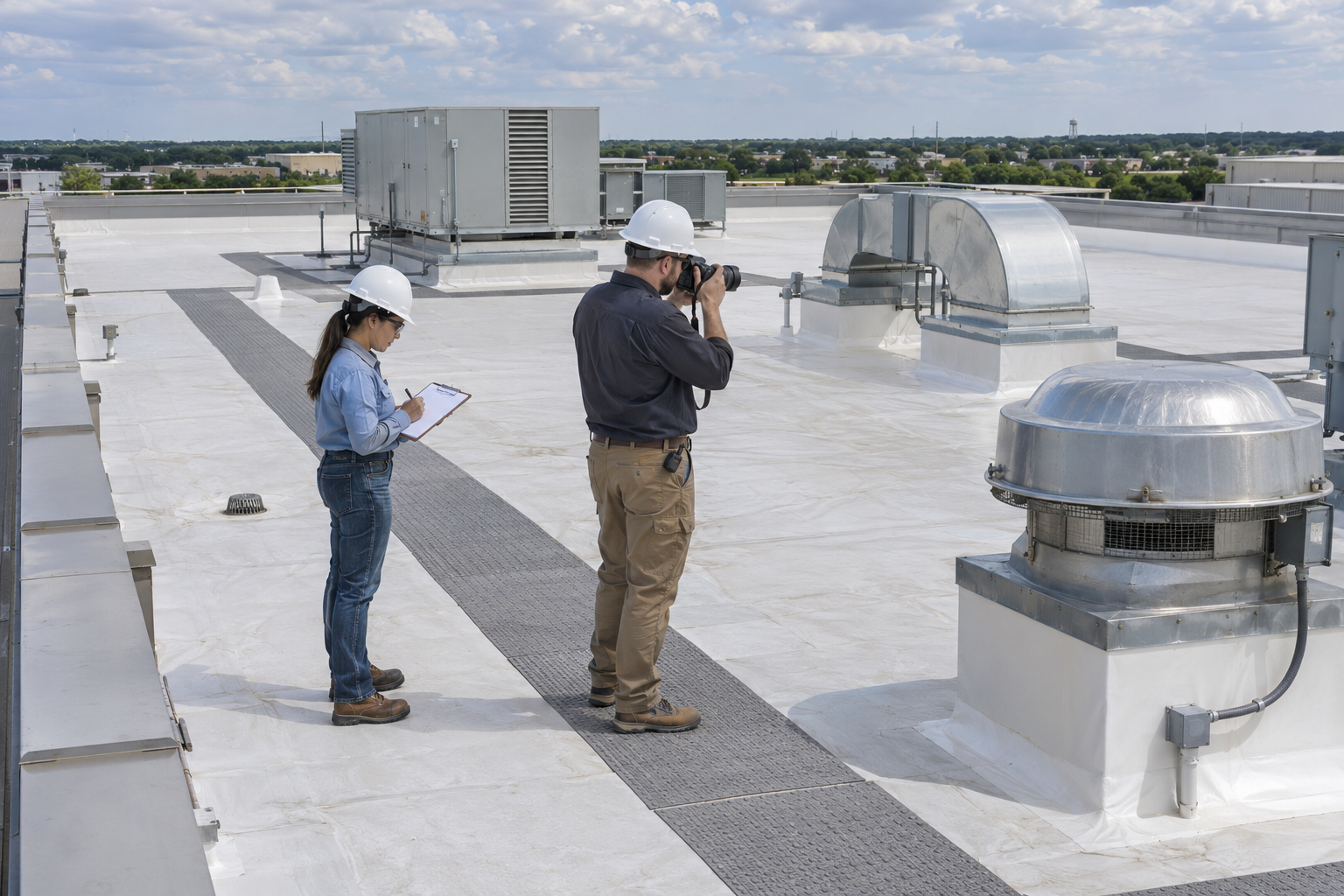
A roof insurance claim can become difficult to manage when photographs, estimates, insurer requests, repair decisions, and payment paperwork are spread across different conversations. Even a valid concern may require additional review when the information submitted does not clearly explain the property, observed damage, and work being proposed.
Owners cannot control every part of the claim process. They can improve the quality of their records, respond clearly to requests, understand who handles each responsibility, and avoid assumptions about coverage or payment.
Showtime Exteriors can provide roofing inspections, condition documentation, and repair or replacement estimates for Texas properties. This guide explains common administrative and project mistakes. Coverage decisions belong to the insurer, and policy interpretation or legal questions should go to an appropriately qualified professional.
1. Assuming Every Roof Problem Is an Insurance Loss
A leak, missing shingle, or damaged membrane deserves investigation, but it does not automatically establish a covered claim. The policy, observed conditions, cause, timing, exclusions, and other facts matter.
The Texas Department of Insurance explains in its roof insurance overview that roof coverage can differ and that ordinary age or wear does not itself entitle an owner to a new roof.
Start by documenting what is actually known. Separate an observed opening from a theory about its cause. Keep previous maintenance concerns distinct from newly discovered conditions.
Ask the inspector to describe findings and limitations. A report that identifies a damaged area without claiming more than the evidence supports is more useful than a broad statement that every defect came from one storm.
2. Waiting Without Checking Reporting Requirements
An owner may delay contacting the insurer while waiting for several contractors, a neighbor's approval, or a clearer view of the weather history. That can create avoidable uncertainty about notice and next steps.
Review your policy and ask the insurer how to report the concern, what information is needed, and which deadlines apply. Do not assume that an online article provides the reporting period for your specific policy.
Record when you discovered the condition and when you notified the company. Those dates are not necessarily the same as the date damage occurred.
If the event date is uncertain, say so and provide the information available. Do not select a storm date simply because it seems likely to produce a favorable outcome.
3. Sending Photographs That Cannot Be Located
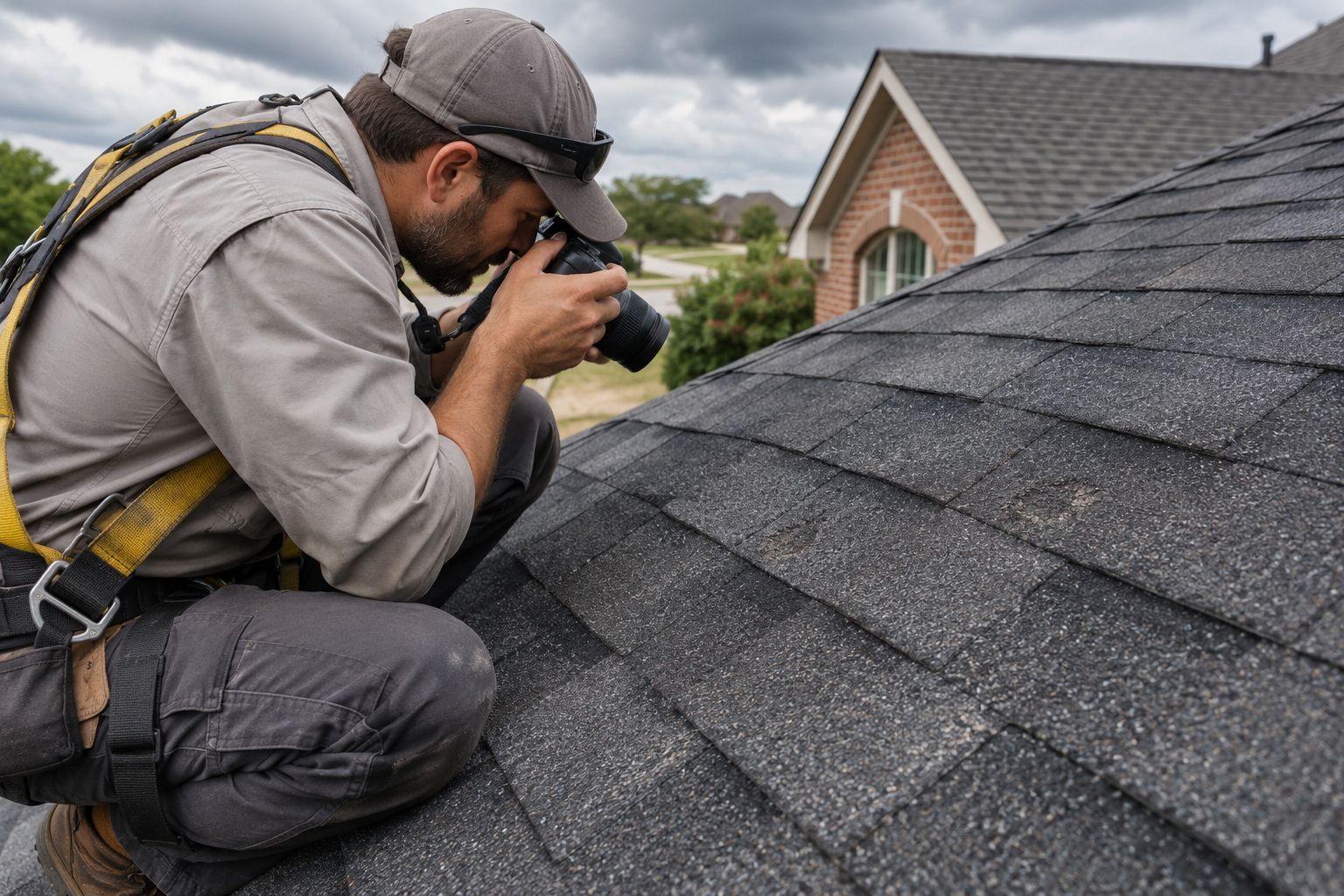
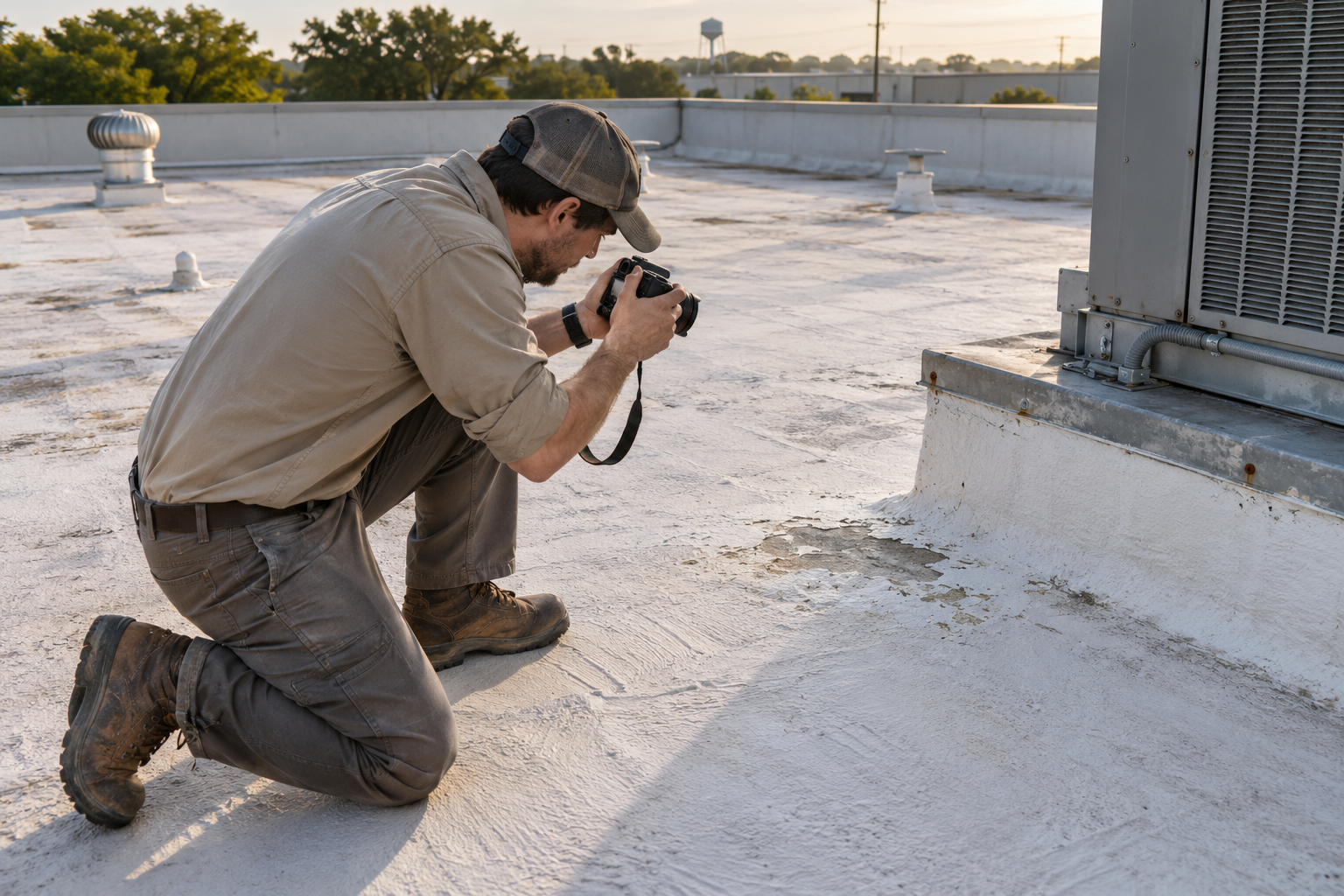
A close-up photograph may show a damaged shingle or membrane opening but provide no way to identify where it sits on the roof. An unlabeled collection can require repeated clarification.
Organize images by building, elevation, roof section, and detail. Pair close-ups with wider views that show a recognizable reference point. Preserve original files separately from annotated copies.
Include interior observations when relevant, with room names and dates. Avoid photographs containing occupants, private documents, or unrelated personal information.
Do not climb onto the roof to fill a documentation gap. Ask a qualified contractor to obtain roof-level observations using appropriate access and safety procedures. Useful evidence should not come at the expense of safe inspection.
4. Replacing Observations with Unsupported Conclusions
Statements such as “the entire roof is destroyed” or “this storm caused every leak” can create confusion when the supporting report describes only limited findings.
Use precise descriptions. Identify missing material, an opening, displaced flashing, staining, or another observed condition. Let the appropriate professionals evaluate the cause and significance.
If several sources may contribute to water entry, record that uncertainty. Plumbing, equipment, exterior walls, and roofing can require separate investigation.
A contractor's inspection can support a discussion about roof conditions and construction needs. It should distinguish verified findings from suspected issues and explain where additional evaluation is required.
5. Losing the Roof's Earlier Records
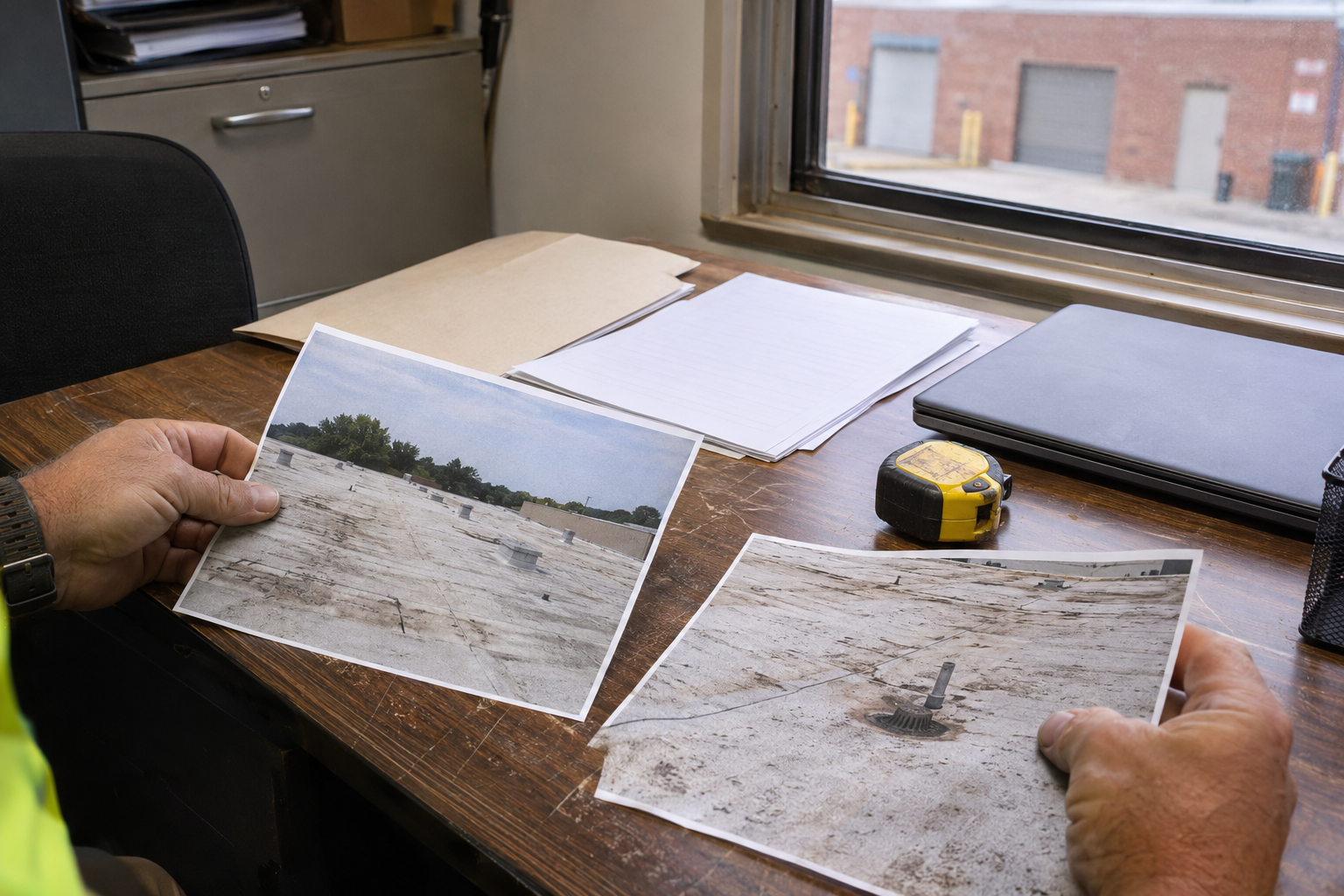
Previous inspection reports, repair invoices, installation information, and photographs can help establish a reliable building history. Without them, owners may struggle to explain which conditions existed before the current concern.
Gather records before they are needed urgently. Identify the source and date of each document rather than combining old and new photographs into an undated folder.
For commercial properties, include roof section names, equipment changes, maintenance activity, and known leaks. Showtime Exteriors' guide to commercial roof maintenance records insurers may request provides additional organization ideas.
A maintenance history does not guarantee coverage. Its value is that it allows the property to be described more accurately and helps reduce conflicting accounts of earlier conditions.
6. Making Permanent Changes Before Coordinating Inspection
Owners sometimes authorize full removal or replacement before understanding whether the insurer needs an opportunity to inspect. That can make later review more difficult if the original conditions are no longer available.
At the same time, an owner should not leave an active problem unattended simply to preserve a photograph. Ask the insurer about required loss mitigation, inspection arrangements, documentation, and permanent work.
Keep records of temporary protection, emergency service, and materials removed where relevant and safe. Document why the action was necessary and what condition was observed.
Coordinate evidence preservation with the professionals involved. Do not retain hazardous debris, delay urgent safety work, or assume every removed component must be stored indefinitely.
7. Submitting an Estimate Without a Clear Scope
An estimate that says only “replace roof” leaves unanswered questions about quantities, materials, affected sections, removal, flashing, disposal, and related work.
Request an itemized construction scope that connects proposed work to observed conditions. Identify optional upgrades separately from the work needed to address the documented damage.
For a commercial property, the commercial roofing service information can help frame the initial assessment conversation. Complex assemblies may require more investigation before a complete scope is possible.
If a contractor revises an estimate, ask what changed and why. A version date and short explanation help prevent multiple estimates from circulating without a clear current document.
8. Treating Every Estimate Difference as a Coverage Dispute
Two estimates can differ because of measurements, material assumptions, omitted details, pricing, repair methods, or the extent of observed damage. Those differences should be identified specifically.
Prepare a comparison that names the item, quantity, proposed method, and supporting evidence. Ask the insurer what further information would help review the difference.
A factual clarification about roof dimensions or repair work is different from interpreting the policy. Keep those conversations within the appropriate professional roles.
When an item is described as code-related, ask for the relevant requirement and project applicability. Whether associated costs are covered is a separate policy question. Avoid using a general reference as proof that every proposed upgrade is required or payable.
9. Expecting the Roofer to Negotiate the Claim
Texas has specific restrictions on a contractor acting as a public insurance adjuster for the same property where contracting services are provided or may be provided.
TDI's roofing and insurance law guidance explains this separation and also addresses deductible practices. A roofer can document physical conditions and explain construction work, but should not promise to represent the policyholder on coverage or negotiate a settlement while serving as the contractor.
If you need help evaluating representation, TDI's public adjuster consumer guidance explains that role and the importance of checking licensing and contract terms.
Clarify who communicates about construction details and who handles policy disputes. Clear boundaries help prevent the owner from assuming a responsibility has been handled when it has not.
10. Confusing Replacement Cost with Immediate Full Payment
A replacement cost policy does not necessarily produce one payment covering the entire contractor invoice at the start. An initial payment may reflect depreciation and other policy calculations.
TDI's claim payment steps describe a staged payment process for certain home claims. Ask your insurer which documents and repair milestones apply to your claim and what is needed for any additional payment.
Do not assume all depreciation is recoverable or that every policy uses the same settlement method. Roof schedules, endorsements, limits, and other terms can affect the result.
Before signing a construction contract, understand the payment schedule and your available funds. The contractor's invoice and the insurer's payment process are related financial obligations with potentially different timing.
11. Forgetting the Deductible and Other Owner Costs
An owner who expects insurance to pay every dollar may discover a gap when the deductible, upgrades, excluded work, or other costs become due.
Ask the insurer or agent to explain the applicable deductible and payment calculation. Ask the contractor to separate the agreed project price from optional improvements and other owner-selected work.
Do not rely on an offer to waive, rebate, or absorb an insurance deductible. Texas restricts that practice. Keep payment records accurate and provide legitimate documentation when requested.
If an estimate changes, review how the change affects your construction agreement and expected out-of-pocket amount. Avoid signing a price or scope you do not understand because someone promises the final paperwork will resolve everything later.
12. Missing Repair and Completion Documentation
After the roof is repaired, the owner may assume that the contractor's completion automatically triggers any remaining claim payment. The insurer may still need documents or confirmation from the policyholder.
Ask for the required submission checklist before work finishes. Depending on the claim, relevant records may include the final invoice, photographs, completion information, and proof of eligible expenses.
Submit accurate documents that reflect actual work and costs. Keep optional upgrades clear, and do not alter invoices to make them match an expected insurance amount.
Track what was sent, to whom, and when. If the company requests another document, identify whether it is missing, incomplete, or already submitted and provide the appropriate reference.
13. Overlooking Mortgage or Lender Procedures
A payment may involve a mortgage company or another named party. The owner may need endorsements, inspections, or release procedures before funds are available for construction.
Contact the lender early to ask about its process, required documents, release stages, and typical handling arrangements. Keep this conversation separate from assumptions about the insurer's approval.
Tell the contractor about relevant payment constraints before agreeing to a schedule. An owner should understand how deposits, progress payments, and final payment will be funded.
For a commercial building, financing documents and ownership arrangements can add further requirements. Confirm the appropriate process with the lender and the person authorized to act for the property.
14. Sending Repeated Messages Without a Clear Request
Several emails with different attachments and changing subject lines can make a claim harder to follow. The owner may receive a response to one issue while another remains unresolved.
Use a consistent subject line with the claim number and property reference. State the specific question, list the attachments, and identify the response being requested.
Keep a communication log with dates, contacts, summaries, and promised next steps. After a phone discussion, send a brief factual recap when useful and retain it with the claim file.
Avoid unnecessary duplicate submissions. If a document has been sent previously, reference its date and filename, and ask whether another copy is needed. The objective is a complete record with clear open questions.
15. Treating a Slow Response as One Universal Problem
A claim may be waiting for an inspection, requested information, a coverage decision, repair confirmation, lender processing, or a response to a disputed item. Those are different stages.
Ask what is pending, who is responsible for the next action, and what information is still needed. Request a clear explanation of any issue you do not understand.
Texas insurance claim rules contain deadlines, but the applicable requirements depend on the claim and circumstances. Avoid assuming every situation has the same clock or that an online summary determines your rights.
If an issue remains unresolved, TDI's insurance complaint guidance explains its process and limitations. Policy disputes, appraisal questions, and legal remedies may require qualified advice appropriate to the actual disagreement.
Use a Claim File That Answers Practical Questions
A useful file allows another person to understand the property and current status without reading months of unorganized messages. Keep one current index and preserve earlier versions of important documents.
File sectionUseful contentsQuestion it helps answerPolicy and contactsPolicy documents, claim number, insurer contactWho handles the claim?Property historyInstallation and maintenance recordsWhat was known before discovery?ObservationsDated photographs and location notesWhat was observed and where?InspectionFindings, limitations, recommended investigationWhat has been verified?ConstructionEstimates, revisions, approved scopeWhat work is proposed?CommunicationRequests, responses, submission logWhat remains pending?CompletionFinal records and repair photographsWhat work was completed?
For a home, Showtime Exteriors' residential roofing information provides service context when planning an inspection or construction estimate. The claim file should remain under the owner's control even when several professionals contribute documents.
Example: Turning an Unclear Difference into a Reviewable Item
Consider an owner whose contractor estimate includes replacement of damaged flashing, while the insurer's estimate appears to omit that work. Sending a message that says only “the amount is too low” does not identify the construction question.
A more useful submission identifies the flashing location, includes photographs, explains the proposed work, and provides the relevant estimate item. The owner can then ask the insurer to review that specific difference.
The insurer may request more information or reach a different conclusion. Clear documentation does not guarantee approval. It does make the question more concrete and reduces the chance that the parties are discussing different work.
If the disagreement concerns policy coverage rather than construction facts, direct it to the appropriate insurance professional or legal adviser. Do not ask the roofing contractor to resolve a coverage dispute by changing the invoice language.
Keep Repair Decisions Grounded in Building Conditions
A claim process should not replace a technical assessment of the roof. Owners still need to understand what can be repaired, whether underlying materials are affected, and how the proposed work fits the building.
If replacement or a different system is proposed, review slope, drainage, insulation, attachment, access, and operational needs. The Texas roofing materials and system selection guide provides broader questions to discuss with the contractor.
Separate the physical scope from assumptions about reimbursement. An owner should understand the construction agreement and financial responsibilities before authorizing work, even while a claim remains under review.
Review the File Before Each Submission
Before sending a new packet, confirm that the property address and claim number are consistent across the documents. Check that the estimate version being discussed matches the attached version. Small clerical differences can distract from the question that actually needs review.
Create a short attachment list with descriptive filenames. Identify what each document supports, such as the location of a damaged detail, the quantity of proposed material, or completion of approved work. Avoid sending unrelated documents simply to make the submission appear more substantial.
Check the company's latest request against your response. If you cannot provide a requested item, explain that clearly and ask what alternative information would be useful. Silence can leave everyone uncertain about whether the request was received or understood.
Keep a separate list of decisions that still need professional advice. TDI's home insurance guide provides general background on policies and dispute options. The relevant process should be evaluated against your actual policy and circumstances.
Finally, confirm receipt through the company's designated channel and record the next follow-up date. Give each unresolved question an owner, whether that is the policyholder, insurer, contractor, lender, or another professional. A specific next action is more useful than repeatedly asking for a general status update without knowing what is pending.
Frequently Asked Questions
Does complete paperwork guarantee fast payment?
No. Accurate documentation can reduce avoidable confusion, but coverage, investigation, policy requirements, and other circumstances still affect a claim. Ask the insurer what stage the claim has reached and what remains outstanding.
Can my roofing contractor explain its estimate to the insurer?
A contractor can provide factual construction information, measurements, photographs, and explanations of proposed work. Texas restrictions on acting as a public adjuster still apply. Coverage representation and settlement negotiation require the appropriate role.
Should I wait for the insurer before addressing an active leak?
Ask the insurer about mitigation requirements and inspection coordination promptly. Arrange appropriate safety and temporary protection measures while preserving useful records. Avoid treating necessary emergency work and full permanent replacement as the same decision.
Why is the first payment less than the roof estimate?
The payment may reflect depreciation, the deductible, scope differences, or policy terms. Request the written calculation and an explanation from the insurer. Do not assume the difference is automatically an error or automatically recoverable.
What should I do if I disagree with a decision?
Ask for a clear written explanation and provide relevant supporting information. If the issue remains unresolved, consider the options appropriate to the dispute, including TDI assistance or qualified professional advice. Check applicable deadlines rather than waiting indefinitely.
Start with Clear Roofing Documentation
Common claim mistakes often involve missing information, unclear responsibilities, or assumptions about what happens next. Organized records and specific questions help owners manage the process more effectively.
For a Texas roof inspection, documented condition assessment, or construction estimate, contact Showtime Exteriors or call 817-400-7663. Share your available roof history, photographs, and current concerns so the roofing assessment can address the property accurately.