


Emergency Commercial Roof Repair Houston
A Practical Storm Response Guide for Houston Property Owners and Facility Managers
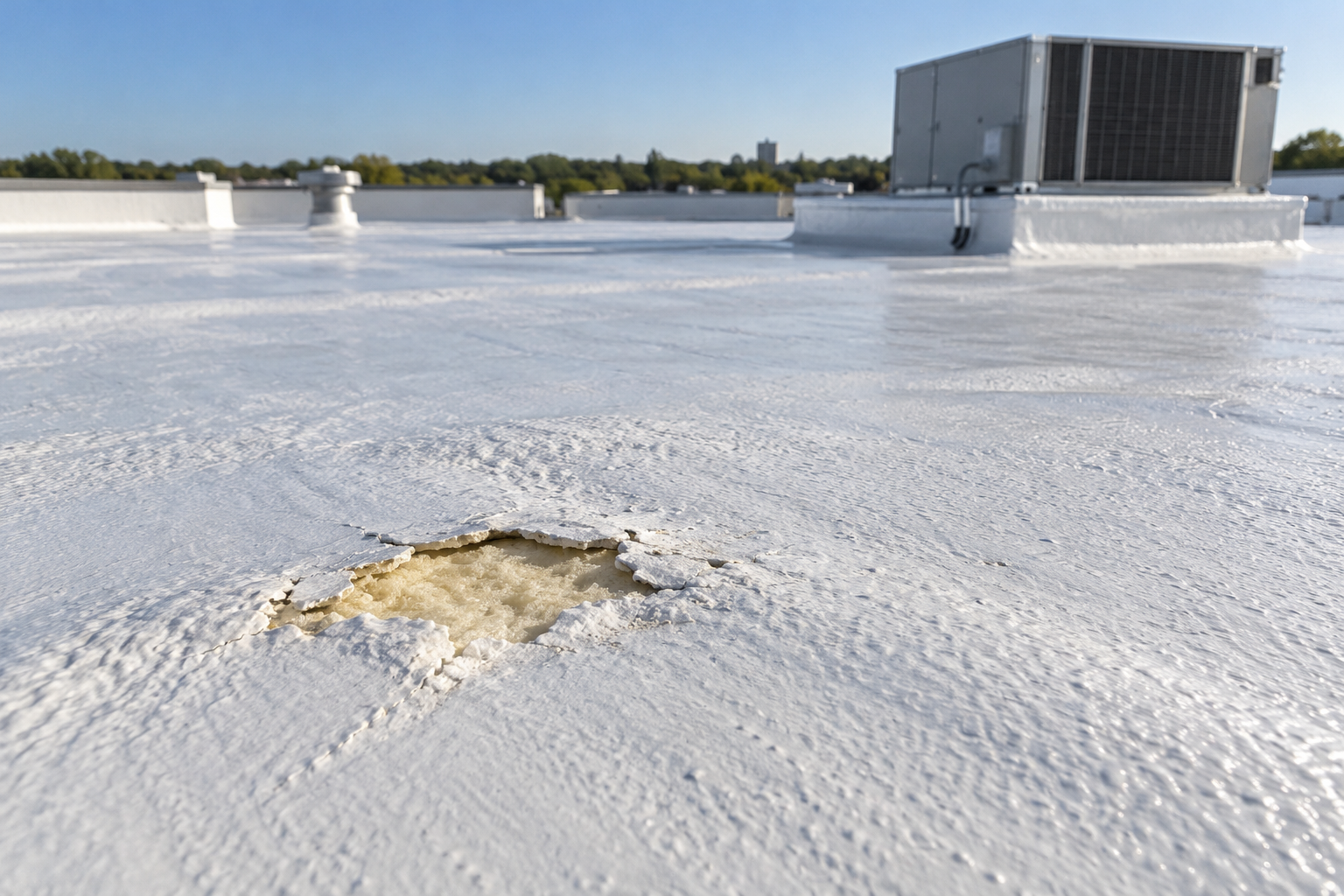
Emergency commercial roof repair in Houston should begin as soon as conditions are safe. The first objective is not to make a rushed permanent repair. It is to protect people, control active water entry, preserve evidence, stabilize vulnerable roof areas, and create a documented plan for permanent correction. A well-managed response can limit damage to insulation, ceilings, inventory, equipment, electrical systems, tenant spaces, and business operations.
Houston commercial properties face severe thunderstorms, high winds, hail, tropical weather, intense rain, heat, ultraviolet exposure, and wind-driven debris. Damage may be obvious, such as displaced metal panels or a tree impact, but many failures are subtle. Open seams, punctures, loose edge metal, damaged flashings, saturated insulation, displaced gravel, and water moving beneath a membrane may not be visible from the ground. A ceiling leak can also appear far from the roof entry point.
Showtime Exteriors provides commercial roof inspections, emergency protection, repair, restoration, retrofit planning, and replacement for Houston and commercial properties across Texas. The team can document visible conditions, identify immediate priorities, investigate likely water pathways, and develop a repair or replacement scope based on the actual roof system and observed damage.
For emergency commercial roof repair in Houston, call Showtime Exteriors at 817-400-ROOF (7663). Do not access a roof during lightning, high winds, heavy rain, flooding, or any condition that makes the roof unsafe.
What Qualifies as a Commercial Roofing Emergency
A roofing problem becomes an emergency when it creates an immediate threat to people, property, operations, or the remaining roof assembly. Active water entering electrical areas, healthcare spaces, occupied apartments, server rooms, inventory zones, manufacturing lines, food-processing areas, or public spaces requires rapid action. So do openings that leave insulation and deck materials exposed to additional rain.
Common commercial roofing emergencies include wind-lifted membrane, displaced edge metal, hail punctures, fallen trees or branches, storm debris impacts, open seams, failed flashing, damaged rooftop equipment curbs, drain backups, collapsed or deflected deck areas, fire or smoke damage, and uncontrolled interior leakage. A roof may also require emergency attention when water accumulates rapidly because drains, scuppers, or gutters are blocked or damaged.
Not every leak requires a full replacement, but every active leak deserves a timely assessment. Waiting can allow a limited defect to wet a larger area of insulation or deck. Wet materials may reduce thermal performance, add weight, contribute to corrosion or deterioration, and complicate permanent repair. The response should therefore separate the urgent stabilization need from the final long-term decision.
How Fast Should You Call an Emergency Commercial Roofer
Contact a qualified commercial roofing contractor as soon as the loss is discovered and immediate life-safety concerns have been addressed. If water is entering near electrical equipment, fire-protection components, unstable ceilings, or damaged structural areas, contact the appropriate emergency personnel, utility provider, building engineer, or qualified trade before approaching the area.
The contractor may not be able to perform rooftop work until wind, rain, lightning, and access conditions allow it. Calling early still matters because the response team can begin gathering information, review roof access, identify the system type, discuss sensitive interior areas, and plan temporary protection. Early notice is especially valuable during widespread Houston storms, when contractors, drying companies, tree services, and material suppliers may receive many calls at once.
Property managers should avoid promising tenants that a permanent repair will be completed before the roof is inspected. The first visit may reveal that the visible leak is connected to a larger wet area, unsafe deck, damaged edge assembly, or incompatible prior repair. A credible timeline follows assessment rather than guesswork.
Safety Comes Before Roof Access
No employee, tenant, maintenance worker, or manager should climb onto a commercial roof during severe weather simply to locate a leak. Wet membranes can be slippery. Loose gravel, debris, damaged skylights, unstable panels, standing water, concealed openings, and weakened deck areas can create fall or collapse hazards. Downed lines, damaged rooftop equipment, and lightning add further risk.
Inside the building, keep people away from bulging ceiling materials, wet electrical devices, fallen debris, and areas where water is moving through light fixtures. Use barriers and signage to control access. Relocate vulnerable inventory or equipment only when it can be done safely. Containers may help collect water, but they should not obstruct exits, fire systems, or active work areas.
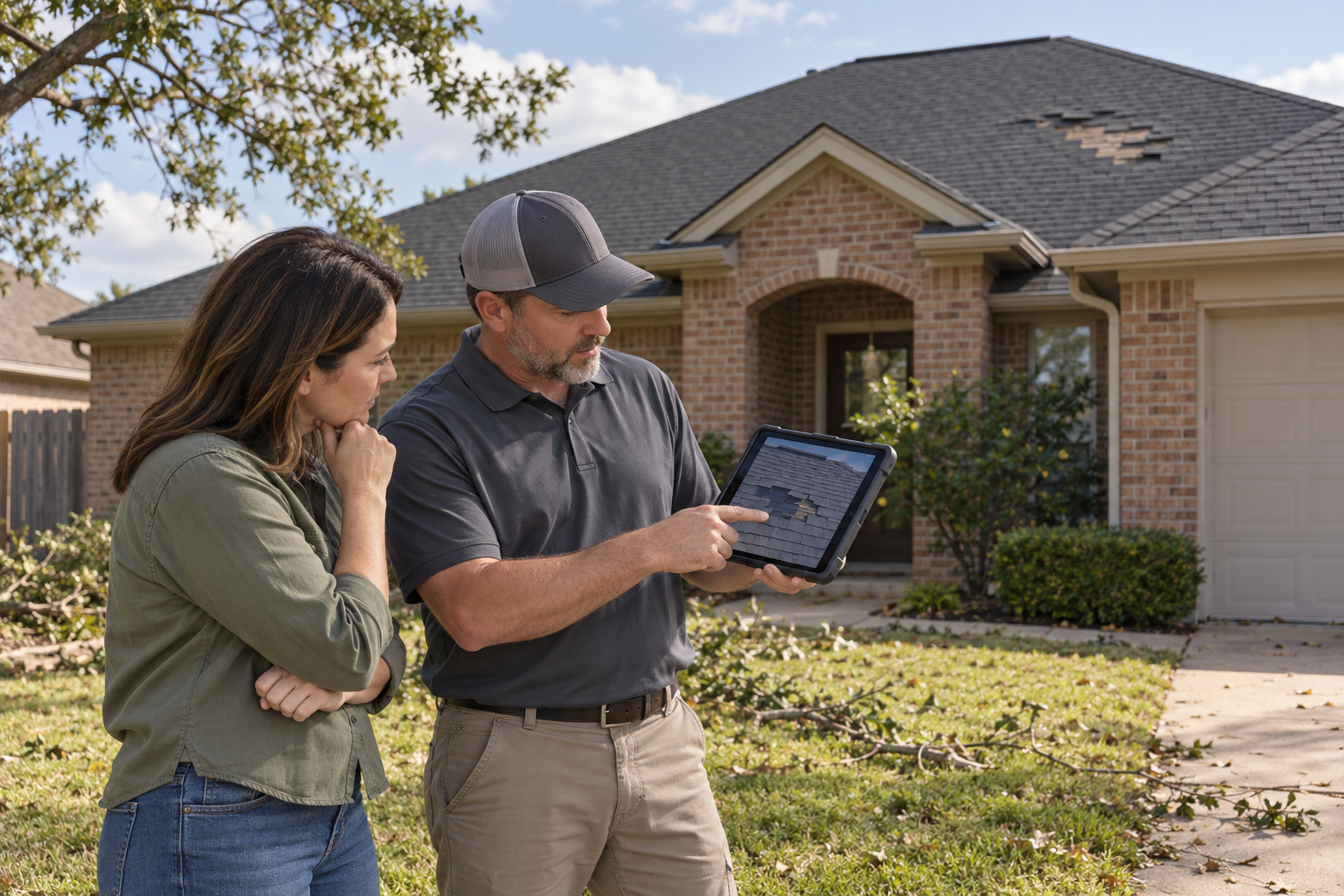
If a tree has struck the roof, do not assume the remaining tree or branch is stable. If the impact is near power lines, mechanical systems, gas service, or structural framing, specialized personnel may be necessary before roofing work begins. A commercial roofer should coordinate with the owner and relevant trades rather than working beyond roofing scope.
The First Hour After Discovering a Commercial Roof Leak
The first hour should focus on safety, damage control, and accurate records. Record the time the problem was discovered and the approximate time of the storm or event when known. Identify affected rooms, tenant suites, production areas, storage zones, and roof sections. Note whether water entry is active, intermittent, or stopped.
Take wide photographs that establish location and close photographs that show the condition. Capture ceilings, walls, floors, contents, equipment, water paths, debris, exterior elevations, downspouts, gutters, and visible roof damage from safe ground-level positions. Photograph labels or room numbers that help connect each image to a location. Avoid editing or filtering the original files.
Notify the property owner, facility lead, risk manager, insurer, or other required party under the building's emergency plan. Keep a written communication log with names, dates, times, instructions, and claim information. If temporary mitigation is performed, preserve photographs taken before, during, and after the work, along with invoices, labor records, materials used, and the reason the work was necessary.
What an Emergency Roof Inspection Should Document
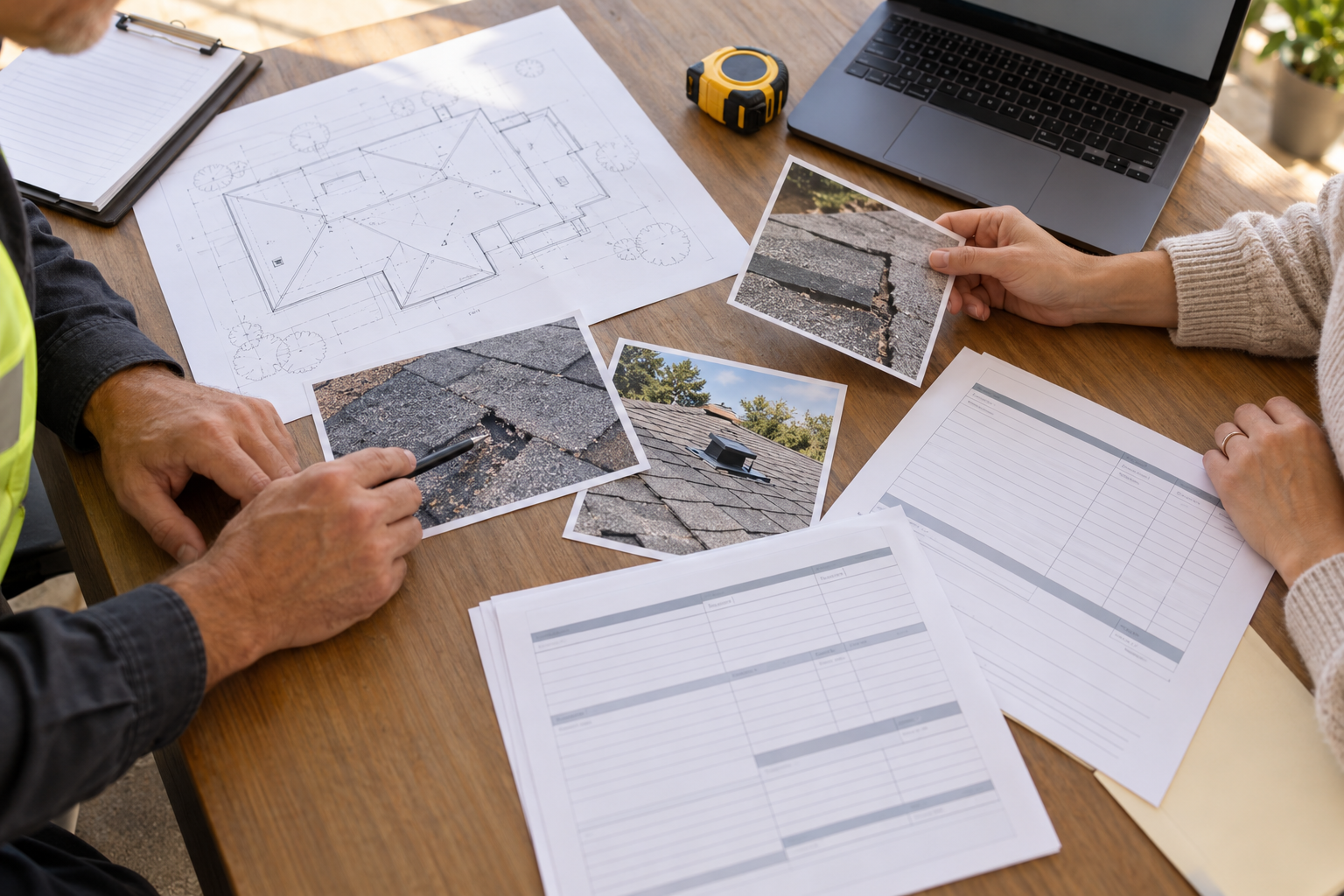
An emergency commercial roof inspection should do more than photograph the most visible opening. It should identify the roof system, approximate age when known, assembly configuration, access points, drainage, rooftop equipment, penetrations, perimeter conditions, visible damage, prior repairs, and the relationship between roof observations and interior water entry.
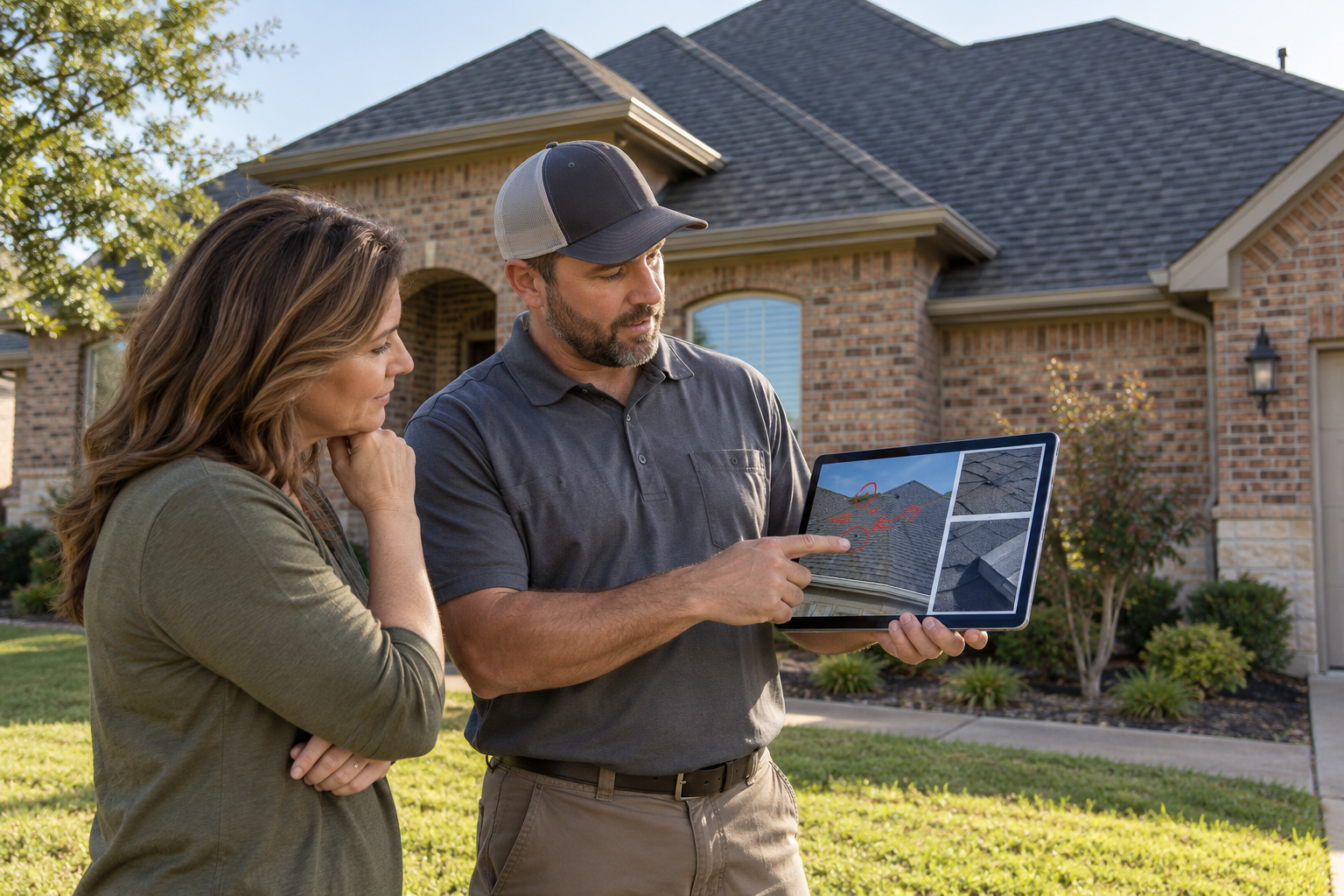
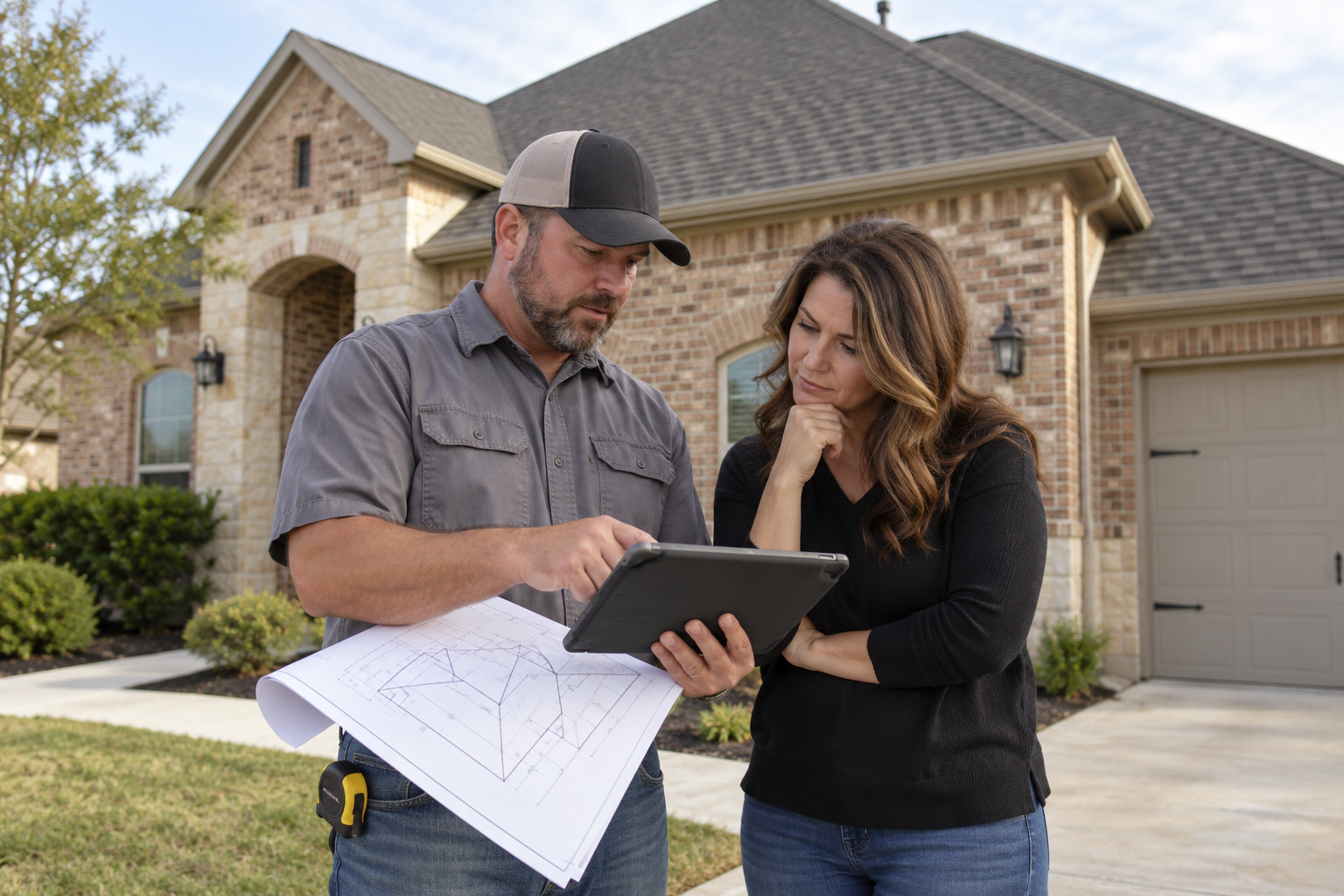
Useful documentation includes an overview of each roof area, orientation photographs, a roof plan or location map, close-up photographs, measured dimensions, observed membrane or metal conditions, edge details, flashings, seams, penetrations, drains, scuppers, curbs, expansion joints, and areas of displaced or missing material. The inspector should distinguish direct observations from assumptions and identify limitations caused by weather, standing water, debris, gravel surfacing, inaccessible areas, or safety restrictions.
Moisture investigation may include non-destructive scanning, test cuts, core samples, or other methods when appropriate and authorized. No single method answers every question. Findings should be interpreted with the roof's construction, weather conditions, surface condition, and inspection limitations in mind.
Temporary Protection Is Not the Permanent Repair
Emergency protection is intended to reduce immediate exposure until the building can receive a compatible permanent repair, restoration, retrofit, or replacement. Depending on the roof system and conditions, temporary work may include secured tarps, reinforced membrane patches, temporary flashing, water diversion, drain clearing, debris removal, temporary enclosure of an opening, or interior water-control measures.
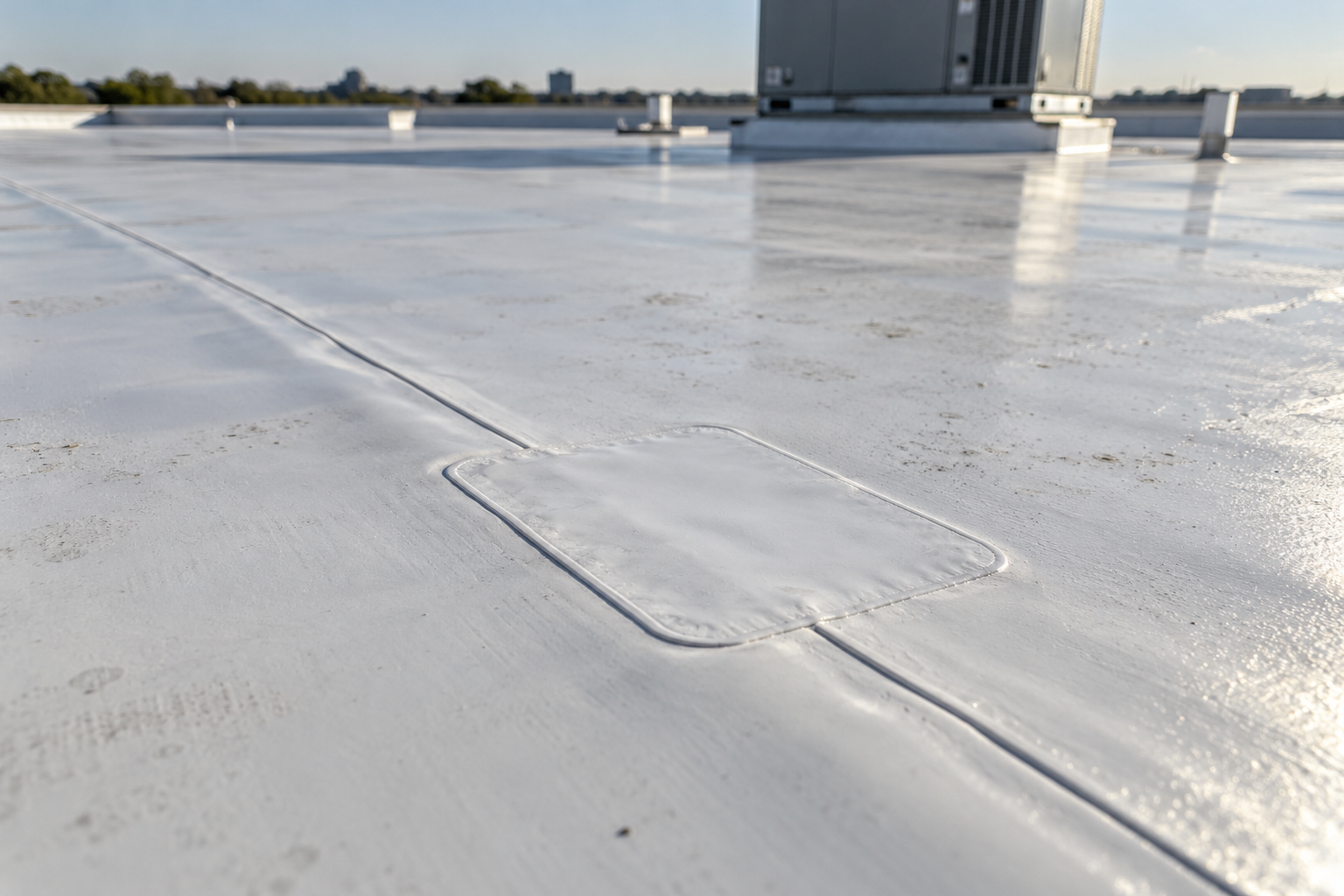
A temporary patch should be labeled and mapped. The record should state where it was installed, why it was needed, which materials were used, what preparation was possible, and what permanent follow-up is required. Temporary work performed on a wet, dirty, damaged, or incompatible surface may have a limited service period. It should be reinspected after weather changes and should never disappear into the maintenance history as an unexamined long-term solution.
Fast-setting sealants and general-purpose materials are not universal roofing repairs. An incompatible product can interfere with later adhesion, trap moisture, damage certain membranes, void manufacturer requirements, or make the final repair more difficult. The permanent scope should use products and details appropriate to the existing system.
Emergency Response for TPO and PVC Roofs
TPO and PVC are thermoplastic single-ply membranes commonly found on commercial buildings. Storm-related concerns may include punctures, cuts, open seams, displaced membrane, damage around fasteners or plates, loose edge details, failed flashings, and impacts around rooftop equipment. Wind can create high loads at corners, perimeters, and transitions.
An emergency response should examine more than the visible puncture. The contractor should evaluate whether the surrounding sheet is attached and serviceable, whether water entered the insulation, whether the seam or flashing can accept a compatible weld, and whether the defect is isolated. Dirt, moisture, incompatible coatings, and degraded materials can affect repair preparation.
A permanent thermoplastic repair generally requires compatible materials, correct cleaning and preparation, adequate tie-in dimensions, controlled welding, probe testing, and documentation. If the membrane has widespread attachment loss, extensive wet insulation, repeated failures, or broad deterioration, isolated patches may not provide a reasonable long-term answer.
Emergency Response for EPDM Roofs
EPDM is a flexible rubber membrane installed in adhered, mechanically attached, or ballasted configurations. Emergency concerns may include punctures, tears, displaced ballast, open seams, failed tape or adhesive, membrane movement, damaged flashings, and edge or termination problems.
Water and contamination can complicate adhesion. The temporary response should reduce exposure without assuming that a surface patch alone resolves wet insulation, attachment loss, or concealed damage. Permanent EPDM repair requires compatible primers, tapes, membrane, sealants, and preparation procedures based on the specific assembly and manufacturer requirements.
Ballasted roofs require additional caution because displaced stone can become a hazard, conceal membrane conditions, block drainage, and make systematic inspection more difficult. A broad pattern of movement or concealed deterioration may justify a larger investigation rather than repeated spot repairs.
Aging Gravel Surfaced BUR Roofs Require Special Attention
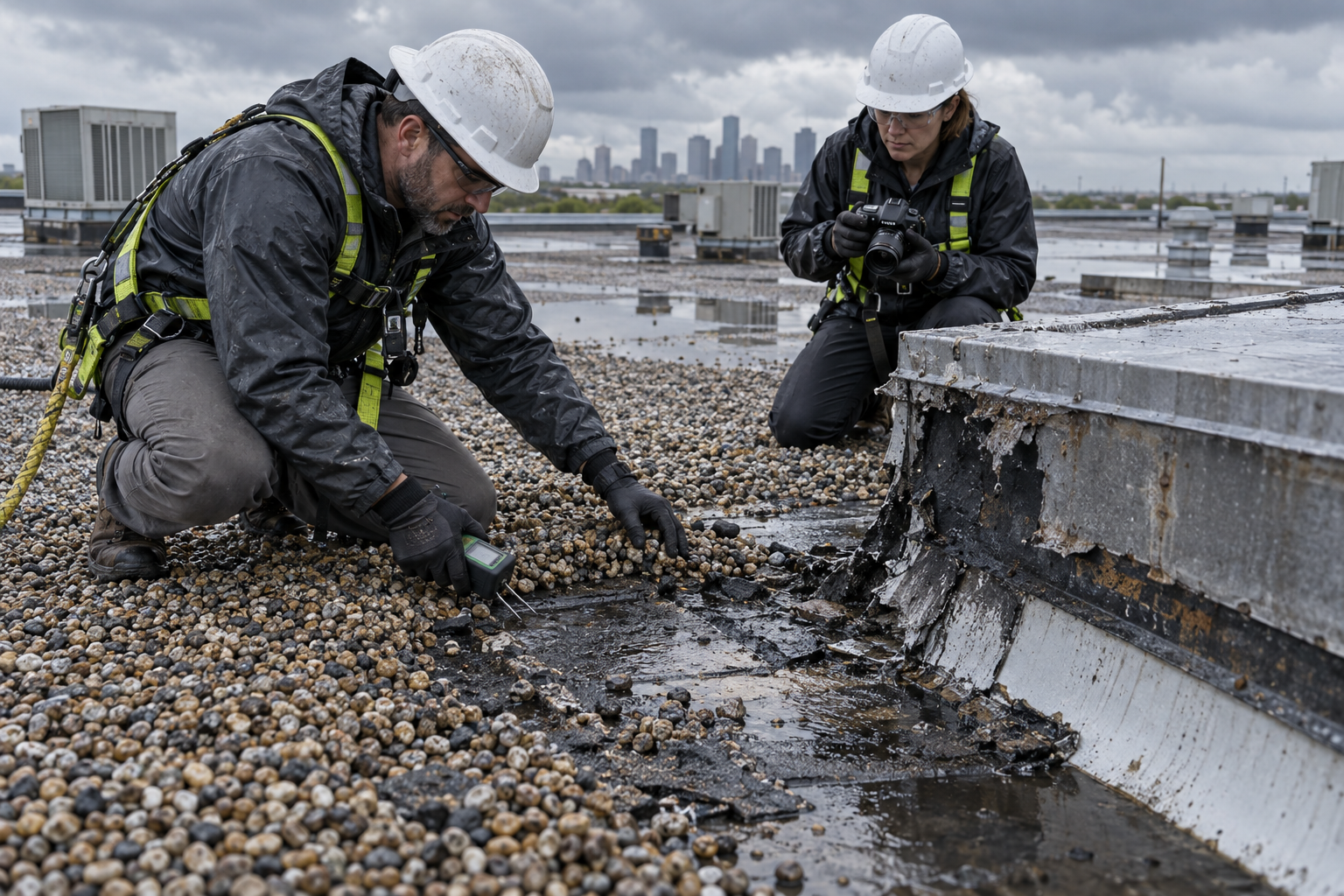
Aging built-up roofing systems with gravel surfacing are central to Showtime Exteriors' commercial campaign because they can create serious inspection, maintenance, and insurance uncertainty. Gravel may conceal cracks, blisters, splits, open laps, deteriorated felts, old patches, ponding patterns, and moisture pathways. It may also move into drains or scuppers, collect around equipment, and make consistent visual assessment difficult.
After wind or hail, displaced gravel does not reveal the full condition of the membrane below. An emergency crew may have to move material carefully in defined areas, identify the actual membrane condition, document what was exposed, and establish whether temporary adhesion is possible. Wet insulation or aged felts may extend beyond the visible leak.
Property owners should not treat a new layer of loose material or surface-applied patching as proof that an aging gravel BUR roof has been restored. If the roof has widespread deterioration, repeated leaks, uncertain attachment, saturated insulation, poor drainage, or limited remaining service life, replacement planning may be the more responsible direction.
Insurance carriers may apply roof-age limitations, inspection requirements, higher deductibles, actual-cash-value provisions, exclusions, or non-renewal decisions based on their underwriting rules and the specific property. A documented inspection and replacement plan can help owners communicate the roof's actual condition, but no contractor can promise coverage, claim approval, or lower premiums.
Aging gravel surfacing can conceal BUR membrane deterioration and complicate inspection, drainage review, and repair planning.
Emergency Response for Modified Bitumen Roofs
Modified bitumen systems may use smooth, granulated, coated, or surfaced sheets installed with heat, adhesive, asphalt, or self-adhered methods. Storm damage can include punctures, splits, open laps, displaced flashing, surface damage, edge failure, and water entry around drains or penetrations.
The inspector should evaluate whether the membrane is dry enough and sound enough to accept repair. Granules, coatings, moisture, dirt, oxidation, and prior materials can affect adhesion. Heat-applied work may be restricted by site conditions, building rules, fire risk, or permit requirements. Alternative compatible methods may be needed for temporary stabilization.
Repeated splits, broad loss of adhesion, widespread blistering, extensive wet insulation, or deck deterioration can move the decision beyond isolated repair. The owner should receive a scope that explains whether the proposed work is temporary, permanent, or part of a phased replacement plan.
Emergency Response for Commercial Metal Roofs
Commercial metal roofing emergencies may involve displaced panels, open seams, loose fasteners, damaged closures, failed sealants, punctures, corrosion, ridge or rake damage, detached gutters, and compromised penetrations. Wind can affect panel edges and perimeter components, while hail and debris may damage panels, coatings, rooftop equipment, and drainage systems.
Loose metal can create a hazard to people and nearby property. The first step may be securing or isolating the area rather than attempting an immediate cosmetic repair. The contractor should document panel profiles, seams, clips, fasteners, transitions, curbs, penetrations, terminations, and the extent of movement.
Sealant applied over dirty or moving metal is rarely a complete solution. Permanent correction may require panel replacement, new closures, fastener work, seam reinforcement, flashing reconstruction, localized coating, a recover or retrofit system, or full replacement. Structural and mechanical trades may be necessary when damage extends beyond roofing components.
Drainage Problems Can Turn a Storm Into an Emergency
Houston's intense rainfall can overwhelm a roof that already has blocked drains, inadequate overflow provisions, damaged gutters, settled insulation, or poor slope. Ponding water increases loads and can find small openings around seams, penetrations, fasteners, and flashings. Water may also move beneath the membrane and appear inside far from the initial entry point.
Emergency crews may clear safe, accessible debris from drains and scuppers, but they should not assume that drainage maintenance alone fixes the roof. The inspection should identify missing strainers, damaged drain bowls, loose clamping rings, blocked leaders, displaced gravel, sagging areas, and evidence of recurring ponding.
Structural deflection, unusually deep water, or a ceiling that appears strained requires immediate caution. Do not stand beneath or add weight to a questionable area. A roofing contractor may need support from a structural engineer, plumber, or other qualified professional before water is removed or permanent work begins.
Protecting Business Operations During Emergency Repairs
Commercial roof emergencies affect more than the roof. A response plan should identify occupied zones, tenants, customers, inventory, production schedules, food or healthcare controls, sensitive electronics, laboratories, loading areas, and critical equipment. Work should be coordinated with the facility's safety, security, and emergency procedures.
Interior protection may include moving contents, covering equipment, isolating work zones, installing containment, redirecting pedestrian traffic, and coordinating cleanup or drying. The roofing team should communicate expected noise, odors, access needs, shutdown requirements, crane or lift locations, and areas below rooftop work.
For warehouses and manufacturing facilities, the owner may need phased work around production lines or loading schedules. Apartment complexes may require resident notices and unit-by-unit access. Retail and restaurant properties may need work outside peak hours. Hospitals, schools, and data facilities may require additional infection-control, security, vibration, dust, or system-redundancy planning.
Evidence to Preserve for a Commercial Roof Insurance Claim
The policyholder is responsible for understanding the policy and reporting requirements. A commercial roofer can document physical roof conditions and completed work, but the roofer is not the insurance company and should not promise that damage is covered.
Preserve the policy, declarations, endorsements, deductible information, claim number, reported date of loss, correspondence, inspection notices, adjuster information, photographs, video, weather records, roof plans, maintenance history, warranties, prior repair records, invoices, emergency mitigation records, moisture findings, estimates, contracts, and completion documentation.
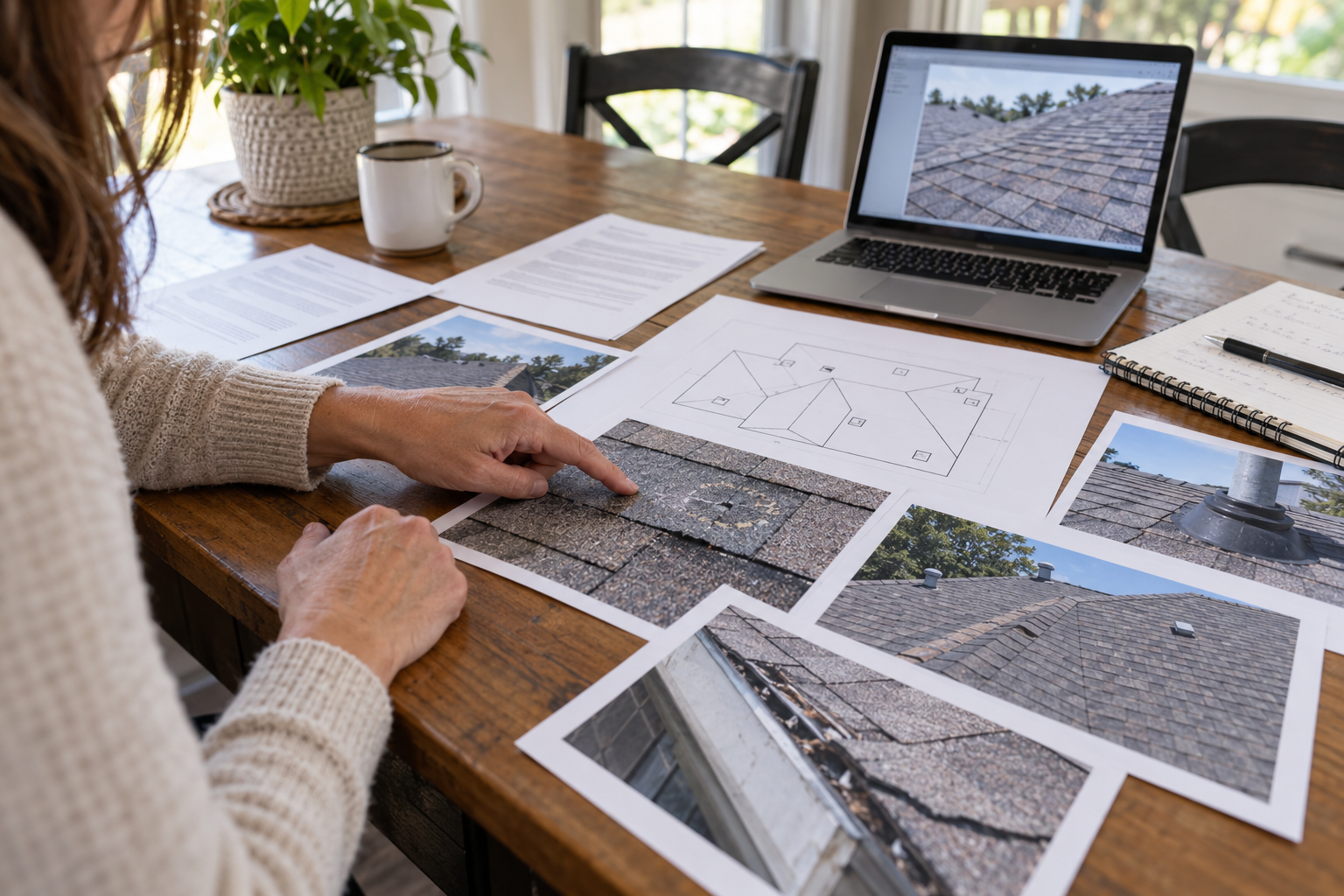
Organize photographs by roof area and date. Keep original files when possible. Use overview, mid-range, and close-up views so the location of each condition can be understood. Record measurements and identify the roof component shown. Photograph removed materials when relevant and permitted, and retain samples only when there is a clear chain of custody and safe storage plan.
Texas law places limits on the roles contractors may perform in insurance matters. Showtime Exteriors can inspect and document the roof, provide a repair or replacement scope, and perform authorized roofing work. Coverage interpretation, claim adjustment, and legal advice belong to the insurer, a properly licensed public insurance adjuster when appropriate, or an attorney.
Should You Make Permanent Repairs Before the Adjuster Arrives
The owner should review the policy and follow insurer instructions. Emergency mitigation may be necessary to protect the building from additional damage, but permanent work can change or remove evidence. When safe and practical, document the condition before temporary work, notify the insurer promptly, and preserve removed components or samples when requested.
Do not delay essential protection solely to wait for an adjuster if delay would expose people or property to additional harm. At the same time, do not demolish large roof areas without a documented reason, clear scope, authorization, and coordination. The proper balance depends on safety, weather, policy duties, access, and the nature of the damage.
Written records should explain why emergency work was necessary, what was observed before work began, what materials were removed, what temporary measures were installed, and what still requires permanent correction. This creates a clearer record for the owner, insurer, contractor, and future maintenance team.
Repair Restore Recover Retrofit or Replace
Once the emergency is controlled, the owner needs a permanent decision. Repair is appropriate when the defect is localized, surrounding materials are serviceable, attachment remains acceptable, moisture is limited, and a compatible detail can correct the failure. Restoration may be considered when the roof is a suitable candidate after repairs and preparation.
A recover or retrofit may be possible when the existing assembly, deck, moisture condition, code requirements, loading, attachment, and manufacturer criteria support it. Replacement is more likely when the system has widespread deterioration, extensive wet insulation, repeated leakage, broad attachment failure, significant deck problems, incompatible layers, or little remaining service life.
The decision should consider the full assembly, not only the surface. Insulation, vapor retarder, cover board, attachment, deck, drainage, flashings, edges, penetrations, equipment, expansion joints, interior use, wind exposure, warranty goals, and future ownership plans all matter. A low initial price is not economical if it leaves the primary failure mechanisms in place.
What Emergency Commercial Roof Repair Costs in Houston
Emergency commercial roof repair does not have a reliable universal square-foot price. Cost depends on response timing, weather, roof access, building height, safety controls, crew size, after-hours work, active leakage, system type, damage extent, debris, temporary materials, drying needs, equipment, interior protection, and the permanent scope.
A service visit may include mobilization, inspection, leak investigation, photographs, temporary stabilization, drain clearing, debris removal, limited material removal, compatible patching, and a written follow-up recommendation. Large storm events may also create material and labor constraints. Crane access, lifts, traffic control, security, permits, and coordination with other trades can increase cost.
Owners should ask for a written description of what the emergency price includes. Clarify whether the amount covers only temporary mitigation, diagnostic work, permanent repair, moisture testing, interior protection, return visits, disposal, and documentation. An estimate should identify assumptions and exclusions rather than hiding uncertainty in a vague lump sum.
How Long Emergency Commercial Roof Repair Takes
The first response may occur within hours or may be delayed by unsafe weather, widespread demand, inaccessible roads, flooding, material availability, or building restrictions. The on-site work can range from a limited temporary patch to several days of stabilization, drying, testing, and phased repair.
Permanent repair timing depends on the diagnosis. A compatible isolated repair may be completed quickly once the area is dry and prepared. A broad wind event, saturated assembly, damaged deck, large tree impact, displaced metal system, or aging gravel BUR roof may require testing, design, insurance review, permits, ordered materials, and a larger project schedule.
Owners should request two timelines: the expected emergency stabilization window and the expected permanent correction process. Keeping these separate prevents temporary work from being mistaken for project completion.
Questions to Ask an Emergency Commercial Roofer
Ask which commercial roof systems the contractor evaluates, whether the crew can document conditions by roof area, and how temporary protection will be distinguished from permanent repair. Request a written scope that identifies preparation, materials, dimensions, tie-ins, exclusions, follow-up work, and documentation.
Ask how the team will manage roof access, fall protection, tenant coordination, rooftop equipment, interior protection, debris, weather monitoring, and communication. Confirm insurance, licensing or registration requirements that apply to the location and scope, manufacturer qualifications when relevant, and who is responsible for permits or inspections.
Ask what evidence will remain after the visit: photographs, roof map, moisture observations, invoices, temporary repair locations, product information, and recommendations. A good emergency response should leave the owner with a clearer understanding of the roof, not merely a receipt and an unidentified patch.
Warning Signs of an Incomplete Emergency Repair
Be cautious when a contractor proposes to spread coating or sealant across wet, dirty, loose, or unknown materials without preparation or investigation. Be cautious when no one identifies the roof system, maps the leak, inspects drainage, checks surrounding attachment, or documents the condition before covering it.
Other warning signs include an unwillingness to distinguish temporary and permanent work, no written scope, no safety plan, pressure to sign immediately, promises about insurance coverage, promises to waive a deductible, unsupported claims that every roof requires replacement, or a proposal that ignores interior and operational needs.
A professional recommendation can still be urgent. The difference is that urgency is tied to observed risk, weather exposure, and a defined next step rather than sales pressure.
Preventing the Next Commercial Roof Emergency
Emergency response should end with a prevention plan. Schedule routine inspections, especially before and after severe-weather seasons. Keep drains, scuppers, gutters, and roof areas clear. Control rooftop access and require mechanical contractors to protect the membrane. Record penetrations, repairs, equipment changes, and recurring leak locations.
Create a roof file containing plans, warranties, inspection reports, photographs, repair invoices, product data, access instructions, contacts, and emergency procedures. Identify sensitive interior areas and shutoff locations. Prequalify contractors and vendors before a storm so the facility is not making every decision under pressure.
For an aging gravel-surfaced BUR roof, prevention may require more than maintenance. If inspection remains difficult, leaks recur, moisture is widespread, drainage is poor, or insurance requirements are tightening, begin budgeting and planning for replacement. Waiting for the next major storm can turn a planned capital project into a disruptive emergency.
Why Choose Showtime Exteriors for Emergency Commercial Roof Repair in Houston
Showtime Exteriors provides Texas statewide commercial roofing service and serves Houston commercial property owners, facility managers, property managers, asset managers, and business operators. The company evaluates multiple roof systems and can help define immediate stabilization, permanent repair, restoration, retrofit, or replacement based on observed conditions.
The process begins with safety, documentation, and a practical roof assessment. The team can coordinate around occupied buildings and business operations, identify visible damage and likely water pathways, document temporary work, and prepare a scope for permanent correction.
Showtime Exteriors also understands David's core campaign priority: aging gravel-surfaced BUR roofs should not be promoted as an advantage. Their concealed conditions, maintenance challenges, recurring leakage risk, and potential insurance uncertainty require direct evaluation and, when the roof is no longer a sound repair candidate, a responsible replacement plan.
For emergency commercial roof repair in Houston, call 817-400-ROOF (7663) or request an inspection through Showtime Exteriors.
Emergency Commercial Roof Repair Houston Frequently Asked Questions
How quickly should I report a commercial roof leak
Report it internally and contact a qualified roofer as soon as it is discovered and conditions are safe. Prompt reporting supports mitigation, documentation, scheduling, and policy compliance. Do not send untrained personnel onto a wet or storm-damaged roof.
Can a commercial roofer work while it is raining
Some interior protection or planning may be possible, but rooftop work depends on lightning, wind, rain intensity, surface conditions, access, materials, and crew safety. No repair deadline justifies unsafe roof access.
Is a tarp a permanent commercial roof repair
No. A tarp or temporary membrane is emergency protection. It should be secured, documented, monitored, and replaced with a compatible permanent correction when conditions and planning allow.
Does every storm roof leak require replacement
No. A localized defect may be repairable when surrounding materials remain serviceable. Replacement becomes more likely with widespread deterioration, wet insulation, deck damage, attachment failure, recurring leaks, or an aging system with limited remaining life.
Can Showtime Exteriors help with insurance documentation
Showtime Exteriors can document visible roof conditions, temporary work, measurements, photographs, repair or replacement scope, and completed roofing work. The insurer determines coverage and claim payment. Showtime Exteriors does not act as the insurer or promise claim approval.
What should I photograph before emergency repair
Photograph safe exterior views, roof conditions when accessed by qualified personnel, interior water entry, affected rooms, ceilings, walls, floors, contents, equipment, debris, temporary protection, and completed work. Use overview and close-up views and keep original files.
What if the leak is near electrical equipment
Keep people away and contact the appropriate emergency personnel, building engineer, electrician, or utility provider. Do not touch wet electrical equipment or stand in water near energized systems.
Can coating stop an emergency commercial roof leak
Coating is not a universal emergency repair. The roof must be evaluated for moisture, preparation, adhesion, compatibility, attachment, and candidate suitability. Applying coating over wet or failed materials can conceal rather than solve the problem.
Why are gravel BUR roofs difficult after a storm
Loose gravel can conceal membrane damage, old repairs, splits, blisters, drainage patterns, and moisture pathways. It may also shift or collect at drains. These limitations make systematic inspection and durable repair planning more difficult.
Should I remove storm debris from the roof myself
Only trained personnel should access the roof after a storm. Debris may hide openings, unstable surfaces, sharp objects, electrical hazards, or damaged deck. Heavy or entangled debris may require specialized equipment or another trade.
How do I know whether an emergency patch worked
The area should be monitored during subsequent weather and reinspected. Interior drying, moisture conditions, surrounding attachment, and the underlying failure still matter. A stopped drip does not by itself prove the assembly is dry or permanently repaired.
How can I prepare before the next Houston storm
Maintain current roof records, inspect the roof and drainage, control rooftop traffic, identify sensitive areas, confirm emergency contacts, review insurance requirements, and develop a replacement plan for roofs approaching the end of service life.
Schedule Emergency Commercial Roof Repair in Houston
When a Houston commercial roof is leaking or exposed after wind, hail, heavy rain, debris, or equipment damage, act quickly without sacrificing safety or documentation. Protect people, control the interior, preserve evidence, and arrange a professional roof assessment.
Showtime Exteriors can inspect the roof, document visible conditions, coordinate temporary protection, investigate likely water pathways, and develop a practical permanent scope. Call 817-400-ROOF (7663) for emergency commercial roof repair in Houston.
Helpful Showtime Exteriors Resources
Commercial Roofing Houston guide
Commercial Roof Replacement Houston guide
Texas Emergency Roof Tarp guide
Authoritative Storm Safety and Insurance Resources
Texas Department of Insurance storm recovery guidance
Texas Department of Insurance roof and insurance guidance
Texas Department of Insurance roofing and insurance law
National Weather Service Houston severe weather reporting
National Weather Service Houston thunderstorm safety
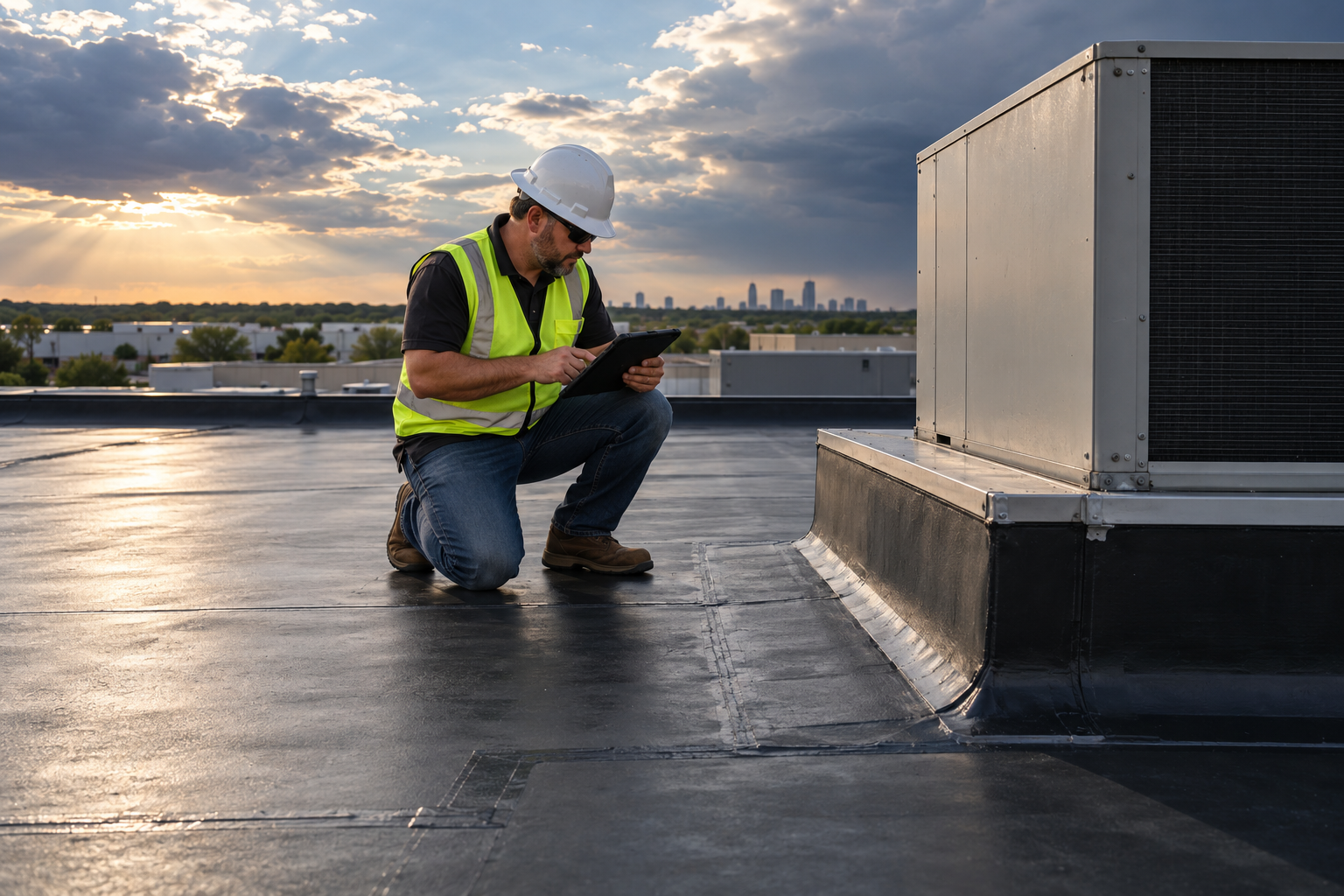
Inspection of storm damaged aging gravel BUR roof in Houston
Showtime Exteriors 817-400-ROOF (7663) Texas Statewide Commercial Roofing