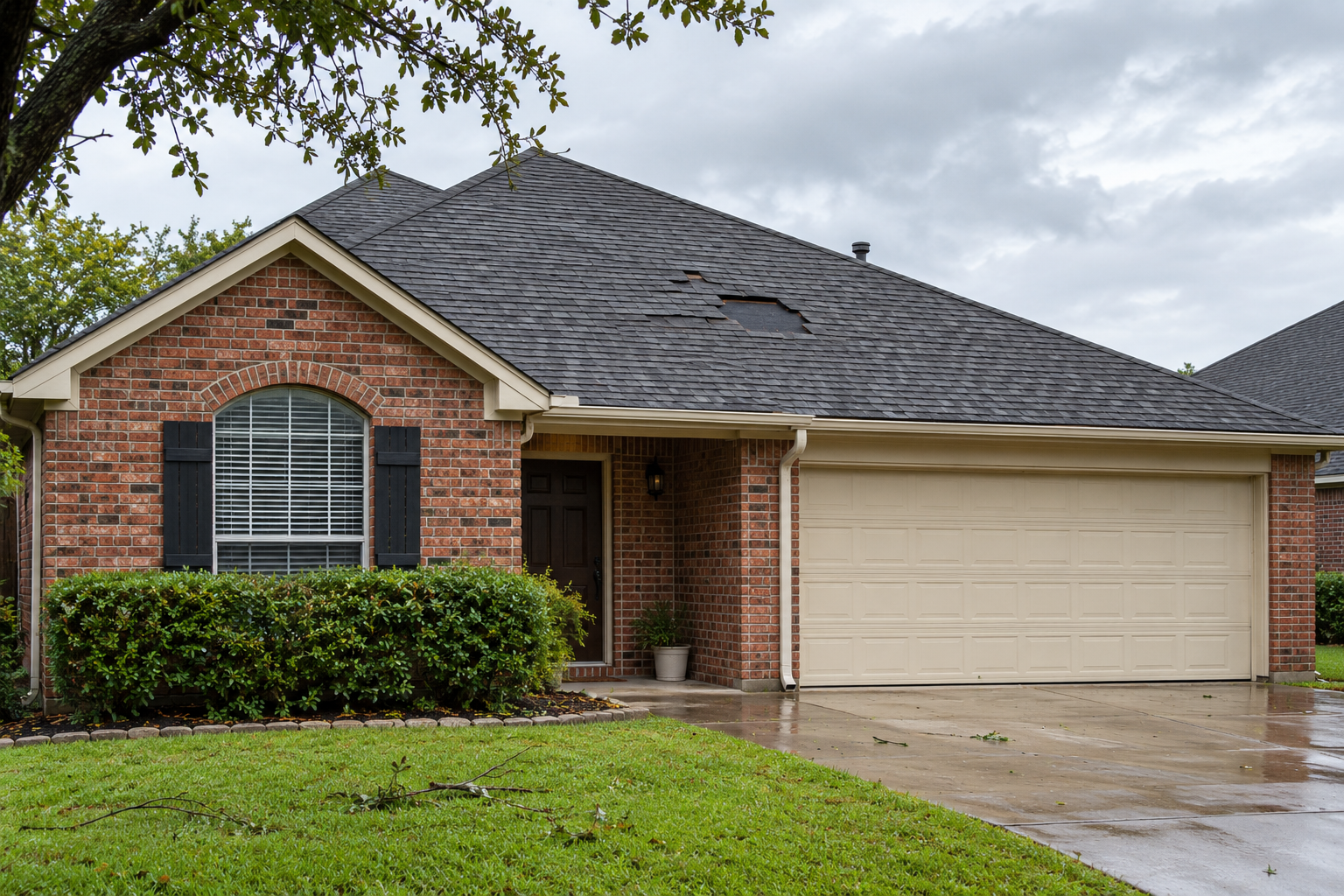




Hidden Hail Damage: Inspection Checklist for Home and Building Owners
Learn how to document suspected hidden hail damage, request a professional roof inspection, understand assessment limits, and compare practical next steps.
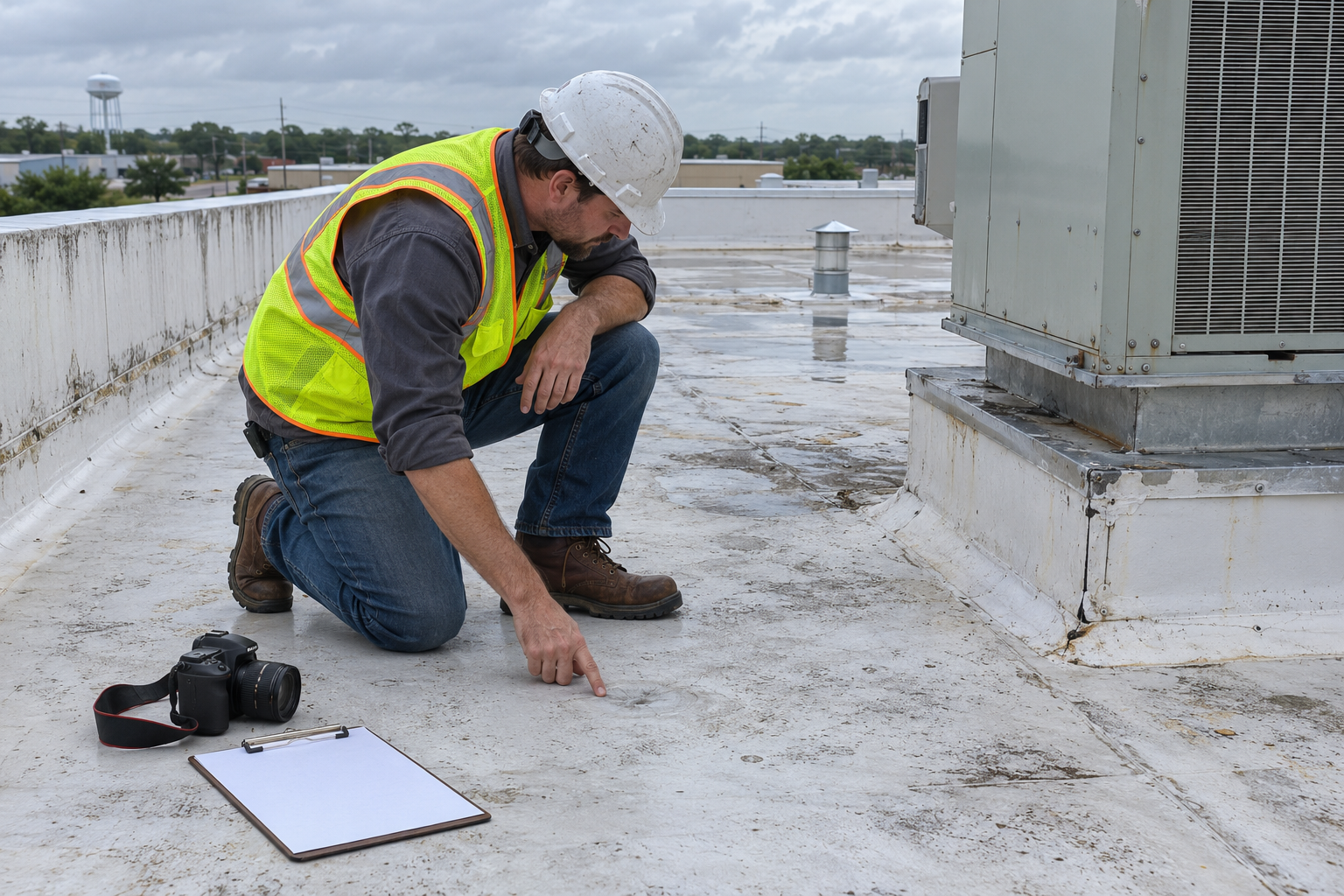
A roof can look normal from the driveway after a hailstorm and still deserve professional assessment. Some concerns are subtle, difficult to see from the ground, or not immediately apparent. At the same time, a storm in the neighborhood does not prove that every mark on a roof is hail damage.
The purpose of a hidden hail damage inspection is to establish what can be observed, what remains uncertain, and what action the property needs. A careful process avoids both dismissing a concern too quickly and recommending replacement without supporting findings.
Showtime Exteriors can discuss your property and inspection needs. This checklist helps Texas home and building owners prepare information, request useful documentation, and evaluate the next step without climbing onto the roof or attempting specialized tests.
What Does Hidden Hail Damage Mean?
Owners often use “hidden hail damage” to describe several different situations: marks that are hard to see from the ground, damage that needs closer professional evaluation, or possible effects that become apparent later. Those are related ideas, but they should not be treated as one confirmed diagnosis.
GAF's technical bulletin about hail damage to shingles explains that outward effects may not always be immediately visible and that later deterioration can occur. It also describes the limits of determining damage without visible evidence.
That supports assessment when warranted; it does not establish that an apparently intact roof must have concealed damage. Ask the inspector to separate actual findings, professional opinions, and unresolved questions.
Start with Safety After the Storm
Confirm that conditions permit observation before walking around the property. The National Weather Service's after-storm guidance recommends remaining informed and assessing damage after the severe weather threat has ended.
Stay away from power lines, unstable trees, damaged structures, loose overhead components, and other hazards. Obtain appropriate emergency assistance where necessary.
Do not climb onto a wet roof, enter a questionable attic, or use a ladder to get a closer photograph. Owners can provide useful information from safe ground-level and indoor locations.
A professional assessment requires its own access and protection planning. A low slope or a roof hatch does not make roof access suitable for untrained occupants or facility staff.
The Initial Owner Checklist
InformationRecord safelyPurposeReported eventApproximate hail date, time, and property locationEstablishes contextDiscoveryWhen the concern was first noticedSeparates storm timing from observationExterior observationsVisible marks, broken materials, or debrisHelps plan assessmentInterior symptomsRoom, location, moisture, and timingIdentifies investigation prioritiesPrevious historyEarlier repairs, leaks, photographs, and inspectionsProvides a baselineAccessContacts, restrictions, tenants, gates, and equipmentSupports service planningUrgent concernsActive water entry or hazardous conditionsHelps determine response needs
Record observations without filling gaps with guesses. “New marks noticed on the west gutter” is more useful than declaring that an unseen roof section needs replacement.
Use Ground Evidence as Context
Hail may leave visible marks on gutters, downspouts, siding, equipment housings, or other exposed surfaces. Record those observations where you can do so safely.
Such evidence can support a reason to inspect the roof. It does not establish the condition of every roofing component or determine when every mark occurred.
Materials respond differently to impact. A dented metal component and an asphalt shingle do not necessarily show the same response, even when exposed during the same storm.
Owens Corning's storm damage overview provides examples of signs that can justify professional attention. Ask the roofer to connect roof-specific conclusions with roof-specific findings rather than rely only on damage elsewhere on the property.
Document the Property Before Details Are Lost
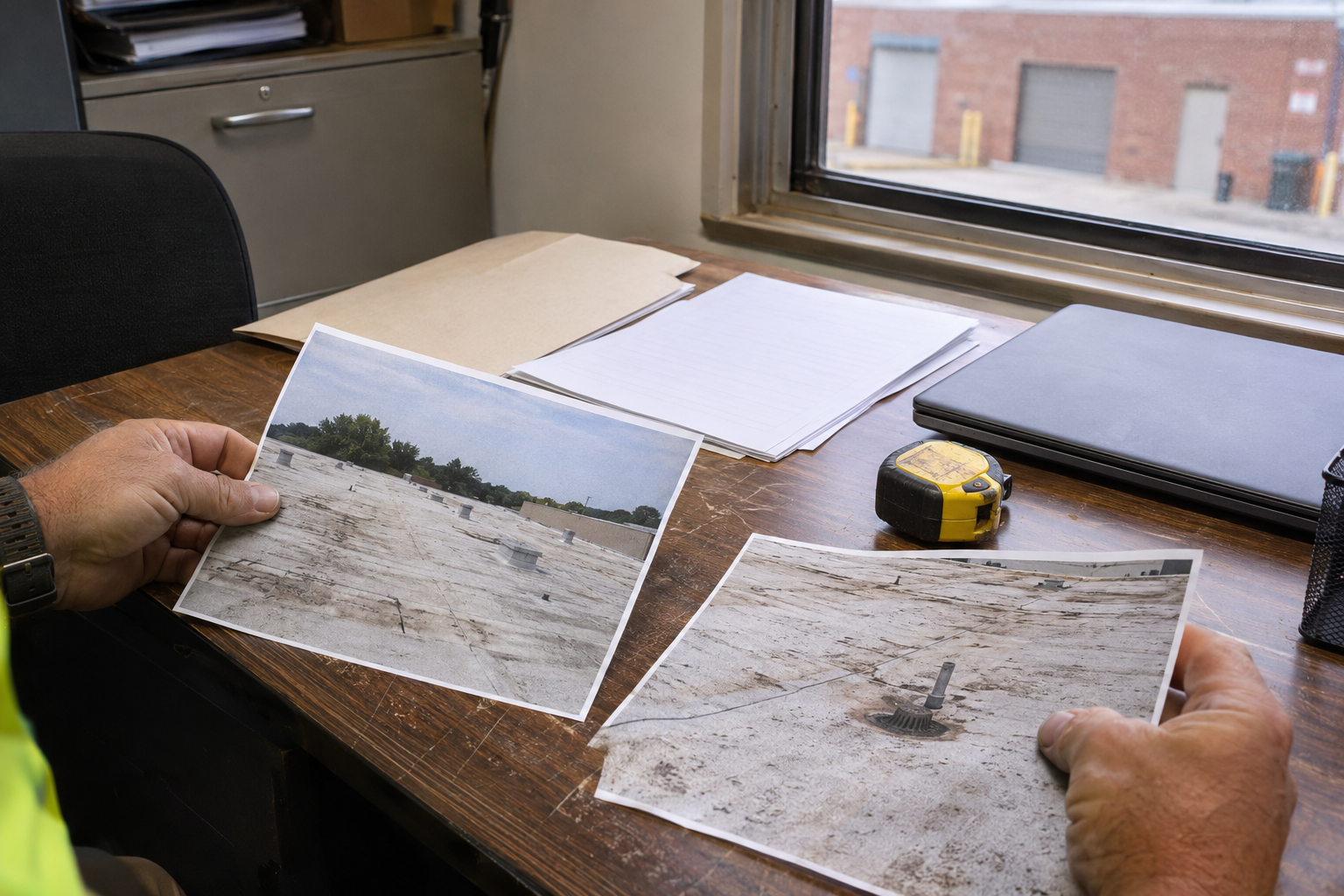
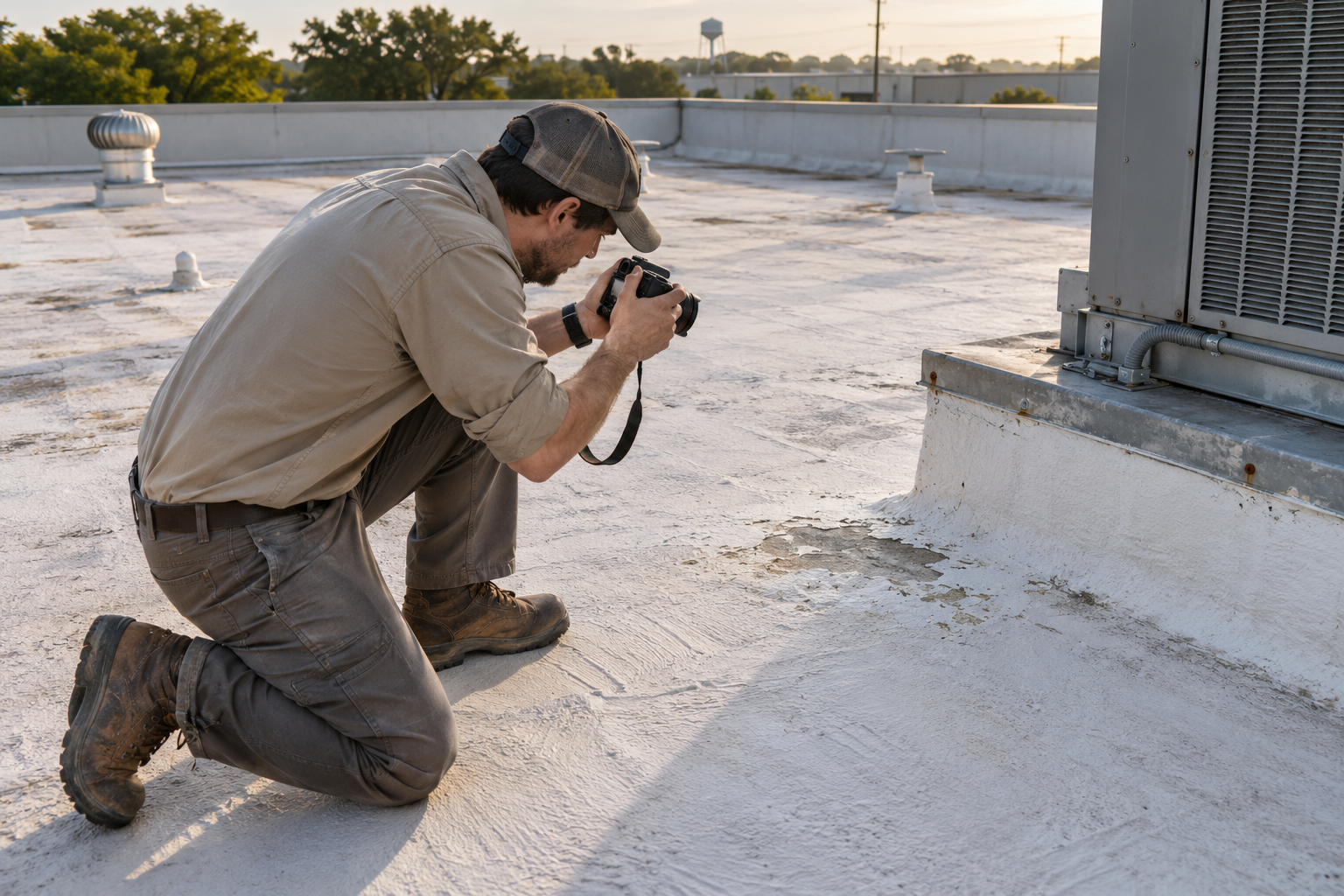
Take wide photographs to identify the building and safe closer views where practical. Keep original files and note which side, roof section, or component each image shows.
If you have photographs taken during the storm, preserve them without attempting to recreate conditions. Weather records and nearby reports provide context, but they do not replace inspection of the actual roof.
Do not move hazardous debris or approach a damaged area just to document it. Safety takes priority over collecting a complete set of images.
Avoid editing photographs in ways that change the evidence. An annotated copy may help identify a location, but keep the original alongside it. Clear records are useful even when the inspection ultimately finds no repairable hail damage.
What a Professional Shingle Inspection Should Address
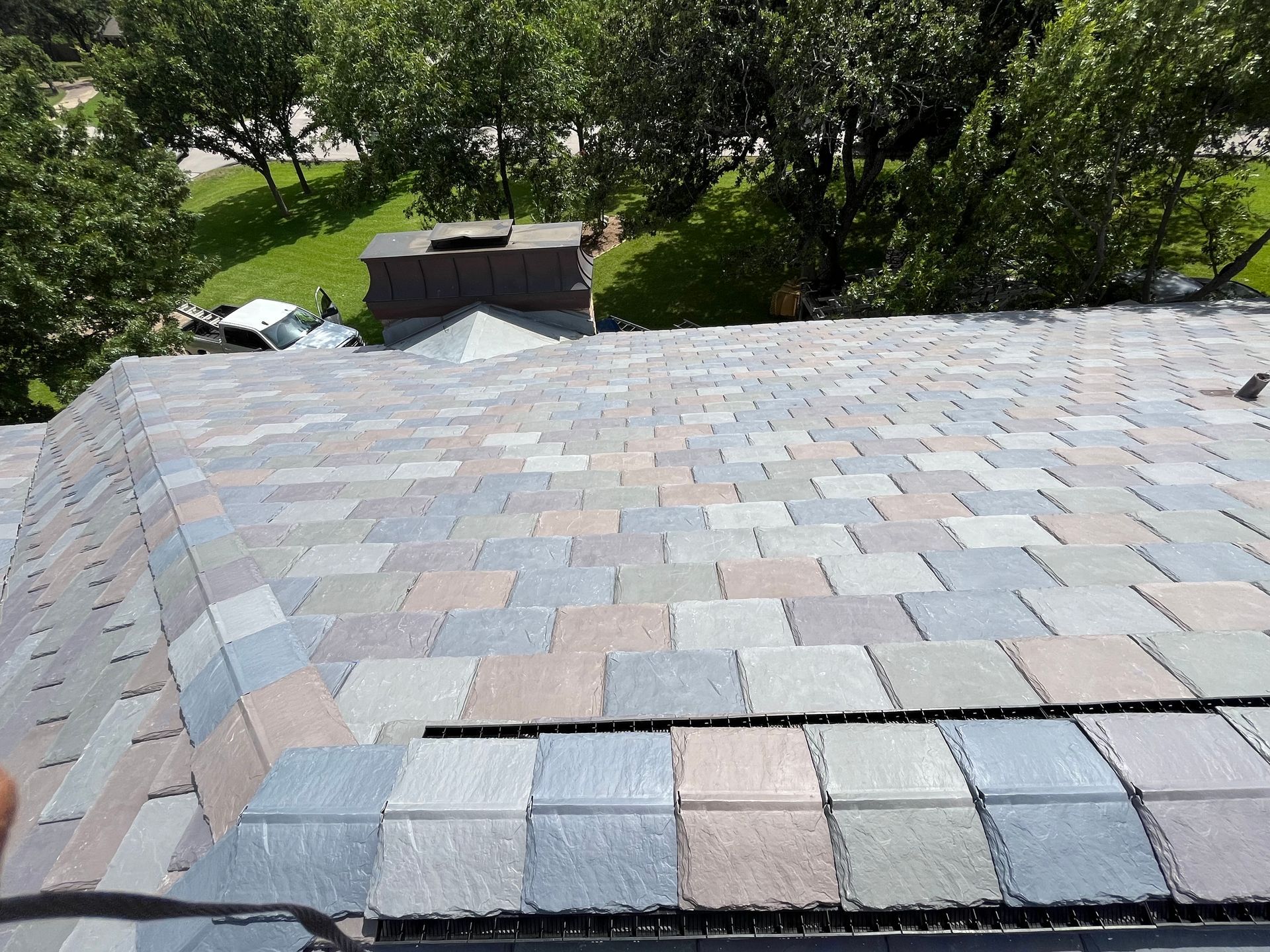
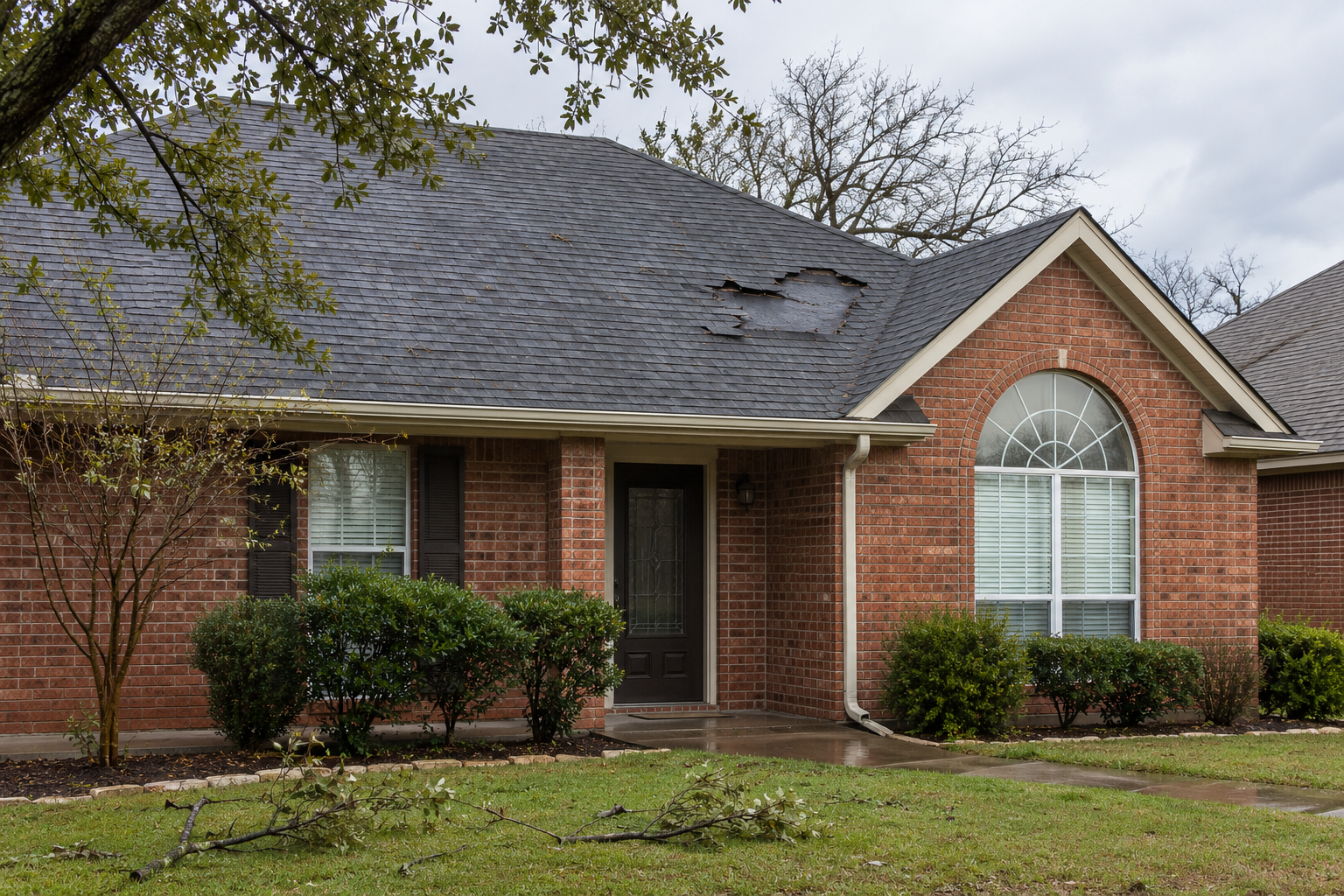
For an asphalt shingle roof, request an assessment of accessible slopes, ridge areas, flashings, penetrations, and related details. The inspector should identify the product where possible and consider its condition and repair history.
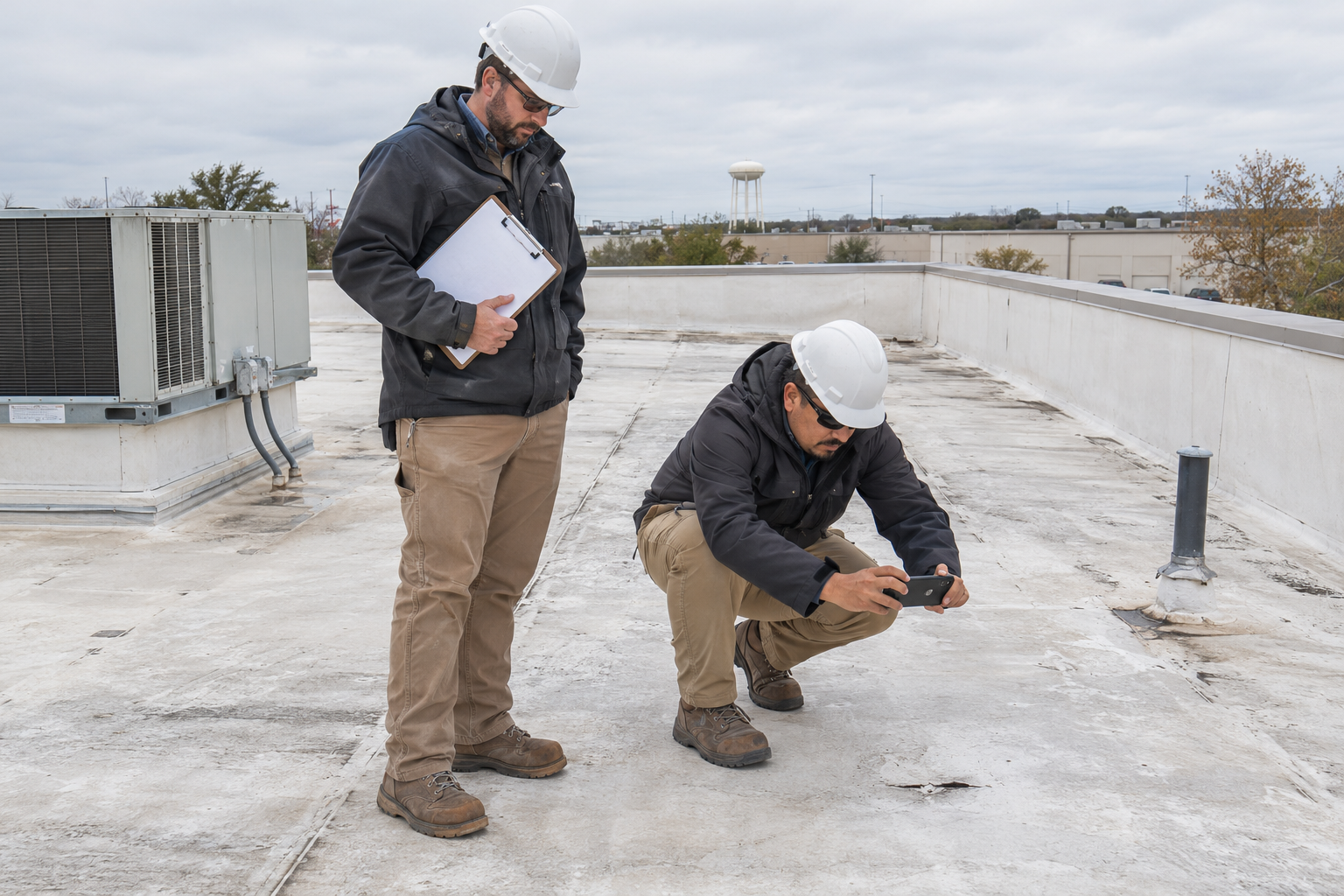
Ask for observations tied to locations. The report should explain which findings support the recommendation and distinguish them from ordinary variation, previous repairs, or conditions needing further review.
Not every dark spot, missing granule, or surface irregularity has the same cause. A useful inspection describes evidence and limitations rather than relying on one visual feature as an automatic diagnosis.
For a home, residential roofing services should lead to a defined recommendation: repair, monitoring, further investigation, or broader work when supported by the assessment.
Do Not Try to Reveal Damage Yourself
Do not press, scrape, bend, lift, or strike roofing materials to determine whether they were affected. Those actions can change the condition, create damage, and complicate later evaluation.
Leave specialized tests, sample removal, and exploratory openings to qualified personnel under an agreed scope. If a sample is necessary, ask where it will come from, who authorizes it, how the area will be restored, and what information the evaluation can provide.
A test does not necessarily answer every question. The report should identify what was evaluated and what remains outside the conclusion.
Owners should also avoid marking roof areas themselves. Let the professionals choose appropriate documentation methods while preserving the original condition as far as practical.
Commercial Roofing Requires a Different Checklist
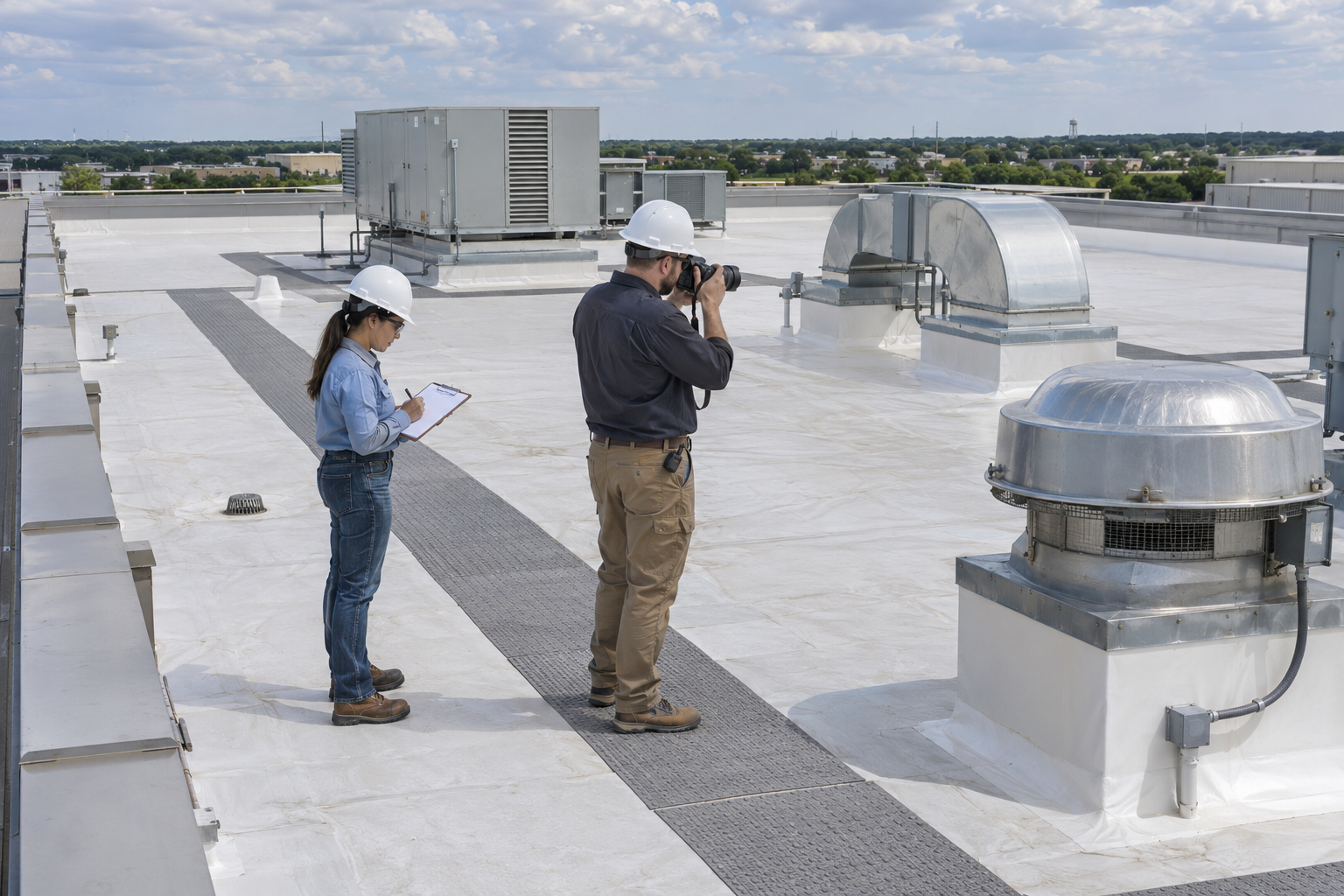
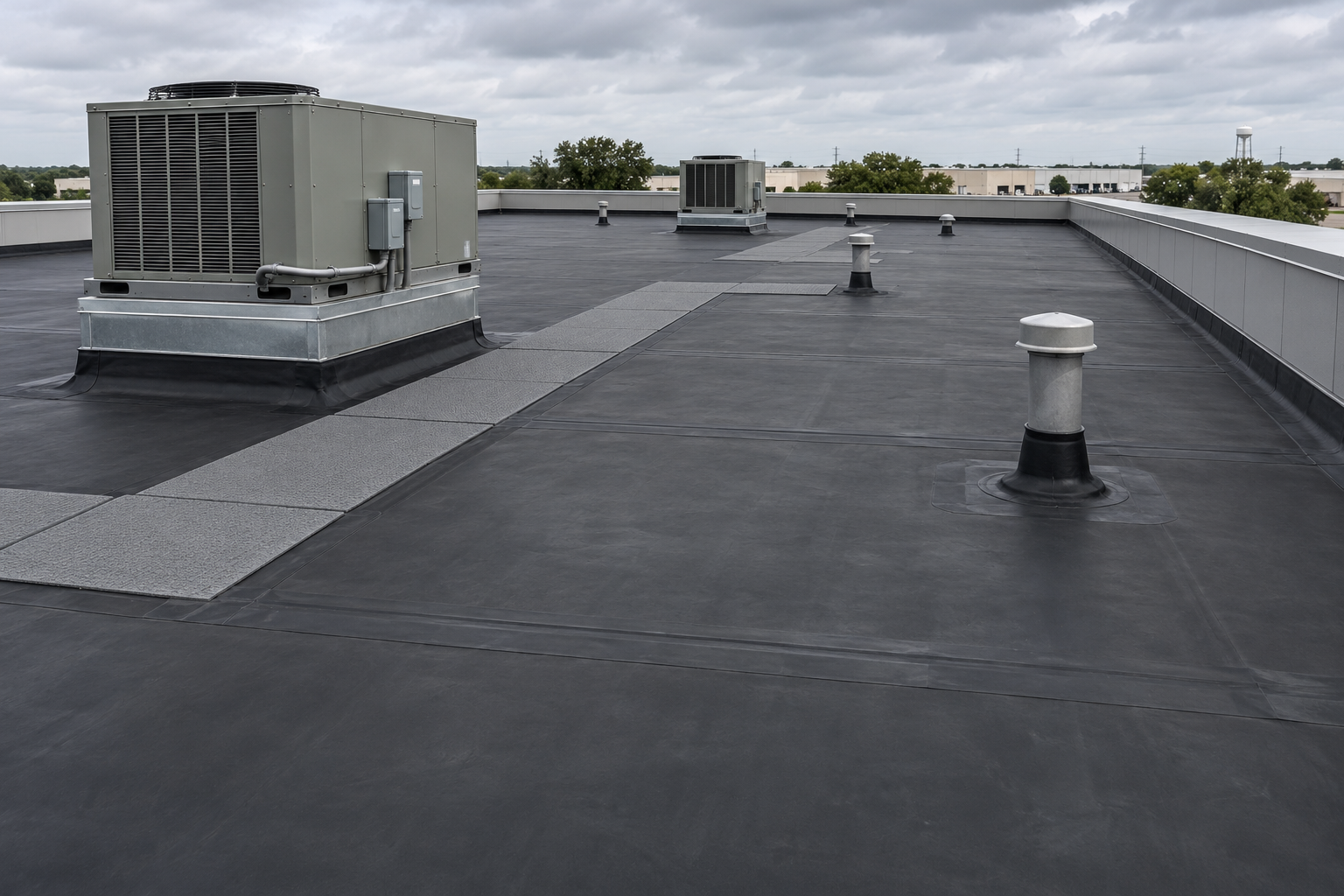
Commercial buildings may have single-ply membranes, metal panels, coatings, modified bitumen, built-up roofing, or several systems across different sections. Inspection methods and repair options need to reflect the actual assembly.
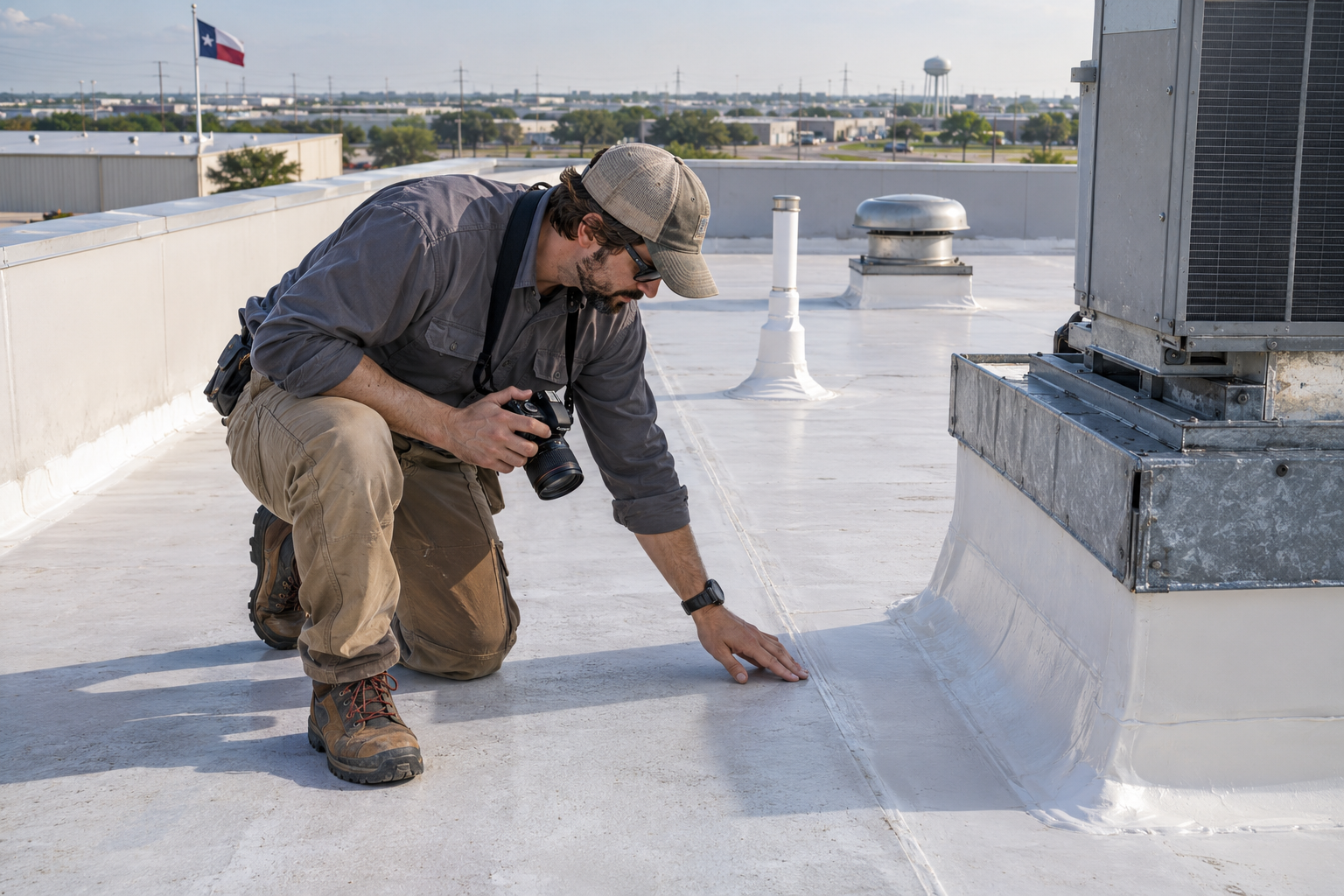
Ask the professional to address the field, seams or joints, flashings, edges, drainage, equipment interfaces, and previous repairs as appropriate. Some underlying concerns may require investigation beyond a surface visit.
GAF's hail guidance for granule-surfaced membranes illustrates why material-specific evaluation matters. Guidance for those membranes should not be applied indiscriminately to every commercial roof.
Commercial roofing support should also account for occupied spaces, equipment operation, service access, and any critical areas beneath the roof.
An Intact Surface Does Not Verify Every Layer
A visual inspection can provide important information, but it does not confirm all concealed conditions. Insulation, substrate, attachment, or hidden interfaces may remain unverified.
If the inspector recommends additional investigation, ask what specific uncertainty it addresses. The proposal should explain the method, limitations, potential disruption, and restoration needs.
Do not assume that suspected moisture proves hail caused it. Earlier leaks, equipment issues, and other sources may need consideration.
Likewise, do not convert uncertainty into an automatic replacement scope. A strong recommendation states what is known, what is not known, and what information would change the decision. That gives the owner a clear basis for authorizing the next step.
Record Interior Symptoms Without Assuming Their Source
If water appears indoors, identify the room, location, discovery time, weather conditions, and whether entry is continuing. Take photographs only from safe areas.
Water can travel before it becomes visible. A ceiling stain does not necessarily identify a roof opening directly above it.
Roofing, walls, equipment, plumbing, or condensation may be involved. Share relevant history with the contractor and allow the investigation to consider the evidence.
Avoid electrical, structural, and ceiling hazards. Do not enter a damaged attic or reach into a wet ceiling space. Protect people and property using appropriate procedures and qualified assistance. A roof inspection should complement those responses rather than delay them.
Ask for a Report You Can Review
Report elementInformation to requestIdentificationAddress, building, roof section, and inspection dateScopeAccessible areas assessed and any exclusionsEvidenceDated overview and detail photographs with locationsFindingsObserved conditions separated from assumptionsLimitationsConcealed or inaccessible areas not verifiedRecommendationDefined repair, monitoring, or investigation scopePriorityUrgent protection needs and reasonsFollow-upResponsible party and next decision
A report that says only “hail damage” or “no damage” may leave important questions unanswered. Ask how the conclusion relates to the scope actually performed, particularly when some roof areas were inaccessible.
Keep Timing and Cause Separate from Appearance
The inspection date, storm date, and date a concern first appeared may differ. Record each accurately rather than assigning every mark to the latest event.
Earlier photographs, service reports, and repair invoices can help establish a baseline. Their absence does not prove that every condition is new.
A professional may provide an opinion about cause based on the evidence, but the report should state uncertainty where appropriate. A nearby storm report alone cannot verify the condition of a particular roof section.
If the owner or insurer needs a more detailed evaluation, define that assignment clearly. The roof contractor's initial visual visit should not be assumed to answer every technical, historical, or coverage question.
Arrange Temporary Protection for Active Problems
If inspection identifies an opening or active water entry, professional temporary protection may be needed while permanent work is planned. Ask for a clear authorization describing the measure, cost, intended duration, and limitations.
Where safe and practical, retain photographs before work and records of completed protection. Keep receipts with the property file.
Temporary work is not necessarily a permanent repair, and its installation does not establish insurance coverage. Assign a person to arrange the next inspection or construction decision.
Do not climb onto a roof to install a tarp or improvise a patch. Access and incompatible repair materials can introduce additional risks and make later service more difficult.
Coordinate Insurance Documentation
If you believe the property may have a covered loss, report it to the insurer and follow the policy's instructions. TDI's storm recovery guidance provides information about reporting, records, and preventing additional damage.
Keep inspection findings, safe photographs, temporary-work receipts, estimates, and correspondence organized. Ask the insurer about inspection coordination and handling damaged materials before permanent work where practical.
A contractor's roofing recommendation is separate from coverage. Policy wording and claim facts affect the insurer's decision. Do not treat the cost of a proposed roof project as a guaranteed payment.
Seek appropriate independent advice for disputed policy or legal issues. The purpose of the inspection is to document the roof and support a practical construction decision.
Understand the Contractor's Texas Insurance Boundaries
TDI's roofing and insurance law guidance explains that a contractor cannot act as a public adjuster for property where it provides or may provide contracting services. It also addresses the prohibition on offers to waive, rebate, or absorb the deductible.
Ask the contractor to describe its roofing services clearly. Preparing an estimate and providing technical information should not be confused with representing the owner in settlement negotiations.
Keep contracts, invoices, payments, and completion statements accurate. Question any arrangement designed to disguise the actual transaction from the insurer.
Different issues may require different professionals. Roof assessment, claim representation where properly retained, and legal advice are separate responsibilities.
Compare Repair, Monitoring, and Broader Work
Some findings may support localized repairs. Others may justify further investigation, monitoring, restoration evaluation, or replacement. The recommendation should follow verified conditions and system requirements.
Ask why the proposed scope is appropriate and what alternatives were considered. If broader work is recommended, request the basis for rejecting a smaller repair.
Monitoring should have a purpose, baseline, review date, and trigger for reassessment. It should not mean leaving a documented opening or urgent condition unattended.
The roof materials and system selection guide can help organize longer-term comparisons. Keep elective upgrades, necessary repairs, and unresolved conditions visible rather than combining them into an unexplained total.
Review the Estimate Before Authorizing Construction
A useful estimate identifies locations, materials, preparation, details, price, exclusions, and the process for additional discoveries. Confirm whether the work is temporary or intended as a permanent repair.
Compare proposals using equivalent assumptions. One scope may include flashing or substrate repairs that another excludes. Resolve those differences before deciding from the totals.
For commercial buildings, address tenant communication, work hours, staging, and equipment coordination. For homes, discuss property protection, debris removal, and access.
Understand what each document authorizes. An inspection appointment, temporary protection approval, and permanent roofing contract are different commitments. Request clarification or appropriate advice when terms are unclear.
Preserve the Roof History
Keep original photographs, inspection reports, repair invoices, warranties, product information, and storm records together. Use consistent roof-section names and locations.
The guide to commercial roof maintenance records insurers may request offers an organizing framework that can also be adapted for a homeowner's file.
Track unresolved items with an assigned person and target date. A paid inspection invoice does not establish that recommended repairs were completed.
Good records help future contractors understand earlier conditions and avoid repeating the same investigation unnecessarily. They also support budgeting, property transfers, and continuity when the person managing the building changes.
Plan Follow-Up After the Initial Assessment
Before closing the inspection request, confirm what was found, what was not verified, and what action remains. If the recommendation is further investigation, obtain its scope and authorization requirements.
For completed repairs, request location-specific photographs and applicable workmanship information. Keep remaining recommendations separate from finished work.
If interior water was involved, establish a reporting process for later rainfall. A stain can remain after a leak stops, while new moisture or an expanding area warrants prompt attention.
Future changes should be documented as they are observed. Do not assume every later symptom comes from the same storm or that the first visit permanently resolved every possible source. Arrange professional reassessment when the evidence calls for it.
Prepare a Focused Inspection Request
A brief written description helps the contractor plan the visit. Explain what you observed, when you noticed it, and which areas are affected. State whether an active leak exists rather than assuming the absence of visible exterior damage means the roof is dry throughout.
For example, an owner might report that hail was observed on a particular evening, new marks were noticed on a downspout the next morning, and the roof has not yet been assessed. That description preserves the facts without declaring a construction scope in advance.
For commercial sites, identify building numbers, tenant contacts, roof access restrictions, and operating equipment. Explain who can approve temporary work and whether sensitive operations are located below the area of concern. A site plan can prevent confusion on properties with similar-looking buildings.
Ask the contractor to confirm the assessment scope, documentation, and likely reporting time. If some areas cannot be accessed, request that the limitation appear in the report. This makes the eventual conclusion easier to interpret.
Questions to Resolve Before Closing the Service Request
Confirm which recommendations require immediate action and which can be scheduled or monitored. Ask who will arrange each next step and what additional authorization is needed. Keep those decisions separate from any pending insurance discussion.
If temporary protection is installed, record its follow-up requirement. If no repair is recommended, retain the findings and limitations as a baseline rather than interpreting the report as a guarantee against every future problem.
Finally, update the property's contact list and maintenance calendar. Share relevant reporting instructions with occupants through the normal management process. A documented assessment is most useful when the owner can turn its findings into completed actions and recognize when new information calls for another review.
Frequently Asked Questions
Can hail damage be invisible from the ground?
Yes. Ground-level appearance may not reveal subtle or inaccessible concerns. A professional assessment can provide more information, but it also has limits that should be documented.
Does an apparently intact roof always have hidden hail damage?
No. The possibility of less obvious effects does not establish damage at a particular property. Conclusions should follow evidence and appropriate evaluation.
Do dents in a gutter prove the shingles are damaged?
No. They provide context and may support arranging an inspection, but different materials respond differently. Roof-specific findings are needed.
Should I press on shingles to look for bruising?
No. Leave specialized evaluation to qualified professionals. Pressing, scraping, or lifting can change the condition or create damage.
Does an inspection guarantee insurance payment?
No. Roofing findings and coverage decisions are separate. The insurer evaluates the claim under the policy and applicable circumstances.
What should I provide when requesting service?
Share the address, reported event date, discovery details, safe photographs, active-leak information, prior repairs, and access restrictions. Identify urgent conditions so the response can be planned appropriately.
Arrange a Hidden Hail Damage Roof Assessment
A hidden hail damage inspection should lead to documented findings and clear next steps. Use safe observations, preserve the roof history, request a report with limitations, and compare work through a defined scope.
Contact Showtime Exteriors or call 817-400-7663 to discuss your home or commercial building. Share the storm history, visible concerns, and any active water entry so the assessment can focus on the property's needs.