
When Should You Repair, Restore, or Replace EPDM Roofing?
When to Repair, Restore, or Replace EPDM Roofing
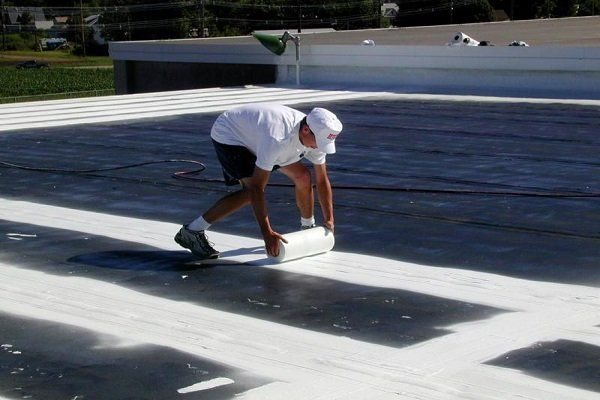
Quick answer: Repair EPDM when damage is isolated and the surrounding membrane, insulation, deck, seams, and flashings remain serviceable. Consider restoration when the roof is broadly stable but needs coordinated seam, flashing, surface, drainage, or coating work to extend useful service. Replace EPDM when defects are widespread, moisture is extensive, attachment or shrinkage problems are systemic, the deck is deteriorated, repeated repairs are no longer economical, or the roof cannot meet the building’s current operational, code, warranty, or insurance needs.
The decision should follow evidence rather than a predetermined sales outcome. A qualified assessment can document what is visible, identify questions that require testing, and separate urgent stabilization from long-term capital work. Property owners should receive enough information to understand why a limited repair is reasonable, why a restoration assembly can retain existing components, or why replacement offers a more dependable result. Clear documentation also makes it easier to brief partners, tenants, lenders, brokers, insurers, and internal facilities teams.
What is EPDM roofing?
EPDM stands for ethylene propylene diene terpolymer. It is a flexible synthetic rubber membrane used on low-slope commercial roofs. EPDM systems may be fully adhered, mechanically attached, or ballasted, and they can include different insulation, cover board, vapor-control, attachment, perimeter, and flashing configurations. Black EPDM is common, while white EPDM is also available for selected applications. The membrane itself is only one part of the assembly; performance depends on the deck, insulation, attachment, seams, penetrations, edges, drainage, workmanship, and maintenance.
EPDM has been used for decades and can provide long service when it is appropriately designed, installed, inspected, and maintained. Age alone does not prove failure. A newer roof can leak because of punctures or poor details, while an older roof may remain serviceable after targeted work. The correct decision comes from present condition, moisture data, failure pattern, and building requirements—not from a single age threshold or one visible ceiling stain.
Commercial owners sometimes call every black membrane a rubber roof, but identifying the actual material and assembly matters. Repair materials and preparation must be compatible. Existing warranties may require approved products and procedures. Before authorizing work, confirm whether the roof is EPDM, how it is attached, how many layers are present, whether ballast is involved, and what records are available.
The repair, restoration, and replacement decision at a glance
Repair is a focused correction. Restoration is a coordinated program intended to renew a serviceable roof or substantial portions of it. Replacement removes and replaces some or all of the existing roof assembly. Those categories can overlap: a restoration includes repairs, and a replacement may retain dry insulation or other components when code, design, manufacturer requirements, and field conditions allow. The label matters less than a clear scope showing what stays, what goes, and why.
Owners should avoid two extremes. The first is replacing an otherwise serviceable roof because of one repairable leak. The second is repeatedly patching a roof whose failures are widespread and whose concealed moisture continues to grow. A professional assessment should locate defects, investigate moisture, review drainage and attachment, and compare the likely cost and risk of feasible paths.
When EPDM repair is usually appropriate
Repair is generally the strongest option when the problem is limited in area, the surrounding membrane remains flexible and sound, seams and flashings outside the affected location are performing, insulation is mostly dry, and the deck is stable. Examples include a small puncture caused by rooftop traffic, an isolated open seam, a localized flashing defect, a cut near mechanical work, a damaged drain detail, or a small section affected by wind or hail.
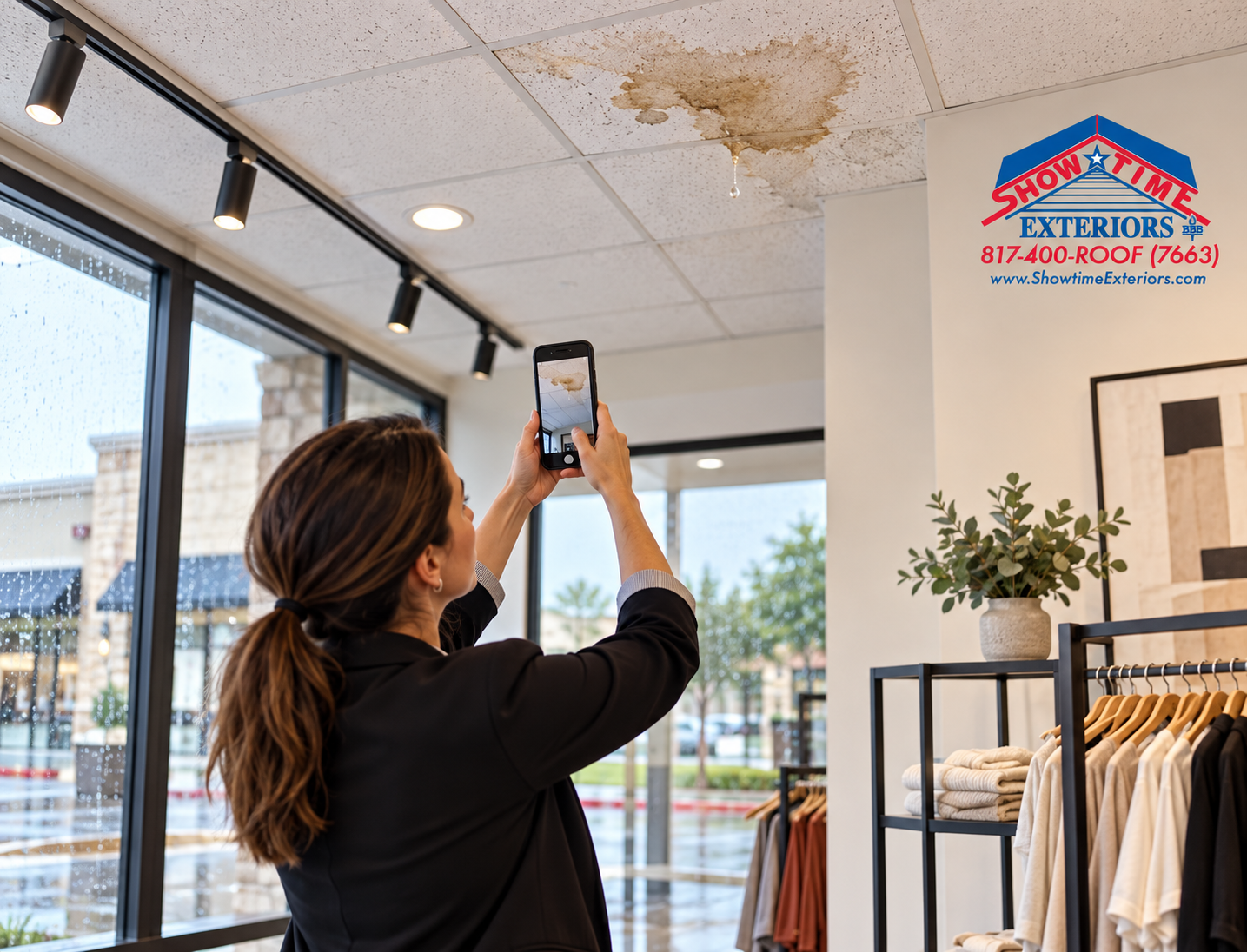
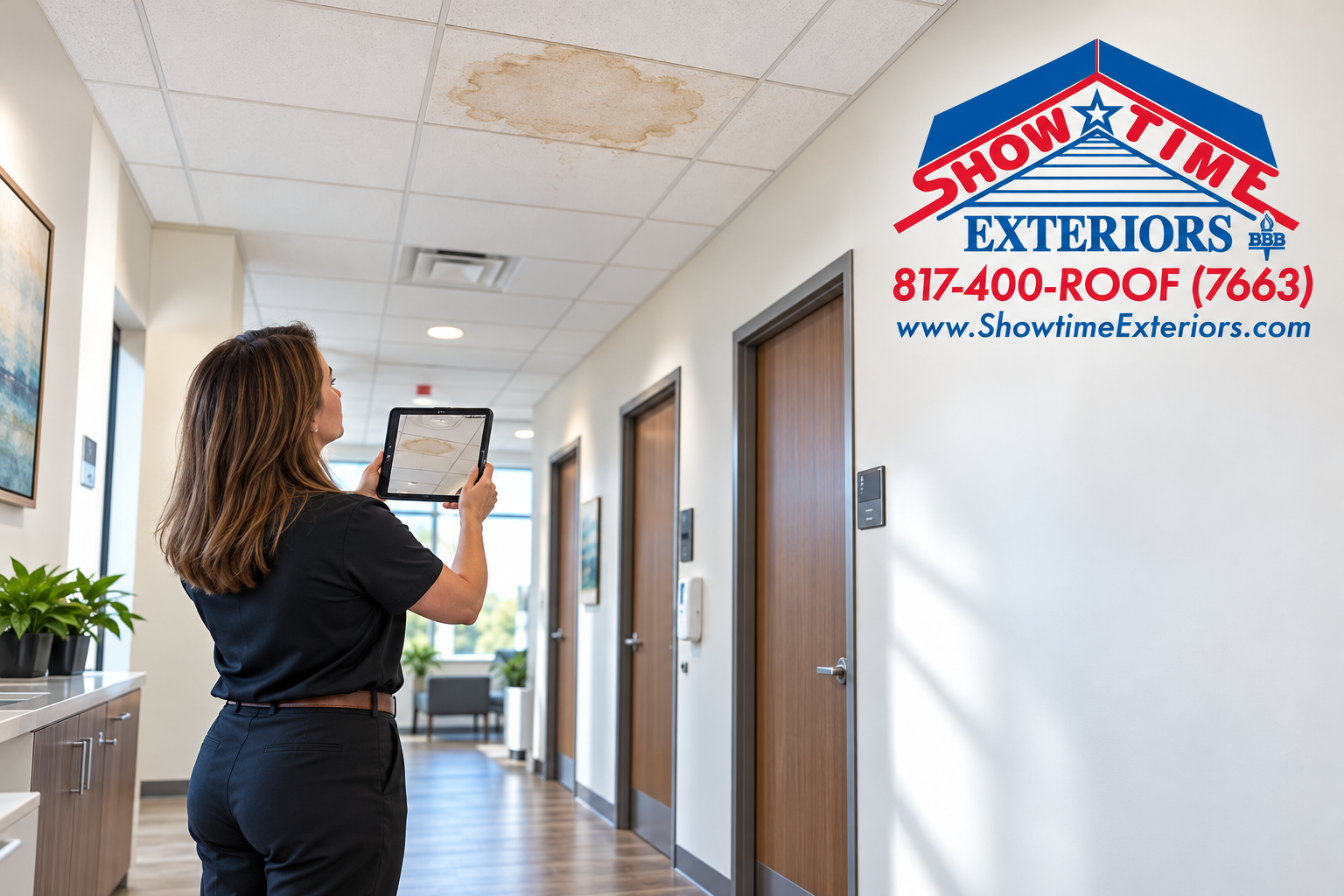
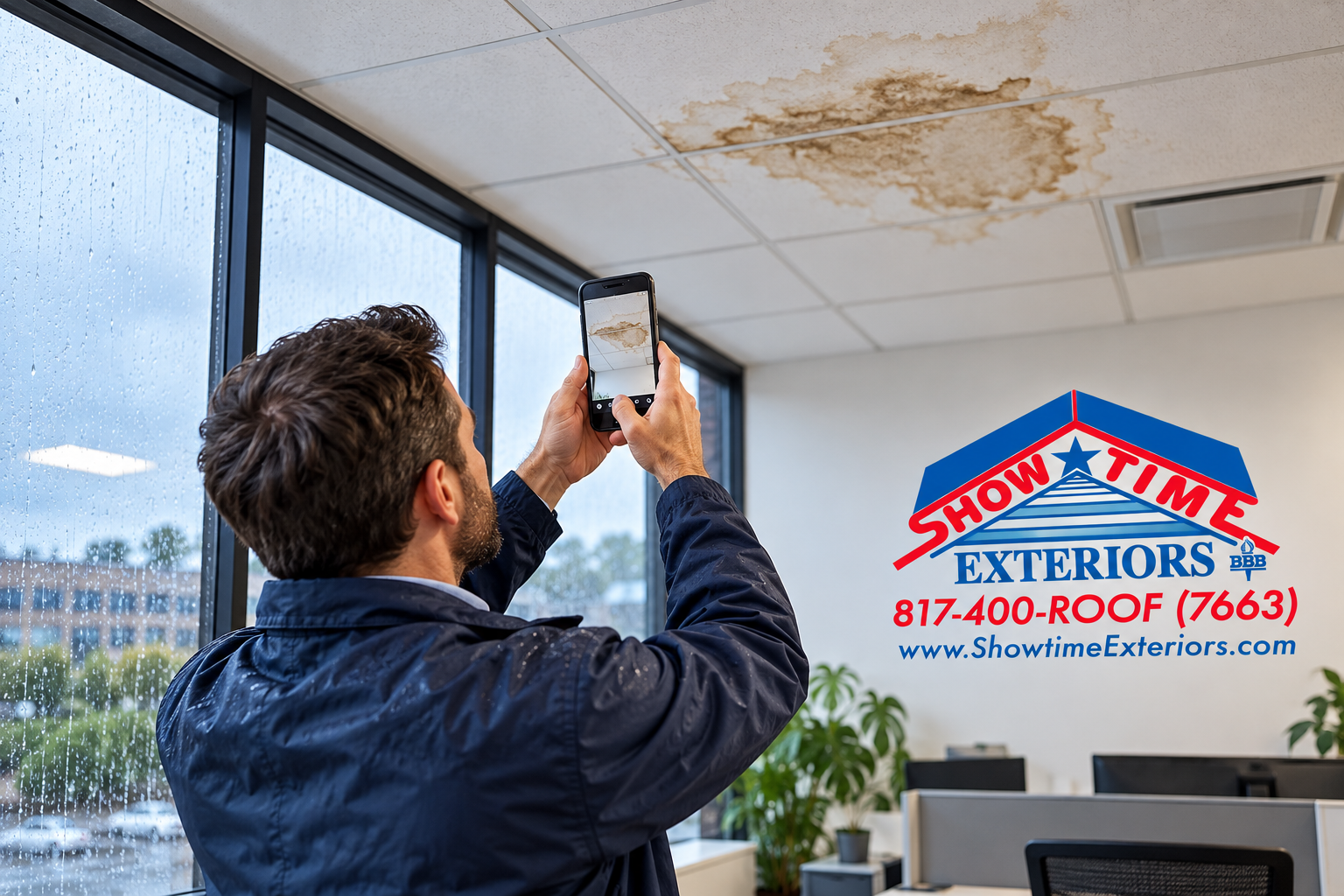
A repair should address the failure pathway, not merely cover the visible symptom. Water can travel within roof layers before appearing indoors, so the ceiling stain may not sit directly below the entry point. Investigation should review nearby seams, penetrations, curbs, drains, transitions, wall flashings, and previous patches. If moisture is trapped, wet materials may need removal before a durable membrane repair is completed.
Temporary emergency work is useful when it is treated as temporary. It can reduce immediate water entry and protect inventory or operations until permanent materials and safe conditions are available. The temporary location, materials, date, weather, and follow-up requirement should be documented. A temporary patch that disappears from the maintenance calendar can become a new failure point.
Common EPDM conditions that may be repairable
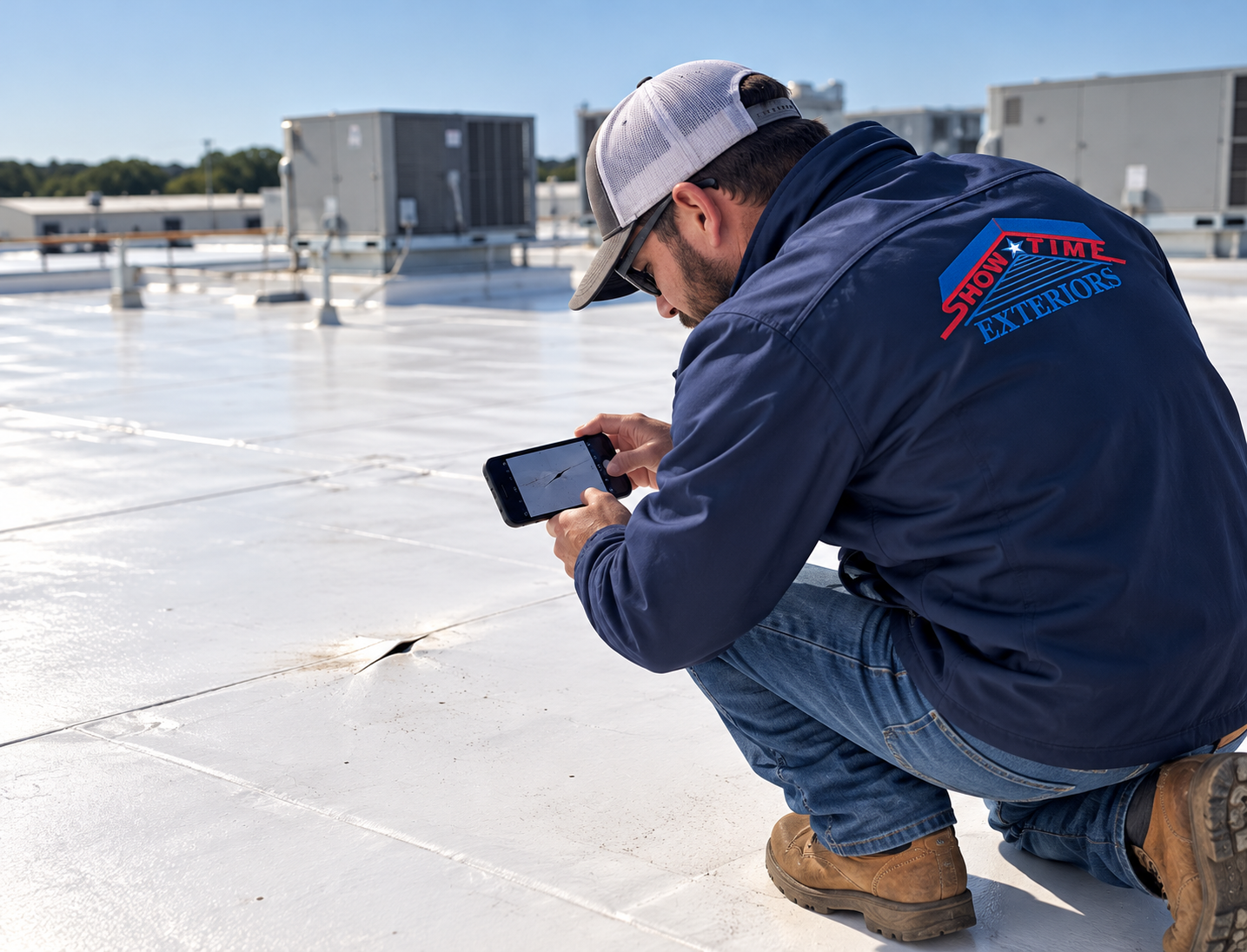
Punctures and tears are often repairable when they are limited and the surrounding assembly is sound. EPDM can be damaged by dropped tools, sharp equipment feet, screws, sheet metal, branches, hail impacts, or uncontrolled foot traffic. The area should be cleaned and prepared according to the selected repair system, and damaged insulation or cover board beneath it should be evaluated rather than ignored.
Open seams or lap edges may be repairable when the condition is localized. The contractor should determine why the seam opened. Contamination, aging accessories, movement, inadequate preparation, stress, or trapped moisture can call for different corrective work. Simply adding sealant along an edge may not be equivalent to a properly prepared and reinforced membrane repair.
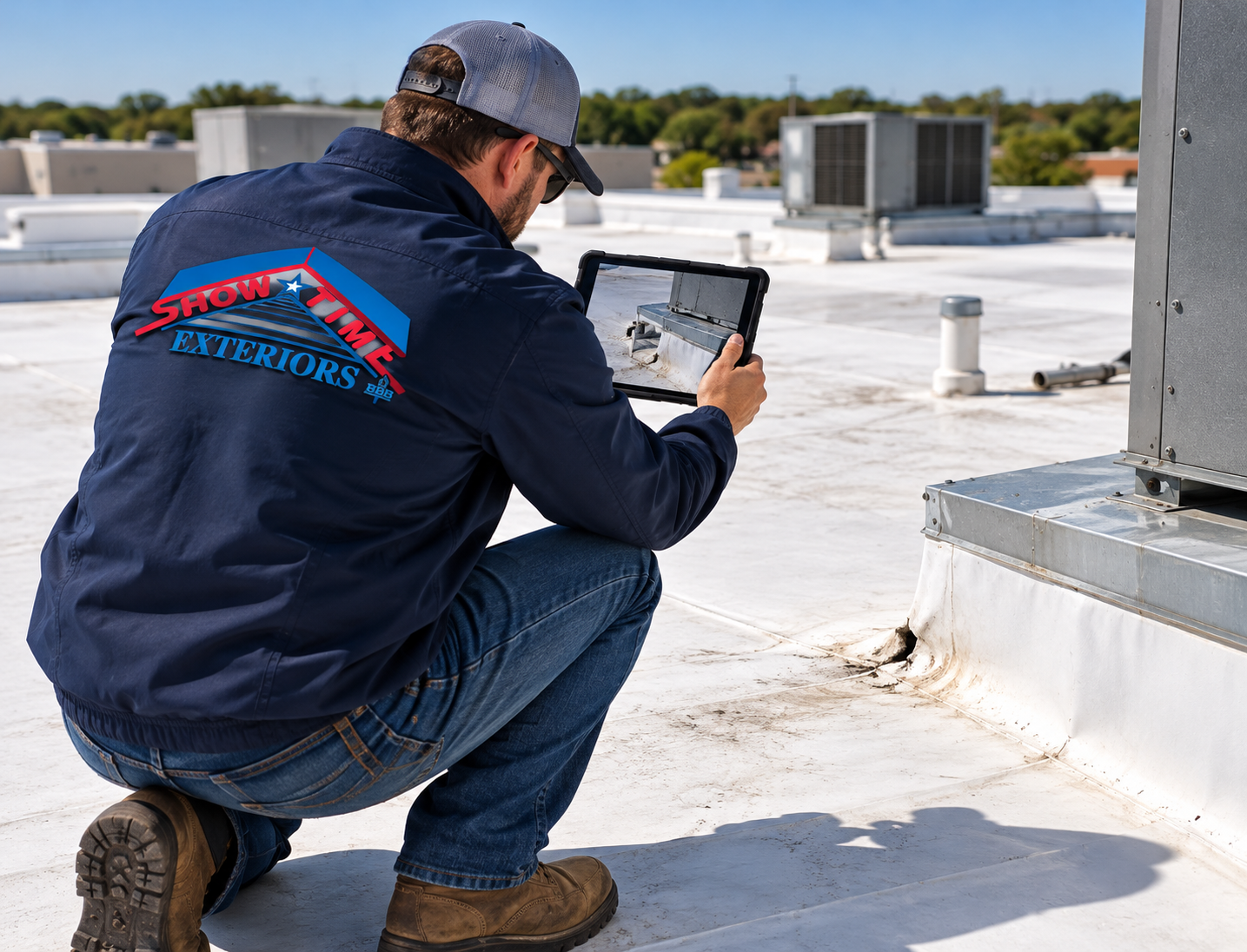
Flashing defects around curbs, pipes, walls, drains, and corners are common leak sources. Localized flashing work may solve the issue when the field membrane and adjacent components remain serviceable. Repeated failure at many curbs, widespread bridging, shrinkage stress, or deteriorated accessories can indicate a broader problem that should be handled as restoration or replacement.
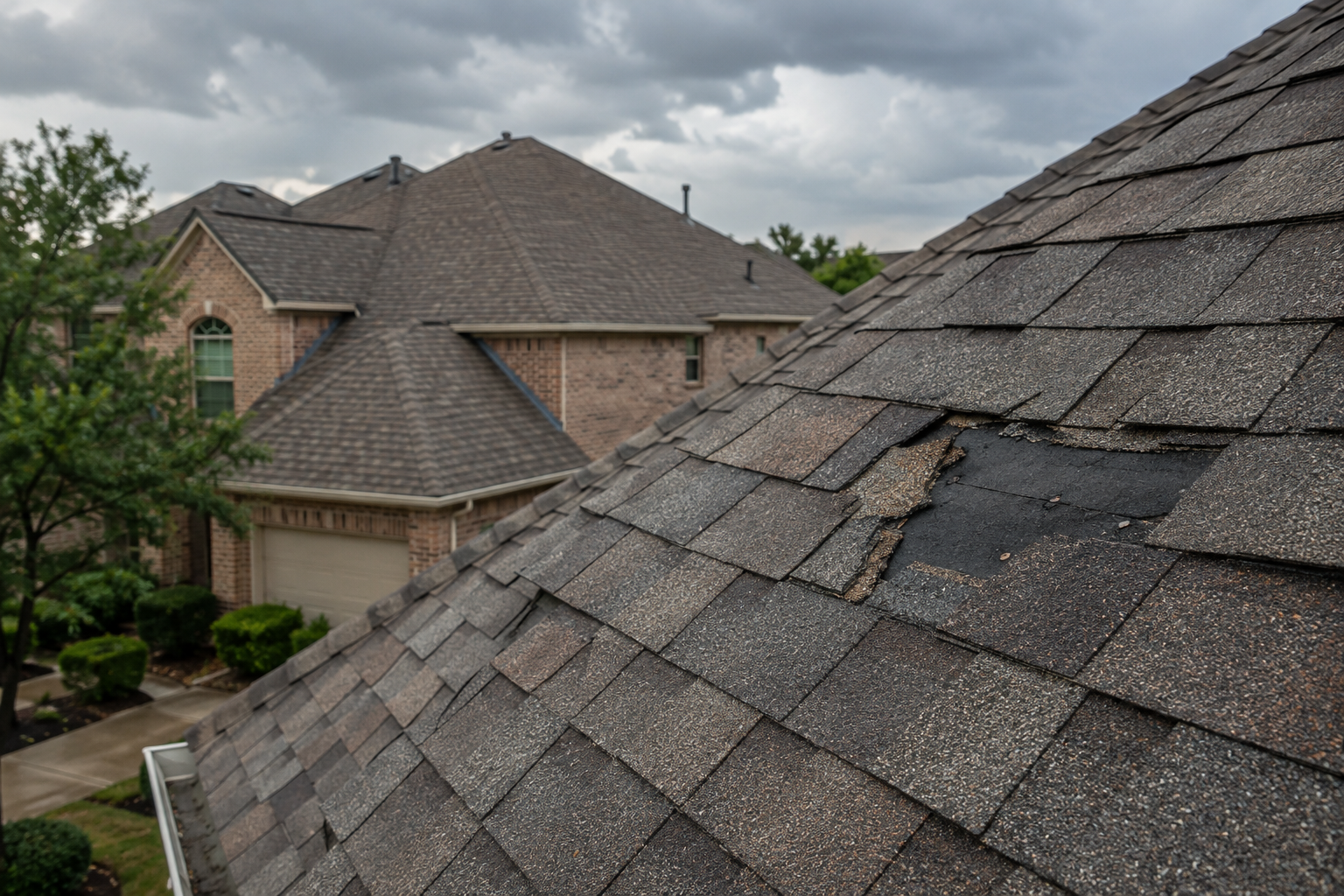
Localized wind or hail damage may also be repairable. EPDM evaluation after storms can include punctures, tears, surface bruising, seam stress, adhesive separation, flashing movement, perimeter detachment, and damage to insulation or cover board. Damage that looks minor at the surface may justify additional investigation, especially near unsupported areas, fasteners, and transitions.
When EPDM restoration may make sense
Restoration is worth considering when the roof is generally stable but has enough age-related or detail-related deficiencies that isolated service calls are no longer the best management approach. A restoration scope may combine repairs at seams and flashings, removal of wet areas, replacement of damaged insulation, reinforced transitions, drainage corrections, perimeter work, surface preparation, and a compatible coating or other approved renewal system.
The retained roof must be suitable for restoration. The membrane should have adequate integrity, the attachment and deck should be serviceable, moisture should be limited and removable, and the proposed products should be compatible with EPDM and the existing accessories. Manufacturer requirements, warranty status, uplift needs, code provisions, and added weight should be reviewed. Coating a roof does not make concealed moisture or unstable substrate disappear.
Restoration can be attractive when it reduces demolition, limits interior exposure, and extends useful service at a lower initial cost than full replacement. It can also help organize scattered repairs into one documented scope. The value depends on preparation and detail work. A low-cost coating applied over contamination, failed seams, shrinkage stress, wet insulation, or unresolved drainage is not the same as a designed restoration system.
What an EPDM restoration scope may include
A responsible scope begins with cleaning and condition verification. The contractor may remove debris, evaluate biological growth or contaminants, mark defects, complete test cuts, map wet areas, and confirm adhesion or attachment where relevant. Existing incompatible mastics and loose repairs may require removal. The manufacturer or system provider should define preparation standards because EPDM surfaces and aged accessories can require specialized primers and products.
Detail work often consumes more labor than the open field. Seams, inside and outside corners, penetrations, curbs, drains, scuppers, wall transitions, expansion joints, terminations, and edges must be addressed. Damaged walkway pads and traffic routes should be corrected. New protection may be needed around equipment that receives frequent service.
If a coating is proposed, ask for product type, required dry-film thickness, application rate, reinforcement locations, number of coats, preparation, weather limitations, adhesion testing, quality-control checks, and warranty terms. Confirm that the product is intended for EPDM and compatible with previous repairs. Coverage estimates should account for surface condition and detail consumption, not only roof area.
When EPDM replacement is usually the better choice
Replacement becomes more compelling when failures are no longer isolated. Widespread open seams, extensive membrane shrinkage, brittle or badly weathered material, broad adhesive or attachment loss, repeated flashing failure, numerous incompatible patches, and chronic leakage can make additional repairs unreliable. The same is true when moisture mapping or test cuts show extensive wet insulation that cannot be economically removed in small sections.
Deck deterioration, corrosion, rot, structural concerns, or inadequate slope may also point toward replacement. A replacement project creates access to correct wet layers, damaged deck, air or vapor-control problems, insulation, taper, drainage, attachment, and perimeter details. Repeating the old configuration without reviewing why it failed can repeat the old problems.
Replacement may also be driven by building plans rather than membrane failure alone. New rooftop equipment, solar installations, occupancy changes, energy targets, lender requirements, warranty needs, code work, insurance deadlines, or a long ownership horizon can justify a system designed for current conditions. The decision should account for operations and asset strategy, not just today’s leak count.
EPDM shrinkage: repairable condition or replacement warning?
Some EPDM membranes can experience dimensional change that places stress on flashings, seams, walls, curbs, and penetrations. Signs may include bridging at transitions, pulled flashings, tenting, displaced terminations, or stress concentrated at corners. A small affected detail may be repairable, but widespread shrinkage requires a system-level assessment because repairing one location can shift stress elsewhere.
The contractor should review membrane age and type, attachment, perimeter securement, flashing configuration, repair history, and the extent of movement. Manufacturer guidance may be relevant if the system can be identified. Extensive corrective work may involve reinforced membrane, new securement, redesigned flashings, or replacement. Owners should be cautious of a proposal that treats broad movement as a series of unrelated sealant repairs.
How moisture changes the decision
Moisture is one of the most important dividing lines among repair, restoration, and replacement. Limited wet insulation around a known puncture may be removed and repaired locally. Multiple wet zones may still allow a carefully defined restoration if affected materials can be removed and the remaining assembly is suitable. Broad or poorly bounded moisture can make replacement the more defensible path.
Moisture can reduce insulation performance, deteriorate cover board or deck, corrode metal components, increase weight, support odor or indoor-environment concerns, and allow damage to continue beneath a new surface. Visual inspection alone may not identify the full pattern. Depending on the roof, professionals may use infrared imaging, electrical methods, test cuts, core samples, interior observations, or a combination.
Ask the proposal to state how wet areas were identified, what assumptions remain, how removed quantities will be measured, what replacement materials will be used, and what unit prices apply. A restoration bid that assumes a dry roof should not be compared directly with a replacement bid carrying substantial moisture allowances.
Ballasted EPDM requires special attention
Ballasted EPDM uses stone or pavers to hold the loose-laid membrane assembly in place. Ballast can protect portions of the membrane from direct exposure, but it can also obstruct inspection, conceal damage, complicate repairs, add significant weight, and make leak tracing difficult because water may travel laterally within nonadhered layers. NRCA material specifically notes the inspection and repair challenges associated with ballasted EPDM.
This issue aligns with Showtime Exteriors’ campaign position on aging gravel or stone-covered commercial roofs: concealed conditions and difficult assessment are risks, not selling points. If a ballasted EPDM or gravel-surfaced roof is creating repeated leaks, documentation problems, or insurance concern, owners should request a thorough evaluation and compare continued repair with removal, recover where appropriate, or replacement. Do not describe ballast as automatically bad, but do not minimize the uncertainty it creates.
Drainage, ponding, and recurring leaks
EPDM is used on low-slope roofs, but that does not make prolonged ponding irrelevant. Blocked drains, undersized scuppers, settled insulation, deck deflection, poor taper, or equipment placement can keep water on the roof and increase stress at seams, patches, and penetrations. Standing water can also hide small defects and complicate maintenance access.
A repair may be sufficient when the leak is localized and drainage works as designed. Restoration may include crickets, tapered insulation in selected areas, drain or scupper work, and renewed details. Replacement may be justified when slope and drainage defects are broad and cannot be corrected reliably above the existing system. The project should coordinate roofing work with structural, plumbing, or mechanical professionals when conditions extend beyond the roof membrane.
Storm damage and Texas weather
Texas EPDM roofs may face hail, wind, heat, ultraviolet exposure, rapid temperature change, heavy rain, debris, and damage from emergency equipment work. After a significant storm, document the date and known interior effects, then inspect when conditions are safe. Look beyond the center of the roof. Perimeters, corners, flashings, rooftop equipment, drains, and previous repairs may be more vulnerable than open membrane areas.
Wind-related concerns can include billowing, adhesive separation, seam opening, flashing movement, tears, punctures, and perimeter detachment. Hail can affect the membrane, seams, accessories, cover board, insulation, and equipment. A storm does not automatically require replacement, and lack of an immediate ceiling stain does not prove the roof is unharmed. The scope should follow documented conditions.
Emergency repairs should protect the building without destroying evidence unnecessarily. Photograph conditions before and after temporary work when possible, retain invoices and weather information, and keep removed materials if instructed by relevant professionals. Roofing contractors can document physical roof conditions; insurers and their representatives determine coverage.
Insurance and renewal considerations
An EPDM inspection, repair, restoration, or replacement can help an owner create a clearer property record, but no contractor can guarantee policy renewal, premiums, or coverage. Insurance decisions vary by carrier, building, location, roof age, attachment, condition, maintenance history, losses, and underwriting rules. Ask the broker or carrier for roof requirements and deadlines in writing.
If renewal is approaching, work backward from the submission deadline. Allow time for inspection, moisture investigation, proposal review, manufacturer or engineering input, material procurement, construction, final photographs, warranties, invoices, and broker review. A last-minute emergency may leave only temporary options, while an early assessment creates room to compare repair, restoration, recover, and replacement.
Maintain organized records: roof plans, installation date, warranties, inspections, photographs, leak logs, service invoices, moisture reports, proposals, completed work, and maintenance. Documentation cannot guarantee insurance acceptance, but it replaces guesswork with observable facts and a defined corrective-action history.
Cost: how the three paths compare
Repair normally has the lowest immediate cost because it targets limited defects. Its value declines when service calls become frequent, wet areas expand, or each repair addresses only a symptom. Owners should total repair spending, interior damage, tenant disruption, staff time, emergency premiums, and unresolved risk—not just the invoice for one patch.
Restoration generally costs more than isolated repair and less than a full tear-off and replacement, but the range varies widely. Preparation, wet-area removal, seam and flashing quantities, drainage work, coating specification, access, roof area, and warranty requirements drive the budget. A restoration with extensive corrective work should not be compared with a thin, minimally prepared coating application.
Replacement has the highest initial cost but may provide the best life-cycle value when the old system is broadly compromised. Budget considerations include tear-off, disposal, deck allowances, insulation and cover board, vapor control, drainage, curbs, penetrations, edge metal, attachment, permits, engineering, occupied-building protection, warranties, and contingency. Request clear unit prices for concealed conditions.
How to perform an EPDM condition assessment
Begin with records and interviews. Review roof age, system type, attachment, warranty, prior repairs, leak locations, storm history, equipment changes, interior complaints, and maintenance. Speak with facility personnel who know where water appears and under what weather conditions. A leak log can reveal patterns that a one-time visit misses.
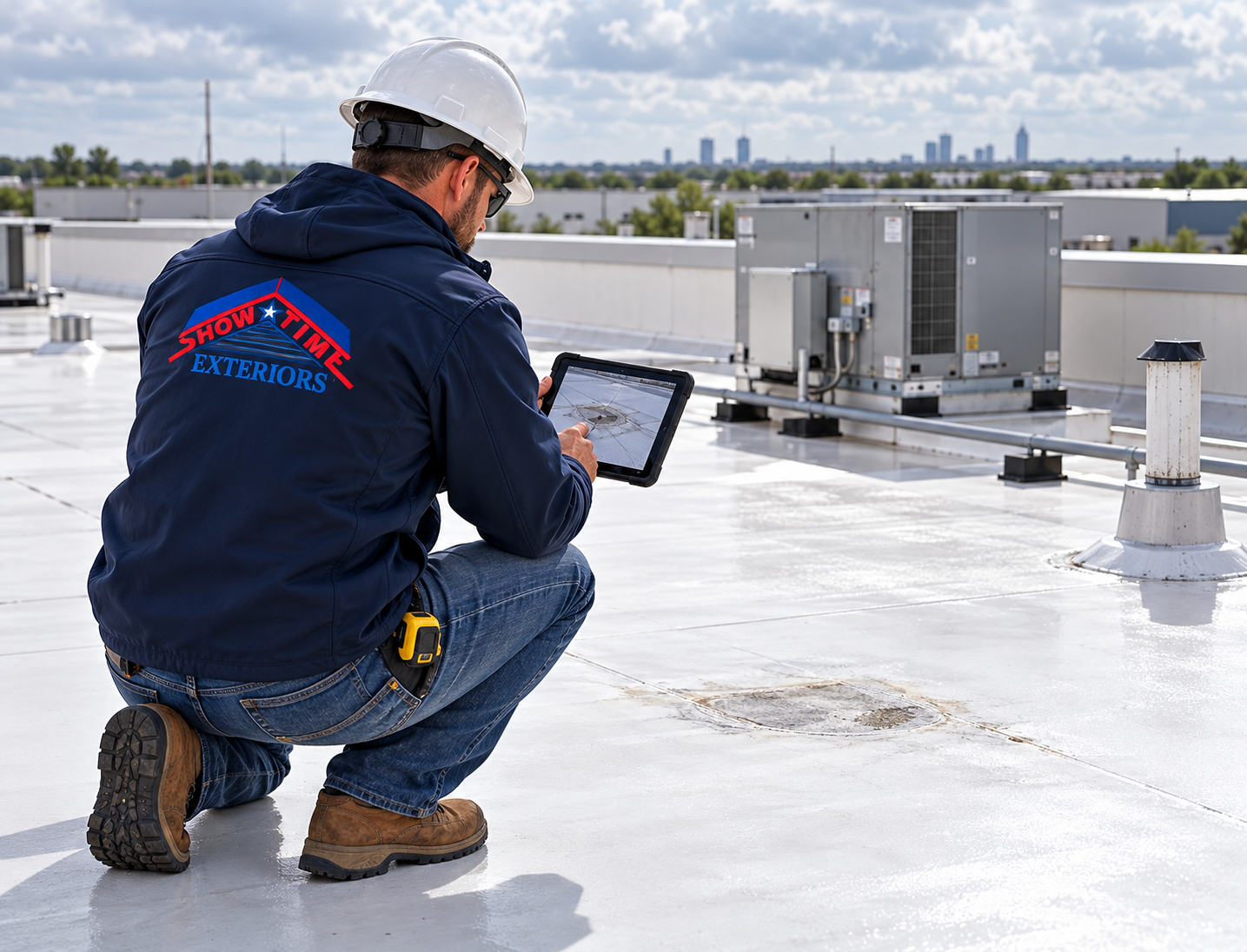
On the roof, document membrane condition, seams, patches, flashing, walls, curbs, penetrations, drains, scuppers, expansion joints, edges, walkway pads, rooftop traffic, contamination, ponding indicators, ballast distribution where applicable, and evidence of movement. Interior review may identify stains, corrosion, damaged deck, wet insulation, or paths associated with mechanical systems rather than roofing.
Additional testing should be selected for the question being asked. Moisture scanning helps map possible wet zones but may require verification. Test cuts can confirm layers, thicknesses, adhesion, and condition at specific points. Pull tests, adhesion tests, core samples, or structural review may be appropriate for restoration or recover planning. Testing limitations should be explained rather than hidden.
A practical decision framework
Choose repair when the defect is isolated, the membrane around it remains serviceable, moisture is limited, attachment is stable, and the expected repair provides a durable correction. Choose restoration when deficiencies are broader but the roof remains a suitable substrate, wet areas can be removed, details can be renewed, and the proposed system offers a meaningful service-life extension. Choose replacement when widespread failure, moisture, shrinkage, deck damage, repeated leaks, incompatible repairs, or building requirements make continued retention unreasonable.
If evidence is mixed, request alternatives with the same assumptions. A contractor might price targeted repair plus monitoring, restoration with defined wet-area allowances, and full replacement. Compare expected performance, scope, exclusions, warranty, maintenance, disruption, and residual risk. Avoid asking for three prices if two options are technically inappropriate; a low but unsuitable alternative adds confusion rather than choice.
How to compare EPDM proposals
Every proposal should identify the existing roof and the problem being corrected. It should state materials, preparation, quantities, attachment, thicknesses, seam and flashing treatment, wet-area assumptions, deck allowances, perimeter work, drainage, equipment coordination, access, schedule, daily dry-in, cleanup, warranties, exclusions, and closeout documents. Vague phrases such as “repair leaks as needed” are difficult to enforce or compare.
Ask whether the contractor has included manufacturer-required primers, tapes, membranes, accessories, and application rates. Confirm responsibility for moving or lifting equipment, electrical and mechanical work, interior protection, permits, engineering, testing, and hazardous-material questions. If the building remains occupied, define work hours, communication, safety zones, odor or noise controls, and response procedures.
Compare proposals line by line. The lowest total may exclude wet insulation, deck replacement, edge metal, drains, warranty fees, or equipment work. The highest total is not automatically best either. Value comes from a technically appropriate, transparent scope that protects the building and gives the owner a workable plan for concealed conditions.
Maintenance after repair, restoration, or replacement
Schedule routine inspections and inspections after significant storms or rooftop work. Keep drains, scuppers, gutters, and overflows clear. Control access and require other trades to use designated walkways and compatible protection. Document new penetrations and equipment modifications. Remove loose fasteners, sheet metal, wire, and debris that can puncture the membrane.
Watch repaired locations, seams, flashings, terminations, curbs, penetrations, drains, and areas of prior ponding. Address small changes before they become interior leaks. Follow manufacturer and warranty requirements for inspection, cleaning, repair materials, notifications, and authorized work. Keep reports, photographs, invoices, and warranties in the permanent property file.
NRCA describes maintenance as one of the most important factors affecting roof-system service life after proper installation. A planned program does not prevent every storm event or defect, but it improves the chance that emerging problems are found while they remain manageable.
Frequently asked questions
Can EPDM be patched? Yes, many localized punctures, tears, seams, and flashing defects can be repaired with compatible materials and proper preparation. The contractor should remove contamination, evaluate moisture and substrate, follow the selected system’s procedures, and reinforce the full affected area. General-purpose caulk or an incompatible patch may provide only temporary relief.
Can EPDM be coated? Some EPDM roofs can receive compatible restoration coatings, but eligibility depends on condition, cleanliness, moisture, attachment, previous materials, detailing, and product requirements. Adhesion testing and specialized primers may be required. A coating should not be used to conceal wet insulation, widespread shrinkage, unstable membrane, or failed flashings.
How long does EPDM last? There is no universal number. Published industry experience includes EPDM systems providing multiple decades of service, while individual roofs vary based on design, installation, thickness, attachment, climate, maintenance, traffic, drainage, and repair history. Current condition and remaining serviceability matter more than a generic lifespan claim.
Does one leak mean replacement? Usually not. One leak may come from a repairable puncture or detail. Multiple leaks do not automatically prove total failure either, but they justify a broader assessment. Moisture extent, membrane condition, seams, flashings, deck, attachment, and repair history determine whether local work remains economical.
Can EPDM be replaced with TPO or PVC? Depending on the building, code, design, manufacturer, attachment, moisture, and deck, replacement may use EPDM again or another appropriate low-slope system such as TPO or PVC. The decision should consider building use, chemicals, grease, reflectivity, puncture exposure, rooftop traffic, warranty, and contractor expertise rather than trends alone.
Can a building remain open? Often yes, with phasing, daily weather protection, interior safeguards, communication, controlled access, and coordination with tenants and equipment. Some deck replacement, crane work, odor-sensitive applications, or critical operations may require temporary closures in defined areas. The project plan should be built around the facility, not only the roof.
Repair, restore, or replace: comparison table
Path
Best fit
Major warning signs
Owner should request
Repair
Isolated damage; serviceable surrounding roof; limited moisture.
Repeated failures, broad shrinkage, spreading wet areas.
Cause, permanent repair detail, moisture removal, photos, warranty impact.
Restore
Stable roof with broader but correctable seams, flashings, or surface needs.
Widespread wet insulation, weak deck, unstable attachment, incompatible repairs.
Testing, preparation, detail scope, coating mils if used, warranty, maintenance.
Replace
Systemic failure, extensive moisture, deck work, repeated leaks, or new building needs.
Incomplete tear-off assumptions or repeating failed drainage and details.
Assembly design, insulation, attachment, drainage, unit prices, operations plan, closeout.
EPDM inspection checklist for property owners
Confirm the membrane type, attachment method, age, warranty, and number of roof layers.
Map every reported leak and record the weather conditions associated with it.
Photograph seams, flashings, penetrations, curbs, drains, edges, patches, ponding, and traffic damage.
Investigate possible wet insulation and verify representative areas when needed.
Review ballast, if present, without assuming concealed membrane is sound.
Identify shrinkage stress, bridging, open laps, detached perimeters, punctures, and incompatible repairs.
Check drainage, overflow routes, gutters, scuppers, and interior evidence.
Request repair, restoration, and replacement alternatives only when each is technically feasible.
Ask the broker or carrier for insurance requirements in writing when renewal is a project driver.
Keep final photos, invoices, warranties, inspection reports, maintenance instructions, and product records.
Why work with Showtime Exteriors?
Showtime Exteriors serves commercial property owners throughout Texas and the North Texas-DFW area. The company evaluates EPDM, TPO, PVC, modified bitumen, metal systems, coatings, overlays, and aging built-up roofs. Services include commercial roof inspections, roof-grade assessments, leak investigation, storm-damage evaluation, repair, restoration, recover, retrofit, replacement planning, and occupied-building coordination.
The objective is to protect the investment with a scope based on the actual roof. Showtime Exteriors can help distinguish a repairable defect from a broader system concern, document existing conditions, identify practical alternatives, and plan permanent work around the property’s operations. The company’s current campaign remains clear: aging gravel or ballast-covered systems deserve careful scrutiny because concealed conditions can complicate inspection, maintenance, leak tracing, and insurance documentation.
Need help deciding whether to repair, restore, or replace an EPDM roof? Call Showtime Exteriors at 817-400-ROOF (7663), or schedule a commercial roof assessment.
Helpful Showtime Exteriors resources
Commercial roofing services
Commercial roof inspection for insurance renewal
Texas hidden hail damage guide
Texas wind-damaged roof guide
How to replace a warehouse roof without disrupting operations
Office building roof replacement cost in Texas
What to do when a roof causes insurance non-renewal
Independent technical resources
EPDM Roofing Association
NRCA: inspection, maintenance, and repair of ballasted EPDM
NRCA: roof repair and maintenance education
NRCA technical resources
FEMA Building Science resources
Texas Department of Insurance commercial resources
U.S. Department of Energy cool-roof guidance