



Roof Replacement Cost in Cedar Hill, TX
Understand roof replacement cost in Cedar Hill, TX, including roof size, materials, labor, decking, warranties, and what to compare in an estimate.

Replacing a roof is a significant property investment, and the first question most owners ask is simple: How much will it cost?
For a home in Cedar Hill, the answer depends on the roof’s actual surface area, material selection, complexity, existing condition, and installation requirements. Two houses with the same interior square footage can have substantially different roofing estimates.
As a broad reference, GAF’s current roof cost guide reports a 2025 national average roof replacement cost of $17,631, citing Verisk’s U.S. Roof Report. That figure provides context, but it is not a Cedar Hill average or a quote for your property. Local pricing requires measurements, an inspection, and a defined scope.
This guide explains what influences roof replacement cost in Cedar Hill, how to compare proposals, and which questions help you establish a realistic budget.
Showtime Exteriors provides residential and commercial roofing services throughout North Texas, helping property owners evaluate existing conditions and plan repair or replacement work. www.showtimeexteriors.com
How Much Does Roof Replacement Cost in Cedar Hill?
There is no single reliable price that applies to every Cedar Hill property.
A straightforward shingle roof with convenient access will require a different scope than a steep roof with several valleys, chimneys, skylights, and concealed decking damage. Commercial roof replacement requires a separate assessment of the building and roofing assembly.
GAF’s roof replacement cost guide identifies roof area, materials, slope, location, labor, and related project expenses as factors influencing residential estimates.
A useful estimate should explain how those factors apply to your property.
Understand What the Price Covers
Before comparing totals, determine whether the proposed price includes:
- Removal of existing roofing.
- Disposal and cleanup.
- Underlayment and required protective layers.
- Shingles or another specified roof covering.
- Starter and ridge components.
- Flashing and penetration details.
- Ventilation work.
- Decking allowances or unit prices.
- Applicable permit and inspection coordination.
- Warranty registration, if included.
A lower total may reflect a different material selection, fewer included repairs, or a narrower scope. Ask for an explanation before deciding which proposal offers better value.
Roof Size: Why Home Square Footage Is Not Enough
The square footage shown in a real estate listing describes interior space. It does not establish the surface area of the roof.
Roof measurements must account for slope, overhangs, attached garages, covered porches, and roof sections at different elevations.
A two-story home may have less roof area than a similarly sized one-story home because the interior space is stacked vertically. A steep roof also has more surface area than its horizontal footprint.
What Is a Roofing Square?
One roofing square equals 100 square feet of roof surface.
For example:
Measured roof surfaceRoofing squares1,500 square feet152,000 square feet202,500 square feet253,000 square feet303,500 square feet35
These quantities describe roof area before any separately calculated material waste.
Ask the contractor to distinguish measured area from the quantity of materials ordered. Roof geometry and installation requirements can affect the amount needed.
Check the Measurements in Competing Estimates
If one contractor measures 24 squares and another measures 31, ask why.
The difference might involve excluded structures, different measurement methods, or confusion between actual roof area and ordered materials.
Resolving measurement differences makes the rest of the comparison more meaningful.
Roofing Materials and Their Effect on Cost
Material selection influences both the initial estimate and the details required for installation.
The right choice should account for the existing structure, roof slope, appearance, ownership plans, and maintenance expectations.
Asphalt Shingles
Asphalt shingles are a common residential option. Different product lines offer different profiles, colors, performance characteristics, and warranty terms.
When comparing shingle proposals, request the exact manufacturer and product name. Descriptions such as “premium shingles” do not provide enough information to compare bids.
Also ask which accessories are included and how they fit the proposed roof system.
Showtime Exteriors’ guide to roof shingles for Texas homes provides additional considerations for homeowners evaluating materials.
Metal Roofing
A metal roof proposal needs to identify the panel system, material, finish, attachment approach, and details around penetrations and transitions.
Comparing “metal roof” prices without those specifications can be misleading. Different systems can involve substantially different materials and installation work.
Ask whether the proposal requires changes to the existing assembly and how those changes affect the total.
Tile, Slate, and Specialty Materials
For specialty roofing, ask whether the existing structure and roof design are suitable for the proposed material.
Any required structural evaluation, modification, or specialized detailing should be identified before you commit to a budget.
A material sample helps with appearance, but the proposal must explain the full assembly and installation scope.
Roof Pitch and Complexity
Roof shape can affect labor, access, material use, and installation time.
Features that deserve attention in an estimate include:
- Steep slopes.
- Multiple intersecting roof sections.
- Valleys and dormers.
- Chimneys.
- Skylights.
- Roof-to-wall transitions.
- Numerous penetrations.
- Limited staging or delivery space.
A simple roof and a complex roof may have the same measured area while requiring different amounts of work.
Ask the contractor which features are contributing to your estimate and how those areas will be addressed.
Access Matters Too
The contractor needs space to deliver materials, remove debris, and work around the property.
Discuss narrow driveways, landscaping, fences, pools, overhead obstructions, and areas that cannot support equipment or storage.
Access restrictions should be considered before work begins so the project plan and price reflect actual conditions.
Tear-Off and Disposal Costs
Replacing the roof covering usually involves decisions about removing existing materials and evaluating what lies beneath.
Ask the contractor to state:
- Which materials will be removed.
- How many existing layers are included.
- How debris will be handled.
- Where disposal equipment will be placed.
- How landscaping and exterior features will be protected.
- What cleanup is included.
The removal scope should be clear enough that you understand what the crew expects to expose and inspect.
Discuss Additional Layers Before Signing
An estimate may assume a particular number of roofing layers.
If more layers are discovered, ask how that would affect pricing. Establishing this process in advance helps avoid uncertainty during construction.
GAF’s explanation of roof estimates and final project prices discusses how existing conditions, access, tear-off layers, and hidden deterioration can influence final costs.
Decking: A Potential Additional Expense
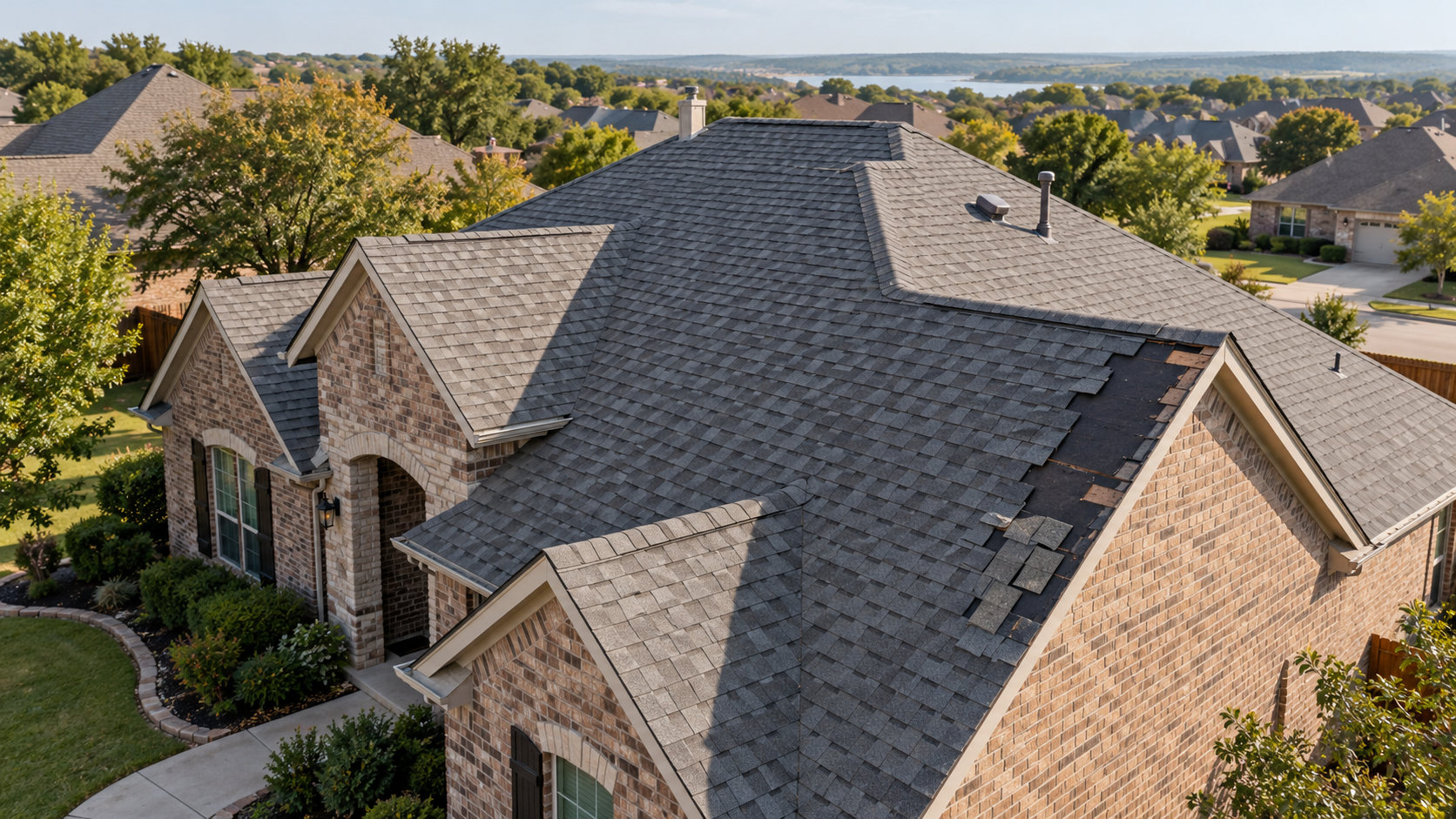
The roof deck supports the roofing materials above it. Some conditions may be visible during an inspection, but removal of the old roof can reveal additional concerns.
GAF’s overview of roof decking and replacement considerations explains that decking condition can remain uncertain until existing materials are removed and that required repairs can change the project cost.
Ask for Unit Prices and an Approval Process
Before signing, ask:
- Is any decking replacement included?
- How will additional decking work be measured?
- What unit price applies?
- Will photographs document the condition?
- Who must authorize additional work?
- How will structural concerns be handled?
Avoid relying on a vague statement that damaged decking will be “extra.”
A written process allows the contractor to address necessary work while keeping the owner informed.
Separate Decking From Structural Repairs
Replacing a damaged sheet of decking and repairing a structural member are different tasks.
If the contractor identifies a condition beyond the agreed roofing scope, ask what additional evaluation is needed and who is qualified to perform it.
The proposal should not leave these responsibilities unclear.
Flashing, Ventilation, and Other Components
The visible roof covering is only part of a replacement project.
When reviewing proposals, ask how each contractor plans to address flashing, penetrations, ventilation, roof edges, and transitions.
Flashing and Penetrations
Request a clear explanation of which flashing components will be replaced and which, if any, will remain.
Important areas may include chimneys, walls, plumbing vents, skylights, and other roof openings.
“New roof” can mean different things in different proposals. Written specifications help establish a shared understanding.
Ventilation
Ask whether the contractor evaluated the existing ventilation arrangement and whether changes are included.
If an upgrade is recommended, request an explanation of the proposed configuration, its purpose, and its price.
Ventilation work should be coordinated with the roof design and applicable system requirements.
Gutters, Fascia, and Soffits
Do not assume these items are included in a roofing estimate.
If they need attention, request separate descriptions and prices. This makes it easier to decide which work should occur during the roof project and which can be planned separately.
How to Build a Roof Replacement Budget
A practical budget separates the agreed scope from optional choices and unresolved conditions.
Use the following structure when reviewing your estimate:
Budget categoryWhat to confirmBase replacementMeasured area, materials, labor, removal, disposalRequired related workFlashing, ventilation, transitions, identified repairsConcealed conditionsDecking unit prices and approval procedureOptional upgradesProduct, accessory, or warranty differencesSeparate exterior workGutters, fascia, soffits, skylights, other tradesProject administrationPermits, inspections, registration, closeout
This approach helps you see where the money goes and which decisions remain open.
An Illustrative Calculation
Suppose a contractor provides a hypothetical base quote of $15,000, an optional upgrade of $1,200, and an authorized decking change of $800.
The resulting total would be:
$15,000 + $1,200 + $800 = $17,000
These numbers demonstrate budgeting arithmetic only. They are not Cedar Hill market rates or Showtime Exteriors pricing.
The useful lesson is to identify the base scope, optional work, and approved changes separately.
Can an Online Calculator Estimate Your Roof Cost?
An online calculator can provide an initial reference, but it cannot resolve every property-specific condition.
GAF’s roof cost calculator uses information such as location, roof size, slope, and complexity to produce a nonbinding estimate. The manufacturer advises consulting a local contractor for an official quote.
Use an online estimate to prepare questions rather than to establish a final construction budget.
If the inspected proposal differs substantially from a calculator result, ask the contractor to explain which measurements, conditions, or specifications account for the difference.
Residential and Commercial Replacement Costs Are Different
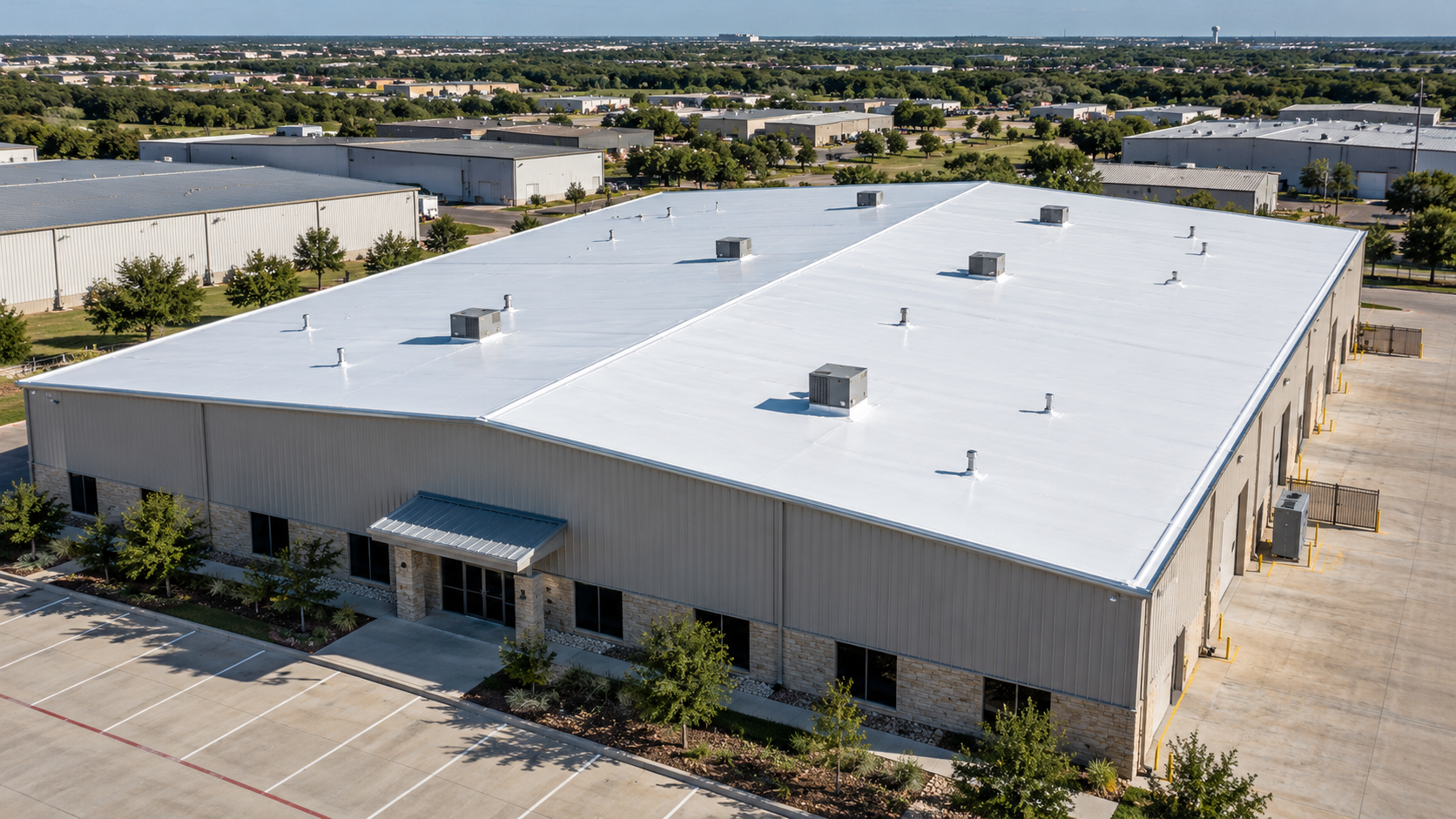
A residential shingle estimate should not be used to budget a low-slope commercial roof.
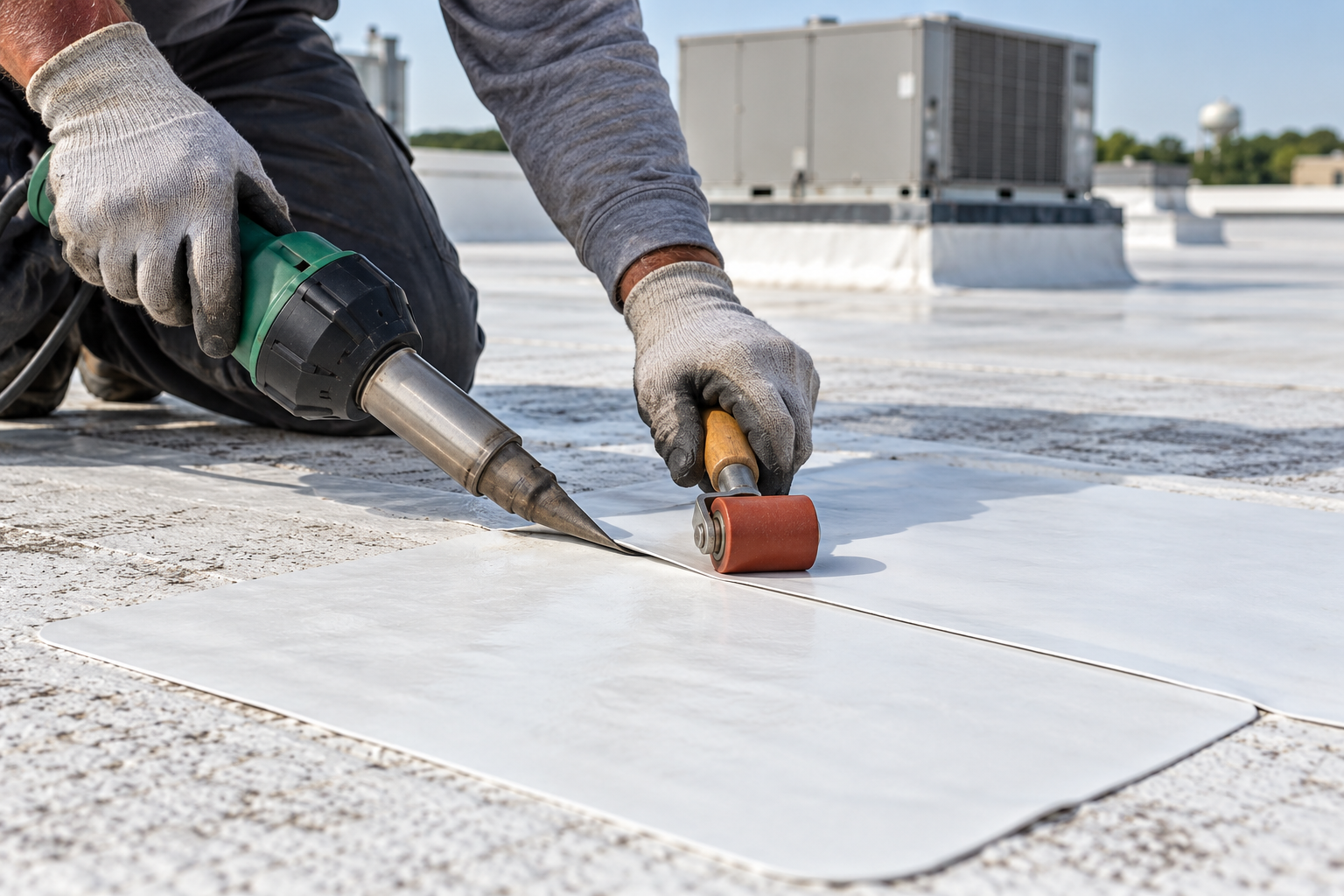
For a commercial property, the scope may involve insulation, cover board, attachment, drainage, equipment coordination, access, and occupied-building requirements.
Owners should also understand whether the proposed work is a complete replacement, a recover, or another approach.
Showtime Exteriors’ guide to commercial roof retrofit versus replacement provides background for evaluating these alternatives.
Consider Business Operations
A retail center, warehouse, and medical office can have different scheduling and protection requirements.
Before requesting commercial bids, identify:
- Occupied areas.
- Customer and employee entrances.
- Delivery routes.
- Sensitive inventory or equipment.
- Rooftop mechanical systems.
- Work-hour restrictions.
- Tenant communication needs.
These details help contractors prepare a realistic scope.
Repair or Replacement: Which Should You Budget For?
A replacement recommendation should explain why replacement is appropriate.
Ask whether a documented repair could address a limited defect and how the surrounding roof condition affects that option.
Likewise, if the contractor recommends continued repairs, ask what those repairs are expected to accomplish and whether broader planning is needed.
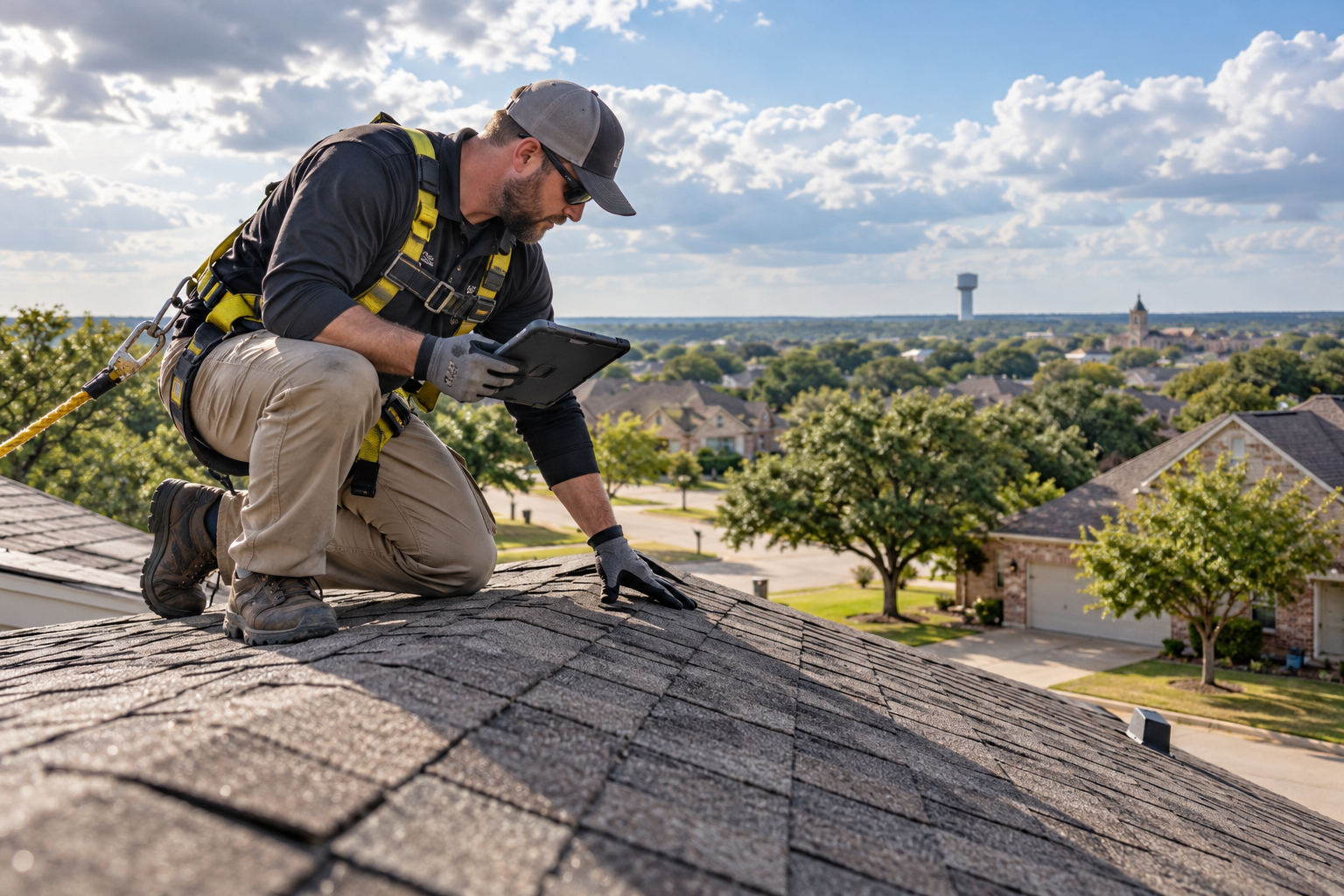
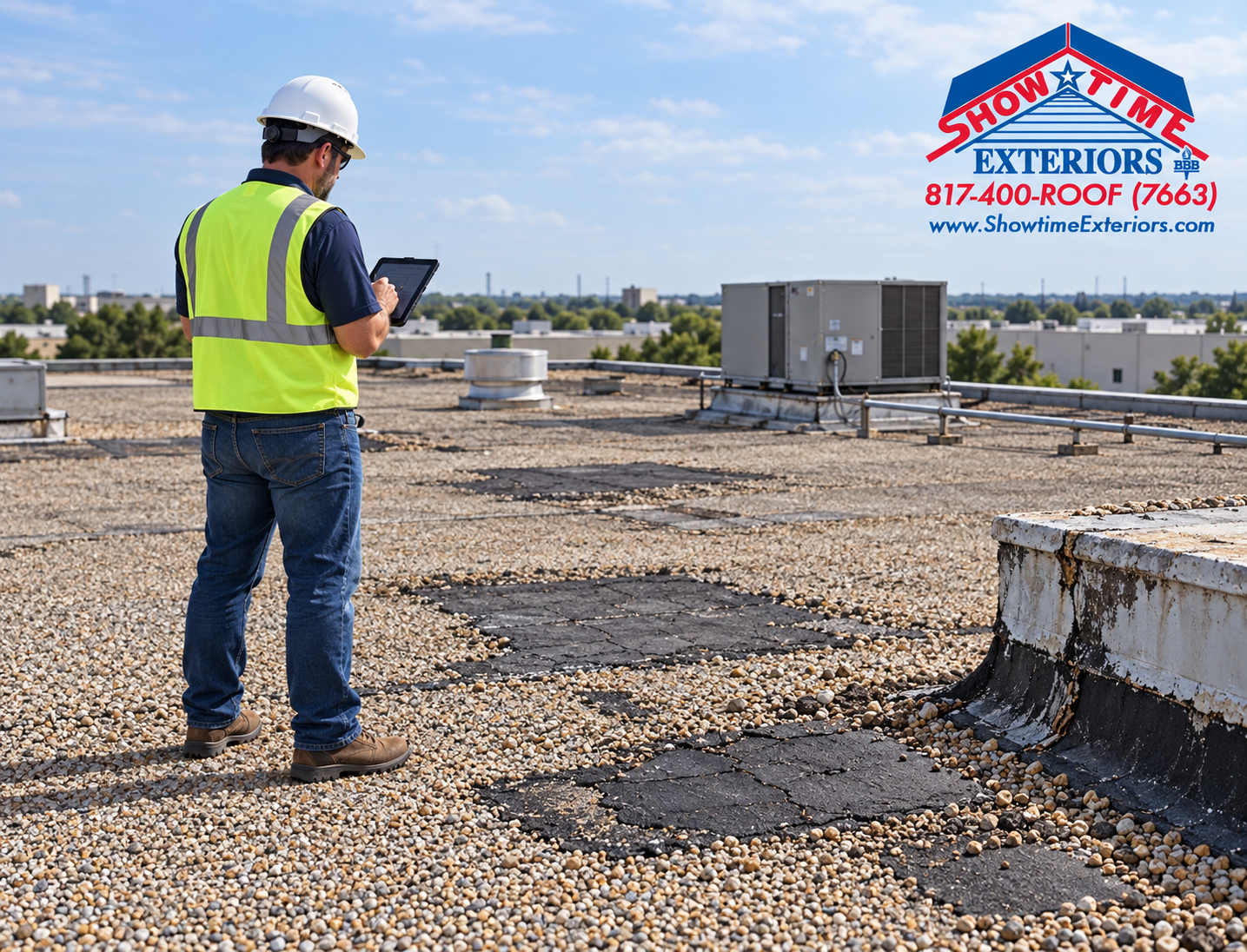
A useful inspection record separates observations, limitations, and recommendations. Showtime Exteriors’ roof inspection report guide explains how organized documentation can support property decisions.
Review the History of Recurring Leaks
Bring earlier repair invoices and photographs to the inspection.
Repeated spending may justify a broader evaluation, but the number of past repairs alone does not establish the correct replacement scope.
Ask the contractor to connect the recommendation to current findings and explain any unresolved questions.
Compare Roofing Warranties Carefully
Warranty language can influence how owners evaluate competing proposals, but the coverage needs to be understood precisely.
Owens Corning’s guide to roofing warranty types distinguishes manufacturer product warranties, contractor workmanship warranties, and enhanced manufacturer coverage. These are different protections with their own terms.
Before choosing a proposal, ask:
- Which written warranties apply?
- Who provides each warranty?
- What work or materials are covered?
- What exclusions apply?
- Is registration required?
- Are there transfer conditions?
- What maintenance or notification obligations apply?
Do not infer coverage from the word “lifetime.” Request the actual warranty documents.
How Long Does Roof Replacement Take?
The schedule depends on the roof, project scope, weather, access, and conditions uncovered during removal.
GAF’s article on roof replacement timelines explains how complexity, decking repairs, and weather can affect installation time.
Ask your contractor for a property-specific schedule that addresses:
- Expected start date.
- Delivery and disposal arrangements.
- Estimated working days.
- Weather-related changes.
- Protection between work periods.
- Final inspection and cleanup.
Prepare the Property Before Work Begins
Discuss where vehicles should be parked and which outdoor items need to be moved.
Plan for noise and vibration, and keep children and pets away from work areas. Ask the contractor about access restrictions and how the crew will communicate with you during installation.
Preparation makes the work easier to coordinate and reduces avoidable interruptions.
How to Compare Cedar Hill Roofing Estimates
Place proposals side by side and review the details before focusing on the totals.
Comparison itemWhat to look forMeasurementsClearly identified roof areaRoof coveringExact manufacturer and productRemovalDefined materials and layer assumptionsUnderlaymentNamed product or specificationFlashingReplacement and reuse decisionsVentilationExisting assessment and proposed workDeckingIncluded allowance or unit priceAdditional workWritten authorization procedureCleanupDefined debris removal and final reviewWarrantyActual documents and registration details
If a proposal lacks information, request clarification in writing.
The goal is to compare equivalent scopes and understand any differences that justify the price.
Frequently Asked Questions About Roof Replacement Cost
How much does a new roof cost in Cedar Hill, TX?
The cost depends on measured roof area, materials, complexity, existing conditions, and installation requirements. A national average offers context, but an inspected, written proposal is needed for a property-specific price.
Does a 2,000-square-foot home have a 2,000-square-foot roof?
Not necessarily. Interior floor area and roof surface area measure different things. Slope, number of stories, garages, porches, and overhangs affect roof measurements.
Can the final price change after work begins?
It can if the agreement allows changes for concealed conditions or the owner authorizes additional work. Establish unit prices, documentation, and an approval process before signing.
Are gutters included?
Only if the proposal includes them. Ask about gutter removal, protection, reinstallation, repair, or replacement separately.
Is a higher-priced shingle always the best choice?
The appropriate choice depends on the property, budget, appearance goals, product characteristics, and complete installation scope. Ask the contractor to explain the benefit and cost of each option.
Should I choose the lowest estimate?
Compare the included work, materials, qualifications, warranty terms, and change procedures before deciding. A total price alone does not show whether proposals cover the same project.
Can I request more than one material option?
Yes. Ask for clearly separated alternatives so you can understand how each choice changes the scope and price.
Request a Roof Replacement Estimate in Cedar Hill
A realistic roof replacement budget starts with accurate measurements, a documented assessment, and a clear proposal.
Showtime Exteriors can help you evaluate roofing options, understand the recommended work, and review the scope for your North Texas property. Explore the company’s roofing services and prepare your roof records and questions before the appointment.
Call 817-400-ROOF (7663) or contact Showtime Exteriors to request a roof replacement assessment for your Cedar Hill property.
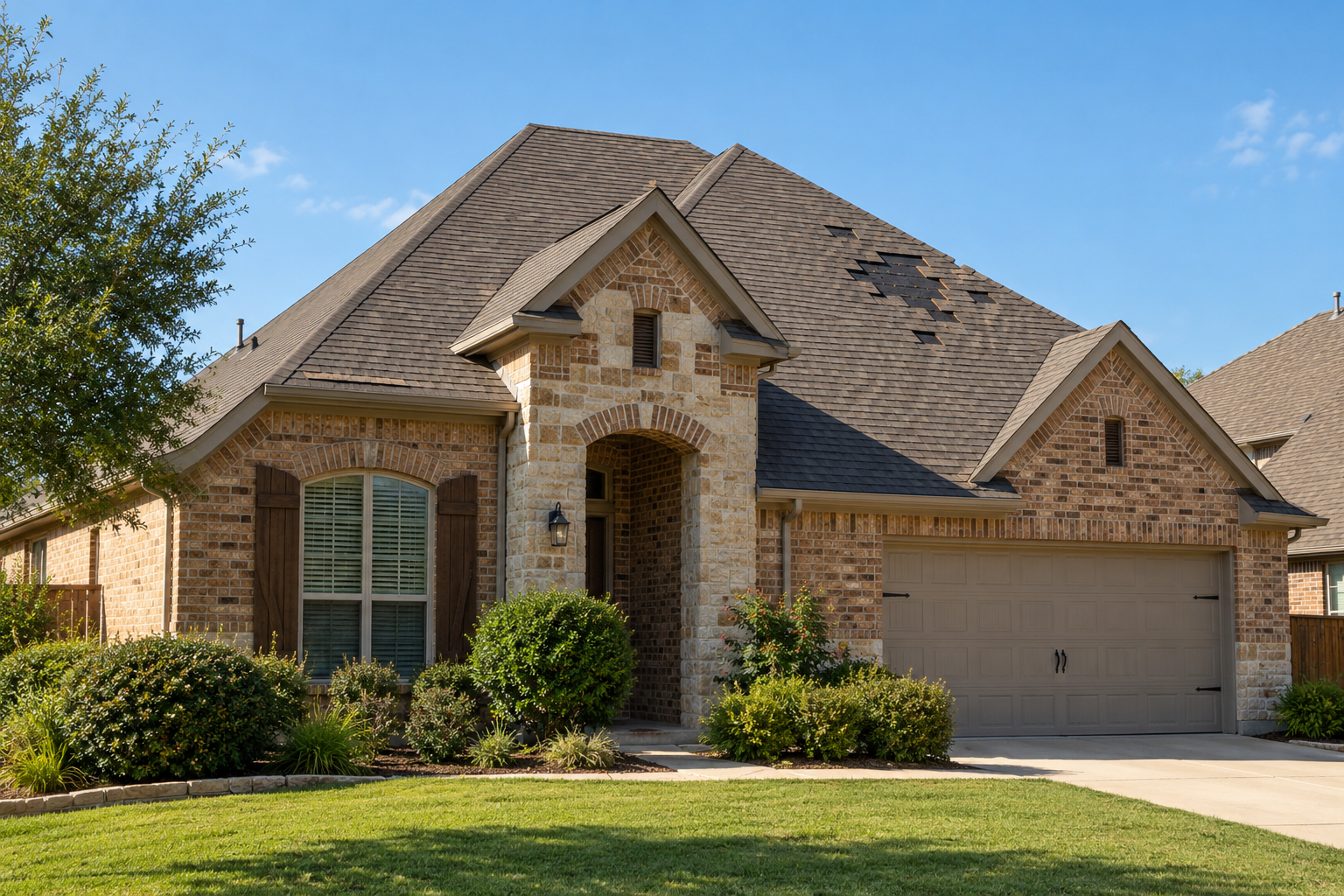
The two accompanying images are AI-generated illustrations: a completed shingle roof and a homeowner reviewing roofing options with an estimator.