
Commercial Roof Repair in Waxahachie: A Building Owner’s Guide
A roof leak above a vacant storage area and a roof leak above an occupied medical office create very different problems. Both require attention, but the consequences, access requirements, and repair priorities can vary considerably.
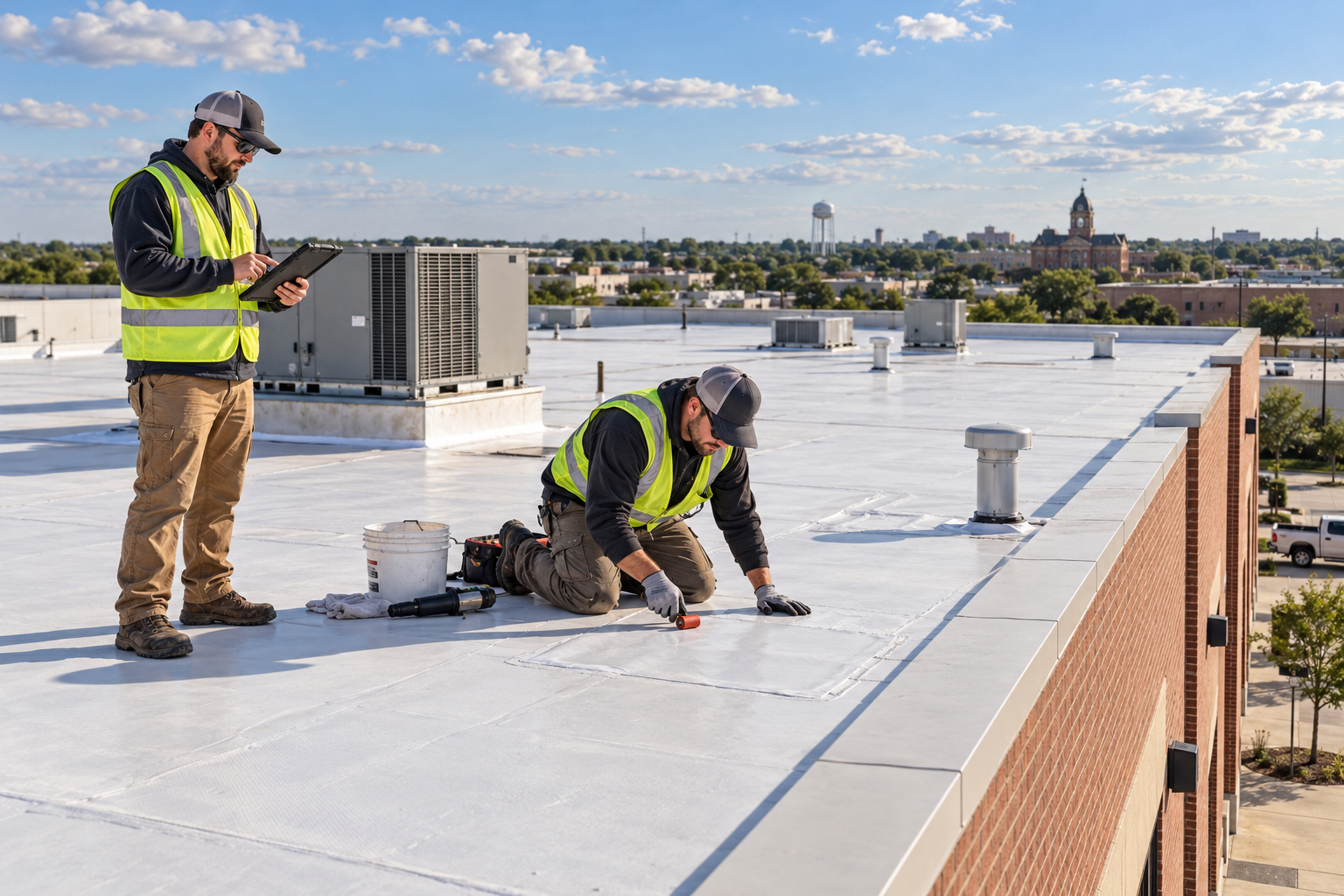
For commercial property owners in Waxahachie, roof repair begins with understanding the building as well as the roof. A useful repair plan identifies the source of the problem, evaluates the surrounding assembly, and accounts for the people and operations below.
Whether you own a retail center, warehouse, office building, restaurant, or industrial property, the objective is straightforward: restore reliable roof performance with a scope of work supported by inspection findings.
Showtime Exteriors provides commercial roofing services across North Texas. For Waxahachie building owners, a property-specific assessment is the starting point for deciding whether a localized repair, broader restoration, or replacement evaluation makes sense. www.showtimeexteriors.com
When Does a Commercial Roof Need Repair?
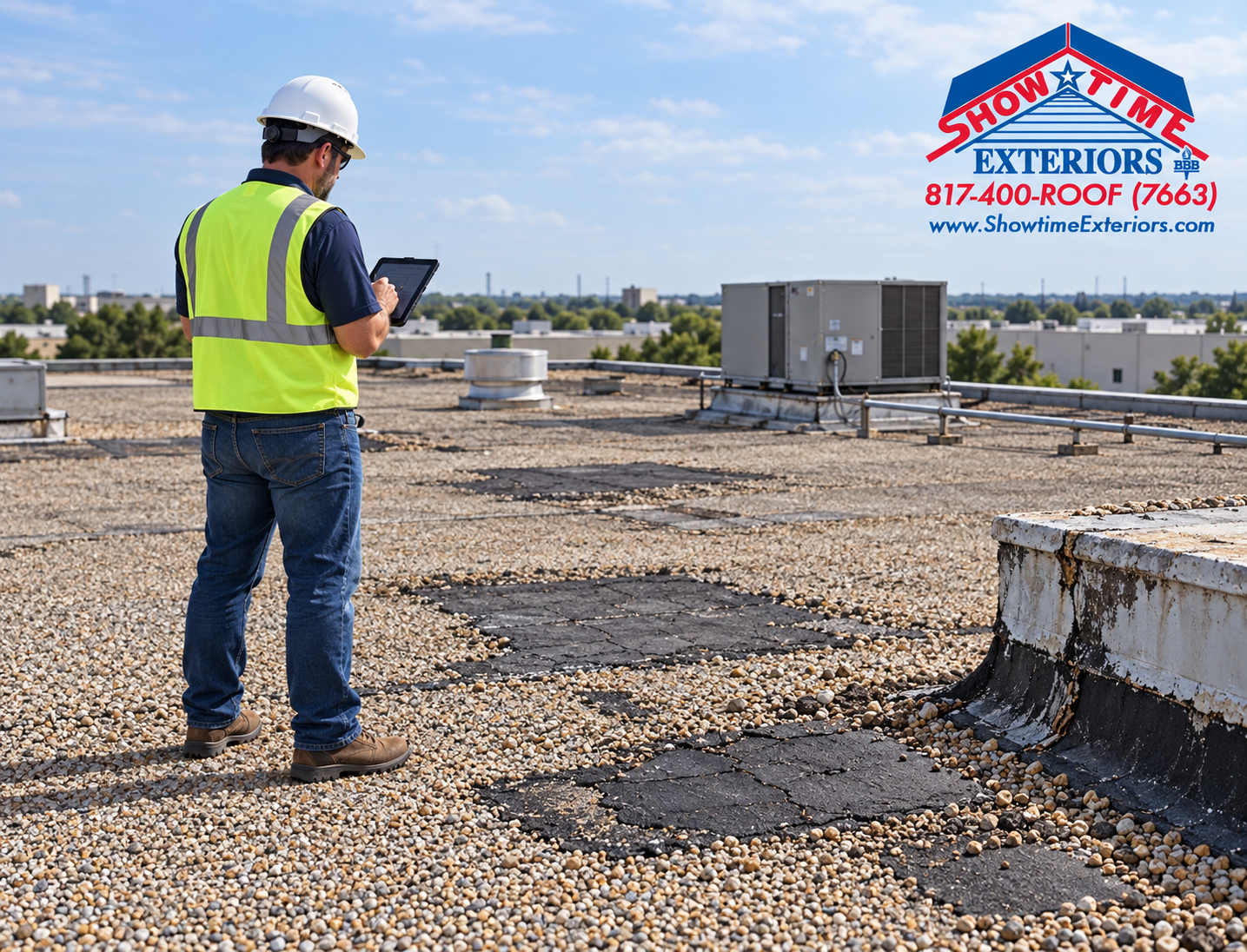
An active leak is an obvious reason to call a roofing contractor. However, a roof can develop problems before water becomes visible inside the building.
Conditions worth investigating include:
- New or recurring ceiling stains.
- Water entering around rooftop equipment.
- Loose perimeter metal or flashing.
- Visible membrane openings.
- Repeated patch failures.
- Damaged roof penetrations.
- Drainage changes or persistent standing water.
- Loose materials discovered after strong wind.
- Damage following equipment installation or service work.
These observations do not establish the full repair scope. They indicate that the roof needs evaluation.
For example, a stain below a rooftop HVAC unit might involve roof flashing, equipment condensation, plumbing, or another source. The contractor should investigate the cause before recommending roofing work.
Recurring Problems Deserve a Different Conversation
If you have paid to repair the same leak several times, gather the earlier invoices and photographs before scheduling another visit.
Ask the next contractor to explain why the problem may be recurring. Was the original source identified? Did the repair address the surrounding detail? Were compatible materials used? Could water be entering from another location?
A repeated leak should prompt a review of the diagnosis and repair approach, rather than an automatic repeat of the previous patch.
Start With an Inspection Before Choosing a Repair
A repair estimate is most useful when it follows a documented assessment.
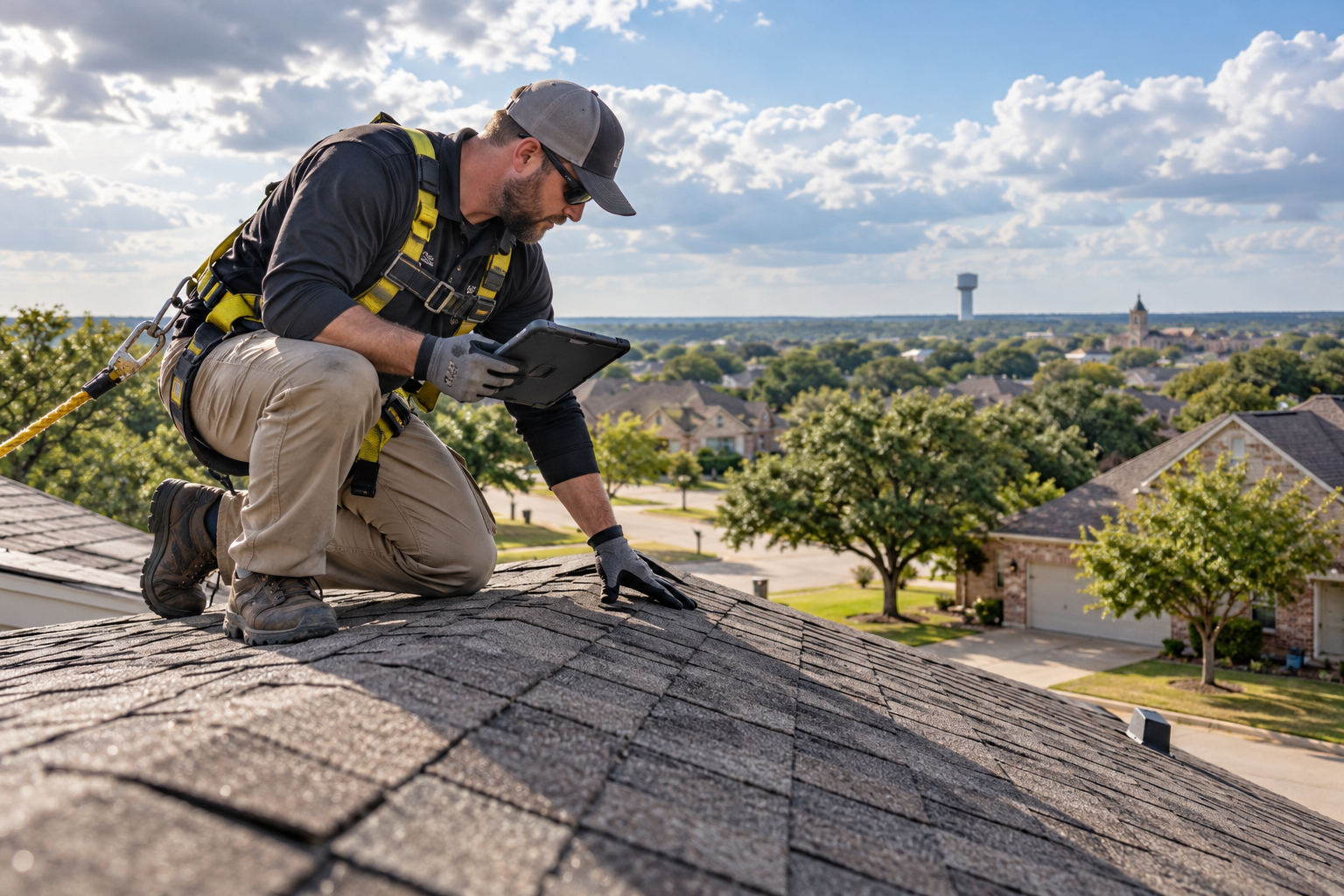
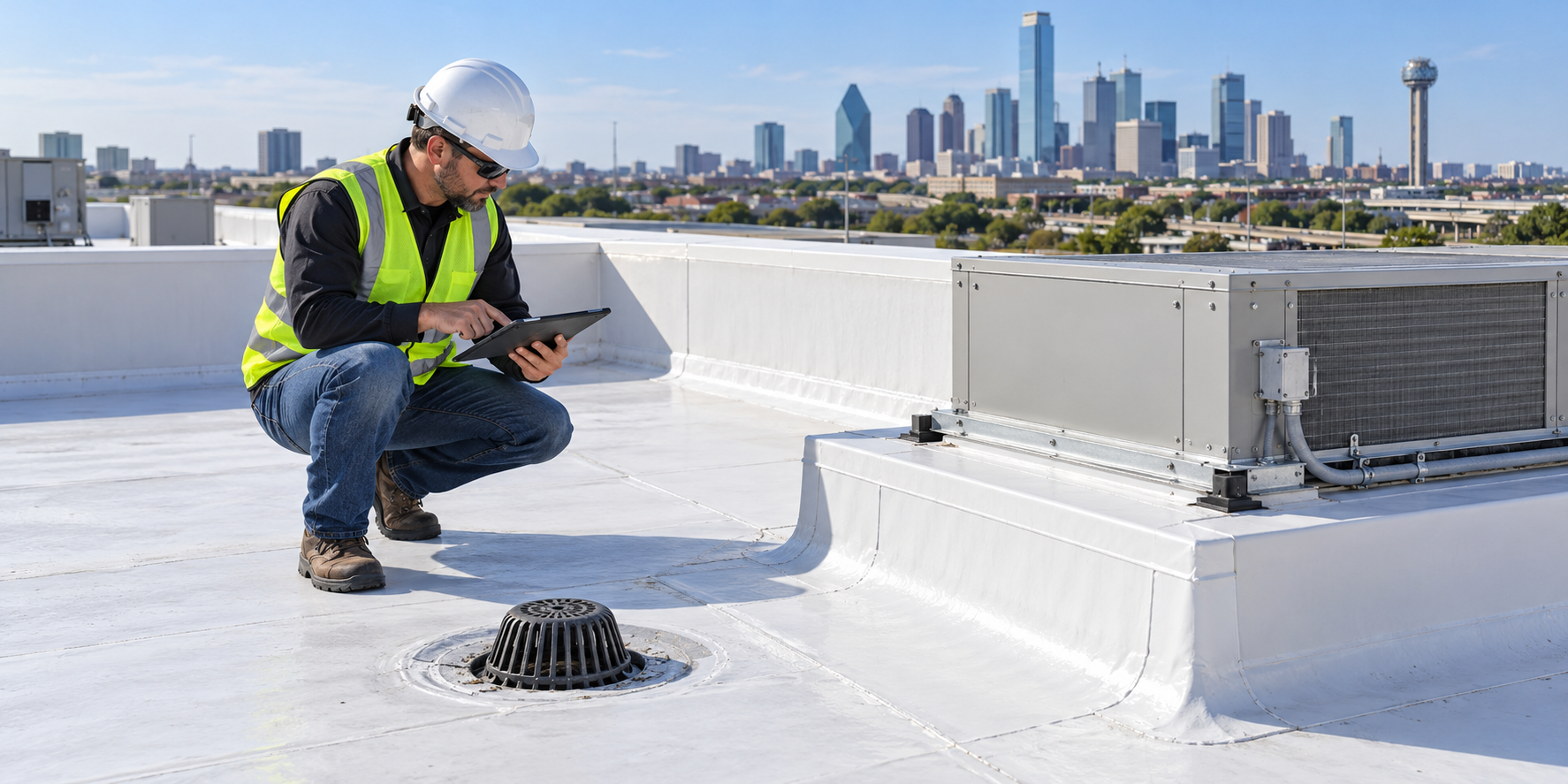
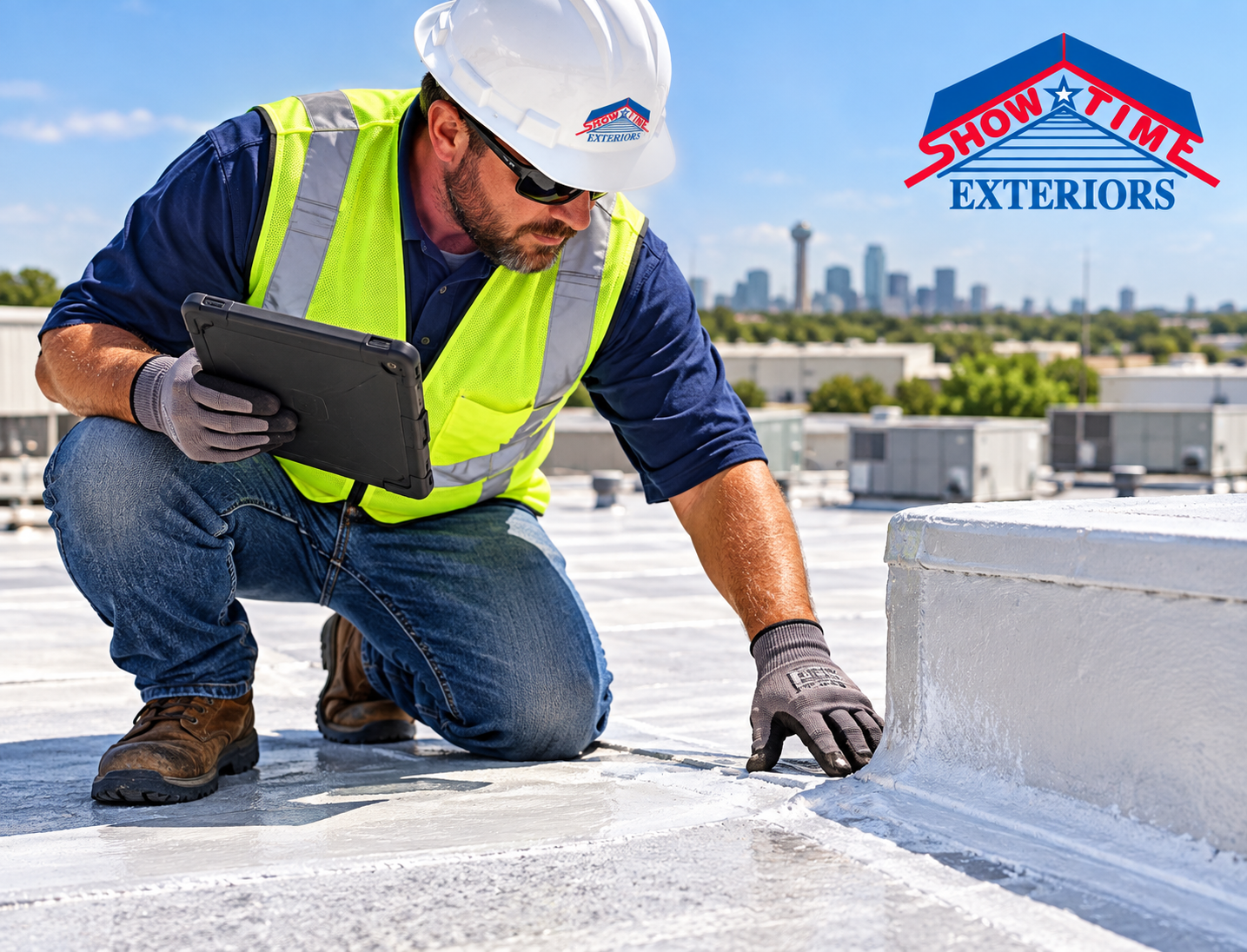
The contractor should identify the roofing system, review available records, inspect accessible areas, and discuss the building’s leak history. Roof access limitations and any need for additional investigation should be explained.
GAF’s guidance on evaluating commercial roof repair versus replacement highlights the importance of roof history, seams, equipment supports, drains, and flashing. These details help establish whether a limited repair is appropriate. gaf.com
Share the Building’s History
Before the inspection, provide whatever information you have about:
- Roof installation dates.
- Previous replacements or overlays.
- Existing manufacturer warranties.
- Earlier leak locations.
- Completed repairs.
- Recent rooftop equipment work.
- Storm observations.
- Changes in building use.
A property with multiple additions may have different roofing systems and drainage arrangements. Identifying those sections early helps the contractor organize the inspection.
Request a Clear Inspection Record
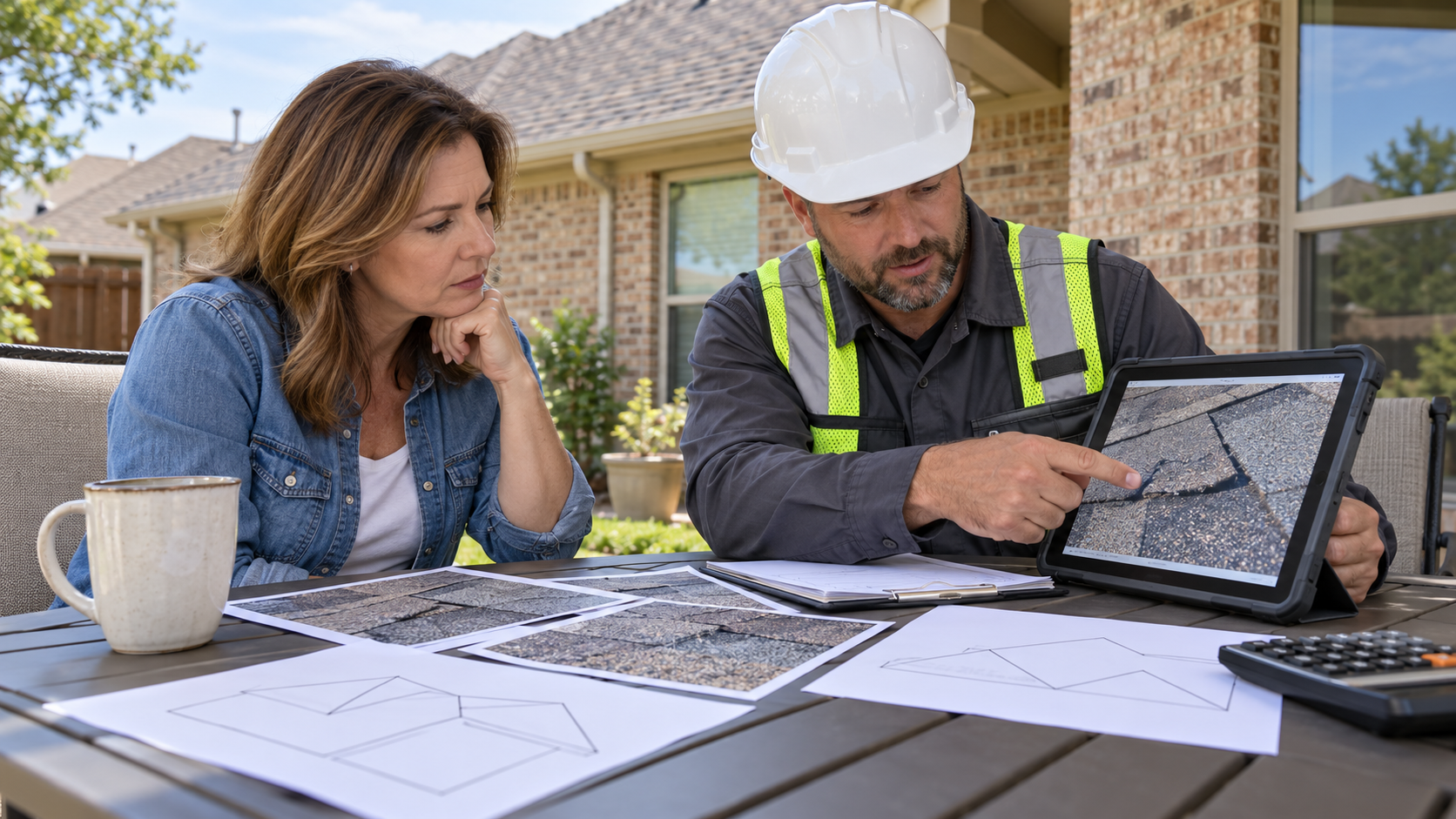
A useful report connects observations to locations and recommendations.
Showtime Exteriors’ guide to commercial roof inspection report evidence explains the value of labeled photographs, roof plans, inspection limitations, maintenance history, and prioritized findings.
For an owner managing several properties, consistent reporting also makes it easier to compare conditions and plan budgets.
Common Areas That Need Attention on Commercial Roofs
A commercial roof is an assembly of connected components. Repairing the visible surface alone may leave the underlying problem unresolved.
Seams and Membrane Connections
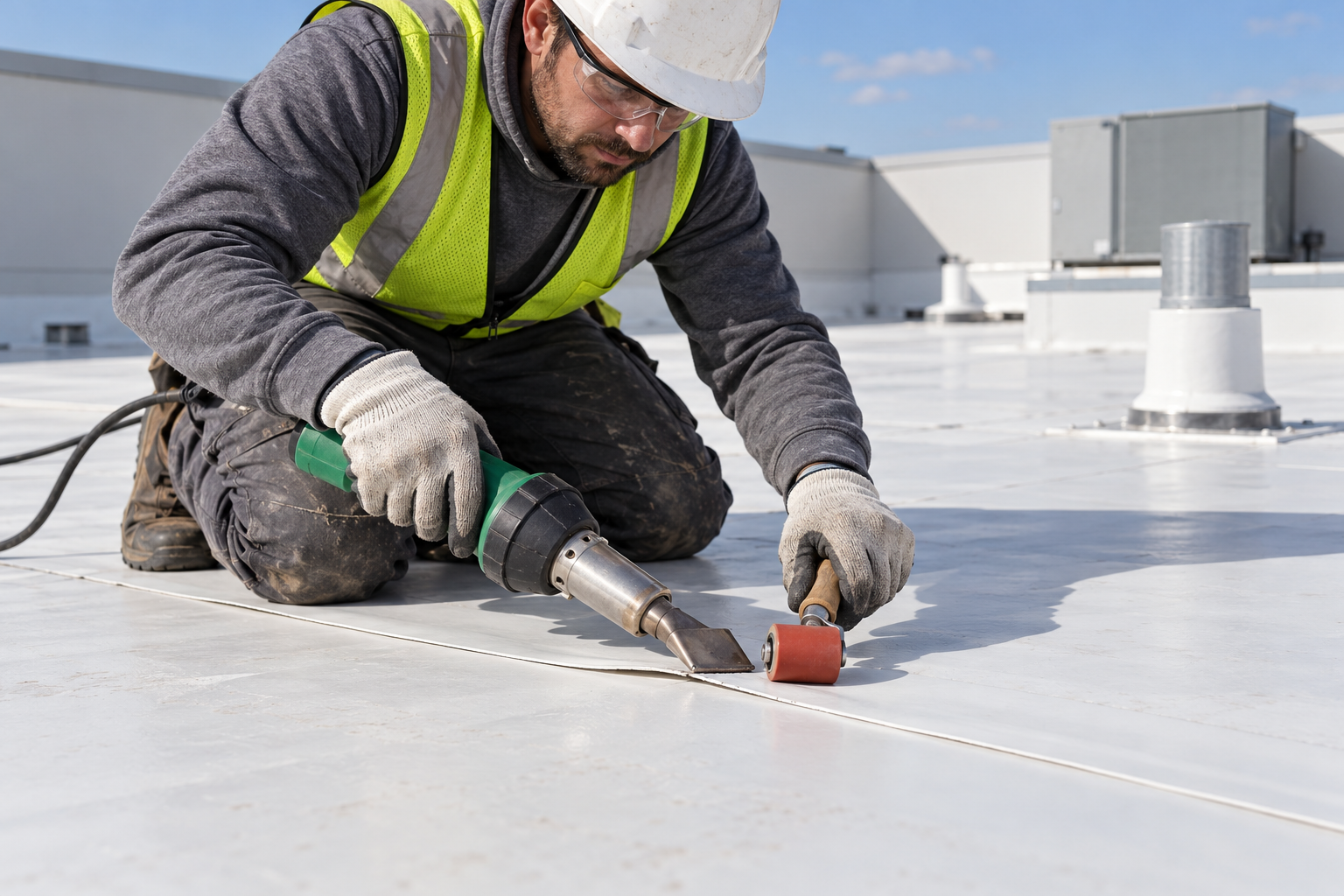
Seams connect sheets of roofing membrane. Their condition deserves attention during a leak investigation, particularly around previous repairs or areas exposed to traffic.
Ask the contractor to identify the existing material before selecting a repair product. A material that works on one roofing system may be inappropriate for another.
The estimate should explain the proposed preparation and repair method rather than simply listing “patch roof.”
Flashing Around Equipment and Penetrations
HVAC curbs, vent pipes, skylights, and other penetrations create transitions in the roofing system.
When reviewing these areas, the contractor should consider how the roof connects to the penetration, the condition of the surrounding materials, and whether equipment-related issues require another trade.
For example, repairing membrane around an HVAC curb will not resolve water entering through a damaged equipment cabinet. Clarifying responsibility helps avoid paying for work that does not address the source.
Roof Edges and Wall Transitions
Perimeter metal, parapet transitions, and wall flashing should be included in the assessment where accessible.
These details can be especially important when a leak appears near an exterior wall or after wind-driven rain.
Ask for photographs showing both the specific concern and the larger area around it. A close-up alone may not explain how water moves through the detail.
Drains, Scuppers, and Gutters
Drainage problems should be evaluated alongside membrane damage.
GAF’s explanation of commercial roof drain maintenance describes how drainage design and debris management affect water removal from low-slope roofs. Clearing an obstruction and correcting a drainage design problem are different scopes of work. gaf.com
If standing water is present, ask what appears to be causing it. The answer may affect whether the proposed work involves maintenance, roofing repairs, plumbing coordination, or further design evaluation.
Commercial Roof Repair Options by Roofing System
The appropriate repair method depends on the installed system and its condition. Building owners do not need to become roofing technicians, but understanding the basic differences helps when reviewing proposals.
TPO Roof Repair
For a TPO roof, ask the contractor to identify the membrane and explain how the proposed repair will connect to the existing material.
The proposal should address preparation, compatible components, and how the completed work will be checked. Existing coatings or earlier patches may influence the approach.
Carlisle publishes a TPO rooftop inspection guide covering inspection requirements and common details. Manufacturer resources provide useful context, while the actual repair must follow the requirements applicable to your roof. carlislesyntec.com
PVC Roof Repair
A PVC roof requires identification of the existing membrane and compatible repair materials.
Ask whether the contractor found earlier patches made with another material and whether those areas need correction. Include any known history of grease exposure, chemical discharge, or equipment servicing in the discussion.
A clear proposal should describe the repair location and assembly rather than treating every white commercial roof as the same system.
EPDM Roof Repair
EPDM roofs also require a system-specific approach.
Before authorizing work, ask how the contractor will prepare the surface, which repair components will be used, and whether existing deterioration affects the proposed repair.
Carlisle’s EPDM rooftop inspection guide is another manufacturer resource for understanding common roof details and inspection expectations. carlislesyntec.com
Modified Bitumen Roof Repair
For a modified bitumen roof, the contractor should explain the condition of the affected area and the proposed repair assembly.
Ask whether the work is limited to surface damage or whether the inspection suggests that materials below need investigation. The proposal should also identify any operational precautions associated with the chosen installation method.
An occupied restaurant, retail business, or healthcare facility may require additional coordination around access, odors, equipment, or scheduling.
Metal Roof Repair
Metal roof repairs can involve panels, connections, penetrations, flashing, and other components.
Ask whether the recommendation addresses a localized defect or a broader pattern across the roof. If the proposal involves sealant, request an explanation of what it is intended to accomplish and how the surrounding detail will be prepared.
For older metal roofs with repeated problems, compare the repair proposal with longer-term options before committing to another extensive round of maintenance.
Emergency Roof Repair: What Owners Should Do First
When water is entering an occupied building, the immediate priorities are protecting people, limiting disruption, and arranging professional assistance.
Keep people away from wet electrical equipment, unstable ceiling materials, and other affected areas. Coordinate with the appropriate building professionals when electrical, structural, or interior conditions create concern.
From a safe location:
- Record where water is appearing.
- Photograph the affected area.
- Move vulnerable inventory or equipment when practical.
- Notify the property manager and affected occupants.
- Contact a commercial roofing contractor.
- Preserve invoices and records for temporary work.
Do not send untrained staff onto the roof to locate the leak or apply materials.
Temporary Protection Needs a Follow-Up Plan
Emergency work may reduce water entry while weather, access, or material conditions prevent permanent repairs.
Ask the contractor to document:
- What temporary work was performed.
- Which areas remain unresolved.
- Any limitations of the temporary measure.
- What permanent work is recommended.
- When the next inspection or repair visit should occur.
A temporary repair should remain visible in your maintenance records until the permanent work is completed and documented.
Repair, Restoration, or Replacement?
The right choice depends on the findings and your ownership plans. A limited repair can be sensible on one building and poor value on another.
When Localized Repair Deserves Consideration
A localized repair may be worth evaluating when the problem is limited and the surrounding roof remains suitable for service.
Ask the contractor to explain why the proposed boundary is appropriate. If the work addresses one penetration, for example, what did the inspection reveal about the adjacent membrane and flashing?
The owner should understand what the repair is expected to resolve and which conditions fall outside its scope.
When Restoration May Be an Option
Restoration deserves consideration only after evaluating the existing roof.
GAF describes commercial roof coating solutions for suitable substrates and structurally sound roofs. Product selection and eligibility depend on the assembly and its condition. A coating proposal should explain preparation, required repairs, compatibility, and application requirements. Fluid Possibilities
Before approving a coating project, ask how the contractor will assess suspected moisture and address unsuitable areas.
When Replacement Planning Becomes Important
Ask for a replacement evaluation when recurring repairs, widespread deterioration, or unresolved conditions make further patching difficult to justify.
That evaluation should describe the evidence supporting replacement and the alternatives considered. It should also account for insulation, drainage, deck conditions, rooftop equipment, and construction access as applicable.
For broader planning, Showtime Exteriors’ guide to commercial roof retrofit versus replacement discusses options building owners can evaluate with their contractor.
What Affects Commercial Roof Repair Costs in Waxahachie?
A meaningful repair price requires a defined scope. The square footage of a patch is only one part of that scope.
Factors that can influence the estimate include:
- Roofing material and repair method.
- Number and complexity of affected details.
- Roof height and access.
- Preparation and removal work.
- Concealed conditions discovered during investigation.
- Equipment or trade coordination.
- Occupied-building restrictions.
- Temporary protection requirements.
- Warranty-related requirements.
- Cleanup and documentation.
A small repair on a difficult-to-access roof can involve more mobilization and coordination than a larger repair on an accessible building.
Compare Scope Before Comparing Totals
Two proposals may have different prices because they include different work.
One estimate might address the visible opening only. Another might include removal, investigation of surrounding materials, a larger repair area, and completion photographs.
Ask each contractor to explain:
- What is included?
- What is excluded?
- What assumptions support the price?
- How will additional work be authorized?
- What warranty applies?
A clear estimate makes differences easier to evaluate.
How to Plan Repairs Around Business Operations
Commercial roof repair should account for what happens inside and around the building.
Before scheduling, identify your operational constraints. A warehouse may need uninterrupted truck access. A restaurant may need coordination around exhaust equipment. An office building may require tenant notices and controlled access.
Establish Work and Delivery Areas
Discuss where vehicles, materials, and equipment will be placed. Identify entrances, loading areas, fire access, pedestrian routes, and spaces that must remain available.
Document agreed restrictions so the roofing crew and building staff have the same expectations.
Coordinate Rooftop Equipment
If access to equipment or temporary shutdowns may be necessary, involve the responsible service contractor early.
Define who is authorized to disconnect, move, reconnect, or test equipment. Clear responsibilities reduce delays and confusion during the project.
Choose a Communication Contact
Assign one building representative to coordinate access, report changes, and approve additional work.
Ask the roofing contractor to provide a corresponding project contact. For multi-tenant properties, decide who will communicate with occupants and how much notice they need.
What Should a Commercial Roof Repair Proposal Include?
A useful proposal should be specific enough that you can understand what you are authorizing.
Look for:
- Property address and affected roof areas.
- Description of the observed problem.
- Proposed materials and methods.
- Preparation and removal work.
- Treatment of surrounding details.
- Access and staging arrangements.
- Temporary protection, if included.
- Exclusions and assumptions.
- Procedure for concealed conditions.
- Payment terms.
- Warranty information.
- Completion documentation.
Avoid relying entirely on verbal explanations. Important commitments should appear in the written agreement.
For owners comparing roof systems as part of a larger project, Showtime Exteriors’ guide to commercial roofing materials for Texas provides additional background.
Warranties and Maintenance After the Repair
Before authorizing repairs, locate any existing roof warranty and ask whether notice or manufacturer coordination is required.
Clarify whether the proposed warranty covers the repaired area, workmanship, materials, or another defined scope. Ask when coverage begins and what documentation you will receive.
Manufacturer maintenance programs can have specific eligibility and inspection conditions. Carlisle’s Continu-Care preventative maintenance program illustrates the connection between documented maintenance and program benefits for qualifying roofs. Your building’s requirements must be checked against its actual warranty. carlislesyntec.com
Keep a Roof Service File
After the work, retain:
- The signed proposal.
- Inspection photographs.
- Approved change orders.
- Product information.
- Completion photographs.
- Invoices and payment records.
- Warranty documents.
- Future inspection recommendations.
This file can help the next contractor understand what was done and help ownership track recurring costs.
Questions to Ask a Commercial Roofing Contractor
Before selecting a contractor for commercial roof repair in Waxahachie, ask questions that reveal how they investigate and manage work.
“How Did You Identify the Source?”
Request an explanation connecting the interior symptom to the roof findings. If uncertainty remains, ask what additional investigation would help.
“Why Is This Repair Appropriate?”
The answer should relate to the installed system, observed condition, and proposed scope.
“What Happens if You Find Wet or Deteriorated Materials?”
Ask how the contractor will document concealed conditions, communicate pricing, and obtain authorization before expanding the work.
“How Will You Protect Our Operations?”
Discuss access, scheduling, material staging, cleanup, and communication.
“What Will We Receive at Completion?”
Request a clear description of closeout documents and warranty information.
Frequently Asked Questions
Can a commercial roof be repaired without replacing it?
Sometimes. The answer depends on the extent of the problem, the surrounding roof condition, and whether a suitable repair can be completed. An inspection should establish the basis for the recommendation.
Why does the same roof leak keep returning?
Possible explanations include an unresolved source, problems outside the repaired area, unsuitable materials, or broader deterioration. A recurring leak deserves a fresh evaluation of the diagnosis.
How long will commercial roof repairs take?
The schedule depends on scope, access, weather, material availability, and building operations. Ask for an estimated work duration and any conditions that could change it.
Will a roof coating solve every leak?
No. A coating proposal needs to address suitability, preparation, existing defects, and the manufacturer’s requirements. Ask which repairs are necessary before application.
Should I approve repairs based only on photos?
Photographs are useful, but they should be accompanied by an explanation of location, findings, limitations, and proposed work. Ask questions before authorizing a scope you do not understand.
Can repairs be completed while the building is occupied?
Many projects can be planned around occupancy, but requirements vary. Discuss your operations, sensitive areas, access restrictions, and equipment needs before scheduling.
Schedule Commercial Roof Repair in Waxahachie
A successful repair starts with a clear diagnosis and ends with documented work. Building owners should understand the problem being addressed, the limits of the repair, and the next steps for maintaining the roof.
For a Waxahachie commercial property, bring together the roof history, current symptoms, operational requirements, and inspection findings before choosing a solution.
Call Showtime Exteriors at 817-400-ROOF (7663) or request a commercial roof assessment to discuss your Waxahachie building’s repair needs.