



Can a Storm Roof Leak Be Repaired, or Is Replacement Necessary?
An evidence-based guide for Texas commercial property owners
Quick answer: Many storm roof leaks can be repaired when damage is localized, the surrounding roofing is sound, wet materials can be removed, and a durable repair can be integrated into the existing system. Replacement may be necessary when damage is widespread, insulation or decking is broadly compromised, the roof has repeated failures, the assembly is near the end of useful service, or aging gravel-surfaced BUR makes the true condition difficult to verify. Only a documented inspection can support the decision.
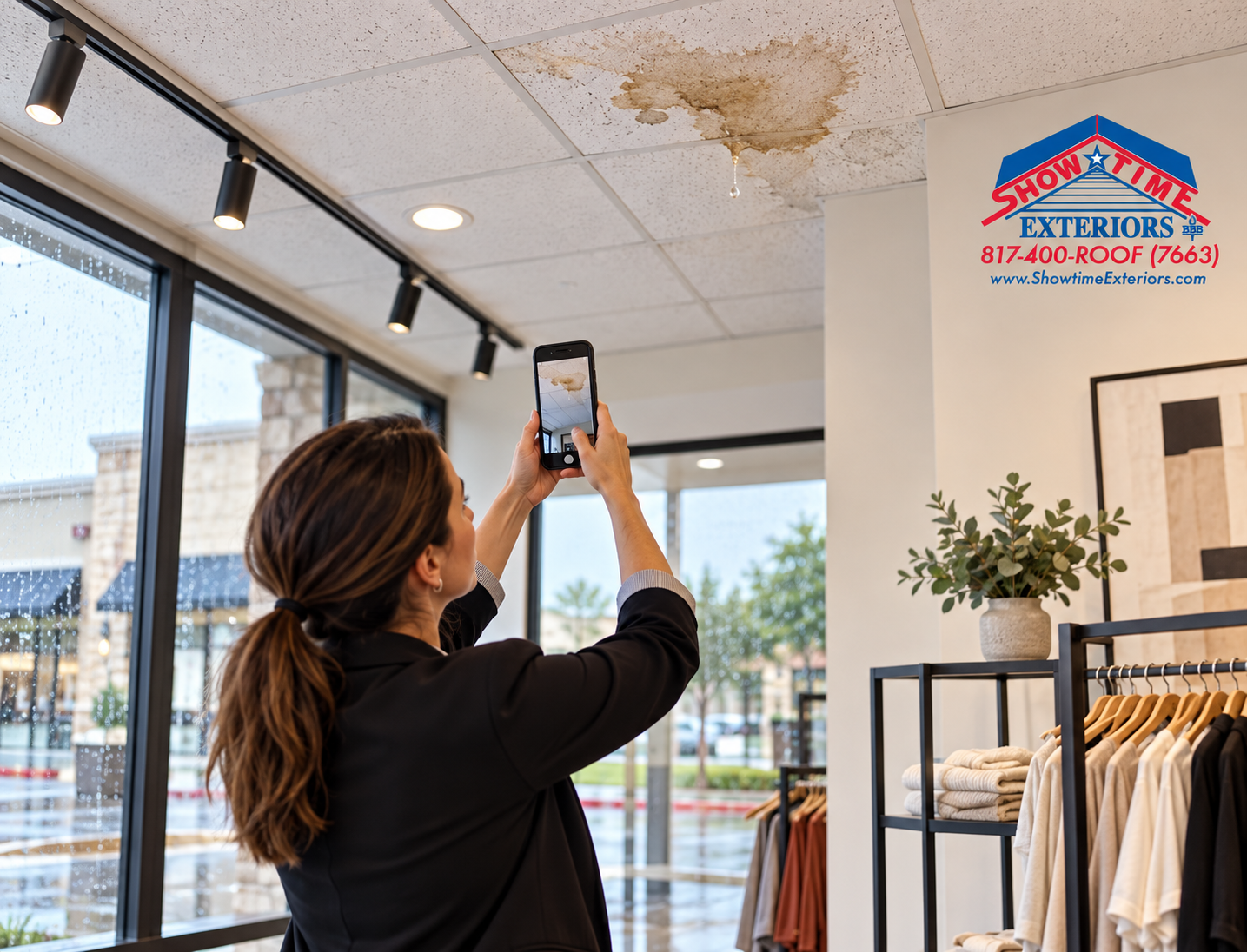
A leak after hail, straight-line wind, tornado activity, wind-driven rain, falling debris, or another severe weather event does not automatically mean the entire roof must be replaced. It also should not be dismissed as a small puncture simply because water appears in only one room. Water can travel along deck flutes, insulation, framing, conduits, and ceiling systems before it becomes visible. The interior drip is evidence of water entry, not necessarily the location or full extent of the roof failure.
The responsible decision is based on physical conditions: what component failed, how large the affected area is, whether moisture moved beyond the visible opening, whether the deck remains serviceable, whether compatible repair materials are available, and whether the remaining roof can reasonably support a lasting repair. Roof age, prior repairs, drainage, maintenance, warranty requirements, code obligations, and future insurance or ownership plans also matter.
Showtime Exteriors uses an evidence-first approach. The roofing contractor documents conditions, explains feasible construction options, and prepares a scope. The property owner chooses how to proceed with appropriate professional guidance. If insurance is involved, the carrier interprets the policy and decides coverage and payment. No roofing inspection or article can guarantee that a claim will be approved or that replacement will be funded.
First, stop active water entry safely
Protect people, inventory, electronics, and operations before debating repair versus replacement. Restrict access beneath wet ceilings, displaced panels, sagging materials, damaged electrical components, or visibly unstable structure. Move movable property only when it can be done safely. Use containers and interior protection to control water, and contact emergency services, utilities, restoration specialists, or other qualified trades when conditions exceed ordinary roof work.
Do not send untrained staff onto a wet or storm-damaged roof. High winds, lightning, loose sheets, hidden openings, slick membranes, weakened decking, unstable ladders, and rooftop electrical equipment can create serious hazards. The National Roofing Contractors Association advises property owners to assess storm damage from ground level and leave closer assessment and repair to professional roofing contractors.
Emergency dry-in work should be prompt but documented. Photograph conditions before and after temporary work when practical, record who authorized it, and keep labor, material, equipment, and invoice details. A tarp, sealant application, or emergency patch is temporary stabilization. It does not prove that insulation is dry, decking is sound, adjacent seams are intact, or a permanent repair is complete.
A leak is a symptom, not the complete diagnosis
The place where water lands inside a building may be far from the entry point. On low-slope roofs, water can migrate through insulation, between membrane layers, along structural deck channels, around penetrations, or across a vapor retarder. On steep-slope roofs, wind-driven rain can enter at flashing, ridge, valley, wall, or underlayment defects and travel before appearing at a ceiling.
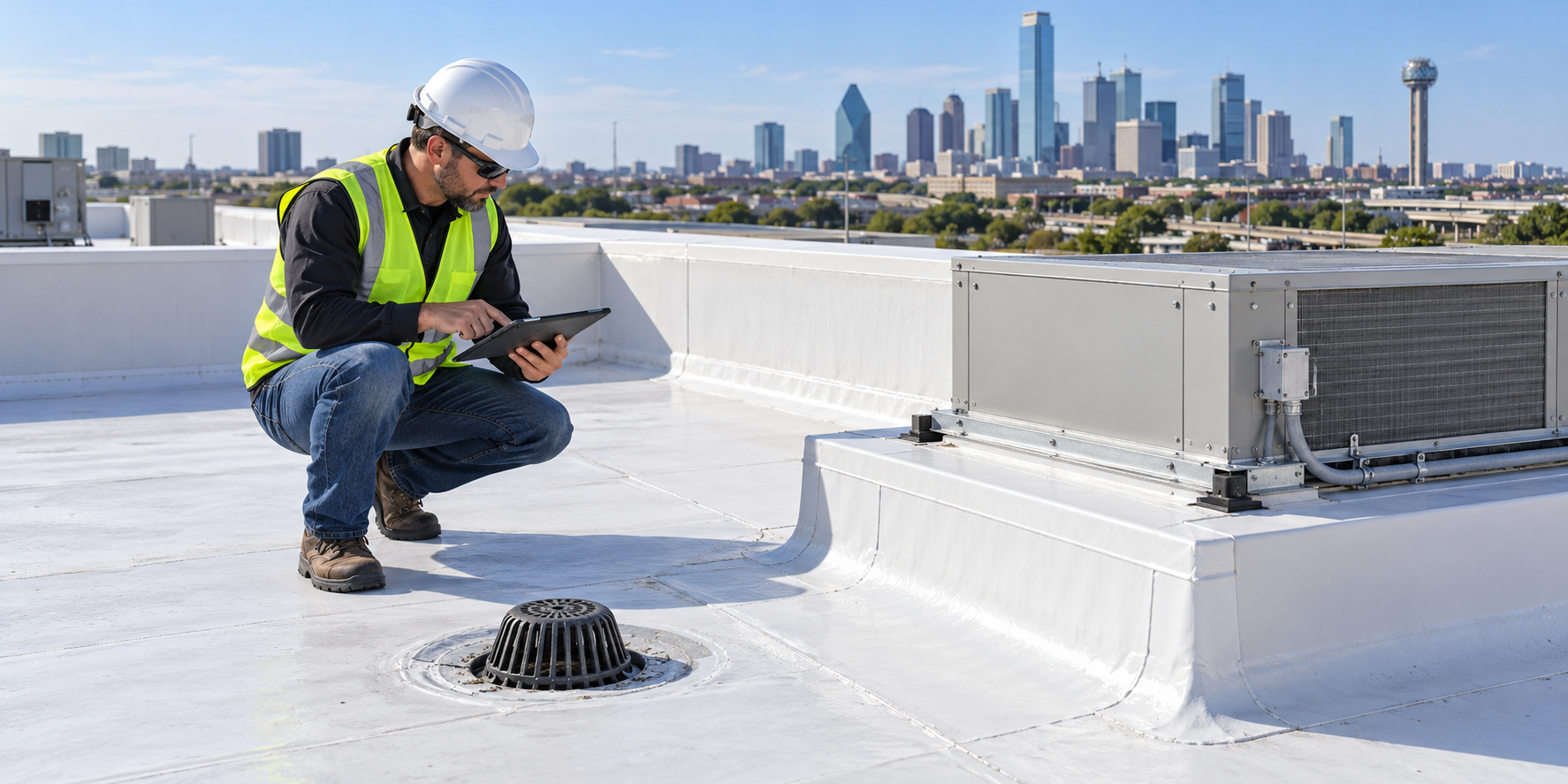
A competent inspection connects interior evidence with roof construction and storm conditions. The reviewer should map stains, active drips, damp materials, odors, ceiling damage, equipment exposure, and the time each symptom appeared. On the roof, the reviewer should map punctures, lifted edges, open seams, fractured flashings, hail effects, displaced metal, damaged penetrations, blocked drainage, and visible repair history.
One obvious defect may not be the only defect. A loose cap flashing can admit water while nearby uplift has also stressed seams and fasteners. A puncture can be repaired while hidden moisture continues spreading in insulation. Conversely, a dramatic interior stain may result from a limited flashing failure that can be corrected without replacing a sound roof. Diagnosis must precede scope.
When a localized storm roof repair may be appropriate
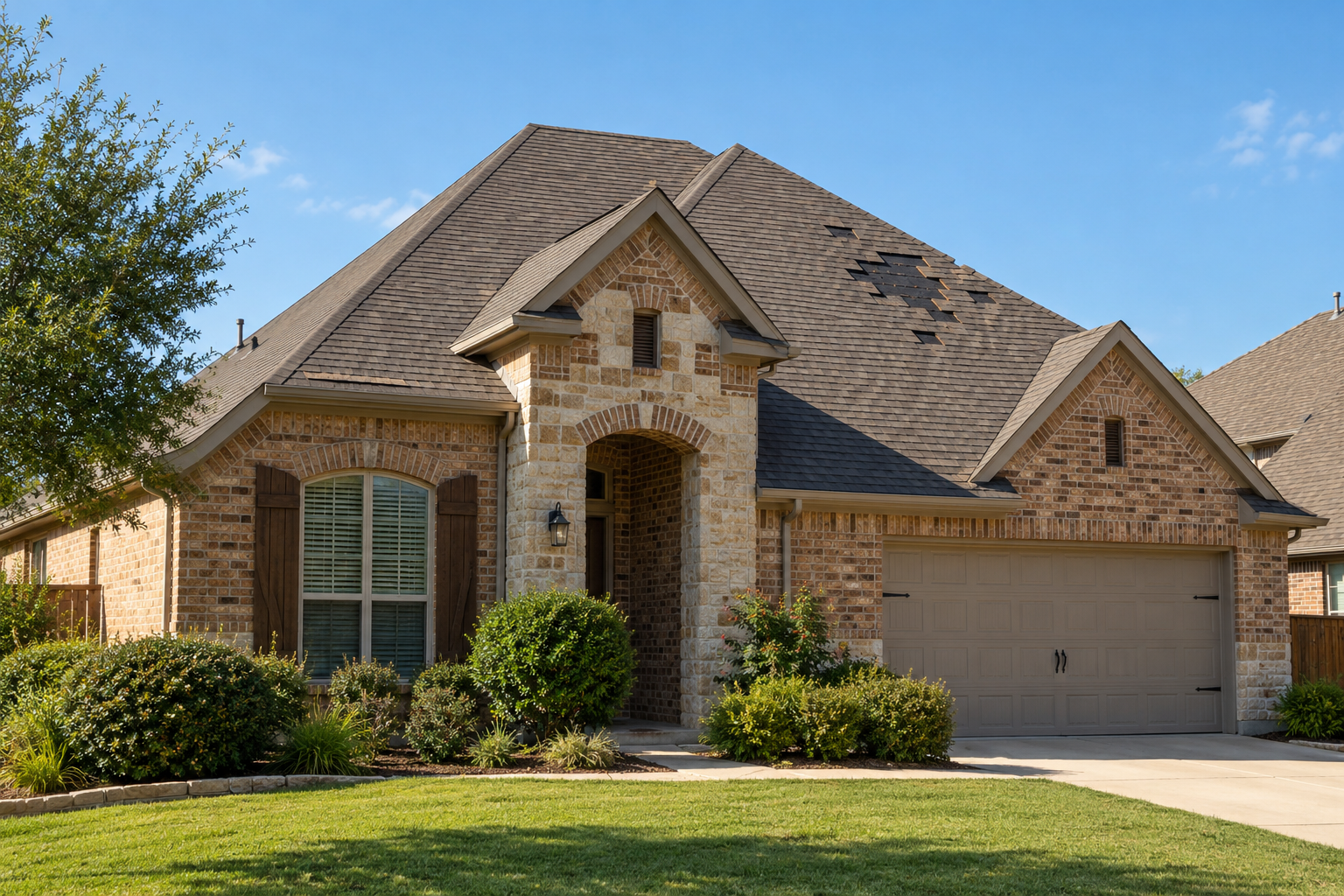
Repair is most defensible when the damage has clear boundaries and the surrounding assembly remains dry, stable, compatible, and serviceable. Examples may include an isolated puncture, a small torn membrane area, a limited flashing failure, a displaced edge section, a few damaged panels or shingles, or a localized penetration problem. The exact repair method must match the roof system and manufacturer requirements.
A durable repair should remove or address damaged and wet materials, restore the waterproofing plane, reconnect attachment where required, and integrate with sound existing material. It should not merely coat over debris, seal water inside, bridge unstable material, or conceal a condition that remains active. Details at seams, transitions, curbs, edges, drains, walls, and penetrations require particular care because movement and water concentration occur there.
The surrounding roof must also offer enough remaining serviceability to justify the work. If a compatible tie-in cannot be made, the membrane is too brittle, adhesion is unreliable, substrate is deteriorated, or old repairs surround the new damage, a seemingly small repair can become a short-lived expense. The written scope should state assumptions, limits, materials, preparation, warranty implications, and follow-up inspection needs.
Signs that replacement deserves serious consideration
Replacement becomes more likely when damage extends across multiple roof areas, wind has disturbed attachment broadly, hail effects are widespread, numerous seams or flashings have failed, or the storm exposed systemic weaknesses. Broad moisture, deteriorated insulation, corroded or fractured deck, structural movement, or repeated leaks in different locations can make isolated repairs impractical or misleading.
The roof’s pre-storm condition matters. A newer, maintained assembly with a single repairable breach presents a different decision from an old roof with recurring leaks, extensive patching, failing flashings, poor drainage, and uncertain installation. Insurance generally does not replace a roof merely because it is old or worn; however, pre-existing deterioration can affect whether a durable construction repair is feasible.
Replacement may also be necessary when code, manufacturer requirements, building use, attachment, fire classification, energy requirements, or the number of existing roof layers prevents a compliant repair or recover. These questions require project-specific review. The goal is not to maximize the size of the project but to select a scope that restores reliable performance and does not repeat known defects.
Repairability depends on the roof system
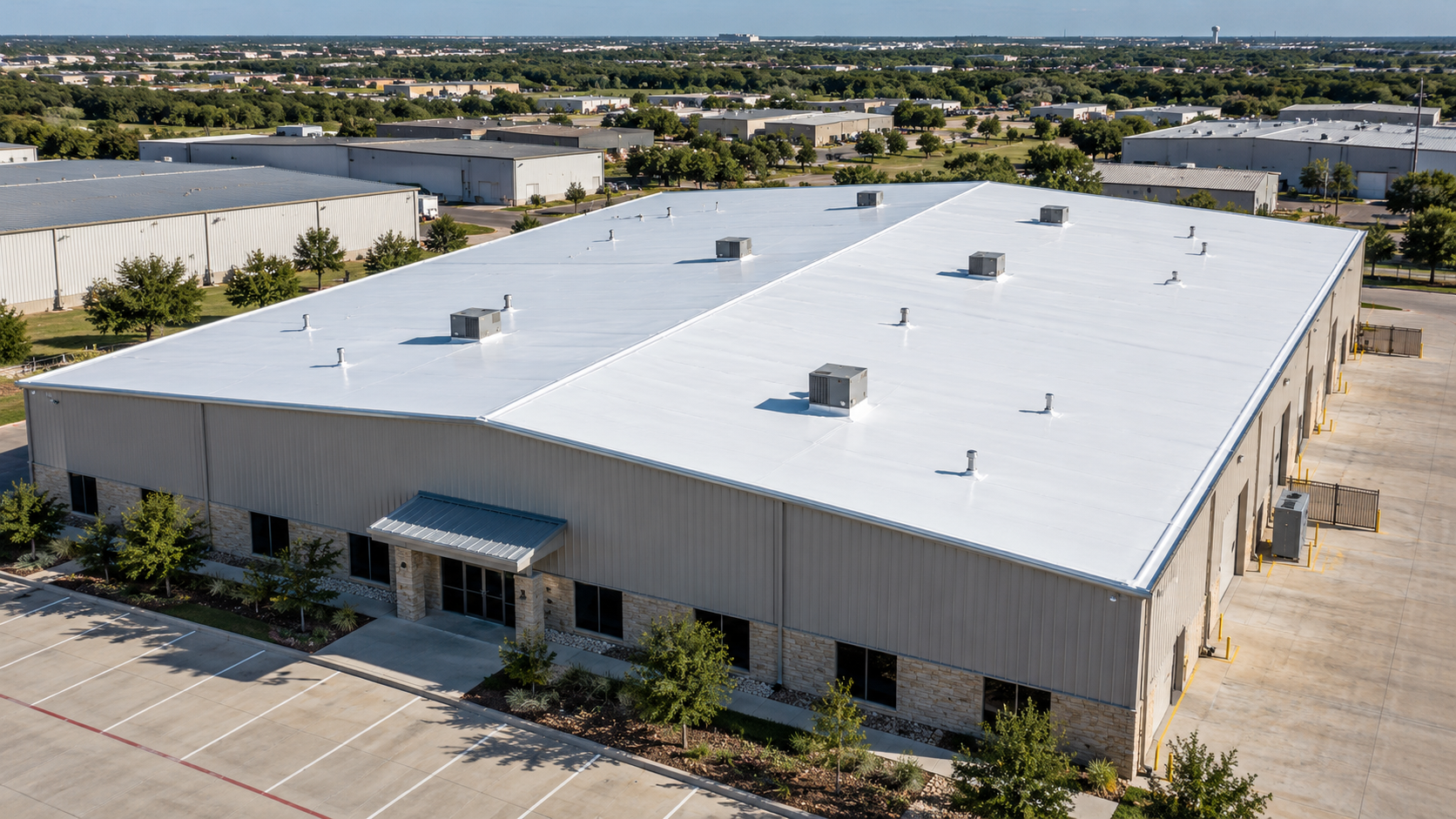
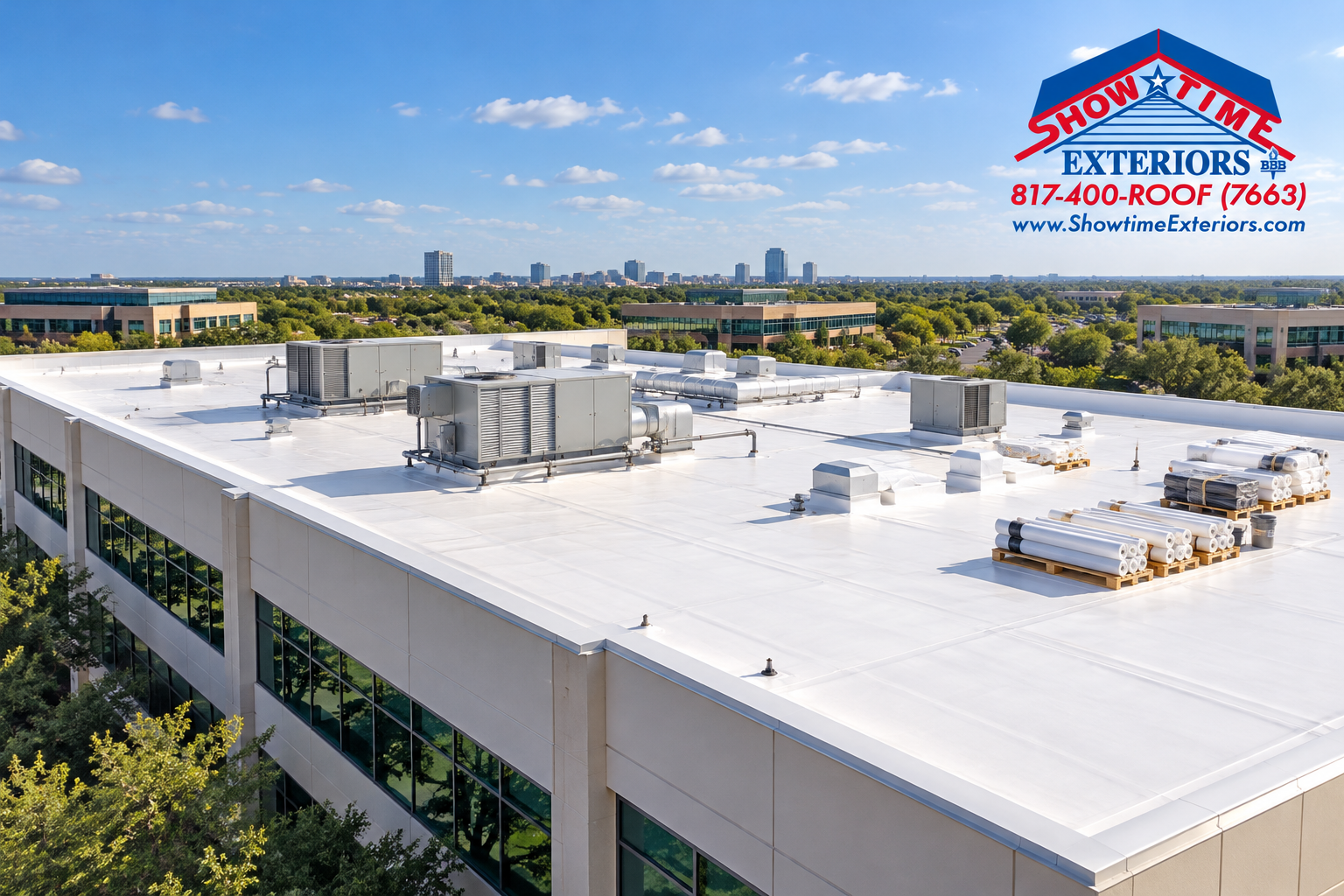
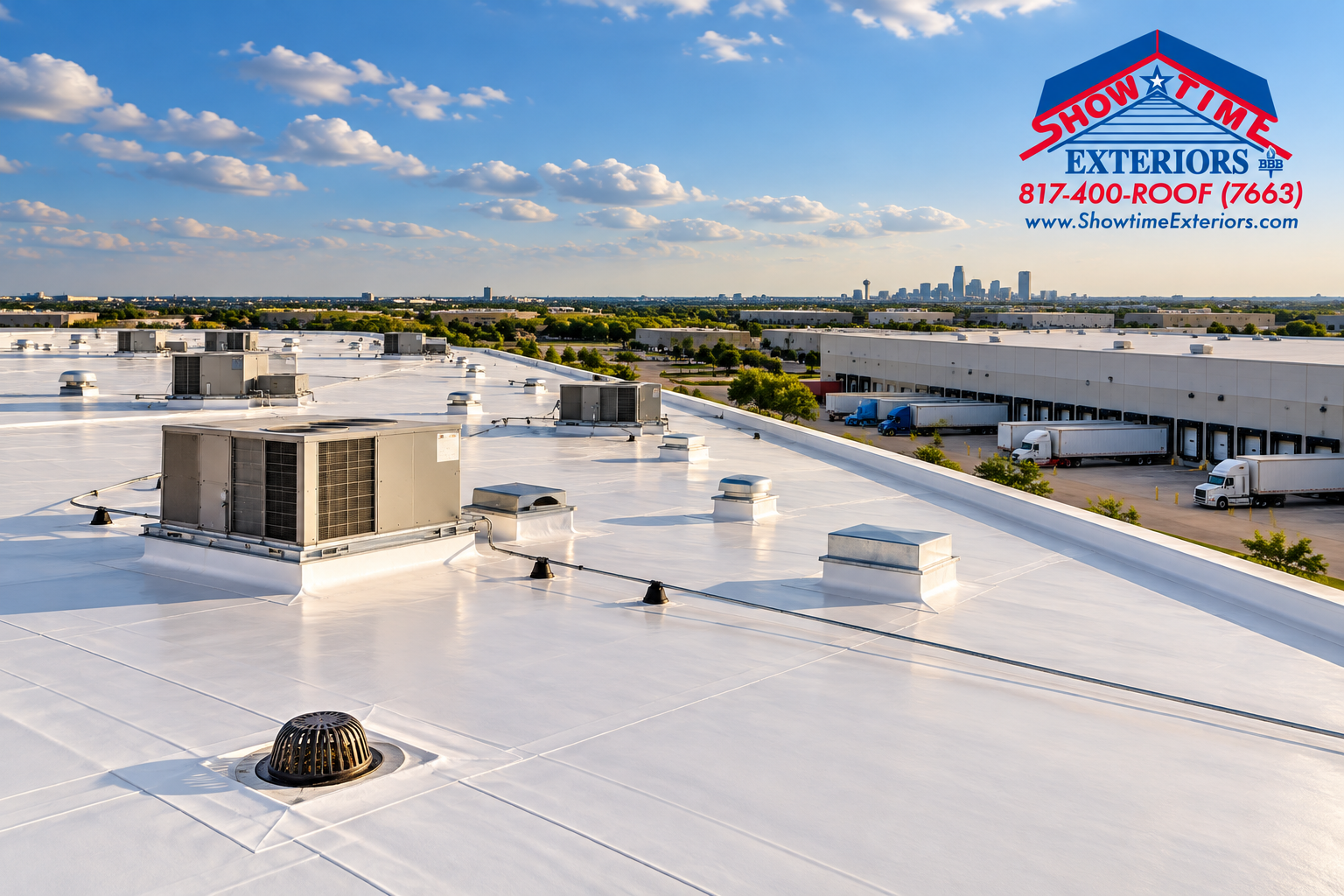
TPO and PVC membranes may allow heat-welded repairs when the existing sheet can be properly cleaned, prepared, tested, and welded. Weathering, contamination, incompatible materials, aged surfaces, and moisture below the membrane can change that conclusion. Test welds and manufacturer guidance may be appropriate. A patch on top of saturated insulation does not correct the full assembly.
EPDM repairs typically depend on careful cleaning, priming, compatible uncured or cured membrane, seam tape, flashing details, and sound substrate. Modified bitumen repairs may use compatible membranes and appropriate heat, cold adhesive, or self-adhered methods depending on the system and site restrictions. Metal roofs require evaluation of panels, seams, fasteners, clips, coatings, corrosion, penetrations, and movement rather than indiscriminate sealant.
Steep-slope systems require matching the damaged component, underlayment, flashing, fastening, and surrounding field condition. A few wind-damaged shingles or tiles may be repairable if matching, serviceable materials can be integrated without breaking adjacent units. Widespread damage, brittle surrounding materials, discontinued products, or compromised underlayment can alter the decision.
Special concern: aging gravel-surfaced BUR
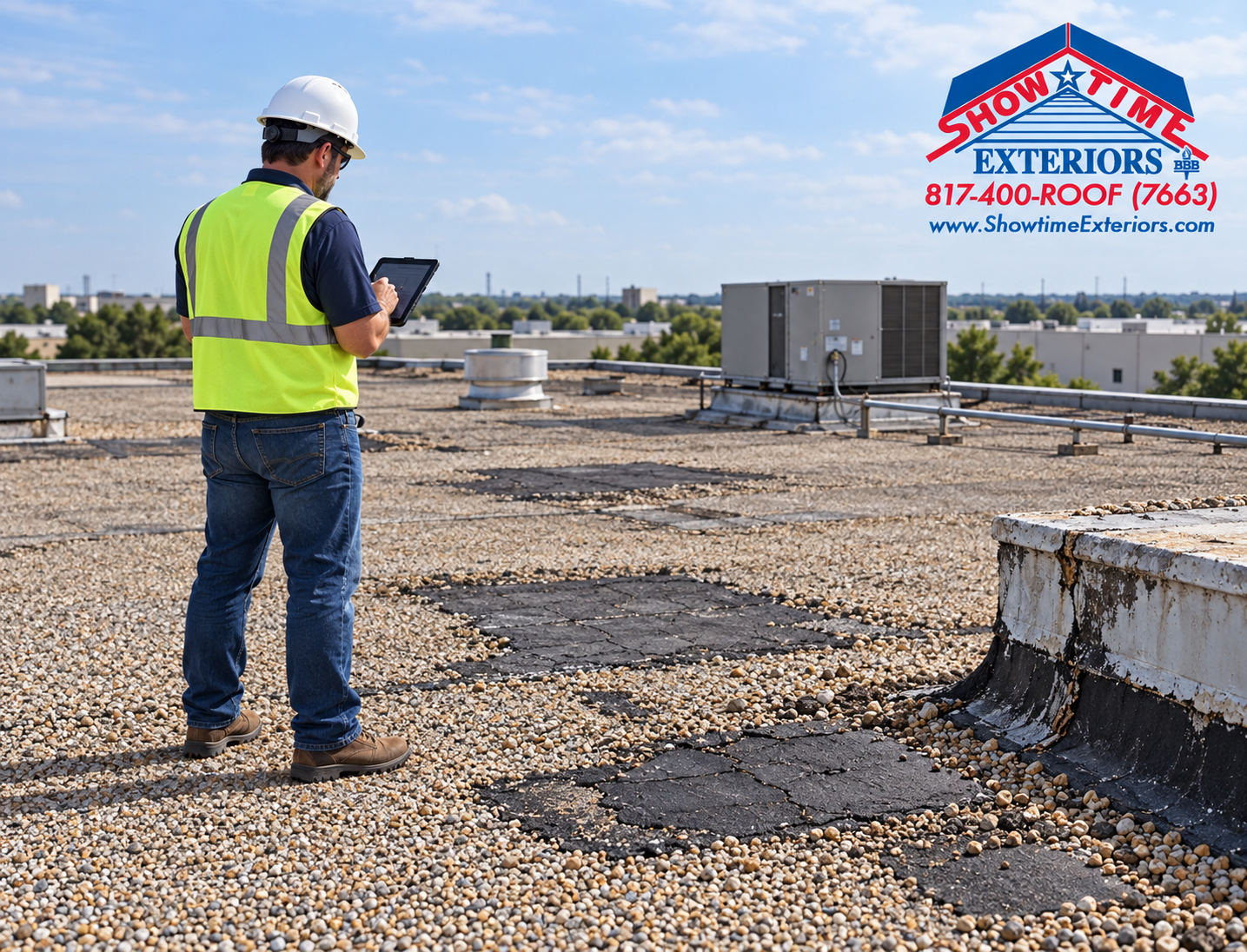
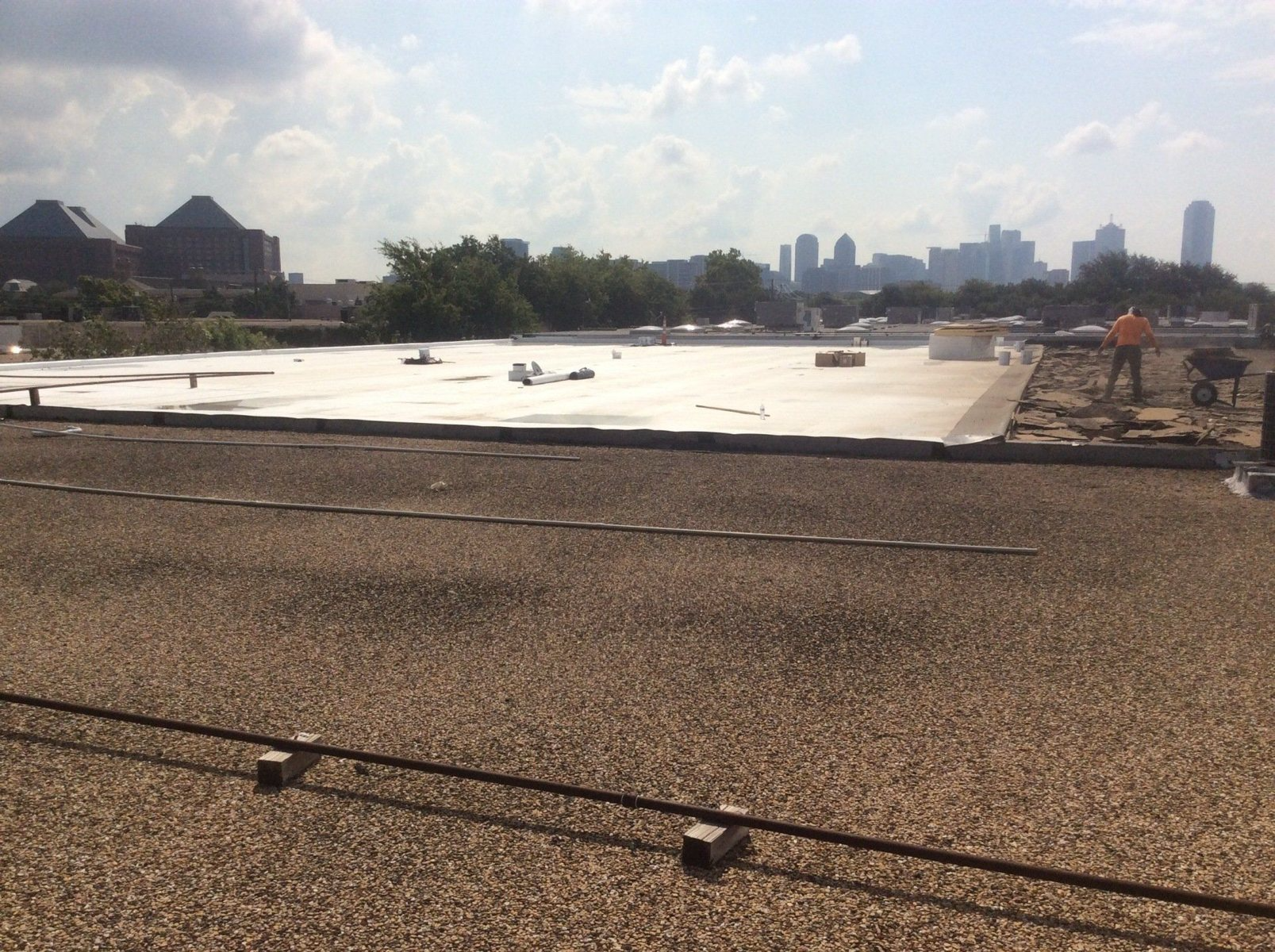
Aging built-up roofs with gravel surfacing require particular caution. Gravel can conceal the membrane, flood coat, cracks, splits, blisters, prior patches, moisture-related deterioration, and the actual boundary of storm damage. A surface may appear generally covered while significant conditions remain hidden below. Visible aggregate should never be treated as proof that the waterproofing is sound.
This aligns directly with Showtime Exteriors’ commercial campaign: aging gravel BUR should not be presented as an advantage. The system can be difficult to inspect, document, maintain, and underwrite because the gravel obscures the surface. Storm displacement may expose isolated areas, but it can also redistribute material and make before-and-after comparison difficult. Investigation must acknowledge those limitations.
When a gravel BUR roof is old, repeatedly leaking, broadly wet, heavily patched, difficult to inspect, or creating insurance renewal concerns, continued spot repairs may not be a responsible long-term strategy. Replacement planning can remove concealed wet materials, verify the deck, improve drainage and insulation, correct penetrations and edges, and transition the building to a more inspectable assembly.
Why moisture boundaries often decide the scope
The visible leak does not establish the moisture boundary. Wet insulation can lose thermal performance, contribute to corrosion or deterioration, increase load, affect adhesion, and allow water to reappear after surface repairs. The appropriate response depends on material type, duration, contamination, deck construction, building conditions, and the ability to remove and replace affected components.
Moisture investigation may include visual observations, probing, test cuts, cores, infrared thermography, electrical capacitance or impedance methods, nuclear scanning, or other methods selected for the assembly. Every method has limitations. An anomaly is not automatically wet material, and one dry verification point does not prove an entire roof is dry. Results should be mapped and confirmed appropriately.
A repair may remain reasonable when testing supports a limited wet area that can be fully removed and tied back into dry, sound materials. Replacement or a larger section replacement becomes more likely when moisture is widespread, boundaries cannot be reliably isolated, the deck is affected, or the investigation reveals older concealed deterioration extending beyond the storm opening.
Deck and structure can change a roofing decision
Storm forces can damage more than the waterproofing. Wind uplift may loosen attachment or stress edges; hail or debris may dent metal decking or fracture brittle components; water can accelerate corrosion in steel deck or deterioration in wood and gypsum-based materials. Softness, deflection, cracking, movement, corrosion, damaged welds, pulled fasteners, or unusual sound warrant careful evaluation.
Roofing professionals should document visible deck conditions where accessible and recommend structural review when observations exceed roofing scope. A surface patch is not an adequate answer to compromised structural support. Similarly, a complete roof replacement scope should not assume deck replacement everywhere without evidence. Use measured quantities, test openings, allowances, or unit prices where concealed conditions cannot be known before demolition.
Equipment curbs, parapets, walls, canopies, skylights, drains, gas lines, electrical feeds, and mechanical supports may also be involved. Coordinating those components early prevents a roofing estimate from omitting essential work or assigning specialized repairs to the wrong trade.
Consider the roof’s age and repair history honestly
Age alone does not decide whether to repair or replace, but it influences material flexibility, adhesion, compatibility, remaining serviceability, and the likelihood of concealed deterioration. Installation records, permits, warranties, inspection reports, prior photographs, maintenance logs, leak history, repair invoices, coating records, and moisture surveys provide a more reliable picture than an unsupported estimate of age.
Separate the new storm condition from ordinary wear, prior damage, deferred maintenance, failed old sealant, ponding, corrosion, open historic repairs, and repeated leaks. An evidence-based report can identify observed new damage, observed older conditions, reported history, and uncertainty without forcing every defect into one category. That honesty improves construction planning even when insurance is not involved.
A building with one well-performing roof area and one storm-damaged section may benefit from a sectional replacement. A roof with dozens of patches, different materials, unknown tie-ins, and leaks across several years may not provide a reliable substrate for another isolated repair. The most economical immediate option is not always the lowest lifecycle-cost option.
Drainage must be part of the decision
Storm debris can block drains, scuppers, gutters, and downspouts. Wind can displace insulation or membrane and create new low areas. Hail can damage drainage components, while overflowing water can enter at walls, curbs, edges, and penetrations that would not leak under normal flow. Clear accessible debris safely and document ponding patterns after the event.
A repair that closes the entry point but leaves inadequate drainage may only move the leak. The assessment should identify primary and overflow drainage, crickets, saddles, tapered insulation, slope, drain elevations, edge conditions, and evidence of chronic ponding. Replacement provides an opportunity to correct drainage, but the scope must coordinate structural limitations, plumbing, code, and roof geometry.
Do not promise that all standing water can be eliminated without design review. Some roofs have complex deflection or existing geometry. State what can be observed, measured, and improved, and identify when an architect, engineer, plumber, or other professional should be involved.
Emergency repair is not permanent repair
An emergency tarp, temporary membrane, mastic, sealant, sandbag, or weighted cover is intended to reduce immediate water entry until a permanent scope can be developed. Temporary materials can loosen, puncture, trap moisture, obstruct drainage, damage the roof, or create windborne debris. They require monitoring and should not become an unexamined long-term condition.
Record the exact temporary area, attachment method, materials, date, installer, weather conditions, and reason for the work. Photograph the exposed condition before covering it when safe. Reinspect after wind or rain and after other trades work nearby. If water entry continues, expand the investigation rather than repeatedly applying material to the same visible point.
The permanent correction should remove temporary materials as appropriate, evaluate what they covered, replace wet or damaged components, restore the roof system, and document completion. If temporary work changed the evidence, preserve photographs, removed samples when appropriate, invoices, and field notes explaining why immediate action was necessary.
Document before choosing repair or replacement
Build a photo sequence from wide to detailed views. Photograph the property, every building elevation, full roof areas, storm debris, drainage, edges, rooftop equipment, and unaffected comparison areas. Then capture context views that connect each defect to a fixed feature, followed by close-ups showing the physical condition and a safe scale reference. Number findings and place them on a roof plan.
Inside, map active drips, stains, wet ceilings, walls, floors, stored property, equipment, odors, and restricted areas. Record when each condition was first observed and whether it changed during later rain. Water pathways should be described as findings or professional opinions with stated bases, not as certainty derived from one interior stain.
Keep original image files and create annotated copies separately. Record dates, times, witnesses, weather alerts, maintenance calls, emergency work, and all authorizations. Preserve invoices, estimates, inspection reports, moisture maps, test-cut records, samples when appropriate, and communications. Documentation supports the decision; it should not be manipulated to force a predetermined outcome.
Weather evidence supports context, not the entire conclusion
Official alerts, National Weather Service information, NOAA storm records, radar products used by qualified analysts, and nearby observations can help establish regional conditions. Record the source, location, event date, reported measurement, and retrieval date. Do not convert a nearby gust report into an exact wind speed at the building unless a reliable site-specific measurement exists.
Site evidence is still essential. Pair weather information with displaced components, impact marks, debris direction, openings, uplift patterns, interior timing, witnesses, security video, neighboring damage, and pre-storm records. A storm occurring in the county does not by itself prove that every observed roof condition resulted from that storm.
The roofing report should distinguish direct observations, owner or tenant reports, third-party weather information, testing results, and professional opinions. Precise sourcing is more credible than absolute language and helps all parties understand what remains unknown.
Insurance does not determine construction feasibility
Insurance coverage and roofing repairability are related but different questions. A contractor can determine that a repair is technically possible while the policy decision remains unresolved. A contractor can also determine that replacement is the only practical construction option without being able to say whether the policy covers it. The carrier applies policy language and makes coverage and payment decisions.
Property owners should obtain the complete policy for the date of loss, declarations, deductibles, endorsements, exclusions, valuation terms, notice requirements, duties after loss, protective safeguards, and claim instructions. Commercial policies vary substantially. Ask the agent or carrier about inspection timing, emergency work, preservation of materials, requested estimates, proof of loss, and applicable deadlines.
Do not authorize unnecessary permanent work merely because someone predicts insurance will pay. Do not delay reasonable mitigation while waiting for perfect documentation. Coordinate the inspection, temporary protection, insurer communication, testing, and permanent scope, and keep written records of instructions and decisions.
Comparing repair, restoration, recover, and replacement
Repair addresses specific defects and adjacent affected materials. Restoration may include broader preparation, repairs, reinforcement, and a compatible coating or surfacing system intended to extend service. A recover installs a new roof assembly over an eligible existing assembly, subject to code, moisture, attachment, deck, weight, warranty, and manufacturer requirements. Replacement removes roofing as specified and installs a new assembly.
A coating is not a universal substitute for replacement. The roof must be an appropriate candidate, and wet insulation, unstable substrate, failed attachment, active structural problems, and incompatible details must be addressed. Coating over an aging gravel BUR system without adequate evaluation and preparation can conceal rather than solve conditions. The scope must match the actual assembly.
Compare alternatives using the same criteria: safety, waterproofing reliability, moisture removal, deck condition, drainage, attachment, code, energy performance, building operations, warranty, future inspections, expected service, disruption, and cost. A lower initial price has limited value if it leaves unresolved wet materials or cannot be maintained.
What a useful contractor scope should contain
The scope should identify roof areas, system and layers where known, dimensions, removal boundaries, wet-material handling, deck assumptions, insulation, cover board, membrane or metal, attachment, flashings, edges, walls, penetrations, drainage, equipment coordination, temporary protection, access, safety, permits, code, testing, warranties, and closeout documentation.
Separate storm-related observations, older maintenance, elective improvements, and concealed-condition allowances. Use unit prices or stated allowances where the quantity cannot be known until tear-off. Connect major estimate items to mapped findings or construction requirements. This makes repair and replacement options easier to compare and reduces confusion during the work.
The estimate should not promise hidden conditions do not exist. It should explain exclusions and identify other trades. When multiple options are presented, each should state what it corrects, what it leaves in place, prerequisites, limitations, expected maintenance, and potential warranty consequences.
Commercial operations can affect the best solution
A warehouse, school, office, medical facility, retail center, multifamily building, manufacturing plant, and data-sensitive operation have different tolerances for noise, odor, dust, shutdowns, open roof exposure, interior protection, and future leak risk. A technically possible repair may be a poor operational choice if access is repeatedly disruptive or sensitive inventory remains exposed.
Plan staging, weather windows, tear-off limits, temporary tie-ins, interior protection, crane or lift access, tenant communication, HVAC coordination, parking, deliveries, security, and daily dry-in. For replacement, phasing may reduce disruption. For repair, access and mobilization costs may justify combining multiple verified items into one coordinated project.
Document the owner’s priorities without allowing schedule pressure to override safe or compliant work. The best scope balances physical condition, risk, operations, budget, service objectives, and future maintenance.
Quality control after the work
For repairs, photograph preparation, removed wet materials, exposed substrate, deck work, insulation, attachment, primer, patches, seams, flashing transitions, and completed conditions. Record material names, lot information when relevant, weather, crew, dimensions, testing, and any changes from the approved scope. Confirm drains and work areas are clean.
For replacement, use progress inspections and closeout records. Document tear-off boundaries, concealed conditions, deck repairs, insulation layout, attachment patterns, seams, penetrations, edges, drainage, equipment curbs, walk pads, and final punch-list completion. Collect warranties, permits, inspection records, invoices, and an updated roof plan.
Schedule follow-up after meaningful rain and include the completed work in the maintenance program. A successful project is not simply one that stops today’s drip; it creates a traceable, maintainable roof condition and a clear record for the owner.
Step-by-step repair-or-replacement decision process
Protect occupants, operations, inventory, and electrical or structural hazards; restrict unsafe areas.
Notify the appropriate property contacts and arrange qualified emergency stabilization when needed.
Photograph and map exterior, roof, and interior conditions before temporary work when safely practical.
Record the incident timeline, storm information, witnesses, discovery, water entry, and emergency actions.
Identify the roof system, age, warranty, layers, attachment, drainage, prior repairs, and leak history.
Inspect the full roof area and adjacent components instead of limiting the review to the interior drip.
Measure and map visible storm conditions, affected areas, temporary work, and unaffected comparison areas.
Evaluate moisture boundaries with appropriate methods and verification points when conditions warrant.
Assess deck, structure, edges, penetrations, drainage, equipment, and other-trade concerns.
Determine whether damaged and wet materials can be removed and tied into sound, compatible roofing.
Compare localized repair, sectional replacement, restoration, recover, and full replacement where eligible.
Prepare itemized scopes with assumptions, allowances, exclusions, testing, code, and warranty requirements.
Consult the insurer for policy questions and required claim procedures; do not rely on contractor coverage promises.
Complete authorized work with progress documentation and quality-control records.
Retain closeout photographs, invoices, permits, warranties, moisture records, and the updated maintenance plan.
Repair may be reasonable when
The storm defect is localized and can be clearly mapped and measured.
Surrounding roofing is dry, sound, compatible, and capable of accepting a durable tie-in.
Wet or damaged insulation and substrate can be completely removed within practical boundaries.
The deck and structure are serviceable or localized repairs can restore them appropriately.
The repair method complies with system, manufacturer, code, warranty, and safety requirements.
The roof has meaningful remaining serviceability and does not have widespread recurring failures.
Drainage and adjacent details are functional or can be corrected within the repair scope.
The owner understands the repair’s limits, maintenance needs, and documented follow-up plan.
Replacement may be necessary when
Storm damage or loss of attachment is widespread across one or more roof areas.
Moisture is broad, cannot be reliably isolated, or has affected substantial insulation or deck.
The membrane, panels, shingles, flashings, or substrate cannot accept a reliable compatible repair.
The roof has repeated leaks, extensive patching, failing details, or little remaining serviceability.
Code, layer count, weight, fire, energy, attachment, manufacturer, or warranty requirements prevent the proposed repair or recover.
Structural or deck conditions require removal of the roof assembly to access and correct damage.
An aging gravel-surfaced BUR system conceals conditions, is broadly deteriorated, or creates continuing inspection and underwriting concerns.
Lifecycle analysis shows repeated repairs would leave substantial unresolved risk and cost more than a planned replacement.
Frequently asked questions
Does one ceiling leak mean the whole roof must be replaced?
No. One interior leak can result from a localized defect, but it can also be the first visible sign of a larger wet area. The roof entry point, moisture boundary, surrounding condition, and repair compatibility must be established before deciding.
Can a roofer tell me whether insurance will pay for replacement?
A roofing contractor can document physical conditions and explain construction options. The insurance carrier determines coverage and payment under the policy. Consult a licensed insurance professional for policy interpretation and legal counsel for legal questions.
Should permanent repairs begin before the adjuster inspects?
Address safety and reasonable emergency mitigation promptly. Ask the insurer for instructions and inspection timing, preserve evidence, and document why urgent work was required. Texas Department of Insurance guidance advises documenting damage, making temporary repairs to prevent more damage, saving receipts, and avoiding permanent repairs before the adjuster sees the damage when circumstances allow.
Can wet insulation simply dry in place?
That depends on the material, amount and duration of moisture, contamination, assembly, climate, and project requirements. Do not assume material is dry or reusable without appropriate evaluation. Trapped moisture can remain after the visible leak stops.
Is a roof coating enough after storm damage?
Only if the roof is a suitable candidate and all required repairs, moisture removal, cleaning, preparation, attachment, and details are addressed. A coating should not be used to hide wet insulation, unstable substrate, widespread damage, or an aging gravel BUR condition that has not been adequately evaluated.
What if the roof is old but storm damage is localized?
Age does not automatically require replacement, and insurance does not generally provide a new roof solely because the existing roof is old. However, age, brittleness, repair compatibility, recurring leaks, moisture, and remaining serviceability may make a durable localized repair impractical.
What if there was a leak before the storm?
Disclose and document the prior leak. Separate older conditions from new physical storm effects and state uncertainty honestly. Prior problems do not justify labeling all damage old, and a storm does not convert every maintenance condition into new damage.
How soon should the roof be inspected?
As soon as conditions are safe, especially when active water entry, openings, displaced materials, drainage blockage, or sensitive operations are involved. Prompt documentation can preserve conditions before temporary work, cleanup, or additional weather changes the evidence.
Can only part of a commercial roof be replaced?
Sometimes. Sectional replacement may be feasible when boundaries, drainage, attachment, transitions, warranty, code, and tie-ins support it. The remaining roof must be serviceable, and the transition cannot create a new weak point.
What is the most important factor in the decision?
Whether the proposed scope can restore reliable waterproofing and address all verified damaged and wet components without depending on unsound surrounding materials. That conclusion should be supported by mapped observations, testing where appropriate, construction requirements, and honest limitations.
Questions property owners should ask the roofing contractor
Where is the probable entry point, and how does it relate to the interior leak?
What physical storm conditions were observed and mapped?
What portions of the roof were inaccessible or concealed?
How were moisture boundaries evaluated and verified?
Is the surrounding material dry, sound, and compatible with a permanent repair?
What damaged layers will be removed rather than covered?
What repair, sectional replacement, restoration, recover, and replacement options were considered?
Which code, manufacturer, warranty, drainage, attachment, or safety requirements affect the scope?
What assumptions, allowances, exclusions, and other-trade responsibilities are included?
How will temporary work be monitored and converted into a permanent correction?
What progress photographs, testing, warranties, and closeout documents will be provided?
What maintenance and follow-up inspection will be needed after completion?
Why work with Showtime Exteriors?
Showtime Exteriors helps commercial property owners across North Texas and the Dallas-Fort Worth Metroplex evaluate storm roof leaks and choose practical next steps. The team documents roof areas and physical findings, coordinates emergency protection, investigates water pathways, evaluates repair feasibility, and develops repair, restoration, recover, retrofit, or replacement scopes based on observed conditions.
Showtime Exteriors works with TPO, PVC, EPDM, modified bitumen, metal, coatings, steep-slope materials, and other commercial assemblies. For aging gravel-surfaced BUR roofs, the team recognizes that gravel can conceal membrane deterioration, moisture, prior repairs, and storm damage. The objective is a clear record and a durable construction plan—not a promise about insurance coverage or claim outcome.
Need a commercial storm-damage roof inspection? Call Showtime Exteriors at 817-400-ROOF (7663) or visit showtimeexteriors.com/commercial-roofing.
Helpful Showtime Exteriors resources
North Texas post-storm roof inspection guide
Commercial roof inspection for insurance renewal
Why gravel can hide commercial roof damage
Independent roofing, safety, weather, and insurance resources
Texas Department of Insurance: help after a storm
Texas Department of Insurance: insurance and your roof
National Roofing Contractors Association: roof repairs after a storm
National Roofing Contractors Association: roof inspection and maintenance
Editorial and insurance disclaimer
This article provides general roofing and documentation information and is not legal, insurance, engineering, architectural, electrical, environmental, or safety advice for a specific property. Conditions, policies, contracts, warranties, codes, ownership questions, and project requirements vary. Showtime Exteriors documents roofing conditions and performs roofing work within its role; insurance carriers determine coverage and claim payment. Consult the appropriate licensed professionals for insurance, legal, structural, design, electrical, hazardous-material, or specialized safety questions.
817-400-ROOF (7663) showtimeexteriors.com