



How Quickly Should You Address a Hail-Damaged Roof?
A practical timeline for inspection, documentation, mitigation, and permanent roofing decisions
Quick answer: Address suspected hail damage as soon as conditions are safe. If the roof is leaking, punctured, displaced, or exposing people, equipment, or inventory, arrange emergency stabilization immediately. Even without an active leak, schedule a professional inspection promptly—ideally within days, not months—because hail damage can be subtle, moisture can remain concealed, and later storms can enlarge small defects. Document conditions before temporary work whenever safe, notify the appropriate insurance contact according to the policy, and do not assume that visible dents alone prove coverage or that no leak means no damage.
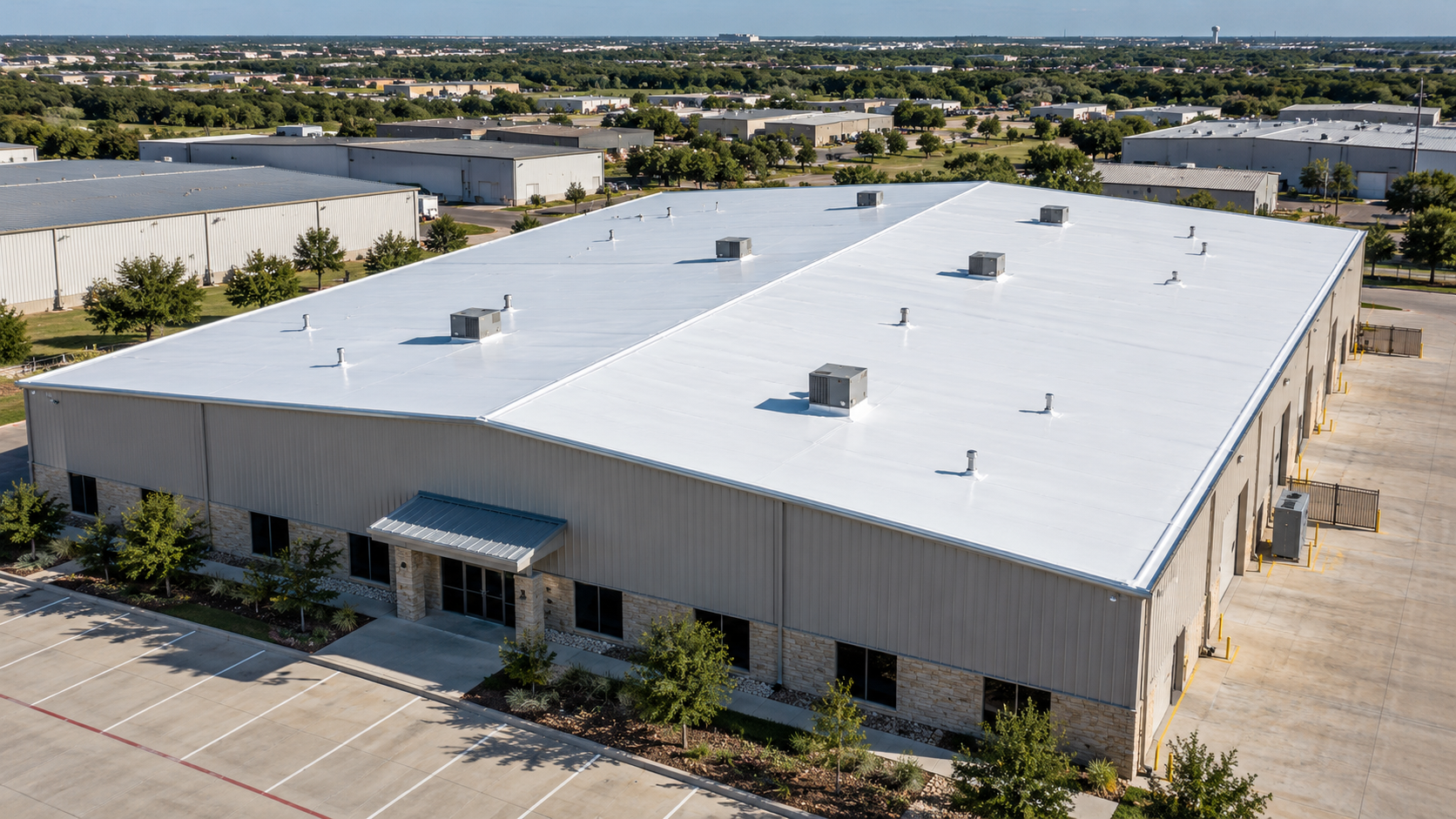
North Texas hailstorms can develop quickly and affect large commercial properties in minutes. A single event may strike membranes, metal panels, flashings, rooftop equipment, skylights, gutters, coping, vents, coatings, shingles, tiles, and surrounding building components. Some effects are obvious immediately. Others are small, scattered, concealed by surfacing, or only become visible after heat, wind, rain, and building movement enlarge the original condition.
Speed matters, but a rushed conclusion is not the goal. Property owners need a safe, organized process that protects the building, preserves evidence, separates storm effects from older conditions, and produces a technically sound repair or replacement scope. Hail size reported nearby does not automatically establish damage at a specific roof, and a roofing contractor should not promise that an insurance carrier will approve a claim.
Showtime Exteriors helps commercial property owners throughout Texas and the Dallas-Fort Worth Metroplex inspect storm-affected roofs, document physical conditions, coordinate temporary protection, investigate moisture, and develop repair, restoration, recover, retrofit, or replacement options. Insurance carriers interpret policies and make coverage and payment decisions.
The first hour: protect people and operations
During active lightning, high wind, hail, or severe weather warnings, keep people indoors and away from windows, skylights, damaged ceilings, and exterior areas. Do not send employees onto the roof during or immediately after the storm. Hail can leave slippery ice, loose aggregate, broken glazing, punctures, unstable panels, damaged electrical equipment, and weakened roof areas that are not visible from an access point.
From safe interior locations, note active dripping, ceiling movement, water near electrical systems, damaged fire-protection components, and affected equipment or inventory. Restrict access below sagging ceilings or visibly unstable materials. Call emergency services, the electric utility, fire-protection provider, structural professional, restoration contractor, or other qualified trade when the conditions require expertise beyond ordinary roof work.
Protect movable property only when it can be done safely. Use containers, plastic sheeting, floor protection, and controlled shutdown procedures as appropriate. Record the time the storm occurred, when water was first observed, who discovered it, which rooms are affected, and what immediate actions were taken. These contemporaneous notes can be more reliable than memories reconstructed days later.
The same day: document and stabilize active damage
When severe weather has passed and access can be established safely, arrange a qualified roof assessment. Active openings, displaced edge metal, torn membrane, broken skylights, damaged panels, or significant leaks require immediate temporary protection. Emergency work may include a tarp, temporary membrane, compatible patch, board-up, interior protection, debris control, or water extraction, depending on the roof and building.
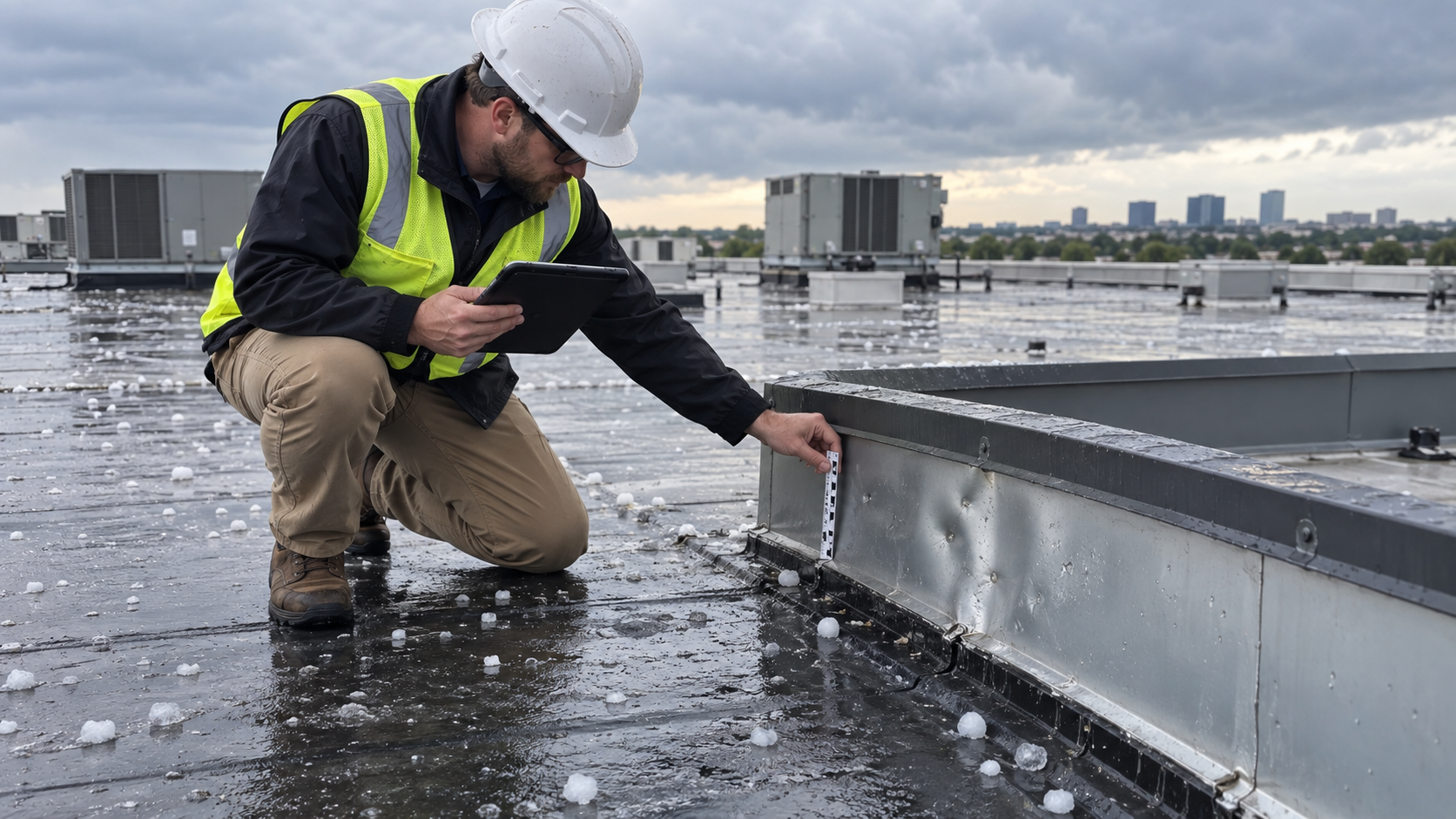
Photograph conditions before temporary work whenever practical, but never delay life-safety action merely to collect perfect evidence. Capture wide views of the building and roof area, context views connecting the condition to fixed features, and close-ups showing the physical defect and approximate scale. Photograph interior effects, equipment, drainage, debris, and unaffected comparison areas as well.
Document the reason for emergency work, who authorized it, labor hours, equipment, materials, quantities, and dates. Save invoices and receipts. Label temporary repairs clearly and create a plan for reinspection and permanent correction. A temporary patch does not establish whether surrounding insulation is dry, the deck is sound, or additional hail effects exist elsewhere.
Within the first few days: inspect even if there is no leak
A commercial roof can sustain hail effects without producing an immediate interior leak. Water may not reach a defect until the next rain, drainage pattern, freeze-thaw cycle, thermal movement, or wind event. Some assemblies contain insulation or multiple layers that can retain water before it becomes visible inside. Waiting for a ceiling stain can allow a limited condition to become a broader moisture problem.
Schedule the inspection promptly while storm debris, impact marks, displaced surfacing, and site conditions are still identifiable. Early documentation can help distinguish a new event from later weather or foot traffic. It also gives the property owner time to obtain prior records, consult the insurer, coordinate tenants, and evaluate repairs before contractors become overloaded after a regional storm.
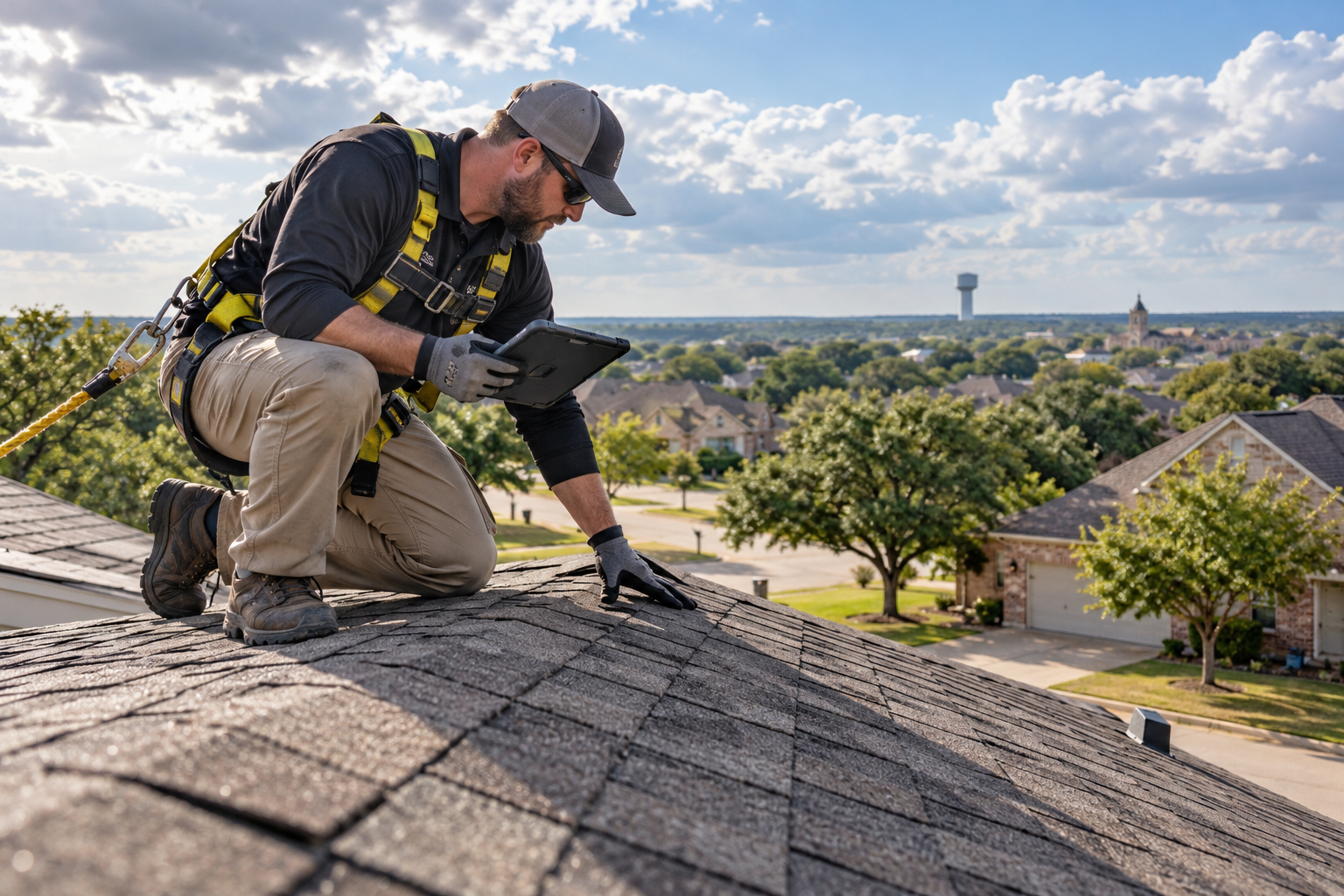
Prompt does not mean careless. The roof should be dry enough and stable enough for safe access. The inspector should know the roof system, survey the entire relevant area, map findings, identify limitations, and avoid declaring every dent or mark to be functional hail damage. Different materials respond differently, and testing or specialty review may be needed.
Why waiting weeks or months can create problems
Small punctures, fractured coatings, loosened seams, damaged flashings, displaced fasteners, and surface bruising can worsen under ultraviolet exposure, heat, movement, and additional storms. North Texas temperature swings and intense sun may accelerate changes in already stressed materials. A condition that could have been isolated may become harder to locate after dirt, repairs, traffic, or later weather alters the surface.
Delayed inspection can also weaken the owner’s documentation. Security footage may be overwritten, witnesses may forget details, maintenance records may be harder to gather, and debris may be removed. Temporary actions performed without photographs or invoices can become difficult to explain. The longer the delay, the more important it becomes to separate the reported date of loss from later events.
Delay does not automatically eliminate insurance coverage, and a contractor should not make that legal or policy determination. Policies, notice duties, reporting deadlines, and proof requirements vary. The practical point is that early action protects the building and preserves better information for construction and insurance decisions.
Hail damage does not look the same on every roof
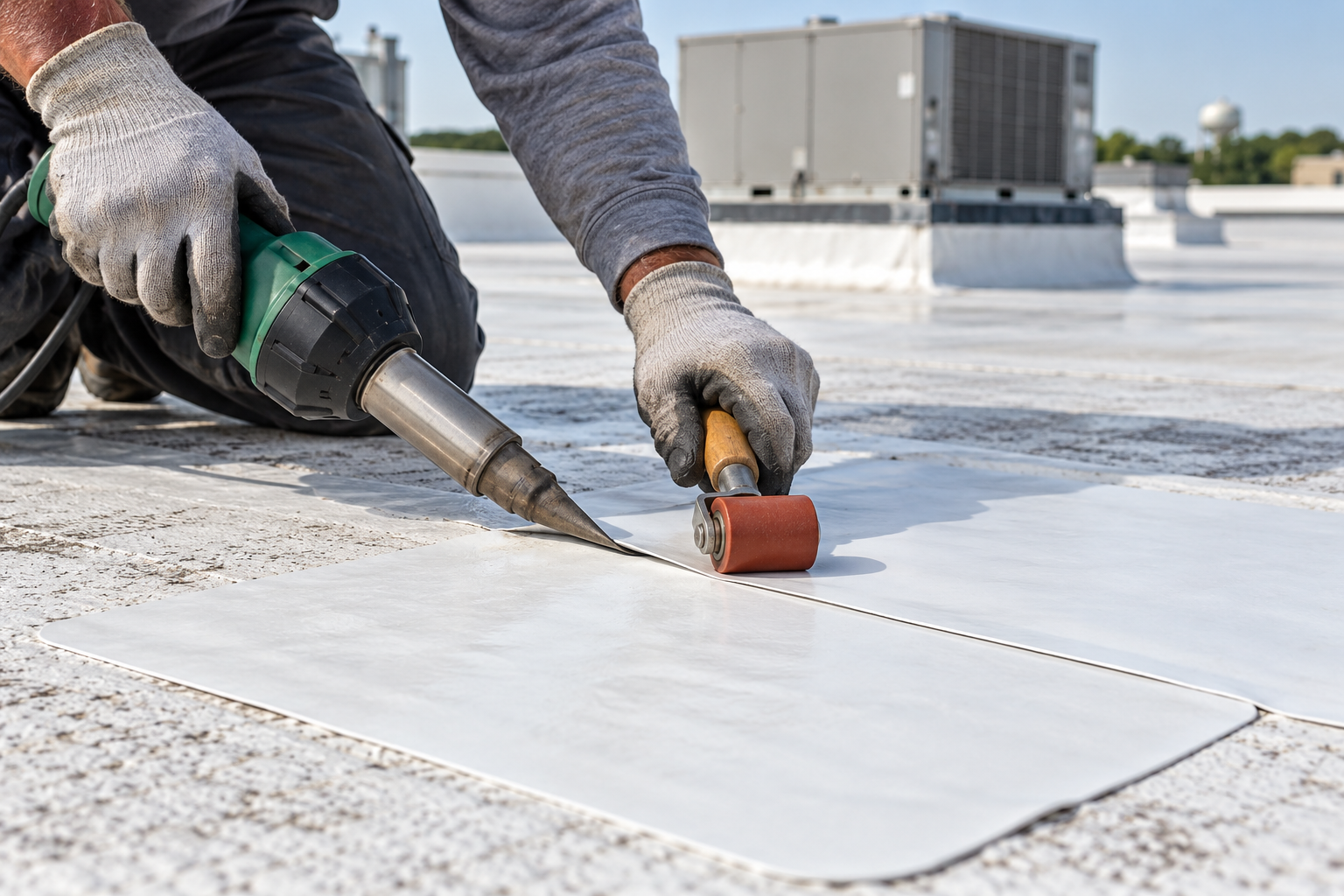
On single-ply membranes such as TPO, PVC, or EPDM, the assessment may consider punctures, cuts, scuffs, displaced or fractured components, damaged cover board, stressed seams, insulation crushing, and changes at fasteners or plates. Surface appearance alone may not reveal what happened below the membrane. Test cuts or other investigation should be authorized and repaired properly.
Modified bitumen and other asphalt-based systems may show fractures, displaced granules, exposed reinforcement, indentations, splits, damaged surfacing, or substrate effects. Metal systems may show dents, coating fractures, seam distortion, damaged fasteners, displaced panels, or impacts to flashings and equipment. Cosmetic appearance and functional performance are not always the same question.
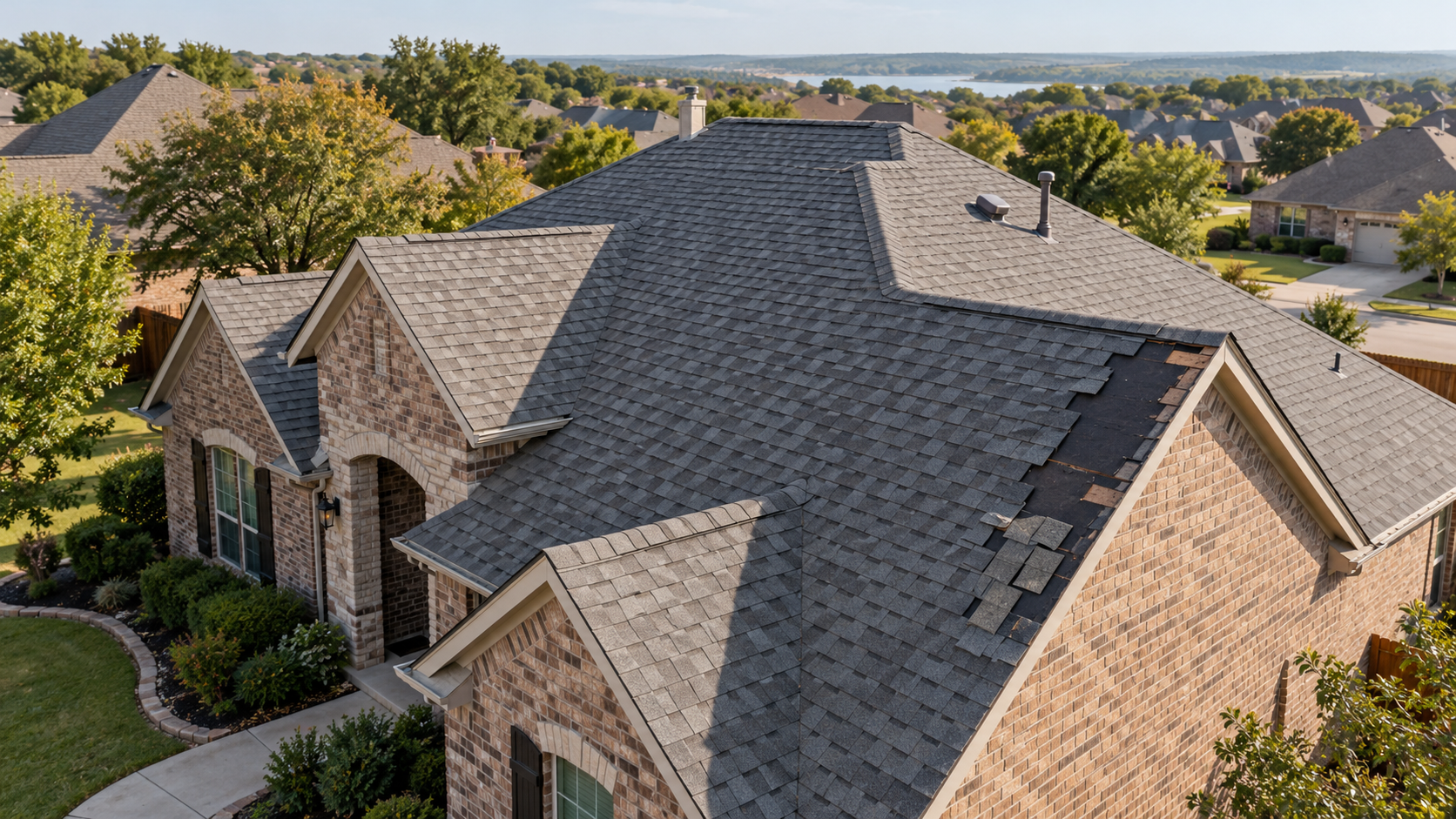
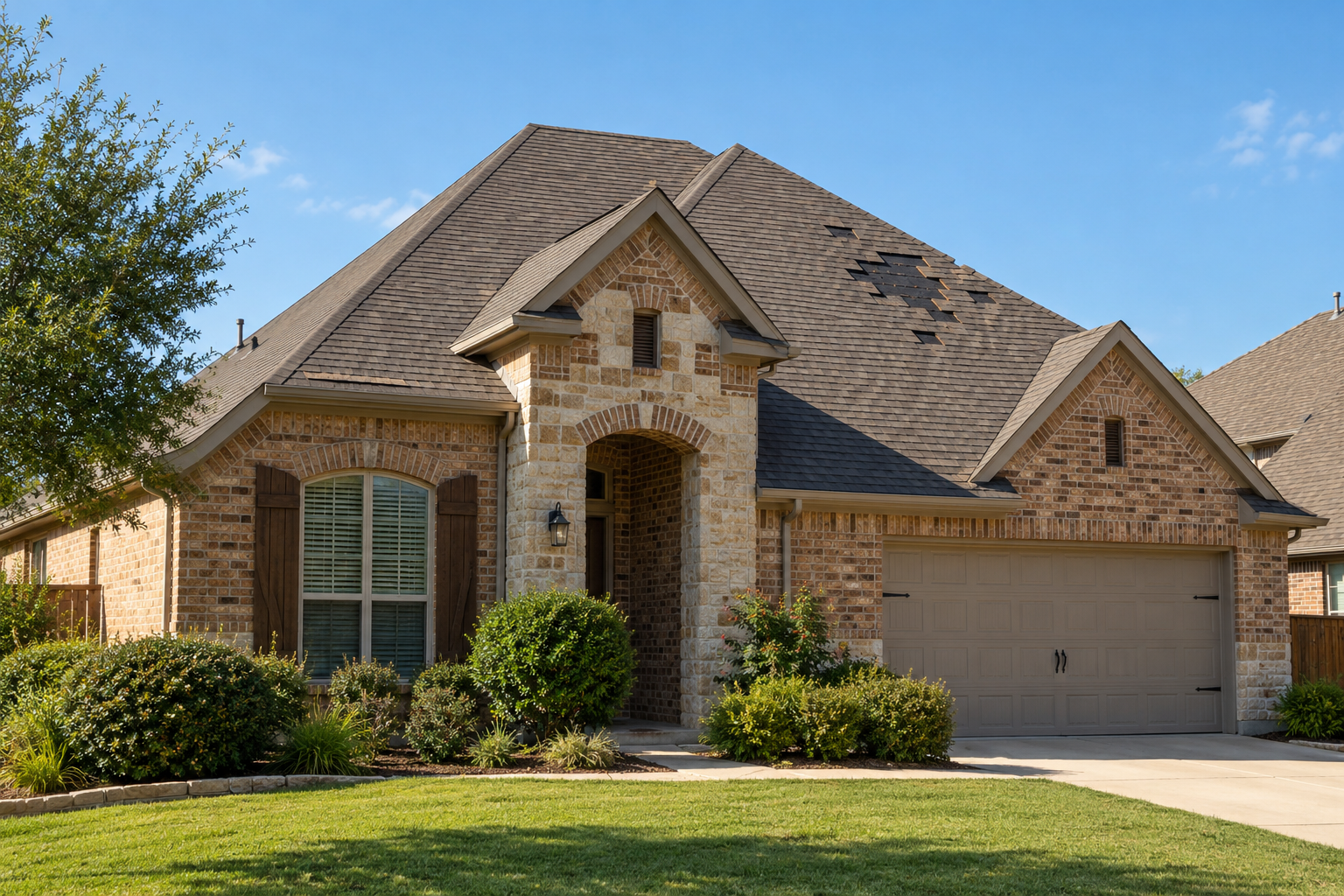
Steep-slope shingles, tile, slate, synthetic products, and wood materials each have distinct failure indicators and repair constraints. The inspector should evaluate the specific product, installation, age, brittleness, underlayment, flashing, availability of matching materials, and the effect of walking or lifting units during inspection.
Special concern: aging gravel-surfaced BUR roofs
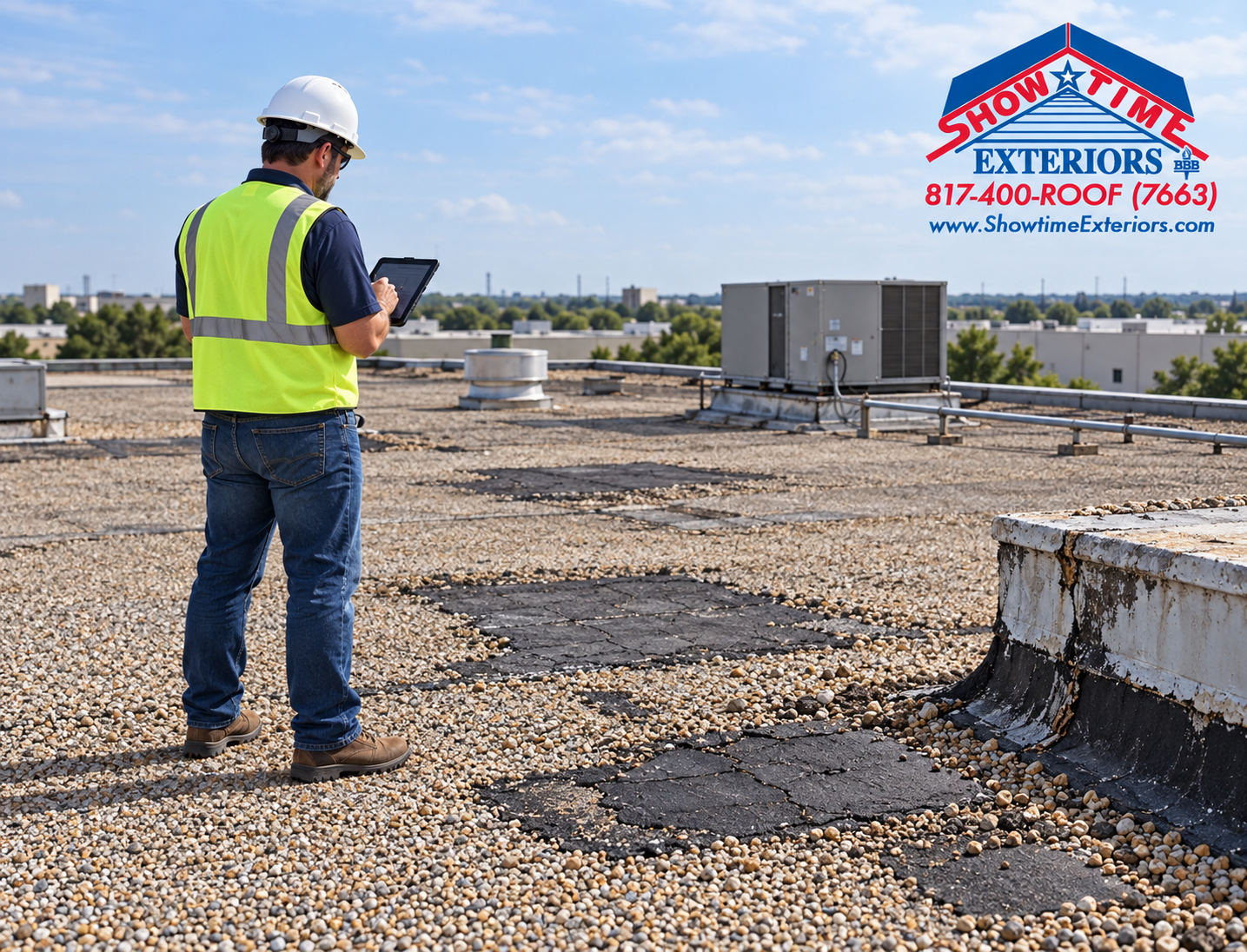
Aging built-up roofs with gravel surfacing can be particularly difficult to evaluate after hail. Gravel may conceal the membrane, flood coat, fractures, splits, blisters, prior repairs, moisture-related deterioration, and the exact locations of impact. Hail can displace aggregate, but displaced or remaining gravel does not reveal the full condition beneath it.
Consistent with Showtime Exteriors’ campaign, aging gravel BUR should not be portrayed as an advantage. The surfacing can obstruct inspection, complicate documentation, and increase uncertainty for owners and insurance underwriters. Visible gravel is not proof that the waterproofing remains sound, and a few exposed areas do not establish the condition of the full roof.
When the system is old, repeatedly leaking, heavily patched, broadly wet, difficult to inspect, or contributing to renewal concerns, continued spot repairs may not be a responsible long-term strategy. A replacement assessment can address concealed wet materials, deck condition, insulation, drainage, attachment, edges, penetrations, and transition to a more inspectable roof system.
What a complete hail inspection should cover
The inspection should identify every roof area, system, surfacing, access point, edge, parapet, drain, scupper, gutter, expansion joint, penetration, skylight, rooftop unit, wall transition, and known repair zone. Each finding should receive a location identifier that connects the roof plan, photographs, narrative, recommendation, and estimate.
Inspect the entire relevant roof rather than only the area above an interior leak. Hail intensity can vary across a property because of wind, shielding, slope, equipment, building height, and storm path. Record unaffected or less-affected areas for comparison. Photograph all elevations, downspouts, wall panels, rooftop equipment, and nearby surfaces that may provide context.
The report should distinguish direct observations, owner or tenant statements, prior records, third-party weather information, testing results, and professional opinions. It should identify areas that were concealed, unsafe, inaccessible, covered by temporary work, or otherwise outside the inspection scope. Honest limitations strengthen the record.
Moisture investigation should not be postponed
A surface inspection cannot always establish whether insulation or deck is wet. Water can move laterally, follow deck flutes, enter at several points, or remain trapped between layers. If interior leakage, punctures, open seams, damaged flashings, or suspicious anomalies exist, a moisture investigation may help define the scope before repairs conceal the evidence.
Methods may include visual observations, probing, cores, test cuts, infrared thermography, electrical capacitance or impedance, nuclear scanning, or other techniques selected for the assembly. Every method has limitations. An anomaly is not automatically wet material, and one dry verification point does not prove that an entire roof area is dry.
Document the method, equipment, weather, roof conditions, survey boundaries, anomalies, verification points, material layers, and repaired openings. Map confirmed wet areas separately from unverified indications. This information can determine whether a localized repair is practical or whether sectional or full replacement should be evaluated.
Deck, structure, and rooftop equipment may be involved
Severe hail can affect more than the roof covering. Inspect accessible deck conditions, skylights, vents, screens, hatches, curbs, HVAC components, electrical equipment, condensate lines, pipe supports, gas lines, signs, solar components, lightning protection, and drainage. Roofing professionals should document roofing-related observations and refer specialized equipment to qualified trades.
Softness, deflection, cracking, corrosion, fractured panels, damaged welds, loosened attachment, or structural movement require careful evaluation. Do not assume the roof surface can simply be patched over a damaged substrate. Conversely, do not include widespread deck replacement without evidence. Use test openings, measured quantities, allowances, or unit prices when concealed conditions cannot be known before demolition.
Equipment damage can create water entry that resembles roof membrane failure. A cracked curb, displaced access panel, punctured housing, damaged seal, or clogged drain may direct water into the building. The scope should identify the responsible trade and coordinate permanent weatherproofing at every transition.
Create a reliable incident timeline
Record the date and approximate time of the hailstorm, when it was observed, how long severe conditions lasted, and when damage or leaks were discovered. Note alarms, power outages, emergency calls, tenant reports, maintenance dispatches, and the arrival of contractors or adjusters. Separate what someone directly witnessed from what was inferred later.
Preserve weather alerts, photographs, videos, security footage, access-control logs, emails, texts, work orders, and tenant communications. Continue the timeline through inspection, temporary work, insurer communication, moisture testing, estimates, permanent repairs, and closeout. Use exact dates and times when available and label estimates as estimates.
A clear timeline helps prevent later confusion when several storms occur close together. It does not prove causation by itself. Pair the chronology with site-specific physical evidence and pre-loss records.
Use weather records carefully
NOAA, National Weather Service, Storm Prediction Center, local emergency alerts, and professionally prepared weather reports can provide regional context. Record the source, event date, location, reported hail size or wind information, and retrieval date. Use the Storm Events Database as one source rather than treating it as a complete site inspection.
A hail report several miles away does not prove that the same hail size struck the building. Radar estimates and public reports have location and timing limits. Avoid writing that a specific hailstone size hit the roof unless reliable site evidence supports that statement. Label nearby or regional reports accurately.
Site evidence may include impact patterns, displaced surfacing, damaged equipment, affected vehicles, neighboring damage, photographs during the storm, collected hailstones with reliable scale and location, witness accounts, and matching timing. Weather evidence is strongest when it is integrated with the physical inspection rather than substituted for it.
Document pre-storm condition honestly
Collect installation records, warranties, permits, prior inspection reports, roof plans, maintenance logs, leak records, repair invoices, moisture surveys, coating records, and dated photographs. These materials may establish the system, age, known defects, prior repairs, and condition before the storm. If records do not exist, say so instead of inventing certainty.
Distinguish new impact-related observations from wear, age, corrosion, ponding, open old seams, failed sealant, deteriorated flashings, prior patches, and deferred maintenance. Do not hide unfavorable conditions, but do not assume that every older roof defect explains new damage. Use categories such as observed storm-related, observed pre-existing, reported history, and undetermined when appropriate.
Insurance generally does not provide a new roof merely because it is old or worn. At the same time, age and deterioration can affect whether a durable repair is technically possible. The construction decision and the coverage decision should remain separate and evidence-based.
Temporary repairs must remain temporary
Emergency sealant, tarps, temporary membranes, patches, weights, and interior protection can reduce immediate loss, but they require monitoring. Temporary materials may loosen, trap moisture, block drainage, damage the existing roof, or create windborne debris. Record where and how they were installed and inspect them after wind or rain.
Do not repeatedly add material to the same area without investigating why the leak continues. The visible drip may not be below the entry point, and a surface patch may leave wet insulation or damaged substrate in place. The permanent scope should remove temporary materials as needed, inspect what they covered, and restore the complete assembly.
If emergency work changes or removes evidence, photograph it first when safe, preserve relevant materials when practical and requested, and document why immediate action was necessary. Safety and reasonable mitigation take priority over perfect evidence collection.
When localized repair may be appropriate
Repair may be reasonable when hail effects have clear boundaries, the surrounding roofing is sound and compatible, wet materials can be completely removed, and the deck remains serviceable. Examples can include isolated punctures, limited flashing damage, a small damaged membrane area, a few affected panels or shingles, or a localized equipment-related opening.
The repair must match the roof system, preparation, attachment, and manufacturer requirements. It should restore the waterproofing plane and address every damaged layer within the boundary. A coating or patch over wet insulation, unstable substrate, fractured components, or incompatible old material is not a complete repair.
Consider the remaining serviceability of the surrounding roof. A technically possible tie-in may still be a poor investment if the membrane is brittle, adhesion is unreliable, repairs are extensive, leaks recur across different areas, or the roof is near the end of useful service. State repair limits and follow-up needs in writing.
When replacement deserves serious consideration
Replacement becomes more likely when hail effects are widespread, numerous components are damaged, moisture is broad, the deck is compromised, or repairs cannot tie into sound material. It may also be appropriate when the storm exposes systemic attachment, drainage, flashing, or construction problems that cannot be corrected through isolated work.
A sectional replacement may be possible when roof areas have logical boundaries and compatible transitions. A recover or restoration system may be considered only when code, moisture, deck, attachment, weight, warranty, and manufacturer requirements allow it. A coating is not a universal substitute for removing wet or unstable materials.
For an aging gravel BUR roof that is difficult to inspect, broadly deteriorated, repeatedly leaking, or causing underwriting concerns, replacement planning can reduce uncertainty and correct concealed conditions. The recommendation should arise from verified physical and construction factors—not from a promise that insurance will fund the work.
Insurance communication should begin promptly
Review the complete commercial property policy for the reported date of loss, including declarations, schedules, deductibles, valuation provisions, roof endorsements, exclusions, notice requirements, duties after loss, protective safeguards, and claim instructions. Policies differ, and a renewal summary may not contain every controlling term.
Notify the agent or carrier according to the policy and ask what documentation is requested, whether an inspection should occur before permanent repairs, how removed materials should be handled, and which deadlines apply. Get important instructions in writing. Keep a communication log with dates, names, requests, responses, and promised follow-up.
Showtime Exteriors can document roof conditions, identify repair needs, prepare roofing estimates, and perform authorized work. The insurer decides coverage and payment. Property owners should consult licensed insurance professionals for policy questions and qualified counsel for legal questions.
Build an itemized repair or replacement scope
A useful scope identifies each roof area, assembly and layers where known, damage locations, dimensions, removal boundaries, wet-material handling, deck assumptions, insulation, cover board, membrane or metal, attachment, flashings, edges, walls, penetrations, drainage, equipment coordination, access, safety, permits, code, warranties, testing, and closeout documentation.
Separate emergency work, confirmed hail-related work, older maintenance, code-related items, elective improvements, and concealed-condition allowances. If quantities cannot be known until demolition, use stated assumptions, unit prices, or allowances. Connect major estimate lines to mapped findings or construction requirements.
When comparing repair, restoration, recover, sectional replacement, and full replacement, use the same criteria: reliability, moisture removal, deck condition, drainage, attachment, code, energy performance, building disruption, warranty, expected service, future inspection, maintenance, and lifecycle cost.
Coordinate the work around commercial operations
Commercial buildings have different tolerances for noise, odor, dust, shutdowns, open-roof exposure, interior protection, parking restrictions, and equipment downtime. A warehouse, school, medical facility, office, retail center, restaurant, manufacturing plant, and multifamily property require different staging plans.
Coordinate weather windows, daily tear-off limits, temporary tie-ins, interior protection, deliveries, lifts, cranes, security, HVAC shutdowns, tenant communications, and emergency access. Hail can create simultaneous demands across a property, so prioritize active openings, occupied areas, sensitive inventory, electrical exposure, and drainage problems.
Document the owner’s operational priorities, but do not let schedule pressure override safe or compliant work. A phased replacement or grouped repair program may reduce disruption while addressing the highest-risk areas first.
Quality control continues after the repair
Photograph preparation, removed materials, exposed substrate, deck work, insulation, attachment, primer, patches, seams, flashing transitions, and completed conditions. Record materials, relevant lot information, dimensions, weather, crew, testing, and deviations from the approved scope. Confirm that drains and work areas are clean.
For replacement, document tear-off boundaries, concealed conditions, deck repairs, insulation layout, fastening or adhesion, seams, penetrations, edges, drainage, equipment curbs, walk pads, and punch-list completion. Collect warranties, permits, inspections, invoices, and an updated roof plan.
Reinspect after meaningful rain and add the completed project to the maintenance record. An effective response is not simply one that stops today’s leak. It creates a traceable roof condition, confirms that temporary work was resolved, and establishes the next inspection and maintenance interval.
Hail-damage response timeline
During the storm: keep occupants indoors, stay away from windows and skylights, and do not access the roof.
Immediately after: check interior areas safely, restrict hazards, record leaks, and call emergency services or qualified trades when needed.
Same day: arrange emergency stabilization for openings, displaced roofing, active water entry, or exposed operations.
Before temporary work: photograph and video conditions when safely practical; do not delay necessary mitigation.
Within days: schedule a complete professional roof inspection even when no interior leak is visible.
Promptly: notify the appropriate insurance contact according to the policy and request written instructions.
During inspection: map roof and interior findings, limitations, unaffected areas, and supporting weather information.
As warranted: investigate moisture, verify anomalies, inspect deck and equipment, and involve specialty professionals.
Before permanent work: compare itemized repair, restoration, recover, sectional replacement, and replacement options.
During work: maintain progress photographs, daily dry-in, testing, authorization, and change documentation.
At closeout: retain invoices, photographs, permits, warranties, inspection records, and an updated maintenance plan.
Evidence checklist for a hail-damaged commercial roof
Date, time, witnesses, discovery, storm alerts, security footage, and emergency calls.
Wide photographs of the property, all elevations, roof areas, surroundings, and storm debris.
Context and detail photographs of each numbered roof finding with safe scale references.
Interior maps and photographs of drips, stains, wet materials, equipment, inventory, and restricted areas.
Roof plan showing north, roof areas, drains, edges, penetrations, equipment, findings, and temporary repairs.
Installation date, warranties, permits, prior inspections, maintenance, leak history, repairs, and moisture records.
Weather-source name, location, event date, reported measurement, retrieval date, and stated limitations.
Moisture-survey method, boundaries, anomalies, verification points, test cuts, layers, and repaired openings.
Emergency labor, equipment, materials, authorization, photographs, invoices, and receipts.
Itemized construction scope with quantities, assumptions, allowances, exclusions, code, and warranty requirements.
Policy documents, claim instructions, adjuster information, communication log, and proof of submissions.
Progress and closeout photographs, invoices, permits, warranties, inspections, and maintenance recommendations.
Frequently asked questions
Should I inspect the roof immediately after hail stops?
Only after severe weather has passed and qualified professionals determine access is safe. Untrained staff should not walk a wet or potentially damaged roof. Begin with safe interior and ground-level observations and arrange professional access.
What if the roof is not leaking?
Schedule an inspection promptly anyway. Some hail effects do not create immediate water entry, and insulation or multiple roof layers can delay visible symptoms. Early documentation also preserves better evidence.
Does every dent mean functional hail damage?
No. Materials respond differently, and cosmetic appearance, functional performance, warranty concerns, and insurance coverage are separate questions. The inspector should document the specific component and physical effect.
Can a contractor determine whether my claim is covered?
No. A contractor documents physical conditions and prepares construction scopes and estimates. The insurance carrier interprets the policy and makes coverage and payment decisions.
Should permanent repairs wait for the adjuster?
Address life safety and reasonable emergency mitigation immediately. Ask the carrier for inspection and evidence-preservation instructions. Texas Department of Insurance guidance recommends documenting damage, preventing additional loss, saving receipts, and generally avoiding permanent repairs before the adjuster sees the damage when circumstances allow.
Can wet insulation be left under a patch?
A surface patch should not be used to conceal confirmed wet or damaged materials. The appropriate handling depends on the assembly, material, duration, contamination, and project requirements, but the scope should address the full affected assembly.
How does gravel affect a hail inspection?
Gravel on an aging BUR roof can conceal the membrane, deterioration, prior repairs, moisture, and impact locations. Visible aggregate does not prove good condition. Investigation should state limitations and avoid presenting gravel as a benefit.
Does nearby hail data prove my roof was damaged?
No. It provides context. Pair weather information with site-specific physical evidence, timing, photographs, witnesses, surrounding damage, and pre-storm records.
Is repair always cheaper than replacement?
A localized repair usually costs less initially, but repeated work on a broadly deteriorated or wet roof can produce higher lifecycle cost and continued operational risk. Compare alternatives using the same technical and financial criteria.
What is the biggest mistake after a hailstorm?
Waiting for a major interior leak before inspecting the roof. The better approach is safe documentation, prompt professional assessment, necessary temporary protection, and an evidence-based permanent plan.
Why work with Showtime Exteriors?
Showtime Exteriors provides commercial roof inspections, storm-damage assessments, leak investigation, emergency stabilization, repair, restoration, recover, retrofit, and replacement services throughout Texas and the North Texas–Dallas-Fort Worth area. The team evaluates TPO, PVC, EPDM, modified bitumen, metal, coatings, steep-slope materials, and other commercial assemblies.
The approach is evidence first: map physical findings, distinguish observed conditions from reported information, document concealed-condition limits, recommend appropriate investigation, and create a practical construction plan. For aging gravel-surfaced BUR, Showtime Exteriors recognizes that the gravel can hide membrane deterioration, moisture, prior repairs, and storm effects. The company does not promise insurance coverage or claim outcomes.
Suspect hail damage on a commercial roof? Call Showtime Exteriors at 817-400-ROOF (7663) to schedule an inspection and roof-grade assessment.
Helpful Showtime Exteriors resources
Texas hidden hail damage guide
North Texas storm roof leak guide
Commercial roof inspection for insurance renewal
Why gravel can hide commercial roof damage
Independent roofing, weather, and insurance resources
Texas Department of Insurance: hail damage—what to do next
Texas Department of Insurance: help after a storm
National Roofing Contractors Association: hail damage assessment
National Roofing Contractors Association: roofing safety resources
Editorial and insurance disclaimer
This article provides general roofing and documentation information and is not legal, insurance, engineering, architectural, electrical, environmental, or safety advice for a specific property. Conditions, policies, contracts, warranties, codes, ownership questions, and project requirements vary. Showtime Exteriors documents roofing conditions and performs roofing work within its role; insurance carriers determine coverage and claim payment. Consult the appropriate licensed professionals for insurance, legal, structural, design, electrical, hazardous-material, or specialized safety questions.
817-400-ROOF (7663) showtimeexteriors.com