



North Texas Post-Storm Roof Inspection: What Property Owners Should Do Next
Schedule a Post-Storm Roof Inspection - 817-400-ROOF
Severe weather can move through North Texas quickly, leaving commercial property owners with difficult questions: Is the roof still watertight? Did hail damage the membrane? Are loose materials creating a safety hazard? Should the insurance carrier be contacted immediately, or should the roof be professionally inspected first?
The hours and days after a storm matter. Some roofing problems are obvious, such as active leaks, missing metal panels, displaced flashing, or fallen debris. Others remain hidden until the next rain exposes them. A roof may look normal from the parking lot while moisture is already entering through punctures, opened seams, damaged penetrations, or compromised drainage components.
A timely North Texas post-storm roof inspection gives property owners the information they need to protect the building, document conditions, plan appropriate repairs, and reduce the risk of secondary damage. The objective is not to assume that every storm caused major damage. It is to identify what actually happened and determine the most responsible next step.
This guide explains what owners, facility managers, property managers, and commercial real estate professionals should do after hail, high winds, heavy rain, or severe thunderstorms affect a North Texas property.
Why North Texas Commercial Roofs Need Attention After Severe Weather
North Texas commercial roofs face a demanding combination of weather conditions. Hail can strike roofing surfaces and rooftop equipment with considerable force. Straight-line winds can lift perimeter materials, loosen flashing, and drive rain beneath vulnerable components. Heavy rainfall can overwhelm clogged drains or expose drainage problems. Rapid temperature changes can also increase stress on materials, seams, fasteners, and penetrations.
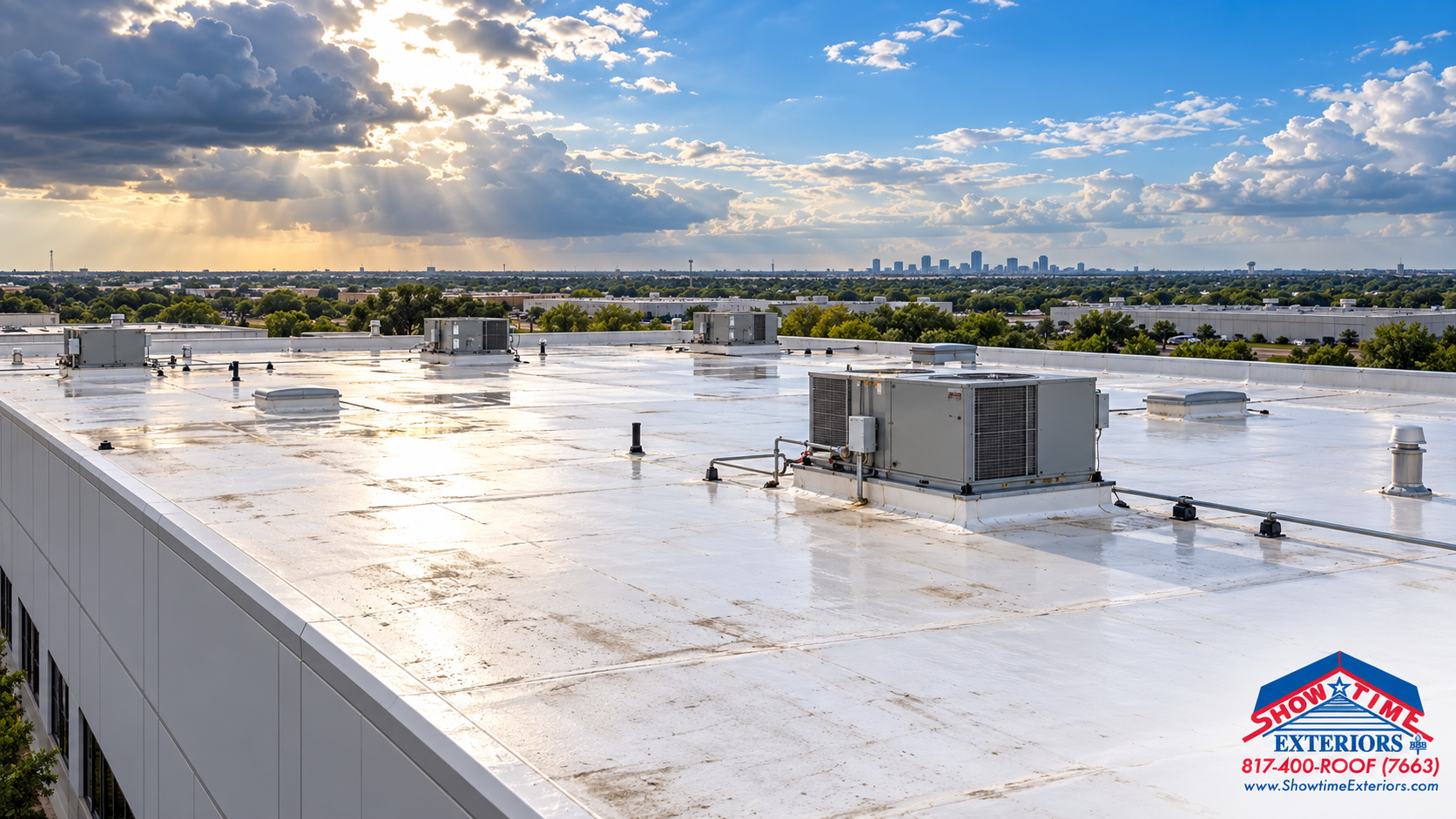
Commercial roofing systems are especially vulnerable because they often include large, relatively low-slope surfaces with numerous mechanical units, vents, drains, curbs, skylights, and transition points. Every penetration or connection is a potential entry point if storm forces disturb the surrounding materials.
The size of a commercial roof also makes ground-level evaluation unreliable. Damage may be concentrated in one corner, around the perimeter, near rooftop equipment, or along the storm-facing elevation. That is why a structured commercial roof inspection is more useful than a quick glance from below.
Step 1: Put People and Immediate Safety First
Before thinking about repairs or insurance documentation, protect employees, tenants, customers, vendors, and contractors. Do not allow untrained personnel onto a wet, damaged, or debris-covered roof. High winds may continue after the main storm passes, and roofing surfaces can remain slippery. Electrical hazards, unstable equipment, loose metal, broken skylights, and weakened deck areas may not be visible.
From a safe location, look for urgent conditions such as:
Active water entering occupied or electrical areas
Sagging ceiling tiles or bulging interior finishes
Fallen power lines or damaged electrical equipment
Loose metal, signage, gutters, or roof-edge materials
Broken skylights or exposed roof openings
Standing water near electrical systems
Debris that could fall or become airborne
Signs of structural movement or roof-deck deflection
If water is entering the building, keep people away from the affected area. Move inventory, electronics, documents, or equipment only when it is safe to do so. Use containers or protective coverings to limit interior damage, but do not create new hazards by placing materials where people may trip or where water may contact electricity.
If there is a suspected structural, electrical, fire, or gas emergency, contact the appropriate emergency service or qualified professional before arranging a routine roofing inspection.
Step 2: Document the Property From Safe Areas
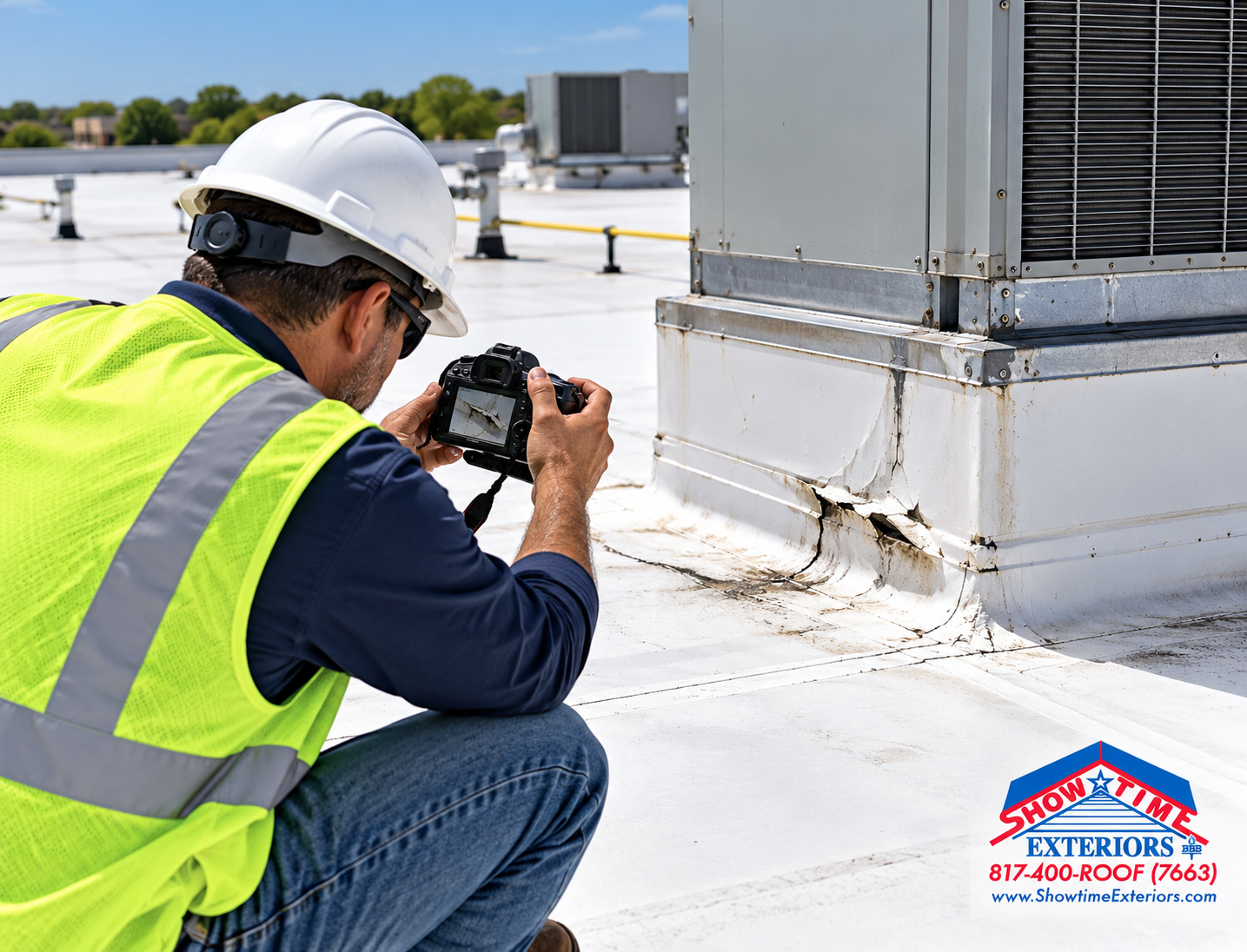
Initial documentation creates a useful record of what the property looked like immediately after the storm. Take clear photos and videos from the ground and from accessible interior areas. Record the date, approximate time, and type of weather observed at the property.
Useful documentation may include:
Hailstones next to a ruler or common object for scale
Water stains, dripping, wet ceiling tiles, or damaged finishes
Water on floors and affected inventory or equipment
Fallen tree limbs and storm debris
Displaced gutters, downspouts, trim, fascia, or coping metal
Damaged rooftop equipment visible from a safe location
Debris patterns around the property
Ponding water visible from an approved interior vantage point
Temporary measures taken to protect the building
Avoid discarding damaged materials until they have been documented, unless they create a safety risk. Keep receipts and invoices related to emergency services, water removal, temporary protection, cleanup, or other storm-related work.
Create a simple incident log. Note when the storm occurred, when leaks were first observed, who discovered them, which areas were affected, and what actions were taken. For multi-tenant buildings, ask tenants to report problems in writing and include photos when possible.
Good documentation supports better decision-making. It also helps a commercial roofing contractor compare interior symptoms with rooftop findings and may assist the property owner when communicating with an insurance professional.
Step 3: Request a Professional Commercial Roof Inspection
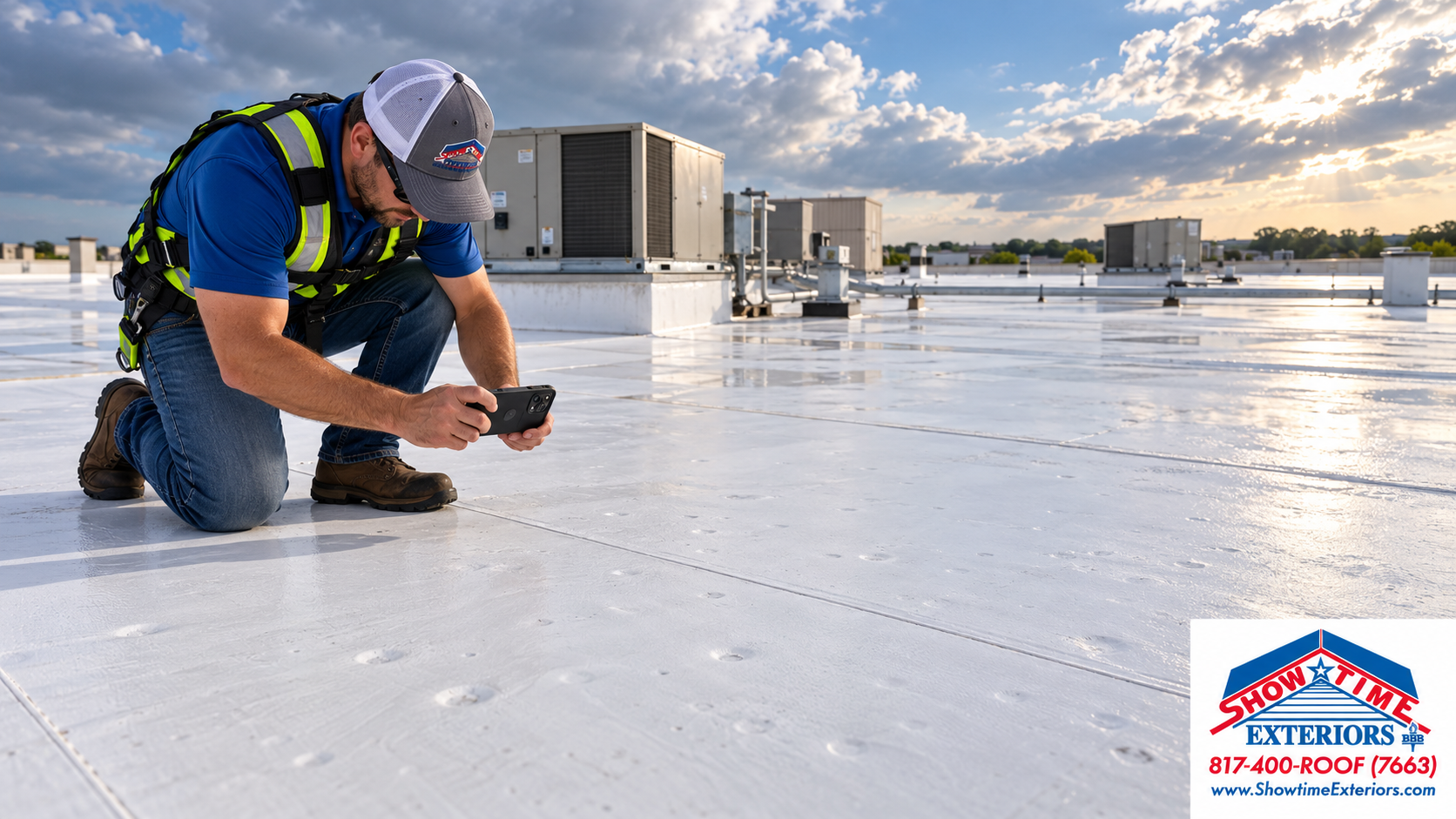
The next step is to schedule an inspection with a qualified commercial roofing contractor. The inspection should evaluate the entire roofing system—not just the location of an active leak.
A professional storm damage roof inspection may include review of:
Roof membranes, coatings, panels, shingles, or modified bitumen surfaces
Seams, laps, welds, fasteners, and attachment points
Perimeter edges, coping, fascia, and flashing
Curbs and penetrations around HVAC units, vents, pipes, and equipment
Roof drains, scuppers, gutters, and downspouts
Skylights, hatches, expansion joints, and transition areas
Signs of punctures, impact marks, displacement, or uplift
Ponding water and drainage patterns
Interior areas below suspected damage
Previous repairs and visibly aged sections of the roof
Depending on site conditions, the contractor may recommend additional diagnostic methods. The appropriate method depends on the roof assembly, observed symptoms, accessibility, and the purpose of the evaluation.
An inspection is not simply a search for a dramatic hole. It should help answer four practical questions:
Did the storm damage the roofing system or related components?
Is the building currently vulnerable to water intrusion or additional loss?
What temporary or permanent work is appropriate?
What documentation should the property owner retain?
Signs of Commercial Roof Hail Damage
Hail damage varies according to hail size, wind speed, direction, roof material, roof age, surface temperature, and the condition of the existing system. Two nearby buildings may experience different outcomes during the same storm.
Potential signs of commercial roof hail damage include:
Punctures, splits, cracks, or bruising in the roof surface
Fractured or displaced membrane reinforcement
Dents in metal panels, coping, vents, flashing, or rooftop equipment
Damaged roof coatings or protective surfacing
Broken skylights, domes, or covers
Impact marks on insulation or cover boards beneath the surface
Loosened seams, fasteners, or attachment points
Granule or surface loss on applicable roofing materials
Damage to gutters, downspouts, condensers, or mechanical equipment
Not every dent or mark means the roof has lost its ability to perform. Conversely, a small puncture can allow moisture into the assembly even when damage looks minor. The condition should be assessed in the context of the specific roof system.
Signs of Wind Damage on a Commercial Roof
Wind damage often begins at perimeters, corners, seams, transitions, and areas where air pressure can act on materials. Once a vulnerable section lifts, wind-driven rain may enter beneath the roofing system.
Possible signs of wind damage include:
Lifted, wrinkled, shifted, or torn membrane sections
Loose or missing coping, edge metal, flashing, or panels
Open seams or displaced termination bars
Missing fasteners or widened fastener openings
Damage around HVAC curbs and other penetrations
Debris-driven punctures
Loose rooftop equipment components
Water intrusion following wind-driven rain
Detached gutters or downspouts
Wind-related damage can be localized. The main field of the roof may appear intact while a corner or perimeter section has been compromised. That is another reason the full roof should be evaluated.
Step 4: Prevent Additional Damage With Appropriate Temporary Measures
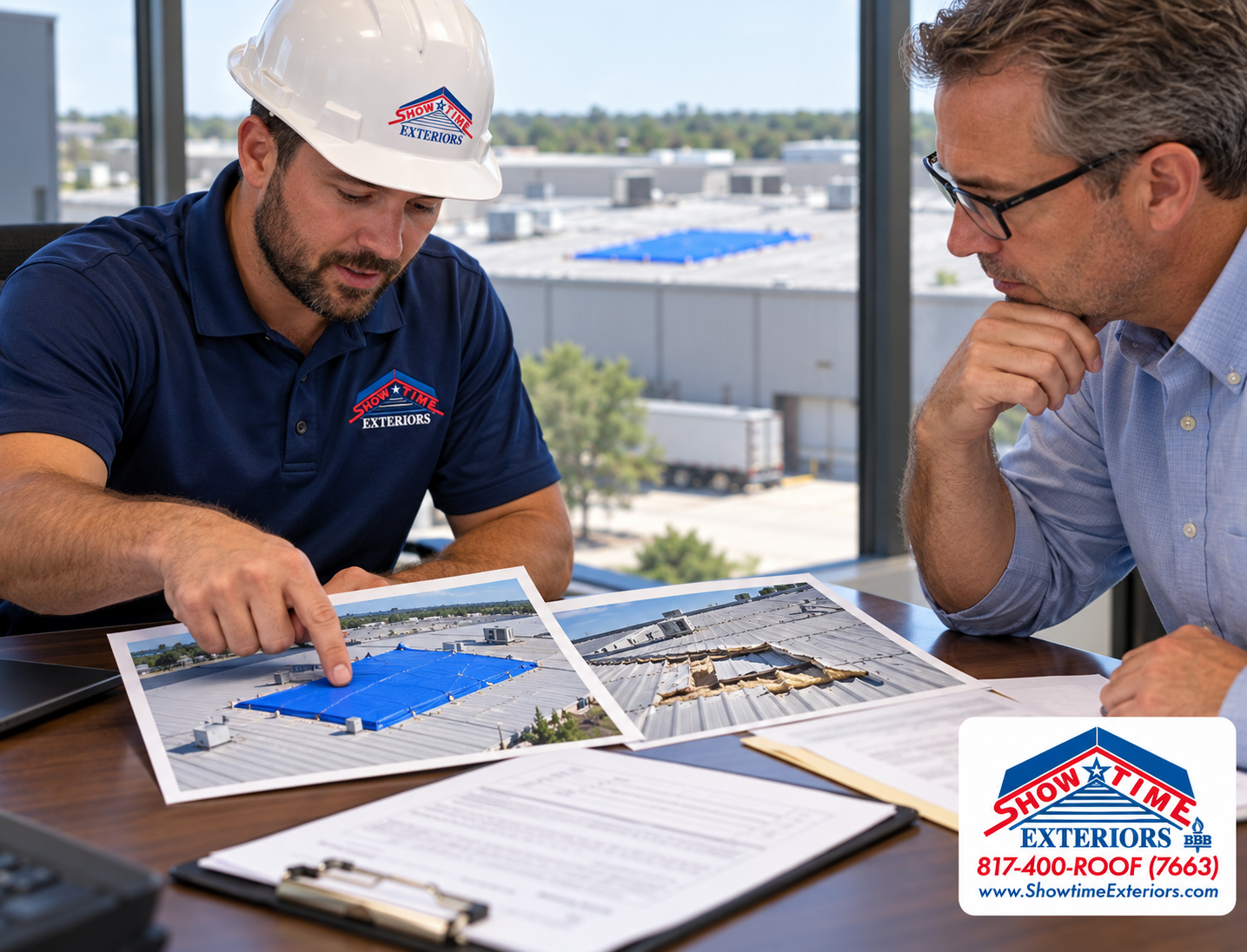
If an inspection identifies an active opening or immediate vulnerability, temporary protection may be needed before permanent repairs can be completed. The goal is to stabilize the affected area without causing additional damage or interfering with later evaluation.
Temporary work should be performed by qualified professionals when rooftop access, electrical systems, structural conditions, or specialized roofing materials are involved. Improvised repairs using incompatible sealants, unapproved fasteners, or poorly secured tarps can make the problem worse. They may trap moisture, damage the membrane, detach during high winds, or complicate a manufacturer warranty.
Depending on the condition, emergency measures may include:
Securing or removing loose materials
Temporarily sealing a documented opening
Protecting exposed roof components
Clearing drainage pathways when safe and appropriate
Containing interior water
Removing wet materials when authorized and necessary
Establishing restricted areas below damaged sections
Ask the contractor to document the condition before and after temporary work. Retain the scope, photographs, invoices, and description of materials used.
Step 5: Review the Inspection Findings Before Choosing a Repair Strategy
A useful commercial roof inspection should lead to a clear explanation of the observed condition. Property owners should understand which findings appear storm-related, which reflect prior wear or maintenance needs, and which areas require further evaluation.
The recommended response may fall into one of several categories:
No immediate storm-related repair is needed
The roof may have performed as intended. The contractor can document the inspected condition and identify routine maintenance items separately. This record may provide a helpful baseline for future inspections.
Targeted repairs are appropriate
Localized punctures, opened seams, damaged flashing, or isolated perimeter issues may be repairable without replacing the entire system. Repairs should be compatible with the existing roof and completed according to applicable requirements.
A larger restoration scope should be evaluated
When damage affects broad portions of the surface but the underlying assembly remains suitable, a restoration approach may be worth considering. Feasibility depends on the roof type, moisture conditions, code requirements, manufacturer specifications, and overall system condition.
Replacement may be necessary
Widespread damage, extensive moisture, loss of attachment, advanced age, recurring failures, or damage to multiple system components may make replacement the more responsible long-term option. A replacement recommendation should be supported by documented conditions—not by storm anxiety or assumptions.
Property owners should ask for a written scope that distinguishes urgent work, recommended permanent repairs, maintenance items, and optional improvements.
Step 6: Review Your Insurance Policy and Notification Requirements
Commercial property policies vary. Review your policy, deductibles, exclusions, endorsements, notice requirements, and claim procedures. Contact your licensed insurance agent, broker, or carrier for guidance about your specific coverage and obligations.
Avoid assuming that a storm automatically creates a covered claim. Also avoid waiting so long that documentation becomes difficult or additional damage develops. A professional inspection can provide factual information that helps the owner communicate accurately.
Information commonly organized for an insurance conversation includes:
Date and approximate time of the storm
Photos and videos taken after the event
Interior leak locations and incident logs
Professional inspection findings
Emergency mitigation records
Repair recommendations and estimates
Prior roof records, warranties, invoices, and maintenance history
Tenant reports and affected-area documentation
The roofing contractor documents roofing conditions and proposed work. Coverage decisions belong to the insurance carrier, and policy interpretation should come from qualified insurance or legal professionals.
What Not to Do After a North Texas Storm
Property owners can reduce risk by avoiding several common mistakes.
Do not climb onto the roof yourself
A commercial roof may contain slick surfaces, concealed openings, weak areas, loose equipment, or electrical hazards. Unauthorized access may also affect site safety procedures or warranty requirements.
Do not wait for a second storm to confirm a leak
Small openings can allow moisture to spread inside insulation or decking before visible dripping begins. Early evaluation may help limit the scope of later damage.
Do not approve permanent work without documentation
Photographs, measurements, written findings, and a defined scope give owners a clearer basis for approving repairs and maintaining property records.
Do not hire solely based on urgency or pressure
Major storms often attract unfamiliar contractors. Verify the company’s identity, experience, insurance, references, proposed scope, and communication process. Be cautious of anyone who guarantees insurance coverage, demands an immediate signature without explanation, or recommends full replacement without a documented assessment.
Do not use incompatible repair materials
The wrong sealant, coating, patch, or fastening method can damage the existing system or create problems for later repairs. Commercial roof systems require material-specific techniques.
Do not ignore drainage
Blocked drains and scuppers can allow water to accumulate. Excessive ponding increases stress on the roof and may worsen existing vulnerabilities. Drainage components should be inspected safely and maintained as part of the response.
Why Hidden Moisture Matters
One of the most important goals of a post-storm inspection is to find problems before they become expensive interior failures. Moisture can migrate away from the original entry point, making the visible ceiling stain a poor indicator of the rooftop source.
Water entering a roof assembly may contribute to:
Wet or deteriorated insulation
Reduced thermal performance
Corrosion of metal components
Damage to decking or interior finishes
Mold or indoor environmental concerns
Disruption to tenants, inventory, or business operations
Larger repair areas if the condition remains unresolved
An interior leak is a symptom, not a complete diagnosis. The contractor should trace the likely path, inspect relevant rooftop components, and explain whether further moisture evaluation is warranted.
Special Considerations for Different Commercial Roof Systems
North Texas properties use many types of roofing systems. Storm damage does not appear the same on every roof.
TPO, PVC, and other single-ply systems
Inspectors may look for punctures, membrane splitting, open welds, displaced flashing, damaged fasteners, or impact effects on the cover board and insulation below.
Modified bitumen and built-up roofing
The evaluation may focus on splits, blisters, displaced surfacing, impact areas, open laps, flashing damage, and moisture movement within the assembly.
Metal roofing
Inspectors may check for displaced or punctured panels, loosened fasteners, opened seams, damaged clips, distorted transitions, dented components, and compromised sealant or flashing details.
Coated roof systems
The coating may show punctures, tears, impact damage, adhesion issues, or cracking around transitions. Repairs must remain compatible with the existing coating and substrate.
Steep-slope sections
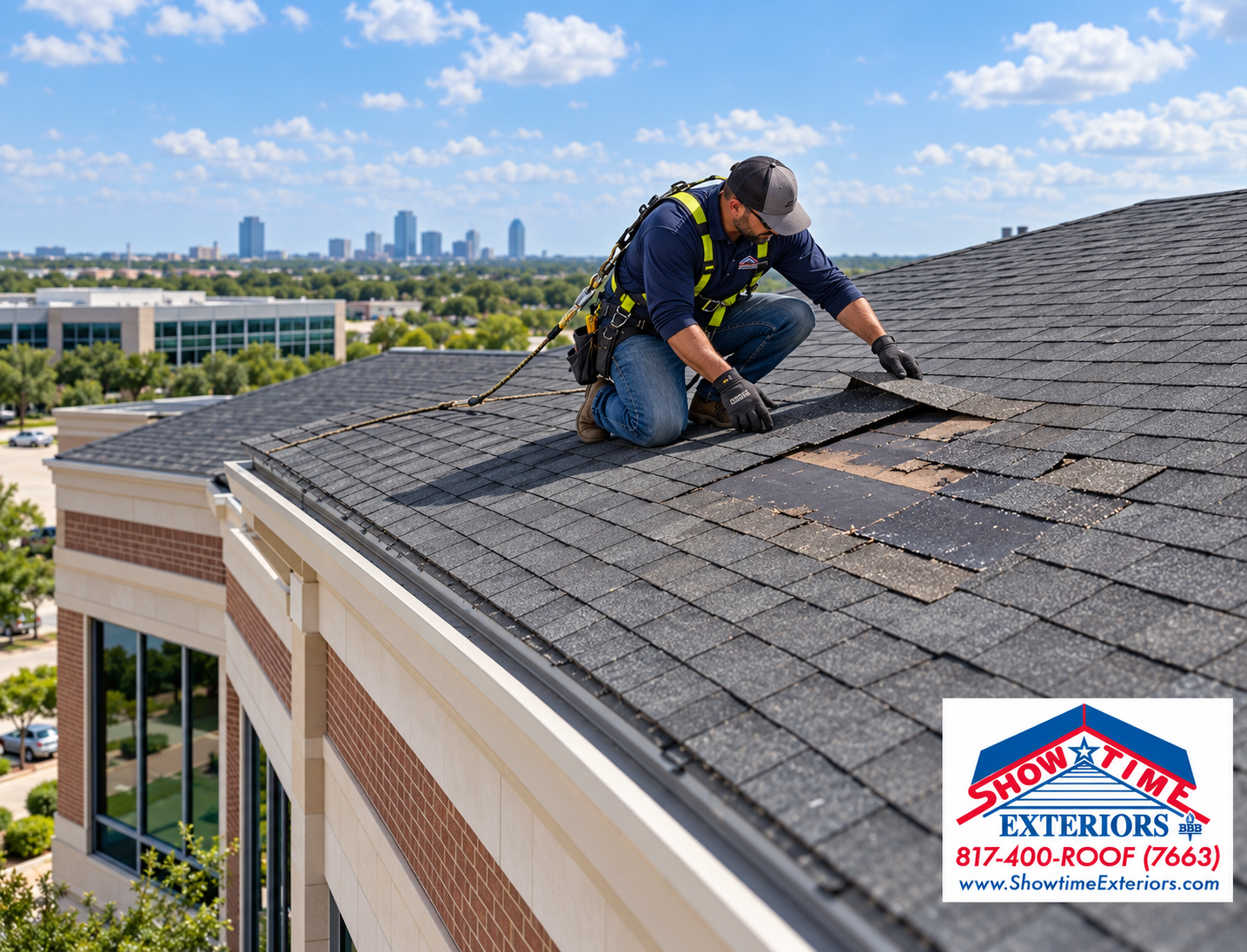
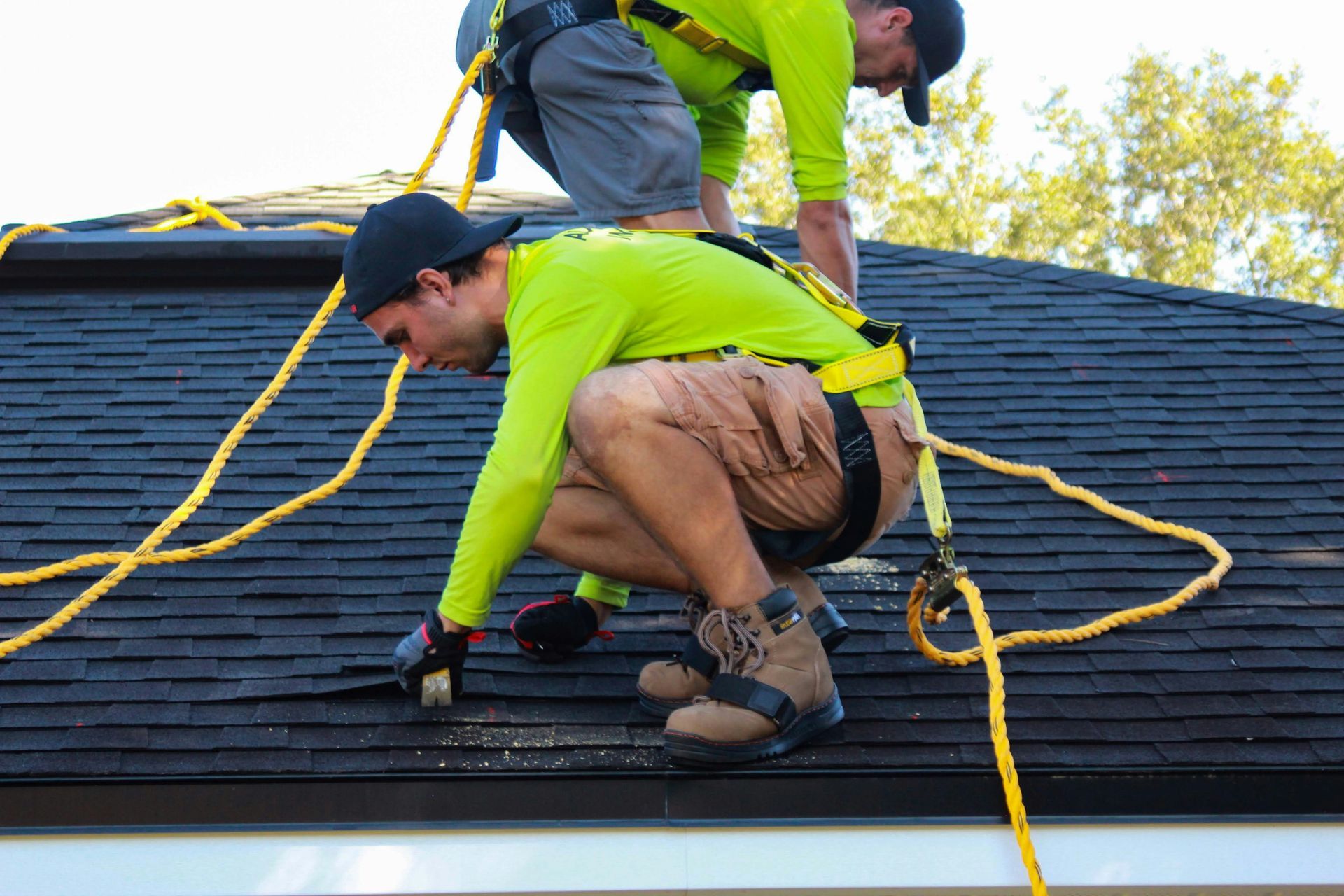
Commercial properties with shingles, tiles, or other steep-slope accents may experience missing, broken, lifted, or impact-damaged materials. These areas require appropriate access and fall protection.
A contractor experienced with commercial systems can tailor the inspection to the roof rather than applying a one-size-fits-all checklist.
Information to Give Your Commercial Roofing Contractor
Before the inspection, provide as much useful background as possible:
Building address and primary contact
Roof type, approximate age, and known warranty information
Locations of active or previous leaks
Areas with sensitive equipment or restricted access
Prior repair and maintenance records
Recent construction or rooftop mechanical work
Tenant operating hours and access requirements
Safety orientation or site-specific procedures
Photos and videos taken after the storm
Clear information helps the contractor prepare the right personnel, equipment, access plan, and inspection approach.
Questions to Ask After the Roof Inspection
A responsible contractor should be able to explain the findings in plain language. Consider asking:
What storm-related conditions did you observe?
Where are the most urgent vulnerabilities?
Is there evidence of active water intrusion?
Which findings appear to be older maintenance issues?
Are temporary repairs needed now?
Can the affected areas be repaired, or is a larger scope justified?
Were drains, penetrations, perimeter metal, and rooftop equipment areas checked?
What photographs and written documentation will I receive?
Could the proposed work affect an existing manufacturer warranty?
What should be monitored during the next rain?
How should the roof be maintained after repairs?
What is the expected timeline for the recommended work?
The answers should help you understand the problem, the proposed solution, and the consequences of waiting.
How Quickly Should a Commercial Roof Be Inspected After a Storm?
If there is active water intrusion, loose material, visible displacement, or a safety concern, request professional assistance as soon as conditions allow. For properties without obvious damage, scheduling a timely inspection is still sensible after significant hail, high winds, or wind-driven rain.
The practical timing depends on the severity of the event, building use, roof condition, accessibility, and the number of properties affected across the region. The key is to create a record while the event is recent and address vulnerabilities before another storm arrives.
High-demand periods can fill contractor schedules quickly. Property owners with existing roof records and an established commercial roofing relationship are often better prepared to respond efficiently.
Build a Better Storm-Response Plan Before the Next Event
Post-storm response becomes easier when the property already has an organized roof-management plan. Keep the following information accessible:
Current roof plans and system details
Installation date and warranty documents
Inspection, maintenance, and repair history
Before-storm roof photographs
Approved rooftop access procedures
Emergency contacts for roofing, electrical, plumbing, restoration, and insurance needs
Tenant communication procedures
Locations of drains, shutoffs, sensitive equipment, and critical inventory
Schedule routine commercial roof inspections and preventive maintenance instead of relying only on emergency calls. Baseline documentation makes it easier to distinguish new storm effects from pre-existing conditions. Routine attention can also identify loose flashing, aging sealants, drainage restrictions, and minor defects before severe weather exploits them.
Choosing a North Texas Commercial Roofing Contractor
After a major storm, property owners may receive calls, flyers, and unsolicited visits from roofing companies. Choose a contractor based on commercial capability and documented professionalism.
Look for a company that:
Has experience inspecting and repairing commercial roof systems
Understands North Texas weather conditions
Follows appropriate safety and access procedures
Provides photographs and written findings
Explains repair and replacement options clearly
Separates storm damage from routine maintenance concerns
Uses materials compatible with the existing system
Can coordinate work around tenants and business operations
Provides a defined scope, schedule, and communication process
Maintains appropriate business and insurance documentation
The right contractor should make the condition easier to understand. High-pressure tactics, vague scopes, and unsupported promises are warning signs.
Frequently Asked Questions About North Texas Post-Storm Roof Inspections
Can a commercial roof have storm damage without leaking?
Yes. A roof may have punctures, displaced flashing, weakened seams, dented components, or compromised attachment without producing an immediate visible leak. Water may also enter the assembly without reaching the occupied space right away.
Should I call a roofer or my insurance company first?
Review your policy and follow its notice requirements. A professional roof inspection can provide useful factual documentation, while your insurance agent or carrier can explain the appropriate claim process for your policy. These steps may occur close together depending on the situation.
Does every hailstorm require a complete roof replacement?
No. The appropriate response depends on the roof type, storm intensity, damage pattern, moisture conditions, system age, repairability, and other factors. Some roofs need no storm-related work, some need targeted repairs, and others may justify a broader restoration or replacement scope.
What if the roof looks fine from the ground?
Ground-level appearance is not enough to rule out damage on a large commercial roof. Seams, penetrations, drainage areas, perimeter components, and isolated sections may need close professional evaluation.
Can my maintenance team inspect the roof?
Facilities personnel can document interior conditions and report visible problems from approved safe areas. Rooftop inspection should follow the property’s safety procedures and be completed by personnel qualified for the roof conditions and work involved.
What should a post-storm inspection report include?
A helpful report typically identifies the property and inspection date, describes observed conditions, includes photographs, notes affected components, distinguishes urgent concerns from routine maintenance, and recommends next steps.
Should the roof be inspected again after repairs?
A completion review can confirm that the documented repair scope was addressed. The roof should then return to an appropriate routine inspection and maintenance schedule, with additional evaluation after future significant storms.
Schedule a North Texas Post-Storm Commercial Roof Inspection
After a hailstorm, wind event, or severe thunderstorm, uncertainty can be costly. Waiting for the next visible leak may allow a manageable roofing issue to spread into insulation, decking, ceilings, inventory, or occupied spaces.
Showtime Exteriors Commercial Roofing helps property owners, facility managers, and commercial real estate professionals evaluate roof conditions after severe North Texas weather. Our team can inspect the roofing system, document visible findings, identify urgent vulnerabilities, and explain practical repair or replacement options based on the property’s actual condition.
If your commercial building recently experienced hail, high winds, heavy rain, or storm debris, request a professional inspection before the next weather event exposes a hidden weakness.
Contact Showtime Exteriors Commercial Roofing today to schedule a North Texas post-storm roof inspection and get a clear plan for protecting your property.