



Signs Your Warehouse Roof Needs Immediate Repair
A Texas guide for warehouse owners facility managers and operations teams
Direct answer: A warehouse roof needs immediate professional attention when active water entry, spreading ceiling stains, open seams, displaced flashing, punctures, saturated insulation, persistent ponding, loose edge metal, storm damage, deck movement, or repeated repair failures appear. Protect people and inventory first, document conditions, limit access, perform temporary mitigation where appropriate, and arrange a commercial roof inspection before the damage expands.
Showtime Exteriors • 817-400-ROOF (7663) • showtimeexteriors.com
SHOWTIME EXTERIORS TEXAS COMMERCIAL ROOFING
Warehouse Roof Repair Signs That Require Fast Action
A warehouse roof can deteriorate quietly for months and then announce the problem during one Texas storm. Water may enter far from the visible interior stain, travel along deck flutes or structural members, soak insulation, and reach inventory after the rain has ended. Large roof areas, dense mechanical equipment, limited interior visibility, and around-the-clock operations can allow a small exterior defect to become a costly operational event.
Immediate repair does not always mean full replacement. It means the condition should be assessed promptly, the building should be protected, and the correct permanent response should be selected before exposure grows. Some defects are localized and repairable. Others reveal widespread moisture, attachment failure, drainage problems, aging materials, or structural concerns that require a broader restoration or replacement plan.
The following signs deserve urgent attention because they can affect people, inventory, equipment, production, lease obligations, insurance documentation, and business continuity. No article can diagnose a roof remotely. Use these indicators to trigger a safe professional evaluation, not to send untrained employees onto the roof.
1 Active Water Entry Inside the Warehouse
Water dripping from the deck, ceiling, joists, lights, conduit, or mechanical equipment is the clearest sign that the building needs immediate response. The first priority is life safety. Keep people away from slippery floors, wet electrical components, unstable ceiling materials, and affected equipment. Protect inventory only when it can be done safely. Place temporary containment where appropriate and contact qualified professionals.
Why the Interior Leak May Not Be Directly Below the Defect
Low-slope roofs can move water laterally. Water may enter at a seam, curb, wall, drain, puncture, or edge and travel across insulation, vapor-control layers, deck channels, purlins, or structural members. A bucket under the drip manages one symptom but does not identify the entry point. Roof-level investigation should connect exterior conditions with interior evidence, weather direction, drainage paths, and moisture testing.
What to Document Immediately
Date and time the leak was discovered and when precipitation began or ended.
Exact interior location, affected aisle, rack, equipment, office, dock, or tenant area.
Photographs and video of dripping, staining, damaged goods, and safe temporary protection.
Weather conditions, wind direction if known, and whether the leak occurs only during wind-driven rain.
Previous repairs or leak reports near the area.
People notified, mitigation performed, and materials or inventory moved.
2 New or Spreading Ceiling Stains
A stain that grows after each rain indicates continuing moisture movement even when no active drip is visible. Warehouses with exposed decks may show discoloration, rust streaks, efflorescence, damp insulation, or staining on joists and walls. Finished offices inside the warehouse may show bubbling paint, softened ceiling tile, sagging gypsum board, or odors.
Do not wait for a stain to begin dripping. Moisture can reduce insulation performance, corrode metal components, damage finishes, support microbial growth, and move toward electrical or high-value storage areas. Mark the stain boundary, date it, photograph it, and compare it after subsequent weather. A spreading boundary is useful evidence that the condition remains active.
3 Saturated Insulation or Soft Roof Areas
Wet insulation is a serious concern because it can hold water inside the assembly long after the storm. It may increase heat transfer, add weight, damage facers, reduce fastener holding conditions, and allow moisture to spread beyond the original defect. Surface appearance alone may not show the full affected area.
How Wet Areas Are Evaluated
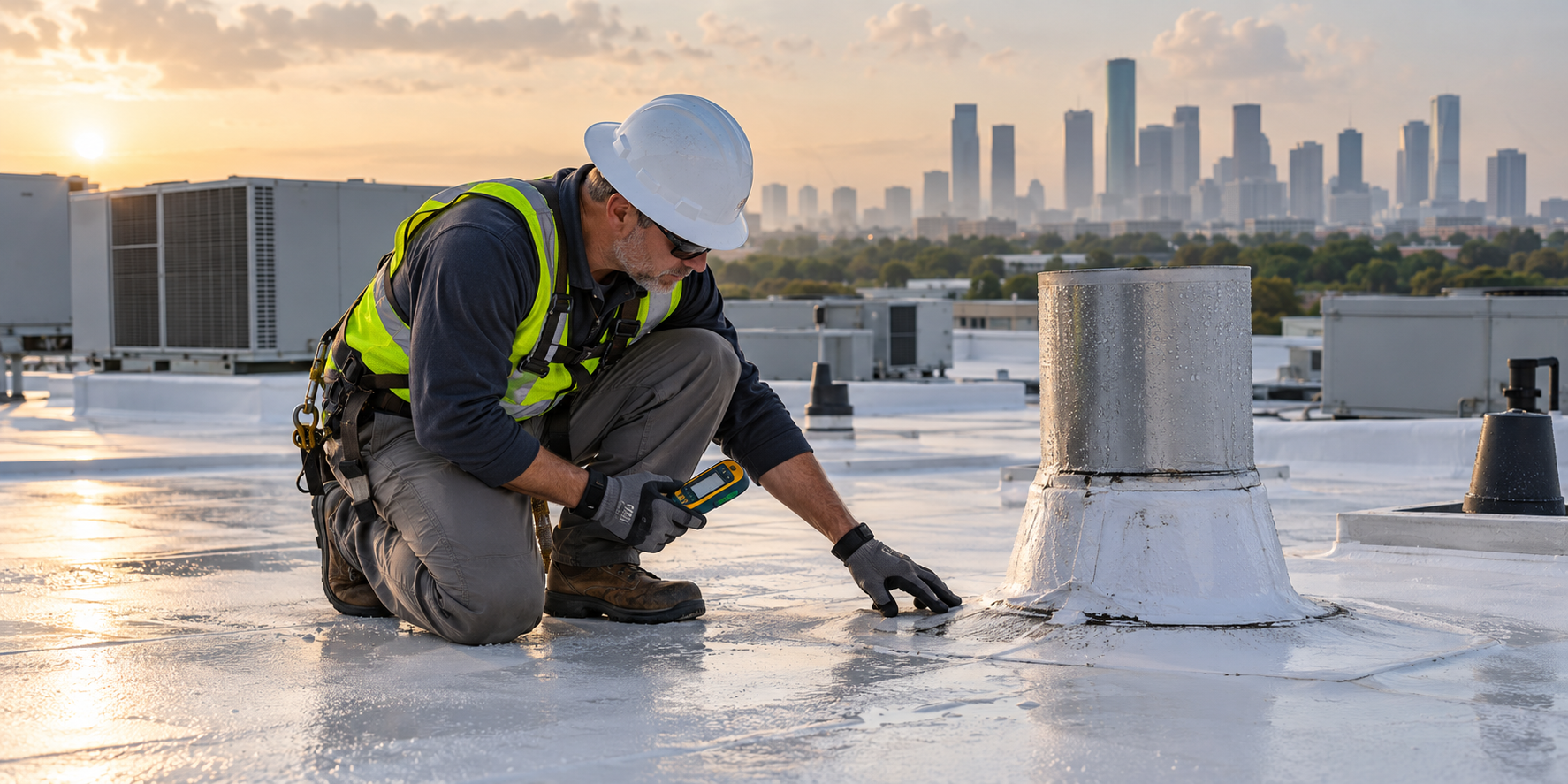
A professional may use visual inspection, core cuts, probes, infrared thermography, electronic moisture methods, interior observations, or selective openings, depending on the roof and conditions. Each method has limitations. Findings should be correlated rather than treated as automatic proof. Destructive tests should be repaired and documented.
Why Walking on Soft Areas Is Dangerous
Softness can indicate damaged insulation, deteriorated cover board, corroded metal deck, weakened wood, or other loss of support. Limit access and do not allow untrained personnel to investigate. A surface that appears merely spongy may conceal a fall-through or trip hazard, especially around drains, curbs, older repairs, and repeated leak areas.
4 Ponding Water That Persists After Rain
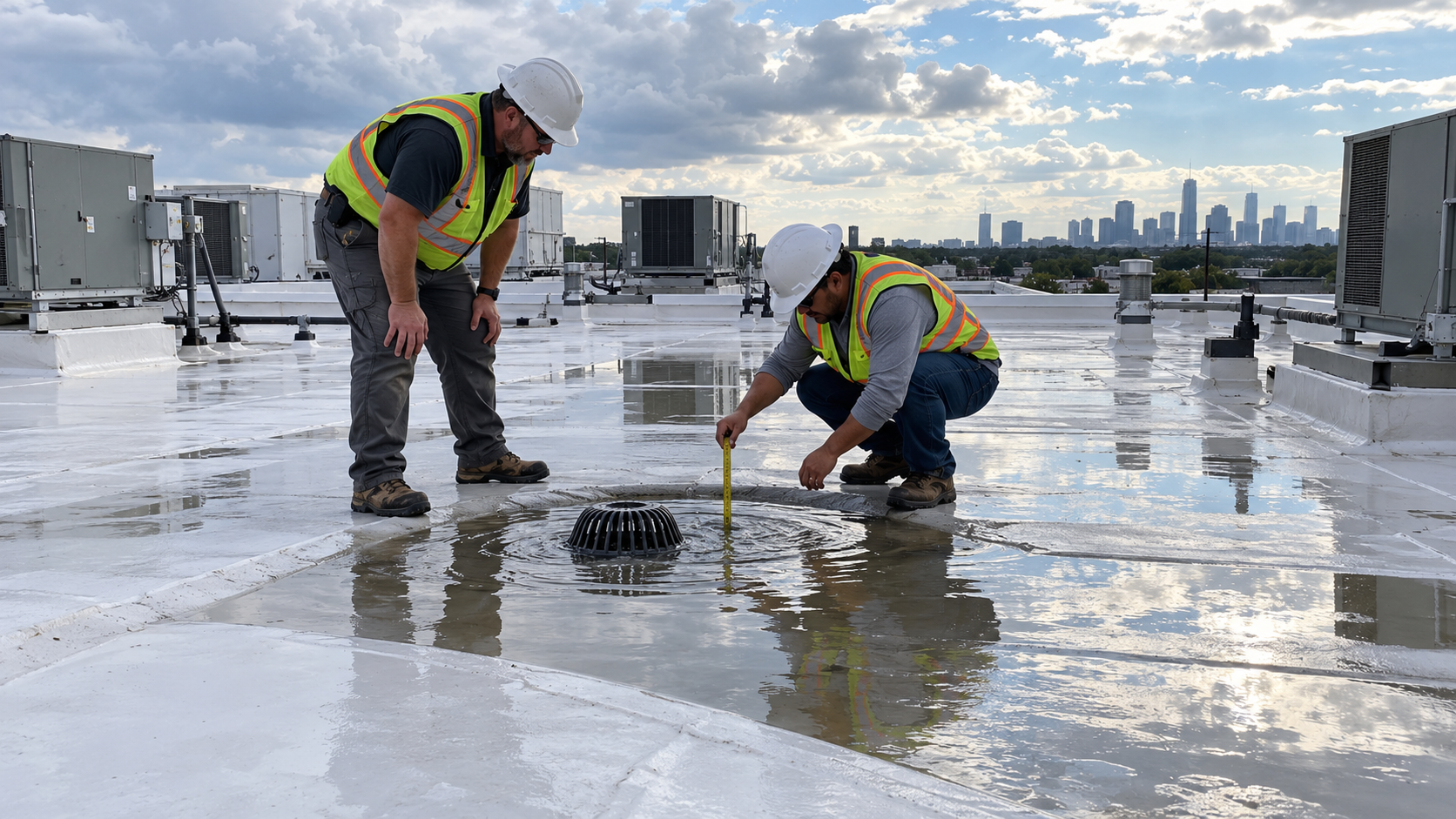
Water that remains on a low-slope warehouse roof after normal drainage time deserves inspection. Ponding can result from clogged drains, blocked scuppers, compressed insulation, deck deflection, poor slope, settlement, or previous repair buildup. The concern is not only the standing water. Ponding increases exposure at seams and flashings, collects debris, supports biological growth, magnifies small defects, and can add substantial temporary load.
Immediate Drainage Checks
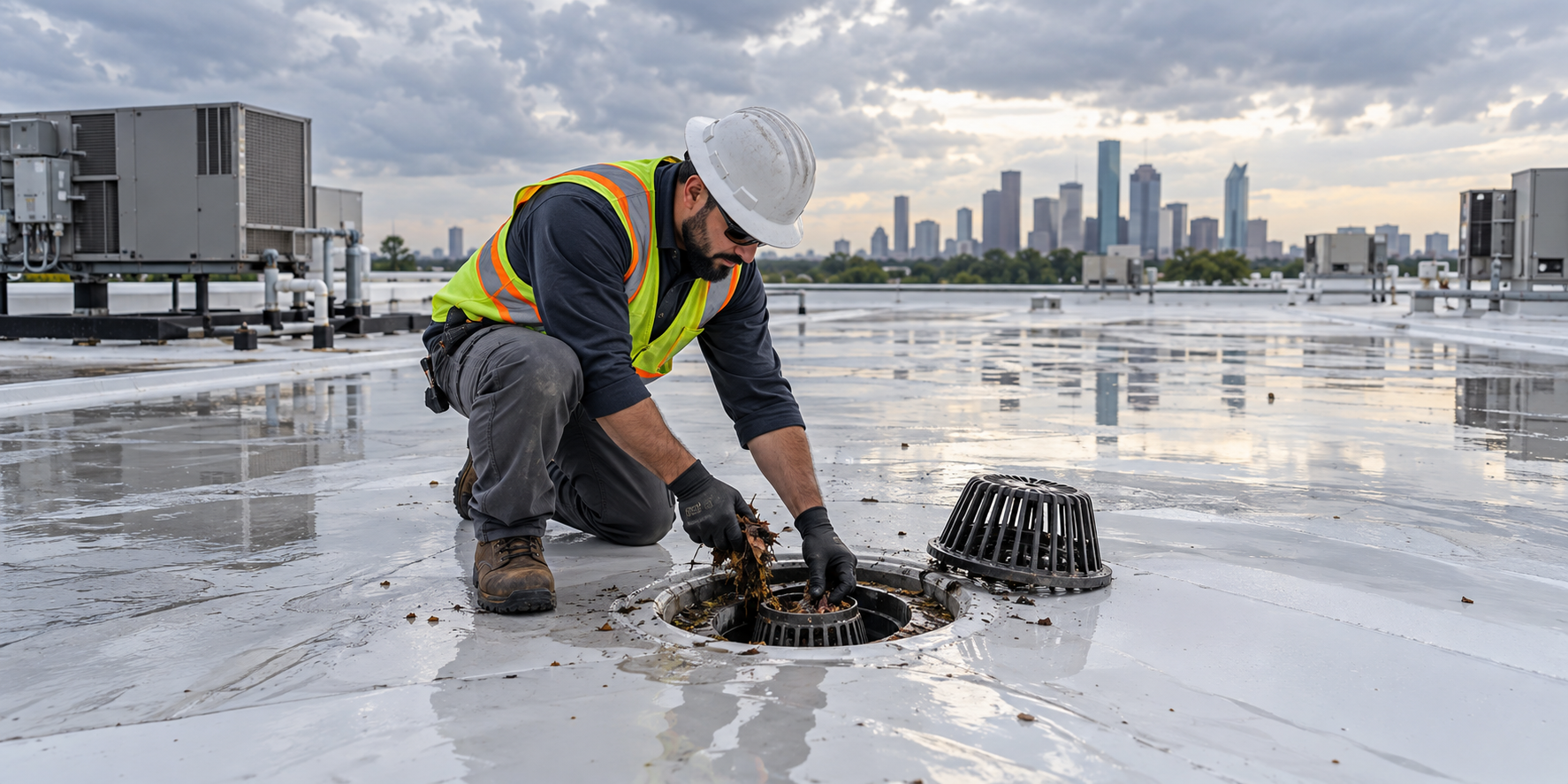
From a safe location, determine whether primary drains, strainers, gutters, scuppers, and downspouts are obstructed. Do not enter deep water, stand near an uncertain drain bowl, or work during lightning and high winds. If a drain appears blocked, use trained personnel who understand roof access and fall protection. Recurring ponding requires more than repeated debris removal; the roof geometry and drainage design may need correction.
5 Open Seams Splits Cracks or Punctures
Membrane seams and field surfaces should remain continuous. Open laps, failed welds, cracks, cuts, punctures, animal damage, dropped-tool damage, and holes from unauthorized installations can admit water quickly. On large warehouses, a small opening may affect a broad insulation area before the leak becomes visible inside.
Mark and photograph the condition without using a coating, tape, or sealant that is incompatible with the roof. Temporary emergency materials can complicate permanent repair when applied indiscriminately. The correct repair depends on whether the roof is TPO, PVC, EPDM, modified bitumen, built-up roofing, metal, or another assembly, as well as its age, cleanliness, moisture condition, and manufacturer requirements.
6 Loose or Damaged Perimeter Edge Metal
Roof perimeters and corners experience high wind pressures. Loose coping, fascia, gravel stop, cleats, termination bars, fasteners, or membrane at the edge can become both a water-entry pathway and a wind-uplift concern. A displaced metal component can also create a falling-object hazard above entrances, sidewalks, loading areas, and employee parking.
After a wind event, inspect from the ground for missing pieces, lifted corners, distorted metal, hanging components, displaced membrane, and debris. Restrict the area below any loose material. Roof access should wait until conditions are safe and qualified personnel can evaluate attachment, substrate, adjacent membrane, and the extent of movement.
7 Damaged Flashing Around HVAC Curbs and Penetrations
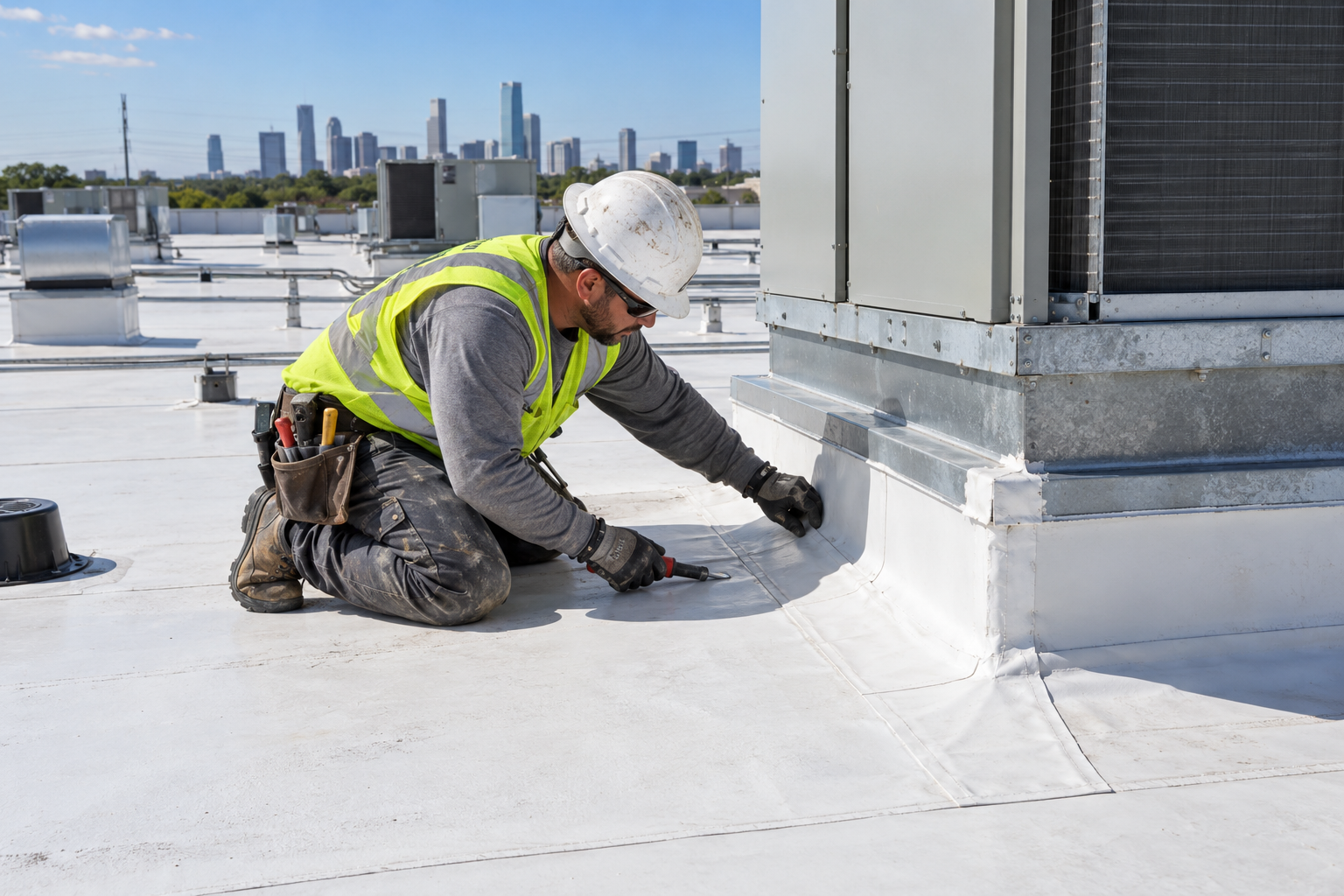
Warehouse roofs contain vents, pipes, fans, hatches, skylights, conduits, refrigeration lines, exhaust systems, and HVAC curbs. These transitions move differently from the roof field and require careful detailing. Cracked flashing, open corners, failed sealant, low curbs, unsupported lines, loose pitch pans, and displaced counterflashing can create urgent leaks.
Do not assume the roofer alone controls every component. Mechanical, electrical, plumbing, refrigeration, or equipment contractors may need to disconnect, raise, support, or replace components. The permanent repair should address the roof detail and the equipment condition so one trade does not undo the work of another.
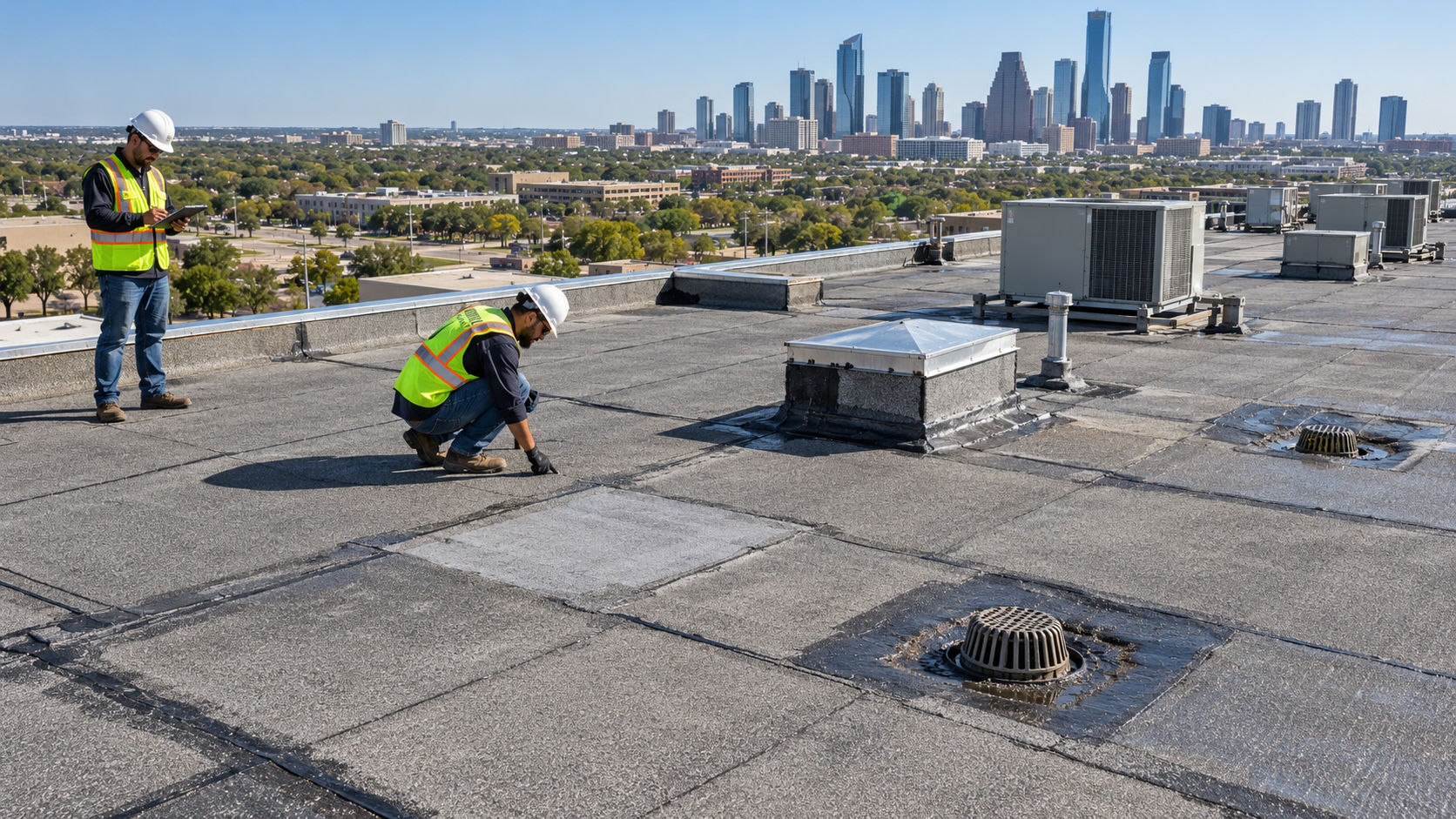
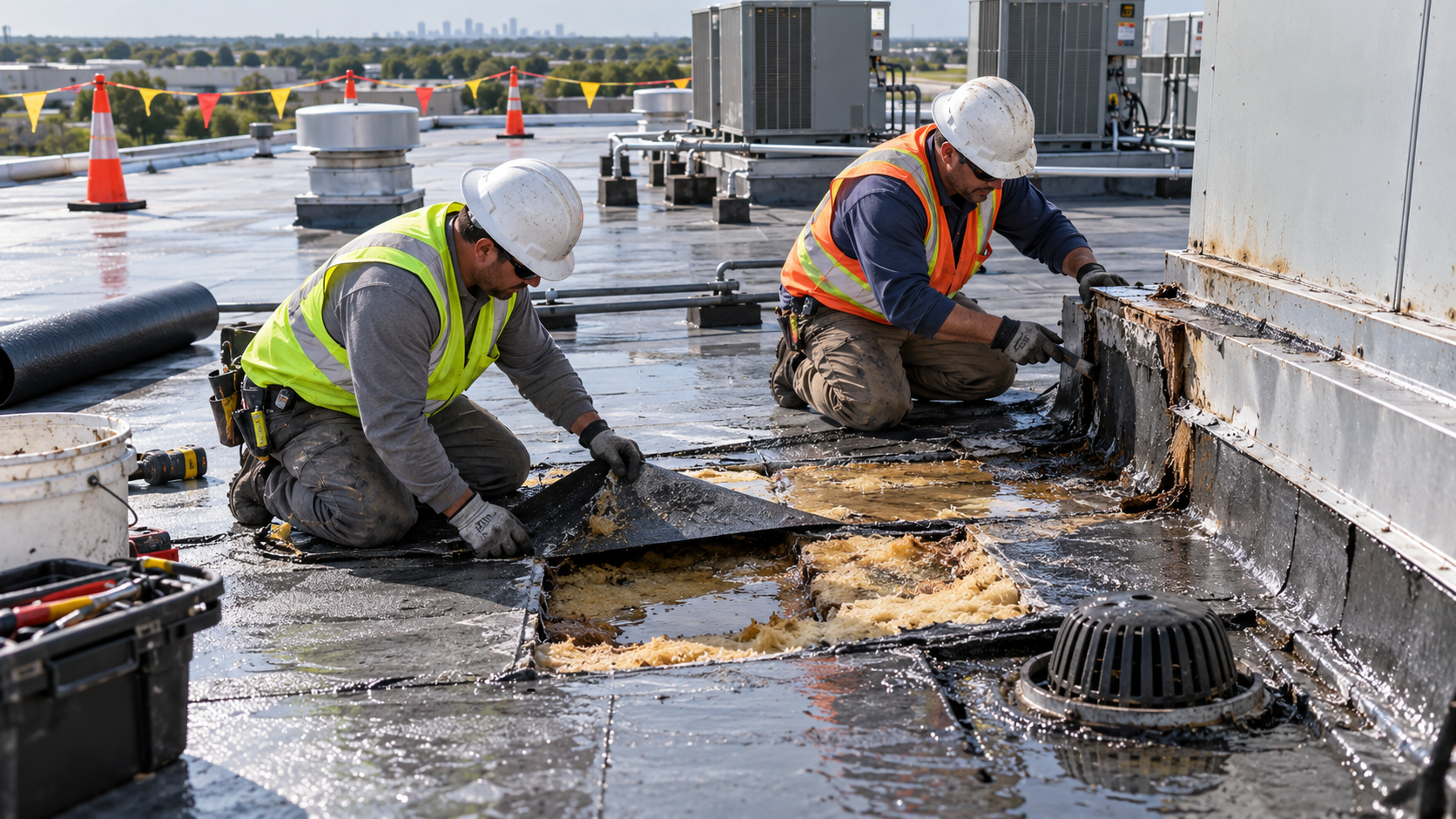
Wet insulation and deteriorated curb flashing can turn a localized opening into a larger warehouse roof repair if action is delayed.
8 Rust Corrosion or Deck Deterioration
Rust visible from inside the warehouse may indicate recurring condensation, long-term leakage, chemical exposure, or moisture trapped above the deck. Surface discoloration does not automatically establish structural loss, but flaking metal, holes, delamination, deflection, softened wood, or repeated leaks near the same deck area require prompt evaluation.
Roofing crews should not cover questionable deck conditions without resolving them. Deck replacement may require engineering, structural review, interior protection, shutdown coordination, and specialized fastening or welding procedures. In an operating warehouse, falling debris and open deck areas must be tightly controlled.
9 Blisters Bubbles Wrinkles or Membrane Movement
Blisters and bubbles can indicate trapped air, vapor, moisture, adhesion loss, or movement within the assembly. Wrinkles may concentrate stress at seams and flashings. On mechanically attached membranes, billowing or unusual movement during wind may signal attachment issues or changing substrate conditions. Not every surface irregularity is an emergency, but rapid growth, cracking, open edges, or associated leakage requires fast assessment.
Avoid cutting a blister simply to release pressure. Opening it can create a new water pathway and destroy evidence of the underlying condition. Document size and location, compare it over time if conditions permit, and have a qualified contractor determine whether repair is localized or part of a broader failure.
10 Loose Fasteners Backed Out Screws or Metal Panel Movement
Metal warehouse roofs often reveal problems through backed-out fasteners, deteriorated washers, open laps, loose closures, failed sealant, corrosion, displaced panels, or movement around penetrations. Repeated thermal cycling can stress attachments and seams. One missing fastener may be repairable; a broad pattern suggests a system-level concern.
A contractor should evaluate panel profile, substrate, purlins, fastener pattern, corrosion, clips, seams, penetrations, ridge and eave details, and prior coatings. Installing oversized fasteners or coating every seam without correcting movement can provide only temporary relief and may complicate later repair.
11 Clogged Drains Gutters or Scuppers
Drainage components filled with leaves, packaging, sediment, roofing debris, vegetation, or displaced ballast can cause rapid water accumulation. Warehouses often sit near open land, trees, construction sites, and high-wind corridors that move debris onto the roof. Overflow staining on walls, water marks around drains, and repeated ponding are warnings.
Clean drainage as part of a documented maintenance program, but investigate why blockage recurs. Missing strainers, poor slope, damaged drain bowls, separated seals, undersized paths, sagging gutters, and crushed downspouts can require repair. Never rely on overflow routes as the ordinary drainage system.
12 Storm Damage After Hail or High Wind
A Texas storm can damage a warehouse roof without producing an immediate interior leak. Hail may fracture or bruise materials, damage coatings, dent metal, affect skylights and rooftop equipment, or compromise flashings. Wind may lift membrane, loosen edge metal, displace panels, move equipment, or drive debris across the surface.
Arrange an inspection after a significant event when the building, surrounding properties, or rooftop equipment show signs of impact. Preserve before-and-after records, weather timing, photographs, maintenance history, and emergency invoices. A contractor can document observable conditions and prepare a construction scope, but coverage is determined by the policy and carrier. No contractor should guarantee claim approval.
13 Repeated Repairs in the Same Area
A repair that fails repeatedly may indicate that the true leak source was never found, water is traveling from another location, the repair material is incompatible, the substrate is wet, movement continues, or the surrounding roof has reached the end of practical service. A growing patchwork of sealants and coatings can make future diagnosis harder.
Review the repair history as a map. Compare dates, weather, interior locations, photographs, invoices, and materials used. Repeated work near a wall, drain, curb, expansion joint, or transition should trigger a broader investigation rather than another unexamined patch.
14 Interior Odors Humidity or Unexplained Temperature Changes
A roof problem does not always present as visible water. Wet insulation can reduce thermal performance and contribute to localized heat gain, cold spots, humidity, or odors. Warehouses storing paper, textiles, food, pharmaceuticals, electronics, packaging, or moisture-sensitive goods may notice product or environmental changes before a drip appears.
Coordinate roof investigation with HVAC and indoor-environment professionals when needed. Condensation, plumbing, wall infiltration, slab moisture, process loads, and ventilation can produce similar symptoms. The goal is to identify the moisture source rather than assume every interior condition is a roof leak.
15 Daylight Visible Through the Roof or Deck
Visible daylight through a deck opening, displaced panel, missing closure, failed skylight, or deteriorated penetration requires immediate access control and professional evaluation. Protect the interior area below, especially where people, forklifts, racks, or high-value inventory are present. Do not send an employee onto the roof to locate the opening from above.
The repair may involve roofing, decking, structural components, skylight systems, or equipment supports. Temporary protection must account for wind and water without creating a hidden trip or fall-through hazard.
16 Sagging Deflection or Structural Movement
Sagging roof areas, bowed deck, displaced joists, cracked walls near roof supports, unusual noises, or changes after heavy rain require urgent escalation. These conditions can involve structure, accumulated water, overloaded storage, equipment, fire damage, impact, or long-term deterioration. Keep people away from the affected area and seek appropriate professional guidance. Roofing work alone may not address the cause.
A Warehouse Roof Triage Table
Observed condition
Immediate action
Likely next step
Active leak near electricity
Restrict area and address electrical safety
Emergency mitigation and roof investigation
Loose edge metal
Barricade area below
Urgent securement and perimeter assessment
Soft roof or suspected deck weakness
Stop access
Moisture and deck evaluation
Persistent ponding
Keep drains safely clear
Drainage and slope assessment
Open seam or puncture
Document and protect area
Compatible permanent repair
Storm damage
Photograph and preserve records
Professional inspection and scoped response
Recurring patch failure
Review repair history
Broader moisture and assembly evaluation
Sagging or structural movement
Evacuate affected zone if warranted
Structural and roofing assessment
Why Aging Gravel Surfaced BUR Is a Special Concern
Aging built-up roofing with gravel surfacing creates inspection and maintenance uncertainty because the aggregate can conceal cracks, blisters, deteriorated felts, old patches, punctures, open laps, and moisture pathways. Gravel can shift, collect debris, obstruct drainage, and make it difficult to see the membrane condition during a quick walkover. It also adds labor when technicians must safely move and replace aggregate to investigate or repair a specific area.
For warehouse owners, uncertainty has operational consequences. Water can spread through multiple plies and insulation before appearing far from the entry point. Repeated repairs may be difficult to track. Moisture mapping and core cuts may be needed to understand the assembly. Removal and disposal can affect replacement cost, access, staging, dust control, loading, and schedule.
Insurance carriers may also pay closer attention to roof age, type, maintenance history, visible condition, losses, and documentation. Some may request inspections, impose restrictions, change deductibles or premiums, or make renewal decisions based on their underwriting standards. Showtime Exteriors should never present aging gravel BUR as a positive feature. The correct message is to inspect what the gravel may be hiding, document the risk, repair only where technically defensible, and plan replacement before an emergency when the system is near the end of service.
Repair Restore Recover or Replace
The presence of one urgent defect does not automatically decide the long-term scope. After emergency stabilization, ownership needs a condition-based plan. The appropriate option depends on moisture, attachment, deck condition, age, repair history, drainage, material compatibility, warranty status, operations, budget, and expected ownership period.
Targeted Repair
Repair is appropriate when the defect is localized and the surrounding assembly remains serviceable. The contractor should remove unsound material, prepare the substrate, use compatible components, restore flashing or membrane continuity, and document the completed area. A repair is not simply more sealant over an unknown condition.
Restoration or Coating
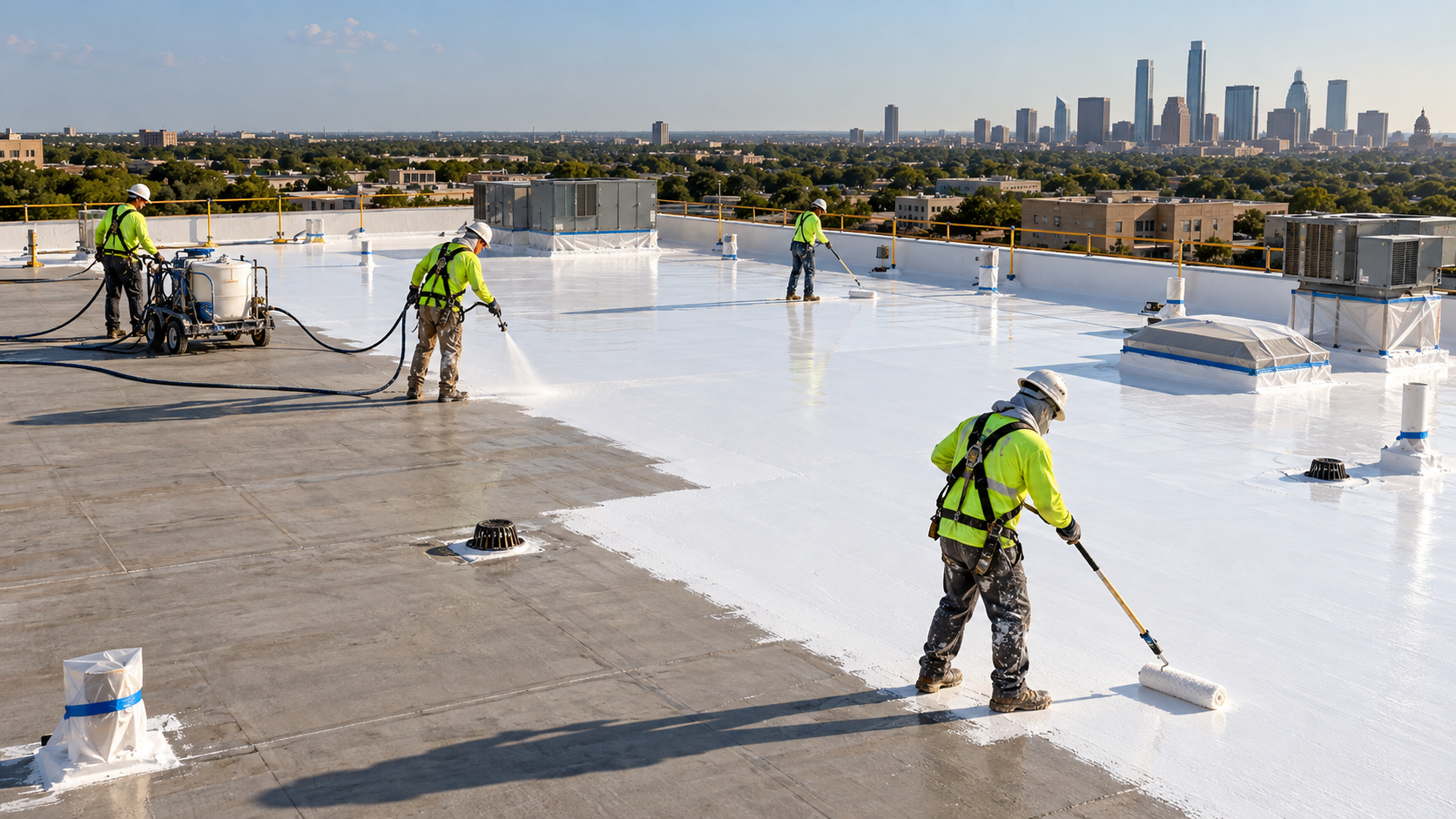
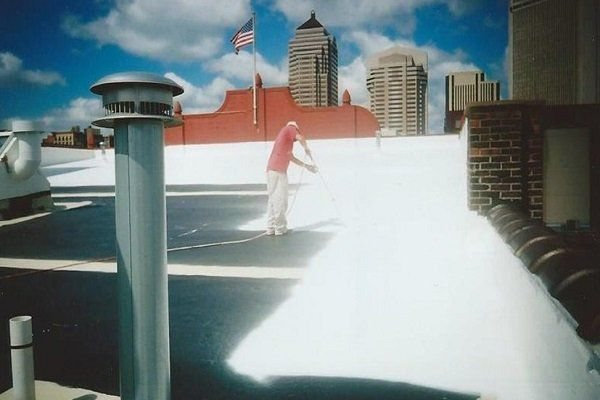
Restoration may be considered when the roof is dry enough, stable, compatible, properly attached, and within system requirements. Preparation, repairs, reinforcement, adhesion testing, cleaning, thickness, and detail work determine performance. Coating a saturated, unstable, or poorly drained roof does not correct those underlying problems.
Recover
A recover places a new approved assembly over an eligible existing roof. It may reduce demolition, but only when moisture, weight, height, attachment, substrate, drainage, and other project conditions support it. Covering wet insulation or an uncertain deck can trap risk and make future work more expensive.
Replacement
Replacement is usually the stronger option when deterioration is widespread, insulation is broadly wet, attachment is unreliable, the deck needs access, repairs are recurring, drainage requires redesign, or the existing roof cannot support a defensible restoration or recover. Replacement also allows the team to correct insulation, cover board, slope, curbs, penetrations, traffic paths, and perimeter details.
Emergency Response Steps for Warehouse Managers
Protect people first. Restrict slippery, electrical, falling-material, and suspected structural hazard areas.
Protect inventory and equipment only when movement can be performed safely.
Record the time, weather, interior location, affected products, and visible conditions.
Notify ownership, property management, safety leadership, maintenance, and required tenants or customers.
Contact a qualified commercial roofing contractor for roof-level assessment and temporary mitigation.
Preserve removed materials and evidence when an insurance inspection may be needed.
Track labor, equipment, drying, cleanup, inventory movement, and emergency costs.
Require a written permanent repair scope after the immediate condition is stabilized.
Inspect adjacent areas because water may have traveled beyond the visible drip.
Update the roof-management file and schedule follow-up verification after subsequent weather.
What a Professional Warehouse Roof Inspection Should Cover
Roof system, approximate age, layers, attachment, and visible service condition.
Interior leak evidence and correlation with roof-level details.
Field membrane, seams, fasteners, surfacing, coatings, and prior repairs.
Perimeter edges, coping, fascia, terminations, and wind-sensitive corners.
HVAC curbs, pipes, drains, scuppers, skylights, hatches, walls, and expansion joints.
Drainage paths, ponding areas, strainers, gutters, downspouts, and overflow routes.
Insulation and moisture condition using appropriate investigation methods.
Deck observations and areas requiring structural or specialist review.
Safe access, walkways, rooftop traffic, unauthorized penetrations, and housekeeping.
Photographs, plan locations, repair priorities, budget options, and recommended follow-up.
How to Prioritize Repairs Without Shutting Down Operations
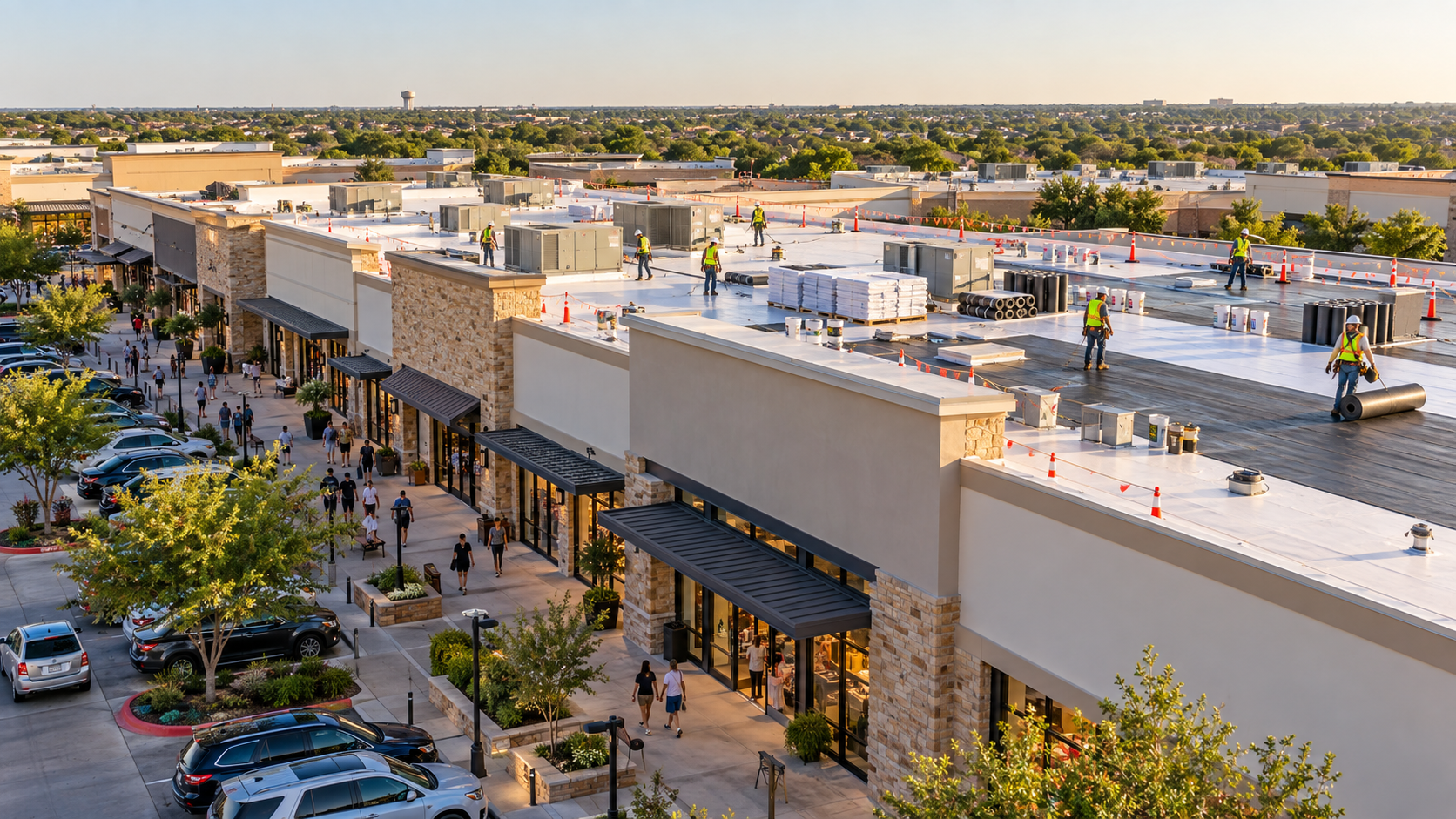
Warehouses cannot always stop receiving, shipping, production, refrigeration, or fulfillment. Repair planning should therefore connect roof zones to interior operations. Work above high-value inventory, electrical rooms, automated systems, clean areas, food storage, offices, and primary aisles may require special timing or temporary relocation.
Create controlled roof and ground zones, protect entrances and loading docks, define lift and dumpster routes, and limit the amount of roof opened at once. Coordinate equipment shutdowns with qualified trades. Establish a daily watertight cutoff and an after-hours response plan. Communicate expected noise, vibration, dust, odor, and access changes to supervisors before work begins.
Insurance Safe Documentation
When storm damage may be involved, document observable facts without overstating cause or coverage. Keep pre-loss roof reports, maintenance records, warranties, prior repairs, leak logs, photographs, weather timing, damaged inventory records, emergency invoices, drying reports, and communications. Separate suspected storm damage from long-term wear, maintenance conditions, installation issues, and unrelated moisture sources.
A roofing contractor can inspect, measure, photograph, identify visible damage, discuss repairability, and price construction work. The contractor should not promise that a claim will be paid, interpret policy language as legal advice, or negotiate as an unauthorized public adjuster. Coverage and valuation depend on the policy, carrier, cause of loss, documentation, exclusions, deductibles, and other facts.
Build a Preventive Warehouse Roof Management Plan
Emergency repairs become less frequent when the roof is managed as a building asset rather than visited only after a leak. Establish a roof file for every warehouse and record the system, age, installer, warranty, inspection history, repairs, moisture findings, equipment changes, storm events, photographs, and areas that require monitoring. A consistent file helps a new facility manager understand the roof and gives contractors better information before they price work.
Schedule inspections at practical intervals and after significant storms or rooftop construction. The inspection frequency should reflect roof age, system, warranty, traffic, surrounding conditions, loss history, and operational consequence. Keep drains, gutters, and scuppers clear. Control roof access and require every HVAC, electrical, communications, plumbing, and equipment contractor to document penetrations or changes. Unapproved work by another trade can create a leak that appears to be ordinary roof failure.
Create a simple priority system. Conditions involving active water near electricity, loose materials above occupied areas, soft deck, visible openings, structural movement, or spreading moisture require urgent escalation. Localized defects without active interior impact may still need prompt scheduled repair. Cosmetic conditions can be monitored only after a qualified assessment confirms that they are not hiding a functional problem.
Tie the roof plan to capital budgeting. Estimate the remaining practical service period, likely annual repair cost, major drainage or equipment projects, warranty requirements, and the operational consequences of failure. When repairs increase and documentation becomes harder to defend, develop a replacement scope before the next peak season, lease event, insurance renewal, or major storm. Planned work provides more control over system selection, contractor availability, phasing, inventory protection, and budget than an emergency replacement.
Frequently Asked Questions
How quickly should a warehouse roof leak be repaired
Active water entry should be addressed immediately for safety and mitigation. The permanent repair timeline depends on weather, access, diagnosis, materials, insurance inspection needs, and the condition of the surrounding assembly.
Can a warehouse stay open during roof repair
Often yes, when the contractor coordinates roof and interior zones, protects loading and employee routes, limits tear-off, manages debris, and communicates equipment or access impacts. Unsafe interior areas should remain restricted.
Does ponding water mean the roof must be replaced
Not automatically. The cause may be debris, drain failure, compressed insulation, deck deflection, or inadequate slope. The roof should be evaluated because repeated ponding can accelerate other defects and may require drainage correction.
Can wet roof insulation dry on its own
Some limited moisture conditions may change, but saturated or damaged insulation often requires removal. The correct decision depends on material, extent, vapor conditions, deck, weather, testing, and system requirements.
Is a roof coating an immediate repair
A coating is a planned restoration system, not a universal emergency patch. Active defects, wet materials, adhesion, preparation, reinforcement, drainage, and system eligibility must be addressed first.
Why does the leak appear far from the roof damage
Water can travel through insulation, between plies, along deck flutes, or across structural members before entering the interior. Investigation should trace likely pathways rather than assume the defect is directly above the drip.
Are repeated patches a sign of replacement
They can be. Repeated failures may indicate a missed source, incompatible materials, trapped moisture, movement, or widespread aging. A broader assessment should compare continued repair cost with restoration or replacement.
What should I do after hail or high wind
Inspect from the ground for obvious hazards, document conditions, protect affected interior areas, preserve records, and arrange a professional roof inspection when warranted. Avoid unsafe roof access.
Will insurance cover warehouse roof repairs
Coverage depends on the policy and carrier determination. A contractor can document roof conditions and construction costs but cannot guarantee coverage.
Why are gravel BUR roofs harder to inspect
Gravel can hide the membrane surface, cracks, old repairs, blisters, punctures, and moisture pathways. Investigation may require moving aggregate, moisture testing, and core cuts.
What information should I give the roofer
Provide roof age and type if known, leak locations, storm timing, repair history, warranties, plans, equipment changes, access rules, operating schedule, safety requirements, and interior contacts.
How can I prevent emergency warehouse roof repairs
Schedule routine inspections, keep drains clear, control rooftop access, document new equipment work, repair defects promptly, maintain records, and plan capital replacement before the roof reaches widespread failure.
Warehouse Roof Warning Sign Checklist
Active drips or water near electrical systems.
New or expanding stains, rust marks, odors, or damp insulation.
Soft areas, suspected deck weakness, or visible corrosion.
Ponding water that persists or repeatedly returns.
Open seams, cracks, splits, punctures, or membrane movement.
Loose coping, fascia, edge metal, panels, or fasteners.
Damaged flashing around curbs, pipes, drains, walls, or equipment.
Storm impacts, displaced materials, damaged skylights, or debris strikes.
Repeated repair failures or a growing patchwork of temporary materials.
Daylight, sagging, deflection, or structural movement.
Schedule a Warehouse Roof Inspection With Showtime Exteriors
Showtime Exteriors helps Texas warehouse owners, property managers, and operations teams evaluate commercial roof problems before a leak expands into inventory loss or operational interruption. The team can inspect TPO, PVC, EPDM, modified bitumen, metal, coatings, and built-up roof assemblies; document visible conditions; and develop practical repair, restoration, recover, or replacement options.
For aging gravel-surfaced BUR, the focus is on concealed deterioration, moisture, difficult maintenance, repair history, drainage, insurance uncertainty, and replacement planning. The gravel should never be promoted as an advantage. It should trigger a careful assessment of the roof beneath it.
DO NOT WAIT FOR A SMALL WAREHOUSE LEAK TO BECOME AN OPERATIONAL EMERGENCY
Call Showtime Exteriors at 817-400-ROOF (7663) to schedule a commercial roof inspection.
https://www.showtimeexteriors.com/commercial-roofing
Showtime Exteriors • 817-400-ROOF (7663) • showtimeexteriors.com
Internal Links for Publication
Commercial roof inspection Houston
Commercial roof maintenance Houston
Emergency commercial roof repair Houston
Showtime Exteriors roofing blog
Authoritative External Resources
National Roofing Contractors Association roofing resources
IIBEC building enclosure resources
SPRI low slope roofing standards and resources
GAF Commercial Roofing system resources
Carlisle SynTec commercial roofing resources
Sika Roofing commercial roof systems
Editorial and Legal Notes
This article is educational and does not constitute a roofing proposal, engineering opinion, structural assessment, legal advice, insurance advice, policy interpretation, environmental assessment, or guarantee. Conditions vary. Keep personnel away from unsafe areas and use qualified professionals. Confirm technical details, manufacturer requirements, URLs, business claims, and project-specific recommendations before publication. Insurance coverage is determined by the policy and carrier.