


Commercial Roof Asset Management Houston
Budgeting Condition Tracking and Capital Planning for Texas Commercial Properties

Commercial Roof Asset Management Starts With Visibility
Commercial roof asset management gives Houston building owners a disciplined way to understand current roof condition, control maintenance spending, prepare for capital projects, and make repair or replacement decisions before a leak becomes an operational crisis. It turns scattered invoices, photographs, warranties, inspection notes, and emergency calls into one usable plan. The goal is not to eliminate every roofing expense. The goal is to understand what the property owns, what condition each roof area is in, what risks deserve attention, and when money should be reserved for larger work.
Houston properties face intense ultraviolet exposure, high surface temperatures, humidity, heavy rain, hail, straight-line wind, tropical weather, rooftop service traffic, and frequent equipment changes. Those forces do not affect every roof area equally. A shaded expansion joint, a busy mechanical zone, an exposed perimeter, and a low drainage area may age at different rates even when they were installed at the same time. Asset management accounts for those differences and helps the owner prioritize work by evidence rather than by guesswork.
Showtime Exteriors provides commercial roof inspections, maintenance, repair, restoration, retrofit planning, recover evaluations, and replacement services in Houston and across Texas. The company can help owners establish a roof inventory, document visible conditions, identify immediate needs, and develop a practical sequence for future work. Call 817-400-ROOF (7663) to schedule a commercial roof assessment.
What Commercial Roof Asset Management Includes
A roof asset management program is broader than a maintenance contract. Maintenance addresses recurring inspection, cleaning, minor corrective work, and repair. Asset management adds inventory, condition grading, risk ranking, financial forecasting, documentation control, warranty tracking, project sequencing, and performance review. It connects technical information to ownership decisions.
A Complete Roof Inventory
The inventory should identify every building, roof section, addition, canopy, covered walkway, penthouse, and separate waterproofing area. For each section, record the approximate area, system type, installation date when known, deck type, insulation configuration, attachment method, drainage design, warranty information, known repairs, rooftop equipment, access points, and operational restrictions. A large property may contain several systems and generations of work. Treating the entire building as one roof can hide important differences.
Condition Assessment and Risk Ranking
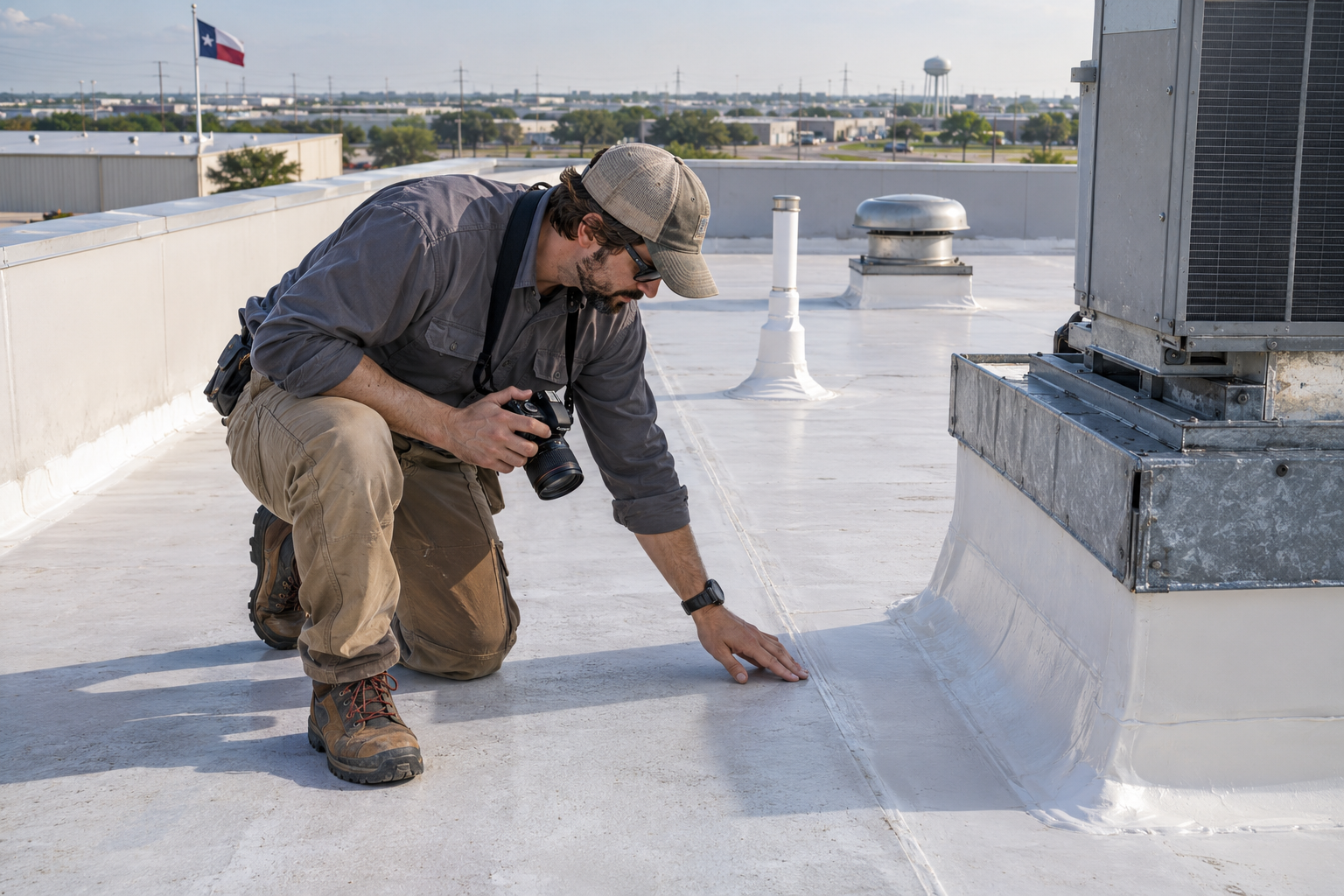
Condition should be evaluated by roof section and by component. The membrane or metal panels matter, but so do flashings, seams, curbs, drains, scuppers, edge metal, expansion joints, penetrations, walk pads, coatings, sealants, and transitions. The assessment should distinguish visible deterioration from suspected concealed conditions. A wet ceiling tile proves that water is present; it does not prove the exact entry point or show how far moisture has traveled inside the assembly.
A practical ranking system separates immediate safety or water-entry concerns from near-term corrective work, routine maintenance, and long-range capital needs. Priority should reflect probability and consequence. A small defect above sensitive electrical equipment may deserve faster action than a larger cosmetic condition above a low-risk storage area.
Budget and Capital Forecast
The budget should show expected routine maintenance, identified repairs, investigation costs, restoration candidates, and likely replacement windows. Forecasts are not fixed promises because weather, hidden moisture, material availability, operating changes, and future damage can alter the plan. They are decision tools. Updating them after each inspection creates a more reliable financial picture than relying on an old installation date or a single contractor estimate.
Why Houston Commercial Properties Need a Written Roof Plan
Reactive roofing usually costs more than the invoice suggests. An emergency leak can interrupt tenants, damage finishes or inventory, require after-hours labor, affect electrical or mechanical equipment, and force a rushed purchasing decision. A written plan cannot prevent every storm loss, but it can improve readiness. The owner knows who to call, where access is located, which roof areas are vulnerable, what temporary protection may be appropriate, and where prior documentation is stored.
Heat and Ultraviolet Exposure
Houston heat drives daily thermal movement. Roof membranes, flashings, metals, fasteners, sealants, curbs, and adjacent walls expand and contract at different rates. Over time, stress may appear at seams, terminations, penetrations, transitions, and perimeter details. Reflective surfaces can reduce solar heat gain, but color alone does not correct wet insulation, poor attachment, damaged flashings, inadequate drainage, or incompatible repairs.
Heavy Rain and Drainage Demand
A low-slope roof depends on drainage. Debris at drains, blocked scuppers, damaged strainers, settlement, compressed insulation, poor slope, and equipment placement can contribute to prolonged ponding. Water adds weight and increases the time vulnerable details remain exposed. Maintenance should include cleaning and observing drainage pathways, but an owner should not send untrained personnel onto a wet or storm-damaged roof. Roof access and fall hazards require proper safety planning.
Wind Hail and Debris
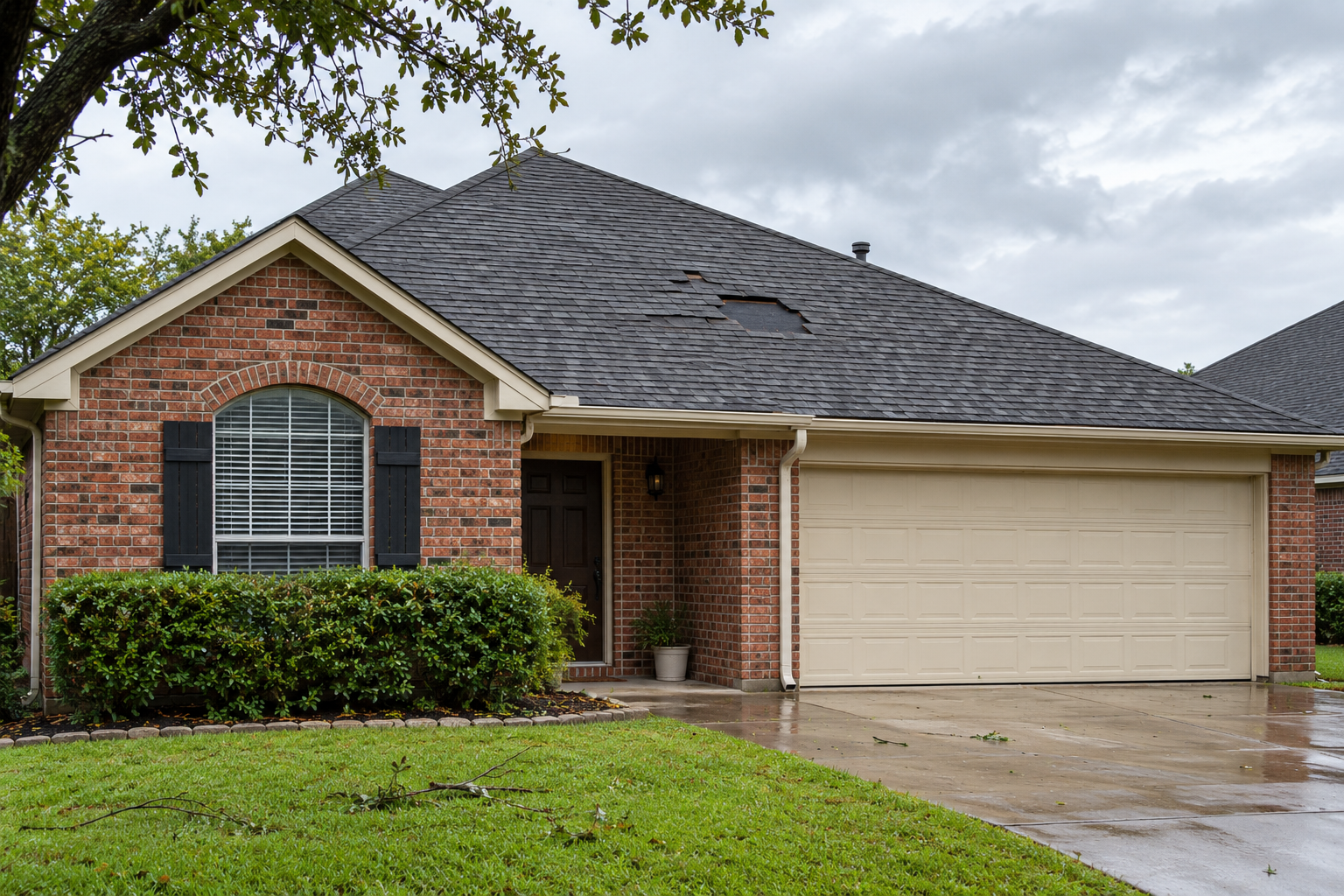
Wind can stress edges, corners, seams, fasteners, rooftop accessories, and loose materials. Hail may bruise, fracture, dent, puncture, or displace components depending on system type, age, temperature, impact energy, and substrate. Damage may be obvious or subtle. After a significant event, document the date, interior symptoms, visible exterior conditions from safe locations, temporary work, and professional findings. Do not promise that a condition is covered; insurance decisions depend on the policy, cause, evidence, exclusions, endorsements, deductibles, and carrier evaluation.
Build the Baseline Before You Set the Budget
A useful asset plan begins with a defensible baseline. Collect existing warranties, proposals, invoices, leak logs, roof plans, photographs, core-cut records, moisture scans, equipment records, and insurance correspondence. Then compare the paperwork with actual conditions. Documents may be incomplete, and roof configurations often change during tenant improvements or mechanical upgrades.
Review Records and Interview Building Staff
Facility teams often know where buckets appear, which doors provide access, which drains back up, and which rooftop vendors create traffic. Their observations are valuable, but they should be organized by date and location. A recurring interior symptom may be caused by roofing, plumbing, HVAC condensation, wall assemblies, or another source. The investigation should follow the evidence rather than assuming every ceiling stain is a membrane failure.
Map Roof Sections and Details
Divide the roof into logical sections and label them consistently. Mark drains, scuppers, curbs, penetrations, walls, transitions, expansion joints, hatches, ladders, equipment, solar arrays, and high-traffic routes. Consistent labels allow photographs, repairs, and invoices to refer to the same place. This matters on campuses, shopping centers, industrial facilities, medical offices, multifamily properties, and distribution buildings with repeated roof shapes.
Use Appropriate Diagnostic Methods
Visual inspection is the starting point, not always the ending point. Depending on the question, the contractor or consultant may recommend moisture scanning, test cuts, adhesion testing, seam probing, drainage observation, fastener review, deck investigation, or manufacturer involvement. Each method has limits. Infrared observations, for example, identify thermal patterns that require interpretation and may need confirmation; they do not automatically prove the source, depth, or cause of moisture.
Create a Commercial Roof Condition Score That Supports Decisions
A condition score should make the portfolio easier to understand without oversimplifying it. Use categories such as good, serviceable with maintenance, repair priority, restoration candidate, replacement planning, and urgent investigation. Define each category so different inspectors or managers apply it consistently. Include confidence level when concealed conditions remain unknown.
Evaluate More Than Surface Appearance
A roof can look uniform from a distance while containing wet insulation, weak seams, deteriorated flashings, corroded metal, poorly terminated repairs, or unstable substrates. Conversely, an older roof may remain serviceable when drainage works, details are maintained, moisture is limited, and the assembly remains attached. Asset management should resist both shortcuts: assuming every old roof must immediately be replaced and assuming a clean-looking surface is sound.
Separate Repairability From Remaining Service Life
A defect may be repairable even when the broader roof is approaching replacement, and a relatively young roof may need a major correction if the installation or substrate is deficient. The owner needs both answers: can this defect be corrected, and does that correction support a reasonable ownership plan? A repair that safely buys time for a scheduled capital project can be valuable. Repeated patches without a larger strategy can become expensive and difficult to document.
The Special Risk of Aging Gravel Surfaced Built Up Roofs
Aging built-up roofs with gravel surfacing deserve careful evaluation in the Showtime Exteriors content strategy because gravel can conceal the membrane, previous repairs, blisters, splits, displaced surfacing, deteriorated felts, and moisture-related conditions. Inspection and repair may require controlled gravel displacement to expose the actual surface. Loose aggregate can also complicate drainage, rooftop traffic, cleaning, and documentation.
Commercial property owners may also encounter stricter insurance underwriting, requests for updated roof information, coverage limitations, higher deductibles or premiums, or non-renewal concerns involving older roof systems. Outcomes vary by carrier, policy, building, roof age, condition, documentation, claims history, and market conditions. A roofing contractor cannot guarantee coverage or underwriting acceptance. The practical response is to obtain a professional assessment, document the existing condition, correct appropriate deficiencies, develop a replacement strategy when warranted, and discuss policy questions directly with a licensed insurance professional.
Asset management prevents the owner from waiting until renewal pressure creates an emergency. If an aging gravel BUR section is a likely capital liability, the plan can establish investigation milestones, interim maintenance boundaries, replacement options, access needs, budget assumptions, and a target schedule. The replacement decision should consider the deck, insulation, drainage, attachment, wind design, code requirements, penetrations, rooftop equipment, interior use, and insurer or lender documentation requests.
Match the Maintenance Plan to the Roof System
TPO and PVC Single Ply Roofing
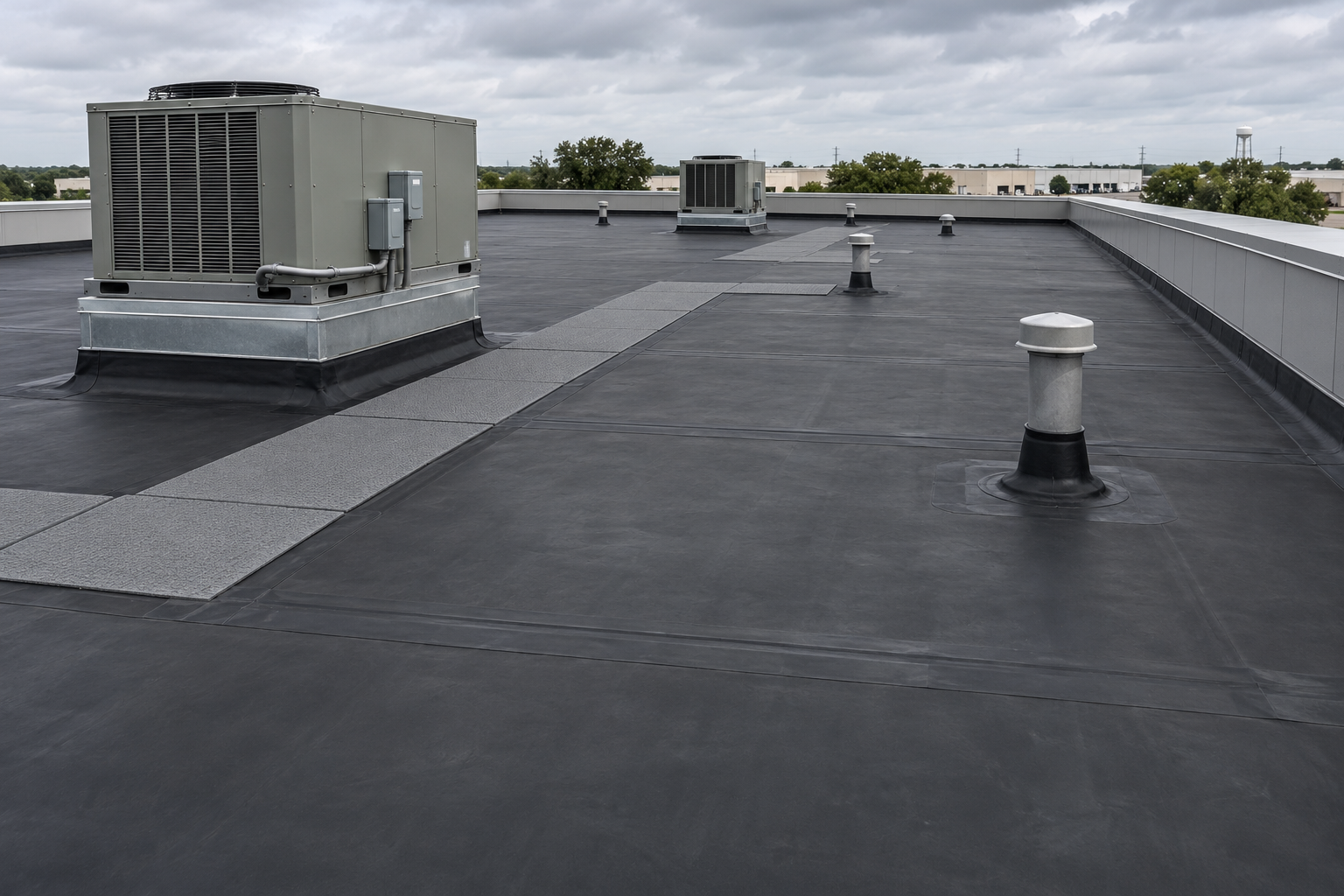
Thermoplastic systems rely heavily on sound heat-welded seams and compatible details. Inspections may focus on seams, punctures, cuts, contaminants, wall and curb flashings, penetrations, terminations, edges, drainage, and traffic patterns. Repairs should use compatible materials and qualified techniques. Coating or covering a dirty, wet, loose, or incompatible surface can hide the problem rather than solve it.
EPDM Roofing
EPDM maintenance may include review of seams, tapes, adhesives, flashings, shrinkage stress, punctures, perimeter conditions, drains, penetrations, and previous repairs. The surface must be cleaned and prepared properly for compatible repair materials. Widespread seam distress, trapped moisture, substrate deterioration, or repeated failures may change the recommendation from local repair to broader restoration or replacement planning.
Modified Bitumen Roofing
Modified bitumen systems should be reviewed for open laps, cracks, splits, blisters, granule loss, punctures, flashing deterioration, drainage issues, and incompatible patches. The safe and appropriate repair method depends on the membrane type, surfacing, substrate, moisture condition, and fire or operational restrictions. Do not assume every modified bitumen detail should be repaired with the same application method.
Metal Roofing
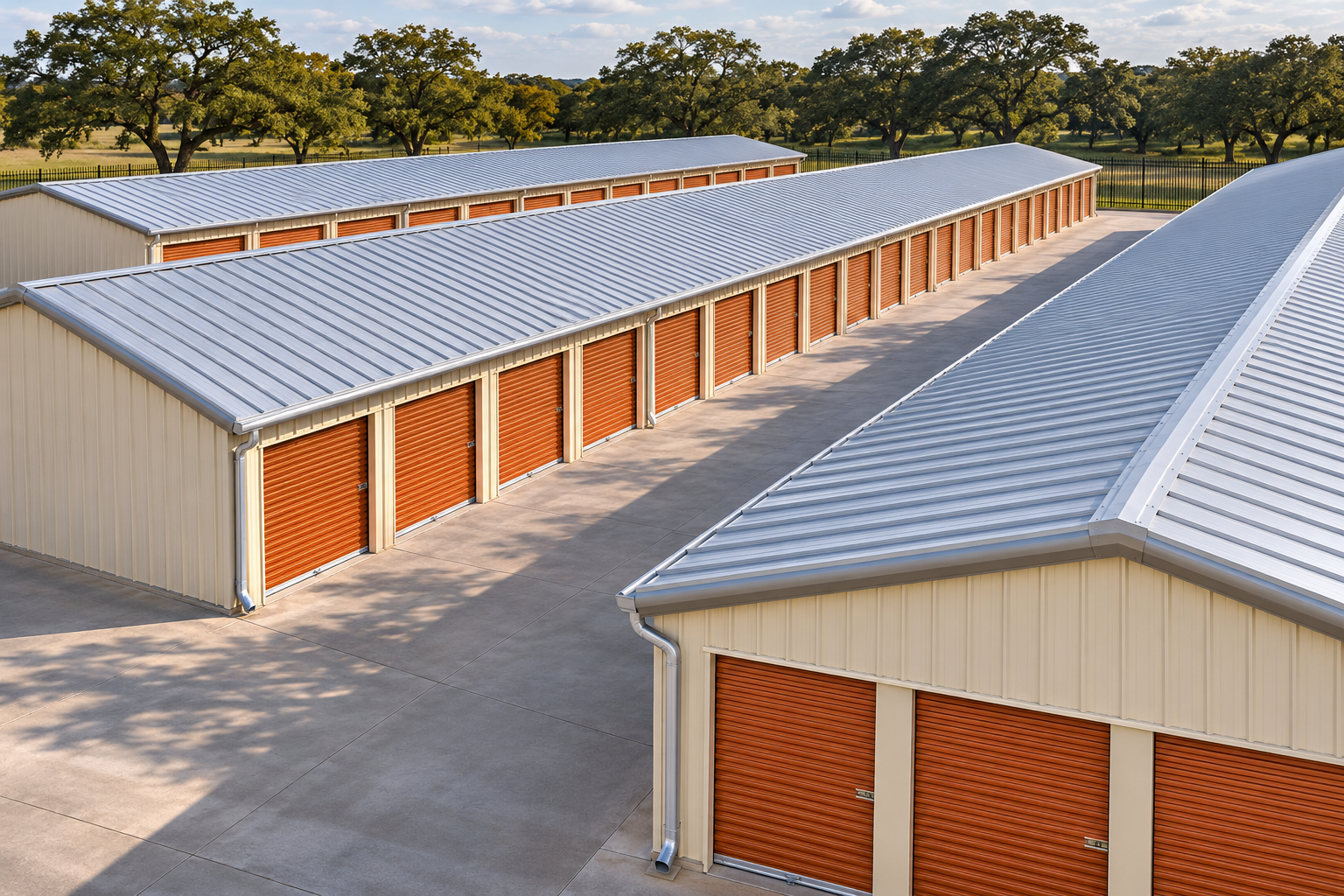
Metal roof asset management should track panel condition, seams, end laps, fasteners, clips, closures, sealants, penetrations, curbs, transitions, gutters, downspouts, edges, corrosion, movement, and drainage. A retrofit or coating may be viable when the structure and existing panels can support the proposed assembly and details can be corrected. Extensive corrosion, unstable substrates, poor geometry, or unresolved movement may require a different scope.
Roof Coatings
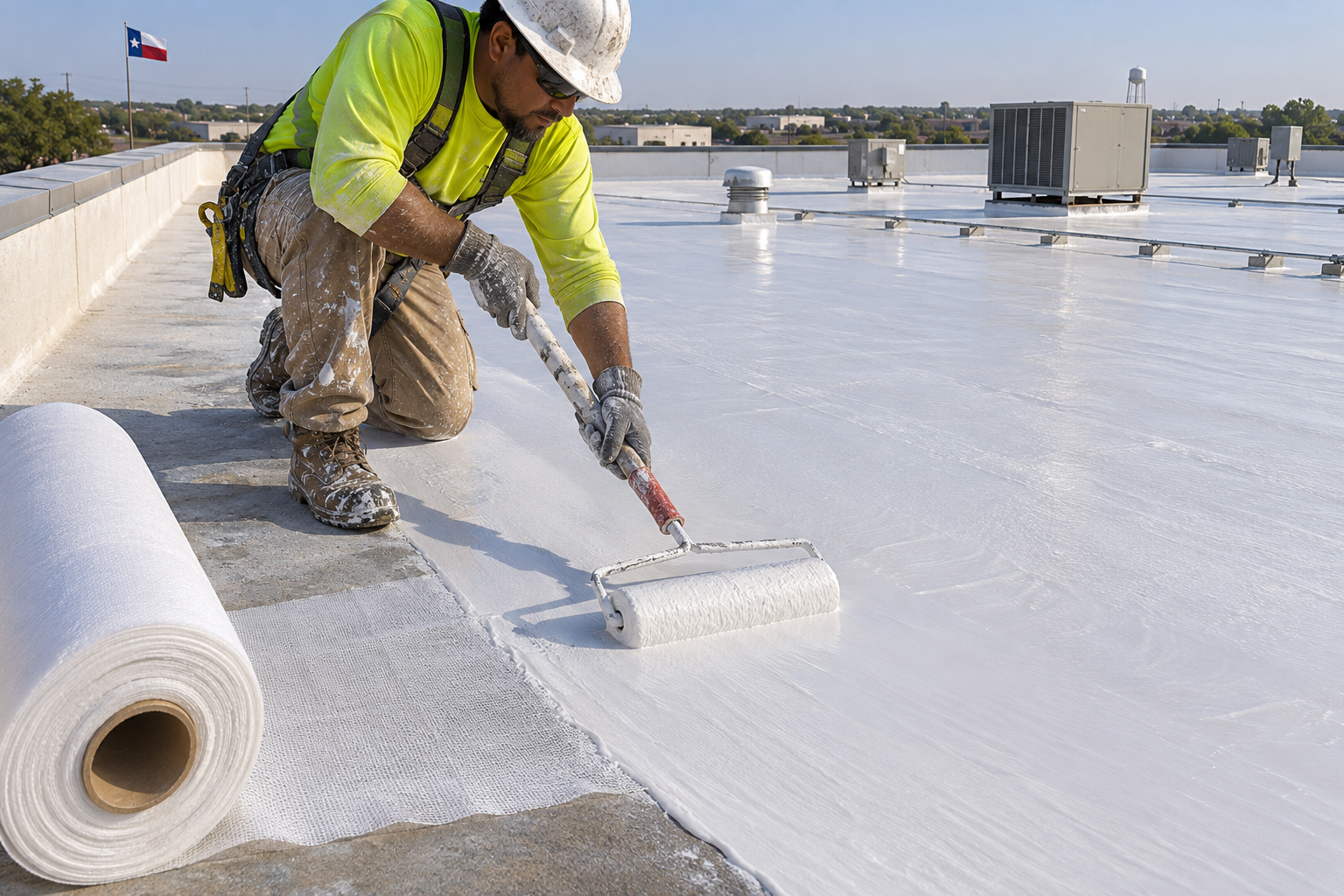
Coatings are maintenance systems, not universal rescue products. A coating candidate generally needs a suitable substrate, corrected defects, controlled moisture, proper adhesion, clean preparation, reinforced details, adequate thickness, and compatible drainage conditions. Asset records should include product, batch information when available, coverage rate, measured thickness, warranty terms, repair history, and recoat planning.
Inspection Frequency and Trigger Events
The National Roofing Contractors Association recommends maintenance inspections at least twice each year, commonly in spring and fall, and additional review after severe weather or events that may affect the roof. The right schedule depends on roof age, system, condition, warranty, building sensitivity, environment, traffic, claims history, and owner risk tolerance. A high-consequence medical, data, food, manufacturing, or occupied property may justify more frequent observation than a low-risk structure.
Routine Scheduled Inspections
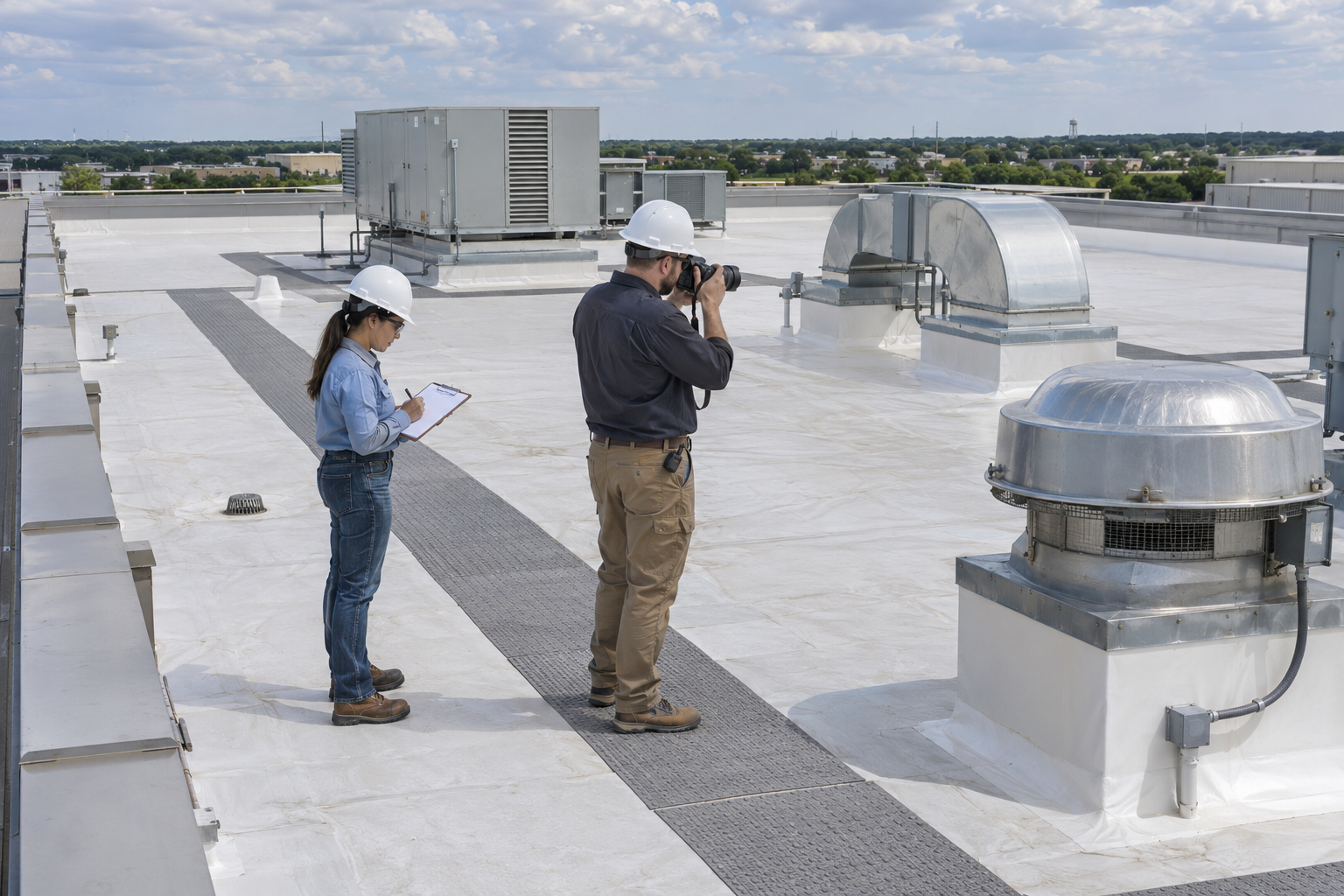
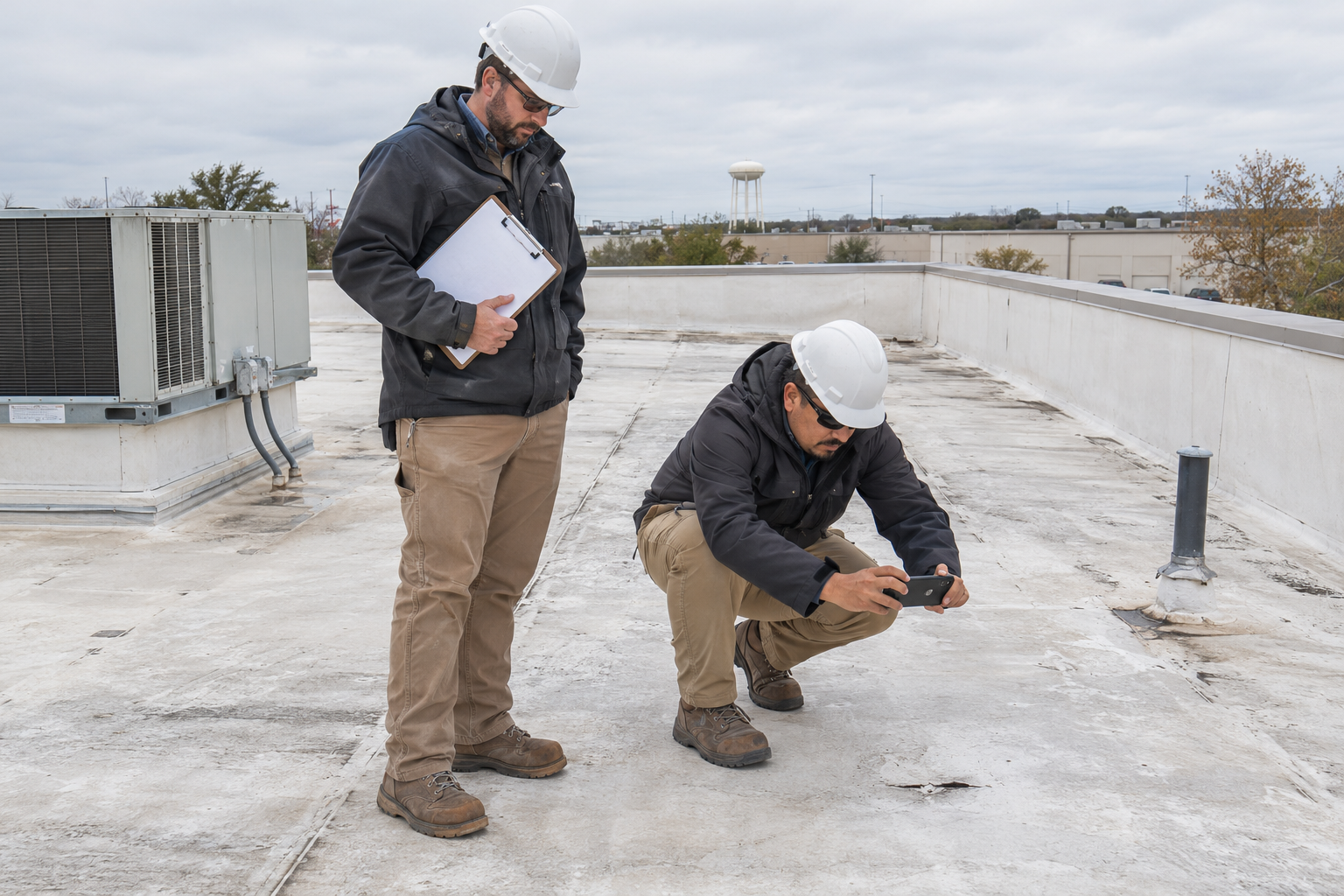
A routine inspection should follow the same route and naming system each time. Consistency makes change visible. Photograph the same critical details, record drainage condition, note new equipment or penetrations, review repairs, and compare recurring defects. The report should state what was observed, what was not accessible, what further investigation may be needed, and which actions are recommended by priority.
Post Storm Assessments
After wind, hail, debris impact, or extreme rain, first protect people and interiors. Photograph interior symptoms and visible exterior conditions from safe locations. Record timing, affected rooms, temporary measures, and vendors involved. A professional assessment can then evaluate the roof without encouraging unsafe access or unnecessary disturbance. Keep factual records and avoid changing evidence beyond reasonable emergency mitigation.
After Rooftop Work
HVAC replacement, plumbing work, electrical work, solar installation, signage, antenna work, and tenant improvements can introduce penetrations, traffic, dropped tools, removed flashings, blocked drainage, or incompatible sealants. Require sign-in procedures, protected walk paths, debris removal, and post-work roof review. Vendor control is one of the most effective ways to reduce preventable roof damage.
Turn Inspection Findings Into a Three Horizon Action Plan
Immediate Actions
Immediate actions address active water entry, unsafe conditions, unsecured components, open penetrations, compromised edges, blocked primary drainage, or conditions that could rapidly worsen. Temporary protection should be clearly labeled and followed by a permanent scope. Emergency work should not be allowed to disappear into the maintenance history as though it were a final repair.
Near Term Actions
Near-term work may include localized membrane repair, seam correction, flashing reconstruction, drain work, edge repair, protective walk pads, controlled coating repairs, removal of abandoned equipment, or investigation of suspected moisture. Grouping compatible repairs can improve mobilization efficiency, but bundling should not delay an urgent item.
Capital Actions
Capital actions include restoration, recover, retrofit, major drainage correction, extensive metal work, insulation replacement, deck repair, and complete roof replacement. The plan should include assumptions, design or engineering needs, operational constraints, likely lead times, access and staging requirements, hazardous-material questions when applicable, and contingency for concealed conditions. The final construction scope should be based on current verification, not copied unchanged from an old budget estimate.
Budgeting for Commercial Roof Ownership
A useful roof budget contains separate lines for inspection and preventive maintenance, routine repairs, emergency allowance, diagnostic investigation, warranty-required work, and capital projects. Combining everything under one repair number makes it difficult to see whether the property is preserving a serviceable roof or spending heavily to postpone an unavoidable replacement.
Use Ranges and Assumptions
Early forecasts should use ranges rather than false precision. Roof size is only one cost factor. Access, height, staging, tear-off quantity, deck condition, insulation, drainage, attachment, wind design, equipment, occupied-space protection, working hours, material selection, warranty, permits, testing, and market conditions all affect cost. State what is included and excluded so the owner can update the forecast intelligently.
Compare Repair Spend With Risk Reduction
Do not judge a repair only by its price. Ask what risk it addresses, how much roof remains serviceable, whether moisture has been controlled, whether the detail is compatible, and how the repair supports the capital plan. A low-cost patch that repeatedly fails can be more expensive than a properly scoped correction. A major replacement performed too early can also waste remaining value. Asset management helps find the defensible middle.
Coordinate With Ownership Strategy
A long-term owner may prioritize durability, energy performance, maintainability, and a phased capital program. A seller may need credible condition documentation and a scope for negotiations. A buyer may need due diligence and near-term reserve estimates. A tenant may focus on business continuity and lease responsibilities. The roof plan should reflect the decision being made without manipulating the technical findings.
Project planning should address access, staging, weather, protection, and occupied-building operations.
Documentation That Makes the Program Defensible
Good documentation is concise enough to use and detailed enough to support decisions. Keep dated inspection reports, labeled photographs, roof maps, repair scopes, completion photographs, invoices, product information, warranties, moisture records, leak logs, vendor access records, storm records, and correspondence. Store documents in a shared location with consistent file names. A report that cannot be found during a renewal, sale, claim, budget meeting, or emergency has limited value.
What Every Inspection Report Should Show
Property and roof section identification
Inspection date weather and access conditions
System type and known age
Observed conditions with labeled photographs
Locations of defects and interior symptoms
Limitations and inaccessible areas
Recommended actions ranked by urgency
Need for testing monitoring or specialist review
Clear distinction between temporary and permanent work
What Every Repair Record Should Show
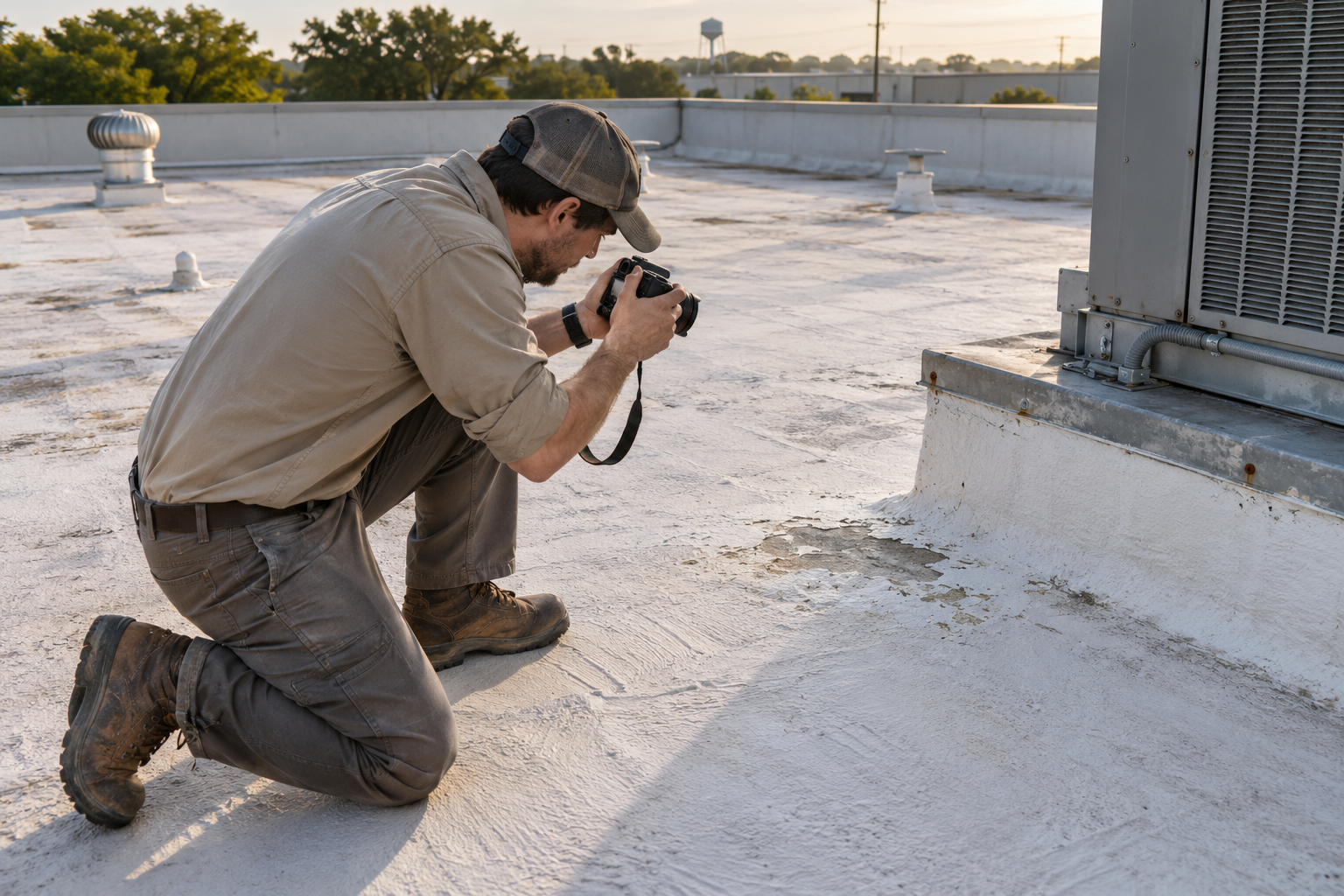
The record should state the location, observed condition, preparation, removed materials, substrate findings, products used, repair dimensions, completion date, weather conditions when relevant, photographs before and after, and any unresolved concern. If wet insulation or damaged decking is discovered, document how the scope changed. This information helps the next inspector understand what is beneath the visible patch.
Insurance Warranty and Contract Boundaries
Roof asset management supports insurance and warranty conversations, but it does not replace policy or warranty interpretation. Owners should review deductibles, exclusions, valuation method, cosmetic-damage terms, wind or hail endorsements, notice requirements, proof-of-loss deadlines, maintenance duties, and documentation requirements with licensed insurance professionals or qualified counsel. Roofing contractors can document visible conditions and prepare construction scopes; they should not promise coverage or direct a claim outcome.
Warranty terms also vary. Some cover manufacturer materials, some include certain labor obligations, and many contain exclusions, maintenance requirements, reporting procedures, transfer rules, access requirements, or limits involving alterations and third-party work. Read the actual document before assuming that a leak or defect is covered. Track expiration dates and required inspections in the asset plan.
How to Select a Houston Roof Asset Management Partner
Select a contractor who can inspect multiple systems, communicate limitations, document conditions, distinguish temporary work from permanent repairs, and explain repair, restoration, retrofit, recover, and replacement options without forcing every property toward the same answer. Ask how roof areas are labeled, how findings are prioritized, how photographs are stored, how budgets are updated, and how occupied operations are protected.
The contractor should also understand the operational environment. Work at a medical office, restaurant, multifamily property, warehouse, retail center, manufacturing plant, or data facility requires different access, noise, odor, dust, staging, security, and shutdown planning. A technically sound roof scope can still fail the owner if it ignores the building beneath it.
A Practical First Year Roadmap
First 30 Days
Collect records, identify decision-makers, establish emergency contacts, map roof access, list known leaks, identify sensitive interior areas, and schedule a baseline assessment. Correct immediate hazards or active water-entry conditions through properly scoped work. Do not wait for perfect historical records before addressing an urgent condition.
Days 31 Through 90
Finalize roof-section maps, condition grades, repair priorities, and a preliminary multi-year budget. Review warranty and insurance questions with the appropriate professionals. Establish rooftop vendor rules and a central document location. Decide which suspected conditions need moisture investigation, test cuts, structural review, manufacturer review, or monitoring.
Remainder of Year One
Complete prioritized repairs, verify results, perform the next scheduled inspection, and update the plan. Begin design and procurement early for capital projects with long lead times or difficult operational requirements. At year end, compare actual work with the budget and revise the forecast based on new evidence.
Managing Multiple Buildings as One Roofing Portfolio
Owners with several Houston or Texas properties need a portfolio view as well as individual building reports. Use the same roof-section naming rules, condition categories, priority definitions, and budget assumptions across the portfolio. Consistency makes it possible to compare buildings without pretending they are identical. A 100,000-square-foot warehouse with a serviceable single-ply system and a small medical office with a vulnerable roof above critical treatment space may receive different priorities even when the visible defects appear similar.
Rank Projects by Consequence and Timing
Portfolio ranking should consider active leakage, moisture extent, attachment, edge condition, drainage, roof age, repair frequency, sensitive interiors, tenant obligations, lease events, property transactions, planned equipment work, and insurance or lender requests. It should also consider project timing. Two adjacent buildings may be combined for mobilization efficiency, while a noisy tear-off above occupied space may need to wait for a planned shutdown. The strongest schedule balances roof condition, consequence, logistics, and available capital.
Standardize Scopes Without Copying Them Blindly
Standard details, reporting formats, and procurement expectations improve consistency, but each roof still requires verification. Deck type, insulation, wind exposure, drainage, existing layers, hazardous-material concerns, rooftop equipment, and interior use can change the correct solution. A portfolio standard should define quality expectations and documentation requirements while allowing the technical assembly to respond to the actual building.
Metrics That Show Whether the Roof Plan Is Working
Track a small set of useful indicators rather than producing a dashboard that nobody uses. Helpful measures may include open urgent items, recurring leak locations, response time, repair completion rate, emergency versus planned spending, square footage by condition grade, roofs approaching capital action, warranty deadlines, and percentage of rooftop vendor work receiving a post-work review. Review the metrics with the inspection evidence because a declining repair count can mean improved performance, delayed reporting, or deferred work.
Watch for Recurring Failure Patterns
Repeated work at the same curb, drain, seam, wall, edge, or transition signals that the failure mechanism may not have been resolved. Compare photographs and scopes, not only invoice totals. Recurrence may point to movement, drainage, wet insulation, an unstable substrate, incompatible materials, equipment vibration, foot traffic, or a detail that needs reconstruction. Asset management should identify that pattern before another identical patch is authorized.
Close the Loop After Every Project
After repair, restoration, retrofit, or replacement, update the roof map, photographs, system description, warranty record, maintenance requirements, and capital forecast. Confirm that temporary materials were removed or incorporated appropriately, drains and work areas were cleaned, access points were secured, and affected occupants received necessary communication. The project is not fully closed when the crew leaves; it is closed when the owner has a verified record and the asset plan reflects the new condition.
Frequently Asked Questions
What is commercial roof asset management
It is a structured program for inventorying roof sections, assessing condition, prioritizing risk, managing maintenance and repairs, controlling documentation, and forecasting capital needs. It connects technical roof information with ownership and budgeting decisions.
How often should a Houston commercial roof be inspected
Many owners plan at least two maintenance inspections each year, often in spring and fall, plus additional assessment after severe weather or potentially damaging rooftop work. The correct frequency depends on the system, age, condition, warranty, building sensitivity, traffic, and risk profile.
Does a maintenance plan guarantee that the roof will not leak
No. Roofing systems can be damaged by weather, debris, equipment work, movement, concealed defects, or other events. Maintenance improves visibility and creates opportunities for timely correction, but it cannot guarantee leak-free performance.
Can an older roof be restored instead of replaced
Sometimes. Restoration depends on substrate condition, moisture, attachment, drainage, detail integrity, compatibility, preparation, adhesion, and the intended service period. A coating applied over wet, unstable, dirty, loose, or incompatible materials is not a responsible substitute for investigation and correction.
Why are aging gravel BUR roofs a concern
Gravel can conceal membrane conditions, prior repairs, blisters, splits, deteriorated felts, and moisture-related problems. Older gravel-surfaced BUR systems may also face closer insurance underwriting. Owners should obtain a professional assessment and plan repair or replacement based on documented condition and property goals.
Can Showtime Exteriors help with insurance documentation
Showtime Exteriors can document visible roof conditions, photographs, measurements, temporary protection, repair or replacement scope, and completed work. Coverage, valuation, and claim decisions remain with the insurer under the policy. Owners should consult their carrier, agent, adjuster, or qualified advisor for policy questions.
Schedule Commercial Roof Asset Management in Houston
Commercial roof asset management gives Houston owners a practical path from uncertainty to a prioritized plan. Start with a documented baseline, separate urgent work from long-term projects, update the budget as evidence changes, and keep insurance and warranty questions within the proper professional boundaries. Pay special attention to aging gravel-surfaced BUR sections because concealed deterioration and underwriting concerns can create avoidable pressure when planning begins too late.
Showtime Exteriors helps commercial property owners across Texas evaluate and manage TPO, PVC, EPDM, modified bitumen, metal, coating, and aging BUR roof systems. Call 817-400-ROOF (7663) or visit Showtime Exteriors commercial roofing to schedule an assessment.
Internal Resources
Commercial Roof Repair Houston
Emergency Commercial Roof Repair Houston
Shopping Center Roofing Houston
External References
NRCA Roofing Guidelines and Resources
NRCA Safety Planning and Prevention Tools
OSHA Fall Protection Standards
OSHA Walking Working Surfaces FAQ
NIOSH Health and Safety Guide for the Commercial Roofing Industry