



Missing Shingles After a Storm: Inspection Checklist for Home and Building Owners
Found missing shingles after a storm? Use this owner-level checklist to document concerns, arrange an inspection, compare repairs, and track next steps.
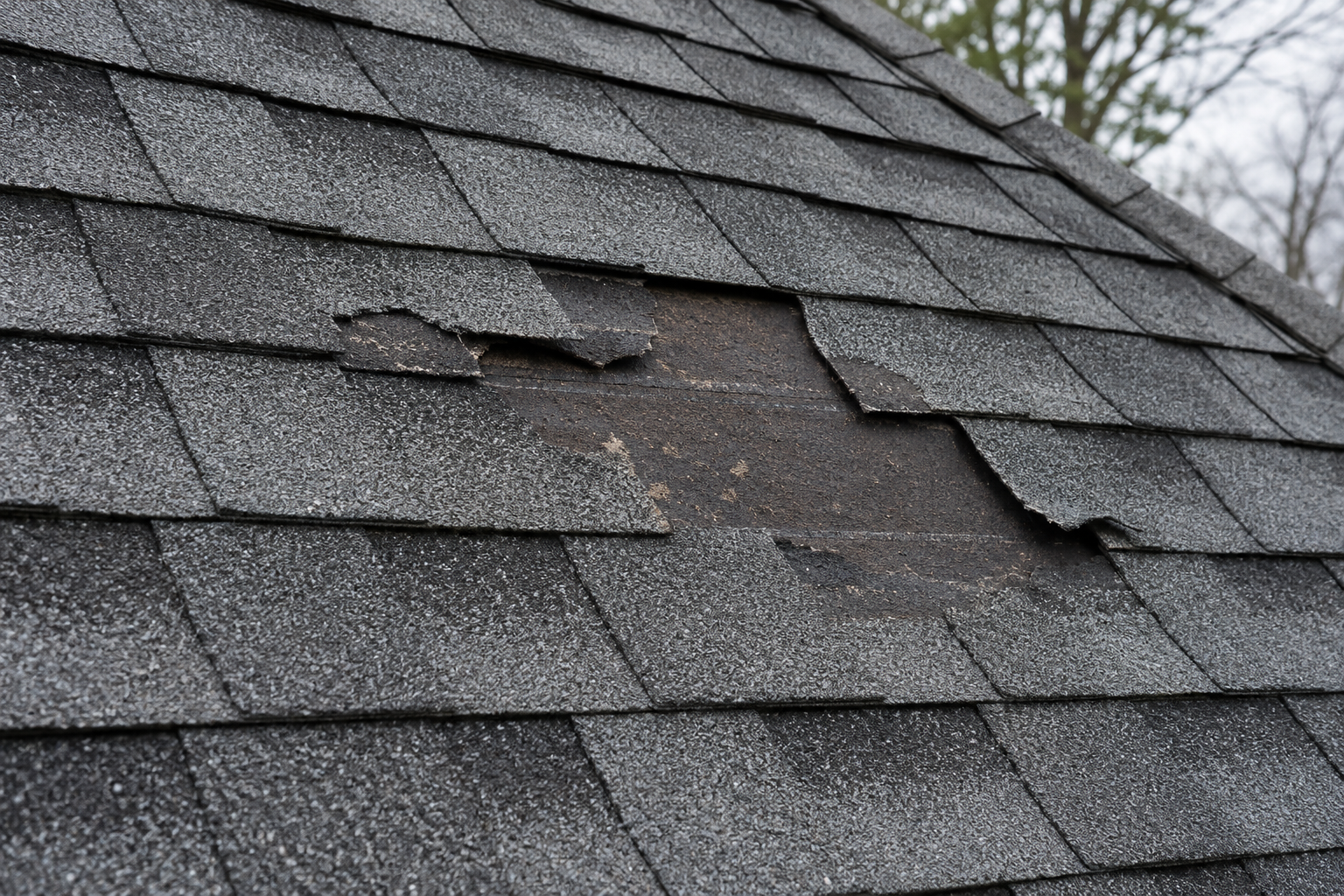
Missing shingles after a storm deserve prompt attention, even when no water is visible inside. The next step is to document what can be observed safely and arrange a professional assessment of the affected roof and surrounding details. A few missing pieces do not automatically establish the full extent of damage or prove that the entire roof needs replacement.
The inspection should answer practical questions: Where is covering missing? What else was observed? Is temporary protection needed? Can a suitable repair be completed? What remains uncertain? A useful report connects those answers to photographs, locations, and a written recommendation.
Showtime Exteriors serves Texas owners evaluating roofing concerns. This guide provides an owner-level checklist for reporting the problem, preparing for an inspection, comparing proposed work, and retaining an understandable project record.
First Confirm That Conditions Are Suitable
Do not begin an outdoor assessment while the weather remains hazardous. The National Weather Service’s guidance on what to do after severe weather advises staying informed, checking conditions after the threat has ended, and avoiding hazards such as downed power lines and damaged buildings.
Keep personal observations at ground level or in accessible, safe interior areas. Wet surfaces, hidden damage, and changing weather make roof access unsuitable for an untrained owner. Do not climb onto the roof to count missing shingles or retrieve a better photograph.
Tell the contractor immediately about active leakage, visible openings, or other urgent concerns. Conditions involving electrical hazards, unstable materials, or apparent structural distress need an appropriate emergency response. A routine inspection appointment should not be treated as the answer to every immediate hazard.
Use This Initial Owner Checklist
The checklist below organizes information to share with the roofing professional. It is not a technical inspection procedure or a reason to access the roof.
Checklist itemWhat to record safelyStorm historyApproximate date, time, and direct observationsRoof locationBuilding side or roof area where pieces appear missingGround evidenceShingle pieces and debris visible from a safe locationInterior symptomsNew stains, dampness, dripping, timing, affected roomsPrevious concernsEarlier leaks, repairs, roof work, available reportsUrgencyActive water entry or an observed openingAccessProperty contact, restrictions, tenant arrangementsRecordsPhotos, installation information, warranties, invoices
Send the information before the visit when possible. Consistent location names and dates help the contractor plan the assessment and distinguish new observations from a roof’s earlier history.
Photograph the Concern From a Safe Location
Take a broad view showing the building side and a closer view using zoom where available. Preserve original files and dates. A close-up without a location can be difficult to connect to the roof later, particularly on a multi-building property.
GAF’s guide to missing shingles recommends ground-level observation and professional assessment. Use that approach to report the concern without walking on the covering or exposing yourself to a fall.
Do not edit photographs to make a condition appear more severe or certain. Annotation can help identify a location, but retain the original image separately. The contractor and any other reviewer need a clear record of what was actually visible.
Keep Ground Evidence in Context
Shingle pieces on the ground are useful information, but they do not establish exactly where they came from or the full condition of the roof. Photograph their location and tell the contractor what you know. Avoid assigning them to a particular slope without evidence.
If materials can be preserved safely, ask the relevant professionals or insurer what should be retained and how. Do not handle debris near damaged electrical equipment, unstable construction, or other hazards to collect evidence.
Record whether cleanup or temporary work has already occurred. The absence of debris at the inspection does not prove that no material was displaced. A dated account of earlier observations can help the contractor understand what changed before the visit.
Understand Why an Inspection Should Extend Beyond the Gap
Missing covering is a visible concern, but neighboring areas may also need review. Owens Corning’s overview of storm damage signs explains that wind can remove shingles and that some effects, including seal-related concerns, may be less apparent.
Ask the inspector which slopes, edges, ridges, details, and accessible adjoining areas will be reviewed. The scope should match the reported problem and roof construction. Do not assume that a photograph of one missing area establishes the condition of the entire assembly.
A report should distinguish what was observed, what could not be inspected, and what further work would clarify an important question. Those limits make the assessment more useful, rather than weakening it with unsupported certainty.
Ask How Wind-Related Conditions Will Be Evaluated
A contractor should explain the observed conditions and why they support the recommendation. Missing, torn, creased, or displaced materials can require different treatment. Installation history and existing condition may also matter to the assessment.
GAF’s technical bulletin on shingle damage from wind events distinguishes damaged shingles from certain broken-seal conditions and describes manufacturer-specific responses. The relevant product’s current instructions should guide the professional procedure.
Do not lift, bend, press, or reseal shingles yourself to test them. The contractor should use suitable methods and document findings without unnecessary alteration. Ask what evidence establishes a concern and whether any exploratory work needs separate approval.
Review Underlying Conditions Without Making Assumptions
A visible gap may expose another layer, but a ground-level photograph cannot establish the condition of every component below it. The inspection should identify what is visible and whether additional access or removal is needed to assess the substrate.
Do not assume that remaining underlayment makes the roof suitable to leave indefinitely. Equally, exposed material does not prove that all decking or framing needs replacement. Request findings tied to the actual area and a clear recommendation for protection or correction.
Where concealed damage remains possible, agree on how it will be documented and priced if discovered during work. Supporting photographs and a written authorization process help the owner understand changes while the affected area is open.
Connect Interior Symptoms to the Investigation
Record the room or grid location, when water appeared, weather conditions, and any change over time. Distinguish an old stain from new dampness or active dripping. A consistent history can be more useful than a general statement that the ceiling has always looked that way.
Water can travel before it becomes visible indoors. The room location alone may not identify the entry point. Share the history so the contractor can determine which roof areas and adjoining components need review.
Interior repairs should be identified separately from roofing work unless the agreement includes both. Ceiling materials, insulation, paint, equipment, and other affected items may involve different parties. The owner needs a coordinated plan for the source and any resulting restoration.
Define the Need for Temporary Protection
Ask whether the observed condition requires temporary protection before permanent work can be completed. The provider should identify the area, intended measure, access needs, price, and follow-up. Temporary work should have an understandable scope rather than an open-ended promise.
Coordinate necessary protection with any relevant insurer instructions and documentation. Do not postpone appropriate measures to prevent further damage while waiting for a routine visit. Keep a record of what was done, when, where, and why.
Temporary protection is not the same as a completed permanent repair. If the final scope remains under review, keep the item open and identify the next decision. A temporary-work invoice should not become the only record of an unresolved roof condition.
Request a Location-Based Inspection Report
A useful report identifies the property, inspection date, reported history, methods, inspected areas, limitations, photographs, findings, and recommendations. Roof sections should be labeled consistently. A reviewer should be able to connect every close-up with an overview or location reference.
Report categoryWhat the owner should understandObserved lossWhere covering is missing or damagedSurrounding findingsRelevant adjacent shingles and roof detailsUnderlying conditionsWhat was visible and what remains concealedLimitationsAreas or questions not resolved during the visitProtectionAny immediate measure and its statusPermanent recommendationDefined repair, further investigation, or larger workNext actionsResponsible party, approval, and follow-up
Ask for an action list as well as photographs. The report should help the owner decide what to approve and identify what still needs investigation or coordination.
Compare Localized Repair With Larger Work
A repair proposal should identify the affected area, materials, preparation, neighboring work, and intended result. Ask whether surrounding conditions support a practical repair and whether additional concerns remain. A count of missing pieces alone does not define the completed scope.
A replacement recommendation should explain why smaller work is unsuitable or insufficient. Request documented reasoning about the extent, condition, repair feasibility, or other relevant findings. Avoid choosing a larger project solely because a storm occurred nearby.
Showtime Exteriors’ residential roofing services provide a starting point for that discussion. Compare the assessment and scope before comparing totals, and request clarification where bidders recommend materially different approaches.
Clarify Product Matching and Compatibility
Ask the contractor to identify the existing product where possible and describe the proposed replacement. Profile, dimensions, color, and installation requirements can affect the repair. A similar color sample does not establish compatibility with the roof already installed.
Separate appearance questions from functional scope and insurance questions. The roofer should explain its material recommendation. The insurer addresses policy-specific payment and matching issues through its own process. Neither answer should be assumed from a generic online statement.
Showtime Exteriors’ guide to roofing materials and selection factors for Texas can help organize broader material questions if replacement is being considered. Keep optional upgrades distinct from necessary corrective work.
Review Flashings, Edges, and Related Components
Ask whether the inspection includes relevant penetrations, walls, valleys, ridges, skylights, and roof edges. Those details may present separate concerns from the visibly missing covering. Each recommendation should identify the component and explain the proposed treatment.
Clarify which items are included in the repair proposal. Gutters, masonry, skylights, siding, equipment, and interior restoration may involve another trade. An exclusion can be reasonable when it is clear and the necessary coordination is assigned.
Do not let a general phrase such as repair storm damage leave those boundaries undefined. The owner should understand what the contractor will deliver, what remains separate, and how the interfaces will be completed.
Keep Coverage Decisions Separate From Roofing Findings
A contractor documents roof conditions and prices its work. The insurer evaluates coverage and payment under the policy. Missing shingles or a recommendation for replacement do not guarantee that a policy will pay the full construction amount.
The Texas Department of Insurance’s storm recovery guidance recommends documenting damage, preventing additional damage, preserving receipts, reporting promptly, and keeping insurer communications. Ask your insurer about inspection, evidence, and timing before permanent work or disposal, while arranging necessary protection.
Use your actual policy and claim information. Reporting requirements, deductibles, exclusions, valuation, and payment conditions can differ. Keep construction pricing and coverage communications organized so you can distinguish the work proposed from the payment authorized.
Understand the Contractor’s Insurance Role
Ask who is answering technical roofing questions and who is advising on coverage or settlement. A roofing contractor can explain its estimate and findings, but those functions should not be confused with representing the policyholder as a public adjuster on the same project.
TDI’s roofing and insurance law guidance explains that restriction and states that contractors cannot offer to waive, rebate, or absorb the policyholder’s deductible. Keep those boundaries clear when reviewing promises made during a sales discussion.
Calculate personal obligations from the actual contract and insurer’s written information. Do not assume upgrades, uncovered work, or the deductible disappear into claim proceeds. Keep payment timing clear before committing to a construction schedule.
Check Approvals and Site Logistics Before Work
Confirm the applicable local requirements for the address and proposed scope. A limited repair and broader replacement may involve different review needs. Assign responsibility for determining requirements, obtaining approvals, paying fees, and arranging inspections where applicable.
Discuss driveway access, debris collection, landscaping, entrances, pets, tenants, and operating hours. The plan should reflect the site rather than assuming a standard arrangement works everywhere. Identify who can approve changes if concealed conditions are discovered.
Keep tentative dates tied to material availability, approvals, and suitable weather. A clear schedule should identify dependencies and the process for communicating changes. That helps the owner plan without treating an initial estimate as a confirmed installation appointment.
Adapt the Checklist for Commercial and Multi-Building Properties
An apartment, church, retail property, office, or storage facility may have shingle sections adjoining other roof systems. Identify each area separately. A residential shingle checklist is not a complete inspection method for every membrane or metal section on the building.
Showtime Exteriors’ commercial roofing services support discussions about assessments and corrective work. Share building maps, tenant restrictions, equipment activity, and previous reports so the scope reflects the occupied property.
Coordinate reports by building and roof area. Similar-looking structures can have different conditions and repair histories. Prioritize using documented findings rather than assuming the same recommendation applies to every roof because one area lost shingles.
Verify Completed Work and Retain the Record
Request labeled completion photographs, a description of the work, relevant product information, approved changes, and remaining limitations. Record temporary measures separately from completed permanent repairs. Keep other-trade items visible until their agreed work is finished.
Where appropriate, define a follow-up observation after relevant weather. Any testing should use a suitable professional procedure. If symptoms return, connect the new information to the completed scope rather than beginning again without the repair history.
Showtime Exteriors’ guide to roof maintenance records offers an organizational framework for keeping reports, invoices, photographs, and warranties together. Good records support an understandable history without guaranteeing coverage or a particular future assessment.
Avoid These Common Decision Gaps
Do not approve a total without understanding the affected area and included tasks. A low amount may describe temporary work or a smaller scope. Ask for written clarification before treating two proposals as equivalent.
Do not let an uninspected area disappear from the record. If access prevented a complete assessment, identify whether follow-up is necessary and who arranges it. An honest limitation is more useful than an unsupported statement about the entire roof.
Finally, keep unresolved causes visible. If repeated repairs have not explained a recurring symptom, ask what additional investigation is needed. Progress should mean a defined correction or a clearer decision, not simply another visit to the same building.
Frequently Asked Questions
Do missing shingles always cause an immediate interior leak?
Not necessarily. The absence of visible leakage does not establish that the roof is suitable to leave as it is. Arrange prompt professional assessment and ask about appropriate protection and permanent work for the observed condition.
Can a few missing shingles be repaired?
Possibly, if the roof condition and product requirements support a suitable repair. The contractor should assess surrounding areas and explain feasibility. The number of visible missing pieces alone does not determine the final scope.
Should I climb up to check whether more shingles are loose?
No. Keep owner observations at safe locations and arrange an appropriately equipped professional assessment. Do not lift or bend shingles to test them. Share photographs and the storm history instead.
Does my neighbor’s replacement prove I need one?
No. Nearby projects provide context, but your recommendation should follow findings at your own property. Roof materials, exposure, construction, and condition can differ even when houses look similar from the street.
Can the contractor promise that insurance will pay?
The insurer determines coverage and payment under the policy. The contractor can document conditions and estimate its work. Keep those decisions separate and request written information from the appropriate party.
What should I send when requesting an inspection?
Provide the address, contact information, approximate storm date, location of the concern, safe photographs, active-leak information, previous repairs, and access restrictions. Identify urgent conditions so the service response can be planned appropriately.
Follow Up After the Next Rain
Agree on a follow-up process before the repair crew leaves. Ask whom to contact if a ceiling stain grows, a previously dry area becomes damp, or another shingle appears on the ground. Keep the job number and completion photographs with the inspection report so a return visit can start with the same information.
From a safe indoor location, check previously affected rooms after the next rainfall. Compare dated photographs rather than relying on memory. A stain can remain visible after a leak has stopped, while fresh moisture or an expanding boundary deserves prompt attention. Describe what changed and when; let the appropriate professional evaluate the cause.
For occupied commercial properties, give tenants or staff one reporting contact. Ask them to identify the room, time, and weather conditions instead of submitting several disconnected maintenance requests. Consistent reporting helps the owner distinguish an unresolved roof concern from plumbing, condensation, or another water source and coordinate the right response.
Arrange an Inspection for Missing Shingles After a Storm
Missing shingles after a storm call for a documented assessment and clear next steps. Record safe observations, identify urgent protection needs, request findings tied to locations, and compare permanent work using a defined scope.
Contact Showtime Exteriors or call 817-400-7663 to discuss your property. Share the storm history, visible concerns, and any active leakage so the assessment can focus on the building’s needs.