



Preventive Maintenance Plan for a Restaurant Roof
Plan restaurant roof maintenance around grease exposure, exhaust equipment, drainage, service access, leak reports, repairs, and documented follow-up.
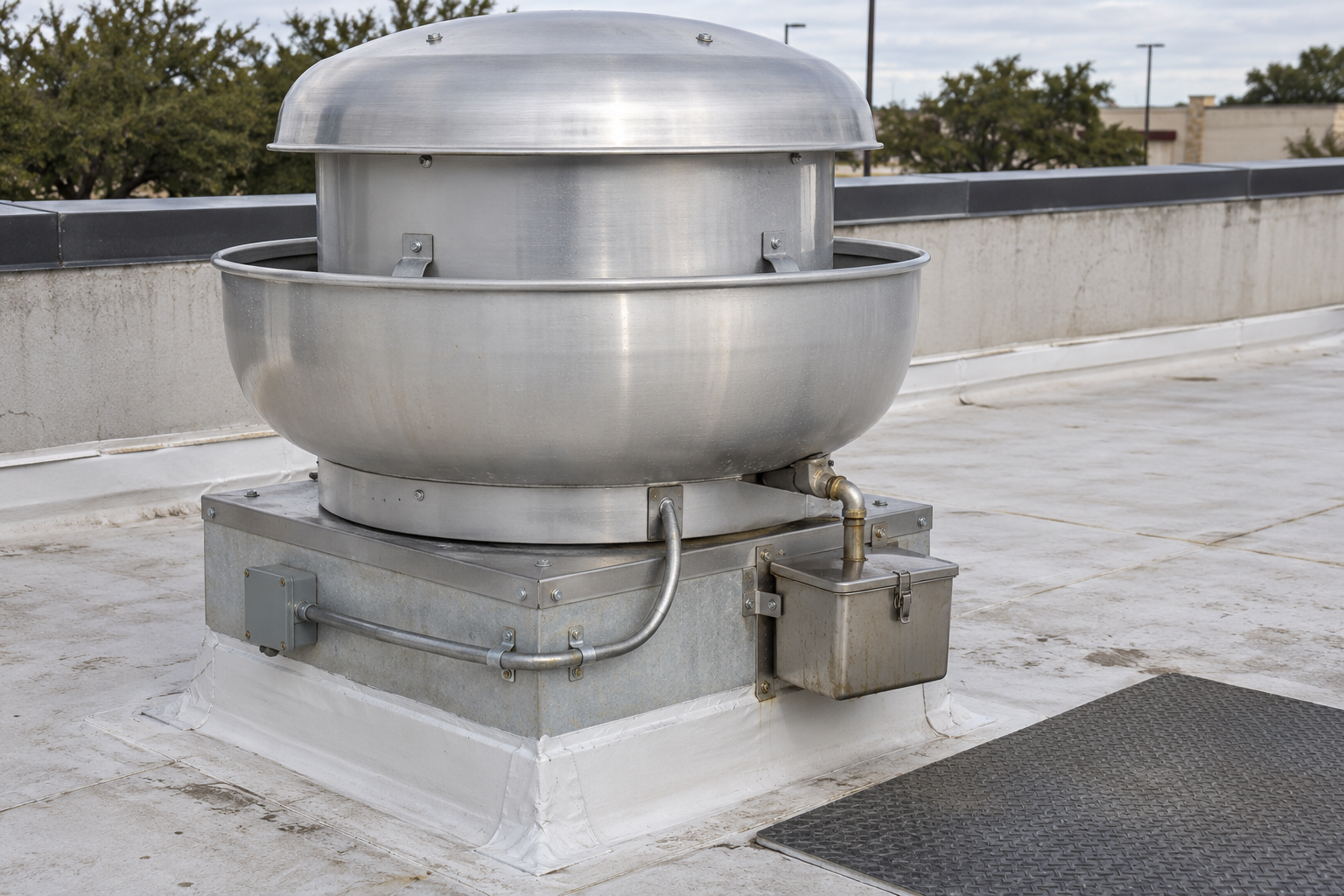
A preventive maintenance plan for a restaurant roof should coordinate roofing care with exhaust cleaning, equipment service, drainage, and daily operations. A restaurant’s rooftop can receive frequent visits from several contractors. Without clear responsibilities, a spill, damaged detail, or recurring leak can remain unresolved even while each service provider completes its own work order.
The plan should reflect the installed roof and the restaurant’s actual use. A small café, high-volume cooking operation, and restaurant within a multi-tenant center can have different exposures and ownership arrangements. The right program begins with those differences and turns inspection findings into documented actions.
Showtime Exteriors works with Texas owners evaluating roofing needs. This guide explains how to organize an owner-level maintenance program, define contractor responsibilities, and keep roofing concerns visible between scheduled visits.
Identify the Roof and the Areas Exposed to Operations
Gather available roof plans, installation records, warranty documents, repair invoices, and previous reports. Identify the roof covering and different roof areas where possible. Do not select a cleaning or repair method based only on the surface color.
Map exhaust fans, HVAC units, penetrations, drains, access points, and areas where residue or repeated service activity has been reported. Connect roof locations to recognizable interior references, such as the kitchen, dining area, storage room, or tenant suite.
Record missing information rather than assuming the construction. A maintenance proposal should explain what has been verified and which decisions require additional assessment. That baseline helps the owner distinguish routine service from an investigation needed to identify the roof or a concealed condition.
Separate Roof Care From Exhaust-System Service
Roofing maintenance and commercial kitchen exhaust inspection or cleaning have different scopes. A roofer’s visit does not establish that the exhaust system has received its required service. Likewise, an exhaust-cleaning invoice does not confirm that surrounding roofing is undamaged or properly maintained.
The International Kitchen Exhaust Cleaning Association’s industry FAQs provide background on professional exhaust-system cleaning and associated industry standards. Use qualified service providers and confirm the applicable requirements with the relevant professionals and authority for the property.
Bring the service schedules together without combining their responsibilities. Identify who reports equipment issues, who evaluates roofing exposure, who handles cleanup, and who verifies completion. A coordinated plan should make it clear where each contractor’s work starts and ends.
Assign Owner, Tenant, and Contractor Responsibilities
If the restaurant leases its space, review who is responsible under the lease and service agreements for roofing, equipment, penetrations, access, and associated damage. The maintenance plan should reflect the actual arrangement rather than assuming the operator controls every rooftop decision.
Keep the reporting process available to shift managers as well as office staff. A concern discovered during evening service should reach the appropriate contact with enough information to arrange a response.
Choose an owner or manager who receives reports and an alternate for urgent issues. Identify the roofing provider, exhaust contractor, HVAC contractor, and anyone else who needs to participate. Include a process for arranging access and authorizing additional work.
For a shared roof, identify boundaries and communication with neighboring tenants. A problem above one suite can involve a common drainage area or equipment serving another space. Use a building-wide location system so reports are routed to the correct party.
Build a Baseline Before Changing the Program
Request an initial assessment of accessible roof surfaces, details, drainage, previous repairs, and relevant interior symptoms. Ask for photographs, location labels, inspection methods, and limitations. A report should distinguish observations from uncertain causes.
Tell the contractor about earlier leaks, equipment replacements, exhaust cleaning, spills, and tenant improvements. Include dates when available. That history can help identify where closer review is needed without deciding the cause before the assessment.
The baseline should produce a prioritized action list. Separate immediate protection, scheduled corrective work, further investigation, and optional improvements. Each item needs a responsible party and next step so the report becomes a working plan rather than a photo gallery.
Use a Schedule Based on the Actual Roof
Set roofing inspection frequency using manufacturer instructions, roof condition, equipment activity, surroundings, and prior findings. Planned seasonal reviews can provide a baseline, with additional visits when changes or reported concerns justify them.
Siplast’s roof maintenance guidance supports regular professional inspections and building-specific care. Its guidance has a defined system context; apply the instructions for the roof actually installed instead of copying another manufacturer’s requirements into the contract.
Keep exhaust-system service on its own appropriate schedule. The roofer and equipment providers should coordinate when work may disturb shared details or expose the roof to contaminants. An active leak or reported spill should trigger review rather than wait automatically for the next calendar visit.
Use This Restaurant Roof Service Calendar
The following is an organizational example. It does not prescribe a universal roofing or exhaust-cleaning interval. Agree actual dates and responsibilities with the appropriate service providers.
Timing or triggerRoofing coordination taskRecord to retainProgram setupIdentify system, map equipment, establish condition baselineRoof file and action listPlanned roof inspectionsReview agreed surfaces, details, drainage, previous workLabeled findings and completion recordsExhaust cleaning or major serviceCoordinate roof protection, cleanup, and reported concernsService report and affected-area observationsEquipment installation or replacementDefine disturbed details and roofing restorationBefore, during, and after records where neededReported spill or new leakageArrange appropriate assessment and protectionIncident information and recommendationsSignificant weatherAssess relevant areas when conditions permitEvent history and follow-up scopeAnnual budget reviewReview repeat findings and future project needsUpdated priorities and service assumptions
Showtime Exteriors’ commercial roof maintenance guide discusses documented service and follow-up. Its organizational approach can help restaurants elsewhere in Texas tailor a program to their property.
Treat Grease Exposure as a System-Specific Concern
Cooking oils and grease should not be treated as ordinary roof dirt. ARMA’s bulletin on contaminants and modified bitumen explains that these materials can adversely affect modified bitumen membranes and recommends manufacturer guidance when contamination occurs. Different roof products require their own evaluation.
Record the location, known substance, approximate timing, and apparent source. Coordinate the source review with the relevant equipment provider while the roofing professional assesses the affected roof. Cleaning alone should not be assumed to establish whether materials remain suitable.
Avoid selecting a generic degreaser, solvent, or coating without an appropriate procedure. Obtain guidance for the actual assembly and contaminant. A product used for kitchen equipment is not automatically appropriate for every roofing material or detail.
Include Grease Collection and Service Records
Identify any equipment intended to collect discharge and record who inspects, services, or replaces its components. Ask the equipment provider to define its requirements and how completion is documented. Do not leave collection equipment in an undefined gap between exhaust service and roofing maintenance.
Where recurring residue is observed, compare the location and timing with service history. The relevant contractor may need to evaluate the source or arrangement. The roofer should separately explain the condition of the surrounding assembly and any necessary corrective work.
Keep observations factual. A photograph of residue does not establish every cause or the extent of concealed effects. A coordinated report should identify what each professional found and what remains to be resolved before the item is closed.
Plan Cleanup Around the Installed Materials
Before cleaning begins, define the affected area, selected procedure, compatible products, protection, and handling of collected material. Ask who is responsible for any necessary coordination involving wash water or site restrictions. Do not assume that directing residue toward a drain is an acceptable disposal plan.
Request photographs of accessible conditions before and after service where useful. If cleaning exposes a concern, document it and arrange assessment rather than covering it immediately with an unspecified product.
Separate cleanliness from roof condition. A surface can look cleaner without proving that its membrane, seams, or concealed materials are sound. The service report should describe the work performed and avoid conclusions beyond what the visit established.
Keep Drainage Paths Clear and Identifiable
Map accessible drains, scuppers, gutters, downspouts, and discharge points. Review debris, obstructions, reported overflow, and retained-water observations. Include the route water follows toward the outlet, not only the visible opening.
GAF’s commercial drain maintenance guide explains the relationship between drainage components and water removal. A clear opening does not establish that concealed piping or every surrounding roof section functions as intended.
If cleaning does not resolve a reported condition, request the next appropriate investigation. Cleaning, piping assessment, roof detail repair, and drainage design are different tasks. Keep those responsibilities explicit so repeat service does not substitute for understanding the problem.
Inspect Equipment Curbs, Penetrations, and Connections
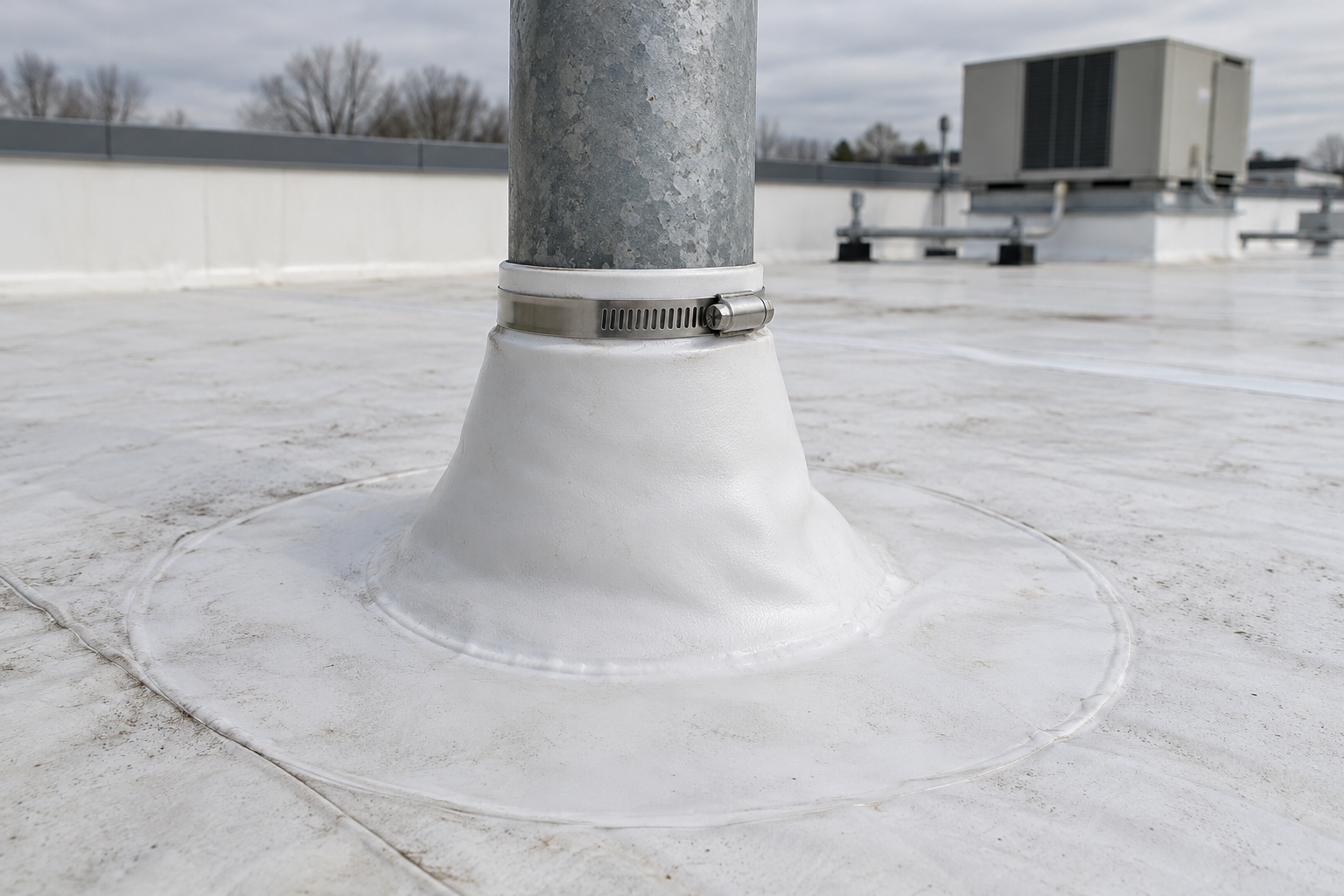
Ask the roofer to document accessible details around exhaust fans, HVAC curbs, pipes, skylights, walls, and edges. The report should identify the affected component and explain why a recommendation is needed. A broad note to reseal everything is difficult to compare or verify.
Equipment and roofing may meet at the same location while remaining separate scopes. Identify what the roofer handles and what belongs to the equipment contractor. If a component must be moved to assess or repair the interface, arrange that coordination before permanent work is approved.
Showtime Exteriors’ commercial roofing services provide a starting point for those assessments. Request a defined scope with locations, materials, preparation, and completion evidence instead of relying on an informal promise that a detail will be handled.
Review the Routes Used by Service Contractors
Maintain a roof access log with provider, date, reason, equipment location, and work performed. Ask contractors to remove materials and report observed damage. The process should include routine visits as well as larger projects.
Map practical service routes and discuss compatible protection where appropriate. The route should reach the components technicians actually need to maintain without obstructing drainage. Do not treat a walkway as proof of structural capacity or a replacement for access planning.
After work that may disturb the roof, arrange a review proportionate to the activity. Equipment startup and roof closeout answer different questions. A working fan does not document every surface, penetration, or detail affected during its installation or service.
Keep Roof Access Within a Safety Plan
Restaurant roofs can involve edges, openings, skylights, equipment, changing weather, and slippery surfaces. Inspection and service need appropriately qualified and equipped personnel. A maintenance checklist is not an instruction for kitchen staff to climb onto the roof.
OSHA’s fall-protection standards resources distinguish guidance and requirements for different work settings. The responsible professionals should determine what applies to the task and site rather than relying on a generic rule copied into an owner checklist.
Restaurant staff can record interior symptoms, arrange access, and communicate known hazards within their training and site procedures. If a contractor cannot inspect an area safely, record the limitation and plan a suitable return assessment instead of marking the area satisfactory.
Use a Clear Interior Leak-Reporting Process
Provide a simple form capturing date, time, location, weather or operating conditions, and photographs when safe. Identify whether the observation is active dripping, dampness, a new stain, or a recurring condition. Link the report to the roof and equipment map.
Water appearing indoors does not establish the source by itself. Roofing, equipment, piping, condensation, and adjoining construction may require separate review. Share timing and previous repairs so the contractors can plan an appropriate investigation.
Follow the restaurant’s procedures for protecting people, equipment, food, and affected spaces. The roof plan should identify who coordinates the building response without treating a roofing report as a substitute for the relevant operational or specialist decisions.
Coordinate Repairs Around Restaurant Operations
Discuss preparation periods, service hours, deliveries, entrances, outdoor dining, air intakes, and equipment needs before scheduling work. A small roof repair can still require careful coordination if access or equipment operation is involved.
Ask the contractor to identify planned activities, materials, protection, and any operational interruption. Define who can approve changes and who contacts management if conditions differ from the proposal. Include an alternate contact for work outside normal office hours.
Keep urgent protection separate from permanent repairs when appropriate. Each should have a defined scope and follow-up plan. An emergency visit should not disappear into the records without explaining whether the underlying concern was resolved or remains open.
Preserve Warranty and Alteration Procedures
Locate the actual warranty or guarantee and care instructions. Identify notice, authorization, provider eligibility, registration, and documentation requirements. Do not assume an exhaust-cleaning invoice or routine roof service automatically satisfies every obligation.
Johns Manville’s building owner resources illustrate manufacturer-specific processes for leak reporting and alterations. Use the provider associated with the installed assembly and retain any written guidance about the proposed work.
Review the repair contractor’s service terms separately. Product coverage, workmanship coverage, maintenance, and equipment service are different arrangements. Ask who handles each type of concern and keep the actual documents available to the person coordinating the response.
Set Work Priorities and Verify Completion
Give each concern a location, photograph, observation, recommendation, responsible party, and target date. Explain the priority and any dependency on another trade. An instruction that the roofer should look at something is incomplete until the report reaches the person arranging the visit.
Request completion evidence and a clear account of remaining limitations. If work is temporary or another contractor must return, keep the item open. Where appropriate, define later observation after relevant rainfall or operating conditions.
A return of symptoms deserves an updated assessment. Compare the new report with the completed scope rather than automatically repeating the same treatment. The objective is to resolve the identified problem or establish the information needed to choose the next action.
Review the Agreement and Budget Annually
Separate scheduled inspections and cleaning from corrective repairs, investigation, equipment work, and larger roof projects. Clarify which tasks the maintenance fee includes and what requires additional authorization. Compare service proposals on equivalent scope.
If findings suggest renewal, ask for an assessment-led recommendation. Showtime Exteriors’ guide to roofing materials and selection factors for Texas can help frame broader questions. Material selection should reflect the restaurant’s actual exposure and building needs.
Keep repeat expenses visible. If the same concern remains across visits, ask what information or coordination is missing. The annual budget review should improve the plan rather than simply reserve funds for another identical unresolved service call.
Keep One Current Restaurant Roof File
Retain the roof map, access log, inspection reports, equipment service records, approvals, invoices, photographs, and warranty documents together. Identify who maintains the file and how contractors submit updates. Include current contact information and pending actions.
Showtime Exteriors’ guide to commercial roof maintenance records provides an organizational framework. Good records support an understandable history without guaranteeing insurance coverage or a particular underwriting response.
When management, ownership, or service providers change, hand over unresolved items as carefully as completed work. The next team should know which concerns await approval, which areas were not inspected, and what follow-up has already been arranged.
Restaurant Roof Maintenance Checklist
Use this as an action register to adapt with the appropriate professionals, not as a technical cleaning or repair procedure.
ItemRecord or decision requiredRoof identityManufacturer, assembly, available instructions, unknownsResponsibilityOwner, tenant, roofer, exhaust provider, equipment contactsEquipment mapFans, HVAC, penetrations, access, drainageContamination reportsLocation, known substance, source review, roofing assessmentDrainage serviceAreas cleaned, limitations, recurring concernsRoof findingsLabeled photographs and recommended actionsTrade coordinationDisturbed details, protection, restoration responsibilitiesInterior reportsLocation, timing, conditions, responseWork completionScope, photographs, open items, follow-upAnnual reviewRecurring findings, schedule changes, budget decisions
Frequently Asked Questions
How often should a restaurant roof be inspected?
Set frequency using the installed system’s instructions, condition, exposure, access activity, and service history. Planned seasonal reviews can provide a baseline, with additional assessment after relevant events. Exhaust inspection and cleaning need their own appropriate schedule.
Does exhaust cleaning replace roof maintenance?
No. The services address different scopes. Coordinate them and retain both sets of records. Ask who reports surrounding roof concerns, who evaluates them, and who verifies any corrective work so the interface remains covered.
Can staff clean grease from the roof with kitchen products?
Do not assume those products suit the roof. Obtain an appropriate procedure for the actual assembly and contaminant from the relevant professionals or manufacturer. Rooftop work also needs proper access and task-specific planning.
Does visible residue mean the whole roof needs replacement?
No. The appropriate response depends on the assessment, material, extent, and underlying conditions. Document the observation, investigate the source, and request a recommendation tied to the findings rather than selecting a treatment from appearance alone.
What should be reviewed after equipment replacement?
Review the disturbed roof areas, relevant connections, access route, temporary details, and completion records as appropriate to the project. Establish the roofing scope before installation so required work is not left between separate contractor agreements.
Arrange a Restaurant Roof Maintenance Assessment
A preventive maintenance plan for a restaurant roof works best when roofing, equipment service, cleaning, reporting, and records are coordinated clearly. Begin with the installed system and actual operating conditions, assign responsibilities, and keep findings open until their agreed next steps are complete.
Contact Showtime Exteriors or call 817-400-7663 to discuss your restaurant property. Share the roof records, equipment service history, known concerns, and operating restrictions so the assessment can focus on the building’s needs.