



What a Roofing Contractor Can and Cannot Do During a Commercial Roof Claim
Learn what a Texas roofing contractor can document, estimate, and repair during a commercial roof claim—and where insurance adjusting boundaries apply.
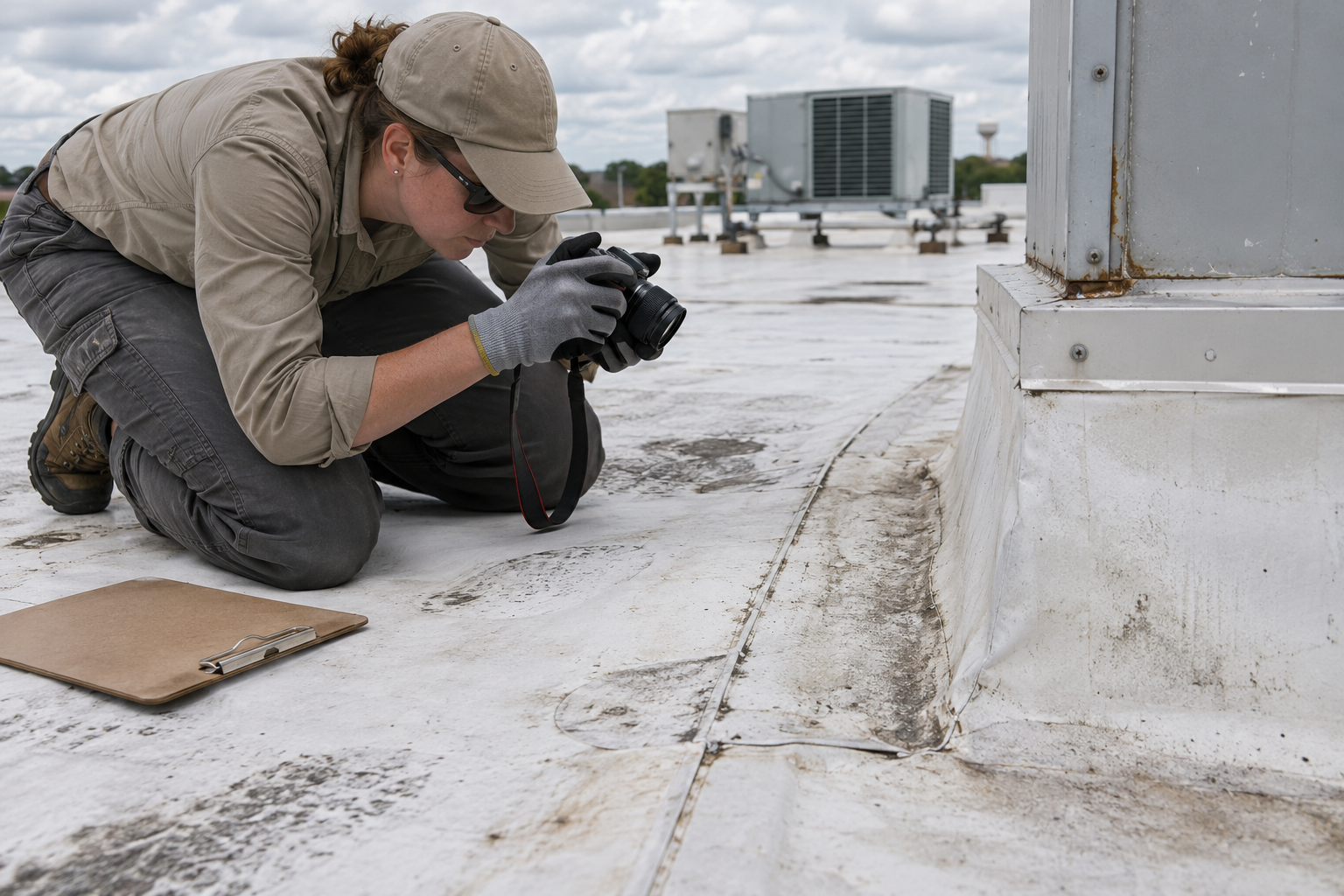
After a storm damages a commercial roof, the owner usually needs several answers at once: Is the building protected? What work is necessary? What will the insurer pay? Who is authorized to make decisions? Those questions overlap, but they belong to different responsibilities.
A roofing contractor evaluates roofing conditions, develops a construction scope, estimates its work, and performs authorized repairs. Insurance coverage, claim representation, and legal disputes require a different kind of authority. Understanding that distinction helps a building owner request useful assistance without expecting a roofer to settle an insurance claim.
For owners working with Showtime Exteriors, the practical starting point is a documented roof assessment and a clear description of the proposed work. This guide focuses on Texas commercial properties. It offers general information, not legal advice or a determination about any particular policy.
The Key Texas Boundary: Construction Expertise and Claim Adjusting
Texas allows contractors to prepare estimates and discuss those estimates and technical information with an insurer or its adjuster. A roofing contractor cannot act as an adjuster, or advertise to adjust claims, for a property where it provides or may provide roofing services. TDI describes these boundaries in its bulletin addressing adjusters and repairs.
An owner can therefore ask a roofer to explain a measurement, identify a damaged flashing, or describe why a proposed installation needs particular components. Asking the roofer to negotiate policy benefits or settle the claim on the owner's behalf crosses into a different role.
The distinction depends on what the person actually does. Calling a service “claim assistance” does not automatically make every activity permissible. Ask for a written description of responsibilities before relying on broad promises about handling insurance.
A Practical Responsibility Table
TaskAppropriate roofing contractor contributionResponsibility to keep separateInitial assessmentRecord accessible roof conditions and inspection limitationsDecide policy coverageConstruction estimateExplain quantities, materials, methods, and pricesNegotiate claim settlement as the owner's representativeAdjuster inspectionIdentify locations and discuss technical findingsRepresent the owner on policy interpretationTemporary protectionPropose and perform authorized stabilization within capabilityGuarantee reimbursementAdditional discoveriesDocument newly exposed conditions and revised construction costsPromise approval of additional insurance paymentPermanent workInstall the contracted system and provide closeout recordsDetermine legal rights in a coverage dispute
Use this table when assigning responsibilities among ownership, management, the contractor, the insurer, and any separately retained adviser. Keep a named contact for each role.
What a Contractor Can Document During an Inspection
A useful inspection connects observations to specific locations. “Storm damage throughout” gives the owner little basis for comparing recommendations. A report should identify the roof sections examined, their accessible features, and the conditions observed.
For a commercial property, request dated overview photographs, a roof plan or location references, and detail photographs showing relevant seams, flashings, edges, penetrations, and drainage areas. Include interior observations when access and authorization permit. Ask the contractor to distinguish visible conditions from conclusions requiring further investigation.
A surface inspection may not reveal every wet insulation area or concealed deck condition. Testing and exploratory openings can require separate authorization, qualified personnel, and a plan to restore the roof. An uncertain condition should remain identified as uncertain rather than being converted into a guaranteed replacement quantity.
Prior repair records also matter. A patch, seam repair, or older water stain may predate the reported event. Accurate documentation describes that history instead of assuming that every condition appeared during the latest storm.
What a Roofing Estimate Should Explain
A contractor can prepare a detailed estimate for the work it proposes to perform. Owners should be able to follow the estimate from observed condition to construction activity.
Useful categories include removal, disposal, substrate preparation, insulation, attachment, membrane or other roof covering, flashing, edge metal, drainage interfaces, access, and temporary protection. Not every project needs every category. What matters is identifying the components required for the actual scope.
The estimate should state assumptions and exclusions. For example, concealed deterioration may be excluded from the base price until demolition exposes its extent. Explain how that condition would be measured, priced, documented, and authorized if encountered.
A quote labeled “insurance proceeds” is harder to evaluate than a defined construction proposal. The owner still needs to understand what work is included, when payment is due, and which circumstances could change the price. Commercial roofing services should be evaluated through their actual scope and project requirements.
Can the Roofer Meet the Insurance Adjuster?
A technical site meeting can help everyone locate the same features. The roofer may point out inspection findings, clarify measurements, and explain construction methods or its estimate. Confirm the meeting's purpose in advance and maintain safe access arrangements.
For example, an adjuster might ask why the estimate includes replacing a curb flashing rather than only patching the nearby membrane. The contractor can explain the existing detail, proposed assembly, and installation requirements. That is a construction discussion.
By comparison, asking the contractor to argue that a particular policy exclusion cannot apply involves coverage interpretation. The owner should direct that issue to the insurer and, when appropriate, a qualified independent adviser.
After a meeting, request a brief written record of technical questions, documents requested, and unresolved items. Attendance alone does not mean the insurer accepted the proposed scope or that the owner authorized construction.
What a Contractor Cannot Promise About Coverage
A contractor's opinion that a roof needs repair does not establish that the policy covers the work. Likewise, visible hail marks, a leak, or a neighboring building's replacement does not determine the outcome of a commercial roof claim.
Policy wording, endorsements, deductibles, limits, valuation provisions, and the facts of the loss can affect payment. TDI's commercial property insurance guide explains the broad differences among coverage forms and valuation approaches. The actual contract remains the place to check your building's terms.
Avoid treating a contractor's early project budget as a guaranteed insurance recovery. Use separate figures for the construction price and the insurer's payment position. If they differ, identify the reason rather than assuming one number automatically controls the other.
An owner should request written coverage explanations from the insurer. A roofing proposal can support the factual record, but it cannot replace the policy or bind the insurer to pay.
Deductibles Must Stay Visible
A proposal to “take care of the deductible” deserves careful attention. Texas prohibits contractors from offering to waive or rebate an insurance deductible. TDI's roofing and insurance law guidance also addresses the prohibition against a contractor adjusting the same property's claim.
Owners should keep the contract price, actual invoices, payments, and any legitimate scope changes consistent. Do not accept an inflated invoice or a misleading completion statement intended to make the insurer believe the owner paid an amount that was never paid.
Ask questions when a credit, marketing payment, or discount appears tied to avoiding the deductible. An ordinary construction price discussion should be transparent; it should not conceal the real transaction from the insurer.
For a commercial owner, this is also an accounting issue. The property manager, accounts payable team, and owner should work from the same approved contract and payment schedule. Reconcile discrepancies before submitting payment documentation.
Temporary Protection Is a Separate Decision
Water entering an occupied building may require attention before the permanent scope is settled. The contractor can assess what temporary measures it is equipped to perform and provide an authorization describing the work, limitations, and price.
Temporary protection might address an open area or a vulnerable flashing. It is not necessarily a permanent repair, and its installation does not establish insurance coverage. Document conditions before work when it is safe and practical, retain receipts, and coordinate with the insurer about inspection needs.
Define who can authorize emergency spending. A maintenance employee who reports a leak may not have authority to approve a large repair agreement. Written spending limits and contact information prevent avoidable confusion during after-hours responses.
Keep employees and tenants away from hazardous interior areas. Roof access, electrical risks, structural concerns, and specialized equipment may require other qualified professionals. The roofer's role should match its actual capabilities and the conditions encountered.
Build One Reliable Claim and Project Record
Keep the insurance record and construction record connected through dates and locations. A single organized folder is easier to review than unrelated text messages and photographs with no descriptions.
Include the reported event date, discovery date, property address, claim number, insurer correspondence, inspection reports, estimates, temporary-work authorizations, and invoices. Preserve original photographs and record the roof area they show.
For recurring leaks, include earlier service tickets. For a multi-building site, identify building numbers consistently. A photograph labeled “north roof” is ambiguous when three buildings each have a north section.
A contractor can supply roofing records, while the owner retains responsibility for assembling its complete claim file. Showtime Exteriors' discussion of commercial roof maintenance records insurers may request provides a useful starting point for organizing the building's service history.
Avoid editing images in ways that change what they show. If an annotated copy helps explain a location, retain the original alongside it. Clear evidence supports better decisions even when the parties disagree.
Handle Additional Work Through a Written Process
Commercial roofing projects can uncover conditions that were not visible during the first inspection. Wet insulation, damaged decking, or an incompatible previous repair may change the practical scope.
Ask the contractor to document the newly exposed condition, explain its effect on the work, and provide a proposed change order. Record quantities and location references before the area is covered. When practical, coordinate any requested insurer inspection before proceeding with disputed permanent work.
The contractor may explain its revised estimate and technical basis. That does not authorize it to negotiate policy benefits for the owner. The owner or an appropriately authorized representative should handle claim decisions.
The construction agreement should explain who can approve changes and what happens when an urgent condition cannot safely remain open. Do not assume the insurer's possible future payment substitutes for the owner's written authorization.
Repair, Restoration, and Replacement Need a Technical Basis
A commercial roof claim does not automatically require a full replacement. A limited repair may be suitable in one area, while broader work may be justified by the roof assembly's condition elsewhere. Restoration also has eligibility requirements that should be evaluated before it is proposed.
Ask how the recommendation addresses the observed problem, the existing system, and any concealed moisture uncertainty. Request an explanation of compatibility, drainage effects, and expected maintenance responsibilities.
If a contractor proposes a new system, compare the actual assembly rather than only a generic material name. The roofing material and system selection guide can help frame questions about construction suitability. Insurance payment and technical suitability remain separate decisions.
Owners should also identify optional improvements. A preferred upgrade may be reasonable for the business, but it should be priced clearly rather than described as automatically covered. Keep base repair needs, elective changes, and unresolved conditions visible in the proposal.
When a Separate Claim Representative May Be Appropriate
If the owner wants someone to negotiate the claim on its behalf, that is different from hiring a contractor to explain its own estimate. TDI's public adjuster guidance describes the public adjuster's negotiating role and warns about conflicts between adjusting and contracting.
Before retaining a public adjuster, verify licensing and review the agreement, services, compensation, and cancellation provisions. Ask who will communicate with the insurer and how the representative will coordinate with the contractor without combining the two roles improperly.
A public adjuster is not a substitute for legal advice. Questions involving legal rights, litigation, or disputed policy interpretation may warrant a Texas attorney with relevant experience. The choice depends on the owner's circumstances; not every roof claim needs additional representation.
Keep the owner's direct access to insurer information. A contractor's familiarity with an adjuster or a representative should never become a reason for the owner to lose track of the claim.
Claims Questions and Disputes Belong on Their Own Track
When an insurer requests more documentation, assign a person and a date to the response. Some requests concern construction details the roofer can provide. Others concern the policy, business records, ownership, or prior losses and must be handled by the owner or its adviser.
TDI publishes commercial insurance consumer rights, including information about claim notices and payment procedures. Actual deadlines can involve exceptions and special circumstances. Confirm the rules that apply to your policy and claim instead of relying on a contractor's general timeline.
For a disagreement, ask the insurer to identify its position in writing. Keep a factual chronology of communications, documents submitted, and remaining questions. Refer a technical discrepancy to the roofer for supporting information while keeping settlement decisions with the appropriate party.
A pending dispute also requires a building plan. Decide what temporary protection, monitoring, or owner-funded work is necessary while other questions remain unresolved.
If ordinary communication does not resolve an insurance concern, review TDI's insurance complaint resources. Keep the complaint accurate and supported by the actual correspondence. A complaint process does not replace legal advice or automatically establish that a disputed roofing item is covered.
Owners with mixed portfolios should also identify the service category for each property. A warehouse assessment and a residential roofing project may require different access plans, assemblies, contracts, and operational coordination. Do not reuse another property's proposal without checking those differences.
Review the Construction Contract Before Signing
The construction contract should stand on its own as a readable agreement. It should identify the parties, property, scope, materials, price, payment milestones, schedule assumptions, and change-order process.
Review cancellation language, deposits, warranty terms, exclusions, and any conditions tied to insurance decisions. Clarify whether an initial inspection authorization is separate from an agreement to perform permanent roofing work.
Be cautious about signing a document based only on a verbal description. Ask what the document authorizes today, what obligations begin later, and whether any other party's approval is still needed. Obtain appropriate advice if the terms are unclear.
Commercial properties may also involve a lender, asset manager, association, tenant, or multiple owners. Identify approval requirements early. The roofer can provide construction information, but it cannot decide which person has contractual authority to commit the ownership entity.
Questions to Ask Before Choosing a Contractor
A focused conversation can reveal whether the proposed working relationship is clear:
- What will your inspection include, and what will remain unverified?
- Will the report separate observed conditions from assumptions?
- Can you explain your estimate using quantities and roof locations?
- Who will coordinate safe access and tenant needs?
- How will temporary work and additional discoveries be authorized?
- What do you provide at completion, including warranty information?
- How do you keep roofing services separate from claim adjusting?
Request references relevant to the roof system and building type. Verify business identity and appropriate insurance documentation, and evaluate the proposed work against the property's operational needs.
A confident answer about construction is useful. A promise that the contractor can guarantee the insurance outcome should lead to more questions.
Close Out the Roof Project and the Paperwork
At completion, obtain photographs, final scope information, approved changes, invoices, payment records, and applicable warranties. Identify maintenance obligations and the correct contact for a callback.
Make sure final paperwork accurately describes completed work. Do not sign a completion statement for unfinished activities simply because someone says it will release insurance funds. Resolve outstanding items through a written list with assigned responsibility.
For a facility team, update the roof plan and service history. Record new components, repaired areas, access changes, and any restrictions on future equipment installation. Share relevant warranty requirements with mechanical contractors who may later work on the roof.
The contractor can provide construction closeout documents for the owner to use in its claim process. Those documents do not automatically confirm final coverage, remove a deductible, or settle a disagreement with the insurer.
Frequently Asked Questions
Can a roofing contractor talk with my insurance adjuster?
Yes, about its estimate and technical roofing information. Texas restricts a contractor from acting as an adjuster for property where it provides or may provide roofing services. Keep the discussion's purpose clear.
Can the roofer tell me whether my policy covers the damage?
A roofer can describe observed conditions and proposed work. Request coverage decisions from the insurer and seek appropriate independent advice about disputed policy questions. A construction recommendation does not determine benefits.
Is a revised roofing estimate the same as negotiating my claim?
No. Explaining additional construction quantities or newly discovered conditions is different from representing the owner in settlement negotiations. Review what service is actually being performed rather than relying on a label.
Can the contractor waive the deductible?
Texas prohibits deductible waivers and rebates by contractors. Keep invoices and payment records accurate, and question any arrangement intended to disguise the owner's actual payment.
Does an adjuster meeting authorize the roofing work?
No. Define construction authorization through the owner's agreement and approval process. A site discussion is not a substitute for a signed scope or change order.
What should I prepare before requesting an inspection?
Have the property address, building contacts, reported event information, accessible photographs, prior repair records, active-leak details, and roof access restrictions ready. Keep policy and claim documents with the owner's designated contact.
Get a Clear Roofing Scope for Your Commercial Property
A commercial roof claim works better when each participant has a clear responsibility. Use the contractor for inspection documentation, construction estimates, technical explanations, authorized work, and project closeout. Keep insurance adjusting, coverage decisions, and legal advice with the appropriate parties.
Contact Showtime Exteriors or call 817-400-7663 to discuss your commercial roof. Share the building's conditions, urgent concerns, and available records so the next step can be based on the property itself.