



Acrylic Roof Coating Maintenance Checklist for Texas Building Owners
Keep your Texas acrylic-coated roof on a clear maintenance schedule with inspection priorities, drainage checks, cleaning, repair records, and recoat planning.
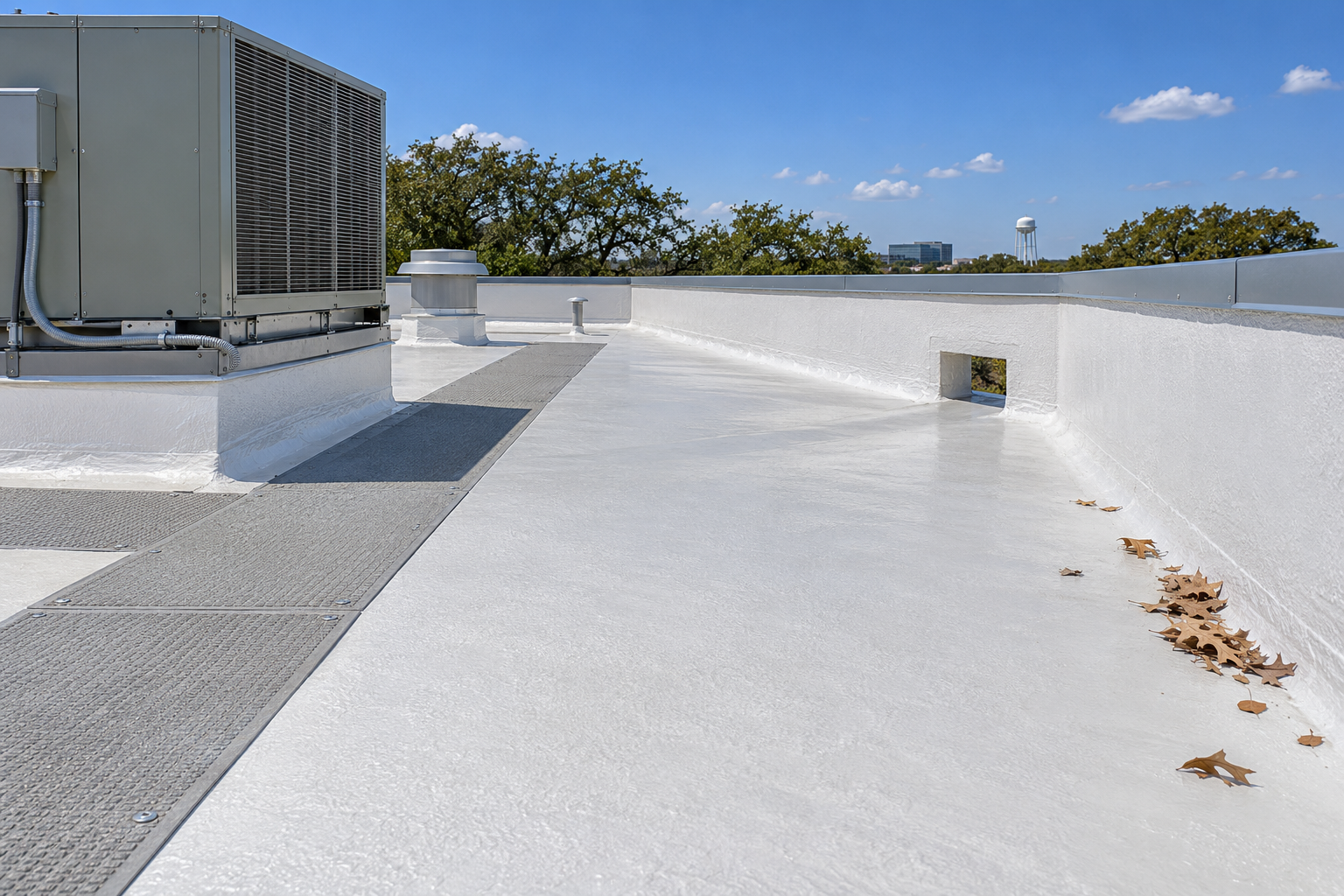
An acrylic-coated roof needs a maintenance plan that addresses both the coating and the assembly beneath it. A white surface can look uniform from a distance while drains, equipment interfaces, or a small damaged area need attention. Conversely, ordinary dirt does not automatically mean the coating has failed.
For Texas building owners, the useful question is what condition exists, what action is appropriate, and who will complete it. Scheduled inspections, prompt reporting, compatible repairs, and organized records make those decisions easier.
Showtime Exteriors can discuss your roof's conditions and the next assessment or service step. This acrylic roof coating maintenance checklist provides an owner-level framework. Apply the instructions and warranty terms for the actual installed system when creating the final program.
Identify the Coating Before Scheduling Work
Start with the product name, manufacturer, installation date, original scope, and warranty documents. Identify the substrate and whether reinforcement was installed across the roof field or only at details.
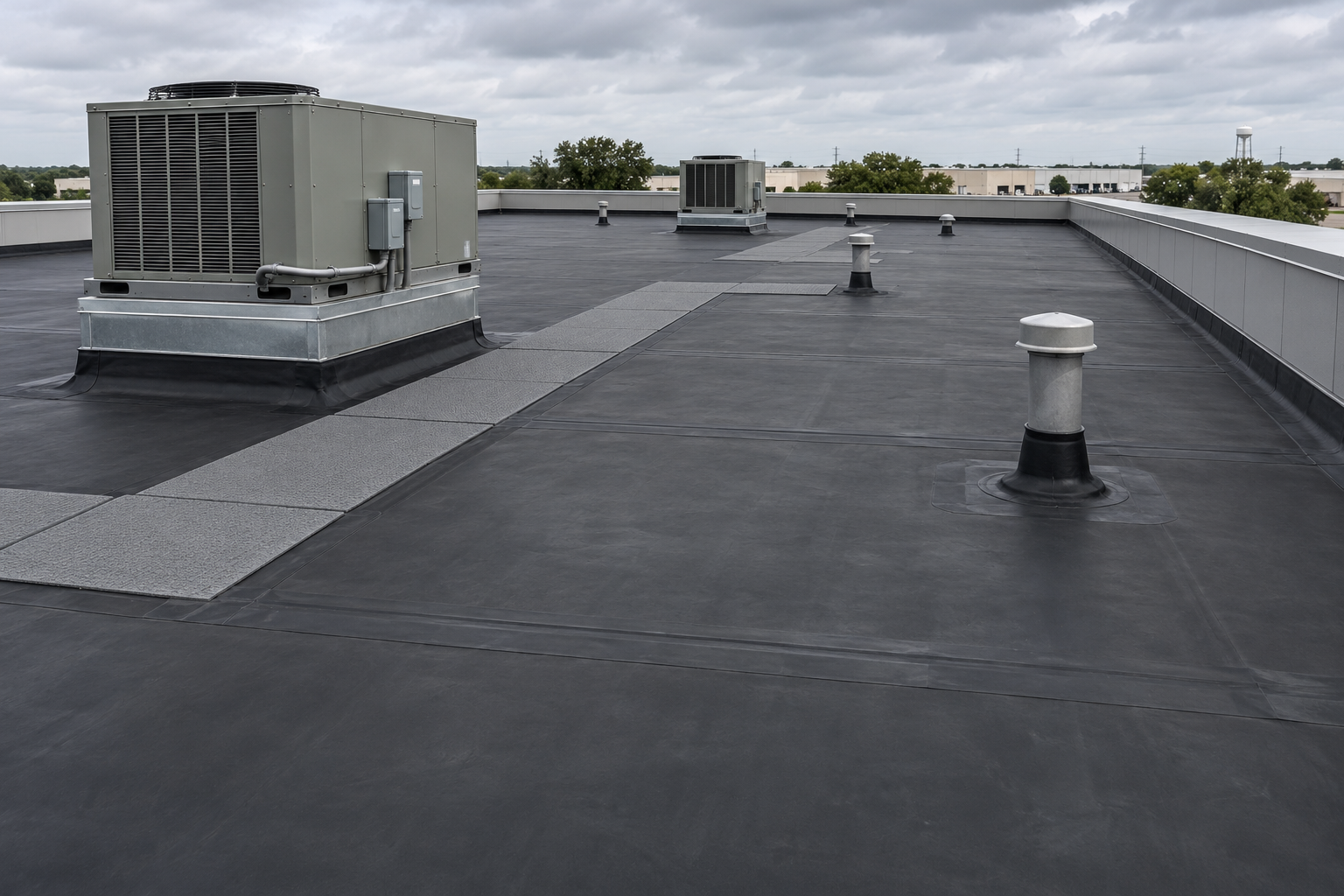
Do not assume every white fluid-applied roof is acrylic. Silicone, polyurethane, and other products can have different cleaning, repair, and recoating requirements. Mixed systems or previous repairs may need special evaluation.
If records are incomplete, ask a qualified roofing professional to investigate before selecting materials. A matching color does not establish compatibility.
The Roof Coatings Manufacturers Association's acrylic coating guidance for building owners explains that these products are roofing materials with particular advantages and limitations. Treat the installed assembly as a specified system rather than a layer of ordinary exterior paint.
Establish the Inspection Calendar
Arrange professional inspections on a schedule appropriate to the manufacturer, warranty, building, and exposure. Spring and fall can be useful planning points, with additional assessments following significant weather or rooftop activity.
GAF's roof coating care and preventive maintenance guidance supports regular inspections and attention after major storms. Use the requirements applicable to your own system rather than assuming one manufacturer's document governs every coated roof.
Assign a person to schedule visits and approve follow-up work. Include the next due date in the inspection record so the plan does not depend on memory.
A property with frequent equipment service, nearby trees, or unusual exhaust may need more focused attention than a roof with little traffic. Review the schedule when building use changes.
The Core Acrylic Roof Coating Maintenance Checklist
ItemWhat to have evaluatedOwner actionCoating surfaceWear, exposed substrate, cracks, peeling, blisters, and damageRequest documented locations and recommendationsReinforced detailsFabric exposure, damaged transitions, and previous repairsConfirm compatible repair scopeDrainageDebris, blocked outlets, and recurring water accumulationApprove clearing and investigate persistent conditionsEquipment interfacesCurbs, pipes, supports, and condensate dischargeAssign roofing and mechanical responsibilitiesRoof edgesTerminations, copings, metal components, and wall interfacesEscalate loose or displaced featuresCleaningContamination, debris, and suitable cleaning methodsVerify product-specific requirementsRoof trafficService routes, protection, and stored materialsControl access and coordinate contractorsRecordsPhotographs, findings, approvals, and completed actionsTrack unresolved items and next visit
Use this table to request a defined service visit. It does not replace professional access planning or authorize untrained personnel to inspect hazardous roof areas.
Keep Owner Observations Separate from Roof Work
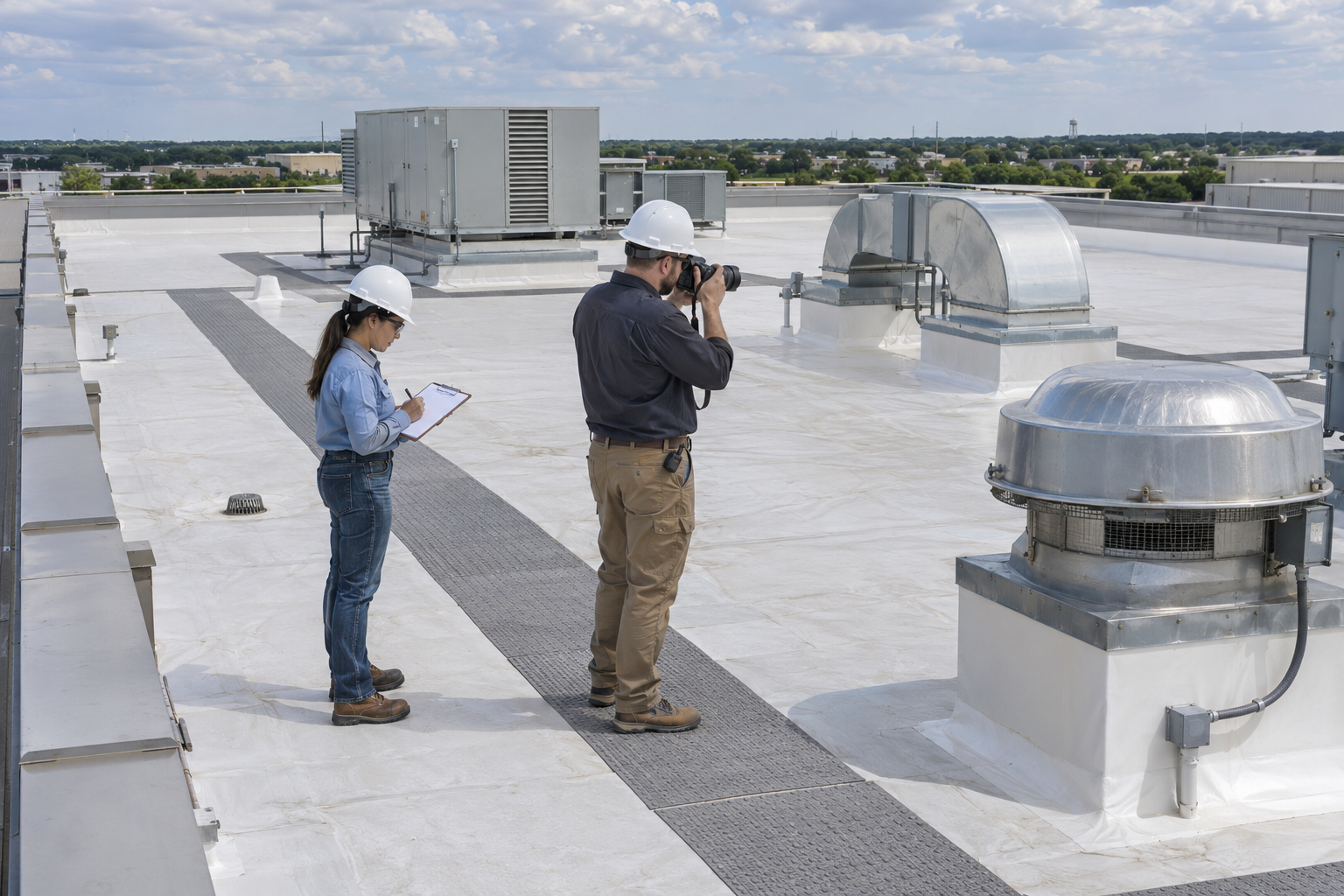
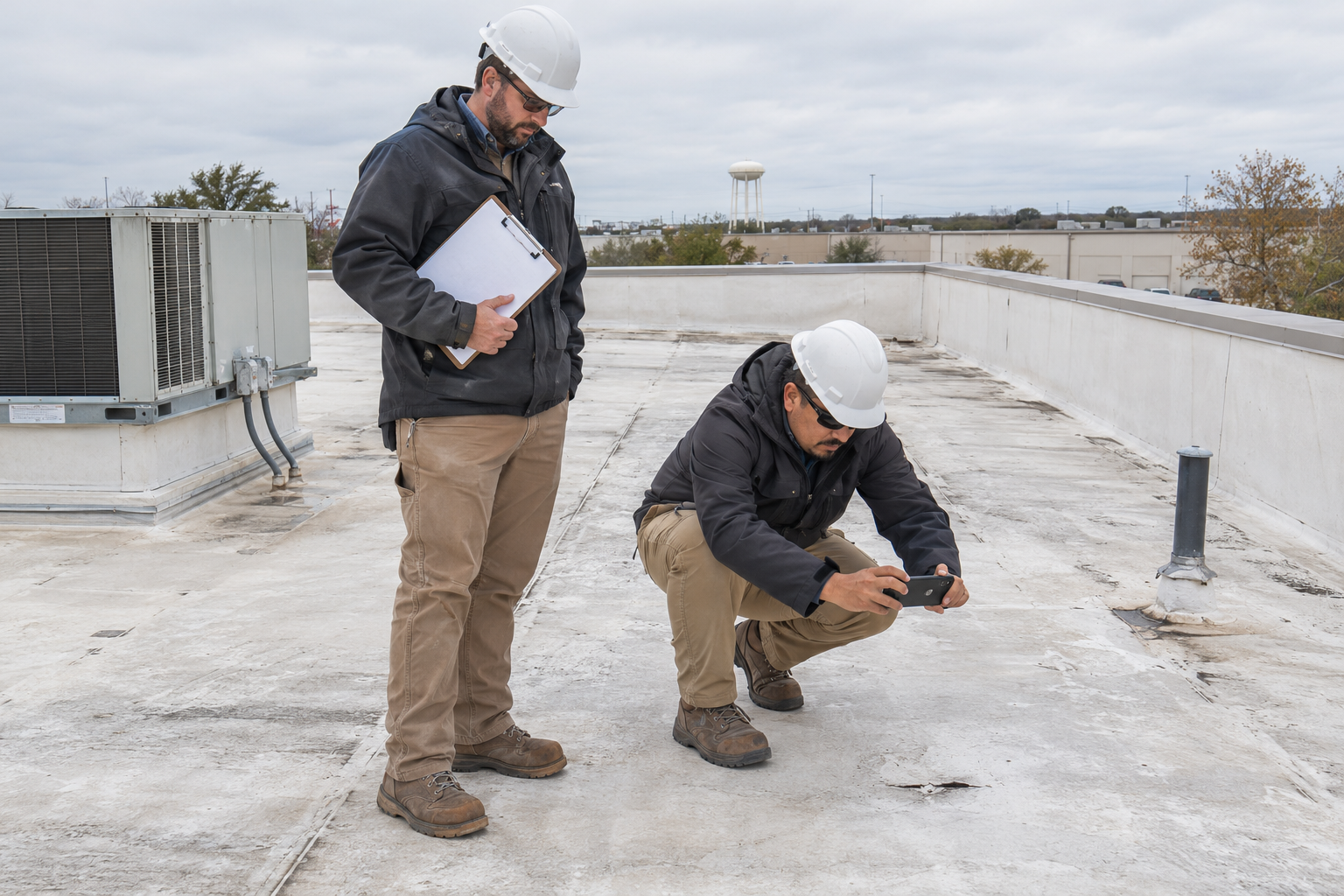
Facility staff can record interior symptoms, maintain access logs, collect service information, and coordinate contractors. Roof access, specialized evaluation, cleaning, and repairs should be assigned to appropriately qualified personnel.
Wet coatings, skylights, edges, electrical equipment, and unstable areas can create hazards. A low slope does not make a roof an ordinary walking surface.
Do not ask staff to scrape the coating, pull at a blister, or probe an apparent opening. Those actions can alter the condition or create additional damage.
Give tenants and employees a simple reporting channel. Ask them to describe what they can observe safely and include the room, date, and weather conditions when reporting water concerns. Clear reporting provides useful evidence without turning routine staff into roof inspectors.
Evaluate Surface Wear by Location
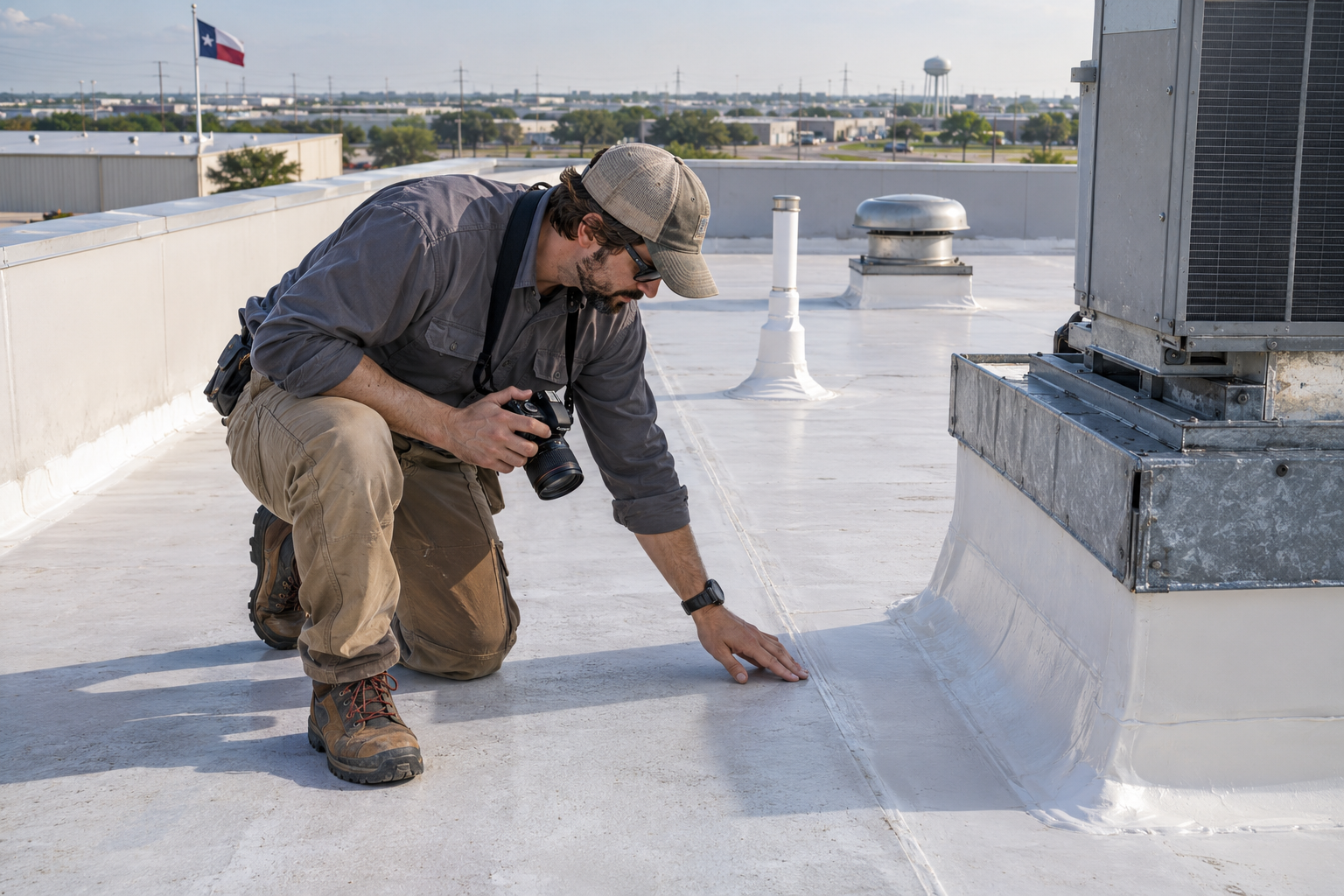
Ask the inspector to document worn areas, cuts, abrasion, exposed substrate, peeling, cracks, and unusual changes. The report should connect close-up photographs with wider views and roof locations.
A service route beside a mechanical unit may show a different pattern from a broad open area. Repeated wear near equipment can indicate that traffic protection or work practices need attention.
The contractor should distinguish a coating concern from deterioration in the underlying roof. Fresh coating alone may not address a problem originating beneath the surface.
Avoid a recommendation based only on appearance. Ask what condition was verified, what remains uncertain, and whether repair, monitoring, or further investigation is appropriate. A precise description helps the owner compare the next report with the current findings.
Check Reinforcement and Previous Repairs
Where the system includes fabric reinforcement, have exposed or damaged reinforcement evaluated. Review repaired seams, transitions, corners, and other areas that have received previous work.
The presence of fabric does not eliminate the need for a complete, compatible coating assembly. Likewise, a local patch does not establish that all surrounding areas remain suitable.
Ask whether a repeated concern reflects surface wear, movement, poor adhesion, an unresolved detail, or another issue. The answer should guide the repair rather than simply adding another layer over the same location.
Keep the names of repair products in the maintenance file. Future contractors need to know what was installed, especially when different coating chemistries have been introduced during earlier service visits.
Make Drainage a Priority
Acrylic roof coating maintenance should include drainage evaluation. Leaves, packaging, dirt, and loose objects can collect near outlets and restrict flow. Persistent water accumulation needs attention beyond a cosmetic cleaning.
Ask the contractor to identify drains, scuppers, gutters, and drainage paths and report visible concerns. Have recurring accumulation evaluated for possible slope, settlement, equipment discharge, or outlet issues.
Do not assume acrylic products tolerate every standing-water condition. Verify the installed manufacturer's limits and appropriate response. Adding fabric or another finish coat does not automatically correct poor drainage.
If drainage improvements are proposed, define them separately from cleaning or coating repairs. The owner should understand what each activity will solve and which conditions remain outside the service scope.
Record Water Accumulation with Context
A photograph of water during rainfall does not tell the same story as water remaining after other roof areas have drained. Ask professional observations to include relevant timing and location information where available.
Do not send employees onto a wet roof to check how quickly water disappears. Arrange safe assessment and use existing records to describe the concern.
Staining or debris patterns can suggest where further evaluation is useful, but they are not a substitute for determining the cause. The inspector should explain the evidence and any limitations.
When an area repeatedly appears in reports, keep it on the follow-up list until the owner has a defined response. Repeatedly noting the same condition without assigning an action does not improve the building's maintenance plan.
Coordinate HVAC and Condensate Maintenance
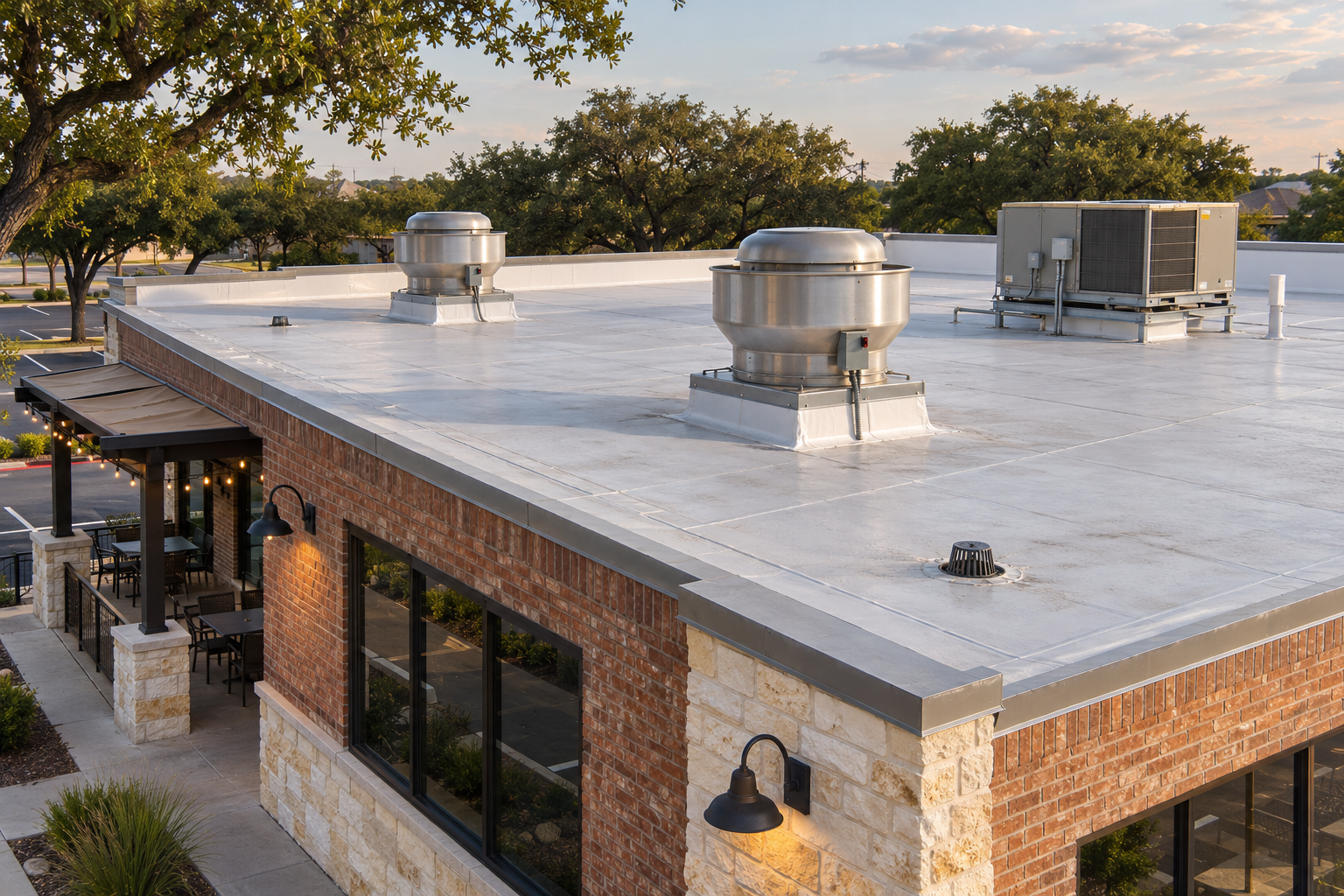
Rooftop equipment can introduce water, movement, traffic, and service debris. Have the roofing inspection address interfaces around curbs and penetrations while the mechanical contractor evaluates equipment-related concerns.
Condensate discharge should be considered when investigating repeated wet areas. A recurring water source may need a mechanical correction rather than another coating application.
Ask technicians to control tools, screws, panels, and other materials during service. Equipment parts should not be dragged across the coating or left where they can move in wind.
Before a unit is replaced or relocated, coordinate the roofing detail and any manufacturer approval requirements. A maintenance plan should anticipate these changes instead of waiting for an improvised repair around a new installation.
Review Roof Edges and Building Interfaces
Have the contractor evaluate roof terminations, copings, edge metal, wall transitions, and related components. A leak near the perimeter may involve more than the horizontal coating surface.
Loose or displaced parts deserve timely evaluation. The appropriate correction depends on the assembly; adding sealant without understanding the detail may leave the actual cause unresolved.
For buildings with multiple roof levels, use consistent names for each section and elevation. A report labeled “west edge” can be confusing if several roof sections share that orientation.
Keep wall and roof responsibilities clear when separate trades are involved. The owner should receive one coordinated explanation of the findings rather than two contractors each assuming the other will address the interface.
Clean According to the Installed System
Cleaning should address actual debris and contamination using compatible products and methods. Do not make high-pressure washing a default instruction for every acrylic-coated roof.
Manufacturer-specific cleaners exist. For example, Conklin describes Waush Off as a product for maintaining weathered roof coatings, including its acrylic systems. That example is not a recommendation to use the product on an unidentified roof.
Ask the service provider to explain compatibility, application limits, runoff management, and protection of adjacent property. Ensure the cleaning method will not damage details or create new water-entry risks.
Cleaning and inspection serve different purposes. A bright surface may still contain a damaged detail, while a dirty surface may remain otherwise serviceable. Coordinate the activities without treating appearance as proof of condition.
Understand Reflectivity Without Promising Savings
Many acrylic coatings have light-colored reflective finishes. Keeping an appropriate surface clean can support its intended reflective function, but energy outcomes depend on the building.
ENERGY STAR's cool roof information explains solar reflectance and thermal emittance. Insulation, HVAC performance, operating hours, climate, and the original roof surface all influence practical results.
Do not justify an expensive cleaning or recoating project with a guaranteed utility savings percentage unsupported by property-specific analysis. Ask what condition the proposed work addresses and how its benefits will be evaluated.
A reflective finish also does not replace waterproofing, structural integrity, or drainage. Keep energy goals within the broader maintenance discussion so they do not overshadow active roof concerns.
Control Traffic and Protect Service Areas
Acrylic-coated roofs should have an access and traffic plan suited to the system. Discuss compatible walkway protection where equipment requires regular service.
Walkways do not authorize storage or eliminate damage from dropped tools and concentrated loads. Workers still need appropriate procedures for equipment panels and materials.
Keep an access log showing who visited, where they worked, and the purpose. This helps the owner investigate newly observed damage without assuming its cause.
If inspections repeatedly find wear along the same route, address the route or service practices. A recurring patch budget may be a signal that access planning needs improvement. Ask the roofing professional what protection is suitable and whether it affects drainage or future service access.
Add a Post-Storm Reporting Process
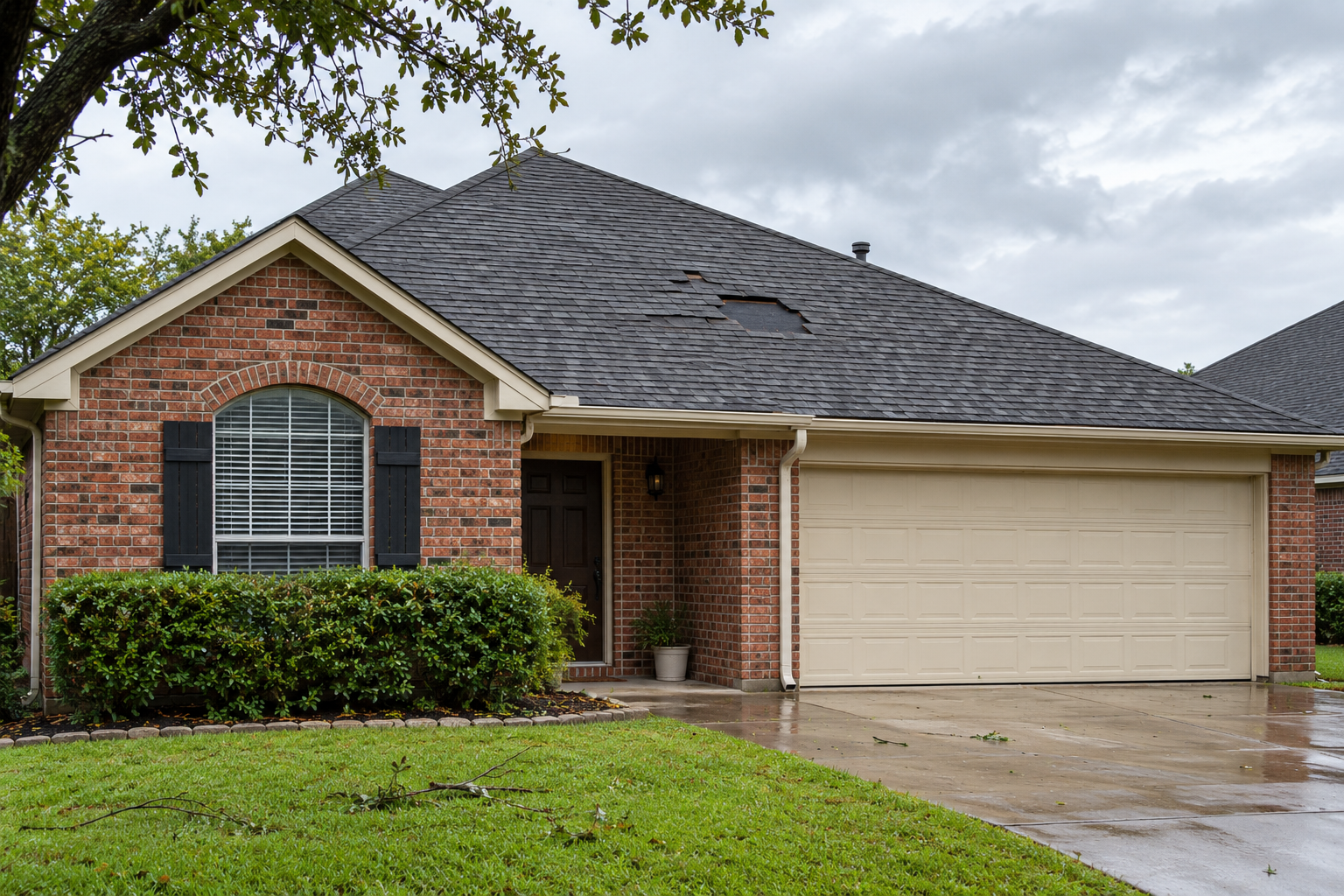
Texas weather can affect coated roofs, equipment, loose debris, and adjacent building components. Set a process for reporting concerns and arranging assessment after conditions permit.
The National Weather Service's after-storm safety guidance emphasizes continued awareness and assessing damage after the severe weather threat has ended. Avoid electrical hazards and damaged buildings, and obtain qualified assistance when necessary.
Record the reported storm date, discovery date, interior symptoms, and safe photographs. A nearby storm does not establish that every roof condition is new, and a lack of obvious damage from the ground does not verify the entire roof.
Ask professional reports to distinguish observed conditions from assumptions and identify urgent protection needs. Keep temporary work authorizations and receipts with the event record.
Use Compatible Repairs and Document Their Limits
When a concern is found, request a written repair scope identifying its location, materials, preparation, and limitations. The selected products should be appropriate for the existing coating and substrate.
Do not assume that any white sealant, silicone, or acrylic product can be substituted. Mixed materials can complicate adhesion, future recoating, and warranty decisions.
Ask what the repair addresses and whether investigation is still needed elsewhere. A local patch may stop a particular opening while leaving an underlying drainage or movement concern unresolved.
For broader comparisons, review the roof materials and system selection guide. Repairs, restoration, and replacement should be compared using the actual building conditions rather than a preferred product label.
Plan Recoating Through Evaluation
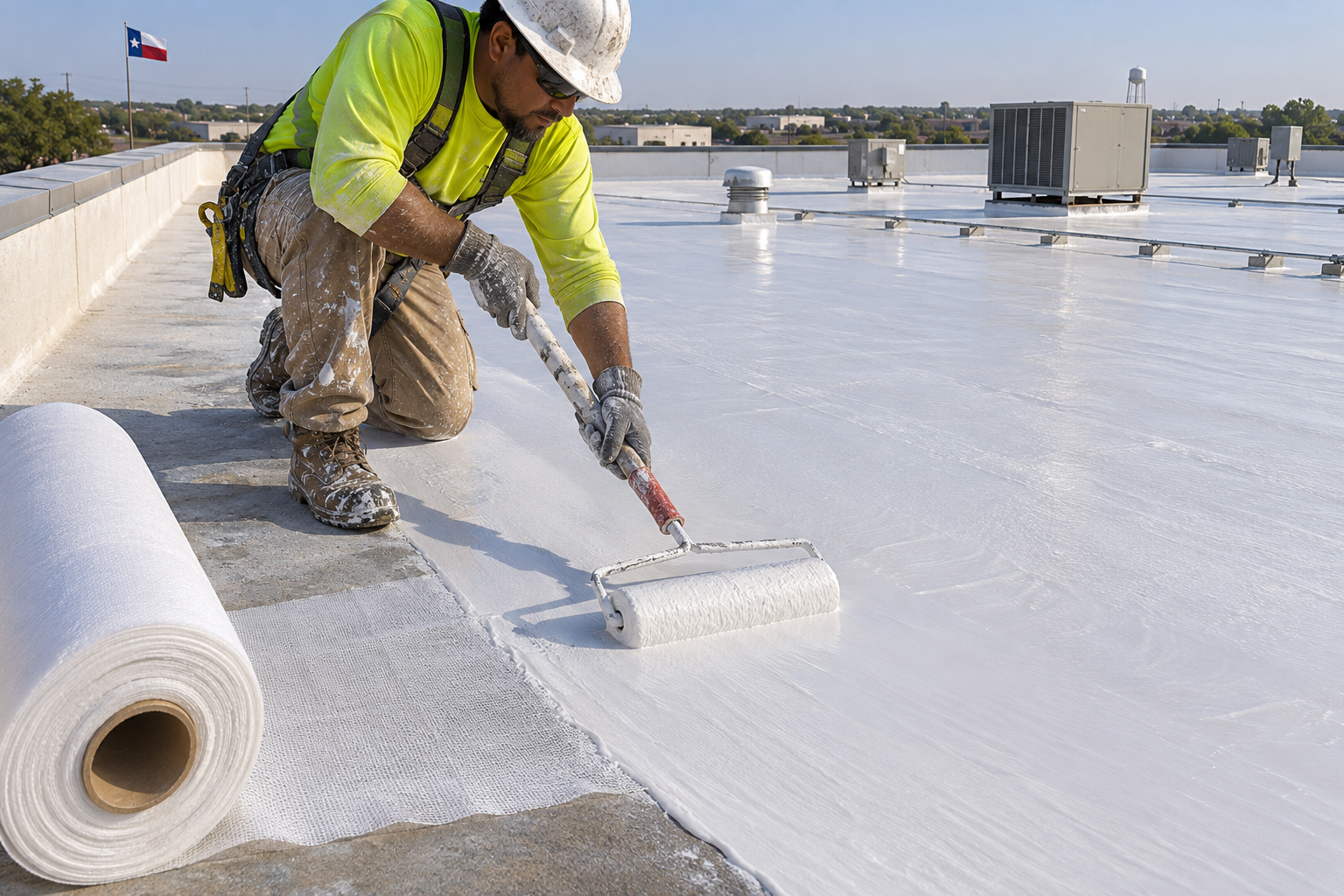
Recoating may be an option when the existing system remains suitable, but it should not be scheduled solely because a generic number of years has passed. Condition, compatibility, required repairs, and manufacturer criteria matter.
Ask the contractor what investigation is needed before recommending renewal. The proposal should identify preparation, repair areas, specified products, application requirements, and quality-control documentation.
A new coat should not conceal uncertain moisture or deteriorated substrate. If the underlying assembly needs more extensive work, the recommendation should explain that finding and offer appropriate alternatives.
Use commercial roofing services to discuss the scope your building actually needs. Keep elective appearance improvements separate from work necessary to address documented performance concerns.
Review Warranty and Maintenance Documents
Locate the issued warranty and identify the reporting contact, maintenance obligations, exclusions, and alteration procedures. A manufacturer's brochure does not replace coverage issued for the property.
Conklin's roofing system document library includes maintenance and warranty resources that illustrate the importance of system-specific information. Obtain the corresponding current documents for your installed manufacturer.
Before repairs or equipment changes, ask whether notification or approval is required. Keep any written response with the service record.
Separate contractor workmanship coverage from manufacturer coverage. They may have different terms and contacts. The person coordinating maintenance should have access to both rather than relying on a former manager's description that the roof is still under warranty.
Keep One Useful Maintenance File
Save dated photographs, roof plans, inspection findings, service invoices, product information, approvals, and completed repair records. Use consistent roof-section names across visits.
Maintain an unresolved-items list with a responsible person and target date. Record when each item is completed or reassessed. An inspection report is evidence of evaluation, not proof that every recommended repair has been performed.
The guide to commercial roof maintenance records insurers may request provides a framework for organizing those records. The same file can help future owners and service contractors understand the roof's history.
For a mixed portfolio, maintain separate records for different systems. A residential roofing plan should reflect that building's materials and details rather than copy a commercial coating checklist without review.
Budget by Priority and Scope
Ask the contractor to separate urgent protection, scheduled repairs, further investigation, and monitored conditions. Each recommendation should explain its purpose and the consequence of postponement without relying on unsupported predictions.
Clarify what a maintenance agreement includes. Inspection, cleaning, minor repairs, and manufacturer coordination may be separate services. Define approval limits before the visit.
When concealed conditions require additional work, request photographs, a written explanation, and pricing through the agreed change process. Keep the owner representative available for decisions that affect weather protection or building operations.
Budget for future inspection and renewal as well as current repairs. A consistent plan gives the owner a clearer basis for capital decisions than alternating between emergency patches and an unexamined replacement proposal.
Close the Loop After Each Service Visit
Review the report with the person who approves property spending. Confirm which tasks were completed during the visit, which remain recommendations, and which require another trade. Put approved work on the calendar instead of leaving it in an email attachment.
For repairs, request completion photographs tied to the original location. Keep any limitations visible, especially when temporary protection was installed while a broader investigation remains pending. A paid invoice should describe the work actually performed.
If an interior leak was involved, arrange an appropriate follow-up process with occupants. Record whether symptoms recur and under what conditions without assuming a remaining stain means fresh leakage. New moisture or an expanding affected area deserves prompt reporting.
Finally, update the next inspection date and contact list. This short review turns the maintenance checklist into an ongoing property management process and gives the next service provider a clearer starting point.
Frequently Asked Questions
How often should an acrylic-coated roof be inspected?
Follow the installed system's requirements and adjust for site conditions. Spring and fall can be useful planning points, with additional professional assessments after significant weather or rooftop work.
Does a dirty coating need to be replaced?
Dirt alone does not establish failure. Have the surface evaluated and cleaned using appropriate procedures where necessary. Appearance and system condition are different questions.
Can we add another coat over a leak?
First identify the cause and substrate condition. Recoating without addressing an opening, movement, moisture, or drainage problem may leave the actual issue unresolved.
Is ponding water acceptable on acrylic coating?
Verify the installed manufacturer's limits and have recurring accumulation evaluated. Do not assume reinforcement or another finish coat makes every acrylic system suitable for standing water.
Can our staff apply a hardware-store patch?
Use a qualified roofing professional and compatible system materials. An improvised repair can alter the condition and complicate future work.
What should we receive after a maintenance visit?
Request dated findings, roof locations, photographs, priorities, limitations, recommended actions, and records of completed work. Assign responsibility and due dates for unresolved items.
Arrange Acrylic Roof Coating Maintenance in Texas
A useful acrylic roof coating maintenance checklist connects inspection with drainage care, controlled access, compatible repairs, and clear records. The objective is a defined response to actual conditions, supported by the installed system's requirements.
Contact Showtime Exteriors or call 817-400-7663 to discuss your Texas building. Share the known coating product, installation history, active concerns, and access requirements so the next step can focus on the property's needs.