


Fabric-Reinforced Coating in Texas: Benefits, Lifespan, and Best Uses
Explore fabric-reinforced roof coating in Texas, including benefits, lifespan factors, suitable buildings, installation checks, and maintenance needs.
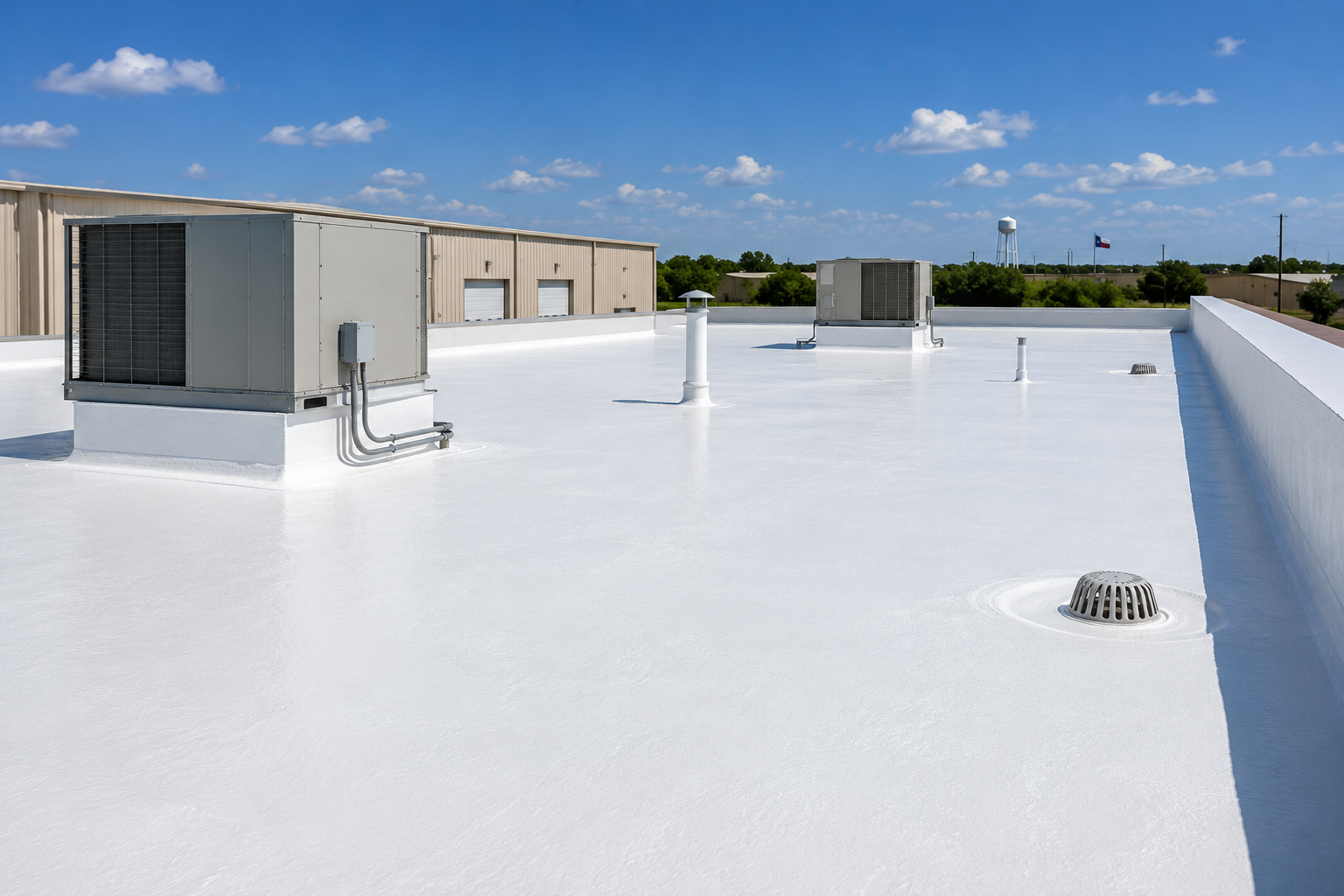
A commercial roof can reach a point where isolated repairs no longer provide a useful plan, yet the existing assembly still has components worth preserving. For some buildings, a fabric-reinforced coating system offers a restoration option between repeated patching and a broader replacement project.
The important word is “system.” Fabric reinforcement, compatible coating, substrate preparation, flashing details, and quality control must work together. A bright white surface alone does not demonstrate that the roof was evaluated correctly or that the installation has the required thickness.
For owners considering fabric-reinforced coating in Texas, the first question is whether the existing roof qualifies. Showtime Exteriors can discuss the property's conditions and the assessment needed to compare practical roofing options. This guide explains what to ask before selecting a restoration scope.
What Is a Fabric-Reinforced Roof Coating?
A fabric-reinforced roof coating combines a liquid-applied roofing material with an embedded reinforcing fabric. In a fully reinforced assembly, fabric extends across the specified roof field as well as the required details. Other coating scopes reinforce only seams, penetrations, or selected problem areas.
Those approaches are not interchangeable. Ask whether the proposal includes full-field reinforcement or localized reinforcement, which fabric is specified, and how the roof's edges and transitions will be completed.
Conklin's fabric-reinforced roofing system overview describes an acrylic system with fabric embedded in its coating. That is one manufacturer example, not a universal specification for every reinforced coating. Product chemistry, approved substrates, installation requirements, and warranty eligibility vary.
The fabric provides reinforcement within the installed coating assembly. It does not turn weak decking into sound structure or eliminate the need to address concealed moisture. Think of restoration as a designed roofing scope applied to a suitable existing assembly, with necessary repairs completed first.
Fully Reinforced and Detail-Reinforced Are Different Scopes
Two bids may both say “reinforced roof coating” while describing substantially different work. One may include fabric throughout the roof field. Another may include strips only at seams and flashings, followed by a field coating without fabric.
Neither description should be evaluated by its label alone. The appropriate scope depends on the selected manufacturer's system, existing roof, project requirements, and observed conditions.
Proposal itemQuestion for the owner to resolveReinforcement coverageIs fabric included across the field or only at details?Coating componentsWhich named primer, base coat, and finish coat are specified?Existing assemblyWhich layers remain, and which damaged areas are removed?Flashing workAre transitions repaired, rebuilt, or only coated?Thickness controlsHow will required application and completed thickness be documented?WarrantyWhat exact coverage is available for this assembly?
A defined scope makes comparison easier and reduces the chance that a lower price simply reflects omitted preparation or reinforcement.
Why Texas Building Owners Consider Restoration
A suitable restoration project may preserve serviceable roof components, reduce the amount of tear-off material, and avoid some disruption associated with more extensive removal. Whether those advantages apply depends on the actual work required.
A building with sound insulation and a stable substrate may present a different opportunity from a roof with widespread moisture or repeated movement. The property's use matters as well. A warehouse with uninterrupted receiving operations may place a high value on carefully phased work.
The decision should start with the roof's condition rather than a preferred product. Request an explanation of why coating is technically appropriate, what preparation is included, and what conditions could change the recommendation.
For a broader discussion of available work, review commercial roofing services. The goal is a scope that fits the building, its budget, and the owner's operating plans.
Benefit: A Continuous Surface Around Complex Details
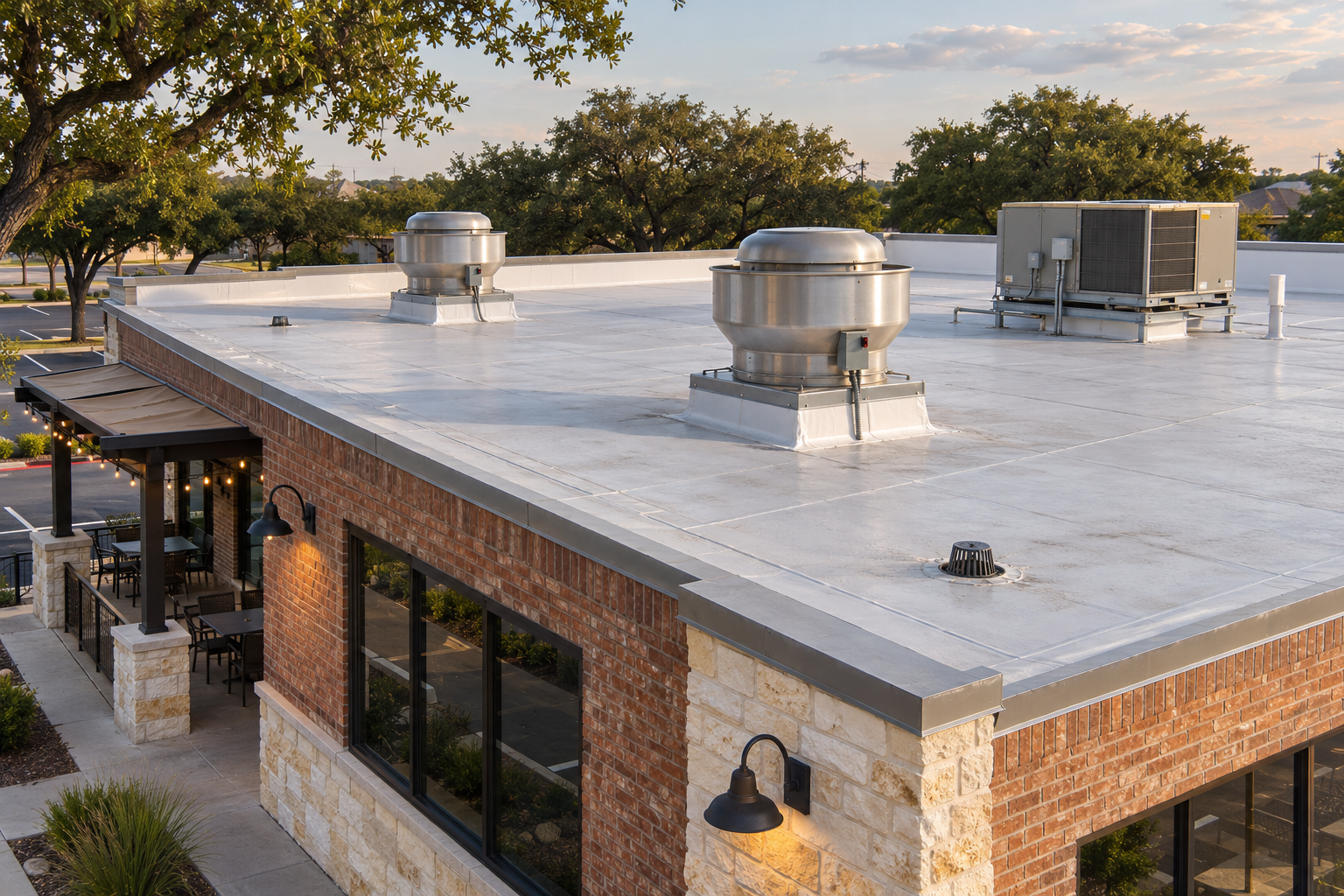
Liquid-applied roofing can conform to shapes that require careful detailing with other materials. Curbs, pipes, transitions, and changes in plane can be incorporated into a manufacturer-defined reinforced system.
That capability is useful on a roof with numerous penetrations, but it does not remove workmanship demands. Terminations, movement joints, drain connections, and equipment interfaces still need appropriate details.
GAF's HydroStop roof coating system information provides another example of a fully reinforced assembly using specified components. Manufacturer examples should be used to understand system structure, not to assume that every roof or substrate is approved.
Ask the contractor to identify the detail drawing or written requirement for unusual conditions. “We will coat everything” is less useful than knowing how each interface will remain serviceable and how moving components will be accommodated.
Benefit: Reflective Finish Options
Many reinforced coating systems use light-colored finishes. Where the selected product has suitable reflective properties, the roof can absorb less solar energy than a darker alternative.
ENERGY STAR's cool roof explanation describes how solar reflectance and thermal emittance affect roof temperatures. Cooling benefits depend on climate, insulation, building operation, equipment, and the original roof surface.
For a Texas owner, that makes energy performance worth evaluating, especially on an air-conditioned building. It does not support a guaranteed utility savings percentage without a building-specific analysis.
Compare the exact product's available ratings rather than treating every white coating as identical. The Cool Roof Rating Council's owner resources help explain reflective roofing and provide access to product information. Reflectance ratings address surface performance; they do not establish waterproofing quality, structural capacity, or a particular service life.
Benefit: A Potential Future Renewal Path
Some coating systems can be maintained and recoated when their condition and manufacturer requirements support renewal. That possibility can help an owner plan future capital spending.
A recoat is not automatic. The surface must remain suitable, compatible materials must be selected, and any damaged areas need evaluation. A coating that has lost adhesion or covers a deteriorating assembly may require a different response.
Request a written description of the anticipated inspection and renewal process. Ask what conditions would make another coating application unsuitable. Include future cleaning, repairs, and recoating in financial comparisons rather than considering only today's installation price.
The most useful plan identifies decision points: when to inspect, what deterioration to document, who evaluates it, and how to budget for the next intervention.
How Long Does Fabric-Reinforced Coating Last in Texas?
There is no single reliable lifespan for every fabric-reinforced coating in Texas. The phrase covers different products, application scopes, substrates, and maintenance histories. A generic year range can hide the conditions that actually determine performance.
Separate three concepts when comparing proposals: the expected service period discussed for your project, the written warranty term, and the timing of future maintenance or recoating. Those figures may differ.
Ask the contractor and manufacturer to explain the basis for any projected service period. The answer should address existing roof condition, specified coating thickness, exposure, drainage, detail design, inspection requirements, and the owner's maintenance responsibilities.
A long warranty term is not evidence that all possible leaks, weather events, or substrate problems are covered. Read the actual document before making a lifespan assumption. A shorter, clearly defined scope may be easier to evaluate than an unsupported promise that the roof will last for decades.
The Existing Roof Controls the Opportunity
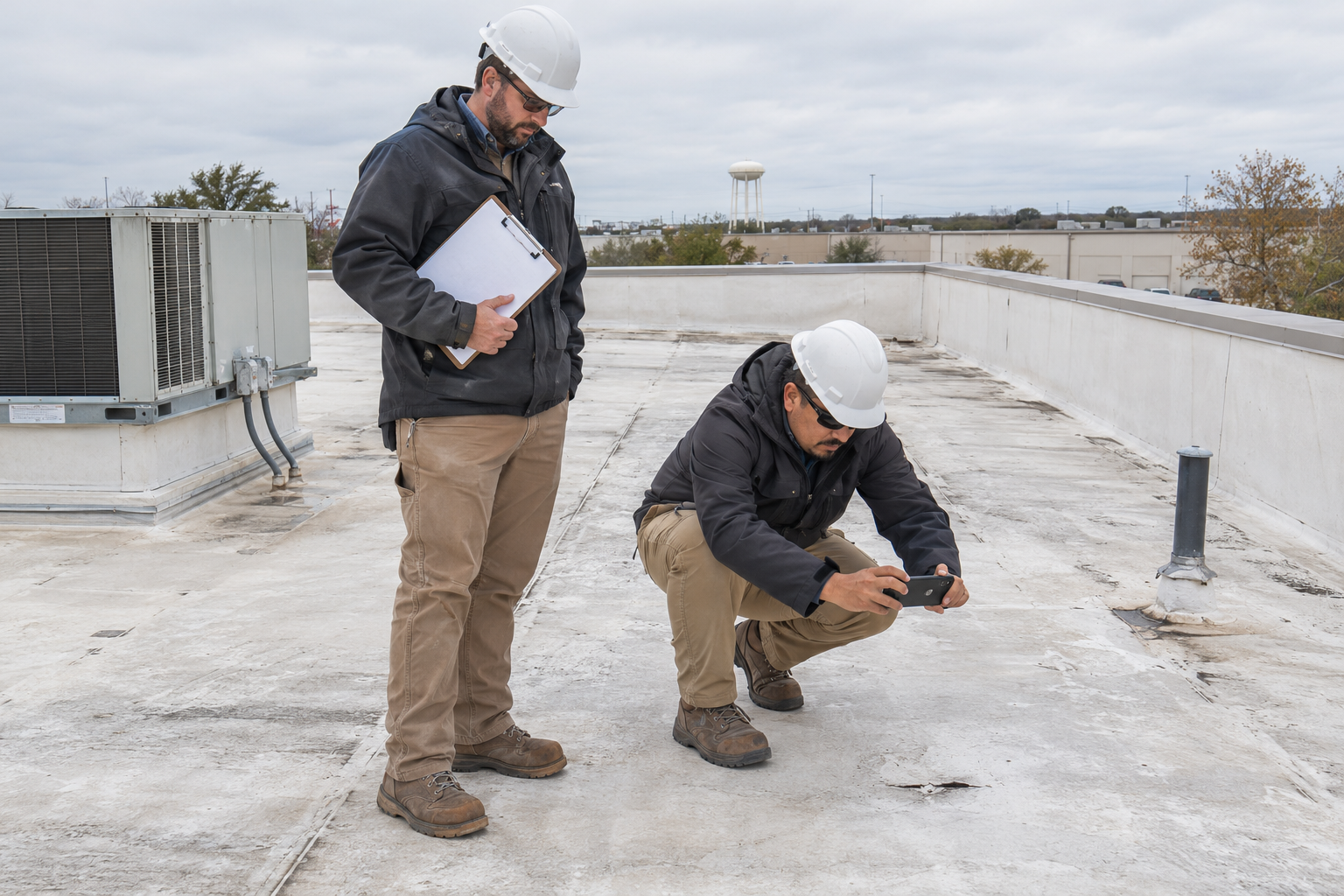
Coating suitability depends on the roof beneath the coating. An assessment should identify the roof covering, previous coatings, attachment or adhesion concerns, repair history, drainage patterns, and signs of concealed problems.
Wet insulation or deteriorated substrate should not simply be sealed beneath a fresh finish. Ask what investigation is proposed to evaluate those concerns and how the findings will affect the work. Testing has limitations, so the report should state what was verified and what remains uncertain.
Adhesion testing may be needed to evaluate compatibility with the prepared surface. The selected manufacturer determines the appropriate procedures and acceptance requirements for its system.
Owners should request a written eligibility conclusion. It should identify repair areas, excluded conditions, and assumptions that could change after work begins. That record is more useful than a surface-only statement that the roof “looks coat-able.”
Drainage Needs Attention Before Coating
A new finish does not correct poor slope, blocked drains, or a depressed area. Persistent water accumulation needs evaluation as part of the project rather than being left for the owner to discover afterward.
For acrylic systems in particular, verify the selected product's restrictions concerning ponding water. The Roof Coatings Manufacturers Association's acrylic coating guidance for owners discusses advantages and limitations, including the need to consider other options where ponding is anticipated.
Do not assume that adding fabric makes every coating suitable for standing water. Reinforcement and coating chemistry perform different functions. Ask for a project-specific drainage plan and written confirmation of how the selected system addresses the observed conditions.
Drainage changes may require work beyond coating, including repair of existing components or a different roofing approach. Keep those costs visible in the comparison.
Texas Weather Affects Installation Planning
Outdoor application needs a suitable weather window. Rain, temperature, humidity, dew, wind, and surface conditions can affect preparation and installation. The relevant limits come from the actual product instructions.
A summer forecast that looks dry does not eliminate the need to evaluate roof temperature or overnight moisture. Likewise, a mild winter afternoon may not provide enough time for a water-based product to reach its required condition before temperatures fall.
Ask how the crew will monitor conditions, protect incomplete work, and respond to a forecast change. Schedule assumptions should allow work to pause when necessary rather than pushing an application into unsuitable conditions.
Owners can help by coordinating roof access, mechanical work, and delivery schedules. Avoid arranging equipment installation through an area that has just been coated or has not been released for traffic.
Best Uses: Suitable Commercial Roofs with Preserveable Components
A promising candidate is an existing roof whose underlying assembly remains suitable for restoration and whose required repairs can be clearly defined. Building type alone does not establish eligibility.
Warehouses, offices, retail properties, and some industrial facilities may benefit from evaluating reinforced coating. The assessment must still account for traffic, contaminants, drainage, roof movement, and operational constraints.
A complicated roof with many penetrations may benefit from the conformability of an appropriate liquid-applied system. A large open roof may offer straightforward phasing. In each case, the actual details matter more than the building's category.
Owners comparing several approaches can use the roof material and system selection guide to organize questions about suitability, repairability, and future maintenance.
When Another Roofing Approach May Be Better
Restoration deserves reconsideration when the roof has extensive concealed moisture, unstable components, unresolved movement, unsuitable adhesion, or conditions outside the manufacturer's approved uses.
A heavily trafficked service area may need a different protection strategy. A restaurant exhaust zone may require special evaluation of contamination and material compatibility. A roof with widespread substrate deterioration may require more removal than the original coating proposal anticipated.
These findings do not necessarily eliminate every coating option, but they change the decision. Request alternatives with comparable assumptions so the owner can understand their costs and limitations.
For a mixed property portfolio, avoid carrying a commercial restoration recommendation directly into a residential roofing project. Roof geometry, materials, drainage, and approval requirements can be substantially different.
What a Thorough Installation Scope Includes
The written scope should identify preparation, repairs, primers where required, reinforcement coverage, coating components, and flashing work. It should also explain access, protection of adjacent property, cleanup, and documentation.
Owners do not need to supervise individual application techniques. They do need a clear record of which system is being installed and how compliance will be checked.
Project stageDocumentation worth requestingAssessmentRoof condition findings, investigation limitations, eligibility explanationPreparationCleaning and repair scope, compatibility and adhesion requirementsApplicationNamed materials, reinforcement locations, required coverage and thickness controlsDetailingDrain, curb, edge, penetration, and termination requirementsCloseoutInspection records, photographs, warranty documents, maintenance instructions
Avoid substituting generic fabric, leftover sealant, or an unrelated coating without written system approval. Compatibility should be established through the specified assembly rather than appearance.
Thickness and Workmanship Need Verification
The installed coating must meet the selected system's requirements. A consistent color can conceal thin spots, incomplete fabric saturation, or other application defects.
Ask how the contractor will document application quantities and required thickness. The appropriate quality-control methods depend on the coating, substrate, and manufacturer. Clarify who performs inspections and whether a manufacturer inspection is included or required.
Fabric should become part of the intended assembly, with laps, terminations, and detailing completed according to its specifications. Wrinkles, voids, exposed reinforcement, or uncertain transitions deserve evaluation before the project is considered complete.
Keep the conversation about measurable requirements. “Two coats” is not a complete thickness specification, because application rate and product solids affect the finished result. The approved system requirements should control the work.
Cost Depends on More Than Roof Area
Roof area matters, but preparation can strongly influence the project price. Two buildings of equal size may need very different amounts of repair, cleaning, flashing reconstruction, or access equipment.
Compare proposals using the same assumptions. Identify whether investigation, wet-material removal, drain work, reinforcement, thickness verification, and warranties are included. Ask how concealed conditions will be priced and authorized.
Avoid a precise per-square-foot budget before the roof has been assessed. An inexpensive coating bid may become costly if it excludes repairs that are essential to suitability.
Evaluate disruption as well. Tenant coordination, work-hour restrictions, equipment protection, and phased access can affect the plan. Include future maintenance and possible renewal when comparing restoration with replacement rather than focusing only on the initial invoice.
Warranty Questions Before Approval
Ask for the proposed warranty document, not only a brochure or a statement about the number of years. Identify who issues coverage and whether it addresses materials, labor, or other specified obligations.
Review exclusions, maintenance requirements, reporting procedures, transfer provisions, and any inspection obligations. Confirm whether the particular substrate and reinforcement scope qualify.
Manufacturer resources, such as Conklin's roofing system document library, illustrate why the actual system documents matter. Request current project-specific information directly from the parties offering the warranty.
Do not assume that a manufacturer's name in a proposal establishes contractor authorization, inspection approval, or warranty issuance. At closeout, obtain the final documents and verify that they identify the correct property and installed system.
Maintenance After Installation
Plan inspections on a schedule suited to the system, building, and warranty, with additional assessments after significant weather or rooftop work. Follow manufacturer instructions for cleaning and repairs.
Keep drains and drainage paths clear through appropriate service procedures. Watch for new damage, loose equipment, exposed fabric, deteriorated details, and areas affected by repeated foot traffic.
Coordinate mechanical contractors so they understand the roof surface and any traffic protection requirements. A dropped panel, dragged tool, or incompatible repair product can create a new problem on an otherwise serviceable roof.
Maintain dated photographs and records of repairs, inspections, and equipment changes. The article on commercial roof maintenance records insurers may request offers a practical framework for keeping that history organized.
Prepare the Building Before Work Starts
Assign one owner representative to approve access, changes, and communication with occupants. Provide the contractor with known leak locations, roof plans, equipment service schedules, and information about sensitive operations below the work area.
Discuss how air intakes, parked vehicles, adjacent walls, and stored materials will be protected during cleaning and application. The necessary precautions depend on the selected materials and methods. Confirm responsibilities before equipment arrives, especially where neighboring businesses share access or parking.
Arrange a preconstruction meeting with facility staff and any mechanical contractor whose work overlaps the roofing project. Identify equipment that must remain operating, routes that must stay open, and activities that should be postponed until the surface is ready for service.
Finally, agree on how unexpected findings will be communicated. Request photographs, a written explanation, and pricing before approving changes whenever conditions allow. A clear approval process protects the schedule and gives the owner a reliable record of why the final scope differs from the original proposal.
Frequently Asked Questions
Is fabric-reinforced coating the same as painting the roof?
No. A roofing system uses specified materials, preparation, reinforcement, details, and application requirements. A cosmetic change in color does not establish equivalent performance.
Can it be applied over any existing roof?
No. Suitability depends on the substrate, condition, compatibility, moisture findings, and selected manufacturer's requirements. Obtain a documented assessment before choosing the scope.
Does fabric reinforcement prevent all storm damage?
No. Reinforcement is one component of an assembly. It does not guarantee immunity from hail, wind, debris, or damage to the underlying roof.
Will a white finish eliminate high cooling bills?
No. Reflective roofing may reduce roof heat gain, but the building's insulation, equipment, operating hours, and other conditions affect energy use. Evaluate savings for the actual property.
Can the roof be recoated later?
Possibly, if its condition and the manufacturer's requirements support renewal. Future recoating should follow evaluation and needed repairs rather than being assumed indefinitely.
How should I compare lifespan promises?
Ask for the project-specific basis, distinguish service expectations from warranty coverage, and include maintenance responsibilities. Avoid treating a generic year range as a guarantee.
Evaluate Fabric-Reinforced Coating for Your Texas Building
Fabric-reinforced coating can be a useful restoration option when the roof qualifies and the scope addresses preparation, drainage, details, and quality control. Its value depends on the complete assembly and the owner's plan to maintain it.
Contact Showtime Exteriors or call 817-400-7663 to discuss your commercial roof. Share its age, known materials, repair history, active concerns, and operating requirements so the assessment can focus on the right options for your building.