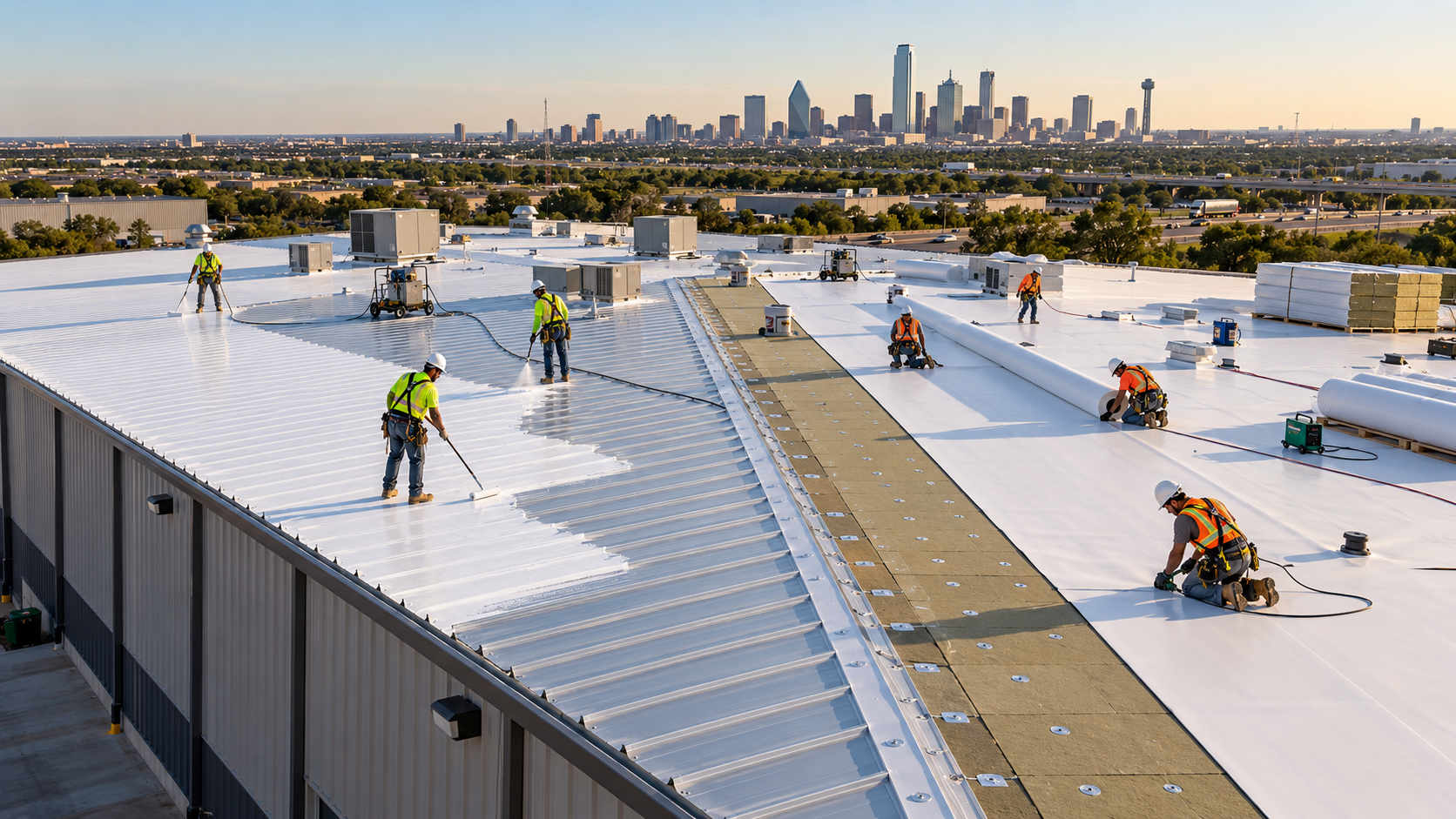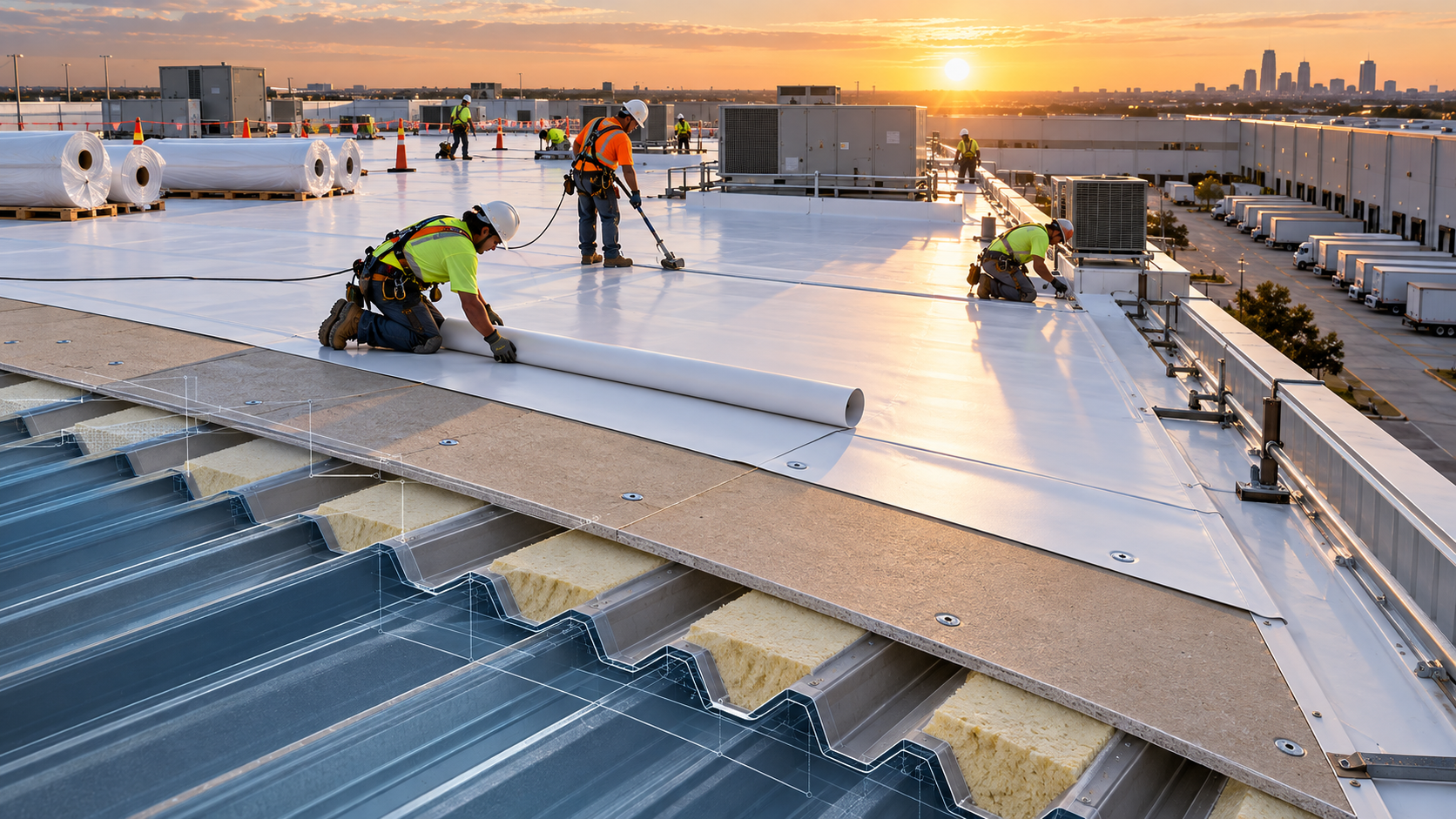




When to Replace an Aging Gravel BUR Roof in Texas Warning Signs Costs and Commercial Retrofit Planning
Texas Commercial Roofing Decision Guide
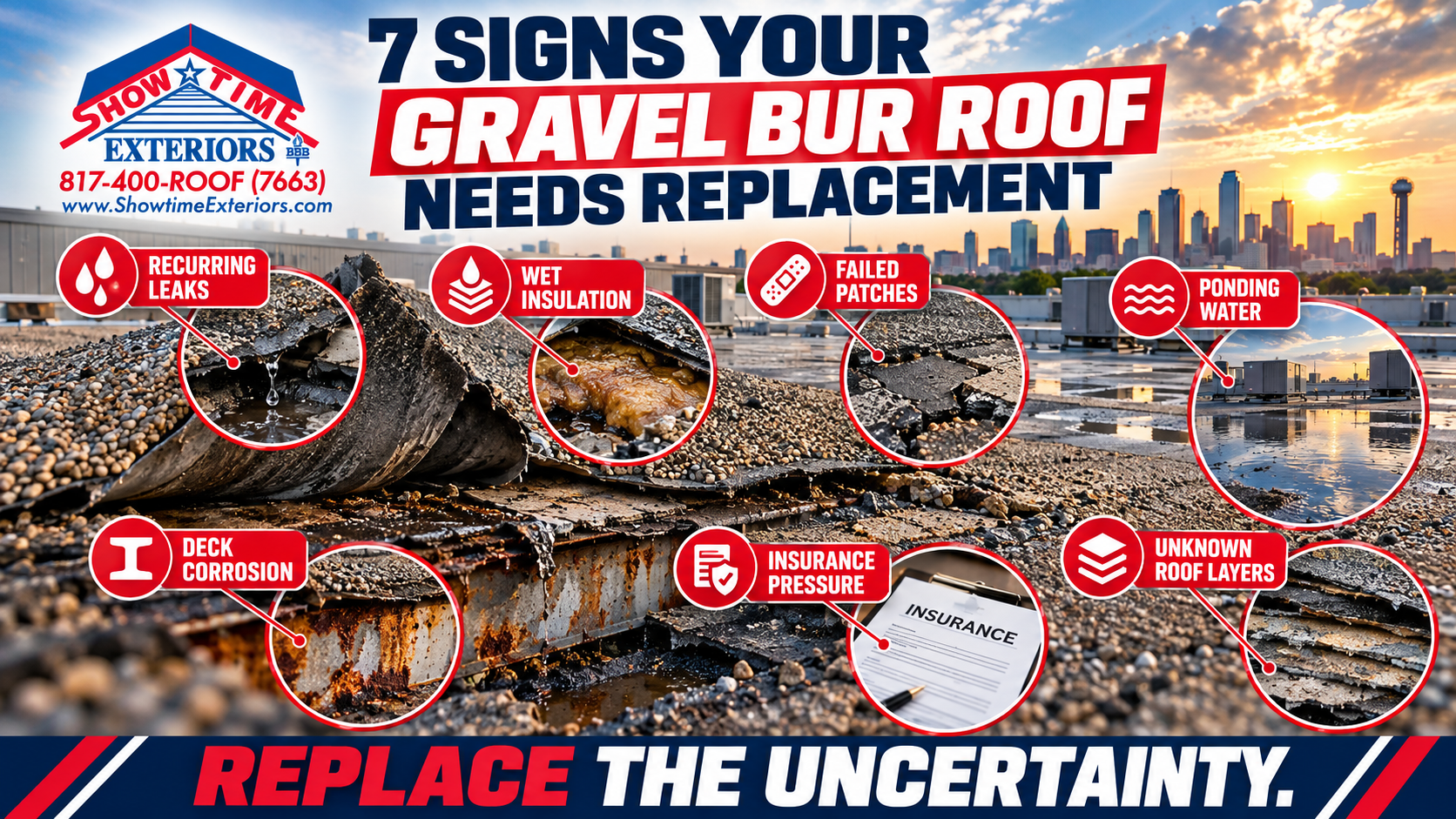
An aging gravel-surfaced built-up roof should be replaced when concealed moisture, recurring leaks, widespread deterioration, poor drainage, questionable decking, repeated repairs, or insurance requirements make continued patching or recovery an unacceptable risk. The exact replacement point varies by building, but owners should not wait for a major interior loss to establish that the roof has reached the end of its practical service life.
For many aging Texas gravel BUR roofs, those requirements reveal why removal and replacement can be the more defensible choice. Gravel can conceal cracks, blisters, eroded flood coat, deteriorated felts, wet insulation, failed patches, and irregular surfaces. If those conditions cannot be documented confidently, covering the roof can preserve uncertainty beneath a new membrane.
The correct answer is therefore conditional. A dry, stable, well-documented BUR assembly with a sound deck may qualify for a professionally designed TPO recover after appropriate preparation. A wet, heavily repaired, poorly drained, structurally questionable, or insurance-challenged roof may need complete tear-off. The decision must follow investigation, not precede it.
This guide explains the warning signs that support replacement, the evidence needed before budgeting, the cost factors that shape a Texas commercial project, the risks of delaying work, and how to plan a replacement without unnecessarily disrupting tenants or operations.
The Clearest Signs That Replacement Should Not Be Delayed
Leaks Keep Returning in Different Areas
One isolated leak can often be repaired. A pattern of new leaks appearing across unrelated roof zones usually points to broader system deterioration. When crews repeatedly patch flashings, field membrane, drains, and penetrations while interior complaints continue, the roof may no longer offer a stable repairable base.
Moisture Is Widespread or Difficult to Define
Wet insulation can reduce thermal performance, contribute to deck corrosion, and allow water to travel far from the original opening. If scans, cores, and test cuts show extensive moisture—or if the roof construction prevents reliable mapping—replacement allows the damaged materials to be removed instead of concealed.
Gravel Conceals the Roof’s True Condition
Aggregate can hide cracks, blisters, eroded asphalt, deteriorated felts, failed patches, and irregular surfaces. When inspectors cannot confidently document the membrane beneath the gravel, the owner is being asked to invest in an assembly whose condition remains uncertain. That uncertainty becomes especially important during insurance renewal, financing, or a property sale.
Repairs Have Become a Recurring Operating Expense
Emergency calls, interior cleanup, tenant coordination, inventory protection, ceiling replacement, and repeated mobilization can exceed the apparent cost of each patch. Owners should review the total cost of failures over several years rather than looking only at the latest invoice. A replacement can convert unpredictable emergency spending into a planned capital project.
The Deck May Be Corroded or Deteriorated
Rust staining, soft areas, deflection, fastener movement, recurring moisture, and damaged roof openings can indicate substrate problems. A surface repair cannot restore an unsound deck. Tear-off provides access to inspect, repair, and document the structure supporting the new system.
Drainage Problems Are Built Into the Existing Assembly
Chronic ponding, displaced gravel, recurring drain-area repairs, compressed insulation, and low structural zones can shorten repair life. Replacement creates the strongest opportunity to redesign slope with tapered insulation, crickets, drains, scuppers, and overflow provisions as one coordinated system.
The Insurer Will Not Accept the Existing Roof
If the carrier’s concern is the age, condition, documentation, or gravel-surfaced BUR itself, another repair may not change the underwriting decision. Property owners should request written requirements and determine whether full removal, a specific assembly, wind-uplift documentation, hail-resistant components, inspections, or completion records are required.
The Building Is Already Scheduled for Major Improvements
HVAC replacement, solar installation, façade work, interior renovation, or a tenant buildout can justify coordinating roof replacement before new equipment and finishes are exposed to an aging roof. Sequencing the work correctly reduces the chance that later trades will cut or damage a newly installed membrane.
What Is a Gravel Surfaced Built Up Roof
Built-up roofing, commonly called BUR, is an asphaltic roof system assembled from multiple layers of bitumen and reinforcing felts. Traditional installations often use a flood coat of asphalt covered with gravel or aggregate. The surfacing was intended to protect the asphalt from ultraviolet exposure, weather, and physical damage.
The presence of gravel does not reveal the condition of the membrane below it. The stones may hide splits, wrinkles, blisters, displaced surfacing, exposed asphalt, old repairs, and areas where water has entered the system. Different roof sections may also contain different ages, materials, and repair histories.
That uncertainty becomes important during insurance review. Some carriers are taking a closer look at older gravel-surfaced commercial roofs because the assembly may be difficult to inspect, document, and maintain. Underwriting practices vary, and no roofing contractor can promise coverage, but a property owner should understand whether retaining the existing BUR will leave the carrier’s principal concern unresolved.
What Does TPO Over BUR Actually Mean
Thermoplastic polyolefin, or TPO, is a single-ply membrane used widely on low-slope commercial roofs. The seams are heat welded, and the membrane may be mechanically attached, adhered, or installed as part of another approved assembly.
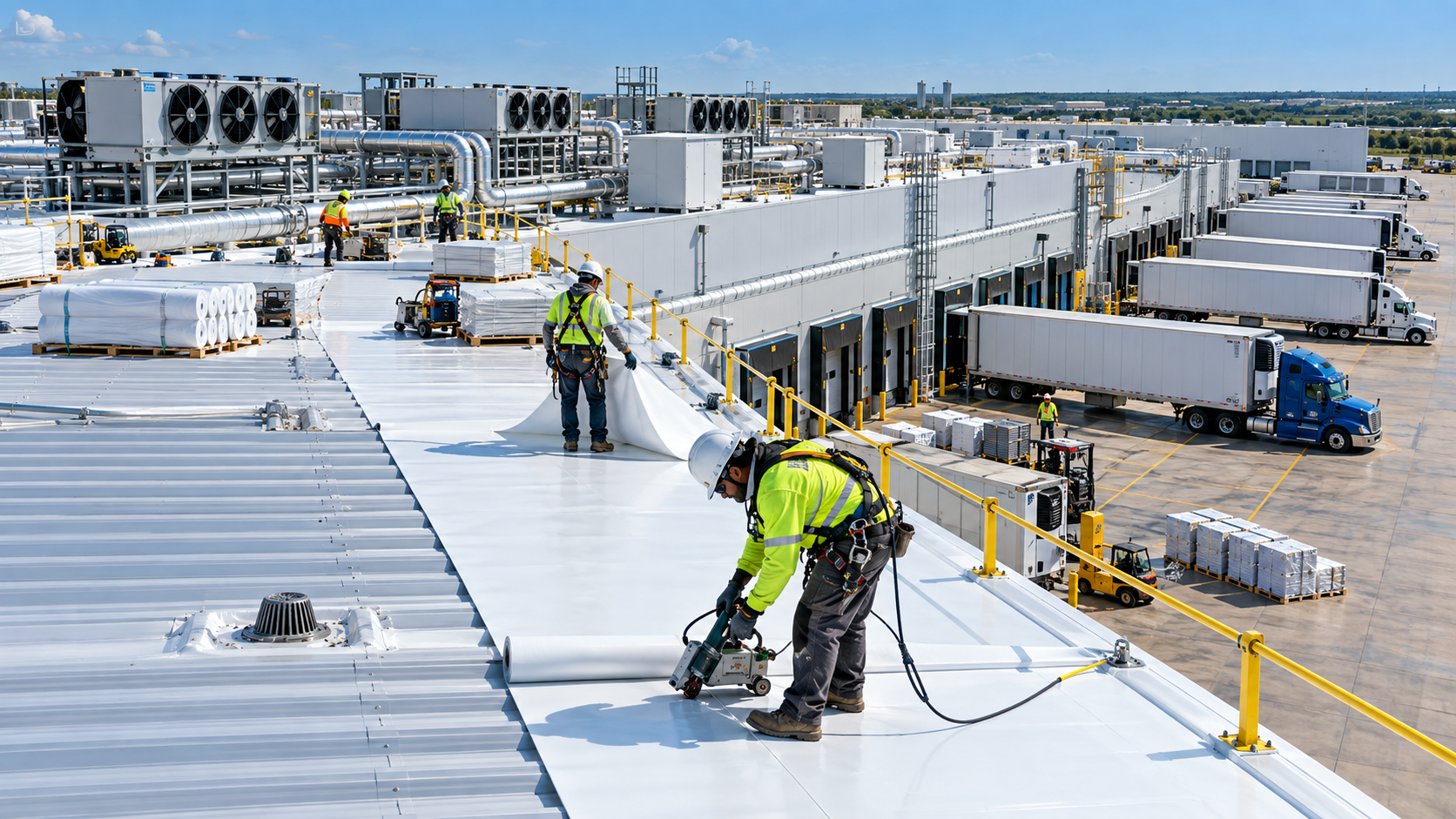
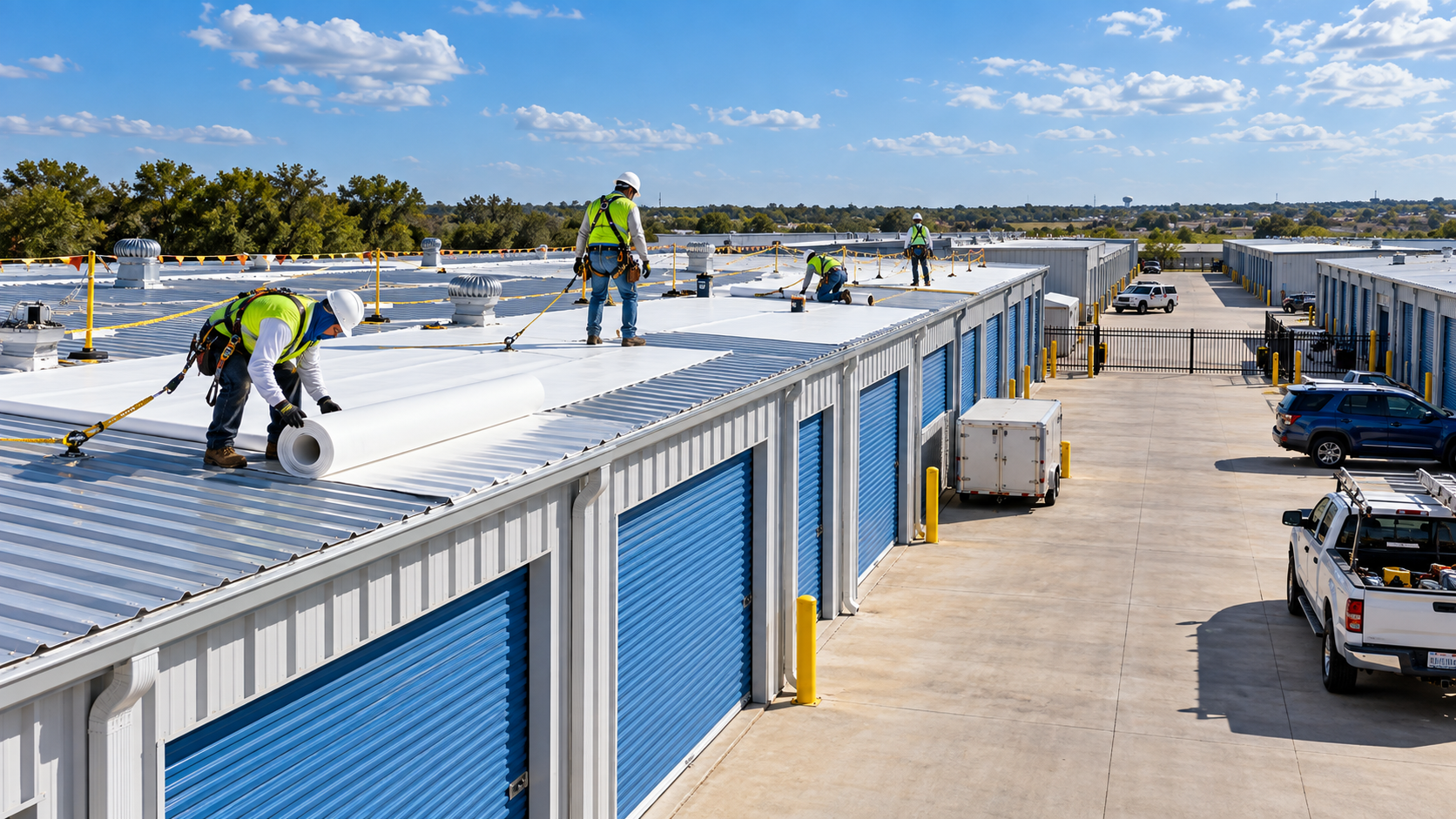
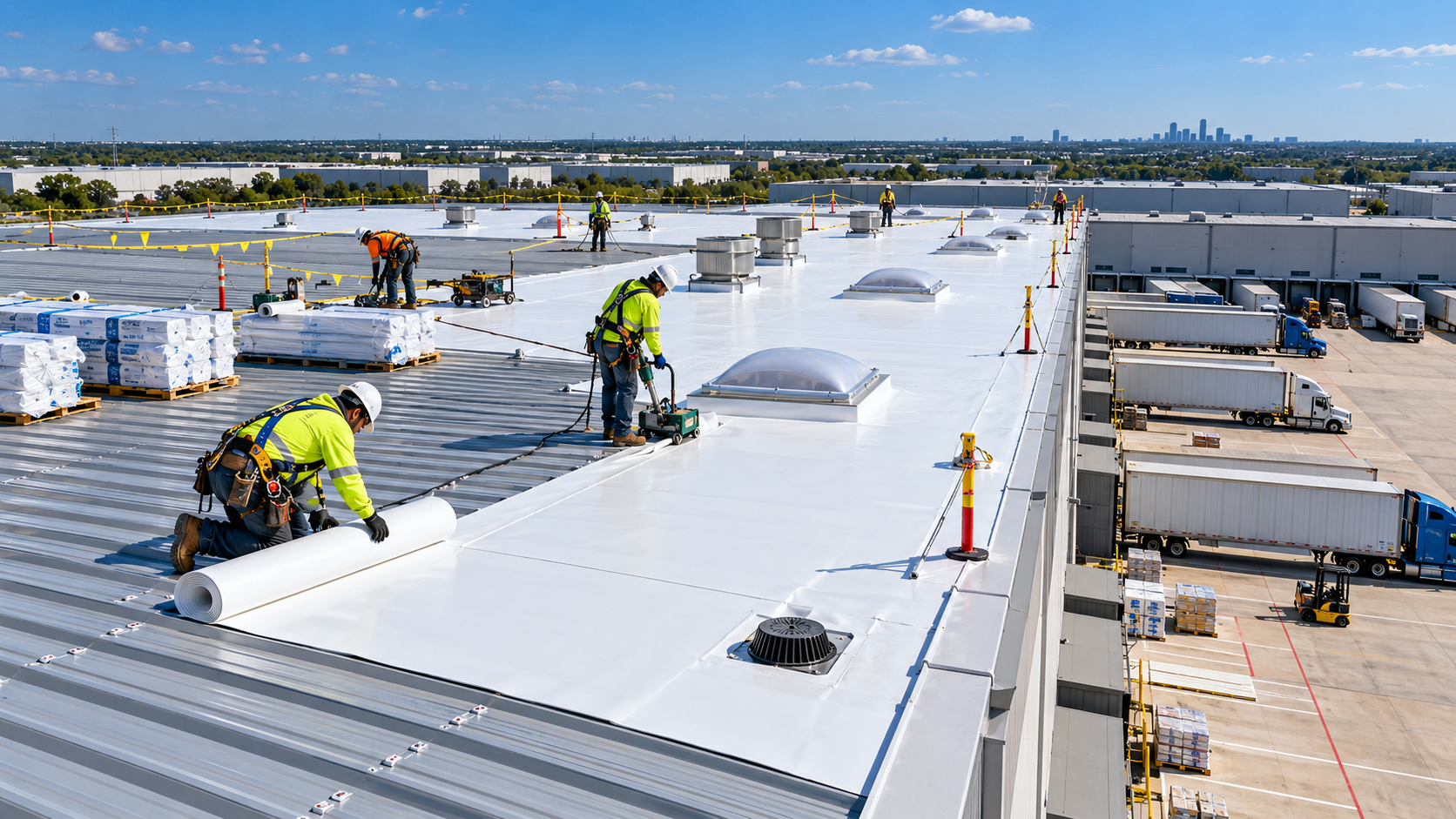
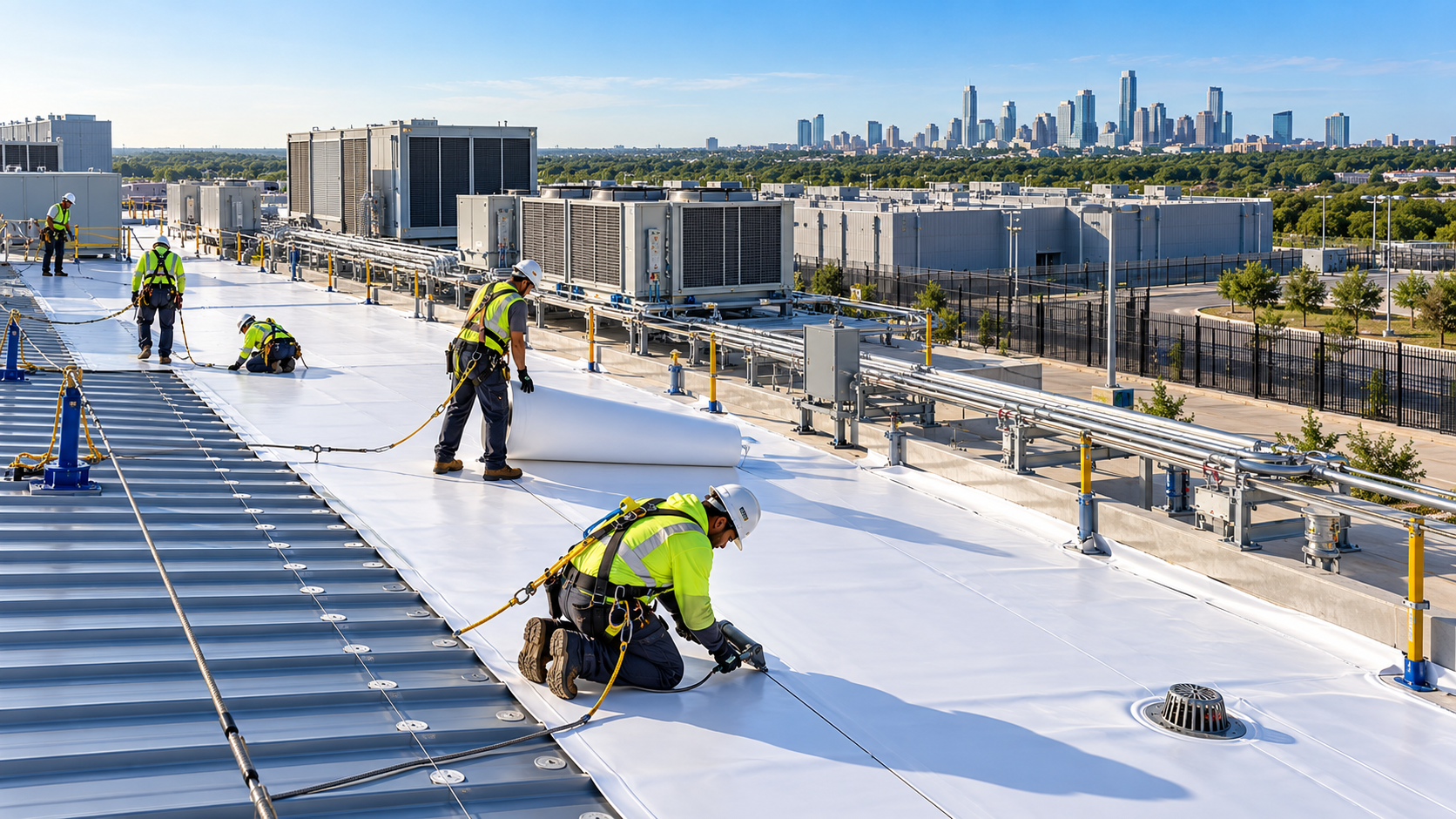
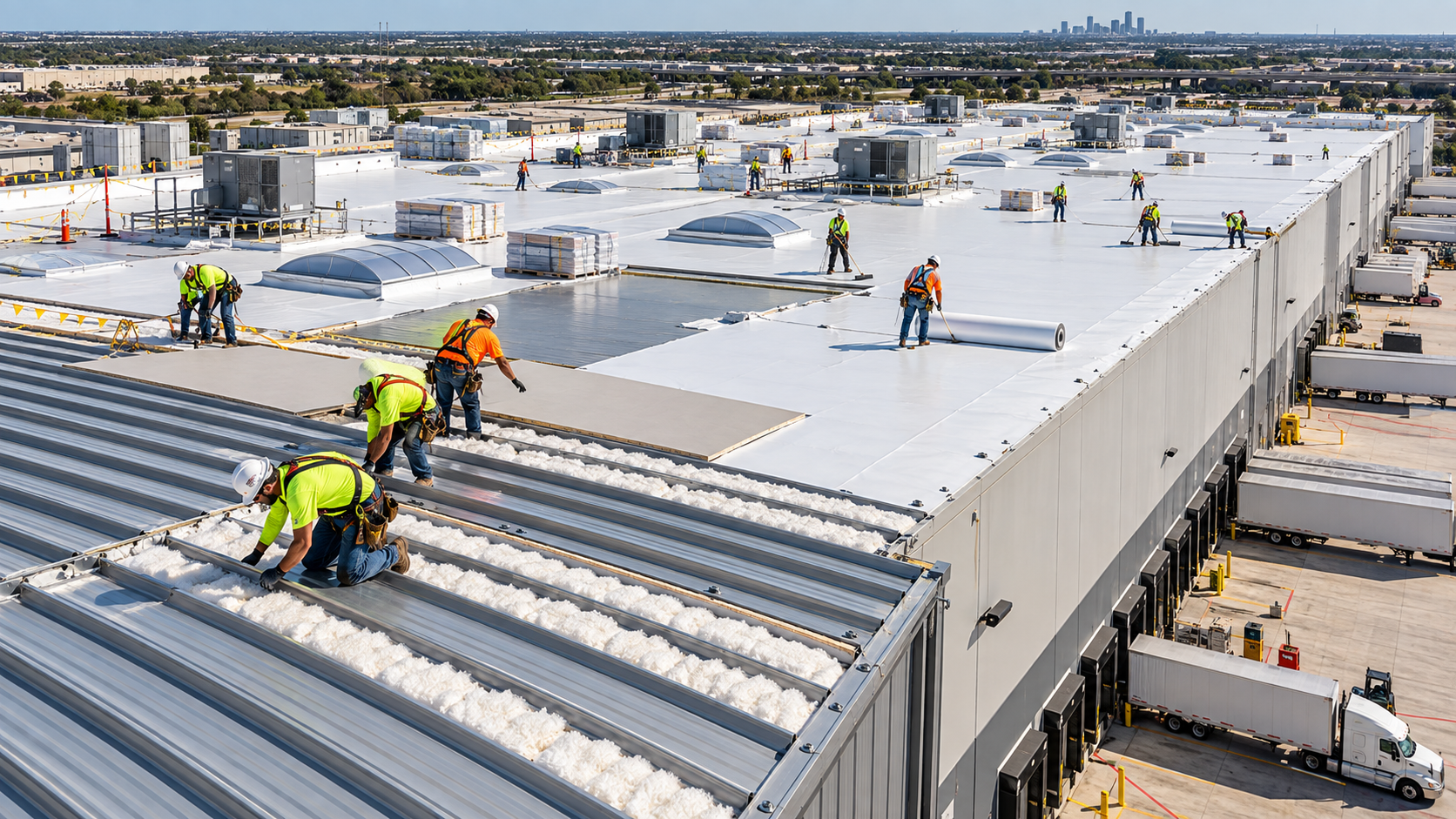
When contractors discuss installing TPO over BUR, they generally mean a roof recover. The existing roof remains substantially in place while unsuitable wet or damaged areas are removed. The surface is prepared, and new components such as insulation, a separator, a cover board, or a fleece-backed membrane are installed before the TPO system is completed.
GAF describes commercial roof recovery as an alternative that may reduce tear-off, disposal, and disruption when the existing roof qualifies. Its recover guidance begins with evaluating the roof. That first step is critical. A recover is a designed assembly, not a shortcut for avoiding investigation.
TPO Should Not Be Installed Directly Over Loose Gravel
Loose gravel does not provide the flat, stable, clean substrate required for a dependable single-ply installation. The aggregate can move, create high points, damage materials, interfere with adhesion, and make consistent attachment difficult.
A proposed scope may call for gravel removal, power brooming, vacuuming, scarifying, flood-coat preparation, new insulation, a cover board, or a fleece-backed membrane. The exact preparation depends on the existing roof and the manufacturer’s requirements. A contractor should state precisely what will remain, what will be removed, and what layer will separate the old asphaltic surface from the new TPO.
A Recover Is Not the Same as a Coating
A TPO recover installs a new sheet membrane. A roof coating is a liquid-applied restoration system. Both require qualification, preparation, repairs, and compatible details, but their assemblies and performance characteristics differ. Owners should not accept a vague proposal that uses retrofit, coating, overlay, and recover as if they describe the same work.
The Short Answer for Texas Property Owners
TPO may be installed over an existing gravel BUR roof only when the roof is an appropriate recover candidate and the proposed assembly is accepted by the relevant manufacturer, authority having jurisdiction, design professional when required, and insurer.
The roof is more likely to qualify when:
Moisture testing shows the assembly is predominantly dry.
Wet areas are limited, clearly mapped, and removable.
The structural deck is sound.
Existing roof layers and weight are acceptable.
The surface can be prepared into a stable substrate.
Drainage can be corrected or maintained.
Flashing heights and rooftop details can accommodate the added thickness.
The attachment method can meet project-specific wind requirements.
The manufacturer accepts the complete assembly.
The insurer has no objection to retaining the old BUR.
Replacement is more likely to be appropriate when moisture is widespread, the deck is damaged, the roof has multiple undocumented layers, gravel obscures extensive deterioration, drainage is poor, recurring repairs have failed, or the insurance objective requires removing the old assembly.
Why Gravel Makes Qualification More Difficult
It Conceals the Waterproofing Surface
Inspectors cannot fully evaluate an asphaltic membrane while it remains covered by aggregate. Gravel may need to be moved in representative areas so flashings, seams, blisters, cracks, and patches can be examined. Even then, isolated observations do not necessarily describe the condition of the entire roof.
It Complicates Moisture Investigation
Infrared thermography and other nondestructive methods can help locate temperature or electrical differences associated with moisture, but results depend on roof construction, weather, surface conditions, and technician interpretation. Gravel can affect thermal behavior and make anomalies harder to interpret. Core samples or test cuts may be needed to confirm the assembly and moisture findings.
It Adds Weight and Debris
Aggregate contributes dead load and must be considered along with the weight of existing roofing, insulation, cover boards, and the proposed TPO assembly. Gravel removal also creates a material-handling and housekeeping challenge. The contractor should explain how aggregate will be contained, transported, and kept out of drains, equipment, parking areas, and neighboring properties.
It Can Hide an Uneven Substrate
After gravel is removed, the remaining flood coat may be rough and irregular. Blisters, ridges, patches, and eroded areas can produce an inconsistent surface. The recover design must create a smooth, compatible layer for the new membrane rather than expecting TPO to bridge every defect.
The Inspection Required Before a TPO Recover
Review the Roof History
The contractor should collect installation records, repair invoices, warranty documents, leak logs, drawings, prior inspection reports, storm records, and information about rooftop equipment changes. Records rarely tell the complete story, but they can identify recurring failure areas and undocumented additions.
Map the Roof
A roof plan should show drains, scuppers, gutters, overflow outlets, parapets, expansion joints, penetrations, curbs, skylights, access points, equipment, previous patches, ponding areas, and leak locations. The map becomes the basis for moisture findings, repair quantities, photographs, and the final project record.
Move Gravel and Examine Representative Areas
Gravel should be displaced where necessary to inspect the membrane and flashings. The assessment should document exposed asphalt, cracks, splits, blisters, ridges, wrinkles, deteriorated felts, patch edges, and loose materials. Perimeters and penetrations deserve particular attention because wind forces and water entry often concentrate at transitions.
Perform Moisture Testing
The testing method should fit the roof assembly. Infrared, electrical capacitance, nuclear scanning, test cuts, and core samples each have limitations. Nondestructive anomalies should be confirmed when necessary, and wet areas should be mapped clearly enough to support a construction scope.
NRCA maintains technical roofing resources addressing moisture, reroofing, system design, and installation. Its guidance distinguishes between recovering an existing roof and tearing the assembly off to the deck. The decision should reflect verified conditions rather than a universal preference.
Confirm the Deck
Test cuts can help identify deck type and roof layers. Steel deck should be checked for corrosion, openings, deformation, and attachment limitations. Wood deck should be evaluated for rot, delamination, and fastener holding power. Concrete deck may require review for cracks, spalling, moisture, and attachment constraints.
If the deck cannot support the proposed fastening or if concealed deterioration is likely, replacement provides access for repair. A new membrane cannot make an unsound deck reliable.
Evaluate Drainage
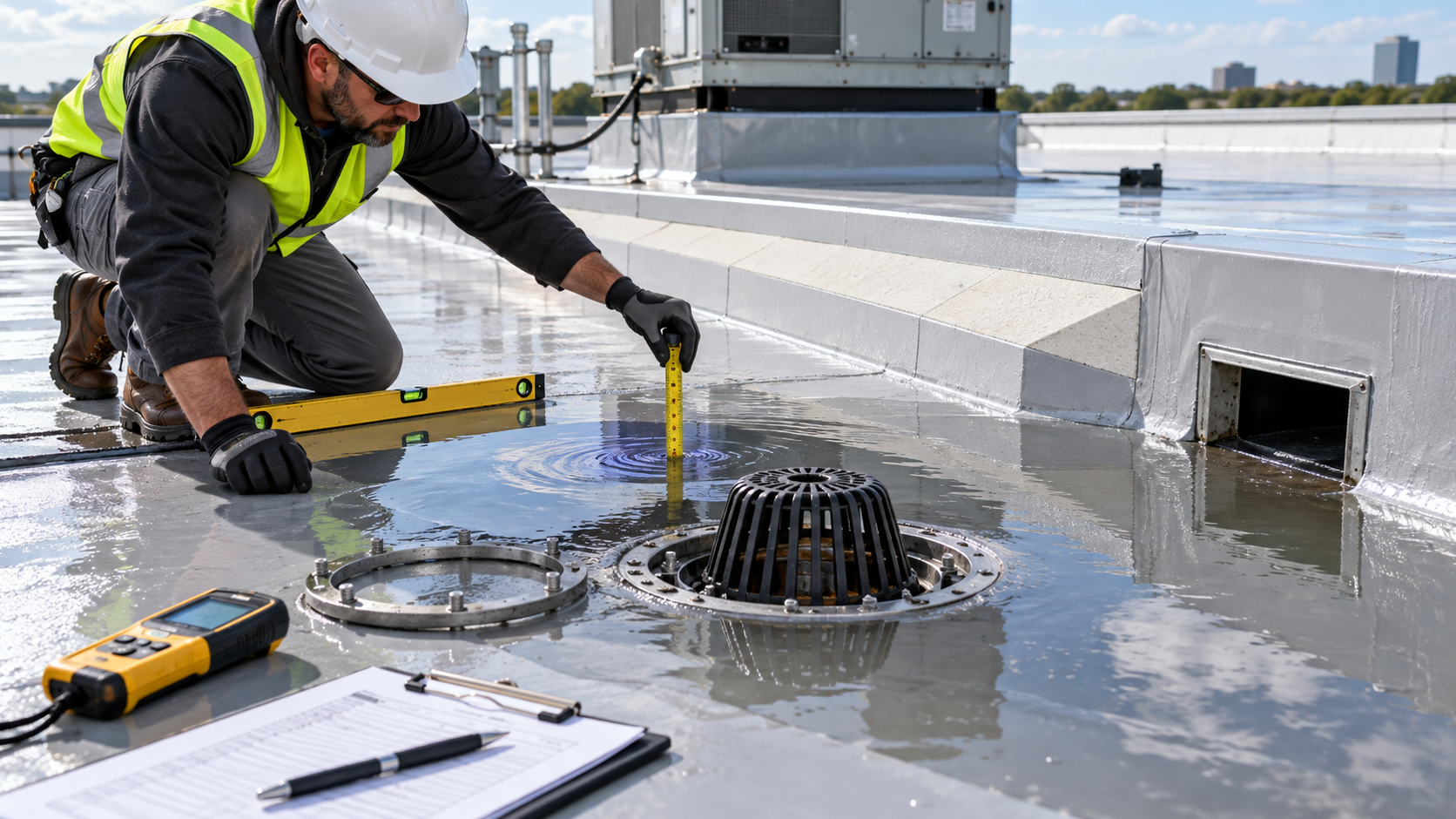
The assessment should record standing water, blocked drains, displaced gravel, eroded surfacing, compressed insulation, low areas, scuppers, gutters, downspouts, and overflow provisions. A recover should improve or preserve positive drainage, not bury the same ponding pattern beneath a new surface.
Showtime Exteriors’ guide to retrofit roof drains for Texas commercial buildings explains how drain modifications interact with slope, membrane details, insulation, and overflow planning.
Conditions That Commonly Disqualify a Recover
Widespread or Uncertain Moisture
Wet insulation can lose thermal performance, contribute to corrosion or deterioration, and allow water to migrate. Installing TPO over a roof with widespread moisture can trap damaged materials and make later leaks more difficult to diagnose.
If moisture boundaries cannot be defined confidently, the removal quantity may expand substantially during construction. At some point, the recover no longer delivers the cost or disruption advantage that justified it.
Deteriorated Decking
Corroded steel, rotten wood, delaminated sheathing, damaged concrete, or unreliable fastener holding power should not be concealed. Tear-off allows the deck to be inspected, documented, repaired, and prepared for the new roof.
Multiple Existing Roof Layers
The number and type of existing layers affect weight, attachment, fire classification, vapor behavior, code compliance, and manufacturer eligibility. An undocumented stack of old roofs is a strong reason to investigate further and may require removal.
Chronic Ponding or Structural Deflection
Tapered insulation and new drains can improve drainage, but they cannot solve every low area. If ponding reflects structural deflection, inadequate framing, or widespread deck movement, a design professional may need to evaluate the structure before roofing proceeds.
Extensive Blistering Splitting or Failed Patches
One isolated blister can be removed. A roof covered with blisters, splits, brittle asphalt, deteriorated felts, and incompatible patches is not a stable foundation. The amount of preparation and repair may make replacement more predictable.
Inadequate Flashing Height
Adding insulation and a cover board raises the roof surface. Curbs, parapets, walls, doors, windows, drains, and equipment may no longer have adequate flashing height or clearance. The cost of raising and rebuilding these details must be included in the comparison.
Insurance Objections
If the purpose of the project is to resolve a carrier’s concern about an aging gravel BUR roof, leaving most of that roof in place may not accomplish the objective. The owner should ask the carrier in writing whether a TPO recover over the existing BUR will be acceptable and what documentation is required.
What a Proper TPO Over BUR Assembly May Include
A project-specific recover may include the following components, subject to the manufacturer and design:
Removal and disposal of loose gravel.
Detailed cleaning and substrate preparation.
Removal of mapped wet insulation and damaged roofing.
Deck repairs discovered during test cuts or construction.
A separator, flute fill, insulation, or an approved recover board.
Tapered insulation or crickets for drainage.
A mechanically attached, adhered, or fleece-backed TPO membrane.
New or rebuilt flashings at curbs, walls, pipes, and equipment.
New perimeter edge metal and securement.
Drain, scupper, gutter, and overflow modifications.
Walk pads around service areas.
Manufacturer inspections and project documentation.
The proposal should name the products, thicknesses, attachment method, fastener patterns or adhesive, membrane thickness, flashing strategy, perimeter details, and warranty or guarantee requirements. “Install TPO over existing roof” is not a sufficient scope.
GAF’s commercial roof recover information describes fleece-backed and TPO recover approaches, while emphasizing evaluation and substrate-specific installation. Manufacturer information should be applied to the actual building, not copied into a generic proposal.
Texas Heat Hail and Wind Considerations
Heat and Ultraviolet Exposure
Reflective TPO can reduce solar heat absorption at the roof surface. The U.S. Environmental Protection Agency explains that cool roofs absorb and transfer less heat than conventional dark roofs, and the U.S. Department of Energy provides cool-roof purchasing guidance. Energy results still depend on insulation, building use, HVAC, climate, roof area, air sealing, and system design.
The existing BUR should not be retained merely because a white membrane will cover it. Reflectivity does not dry wet insulation, repair deck corrosion, or correct inadequate drainage.
Hail Resistance
Membrane thickness, cover board, insulation, substrate, attachment, age, and maintenance all influence hail performance. A dense cover board may improve impact resistance and protect insulation. The selected assembly should match the owner’s risk tolerance and insurer requirements.
Wind Uplift and Perimeters
Texas buildings can experience severe thunderstorms, straight-line winds, tornadoes, and coastal wind exposure. Wind design must address the entire load path. Perimeters and corners generally experience higher pressures than the field of the roof, so attachment and edge securement may change by roof zone.
IBHS explains that commercial roof wind performance depends on the wind loads imposed and how those loads transfer through the roof system. Its research on commercial stone-ballasted roofs also describes the potential for membrane movement and displaced ballast under high winds. These findings reinforce why loose aggregate, perimeter details, and attachment deserve careful review.
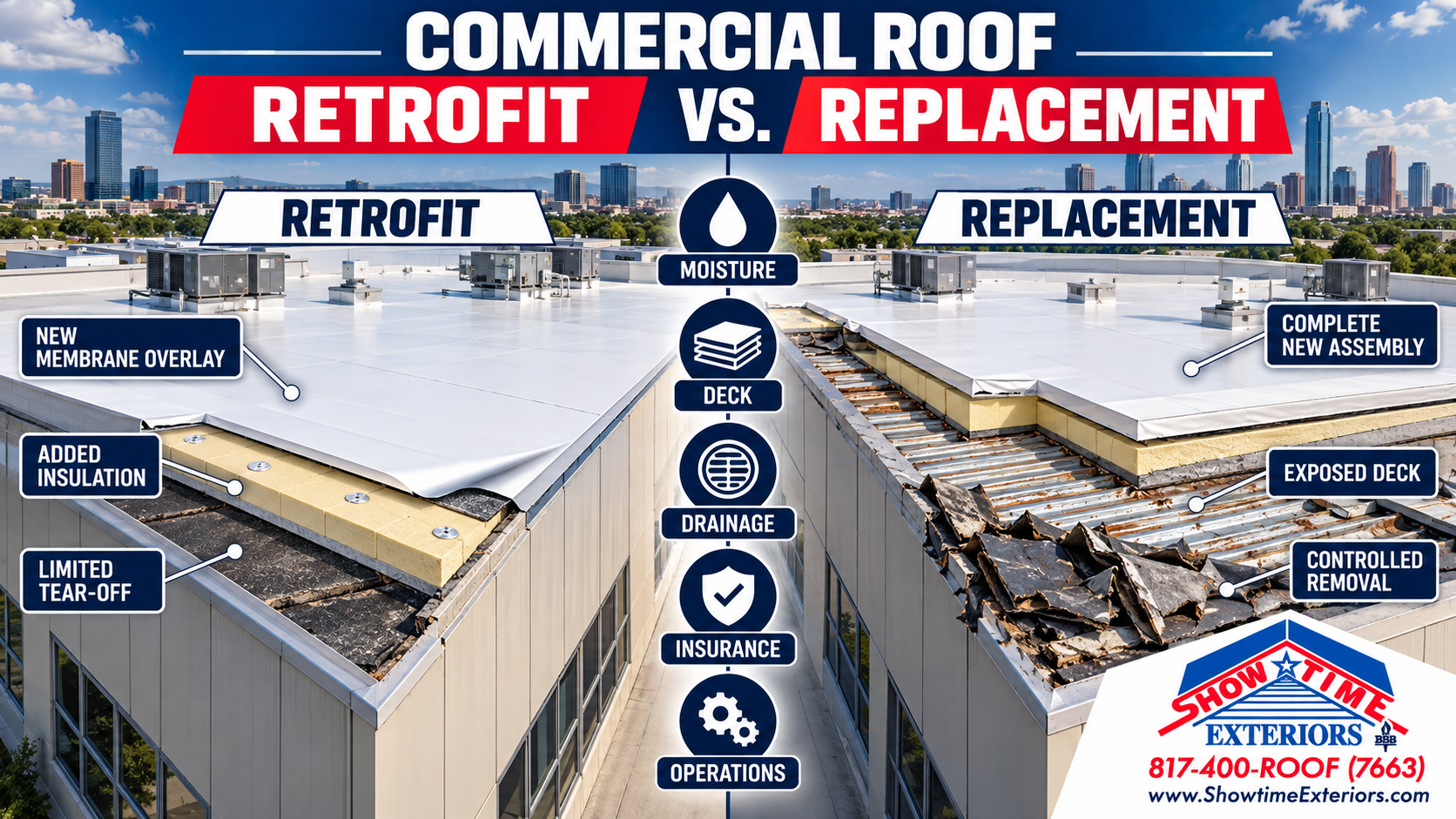
Recover vs Full Replacement
The lowest initial price should not decide the project. Owners should compare the total scope, residual risk, expected service period, future tear-off, maintenance obligations, warranty terms, disruption, and documentation.
The broader commercial roof retrofit versus replacement guide can help owners frame the decision, but the building-specific evidence remains decisive.
Gravel surfacing can conceal deterioration and moisture pathways, increasing uncertainty during assessment and insurance review.
Cost Factors for TPO Over Gravel BUR
Recover pricing varies with roof size, access, gravel depth, disposal, number of layers, moisture removal, deck repair, insulation, cover board, membrane thickness, attachment, drainage, flashings, edges, equipment, safety requirements, operations, and warranty.
A low proposal may exclude the work most likely to change the project cost. The owner should request unit prices for wet insulation, deck repair, curb modifications, additional gravel removal, and unforeseen conditions. The proposal should also state how much wet area is included and what evidence supports that allowance.
Replacement typically costs more initially because demolition and disposal are greater. It can still provide better value when a recover would require extensive preparation, leave insurance concerns unresolved, or postpone an unavoidable tear-off.
Insurance and Documentation Strategy
Before choosing a recover, the owner should ask the insurance professional:
Is a TPO recover over an existing gravel BUR acceptable?
Does the carrier require complete removal of gravel or the entire BUR?
Are wind-uplift, hail, fastening, or cover-board requirements specified?
What inspection, moisture, and deck documentation must be submitted?
Will the roof age be considered the date of the recover or the age of the retained assembly?
Are manufacturer inspections or warranties required?
Will coverage terms change after completion?
Carrier answers should be obtained in writing. A contractor can document the roof, create a scope, and provide completion records, but cannot guarantee underwriting results.
The project record should include the preconstruction report, roof plan, moisture map, test-cut findings, photographs, approved assembly, product data, repair map, deck repairs, wet-area removal, daily reports, change orders, manufacturer observations, final photographs, and warranty documents.
Showtime Exteriors’ article on hiring a roofer with the best warranty coverage explains why owners should compare written terms, exclusions, inspections, and maintenance duties instead of focusing only on warranty length.
How to Compare Contractor Proposals
Every proposal should answer the same questions:
Existing Conditions
What roof layers exist? How was that confirmed? How much moisture was found? What deck is present? Which conditions remain uncertain?
Gravel Removal and Preparation
Will all loose gravel be removed? How will it be contained? What surface remains? How will rough flood coat, blisters, patches, and exposed felts be treated?
Wet Area and Deck Repair
Which quantities are included? What are the unit prices? Who authorizes additional work? How will repairs be photographed?
New Assembly
What insulation, cover board, membrane, thickness, attachment, and fastening pattern are proposed? Is the assembly approved for the existing substrate?
Drainage and Details
How will ponding be corrected? Which drains, curbs, walls, penetrations, expansion joints, and edges will be rebuilt? How will added thickness affect clearances?
Wind and Hail
What design pressures apply? How do field, perimeter, and corner zones differ? Is a cover board included? Does the scope address the insurer’s requirements?
Warranty and Records
Who issues the warranty? What inspections are included? What maintenance is required? What closeout documents will the owner receive?
Step by Step Decision Process
Step 1 Clarify the Objective
Determine whether the project is driven by leaks, insurance renewal, energy goals, building sale, tenant requirements, storm damage, deferred maintenance, or long-term capital planning.
Step 2 Inspect and Test
Map the roof, move gravel in representative areas, scan for moisture, make test cuts, confirm the deck, and document drainage and flashings.
Step 3 Request the Carrier Position
Provide the carrier with the existing roof description and proposed recover concept. Ask what conditions, testing, documentation, and completion evidence it requires.
Step 4 Obtain Manufacturer Review
Confirm that the proposed TPO assembly is appropriate for the substrate and project conditions. Identify inspections and warranty requirements before work begins.
Step 5 Compare Recover and Replacement Scopes
Compare complete scopes rather than membrane prices. Include preparation, wet-area removal, deck repair, insulation, drainage, details, safety, disruption, documentation, maintenance, residual risk, and future tear-off.
Step 6 Plan Operations and Weather Protection
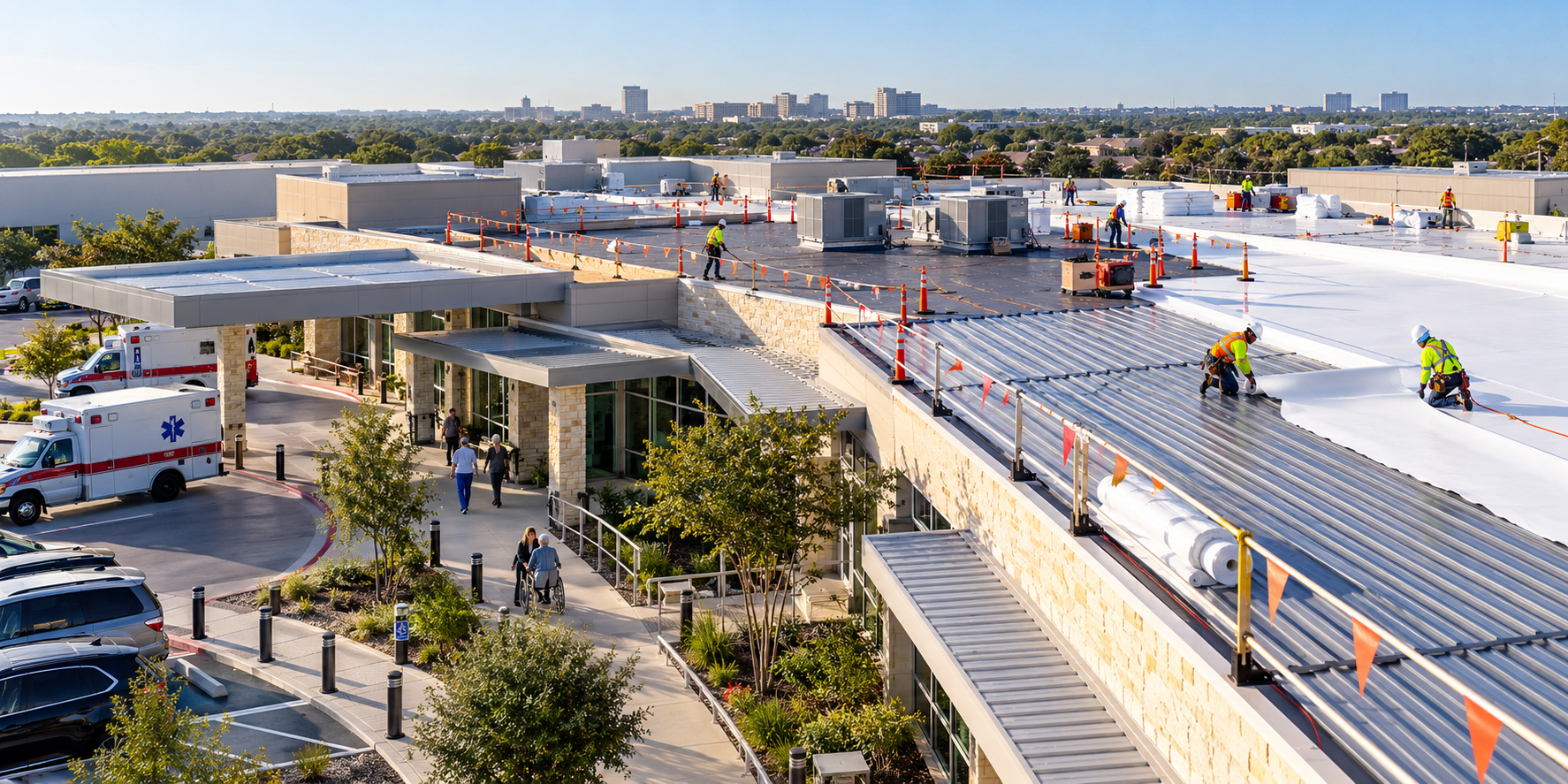
Coordinate staging, debris, air intakes, sensitive areas, tenant communication, temporary protection, daily dry-in, noise, odor, and emergency procedures.
Step 7 Document the Finished Roof
Create a permanent record and schedule routine inspections. A new TPO surface still requires maintenance, drain cleaning, repair of punctures, and control of rooftop traffic.
Frequently Asked Questions
Can TPO be laid directly over gravel
No dependable TPO assembly should rely on loose gravel as its substrate. Aggregate must be removed or addressed according to a qualified, manufacturer-accepted system, and a stable compatible surface must be created.
Must every gravel BUR roof be completely removed
Not automatically. A predominantly dry, stable, well-documented roof may qualify for a recover. Many older roofs, however, contain moisture, multiple layers, deterioration, drainage problems, or insurance concerns that make replacement more appropriate.
Will TPO solve existing leaks
It can provide a new waterproofing surface, but the project must also correct wet materials, failed flashings, walls, equipment, drainage, and other leak pathways. Covering symptoms without identifying causes can preserve the problem.
Does a TPO recover improve insurability
It may provide a newer documented roof surface, but only the carrier can determine coverage. If the carrier objects to the retained BUR, a recover may not resolve the concern. Confirm requirements before selecting the scope.
How is moisture found beneath gravel BUR
Contractors may use infrared thermography, electrical methods, nuclear scanning, core samples, or test cuts. Gravel and roof construction can affect results, so anomalies may need confirmation.
Is TPO suitable for Texas heat
TPO is widely used on Texas commercial buildings and can provide a reflective surface. Suitability depends on correct design, membrane and cover-board selection, attachment, drainage, details, installation, and maintenance.
How long does a TPO recover take
Duration depends on roof size, gravel removal, access, moisture, repairs, drainage, equipment, weather, safety, and operating restrictions. A project-specific schedule should follow the investigation.
When Replacement Is the Responsible Decision
Installing TPO over an existing gravel BUR roof can be appropriate only when the evidence supports it. The existing roof must be dry enough, stable enough, documented enough, and compatible with the proposed system. The deck, attachment, drainage, details, code, manufacturer, and insurance requirements must all align.
When gravel conceals extensive deterioration, moisture is widespread, the deck is uncertain, or the carrier’s concern is the retained BUR itself, replacement can provide a cleaner solution. Tear-off exposes the deck, removes wet and deteriorated materials, permits drainage and insulation corrections, and creates a new documented roof baseline.
Showtime Exteriors provides commercial roofing inspections, repair, retrofit, recover, and replacement services across Texas. The team evaluates BUR, TPO, PVC, EPDM, modified bitumen, metal, and coating systems before recommending a scope.
Call 817-400-ROOF (7663) to schedule a commercial roof assessment, or visit the Showtime Exteriors roofing blog for additional Texas commercial roofing resources.
Common Mistakes to Avoid
Choosing the System Before Testing the Roof
Some projects begin with a product decision because the owner likes a membrane, a warranty term, or a low budget number. That reverses the proper order. Moisture, deck condition, roof layers, drainage, attachment, and insurance requirements should determine whether the building qualifies for a recover. Product selection comes after the roof has been investigated.
Treating Gravel Removal as Complete Preparation
Removing loose aggregate is only one part of the work. The remaining asphaltic surface may contain ridges, blisters, exposed felts, brittle areas, patches, dirt, and incompatible materials. The scope must explain how the substrate will be stabilized and separated from the new TPO.
Assuming White Membrane Solves Every Performance Problem
A reflective surface can reduce solar heat absorption, but it does not replace wet insulation, repair corrosion, create drainage, raise low curbs, or secure weak perimeters. Energy and durability depend on the complete assembly.
Ignoring Rooftop Equipment Plans
HVAC units, vents, pipes, conduits, screens, signs, solar equipment, and access paths affect roof design. Equipment scheduled for replacement should be coordinated before the new roof is completed. Otherwise, later trades may cut, puncture, or obstruct a newly installed membrane.
Failing to Budget for Concealed Conditions
Even careful testing samples a large roof rather than exposing every square foot. Contracts should include a transparent process and unit prices for unexpected wet insulation, additional gravel, deteriorated decking, and detail reconstruction. A realistic contingency is more useful than an artificially low proposal that grows through change orders.
Skipping Post Installation Maintenance
TPO roofs require routine inspection and maintenance. Drains must remain open, punctures must be repaired, seams and flashings should be reviewed, and rooftop traffic must be controlled. The owner should receive a maintenance schedule and keep every inspection and repair in the roof record.
External Resources
National Roofing Contractors Association
GAF commercial roof recover systems
GAF commercial roofing materials
U.S. Environmental Protection Agency cool roof guidance
U.S. Department of Energy cool roof product guidance
Insurance Institute for Business and Home Safety commercial stone ballasted roof research