



Commercial Roof Repair in Grand Prairie: A Building Owner’s Guide
Plan commercial roof repair in Grand Prairie with clear inspection findings, repair scopes, moisture checks, permit coordination, and maintenance records.
Commercial roof repair in Grand Prairie should begin with a documented assessment of the problem and the surrounding roof. A visible leak may lead to a localized repair, but recurring symptoms can require a broader investigation. The objective is to approve work that addresses an identified condition and gives the owner a clear account of what remains unresolved.
For warehouses, offices, shopping centers, restaurants, churches, and other occupied properties, a roofing decision also affects access, equipment, inventory, and tenants. A useful proposal connects the repair to those operating conditions. It should explain the work, materials, limitations, schedule, and completion evidence.
Showtime Exteriors serves North Texas owners evaluating roofing needs. This guide explains how to organize a commercial roof repair project in Grand Prairie, compare proposals, and decide when further assessment belongs ahead of another patch.
Begin With the Building’s Immediate Needs
When water is entering the building, tell the contractor about active leakage before arranging a routine inspection. Describe affected rooms, equipment, and operations. Ask whether immediate protection is needed and whether that work will be authorized separately from permanent repairs.
Keep people away from unsafe areas, including damaged ceilings, affected electrical equipment, and places showing unusual movement or distress. Building staff can record observations and coordinate access without climbing onto a suspect roof. The response should match the conditions actually present.
Separate urgent protection from the larger purchasing decision. A temporary measure may reduce immediate exposure while investigation continues, but it needs its own description, location, cost, and follow-up plan. Avoid allowing an emergency invoice to become the only record of a recurring roofing concern.
Create a Useful Leak History
Record where water appears, when it starts, how long it continues, and the weather or equipment conditions at the time. A leak during wind-driven rain may present differently from water that appears during dry weather. Consistent observations help the contractor plan the investigation.
Use a building plan to label interior locations and corresponding roof sections. Retain original photographs with dates when available. Include tenant reports rather than relying on a recollection that a particular corner has leaked for years.
Gather earlier repair invoices and inspection findings. If the same symptom has prompted several visits, compare what each contractor actually repaired. A useful history helps distinguish a new problem from an unresolved condition and prevents another crew from starting with incomplete information.
Identify the Existing Roof Before Selecting Repairs
Commercial buildings may have TPO, PVC, EPDM, modified bitumen, built-up roofing, metal, coatings, or several systems across additions. Identify the covering and available assembly records before choosing materials. Surface color alone does not establish compatibility.
Ask about the deck, insulation, cover board, attachment, existing roof layers, and prior repairs where the information is available. The inspector should distinguish documented facts from assumptions. Unknown construction can affect which investigation or corrective procedure is appropriate.
Showtime Exteriors’ guide to roofing materials and selection factors for Texas can help owners prepare questions. For a repair project, the immediate goal is to understand the installed assembly and how the proposed work connects to it.
Request an Assessment of the Surrounding Area
A drip location does not necessarily identify the point where water entered. The contractor should review the relevant roof area and accessible adjoining details rather than patching only the spot directly above the interior symptom. Explain what information guided the review.
Carlisle’s roof condition assessment resources describe a broader evaluation that includes roof surfaces, details, penetrations, and building observations. That provides useful context for asking how an assessment will establish a suitable scope.
The report should identify access limits and concealed conditions. An inaccessible wall transition or covered substrate deserves a stated limitation and, when important, a follow-up recommendation. A visual visit should not imply that every hidden component has been verified.
Inspect Membrane Surfaces, Seams, and Previous Patches
On a membrane roof, the inspector should document accessible openings, damaged areas, seam concerns, and the condition of earlier repairs. Each finding needs a location and an explanation of its significance. A photograph without context can be difficult for the owner or returning crew to use.
Ask whether the surrounding material is suitable for the recommended repair. A defined defect in an otherwise serviceable area presents a different decision from repeated failures across deteriorated or uncertain material. The proposal should explain which situation the inspection supports.
Avoid treating every visible mark as an active leak source. The contractor should distinguish observed defects, surface changes, and uncertain conditions. If a method beyond visual inspection is needed, understand what it can establish before approving that additional work.
Give Flashings and Transitions Their Own Scope
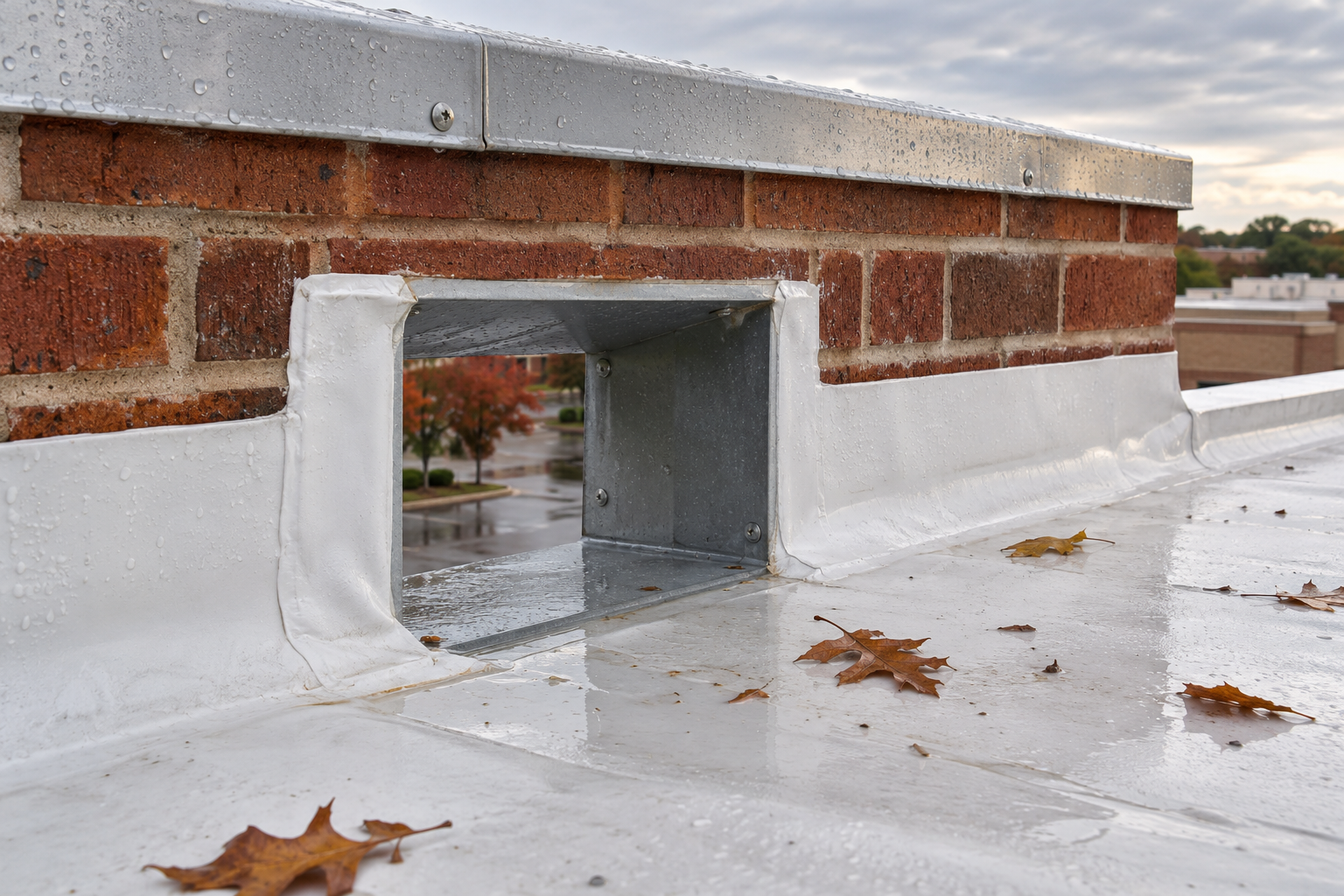
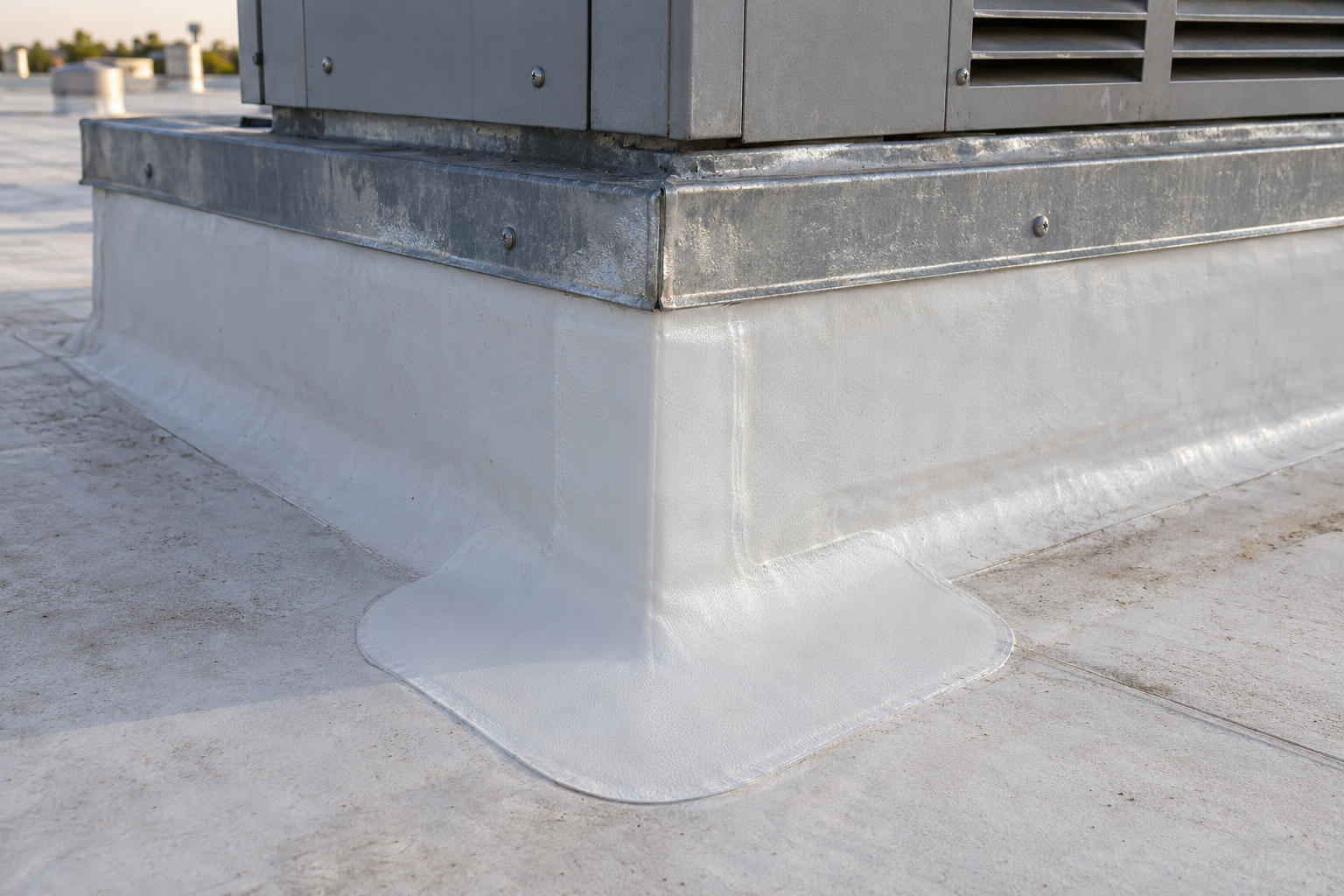
Roof-to-wall connections, equipment curbs, skylights, pipe penetrations, edges, and expansion joints deserve separate attention. Their components and failure modes differ from an open roof field. The proposal should name the detail being repaired and describe the intended work.
Ask what is included above and below the visible connection. Roofing, sheet metal, masonry, equipment, and wall systems can meet at one location. If another trade is needed, identify who coordinates it and what must happen before the roofing work is completed.
A vague direction to reseal the area leaves too much unspecified. Request the location, preparation, compatible materials, and treatment of deteriorated components. A clear description helps the owner understand whether the contractor proposes a durable detail repair or a temporary measure pending additional work.
Review Metal Roof Concerns With System-Specific Methods
On metal roofs, the assessment may involve panels, seams, laps, fasteners, penetrations, and related flashing. The contractor should identify the installed system and explain which observed conditions require correction. A general membrane repair description is not a substitute for a metal-specific scope.
Discuss corrosion, movement, previous coatings, and earlier repairs where relevant. The significance depends on the condition and the assembly. Do not assume that a surface treatment resolves a deteriorated panel, attachment concern, or poorly coordinated penetration.
If a coating or retrofit is proposed, ask how it addresses the documented problems and what prerequisites apply. Identify necessary repairs and investigations separately. Owners should understand whether the recommendation is a targeted correction or a larger roof renewal project.
Include Drainage in the Investigation
Standing water, debris, blocked outlets, and interrupted water paths can complicate a roofing problem. Review the drainage area, accessible drains, scuppers, gutters, and discharge route as appropriate. An open drain does not establish that all surrounding roof sections slope toward it.
GAF’s guide to commercial drain maintenance explains the relationship between drainage components and water removal. It is a useful reference for discussing whether a repair proposal also addresses observed obstructions or retained water.
Keep cleaning, waterproofing repairs, concealed piping assessment, and drainage design separate in the scope. They solve different problems. If the cause is not established during the visit, identify the additional assessment needed rather than presenting another surface patch as a complete drainage correction.
Determine Whether Moisture Investigation Is Needed
A dry roof surface does not establish that materials below are dry. Repeated leakage, deteriorated substrate, or an uncertain repair history may justify further assessment. The contractor should explain why the investigation is needed and how its findings affect the proposed work.
Ask about the selected method, its limitations, and any confirmatory openings. Measurements and survey results need interpretation in the context of the assembly. Understand which areas will be examined and which conditions may remain outside the investigation.
If openings are made, document their locations and restoration. Keep supporting findings with the resulting repair recommendation. An owner should be able to trace a proposed removal area to the evidence rather than receiving a larger scope with no explanation of how it was established.
Compare Repair, Restoration, Recover, and Replacement
Localized repair addresses a defined condition. Restoration, recover, and replacement involve different scopes and eligibility considerations. A contractor should explain why the recommended approach suits the roof rather than presenting all alternatives as interchangeable ways to stop a leak.
GAF’s commercial roof recover guidance describes recover options for suitable existing roofs. Whether a particular property qualifies depends on its condition, assembly, applicable requirements, and the proposed system. Recover should not be selected solely to avoid discussing concealed concerns.
Use the inspection findings to compare the practical options. Identify what each approach would correct, what it would retain, and what uncertainty remains. Include operations, maintenance, warranty terms, and anticipated future work in the discussion alongside initial price.
OptionWhat the owner should understand before approvingLocalized repairDefined defect, surrounding condition, compatible correctionFurther investigationUnresolved question, proposed method, decision it informsRestorationExisting roof suitability, necessary repairs, system requirementsRecoverRetained assembly condition, design, compatibility, approvalsPartial replacementBoundaries, transitions, retained areas, concealed workFull replacementDocumented reasons, removal scope, new assembly, coordination
For TPO properties, Showtime Exteriors’ guide to repairing, restoring, or replacing TPO roofing offers a more focused set of questions. The final choice should follow the building’s assessment.
Avoid Repeating a Repair Without Reviewing Its Results
A prior repair may have addressed one defect while leaving another source unresolved. Compare the location and timing of recurring symptoms with the completed work. Ask whether the same area failed again or whether the new observation points elsewhere.
A return visit should produce an updated explanation. Request new findings, limits, and a revised recommendation where appropriate. Repeating an identical treatment without reviewing why the symptom returned can leave the owner with more invoices and little additional understanding.
Keep the discussion factual. A recurring leak does not by itself establish which contractor or component is responsible. The priority is to identify what the available evidence supports and what investigation will move the project toward a defined corrective scope.
Check Grand Prairie Permit Requirements
The City of Grand Prairie’s commercial re-roof permit information states that permits are required for roofing projects and that commercial re-roofing requires an approved permit. Confirm the process for the specific property and proposed repair scope with Building Inspections before work begins.
The proposal should identify who determines the required approvals, submits information, pays fees, and arranges inspections. If the project grows from a localized correction into broader removal or renewal, revisit the approval requirements rather than relying on the original assumptions.
Keep permit coordination in the schedule and budget. An estimate can describe the work while the start date still depends on review, material availability, and suitable conditions. Document applicable completion records alongside the contractor’s repair photographs and final invoice.
Coordinate Work Around Building Operations
Tell the contractor about tenant hours, deliveries, loading docks, sensitive equipment, inventory, public entrances, and restricted areas. Access and staging can affect the work even when the repair itself is small. A site-specific plan reduces avoidable confusion on the service day.
Discuss equipment shutdowns, air intakes, odors, noise, and any protection needed for the selected materials and procedure. Identify decisions requiring another trade. The roofing contractor should explain coordination needs without assuming authority over equipment outside its scope.
Choose a building contact who can arrange access and approve changes. Share the communication procedure with affected occupants where appropriate. A repair plan works better when the crew can reach the right person promptly and the building team knows which activities are scheduled.
Ask for a Defined Repair Proposal
A useful proposal identifies locations, quantities or work boundaries, materials, preparation, removal, disposal, protection, and documentation. It should distinguish permanent work from temporary protection and separate roofing from other trades. Understand what is excluded before comparing totals.
Ask how concealed conditions and additional work will be priced and approved. Unit prices can help when their material specifications and included tasks are clear. Photographs and written authorization should support changes under the agreed contract procedure.
Showtime Exteriors’ commercial roofing services provide a starting point for discussing inspections and corrective work. Request a proposal that connects the recommended repair to the assessment rather than relying on a generic description of roof service.
Evaluate Price Through Scope and Evidence
A small repair can involve travel, access, preparation, specialty materials, and documentation that are not apparent from the patch size. Ask what the quoted price includes. A broad price per square foot is not always a useful comparison for a detailed repair.
If proposals differ, compare findings, repair boundaries, materials, protection, permit responsibilities, and follow-up. One contractor may be quoting temporary work while another includes a permanent detail correction or investigation. Clarify these differences before choosing on total price.
Treat unverified savings and lifespan promises cautiously. Ask what assumptions support the recommendation and what conditions could change it. A repair’s value depends on the problem it addresses and its relationship to the rest of the roof, not only the immediate invoice.
Set Approval Priorities Before the Crew Arrives
For properties with several findings, ask the contractor to identify which items need immediate attention, which can be scheduled, and which require investigation before a permanent scope can be priced. The owner should understand the reason for each priority rather than receiving one unexplained package of work.
Decide who can approve changes and how quickly that person can respond during the visit. If the project involves multiple tenants or a management company, confirm the required purchasing procedure in advance. Clear authority can help necessary work proceed without leaving the contractor uncertain about financial approval.
Keep optional improvements separate from corrective work. For example, expanding a service walkway and repairing an observed opening may both deserve attention, but they are different decisions. Written priorities help the owner allocate funds while keeping unresolved defects visible in the action list.
Review Warranty and Reporting Requirements
Locate the existing roof warranty or guarantee before authorizing alterations. Ask whether the provider requires notice, approval, particular contractors, or specific documentation. Requirements differ, so the actual agreement should guide the process.
The Johns Manville owner’s manual illustrates how manufacturer instructions address leak reporting and owner responsibilities. Use the documents for your installed system and retain any project-specific response from its provider.
Also review the repair contractor’s written warranty or service terms. Identify what is covered, how to report a concern, and what exclusions apply. An inspection or completed repair should not be described as extending an existing manufacturer guarantee unless that extension has actually been issued.
Verify Completion and Arrange Follow-Up
Request labeled completion photographs showing the repaired locations and an explanation of any remaining limitations. Record the materials used, approved changes, and items assigned to other trades. A work order marked complete should be understandable to someone who was absent from the visit.
Where appropriate, arrange follow-up observation after rainfall or another relevant operating condition. Any testing should use a suitable professional procedure. Do not improvise a flood test or block roof outlets to see whether the repair holds.
If symptoms recur, provide the contractor with the new timing and location information. Compare the results against the repair’s defined scope. An agreed reporting process helps the owner obtain a focused return assessment instead of beginning the investigation again with incomplete records.
Turn the Repair Into a Maintenance Decision
Once urgent work is complete, review whether the findings justify changes to inspection frequency, rooftop access, equipment coordination, or drainage cleaning. A repaired puncture and repeated damage along a service route may suggest different ongoing actions.
GAF’s roof asset management and maintenance resources provide context for connecting inspections, repairs, and longer-term planning. The appropriate program should reflect the actual roof and relevant provider requirements rather than a generic calendar alone.
Store the inspection, approvals, invoices, photographs, and warranty information together. Showtime Exteriors’ guide to commercial roof maintenance records offers an organizational framework for keeping that history usable as staff, tenants, and contractors change.
Frequently Asked Questions
Does every commercial roof leak require replacement?
No. A defined defect may be suitable for localized repair, while other findings may justify further investigation or a larger scope. Ask the contractor to explain the evidence supporting its recommendation and what surrounding conditions will remain after the proposed work.
Can a repair be completed while the building is occupied?
That depends on the repair, access, materials, building use, and protection requirements. Explain operating constraints before scheduling. The proposal should identify coordination needs and any planned interruption rather than assuming every repair has the same effect on tenants.
Will a coating stop every leak?
Do not assume so. The existing assembly and proposed system need evaluation, and necessary repairs and preparation must be defined. A coating recommendation should explain suitability and intended results without replacing investigation of unresolved leakage or concealed conditions.
How long should a commercial roof repair last?
There is no single duration that applies to every repair. Materials, preparation, detail design, surrounding condition, and exposure matter. Ask about the expected purpose, written warranty, limitations, and maintenance instead of relying on an unsupported universal lifespan.
Should I get multiple repair bids?
When practical, comparable proposals can help clarify options. Give contractors the same history and access information. Compare their findings and included work; two different repair scopes are not equivalent merely because both promise to address a leak.
What should I send when requesting service?
Provide the property address, building contact, roof type if known, leak locations, timing, photographs, access restrictions, and relevant records. Identify active leakage and sensitive operations immediately so the contractor can plan the appropriate response.
Schedule Commercial Roof Repair in Grand Prairie
Commercial roof repair in Grand Prairie is easier to approve when the findings, work boundaries, materials, and responsibilities are clear. Begin with the actual roof and building conditions, resolve important uncertainty, and keep the finished work connected to documented next steps.
Contact Showtime Exteriors or call 817-400-7663 to discuss a commercial roof assessment. Share the property’s concerns and available records so the team can evaluate suitable repair options and explain the recommended scope.