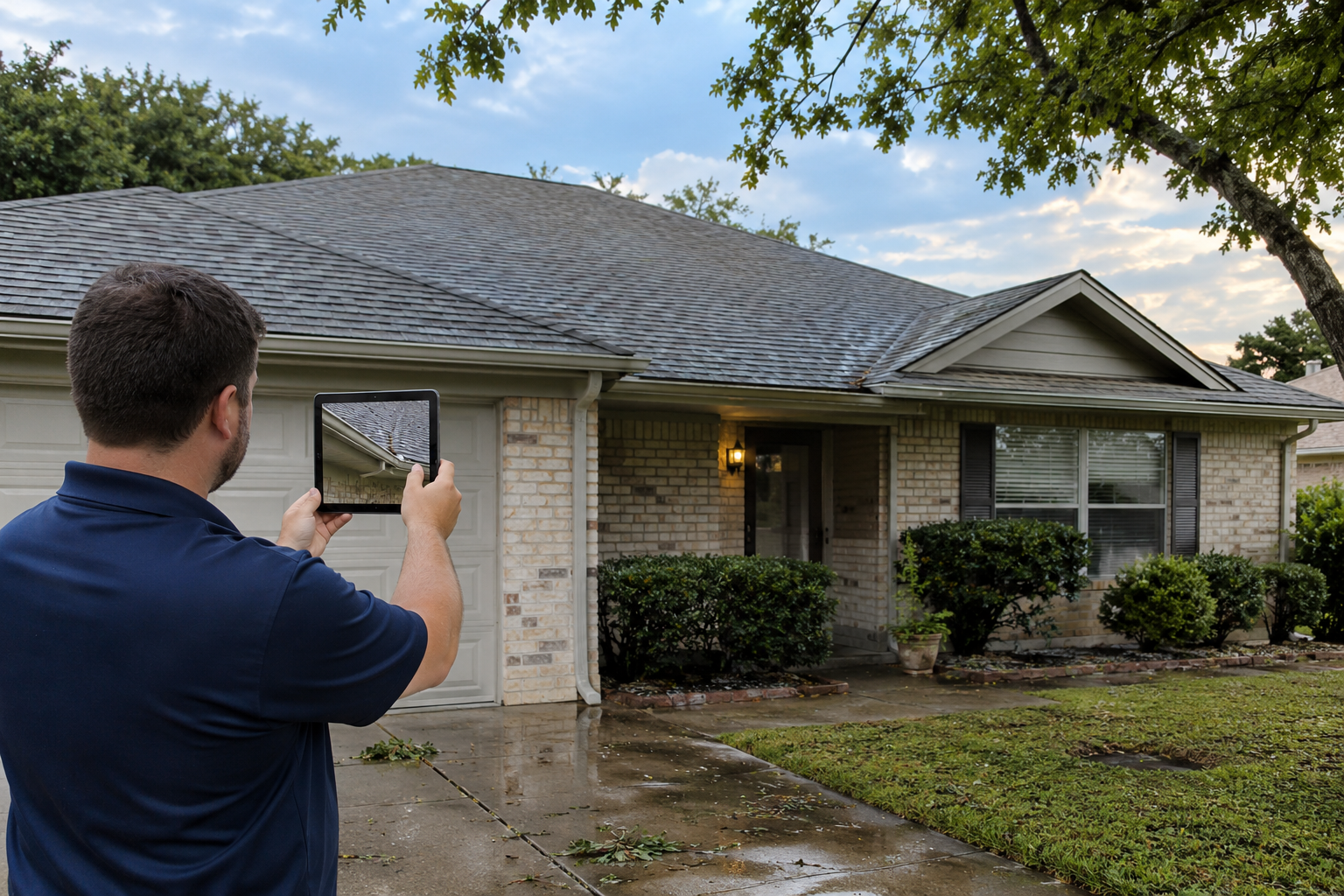




Commercial Roof Drainage Inspection: A North Texas Property Owner’s Guide
Plan a commercial roof drainage inspection in North Texas. Learn what to check, how to document ponding, and when cleaning or repairs need follow-up.

A commercial roof drainage inspection helps building owners understand how rainwater reaches drains, moves through outlets, and leaves the property. It should identify obstructions, damaged details, persistent low areas, and conditions that need further investigation. A roof can look reasonably clean from an access hatch while a blocked outlet or poorly draining section remains out of view.
For North Texas offices, warehouses, shopping centers, churches, and multifamily properties, drainage belongs in the maintenance budget alongside membrane repairs and equipment service. The objective is practical: find correctable problems, document uncertain conditions, and assign responsibility before another storm tests the system.
Showtime Exteriors provides commercial roofing services for owners evaluating maintenance, repairs, and replacement. This guide explains what to request from a drainage assessment, how to interpret the findings, and how to turn a report into completed work.
What a Commercial Roof Drainage Inspection Should Establish
A useful inspection follows the water path rather than stopping at the roof surface. It asks where runoff should go, what may prevent it from getting there, and whether the outlet connects to a functioning discharge route. The scope should distinguish observations from conditions that could not be verified.
The inspection should also connect drainage findings to the roof assembly. A stain around a drain may accompany debris, a leaking connection, or a persistent low area. Those conditions require different responses. Photographs alone cannot establish every concealed cause.
Ask for a roof plan with identified drainage areas and numbered outlets. Even a simple annotated drawing helps the owner understand whether several findings concern one recurring problem or separate locations. Each recommendation should point to an identifiable part of the building.
Start With the Records You Already Have
Gather roof plans, installation documents, warranties, prior inspection reports, repair invoices, and leak records before the visit. Include photographs taken after rain, dates of reported overflow, and any known plumbing problems. These records can help explain conditions that are absent on a dry inspection day.
Tell the inspector about rooftop equipment installations and recent work by other trades. Added platforms, altered walkways, abandoned materials, and new penetrations may affect access or interrupt local water flow. A roof that drained differently before an equipment project deserves a closer comparison.
Separate known facts from recollections. “The tenant photographed water here Tuesday morning” is more useful than an unsupported claim that the roof always holds water. Good history supports investigation without deciding the cause before the inspection begins.
Understand the Main Drainage Components
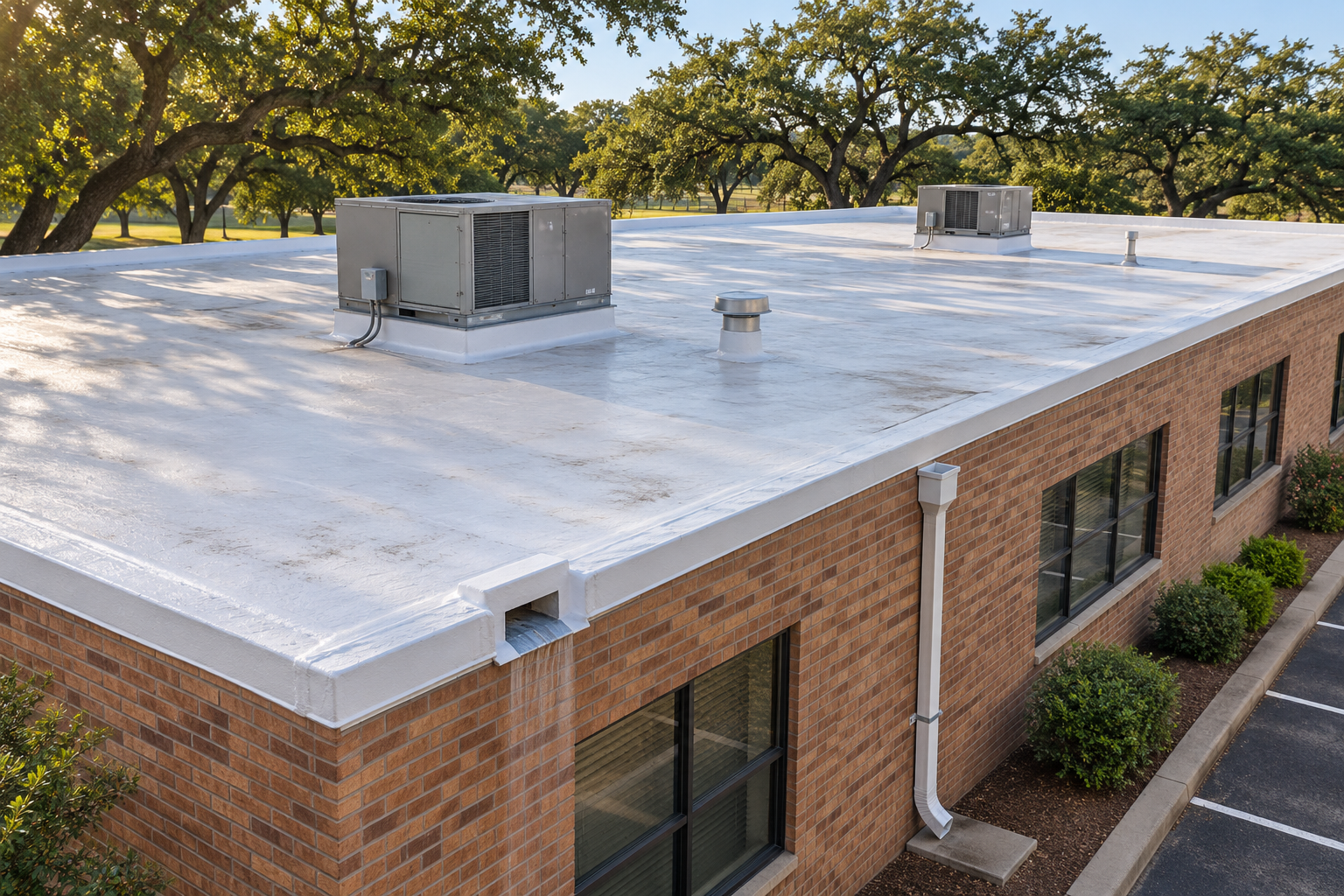
Commercial roofs may use internal drains, perimeter gutters, scuppers through parapet walls, or combinations of these components. Some buildings use specialized systems that require their own inspection and maintenance procedures. Identify the actual arrangement before choosing a cleaning or repair approach.
GAF’s guide to commercial drain maintenance describes common drain configurations and the relationship between roof slope and outlets. It provides a useful introduction for owners preparing questions about an existing building.
The report should identify accessible drain bodies, strainers, scuppers, gutters, downspouts, and visible discharge points. A visual roof inspection does not automatically include investigation of concealed piping. If downstream performance remains uncertain, the report should identify the additional trade or testing needed.
Follow Water Across Each Roof Area
Begin with the drainage area, including slopes, transitions, equipment curbs, and intersections between roof sections. Water must reach an outlet before the outlet can do its job. An unobstructed drain does not resolve a low area separated from it by an unintended ridge.
Ask the contractor to identify debris trails, sediment deposits, discoloration, and recurring wet areas. These clues help locate places for further observation. They do not establish water depth, duration, or the condition of hidden materials by themselves.
Where the surface geometry is unclear, measurements may be appropriate. The required detail depends on the suspected problem and proposed correction. A maintenance visit and a designed drainage modification should have clearly different scopes rather than sharing a vague promise to improve drainage.
Check Drain Strainers and Accessible Openings
Leaves, packaging, branches, loose roofing debris, and materials left by service crews can collect around outlets. The inspection should identify what is obstructing flow and whether accessible components are damaged, displaced, or missing. Cleaning should follow appropriate procedures for the installed system.
Avoid pushing roof debris into an opening. Moving material out of sight can create a harder problem farther along the drainage route. The maintenance scope should include collection and removal from the property, with photographs showing the accessible area afterward.
An outlet that looks clear may still have a restriction below the roof. If water is slow to leave or backup has been reported, a qualified professional should evaluate the relevant piping. Record the difference between a clear visible opening and a verified functioning drainage path.
Inspect Scuppers, Gutters, and Downspouts Together
A scupper can be open while its collector or downspout remains restricted. Gutters can contain standing water because of debris, movement, connection problems, or inadequate slope. Inspecting only the portion visible from the roof can miss a problem farther downstream.
Carlisle’s fall drainage maintenance checklist highlights the need to check drains, scuppers, gutters, and evidence of retained water. Use that guidance to frame the service request, while following the maintenance requirements for the installed products.
Document accessible joints, supports, transitions, and discharge locations. Note whether runoff is reaching a walkway, entrance, neighboring area, or another sensitive location. Correcting roof drainage should include understanding where the water goes after it leaves the roof edge.
Identify Secondary Drainage Before There Is a Problem
Some buildings have secondary drainage intended to provide another route when water rises above the normal operating level. Identify the installed components and their intended function from the building documents and qualified assessment. A visible opening should not be assigned a role solely from its appearance.
Record obstructions, undocumented alterations, and reported discharge from outlets identified as secondary drainage. Water leaving such an outlet warrants investigation into the primary route and overall system. It should not be dismissed simply because water is escaping somewhere.
Changing outlet heights, adding openings, or altering drainage capacity requires appropriate review. The contractor should identify design and approval responsibilities before proposing physical changes. Maintenance cleaning and engineered modifications are separate decisions with different documentation needs.
Document Ponding With Time and Location
A photograph taken while rain is falling cannot establish how long water remains afterward. Record the location, the time rain stopped when known, subsequent weather, and the time of each observation. Repeat photographs from a consistent position make comparison easier.
The National Roofing Contractors Association’s discussion of roof slope and drainage identifies prolonged ponding as a concern that may involve coordination among the owner, contractor, and designer. Timing is useful evidence, but the assessment still depends on the actual assembly and conditions.
Do not treat a generic time threshold as permission to ignore active leakage, increasing water accumulation, or signs of distress. Product requirements and warranty terms also differ. Report what was observed and request a recommendation tied to the installed roof rather than a universal rule.
Distinguish Surface Water From Wet Materials Below
Water visible on top of a roof and moisture concealed inside its assembly are different findings. Either can exist without the other. A dry surface does not establish that insulation or decking beneath it is dry, and ponding alone does not prove concealed saturation.
Where leak history or inspection findings justify it, the contractor may recommend a moisture investigation. The proposal should identify the method, limitations, access requirements, and whether confirmatory openings are needed. An instrument reading should be interpreted in the context of the assembly.
If samples or openings are taken, document their locations and how the roof will be restored. Keep findings connected to the repair or replacement decision. The owner needs enough evidence to understand why a proposed scope extends beyond debris removal or a localized membrane repair.
Know When Structural Review Belongs in the Scope
A changed roof profile or persistent low area can warrant investigation beyond routine maintenance. Qualified professionals should determine whether the condition relates to insulation geometry, substrate deterioration, framing movement, or another cause. A roofer should explain when structural expertise is needed.
WoodWorks’ guidance on ponding in low-slope wood-frame roofs explains the relationship between drainage and framing behavior. Its wood-frame context matters; it should not be applied as a complete design prescription for every commercial structure.
Owners should escalate visible distress, unusual movement, or rapidly worsening conditions promptly through the building’s emergency procedures. Do not send untrained personnel onto a suspect roof to measure the water. The inspection report should make its structural limitations explicit.
Review Flashings Around Drainage Details
A drain is both a water-removal component and a transition through the roofing assembly. The connection deserves inspection for visible deterioration, damaged materials, incompatible repairs, and other concerns relevant to the installed system. Similar attention applies at scupper openings and roof-edge transitions.
The report should separate a suspected waterproofing problem from a suspected flow problem. Water appearing indoors near a drain may require investigation of membrane connections, the drain body, piping, or other nearby details. Location alone does not establish which component failed.
Specify the recommended repair materials and procedure. “Seal around drain” leaves too much open to interpretation. A useful proposal identifies the affected detail, preparation, compatible components, and how completion will be documented for the owner and warranty records.
Account for Equipment and Trade Activity
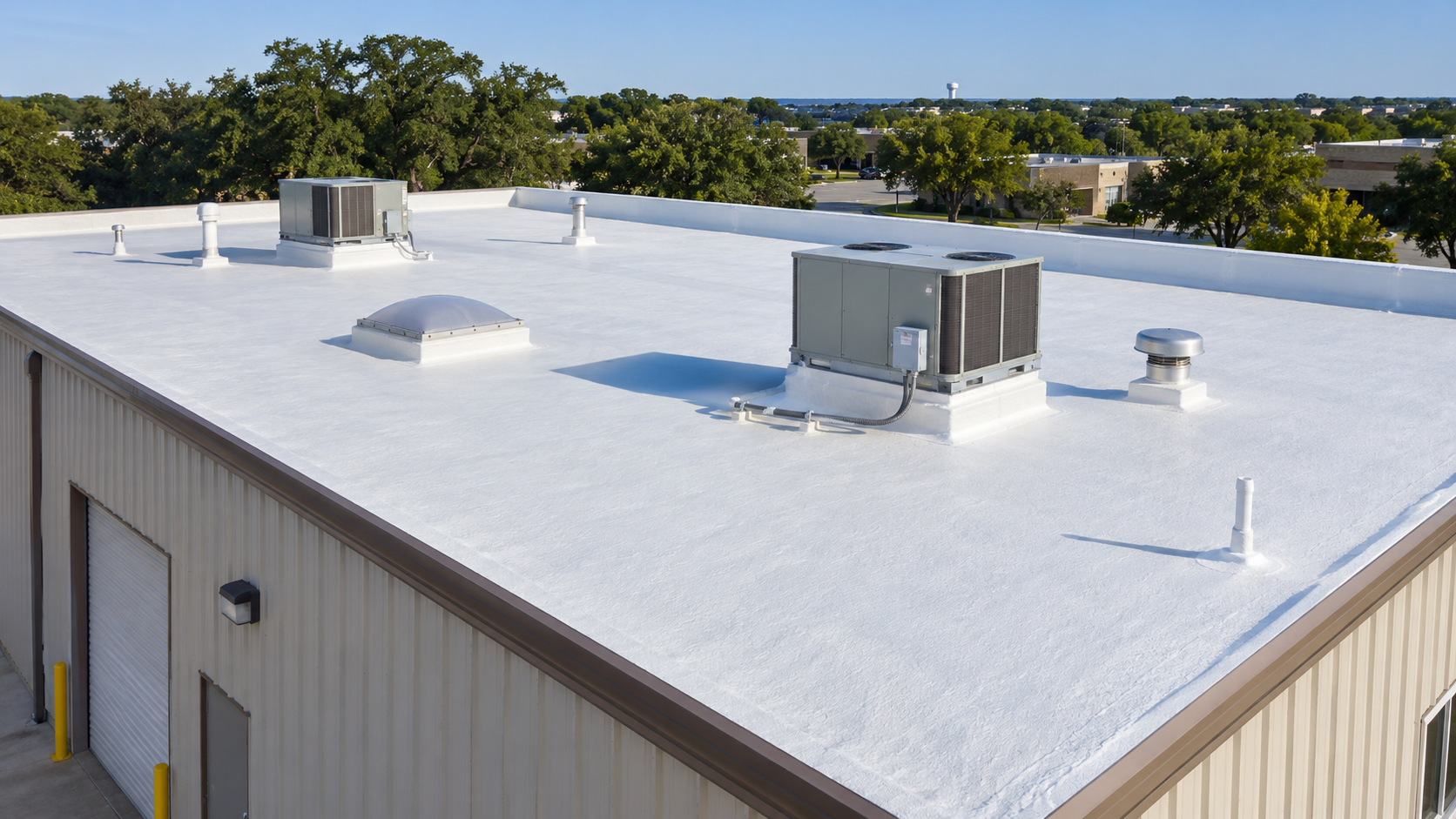
Mechanical equipment can create complicated drainage paths around curbs, supports, service platforms, and associated piping. Inspect these areas for debris collection, damaged surfaces, and changes that may obstruct flow. Identify coordination needs with the equipment contractor before moving components.
Water observed near equipment may have more than one source. Rainfall, condensate, and equipment-related leakage should be distinguished where possible. Share the observation with the relevant trade when the roof inspection cannot establish the cause.
Require service contractors to remove packaging and report damage after rooftop work. A brief follow-up inspection of the access route and work area can help identify problems before the next scheduled maintenance visit. Record who is responsible for arranging it.
Keep Roof Access Within a Safety Plan
A low-slope roof still presents hazards, including edges, access openings, skylights, electrical equipment, and slippery surfaces. The owner should arrange inspection by personnel equipped for the task and site conditions. Access limitations belong in the report.
OSHA’s construction fall-protection requirements address roof and opening hazards. The applicable requirements depend on the work and circumstances; the contractor should establish the appropriate safety procedures rather than relying on an owner’s informal instructions.
Do not ask building staff to climb onto a roof during a storm to clear an outlet. Staff can collect tenant reports, protect affected areas when safe, and contact the responsible professionals. Rooftop inspection and corrective work require suitable conditions and planning.
Compare Cleaning, Repair, and Drainage Redesign
The recommendation should match the identified cause. Removing debris may address an accessible obstruction. Repairing a damaged detail addresses a different problem. Persistent low areas, system capacity concerns, or structural conditions may require additional evaluation and design.
Carlisle’s information on tapered roof insulation illustrates one approach used to promote drainage. Whether it suits a particular building depends on the assembly, elevations, attachment, and complete design. It is not an automatic solution for every puddle.
Showtime Exteriors’ overview of roofing materials and selection factors can help owners prepare broader questions when replacement is being considered. Material selection should follow an assessment of the existing building and drainage needs.
Ask each bidder to distinguish immediate maintenance from proposed capital work. The owner should understand what the recommended action is expected to correct and what remains unresolved. Replacing a roof membrane without addressing an identified drainage defect may leave the original problem in place.
Request a Report That Supports Decisions
An inspection report should be understandable to someone who was absent from the visit. Include the date, weather context, inspected areas, access limitations, roof plan, labeled photographs, findings, recommendations, and follow-up responsibilities. Separate confirmed observations from suspected causes.
Report itemWhat the owner should receiveLocationRoof area and outlet identifierObservationSpecific visible condition and supporting photographLimitationWhat could not be accessed or establishedRecommended actionCleaning, repair, further testing, or design reviewResponsibilityNamed party or required tradeFollow-upCompletion evidence and any later observation needed
A long photo gallery without priorities can leave the owner unsure what to approve. Request a short action register that distinguishes urgent concerns, scheduled maintenance, and items requiring investigation. Each open item needs a next step.
Define the Scope Before Comparing Prices
A drainage service quote should identify the roof areas, number of accessible outlets, cleaning tasks, debris disposal, report deliverables, and exclusions. Clarify whether concealed piping, equipment access, testing, and specialist review are included or separately priced.
Access and building operations also matter. Coordinate work around loading areas, entrances, tenants, and sensitive equipment. A proposal should explain any access needs or operational interruptions so the owner can arrange them before the crew arrives.
Compare equivalent work rather than invoice totals alone. A visual survey, a documented cleaning visit, and an investigation involving plumbing or design professionals are different services. Missing scope should be clarified before approval, particularly when a lower price depends on work being omitted.
Set a Maintenance Schedule Around Exposure
Choose inspection frequency using the roof’s condition, surrounding trees, rooftop activity, manufacturer guidance, and history. A calendar creates a baseline, but site events can justify additional attention. Recurring debris at one outlet may call for a different approach from an open roof with little nearby vegetation.
Showtime Exteriors’ commercial roof maintenance guide discusses documented inspections, access management, and follow-up. Although that guide addresses Houston properties, the recordkeeping approach can help owners organize a North Texas maintenance program around local conditions.
Add review triggers after severe weather, equipment projects, reported overflow, and recurring interior leaks. The purpose is to catch changes between planned visits. Record why the schedule was selected and revise it when inspection history shows that it needs adjustment.
Close the Loop After Corrective Work
A work order marked complete should include evidence of what changed. Request labeled photographs, locations, materials where relevant, and an explanation of any remaining limitations. Keep cleaning records distinct from repairs so future inspections can follow the history.
Where appropriate, arrange an observation after subsequent rainfall to determine whether the reported condition recurs. Do not improvise a roof flood test or intentionally block outlets. Any testing should have a suitable professional procedure and necessary coordination.
Store the final report with the roof asset records. Showtime Exteriors’ guide to roof maintenance records provides an organizational starting point. Records help explain the work performed; they do not guarantee insurance coverage or replace policy-specific requirements.
Frequently Asked Questions
Does standing water mean the entire roof needs replacement?
No. The appropriate response depends on the cause, duration, assembly, and condition of surrounding materials. Cleaning, localized repairs, further investigation, drainage modifications, or replacement may belong in the comparison. Request evidence supporting the recommended scope.
Can a contractor inspect drainage on a dry day?
Yes, many visible conditions can be assessed when the roof is dry. However, a dry-day inspection may not establish how the system performs during or after rain. Photographs, timing records, and appropriate follow-up can address those limitations.
Is a clear drain proof that the roof drains correctly?
No. Water still needs a route to the opening, and the downstream path needs to function. The inspection should distinguish a visibly clear drain from a verified drainage route and identify where further assessment is required.
Will a roof coating correct ponding?
A coating should not be assumed to change roof slope or resolve blocked drainage. Suitability depends on product requirements and the existing roof. Investigate drainage conditions before approving a coating proposal and identify any separate corrective work.
Who handles a blocked pipe beneath the roof?
That depends on the location and nature of the problem. A qualified plumbing professional may be needed for concealed piping, while a roofer may address membrane connections and roof details. Assign coordination responsibility so the investigation does not stop between trades.
Should tenants report small leaks immediately?
Yes. Ask tenants to record the location, time, weather, and photographs when safe. Small symptoms can provide useful investigation history. Keep them away from affected electrical equipment and unsafe areas, and follow the building’s response procedures.
What if the same area still holds water after cleaning?
Document the recurrence and return to the diagnosis. Cleaning may have removed debris without correcting another cause. Ask whether measurements, piping assessment, moisture investigation, or design review is needed before authorizing another identical service visit.
Schedule a Commercial Roof Drainage Inspection
A useful commercial roof drainage inspection produces a clear picture of accessible conditions, an honest account of limitations, and an actionable plan. Cleaning, waterproofing repairs, downstream investigation, and design changes should each be connected to the problem they are intended to address.
Showtime Exteriors helps property owners evaluate roofing concerns and plan maintenance or larger projects. Bring existing records, leak history, and photographs so the assessment can focus on the building’s actual needs.
Contact Showtime Exteriors to discuss a commercial roof drainage inspection for your North Texas property. Request documented findings, a defined scope, and a follow-up plan that makes each recommended action clear.