



Can Replacing a Gravel BUR Improve Commercial Roof Insurability in Texas
Texas Commercial Roofing Decision Guide

Replacing an aging gravel-surfaced built-up roof can improve a commercial property's insurance readiness because it removes a difficult-to-evaluate assembly, allows wet or deteriorated materials to be addressed, and creates a current record of the new roof's design and installation. That does not mean a new roof guarantees coverage, a lower premium, or a renewal. Insurance decisions remain with the carrier and depend on the policy, building, location, loss history, occupancy, valuation, and many other factors. The practical benefit is that replacement can give an owner a clearer, more defensible roof condition to present to an agent, broker, lender, buyer, or underwriter.
For Texas property owners, the question is rarely just whether an old roof still keeps out rain today. The larger question is whether the roof creates uncertainty that affects the entire asset. Gravel can obscure the membrane, prior patches, splits, blisters, deteriorated flashings, displaced surfacing, and evidence of trapped moisture. When an inspector cannot readily see the waterproofing layer, an underwriter may have less reliable information about the condition beneath the surface. A roof that has reached an advanced age, accumulated repeated repairs, or developed chronic drainage problems may therefore become a barrier during renewal or placement of coverage.
The strongest response is not to make assumptions about what an insurance company will accept. It is to obtain the carrier's concerns in writing, complete a professional roof assessment, document the existing assembly, and compare repair, restoration, recovery, and replacement on technical grounds. If full replacement is justified, the project should produce more than a finished roof. It should produce an organized evidence package that shows what was removed, what conditions were found, how the deck and drainage were addressed, what system was installed, and how the work was completed.
Showtime Exteriors helps commercial property owners across Texas evaluate aging roof systems and plan practical replacement or retrofit projects. To discuss a commercial roof, visit Showtime Exteriors commercial roofing or call 817-400-ROOF (7663).
The Short Answer
Yes, replacing an aging gravel BUR may improve a building's insurance readiness, particularly when the old assembly has hidden moisture, an uncertain service history, recurring leaks, loose or displaced gravel, extensive patching, deteriorated flashing, or a condition that no longer satisfies an insurer's underwriting requirements. Replacement can convert an unclear roof risk into a documented new assembly with known materials, attachment, insulation, drainage details, warranty information, and completion records.
However, the word may matters. A roofing contractor evaluates the roof and performs construction work; the contractor does not determine whether a policy will be issued. A carrier may still consider catastrophe exposure, building age, electrical and plumbing systems, fire protection, occupancy, prior losses, replacement cost, maintenance, and geographic hazards. Owners should ask their licensed insurance professional and prospective carriers what information they require before choosing a scope.
The goal is not to install a roof based on a vague promise that insurance will become cheaper. The goal is to correct known roof deficiencies, reduce uncertainty, protect the building, and create documentation that supports an informed underwriting review.
Why Aging Gravel BUR Roofs Can Create Insurance Friction
A built-up roof, commonly called BUR, uses multiple layers of bitumen and reinforcing felts. Many older commercial BUR assemblies are surfaced with gravel. On an aging building, this combination can become difficult to inspect and expensive to maintain. The concern is not simply that gravel exists. The concern is that the visible surface may not reveal the condition of the waterproofing, insulation, attachment, and deck beneath it.
Gravel Can Conceal the Waterproofing Layer
An inspector can readily observe the exposed surface of many single-ply and metal systems. Gravel makes that basic visual review harder. The membrane may be covered by aggregate, dirt, biological growth, and years of redistributed surfacing. Patches may be buried or blended into surrounding material. Small splits, blisters, open laps, and deteriorated areas may remain hidden until gravel is moved or more detailed testing is performed.
This inspection uncertainty matters because an underwriting decision often depends on evidence. If the roof's condition cannot be clearly documented, the owner may have difficulty demonstrating that the assembly is sound. A professional inspection can reduce uncertainty, but testing may still reveal that selective repairs cannot provide a reliable long-term answer.
Older Roofs Often Carry an Incomplete History
Commercial properties change owners, managers, tenants, and maintenance vendors. Roof records are frequently lost during those transitions. An owner may know the approximate age but not the number of plies, insulation configuration, deck type, attachment method, prior moisture repairs, or date of the last major restoration. A roof can appear serviceable while its actual history remains unknown.
Replacement creates a new starting point. The owner can retain the contract, approved scope, product data, progress photos, deck repair records, warranty documents, invoices, inspection reports, and completion date. Those records do not compel an insurer to act, but they can make the roof easier to evaluate.
Moisture Can Travel Beyond the Interior Leak
The location of a ceiling stain does not always identify the roof entry point. Water can travel through insulation, along deck flutes, around penetrations, or between layers before it becomes visible inside. On a gravel BUR, repeated patching at the apparent leak location may fail to address the actual pathway. Moisture can remain trapped even after interior symptoms disappear.
Wet insulation can reduce thermal performance, add weight, accelerate deterioration, and complicate any future recovery or coating proposal. A replacement project allows suspect materials to be removed and the deck to be exposed for repair. This is one reason a thorough tear-off can produce more defensible information than another isolated patch on a roof with widespread uncertainty.
Loose Aggregate Can Be a Wind Concern
The Insurance Institute for Business and Home Safety discusses wind hazards associated with stone-ballasted commercial roof systems and the potential for loose aggregate to become windborne debris. The exact risk depends on the assembly, stone size, roof height, perimeter conditions, building exposure, and local wind environment. Owners should not assume all gravel roofs behave identically, but they should take displaced or loose aggregate seriously and obtain a qualified assessment. See the IBHS guidance on stone-ballasted roof systems.
Texas buildings face thunderstorms, straight-line winds, hail, tornadoes, intense heat, and rapid temperature changes. A roof whose surfacing shifts during wind may expose underlying materials, load drains, or contribute debris. These conditions reinforce the value of evaluating an aging gravel assembly before a renewal deadline or storm season.
Recurring Repairs Can Signal a Larger Failure Pattern
One repair does not automatically justify replacement. Repeated repairs in multiple areas are different. When leaks recur around penetrations, drains, walls, curbs, field membrane, and perimeter details, the roof may be failing as a system rather than at one isolated defect. A growing repair map can show that maintenance dollars are being used to manage symptoms instead of restoring dependable performance.
An insurer reviewing photographs, invoices, and loss history may see the same pattern. Replacement may improve the risk narrative because it addresses the roof as an integrated assembly instead of adding another temporary patch.
What Insurability Means in Practice
Insurability is not a roofing specification. It is the practical ability to obtain coverage on terms available in the market. Those terms can include limits, deductibles, exclusions, valuation methods, inspection requirements, and premiums. A building may be insurable but face a roof exclusion, an actual cash value settlement provision, a high wind or hail deductible, a required replacement date, or limited carrier choices.
Texas commercial property insurance can cover a building and business property against causes of loss described in the policy, but coverage varies. The Texas Department of Insurance commercial property guide advises businesses to review their needs, understand deductibles and exclusions, and work with an agent. Coastal and certain Harris County properties can also face separate wind and hail considerations.
The correct question is therefore not, “Will a new roof get me insurance?” It is, “What roof conditions are affecting this specific underwriting decision, and what documented improvements would the carrier consider?” That question should be directed to the agent, broker, or carrier in writing.
How Replacement Can Improve the Roof Risk Profile
Replacement can improve the roof portion of a property's risk profile in several concrete ways. Each benefit should be documented rather than merely claimed.
It Removes an Obscured and Aging Assembly
Tear-off removes gravel, membrane layers, deteriorated insulation, and incompatible repair materials. The project team can see the roof deck, identify corrosion or deterioration, verify slopes and drainage, and correct substrate problems before installing the new system. The resulting assembly is no longer dependent on assumptions about hidden layers.
It Allows Wet Insulation to Be Removed
Moisture surveys and test cuts can help estimate the extent of wet materials, but tear-off provides direct access. Removing wet insulation is important because covering moisture beneath a new roof can preserve a problem inside the assembly. Replacement permits damaged areas to be removed and replaced based on field conditions and the approved scope.
It Creates a Defined Attachment Strategy
A new roof can be designed with a documented attachment method appropriate to the substrate, system, building conditions, and applicable requirements. Fastener patterns, adhesives, perimeter enhancements, edge metal, and flashing details should be recorded in the project documents. This information gives future inspectors a better basis for understanding the assembly.
It Provides Current Drainage and Detail Corrections
Replacement is an opportunity to address conditions that shortened the previous roof's life. Drains can be evaluated, scuppers repaired, crickets added where appropriate, penetrations consolidated, abandoned equipment curbs removed, edge details rebuilt, and traffic paths planned. Installing a new membrane without correcting chronic ponding or poor detail transitions can reproduce old failures.
Property owners researching drainage upgrades can review Showtime Exteriors' retrofit roof drains guide.
It Establishes a New Documentation Baseline
A replacement project should establish the roof's installation date, materials, thicknesses, manufacturer, contractor, warranty, maintenance requirements, and repair protocol. It should also document the condition found during tear-off. This baseline can support future inspections, property transactions, budgeting, warranty claims, and insurance discussions.
It Can Reduce the Ambiguity of Repeated Patching
An extensively patched gravel roof can be difficult to explain because every repair may use different materials, dates, and methods. A completed replacement with closeout records offers a single, coherent condition. Again, this does not promise a favorable insurance result. It gives the decision-maker better evidence.
Inspection Before Replacement
A responsible replacement recommendation begins with inspection. Property owners should avoid selecting a system based solely on price per square foot or a salesperson's statement that one material is always best.
Review the Existing Roof Assembly
The assessment should identify the roof type, approximate age, number of layers where reasonably determinable, surface condition, perimeter details, penetrations, drains, scuppers, equipment curbs, expansion joints, flashings, and visible repairs. Interior evidence such as stained decking, damaged ceiling materials, corrosion, or active dripping should be correlated with roof findings.
Document Moisture and Core Information
Depending on conditions and access, the evaluation may include moisture scanning and test cuts or core samples. These methods answer different questions and have limitations. A scan may indicate anomalies that require confirmation. A core can show the composition and condition at one location but does not describe every square foot. The findings should be mapped and interpreted by qualified professionals.
Assess the Roof Deck and Structure
A roofer can identify visible deck concerns, but structural questions may require a licensed engineer. Deflection, widespread corrosion, overloaded areas, deteriorated wood, questionable equipment supports, or a proposed assembly that changes loading should be escalated appropriately. Roofing work should not be used to conceal a structural problem.
Separate Maintenance From Systemic Failure
Some roofs need targeted repairs: an open flashing, puncture, isolated drain problem, or damaged penetration detail. Other roofs show widespread deterioration, saturated insulation, recurring leaks, failing perimeters, and an unreliable substrate. The inspection should distinguish between these conditions. The owner needs a scope that matches the actual failure pattern.
For broader roof-system comparisons, see Showtime Exteriors' guide to the best commercial roofing materials for Texas.
Repair, Restore, Recover, or Replace
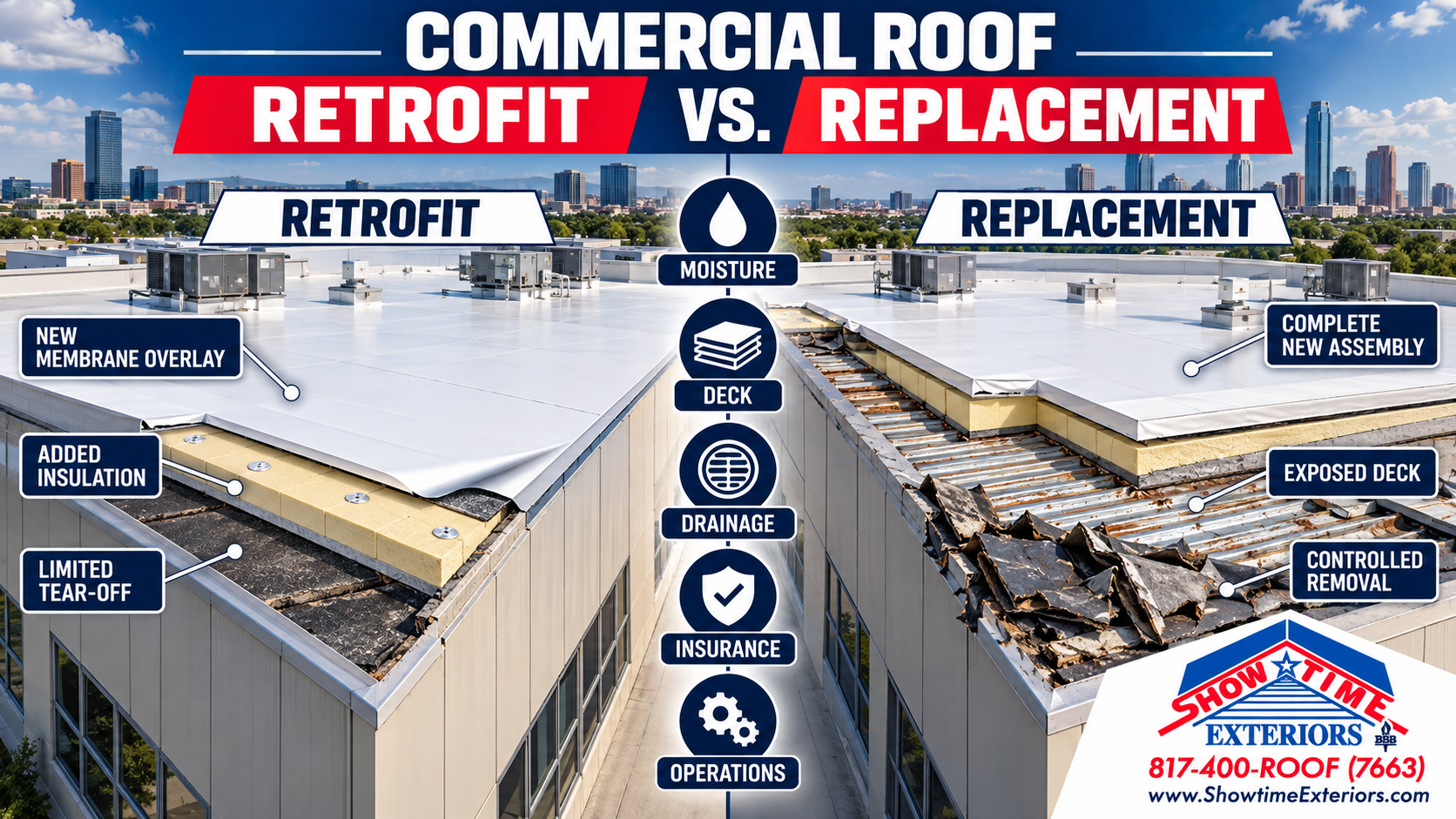
Replacement is not the only possible action, but it may be the most defensible when a gravel BUR creates widespread uncertainty. Owners should understand the boundaries of each option.
Why a Coating Is Not a Shortcut Around a Failed Gravel Roof
Coatings can be useful on suitable roofs, but they are not a universal answer. A gravel surface requires substantial preparation, and the existing system must be stable, compatible, and dry enough for the proposed application. Coating over wet insulation, unstable surfacing, active splits, or failing flashings does not remove the underlying problem. An owner seeking insurance readiness should be cautious about a scope that improves appearance without resolving concealed conditions.
When Recovery May Be Considered
A recover system can reduce tear-off in selected situations. The roof must be investigated for moisture, the deck and existing assembly must support the proposed attachment, applicable code and layer limitations must be satisfied, and the manufacturer must approve the details. The owner should also ask whether the carrier will accept a recover rather than a complete tear-off. That answer must come from the insurance side, not from an assumption made during sales.
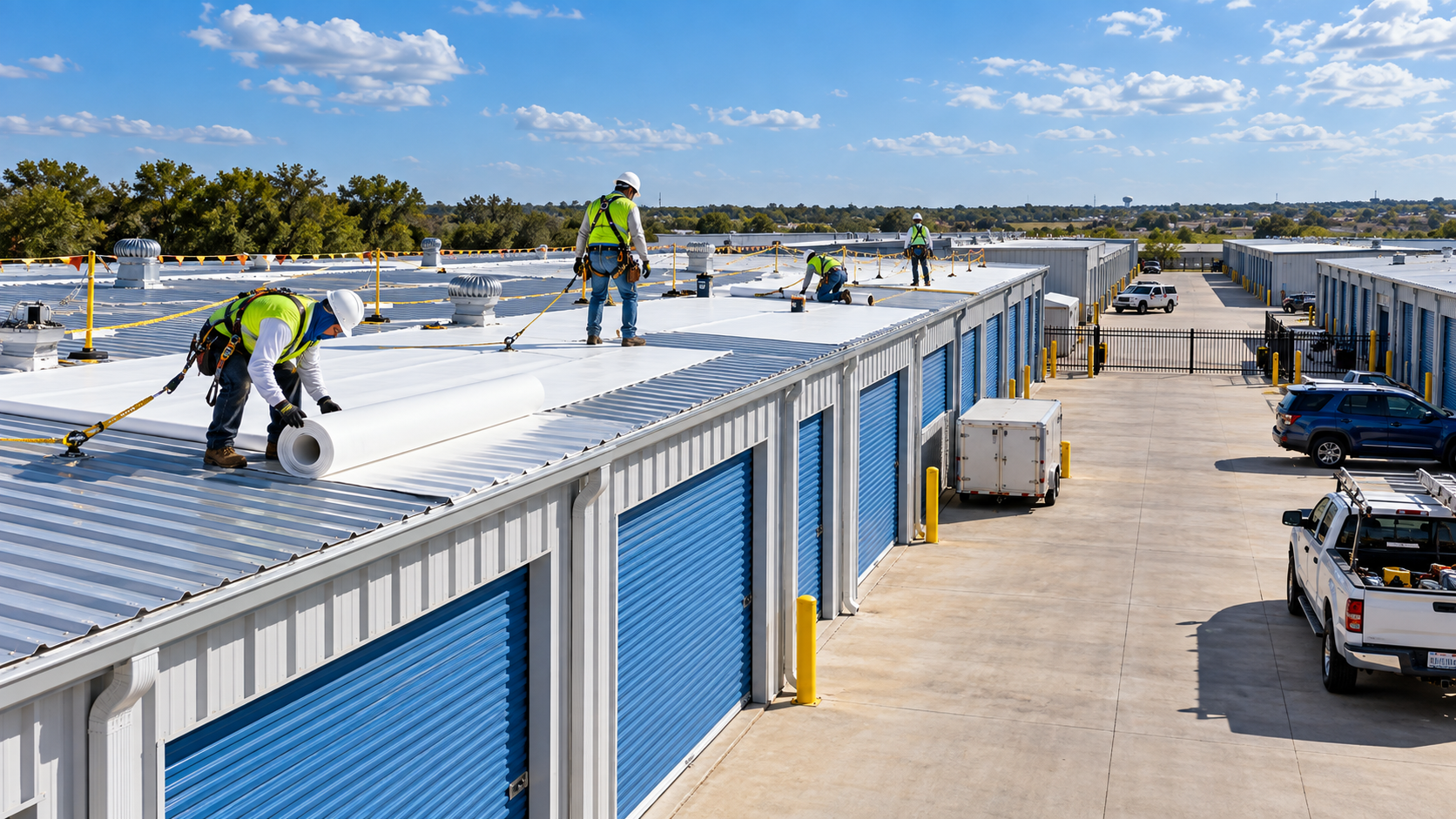
Showtime Exteriors provides additional context in its article on a TPO retrofit over an existing metal roof in Texas. Although metal retrofit differs from gravel BUR work, the planning principle is the same: evaluate the substrate, attachment, moisture, drainage, and details before selecting a system.
When Full Replacement Is the Stronger Choice
Replacement becomes more compelling when the roof has widespread moisture, an unknown or heavily layered assembly, extensive patching, poor drainage, failing insulation, deteriorated deck areas, recurring leaks, or a formal requirement to replace the roof. It is also stronger when the owner needs a clear long-term capital solution rather than another short extension.
Choosing the Replacement System
The best replacement system depends on the building, not on a single marketing claim. Climate matters, but so do occupancy, roof traffic, rooftop equipment, chemical exposure, slope, drainage, deck type, insulation objectives, project phasing, warranty requirements, and budget.
TPO Roofing
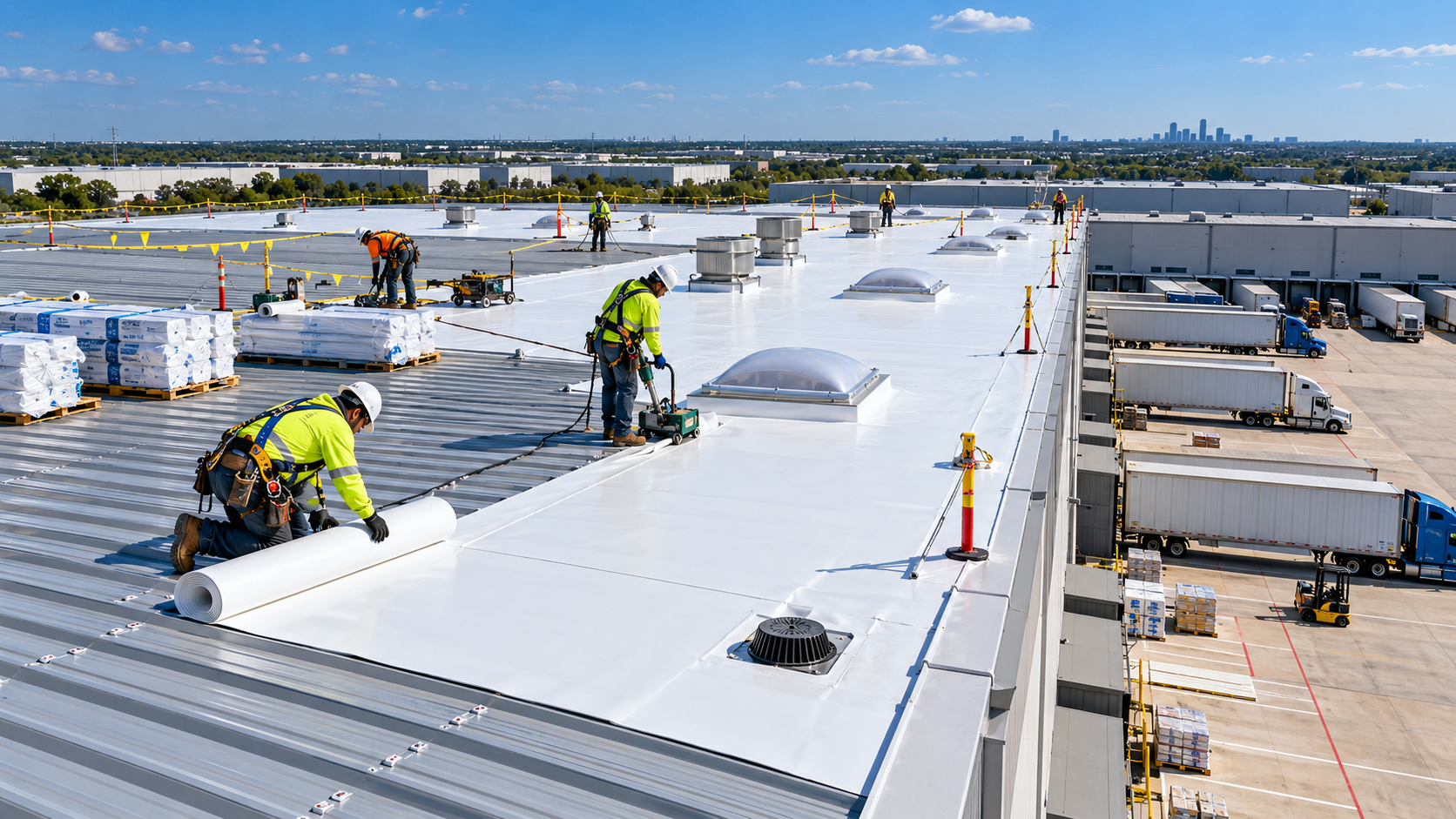
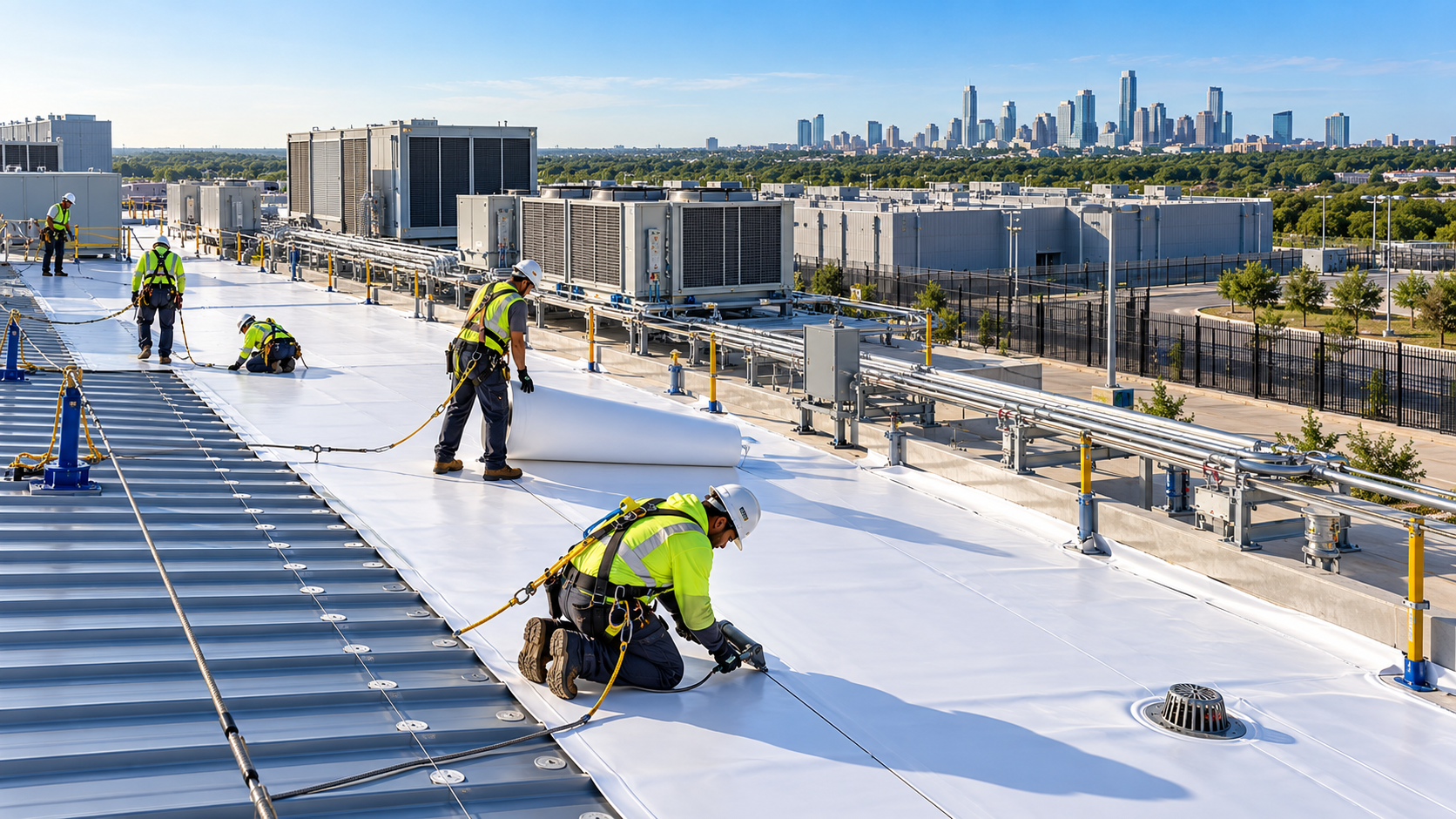
TPO is a heat-welded single-ply membrane commonly used on commercial buildings. White membranes can provide a reflective surface, and welded seams create a continuous waterproofing layer when properly installed. The design must still address membrane thickness, cover board, insulation, attachment, perimeter zones, penetrations, drainage, and foot traffic. A white roof is not automatically a durable roof; the complete assembly and workmanship control performance.
PVC Roofing
PVC is another heat-welded single-ply option. It may be considered where certain grease or chemical exposures are relevant, subject to manufacturer guidance and project conditions. Restaurants and facilities with exhaust discharge need details tailored to the actual exposure. Compatibility should be confirmed rather than assumed.
EPDM Roofing
EPDM is a flexible rubber membrane with a long history in commercial roofing. Seams and details use system-specific adhesives and tapes. Design decisions include membrane thickness, attachment, cover board, insulation, flashing, and surface color. The roof should be assessed as a complete assembly.
Modified Bitumen
Modified bitumen can provide a multi-ply approach and may suit buildings where robustness and traffic considerations are important. Application methods, fire precautions, odor, occupied-building constraints, and substrate preparation require careful planning.
Metal Roofing and Retrofit Systems
Metal may be appropriate for sloped commercial roofs or engineered retrofit applications. Panel profile, clips, fasteners, thermal movement, penetrations, edge conditions, corrosion, and condensation control must be addressed. Metal is not a direct one-size-fits-all replacement for every low-slope BUR.
Cover Boards and Insulation
Cover boards can improve durability beneath certain membranes and provide a stable surface. Insulation can be configured to support thermal goals and tapered drainage design. The owner should request a written assembly description instead of accepting a proposal that names only the top membrane.
Gravel surfacing can conceal deterioration and moisture pathways, increasing uncertainty during assessment and insurance review.
Build the Roof Evidence Package
The roof replacement is only part of the insurance-readiness work. The closeout package should allow another professional to understand what existed, what was found, and what was installed.
Before Construction
Collect the existing roof inspection, photographs, moisture findings, core results, repair history, leak log, invoices, prior warranty documents, plans if available, and written insurance requirements. Photograph the roof systematically, including overview images and details at drains, perimeters, penetrations, curbs, repairs, and areas of displacement or ponding.
During Tear-Off
Record the materials removed, wet or deteriorated areas, deck conditions, unexpected layers, damaged penetrations, drainage defects, and repairs made to the substrate. Photographs should include location references so they remain meaningful later. A close-up with no context is less useful than an overview, intermediate view, and detail image tied to a roof plan.
During Installation
Document insulation, cover board, attachment, adhesives where applicable, perimeter and corner enhancements, drains, scuppers, curbs, penetrations, edge metal, expansion joints, and completed seams. Keep product labels and delivery records when appropriate. Record approved changes to the scope.
At Completion
The final package should include the signed contract and scope, invoices, change orders, completion date, system and product information, warranty documents, final photographs, inspection or punch-list records, maintenance requirements, and contractor contact information. If the project required engineering or special inspections, retain those reports as well.
After Completion
Send the requested documents through the channel specified by the agent or carrier and retain proof of submission. Ask whether anything else is required and request the final underwriting decision in writing. Do not assume that a receipt, inspection, or warranty automatically changes the policy.
Questions to Ask the Insurance Professional Before Work Begins
Roofing decisions and insurance decisions overlap, but they are not the same. The following questions can prevent expensive misunderstandings:
What exact roof condition is affecting renewal, placement, exclusions, or pricing?
Is the concern the roof's age, gravel surfacing, active damage, loss history, documentation, or a combination?
Will the carrier consider a professional inspection, repair certification, recovery, or coating, or is full replacement required?
If replacement is required, are any systems, materials, ratings, attachment methods, or warranty terms specified?
What photographs, invoices, permits, reports, and completion documents must be submitted?
Is there a deadline for completing work or providing evidence?
Will temporary coverage, an extension, or a different policy structure be considered while work is scheduled?
How will wind, hail, named-storm, cosmetic-damage, and roof-surface provisions apply after replacement?
Will the roof be settled at replacement cost value or actual cash value, and are there roof-specific schedules or endorsements?
Does the carrier require confirmation by its own inspector after construction?
Ask for written answers whenever possible. The Texas Department of Insurance notes that policy terms vary and encourages consumers and businesses to compare coverage, not just price. Its commercial property insurance guide is a useful starting point, but the actual policy and endorsements control.
Questions to Ask the Roofing Contractor
A commercial roof proposal should be specific enough to compare scopes, not merely totals.
What Is Included in Tear-Off
Ask how many layers are included, how gravel and debris will be handled, what happens when wet insulation is found, how deck repairs are priced, and how interior operations will be protected. Unclear allowances can produce major change orders.
What Is the Exact Roof Assembly
The proposal should identify insulation type and thickness, tapered components, cover board, membrane or roof type, thickness, attachment, flashing materials, edge system, drain details, walkway protection, and warranty level. Product substitutions should require approval.
How Will the Building Stay Operational
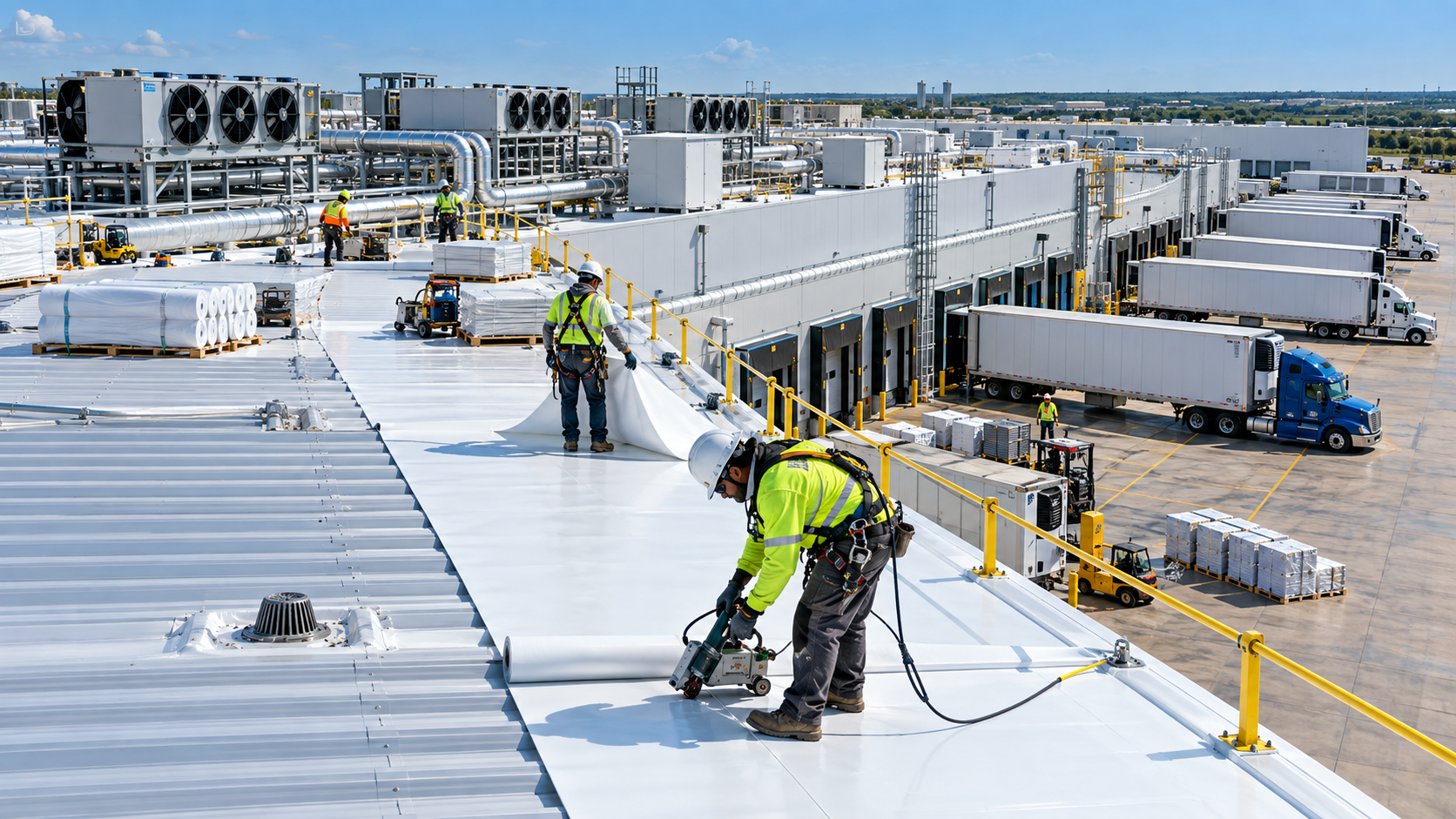
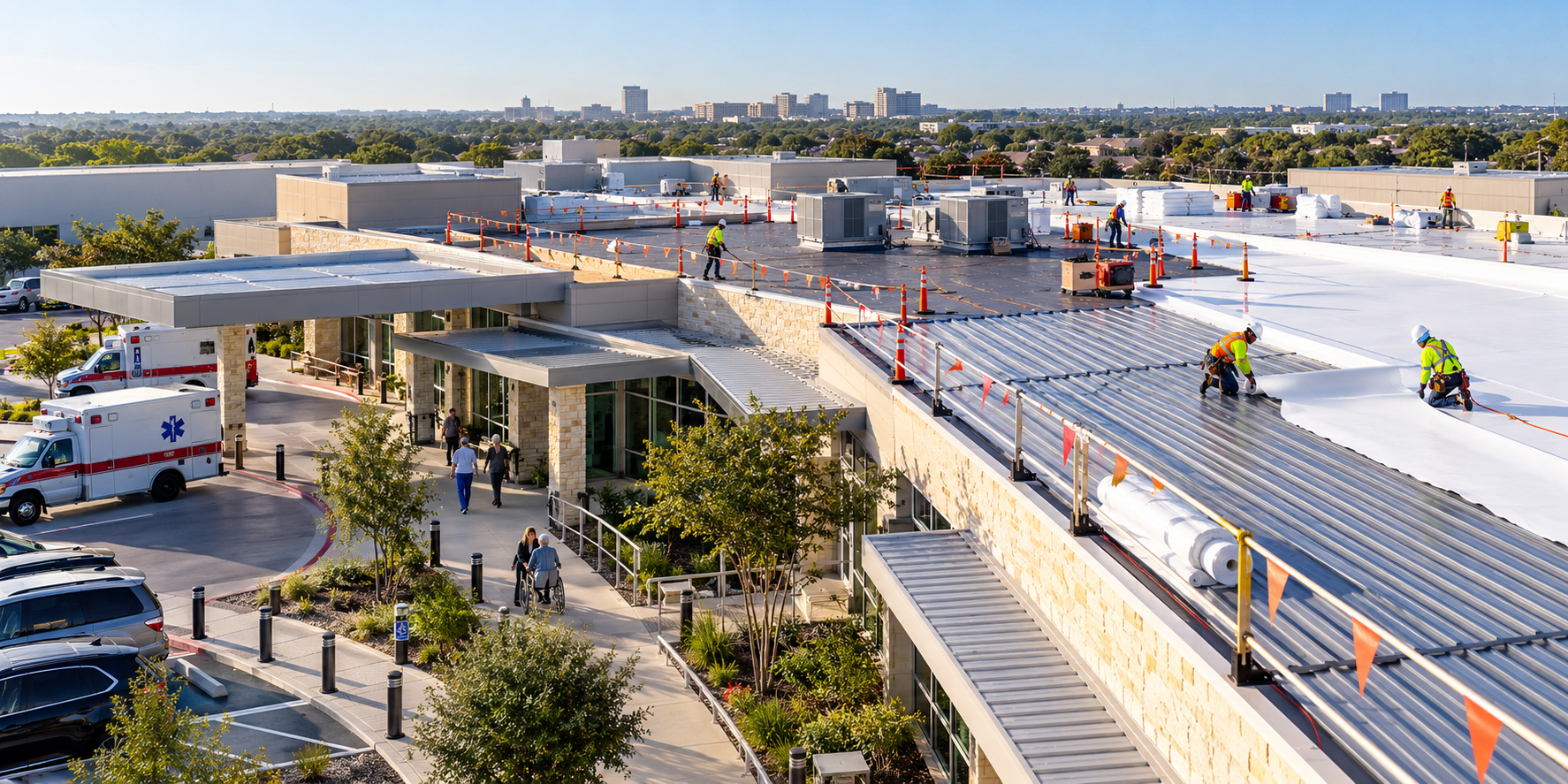
Discuss work zones, daily dry-in, weather monitoring, material staging, crane or hoist locations, odor and noise, dust control, parking, tenant communication, rooftop equipment, and emergency contacts. Critical facilities may require after-hours or phased work.
What Documentation Will Be Delivered
Request progress photographs, moisture or core information, deck repair records, change documentation, product information, warranty documents, and final completion photographs. If an insurer has a checklist, share it before construction so the documentation plan can be built into the project.
Who Provides the Warranty
Distinguish between contractor workmanship coverage and a manufacturer warranty. Review exclusions, owner maintenance duties, inspection requirements, transfer provisions, response procedures, and the exact assembly covered. Showtime Exteriors' guide on hiring a roofer with strong warranty coverage explains questions owners should ask.
Project Planning for an Occupied Commercial Building
Replacing a gravel BUR is disruptive if it is poorly planned. Gravel removal, tear-off, hauling, material loading, deck repairs, and temporary dry-in require coordination. The roof plan should be divided into manageable sections that can be made watertight each day.
Protect People and Operations
Roof access and ground-level staging areas must be controlled. OSHA's construction standards address fall protection and related roofing hazards; contractors are responsible for compliant safety programs. Owners can review the OSHA fall protection requirements and should coordinate building-specific rules with the contractor.
Interior protection may be needed below active tear-off. Sensitive equipment, medical operations, food preparation, inventory, data systems, and manufacturing processes require tailored plans. The owner should identify no-work periods and critical spaces before mobilization.
Plan Around Texas Weather
Summer heat can affect labor, materials, adhesives, equipment, and daily production. Thunderstorms can develop quickly. The contractor should monitor forecasts, limit open roof areas, maintain temporary dry-in materials, and define what happens when weather interrupts work. Schedule pressure should never justify leaving an exposed assembly unprotected.
Coordinate Rooftop Equipment
HVAC units, electrical feeds, gas lines, exhaust fans, conduits, and communication equipment may affect the scope. Some equipment may need to be raised, disconnected, replaced, or supported temporarily. These responsibilities should be assigned in writing so the roofing crew, mechanical contractor, electrician, tenants, and owner work from the same plan.
Cost and Capital Planning
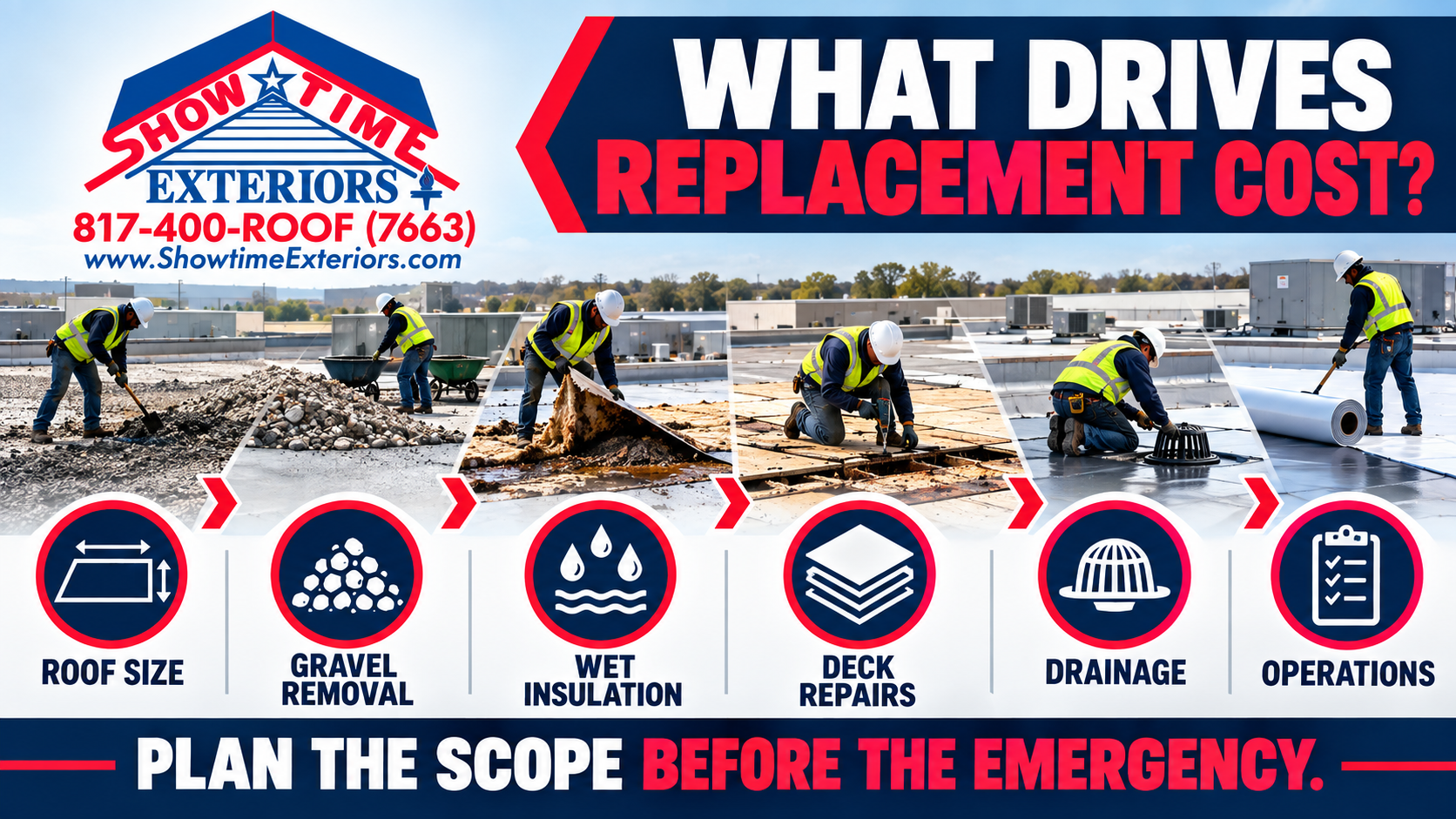
Replacement usually costs more initially than repair or restoration because it includes removal, disposal, substrate access, insulation, new roofing, flashings, details, and often deck or drainage corrections. The most useful budget separates known scope from uncertain conditions.
Major Cost Drivers
Roof area is only one factor. Costs can change with the amount of gravel, number of existing layers, access, building height, staging, deck type, wet insulation, deck repairs, tapered insulation, drainage changes, equipment, edge metal, membrane type and thickness, warranty requirements, labor conditions, occupied-building restrictions, and disposal.
Ask for Unit Prices and Allowances
When concealed conditions are likely, request unit prices for deck replacement, wet insulation, additional tear-off, and other foreseeable work. A transparent allowance does not eliminate uncertainty, but it gives the owner a method for evaluating change orders.
Compare Life-Cycle Risk, Not Only First Cost
The lowest initial scope may leave moisture, drainage defects, unstable materials, or documentation gaps in place. Owners should compare expected service life, maintenance, energy implications, disruption, warranty, future recoverability, and the cost of another project. A replacement can be a better capital decision when repairs no longer produce reliable performance.
The U.S. Department of Energy cool-roof purchasing guidance and the EPA overview of cool roofs explain how reflective roofing can affect roof surface temperature and heat-island considerations. Energy results depend on climate, insulation, building operation, and the complete assembly; reflectivity should not substitute for waterproofing and durability.
A Practical Insurance Readiness Timeline
As Soon as a Concern Appears
Request the carrier's or agent's concern in writing. Identify the policy expiration date and any response deadline. Schedule a professional roof inspection and gather existing records. Do not wait for the final week before renewal.
After the Inspection
Review the findings with the roofing contractor and, where necessary, consultants or engineers. Ask the insurance professional whether the proposed response addresses the stated concern. Compare repair, recovery, and replacement based on actual conditions.
Before Contracting
Confirm the scope, system, documentation requirements, project schedule, responsibilities, warranties, safety plan, weather plan, and allowances. Verify that any insurer-specific requests are included or clearly assigned.
During Construction
Maintain dated progress records, photograph concealed conditions, document approved changes, and protect the building each day. Escalate unexpected deck, moisture, drainage, or structural conditions instead of covering them without a decision.
After Completion
Organize the closeout package, submit requested records, schedule any carrier reinspection, and obtain the resulting coverage decision in writing. Establish a maintenance schedule so the new roof remains documented rather than becoming another unknown asset.
Common Mistakes That Weaken the Submission
Claiming That Replacement Guarantees Insurance
No contractor should guarantee an underwriting result. Strong marketing does not require an inaccurate promise. The correct statement is that replacement may reduce roof-related uncertainty and provide evidence for review.
Replacing the Membrane Without Fixing Drainage
A new surface installed over the same drainage defects can develop recurring problems. Drains, scuppers, slope, crickets, overflows, and equipment placement must be reviewed as part of the scope.
Discarding Tear-Off Evidence
Once the old roof is removed, concealed conditions cannot be photographed again. The contractor and owner should agree on documentation before work begins.
Sending Unorganized Photographs
Hundreds of unlabeled images are not a report. Organize photographs by area and phase, add captions, and connect them to a roof plan or written narrative.
Treating the Warranty as a Maintenance Plan
Warranties contain terms, exclusions, and owner responsibilities. Routine inspections, drain cleaning, prompt repair of punctures, and control of rooftop work remain important.
Waiting Until the Renewal Deadline
Commercial replacement requires inspection, design, materials, scheduling, construction, closeout, and possible reinspection. Starting early gives the owner more options and reduces rushed decisions.
Maintaining Insurability After Replacement
A new roof should begin a managed roof program. Inspect it at least periodically and after significant storms, subject to the manufacturer's and contractor's guidance. Keep drains and scuppers clear. Control access. Require other trades to protect the membrane and report damage. Record every repair with photographs and invoices.
Maintain a roof file containing the original scope, warranties, product data, inspections, repairs, rooftop equipment changes, and storm reports. When renewal approaches, update the condition record before the carrier asks. Proactive documentation can help the owner explain the roof clearly and address small defects before they become larger losses.
Showtime Exteriors publishes additional commercial roofing resources for Texas building owners, property managers, facility teams, and asset managers.
Frequently Asked Questions
Will Replacing a Gravel BUR Guarantee Insurance Renewal
No. Replacement may improve the roof's condition and documentation, but the insurer controls underwriting. Building characteristics, location, occupancy, loss history, valuation, catastrophe exposure, and policy terms also matter. Ask the carrier or licensed insurance professional for written requirements.
Why Do Insurers Care About Gravel Roofs
An aging gravel-surfaced roof can be difficult to evaluate because aggregate obscures the membrane and prior repairs. Loose aggregate can also present wind concerns in some conditions. The carrier may focus on age, maintenance history, moisture, attachment, loss experience, or inspection uncertainty rather than gravel alone.
Can an Inspection Solve the Problem Without Replacement
Sometimes. If the roof is dry, serviceable, and affected by isolated defects, an inspection and documented repairs may address the concern. If deterioration or moisture is widespread, inspection may instead confirm that replacement is the more defensible solution.
Can TPO Be Installed Over an Existing Gravel BUR
It may be technically possible in selected conditions after gravel removal, moisture investigation, substrate preparation, code review, attachment design, and manufacturer approval. A recover is not appropriate when wet materials, unstable layers, excessive roof layers, poor attachment, or deck problems remain. The insurer must also confirm whether it will accept the proposed approach.
Is a Roof Coating Enough for Insurance Purposes
That depends entirely on the roof condition and the carrier's written requirements. A coating cannot correct saturated insulation, an unstable assembly, structural deterioration, or systemic flashing failure. Do not assume a coated appearance will satisfy underwriting.
What Documents Should Be Sent After Replacement
Provide only what the carrier or agent requests, but a useful package can include the contract and scope, invoices, completion date, before-and-after photographs, tear-off findings, deck and insulation repair records, product information, warranty documents, permits or inspection records when applicable, and final condition photographs.
How Long Does Commercial Roof Replacement Take
Duration depends on roof area, access, weather, existing layers, gravel removal, deck repairs, drainage work, equipment coordination, and daily operational limits. The proposal should include a preliminary schedule and explain how weather or concealed conditions may change it.
Does a White Roof Automatically Lower Insurance Premiums
No. A reflective surface can offer energy and temperature-management benefits in appropriate conditions, but premium and coverage decisions belong to the insurer. Roof color alone does not establish wind resistance, hail performance, workmanship, or overall risk.
Should the Owner Get Multiple Insurance Quotes After Replacement
Owners can discuss market options with a licensed agent or broker. Provide accurate, consistent documentation to each prospective carrier and compare coverage, deductibles, exclusions, valuation, endorsements, and price. The lowest premium may not provide the most suitable protection.
When Should an Aging Gravel BUR Be Evaluated
Evaluate it before renewal, before a property transaction, after significant storms, when leaks recur, when gravel shifts, when drainage problems appear, or when roof records are incomplete. Early assessment leaves time to compare options and schedule work responsibly.
The Bottom Line for Texas Commercial Property Owners
Replacing an aging gravel BUR can improve commercial roof insurance readiness because it removes obscured and deteriorated materials, provides access to the deck, allows wet insulation and drainage problems to be corrected, and creates a documented new assembly. Those benefits can make the roof easier to understand and present during underwriting.
Replacement is not an insurance guarantee. The strongest process combines written carrier requirements, a professional roof inspection, a technically appropriate scope, disciplined construction, and a complete evidence package. Owners should make the roof decision for the building's long-term protection and use accurate documentation to support the insurance conversation.
If an aging gravel roof, renewal concern, recurring leak, or inspection request is affecting your commercial property, Showtime Exteriors can evaluate the roof and help define the next practical step. Visit Showtime Exteriors commercial roofing or call 817-400-ROOF (7663) to schedule a commercial roof assessment.
This article provides general roofing and risk-management information, not legal, engineering, coverage, or insurance advice. Policy terms and underwriting requirements vary. Consult a licensed insurance professional regarding coverage and a qualified engineer when structural analysis is required.