



Commercial Roof Penetration Leaks in North Texas: HVAC Curbs, Pipe Boots, and Equipment Flashings
Learn how HVAC curbs, pipe boots, and rooftop equipment can develop commercial roof leaks, what inspections should cover, and how to compare repairs.
Commercial roof penetration leaks can interrupt business even when most of the roof covering appears sound. A pipe, equipment curb, exhaust opening, or cable entry creates a transition through the roof assembly. That transition needs a compatible detail that manages water while accommodating the conditions around it.
For owners in Mansfield, Arlington, Fort Worth, Dallas, and surrounding North Texas communities, the useful question is not simply whether someone can apply more sealant. It is whether the inspection identifies the source, evaluates the surrounding assembly, and defines a repair that suits the existing roof.
A stain beside an air-conditioning unit does not prove the roof flashing is responsible. Water may come from equipment, travel within concealed construction, or enter at a nearby detail. A careful investigation helps distinguish those possibilities before money is spent on another patch.
Showtime Exteriors provides commercial roofing services for owners evaluating roofing problems and next steps. This guide explains what to document, what a penetration inspection should address, and how to compare repair proposals without treating every leak as a replacement project.
What Counts as a Commercial Roof Penetration?
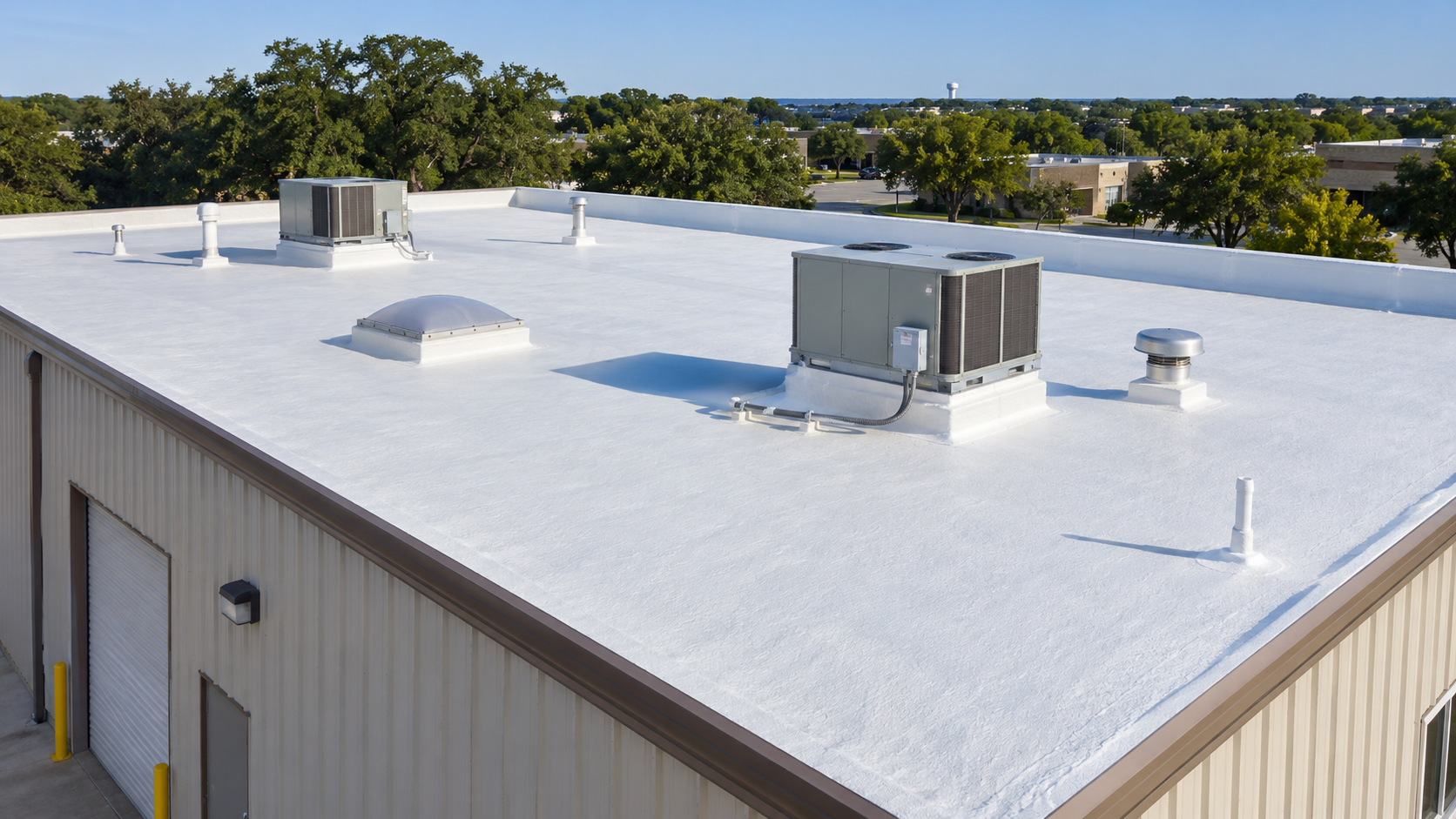
A roof penetration is an opening or component that passes through the roofing assembly. Examples include plumbing vents, HVAC curbs, exhaust fans, conduits, ducts, skylights, and some equipment supports. Each creates a connection between the open roof surface and another material or building component.
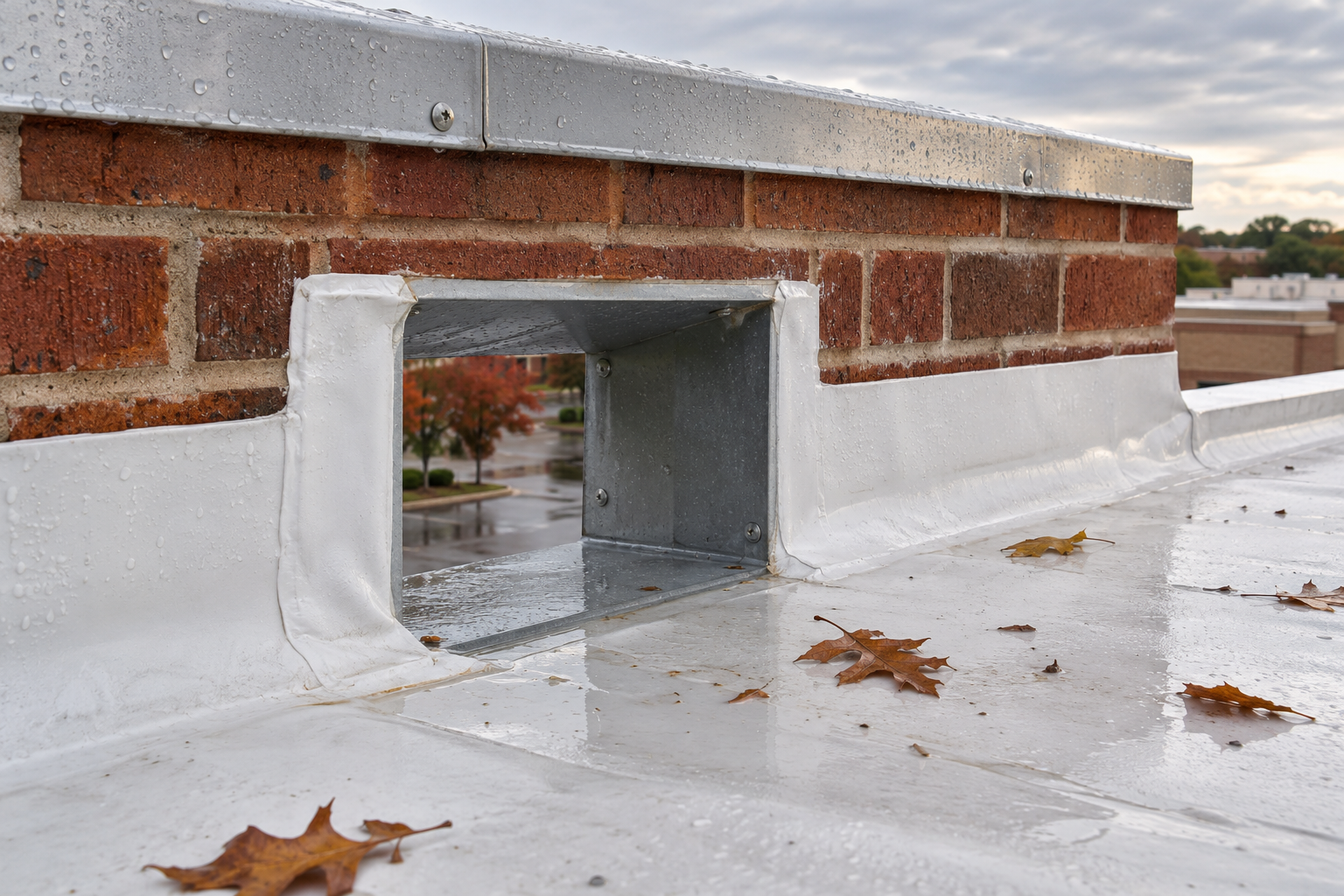
The waterproofing detail around that connection is generally called flashing. Depending on the system and geometry, it may involve a prefabricated boot, field-fabricated membrane, a reinforced liquid-applied detail, or another manufacturer-approved arrangement. These are different methods with different preparation and installation requirements.
Carlisle's flashing product overview illustrates the range of approaches available for penetrations and transitions. The existence of multiple products is a reason to identify the actual roof system before selecting a repair material.
Owners do not need to design the detail themselves. They do need a proposal that names the roof type, identifies the affected component, and explains how the repair connects to sound surrounding material. A description limited to “seal around pipes” leaves too much of that work undefined.
Why Transitions Need Focused Attention
A broad roof area may have relatively few changes in direction. A penetration introduces corners, vertical surfaces, terminations, and connections between components. Workmanship at those small areas can matter as much as the appearance of the open field.
Equipment vibration, thermal movement, foot traffic, and later alterations can complicate these connections. Their presence does not establish a defect, but it gives an inspector specific conditions to investigate. A repair should address documented findings rather than assume that age alone explains the problem.
An equipment replacement can also change the original arrangement. A different unit, adapter curb, rerouted pipe, or added cable may leave a transition that needs review. Ask whether previous modifications were coordinated with the roofing contractor and, where applicable, the roof manufacturer.
Avoid assigning a cause from a photograph alone. A cracked surface bead may deserve attention without being the only entry point. Conversely, an apparently neat patch may conceal poor adhesion or unsuitable material. Inspection findings should separate what is visible from what remains uncertain.
Start With the Interior Leak History
Before the site visit, record where water appears, when it starts, and what is happening in the building. Note whether the leak follows rain, occurs during equipment operation, or persists after the weather clears. Those observations can help organize the investigation.
Use a floor plan or a simple room reference rather than “near the back.” Include the affected ceiling bay, nearby walls, equipment, and tenant area. Photographs taken from the same location make later changes easier to compare.
Water can move before it becomes visible indoors. The location of a ceiling stain should therefore be treated as a starting point for tracing, not a precise map of the exterior opening. Record multiple affected areas separately instead of assuming they have one cause.
Protect occupied areas and contents using appropriate personnel. If water is near electrical equipment, keep people away and involve qualified help. Roof access, opening assemblies, and controlled testing belong with trained professionals using a plan suited to the building.
Separate HVAC Problems From Roofing Problems
A rooftop air conditioner sits at the intersection of two trades. Its housing, condensate handling, service panels, and internal components are different from the roof flashing around its curb. Problems in either area can produce symptoms near the same interior location.
Ask the roofer and HVAC contractor to describe their findings independently. An HVAC inspection may be needed when moisture appears during equipment operation without rain. A roofing inspection may identify a damaged curb corner or failed transition. Sometimes both scopes require attention.
The best proposal identifies the boundary between those responsibilities. Who removes equipment if access is necessary? Who repairs the curb or adapter? Who reinstalls the unit, checks its operation, and completes the roofing connection? Name the responsible party for each step.
Do not let “equipment issue” or “roof issue” end the discussion without supporting observations. Record what was checked, what was ruled out, and what needs further evaluation. That documentation reduces the chance that each trade assumes the other has resolved the remaining problem.
What an HVAC Curb Inspection Should Cover
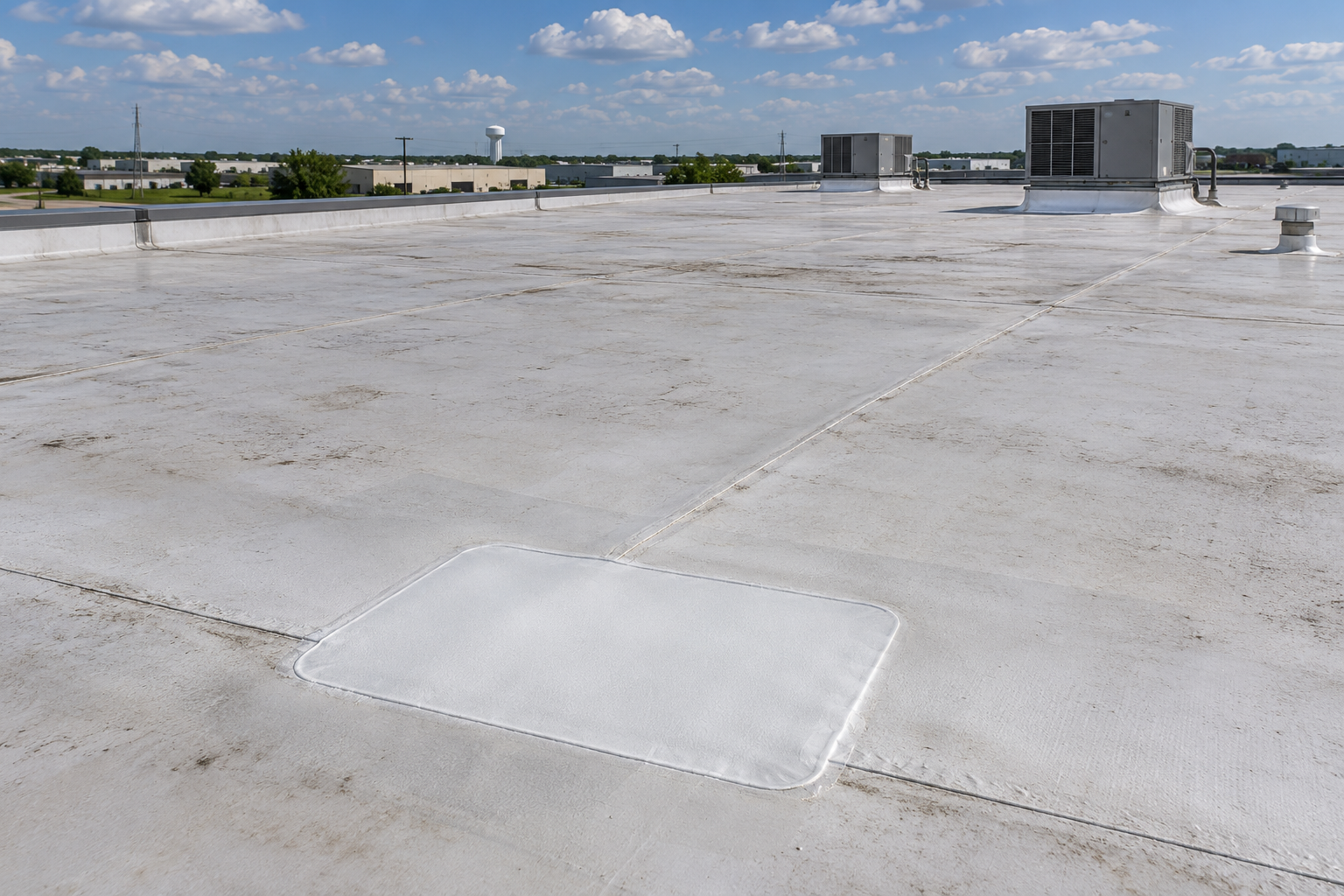
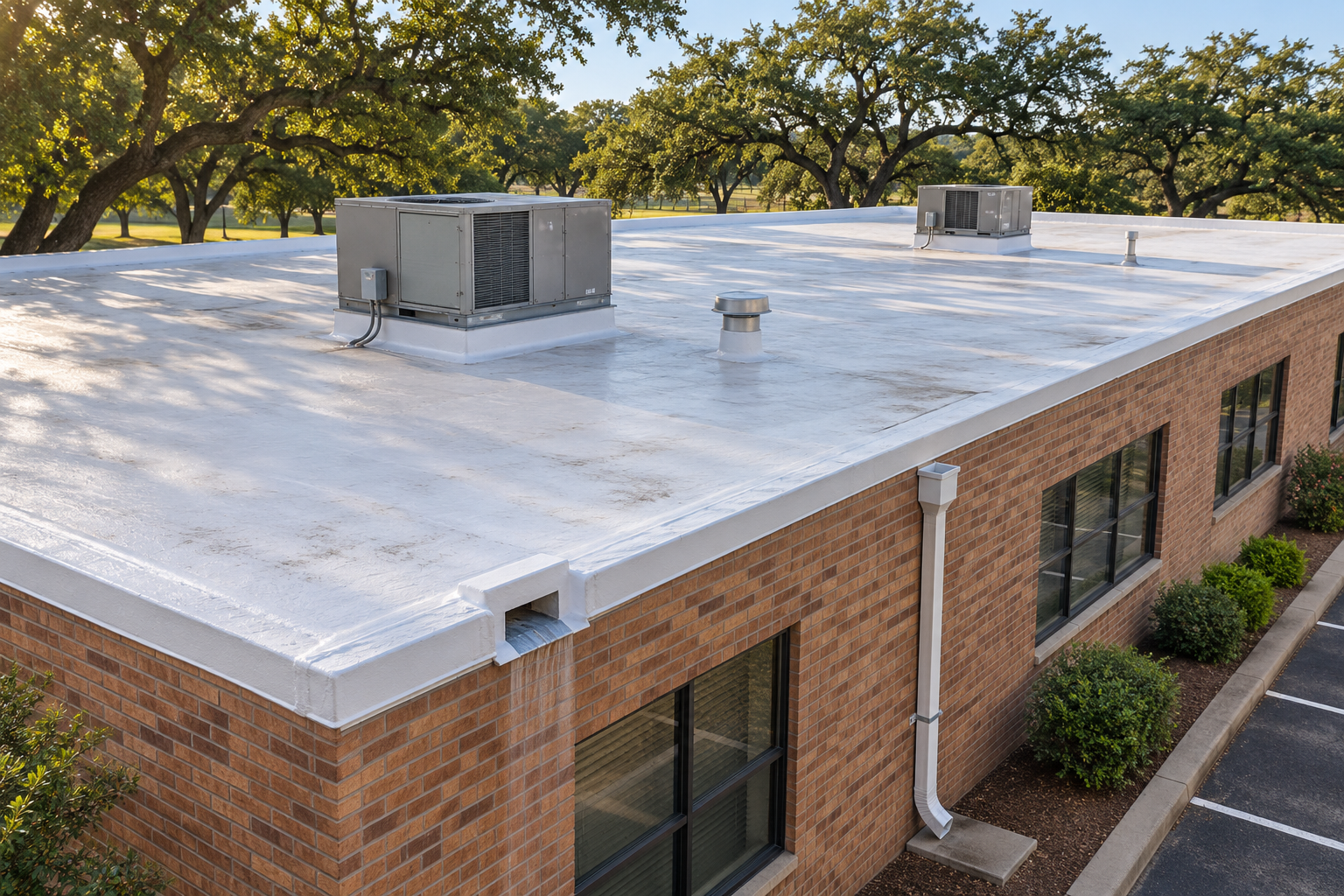
The inspector should examine the curb perimeter, corners, flashing attachment, and the transition between horizontal and vertical surfaces. Conditions above the membrane also matter because water can enter an equipment assembly and bypass an otherwise sound roof connection.
Ask whether the surrounding membrane is intact and suitable for repair. Surface contamination, previous patches, damage, or concealed moisture may change the proposed work. The scope should explain how affected material will be prepared or removed before new flashing is installed.
GAF's commercial roof maintenance checklist includes checks for penetration flashings and flashing terminations. It is a useful reference for understanding why an inspection should include detail conditions rather than only photographs of the roof field.
Clearances and access should also be discussed. If the contractor cannot reach a corner or inspect behind equipment, that limitation belongs in the report. An inaccessible detail should not be described as verified simply because adjacent areas look acceptable.
Pipe Boots and Round Penetrations
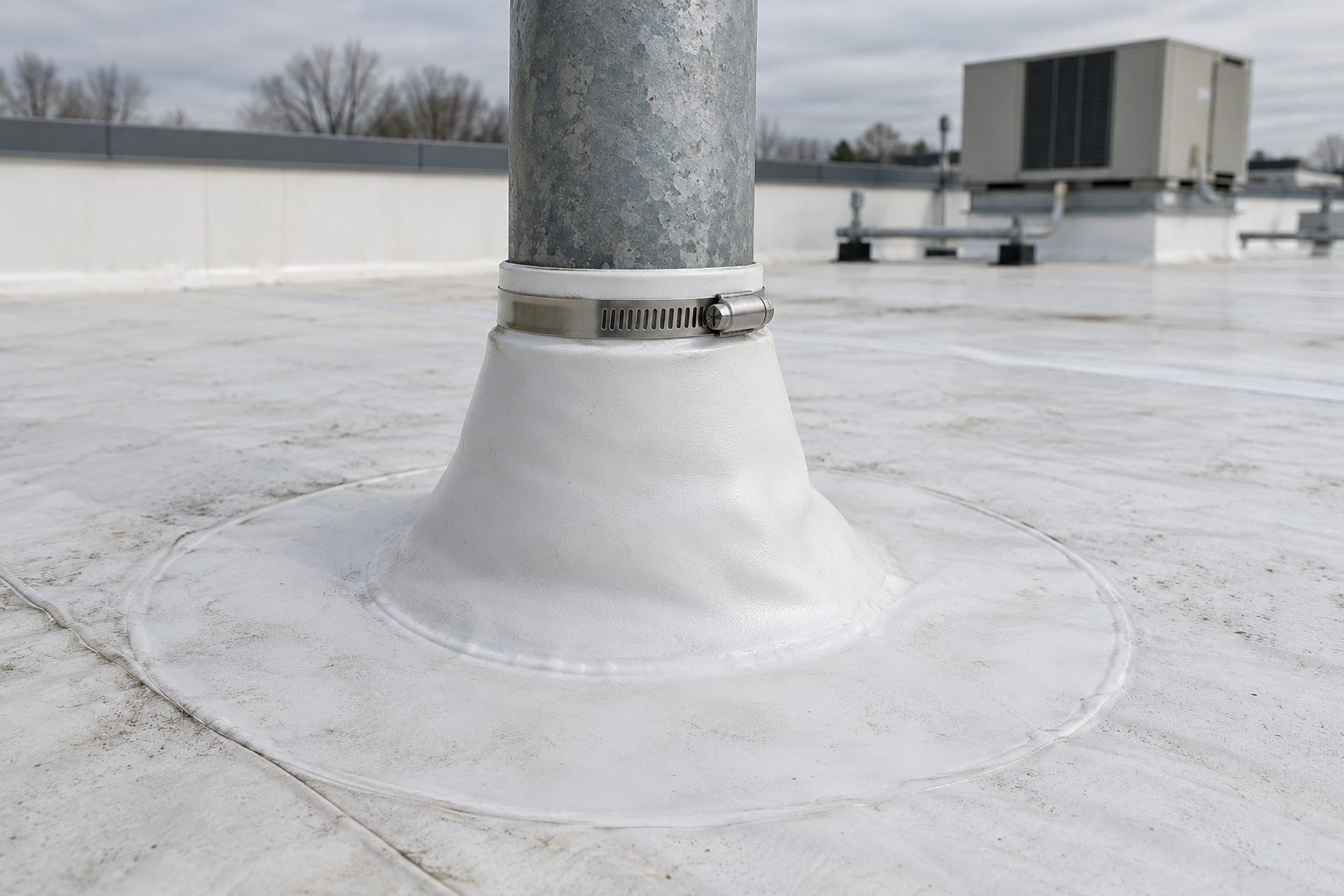
Round pipes often use boots or other system-specific flashing arrangements. Inspection should consider both the connection to the roof membrane and the upper termination around the pipe. Damage or separation at either area can require attention.
The pipe itself matters. Its material, temperature, movement, support, and condition can influence the appropriate detail. A product suitable for one type of vent may not suit another application. Ask the contractor to confirm compatibility instead of choosing by appearance.
Look for a defined repair boundary in the proposal. Will the boot be replaced, repaired, or incorporated into a larger detail? What surrounding material will be removed? How will the new work connect to the existing roof? These questions make bids easier to compare.
Do not use this article as an installation specification. Boot dimensions, attachment methods, termination requirements, and preparation procedures depend on the particular assembly and current manufacturer instructions. The contractor should supply those details for the actual project.
Irregular Openings and Penetration Pockets
Clusters of conduits or awkwardly shaped components can be harder to flash than a single round pipe. The inspector should identify the existing method and determine whether it remains serviceable. Simply pouring another material over an unknown older repair may leave the underlying issue unresolved.
Some roofs use penetration pockets containing pourable sealer. These details need system-specific evaluation, including the condition of the enclosure, the sealer, and its connections. Maintenance expectations should be explained in the closeout information.
Ask whether the proposed repair preserves a workable detail or whether a redesigned arrangement should be considered. Where equipment or utilities must move, roofing and mechanical or electrical work need coordination before installation begins.
A useful report distinguishes a temporary measure from the planned permanent repair. If weather, access, or parts availability prevents completion, record the limitation and the follow-up date. A temporary patch should not quietly become an undocumented long-term maintenance plan.
Roof Material Determines Repair Compatibility
TPO, PVC, EPDM, modified bitumen, built-up roofing, and metal assemblies should not be treated as interchangeable surfaces. They use different materials and detailing methods. An unidentified white membrane is not enough information to select a repair system.
Ask for the roof system identification and the proposed products in writing. If records are unavailable, the contractor should explain how identification will be confirmed. Existing coatings and earlier repairs may also affect preparation and compatibility.
GAF's commercial repair and maintenance resources show that repair products are organized around particular applications. Product selection still needs the relevant technical instructions and a suitable substrate; a catalog entry does not establish that a material fits your roof.
For a broader explanation of assembly choices, review Showtime Exteriors' guide to roofing materials and selection factors in Texas. Keep the repair discussion focused on the installed system and its documented condition.
Investigate Concealed Moisture When Findings Warrant It
A visible opening may be small while the affected area below it is less obvious. Where inspection findings suggest concealed moisture, ask what further investigation is appropriate and how it will affect the scope.
Depending on the assembly and circumstances, the contractor may recommend additional evaluation or qualified testing. The report should explain the method's purpose and limitations. An instrument reading or scan should not be presented as a complete answer without appropriate interpretation and confirmation.
If exploratory openings are proposed, clarify who authorizes them, how they will be closed, and what happens if unsuitable insulation, decking, or another condition is found. Agree on documentation and change pricing before work starts when practical.
Owners should receive a clear distinction between observed defects, suspected concealed conditions, and verified findings. That distinction supports a sensible budget and prevents a proposal from overstating what an initial visual inspection can establish.
New Equipment Should Trigger a Roofing Review
Tenant improvements often add rooftop equipment, communications lines, exhaust systems, or other services. These changes should prompt a roof review before work begins. The roofing connection needs a planned scope alongside the equipment installation.
Identify where workers will travel, where materials will be staged, and how the membrane will be protected. Agree on who can create openings and who completes the flashing. Include a review after installation so new damage or unfinished details can be addressed promptly.
The Johns Manville roof owner's manual discusses reporting leaks and notifying the manufacturer about rooftop additions where its coverage applies. Consult the specific documents for your roof before assuming alterations leave warranty obligations unchanged.
Keep equipment drawings, installation dates, contractor information, and completion photographs together. A later leak investigation becomes much easier when the owner can identify exactly what changed and which contractors worked in the affected area.
Build an Inspection Schedule Around the Property
An effective maintenance schedule accounts for the installed system, manufacturer requirements, roof condition, equipment density, access frequency, and repair history. A warehouse with few penetrations may need a different inspection emphasis from a restaurant roof crowded with service equipment.
GAF's roof asset management guidance provides context for organized inspections and maintenance. Use the applicable roof documents and professional assessment to set the property's schedule rather than assume one interval fits every building.
Add reviews after significant rooftop work or an event that gives reason to suspect damage, when conditions allow safe inspection. A report should identify both completed maintenance and open issues with recommended next steps.
Make someone responsible for tracking follow-up. A photographed defect does not become a completed repair because it appears in a report. Assign an owner, approval status, and target date to each outstanding item so concerns do not carry forward indefinitely.
What a Useful Repair Proposal Includes
A commercial roof penetration repair proposal should identify the affected locations and describe the intended result. It should also explain the limits of the assessment and any conditions that may change the work after removal begins.
Scope itemInformation to requestLocationRoof plan reference and photographs of each affected detailExisting systemMembrane or assembly identification and relevant repair historyRemovalMaterials and components to be removed or retainedRepairNamed products, compatible detail, and preparation approachConcealed conditionsInvestigation, documentation, approval, and pricing procedureTrade coordinationResponsibilities for equipment, utilities, curbs, and roofingCompletionInspection, photographs, cleanup, and applicable warranty documents
Ask whether the contractor has priced all identified locations or only the active leak area. If a broader inspection finds unrelated concerns, separate them so the owner can understand priorities and authorize work deliberately.
Payment terms, access arrangements, scheduling assumptions, and exclusions also belong in writing. A concise but specific proposal is more useful than a low lump sum supported only by a verbal promise to “take care of everything.”
Compare Repairs With Broader Roof Work
A localized penetration defect may be suitable for a focused repair when surrounding materials and assembly conditions support it. A leak alone does not establish that the entire roof needs replacement. The recommendation should explain the evidence behind the proposed approach.
Broader planning becomes more relevant when repeated failures, extensive deterioration, unsuitable substrates, or other documented conditions limit repair value. The inspection should distinguish a detail problem from a wider assembly problem instead of treating all recurring leaks as identical.
Carlisle's re-roofing assessment overview describes evaluating building and roof conditions, including details and penetrations, when considering next steps. A whole-roof assessment can help put individual repairs in context without prejudging the outcome.
Request alternatives where practical, including the assumptions and limitations of each. Compare immediate repair cost, outstanding deficiencies, operational coordination, and future work. Do not rely on an unsupported promise of a fixed number of additional service years.
Keep a Penetration Inventory and Repair Record
Assign identifiers to significant rooftop components. An entry such as “RTU-3, northeast curb corner” is more useful than “AC leak.” Pair the identifier with roof-plan locations and repeatable photographs so later reports refer to the same area.
Record inspection dates, reported symptoms, contractor findings, authorized repairs, products used, and completion documents. Include work by other trades when it affects the roof. Preserve previous records rather than replacing the entire history with the newest report.
Showtime Exteriors' guide to commercial roof maintenance records offers a framework for organizing the wider roof file. Keep coverage questions separate from construction findings and consult the applicable policy or guarantee for its requirements.
For multi-tenant buildings, establish one reporting channel. Tenant photographs and descriptions should reach the person responsible for the roof promptly. A consistent process makes it easier to identify repeat symptoms and prevent several contractors from applying unrelated patches to the same location.
Plan Repairs Around Business Operations
Roof work can require access through occupied space, equipment shutdowns, or coordination around deliveries and tenant hours. Discuss those constraints during the estimate so they can be reflected in scheduling and cost.
Ask who communicates with tenants, who controls access, and who authorizes equipment shutdowns. If an HVAC unit must be lifted or disconnected, confirm that qualified personnel are included and that the work sequence protects the opening.
Clarify temporary protection when the project cannot be completed in one visit. The scope should identify who secures the work area, monitors the forecast, and responds if conditions change. Do not assume another trade has accepted those responsibilities.
Showtime Exteriors' roofing service overview is a starting point for discussing the property and requested evaluation. Provide operating hours, access restrictions, equipment concerns, and the history of the leak when arranging the visit.
Frequently Asked Questions
Does a ceiling stain below an HVAC unit prove the curb is leaking?
No. The location suggests an area to investigate, but water can come from equipment or move through concealed construction. Roofing and HVAC findings may both be needed to identify the source and define responsibilities.
Can a contractor just add more caulk?
Sealant may be part of an appropriate detail, but the repair should follow the identified system's requirements. Ask what defect was found, how preparation will be handled, and why the proposed method is suitable.
Should every pipe boot be replaced when one leaks?
Not automatically. Inspect the other boots and document their condition. Similar age or construction can justify a broader review, while the findings should determine whether maintenance, selective repairs, or a larger scope is appropriate.
Will a coating solve penetration leaks?
Do not assume it will. A coating proposal should identify required repairs and detail preparation before application. Eligibility depends on the installed assembly, condition, products, and project requirements; coating the field alone does not establish a sound penetration detail.
Can new rooftop equipment affect a roof warranty?
Alteration procedures and coverage depend on the specific documents. Check them before work begins, coordinate with the relevant parties, and keep written records. Avoid assuming either automatic coverage or automatic loss of coverage.
What should happen if the roof leaks after a repair?
Document the location, timing, weather, and equipment operation, then report it promptly through the agreed contact. Review the completed scope and investigate the remaining symptoms. A return leak needs evidence, not an automatic assumption about fault or cause.
Request a Commercial Roof Leak Assessment
Commercial roof penetration leaks deserve a defined investigation and a repair scope matched to the actual assembly. Start with the leak history, inspect the affected transitions, coordinate roofing and equipment responsibilities, and keep records of findings and completed work.
For a North Texas commercial property, contact Showtime Exteriors or call 817-400-7663 to discuss an inspection. Share the property address, affected interior areas, recent rooftop work, and access requirements so the assessment can begin with useful information.