



What Evidence Do You Need for an ACV Roof Policy?
A Step-by-Step Guide for Texas Commercial Property Owners
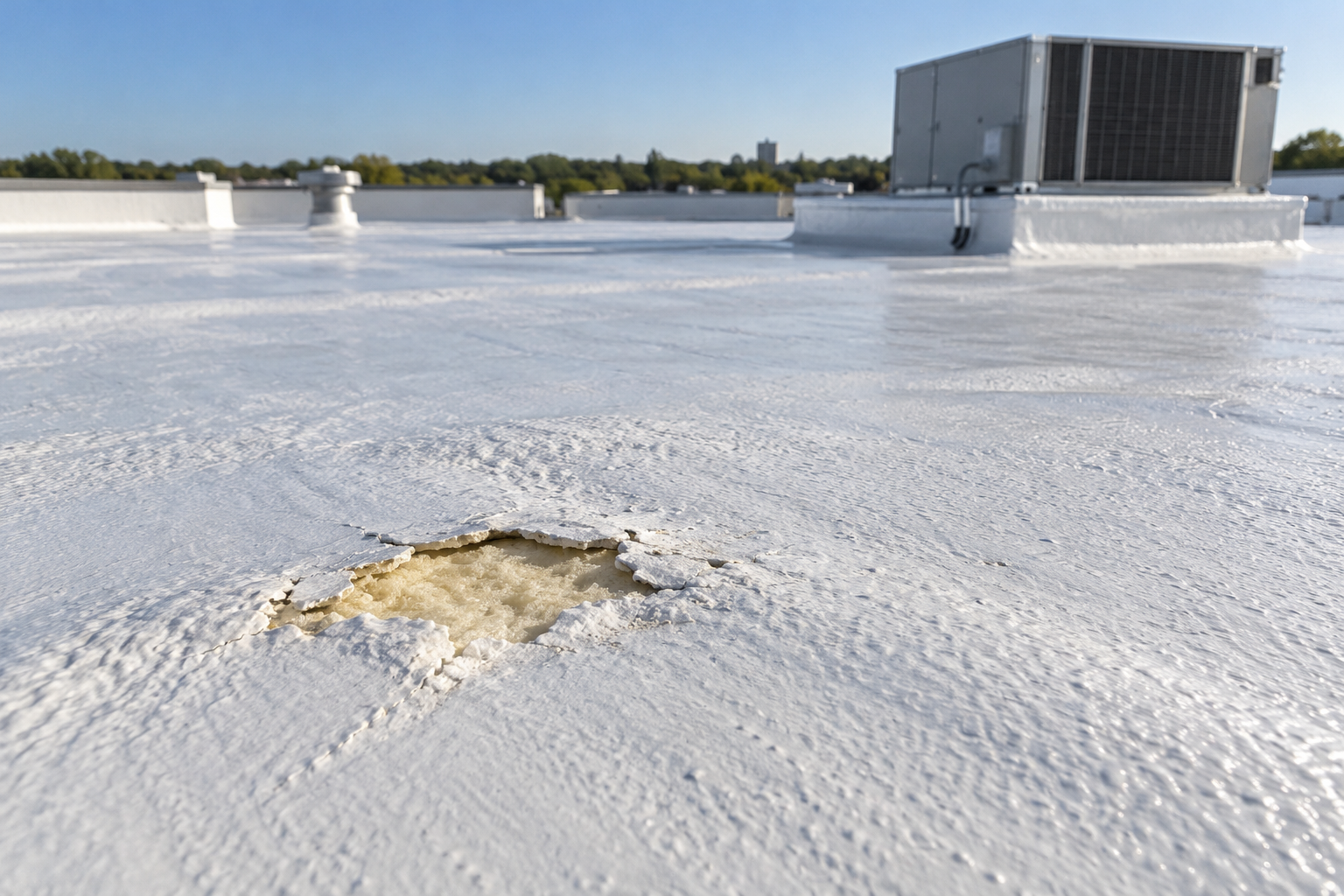
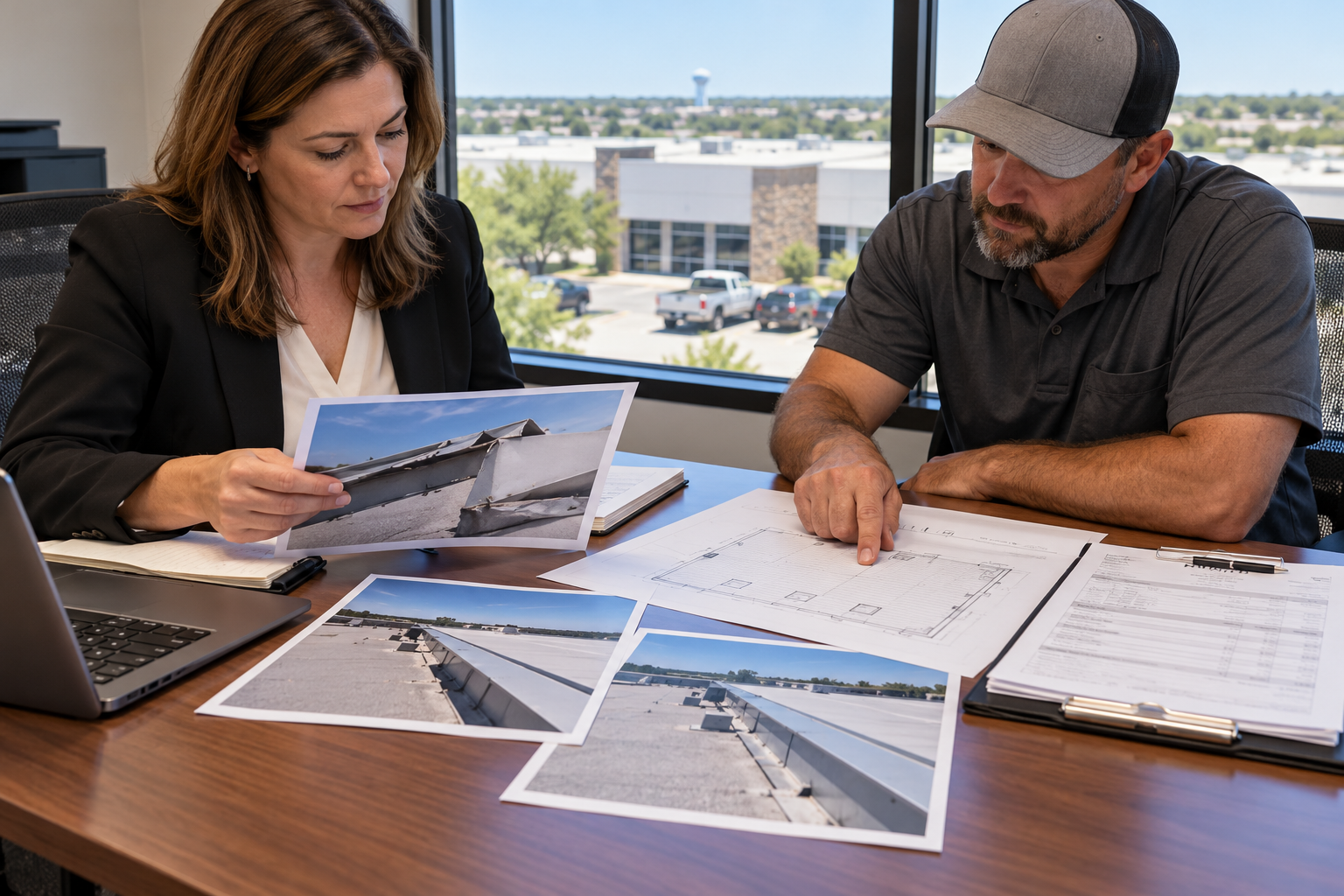
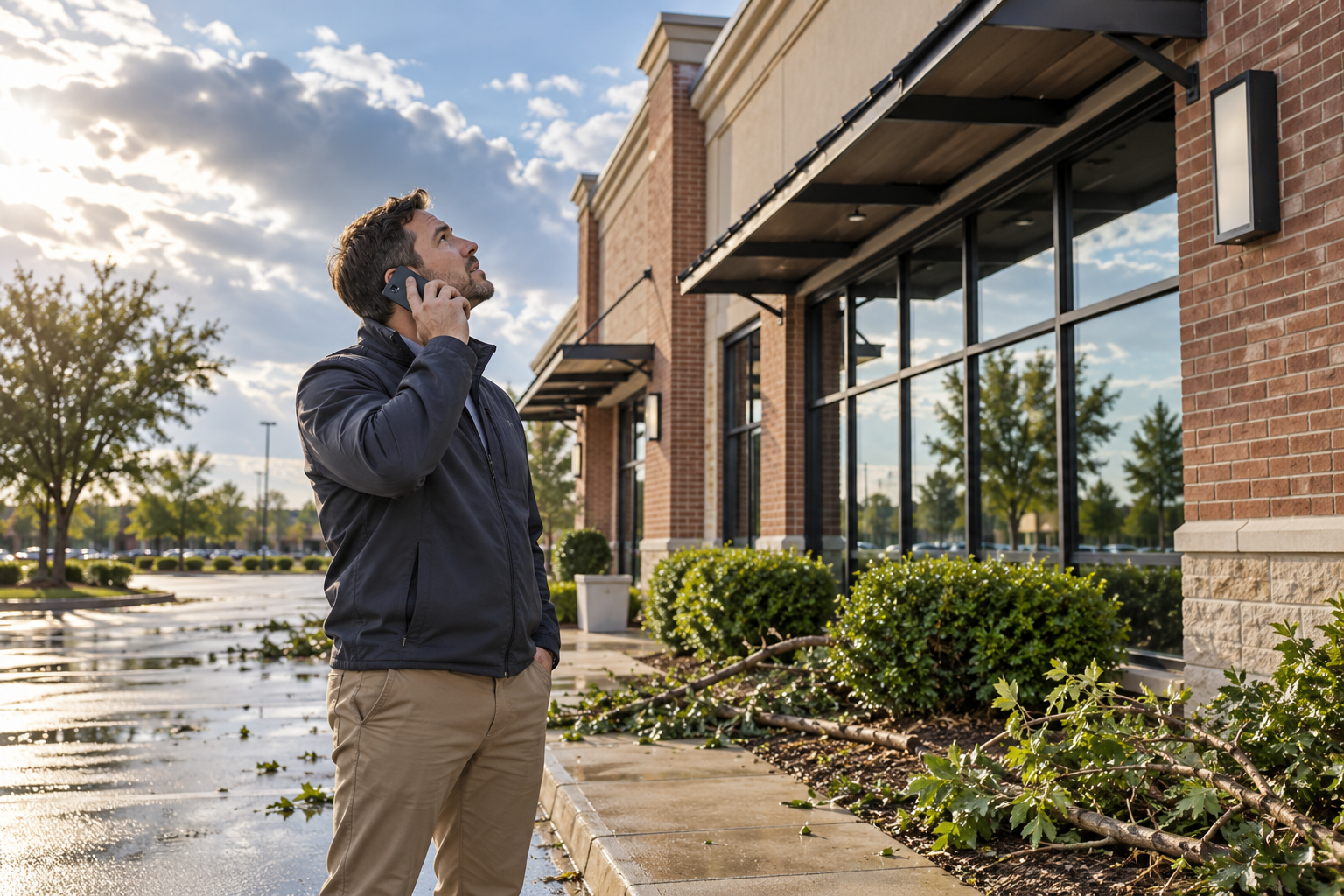
An actual cash value, or ACV, roof policy can make documentation unusually important. When a covered loss occurs, an ACV valuation generally begins with the estimated cost to repair or replace covered property and then accounts for depreciation. The precise calculation, covered causes of loss, deductible, exclusions, endorsements, and claim requirements depend on the policy. A building owner who cannot establish the roof's age, construction, condition, maintenance history, and pre-loss performance may have a harder time understanding the carrier's valuation or separating recent storm damage from long-term deterioration.
The best time to assemble evidence is not after hail, wind, or a leak. It is before renewal, before a property acquisition, and before a storm. A well-organized roof file gives the owner, broker, insurer, adjuster, consultant, and contractor a shared factual record. It can clarify what roof system is installed, where prior repairs were made, whether moisture was already present, and what changed after a reported event.
This guide explains the evidence Texas commercial property owners should request and preserve when considering, renewing, or making a claim under an ACV roof policy. It also explains the special documentation challenges created by aging built-up roofs with gravel surfacing—systems that may conceal moisture, deteriorated materials, and previous repairs from ordinary visual review.
Important: This article provides general educational information, not insurance, legal, engineering, or adjusting advice. Policy language controls. Showtime Exteriors documents physical roof conditions and proposes roofing work; it does not determine coverage, interpret a policy for the carrier, adjust claims, or promise a coverage, payment, premium, renewal, or underwriting result. Ask a licensed insurance professional or attorney about your specific policy and rights.
What Does ACV Mean for a Roof?
Actual cash value is commonly described as replacement cost minus depreciation. Depreciation reflects a reduction in value associated with factors such as age and wear. That short definition is useful, but it does not reveal how a particular commercial policy will value a roof. Commercial property forms and endorsements can differ significantly. Some contain roof schedules, age-based limitations, special wind or hail deductibles, cosmetic-damage provisions, or separate terms for roof surfacing.
Consider an illustrative example only. Assume the carrier accepts a covered replacement cost of $500,000. If the carrier applies $200,000 in depreciation, the indicated ACV before a deductible would be $300,000. A deductible, limit, sublimit, coinsurance provision, excluded work, or other policy term could change the payment. The insurer's method and numbers may differ, and this example does not predict a result.
Under replacement cost coverage, depreciation may sometimes be recoverable after completed work and required documentation, depending on the policy. Under an ACV settlement, depreciation is generally not paid back merely because the work is completed unless the policy or endorsement specifically provides otherwise. Owners should never assume that a phrase used in one policy has the same effect in another.
The practical lesson is simple: collect both policy evidence and roof-condition evidence. The policy file establishes the contract language. The roof file establishes the physical facts.
The Two Evidence Files Every Owner Needs
Create two coordinated files and keep secure digital copies.
1. The policy and underwriting file
This file should contain the complete policy—not only the declarations page. Preserve all forms, schedules, endorsements, exclusions, notices, renewal proposals, inspection requests, broker correspondence, and proof of premium payment. Keep the version effective on the date of any loss, plus the prior and subsequent terms when available.
2. The roof asset and condition file
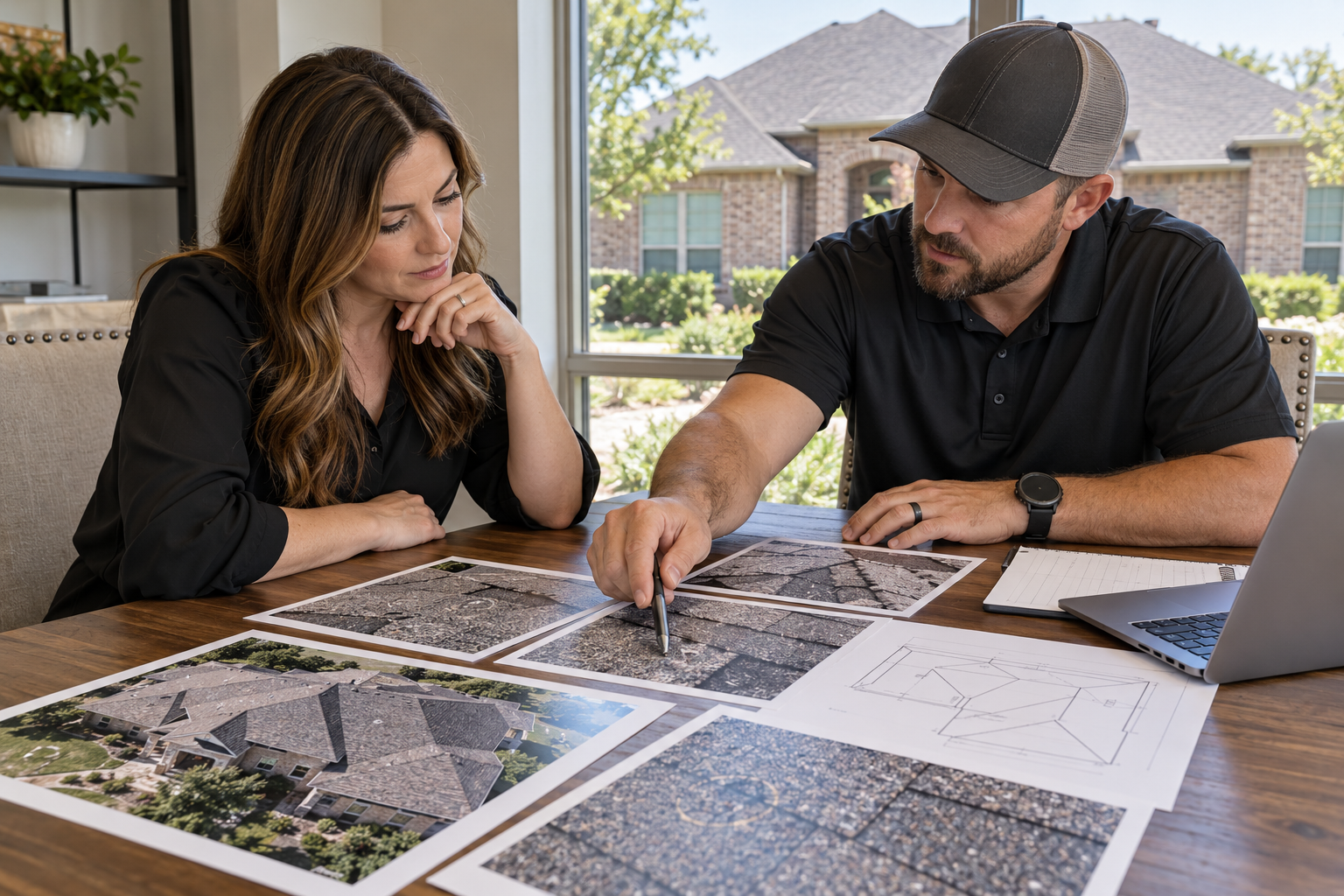
This file should contain installation records, invoices, warranties, permits, roof plans, inspection reports, photographs, moisture information, repair history, maintenance records, and documents showing the roof's condition before and after an event. Treat the roof as a managed building asset rather than an unrecorded surface overhead.
The two files answer different questions. A roofing professional may establish that membrane damage, displaced edge metal, wet insulation, or open seams exist. The carrier applies the policy to decide whether those conditions involve a covered loss and how any covered amount is valued.
Policy Evidence to Collect Before You Buy or Renew
Do not rely on a summary, marketing page, or verbal explanation. Request the complete proposed policy and use a licensed agent, broker, or attorney to resolve questions.
Declarations and property schedule
Confirm the named insured, property address, building limits, valuation basis, policy period, covered locations, and mortgage or lender information. Multi-building properties should have an accurate schedule that identifies each structure. An incomplete address, omitted building, or incorrect construction detail should be raised before binding.
All forms and endorsements
The declarations page often lists form numbers but does not reproduce every condition. Obtain the full text of each listed form and endorsement. Look for provisions addressing roof surfacing, actual cash value, replacement cost, wind, hail, named storms, cosmetic damage, matching, code upgrades, ordinance or law, water intrusion, vacancy, protective safeguards, and reporting duties.
Written confirmation of the roof valuation basis
Ask whether the building is replacement cost but the roof is ACV. Request the endorsement or schedule that creates that distinction. Ask how the carrier identifies the roof's age and material, what happens when records are unavailable, and whether different buildings or roof sections are treated separately.
Depreciation method or roof schedule
Ask the licensed insurance professional to identify any depreciation schedule, roof payment schedule, percentage table, service-life assumption, or condition factor. Determine whether depreciation is calculated by age alone or whether material and documented condition are considered. Request the answer in writing and preserve it with the quoted policy.
Deductible evidence
Record whether the deductible is a dollar amount or a percentage and what value the percentage applies to. A wind or hail deductible may differ from the deductible for another cause of loss. Multi-location and per-building applications can also differ. Keep the worksheet used to explain the deductible; do not rely on memory.
Limits, sublimits, and exclusions
Ask specifically about wind, hail, roof surfacing, water intrusion, interior rain damage, debris removal, emergency mitigation, code upgrades, and business interruption. A roof may suffer physical damage while some resulting costs are limited or excluded. The full contract—not a roofer—answers that coverage question.
Notice and proof requirements
Identify where and how a loss must be reported, whether the policy imposes a deadline, what a proof of loss must contain, and who is authorized to communicate for the insured. Record the carrier's claim telephone number and portal before an emergency. Calendar renewal and notice dates.
Underwriting representations
Keep every application, questionnaire, roof inspection, photograph, and statement supplied to the carrier. If the application says the roof was replaced in a particular year, preserve the invoice or permit supporting that date. Correct a material error through the appropriate licensed professional rather than allowing an unsupported entry to remain.
Evidence That Establishes Roof Identity and Age
An ACV calculation may depend heavily on age. “Approximately 15 years old” is less persuasive than a dated record tied to the correct building and roof section.
Useful age evidence includes:
original construction documents and certificates of occupancy;
reroofing contracts, invoices, payment records, and completion certificates;
manufacturer warranty registration and final inspection records;
municipal permits and inspection signoffs;
dated aerial imagery, photographs, or owner reports;
acquisition due-diligence reports and capital plans;
product labels, membrane markings, core-cut findings, and assembly records; and
records identifying additions or phased roof replacements.
Commercial roofs are often not one age. An addition may have a newer membrane than the original building. One wing may have been replaced while another received repairs. Create a roof plan that divides the property into sections and assigns the best-supported installation date to each section. If the date is uncertain, say so and identify the basis for the estimate.
Evidence That Establishes the Roof Assembly
Material affects expected performance, repair method, compatibility, and potentially depreciation. The evidence file should identify the membrane or surfacing, attachment method, insulation type and thickness, cover board, vapor retarder when present, deck type, drainage configuration, perimeter and penetration details, number of roof layers, and known recover systems.
A visual inspection may identify many components, but concealed construction sometimes requires records or carefully selected test cuts. Destructive testing should be authorized, safely performed, documented, and properly repaired. For an occupied facility, coordinate access, weather, interior protection, and operational constraints.
Assembly evidence matters because two roofs that look similar from above can have different underlying conditions. A membrane installed over wet insulation does not present the same repair question as a dry assembly. A mechanically attached system responds differently at seams and fasteners than a fully adhered system. Accurate assembly information supports a defensible scope even when coverage remains the carrier's decision.
Build a Pre-Loss Condition Baseline
The most valuable evidence after a storm may be an inspection completed before it. A baseline helps distinguish documented pre-existing conditions from changes observed later.
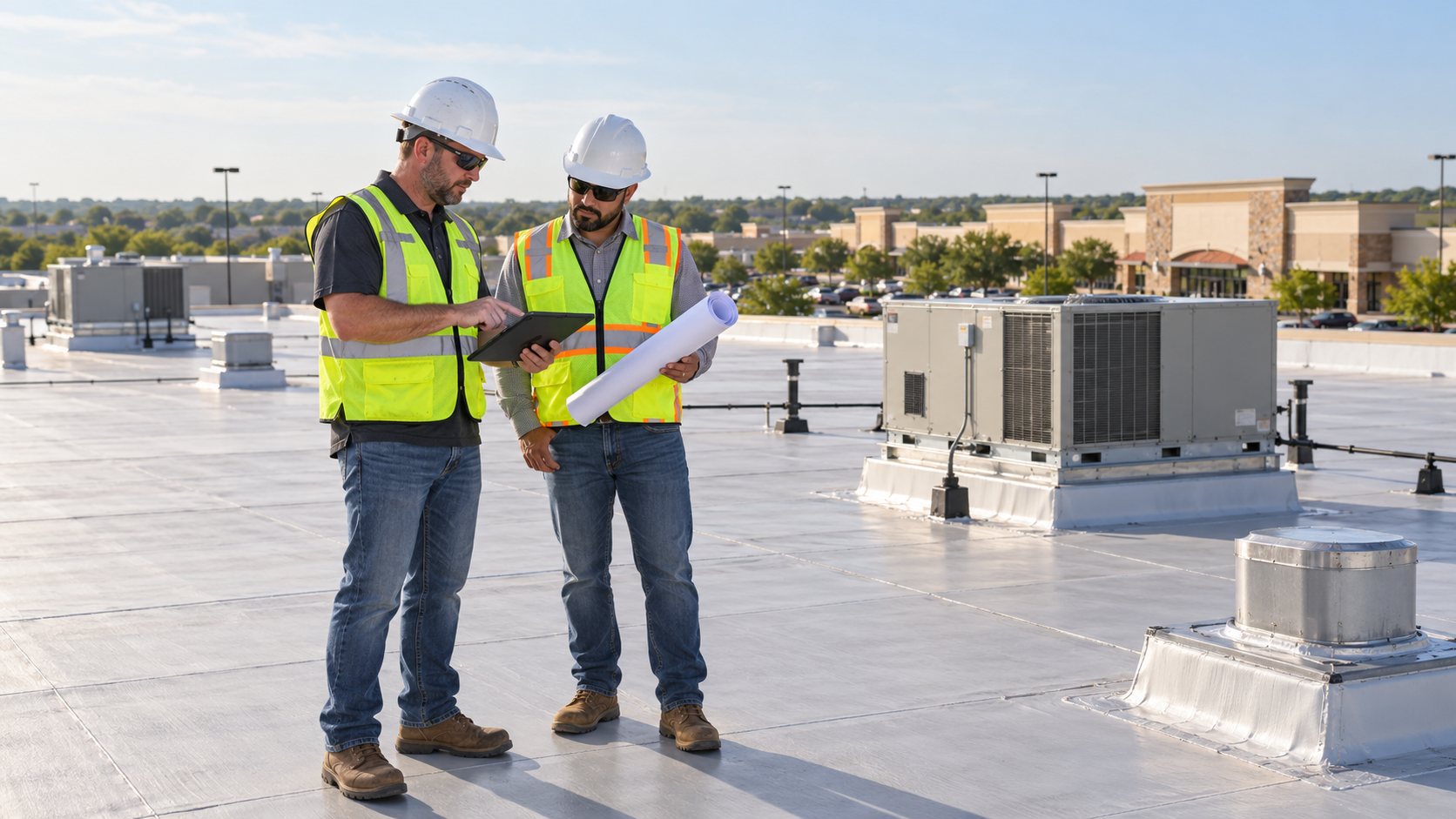
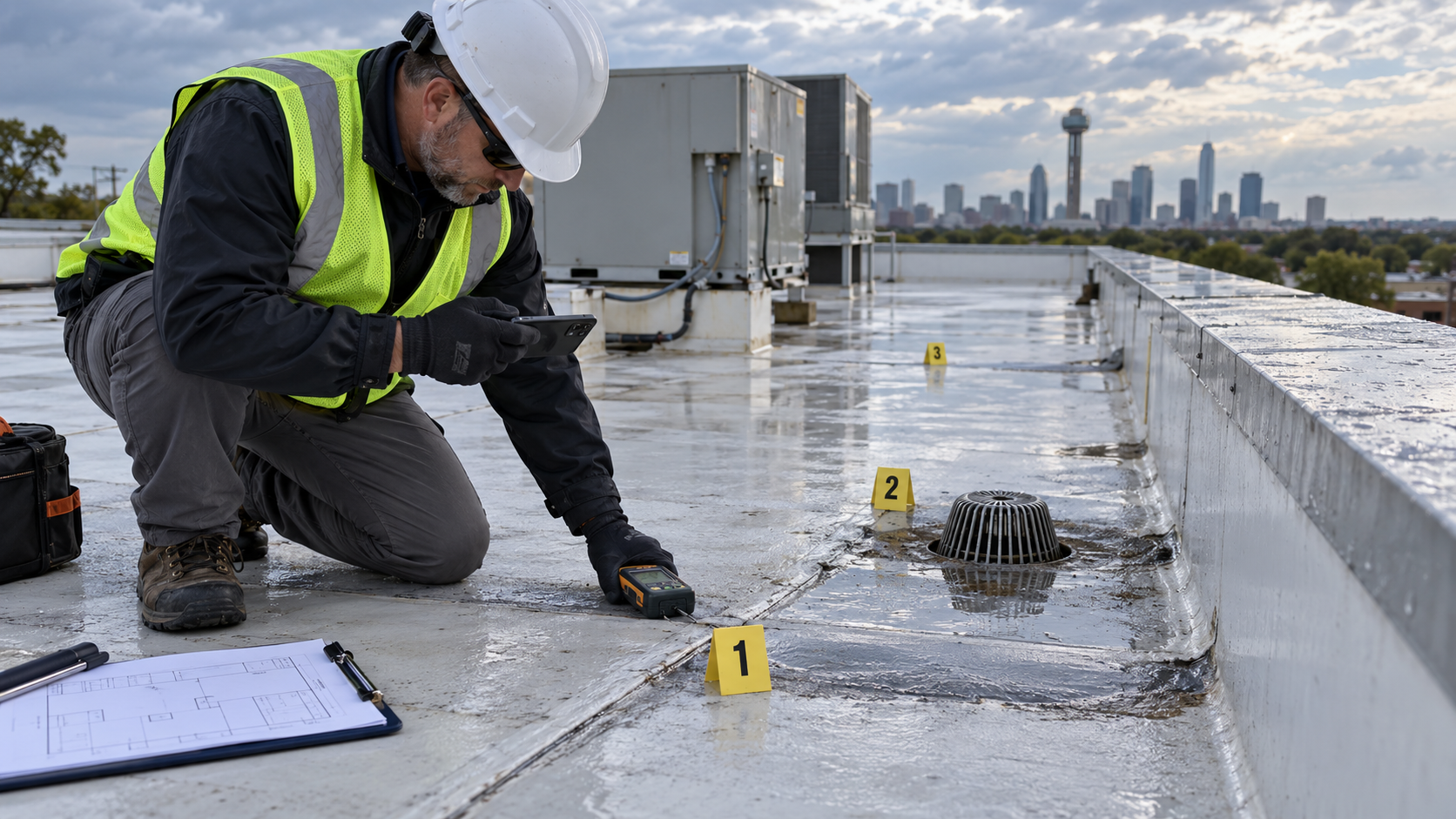
The baseline report should identify the inspection date, weather, roof sections, access limitations, personnel, observed materials, visible defects, prior repairs, drainage conditions, penetrations, edge details, rooftop equipment interfaces, and recommended actions. Photographs should be mapped to the roof plan and labeled by location and direction.
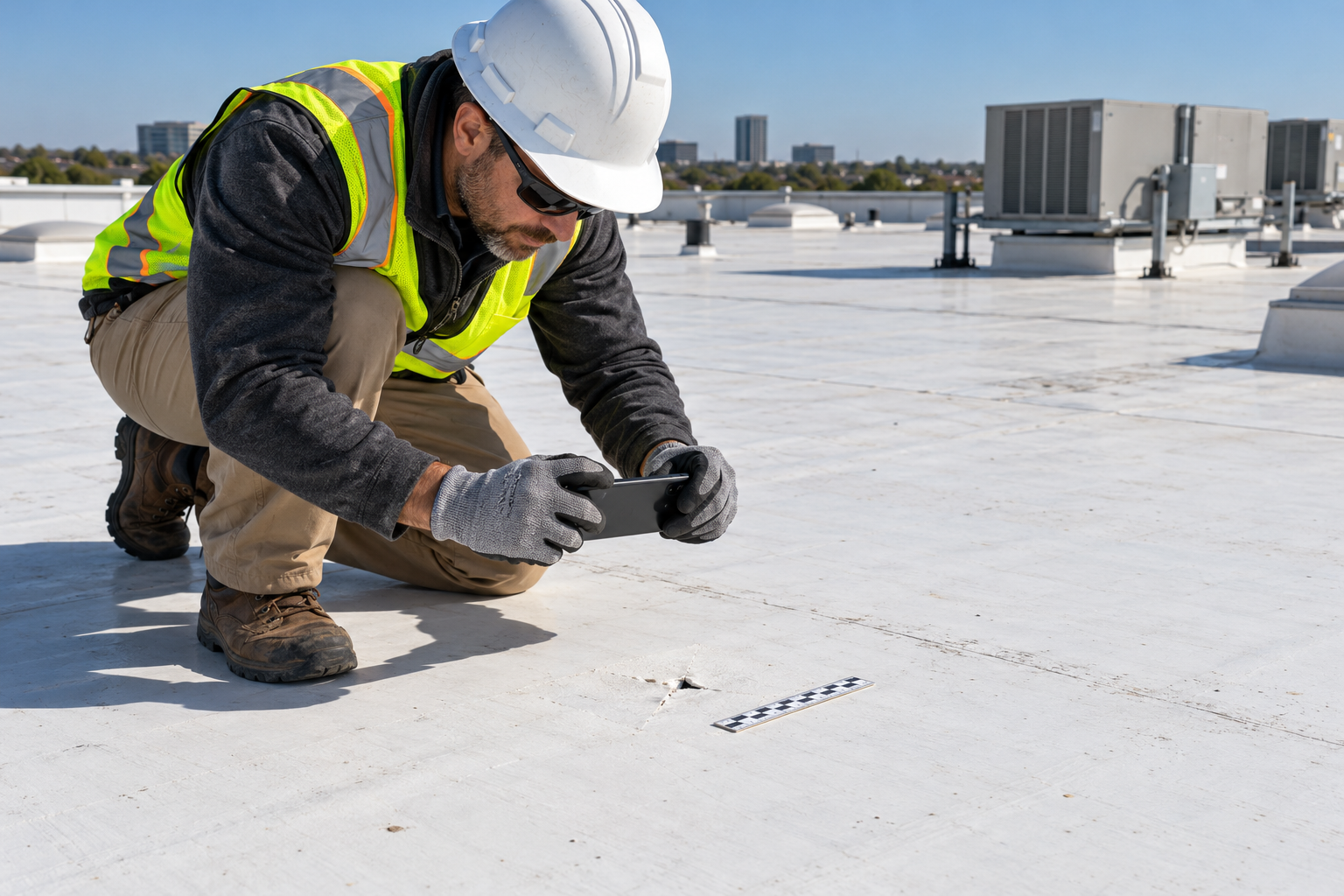
Wide photographs provide context. Medium views show the relationship between a defect and a feature such as a drain or HVAC curb. Close views show the condition itself. Include a scale where size matters, but never place a marker in a way that alters damage. Preserve original image files and metadata when practical.
Document interior conditions too. Ceiling stains, wall finishes, inventory areas, electrical rooms, tenant spaces, and prior leak locations may be relevant. A clean, dated interior photograph can later show that a stain or moisture condition was not visible during the baseline review.
Repeat baseline inspections on a sensible schedule and after material work. A report that is several years old may still help, but a current report provides a stronger operational record.
Maintenance and Repair Records Matter
Age does not tell the entire condition story. Maintain a log of inspections, drain cleaning, debris removal, sealant work, flashing repairs, equipment installations, leak calls, and completed recommendations. Record the contractor, date, exact location, materials, photographs, invoice, and outcome.
Avoid vague entries such as “fixed roof leak.” Instead, identify the reported interior location, roof location investigated, observations, temporary measures, permanent correction, and follow-up result. If the source was not confirmed, say so. A water stain does not necessarily sit directly below the entry point.
Track rooftop work by other trades. HVAC technicians, electricians, plumbers, solar contractors, and communications installers can affect penetrations, walk paths, curbs, supports, and membrane surfaces. Require sign-in, approved access routes, protection, and post-work review.
Maintenance documentation does not guarantee insurance treatment. It does, however, provide evidence of what the owner knew, what was addressed, and when the roof last performed without a reported problem.
Special Concern: Aging Gravel-Surfaced BUR
Built-up roofs with gravel surfacing deserve particular scrutiny in this campaign. The gravel layer can obstruct a clear view of the membrane, flashings, previous patches, splits, blisters, and localized deterioration. It can also make consistent photographs and noninvasive scanning more difficult. Moisture or deteriorated materials may exist below an apparently uniform surface.
That uncertainty can affect practical roof management and may contribute to additional underwriting questions, inspections, limitations, higher pricing, or non-renewal decisions by some carriers. No contractor can promise that an inspection, repair, coating, or replacement will produce a particular insurance result. Owners should ask multiple licensed insurance professionals how each carrier treats the specific roof.
For an aging gravel-surfaced BUR, assemble:
the best evidence of installation year and number of plies;
records of gravel displacement, redistribution, or repair areas;
mapped leak and patch history;
moisture survey results and authorized test-cut findings;
photographs showing areas before and after gravel is carefully moved for examination;
deck and insulation information;
drainage and ponding observations;
a prioritized repair, restoration, or replacement recommendation; and
a capital plan with realistic timing.
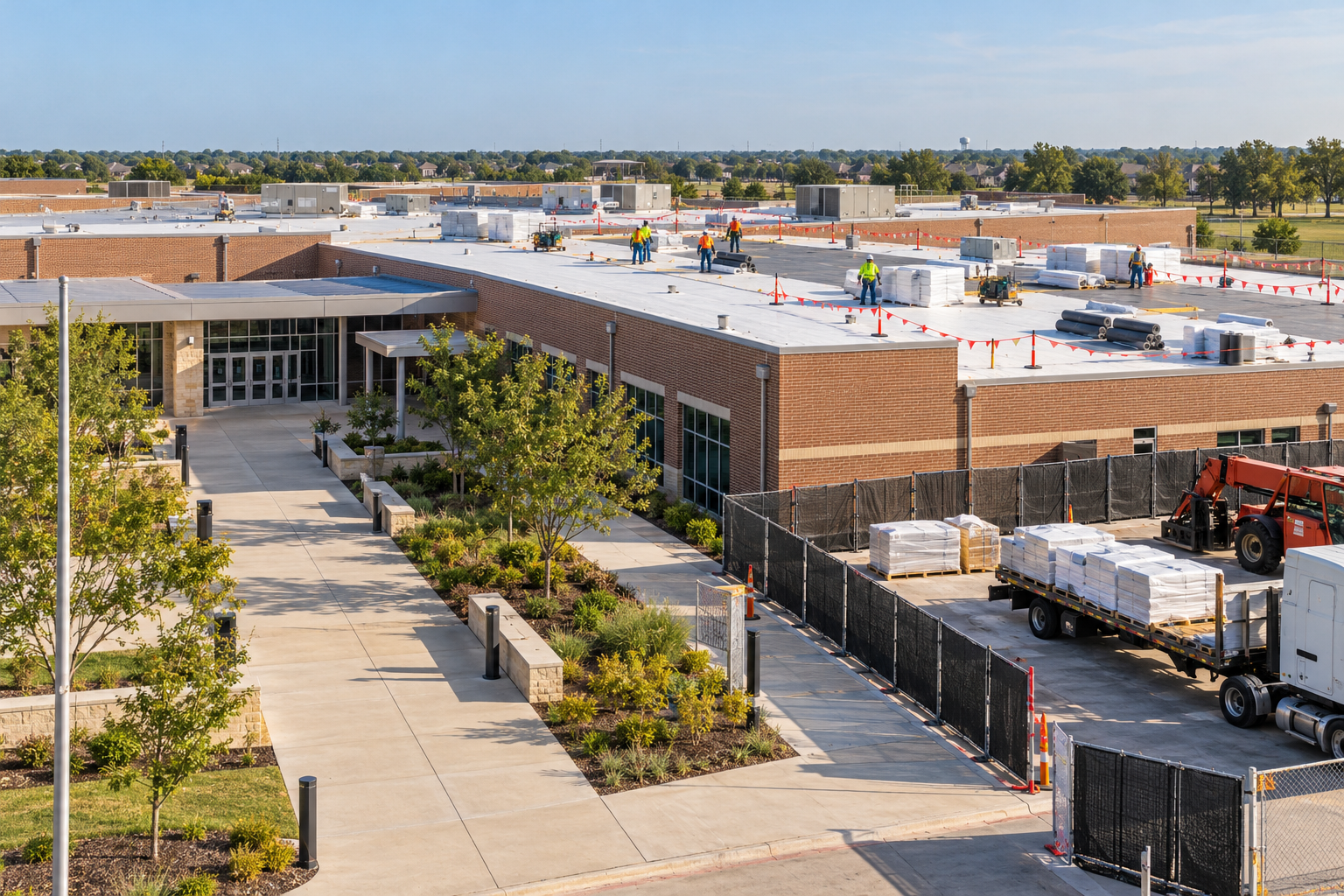
Do not present gravel as proof that the underlying roof is sound. When the surfacing prevents a reliable assessment, the report should state the limitation. If the roof is near the end of its practical service life or contains widespread wet materials, replacement may provide a clearer long-term path than repeated patches. The decision should follow inspection, testing where appropriate, operational planning, and review of available system options.
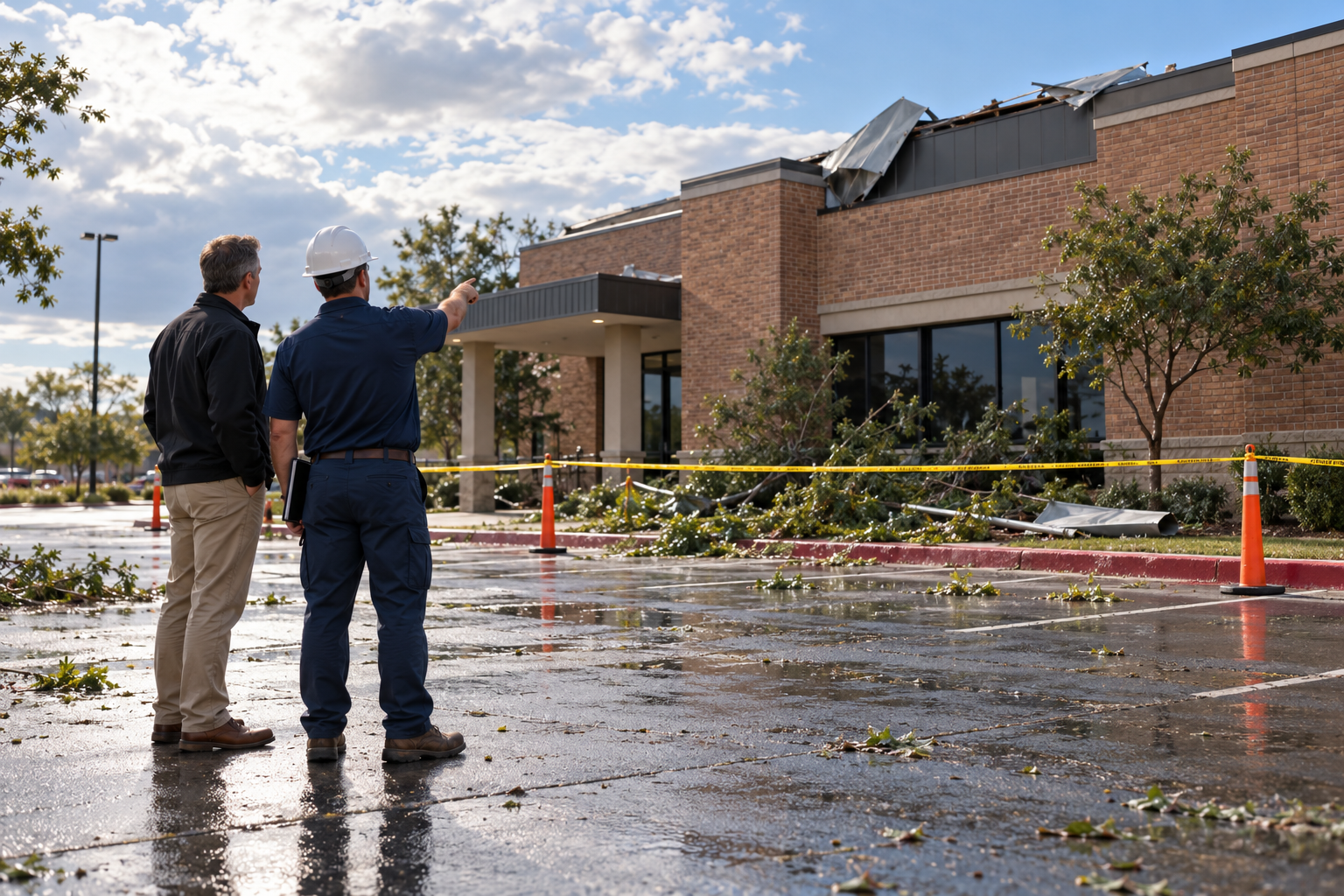
What to Document Immediately After Hail, Wind, or Water Entry
Safety comes first. Do not enter a structurally questionable area, climb a wet roof, approach downed electrical equipment, or expose personnel to active weather. Use qualified professionals and follow site safety procedures.
Once conditions are safe, create a disciplined event record.
Record the event
Write down when damage was first observed, who observed it, the affected building and interior area, and the operational impact. Preserve relevant weather alerts and facility logs. Weather data can provide context, but it does not by itself prove that a particular roof condition resulted from the event.
Photograph without disturbing
Capture building elevations, roof areas, displaced components, punctures, open laps, damaged edge metal, rooftop equipment, blocked drainage, interior water, and affected contents. Use wide, medium, and close views. Do not move or discard material merely to improve a photograph.
Map every observation
Assign each photograph and condition to a roof-plan location. A folder of unlabeled close-ups can be difficult to use because the reviewer cannot tell which building, roof section, or penetration appears in the image.
Mitigate further damage
Reasonable temporary action may be needed to protect people, contents, and the building. Document the condition before work when safe, the temporary materials installed, labor and equipment used, and the condition afterward. Keep receipts. A tarp, temporary patch, or water extraction is not a substitute for diagnosing and completing the permanent correction.
Preserve damaged material when appropriate
Ask the insurer or adjuster before discarding damaged components when practical. If emergency conditions require removal, photograph the component in place, during removal, and after removal; label and securely retain representative material when safe and authorized.
Maintain a communication log
Record the claim number, date, time, person, organization, telephone number, email address, requested documents, promised follow-up, and next deadline for every material communication. Confirm important instructions in writing.
{width=6.6in}Image alt text: Commercial roof inspector documenting mapped storm conditions and moisture near a roof drain in Texas.
Moisture Evidence: Use the Right Tool and Explain Its Limits
Moisture evidence can influence whether work is localized or extensive. No single tool answers every question.
Visual review may reveal staining, corrosion, soft areas, open seams, or wet materials at an exposed cut. Infrared thermography may identify thermal anomalies under suitable conditions. Electrical capacitance or impedance equipment may indicate comparative readings. Nuclear testing may support a broader survey. Test cuts can verify conditions at selected points.
Each method has limitations based on assembly type, weather, surface conditions, ballast, equipment, deck, insulation, and operator technique. The report should identify the instrument or method, survey conditions, grid or route, calibration or comparative approach, anomalies, test locations, and interpretive limitations. An anomaly is not automatically proof of storm-created moisture.
Where a test cut is authorized, document each layer, approximate thickness, attachment, visible moisture, odor, deterioration, deck condition, and repair of the opening. Photograph the location on the roof plan and in context. Preserve laboratory results when samples are analyzed.
Evidence Needed to Evaluate Depreciation
Owners should be prepared to review the factual inputs used in a depreciation calculation. Request an explanation from the carrier or licensed insurance professional and compare it with the roof record.
Relevant evidence may include:
supported installation date for each roof section;
accepted replacement or repair cost;
material and assembly;
documented condition immediately before the loss;
maintenance and repair history;
prior unrepaired damage or deterioration;
expected service-life assumption used in the calculation;
depreciation percentage or amount by line item;
whether labor, materials, taxes, overhead, or other components were depreciated; and
policy language governing valuation.
Do not assume the contractor's estimate and the carrier's estimate serve the same purpose. A roofing estimate should describe the work, quantities, materials, access, safety, disposal, details, and exclusions required to perform a project. The carrier's estimate applies its claim evaluation and policy framework. Differences should be identified line by line and addressed through the appropriate parties.
What a Useful Commercial Roof Inspection Report Contains
A strong report is specific enough that a reviewer who was not on the roof can understand the property, methods, observations, limitations, and recommendations.
Include:
property name, address, building designation, and client;
inspection date, personnel, purpose, weather, and access conditions;
roof plan with section names, dimensions when available, drainage, and major equipment;
known installation dates, warranties, repairs, and source documents;
observed roof system and assembly information;
photographs keyed to locations;
condition descriptions using objective language;
moisture-testing method, locations, results, and limitations when performed;
immediate safety or water-entry concerns;
prioritized maintenance, repair, restoration, or replacement recommendations;
assumptions, exclusions, inaccessible areas, and need for further testing; and
contractor contact and report date.
Avoid unsupported conclusions such as “insurance will pay,” “the carrier must replace the roof,” or “all damage is storm related.” A contractor may identify physical conditions and recommend a construction scope. Coverage and payment decisions belong to the insurer under the policy; disputed claim advocacy may require a licensed public adjuster or attorney.
A Step-by-Step ACV Evidence Workflow
Step 1: Obtain the complete policy
Collect declarations, property schedule, forms, endorsements, exclusions, and renewal notices. Store the policy effective for each year rather than overwriting the prior version.
Step 2: Create a roof-section map
Name every building and roof area consistently. Add installation dates, known materials, drainage, access points, and major equipment. Use the same section names in every report and invoice.
Step 3: Reconstruct age and assembly
Gather contracts, invoices, permits, warranties, photographs, test data, and acquisition records. Mark uncertain information as estimated and state the source.
Step 4: Commission a baseline assessment
Document current conditions before renewal or storm season. Address urgent openings, drainage problems, and active leaks. Preserve the original report and images.
Step 5: Organize maintenance
Maintain a dated log with mapped repairs and photographs. Close the loop on recommendations and record why deferred work was postponed.
Step 6: Ask written ACV questions
Ask the agent or broker to identify the roof valuation endorsement, depreciation method, deductible, limitations, and notice duties. Save written responses but rely on the issued policy.
Step 7: Prepare an event kit
Keep contact numbers, safe-access procedures, roof plans, emergency vendors, camera, location markers, and documentation forms ready. Train facility personnel to report water entry consistently.
Step 8: Document before temporary work
When safe, photograph and map the condition. Then mitigate further damage, documenting labor, materials, receipts, and after-condition.
Step 9: Coordinate inspections
Provide safe access and factual records to the adjuster and roofing professional. Keep a list of attendees, inspected areas, tests, samples, and requested follow-up.
Step 10: Compare scope and valuation separately
First determine what physical work is reasonably needed. Then identify how the carrier applied coverage, depreciation, deductibles, and limitations. Mixing those questions can create confusion.
Step 11: Preserve the claim record
Retain notices, estimates, reports, photographs, invoices, permits, contracts, proof of deductible payment, completion documents, and correspondence for the period recommended by legal and insurance advisers.
Questions to Ask Your Insurance Professional
Bring this list to the renewal conversation:
Is the entire building ACV, or only the roof or roof surfacing?
Which endorsement establishes ACV treatment?
How is roof age verified when sections were installed at different times?
What depreciation method or schedule applies?
Is any depreciation recoverable after completed work?
What wind and hail deductible applies, and how is it calculated?
Are there roof surfacing, cosmetic damage, matching, water, or code limitations?
Are interior water damages treated differently from roof damage?
What notice and proof-of-loss deadlines apply?
What inspection or maintenance records will underwriting request?
How does the carrier treat an aging gravel-surfaced BUR?
Would replacement with a different system change underwriting eligibility, and can that answer be provided in writing?
The final question is important but not a guarantee. Carrier programs and underwriting standards can change. A roof replacement should be planned around building needs, assembly design, code, drainage, operations, and life-cycle value—not an unsupported promise of insurance approval.
Common Evidence Mistakes
Keeping only the declarations page
The controlling limitation may appear in an endorsement. Preserve the whole contract.
Photographing only close-ups
Without context and mapped locations, a reviewer may not know where a condition exists.
Waiting until after permanent repairs
Emergency protection may be necessary, but permanent alteration before inspection can remove evidence. Communicate with the insurer and document thoroughly.
Discarding damaged materials too soon
Retain them when safe and practical until the adjuster provides direction. When removal is unavoidable, create a complete photographic chain.
Treating every leak as storm damage
Leaks may arise from drainage, deterioration, equipment, penetrations, installation defects, or storm-created openings. Report observations and investigate the pathway.
Using unsupported roof ages
An old spreadsheet entry is not the same as an invoice, permit, or warranty record. Identify the source and confidence level.
Assuming ACV is a simple percentage
The valuation method and policy terms matter. Ask for the carrier's calculation and applicable language.
Letting temporary patches become permanent by neglect
Temporary work should be mapped, dated, monitored, and followed by a permanent plan.
Frequently Asked Questions
What is the single most important ACV roof document?
There is no single document. The complete policy explains the valuation and duties, while the dated pre-loss inspection establishes physical condition. Owners need both.
Can a contractor determine how much an ACV policy will pay?
No. A contractor can inspect conditions and prepare a roofing scope and estimate. The carrier evaluates coverage and payment under the policy. A licensed public adjuster or attorney may advise an insured within their lawful role.
Does maintenance documentation eliminate depreciation?
Not necessarily. Maintenance records can establish condition and responsible asset management, but the insurer applies the policy's valuation terms. Documentation does not guarantee a particular percentage.
Should I file a claim for every roof concern?
Discuss potential losses, deductibles, policy duties, and claim implications with the appropriate licensed insurance professional. A roofer can identify the condition and urgency but should not decide insurance strategy for the owner.
What if I do not know the roof's age?
Search contracts, accounting records, permits, warranties, lender files, prior-owner records, aerial images, and manufacturer information. A professional may estimate an age range from construction and condition, but the report should distinguish an estimate from a verified date.
Are smartphone photos enough?
They can be valuable if clear, original, dated, contextual, and mapped. A professional report adds systematic coverage, construction knowledge, measured locations, limitations, and recommendations.
Why are gravel-surfaced BUR roofs harder to document?
Gravel can conceal the membrane, patches, splits, blisters, and localized deterioration. It can complicate visual comparison and some testing. Reports should disclose those limitations and recommend targeted investigation when warranted.
Will replacing a gravel BUR guarantee better insurance terms?
No. Replacement may reduce uncertainty and address an aging roof, but only an insurer decides eligibility, coverage, price, and renewal. Ask carriers about proposed assemblies before construction and obtain responses in writing where possible.
How long should evidence be retained?
Retention needs vary by contract, claim, tax, warranty, litigation, and business requirements. Ask legal and insurance advisers for a schedule. At minimum, avoid discarding prior policies and roof records merely because a renewal occurred.
A Practical Evidence Checklist
Before renewal, confirm that your file contains:
complete current and prior policy documents;
roof-specific ACV forms and depreciation schedules;
deductible and limit explanations;
building and roof-section schedule;
installation dates with supporting records;
assembly and warranty information;
current mapped inspection report;
original photographs and roof plan;
maintenance, leak, and repair logs;
moisture survey and test-cut records when appropriate;
open recommendations and capital plan;
insurer, broker, and emergency contacts; and
written questions and responses.
After a potential loss, add:
date, time, observer, and incident narrative;
safe wide, medium, and close photographs;
mapped exterior and interior conditions;
weather and facility records;
mitigation photographs, invoices, and receipts;
retained material or disposal documentation;
inspection attendees and field notes;
moisture findings and limitations;
claim number and communication log;
carrier estimate and explanation of depreciation;
contractor scope and estimate; and
contracts, permits, invoices, and completion records.
Put the Evidence in Place Before It Is Needed
An ACV roof policy shifts attention toward the facts that influence depreciation and valuation: age, material, condition, maintenance, cost, and policy language. A disciplined evidence file cannot guarantee coverage or payment, but it can reduce avoidable uncertainty and help every participant work from the same record.
For North Texas commercial owners, the first practical step is a documented roof assessment. That is especially urgent when an aging gravel-surfaced BUR makes the membrane difficult to evaluate, when records are incomplete, or when renewal is approaching. The report should identify observable conditions, disclose access and testing limitations, map priorities, and provide a realistic repair, restoration, or replacement plan.
Showtime Exteriors serves commercial property owners across Texas from its North Texas operation in Mansfield. To schedule a commercial roof inspection or discuss a roofing scope, call 817-400-ROOF (7663).
Related Showtime Exteriors Resources
Questions to Ask Before Choosing an RCV Roof Insurance Policy
Roof Depreciation: A Step-by-Step Guide for Texas Property Owners
Questions to Ask Before Starting a Roof Insurance Claim
What Evidence Do You Need for a Commercial Roof Inspection Report?
Commercial BUR Roof Insurance Non-Renewal in Texas
Authoritative External Resources
Texas Department of Insurance: Replacement Cost or Actual Cash Value
Texas Department of Insurance: Insurance and Your Roof
Texas Department of Insurance: Roofing and Insurance—Know the Law
Texas Department of Insurance: Help After a Storm
Ready.gov: Business Emergency Plans
Editorial and insurance disclaimer: This content is general educational information. It is not a policy interpretation, insurance recommendation, legal opinion, engineering report, public-adjusting service, or promise of claim approval, payment, renewal, premium reduction, or underwriting eligibility. Coverage and valuation depend on the issued policy and the insurer's determination. Consult a licensed insurance professional or attorney regarding a specific policy or claim. Showtime Exteriors evaluates physical roof conditions and prepares roofing recommendations and construction scopes.
817-400-ROOF (7663) showtimeexteriors.com