



Can a Punctured Commercial Membrane Be Repaired, or Is Replacement Necessary?
Can a punctured commercial roof membrane be repaired? Learn how moisture, membrane condition, damage extent, and warranties affect the decision.

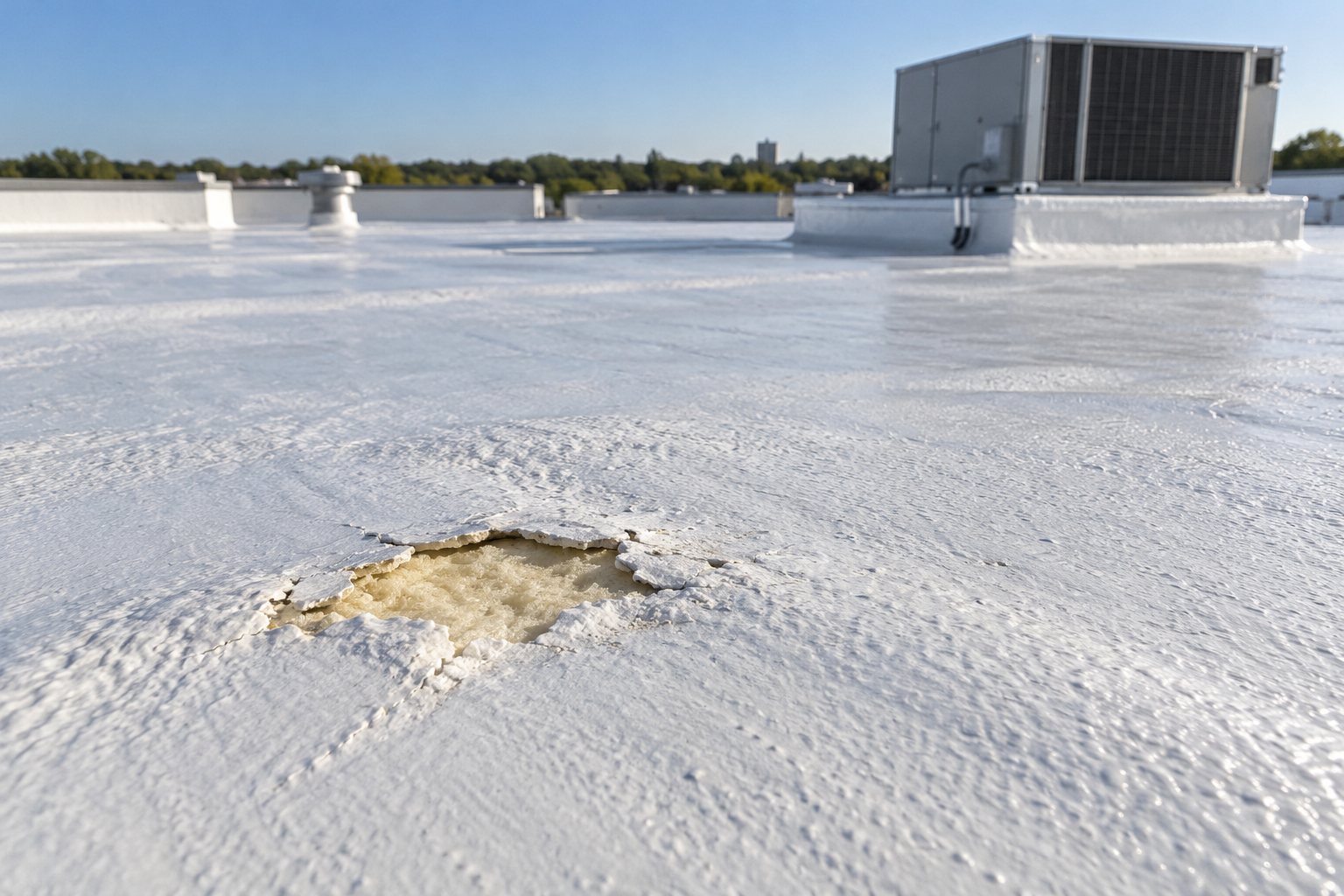
A localized puncture in a commercial roofing membrane can often be repaired when the surrounding roof remains serviceable and a compatible repair can be completed. Full replacement requires broader justification, such as extensive damage, widespread moisture, deteriorated materials, or other significant assembly problems.
The opening’s visible size does not determine the entire scope. A small puncture may require investigation of materials below it, while a clearly defined area of damage on an otherwise sound roof may support a limited repair.
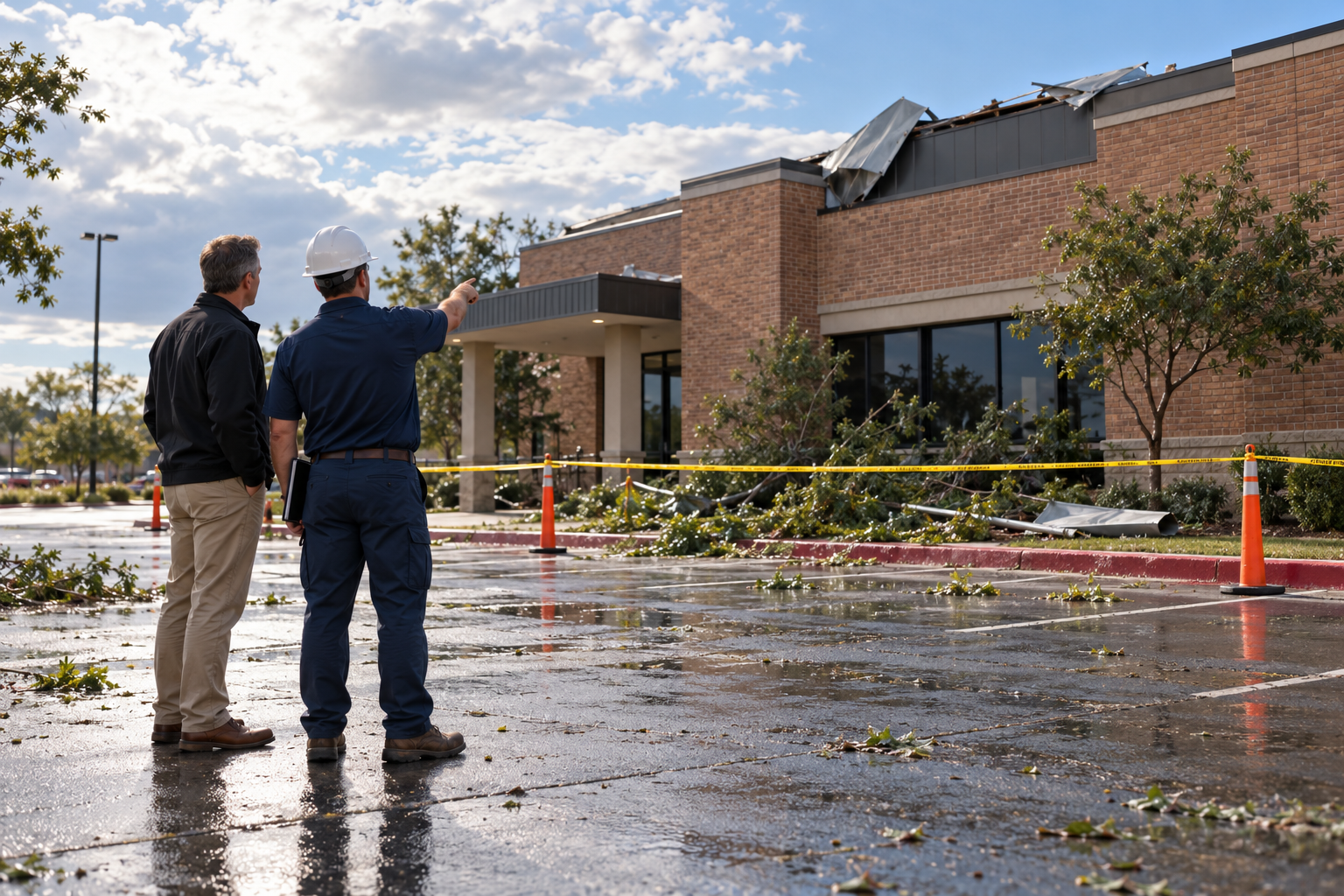
For building owners, the first step is a professional assessment that explains what was found, what remains uncertain, and how the proposed work addresses the problem.
Showtime Exteriors provides residential and commercial roofing services throughout North Texas. This guide explains how to evaluate a punctured commercial membrane and compare repair, partial replacement, and broader replacement recommendations.
What Is a Commercial Roofing Membrane?
A membrane forms the water-resistant covering of many low-slope commercial roofs. Common systems include TPO, PVC, EPDM, and modified bitumen.
These materials require different preparation, accessories, and repair methods. The contractor should identify the installed system before selecting a product or procedure.
GAF’s overview of single-ply commercial roofing systems describes TPO and PVC as established membrane options with repairability among their characteristics. The appropriate repair still depends on the actual system and its condition. GAF
The Membrane Is Only Part of the Roof
Below the membrane may be cover board, insulation, attachment components, and the structural deck.
An assessment should consider whether the puncture affects only the visible covering or raises questions about these underlying materials.
What Can Cause a Membrane Puncture?
Potential causes include dropped tools, sharp debris, equipment servicing, displaced components, and storm impacts.
However, finding an opening does not automatically establish its cause or date.
GAF’s guidance on protecting membranes during rooftop work identifies metal shavings and material carried by equipment as potential sources of membrane damage. gaf.com
Record Relevant History
Tell the inspector about:
- Recent HVAC or other equipment work.
- Storm observations.
- Earlier leak locations.
- Previous patches.
- Material deliveries.
- Unusual rooftop activity.
- When the puncture was discovered.
This history helps guide the investigation without replacing physical evidence.
How Quickly Should a Puncture Be Addressed?
Contact a roofing professional promptly when a membrane opening is discovered. If water is actively entering the building, report the interior conditions when scheduling.
Keep people clear of wet electrical equipment, unstable ceiling materials, or other affected areas. Roof access should occur when conditions allow safe assessment.
Showtime Exteriors’ guide to responding to a punctured commercial membrane outlines priorities for active leaks, discovered openings, temporary protection, and follow-up.
An Absence of Leaks Does Not Resolve the Question
No visible interior water entry does not establish that every concealed layer is dry. It also does not prove that concealed damage exists.
Ask the contractor what evidence supports further investigation and what limitations apply to the initial inspection.
When Is a Localized Repair Worth Considering?
A targeted repair may be appropriate when the puncture is limited and the surrounding roof can support a suitable repair.
The contractor should explain:
- The membrane type.
- The condition around the opening.
- Whether additional damage was found.
- Whether underlying materials need investigation.
- The compatible repair method.
- How completed work will be checked.
- Any remaining limitations.
Repair Boundaries Should Follow Findings
Ask why the proposed repair area extends as far as it does.
The answer should relate to the defect, surrounding material, preparation requirements, and any additional findings. A repair should not be sized solely from the visible hole.
Existing Patches Need Review
If the area has been repaired before, ask whether earlier materials affect compatibility or preparation.
A recurring opening deserves evaluation of the previous approach and surrounding conditions.
When Might a Larger Area Need Replacement?
Sometimes the visible puncture is only one part of the required work.
A contractor may recommend replacing a defined section if investigation identifies affected insulation, damaged cover board, deteriorated materials, or another localized assembly concern.
That is different from replacing the entire roof.
GAF’s single-ply field guide includes removal and replacement of wet insulation and associated membrane among its corrective guidance. The applicable scope should follow the specific roof findings and current system requirements. gaf.com
Ask How the Area Was Defined
Request documentation explaining where the affected section begins and ends.
If testing was used, ask for its method, findings, and limitations. If the boundary remains uncertain, ask how the contractor will handle discoveries during removal.
What Findings Could Support Full Replacement?
A puncture alone is not sufficient justification for replacing a whole commercial roof.
Broader replacement planning deserves consideration when the assessment identifies conditions such as:
- Extensive damage across multiple roof areas.
- Widespread affected materials.
- Significant deterioration.
- Numerous failing details.
- Repeated repairs that no longer provide a dependable approach.
- Attachment or deck concerns requiring broader work.
These findings need documentation and explanation.
Showtime Exteriors’ guide to commercial roof retrofit versus replacement provides additional context for evaluating larger project options.
Request an Explanation of Alternatives
If full replacement is recommended, ask why localized work would be inadequate.
A useful proposal should explain the condition of the roof, alternatives considered, and practical limitations of each option.
How Do Repair Methods Differ by Membrane?
Owners should understand the proposed approach without having to perform the technical work themselves.
TPO and PVC
Ask the contractor to identify the membrane, explain surface preparation, and specify compatible repair components.
The proposal should also explain how the repair connection will be inspected.
Carlisle’s discussion of thermoplastic seam inspection explains that TPO and PVC welds require appropriate inspection techniques. Quality checks should be suited to the installed material and repair. carlislesyntec.com
EPDM
For EPDM, ask which repair components and preparation procedures apply to the specific system.
Do not assume that an accessory acceptable on one roof is appropriate on another. Manufacturer-approved details and compatibility matter.
Modified Bitumen
The contractor should identify the installed assembly and explain the repair layers, preparation, and installation method.
For an occupied building, discuss any operational precautions associated with the work.
Coated Membranes
If the roof has an existing coating, tell the contractor and provide product records where available.
The repair needs to account for both the membrane and the coating. A generic patching product may not address that combination.
Showtime Exteriors’ guide to commercial roofing materials for Texas provides background on common system differences.
Does Every Puncture Require Moisture Testing?
Not necessarily. The need for further investigation depends on the roof, exposure history, symptoms, and inspection findings.
Ask what question the proposed testing is intended to answer.
Understand Testing Limitations
A moisture survey, sample, or opening may provide information about concealed conditions. It does not automatically establish when moisture entered or what caused it.
Before authorizing testing, clarify:
- Areas to be examined.
- Method and cost.
- Limitations.
- Whether materials will be disturbed.
- Restoration of disturbed areas.
- Documentation provided.
The contractor should connect the results to the proposed scope.
What About a Roof Recover?
A recover involves installing a new roofing system over retained materials where suitable.
It is a broader project option, rather than a default response to a puncture.
GAF’s commercial roof recover guidance explains that recover assemblies can retain substantial portions of an existing roof. Suitability therefore requires evaluation of what would remain beneath the new system. GAF
Ask how the contractor will establish the condition, compatibility, and acceptability of retained materials before considering this approach.
What Affects the Cost of Membrane Repair?
A useful price depends on the complete scope.
Factors may include:
- Membrane type.
- Number and location of openings.
- Preparation requirements.
- Existing repairs or coatings.
- Concealed material replacement.
- Roof access.
- Equipment coordination.
- Temporary protection.
- Testing.
- Documentation and warranty requirements.
A small visible opening can involve more work than expected if surrounding conditions need correction.
Compare Scope Before Price
Ask each contractor to identify repair locations, materials, preparation, exclusions, and the procedure for additional findings.
Two estimates may differ because they address different amounts of work.
What Should the Inspection Report Include?
A useful record should identify the property, inspection date, roof system, areas examined, and limitations.
Photographs should connect close-up details to their roof locations.
Ask the report to distinguish observed findings, owner-reported history, test results, conclusions, and unresolved questions.
Showtime Exteriors’ resource on commercial roof inspection report evidence explains how these records support repair planning.
Keep Before-and-After Documentation
Retain photographs, approved proposals, changes, invoices, warranty information, and completion records.
If temporary work was performed first, keep it in the same service file.
Check Warranty Requirements Before Repairs
Locate the existing roof warranty and ask whether notice, approved contractors, inspections, or manufacturer coordination are required.
Puncture coverage should not be assumed.
Carlisle’s warranty availability reference shows that accidental puncture provisions can depend on the selected system and warranty options. Your actual written coverage governs. carlislesyntec.com
Also clarify the contractor’s repair warranty, including the area covered and any exclusions.
Reduce the Chance of Recurring Damage
After the repair, discuss what caused or contributed to the problem where that can be established.
Practical follow-up may involve reviewing rooftop access, service routes, equipment supports, debris management, or protection around frequently serviced equipment.
Ask other trades to report accidental damage promptly and keep records of rooftop visits.
Schedule Appropriate Follow-Up
The inspection and maintenance schedule should reflect the roof’s condition, system requirements, warranty, and building operations.
Request a clear recommendation rather than assuming the repaired area needs no further attention.
Repair or Replace: Questions for Your Contractor
QuestionWhat the answer should explainIs the damage localized?Inspection coverage and defect locationsCan the membrane support a repair?Surrounding condition and compatibilityAre underlying materials affected?Evidence, testing, and uncertaintyWhy is this repair area proposed?Boundaries and preparation requirementsWhy would broader work be needed?Findings supporting expanded scopeHow will changes be approved?Documentation and authorizationWhat warranty applies?Written coverage and exclusionsWhat should happen afterward?Closeout and maintenance recommendations
Frequently Asked Questions
Can a small membrane puncture be patched?
Often, a localized opening can be repaired. The surrounding material and underlying conditions still need assessment.
Does a puncture mean the entire roof is failing?
No. Full replacement requires broader evidence than one opening.
Can wet insulation be left beneath a patch?
The contractor should evaluate affected materials and follow applicable system requirements. Ask the proposal to address confirmed wet materials explicitly.
Will coating over the area solve the problem?
A coating should not be assumed to provide a suitable repair. Compatibility, preparation, the opening itself, and underlying conditions require evaluation.
Can repairs happen while the building stays open?
That depends on the work and operations below. Discuss access, equipment, sensitive areas, and scheduling before approval.
What if the leak returns?
Report when and where water reappears and request reevaluation. Preserve the earlier repair records so the contractor can review the history.
Arrange a Commercial Membrane Assessment
A punctured membrane deserves prompt evaluation and a scope supported by the findings. The goal is to understand the opening, assess surrounding conditions, and select work appropriate to the roof.
Showtime Exteriors provides commercial roofing inspections, repairs, and project planning throughout North Texas.
Call 817-400-ROOF (7663) or contact Showtime Exteriors to discuss a punctured commercial roof membrane.