



How Quickly Should You Address a Tornado-Damaged Roof?
Learn what to do after tornado roof damage, when to request emergency help, and how to plan inspection, temporary protection, and permanent repairs.
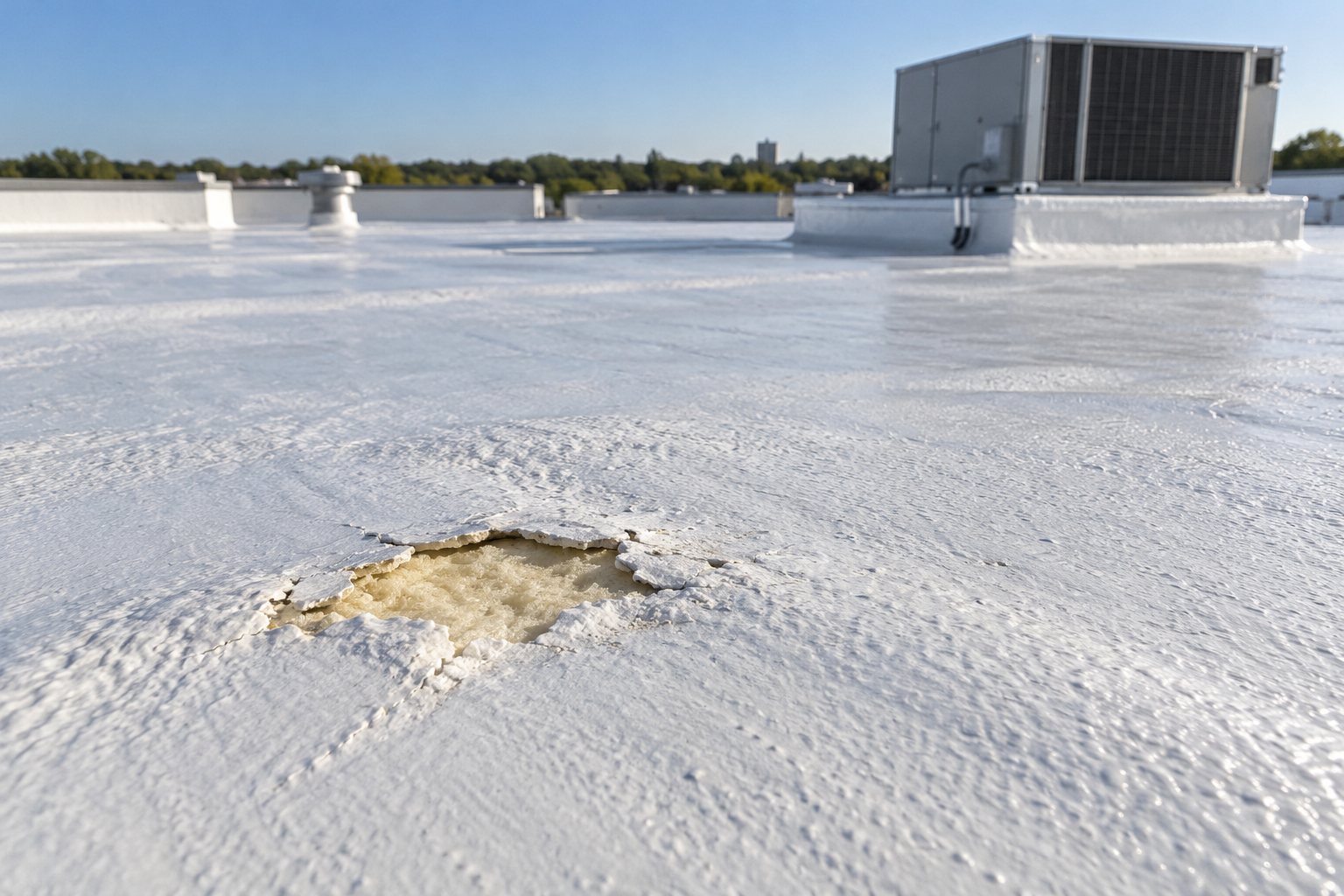
Address suspected tornado roof damage immediately by protecting people, restricting access to unsafe areas, and arranging professional assistance. Roof inspection and temporary protection should follow as soon as weather, site conditions, and structural safety allow. Permanent repairs require a documented assessment and an appropriate scope.
There is no universal number of hours that makes every tornado-damaged building safe to enter or repair. A few displaced roofing components and a partially collapsed roof require very different responses.
For North Texas property owners, the first decisions concern the building’s condition, the safety of occupants, and the type of assistance needed. The roofing work comes within that broader recovery process.
Showtime Exteriors provides residential and commercial roofing services across North Texas. This guide explains how to prioritize a tornado-damaged roof, coordinate assessment, and prepare for repair or replacement planning.
First, Determine Whether People Can Safely Remain Nearby
A damaged roof can be part of a larger building problem. Tornado effects may involve walls, connections, equipment, utility systems, and surrounding debris.
The American Red Cross advises people to leave damaged buildings carefully and stay out. Its tornado safety guidance also addresses hazards that remain after the storm. Red Cross
Call Emergency Services for Immediate Danger
Call 911 when people are injured, trapped, or facing an immediate threat. Keep clear of downed utility lines and report utility hazards to the appropriate emergency or utility service.
Do not enter a damaged building to retrieve photographs, roof records, equipment, or belongings.
Avoid Treating Roof Appearance as a Safety Clearance
A roof that appears mostly intact from the parking lot may still require evaluation. Conversely, visible roofing damage does not establish the condition of every structural component.
Appropriate professionals need to assess the building before access or occupancy decisions are made.
How Urgent Is the Roofing Response?
Contact qualified help promptly, describe what is visible from a safe location, and explain whether anyone remains affected.
The following priorities help frame that conversation.
Observed conditionInitial priorityCollapse, unstable walls, or trapped occupantsEmergency response and exclusion from the affected areaDowned lines or suspected utility damageKeep clear and contact the appropriate emergency or utility serviceOpen roof above occupied or sensitive areasUrgent assessment and protection planning once access is safeLoose panels or hanging roof-edge componentsRestrict the surrounding area and arrange professional evaluationSuspected damage without obvious openingsSchedule a documented assessmentTemporary protection already installedConfirm monitoring and permanent repair arrangements
These are response priorities, not guaranteed arrival or completion times.
What You Can Do Before the Contractor Arrives
Useful preparation can happen from a safe location.
Provide a Clear Description
When requesting assistance, share:
- Property address.
- Building type.
- Visible damage.
- Whether water is entering.
- Occupancy or access restrictions.
- Known utility concerns.
- Whether emergency or structural professionals are involved.
- A reliable contact number.
A commercial contractor also needs to know about sensitive equipment, inventory, tenants, and operations below the affected roof.
Photograph Only From Safe Locations
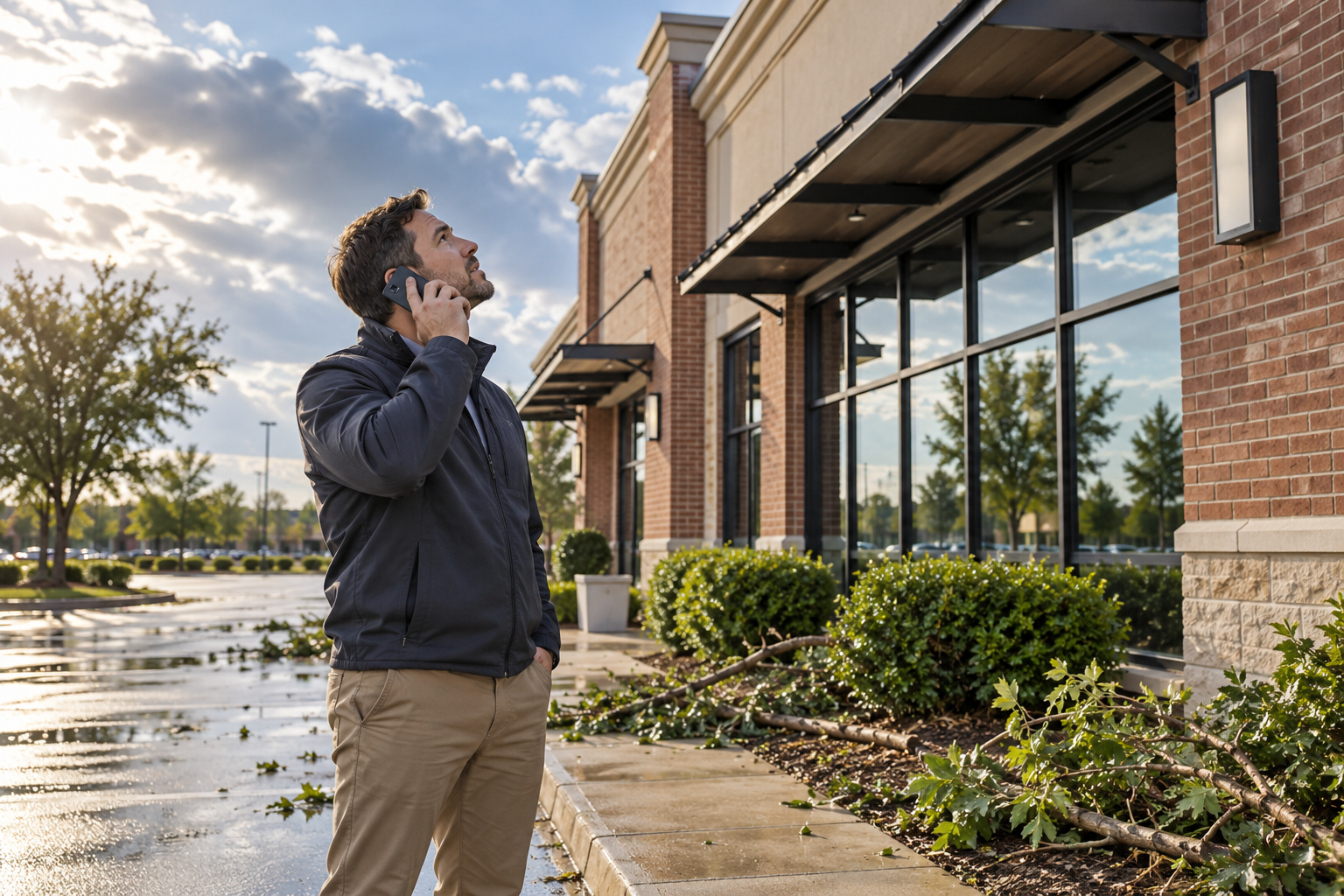
If conditions permit, record overview photographs from outside the restricted area. Keep original files and note when they were taken.
Do not approach unstable materials or enter the building to improve the documentation.
The Red Cross’s guidance on staying safe after a disaster emphasizes assessing surrounding hazards and keeping access clear for emergency vehicles. Red Cross
Locate Records Remotely
If available electronically, gather earlier roof reports, installation invoices, warranty documents, building plans, and maintenance history.
These can help the professionals understand the building without requiring unsafe entry.
Why Roof Access May Need to Wait
A roofing crew needs more than clear weather to begin work.
Damaged decking, unstable roof sections, displaced equipment, loose debris, and compromised access routes can affect whether an inspection or temporary covering is feasible.
Structural Assessment May Come First
Where structural damage is suspected, an appropriately qualified professional may need to evaluate the affected components before roofing access or work.
Ask who is responsible for that assessment and how its findings will be communicated.
A roofing inspection should not be presented as a substitute for a necessary structural evaluation.
Other Trades May Be Required
Mechanical equipment, electrical connections, gas lines, and plumbing can complicate access and repairs.
Establish who will assess, isolate, move, reconnect, and test affected systems. Clear responsibilities help avoid unsafe assumptions and repeated visits.
Temporary Protection: Urgent, but Property-Specific
Once safe access is established, temporary protection may help limit additional exposure.
The suitable method depends on the roof, damaged area, supporting conditions, weather, and access. A tarp is not automatically appropriate for every building or every opening.
GAF’s storm damage resources discuss inspection, documentation, and storm recovery measures, including temporary protection. gaf.com
Request a Written Emergency Scope
Before authorizing work, clarify what the contractor proposes to do.
The emergency scope should identify:
- Areas addressed.
- Proposed protection.
- Access assumptions.
- Known limitations.
- Price or pricing basis.
- Follow-up requirements.
An emergency agreement should remain understandable even when decisions need to happen quickly.
Temporary Protection Needs Monitoring
Ask how the measure should be monitored, who to contact if water enters, and when the permanent assessment will occur.
Showtime Exteriors’ guide to emergency roof tarp follow-up explains why temporary protection requires further planning.
What Should the Professional Roof Assessment Cover?
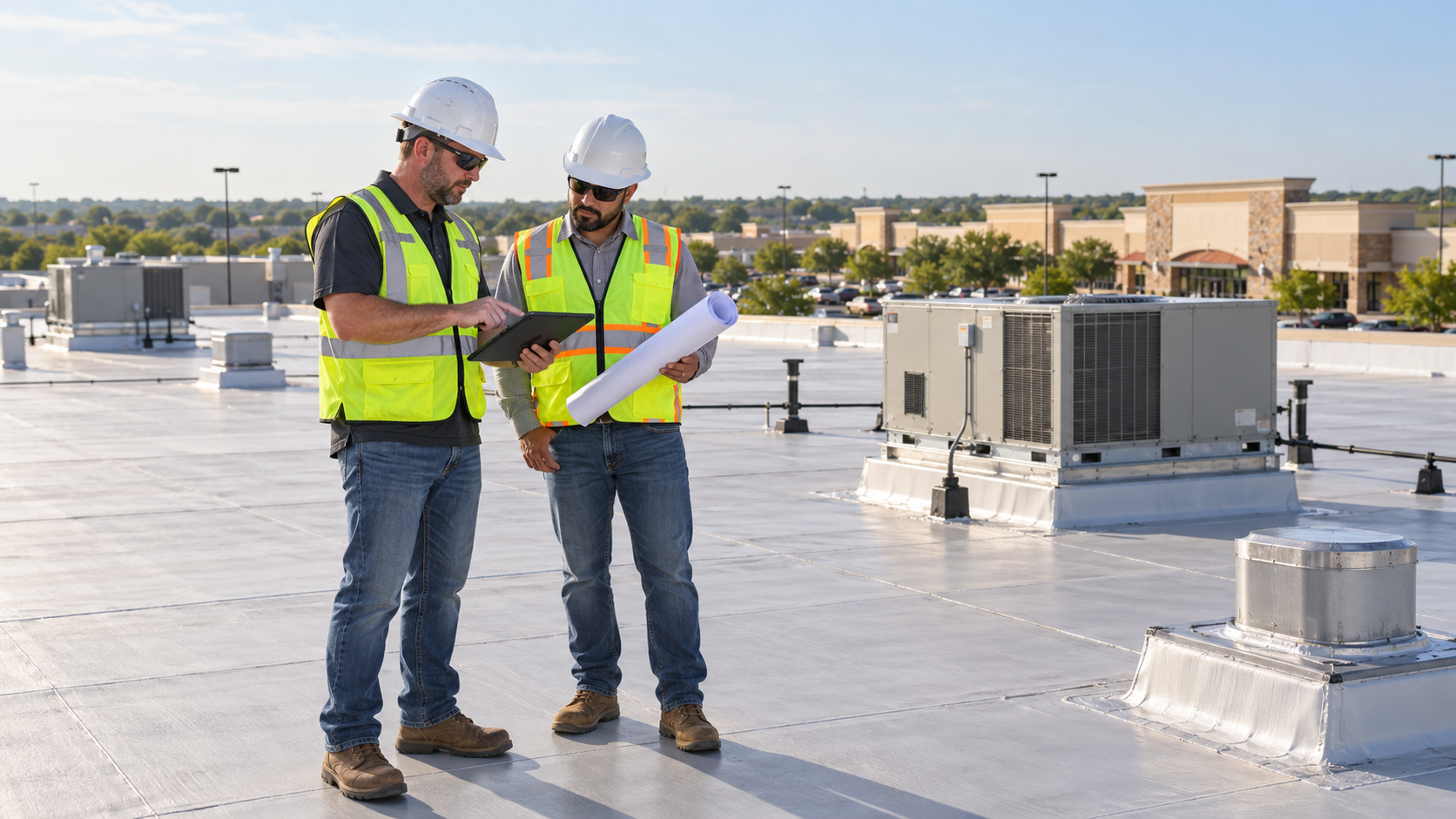
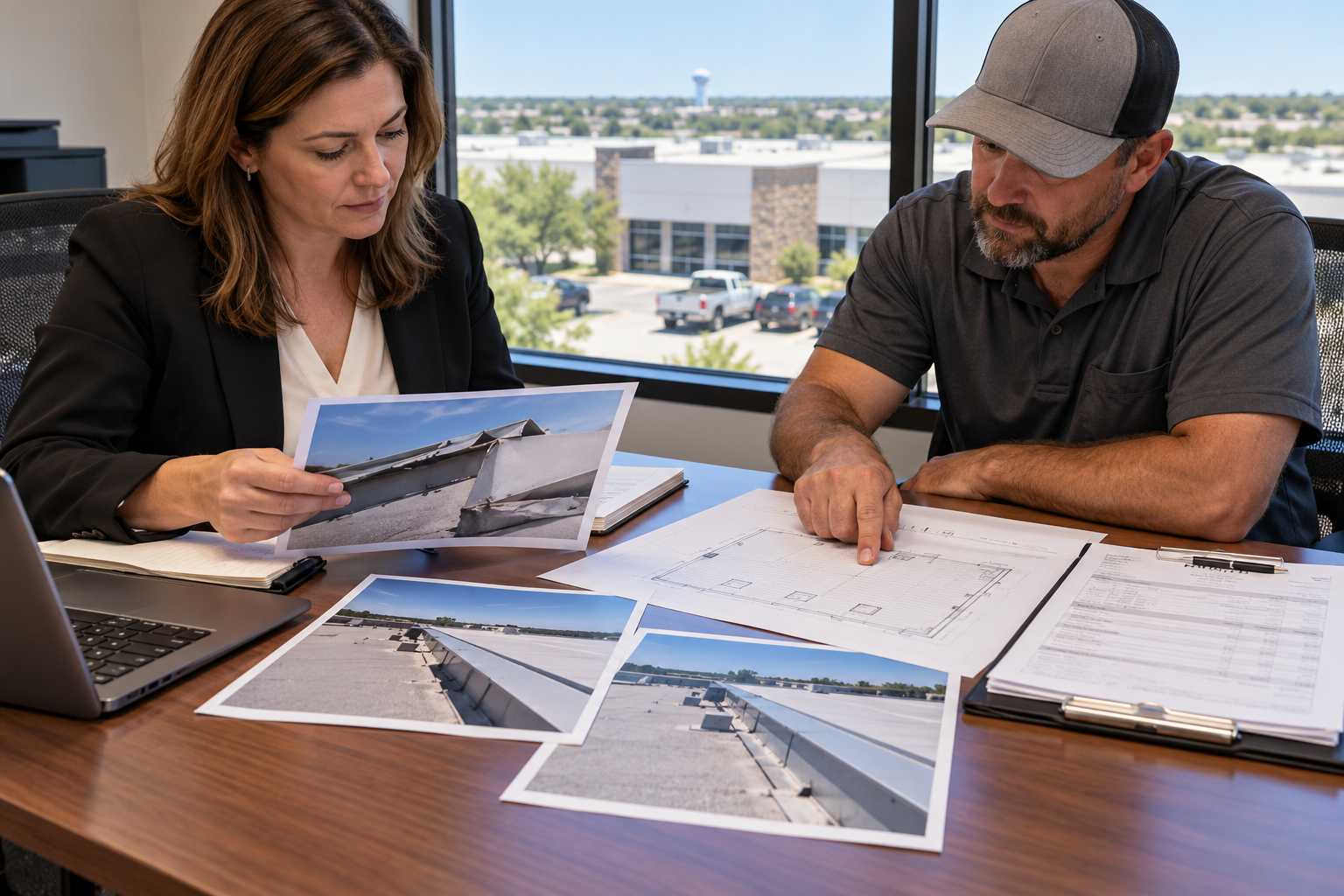
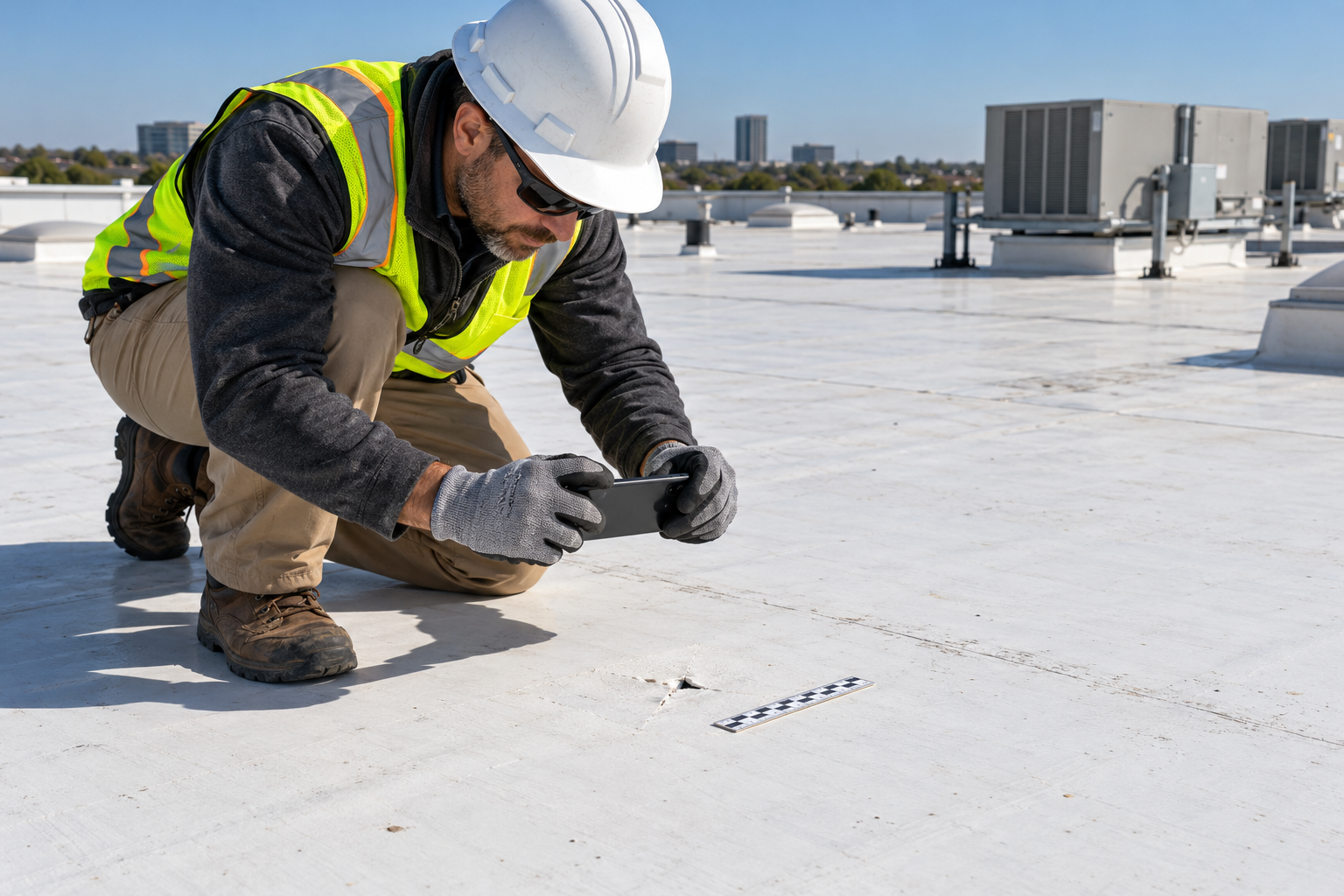
Once access is appropriate, the assessment should document both the damaged areas and relevant surrounding conditions.
Identify the Existing Roof
The contractor should establish the roof covering, assembly information available, installation history, and earlier repairs.
For a commercial building, identify separate roof sections and additions.
Evaluate Accessible Components
Depending on the system, the inspection may involve:
- Roof covering.
- Seams and connections.
- Flashing.
- Perimeter metal.
- Penetrations.
- Equipment curbs.
- Drainage.
- Accessible deck conditions.
- Interior evidence.
Record Limitations
The report should state which areas could not be inspected and why.
If concealed components remain uncertain, ask whether additional investigation is necessary and what question it would answer.
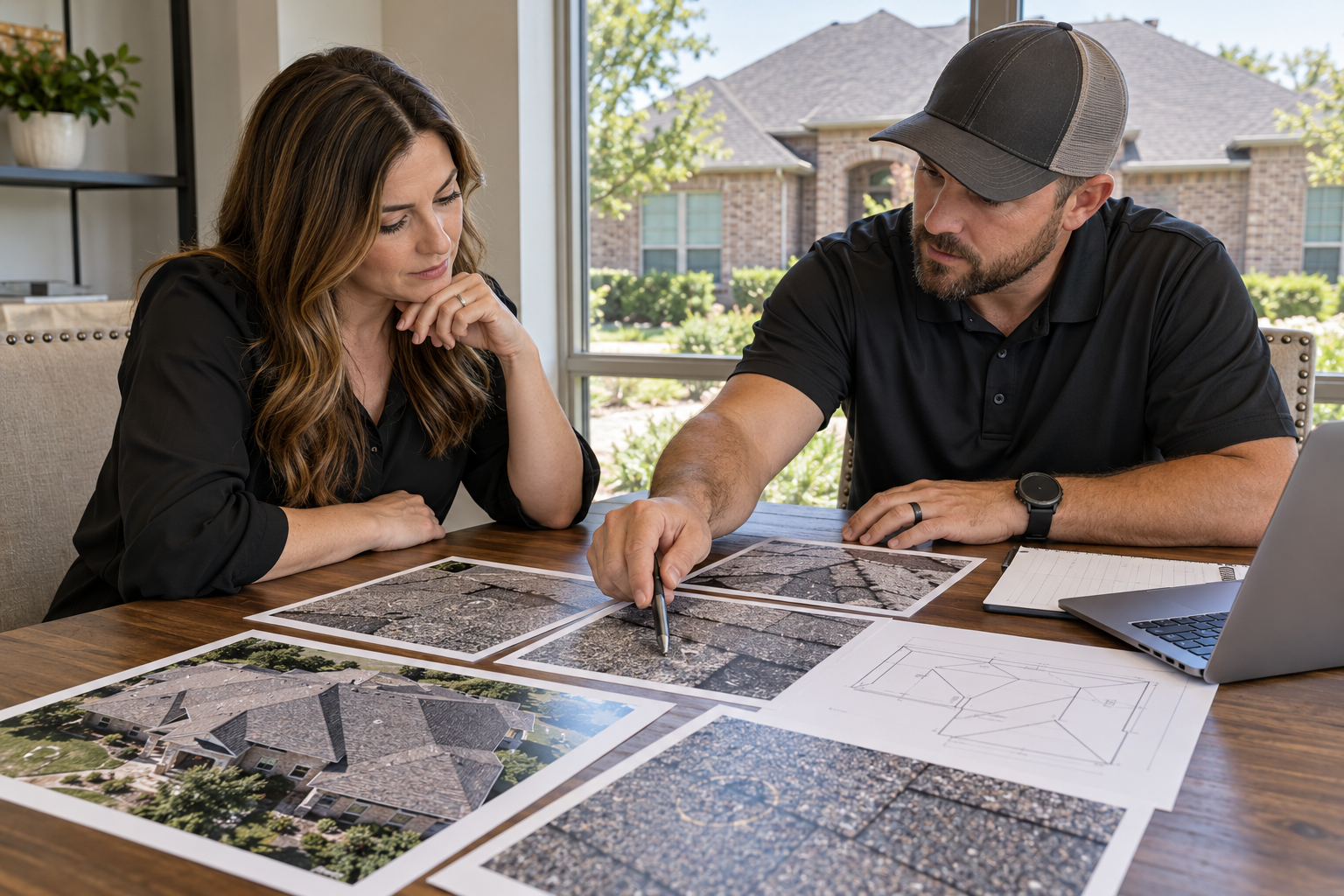
Showtime Exteriors’ guide to commercial roof inspection report evidence explains how photographs, roof plans, findings, and limitations support project decisions.
Does Tornado Damage Automatically Require Replacement?
No single label determines the roofing scope.
Some buildings may have localized roof damage that supports defined repairs. Others may require section replacement or a broader reconstruction project.
GAF’s storm restoration guidance recommends professional inspection to establish the roof’s condition and the need for restoration. gaf.com
When Repair May Be Considered
Ask whether damage is limited, surrounding materials remain serviceable, and a compatible repair can address the identified problem.
The proposal should explain the work’s boundaries and remaining limitations.
When Broader Replacement Needs Evaluation
More extensive work may be necessary when the assessment identifies widespread damage, compromised supporting materials, significant attachment concerns, or conditions beyond a localized repair.
Showtime Exteriors’ discussion of commercial roof retrofit versus replacement provides additional context for evaluating larger roofing projects after the underlying conditions are understood.
How Soon Can Permanent Repairs Begin?
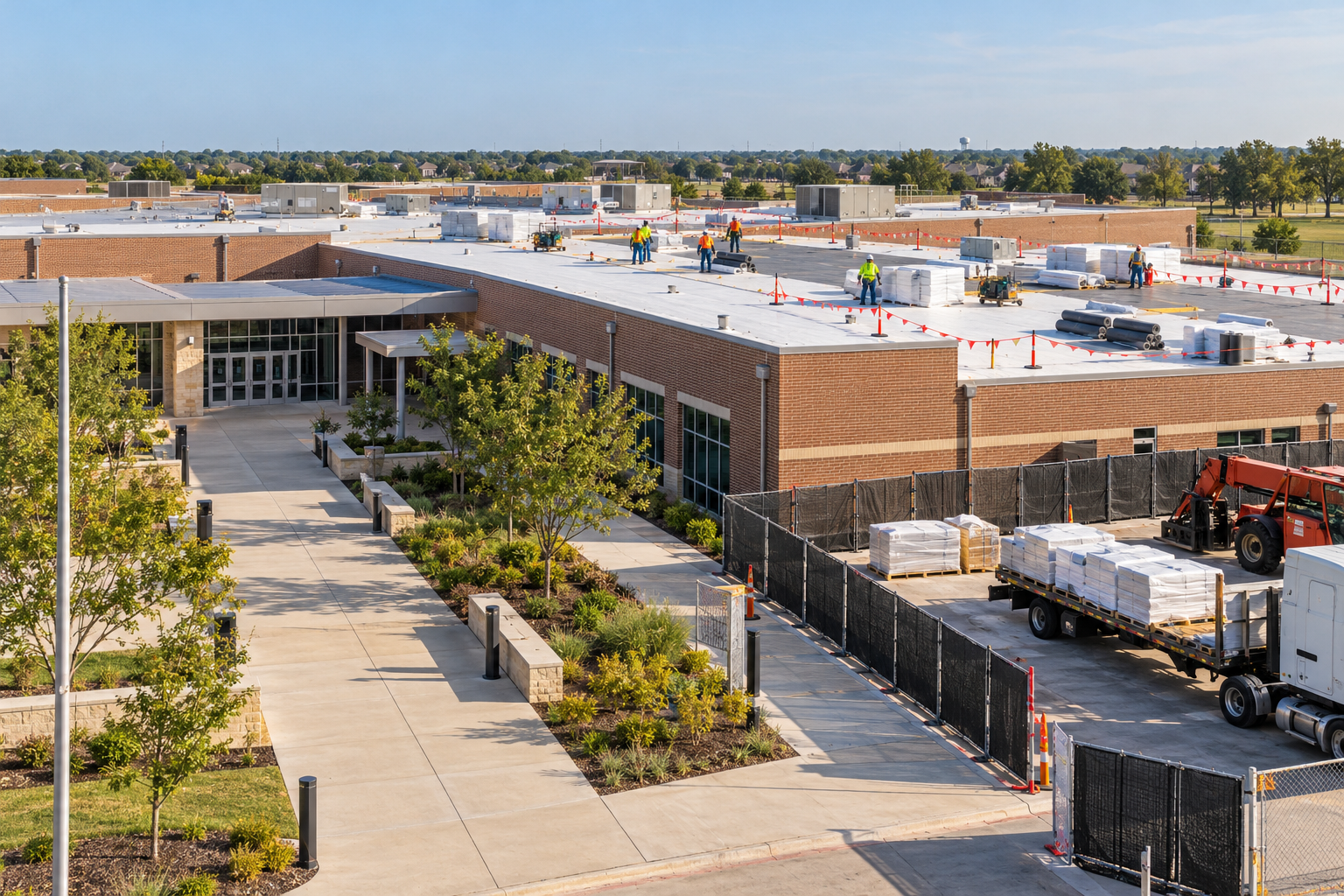
Permanent work should follow a defined scope and the necessary coordination.
Factors that can influence timing include:
- Safe access.
- Structural findings.
- Additional testing.
- Required approvals.
- Material availability.
- Equipment coordination.
- Weather.
- Interior protection.
- Occupancy restrictions.
- Contractor availability.
Ask for a schedule that identifies dependencies rather than a completion promise made before assessment.
Distinguish Mobilization From Completion
A contractor may be able to assess the site or install temporary protection before permanent materials and crews are ready.
Ask what will happen during each stage and what remains exposed or unresolved between visits.
Plan Weather Protection During Construction
Discuss how the contractor will manage opened areas, work boundaries, and changing forecasts.
The construction plan should account for the property’s condition throughout the project.
Document the Recovery Process
Keep one organized file for the property.
Include:
- Event and discovery timeline.
- Original photographs.
- Emergency assistance records.
- Structural assessments.
- Roof inspection reports.
- Temporary protection invoices.
- Repair estimates.
- Approved changes.
- Completion photographs.
- Warranty documents.
- Relevant correspondence.
The Insurance Information Institute’s tornado recovery guidance discusses documenting damage, arranging temporary repairs, keeping receipts, and avoiding rushed repair contracts. Coverage and reimbursement depend on the policy. Triple-I®
Contact Your Insurer Promptly
Report the situation to your insurer or agent and ask about policy-specific requirements.
Do not delay necessary emergency assistance while collecting a perfect evidence package. Ask how to document urgent work and provide additional findings afterward.
The Insurance Information Institute’s guide to filing a homeowners claim explains contacting the insurer and preparing information for the adjuster. Commercial owners should follow their own policy and insurer’s process. www.iii.org
A roofing contractor can document physical conditions and prepare construction estimates. That work does not guarantee coverage or claim approval.
Commercial Properties Need a Recovery Coordinator
For businesses, roofing work may need to fit within a broader recovery plan.
Assign an owner representative to coordinate the contractor, structural professionals, other trades, insurer, and affected tenants.
Identify Operational Priorities
Explain which areas contain sensitive equipment or inventory and which functions must be restored first.
Do not assume that a temporarily covered roof makes the building ready for occupancy or business operations. Appropriate assessments and approvals still need to be addressed.
Establish Communication Responsibilities
Decide who can authorize work, receive updates, notify tenants, and approve changes.
Showtime Exteriors’ commercial roofing services include assessment and project planning for North Texas properties.
Questions to Ask a Roofing Contractor After Tornado Damage
- What must be evaluated before roof access?
- Does another professional need to assess structural concerns?
- What temporary protection is feasible?
- What limitations will remain?
- Which areas will the inspection cover?
- How will findings be documented?
- What supports repair or replacement?
- How are additional findings priced and approved?
- Who coordinates other trades?
- What determines the permanent work schedule?
Frequently Asked Questions
Should I call a roofer immediately after tornado damage?
Contact appropriate help promptly, with emergency services first when people face immediate danger. Roofing access must wait until conditions permit safe assessment.
Can I enter to collect belongings?
The Red Cross advises staying out of damaged buildings. Do not enter solely to retrieve property or documents.
Should every damaged roof receive a tarp?
No. The suitable temporary measure depends on the roof and supporting conditions. A professional should evaluate feasibility.
Can the roof be repaired within 24 hours?
There is no universal repair deadline. Safety, structural findings, scope, materials, weather, and coordination determine the schedule.
Does tornado damage always mean full replacement?
No. The scope should follow documented findings and any necessary structural assessment.
Is temporary protection enough to reopen a business?
Temporary roofing protection alone does not establish that a building is safe to occupy or operate.
Arrange Roofing Assistance in North Texas
A tornado-damaged roof needs prompt attention within a coordinated recovery process. Protect people first, establish safe access, document findings, and develop a permanent scope supported by the assessment.
Showtime Exteriors provides roofing inspection, repair, and replacement services across North Texas.
Call 817-400-ROOF (7663) or contact Showtime Exteriors to discuss roofing assessment and recovery planning once emergency conditions have been addressed.