



How Much Does Built-Up Roofing Cost for a Commercial Building in Texas?
Understand commercial built-up roofing costs in Texas, including tear-off, gravel removal, insulation, repairs, and replacement alternatives.

The cost of built-up roofing depends on what the project includes. Installing the roofing membrane is a different expense from removing an aging gravel roof, repairing concealed damage, replacing insulation, and rebuilding the complete assembly.
For preliminary context, one Texas contractor publishes approximately $7.50–$10 per square foot for installed built-up roofing components and approximately $14–$20 per square foot for a broader commercial tear-off and replacement scope. These are that contractor’s published benchmarks, not statewide averages or a Showtime Exteriors quote. Actual projects can fall outside those ranges. ARP Roofing
For an owner managing an older commercial building, the important question is what it will cost to address the existing roof’s condition and provide a suitable replacement.
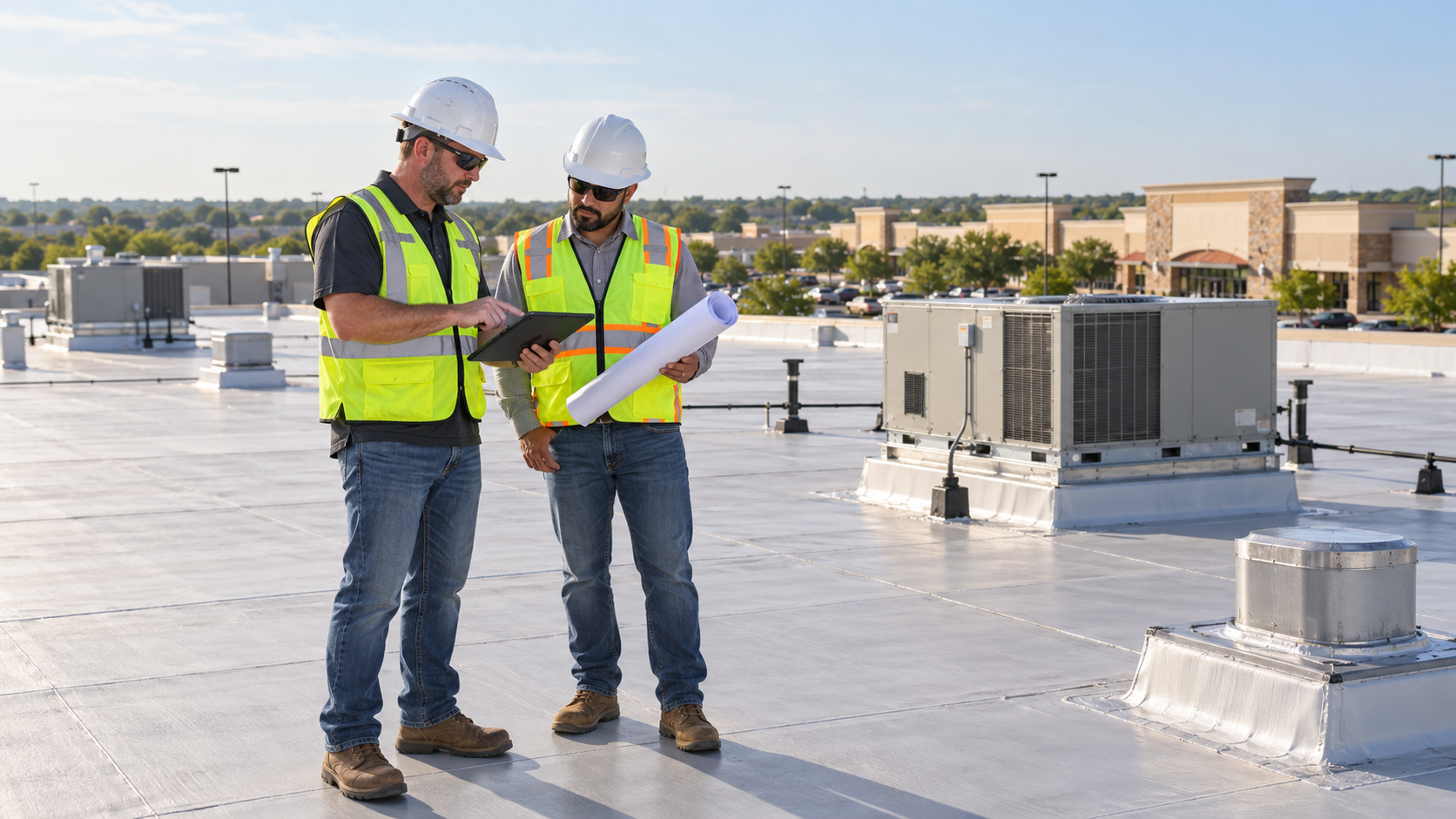
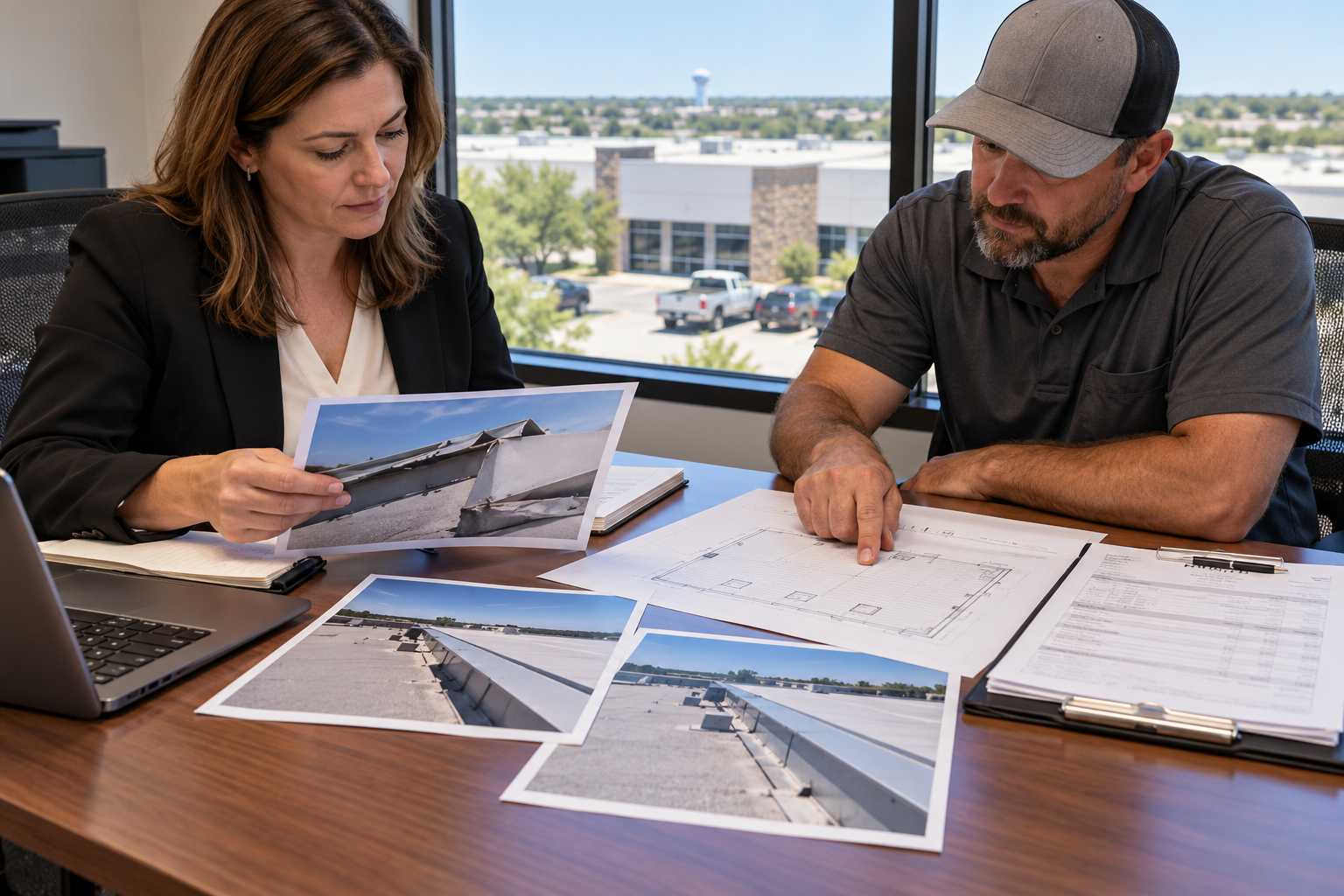
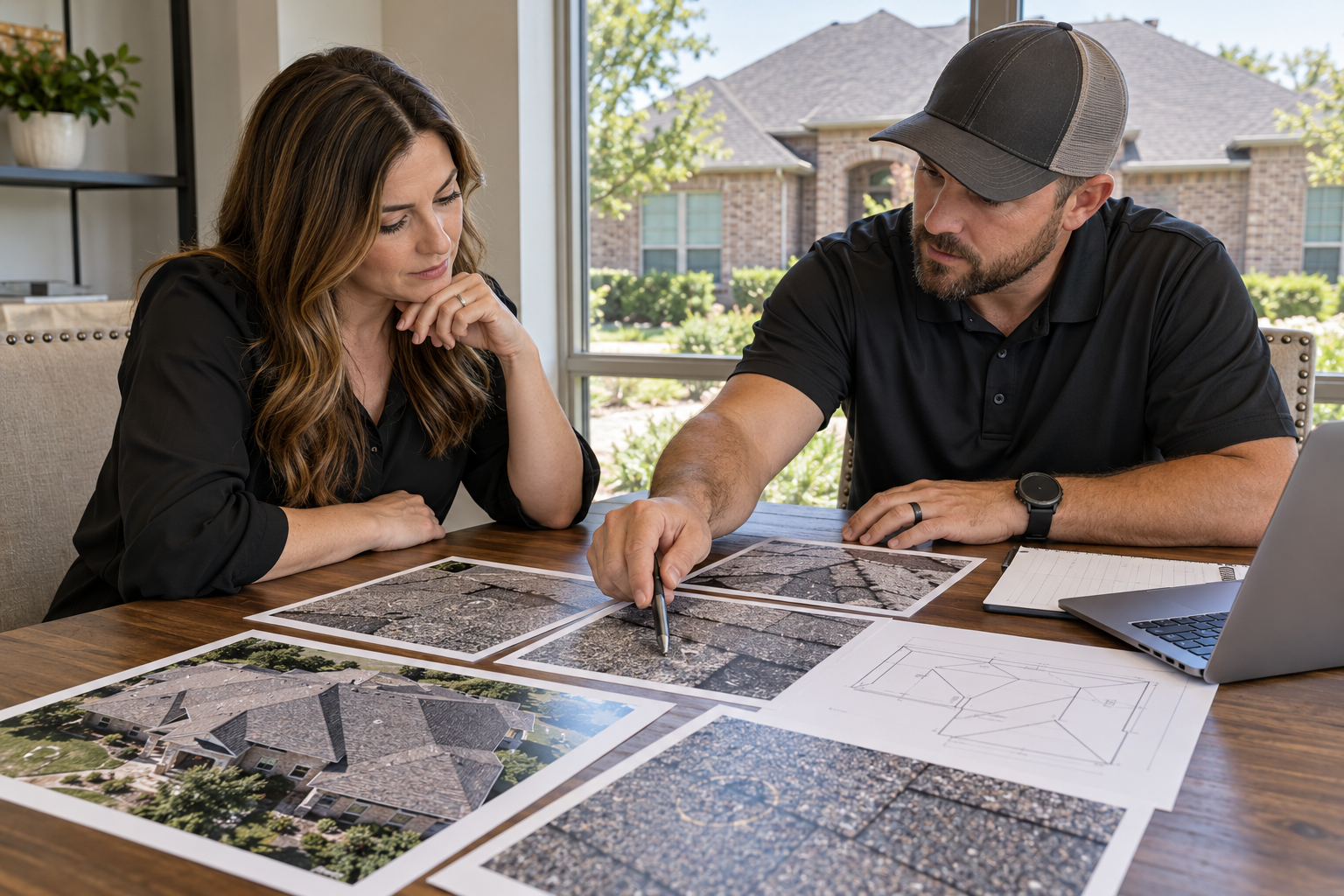
That requires measured roof quantities, a documented inspection, and a proposal that clearly identifies what will be removed, retained, repaired, and installed.
Commercial Built-Up Roofing Cost: Preliminary Examples
ARP Roofing’s published Texas BUR pricing distinguishes its membrane installation range from a broader tear-off and replacement benchmark.
Using those figures, the following calculations illustrate costs based on measured roof area. The columns represent different scopes and should not be added together. ARP Roofing
Measured roof areaBUR installation illustration at $7.50–$10/sq. ft.Broader tear-off and replacement illustration at $14–$20/sq. ft.5,000 sq. ft.$37,500–$50,000$70,000–$100,00010,000 sq. ft.$75,000–$100,000$140,000–$200,00020,000 sq. ft.$150,000–$200,000$280,000–$400,00030,000 sq. ft.$225,000–$300,000$420,000–$600,000
These examples are starting points for discussion. They do not establish the price of your building’s roof.
Before using any published number, confirm whether it includes insulation, cover board, demolition, disposal, deck repairs, drainage changes, flashing, and equipment coordination.
Showtime Exteriors provides commercial roofing services throughout Texas, helping owners evaluate the existing assembly before selecting a repair or replacement scope.
What Is Built-Up Roofing?
Built-up roofing, often abbreviated BUR, is an asphaltic roof assembled from multiple layers of reinforcing sheets and bitumen.
GAF’s explanation of built-up roofing describes the layered construction and different surfacing arrangements, including cap sheets and aggregate surfacing. gaf.com
For owners assessing an aging gravel-surfaced roof, identifying the assembly is only the beginning. The inspection also needs to establish the condition of the roofing beneath the surface and the materials below it.
Ask the contractor:
- What assembly is present?
- How many roof systems have accumulated?
- Which materials are wet or deteriorated?
- What inspection access or sampling is necessary?
- Can any existing materials appropriately remain?
- What alternatives should be compared?
The presence of gravel does not establish that the roof is sound or that installing another gravel-surfaced system is the appropriate next investment.
What Drives Built-Up Roof Replacement Cost?
1. Actual Roof Area
Commercial roofing should be priced from measured roof quantities.
A building’s rentable area, total interior floor area, and roof surface area are not interchangeable. Separate additions, entrance canopies, and covered loading areas may require their own quantities.
Ask for a marked roof plan showing the areas included in the estimate. If one section is excluded, the proposal should identify it clearly.
A reliable measurement also helps owners compare bids. Two prices are difficult to evaluate if the contractors have assumed different roof areas.
2. Removal of the Existing Assembly
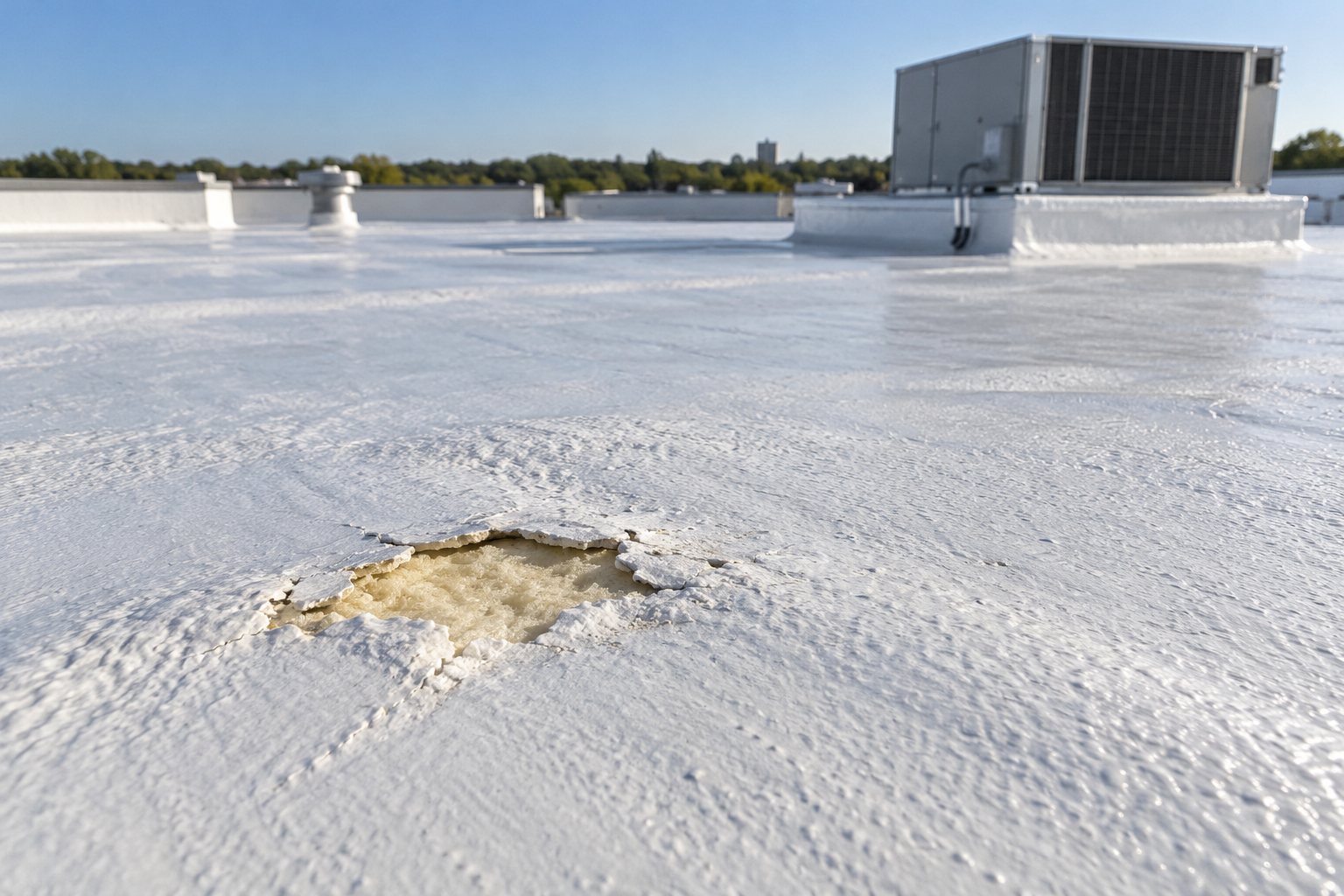
An aging BUR roof may require removal of surfacing, multiple roofing layers, insulation, and other components.
The proposal should identify the anticipated removal depth and explain how that assumption was established.
Ask whether the demolition price includes:
- Gravel handling and removal.
- Existing membrane layers.
- Unsuitable insulation and cover board.
- Existing flashing and perimeter components.
- Loading, transportation, and disposal.
- Protection during the removal process.
A low membrane installation price does not answer those questions.
3. Concealed Conditions
Materials beneath the visible surface may require investigation before the scope can be finalized.
Ask what the contractor knows, what remains uncertain, and whether additional testing or sampling would reduce that uncertainty.
Where concealed conditions cannot be fully established before demolition, the contract should explain how additional work will be documented and approved.
4. Deck Repairs
The deck’s condition affects both the work and the replacement design.
Request a process for handling unexpected deterioration. Depending on the project, this may include agreed unit prices for defined repairs, photographs, quantity records, and written authorization.
Structural concerns may require a qualified design professional. The roofing proposal should identify when that additional evaluation is needed.
Insulation and Cover Board Affect the Total
A commercial roof estimate should describe more than its surface material.
Review the proposed insulation, cover board, attachment, and treatment of existing materials. If tapered insulation is included, ask where it will be installed and what drainage concern it is intended to address.
The specification should make clear:
- Which existing components will remain.
- Which components will be removed.
- Proposed insulation type and thickness.
- Cover board product and scope.
- Treatment at roof edges and equipment curbs.
- Attachment requirements.
For a technical reference, the Johns Manville Built-Up Roofing Application Guide provides manufacturer guidance for its BUR systems. The requirements of the selected assembly should govern the project.
Ask each bidder to provide the same level of assembly detail. Otherwise, a price comparison may conceal significant differences in what the owner is purchasing.
Drainage Work Can Change the Budget
A replacement project should address known drainage concerns.
Ask whether the proposal simply replaces roofing around existing outlets or includes changes to improve drainage. Potential work should be identified and priced rather than left as an assumption.
GAF’s discussion of commercial roof drain maintenance explains why keeping drainage systems functioning is part of commercial roof care. gaf.com
Have the contractor document:
- Drain and scupper locations.
- Observed obstructions or deterioration.
- Areas with recurring water accumulation.
- Proposed drainage-related work.
- Any need for additional design input.
A proposal should explain how the new assembly connects to the drainage system and what remains outside the contractor’s scope.
Why Aging Gravel Roofs Need a Clear Inspection Plan
Owners should request more than overview photographs of a gravel-covered surface.
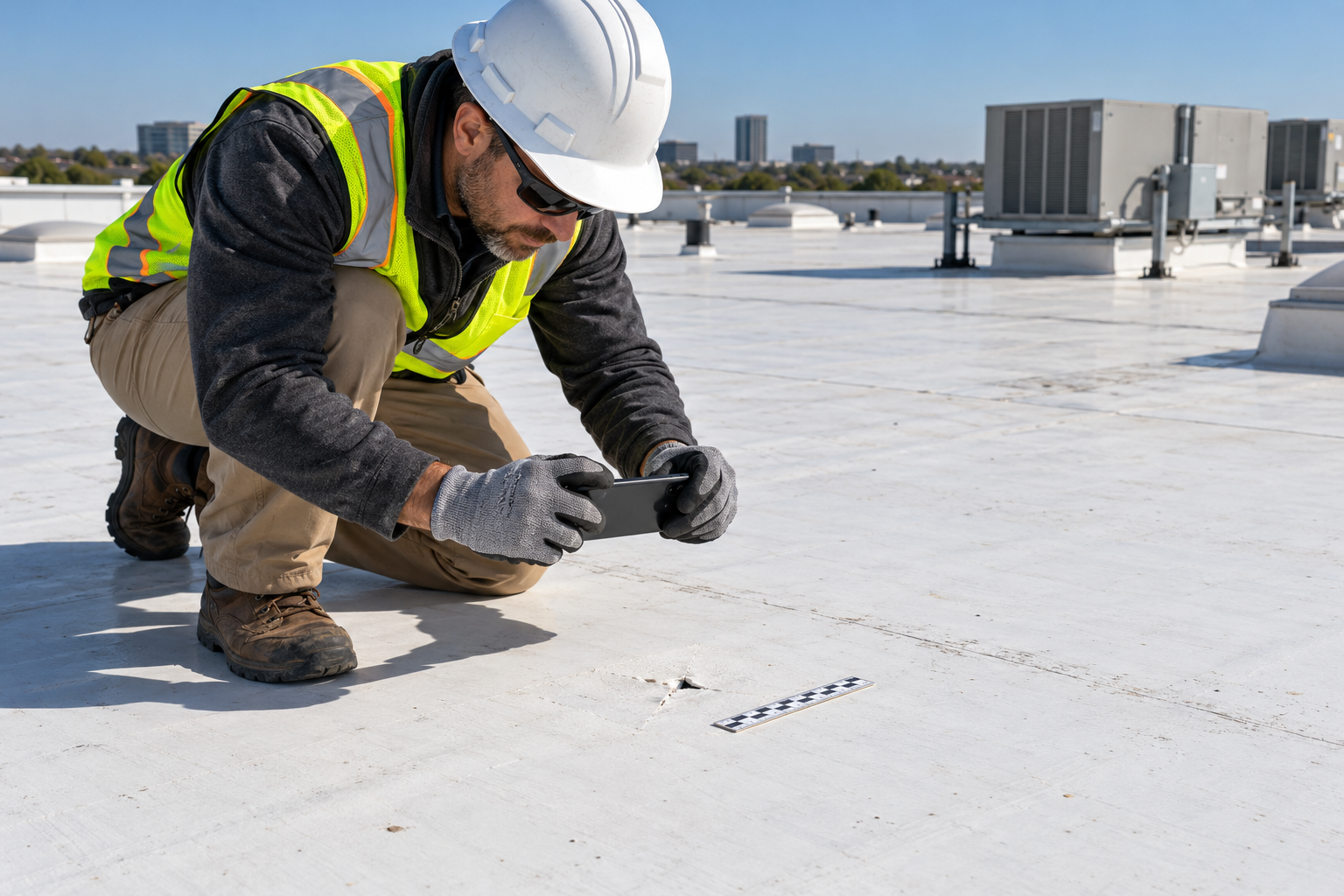
Ask how the contractor will evaluate the underlying membrane, flashing, insulation, and deck. The report should state which areas were directly observed and which remained concealed.
Useful documentation includes:
- A labeled roof plan.
- Overview and close-up photographs.
- Interior leak locations.
- Previous repair history.
- Findings from authorized testing.
- Confirmed conditions and remaining uncertainties.
- Recommended priorities.
Showtime Exteriors’ guide to commercial roof inspection report evidence explains how that information supports budgeting and project decisions.
If the roof has received repeated repairs, collect the invoices before the inspection. Knowing where repairs occurred and whether leaks returned can help focus the investigation.
Can You Recover an Existing Built-Up Roof?
A recover may be worth evaluating when the existing assembly is suitable for retention.
GAF’s commercial roof recover guidance describes how eligible projects can retain portions of an existing assembly, potentially reducing demolition and waste. GAF
Eligibility needs to be established before the owner treats recover as a lower-cost option.
Ask the contractor to explain:
- Which materials will remain.
- What investigation supports retaining them.
- How unsuitable areas will be removed.
- How attachment will be achieved.
- How drainage and flashing will be handled.
- What manufacturer requirements apply.
Showtime Exteriors’ comparison of commercial roof retrofit versus replacement provides a framework for discussing those options.
A recover proposal should identify a complete, appropriate assembly and the evidence supporting it.
Should You Replace BUR With a Different Roofing System?
The replacement decision should be evaluated separately from identifying the existing roof.
An owner replacing an aging gravel-surfaced assembly can ask for alternatives appropriate to the building. Potential options may include TPO, PVC, EPDM, modified bitumen, or another designed solution.
Showtime Exteriors’ guide to commercial roofing materials for Texas buildings can help organize that discussion.
Request comparisons based on:
- The complete installed assembly.
- Removal and preparation requirements.
- Drainage treatment.
- Equipment and penetration details.
- Construction logistics.
- Maintenance requirements.
- Available warranty terms.
Do not assume a different surface material automatically resolves problems below it. Each proposal should explain how the existing defects will be addressed.
Installation Logistics Also Affect Cost
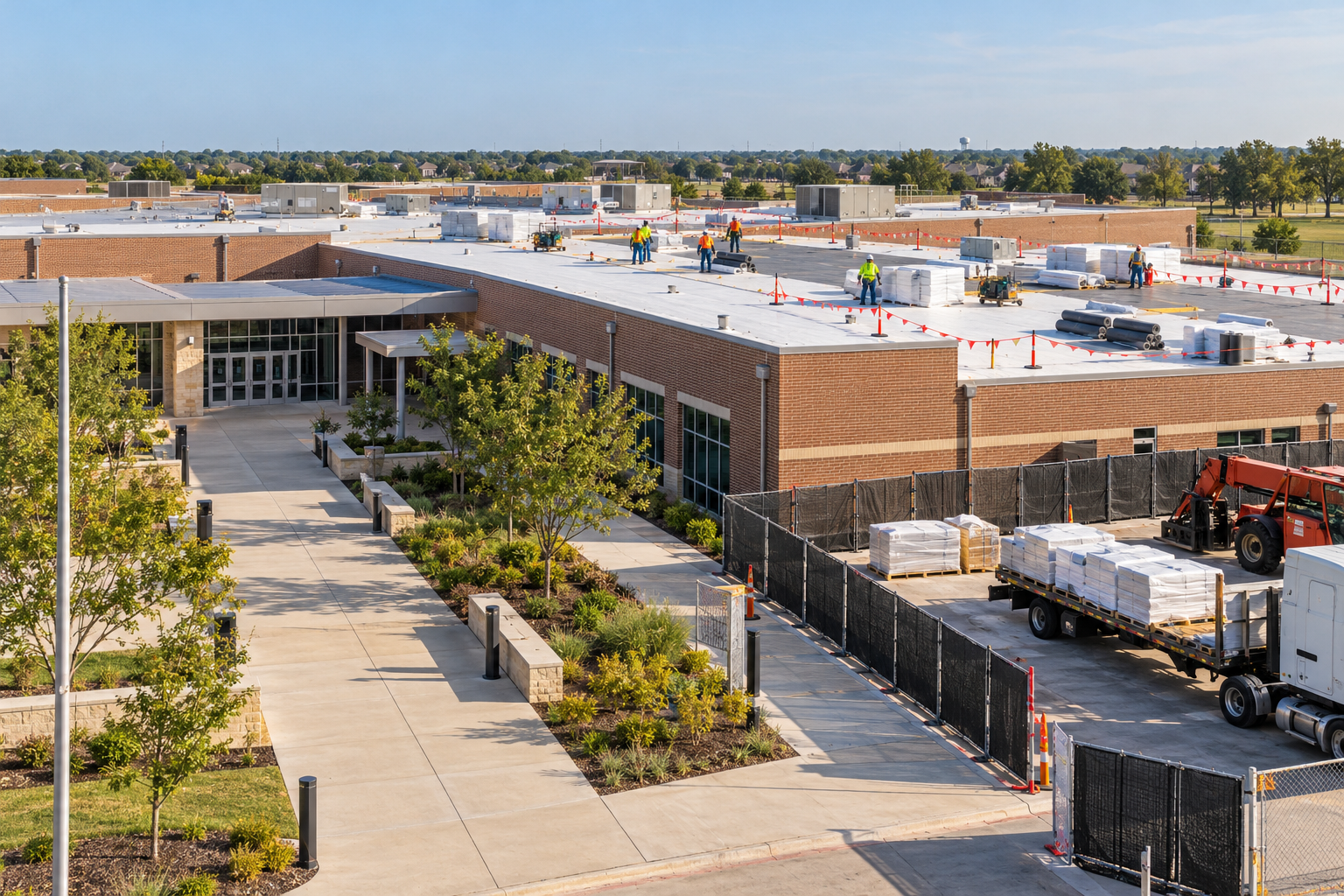
Commercial buildings often remain occupied during roofing work. The owner and contractor need an agreed plan for access, staging, and communication.
Building Access
Confirm where materials, dumpsters, and equipment will be located. Identify affected parking spaces, delivery areas, and pedestrian routes.
Restricted access can change how the contractor handles materials and schedules the work.
Occupant Coordination
Provide information about business hours, sensitive operations, tenant schedules, and rooftop equipment service requirements.
Ask the contractor to describe any installation-related restrictions and how they will be communicated.
Equipment Work
The contract should state whether lifting, disconnecting, reconnecting, or modifying rooftop equipment is included.
Where separate trades are required, identify who coordinates them and who pays for their work.
Weather Planning
Ask how the contractor will phase demolition and maintain temporary protection. The proposal should describe responsibilities if weather changes affect the schedule.
These arrangements should be concrete before mobilization.
A Hypothetical Commercial Roof Budget
Consider a property with 15,000 square feet of measured roof area.
Suppose a contractor proposes a hypothetical price of $17 per square foot for a defined tear-off and replacement scope:
15,000 × $17 = $255,000
The owner might also need to budget for specifically excluded work.
Hypothetical componentIllustrative amountDefined base roofing scope$255,000Separately scoped drainage work$12,000Separate mechanical coordination$6,000Owner-held contingency$20,000Total planning budget$293,000
These figures are invented to demonstrate budgeting. They are not typical allowances or a Showtime Exteriors estimate.
Before adding allowances, confirm that the base proposal does not already include the same work. A contingency should reflect identified uncertainty and remain separate from the contractor’s agreed scope.
How to Compare Built-Up Roofing Estimates
Ask each contractor to complete a consistent scope comparison.
ItemWhat to verifyMeasurementsIncluded roof sections and quantitiesDemolitionRemoval depth, gravel handling, and disposalConcealed conditionsInvestigation findings and limitationsDeck workIncluded repairs and additional-work processInsulationProduct, thickness, taper, and retained materialsRoof assemblyExact products and installation scopeFlashingWalls, penetrations, curbs, and edgesDrainageIncluded repairs or modificationsEquipmentTrade responsibilities and exclusionsWarrantyCoverage, requirements, and documentationCloseoutFinal inspection, photographs, and maintenance information
If proposals differ substantially, ask the contractors to explain the scope differences before negotiating price.
Review Warranty Terms Before Authorizing Work
A warranty term alone does not explain the protection being offered.
Request the proposed document and review what it covers, who issues it, what inspections are required, and what maintenance obligations apply.
Johns Manville’s technical and warranty services provide information about its manufacturer programs and project qualification process. Johns Manville
Ask your contractor to distinguish manufacturer coverage from workmanship coverage and identify any separate responsibilities.
Keep the issued documents with the completed project records.
Frequently Asked Questions
How much does a 10,000-square-foot built-up roof cost?
Using the published benchmarks discussed above, 10,000 square feet produces an illustrative $75,000–$100,000 for BUR installation scope or $140,000–$200,000 for broader tear-off and replacement scope. These are different project categories, and neither is a property-specific estimate.
Does a BUR installation price include removing my gravel roof?
Do not assume it does. The written proposal should expressly include surfacing removal, roofing layers, disposal, and any other demolition work.
Should an old gravel roof be patched again?
That depends on the documented condition and repair history. Ask what the proposed repair addresses, what remains unresolved, and when a broader project should be reconsidered.
Can a different roof be installed over existing BUR?
It may be possible where the existing assembly and proposed system meet project requirements. Request an assessment supporting the retention of existing materials.
Does replacing a gravel roof guarantee lower insurance costs?
No. Obtain property-specific information from your insurer or broker before making assumptions about eligibility, premiums, deductibles, or coverage.
How can I make estimates more accurate?
Provide roof records, leak history, access information, and operating schedules. Authorize appropriate investigation and request a clearly defined scope with documented quantities.
Request a Commercial Roof Assessment in Texas
The useful number is the cost of addressing your building’s actual roof condition.
For an aging built-up roof, start with measured quantities and documented findings. Then compare removal requirements, assembly options, drainage work, logistics, and warranties.
Showtime Exteriors offers roofing inspection, repair, and replacement services for Texas property owners.
Contact Showtime Exteriors to request a commercial roof assessment and a property-specific proposal.
Call 817-400-ROOF (7663).