


Is TPO Roofing Right for Texas Heat, Hail, and Wind?
A practical commercial property owner’s guide to membrane selection, assembly design, inspection, maintenance, and insurance documentation
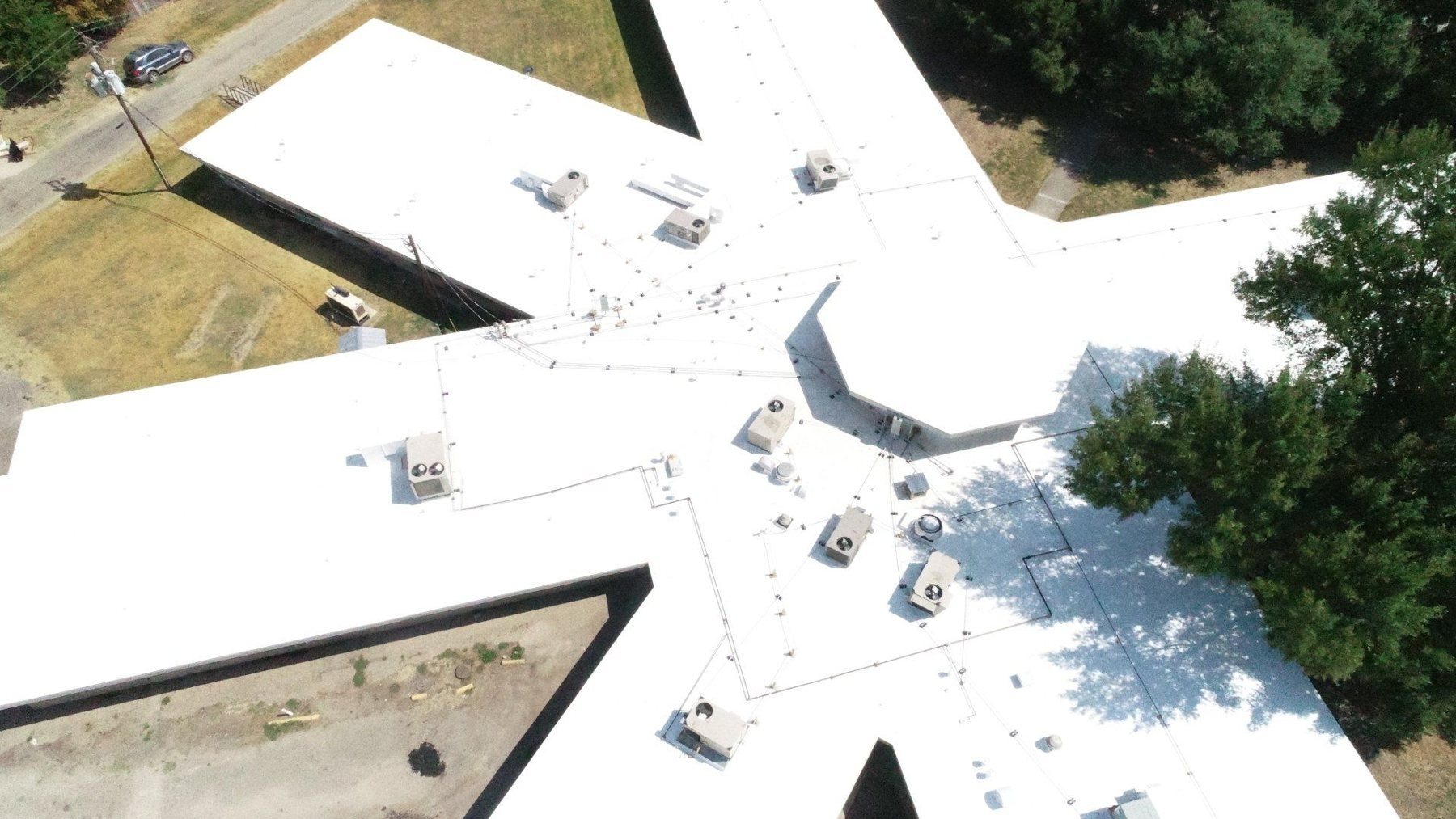
Short answer: TPO can be a strong option for many Texas commercial buildings, but the membrane name alone does not make a roof ready for extreme heat, hail, or wind. Performance depends on the complete assembly: substrate, insulation, cover board, membrane thickness and reinforcement, attachment method, weld quality, perimeter and corner enhancement, edge metal, drainage, rooftop traffic controls, installation quality, and maintenance. A building-specific evaluation is required.
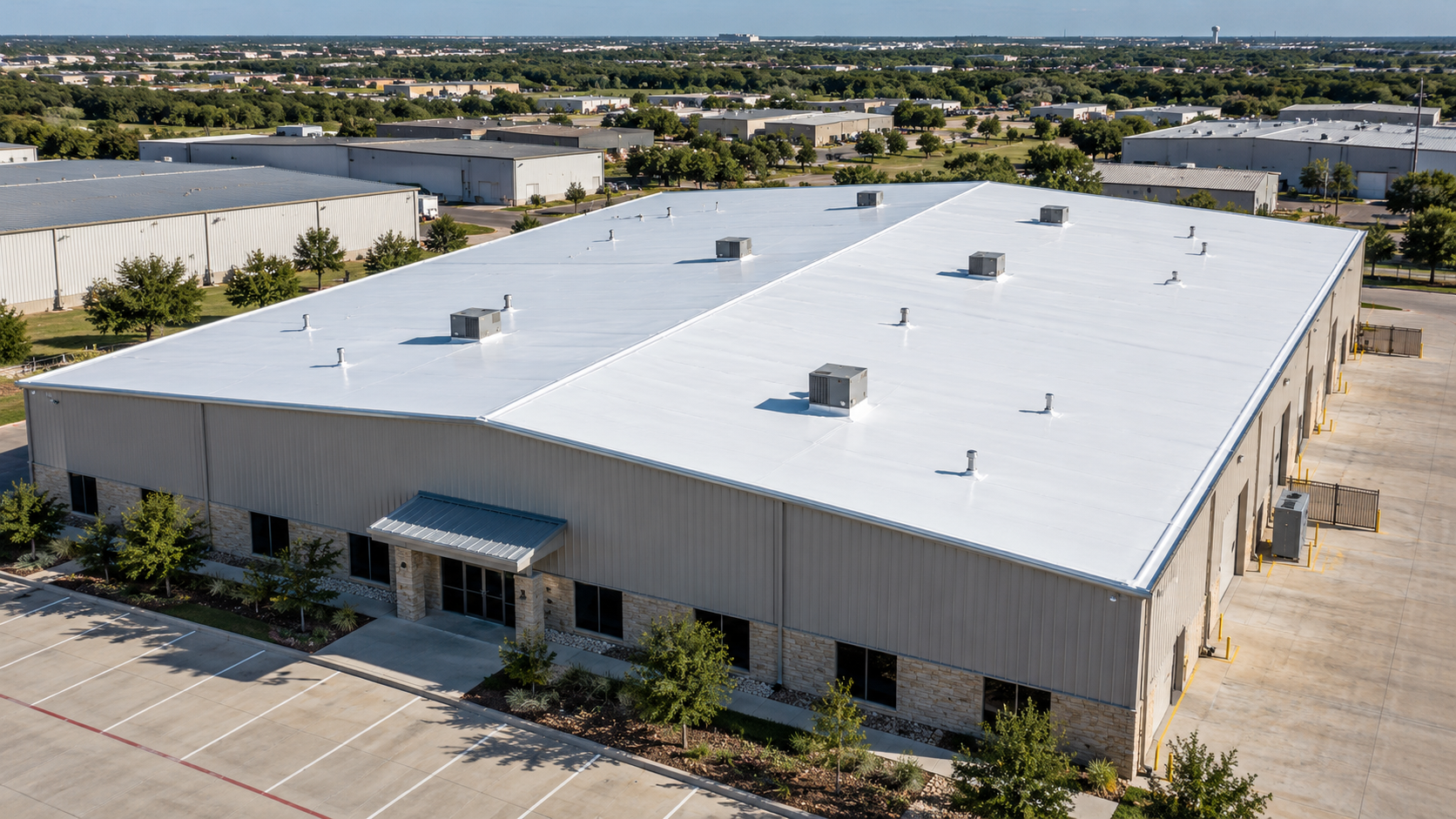
White TPO is attractive in North Texas because its surface can reflect a meaningful portion of solar energy and its seams are heat welded. Those characteristics may support summer roof-temperature and energy goals. However, reflectivity cannot correct wet insulation, poor drainage, inadequate attachment, weak deck, vulnerable edges, or careless detailing. Hail can still damage membrane or underlying components, and wind resistance must be designed rather than assumed.
Showtime Exteriors evaluates TPO and other commercial roofing systems across Texas and the Dallas–Fort Worth area. The company’s current campaign also addresses aging gravel-surfaced built-up roofs. Gravel can conceal moisture, damage, displaced surfacing, and old repairs, making condition assessment and insurance communication more difficult. When replacement is appropriate, an adhered or mechanically attached TPO system may provide a cleaner, more inspectable surface, but no roof system guarantees insurance renewal, premium reductions, or claim payment.
What is TPO commercial roofing?
Thermoplastic polyolefin, commonly called TPO, is a reinforced single-ply membrane used on low-slope commercial roofs. Sheets are positioned over an approved substrate and joined with hot-air-welded seams. Depending on the tested assembly and project requirements, the membrane may be mechanically attached, fully adhered, induction welded, or installed in another manufacturer-approved configuration. The roof also includes insulation, attachment, flashings, drains, scuppers, curbs, penetrations, termination components, and perimeter edge systems.
TPO membranes are commonly available in white, gray, tan, and selected specialty colors, with white frequently chosen for reflective-roof goals. Product lines may offer different nominal thicknesses, reinforcement, backing, sheet widths, and performance characteristics. A proposal that says only “install TPO” is incomplete. Owners should request the exact manufacturer, product, thickness, color, attachment, insulation, cover board, accessories, details, and warranty basis.
TPO should be treated as a roof assembly rather than a roll of white material. The same membrane can perform differently when installed over different decks, insulation packages, attachment patterns, cover boards, edges, or flashing conditions. Texas exposure makes those distinctions important because heat, intense ultraviolet radiation, rapid temperature changes, severe thunderstorms, hail, straight-line winds, tornadoes, debris, and heavy rain can act on multiple parts of the assembly.
The Texas climate question: evaluate three hazards separately
“Texas weather” is not one design condition. Heat affects the membrane surface, adhesives, insulation, flashings, equipment areas, and installation procedures. Hail creates impact loads that may fracture rigid boards, bruise or puncture membrane, damage flashings, and affect rooftop equipment. Wind creates pressure and suction that concentrate at corners, perimeters, openings, parapets, and building-height transitions. A roof can perform well against one hazard yet remain vulnerable to another.
The correct question is therefore not whether TPO is universally “Texas-proof.” It is whether a specific tested TPO assembly is appropriate for the building’s location, height, geometry, deck, interior use, energy goals, storm exposure, drainage, operational demands, warranty expectations, and insurer requirements. That conclusion should come from inspection, measurements, applicable code and design criteria, manufacturer information, and qualified project-specific design when required.
Owners should be skeptical of one-line claims such as “Class 4 means hail-proof,” “white roofs never get hot,” or “this fastener pattern handles any wind.” Laboratory classifications and approved assemblies are valuable, but they have defined test methods, components, limitations, and installation requirements. They do not eliminate damage or replace site-specific engineering, maintenance, documentation, or safe post-storm inspection.
How TPO responds to Texas heat and ultraviolet exposure
A light-colored TPO surface can reflect more sunlight than a dark roof surface, which can reduce solar heat gain at the roof. The U.S. Department of Energy explains that cool roofs are designed to reflect more sunlight and absorb less solar energy. Potential benefits vary with climate, insulation, building use, HVAC efficiency, roof area, utility rates, shading, surface condition, and operating schedules. An energy result should be modeled or evaluated for the specific property rather than promised from membrane color alone.
Reflectivity is only one heat-related factor. The membrane must tolerate long-term heat and ultraviolet exposure while maintaining flexibility and weld performance. Rooftop temperatures can be influenced by dark walk pads, exhaust discharge, grease, chemicals, reflected heat from walls or glazing, HVAC output, and equipment congestion. These localized conditions should be documented and addressed with compatible details or protection where necessary.
Insulation often matters more to whole-building heat flow than the surface color by itself. The roof design should identify insulation type, thickness, layers, R-value, attachment, joints, tapered components, and continuity at walls and penetrations. Wet insulation loses performance and can spread damage. A reflective new membrane installed over saturated or unstable materials does not create a sound energy upgrade.
White surfaces also become dirty. Biological growth, dust, grease, ponding residue, construction traffic, and nearby operations can change appearance and solar performance. Cleaning must follow manufacturer requirements; aggressive chemicals, abrasive methods, or incompatible coatings may damage the membrane. Maintenance planning should account for roof access, service paths, drains, equipment discharge, and the practical ability to inspect the surface.
Is TPO hail resistant?
TPO can be included in roof assemblies designed and tested for impact resistance, but no commercial membrane should be described as hail-proof. Hail performance depends on membrane product and thickness, reinforcement, age, temperature, substrate, cover board, insulation, attachment, hail size and hardness, wind speed, impact angle, roof geometry, and rooftop details. A severe event may damage flashings, metal, skylights, vents, HVAC equipment, drains, or insulation even when open membrane areas appear intact.
A durable cover board beneath the membrane can provide a firmer substrate and improve resistance to impact, puncture, foot traffic, and construction activity. Cover-board selection should consider compressive strength, dimensional stability, fastener compatibility, moisture behavior, weight, fire or code requirements, manufacturer approval, and the tested assembly. A thicker membrane may add material above the reinforcing scrim, but thickness alone cannot compensate for soft insulation, wet materials, poor welds, weak details, or unsupported transitions.
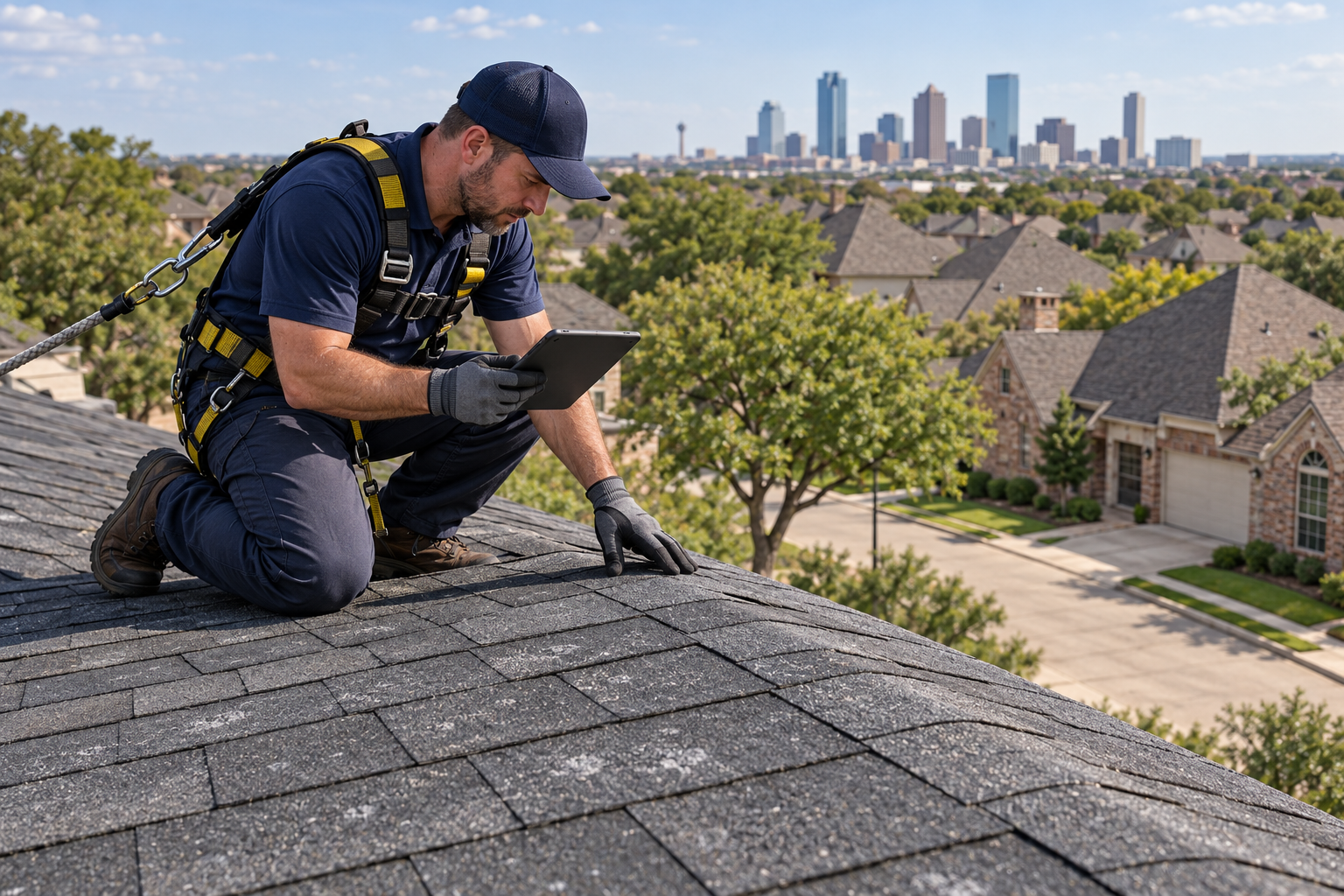
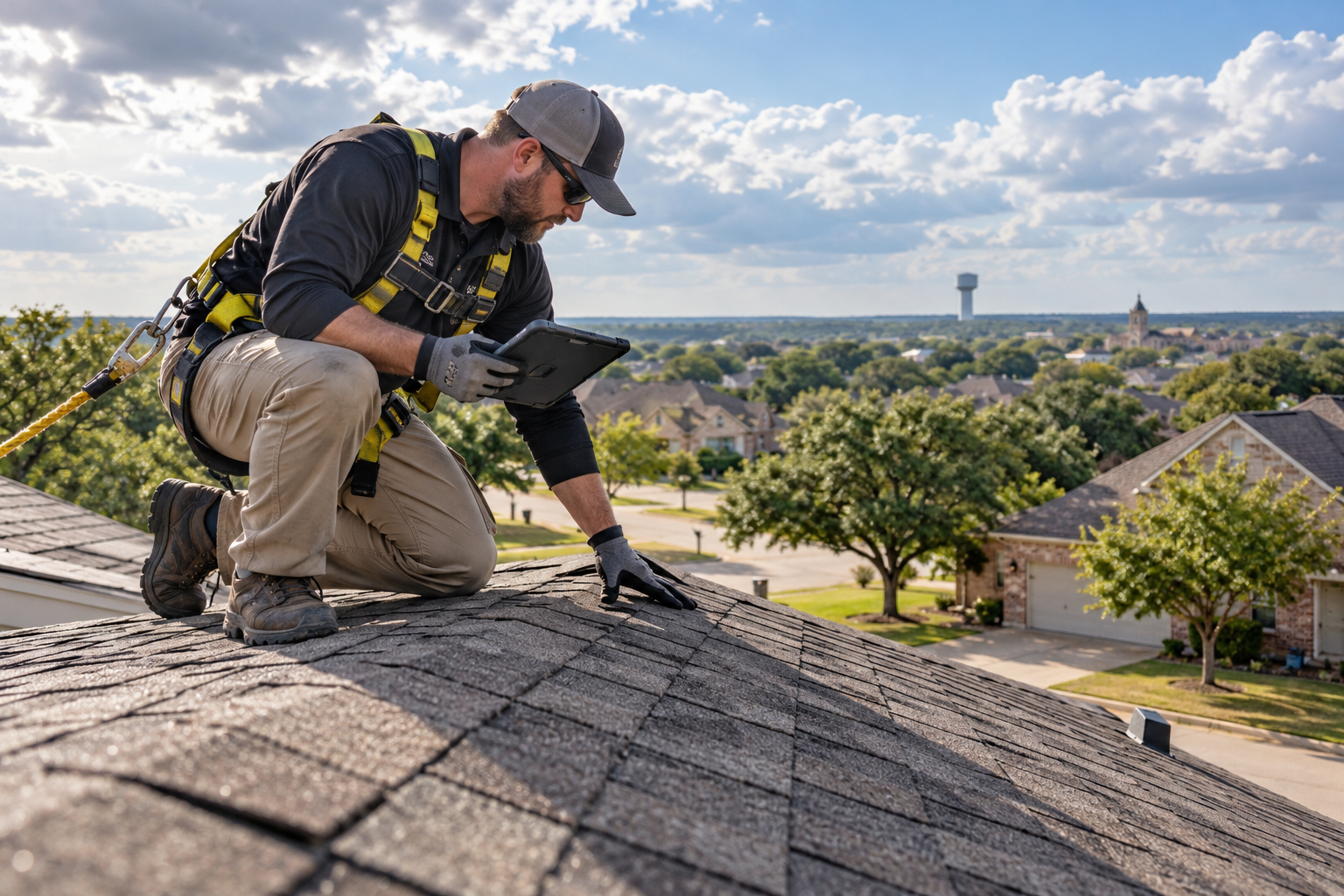
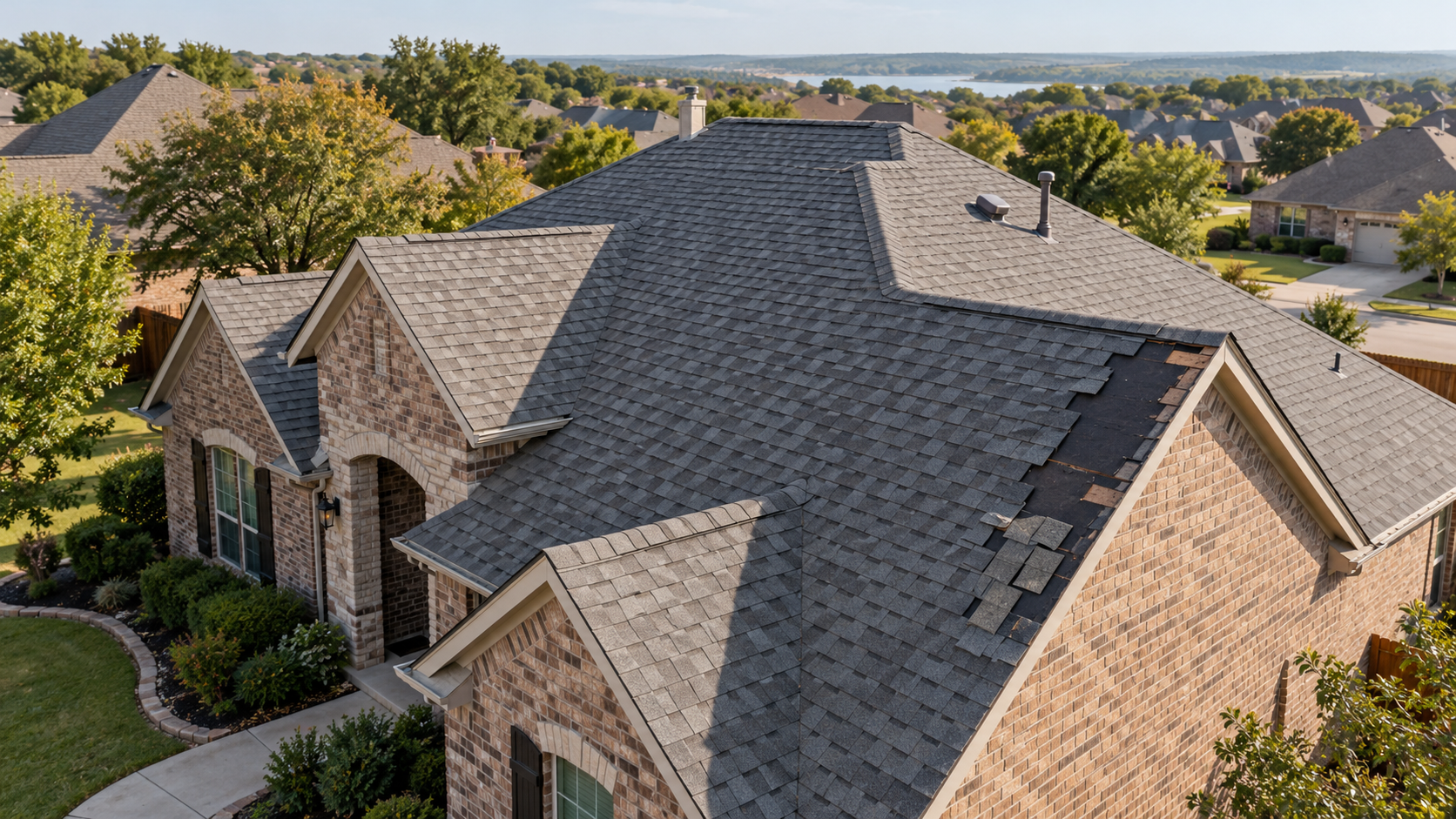
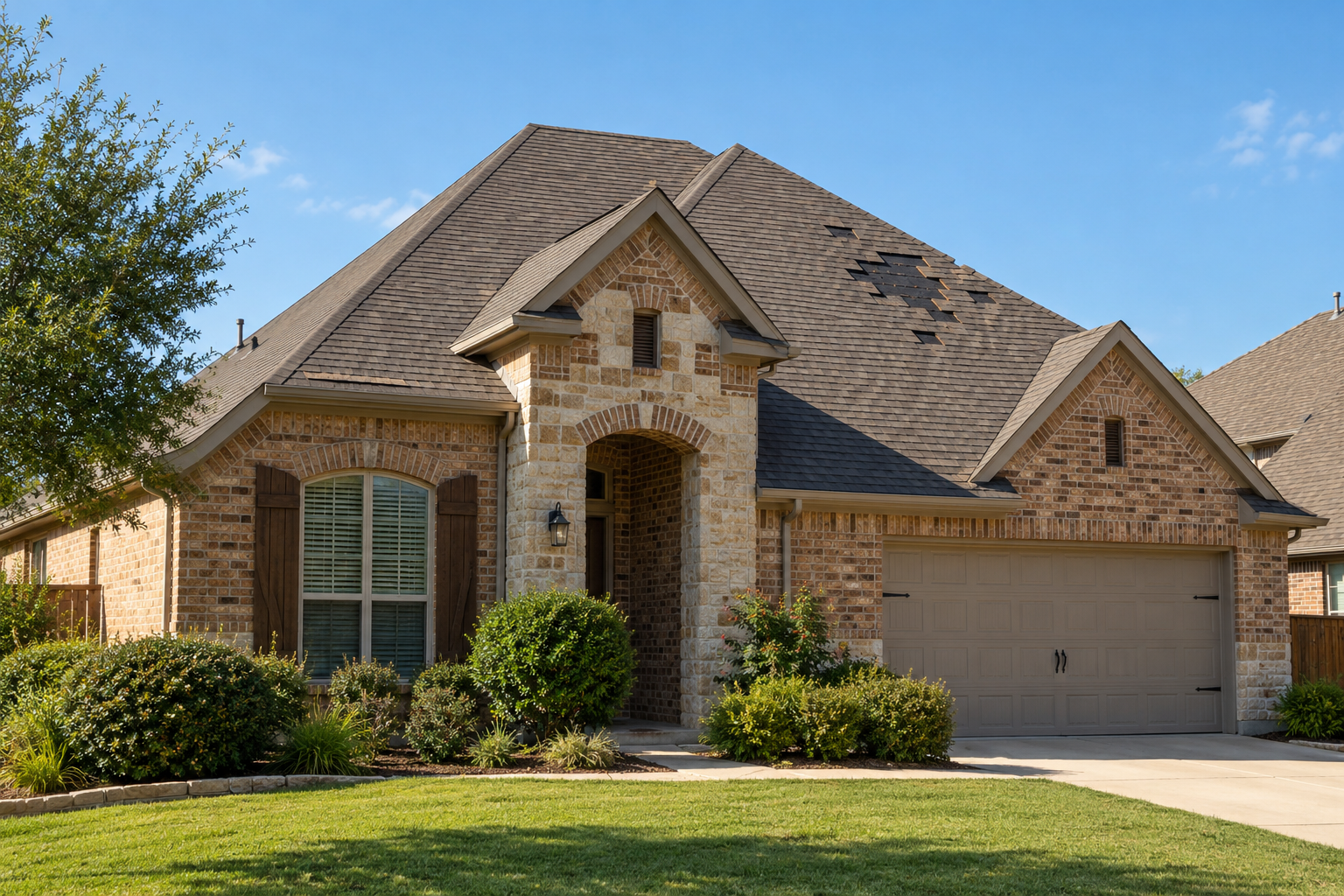
After a significant hailstorm, inspect when conditions are safe and document the event. Look for punctures, cuts, fractures, circular impact marks, displaced flashings, damaged edge metal, open seams, cracked drain components, damaged skylights, equipment impacts, and interior water entry. Some conditions are subtle, and destructive investigation or moisture evaluation may be appropriate. Do not create damage during inspection or assume every mark is storm-caused.
Impact ratings and manufacturer assemblies should be read precisely. Confirm the test standard, classification, complete component stack, attachment, membrane, cover board, insulation, deck, warranty language, and exclusions. A tested configuration only supports the claim represented by that test. It is not a guarantee that a particular storm will cause no damage or that an insurer will provide a specific coverage decision.
Post-storm evaluation should map membrane, seam, flashing, drain, edge, equipment, and moisture conditions—not rely on surface appearance alone.
Can TPO withstand North Texas wind?
TPO assemblies can be designed for substantial wind-uplift resistance, but wind performance is created by the entire load path. Pressure acts on the membrane and transfers through adhesive, plates, fasteners, insulation, cover board, deck, structural components, parapets, and edge systems. Corners and perimeters commonly experience higher suction than the field of the roof. Building height, exposure, openings, roof shape, parapets, nearby terrain, and local design criteria affect the required system.
Mechanically attached systems use approved fasteners and plates in patterns defined by the assembly. Fully adhered systems bond membrane to an approved substrate, but that substrate and its attachment must also resist the loads. Induction-welded configurations connect membrane to specially coated plates. None of these labels automatically determines suitability; deck pullout values, spacing, substrate preparation, adhesive application, tested approvals, and perimeter enhancement remain essential.
Edges deserve special attention because wind events often begin exploiting discontinuities. Copings, fascia, gravel stops, gutters, termination bars, membrane transitions, wood blocking, and perimeter fasteners should be included in the scope. Existing metal may look reusable but have hidden corrosion, weak attachment, inadequate geometry, or incompatible dimensions after insulation is added. The proposal should identify whether edge components are reused, modified, or replaced.
Wind damage may also start around curbs, hatches, penetrations, rooftop equipment, loose debris, or areas previously repaired. Maintenance crews and other trades should keep panels, tools, filters, and discarded materials secured. After strong winds, document displaced metal, billowing, wrinkles, openings, torn flashings, loose equipment components, debris impacts, and interior effects. Emergency measures should be temporary, safe, photographed, and followed by permanent evaluation.
Membrane thickness, reinforcement, and product selection
TPO membrane is sold in multiple thicknesses, often including products around 45, 50, 60, 80, or 90 mil depending on manufacturer and line. The number is not a complete durability score. Product construction, reinforcement location, thickness over scrim, formulation, weld window, backing, weathering package, accessory compatibility, installation, and approved assembly all matter. Compare product data and tested systems rather than selecting solely by the largest printed mil value.
A 60-mil reinforced membrane is common in commercial work, while thicker products may be evaluated for longer warranty terms, added puncture resistance, demanding service, or owner standards. Fleece-backed products may be used in selected adhered or recover configurations. The building’s rooftop traffic, hail exposure, service contractors, equipment density, drainage, substrate, budget, and maintenance program should guide the decision.
The proposal should name every component that affects compatibility. This includes primer, cleaner, seam treatment, adhesives, plates, fasteners, flashing membrane, prefabricated corners, pipe boots, coated metal, sealants, termination bars, walk pads, drain details, and expansion-joint materials. Mixing unapproved products can undermine installation quality and warranty eligibility even when the main field membrane is correctly identified.
Attachment choices: mechanically attached, fully adhered, and induction welded
Mechanically attached TPO is common because sheets can be secured with rows of plates and fasteners, with adjacent sheets covering the attachment and forming welded seams. Cost and speed can be attractive on compatible decks. Performance depends on fastener type, pullout capacity, spacing, sheet width, lap position, insulation attachment, perimeter enhancement, deck condition, and tested approval. Fasteners passing through occupied or sensitive spaces may require coordination.
Fully adhered TPO bonds the membrane to an approved cover board or insulation facer. It can produce a smooth appearance and limit membrane flutter, but preparation and adhesive application are critical. Dust, moisture, incompatible substrates, insufficient coverage, improper open time, cold or excessive heat, and uneven surfaces can affect adhesion. The underlying boards and deck must still be securely attached.
Induction-welded assemblies use coated plates that secure insulation and are later welded to the membrane using specialized equipment. They may distribute attachment across the roof field and reduce visible rows, but require compatible components, equipment calibration, layout, testing, and trained installation. Owners should compare the approved assembly, labor, wind design, deck requirements, warranty, and repair implications rather than assuming one method is always superior.
For any method, request the design basis and the exact tested or approved configuration. If the building has a lightweight concrete, gypsum, cementitious wood fiber, wood, concrete, steel, or unusual deck, testing and alternative fastening strategies may be needed. A generic fastener pattern copied from another building is not a substitute for project-specific verification.
Heat-welded seams and why workmanship matters
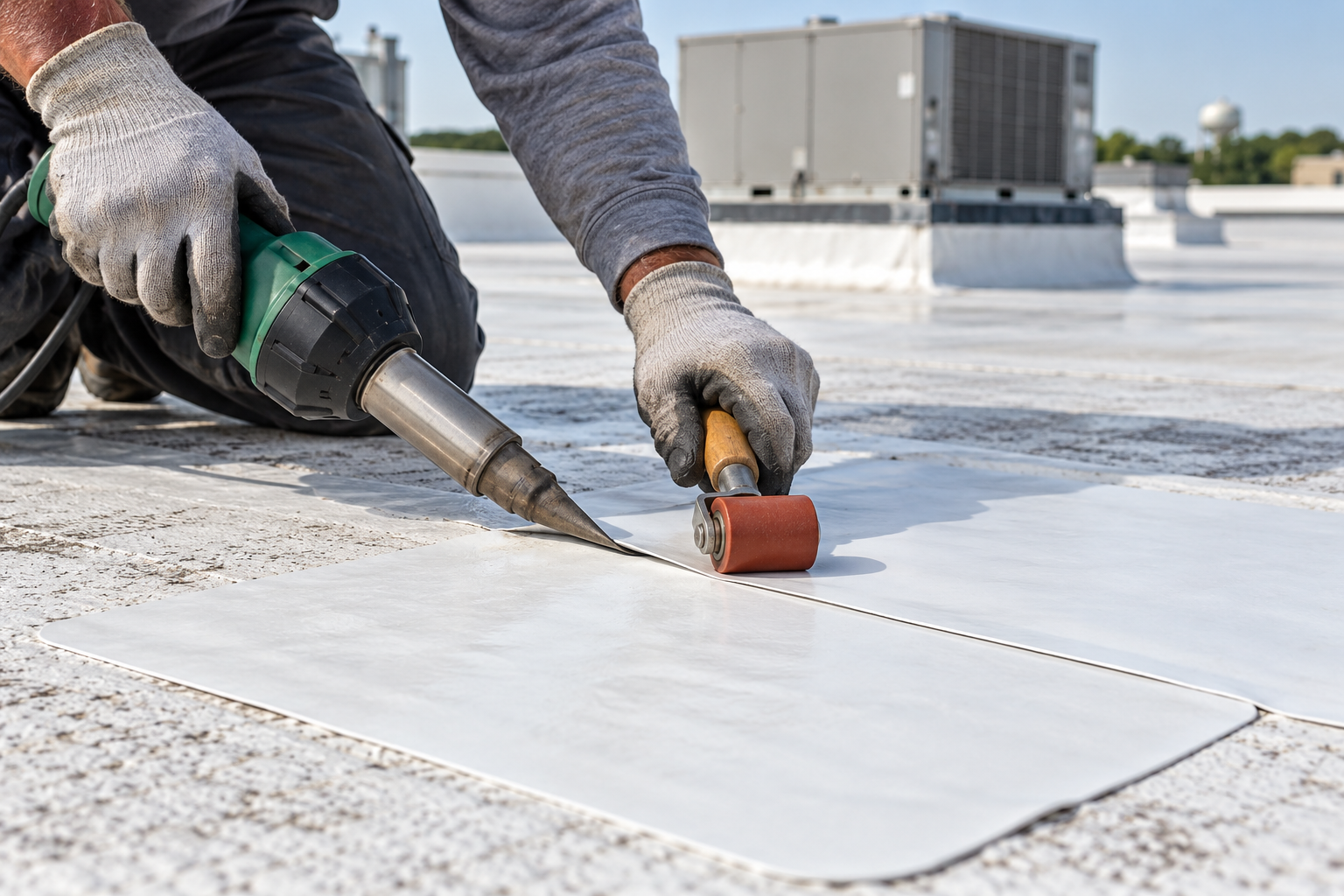
TPO seams are joined with hot air that heats overlapping membrane surfaces before pressure consolidates the weld. Proper welding can create strong continuous seams, but the process is sensitive to preparation, temperature, speed, pressure, power supply, weather, membrane condition, and equipment setup. Contractors should perform test welds and probing or other quality-control procedures required by the manufacturer and project documents.
Seams should not be treated as the only leak risk. Most roofs include corners, T-joints, curbs, walls, drains, scuppers, pipes, pitch pockets, supports, skylights, expansion joints, transitions, and edge terminations. Factory-formed accessories can simplify selected details, but field conditions still require trained workmanship. Sealant should not be used to disguise incomplete welds or replace a compatible flashing design.
Repairs and later alterations must be prepared carefully because aged or contaminated TPO may need cleaning and specific repair procedures. Rooftop trades should notify the owner before cutting, fastening, moving equipment, or installing supports. Uncontrolled penetrations can create leaks and jeopardize warranty obligations. Maintain a roof plan and require photographs of every authorized modification.
Insulation, cover board, drainage, and deck condition
The layers beneath TPO influence heat flow, impact response, drainage, attachment, fire performance, condensation risk, and service life. A common commercial assembly may include vapor or air-control components where designed, polyisocyanurate or other insulation, tapered insulation, cover board, and membrane. The correct stack depends on building use, deck, climate, interior humidity, code, existing conditions, manufacturer approval, and design professional requirements.
Tapered insulation can create or improve slope toward drains and scuppers. Crickets, sumps, saddles, drain height, overflow provisions, and structural deflection should be evaluated together. TPO does not automatically fix ponding water. Persistent water can collect dirt, increase load, complicate maintenance, accelerate localized deterioration, and expose weak seams or details. Drainage corrections should be part of the design rather than deferred until leaks appear.
Deck conditions must be verified. Corrosion, delamination, rot, cracked concrete, weak lightweight fill, deteriorated gypsum, loose fasteners, unsupported openings, and damaged blocking can change the scope and attachment. Interior observations, test cuts, pullout testing, moisture investigation, and structural review may be necessary. Concealed damage should be photographed, measured, and authorized before new layers hide it.
Recover versus full tear-off
A TPO recover may be possible when code, layer count, weight, moisture, compatibility, drainage, substrate stability, attachment, and manufacturer requirements permit it. Recover can reduce demolition and disposal, but it should not bury widespread wet insulation, unstable surfacing, weak deck, or unresolved drainage. A separator, cover board, insulation, or other approved layer may be needed between the existing roof and new membrane.
Full tear-off exposes the deck and allows damaged materials to be removed, drainage elevations to be rebuilt, and attachment to be verified. It also adds labor, hauling, disposal, weather exposure, interior protection, and operational coordination. Daily production should be limited to areas the crew can make watertight before weather changes. The owner should understand unit prices for concealed deck or insulation work.
Aging gravel-surfaced BUR requires particular caution. Gravel can conceal splits, blisters, displaced areas, patchwork, moisture patterns, and membrane condition. Loose surfacing creates preparation and adhesion problems, and the weight of existing layers must be considered. Showtime Exteriors’ campaign does not recommend preserving gravel because it “protects” the roof. The scope should investigate and remove uncertainty, then evaluate a cleaner, more inspectable system when replacement is justified.
Insurance and underwriting considerations
Some commercial property owners are encountering stricter underwriting questions about roof age, material, condition, maintenance, storm history, remaining service life, repairs, and replacement plans. Aging gravel BUR may receive additional scrutiny because surface conditions and concealed moisture can be difficult to document. A TPO replacement may provide a more visible membrane surface and clearer closeout records, but the carrier alone determines whether it will renew, restrict, exclude, price, or insure the property.
Before selecting a system, ask the agent or carrier for requirements in writing. Confirm whether they request membrane type, installation year, warranty, condition report, photographs, moisture information, permits, wind or impact classifications, contractor information, paid invoices, final inspection, or proof of maintenance. Do not assume a product label or manufacturer warranty satisfies an underwriting request.
Showtime Exteriors can document observed roof conditions and provide an authorized roofing scope. It should not interpret policy language, promise coverage, negotiate legal rights, or guarantee payment. Owners should consult qualified insurance and legal professionals about coverage, exclusions, deductibles, actual cash value, replacement cost value, depreciation, deadlines, and disputes.
Inspection and maintenance after installation
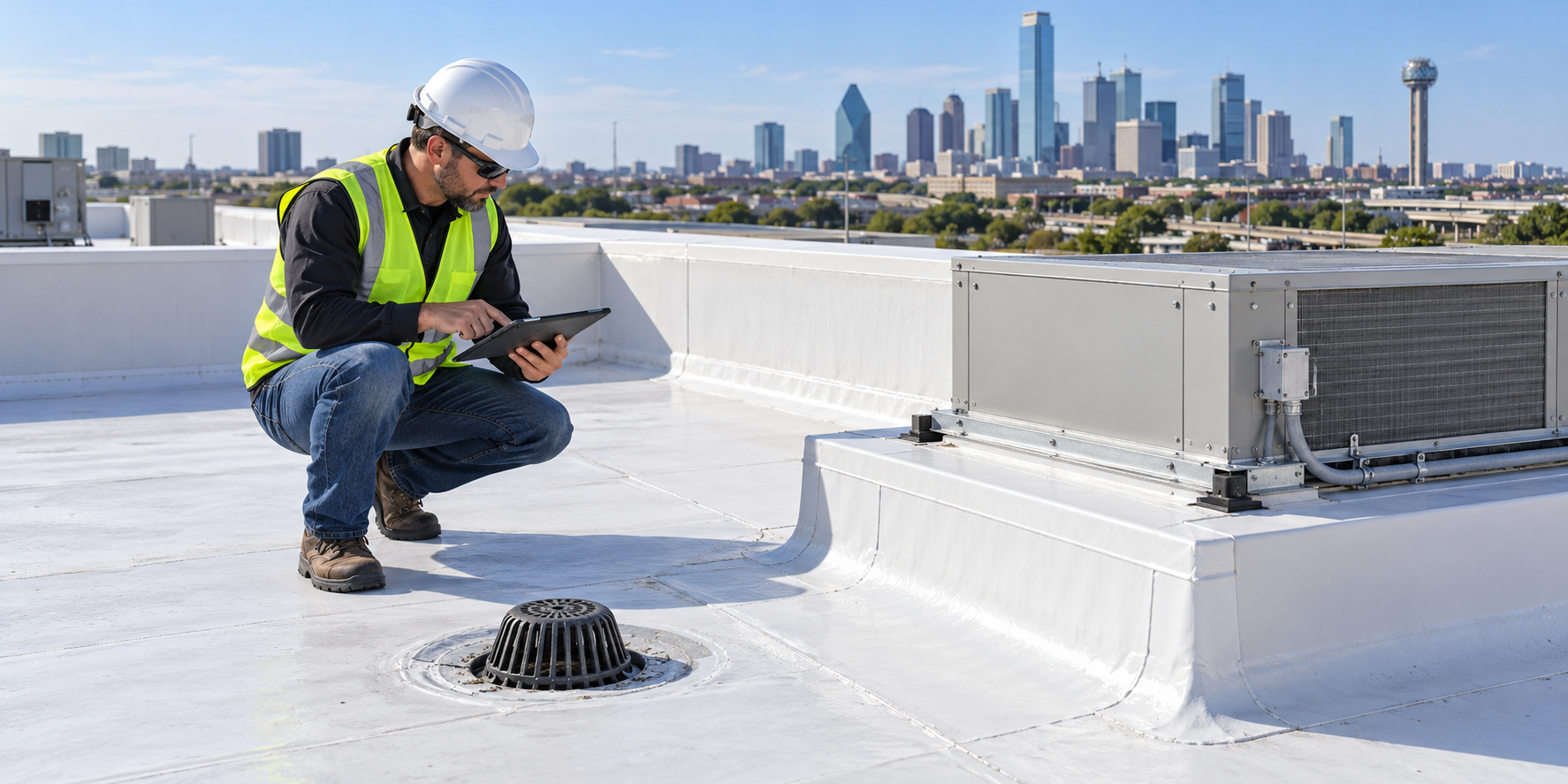
A new TPO roof still requires planned care. Inspect on a suitable schedule and after significant hail, wind, tornado, debris, or heavy-rain events when access is safe. Keep drains and scuppers clear. Control rooftop traffic. Check seams, flashings, walls, curbs, penetrations, drains, expansion joints, edges, equipment areas, walk pads, and previous repairs. Follow manufacturer and warranty requirements.
Document each inspection with date, weather context, roof-area map, overview photographs, close-ups, observations, limitations, and recommended actions. Repairs should identify compatible materials and the exact area addressed. An unlabeled folder of photos is less useful than a location-based record that allows the owner, contractor, manufacturer, and insurance professional to understand what was observed and what changed over time.
Small punctures or isolated detail defects may be repairable when discovered promptly. Repeated seams opening across large areas, widespread wet insulation, membrane shrinkage or brittleness, systemic attachment problems, extensive hail damage, unstable substrates, or recurring failures may justify broader restoration, recover, or replacement analysis. Decisions should be based on evidence, not only the age printed in a file.
When TPO may be a good fit—and when to consider alternatives
TPO may be a good fit for a commercial building seeking a reflective surface, heat-welded seams, broad manufacturer system options, and an inspectable single-ply roof. Large warehouses, retail centers, offices, industrial buildings, multifamily properties, and institutional facilities may all be candidates when the roof geometry, chemicals, traffic, deck, drainage, wind design, and owner goals align with an approved assembly.
Alternatives deserve evaluation when exposure or operations create different priorities. PVC may be considered for certain chemical or grease environments, subject to product compatibility. EPDM offers a different membrane chemistry and seam approach. Modified bitumen, metal retrofit, coatings, or other systems may fit selected substrates, details, budgets, and maintenance plans. No material should be selected from a marketing slogan alone.
The best recommendation may also differ by roof area. A complex facility can have multiple elevations, decks, ages, drainage systems, equipment zones, and existing membranes. A project may require transitions or phased replacement rather than one identical assembly everywhere. The proposal should define boundaries and show how each transition will remain watertight and serviceable.
Texas TPO decision matrix
Issue
Potential TPO advantage
Important limitation
Owner action
Heat and UV
Reflective surface and products designed for weathering
Energy results vary; heat, exhaust, contamination, insulation and aging still matter
Confirm color, aged reflectance data where relevant, insulation, surface exposure and maintenance
Hail
Tested impact-oriented assemblies may be available
No membrane is hail-proof; substrate, cover board, age and storm severity matter
Compare complete tested assembly, cover board, membrane and warranty exclusions
Wind
Multiple attachment methods and tested assemblies
Corners, perimeters, edges, deck and openings can govern failure
Require wind-design basis, pullout data when needed, perimeter enhancement and edge scope
Inspection
Clean membrane surface can be mapped and photographed
Damage or moisture may still be concealed beneath the membrane
Maintain roof plans, reports, photos, repairs and moisture records
Insurance
New roof records may answer underwriting questions
No system guarantees renewal, coverage, premium or claim payment
Obtain carrier requests in writing and document factual compliance
Questions to ask before approving a TPO roof
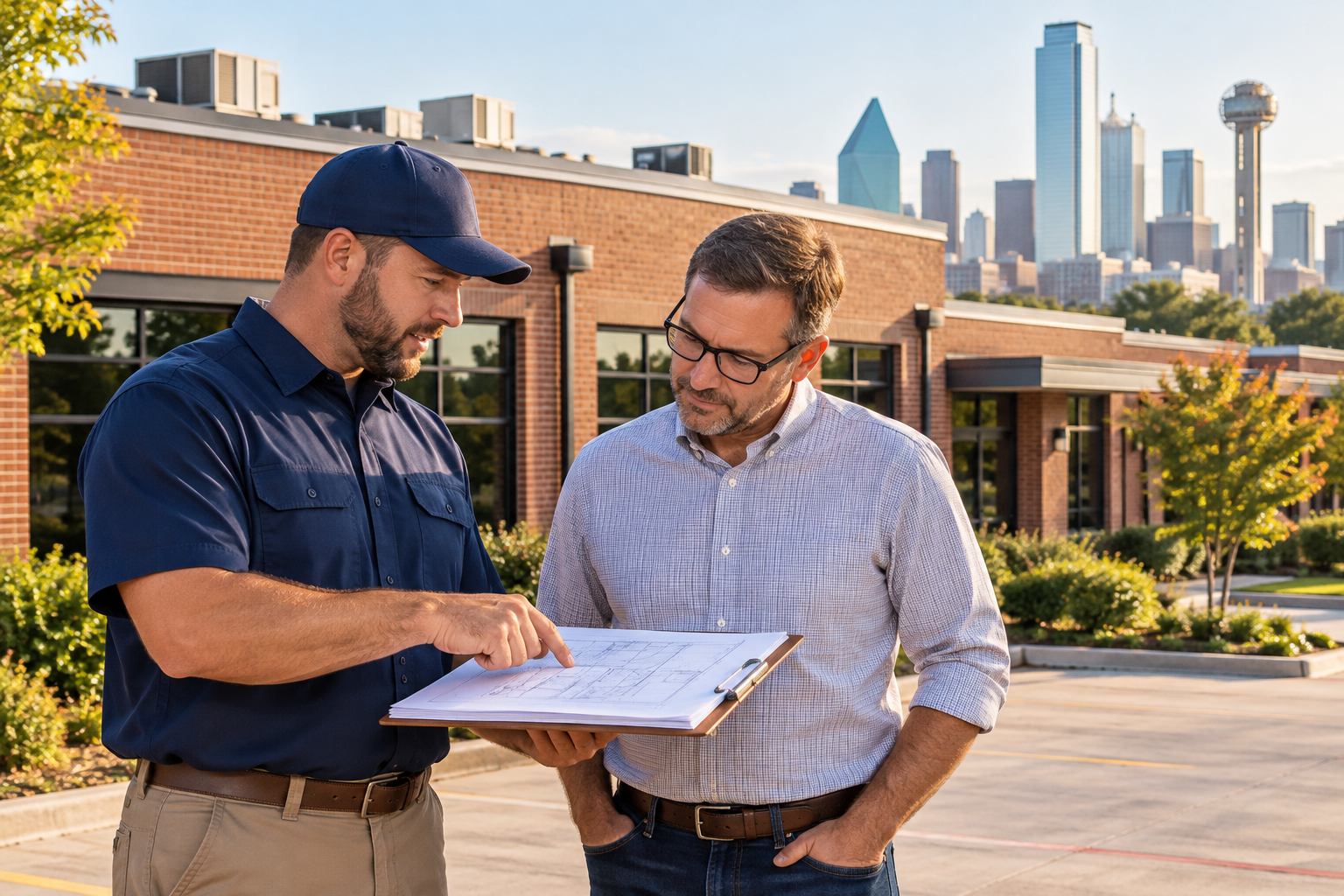
What existing roof, deck, insulation, moisture, drainage, and attachment conditions were verified, and what remains unknown?
Is the recommendation repair, recover, or replacement, and what evidence supports that decision?
What exact TPO manufacturer, product, thickness, reinforcement, color, sheet size, and attachment method are included?
What insulation, R-value, tapered system, cover board, vapor or air-control components, and substrate preparation are included?
What tested assembly or approval supports the proposed wind resistance, and how are corners, perimeters, edges, and rooftop zones enhanced?
What impact or hail classification applies to the complete assembly, and what does the classification not guarantee?
How will seams, test welds, flashings, penetrations, drains, scuppers, expansion joints, edge metal, and repairs be inspected?
Which concealed conditions use unit prices or allowances, and how will changes be photographed, measured, approved, and invoiced?
What contractor workmanship warranty and manufacturer warranty are proposed, who issues each, and what maintenance or inspection obligations apply?
What closeout documents will the owner receive, and which insurer requests—if any—have been confirmed in writing?
Frequently asked questions
Is white TPO too hot for Texas?
White TPO is commonly selected for reflective-roof goals and can be suitable in hot climates. Suitability still depends on product weathering, insulation, substrate, details, installation, contamination, maintenance, and the complete assembly.
Can TPO survive Texas hail?
A properly selected TPO assembly may offer tested impact resistance, especially with an appropriate cover board, but no roof is hail-proof. Damage depends on storm severity, age, temperature, membrane, substrate, details, and rooftop equipment.
What TPO thickness is best for North Texas?
There is no universal best thickness. Compare the complete manufacturer-approved assembly, thickness over reinforcement, cover board, attachment, hail and wind goals, traffic, warranty, and budget. Sixty-mil and thicker options are often evaluated for commercial work.
Is fully adhered TPO better in wind?
It may be appropriate for some buildings, but the substrate and underlying layers must also transfer wind loads. Mechanically attached and induction-welded systems can also be designed for wind. Use the project-specific tested configuration and design basis.
Can TPO go over an old gravel roof?
Sometimes only after careful evaluation and significant preparation, but aging gravel BUR can conceal moisture and unstable conditions. The project should not simply bury gravel-related uncertainty. Tear-off or other corrective work may be necessary.
Does TPO lower insurance premiums?
It might affect an insurer’s evaluation, but Showtime Exteriors cannot promise a premium reduction or renewal. The carrier determines underwriting and coverage. Obtain requirements in writing and submit factual documentation.
How often should TPO be inspected?
Follow manufacturer, warranty, and professional recommendations, and inspect after major storms when safe. Many owners use planned periodic inspections plus event-driven checks, with drains, edges, seams, flashings, equipment and repairs documented.
Can a punctured TPO roof be repaired?
Many isolated punctures and detail defects can be repaired with compatible procedures when surrounding materials remain sound. Widespread wetness, systemic defects, extensive storm damage, or unstable substrate may require a broader solution.
How long does a TPO roof last?
Service life varies with product, assembly, climate, design, installation, drainage, traffic, maintenance, repairs, storm exposure and building operations. A warranty term is not a guaranteed service-life prediction.
Should every Texas commercial building use TPO?
No. TPO is one strong option, not a universal answer. Compare it with PVC, EPDM, modified bitumen, metal, coatings, or other compatible systems based on the actual building and owner objectives.
The bottom line for Texas property owners
TPO can be right for Texas heat, hail, and wind when the complete roof assembly is selected and installed for the building’s actual exposure. A reflective surface can support hot-climate goals. Heat-welded seams can create continuous laps. Approved assemblies can address wind and selected impact requirements. Yet none of those advantages replaces dry and stable substrates, adequate insulation, resilient cover board, positive drainage, secure edges, correct attachment, disciplined welding, qualified inspection, and continuing maintenance.
For owners confronting an aging gravel-surfaced BUR, the decision should begin with evidence. Gravel may hide defects and moisture, complicating documentation and insurance conversations. A more inspectable TPO surface may be part of the replacement strategy, but only after concealed conditions are investigated and the new assembly is designed correctly. Do not exchange one form of uncertainty for another by covering wet or unstable materials.
Showtime Exteriors serves commercial property owners across Texas and the Dallas–Fort Worth Metroplex. To schedule a commercial roof inspection and discuss TPO repair, recover, or replacement options, call 817-400-ROOF (7663). The resulting recommendation and estimate should be building-specific; this article is educational guidance, not a quote or guarantee.
Helpful Showtime Exteriors resources
Commercial roof inspection report evidence
Commercial roof inspection for insurance renewal
Commercial BUR roof insurance non-renewal in Texas
What to do after a North Texas storm roof leak
Evidence for a commercial roof wind-damage claim
Independent technical resources
Carlisle SynTec: TPO membranes
U.S. Department of Energy: cool roofs
OSHA: fall-protection requirements
Editorial, technical, safety, and insurance disclaimer
This article provides general educational information, not a specification, bid, warranty, engineering opinion, code determination, energy analysis, safety plan, legal advice, insurance advice, or guarantee. Roofs, products, approvals, warranties, codes, policies, storms, and conditions vary. A qualified inspection and project-specific design are required. Showtime Exteriors documents observed roofing conditions and performs authorized roofing work within its role; insurance carriers determine underwriting, coverage, premiums, renewal, and claim payment.
817-400-ROOF (7663) showtimeexteriors.com