

Is Acrylic Roof Coating Right for Texas Heat, Hail, and Wind?
A commercial property owner’s guide to eligibility, preparation, performance, maintenance, and insurance documentation
Short answer: Acrylic roof coating can be a practical restoration option for some Texas commercial buildings, especially when the existing roof is dry, stable, compatible, and capable of receiving a properly specified reflective coating system. It can help protect the surface from ultraviolet exposure, improve reflectivity, bridge prepared minor defects, and extend the service period of an eligible roof. It is not automatically right for every roof, and it should never be treated as a substitute for correcting wet insulation, structural problems, failed attachment, poor drainage, open seams, corroded deck, or widespread deterioration.
Texas conditions make the eligibility decision especially important. Intense sun and high roof temperatures favor the use of reflective materials, but rapid weather changes and summer thunderstorms can complicate the drying and curing of water-based acrylic products. Hail can damage the coating, its reinforcement, or the substrate beneath it. Wind resistance depends primarily on the existing roof assembly, deck, insulation, membrane attachment, perimeter edges, flashings, and repairs—not simply on the fact that the surface has been coated.
Showtime Exteriors evaluates commercial roof repair, restoration, recover, retrofit, and replacement options across Texas and the Dallas–Fort Worth Metroplex. The objective is not to sell coating to every building. It is to determine whether the existing roof is an appropriate candidate and whether acrylic, silicone, fabric reinforcement, single-ply replacement, metal retrofit, or another system best fits the actual conditions and property owner’s goals.
What is an acrylic roof coating system?
Acrylic roof coating is generally a water-based elastomeric material applied as a liquid and allowed to dry into a continuous protective film. White is common because it can provide high solar reflectance, although other colors and formulations may be available. Products may be rolled, brushed, or sprayed in one or more coats at specified coverage rates. A complete restoration scope often includes cleaning, repairs, primer where required, reinforcement at seams and details, base or intermediate coats, and a finish coat.
The word “acrylic” does not define one universal system. Manufacturers offer products with different solids content, viscosity, tensile properties, elongation, adhesion requirements, coverage rates, application temperatures, cure windows, reinforcement options, reflectance values, warranties, and approved substrates. A proposal should identify the exact product and current manufacturer specification rather than promising a generic “white coating.”
Coating is only the visible final layer. The roof beneath it still carries water, wind, traffic, equipment loads, and building movement. If the existing membrane is loose, the insulation is saturated, the deck is weak, or perimeter metal is inadequately attached, a surface coating will not correct those conditions. Eligibility begins with investigation of the existing assembly and ends with a measurable, compatible scope.
The Texas question must be divided into heat, hail, wind, and water
“Made for Texas weather” is not a technical specification. Heat, hail, wind, and water act differently on a roof. Heat and ultraviolet radiation affect exposed materials, surface temperature, movement, sealants, and long-term weathering. Hail creates impact that can fracture coating, reinforcement, membranes, insulation facer, cover board, skylights, metal, and equipment. Wind creates uplift and pressure that concentrate around corners, perimeters, openings, edges, walls, and rooftop equipment. Rain tests drainage, seams, flashings, penetrations, drains, scuppers, and temporary work.
An acrylic coating may address some surface-weathering and reflectivity goals, but it does not independently resolve every hazard. Its suitability depends on the roof type, substrate condition, drainage, slope, moisture, repairs, reinforcement, dry-film thickness, adhesion, installation weather, maintenance, building use, and manufacturer-approved system. Owners should require a condition-based recommendation instead of relying on one product characteristic.
Laboratory testing and ratings can be valuable when interpreted correctly. A tested system includes specified components and application requirements. A rating does not mean every acrylic product performs identically, and it does not guarantee that a particular storm will cause no damage. Confirm what was tested, which substrate and reinforcement were used, the coating thickness, the test standard, and whether the proposed field assembly matches the tested configuration.
Acrylic coating and extreme Texas heat
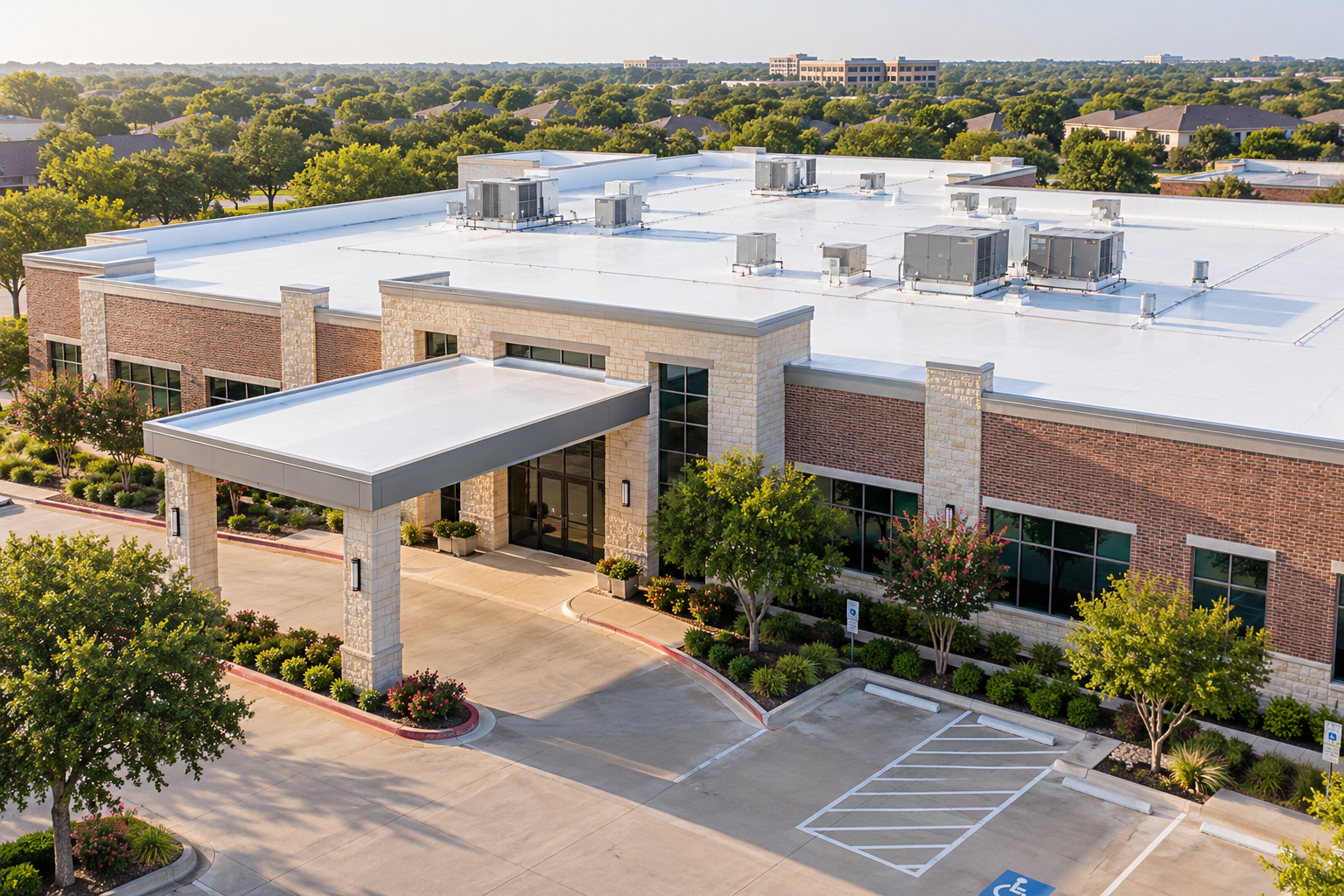
Acrylic coatings are frequently selected for their reflective white surface. A cool roof is designed to reflect more sunlight and absorb less solar energy than a conventional dark surface. On an appropriate building, this can reduce roof-surface temperature and may reduce cooling demand. Results vary with insulation, HVAC efficiency, climate, roof area, utility rates, hours of operation, shading, interior use, surface cleanliness, and the condition of the complete building envelope.
Reflectivity does not replace insulation. A roof with insufficient, displaced, compressed, or wet insulation can continue to transfer substantial heat even after the surface becomes white. The evaluation should identify the existing insulation type and thickness when reasonably possible, investigate moisture, and determine whether restoration preserves an acceptable thermal assembly. Owners considering energy savings should obtain building-specific analysis instead of treating a coating brochure as an energy guarantee.
Texas heat also affects installation. Acrylic products typically cure through evaporation of water. Surface temperature, air temperature, humidity, wind, dew, shade, and approaching rain influence drying. Extremely hot surfaces can affect workability and application consistency, while high humidity or cool nighttime conditions can slow drying. The crew must follow the product’s current limits and allow enough time for each coat to dry before weather exposure or the next application.
The roof may contain localized heat sources that require additional attention. Exhaust, grease, steam, chemicals, dark equipment pads, reflected sunlight from glass or metal walls, condensate discharge, and concentrated mechanical activity can change exposure. Some materials may be incompatible with acrylic coating or require special preparation and protection. The contractor should map these conditions rather than treating the entire roof as one uniform surface.
Reflective surfaces also become dirty. Dust, pollen, industrial residue, grease, ponding-water deposits, and foot traffic can reduce appearance and potentially affect reflectivity. Maintenance should include compatible cleaning where appropriate, drainage care, and control of rooftop operations. Harsh solvents, pressure, abrasion, or unapproved cleaners can damage coating, so the manufacturer’s instructions should guide cleaning.
The most important acrylic limitation: drying weather and rain exposure
Water-based acrylic coating needs suitable weather to form a durable film. A rain shower that arrives before the material has adequately dried can wash, dilute, blister, streak, or disrupt fresh coating. Texas forecasts can change quickly, especially during storm season. A contractor should not open more work than can be protected, should track weather and surface conditions, and should stop application when the available cure window is inadequate.
Morning dew and evening condensation matter even when no rain is predicted. Roof surfaces can remain damp after sunrise, and applied coating may not dry sufficiently before temperatures fall. Shaded walls, equipment, north-facing curbs, and low areas can dry differently from an open sunny roof field. Moisture meters, surface observations, test areas, and manufacturer guidance may be appropriate.
Scheduling should include realistic weather days rather than assuming uninterrupted production. Owners should understand what happens if rain affects uncured material, how the area will be inspected, and who decides whether recoating or removal is required. Production pressure should not override product requirements. A rushed application that looks white from a distance may not deliver the intended film formation or adhesion.
Is acrylic roof coating resistant to hail?
Acrylic coating can add a flexible protective surface, and reinforced acrylic systems may be included in assemblies tested for impact or hail-related performance. That does not make a coated roof hail-proof. Hail performance depends on stone size, density, wind speed, angle, roof temperature, coating thickness, reinforcement, age, substrate, insulation, cover board, existing membrane, and rooftop details.
A thin coating over a soft, brittle, wet, or poorly supported substrate cannot be expected to behave like a complete impact-oriented assembly. If hail resistance is a priority, evaluate the entire stack. Reinforcement, resilient cover board, stable insulation, compatible repairs, and sufficient cured thickness may be more consequential than the topcoat color. The proposed components should match a tested or manufacturer-approved system when a specific classification is required.
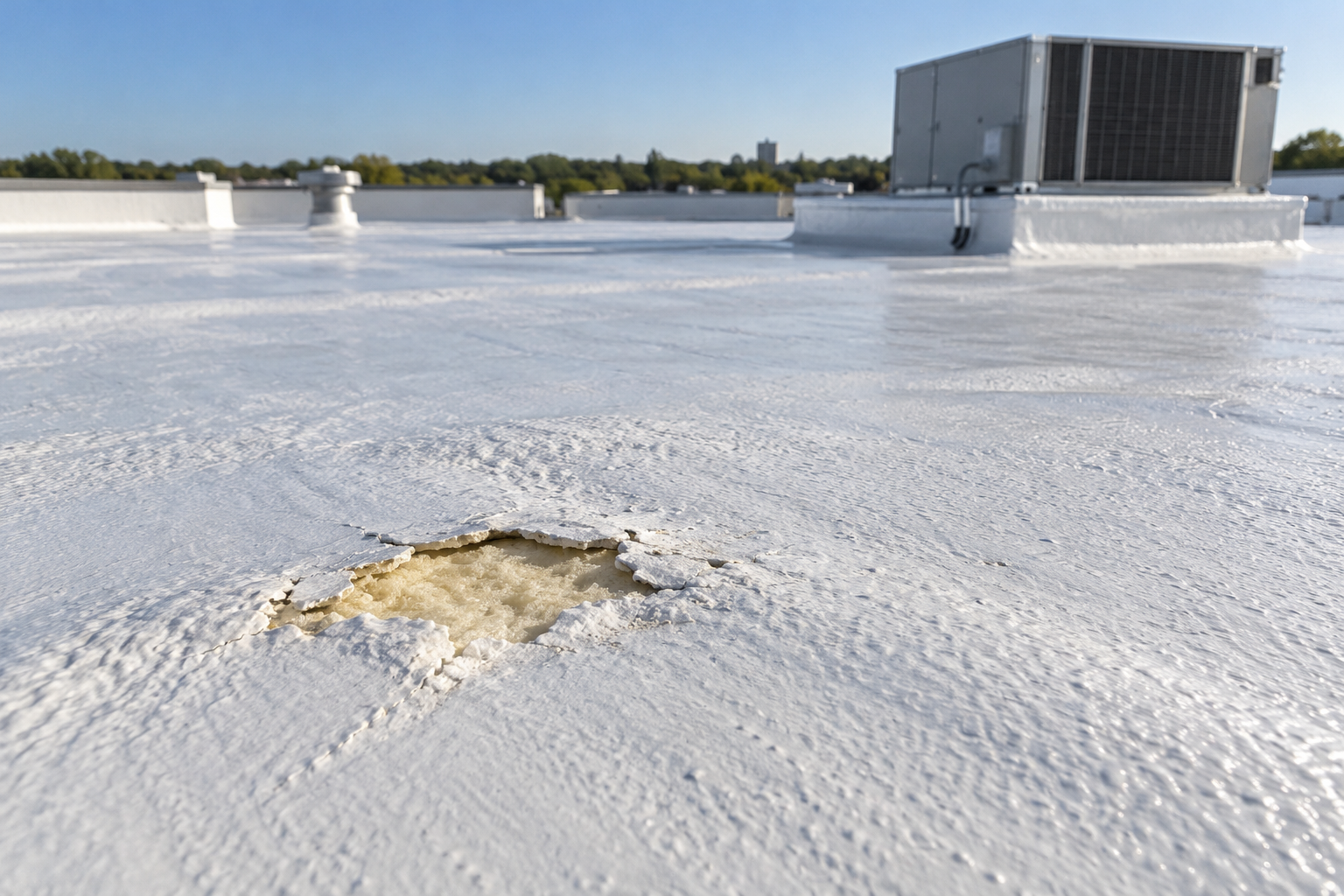
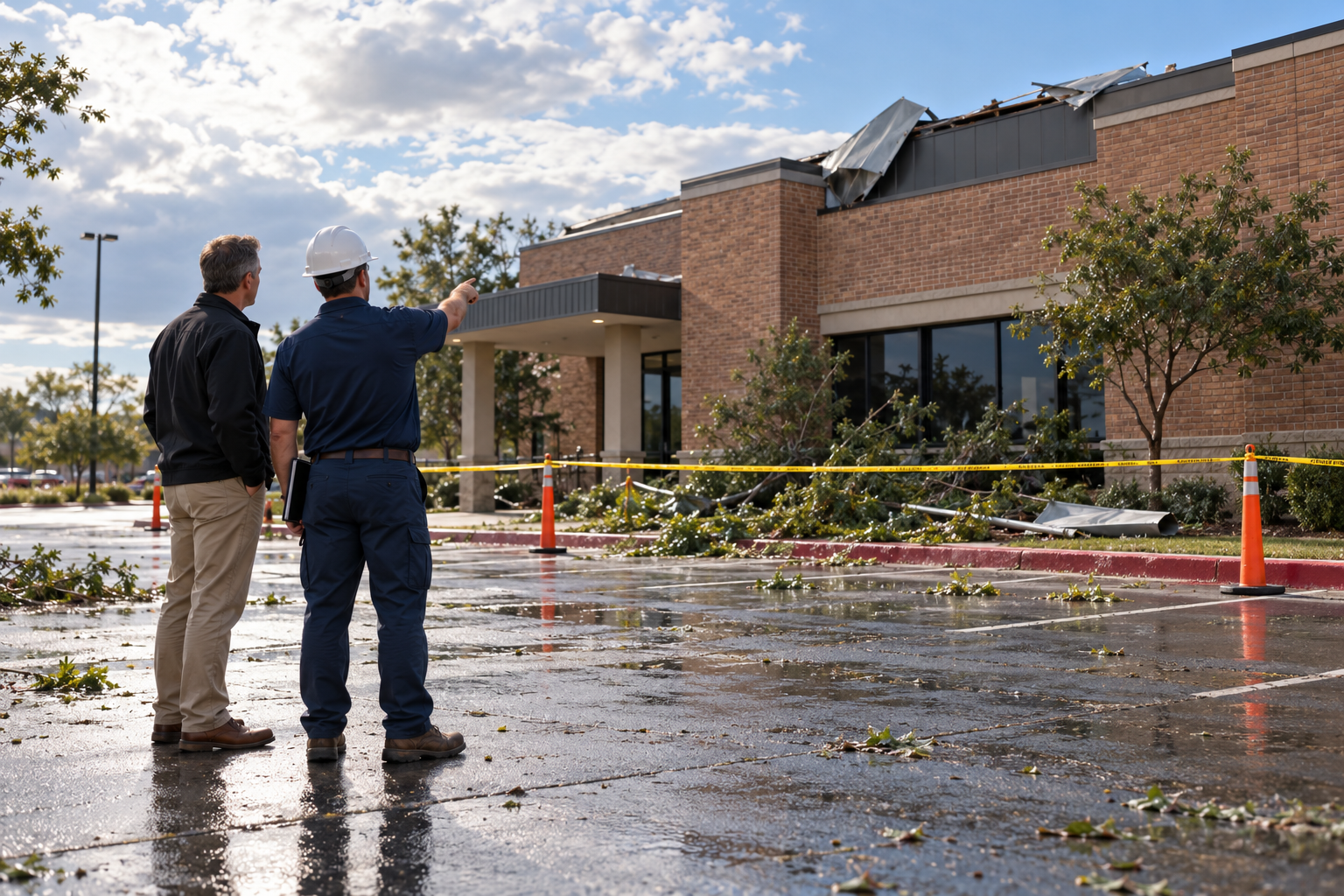
Hail may leave obvious punctures or subtle conditions. Look for fractures, cuts, circular impact marks, damaged reinforcement, coating displacement, exposed substrate, cracked skylights, dented metal, damaged HVAC components, open flashings, and interior water entry. Some marks may be cosmetic, some may be functional, and some predate the storm. A qualified inspection should document locations and avoid exaggerating conclusions.
After a significant storm, property owners should record the event date, known interior effects, emergency actions, photographs, videos, and affected areas. Inspection should occur when access is safe. Moisture evaluation, adhesion checks, test cuts, or manufacturer involvement may be warranted. The contractor documents physical conditions; the insurance carrier determines coverage and claim payment.
Can acrylic coating withstand Texas wind?
Wind resistance is often misunderstood in coating discussions. A coating adheres to an existing roof surface. If that surface or the layers below it are not adequately attached, coating does not create a new structural load path. Wind uplift can act through the coating, membrane, cover board, insulation, fasteners, adhesive, deck, blocking, and perimeter edge. Failure at any weak layer can affect performance.
The existing roof should be checked for loose membrane, billowing, open seams, detached insulation, deteriorated fasteners, corroded deck, weak blocking, loose edge metal, failing terminations, and vulnerable rooftop equipment. Pull tests, adhesion tests, fastener testing, or engineering may be needed depending on the building, substrate, warranty, code, and project requirements.
Corners and perimeters commonly experience higher wind suction than the roof field. Copings, fascia, gravel stops, gutters, termination bars, wall flashing, membrane transitions, and blocking deserve a defined scope. Coating over loose edge metal or deteriorated termination does not make the edge secure. Edge replacement or enhanced attachment may be required before coating.
Wind-driven debris can also puncture or abrade a coated surface. Equipment panels, filters, tools, abandoned materials, branches, signage, and loose metal can become projectiles. Facility managers should control rooftop materials and inspect after high-wind events. Emergency patches should be compatible, documented, and replaced with a permanent correction.
Adhesion determines whether the coating remains connected
Acrylic must bond to the prepared substrate. Dirt, chalk, oil, grease, biological growth, loose granules, oxidation, moisture, incompatible coating, uncured repair material, and deteriorated membrane can interfere with adhesion. Cleaning is not a cosmetic step; it is part of the roof system. Preparation methods should be compatible with the substrate and should not force water into the assembly.
Adhesion testing can help determine whether the proposed primer and coating bond adequately to representative roof areas. A roof may contain several surfaces—aged single-ply membrane, metal, old coating, modified bitumen, repairs, flashings, and sealants—so one test location may not represent every zone. The contractor should record preparation, test locations, products, results, and limitations.
Primer requirements vary by manufacturer, substrate, oxidation, and condition. Some surfaces may require a specialized primer; others may prohibit certain materials. Rusted metal may require cleaning, replacement, treatment, and compatible primer. Existing silicone can be particularly challenging for adhesion unless the new system is specifically designed and tested for it. Product compatibility should be confirmed in writing.
Ponding water and drainage require direct attention
Conventional acrylic coatings are often less tolerant of long-term ponding water than certain silicone or hybrid systems. Product requirements vary, so owners must read the exact technical data and warranty language. A statement that a coating is “waterproof” does not automatically mean it is approved for permanent ponding water or that drainage defects can be ignored.
Low areas should be mapped after rainfall or during inspection. Determine why water remains: inadequate slope, compressed insulation, structural deflection, clogged drains, high drain rings, poorly placed scuppers, added rooftop loads, or previous repairs. Cleaning drains may solve some conditions, while others need tapered insulation, crickets, sumps, drain modification, structural review, or a different roofing system.
Coating should not be used to conceal a drainage problem. Persistent water increases load, collects dirt, slows drying, encourages biological growth, complicates maintenance, and stresses repairs. If the selected acrylic product excludes ponding, the scope should correct ponding or choose another compatible system. The decision must be based on field conditions and written manufacturer requirements.
Which existing roofs may be acrylic-coating candidates?
Acrylic systems may be approved for selected metal, modified bitumen, built-up, spray polyurethane foam, concrete, and single-ply roof substrates when preparation, primer, repairs, and adhesion meet the manufacturer’s requirements. Approval is product-specific. The roof must be sufficiently stable and serviceable for restoration to make sense.
Metal roofs may be good candidates when corrosion, loose fasteners, failed seams, penetrations, transitions, and movement are corrected. A restoration scope may reinforce seams and fasteners before applying field coating. Severely corroded panels, structural problems, and widespread metal failure require replacement or other corrective work rather than simply more coating.
Modified bitumen or smooth-surface built-up roofs may be candidates when they are dry, stable, compatible, and repairable. Blisters, splits, open laps, wet insulation, unstable surfacing, and failed flashings must be addressed. Granulated or asphaltic surfaces may require special preparation and primer to manage bleed-through and adhesion.
Single-ply membranes require careful compatibility review. Cleaning, aging, surface chemistry, previous repairs, and manufacturer requirements affect adhesion. Coating a membrane may affect existing warranties. The owner should understand whether the work is a repair, restoration, or new warranted system and who will issue the warranty.
Aging gravel BUR is not an easy coating candidate
Aging built-up roofs with gravel surfacing create substantial inspection and preparation challenges. Gravel can conceal splits, blisters, cracks, moisture, displaced surfacing, prior repairs, exposed felts, drainage patterns, and membrane deterioration. Loose aggregate prevents a direct, uniform bond. Removing visible gravel does not necessarily produce a clean, stable, coat-ready substrate.
This is central to Showtime Exteriors’ campaign. Gravel should not be presented as a desirable feature simply because it once served as surfacing. On an older commercial roof, it may prevent reliable observation and complicate insurance documentation. Carriers may scrutinize roof age, unknown moisture, maintenance history, and concealed conditions when making underwriting decisions.
An acrylic restoration should not be used to make an aging gravel BUR look white while leaving uncertainty underneath. Evaluation may require gravel removal, core samples, moisture investigation, deck review, structural weight consideration, adhesion testing, and manufacturer consultation. In many cases, recover or replacement with a cleaner, more inspectable attached or adhered system may be more responsible.
No roofing contractor can guarantee that replacement or coating will secure policy renewal, improve premiums, or produce claim payment. Property owners should ask their agent or carrier for requirements in writing and compare those requirements with the proposed roof scope.
Repairs must happen before the field coating
Coating is not a substitute for roofing repairs. Open seams, punctures, failed flashings, deteriorated sealants, loose fasteners, rusted panels, wet insulation, damaged deck, unstable membrane, failed penetrations, and drainage defects should be corrected using compatible methods before field application.
Detail work often consumes a significant share of labor. Curbs, walls, drains, scuppers, pipes, pitch pockets, skylights, hatches, expansion joints, supports, edge metal, and transitions require cleaning and reinforcement. The scope should state which details receive fabric, mesh, flashing-grade material, mastic, sealant, fasteners, replacement metal, or prefabricated components.
Temporary patches and incompatible materials can interfere with acrylic adhesion. Plastic cement, silicone sealant, uncured mastics, tapes, oily surfaces, and unknown coatings may need removal or isolation. The contractor should not bury questionable repairs without documenting compatibility and condition.
Reinforcement options and why they matter
Some acrylic restoration systems use reinforcement only at seams, fasteners, cracks, penetrations, and transitions. Others embed polyester or another approved fabric across the full roof field. These are not equivalent scopes. Full-field reinforcement uses more material and labor and may provide different tensile, waterproofing, and warranty characteristics.
Fabric must be embedded and saturated according to the system instructions. Wrinkles, fishmouths, insufficient coating, poor overlaps, trapped moisture, and exposed fibers can create defects. Reinforcement does not compensate for a moving substrate, widespread wetness, unstable deck, or uncorrected structural movement.
The proposal should distinguish field fabric, detail fabric, scrim, tape, mesh, and flashing materials. It should state overlap, coat sequence, coverage, final dry-film thickness, and inspection requirements. “Reinforced coating” without quantities or locations is too vague for an owner to compare responsibly.
Wet-film thickness, dry-film thickness, and coverage rates
Coating performance depends on installing enough material. Manufacturers publish coverage rates or wet-film requirements intended to produce a specified dry film. The actual result can be influenced by solids content, substrate texture, absorption, overspray, equipment, application technique, weather, and loss in containers or hoses.
Contractors may use wet-film gauges, material counts, area measurements, batch records, and final testing where required. Owners should ask how installed quantity will be verified. Simply counting pails is incomplete unless the roof area, waste, detail use, dilution restrictions, and leftover material are documented.
Thin application can leave pinholes, poor hiding, insufficient weathering protection, and inadequate warranty thickness. Excessively thick application can skin over, trap moisture, crack, or dry unevenly depending on product and conditions. Multiple coats may be required, often in contrasting colors to help verify coverage. Follow the current manufacturer specification.
Inspection and moisture investigation before coating
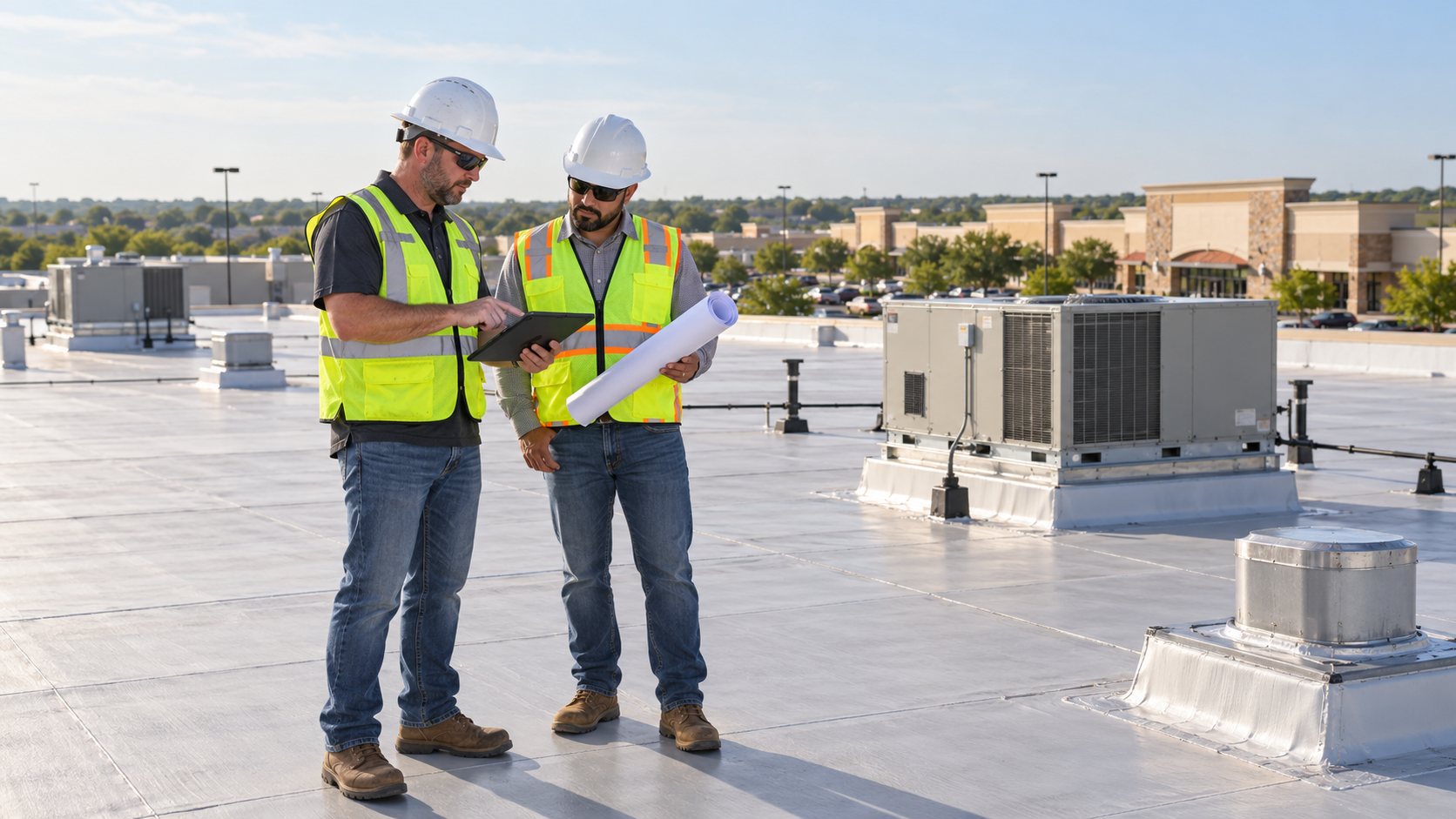
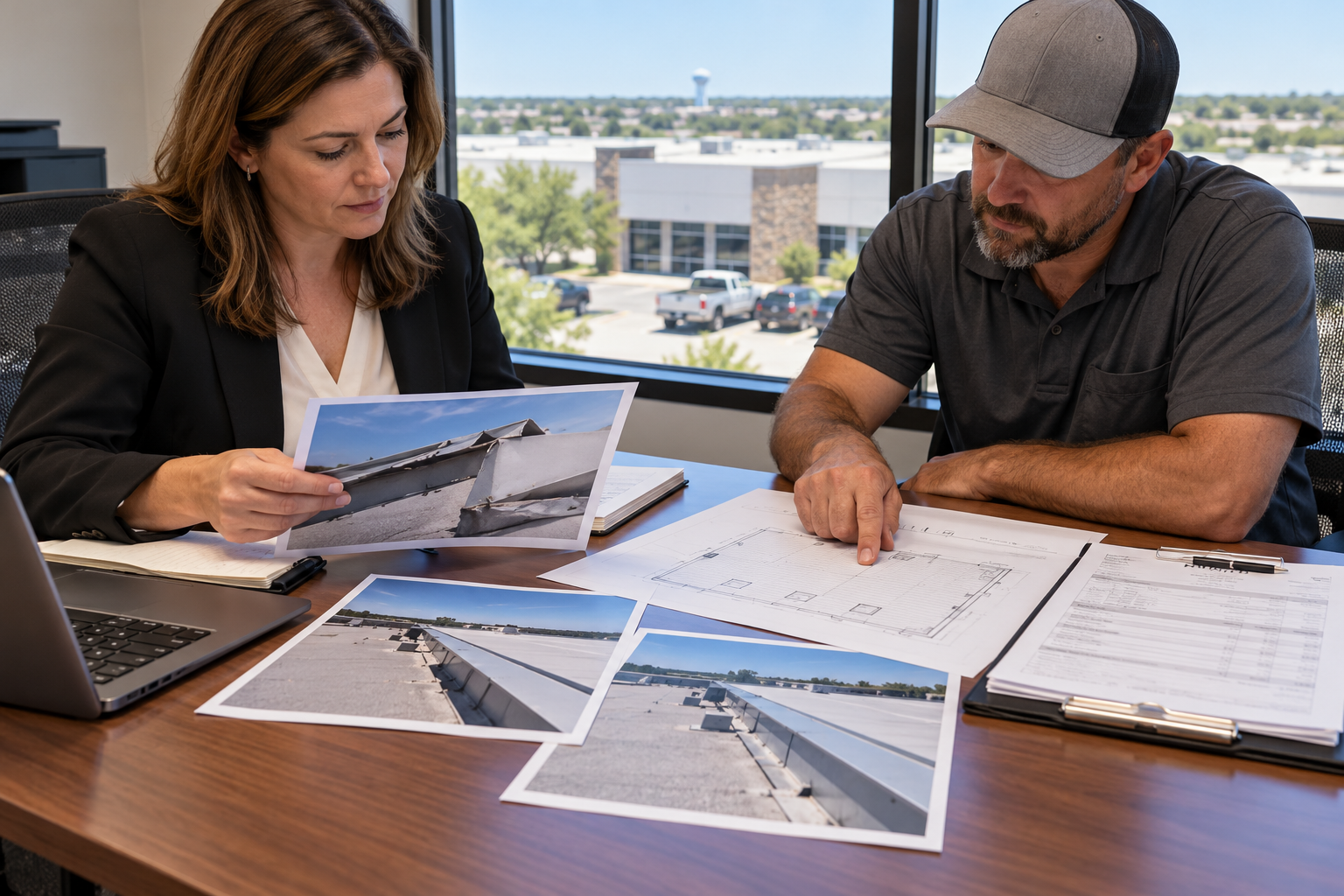
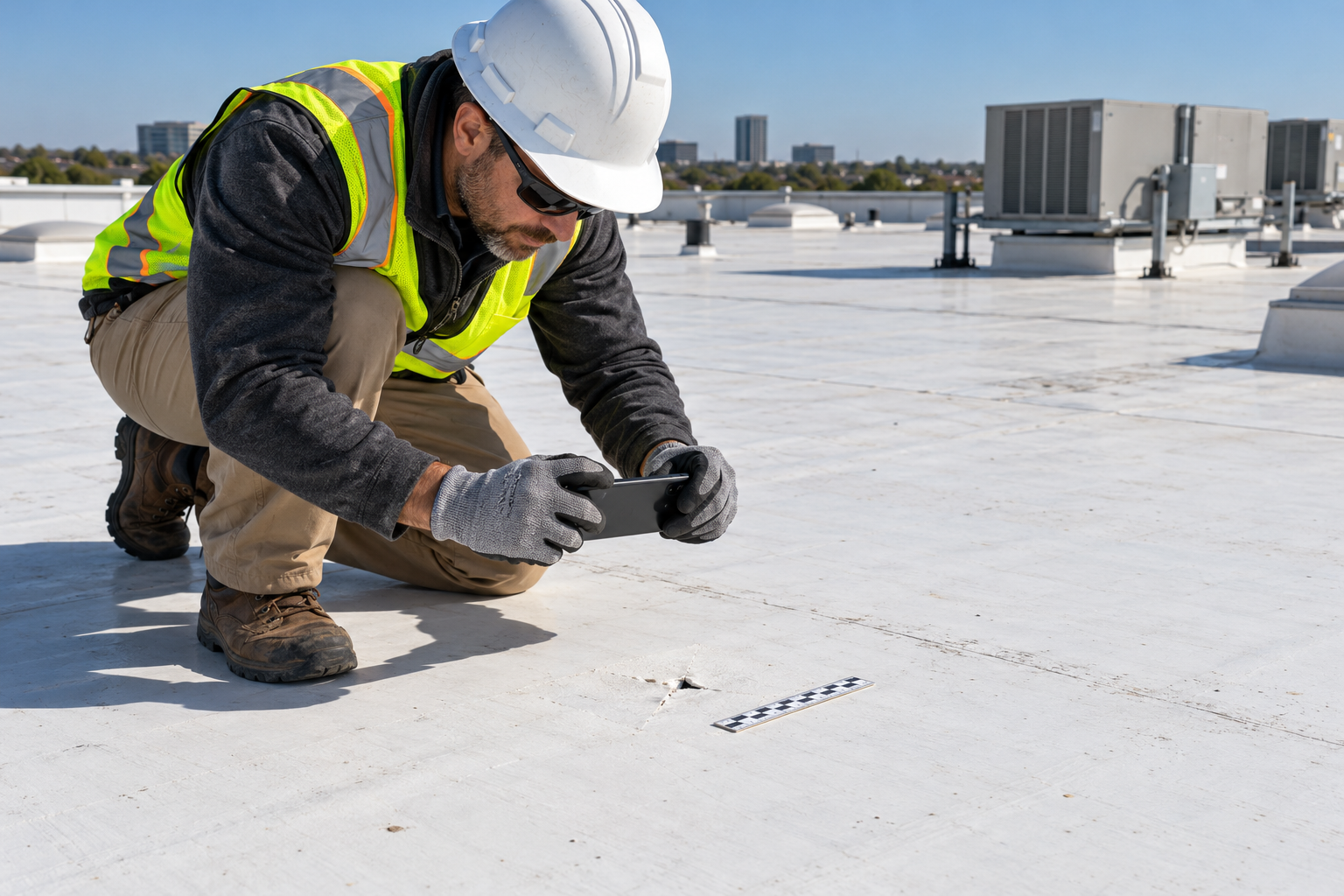
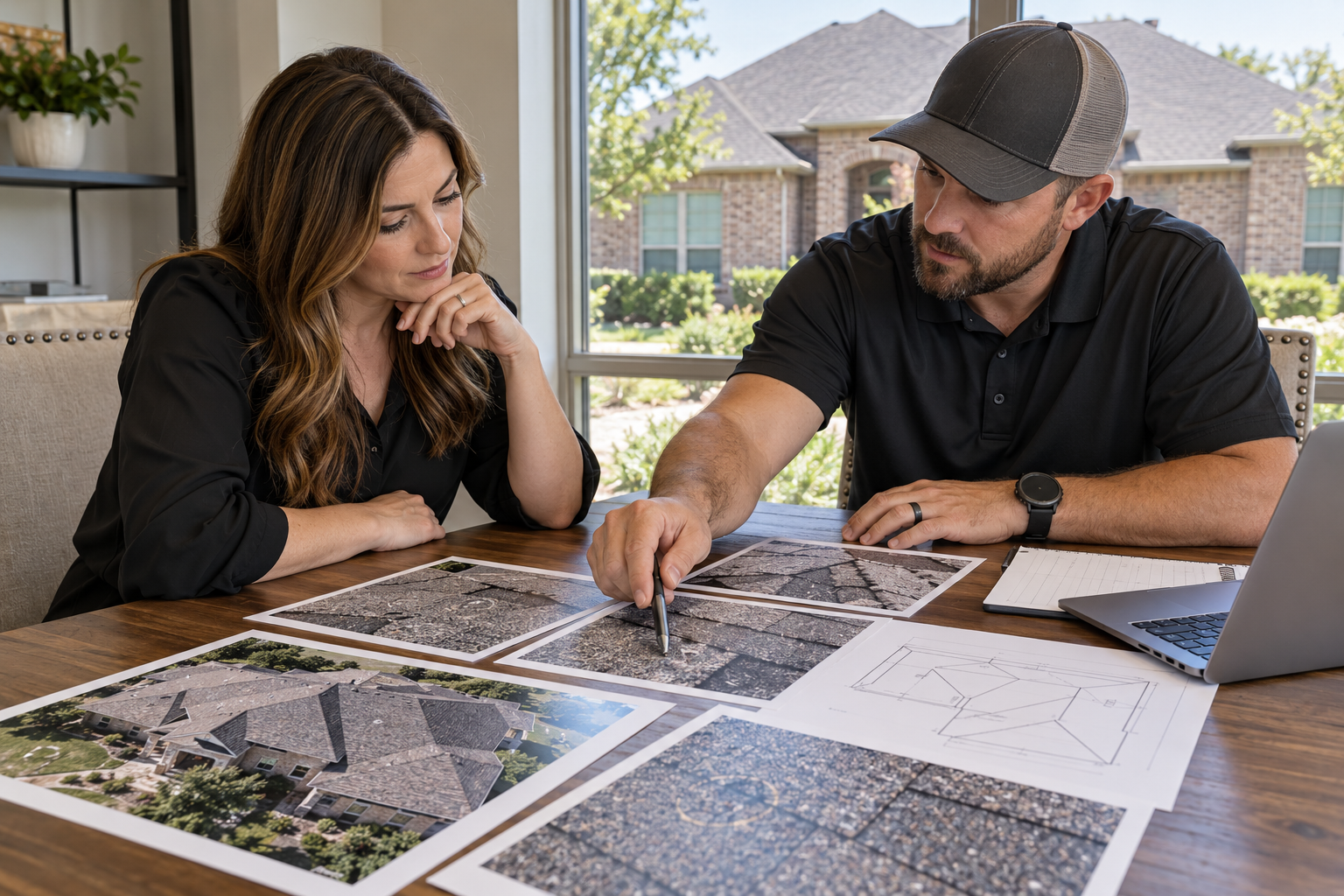
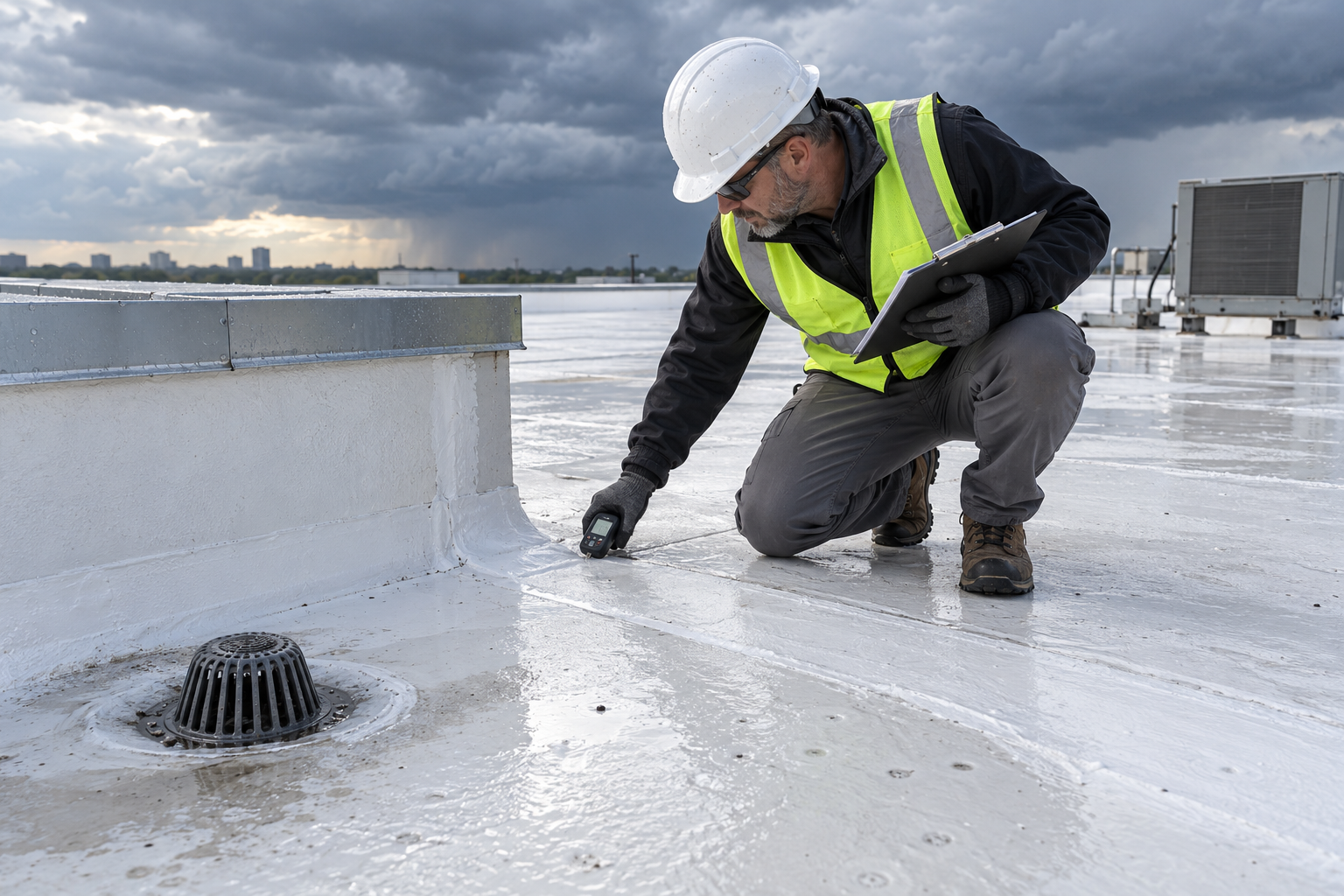
A professional assessment should identify roof type, approximate age, visible condition, repairs, leak history, drainage, equipment, access, interior evidence, and operational limitations. Photographs should include overviews and close-ups tied to a roof plan. Report limitations honestly; a visual inspection cannot confirm every concealed condition.
Moisture investigation may use infrared scanning, electrical capacitance, nuclear methods, core samples, test cuts, probes, or combinations as appropriate. Each method has limitations and requires interpretation. Wet areas should be verified and mapped. The scope should state whether isolated wet materials will be removed or whether the extent makes restoration unsuitable.
Adhesion tests, pull tests, deck observations, coating thickness measurements, and laboratory analysis may also be appropriate. The goal is not to collect every possible test. It is to reduce the uncertainties that could cause coating failure, unexpected cost, or an inaccurate recommendation.
Installation sequence for an acrylic restoration
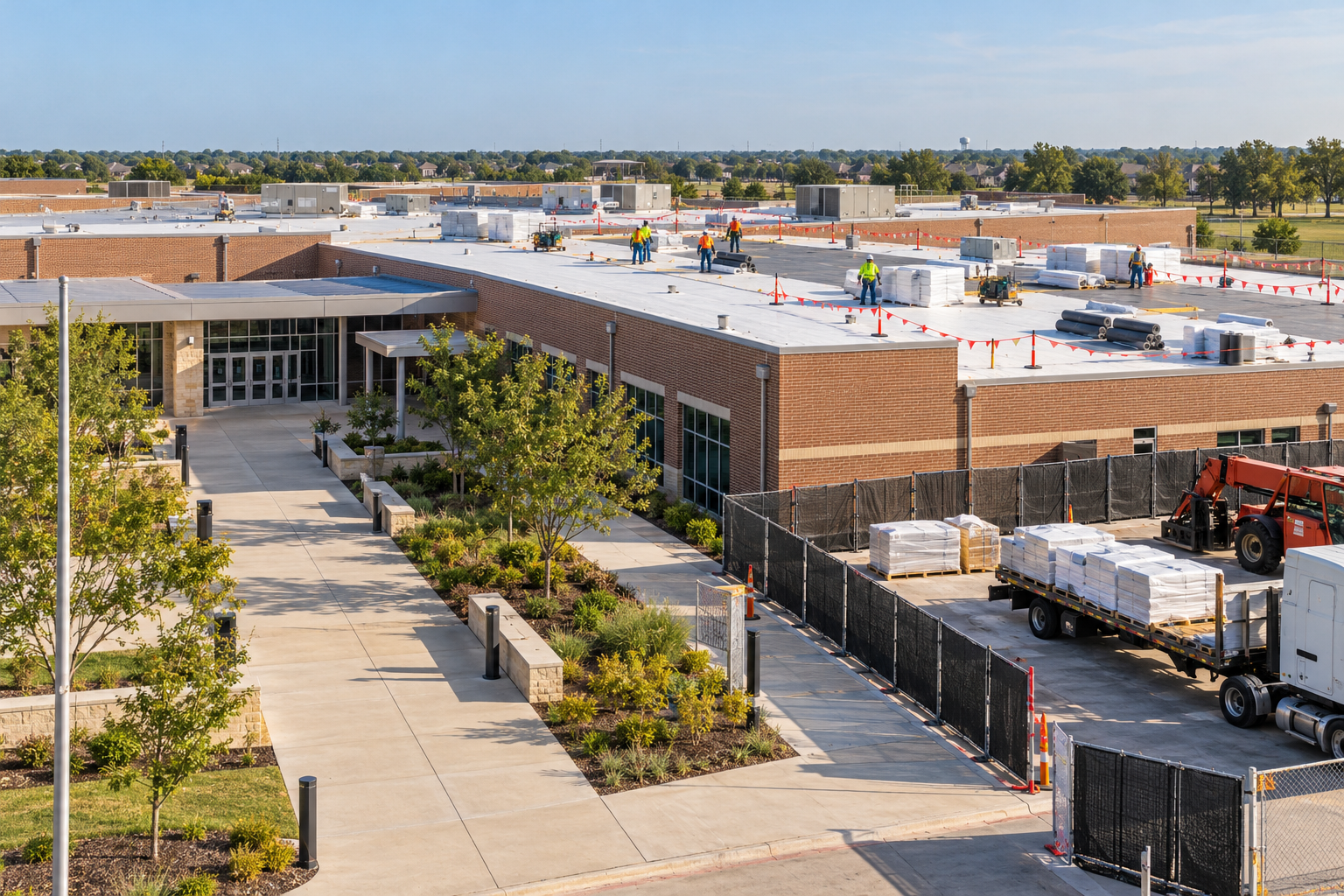
A responsible project commonly begins with mobilization, access planning, safety controls, interior protection, and weather monitoring. The roof is inspected again, debris is removed, drainage is cleared, and cleaning is performed using approved methods. The surface must dry before repairs, primer, or coating proceeds.
Crews then complete substrate repairs and replace wet or unstable materials within the authorized scope. Seams, fasteners, cracks, penetrations, curbs, walls, drains, scuppers, edges, and transitions receive specified detail treatment. Primer is installed where required and allowed to cure. Test areas can confirm compatibility and appearance.
Base, reinforcement, intermediate, and finish coats are applied at the required rates. Each layer must dry sufficiently. Crews document weather, material batches, quantities, roof areas, repairs, and quality checks. Final inspection addresses coverage, pinholes, thin areas, incomplete details, drainage, cleanup, and warranty requirements.
Closeout should include the accepted scope, changes, final roof plan, photographs, product information, material records, inspection reports, warranty documents, maintenance requirements, and emergency contact information. A coating project is not complete merely when the roof turns white.
Maintenance in the years after application
Acrylic coating is renewable, which can be an advantage when the roof remains eligible and is maintained. Recoating may restore surface thickness and reflectivity before widespread failure develops. The timing depends on exposure, product, thickness, drainage, traffic, contamination, repairs, warranty, and inspection findings.
Inspect on a planned schedule and after significant hail, wind, tornado, debris, or heavy-rain events when access is safe. Keep drains clear. Check seams, reinforced details, walls, curbs, penetrations, edges, equipment, walk paths, ponding areas, and previous repairs. Control other trades and require them to report cuts, dropped tools, new penetrations, and spilled chemicals.
Repairs must be compatible with the existing acrylic system. Clean and prepare the area according to current instructions. Document location, cause, materials, photographs, and completed work. Repeated failure in one area may signal movement, moisture, drainage, or substrate problems that require more than another patch.
Insurance and underwriting considerations
Insurance carriers may ask about roof material, age, installation date, condition, maintenance, leaks, storm history, remaining service life, inspections, permits, warranties, and replacement plans. Coating can provide useful documentation when the project is properly scoped and closed out, but it does not change the carrier’s authority to evaluate risk.
Before work begins, property owners should ask their insurance representative whether coating is accepted for the building and what documents are needed. Confirm whether the carrier distinguishes maintenance coating from a warranted restoration system, whether it has age or material limitations, and whether it requires replacement instead of restoration. Obtain responses in writing.
Showtime Exteriors can document roof conditions and the work performed. It cannot interpret policy rights, guarantee renewal, promise coverage, or decide claim payment. Owners should consult licensed insurance and legal professionals for policy-specific advice.
Acrylic versus silicone, TPO, EPDM, and replacement
Acrylic may be attractive when a roof is dry, stable, compatible, drainable, and in need of reflective restoration. It is water based, can offer good ultraviolet resistance, and may be renewed. Its weather-dependent drying and potential ponding-water limitations require careful evaluation.
Silicone coatings cure differently and some products are approved for permanent ponding water, but silicone can attract dirt, become slippery, complicate adhesion of future materials, and has its own repair requirements. Urethane and hybrid coatings may offer other abrasion or impact properties. Fabric-reinforced systems add a different scope from a simple field coating.
TPO and PVC are heat-welded single-ply systems that may be installed as recover or replacement assemblies with new insulation, cover board, attachment, and details. EPDM has different membrane chemistry and seam methods. Modified bitumen and metal retrofit may fit other conditions. Full replacement can remove wet materials and correct deck, insulation, drainage, and attachment conditions that coating cannot.
The right choice comes from inspection and lifecycle comparison. Consider initial cost, eligibility, repairs, moisture, energy, disruption, drainage, hail and wind goals, warranty, future maintenance, insurance requests, and the cost of delaying replacement.
Questions to ask before approving acrylic coating
What existing roof system, substrate, age, moisture, drainage, attachment, and repair conditions were verified?
Why is restoration appropriate instead of repair, recover, or replacement?
What exact acrylic manufacturer, product, primer, reinforcement, coating sequence, and finished thickness are included?
Is the product approved for every existing substrate and repair material on the roof?
What adhesion and moisture testing will be completed, and how will results be documented?
How will ponding water, low areas, clogged drains, deflection, and overflow drainage be addressed?
What hail or impact testing applies to the complete proposed system, and what does it not guarantee?
How will loose membrane, deck, insulation, perimeter edges, flashings, and wind-related weaknesses be corrected?
What weather and cure windows are required, and what happens if rain affects uncured coating?
How will coverage rates, wet-film thickness, material use, repairs, photographs, and final quality be verified?
Who issues the workmanship and manufacturer warranties, and what maintenance obligations or exclusions apply?
What insurance requirements have been confirmed in writing, and what closeout documentation will be provided?
Frequently asked questions
Is acrylic roof coating good for Texas heat?
It can be. White acrylic coating can provide a reflective surface and ultraviolet protection on an eligible roof. Energy and temperature benefits vary, and coating does not replace adequate insulation, drainage, compatible materials, or maintenance.
Can acrylic coating withstand hail?
Some reinforced acrylic systems may have impact-related testing, but no coating is hail-proof. Performance depends on the complete assembly, substrate, reinforcement, thickness, age, temperature, and storm severity.
Does acrylic coating resist high winds?
Coating can remain adhered when properly specified and installed, but it does not independently secure loose roofing layers. Wind resistance depends on the existing roof, deck, attachment, insulation, edges, flashings, and repairs.
Can acrylic coating be installed over ponding water areas?
Do not assume so. Many conventional acrylic products restrict or exclude prolonged ponding. Correct drainage or select a product and system specifically approved for the observed condition.
Can acrylic coating go directly over gravel BUR?
Usually not without extensive evaluation and preparation. Gravel prevents uniform adhesion and conceals defects and moisture. Aging gravel BUR may be a stronger candidate for recover or replacement after investigation.
Is roof coating the same as roof replacement?
No. Restoration preserves an eligible existing roof and adds a protective surface. Replacement removes and rebuilds defined roof layers. Insurance carriers, warranties, and capital plans may treat them differently.
How long does acrylic coating last?
Performance varies with product, thickness, preparation, substrate, climate, drainage, traffic, maintenance, repairs, and warranty. A warranty term is not a guaranteed service-life prediction.
Can acrylic coating be recoated later?
Often yes, when the existing coating remains compatible, sufficiently adhered, clean, dry, and repairable. Inspection and preparation are still required before recoating.
Will coating guarantee insurance renewal?
No. The carrier determines underwriting, coverage, pricing, and renewal. Obtain its requirements in writing and provide accurate inspection and project documentation.
Is acrylic always cheaper than replacement?
Initial restoration cost may be lower on an eligible roof, but coating is not economical when extensive wetness, instability, drainage failure, or recurring defects remain. Compare lifecycle cost and risk, not only the first invoice.
The bottom line
Acrylic roof coating can be right for Texas commercial buildings when the existing roof is dry, stable, compatible, sufficiently attached, repairable, and properly drained. Its reflective surface can support hot-climate goals, and a correctly installed system can protect and renew an aging surface. Success depends on investigation, cleaning, repairs, adhesion, reinforcement, coverage, cure conditions, details, inspection, and maintenance.
It is not a universal answer for hail or wind, and it should not be used to hide wet materials or an aging gravel-covered BUR. Gravel can conceal deterioration and complicate inspection and insurance documentation. Where those problems are extensive, a more inspectable recover or replacement system may be the responsible path.
Showtime Exteriors serves commercial property owners across Texas and the Dallas–Fort Worth Metroplex. To schedule a commercial roof inspection and discuss acrylic coating, restoration, recover, or replacement options, call 817-400-ROOF (7663).
Helpful Showtime Exteriors resources
Fabric-reinforced coating cost for a Texas commercial building
Commercial roof inspection report evidence
Commercial roof inspection for insurance renewal
Commercial BUR roof insurance non-renewal in Texas
When to repair, restore, or replace silicone roof coating
Independent technical resources
U.S. Department of Energy: Cool Roofs
GAF: HydroStop Premium Acrylic System project profile
Henry: Acrylic curing and rain-window considerations
OSHA: Fall protection requirements
Editorial, technical, safety, and insurance disclaimer
This article provides general educational information, not a specification, bid, warranty, engineering opinion, code determination, energy analysis, safety plan, legal advice, insurance advice, or guarantee. Roofs, coatings, approvals, warranties, codes, policies, storms, and conditions vary. A qualified inspection and project-specific scope are required. Showtime Exteriors documents observed roofing conditions and performs authorized roofing work within its role; insurance carriers determine underwriting, coverage, premiums, renewal, and claim payment.
817-400-ROOF (7663) showtimeexteriors.com