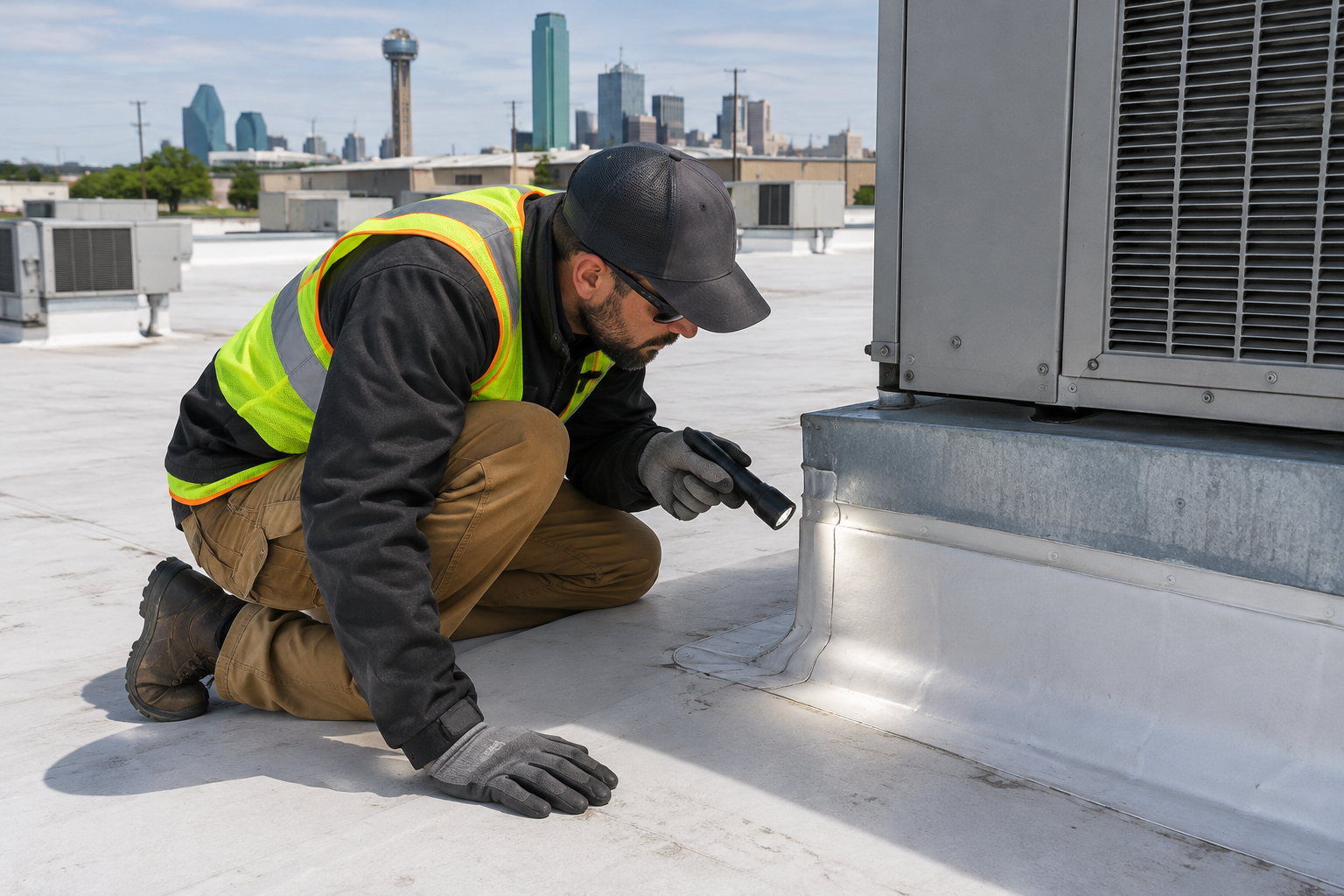


PVC Roofing in Texas: Benefits, Lifespan, and Best Uses
Explore PVC roofing in Texas, including lifespan considerations, chemical resistance, heat-welded seams, commercial uses, installation, and maintenance.
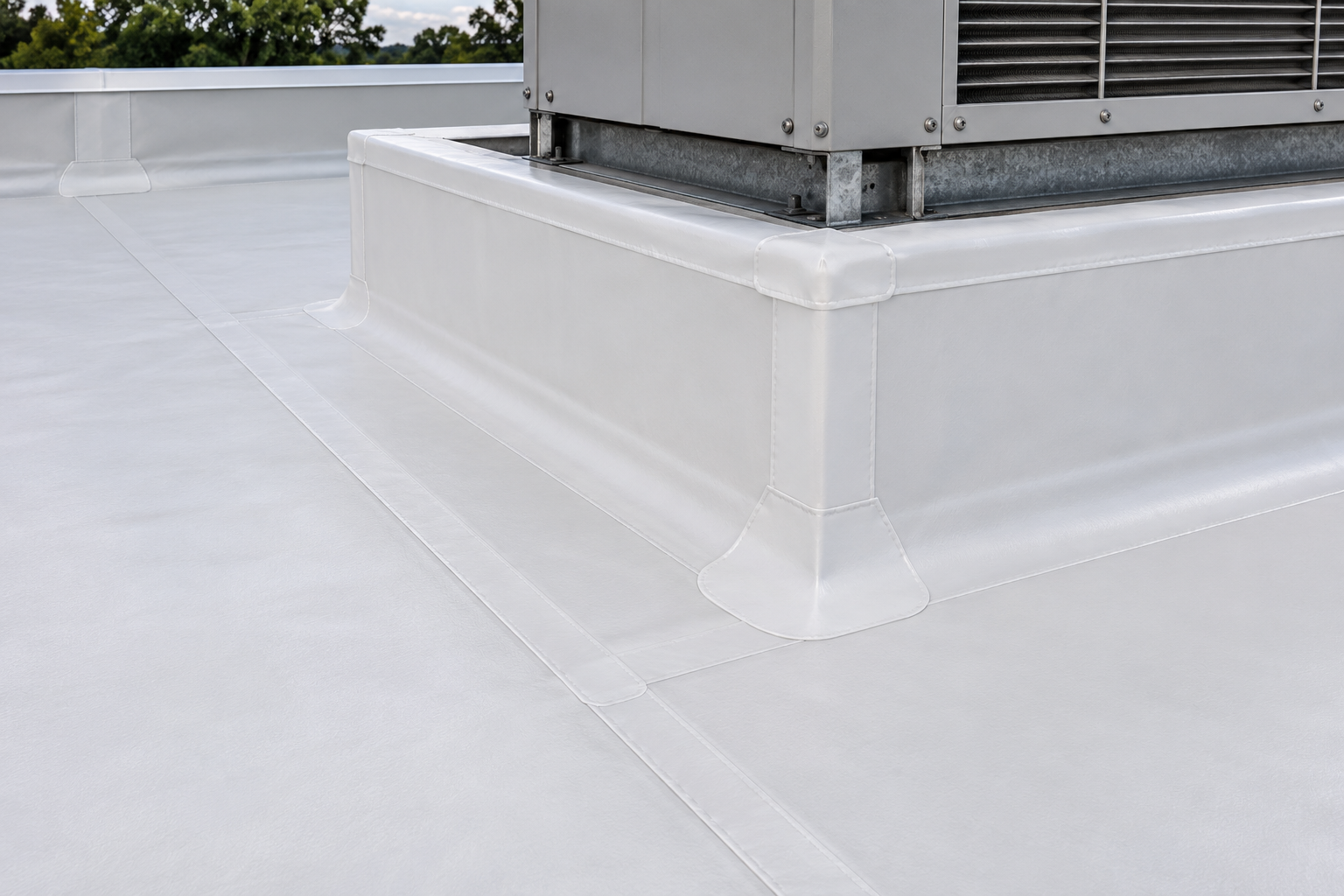
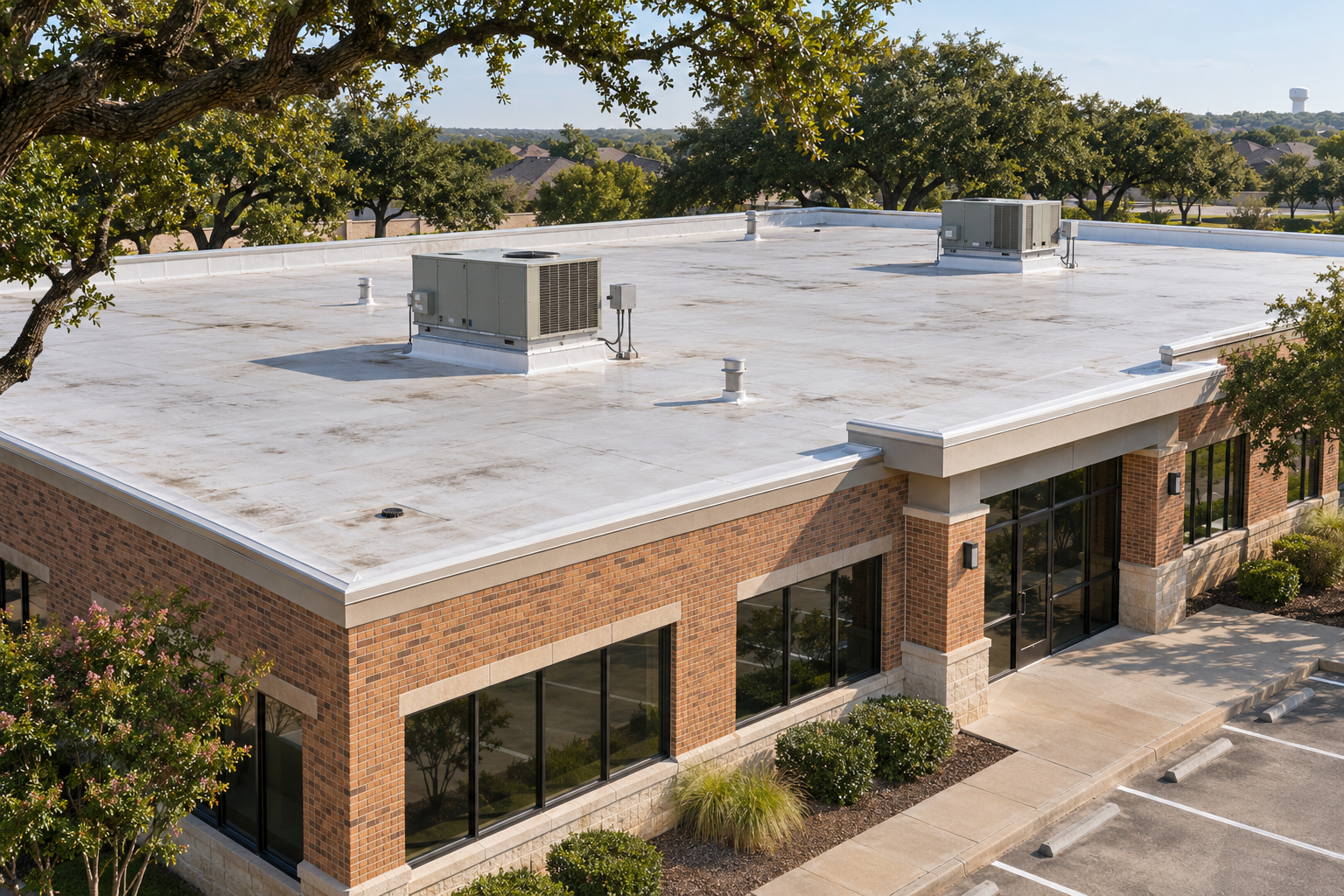
PVC roofing in Texas can be a practical option for low-slope commercial buildings when the specified assembly fits the roof, building operations, and exposure. Owners often consider it for its welded seams, available reflective surfaces, and product-specific resistance to oils, grease, or chemicals.
The right decision starts with the complete system. The visible membrane works with insulation, cover board, attachment, flashing, drainage, and the supporting deck. A proposal should explain how those components address the building’s needs and which existing materials can remain.
Lifespan also deserves a product-specific conversation. Some established PVC systems have documented decades of service, while an individual roof’s performance depends on design, installation, maintenance, and conditions. Showtime Exteriors provides commercial roofing services across Texas and can assess whether PVC is suitable for your property.
What is PVC roofing?
PVC stands for polyvinyl chloride. Commercial PVC roofing uses flexible single-ply membrane sheets as part of a specified low-slope roof assembly. Product formulations, reinforcement, thickness, backing, accessories, and attachment options vary.
Ask the contractor to identify the exact manufacturer and product. A description such as “white commercial roof” leaves the membrane type unresolved. Similar-looking roofs can require different installation and repair materials.
Johns Manville describes its PVC products as heat-weldable thermoplastic membranes and offers formulations selected for resistance to oils, fuels, and other chemicals. The exact product and exposure still need review. Johns Manville PVC roofing systems
Keep the product name and assembly specification with the proposal. Those details help you compare estimates and support future maintenance.
Where PVC may fit a Texas building
PVC deserves evaluation when the roof’s design and building use match a manufacturer-supported assembly. Low-slope restaurants, retail properties, offices, and industrial facilities can present different reasons to consider it.
For a restaurant, rooftop grease or exhaust exposure may be an important question. For an office, insulation, drainage, equipment access, and installation scheduling may have more influence on the specification.
Tell the roofing team how the building operates. Explain any exhaust discharge, cleaning chemicals, rooftop service activity, or planned equipment changes before a product is selected.
Ask the contractor to describe the conditions behind the recommendation. A useful proposal connects the selected roof to the property rather than relying on a broad material preference.
Restaurants and food-service properties
Start with the exhaust system and what reaches the roof. Identify grease discharge, collection equipment, service routes, and any history of contamination or leaks near curbs.
Ask the roofer and manufacturer to review the actual exposure. Product resistance information should be checked against the substances, concentrations, temperatures, and contact conditions involved.
Discuss containment and cleaning as part of the roof plan. The roof covering and exhaust-maintenance arrangement need to work together. Assign responsibility for servicing collection equipment and reporting spills.
Also plan installation around business activity. Air intakes, customer access, deliveries, and working hours can affect methods and scheduling. Have the contractor identify the work boundaries and any temporary operational restrictions in writing.
Industrial and manufacturing facilities
Industrial roofs can face exposure that differs from an ordinary office. Provide information about exhaust, process chemicals, nearby emissions, and maintenance procedures to the roof designer and manufacturer.
Request written confirmation of suitability for important exposures. A general claim of chemical resistance leaves the precise conditions unresolved.
Ask how the proposed assembly accommodates equipment supports, penetrations, access routes, and anticipated service traffic. Identify any other trades that must disconnect, lift, relocate, or restore equipment.
Consider planned production changes as well. A new process or exhaust system can alter roof exposure after installation. Keep the roofing specification available when later building work is being designed.
Offices, medical buildings, and retail centers
On an occupied building, the roof project needs an operational plan. Ask about noise, odors, air intakes, material staging, and access to entrances and parking.
For a medical office, discuss appointment schedules and sensitive areas below the work. For a retail center, coordinate tenant notices and delivery routes.
Ask why PVC is being proposed for the roof’s conditions and how an alternative assembly would compare. Product choice should consider the building, existing layers, insulation, drainage, and project goals.
A written scope can also help owners compare timing options. If work must proceed in phases, request clear boundaries and an explanation of how temporary transitions will be protected.
How long can a PVC roof last?
Use the exact product’s service history and manufacturer information as the starting point. Sika reports Sarnafil installations remaining in service after 30 years or more and cites third-party life-expectancy information for its membranes. Those records concern specified products and systems. Sika Sarnafil membrane service history
For a proposed roof, ask the contractor and manufacturer about the expected service life under the building’s actual conditions. Discuss the assumptions about maintenance, exposure, installation, and retained components.
The roof includes details that may need attention before the field membrane reaches the end of its useful service. Ask how inspection and maintenance should address those components over time.
Keep a distinction between planning life and a contractual warranty term. Both inform the decision, and each needs its own explanation.
Warranty length and service life
Read the manufacturer’s coverage and the contractor’s workmanship terms before selecting the project. Ask which components, labor, and other expenses are included and what exclusions apply.
Clarify registration, inspection, approved-installer, and notice requirements. If the building has unusual chemical exposure or other operational conditions, have those reviewed before ordering.
Ask how coverage changes over time and whether transfer requirements apply if ownership changes. Record the service contact and the process for reporting a concern.
A warranty comparison should use the actual documents. An advertised number of years leaves questions about coverage, maintenance obligations, and claim procedures unanswered.
Reflective surfaces and Texas heat
If reducing solar heat gain is part of your goal, request data for the exact membrane color and product. Ask how the surface performance relates to the complete energy plan.
The Department of Energy explains that cool roof benefits depend on climate, insulation, building use, energy prices, and heating and cooling systems. Reflective surfaces and insulation address heat transfer in different ways. Department of Energy cool roof selection guide
Ask for the assumptions behind any projected utility savings. A generic percentage leaves the building’s actual conditions unresolved.
Review insulation and air leakage where appropriate. A roof replacement can be coordinated with those questions, but each improvement should have a defined purpose and scope.
Heat-welded seams and installation quality
PVC membrane seams are joined using a product-specific heat-welding process. Ask how the installer prepares the material, establishes appropriate conditions, and checks the completed seams.
The same attention belongs at corners, pipes, curbs, walls, and other transitions. A well-described proposal identifies the accessories and details needed for the complete roof.
GAF’s TPO/PVC manual covers preparation, welding, seam repair, quality control, flashing, and drainage details for its systems. Ask the contractor to follow current requirements applicable to the actual product and assembly. GAF TPO and PVC roofing system manual
Request completion records that identify the work performed and any required manufacturer review. Keep them with the product specification and warranty documents.
Thickness, reinforcement, and attachment
Ask for the membrane thickness and how it is specified. Products may have different reinforcement, backing, and installation arrangements, so thickness alone leaves the complete comparison unresolved.
Discuss how the membrane will be attached and why that method suits the deck and design. The proposal should identify associated insulation, cover board, fasteners, adhesives, or other required components.
If alternate thicknesses or systems are offered, request separate installed prices with differences explained. Ask how each option affects the specified assembly and warranty eligibility.
For a property-level discussion of weather exposure and roof design, review Showtime Exteriors’ North Texas PVC roofing guide.
Compatibility with existing materials
Before a recover or repair, ask the contractor to identify the existing layers and adjoining materials. Product compatibility can influence the need for separators or other details.
Carlisle identifies several materials that can create direct-contact compatibility concerns with flexible PVC, including certain asphaltic and polystyrene materials. Its guidance describes separation as part of addressing those contacts. Have the manufacturer approve the actual assembly and transitions. Carlisle PVC substrate compatibility guidance
Ask how the proposal handles roof-to-wall barriers, old patches, and retained roof sections. Those connections should be resolved before installation.
If the existing roof cannot be identified confidently, ask what investigation is needed. A clear answer can prevent a recover proposal from depending on an unverified assumption.
Drainage needs its own assessment
Ask how the roof discharges water and what the inspection found at drains, scuppers, gutters, and low areas. The membrane selection leaves drainage design as a separate question.
A recurring collection area may require evaluation of slope, outlets, or supporting conditions. Ask the contractor to explain the cause it has established and the proposed correction.
For internal drainage, coordinate the roofing connection and pipe system responsibilities. Identify which trade handles each part and where the costs appear.
If tapered insulation or other drainage work is proposed, request a plan showing the intended water path. Ask how equipment curbs and roof sections affect it.
Hail, wind, and the complete assembly
Ask for documented performance information for the proposed assembly. Membrane, cover board, insulation, attachment, deck, and perimeter details can influence the roof specification.
Describe the property’s location and exposure. The designer and contractor should identify requirements appropriate to that building and jurisdiction.
If a particular hail or wind classification matters to the purchase, request the supporting assembly information and installation requirements. Confirm that the bid includes those components.
For an existing roof after a storm, ask for an assessment of physical conditions before selecting a scope. A material name alone leaves the extent and repairability of any observed concern unresolved.
Maintenance and rooftop traffic
Plan maintenance around the system requirements and the building’s activity. Equipment service, debris, drainage, and flashing deserve attention alongside the field membrane.
Carlisle recommends regular roof evaluation and review after major weather events or service activity. Its guidance highlights drains, penetrations, loose flashing, perimeter components, and areas of ponding. Arrange the frequency and scope with the roofing professional for your system. Carlisle commercial roof maintenance guidance
Ask about designated service routes and protective surfaces where needed. Share access instructions with rooftop trades and request that they report concerns or damage.
Record maintenance dates and locations. A useful history helps the next professional understand changes over time.
Repairing an existing PVC roof
Start by identifying the product and the condition around the concern. Ask whether a reliable repair can be integrated with the retained membrane and underlying materials.
A proposal should define preparation, products, repair boundary, and verification. If moisture beneath the surface is suspected, ask what investigation would clarify the extent.
For a focused opening, review Showtime Exteriors’ commercial membrane puncture guide. Discuss which observations on your building support the recommended action.
Keep the repair information with the roof records. Product identification, photographs, and location references help with later service.
Recover or replacement?
Ask the contractor to assess whether existing layers can remain. Condition, moisture, compatibility, attachment, drainage, loading, and applicable requirements can affect that decision.
For a recover, request the basis for retaining the assembly and the treatment of any affected areas. Ask what investigation supports the proposed boundary.
For replacement, identify removal, disposal, deck assessment, insulation, cover board, membrane, and details. Have the contractor explain how concealed conditions are priced and authorized.
A proposal can include alternatives when the findings support them. Compare complete scopes and ask which unresolved conditions could change the recommendation.
What affects PVC roofing cost?
Roof area is one input. Product, thickness, attachment, existing layers, moisture findings, insulation, detailing, access, equipment, and warranty requirements can influence the total.
Ask for quantities and a complete specification. A membrane-only price leaves much of the installed project unresolved.
Showtime Exteriors’ Texas office building roof replacement guide discusses broad planning considerations across commercial systems. Your estimate should be based on the property and defined work.
Separate confirmed corrections, optional improvements, and allowances. Request a written process for changes if the crew discovers concealed damage.
Compare PVC with TPO and EPDM
Ask why the contractor recommends each candidate for the building’s actual conditions. Membrane choice, chemical exposure, attachment, detailing, retained materials, and available assemblies all belong in the comparison.
QuestionWhat to requestWhat is installed now?Product identification and existing assemblyWhat exposure matters?Manufacturer review of actual conditionsWhat stays?Documented suitability of retained layersWhat changes?Complete installed specificationWhat does it cost?Matching scope and separate alternativesWhat follows installation?Maintenance and warranty requirements
A familiar product name should lead to a specific assembly discussion. Ask each bidder to explain the advantages and requirements it considers relevant to the property.
Project scheduling and local requirements
Have the contractor verify permit and inspection requirements for the address and scope. Assign responsibility for applications, fees, inspections, and closeout where applicable.
Discuss tenant schedules, delivery routes, air intakes, parking, noise, and work hours. Ask how temporary protection and daily completion boundaries will be managed.
Identify equipment trades needed for lifting, disconnection, relocation, or restoration. Put their responsibilities and sequence in writing.
Choose a contact who can authorize changes and communicate with occupants. The roofing supervisor should know how to reach that person throughout the project.
Keep the roof records usable
Request the final specification, product details, photographs, invoices, approved changes, and warranty information. Include any applicable inspection records.
Mark repair and equipment locations on a roof plan. A simple dated diagram can help future managers and service contractors understand what changed.
Showtime Exteriors’ guide to commercial roof maintenance records offers context for organizing the building history.
Keep originals and an accessible digital copy. Record the service contact and the instructions for reporting a concern.
Questions to settle before selecting PVC
Begin with the reason PVC is being proposed. Ask the contractor to identify the building condition or owner objective it addresses. A chemical exposure concern, a planned reroof, or a repair to an existing membrane can lead to different specifications.
Then confirm the manufacturer’s review where needed. If the building has unusual exhaust or process exposure, provide the actual information available instead of relying on a broad description. Ask what documentation the manufacturer needs to evaluate suitability.
Review the existing roof findings. Ask which layers were identified, where moisture investigation is warranted, and whether any area remains inaccessible. A proposal should identify assumptions that could change the work.
Next, check the details. Curbs, walls, drains, edges, and equipment supports should appear in the scope. Ask whether another trade needs to be involved and how the work will be coordinated.
Finally, compare the accepted product and assembly with the warranty requirements. If the specification changes during bidding, ask whether the coverage or inspection process changes too. Keep the final decisions in one clear proposal.
An illustrative comparison between two proposals
Imagine two contractors offer PVC roofing for the same building. One price includes removal of affected insulation, new cover board, detailed curb work, and a specified warranty package. The other assumes more existing material can remain and includes a different attachment method.
The difference may reflect legitimate design choices or unresolved assumptions. Ask each contractor what evidence supports retention and which components are included. Request the same scope where practical before comparing the totals.
A lower base price can also contain allowances that deserve review. Ask how quantities will be measured, how additional work is authorized, and whether unused allowances are credited.
Compare schedule and operational requirements as well. One proposal may fit the tenant’s available work window more closely or include equipment coordination that another leaves to the owner.
Record the remaining differences after clarification. That gives you a concrete basis for choosing the approach and contractor.
Plan for changes in building use
A roof specified for today’s operations may encounter different conditions after a tenant change or renovation. Tell the roofing team about foreseeable equipment, exhaust, or occupancy changes while the system is being evaluated.
If a restaurant tenant is being added, involve the appropriate roofing and equipment professionals before new penetrations are made. Ask how grease management, access, and flashing will be addressed.
If solar or additional mechanical equipment is planned, review support, attachment, service routes, and warranty coordination. Have those details designed for the selected assembly.
Keep the roof information available to the people planning later work. A product name, roof plan, and installation record can help them ask the right questions early.
When ownership or management changes, transfer the maintenance history and service contacts along with the warranty documents. That continuity helps the next team understand the roof’s requirements and respond promptly when a concern appears.
Frequently asked questions
Is PVC appropriate for every Texas roof?
Suitability depends on design, building use, exposure, existing materials, and the specified assembly. Ask for a property-specific assessment.
How long will the proposed roof last?
Request product-specific service information and discuss the assumptions about installation, exposure, and maintenance. Review warranty coverage separately.
Is PVC worth considering for restaurants?
It can be a candidate where grease or chemical exposure matters. Have the manufacturer review the actual exposure and proposed system.
Can a PVC roof be repaired?
A suitable localized repair may be possible after product identification and condition assessment. Ask for the method, boundary, and limitations.
Does white roofing guarantee energy savings?
Results depend on the product and building. Ask for supporting data and the assumptions behind any estimate.
What should I compare in bids?
Compare measured area, complete assembly, removal, underlying work, flashing, drainage, access, price, warranty, and change authorization.
Discuss PVC roofing for your Texas property
A useful roofing proposal connects the building’s conditions to an exact product and assembly. It should explain the benefits being pursued, required work, maintenance, and remaining questions.
Showtime Exteriors can assess your property and discuss PVC alongside other suitable commercial options. Call 817-400-7663 or request a free commercial roof assessment.