

How to Choose a Roofing Contractor in Cleburne, TX
Choosing a roofing contractor in Cleburne, TX? Compare inspections, estimates, insurance, permit responsibilities, warranties, and project communication.

Choosing a roofing contractor in Cleburne, TX, starts with finding someone who can explain your roof’s condition and put the proposed work in writing. You should understand what needs attention, how the contractor reached that conclusion, what the price includes, and who will answer your questions after installation. Those details matter whether you’re dealing with a new ceiling stain, replacing an aging shingle roof, or comparing materials for a larger renovation.
A roof estimate can look straightforward until work begins. One bid may include new flashing while another assumes the existing pieces can be reused. One contractor may allow for damaged decking, while another prices every sheet separately. If you compare only the totals, you can miss the decisions that determine both the finished roof and your final bill.
For Cleburne homeowners, a useful starting point is a conversation about the property, followed by an inspection and a clearly defined scope. The Showtime Exteriors team provides North Texas roofing services and can discuss inspection and project options for your home.
Start by describing the problem you need solved
Before calling contractors, write down what you’ve noticed and when it happened. A stain that appears during wind-driven rain can point to different inspection priorities than moisture around a bathroom vent. A missing shingle on an otherwise serviceable roof raises a different question from repeated leaks across several rooms.
You don’t need to diagnose the roof yourself. Your observations help the contractor decide where to begin and what additional information may be useful. Note whether the problem followed a storm, whether earlier repairs helped, and whether the leak occurs every time it rains.
If you have photographs, old invoices, roof warranty paperwork, or a previous inspection report, gather them before the appointment. For an addition or converted garage, mention any history you know about changes to the roofline. These records can help explain transitions between materials and sections installed at different times.
Also decide what outcome you’re considering. You might want a focused repair, a replacement estimate, or two options for budgeting. State that goal at the first call so the contractor can prepare an assessment that answers it.
Look for experience that matches your roof
Ask about projects involving your roof type and the details your property presents. Experience replacing architectural shingles on a straightforward ranch home differs from experience with a steep specialty roof or a low-slope commercial assembly. A contractor should be able to describe the relevant work and show examples with the owner’s permission.
For an older Cleburne home, ask how the team assesses decking, existing roof layers, and changes made during previous repairs. For a roof with skylights or a chimney, ask about those flashing details specifically. If you’re considering metal or synthetic shake, discuss who would install the system and how that crew’s experience relates to the proposed product.
A nearby office can make follow-up easier, but evaluate the actual service arrangement. Find out who manages the project, how appointments are scheduled, and how a warranty service request reaches the right person. Ask whether the company uses employees, subcontractors, or a combination, and who supervises the crew.
Homeowners comparing options can review Showtime Exteriors’ residential roofing services before discussing which approach fits the property.
Verify the company name, insurance, and references
The business name on the proposal should match the company you intend to hire. Check the address, phone number, and payment instructions. If the company trades under another name, ask for an explanation so you can connect the contract, insurance documentation, and invoice to the same business.
Request current proof of insurance and verify relevant coverage with the issuing agent or insurer. Ask how the proposed work and any subcontractors are addressed. A certificate gives you information to check, and the insurer can answer questions about policy status and coverage specifics.
When speaking with references, ask about work similar to yours. A reference who had a small repair may offer little insight into a full tear-off on a complex roof. Useful questions include whether the final scope matched the proposal, how unexpected work was explained, and whether someone returned promptly when a concern arose.
The Texas Department of Insurance recommends written bids, checking references, and taking time to examine documents before signing. Its guidance also warns about contracts presented as inspection releases and agreements with blank sections. Texas Department of Insurance contractor selection guidance
Read reviews for patterns across different jobs and dates. Look for descriptions of communication, cleanup, and follow-through. A detailed response to a problem can tell you more about the working relationship than a short star rating.
Confirm Cleburne permit and registration responsibilities
Ask who will verify the permit requirements for your address and scope. A roof repair, decking replacement, and structural alteration can involve different requirements. The contractor should identify what applies before work starts and include any necessary administrative steps in the schedule.
Cleburne’s Building Inspections division handles construction permits, reviews, and inspections. The city provides an online route for contractor registration and permit applications. Have the contractor confirm the current requirements directly with the city, including any registration applicable to the work. Cleburne Building Permits and Services
A Cleburne mailing address alone may leave a jurisdiction question unresolved. Tell the contractor whether the property is inside city limits, and ask them to confirm the authority responsible for the site. If the project includes a porch addition, structural repairs, or other trades, describe that work when asking about permits.
Put responsibility for applications, fees, inspection scheduling, and closeout in the agreement. Ask how you’ll receive the permit number and how the contractor handles a city inspection that requires a correction. Cleburne’s application page outlines the online process, including registration, fee payment, inspection scheduling, and status checks. City of Cleburne permit application instructions
Expect an inspection that connects findings to the recommendation
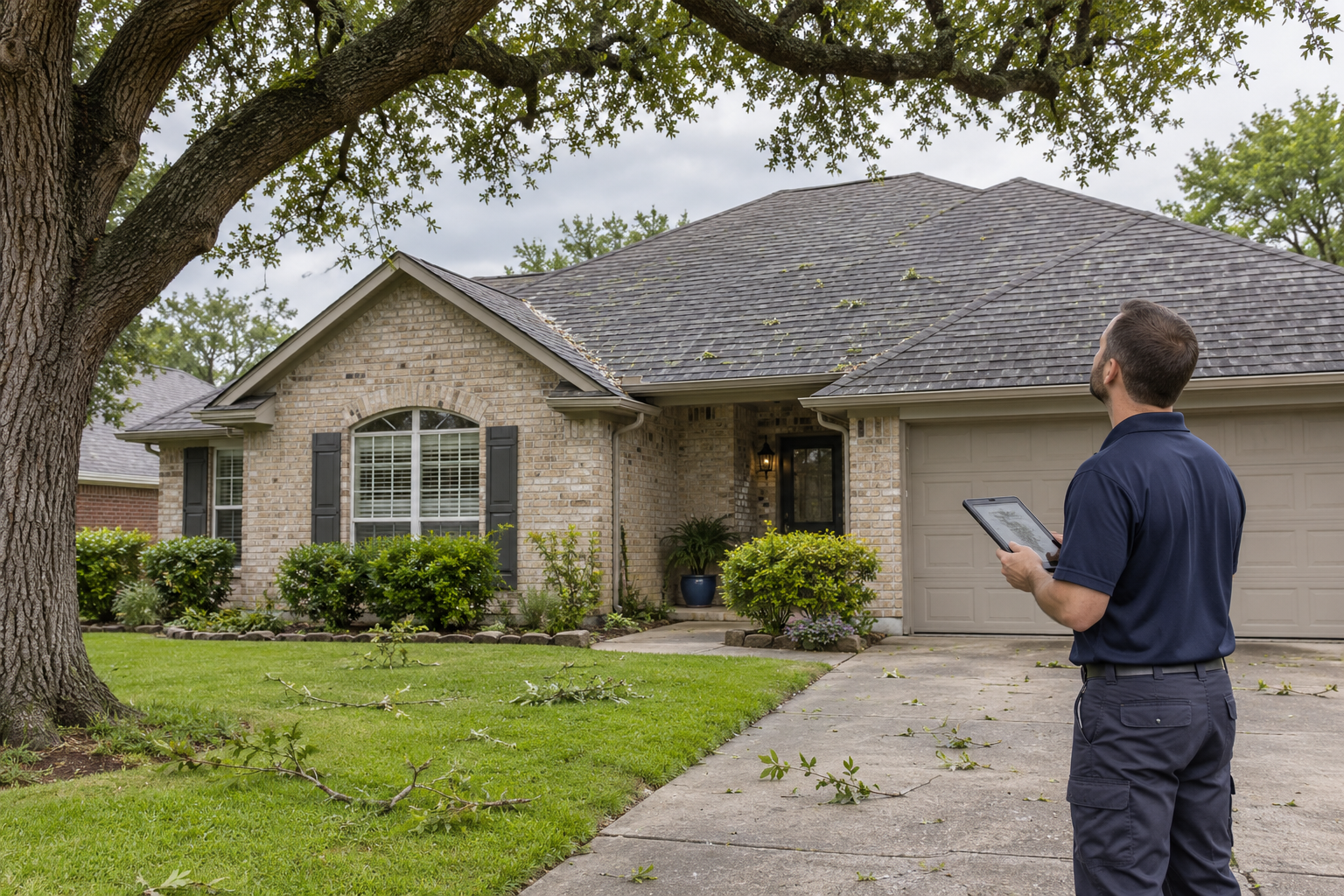
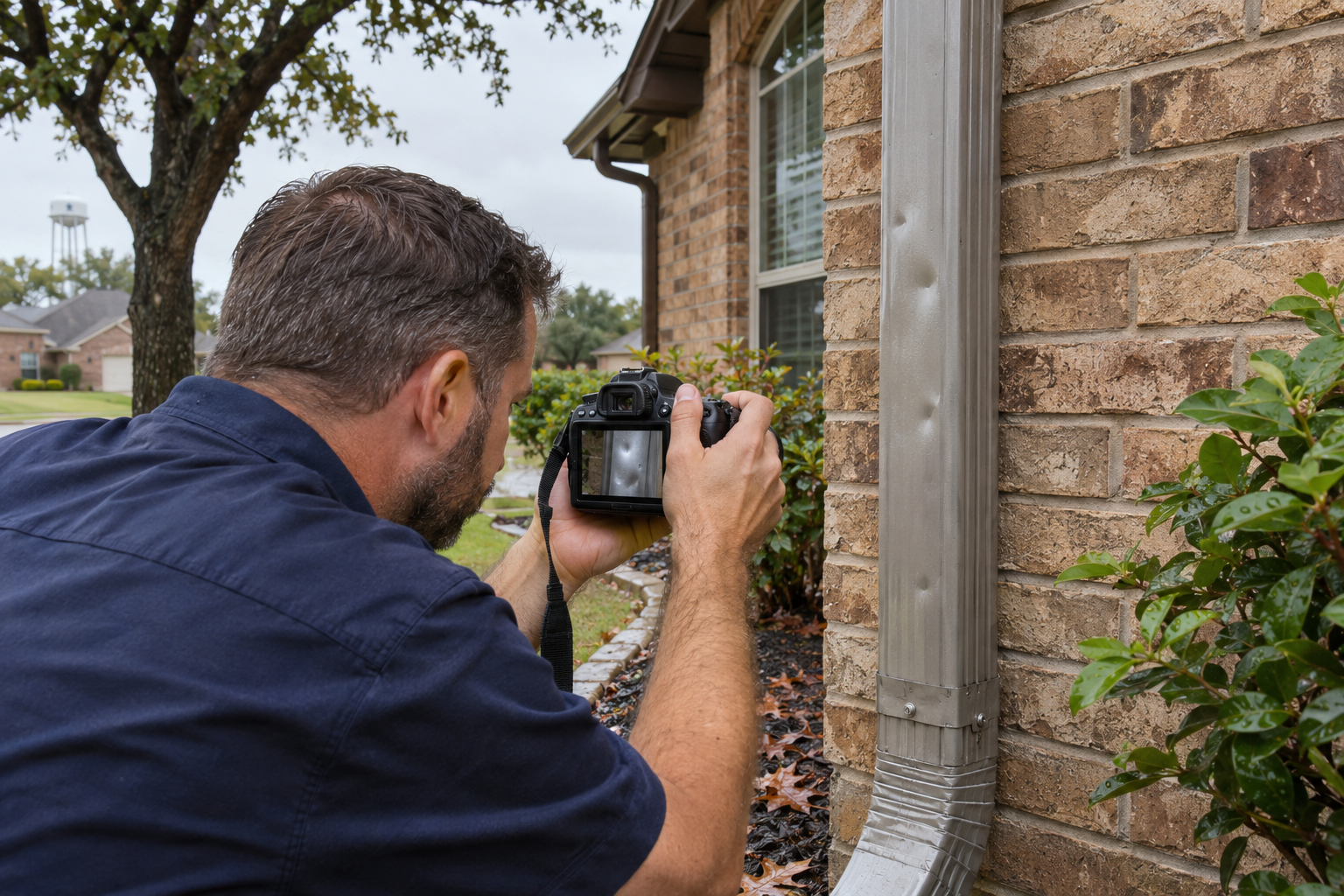
A useful inspection explains the condition observed and the work proposed to address it. Ask for photographs that show the location and context of concerns. A close-up can show a defect, while a wider photo helps you understand which roof plane or flashing detail is involved.
For a reported leak, ask how the contractor evaluated likely entry points. Depending on access and conditions, that may involve reviewing roof surfaces, penetrations, roof-to-wall connections, and accessible interior areas. A stain’s position can help guide the investigation, but the contractor should explain any uncertainty before promising a permanent solution.
Ask what couldn’t be assessed during the visit. Concealed decking, inaccessible attic sections, or covered transitions may require further investigation. You can then decide whether an exploratory step belongs in the scope before selecting a larger repair or replacement.
A replacement recommendation should explain the condition and extent that justify it. If a repair is possible, ask about its boundaries and expected limitations. If repeated repairs have failed, ask whether the next proposal addresses the same detail or investigates a broader cause.
Compare the scope before comparing the price
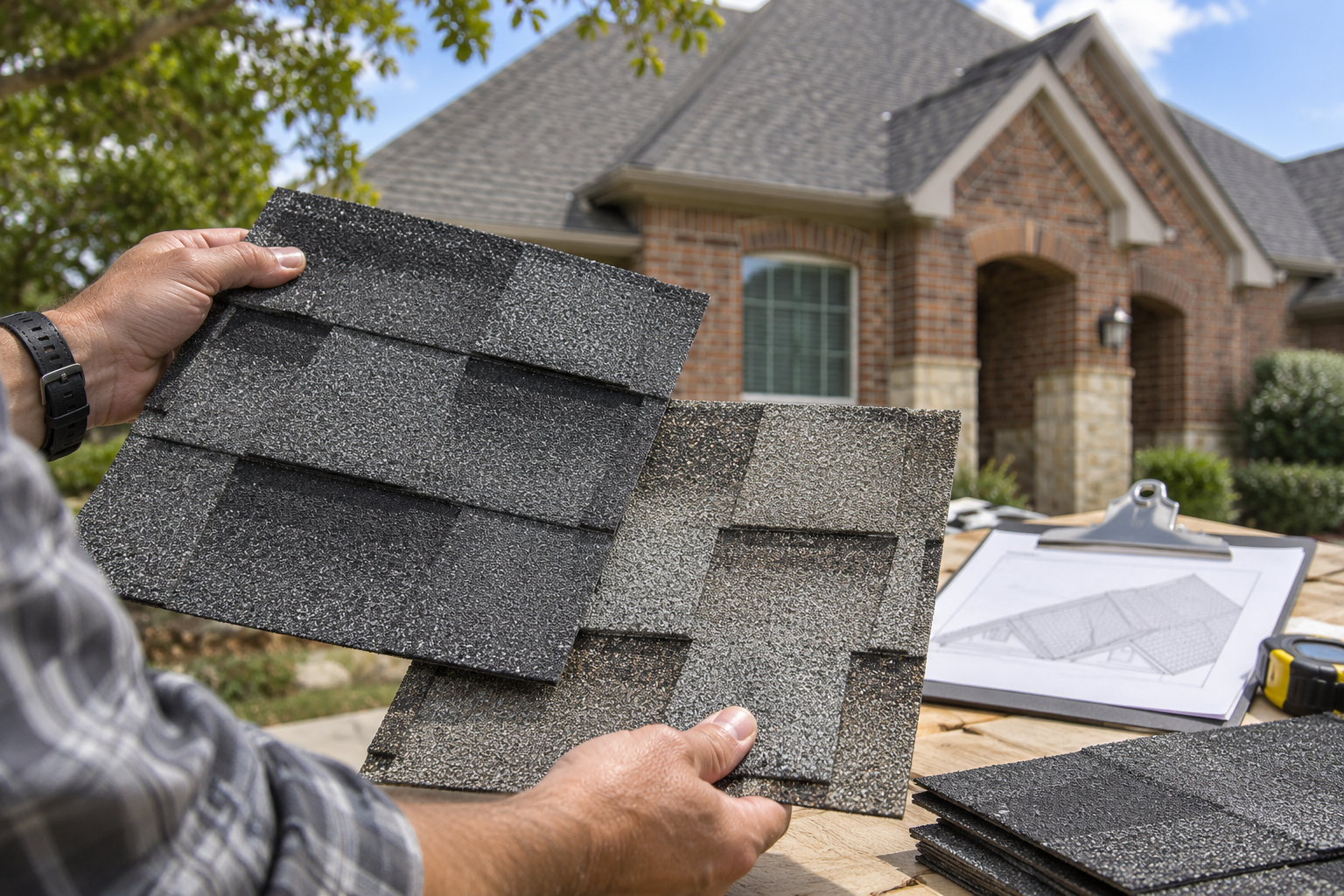
Request proposals that name the product and describe the work. “Replace roof” leaves too many decisions unresolved. Ask for the measured area, tear-off assumptions, proposed roof covering, underlayment, flashing work, ventilation changes, and disposal arrangements.
A measured roof area follows the roof surfaces. It can differ substantially from the heated floor area in a real estate listing. Garages, overhangs, porches, slope, and multiple stories affect that relationship. If a bid uses roofing squares, one square equals 100 square feet of roof surface.
Material quantities may include extra pieces for cuts and waste. Ask whether the price per square is based on measured roof area or the ordered quantity. If two contractors measured different areas, have them identify which sections they included.
Use a comparison table to make missing details visible.
Proposal itemWhat to ask each contractorRoof coveringWhich manufacturer, product line, profile, and color?Tear-offWhich sections and how many layers are included?DeckingWhat is included, and how is additional work priced?FlashingWhich pieces will be replaced, retained, or rebuilt?VentilationWhat changes are proposed and why?PermitsWho verifies requirements, pays fees, and schedules inspections?Site protectionHow will access, landscaping, equipment, and cleanup be handled?WarrantyWhat are the manufacturer and workmanship terms?
For a replacement discussion, Showtime Exteriors’ residential roof installation services provide a starting point for assessing the existing roof and considering next steps.
Understand how hidden damage becomes a change order
Decking conditions sometimes become clearer after the old covering is removed. Before signing, ask how the contractor will photograph concealed damage, explain the required correction, and obtain authorization.
A written unit price helps you evaluate an added charge. Ask whether that price includes material, removal, installation, disposal, and any associated labor. If the crew charges by sheet, confirm the sheet specification. If damage affects rafters or other structural components, ask how the work will be assessed and assigned.
Discuss who can approve changes if you’ll be unavailable during installation. A phone call followed by written confirmation can prevent misunderstandings, but the procedure should be agreed upon before tear-off.
For example, an illustrative proposal might include replacement of two damaged sheets and price further sheets separately. Another might carry no allowance. Compare the base scope and the likely additional cost under the same assumptions. Also ask whether an unused allowance is credited or simply forms part of a fixed price.
If extensive decking work already looks likely, request an alternate price before choosing the contractor. That makes a potentially large cost easier to plan for.
Discuss flashing, drainage, and connected trades
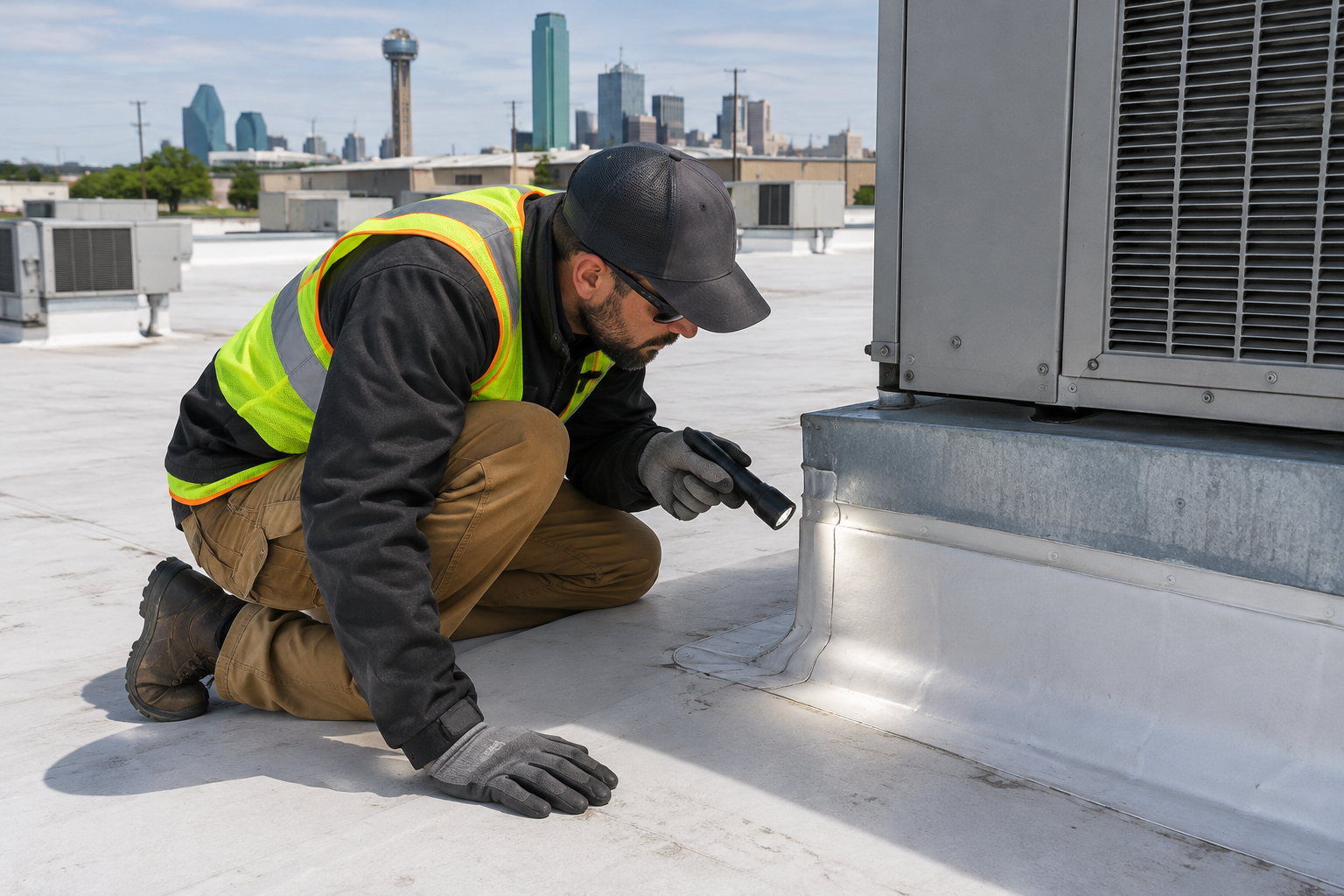
Ask the roofer to explain where water leaves the roof and where it meets walls, chimneys, skylights, or other surfaces. Those details can matter as much as the field shingles.
If the proposed repair involves a chimney, ask which part falls within the roofing scope and whether masonry work is also needed. If a leak may involve siding or a window above the roof, ask how the contractor will distinguish those responsibilities. The written scope should identify any work assigned to another professional.
For gutters, discuss whether they remain in place, need temporary removal, or require replacement. Ask how the roof edge will connect to the drainage system. If landscaping or an adjacent roof prevents a normal discharge path, mention that during the inspection.
Avoid assuming every ceiling stain can be resolved by changing the visible roof covering. A contractor who explains the investigation and coordinates connected work gives you a clearer basis for deciding what to authorize.
Keep insurance questions connected to the right party
If a storm led you to seek a roofer, ask for photographs, measurements, and a description of the observed conditions and proposed construction work. Keep your contractor’s estimate alongside your insurer’s documents so you can compare what each covers.
Texas prohibits a contractor from acting as a public insurance adjuster on a claim when the contractor also provides the work. It also prohibits offers to waive, rebate, or absorb the policyholder’s deductible. Direct coverage and settlement questions to your insurer or an appropriately licensed professional. Texas roofing and insurance law guidance
Before signing an agreement tied to a claim, ask what happens if the insurer approves a smaller scope or denies coverage. Make sure you understand the price, your payment obligations, and any cancellation provisions. If you choose an upgraded material, request its additional cost in writing.
A contractor can explain the roof scope and provide construction documentation. Ask to be informed about any additional work or costs the company communicates to the insurer. Keep copies of those communications with your project records.
If someone proposes a marketing credit, sign allowance, or other arrangement described as eliminating your deductible, check it before accepting. TDI explains how deductible waiver schemes can involve inflated bills and why the homeowner remains responsible for the deductible. TDI explanation of contractor deductible offers
Keep the project budget visible even while a claim is being reviewed. Ask the contractor to identify the base work, optional upgrades, and any amount that depends on a later decision. That breakdown helps you choose materials you can afford and understand the agreement you are signing. If a revision changes your obligations, request an updated document before authorizing the work.
Review deposits, payment milestones, and contract terms
Your agreement should tell you what each payment corresponds to. Ask when materials are ordered, when they’re delivered, when installation begins, and what must be complete before the balance becomes due.
Read the entire document before signing, including any provisions incorporated through an attachment or separate warranty. Check that the product, scope, price, schedule assumptions, and verbal promises you relied on appear in writing. Ask for a complete signed copy.
The Federal Trade Commission recommends multiple written estimates, careful contract review, and avoiding full payment before work is performed. It also identifies pressure for an immediate decision and requests for unusual payment methods as concerns. FTC guidance on avoiding home improvement scams
If financing is involved, review the lender’s agreement as well as the roofing contract. Compare the payment schedule, interest, fees, and any promotional terms. Confirm what happens if work is delayed or the final project price changes.
You should be able to explain the payment arrangement in your own words before you commit. If a provision remains unclear, have it clarified in writing.
Ask what installation day will look like
Discuss access before materials arrive. Tell the project manager about pets, children, mobility needs, parking restrictions, and any part of the property that must remain accessible. Ask where the crew will stage material and place debris containers.
For homes with delicate landscaping, a pool, solar equipment, or outdoor furniture close to the roofline, walk through the protection plan. Identify items you should move and items the contractor will protect. Ask how the crew handles equipment attached to or passing through the roof.
Get the name and phone number of the person supervising the project. Find out when that person will be on site and how updates will be delivered. If the weather changes, ask who decides whether to start, pause, or reschedule and how the exposed areas will be protected.
Ask about cleanup at the end of each day and at completion. Include driveway access, debris removal, and the final walk-through in the conversation. If you have a concern about a specific area, photograph it before work and share the image with the manager.
Read the warranty before selecting the contractor
Ask for both the manufacturer’s product warranty and the contractor’s workmanship terms. Read what each covers, how a claim is made, and whether registration or a specific installation package is required.
Discuss labor, removal, disposal, and related expenses when comparing coverage. A long term on a brochure can leave important costs outside the warranty. Ask whether coverage changes over time and what happens if the home is sold.
For a repair, confirm the area covered by any workmanship commitment. A contractor may address a particular flashing detail while other roof sections remain outside the scope. Knowing those boundaries helps you respond if a different leak develops later.
Ask whom you’ll contact for service and what information the company will need. Keep your contract, change orders, final invoice, product information, and completion photographs together. If registration is required, find out who submits it and request confirmation.
You can explore additional project considerations in Showtime Exteriors’ roofing resources.
Use a final conversation to resolve the remaining differences
After reviewing proposals, return to the contractors with specific questions. Ask each to price the same product or explain the value of the alternative proposed. Request missing details while you still have time to compare them.
Pay attention to how clearly the company answers. A detailed response about decking, flashing, or scheduling helps you understand the project before it becomes a commitment. If a contractor changes the scope, ask for a revised written proposal.
Consider an illustrative choice between two bids that differ by $2,000. If the higher bid includes new chimney flashing and the lower bid excludes it, request a price for that work from the lower bidder. If the scopes then match, you can compare supervision, timing, warranty terms, and communication with a clearer understanding of the actual cost.
Give yourself a record of why you selected the company. A short note listing the agreed product, scope, contact person, and unresolved contingencies can make the preinstallation conversation easier.
Questions Cleburne homeowners commonly ask
Should I always choose the lowest roofing bid?
Compare equivalent scopes first. A lower price may reflect a simpler product, fewer roof sections, reused flashing, or additional charges outside the base total. Ask the contractor to explain those differences before deciding.
Can a contractor estimate the roof from photos?
Photos can help with an initial conversation. A reliable project scope may require measurements, site access, and inspection of relevant roof details. Ask which assumptions remain in a preliminary estimate and when they’ll be confirmed.
What if I only need a small repair?
Describe the leak or damage and ask for an assessment focused on that concern. Request the repair boundaries, materials, price, and any further investigation needed. If replacement is recommended, ask the contractor to explain the condition supporting that conclusion.
How many estimates should I request?
Several written proposals can help you compare approaches and pricing. Give each company the same project goals and available information. Once the scopes are clear, focus on the remaining meaningful differences.
What should I have when the job is finished?
Keep the final invoice, approved change orders, product details, warranty documents, and applicable permit closeout information. Ask for a walk-through and a contact for service questions. Resolve any incomplete work against the written scope.
Schedule a roofing consultation for your Cleburne property
A useful roofing consultation leaves you with a clearer understanding of the condition, available options, and expected work. Bring your questions about repair versus replacement, material choices, hidden damage, and scheduling.
Showtime Exteriors can discuss your property and help define a suitable roofing scope. Review the company’s North Texas roofing services or call 817-400-7663 to arrange an assessment.
When you’re ready, request a free inspection from Showtime Exteriors. Share the property address, the issue you’ve noticed, and any relevant roof history so the team can prepare for the visit.