

Is PVC roofing Right for North Texas Heat, Hail, and Wind?
A commercial roofing guide from Showtime Exteriors.

PVC roofing can be a strong option for North Texas commercial buildings, particularly when reflectivity, chemical resistance, or grease exposure matters. However, protection against hail and wind depends on the complete roof assembly, its design, installation, and maintenance—not simply choosing PVC.
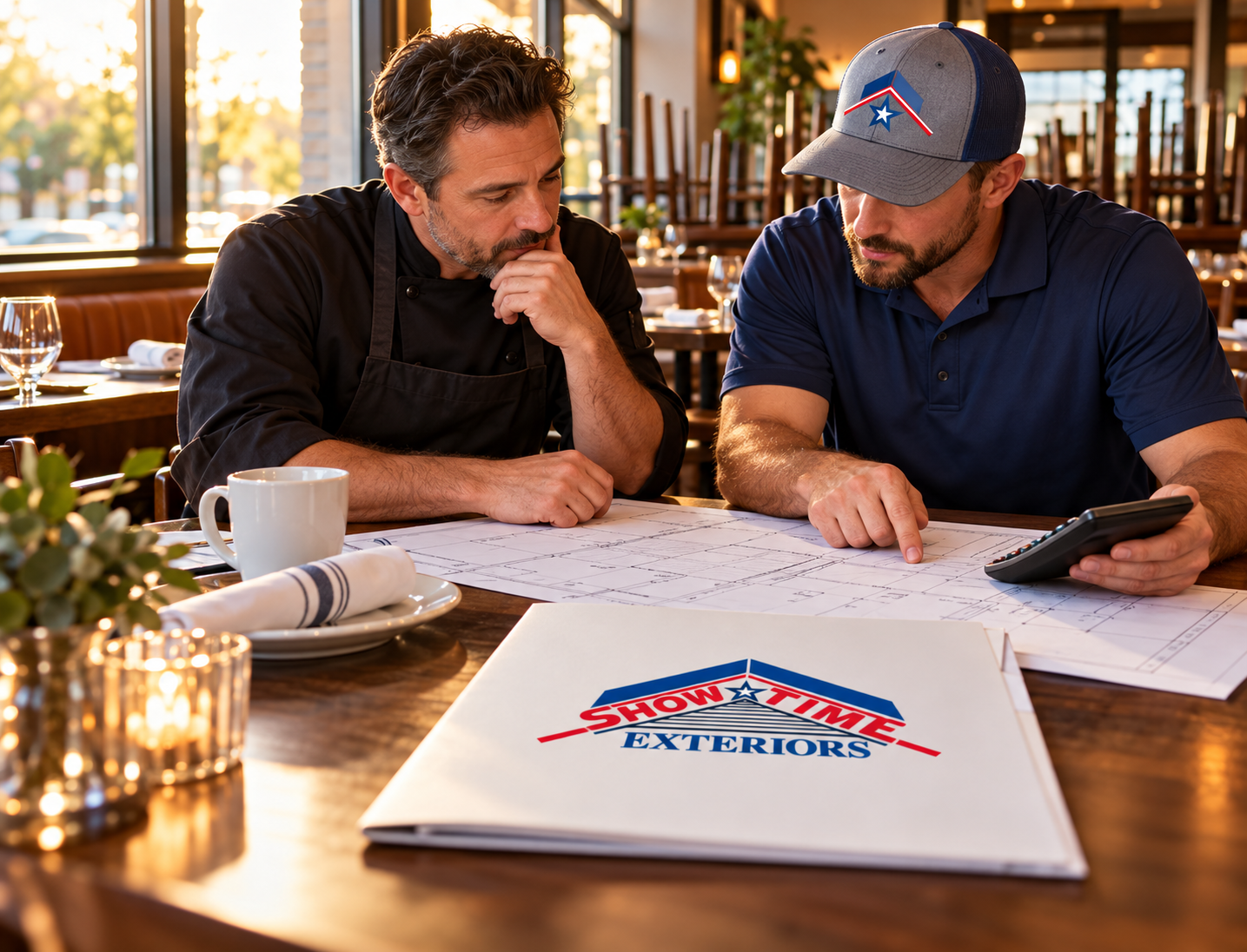
A roof proposal should explain how the membrane, insulation, cover board, attachment, seams, flashings, and perimeter details work together.
For a restaurant, warehouse, retail center, or office building, PVC deserves consideration alongside other suitable systems. The decision should reflect the building’s actual conditions and the owner’s priorities.
What Is PVC Roofing?
PVC stands for polyvinyl chloride. Commercial PVC roofing uses a single-ply membrane installed as part of a specified low-slope roof assembly.
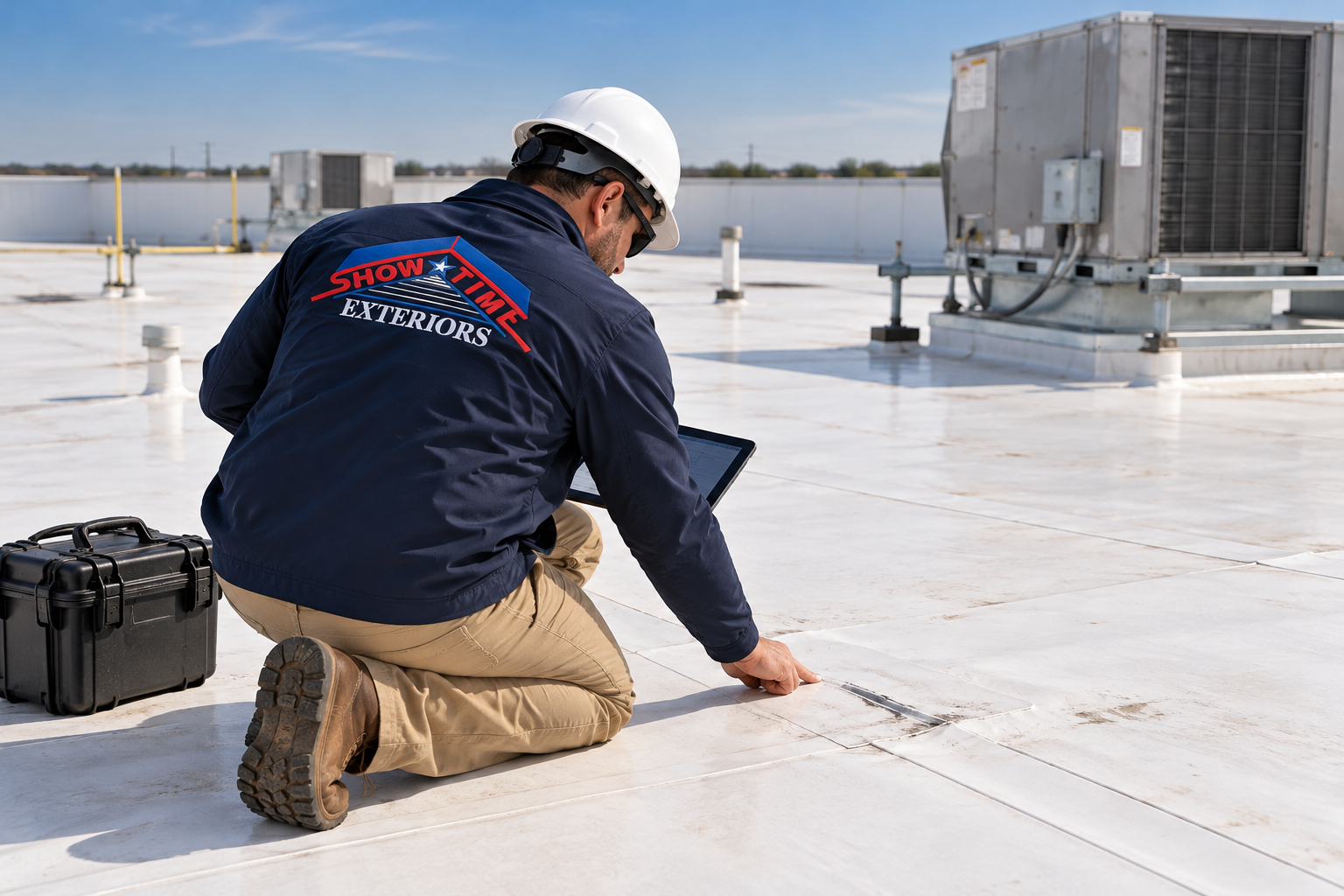
PVC membranes have heat-welded seams, but the system includes much more than the visible sheet. The supporting layers, attachment method, and roof details influence performance.
Carlisle identifies chemical and grease resistance among PVC’s characteristics. Those properties can make it particularly relevant to buildings with kitchen exhaust or certain rooftop exposures. Compatibility still needs to be checked for the actual product and exposure. carlislesyntec.com
Before approving a proposal, request the exact membrane and assembly specification.
How PVC Addresses North Texas Heat
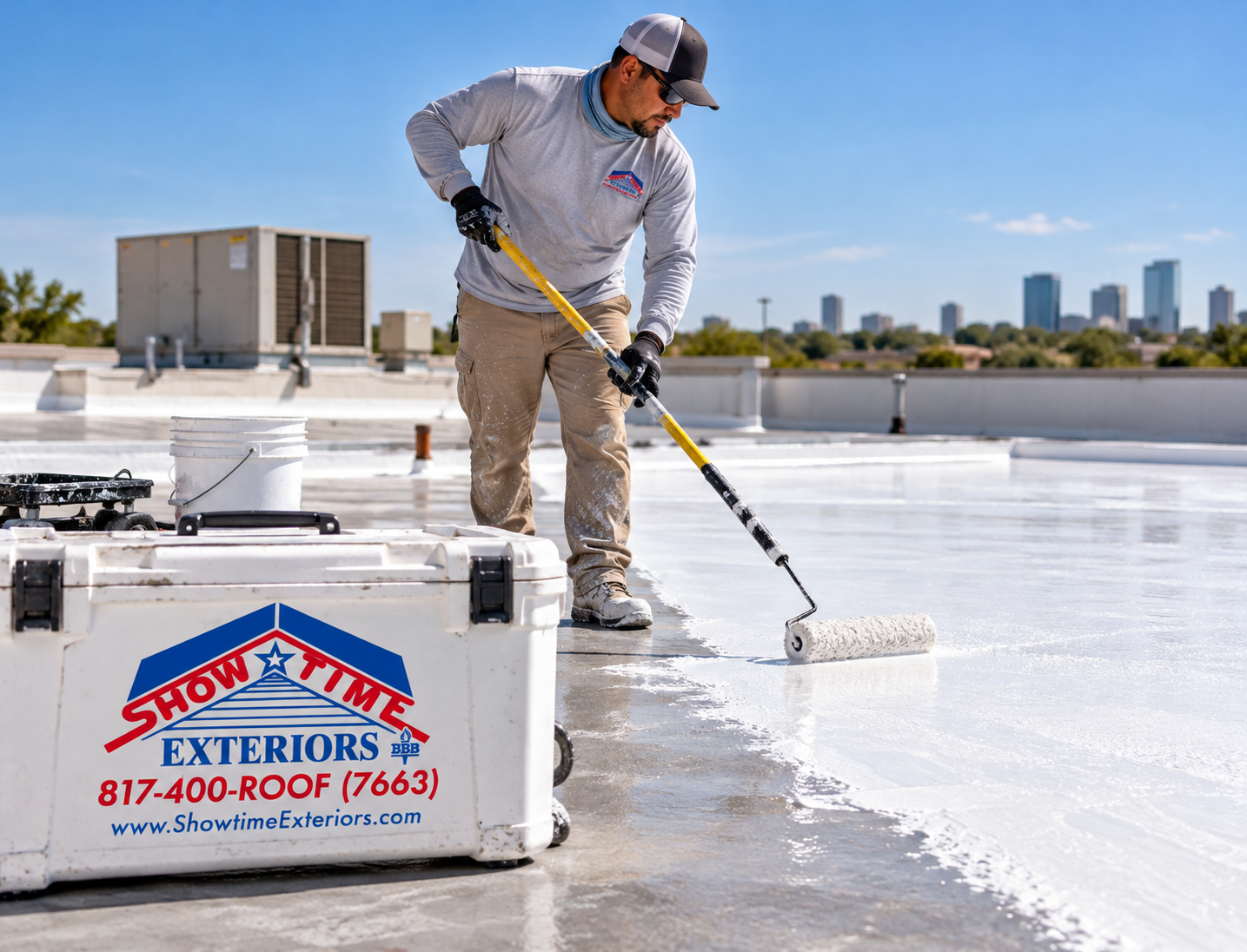
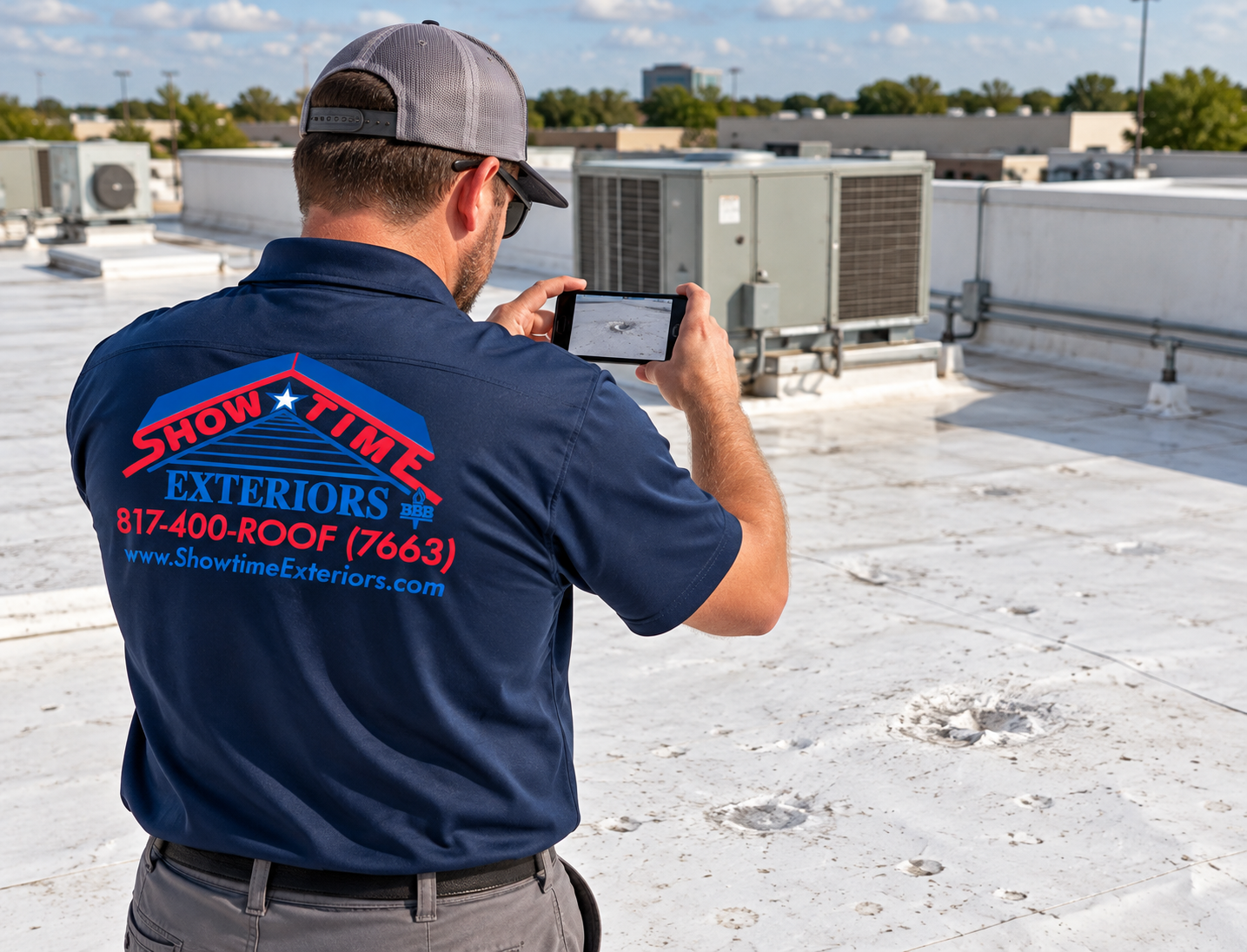
Reflective PVC products can be useful when managing solar exposure is a project objective.
GAF identifies reflectivity among its PVC roofing characteristics and describes certain PVC KEE products as helping resist dirt pickup that can affect a roof’s reflective appearance. GAF
However, a white roof does not guarantee a particular utility-bill reduction.
Actual building energy performance depends on factors such as:
- Insulation.
- HVAC efficiency.
- Building use and operating hours.
- Interior temperature requirements.
- Roof condition and maintenance.
- The selected product’s measured properties.
Ask for product-specific reflectance information rather than relying on the word “white.”
For an unconditioned warehouse, the owner’s objectives may differ from those of an air-conditioned restaurant or office. Discuss the building’s use before selecting the assembly.
Reflectivity does not replace insulation
The proposal should identify insulation separately.
Ask what remains, what is replaced, and what requirements apply to the property. Do not assume the reflective membrane resolves every thermal-performance question.
A complete design considers the surface and the assembly beneath it.
How PVC Performs Against Hail
PVC is not hailproof.
Hail performance should be evaluated through the specific tested assembly. A generic PVC membrane label does not establish a hail classification.
Carlisle offers particular PVC systems approved for Very Severe Hail conditions. GAF also identifies certain PVC fleece-back systems with Very Severe Hail ratings. These are defined assemblies, not a rating shared by every PVC roof. carlislesyntec.com
Ask the contractor to identify:
- The proposed assembly’s documented hail classification.
- The components required for that classification.
- Whether the proposed specification matches the tested assembly.
- What installation and inspection requirements apply.
- What hail coverage, if any, appears in the warranty.
Do not substitute a statement such as “thicker PVC handles hail” for assembly documentation.
Thickness can be part of the specification, but the supporting components and tested configuration also matter.
A hail rating is not an insurance promise
Three separate questions need answers:
- What testing or approval applies to the assembly?
- What does the manufacturer’s warranty cover?
- What does the property insurance policy cover?
One answer does not establish the others.
GAF expressly notes that its warranties and guarantees generally exclude hail or other punctures unless additional puncture-resistance coverage is purchased on an eligible project. Review the actual proposed coverage. GAF Commercial Roofing
How PVC Addresses Wind
Wind performance also depends on the complete roof system.
The membrane must be incorporated into an assembly appropriate for the building and applicable design requirements. Attachment, supporting components, perimeter details, and installation quality deserve attention.
GAF emphasizes selecting the PVC attachment method with wind-uplift performance in mind. GAF Commercial Roofing
Ask who establishes the project’s wind-design requirements and how the proposed assembly satisfies them.
Useful questions include:
- What assembly is specified?
- What deck and substrate assumptions apply?
- What attachment method is proposed?
- How are perimeter and corner areas addressed?
- What edge-metal system is included?
- What supporting documentation will be provided?
Avoid assuming that one attachment method is universally best for every North Texas building.
The project needs a supported design, not a general wind-speed claim.
Warranty wind speed and design requirements are different
An advertised warranty limit does not replace project-specific design.
Review the warranty’s conditions and exclusions separately from the assembly’s design documentation.
Ask the contractor to explain both in plain language.
Heat, Hail, and Wind: What to Verify
ConcernWhat PVC may offerWhat the proposal must establishHeatReflective product optionsProduct properties, insulation, building objectivesHailTested high-resistance assemblies are availableExact assembly classification and required componentsWindMultiple attachment-system optionsProject-specific design and supported assemblyGrease or chemicalsRelevant resistance characteristicsCompatibility with actual exposureMaintenanceRepairable, inspectable membrane systemManufacturer guidance and owner responsibilitiesWarrantyDifferent coverage optionsActual terms, exclusions, and eligibility
Use this table to review a proposal rather than treating it as a universal recommendation.
Which Buildings Should Consider PVC?
PVC may deserve particular consideration when its characteristics address an identified building need.
Restaurants
Discuss grease exposure around kitchen exhaust and the maintenance required for the proposed system.
Do not assume chemical resistance means the roof can remain contaminated indefinitely.
Retail centers
Consider tenant access, rooftop equipment, maintenance traffic, and the project’s operational plan.
Warehouses
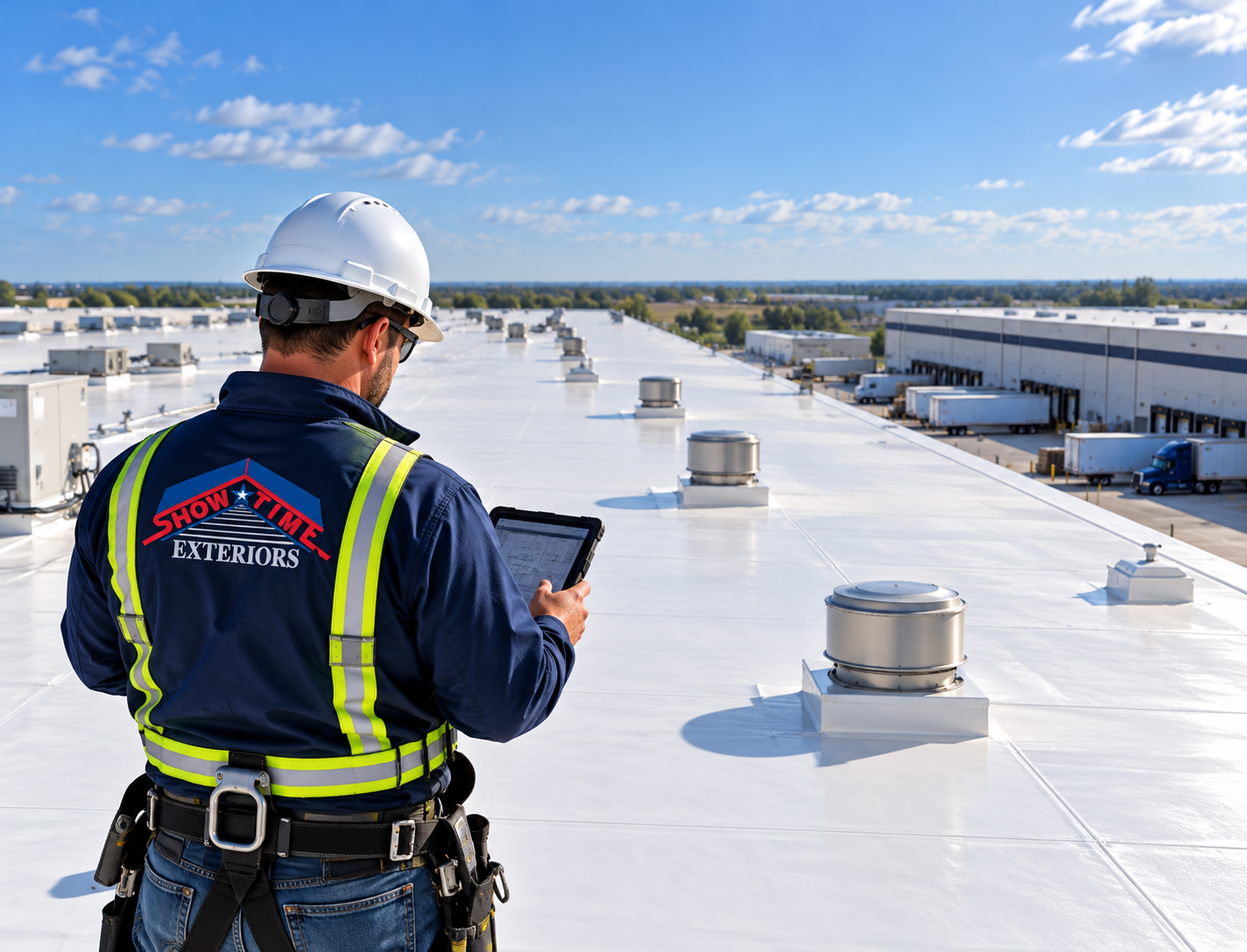
Evaluate the large roof area, insulation, loading-dock coordination, drainage, and the owner’s risk priorities.
Offices
Discuss occupied spaces, equipment servicing, reflectivity objectives, and construction coordination.
Specialized facilities
Provide information about chemical exposure or unusual interior conditions. The project team may need additional design input.
The building type starts the discussion. Actual conditions determine suitability.
When PVC May Not Be the Best Choice
PVC should not be selected merely because it is described as a premium material.
Another system may better fit the building’s requirements, existing conditions, or budget.
Be cautious when:
- The existing assembly has not been evaluated.
- Moisture or deterioration remains unresolved.
- Compatibility questions are unanswered.
- The proposed system lacks supporting design information.
- Warranty claims are vague.
- The price excludes important work.
- The owner cannot meet maintenance obligations.
These concerns do not necessarily rule out PVC. They indicate that the proposal needs clarification before approval.
PVC Versus TPO
Both should be compared as complete assemblies.
PVC’s chemical and grease characteristics can be relevant to some projects. TPO may also be a suitable option depending on the building and specified system.
Ask for comparable proposals that identify:
- Membrane products.
- Supporting layers.
- Attachment.
- Roof details.
- Exposure compatibility.
- Hail and wind documentation.
- Warranty terms.
- Maintenance requirements.
- Complete project price.
Do not accept a blanket claim that one material is always better in Texas.
The appropriate comparison is between supported systems for the actual property.
What About PVC KEE and Fleece-Back Products?
These labels describe product variations that should be evaluated through their specifications.
Ask the contractor to explain what the proposed product adds to the assembly and why it is being recommended.
For a fleece-back product, clarify the attachment system and supporting components.
For a KEE product, request product-specific information rather than assuming every modified formulation provides identical performance.
If a variation is proposed to meet a hail classification or warranty requirement, obtain the supporting documents.
The label alone does not establish the completed roof’s rating or coverage.
Existing Roof Conditions Matter
Before choosing PVC, evaluate what is already installed.
Ask the inspection to identify:
- Existing system and layers.
- Observed defects.
- Moisture concerns.
- Insulation and deck information.
- Areas requiring further investigation.
- Proposed removal or retention.
- Drainage concerns.
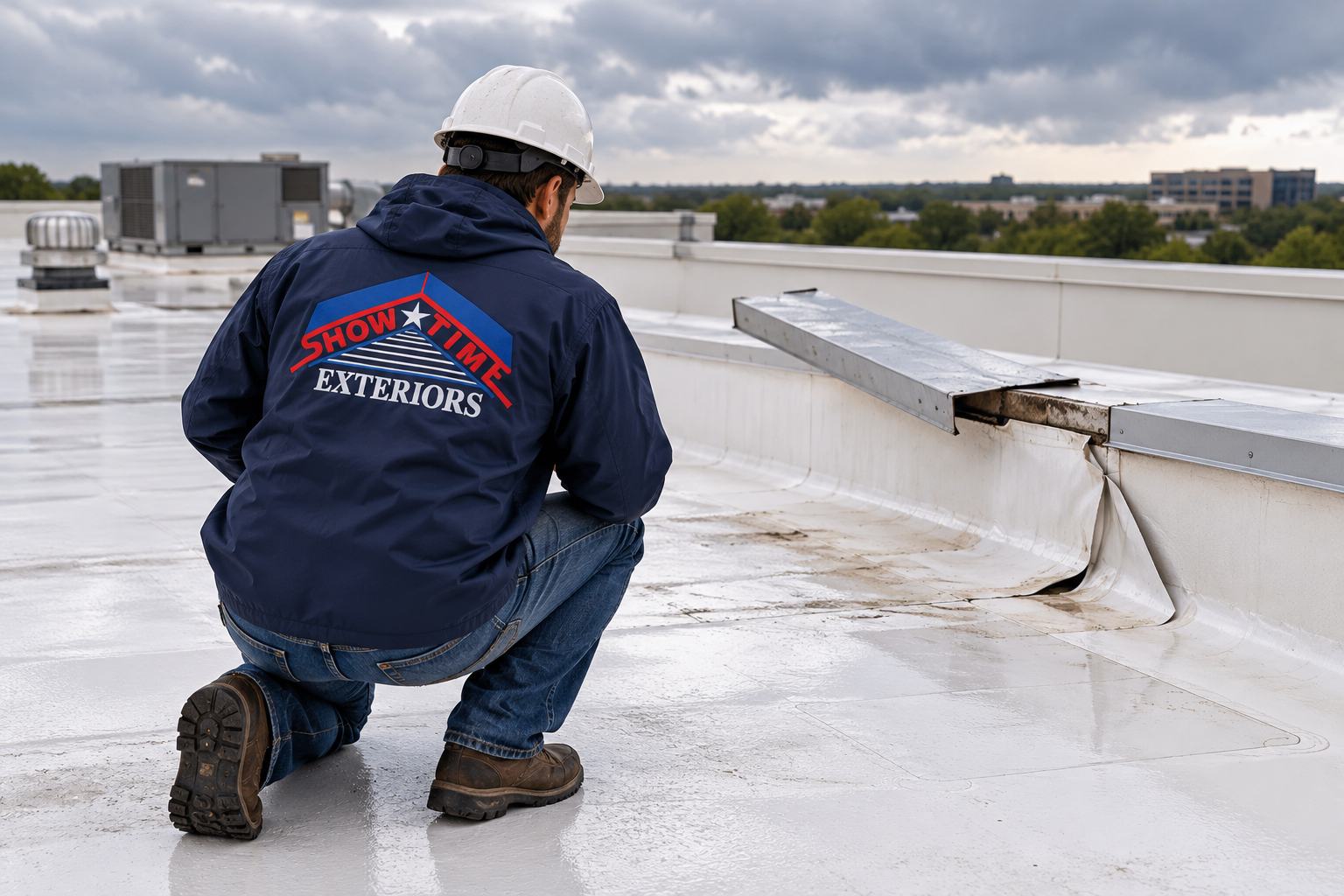
A new membrane should not conceal unresolved conditions without a supported plan.
If recover is proposed, ask what establishes eligibility and what corrective work is required first.
If tear-off is proposed, clarify how additional concealed work will be documented and authorized.
Drainage Still Needs Attention
PVC selection does not automatically resolve drainage problems.
Ask what the inspection established and whether the project includes changes to drainage details or insulation layout.
Clarify which services belong to the roofing scope and which require another trade.
The proposal should identify remaining limitations.
Avoid an assurance that changing membrane material will eliminate every future water concern.
The roof surface, drainage arrangement, and building details need to be considered together.
Installation Quality and Documentation
Request a project quality-control plan appropriate to the specified system.
Ask how the contractor will document:
- Substrate readiness.
- Products and components.
- Attachment work.
- Seam quality checks.
- Flashings and transitions.
- Final inspection.
- Required manufacturer review.
The owner does not need to direct technical procedures. The owner should receive records showing that the specified work was completed and checked.
Keep these documents with the building’s maintenance records.
Maintenance After Installation
Arrange inspections and maintenance according to the installed system’s requirements.
Coordinate rooftop equipment servicing so providers understand roof-protection instructions.
Record repairs, access, cleaning, and significant weather observations.
After a storm, owners can document safe ground-level and interior conditions. Qualified professionals should handle roof access and technical evaluation.
Do not assume a new PVC roof can be ignored because it has a long warranty.
Maintenance obligations should be understood before installation.
What Should the Proposal Include?
A reviewable PVC proposal should identify:
- Measured roof areas.
- Existing conditions.
- Tear-off or recover method.
- Exact membrane.
- Insulation and cover-board scope.
- Attachment system.
- Flashings and perimeter details.
- Drainage work.
- Equipment responsibilities.
- Hail and wind documentation.
- Access and operational plan.
- Price, exclusions, and allowances.
- Additional-work authorization.
- Warranty documents.
If two bids differ substantially, compare these items before deciding that one is overpriced.
Questions to Ask Before Choosing PVC
- Why is PVC appropriate for this building?
- What exact product and assembly are proposed?
- What supports the heat-performance claims?
- What hail classification applies?
- Does the specification match the tested assembly?
- Who confirms the wind-design requirements?
- What does the warranty actually cover?
- How are existing conditions addressed?
- What drainage work is included?
- What maintenance is required?
- Which services are excluded?
- What completion records will be provided?
The answers should appear in the proposal or supporting documents.
Frequently Asked Questions
Is PVC suitable for North Texas heat?
It can be. Evaluate the product’s properties, insulation, building use, and complete assembly.
Is PVC hailproof?
No. Specific tested assemblies may offer higher hail resistance, but no generic PVC label guarantees immunity.
Will every PVC warranty cover hail?
No. Review the actual coverage and any required enhancements.
Is adhered PVC always the best wind option?
Do not assume a universal answer. Use a supported assembly that meets the property’s requirements.
Does thicker membrane guarantee better storm protection?
Thickness is one specification factor. Review the complete assembly and documented performance.
Is PVC a good restaurant option?
It deserves consideration where grease or chemical resistance is relevant, subject to product compatibility and maintenance requirements.
Can PVC be installed over the current roof?
A recover requires evaluation and a supported eligibility determination.
Will a white PVC roof lower utility bills?
It may contribute to thermal objectives, but a specific savings promise requires building-specific analysis.
Does PVC eliminate maintenance?
No. Follow the installed system’s inspection and maintenance guidance.
Evaluate the Complete System
PVC can be a strong candidate for North Texas commercial roofing when its characteristics match the property’s needs.
For heat, review product properties and insulation. For hail, request the exact tested assembly. For wind, establish the design requirements and supported attachment system. For coverage, read the actual warranty and insurance policy.
Considering PVC roofing for your North Texas property? Contact Showtime Exteriors to discuss your roof condition, system options, and project requirements.
Call [817-400-ROOF (7663) (line 8174007663)](tel:8174007663) or visit ShowtimeExteriors.com.