

Roof Replacement Cost in Grand Prairie, TX
Explore roof replacement costs in Grand Prairie, TX, with size-based budget examples, decking, permit requirements, material upgrades, and estimate tips.
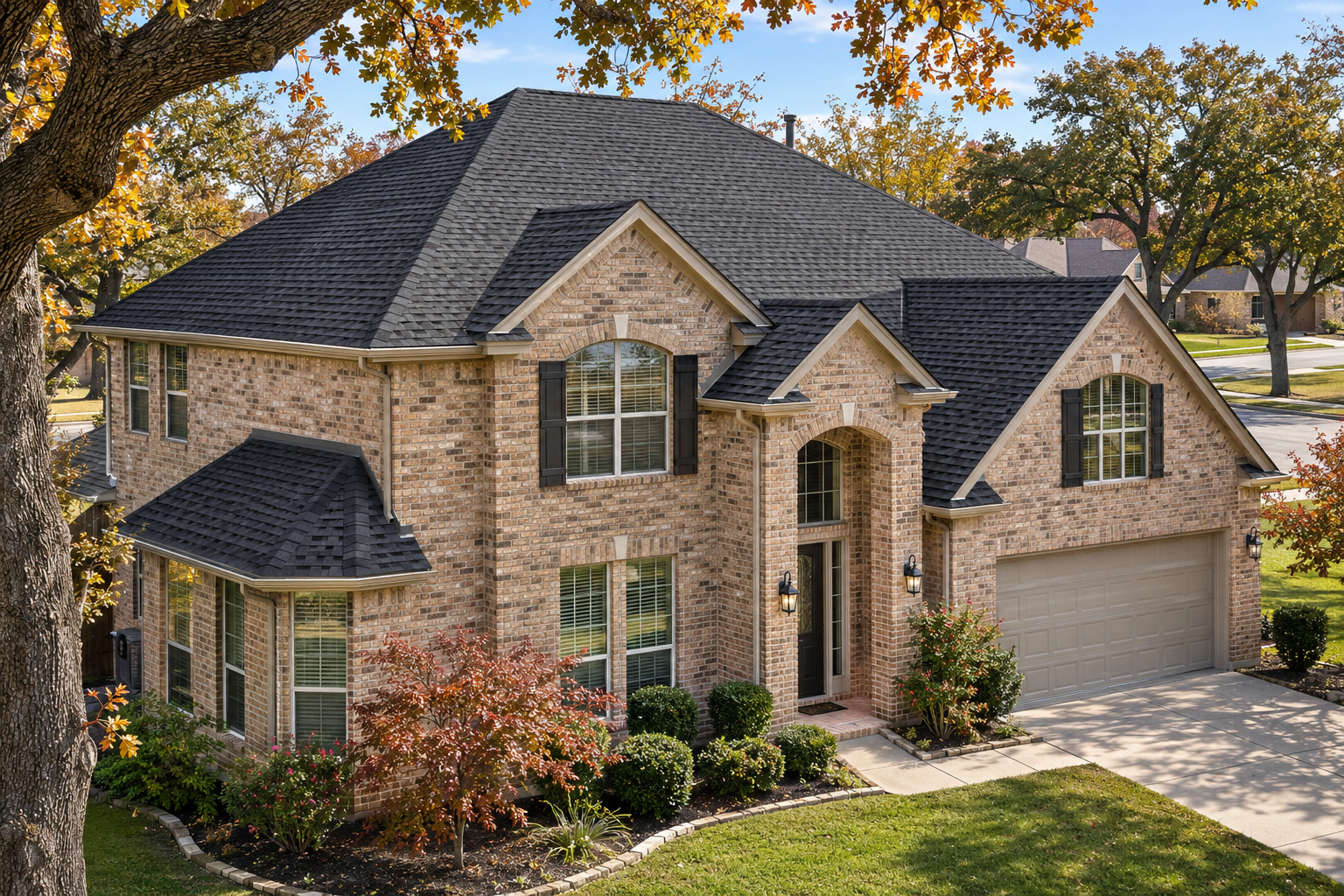
An architectural asphalt shingle roof replacement in Grand Prairie can be budgeted using a published Texas benchmark of $4.50 to $7.50 per square foot of actual roof surface. Applying that range to a 2,000-square-foot roof gives a calculated planning total of $9,000 to $15,000. HomeAdvisor publishes the architectural shingle range for Texas. A property assessment and written scope are needed to establish the price for an individual home. HomeAdvisor Texas roof replacement cost guide
The final cost depends on the product, roof measurements, pitch, tear-off, decking, flashing, access, and other work included. A straightforward roof with sound decking requires a different project from a steep roof with several valleys, a chimney, and concealed deterioration. Similar homes can receive different estimates because the work differs.
Ask for a roof measurement and a proposal describing exactly what the contractor will do. The Showtime Exteriors team can assess the existing roof and discuss suitable replacement options for a North Texas property.
Roof replacement cost examples by roof size
These examples multiply measured roof surface by the Texas architectural shingle benchmark. They provide an early budget reference. The product and scope in a written proposal can move the total beyond the figures shown, particularly when substantial underlying repairs or specialty work are required.
Measured roof surfaceRoofing squaresCalculated planning range1,200 sq. ft.12$5,400–$9,0001,600 sq. ft.16$7,200–$12,0002,000 sq. ft.20$9,000–$15,0002,400 sq. ft.24$10,800–$18,0002,800 sq. ft.28$12,600–$21,0003,200 sq. ft.32$14,400–$24,0004,000 sq. ft.40$18,000–$30,000
A roofing square equals 100 square feet of roof surface. When a contractor gives you a price per square, ask what is included. Tear-off, accessories, flashing, permits, and disposal may appear in the base rate or as separate items.
Keep space in your budget for conditions the inspection identifies outside the standard scope. Ask the contractor to distinguish confirmed work, optional upgrades, and concealed conditions that could require a change.
Your roof area differs from your home’s living area
A real estate listing usually describes floor area inside the house. A roof measurement follows the exterior sloped surfaces and can include garages, overhangs, porches, and other sections outside the heated living space.
The number of stories changes the relationship as well. A two-story home can have a smaller roof footprint than a one-story home with similar living area. The pitch then affects the surface above that footprint.
Ask for a roof diagram showing the included sections. Confirm whether the attached garage, patio cover, addition, and detached structures are part of the estimate. If two contractors measure different areas, ask them to explain the boundaries.
Material quantities may include extra pieces for cuts and waste. Ask whether the quoted rate uses measured roof surface or the quantity ordered. That gives you a consistent basis for comparing bids.
What a roof replacement estimate should include
The proposal should name the manufacturer, product line, color, and accessories. It should describe removal of existing materials, deck assessment, installation, and the treatment of roof edges and interruptions.
Ask about underlayment, starter, ridge components, pipe boots, flashing, and any ventilation changes. If an existing component will remain, ask which one, what condition it is in, and how it will connect to the new roof.
The scope should also address property protection, material staging, disposal, cleanup, permit responsibility, and inspection arrangements. These tasks affect both the price and your experience during installation.
A project consultation through Showtime Exteriors’ residential roof installation services can help connect the current roof condition to the work that belongs in the proposal.
Tear-off and disposal
Find out how many existing layers are included in removal. Older homes sometimes have material beneath the visible covering that changes the labor and disposal requirements. The agreement should explain how additional layers will be documented and priced.
Ask where debris containers will be placed and how the crew will protect the driveway, landscaping, and access routes. A narrow lot or limited staging space can affect how materials and debris are moved.
If the contractor proposes a recover over existing roofing, ask for an assessment of the retained roof and verification of applicable requirements. Discuss what remains concealed and how details will tie into the new covering.
Compare proposals using the same removal assumptions. A lower price may include less tear-off, which creates a different scope. Request alternate prices in writing so you can understand the work and total for each option.
Decking and concealed damage
The deck supports the roofing and its attachment. Some concerns can be evaluated from an accessible attic, while others become apparent after tear-off. Ask what the inspection established and which areas remain concealed.
Request a unit price for additional decking replacement. Confirm the material specification and whether the price includes removal, labor, installation, and disposal. If the bid includes an allowance, ask how actual quantities are recorded and whether unused amounts are credited.
Structural concerns involving supporting members need their own evaluation. Ask who assesses those conditions and how additional professional or trade work will be coordinated.
If extensive decking replacement already appears likely, request an alternate price before selecting the contractor. That produces a more useful budget than a low base total with a substantial unresolved addition.
Roof pitch, height, and complexity
Pitch changes the roof surface and the crew’s working arrangements. Additional stories can complicate material delivery and debris removal. Valleys, dormers, skylights, and wall connections add cuts and detailing.
Ask the roofer which features are driving labor on your property. An explanation tied to your roof diagram can make a price difference easier to understand. A smaller but complex roof may require more detailed work than a larger simple gable roof.
For a low-slope porch or addition, ask which covering will be used and how it connects to the main roof. Product suitability and transitions should be resolved while the contractor is preparing the estimate.
Mention access restrictions early. A pool, dense landscaping, nearby structures, or limited driveway space may influence staging and scheduling. The proposal should reflect the conditions the crew will encounter.
Flashing, gutters, and roof edges
Flashing helps manage water where the roof meets walls, chimneys, skylights, and penetrations. Ask which pieces will be replaced and which, if any, will be reused. Those assumptions can explain a meaningful difference between bids.
For a chimney, identify whether the roofing scope includes only the connection to the roof or additional masonry work. If siding or another exterior component also needs attention, assign responsibility clearly.
Ask whether gutters will remain, need temporary removal, or be replaced. Confirm how the new roof edge connects to the existing drainage system and whether related work is included.
A replacement proposal should give these details enough attention to price them accurately. The field shingles occupy most of the roof, while transitions and edges still need their own work and materials.
Choosing the roof covering
Architectural asphalt shingles offer a familiar starting point for many homeowners. Different products can have different profiles, ratings, accessory packages, and warranty terms. Compare the complete installed price for the exact product.
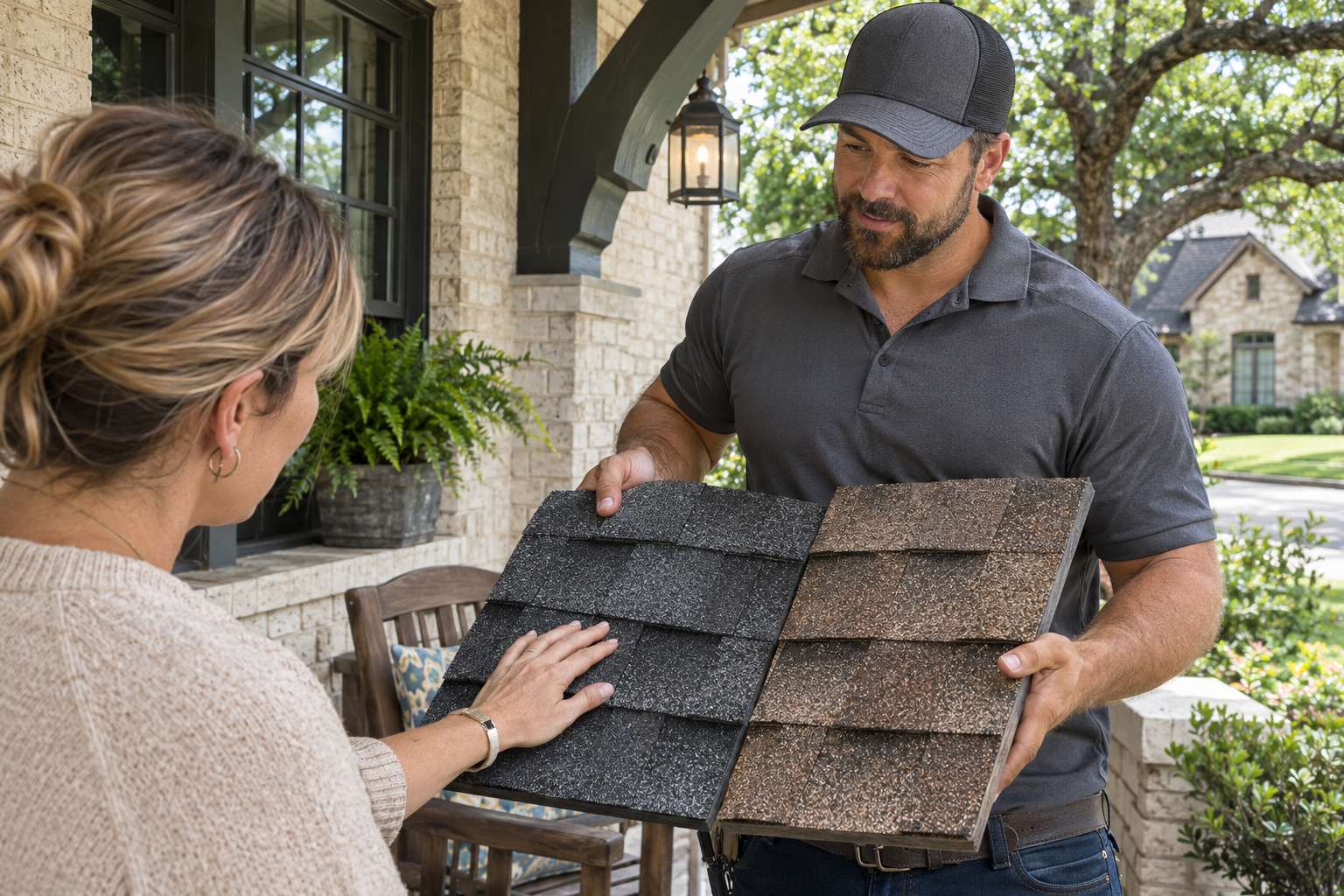
If you’re considering designer shingles, standing seam metal, synthetic shake, or tile, ask for a separate specification and estimate. A material change can affect accessories, deck requirements, labor, and other components.
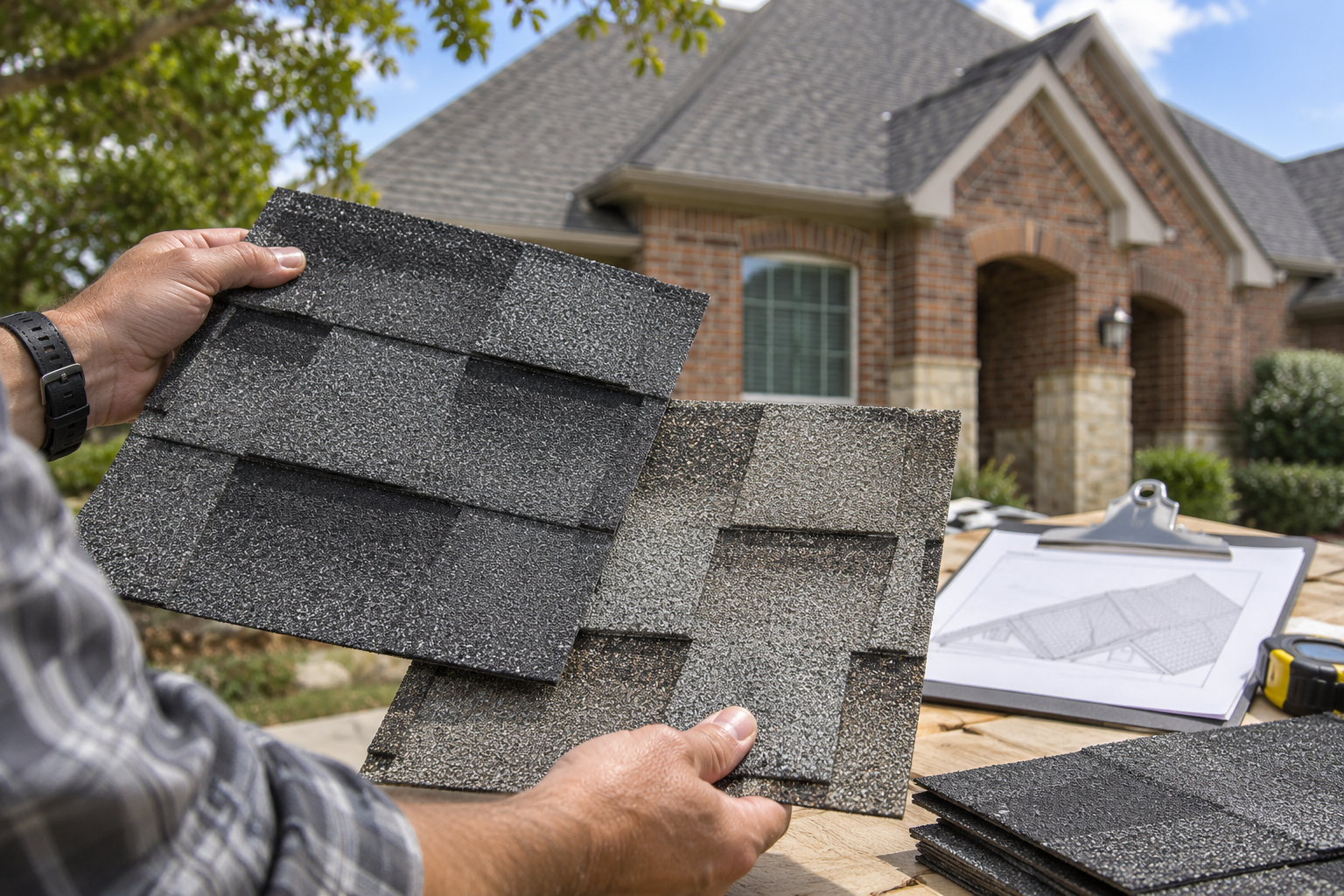
Look at samples outdoors against the home’s brick, siding, and trim. Think about how much roof is visible from the street. A prominent steep front roof can show a profile differently from a section hidden behind trees.
Review Showtime Exteriors’ residential roofing options and ask which alternatives are suitable for the existing design. Holding the remaining scope constant helps you evaluate the additional cost of a product change.
Impact-resistant roofing upgrades
Ask for the documented impact rating of the proposed product and its installed price difference. A product’s classification and the installation requirements should be confirmed for the exact model under consideration.
TDI explains that insurance companies determine accepted testing criteria, discount amounts, and required paperwork. Ask your insurer whether the proposed product qualifies under your policy and whether any accompanying coverage terms change. Texas impact-resistant roofing credit guidance
If you receive a confirmed annual premium reduction, compare it with the upgrade cost as one part of the decision. Keep the documentation and installation records needed by the insurer.
Also consider appearance, product warranty, and your plans for the property. Ask the contractor to price an impact-rated alternative with the same tear-off, flashing, and accessory assumptions so the comparison stays clear.
Grand Prairie roofing permits
Grand Prairie states that a residential re-roof permit is required for roof replacement, recovering, or repair. Have the contractor confirm current submission and inspection requirements for the address and planned work before installation begins. City of Grand Prairie residential re-roof requirements
The agreement should assign responsibility for applying, paying fees, scheduling inspections, and obtaining any required closeout information. Ask whether those costs appear in the base total.
If the scope expands to structural correction or another building system, ask whether additional approvals are needed. Describe the full work when contacting the city.
Keep permit information with the contract and warranty paperwork. If inspections affect the sequence of installation, discuss the schedule with the project manager before materials arrive.
Ventilation and energy-related choices
Ask what the contractor observed about attic intake and exhaust and whether changes are proposed. The recommendation should explain the existing condition and the purpose of the work.
If reflective roofing is being considered, compare the exact product data and installed cost difference. Energy results depend on the house, insulation, air leakage, climate, and other conditions.
The Department of Energy explains that reflective roofs can reduce solar heat gain while insulation continues to control heat transfer in its own way. Use that context when evaluating a roofing upgrade and any energy claims. Department of Energy cool roof guide
Ask for the assumptions behind any projected utility savings. A roof replacement can be coordinated with an attic evaluation, but each improvement should have a defined scope and price.
Comparing two roof estimates
Suppose two contractors measure a 2,400-square-foot roof and provide illustrative bids of $12,000 and $15,000. The $3,000 difference leaves several questions until the scopes are compared.
The lower estimate might include the selected shingle and standard removal while pricing chimney flashing and decking separately. The higher one might include new flashing, a decking allowance, and a different accessory package.
Ask both companies to price the same product and work. Review measured area, waste assumptions, removal, disposal, flashing, ventilation, permits, and warranty arrangements. Then compare any remaining differences in supervision, timing, or service terms.
The higher proposal could also include an upgrade you don’t want. Request an alternate product price while keeping the rest of the work unchanged. These example totals demonstrate comparison arithmetic. Your property assessment determines the work required.
Insurance and your out-of-pocket cost
If storm damage prompted the project, keep the contractor’s estimate alongside the insurer’s explanation. Ask about differences in quantities, materials, or work categories before committing.
Your policy determines coverage, deductibles, valuation, and exclusions. Ask how roof age and material affect payment and what documentation is needed. TDI explains the difference between replacement cost and actual cash value coverage in its roof guidance. TDI roof insurance and replacement guide
The construction agreement should still identify the price and scope. If you choose a more expensive material, request the upgrade cost separately. Understand your obligations if the insurer approves less work than anticipated.
Texas prohibits offers to waive, rebate, or absorb a property insurance deductible. It also prohibits a contractor from acting as a public insurance adjuster on a claim while providing contracting services on that property. Direct coverage and settlement questions to the appropriate party. Texas roofing and insurance law guidance
Budgeting for changes
The agreement should explain how added work is authorized. Request photographs, quantities, and written pricing when concealed conditions affect the scope.
Choose someone who can respond during installation if you’ll be unavailable. Give the manager that person’s contact information and agree on the approval process before tear-off.
If damaged decking is discovered near an old leak, ask for an explanation of the affected area and proposed correction. Retain the approved change order with the original proposal.
Confirm how long the estimate remains available and whether the price is fixed for the defined scope. If a product substitution is needed, request the revised specification and price before ordering.
A practical worksheet for your replacement budget
Start with the measured roof area and the selected product’s installed estimate. Write down the base scope in plain language so you can identify what that number includes. Then add confirmed items outside the base proposal, such as equipment handling, separately priced gutters, or known deck work.
Keep optional choices in their own column. These might include a different shingle, specialty ridge components, a color upgrade, or another clearly described improvement. Ask the contractor to quote each option against the same underlying work. That makes it easier to decide which additions fit the budget.
Next, identify uncertainties. Ask which conditions the inspection could assess and which will remain concealed until removal. Use the contractor’s written unit prices and findings to discuss a sensible allowance. A property with little evidence of underlying deterioration presents a different budgeting question from one with repeated leaks and visible deck concerns.
Finally, record payment timing. List the deposit, any material or installation milestones, and the amount due at completion under the proposed agreement. If an insurer or lender is involved, ask that party about its own process and timing. Understanding those steps before signing helps you plan available funds around the actual contract.
When to compare a repair with full replacement
A replacement estimate can be useful even when you’re still deciding whether a repair is appropriate. Ask the contractor to explain the condition and extent behind each option. A defined leak at one detail may call for different work from deterioration across several roof sections.
For a repair proposal, ask what will be corrected and what will remain. Discuss any limitations caused by surrounding materials, product availability, or access. If the contractor recommends replacement, request the observations supporting the broader scope and ask whether further investigation would affect that recommendation.
Consider other planned work as well. If you expect to replace a skylight, remove equipment, or renovate an adjoining section, tell the roofer before choosing the scope. Coordinating those projects may change the sequence and reduce the need to disturb newly completed work later.
Your ownership plans also belong in the conversation. A homeowner preparing to sell may need clear inspection and completion records, while someone planning a long stay may place more weight on appearance, maintenance, and product options. Both need a dependable scope tied to the roof’s condition.
Ask for the recommendations in writing, including any unresolved questions. You can then compare the immediate expense, the work completed, and the likely next decisions without assuming that the lowest short-term payment resolves every concern.
Choosing the contractor
Ask who supervises the work and handles service questions after completion. Verify the company identity, insurance information, and experience relevant to your roof type.
References for a similar project can offer insight into communication, handling of changes, cleanup, and follow-through. Review Showtime Exteriors’ roofing references when preparing questions for the consultation.
Read the manufacturer warranty and contractor workmanship terms. Ask what is covered, how coverage changes over time, whether registration is needed, and what happens if the property is sold.
Have promises that influenced your decision included in writing. A clear proposal and responsive answers make the working arrangement easier to evaluate before installation.
Planning installation and closeout
Discuss where materials and containers will go and which items need protection or relocation. Identify landscaping, vehicles, outdoor furniture, and equipment near the roof.
Ask about work hours, weather decisions, daily cleanup, and the expected installation window. If solar panels or other mounted equipment need handling, confirm the responsible trade and price before scheduling.
At completion, compare the work with the accepted scope and approved changes. Request completion photographs, the final invoice, warranty documents, and applicable permit records.
Keep the product name, color, installation date, and service contact together. Those details help with future maintenance or a property sale. For additional background, browse Showtime Exteriors’ roofing resources.
Common cost questions
How much should I budget for a 2,000-square-foot roof?
The architectural shingle planning calculation gives $9,000 to $15,000 for 2,000 square feet of actual roof surface. Measurements, product selection, and the defined construction scope determine the property estimate.
Is my home’s living area enough for a price?
Floor area helps describe the house, while roof measurements account for slope, garages, porches, and other sections. Ask for a measured report and an inspection of relevant details.
Can a basic shingle reduce the total?
Request an alternate product price using the same work and accessories where applicable. Compare the installed difference with the appearance, documented ratings, and warranty terms.
Are gutters automatically included?
Check the proposal. Ask whether the existing gutters remain, need temporary removal, or will be replaced, and have the scope written clearly.
What if more decking is needed?
Follow the agreed change process. Request photographs, quantities, and pricing and keep the authorization with your project records.
Will the new roof reduce insurance premiums?
Ask your insurer about the proposed product and policy. Confirm required documentation and any coverage changes before including savings in the budget.
Request a measured estimate for your Grand Prairie home
A useful written estimate turns a broad budget range into a clearly defined construction project. It should identify the roof area, product, included work, and process for concealed conditions.
Showtime Exteriors can assess your Grand Prairie property and discuss options suited to the roof’s condition and your goals. Call 817-400-7663 or request a free roof inspection.