



Metal Roof Retrofit vs Roof Coating for Texas Commercial Buildings
A practical Texas property guide to condition, cost, insulation, wind, hail, warranties, and system eligibility
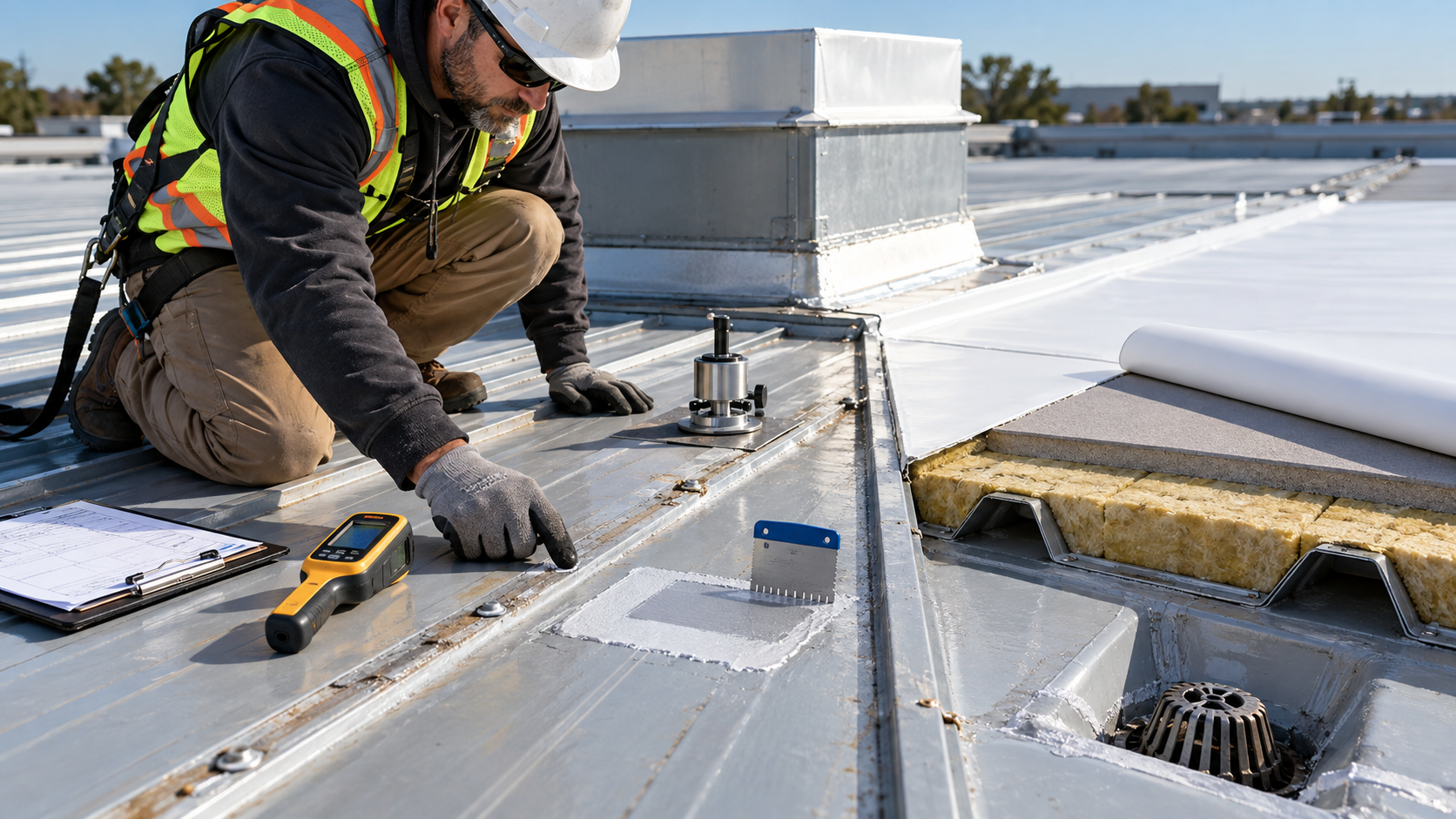
Texas commercial property owners often compare a metal roof retrofit* with a roof coating* because both may reduce tear-off and extend the usefulness of an eligible existing roof. They are not interchangeable. A coating is a fluid-applied restoration layer that depends heavily on the condition and preparation of the roof beneath it. A retrofit creates a new assembly—often using flute-fill insulation, cover board, and a single-ply membrane—over an existing roof that has been qualified to remain. The right choice depends on evidence about moisture, corrosion, attachment, movement, drainage, condensation, wind exposure, operations, code, and warranty requirements.
Showtime Exteriors evaluates commercial metal roofs across Texas before recommending repair, coating restoration, membrane retrofit, selective tear-off, or replacement. The goal is not to force every building into one system. It is to document what is happening, compare realistic scopes, and help the owner choose a path that fits the roof, the building, operations, budget, insurance concerns, and expected holding period.
Property owners can review Showtime Exteriors' commercial roofing services, Texas roofing services, commercial roofing resources, contact Showtime Exteriors, commercial project references, and commercial roof inspection reporting guide. Call 817-400-ROOF (7663)* to request a property-specific commercial roof evaluation.
Industry resources include the National Roofing Contractors Association, Single Ply Roofing Industry, and International Code Council. The Federal Emergency Management Agency provides building-science guidance, the U.S. Department of Energy discusses cool roofs, and the Occupational Safety and Health Administration addresses roofing safety. Product approvals, engineering, codes, manufacturer requirements, and site-specific conditions must govern the final system.
Metal Roof Retrofit vs Roof Coating at a Glance
A coating restores an eligible existing roof surface. A membrane retrofit creates a new roof covering above the qualified metal roof. That distinction affects preparation, thickness, detailing, movement, insulation, puncture resistance, drainage, attachment, cost, installation time, and future maintenance.
What a Roof Coating Does
A commercial roof coating is a fluid-applied system installed at a specified dry-film thickness. Depending on the product and approved assembly, it may include primer, rust treatment, seam reinforcement, fastener treatment, fabric, flashing grade material, base coat, and finish coat. Acrylic, silicone, urethane, and hybrid systems behave differently. Product choice must reflect slope, drainage, substrate, climate, exposure, and manufacturer requirements.
The coating follows the shape of the metal roof. It does not automatically create a new flat plane, fill structural panel flutes, correct weak attachment, replace severely corroded panels, or solve condensation beneath the roof. Its success depends on adhesion, preparation, compatible materials, correct application rate, weather conditions, and careful detailing at seams, fasteners, curbs, gutters, penetrations, and transitions.
What a Membrane Retrofit Does
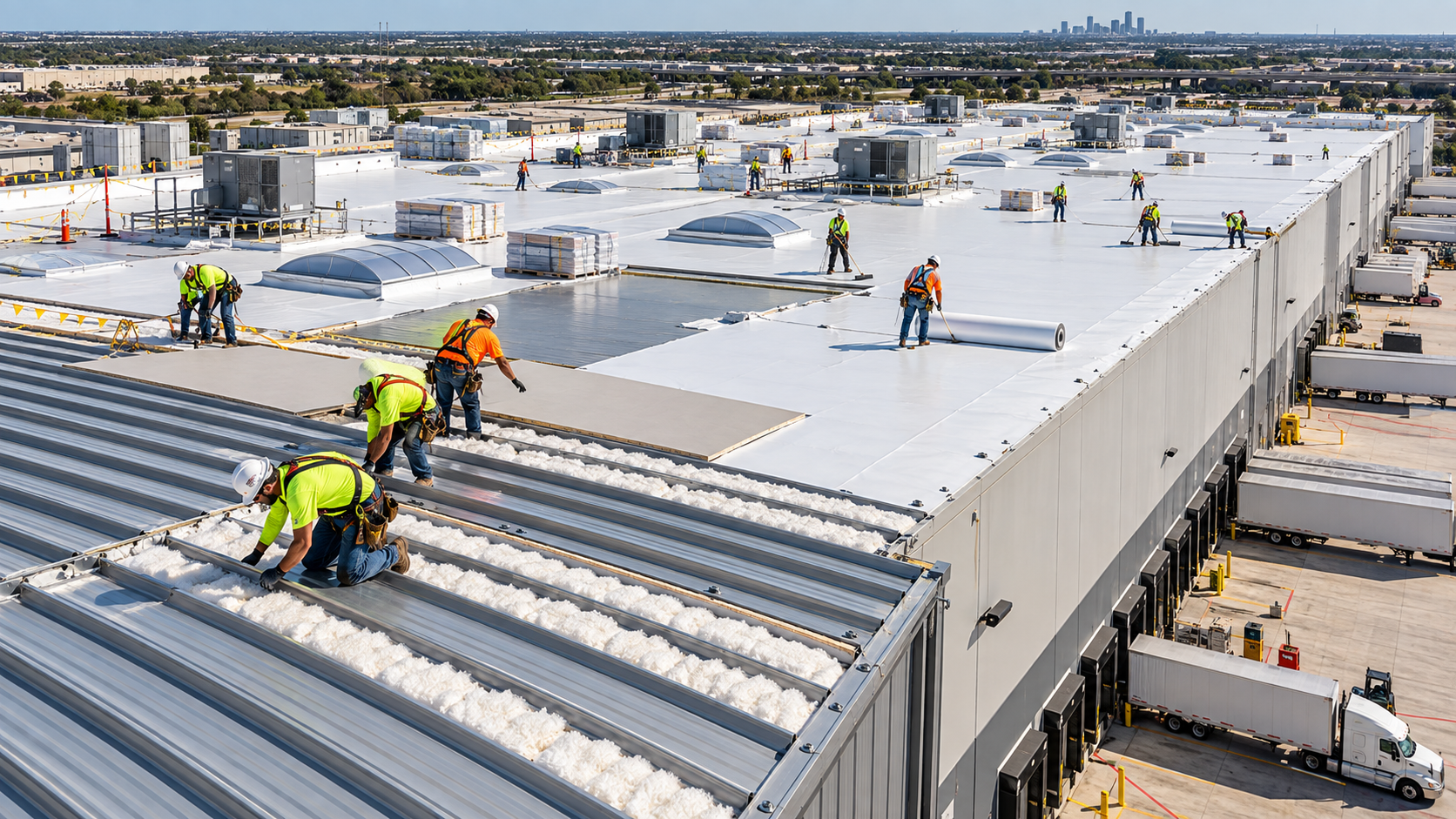
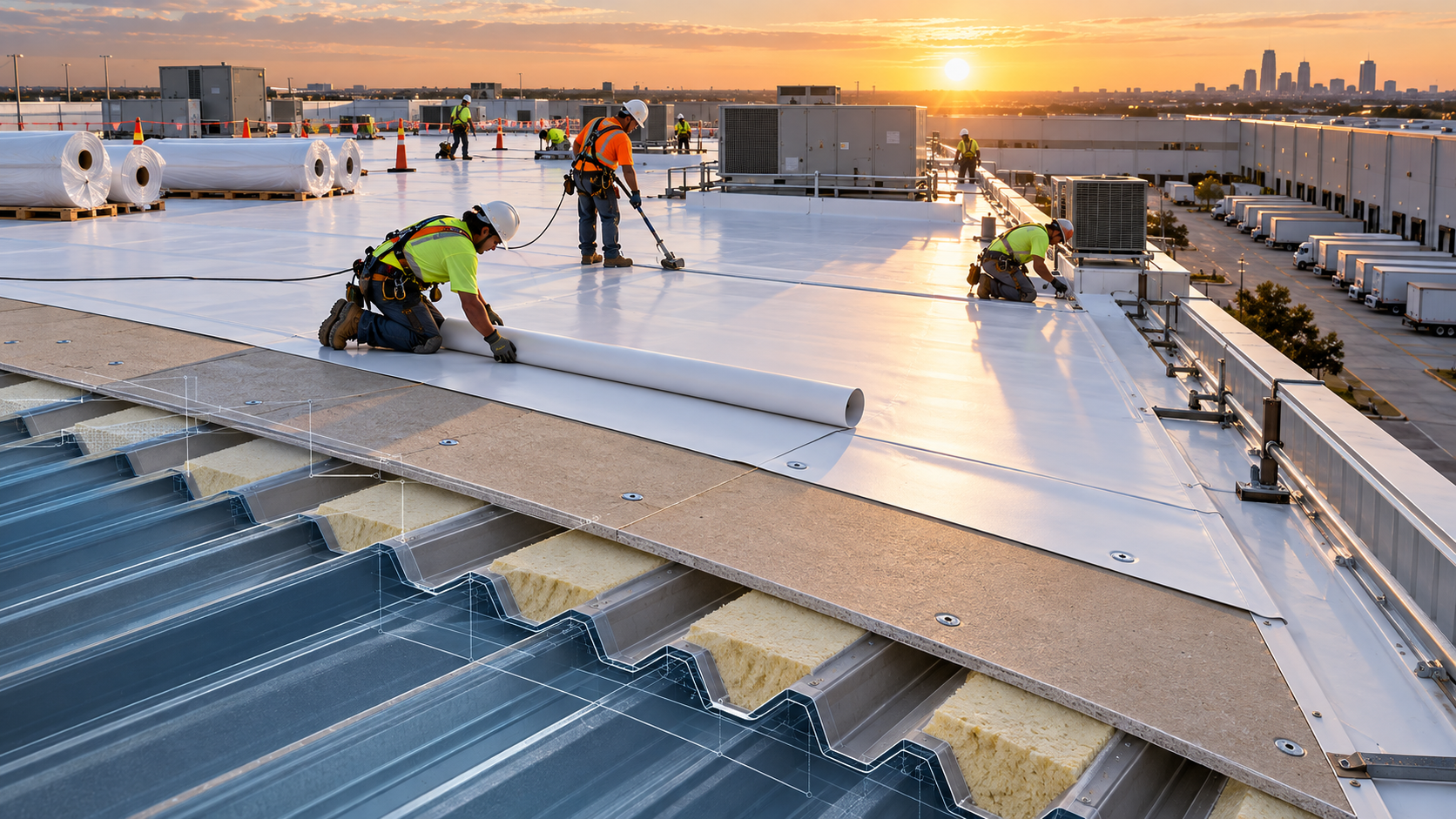
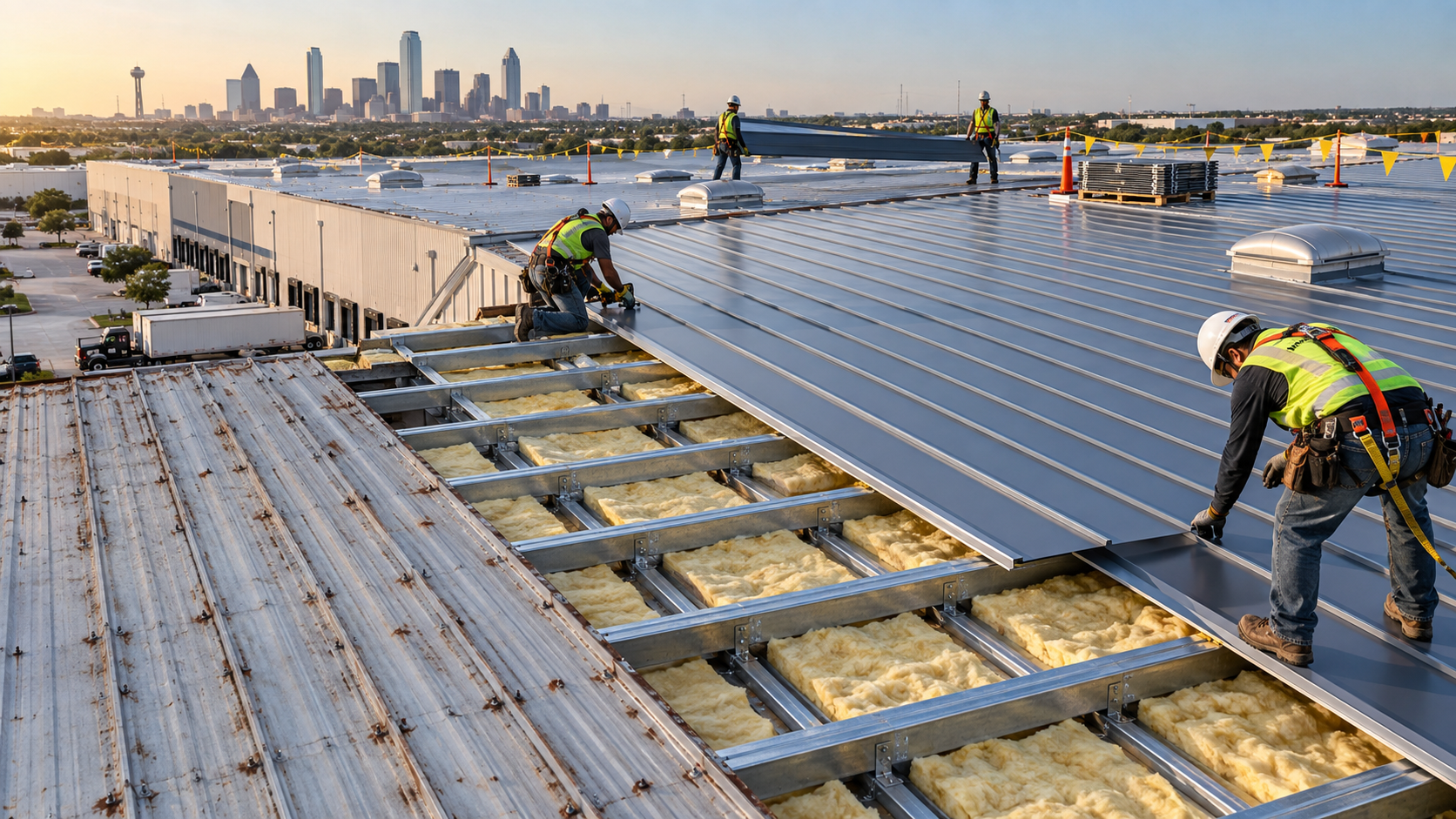
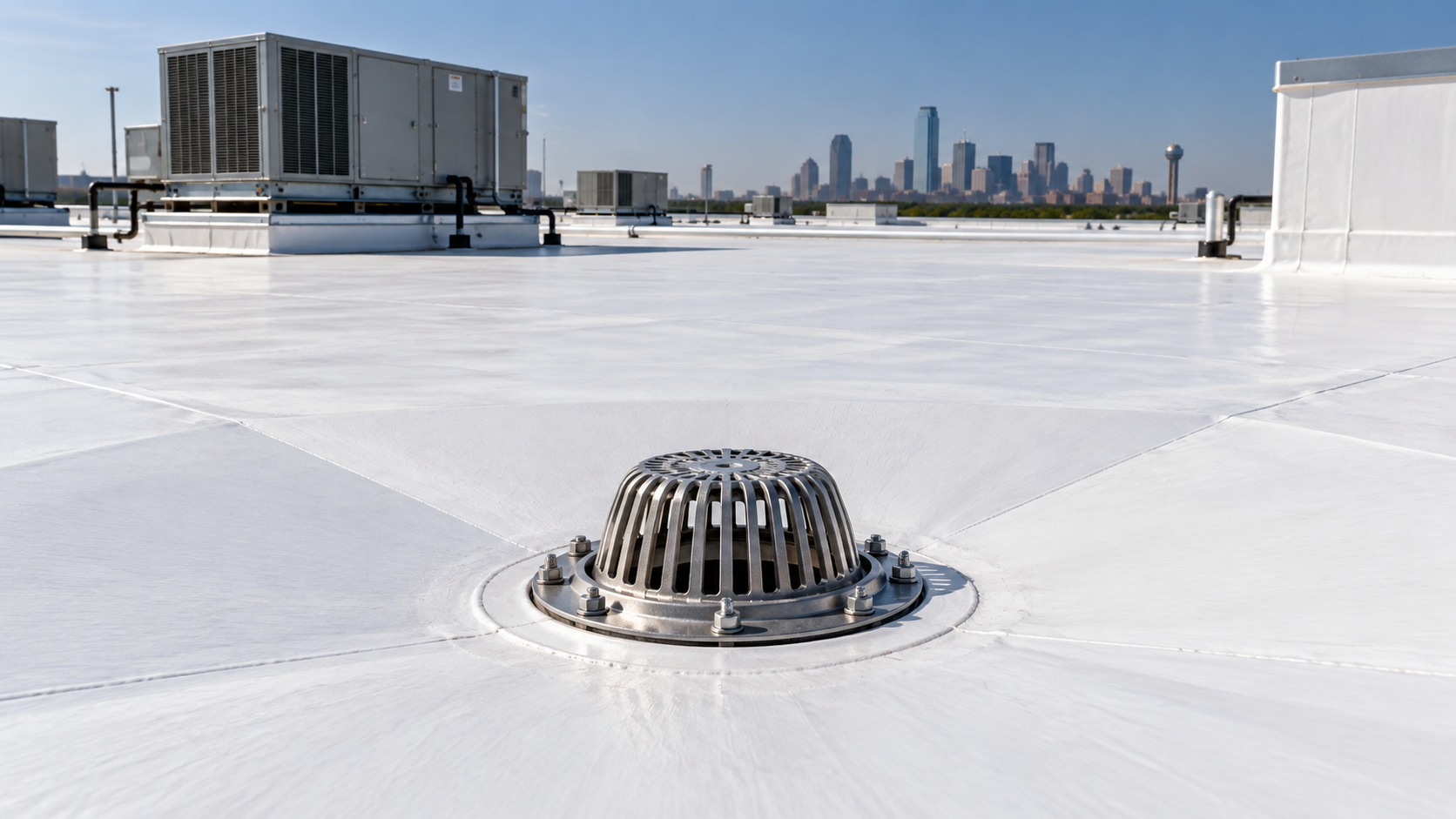
A membrane retrofit installs a new roof assembly over an eligible metal system. A common approach repairs the retained roof, fills the panel flutes, adds insulation or cover board when specified, and installs TPO, PVC, or another approved membrane using engineered attachment or adhesive. New flashings, perimeter securement, transitions, curbs, and drainage details become part of the assembly.
Because the retrofit adds components, it can create a more uniform surface, improve thermal performance, separate the new membrane from irregular metal panels, and provide a continuous roof covering. It also adds weight and height, changes details, and requires evidence that the retained roof and structure can support and secure the new assembly.
Direct Comparison for Texas Property Owners
Existing Roof Condition
Coating generally requires a roof that is fundamentally sound, sufficiently dry, cleanable, repairable, and compatible. Localized seam, fastener, or flashing defects may be corrected before coating. Widespread perforation, unstable panels, severe corrosion, chronic moisture, failing insulation, or major movement can make coating inappropriate.
A retrofit can address more extensive surface irregularity, but it is not permission to bury failure. Retained panels and structural supports still need adequate condition and attachment. Wet materials, active corrosion, concealed deterioration, or weak components may require selective removal and replacement before the new assembly is installed.
Water and Moisture
Neither option should be selected from surface appearance alone. Leak history, interior staining, infrared findings, moisture scans, test cuts, insulation condition, rust patterns, HVAC discharge, plumbing, and condensation should be reviewed. A reflective coating may reduce surface temperature, but it does not automatically correct air leakage or vapor movement. A membrane retrofit may add insulation, but an incorrect vapor or condensation strategy can trap moisture.
Movement and Detailing
Metal panels expand and contract. Coatings must remain adhered while accommodating movement at seams, fasteners, curbs, penetrations, and transitions. Reinforcement is often essential at high-movement details. The specification should distinguish cosmetic coverage from a complete restoration system.
A membrane retrofit separates the new waterproofing layer from many panel seams, yet movement still matters. The assembly must accommodate expansion joints, transitions, curbs, walls, edges, and structural movement. Flute fill, cover board, attachment, and membrane details must work together rather than as unrelated products.
Insulation and Energy Planning
Coating can increase reflectivity when a suitable light-colored product is installed and maintained. It usually does not add meaningful R-value. A retrofit can incorporate continuous insulation, improve the roof plane, and support a broader energy strategy. Actual savings depend on insulation level, HVAC efficiency, building use, air leakage, climate, utility rates, roof color, and operating schedule. Owners should avoid guaranteed energy claims that are not supported by a building-specific analysis.
Wind and Perimeter Performance
Texas wind exposure makes edge securement, corners, perimeters, gutters, eaves, ridges, and attachment especially important. A coating adheres to the roof beneath it; it cannot make weak panels, clips, fasteners, or edges structurally adequate. A retrofit requires a designed load path from the new membrane through approved components into suitable supports. Pullout testing, enhanced zones, engineering, tested assemblies, and project-specific fastening may be necessary.
Hail and Rooftop Traffic
No roof should be marketed as hail proof. Coating type, thickness, reinforcement, substrate, age, temperature, hail size, and impact conditions affect performance. Membrane thickness, cover board, insulation, attachment, and substrate affect retrofit performance. Walk pads and controlled service routes help protect either system from technicians, dropped tools, sharp debris, and repeated foot traffic.
Installation Disruption
Coating may involve less material staging and can move quickly after repairs and preparation. Weather windows, cleaning, drying, odors, overspray control, cure time, and rooftop equipment remain operational concerns. A retrofit involves more material, fastening, cutting, lifting, and detail work, but it can still be phased around occupied facilities. The proposal should address noise, vibration, dust, intake protection, parking, delivery routes, interior-sensitive areas, and daily dry-in.
Service Life and Renewal
Expected performance should be discussed as a range tied to the actual system, installation, exposure, maintenance, and warranty—not as one universal number. Some coating systems may be cleaned, repaired, and recoated when they remain compatible and sound. A membrane retrofit may be repaired and maintained as a conventional single-ply roof. Future renewal options should be considered before the first project begins.
Cost and Life Cycle Value
Coating often has a lower initial price when the roof needs limited repairs and qualifies for restoration. A membrane retrofit usually costs more because it may include flute fill, insulation, cover board, attachment, membrane, sheet-metal work, and more complex detailing. The lower bid is not automatically the lower-cost ownership plan. Compare included repairs, square footage, preparation, quantities, thickness, testing, exclusions, warranty, maintenance, expected renewal, operational impact, and the risk of concealed conditions.
When Roof Coating Is Usually the Better Candidate
Coating may be the stronger option when the metal roof remains structurally sound; corrosion is limited and treatable; leaks are associated with correctable seams, fasteners, or flashings; insulation is acceptably dry; drainage is workable; adhesion tests succeed; movement can be detailed; and the owner wants a restoration scope without adding substantial thickness.
The specification should name the manufacturer, chemistry, primer, reinforcement, preparation standard, application rate, required dry-film thickness, coverage assumptions, test areas, detail treatments, weather limitations, quality-control method, and warranty. A proposal that only says “coat roof” is not enough to compare responsibly.
When a Membrane Retrofit Is Usually the Better Candidate
A retrofit may be the stronger option when the roof qualifies to remain but the owner needs a new continuous roof covering, added insulation, a more uniform substrate, separation from recurring panel-seam issues, or a system designed around new membrane flashings. It can be valuable for warehouses, manufacturing facilities, retail properties, offices, schools, medical buildings, and other occupied sites where controlled phasing may reduce disruption.
The design should identify retained and replaced components, flute-fill layout, insulation, cover board, attachment, pullout testing, membrane type and thickness, fastening zones, adhesive, fire classification, wind design, drainage, curb heights, edge metal, expansion joints, penetrations, warranty, and procedures for unexpected moisture or corrosion.
When Neither Option Is Responsible
Full or selective replacement may be necessary when panels are perforated, structural members are compromised, attachment is unreliable, moisture is widespread, insulation is saturated, condensation is unresolved, drainage cannot be corrected within the proposed scope, or the assembly cannot satisfy code, wind, fire, compatibility, or manufacturer requirements. Installing a coating or membrane over unsuitable conditions may hide evidence without removing the underlying risk.
Why Texas Conditions Change the Comparison
Texas exposes metal buildings to intense sun, large temperature changes, hail, straight-line wind, heavy rain, humidity, airborne debris, and in coastal areas salt and tropical weather. Metal expands and contracts. Long panels, rigid transitions, penetrations, and incompatible repairs can concentrate movement and open leakage paths.
Wind forces concentrate at corners, perimeters, eaves, ridges, and changes in geometry. Hail can dent panels, damage coatings, deform seams, crack accessories, or affect rooftop equipment, but cosmetic appearance and functional damage are not the same question. Inspection findings, policy language, engineering, and manufacturer criteria should guide decisions.
Warning Signs That Require Inspection Before Either Scope
Potential indicators include recurring leaks, backed-out fasteners, deteriorated washers, enlarged holes, open laps, displaced closures, failed sealant, coating loss, widespread surface corrosion, perforation, loose edge metal, damaged panels, condensation, wet insulation, repeated patching, and obsolete details that are difficult to maintain.
One isolated leak does not automatically justify a full retrofit. Conversely, dozens of patches do not prove the underlying roof is a sound substrate. The purpose of evaluation is to distinguish local service needs from assembly-wide risk.
The Qualification Process for Coating or Retrofit
Adhesion, fastener resistance, corrosion, moisture, condensation, structure, and drainage should be tested before selecting coating or retrofit.
1. Identify the Existing Metal System
Document whether the roof is standing seam, through-fastened, structural, architectural, insulated metal panel, or another assembly. Record panel profile, gauge when known, seam type, clip or fastener arrangement, finish, slope, age, repairs, warranties, and known leakage.
2. Inspect Structure and Attachment
The retrofit must transfer wind and other loads into suitable supports. Inspect accessible purlins, joists, deck, panels, clips, fasteners, welds, and transitions. Pullout testing, engineering, or selective openings may be required. A new assembly should not rely on corroded or inadequately connected components without a documented design.
3. Investigate Moisture and Condensation
Interior humidity, air leakage, missing vapor control, compressed insulation, thermal bridging, and temperature differences can create condensation that resembles a roof leak. Moisture scanning, test cuts, insulation sampling, and interior observations may help. Trapping wet materials beneath a retrofit can accelerate corrosion and reduce thermal performance.
4. Evaluate Corrosion
Surface oxidation, coating failure, section loss, and perforation require different responses. Preparation and compatible primers may address limited surface corrosion. Significant loss at panels, fasteners, purlins, or structural connections may require replacement or engineering. Coating over loose rust does not restore missing metal.
5. Review Drainage and Geometry
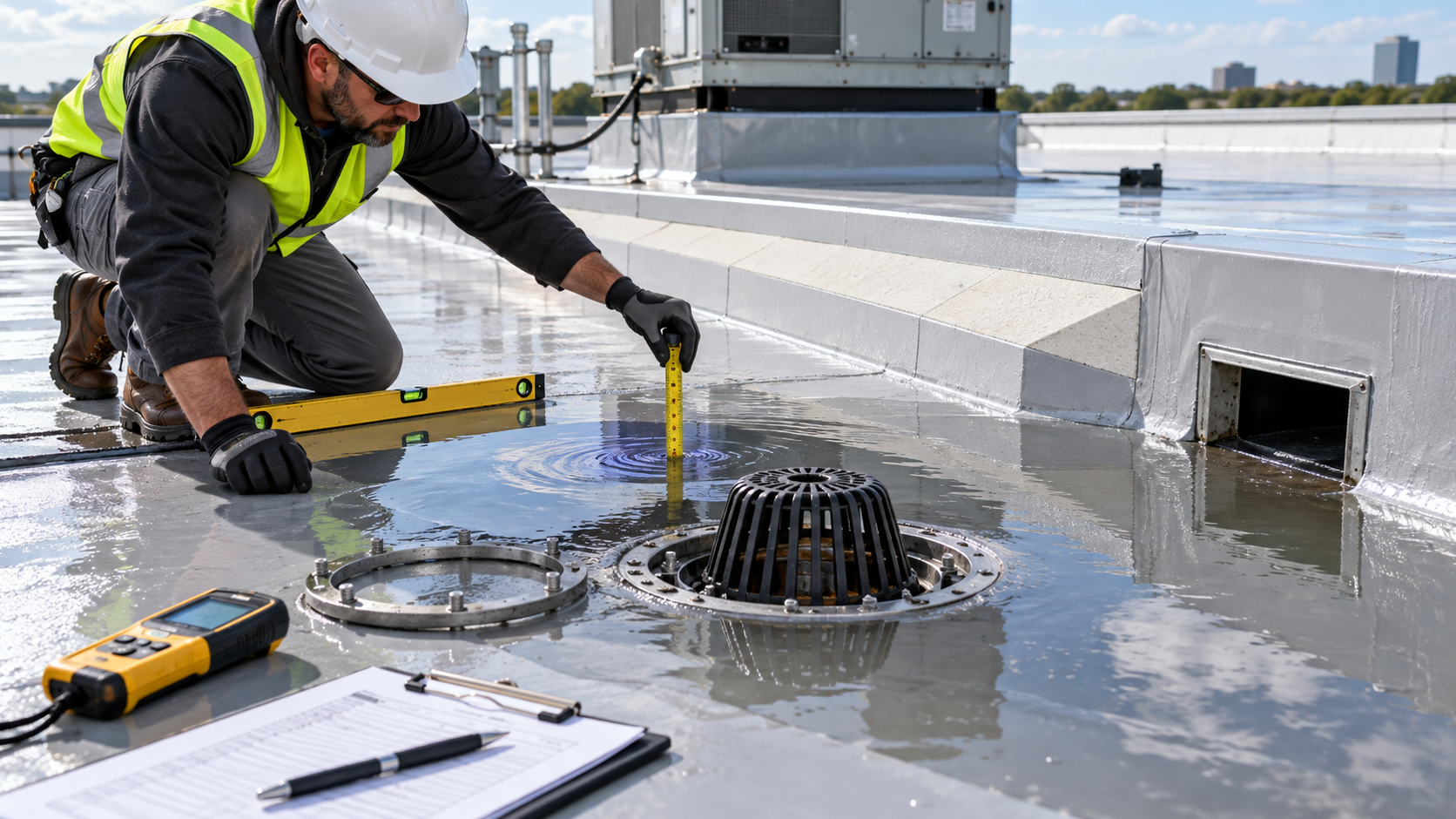
Inspect gutters, downspouts, internal drains, valleys, end laps, low areas, curbs, transitions, parapets, canopies, and additions. A retrofit changes elevations and can redirect water. New insulation, framing, or panels must not create dams or discharge onto vulnerable walls and foundations.
6. Map Penetrations and Rooftop Operations
HVAC units, vents, pipes, skylights, hatches, solar equipment, conduits, platforms, walkways, and future equipment affect detailing and sequencing. Unused penetrations may be removed; active components need coordinated curbs and flashings. Facilities teams should identify planned changes before design.
How to Make the Final Scope Decision
Choose Restoration When the Roof Is Fundamentally Sound
Restoration may be viable when corrosion is limited, panels are stable, moisture is controlled, drainage is acceptable, and preparation can create a suitable surface. The scope should specify repairs, cleaning, rust treatment, primer, reinforcement, coating type, thickness, testing, and warranty requirements.
Choose Retrofit for an Eligible Existing Assembly
Retrofit may provide value when the existing roof can safely support and receive a new engineered system. It can reduce tear-off, landfill material, interior exposure, and operational disruption. Those advantages depend on qualification. Hidden moisture, weak attachment, corrosion, or incompatible geometry can turn a shortcut into a costly failure.
Choose Replacement When Conditions Are Too Deteriorated
Full removal and replacement may be responsible when panels or structural components have widespread section loss, moisture is extensive, condensation is uncontrolled, repeated repairs have failed, added loads are unsuitable, or the proposed retrofit cannot meet code, wind, fire, drainage, or warranty requirements.
Why a Lowest Price Decision Can Fail
A TPO retrofit should not conceal widespread corrosion, perforated panels, unstable structural components, extensive trapped moisture, unresolved condensation, unsuitable loads, inadequate slope, incompatible materials, or a roof that cannot meet code and manufacturer requirements. Complete or selective removal may be necessary.
Persistent interior moisture deserves special attention. Water may come from exterior leakage, condensation, plumbing, process exhaust, or HVAC discharge. Installing TPO without identifying the source can trap moisture and leave the original problem active beneath the new system.
What Affects Coating and Retrofit Cost in Texas?
There is no reliable statewide price without measurements and system definition. Cost depends on roof area, height, access, slope, panel profile, existing moisture, corrosion, structural repairs, insulation, cover board, membrane or metal selection, coating preparation, perimeter reinforcement, curbs, penetrations, gutters, cranes, lifts, phasing, testing, engineering, warranty, and market conditions.
Owners should compare detailed scopes rather than square-foot numbers alone. One proposal may include wet-insulation removal, flute fill, cover board, enhanced perimeter attachment, new curbs, gutters, manufacturer inspection, and warranty fees. Another may exclude those items. Unit prices for concealed work should be stated before construction.
Planning the Project Without Disrupting Operations
Commercial buildings cannot always close for roofing. The contractor should coordinate work zones, access, deliveries, cranes, parking, loading docks, sensitive equipment, dust, noise, odors, interior observers, weather shutdowns, temporary protection, and daily dry-in. Restaurants, medical facilities, manufacturing plants, data centers, warehouses, and retail properties each require different controls.
Phasing should keep water from entering open transitions. Materials and debris must be secured against wind. Daily reports should record weather, crew, areas completed, substrate findings, photographs, tests, and deviations. A clear escalation path helps facilities teams respond quickly if interior conditions change.
Quality Control for Coating and Retrofit Work
Quality control begins before installation with approved submittals, engineering, product data, layout, fastener patterns, pull tests where required, compatibility review, and mockups for critical details. During work, verify substrate preparation, attachment, seam engagement, welds, adhesive coverage, coating thickness, flashing dimensions, closures, fastener installation, and weather protection.
Closeout should include final photographs, warranties, product information, maintenance requirements, inspection records, approved changes, and contact instructions. Owners should know who handles service and what conditions must be maintained to preserve warranty coverage.
Metal Roof Options and Aging Gravel Surfaced BUR Areas
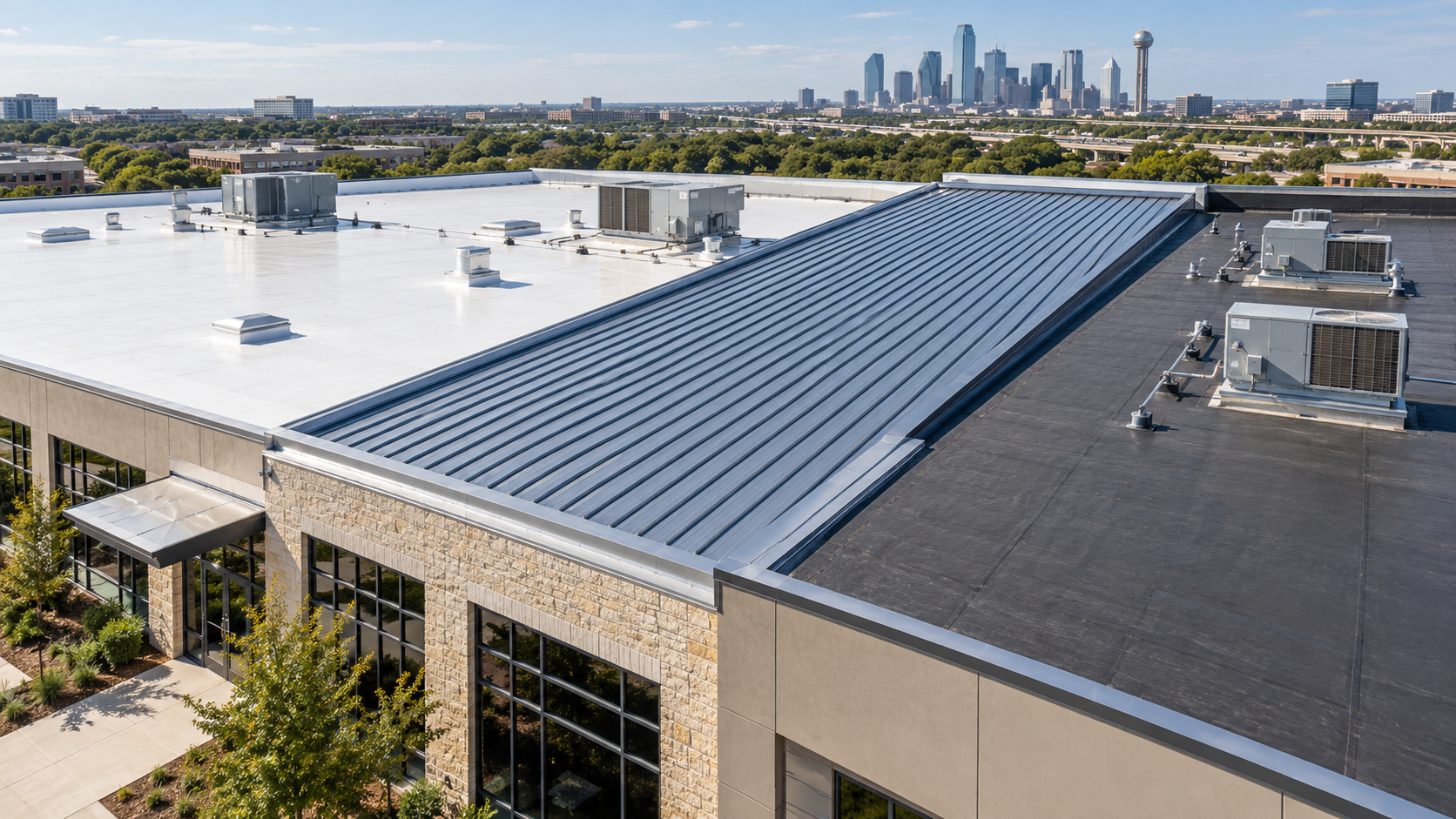
Some commercial properties contain multiple roof types. An addition may have metal while an older area has gravel-surfaced built-up roofing. The gravel area must not be presented as a benefit or assumed suitable for cover. Gravel can conceal cracks, blisters, deteriorated felts, old patches, erosion, and moisture pathways, complicating inspection and insurance review.
Transitions between metal and BUR require special attention. If the older assembly is wet, deteriorated, repeatedly leaking, or near the end of service, replacement with a visible and maintainable system may be more responsible than tying a new retrofit into uncertain materials.
Frequently Asked Questions About Metal Roof Coating and Retrofit
Is a membrane retrofit the same as a roof coating?
No. Coating is one possible restoration approach. Retrofit may also mean a new membrane recovery assembly or engineered metal-over-metal roof. The scopes, qualifications, costs, and warranties differ.
Can every metal roof be coated or retrofitted?
No. Structure, attachment, corrosion, moisture, condensation, slope, geometry, fire, wind, code, and manufacturer requirements must be evaluated.
Will retrofit stop condensation?
Not automatically. Condensation requires analysis of interior humidity, air movement, insulation, thermal bridging, vapor control, and climate. A new roof surface alone may not solve it.
Does retrofit avoid all tear-off?
It may reduce tear-off, but wet, damaged, unstable, incompatible, or code-limited materials may still need removal. Selective demolition is often necessary around details and repairs.
Which option is faster to install?
Duration depends on size, access, system, repairs, weather, phasing, equipment, engineering, inspections, and operational restrictions. The proposal should include a realistic sequence and contingency plan.
Can both options receive a warranty?
Potentially, if the assembly, contractor, substrate, testing, installation, and inspection satisfy the warranty provider's requirements. Owners should read exclusions and maintenance obligations.
Why Showtime Exteriors for Texas Metal Roof Decisions?
Showtime Exteriors treats coating and retrofit as building-specific decisions. The company evaluates repairs, coating restoration, TPO or PVC recover assemblies, engineered metal retrofit, selective tear-off, and replacement while considering operations, documentation, insurance concerns, and long-term maintenance.
Commercial property owners can call 817-400-ROOF (7663)* to request an inspection and practical scope. Recommendations should be based on observed conditions and project requirements, not a predetermined product.
What a Strong Comparison Proposal Should Include
A useful proposal identifies the existing roof, measured area, chosen retrofit assembly, attachment method, insulation values, cover board, panel or membrane specification, coating preparation where applicable, perimeters, corners, penetrations, transitions, curbs, gutters, drainage, traffic protection, testing, engineering, permits, cleanup, closeout, and warranty. It should distinguish confirmed quantities from allowances and explain exclusions clearly.
Ask how concealed conditions will be handled. The agreement should provide unit prices or a written change process for wet insulation, corroded panels, weakened supports, damaged deck, deteriorated fasteners, or unrecorded roof layers. It should identify who can authorize changes and how photographs will document conditions before they are covered.
Compare the proposed system with reasonable alternatives. A coating price should not be compared directly with an engineered membrane or metal-over-metal assembly without considering repairs, insulation, tear-off, expected service, maintenance, wind design, fire classification, warranties, and operational disruption. The lowest initial total can become expensive if it excludes moisture removal, perimeter reinforcement, access, or manufacturer requirements.
Before approval, confirm measurements, materials, load assumptions, attachment, condensation control, drainage, safety, phasing, testing, documentation, and service responsibility in writing. After completion, retain approved submittals, engineering, product data, photographs, daily reports, inspection records, invoices, warranties, and maintenance instructions with the property files. Schedule regular inspections and inspections after major storms. A documented maintenance history helps owners find small defects early, protects capital planning, and gives future contractors reliable information about the assembly.
Owners should also ask who will provide post-installation service and how a leak call will be investigated. The retrofit contractor should understand the installed assembly, maintain access to project records, and distinguish a roof defect from condensation, plumbing, wall leakage, or equipment discharge. Facility teams should avoid unauthorized penetrations and notify the roofer before HVAC, solar, electrical, or mechanical work changes the roof. Walk pads and designated routes can reduce traffic damage. Regular inspections should review seams, fasteners, coatings, flashings, curbs, gutters, drains, edges, and repairs. If corrosion, movement, ponding, or interior moisture returns, prompt investigation can prevent a limited condition from becoming a broad capital problem. A retrofit succeeds through design, workmanship, documentation, maintenance, and responsible rooftop coordination over time before the next severe Texas weather event tests the completed building enclosure.
A successful TPO retrofit begins with a qualified existing roof, not with the membrane roll. Owners should require clear evidence about moisture, corrosion, structural support, fastener resistance, condensation, drainage, and operational constraints. The finished assembly should be inspected, documented, and maintained as one system. When those requirements cannot be satisfied, selective removal or full replacement may provide the safer and more durable overall commercial roofing path.
Final Decision Checklist
Before selecting either system, confirm roof age, panel profile, structural condition, fastener resistance, corrosion extent, leak history, moisture findings, condensation sources, drainage, ponding, rooftop traffic, equipment plans, penetrations, edge conditions, wind exposure, fire requirements, insulation goals, code triggers, insurance questions, operating constraints, ownership horizon, maintenance capability, and budget.
For a coating proposal, confirm cleaning, rust treatment, primer, adhesion testing, seam and fastener reinforcement, fabric locations, product chemistry, application rate, dry-film thickness, weather limits, cure time, overspray control, inspection method, repair procedures, warranty, and future recoating requirements.
For a membrane retrofit proposal, confirm selective removal, panel repairs, flute fill, insulation, cover board, attachment substrate, pullout testing, fastening zones, membrane thickness, welding, perimeter enhancement, drainage, curb heights, expansion joints, penetrations, sheet metal, fire classification, wind design, daily dry-in, warranty, and maintenance.
Owners should request photographs and written findings rather than relying on a brief visual opinion. The contractor should explain why the roof qualifies, what conditions could change the scope, and how concealed damage will be handled. Every proposal should distinguish required work from optional upgrades and should define exclusions clearly.
After completion, retain contracts, approved submittals, safety plans, product data, test results, daily reports, weather records, photographs, inspection documentation, warranty certificates, and maintenance instructions. Schedule routine inspections and additional reviews after severe hail, high winds, equipment work, new penetrations, interior leakage, or visible movement.
The best decision is the system that addresses documented conditions with a complete, maintainable assembly. A coating can be an effective restoration tool for a sound and compatible roof. A membrane retrofit can provide a more comprehensive recover assembly when the building qualifies. Replacement remains the responsible path when deterioration, moisture, structure, or compliance concerns exceed what either alternative can safely manage.
How to Compare Competing Commercial Roofing Bids
Place proposals side by side and normalize every major assumption. Confirm that contractors measured the same roof area, counted the same curbs and penetrations, and included the same buildings, canopies, gutters, walls, and transitions. Compare the amount of panel repair, rust treatment, wet insulation removal, sheet metal, edge work, drainage correction, and interior protection. Ask whether taxes, permits, engineering, bonds, lifts, cranes, dumpsters, temporary protection, and manufacturer inspections are included.
For coating bids, compare product chemistry, solids content, primer, reinforcement, application rate, total dry-film thickness, detail quantities, substrate preparation, adhesion testing, and acceptable weather conditions. A low price may reflect less material, limited reinforcement, excluded repairs, or assumptions that are not visible in the summary. Request product data and a roof-specific scope rather than relying on a warranty duration alone.
For retrofit bids, compare flute-fill profile, insulation thickness, cover-board type, membrane thickness, attachment method, fastening pattern, pullout testing, enhanced perimeter and corner zones, flashings, edge metal, curb modifications, drainage, and sheet-metal fabrication. Confirm whether fastening reaches suitable structure and whether the assembly is approved for the building's conditions.
Ask each contractor to identify unit prices for concealed work and explain the approval process before extras proceed. Clarify how schedule changes, severe weather, material storage, and occupied areas will be managed. The comparison should also address maintenance, inspection intervals, repair access, warranty exclusions, transfer requirements, and responsibility when other trades damage the roof. A transparent scope lets the owner evaluate value instead of guessing from totals.
Document the final decision carefully for future maintenance planning property records insurance renewal capital budgeting storm response warranty administration tenant coordination safety reviews repairs inspections ownership transitions and facility management needs over time with qualified professional guidance when conditions change.
Verify conditions.


Best Roofer in Dallas Texas: How to Choose a Qualified Residential and Commercial Roofing Contractor