



Best Commercial Roofing Material for Texas: TPO, PVC, EPDM, Metal, Modified Bitumen, and Coatings
A Texas commercial property guide to system selection, building use, climate, moisture, drainage, maintenance, and insurance risk
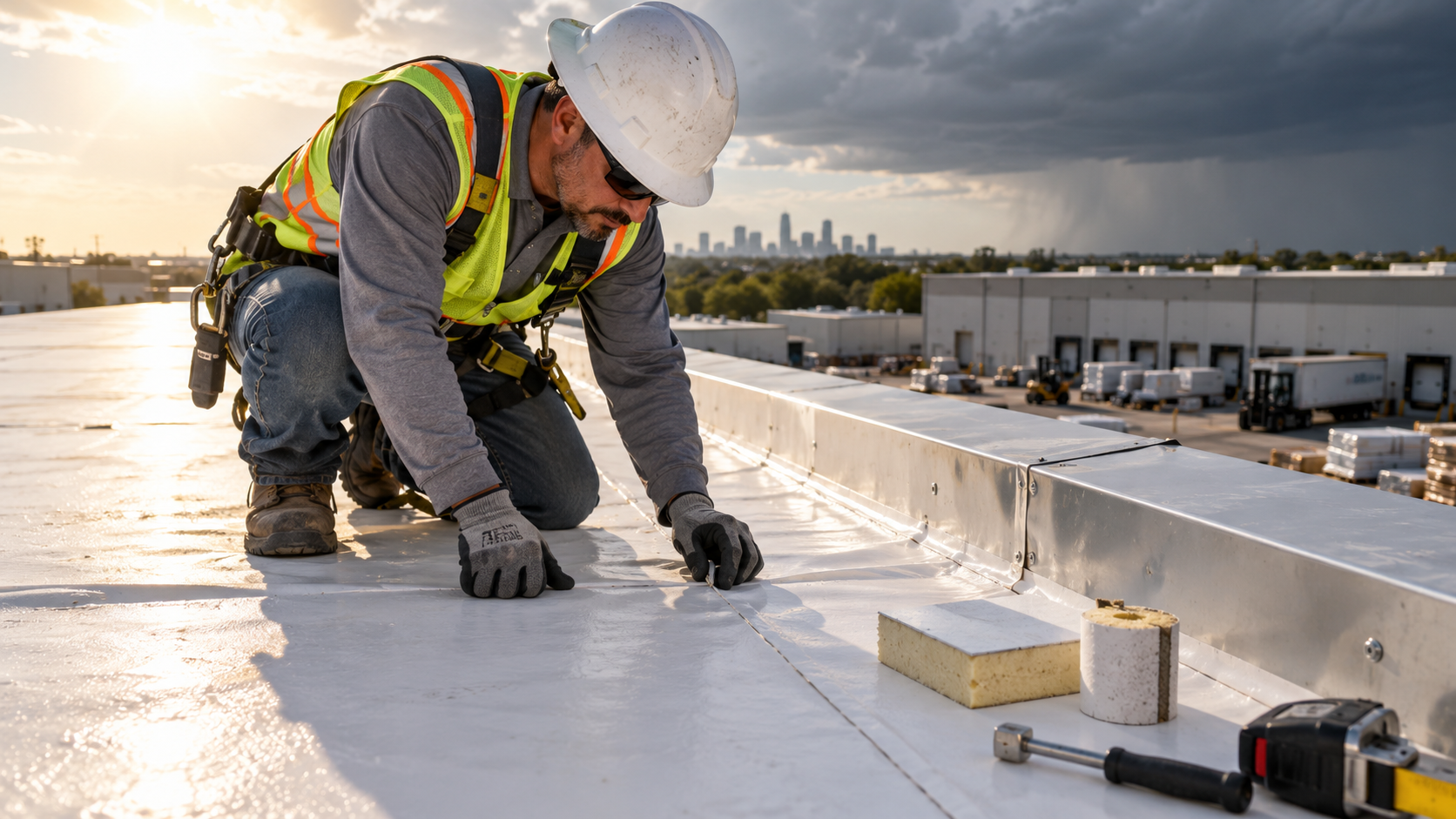
The best commercial roofing material for Texas is not one product that wins for every building, climate, operation, or budget. A roof must match the property's slope, deck, drainage, use, location, energy goals, budget, maintenance capacity, and exposure to heat, ultraviolet radiation, hail, wind, heavy rain, humidity, or freeze events. Installation quality and assembly design usually matter as much as the material name.
Showtime Exteriors is a Texas-based, full-service roofing company serving commercial property owners, facility teams, asset managers, and building operators across the state. Its work includes inspections, repairs, emergency response, restoration, replacement, and long-term planning. Review Showtime Exteriors' commercial roofing services or call 817-400-ROOF (7663) to request a property-specific evaluation.
This guide compares TPO, PVC, EPDM, standing-seam and exposed-fastener metal, modified bitumen, and roof coating systems for Texas commercial properties. The National Roofing Contractors Association also provides industry education and technical resources for commercial roofing professionals and building owners. It explains how regional weather, roof geometry, insulation, attachment, drainage, maintenance, warranties, and insurance concerns influence selection. It also follows David Washington's campaign requirement: aging gravel-surfaced built-up roofs must be treated as inspection, deterioration, leak-tracing, maintenance, and insurance concerns. Gravel should never be promoted as a positive feature.
What Makes a Commercial Roofing Material Appropriate for Texas?
The best commercial roof for Texas is the complete assembly that fits the building, operations, and risks. Surface material alone cannot compensate for wet insulation, weak decking, inadequate attachment, poor flashing, or drainage that leaves water standing against vulnerable details.
A dependable roofer identifies the existing system, reviews roof age and service history, documents observed defects, evaluates drainage and flashings, checks accessible interior conditions, and explains limitations. The company should be able to distinguish an isolated repair from widespread deterioration and describe why the proposed materials are compatible.
Service after installation also matters. Owners should understand who receives leak calls, how warranty service is requested, what documentation is retained, and whether the contractor can support future inspections. Roofing is an ongoing building-protection responsibility, not only a one-day purchase.
There Is No Universal Best Commercial Roofing Material
A steep residential roof in North Texas, a low-slope warehouse in Houston, a restaurant with grease exhaust, and a metal industrial building in West Texas do not require the same assembly. Slope determines how quickly water leaves. Building use affects interior humidity, chemical exposure, rooftop traffic, and disruption tolerance. Local weather changes uplift, impact, drainage, and thermal demands.
Owners should compare complete assemblies rather than isolated product labels. The assembly includes deck, air or vapor control where required, insulation, cover board, attachment, membrane or panels, flashings, edges, penetrations, drainage, and maintenance access. Each layer must work with the others.
Texas Weather Changes the Roofing Decision
Texas climate varies substantially. North Texas properties face hail, straight-line wind, temperature swings, and severe thunderstorms. Gulf Coast roofs experience humidity, intense rain, tropical weather, and wind-driven water. Central and West Texas buildings face strong sun, heat, drought, dust, and large temperature changes. The Panhandle and northern regions can also experience snow, ice, and freeze-thaw stress.
The National Weather Service provides official forecasts, warnings, climate information, and regional weather offices across Texas. Weather data can help establish timing and exposure, but it does not prove that a specific roof was damaged. The building still requires a property-specific inspection.
Wind design and edge attachment deserve particular attention. Damage often begins at perimeters, corners, ridges, eaves, flashings, or rooftop components where forces concentrate. The contractor should examine the complete assembly rather than focusing only on the most visible surface.
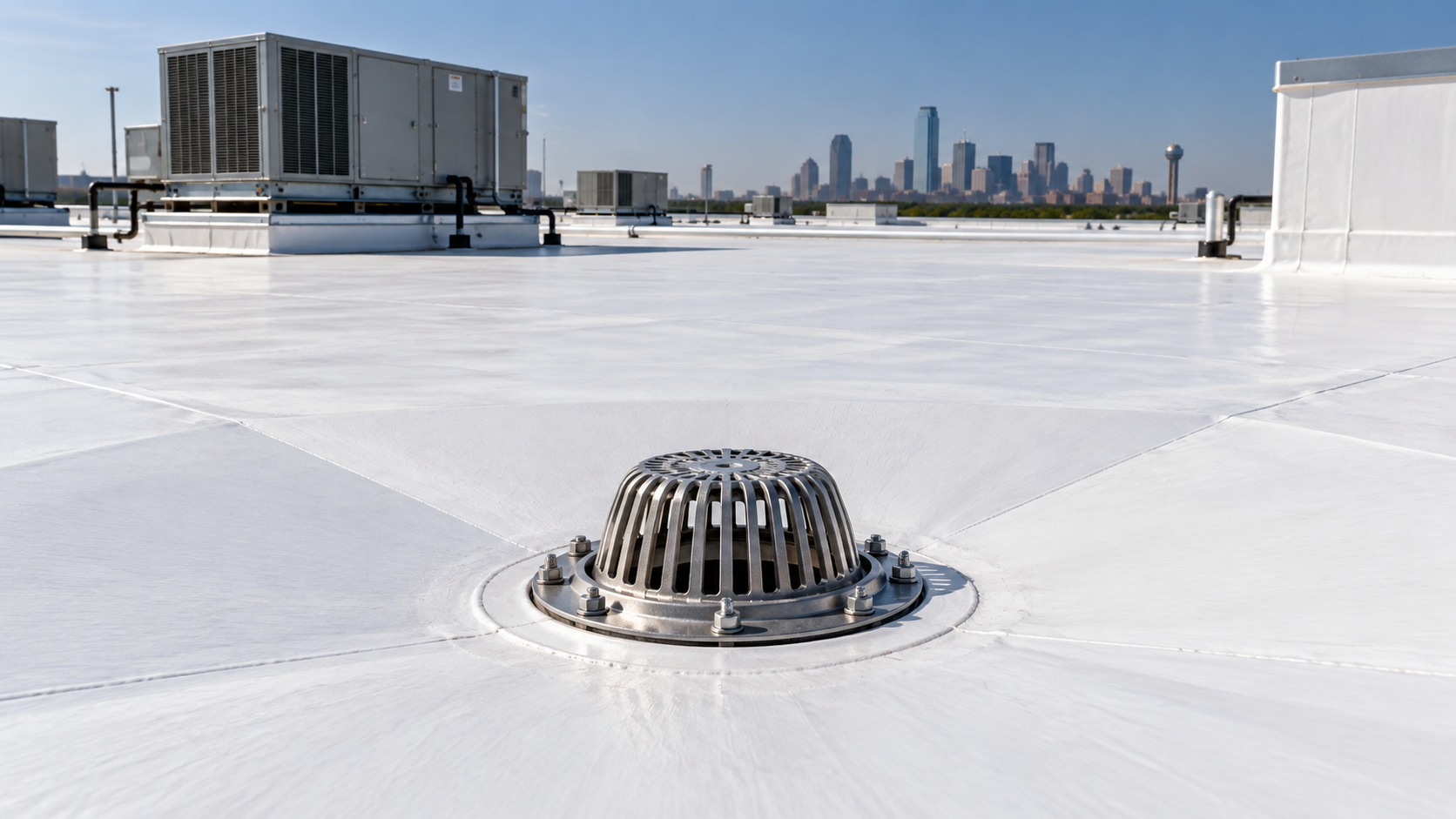
Rainfall also makes drainage performance critical. Low areas, clogged drains, inadequate scuppers, debris, poor slopes, or damaged gutters can allow water to remain against vulnerable details. A roofing company should determine whether the problem is maintenance, roof design, insulation slope, structural movement, or a combination.
Commercial Roofing Requires Specialized Expertise
Commercial roofing requires system identification, moisture evaluation, safe access, operational planning, detailed specifications, manufacturer coordination, trained installers, daily weather controls, quality documentation, and responsive service. A contractor should understand how building use changes material selection and detail design.
Commercial Roofing Capabilities
Commercial roofs may include TPO, PVC, EPDM, modified bitumen, metal, coatings, built-up roofing, insulation, cover boards, drains, scuppers, curbs, parapets, edge metal, and extensive rooftop equipment. The company must correctly identify the assembly before repairing or replacing it.
Showtime Exteriors provides commercial roof inspection and replacement services across Texas for offices, retail centers, warehouses, multifamily properties, restaurants, medical facilities, industrial buildings, and other occupied sites. Commercial work requires phasing, tenant communication, interior protection, safe access, and coordination with facilities teams and other trades.
Start With an Evidence-Based Roof Inspection
A contractor cannot responsibly recommend repair or replacement without understanding the property. The inspection should be systematic and should produce useful documentation.
Roof Surface and Detail Review
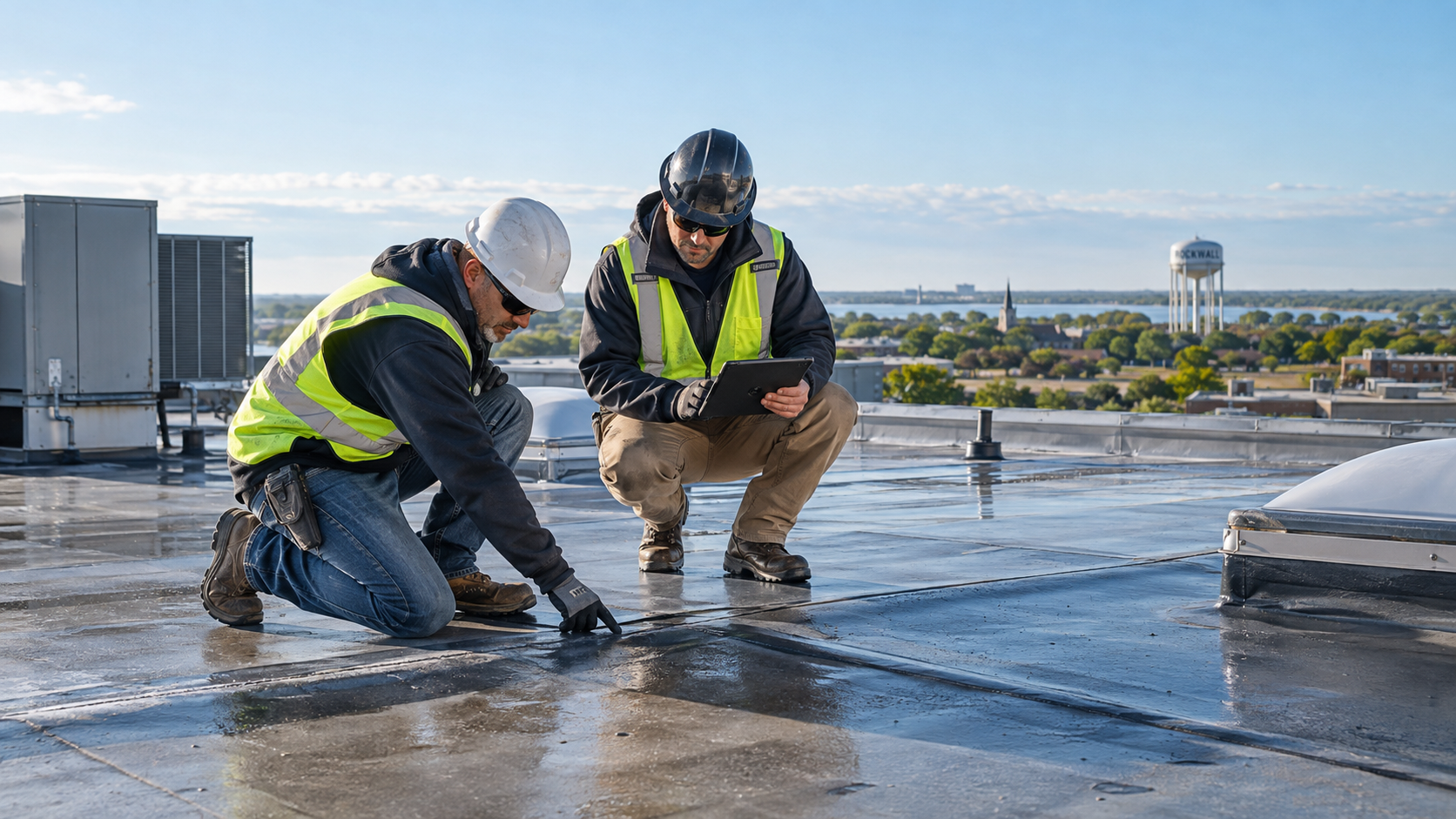
On steep roofs, inspectors should examine shingles or panels, ridges, valleys, eaves, rakes, sidewalls, headwalls, flashing, vents, pipes, skylights, and penetrations. On low-slope roofs, they should examine membrane seams, flashings, curbs, drains, scuppers, parapets, penetrations, transitions, edges, walkways, equipment areas, and previous repairs.
The contractor should also identify damage caused by foot traffic, dropped tools, equipment service, animals, debris, age, or incompatible materials. Not every defect is storm-related, and an accurate report should avoid unsupported conclusions.
Interior and Attic Evidence
Stains, wet insulation, rust, peeling coatings, damp ceiling materials, deck discoloration, and musty odors can help trace a leak. Water may travel horizontally or follow structural components before it appears inside, so the visible stain is not necessarily directly below the roof opening.
Moisture Testing and Core Samples
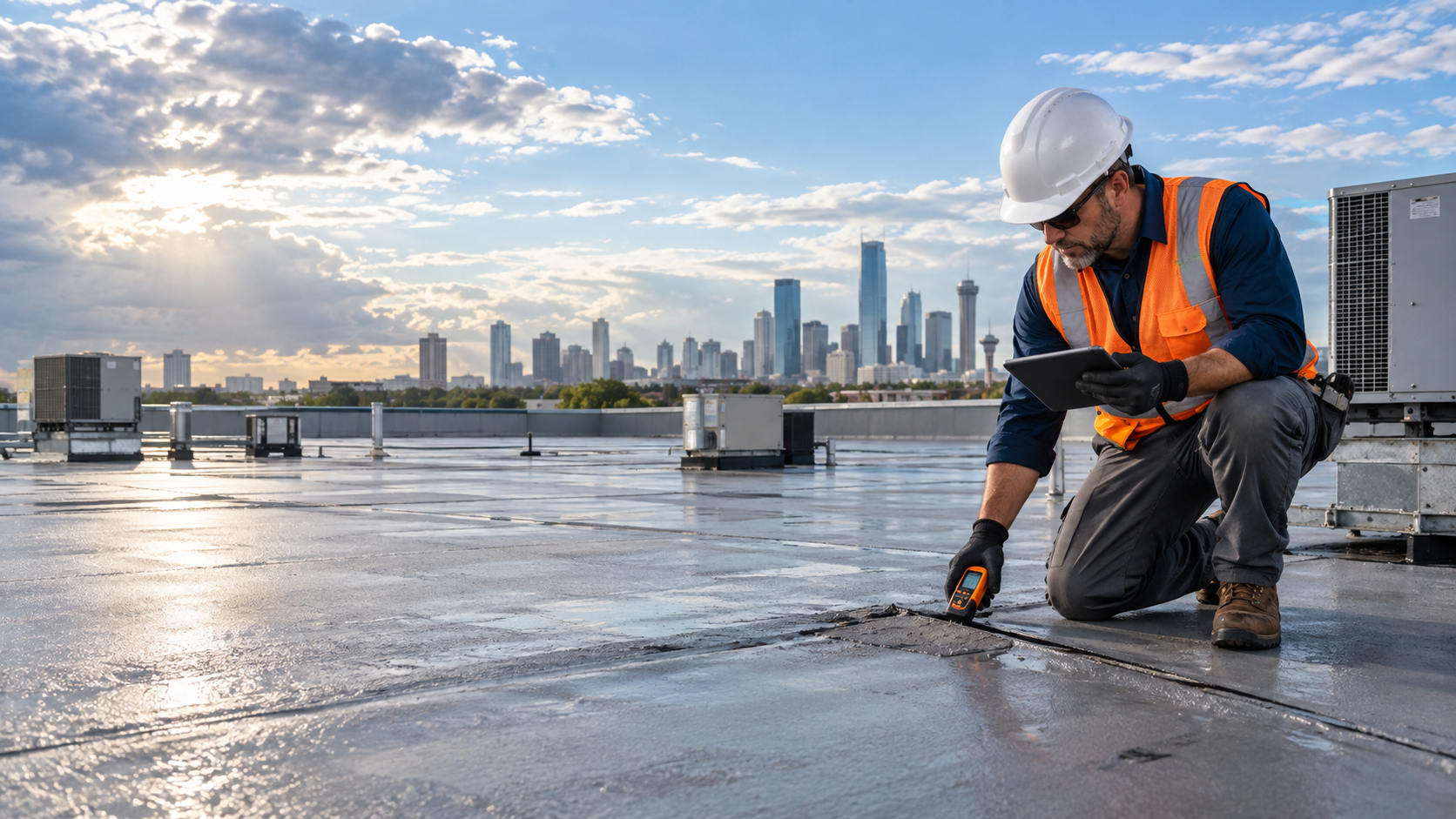
When concealed moisture is suspected, the contractor may recommend moisture meters, infrared scanning, controlled test cuts, or core samples. Each method has limitations. Infrared patterns require suitable conditions and interpretation. Core samples reveal the roof assembly at selected points but do not describe every square foot.
The contractor should explain what was tested, where, why, and how the findings affect the scope. Wet insulation generally should not be trapped beneath a new system or cosmetic coating.
Clear Inspection Reporting
A useful report identifies the property, roof areas, observed conditions, photographs, limitations, repair priorities, and recommended next steps. It separates emergency defects from routine maintenance and longer-term capital needs. Showtime Exteriors publishes additional commercial roofing resources for owners planning inspections and improvements.
Repair, Restore, or Replace?
The best roof decision does not push every property toward the same outcome. It matches repair, restoration, or replacement to present condition, moisture, risk, ownership goals, and expected service life.
When Repair Is Appropriate
Repair may be appropriate when a defect is localized, adjacent materials remain serviceable, wet components can be removed, and compatible products are available. Examples include a limited shingle loss, failed pipe boot, isolated membrane puncture, small open seam, damaged flashing, or localized metal detail.
A lasting repair corrects the failure pathway. It requires preparation, removal of unstable material, substrate correction where necessary, compatible products, and a quality check. Smearing sealant over a dirty or moving surface may temporarily change the appearance without creating a durable repair.
When Restoration May Be Viable
Restoration may extend service life when the roof is fundamentally sound, moisture is limited, drainage is acceptable, and the surface can receive the specified system. Restoration commonly involves repairs, cleaning, primers, reinforcement, and a compatible coating.
Coating should not be used to conceal wet insulation, unstable decking, widespread membrane failure, open flashings, or unresolved ponding. Adhesion testing, moisture evaluation, detail design, and manufacturer requirements should guide the scope.
When Replacement Is More Responsible
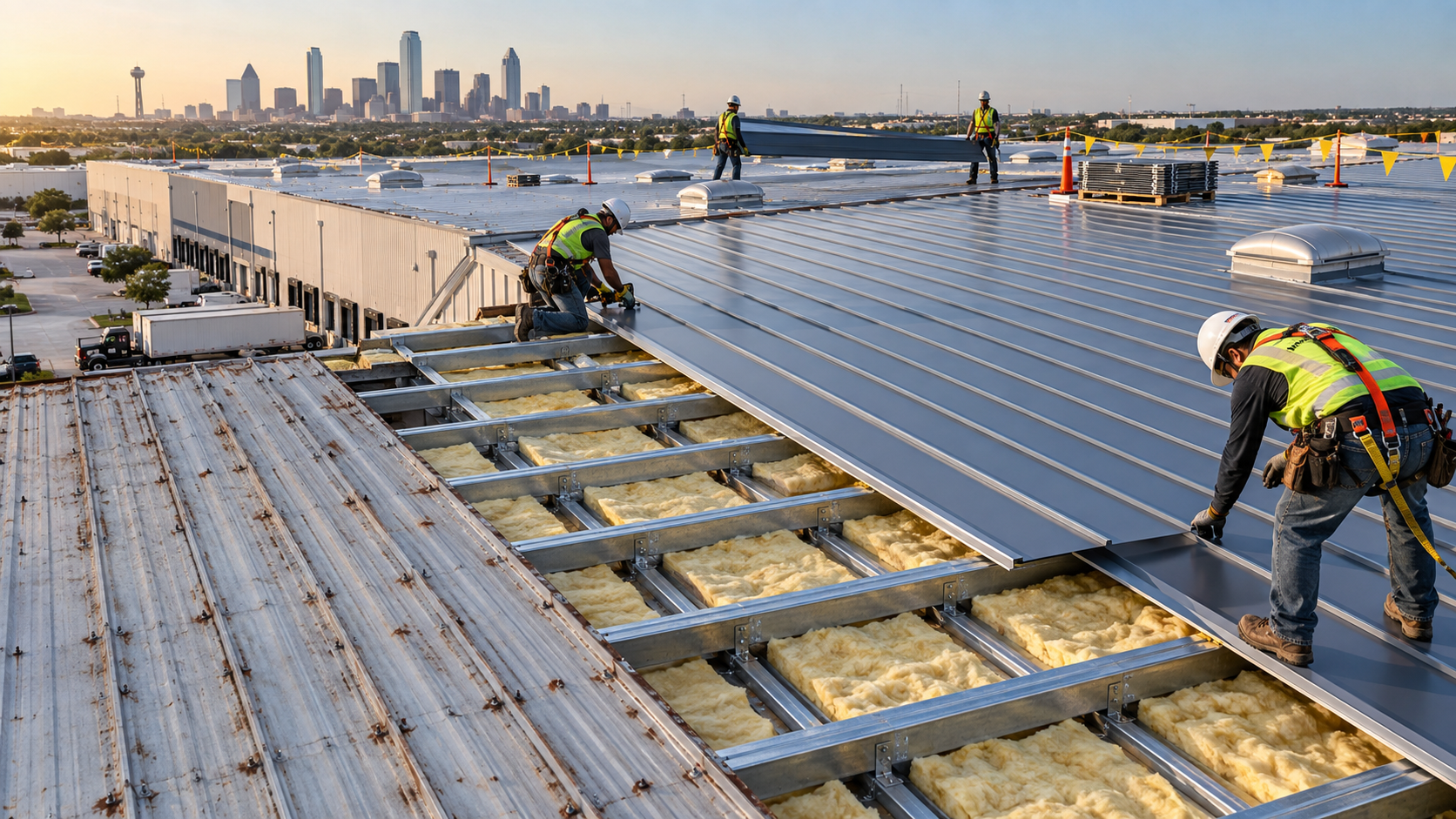
Replacement may offer better value when deterioration is widespread, repairs are recurring, moisture is extensive, the deck is compromised, materials are brittle, multiple incompatible layers exist, or the remaining service life cannot justify additional patching.
Replacement creates an opportunity to improve drainage, insulation, attachment, perimeter strength, flashings, access, traffic protection, and rooftop-equipment coordination. The new design should address conditions that shortened the previous roof's life rather than simply repeat them.
David's Priority: Aging Gravel-Surfaced BUR Is a Risk
Aging built-up roofing with gravel surfacing should be treated as an inspection, maintenance, leak-tracing, and insurance concern. Gravel can obscure cracks, blisters, deteriorated felts, failed laps, old patches, membrane erosion, and moisture pathways. Because the waterproofing surface is not fully visible, a quick walkover may not reveal the true condition.
Many gravel-surfaced BUR systems are also old and have incomplete repair histories. Age alone does not prove failure, but repeated leaks, concealed moisture, uncertain materials, and limited documentation increase risk. Some carriers may require additional evidence, restrict coverage, increase premiums, impose conditions, or decline renewal based on roof type, age, condition, claims, or underwriting rules.
A roofing contractor cannot promise a carrier's decision. The correct response is to investigate. Selected gravel may need to be displaced so the membrane can be examined. Moisture scanning, core samples, flashing review, drainage evaluation, and deck assessment may be appropriate. If the system is deteriorated, difficult to document, or near the end of useful service, replacement with a more visible and maintainable assembly may be the responsible long-term plan.
Showtime Exteriors does not frame gravel as a benefit or recommend cosmetic work that hides unresolved conditions. The goal is to give owners defensible documentation and a practical path before renewal deadlines, tenant damage, or emergency failure forces a rushed decision.
Leading Commercial Roofing Materials for Texas Properties
Steep-Slope Shingles on Commercial Buildings
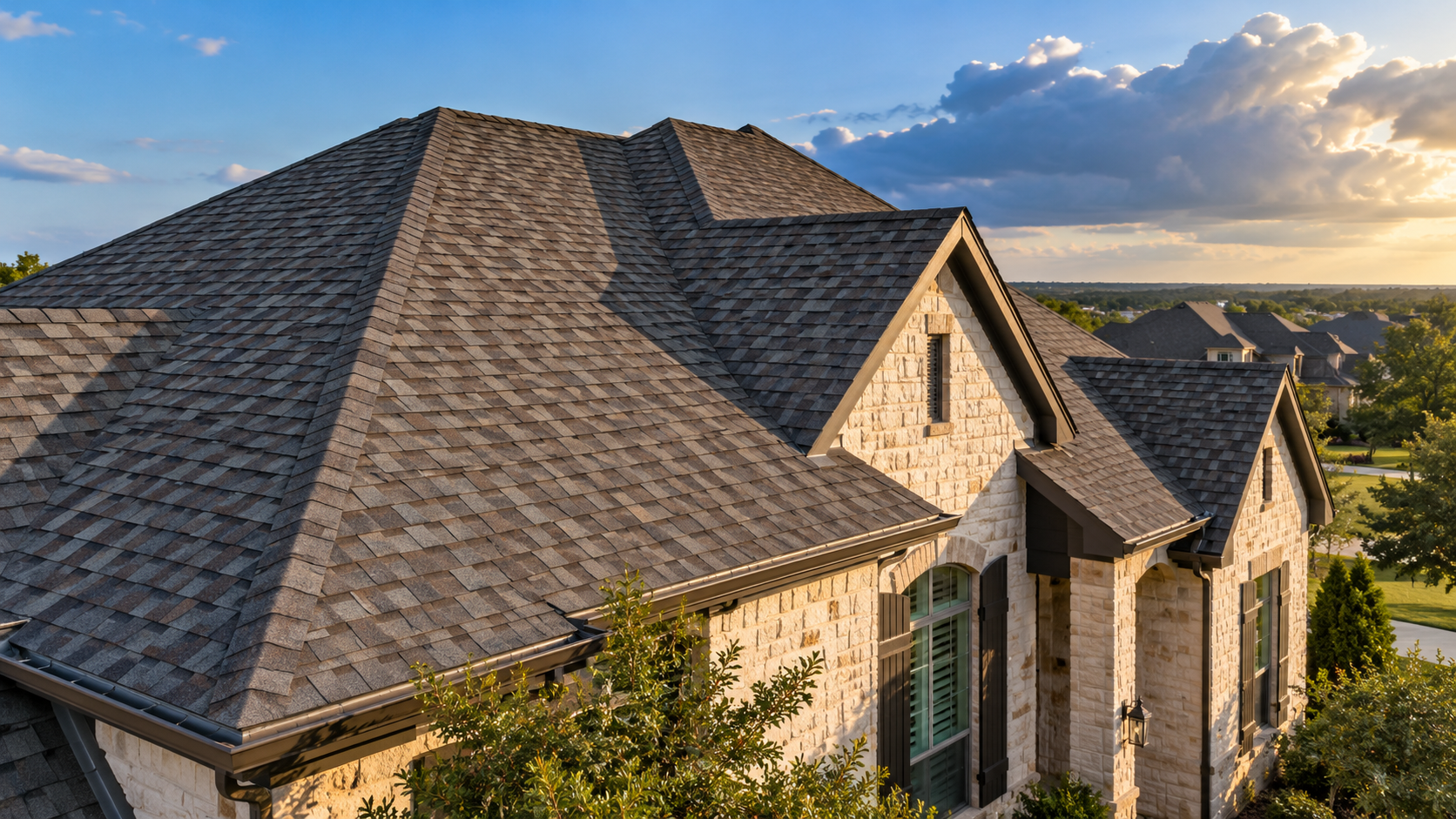
Shingle performance depends on material selection, deck condition, underlayment, starter courses, fastening, alignment, ventilation, valleys, flashing, ridges, penetrations, and edges. Across Texas, wind resistance, heat exposure, hail vulnerability, ventilation, and water management deserve particular attention.
Metal Roofing
Metal roofs require correct panels, seams, clips, fasteners, closures, penetrations, gutters, flashings, and edges. Repairs must allow for thermal movement. Rigid or incompatible sealant across a moving joint can fail quickly and complicate later preparation.
TPO Roofing
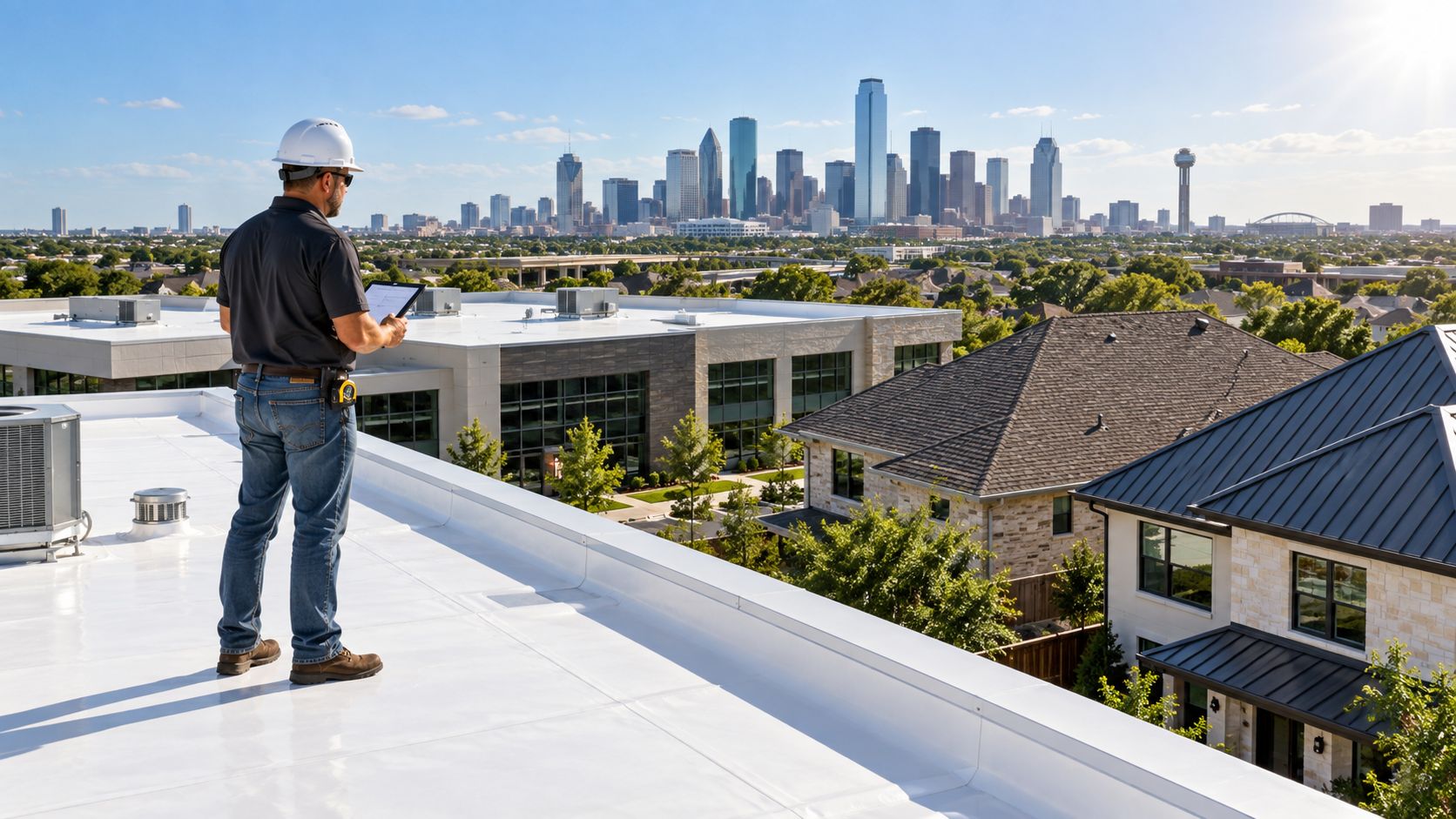
TPO is a heat-welded single-ply membrane commonly used on commercial buildings. The contractor should understand insulation, cover boards, attachment, welding, flashings, curbs, drains, perimeters, walkways, and seam testing. A visible membrane can be easier to inspect than a gravel-covered assembly.
PVC Roofing
PVC is another heat-welded single-ply system. It may be selected where grease or chemical exposure requires careful material evaluation. Restaurants and industrial properties need deliberate compatibility and detail design around exhaust and process areas.
EPDM Roofing
EPDM uses rubber membrane with seams and flashings completed through approved primers, tapes, adhesives, and accessories. Cleaning, preparation, compatibility, and detail execution determine whether a repair or installation performs as intended.
Modified Bitumen
Modified bitumen may be APP, SBS, torch-applied, hot-applied, cold-applied, self-adhered, or mechanically attached. The contractor must identify the assembly before choosing a method and apply appropriate fire, safety, and property-protection controls.
Roof Coatings
Acrylic, silicone, urethane, and reinforced coating systems have different strengths and limitations. The roofer should evaluate existing materials, moisture, drainage, adhesion, traffic, chemical exposure, reinforcement, and required thickness before recommending a coating.
Match the Material to the Commercial Building Use
Warehouses and Distribution Facilities
Large warehouses often have expansive low-slope roofs, long drainage paths, numerous penetrations, loading operations, and tight disruption limits. TPO, PVC, EPDM, modified bitumen, metal retrofit systems, and coatings may all be considered, but the decision should begin with deck type, existing layers, moisture, attachment, drainage, wind design, fire requirements, interior sensitivity, and traffic. A low unit price can become expensive if it ignores wet insulation, perimeter reinforcement, or operational phasing.
Retail Centers and Offices
Retail and office roofs must protect tenants, customers, finishes, electronics, inventory, and public entrances. Repairs and replacements may require phased tear-off, interior monitoring, controlled access, odor planning, delivery coordination, and daily dry-in. The best material is one that can be detailed around curbs, walls, drains, signage, canopies, and dense rooftop equipment without creating unmaintainable transitions.
Restaurants and Food-Service Buildings
Restaurants introduce grease, cleaning chemicals, heat, exhaust, condensate, service traffic, and frequent rooftop work. Material compatibility near exhaust and discharge areas deserves careful review. PVC may be considered where chemical or grease resistance is important, but exact exposure, manufacturer requirements, substrate, flashings, and maintenance determine suitability. Walkways and equipment coordination can be as important as the field membrane.
Medical, Laboratory, and Sensitive Facilities
Medical offices, laboratories, data rooms, and other sensitive occupancies may require strict interior protection, infection-control coordination, low-odor methods, noise scheduling, dust management, and rapid response. The material must fit these constraints, but project planning and quality control often determine whether operations remain protected.
Industrial and Manufacturing Properties
Industrial buildings may expose roofs to process exhaust, vibration, chemicals, heat, dust, heavy traffic, and frequent penetrations. A contractor should document actual exposures and obtain written compatibility guidance where needed. Generic assumptions about TPO, PVC, EPDM, coatings, or metal are not enough for a process-specific environment.
How to Compare Commercial Roofing Materials in Texas
Material selection should follow evidence about moisture, deck condition, drainage, attachment, rooftop operations, and future maintenance.
Begin With Roof Slope and Drainage
Steep-slope materials shed water and depend on underlayment, flashing, valleys, eaves, and ventilation. Low-slope systems must remain watertight while directing water toward drains, scuppers, gutters, or controlled edges. A material recommended outside its suitable slope or without adequate drainage is not the best choice, regardless of marketing claims.
Evaluate the Complete Assembly
Insulation type and thickness, cover board, attachment, deck condition, perimeter design, penetrations, expansion, traffic, and interior conditions affect performance. Reflective color may reduce surface temperature, but it cannot correct wet insulation or air leakage. Impact-resistant surfacing may help with hail exposure, but details and substrate support remain critical.
How to Evaluate the Contractor Installing the Roof
Verify Identity, Insurance, and Responsibility
Confirm the legal business name, physical contact information, current insurance, and the person responsible for the project. Ask whether employees, subcontractors, or both will perform the work and who directs them on site. The company named in the agreement should remain accountable from inspection through warranty service; an owner should not have to chase unrelated parties when a question arises.
Certificates of insurance provide evidence of coverage, although the actual policy controls. Ask for current documentation and confirm any project-specific requirements with appropriate professionals.
Ask for Relevant Experience
Experience should match the material, defect, building use, and project scale. A residential shingle reroof does not demonstrate the same capabilities as an occupied hospital repair, warehouse membrane replacement, restaurant PVC project, or metal retrofit.
Showtime Exteriors provides project references for owners reviewing relevant work. Ask what challenges were encountered, how operations were protected, and what documentation was provided at closeout.
Compare Scope Instead of Price Alone
One proposal may include full tear-off, wet-insulation removal, tapered drainage, cover board, flashings, edge metal, manufacturer inspection, and warranty fees. Another may assume the roof is dry and exclude those items. The totals are not comparable until assumptions are aligned.
For repairs, compare preparation, removal, materials, dimensions, substrate work, cleanup, photographs, and warranty. A low price for exposed surface sealant is not equivalent to an integrated repair that removes damaged components and restores the assembly.
Evaluate Communication and Supervision
Ask who will manage the project, provide daily updates, approve changes, monitor weather, and complete quality checks. The owner should have a point of contact.
Questions to Ask Before Selecting a Commercial Roof System
Ask the contractor to explain why the proposed assembly fits the roof slope, deck, drainage, building use, location, and weather exposure. Request alternatives and the reasons each was accepted or rejected. Confirm how insulation, cover board, attachment, edges, penetrations, rooftop equipment, traffic, and future maintenance are addressed.
Ask which conditions remain concealed and how discoveries will be documented, priced, and approved. The contractor should also explain forecast monitoring, daily dry-in limits, material storage, wind controls, interior protection, final quality inspection, warranty issuance, and closeout records. A specific answer tied to the property is more credible than a generic promise that one product is always best.
Warranties: Ask What Is Actually Covered
Several warranties may apply. A material warranty may cover manufacturing defects. A contractor workmanship warranty may cover qualifying installation problems. A manufacturer system warranty may cover defined components and leak repairs when conditions are satisfied.
Ask who issues the warranty, what materials and labor are included, whether coverage is prorated, how service is requested, what maintenance is required, and whether the warranty transfers. A long term does not automatically mean broad protection.
Storm damage, unauthorized penetrations, structural movement, standing water, chemical exposure, abuse, equipment leaks, and work by other trades may be excluded. The Federal Trade Commission's warranty guidance offers general consumer information, but the actual contract and warranty govern the project.
Storm Damage and Insurance Documentation
After a storm, photograph accessible conditions from safe locations, protect the interior, record affected rooms, save damaged materials when practical, retain receipts, and follow policy notice and mitigation requirements. Do not climb onto a wet or damaged roof.
The Texas Department of Insurance publishes storm recovery guidance for consumers. Policy terms, deductibles, exclusions, deadlines, depreciation, and settlement processes vary, so contact the carrier or insurance professional about the specific policy.
A roofing company can inspect physical conditions, document findings, provide estimates, perform emergency protection, and complete authorized work. It should not guarantee claim approval, promise a settlement, improperly waive a deductible, or interpret coverage as an attorney or public adjuster.
The report should distinguish observed storm damage from age, maintenance, foot traffic, manufacturing characteristics, prior repairs, and mechanical damage. Accurate evidence is more credible than inflated claims.
Safety and Property Protection
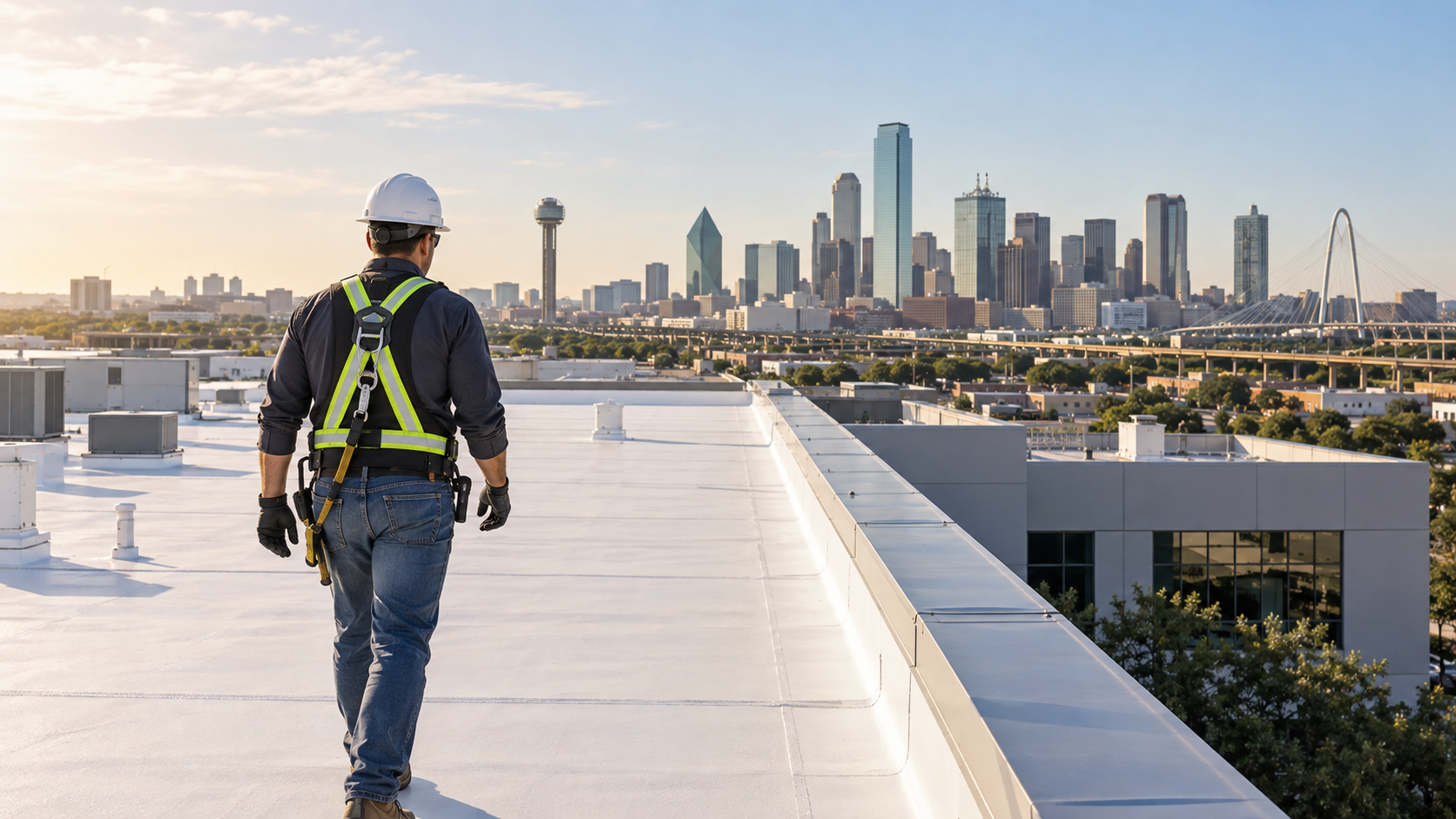
Roofing work involves fall, ladder, electrical, heat, weather, tool, material-handling, debris, and pedestrian hazards. OSHA provides roofing safety resources for employers and workers. A professional company should plan access, fall protection, staging, housekeeping, weather response, and separation from occupants.
Residential protection may include landscaping, pools, vehicles, windows, siding, driveways, and neighboring homes. Commercial protection may include tenant entrances, emergency exits, deliveries, equipment, inventory, ceilings, walkways, and public areas.
Daily tear-off should be limited to an area the crew can make watertight. Temporary tie-ins require special attention because Texas weather can change quickly. Materials should be secured against wind and protected from moisture.
Energy, Heat, and Insulation Considerations
Roof replacement is an opportunity to evaluate insulation, thermal bridging, air leakage, reflectivity, moisture, and rooftop heat exposure. The U.S. Department of Energy explains general cool roof considerations. Actual energy performance depends on the entire assembly, building use, climate, installation, and maintenance.
A reflective surface alone does not guarantee a specific savings result. Ask the contractor to document existing insulation, proposed R-value, cover board, attachment, drainage, and transitions. Wet insulation should be removed because it can reduce thermal performance and undermine the new system.
Red Flags When Hiring a Texas Roofer
Be cautious when a contractor recommends replacement before inspecting, refuses to provide a written scope, cannot identify the existing roof system, or promises an insurance result. High-pressure urgency is not technical evidence.
Other red flags include vague material descriptions, unusually large unexplained payments, incomplete insurance documentation, improper deductible offers, reluctance to identify the crew, no process for concealed conditions, or refusal to discuss safety and cleanup.
For commercial roofs, be cautious if the company treats coating as a universal cure, ignores wet insulation, minimizes drainage, or speaks positively about an aging gravel-surfaced BUR system without investigating concealed conditions.
Why Showtime Exteriors Is a Strong Texas Roofing Choice
Showtime Exteriors combines residential and commercial capabilities with inspection, repair, restoration, replacement, storm response, and long-term planning. The company evaluates asphalt shingles, metal, TPO, PVC, EPDM, modified bitumen, coatings, and built-up roofing while tailoring recommendations to the property.
The process emphasizes evidence, clear scopes, compatible materials, documentation, and practical options. Commercial recommendations account for building operations, insurance concerns, moisture, drainage, equipment, and future maintenance. Residential projects account for the full roof assembly and property protection.
Property owners can review Showtime Exteriors' roofing FAQ and contact the team to discuss a Texas inspection, repair, replacement, or storm-related concern. Call 817-400-ROOF (7663) to start with a property-specific assessment.
Frequently Asked Questions About Commercial Roofing Materials in Texas
What is the best commercial roofing material for Texas?
There is no universal winner. The best roof matches the building type, slope, deck, drainage, region, weather exposure, operating conditions, ownership plan, maintenance capacity, and budget. A qualified inspection should guide the choice.
Should I get multiple roofing estimates?
Yes, when circumstances allow. Compare scope, materials, assumptions, exclusions, warranty, supervision, and documentation—not only price. Clarify differences before deciding.
Can a Texas roof be repaired after a storm?
Many localized defects can be repaired when surrounding materials remain serviceable. Widespread damage, brittle materials, extensive moisture, unstable decking, or limited remaining life may make replacement more responsible.
Does a roofer determine insurance coverage?
No. A roofer can document physical conditions and estimate work, but the carrier determines coverage under the policy. Avoid contractors who guarantee claim approval or a particular payment.
Is a roof coating always cheaper than replacement?
Not necessarily. A coating requires a suitable, dry, stable roof and correct preparation. Applying one over wet insulation, poor drainage, failed flashings, or widespread deterioration can waste money and delay necessary replacement.
Why are aging gravel roofs a concern?
Gravel can conceal the waterproofing surface and make deterioration, moisture pathways, and previous repairs harder to assess. Older gravel-surfaced BUR may also create underwriting concerns. Investigation should precede any repair or replacement plan.
What should I receive after the project?
Request final photographs, invoices, warranties, inspection documents, approved changes, maintenance guidance, and a clear service contact. Commercial owners should also maintain a roof plan and repair history.
Final Checklist for Choosing a Texas Commercial Roofing Material
Confirm that the proposed system fits the roof slope, deck, drainage, building use, regional weather, insulation needs, attachment requirements, maintenance plan, and expected service life. Then verify that the contractor has relevant experience, insurance, supervision, property protection, quality control, and clear warranty service.
Insist on documentation. Ask what is known, what remains concealed, and how unexpected conditions will be handled. For aging gravel-surfaced BUR, require moisture investigation and a direct discussion of maintenance and insurance risk. Do not accept positive framing that minimizes hidden deterioration.
Showtime Exteriors helps Texas property owners make roofing decisions based on evidence instead of pressure. Whether the correct scope is repair, restoration, or replacement, the plan should protect the building, support future maintenance, and account for Texas' varied weather. Call 817-400-ROOF (7663) to request an evaluation.
Texas commercial property owners should select a roofing material only after the existing assembly, moisture, deck, drainage, insulation, attachment, flashings, penetrations, edges, rooftop traffic, equipment, chemical exposure, building use, weather risk, maintenance capacity, warranty requirements, and operational constraints have been documented. TPO, PVC, EPDM, modified bitumen, metal, and coating systems each have appropriate applications and important limitations. The strongest recommendation explains why one complete assembly fits the property better than the alternatives and how the contractor will protect operations, verify installation, document concealed conditions, and support future service. Showtime Exteriors helps owners replace aging gravel-surfaced BUR with more visible and maintainable solutions when inspection findings support replacement. Call 817-400-ROOF (7663) for a commercial roof evaluation. Before approving a system, compare written scopes for removal, moisture replacement, insulation, cover board, attachment, perimeter reinforcement, flashing, drains, penetrations, walkways, equipment coordination, daily dry-in, testing, closeout records, and warranty service. Ask why each proposed material fits the building and why alternatives were rejected. Require assumptions, exclusions, unit prices, and concealed-condition procedures in writing. The lowest initial price is not necessarily the lowest lifecycle cost when recurring leaks, operational disruption, wet insulation, weak details, or limited service support are left unresolved after installation on the completed roof. ## SEO Information
Best Roofer in Dallas Texas: How to Choose a Qualified Residential and Commercial Roofing Contractor